Industry Expert: MSA Bristol’s Marko de Klein talks fire protective clothing

Marko de Klein, Executive Sales Manager at MSA Bristol, weighs in on the comfort and design of fire protective clothing

Having joined the youth fire brigade at the age of 10 and been working in the fire industry for his entire professional career, it is safe to say that Marko de Klein, Executive Sales Manager at MSA Bristol is passionate when it comes to protecting the lives of firefighters. With a career which saw his involvement in the field of emergency site hygiene and the preparation and maintenance of protective clothing, de Klein joined MSA in October 2021 and has been responsible for the development of protective clothing in the fire protection sector and sales of MSA Bristol fire protection clothing in Germany, Austria and Switzerland.

His long career in the fire protective clothing market is, he says, founded on a very basic, very important principal: “Firefighters need protection.” The market has evolved over the years as the role of the firefighter has diversified beyond typical scenarios such as house fires. Today, he says, technical rescue situations are becoming more and more prominent due to environmental pressures such as increasing numbers of wildfires and extreme flooding situations which in turn are driving innovation and diversity in what has previously been a one-size-fits-all market.

Until recent years, wildfires were uncommon in Germany, Austria and Switzerland. de Klein says that the fire industry had been forewarned by the weather service of temperatures rising, increasing the risk of wildfire as seen in neighbouring countries and overseas, but the fire industry was slow to catch on with a lack of personal protective equipment (PPE) specifically designed for wildfire scenarios.

A stumbling block for development, de Klein tells, was the market demand to have one suit for everything. “This is changing,” he says. “They are also heading in the direction that recognises one suit is not suitable for all fires, as structure fires and grass fires are very different physical environments.”

Another key driver for change in the market has been the recognition of the occupational exposure of firefighting as carcinogenic. “Fire cancer is a growing concern,” says de Klein. “There are rules and standards that are coming and have influences on the PPE. Even if you look at boots the manufacturer is thinking more about decontamination. Firefighters, both male and female, must be protected against everything.”

One-size-fits-all?

For the German market, de Klein says there has long been the idea that there must be one suit for all situations. One obvious problem for this is that a suit which is warm for the winter will also be warm for the summer. Another is that not all firefighters are built the same, and so with the rising temperatures and growing number of wildfires, he says that customers have been calling for change.

“We have one million volunteer firefighters, but not everyone is built the same way with varying levels of fitness. We have firefighters who might not be fit or slim and there have been reports of accidents with heat stress and fitness issues due to PPE,” he tells. “The customers are saying it is too warm.”

As a result, de Klein says they have moved towards lighter, more flexible material. “People are talking about more comfortable shields,” he says. “This is really important for customers.” Whilst less important, aesthetic consideration are also a factor: “It must be a perfect design and look nice. If you have the old block style fire jacket next to something modern and reflective with stripes firefighters are more likely to go for the modern version.”

Then there is comfort: “If you have the feeling that something is stopping you or uncomfortable or physically restrictive then that is a problem. Layer combinations are becoming lighter and more flexible and in recent years because of the hygiene aspect we are washing more than ever before. Every washing cycle wears down the PPE, so it needs to be stable and durable against water and mechanical washing.”

Regional differences

On the topic of regional considerations, de Klein says that colour is a significant player. He gives the example of high-visibility PPE: “If you are going to the market in central Europe with high vis material they will simply say ‘I’m not working for the waste disposal service’ or ‘I’m not the repair service for cars’,” explaining that specific colours are regionally recognised for specific jobs. “These are not really big arguments, it is just coming from the traditional market. If you come from outside these countries you can open it a little but sometimes in people simply might think ‘this colour is not mine’.”

Different countries will have PPE components. de Klein sauts that in some regions you will see high class, premium layer combinations adapted with details like integrated rescue systems such as a belt-like a harness. “The rescue belt is only something for the German market but all other countries are not using it,” he notes.

Another interesting regional difference are the presence of pockets. “If you go into the German market and say this my new suit and we have no pockets because it is easier for hygienic and maintenance aspects, the German firefighters would say ‘go away’,” de Klein laughs.

The process of buying new suits also varies across regions, with some making a bulk order in the thousands for firefighters, such as the Munich fire department’s recent order of 8000 suits, to others making smaller orders for as few as 40 suits at a time.

As a result, delivery times can be a critical factor: “People who decide to become a firefighter don’t want to wait one year to get their suit – they would like the suit now,” he says. “If you can’t deliver the suit in a few months they might go and do something else.” Fortunately, delivery times are improving.

de Klein adds: “MSA Bristol has existed in the market for 20 years with clean and care concepts. Everything we do is to improve the standard of firefighter protective clothing. We are focused on developing a new pattern, style, pockets and knowledge of all the things that will break over the years from washing and cleaning.”
MSA Safety opens new manufacturing facility in Bristol

MSA Safety Incorporated, a global leader in firefighter safety equipment and technology, has opened a newly expanded, state-of-the-art facility for producing firefighter protective apparel in Yate, near Bristol, UK. 

The modernised facility provides new and enhanced work areas for MSA associates and much needed space for future growth and international expansion. Celebrated this morning with a ribbon-cutting event, the building establishes MSA Bristol’s Yate campus as a global centre of excellence for fire protective clothing design, production and service. 

“We are incredibly excited to be opening this expanded and improved facility in Bristol,” said Jason Traynor, General Manager of MSA’s Global Fire Service Products.  “It marks a significant investment in the business that supports our growth aspirations and our desire to enhance the overall work environment for our staff and visitors.”  

MSA Bristol’s new Yate Campus brings together its central offices, Cutting Unit, Western Service Centre, and International Distribution Centre. The modern campus offers the company’s 153 staff an improved workplace environment and excellent transport links, and will serve as a hub for all MSA Bristol activity.

The safety company acquired Bristol Uniforms in January 2021 and has outlined ambitious growth plans, including making significant investments in the business to enhance the company’s facilities and firefighting clothing portfolio.

Traynor continued: “MSA Bristol’s central offices and Western Service Centre were previously based at our premises in Staple Hill, Bristol, but we’ve outgrown that site and need space to expand.

“The Yate campus includes improved office spaces and meeting rooms, modern and more comfortable break-out areas and expanded parking areas for staff. It also showcases MSA’s cutting-edge products for all that visit the facility. MSA Bristol’s PPE is world renowned, and we are investing in the future.”

Among those attending the official opening was Bob Leenen, President of MSA’s International Business Segment.  Leenen commented: “The opening of this expanded facility represents a new chapter for MSA Bristol and demonstrates our commitment to the Bristol brand,  our people and the region.  The new facility, combined with our three regional service centers across the UK, represent a platform for overall growth in fire service, both within the UK and across other parts of the world.”

Simon Shilton, Avon Fire and Rescue’s Chief Fire Officer, said he was honoured to take part in the opening ceremony where he saw first-hand the improved and expanded facilities during a tour of the site.

Shilton said: “I am delighted to have been invited to attend the grand opening of MSA Bristol’s new facility in Yate. MSA Bristol, formerly Bristol Uniforms as we’ve known them over the years, have and continue to be a key local employer, providing us with uniform and other safety and protective clothing. 

“As an organisation we’re committed to supporting local businesses and in turn the local economy. MSA Bristol plays an integral part in keeping our staff safe and working together in partnership supports our organizational objectives of Making our Service Stronger and Making our Communities Safer.”

IFSJ Exclusive: Behind the scenes of PPE Managed Services

MSA Bristol has opened a third in-house Service Centre, located in Scotland, in response to growing demand for Managed Services in the UK.  Service Operations Director, Edward Shepherd, takes us behind the scenes in the new centre and explains why the provision of managed services has become integral to firefighter health and safety.

Over the last 20 years, the fire industry in the UK has experienced a profound step-change in attitudes towards the cleaning and maintenance of PPE.  When our first Service Centre opened in Bristol back in 2000, most fire and rescue services (FRSs) were cleaning their own kit at the station. The offer of professional managed services provided a convenient means of cleaning kit off-site so that firefighters could focus on the job in hand. 

Today, our in-house service operations have grown exponentially and account for a significant proportion of our business in the UK, with most FRSs now regarding professional managed services as an essential requirement.  So much so, that we have recently opened a brand-new Centre in Livingston, for servicing firefighter PPE in Scotland and the North of England.

This increase in take up of Managed Services packages in the UK has been fuelled partly by convenience and competitive pricing but is also in direct response to health concerns surrounding the effect of smoke particles on the body. 

Firefighter health concerns

Over the years, evidence has emerged that toxic smoke particles are not only harmful to health when inhaled, but can also be absorbed through the skin, and that the mishandling or continuous wear of soot-contaminated PPE can pose a threat to the long-term health of firefighters.

In response, the Fire Brigades Union (FBU) has taken steps to disseminate practical information and advice on how to reduce the threat of contaminants, such as using wet wipes to clean the face and neck immediately after an incident, showering and changing after removing PPE, and always ensuring PPE is properly cleaned and in good condition before use.

All UK Fire & Rescue Services now follow strict guidelines and procedures for removing garments after fire-related incidents, and the historical perception of soot-covered uniforms as a ‘badge of honour’ for firefighters has thankfully become a thing of the past.

Setting the standards of PPE decontamination

National and international standards have also been developed to provide guidance and to outline best practice on cleaning PPE. In 2019, The British Standards Institute (BSI) published a new Code of Conduct: BS8617: 2019 Personal protective equipment for firefighters – Cleaning, maintenance and repair. It has the status of a standard and provides clear guidance on the cleaning, maintenance and repair of firefighters’ PPE (garments, helmets, gloves, footwear and fire hoods), to reduce the potential health and safety risks associated with poorly maintained, contaminated, or damaged equipment.

In addition, in April this year the International Standards Organisation (ISO) published a new international standard for the cleaning and repair of PPE, with MSA Bristol’s Compliance Manager Richard Ballheimer appointed as Joint Project Leader. ISO 23616 Cleaning Inspection & Repair of Firefighters PPE covers garments, helmets, gloves, footwear, fire hoods and importantly, respiratory protection devices, which are particularly susceptible to contamination. 

MSA Bristol has been a leading designer and manufacturer of specialist firefighting PPE for more than 60 years, so we are well-placed to take care of the garments we produce, and have the expertise to professionally clean, decontaminate, inspect and repair each item to ensure it is fit for purpose.  

We supply more than two thirds of fire services in the UK with PPE via the Collaborative Framework alone, and the majority have chosen to access our Managed Services as part of their contract.  These are serviced by our specialist Service Centres in Bristol and London, and now also in Scotland.

Collect, clean, inspect, deliver

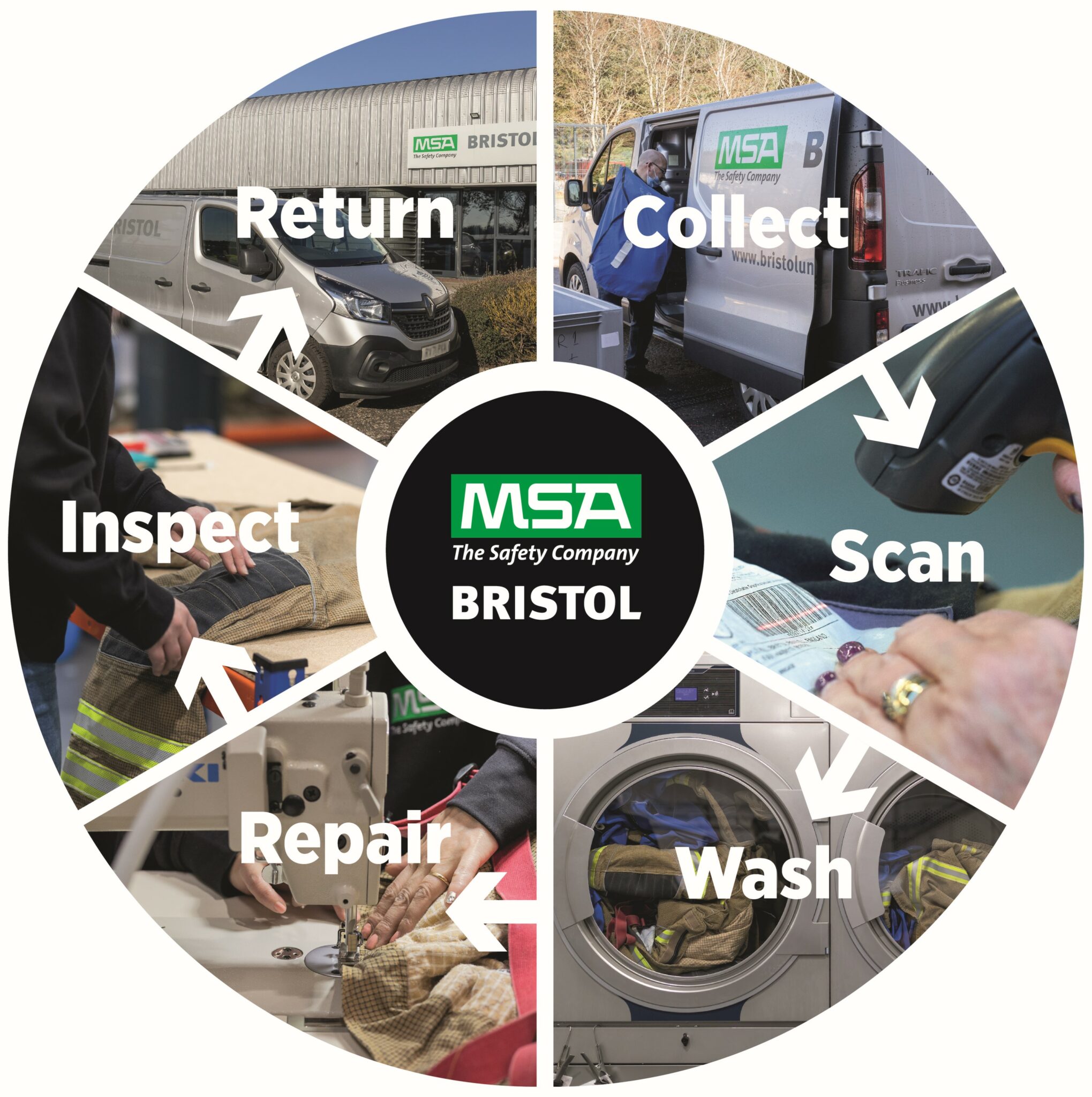
Scottish FRS is the UK’s largest Fire and Rescue Service with 6,660 firefighters operating out of 365 stations, and is the first to make use of our new Scottish Service Centre.  As part of our service we provide collection, cleaning, decontamination, inspection, maintenance, garment tracking, delivery, stock support and online ordering via a Wardrobe Management System, in a continuous cycle:

  • MSA Bristol delivery drivers collect soiled or damaged kit from key service hubs around Scotland in a fleet of liveried vans. 
  • The garments are transported to the Scottish Service Centre in Livingston where they are professionally washed and dried.
  • Contaminated PPE which has been exposed to toxic or hazardous materials is cleaned in a specially controlled environment.
  • Each garment is thoroughly inspected, and any imperfections or damage repaired by our team of skilled sewing machinists.
  • The garments are checked again, and if they pass the inspection, and are fully fit for purpose, they are returned to Scottish FRS.
  • A service history log is completed for each item of PPE, recording all cleaning, repairs, decontamination and inspections. Unique bar codes enable the tracking of each item’s life-journey including the date of manufacture, and the specific rolls of fabric that were used to create it.
  • Collection to delivery is undertaken within seven days.

The Service Centre features top-of-the-range commercial 33kg capacity Electrolux washers and driers, which are digitally-controlled and draw from a pre-heated water supply system to reduce cycle times and electricity usage. Thanks to this swift and efficient new technology, the Centre has the capacity to handle up to 900 garments per week, with the service history of each and every item tracked via a unique bar code.

Smooth operations

Our new team at the Service Centre, headed up by Manager, Anton De Klerk, has been working very closely with Scottish FRS to gradually implement all these systems and ensure the processes are running smoothly. Roddy Mackinnon, Equipment Manager at Scottish Fire and Rescue comments: “Regular cleaning, decontamination and repair of PPE is essential for providing firefighters with suitable protection.

“We have been using MSA Bristol’s managed services since March 2021 and are delighted that these services are now being delivered within Scotland.  The team have worked closely with us throughout the transition to ensure that the high levels of service and quick turnaround times are maintained.”

At MSA Bristol we firmly believe our fully managed services provide the gold standard of care and maintenance throughout the lifetime of a PPE garment.  As a company, our ultimate goal is to offer PPE that provides maximum protection against all potential hazards and risks to firefighters. Whilst we are proud to be a world leader in the design and manufacture of high-quality PPE, it is just as important that our kit is well-maintained and regularly cleaned, so that it gives the very best protection at each and every call out.

This article was originally published in the September edition of IFSJ. To read your FREE digital copy, click here.

Expert Insight: Weaving protection into the fabric of firefighting

IFSJ sat down with Amanda McLaren, Managing Director at Hainsworth Protective Fabrics to find out about the technical side of its flame-resistant fabrics

Let’s start at the beginning: can you tell me about the history of Hainsworth?

Hainsworth Protective Fabrics is a leading manufacturer of PPE fabrics, based at our Mill in West Yorkshire. Its parent company AW Hainsworth & Sons was established in 1783 as a manufacturer of protective woollen uniform cloth for the British army. Hainsworth cloth is synonymous with UK military history, and the iconic scarlet fabric is still worn by the Queen’s Guards outside Buckingham Palace today. Hainsworth now manufactures premium woollen textiles for a wide range of markets, including fashion, leisure and transport interiors, but it is through our Protective Fabrics brand that we continue to develop our expertise designing and developing world-class flame-retardant textiles for emergency services professionals.

At what point during its extensive history did Hainsworth become involved with the fire industry?

Hainsworth has been supplying fabric for firefighter uniforms since the earliest days of the fire service. In the 19th century, the most flame-retardant fabric on the market was Wool Melton, which was manufactured by Hainsworth for the British army. Naturally, when Eyre Massey Shaw established the London Fire Brigade in the late 1800s he selected Wool Melton to be used for the firefighters’ protective uniforms.

We continued to supply Wool Melton to UK fire brigades throughout the early 20th century up until the 1970s, when we introduced PPE textiles woven using man-made flame-resistant fibres to the market. From there we continued to develop fabrics that delivered greater and greater levels of flame protection, working closely with firefighters to make sure we understood the changing requirements of their role. Today Hainsworth Protective Fabrics are worn by firefighters around the World, and our amazing Product Development Team continue to push the boundaries of innovative fabric technology.

What are the main uses for Hainsworth fabrics in the fire market?

We have designed and developed fabrics for use across multiple firefighting scenarios, including: structural; wildland; electric arc; urban search and rescue; water rescue; and road traffic collisions.

Our hero product is our TITAN fabric system. TITAN is a fibre structure from which we have developed a range of outer shell fabrics for garments across the emergency services. TITAN fabrics range from TITAN 1241 – a lightweight textile for use in technical rescue and riot police coveralls, where flexibility is paramount – to TITAN 1220, a highly breathable yet strong fabric designed to reduce the risk of heat stress for structural firefighters. Our TITAN 1260 is a premium outer shell fabric woven using Aramids and PBI fibres, increasing thermal integrity while remaining flexible and wearable, and is worn by today’s London Fire Brigade – a far cry from the Wool Melton they started out with.

We also offer a pioneering fabric solution for wildland firefighting PPE – ECO-DRY Shield. The fabric was developed following the introduction of new wildland standards in Australia, and is designed to provide the high mobility and flexibility needed for prolonged call-outs in external environments. ECO-DRY Shield is now the fabric of choice for wildland firefighters in South Australia, which sees some of the harshest firefighting conditions in the World. We recently also started supplying the fabric to firefighters in the UK for the first time.

All of our fabrics are created with the specific needs of the end user in mind and we take the time to listen to firefighters when developing any new products. For example, our AGILE fabric structure was developed in response to firefighter concerns about chemical contamination and exposure to carcinogens. AGILE weaves together protective fibres in a tight structure that provides maximum resistance to liquid penetration and prevents harmful particles from being absorbed into the garment. It is also incredibly strong and durable, allowing for the firefighter to wash their kit over 100 times and still have it perform as well as if it were new.

Can you talk a little about the technical aspects of Hainsworth fabrics?

At Hainsworth we have an unrivalled knowledge of the unique qualities of different fibres and how they can be woven together to maximise their benefits, built up over 250 years of textile manufacturing.

An example of this would be the AGILE fabric structure I described above. We used our long history of fabric knowledge to weave together flame-retardant fibres in a structure inspired by the twill used in classic raincoats, resulting in a fabric that allows for maximum water runoff and protects from harmful liquid chemicals.

We call our approach to textile development Fibre Positioning Technology – the unique placement of fibres resulting in fabric greater than the sum of its parts.

This methodology applies to every product we develop. TITAN was designed as an open and breathable structure that allows for the flow of perspiration moisture, helping the wearer to stay cool and clear-headed. The insulating pockets of air created as a result of this process also increase the wearer’s protection from heat and flame.

In addition to knowing where to position fibres, we also have an innate understanding of how to combine different materials to meet the specific requirements of the wearer. ECO-DRY Shield, for example, is a unique mixture of synthetic flame-resistant fibres and premium merino wool. Nomex and Lenzing FR provide thermal stability, keeping the wearer protected, while wool wicks away moisture and allows for a consistent body temperature. The different fibres combine to create a flexible, comfortable, yet flame retardant textile perfect for the modern wildland firefighter.

Finally: tell me little about your own background and your future plans for Hainsworth?

Since 1989, I have been working within the Engineering Sector; focusing on my chosen career path – Operations and Supply Chain Management. During 1999, I took my first step into the Textile Sector, working as a Supply Chain Manager and subsequently as the Operations Director, for James Heal & Company – a Global Leader of Textile Testing Equipment.

In 2008, I left the Business in to explore Directorship positions within larger Manufacturing environments – covering both the Automotive and Leisure Sectors., each one of them a leading UK Brand. However, I missed Textiles and returned to James Heal in 2014, to support the Owner to complete a Business Sale – subsequently succeeding him as the new Managing Director of James Heal in 2014, under the ownership of Battery Ventures – a VC Company based in Boston, USA. During the following 6 years’, I was fortunate enough to travel to many Countries, visiting our Agents and end Customers’ – which of course, were often Textile Mills. The top and bottom line grew to plan and I learned a lot about running a successful Business.

In late 2020, I noted AW Hainsworth were looking for a new Managing Director for their Business – AWH was actually a Customer and Supplier to James Heal, so I was more than familiar with the Mill and the amazing Products produced. It was ‘hand in glove’ as a fit and as such, given the challenging post-pandemic and Brexit environment, I was thrilled to be appointed into this exciting role, in April 2021.

Since then, with the support of both the shareholders and a highly competent and experienced Team, I have been able to redefine our growth strategy and determine a number of new opportunities for the Business. We exceeded last year’s Business Plan and have set out a new 3-year plan, which demonstrates growth through an ongoing investment programme. We have already invested in a state-of-the-art R&D and Quality Control Laboratory and have placed orders for new Raising & Cropping Machinery, along with a new Loom for our Leisure Business. We have full commitment to a Sustainable Business Model; putting our people at the centre of investment strategy – this includes a newly defined Apprenticeship Model and investment in existing skills, to ensure a multi-skilled workforce for the future. All in all, it is a very exciting time for the company and I am thoroughly enjoying steering the ship.

This article was originally published in the September edition of IFSJ. To read your FREE digital copy, click here.

Market Analysis: Personal Protective Equipment

International Fire and Safety Journal analyses the current state of the firefighter protective clothing market

A s the challenges which face firefighting teams day-to-day are changing across the world, the safety of firefighters on the front lines remains a key concern for the industry. The rise of wildfire emergencies in regions where such incidents were rare if non-existent and the recognition by the World Health Organisation of the profession of firefighting as being carcinogenic are driving the firefighter protective clothing market around the world as the industry looks for new and improved ways to protect its first responders.

As the demand to increase the safety of firefighters grows, many manufacturers have been focused on the production of firefighter personal protective equipment (PPE) with better washability characteristics to limit the decontamination or spread of infection. As wildfires have become more common, manufacturers have been responding by introducing PPE kits that are lightweight and comfortable to wear for extended periods. To encourage the usage of such PPE, next-generation networked PPE is being introduced with better analytical capabilities.

The rising number of fire incidents has resulted in a greater demand for firefighters, which is projected to drive the sales of firefighter PPE in the years ahead. Government mandates are expected to impact the safety of firefighters and create additional growth to this expanding market. As a result, the firefighter PPE market is likely to grow at a compound annual growth rate of 4.9%, in the long run, to reach a value of US$ 2.2 Billion in 2027, according to a market research report from Stratview Research.

Market segments

Based on the product type, the firefighter PPE market is segmented into apparel or wearable gear and helmets. According to Stratview research, the apparel segment is expected to witness faster growth during the forecast period as it is replaced more frequently compared to helmets. That said, helmets form the dominant segment, accounting for more than half of the market, and are expected to sustain their dominance throughout the forecast period.

In terms of regional demand, North America is expected to remain the largest market for firefighter PPE during the forecast period. The USA remains the world’s largest market for firefighter safety equipment, supported by a huge expenditure of the country on firefighter safety equipment.

Europe is also likely to create sizeable opportunities in the coming five years and is also estimated to remain the second-largest market by 2027. Meanwhile, the Asia[1]Pacific region is estimated to remain the fastest-growing market in the years to come, propelled by China, India, and Japan.

Regional forecast

With the increase in the global population and urbanisation, the demand for firefighting PPE is also increasing. On a regional basis, the market is broken down into North America, Latin America, Europe, Asia Pacific, and Middle East & Africa.

In North America, the region has a large number of industrial and commercial establishments, which are the major end-users of fire protective clothing. In addition, the presence of stringent government regulations regarding fire safety is also driving the growth of this market in North America.

Latin America has seen an increase in the number of industrial and commercial establishments in recent years which has led to an increased demand for firefighting protective clothing from these sectors. The growing awareness about fire safety is also contributing to the growth of this market in Latin America.

In Europe, the market in is expected to grow at a moderate rate in the years ahead. This can be attributed to the stringent government regulations regarding fire safety in this region. The presence of a large number of industrial and commercial establishments is also driving the growth of this market in Europe. In addition, the increasing presence of wildfires is likely to create a shift towards fire brigades adopting alternative firefighting suits for different scenarios.

Marko de Klein, Executive Sales Manager at MSA Bristol, said that different countries within Europe are facing heightened wildfire scenarios which will factor into the development of firefighter protective clothing.

For the Asia Pacific region, the fire protective clothing market is expected to witness significant growth in the years ahead due to the increasing incidences of fires and other accidents in this region. In addition, the growing awareness about fire safety is also contributing to the growth of this market in the Asia Pacific.

In the Middle East and Africa region, a moderate growth rate is anticipated during the coming years. This can be attributed to the presence of a large number of industrial and commercial establishments in this region. As with all other regions, the growing awareness about fire safety is also contributing to the growth of this market in the region.

This article was originally published in the September edition of IFSJ. To read your FREE digital copy, click here.

Revolutionising rapid cleaning of firefighter protective gear

While much of the fire service is mitigating the risk of exposure from gear for carcinogens encountered in fires, firefighters also face a multitude of risks from non-enveloped viruses and bacteria. Because firefighters, first responders, and police respond to frequent medical calls, often over 80% of their requests for service put them in contact with bacteria and viruses, in addition to unseen hazards such as MRSA, bedbugs and Coronavirus. 

Covid has certainly brought laser-focused attention to biohazards. Prior to Covid, firefighters were cleaning their gear from fires, but not necessarily after biohazard exposure on an ambulance or car accident calls. If they did use traditional chemical and extraction cleaning methods their gear was out of service for over 24 hours due to drying time – which considering many firefighters are not fortunate enough to have a second set of gear can be a major setback.

Until recently, firefighters did not have a fast, chemical-free solution for decontamination. The regulations for cleaning requirements are dictated in NFPA 1851. NFPA 1851 previously required fire departments to conduct advanced cleaning of firefighter PPE at least once a year and indicated that clothing should actually be cleaned whenever it is soiled or contaminated. Since 2020, two advanced cleanings are now required each year, and protective clothing should be subject to advanced cleaning whenever it is exposed to products of combustion.

15 minute decontamination

To be able to decontaminate gear in as little as 15 minutes is a game-changer. “The saying ‘necessity is the mother of invention’ was never truer than during the Covid 19 pandemic,” says Cliff Baggott, Chairman of Cres Cor, Cres Guard’s parent company. Cres Cor has served as a premier brand in the commercial food service industry since 1936. In the early days of the pandemic, much focus was on first responders and the very limited access to N95 masks, the standard for protection against Covid for firefighters and medical personnel.

Due to this unexpected rise in demand, the idea to use Cres Cor’s stainless steel heating cabinets and their proven heat and humidity, chemical-free units to decontaminate used N95 masks was born. Cres Cor worked with the innovation and strategy division of a prominent Cleveland-area hospital system, which was looking into options to extend the life of PPE.

The hospital studied the efficacy of using the cabinet system to disinfect masks. Not wanting to become a medical device regulated company, Cres Cor looked at other service segments that depended on decontamination. Firefighters and first responders were the most obvious and were stretched as thin as those in the medical profession.

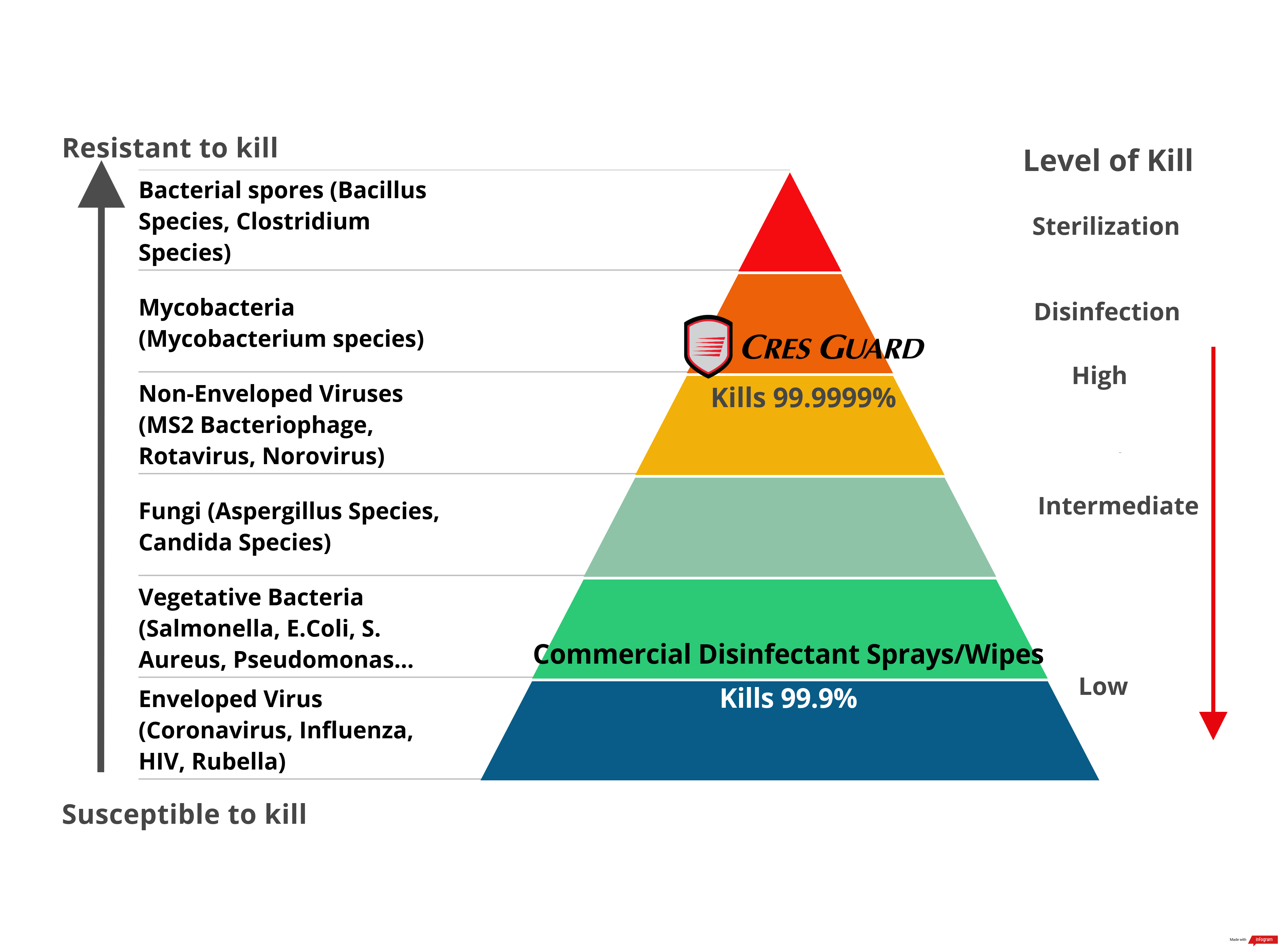
Cres Guard and the Health and Safety Division was then established. The company hired a large independent lab to conduct a study on the efficacy of the decontamination unit. The studies concluded that the Cres Guard decontaminated at a 6-log reduction (99.9999%) of difficult-to-kill viruses and bacteria. Examples include influenza, HIV, Salmonella, E.Coli, fungi and mycobacteria.

All-purpose cleaning

The Cres Guard can be used for all gear, helmets, backpacks, and personal protection items except electronics. Firefighters and police have even said they are using it for their personal items so as not to bring unknown bacteria into station quarters or their personal vehicles and homes, Baggott tells.

Using just heat and humidity provided by a four-gallon easily refillable reservoir, the stainless-steel cabinet effectively decontaminates items in just 15 minutes. Gear is dry and ready to use immediately and no chemicals are used that can impact gear integrity or off gas to personnel. The portable cabinet features optional arrangements for varying-sized gear, with a standard model including five racks and three hanger supports. 

The Cres Guard unit has been designed for use by firefighters, police, first responders, and military personnel are finding the Cres Guard easy and safe to use, sometimes multiple times in a single shift. Several fire departments in the county where Cres Guard is built were early adopters. Concord Fire Department in New Hampshire participated in initial product trials and much of their feedback was incorporated into the final product.

First responders have said the items they typically place in the Cres Guard cabinets for decontamination include firefighter gear, boots, hoods, gloves, goggles, bulletproof vests, SCBA masks, and medical/personal jump bags. “We heard that several crews were also placing personal items, such as bedding and backpacks in the Cres Guard,” adds Cliff Baggott. “This feature adds to the firefighters’ personal and families safety.”

In addition to being a chemical-free process, the heavy-duty cabinets are sturdily built with stainless steel and heavy-duty casters to make the entire unit mobile. Using a standard 110V 20A outlet, the Cres Guard is designed to be one of the hardest-working pieces of equipment employed to keep first responders safe from “invisible” dangers. The added bonus is that it is relatively small, requiring very little space in even smaller stations.

Cres Cor, the parent company of Cres Guard’s Health & Safety Division has supplied the food service industry with high-quality premier food warming cabinets worldwide for 86 years. Cres Cor cabinets are in use in high-end hotels, restaurants, schools and resorts in countless countries.

Cres Guard mobile decontamination cabinet using moist heat is patent-pending and Cres Cor Health and Safety is developing another innovative and chemical-free decontamination cabinet to eradicate viruses and bacteria effectively and safely for electronic items and other PPE sensitive to higher heat.

This article was originally published in the August edition of IFSJ. To read your FREE digital copy, click here.

International Association of Fire Fighters issues statement over turnout gear health risks

The International Association of Fire Fighters (IAFF) and the Metropolitan Fire Chiefs Association (Metro Chiefs) have issued joint statement advising members of the adverse health risks associated with fire fighter turnout gear.

The statement follows recent studies which show that all three layers of the protective clothing contain Per and Polyfluoroalkyl Substances (PFAS) chemicals, which have been linked to cancer – the leading cause of fire fighter deaths.

The IAFF and Metro Chiefs have now encouraged members to reduce their exposure to PFAS by limiting use of turnout gear only to emergency responses where its protection is a necessity.

The association pointed out that wearing all PPE and self-contained breathing apparatuses during firefighting, overhaul, and working in smoke remains the best first line of defense to protect from fireground contaminants until PFAS-free alternatives are available.

“This is the challenge of our generation, and if we don’t act, it will be the challenge of our children’s generation,” said IAFF General President Edward A. Kelly.

“We can’t just salute in front of the church and fight for better benefits. We need to combat what’s killing us and I am committed to making sure we do everything we can to extinguish cancer from the fire service. That starts with removing PFAS from our turnout gear and, until PFAS-free options exist, reducing our exposure as best we can.”

Chief Robert Rocha, president of the Metropolitan Fire Chiefs Association added: “The health and welfare of our firefighters remains the top priority of the Metro Chiefs.

“In conjunction with the removal of PFAS from Personal Protective Equipment, we encourage all fire service organizations and fire fighters to take the appropriate precautions to reduce and eliminate cancer in the fire service.”

The statement also urged fire fighters not to bring turnout gear into firehouse living areas and to be in the habit of transporting gear in sealed containers or bags not stored in the passenger compartment, to wash hands after handling turnout gear and to clean apparatus cabs regularly and after every fire.

The joint statement concluded: “The International Association of Fire Fighters and the Metropolitan Fire Chiefs Association stand shoulder to shoulder in our combined efforts to rid occupational cancer from the fire service. The time has long passed for occupational cancer to be accepted as “part of the job.” You can do your part, and we urge you to take these steps to reduce your exposure.

“We must raise our collective voices and diligently work toward a day when firefighting gear will not be a source of fire fighter illness.”

DuPont discusses the Durability and Longevity of Firefighting Gear

DuPont’s Alfons Held and Jian Xiang explore what firefighters should look for to help ensure they are investing in durable gear that will last

As a developer and manufacturer of fire-retardant fibres and fabrics, DuPont sits at an early stage in the value chain of firefighter gear. It is the manufacturer of two main brands of inherent flame retardant materials used in firefighting garments: fabrics made with Kevlar and Nomex aramid fibres. IFSJ spoke to Alfons Held, Global Marketing Manager for Emergency Response, and Jian Xiang, Global Technology Leader in Emergency Response at DuPont to learn about the latest developments in firefighting fabrics from DuPont.

Whilst not a garment manufacturer itself, DuPont works with weavers and garment manufacturers along the value chain to help ensure that the fabrics are meeting customer specifications. “We have technical development centres in each and every region where we can test features and benefits of the fabrics,” tells Held.

One of DuPont’s key testing protocols involves DuPont Thermo-man: a mannequin which is dressed in whatever gear is to be tested and blasted with fire to determine how much protection it offers, playing out the worst-case scenario to understand how well the firefighter would be protected.

With regards to durability and longevity, firefighters want to make sure that when they are investing and buying gear that will not only perform but last. Typically, turnout gear could face occupational wear and tear which could affect performance, whether its heat and fire exposure or rubbing up against sharp materials.

In recent years there has also been an increasing awareness towards gear contamination. The International Agency for Research on Cancer recently confirmed that occupational exposure to smoke as a firefighter has been classified as carcinogenic.

Driven by the concern about contaminated gear and the toxicity of smoke particles, Held says the rising concern surrounding decontaminating gear is completely new to some fire departments: “Decontamination puts a lot of stress on the garments to the extent that the firefighters are afraid of cleaning their gear. That’s exactly where we can step in and help support these departments by looking at materials and how they behave under frequent cleaning.”

The standards for cleaning gear have changed dramatically in recent times. “The frequency of washing gear has definitely increased dramatically,” says Xiang. “We’ve seen one fire department looking to wash gear 50 times per year. From our perspective, this really elevates the requirement for gear to be durable to wash and wear after every single thermal exposure. That really adds a lot of stress to specific fabrics.”

She says that DuPont is looking into every fibre that goes into a fabric and wants to ensure that it uses excellent fibres that are thermally strong, mechanically durable, UV sustainable and repeated wash resistant.

DuPont Nomex Xtreme Performance

Nomex has been in the market for more than 50 years and was one of the first fibres used in textile firefighter gear. In a bid to innovate, DuPont has recently launched Nomex Xtreme Performance, a new premier protection and performance solutions category for emergency responders. Nomex Xtreme Performance provides thermal protection and moisture management, along with protection from heat and flame, chemicals, cuts, and particulates for a comprehensive and game-changing solution for the next generation of firefighting PPE.

“We have a long-standing commitment to firefighter safety, and we continue to innovate to meet the evolving protection needs of the emergency response community. The Nomex Xtreme Performance category offers a superior choice for firefighter PPE, providing a wide range of benefits from comfort to durability to advanced thermal protection,” says Held.

Products made of Nomex and Kevlar fibre have been the backbone of the emergency response industry for the past 50 years. The Nomex Xtreme Performance category combines the benefits of Nomex, Kevlar and high-performance materials like PBO, Nomex Nano or Nomex Nano Flex. Nomex provides essential heat and flame resistance with the practical benefits of wash durability and abrasion resistance, softness and comfort, as well as aesthetic benefits that include multicolour design options. Along with providing trusted and foundational strength, Kevlar helps to make garments more lightweight and brings new levels of performance with improved heat and flame protection.

PBO offers heat-blocking properties and strength, which are characteristics that are essential in protective gear. After thermal protective performance (TPP) exposure, smart blend fabrics made of Nomex, Kevlar and high-performance materials like PBO show significantly higher strength retention and integrity, with proven performance as a garment component in firefighting applications.

Best performance at every level

Quality control exists at every stage of DuPont’s process. Xiang says: “When we’re looking into the fibre level, we make sure it’s the best of the best. We work to help weavers develop fabrics that meet or exceed their requirements. We test at every single step of the process to ensure we are delivering the thermal and mechanical performance their gear needs.”

Then, she says, they test it in a way that relates to firefighters: “What does the fabric look like and how does it behave before, during and after the fire? When we go through the whole cycle, the data tells us if we have created the best all round performance material. Because of the resilience of our fibres, we can work with fire departments to help reduce the weight of the outer shell and make the whole ensemble lighter and more mobile so firefighters are not restricted in their movement during firefighting.”

Most fire departments use their gear for an average of five to eight years. She adds that there is an increased concern that frequent washings could potentially reduce the lifetime of the garment. These concerns make the durability of the fabric even more important during development.

Contamination awareness

At INTERSCHUTZ, Xiang shares that one thing they learned from speaking to firefighters is that people are not as focused on extra thermal protection anymore. “For the past decade, people focused solely on what the TPP is,” she tells. “They make a big deal if the TPP is a 38 vs a 40. What has been happening recently is that their concerns are shifting towards sustainability and washing durability when cleaning their gear.”

Held adds that they have also notices changes in the procedures at fire departments where they are handling contaminated gear differently than in the past: “Firefighters will not go back in the truck with their contaminated gear. They will now put it in a plastic bag so that if it is heavily contaminated they will not contaminate their trucks. This has created many procedural changes in the fire station and the way they handle their gear.”

On their commitment to delivering the best fabric, Xiang adds: “As science leaders in the industry, we really work to understand the firefighters’ needs. We are intimately engaged with our firefighters on a daily basis, communicating and engaging in conversations not only to understand their unmet needs but also communicating what we know and the information we gather because it is such a complicated industry to know what to look for in terms of personal protective equipment.”

This article was originally published in the August edition of IFSJ. To read your FREE digital copy, click here.

DuPont announces Nomex Innovation award winners

DuPont Personal Protection has recognised the latest in Nomex design ingenuity during the 2022 Nomex Innovation Awards at Interschutz.

The seventh annual award ceremony was held in Hannover, Germany on 21 June and highlighted collaboration between European Nomex partners and DuPont in developing solutions made with Nomex in applications.

The 2022 Nomex Innovation Awards included four main categories, including a new category, Nomex Xtreme Performance; in addition to Sustainability; Comfort; and Other Innovations. This year’s category applications included structural firefighting and wildland firefighting.

Winners in the structural firefighting category included:

SCANTEX Crossfire, Outer layer built with DuPont Nomex 3DP Plus and DuPont Kevlar. This new outershell solution in the Nomex Xtreme Performance category provides superior durability and comfort; built-in heat and flame resistance; and unmatched mechanical strength.

S-GARD, SWISSGARD 2.0, Outer layer built with DuPont Nomex RSK, Inner layer built with DuPont Nomex Comfort. This garment is optimized for greater mobility and enhanced comfort.

Winners in the wildland firefighting category included:

SIOEN, Oxylus NYO wildland firefighting gear, garment made of a three-layer laminate, built with DuPont Nomex Comfort Ripstop, particulate barrier built with DuPont Nomex Nano, Inner layer built with DuPont Nomex Knit. This solution in the Nomex Xtreme Performance category is the first wildland gear with a particulate barrier to be introduced to the wildland firefighting market.

Heinrich Vorndamme O.H.G., Fire Fox Twin, Outer layer built with DuPont Nomex VRW. This gear is an innovative combination of layers designed to meet the requirements of both wildland firefighting and technical rescue. One layer of this solution can be worn by itself for wildland firefighting; the other layer can be worn by itself for technical rescue; and when both layers are worn together, it is a dual-purpose garment.

Alfons Held, Global Marketing Manager for Emergency Response, DuPont, announced the winners during a recognition ceremony. He said: “The Nomex Innovation Awards spotlight product developments that help make a positive impact on worker safety.

These awards recognize the ongoing commitment to technology, leadership and innovation of our Nomex partners, the power of our joint collaboration and underscores the proven performance of Nomex across a range of applications.”

Read more about the technical aspects of DuPont’s Nomex Xtreme Performance in the latest issue of International Fire and Safety Journal.

National Collaborative PPE Framework celebrates five years of success

The National Collaborative PPE Framework is celebrating five years of success of delivering high-quality PPE to Fire and Rescue Services (FRSs) across the UK. 

Launched in June 2017 to streamline the PPE procurement process, the scheme has since delivered protective clothing to around two thirds of FRSs across the country, equating to more than 30,000 firefighters.

Created with a view to sharing best practice and delivering efficiencies, the National Framework is managed by the National Fire Chiefs Council’s National Procurement Hub’s Lead Authority for PPE and Clothing Category at Kent Fire and Rescue Service, with PPE supplied by MSA Bristol – a global leader in the design and manufacture of PPE for firefighters.

The PPE range includes Full Structural Ensemble, a Layered Jacket, Rescue Jacket and USAR Ensemble, with selected styles combining innovative and ergonomic designs with the use of high-performance fabrics and fibres from leading suppliers such as WL Gore, PBI Performance Products and Hainsworth.   

By taking part in the scheme, FRSs have access to high quality PPE with the reassurance that it has been independently evaluated and tested.  Whilst purchase-only contracts are available, the majority have opted for managed services contracts, whereby kit is regularly cleaned, inspected, decontaminated and repaired at one of MSA Bristol’s three in-house UK Service Centres.

Fire and Rescue Services that have recently signed up to the scheme include North Yorkshire FRS, Leicestershire FRS and Oxfordshire FRS.  

Sarah Walsh, Framework Manager, commented: “The National Collaborative PPE Framework has proved a huge success, resulting in time and cost efficiencies for Fire Services around the country, whilst providing robust and comfortable PPE protection for firefighters on the ground, as well as longer-term health protection through the regular professional servicing of these garments.

“From the outset, the Framework’s Strategic Board Team has worked closely with MSA Bristol to ensure the provision of a top-quality service from sign-up, to delivery, to ongoing after-care, ensuring continuity of service despite the disruptions and challenges brought by the Covid-19 pandemic.  The scheme is an excellent example of successful partnership, collaboration and service delivery. Both ourselves and MSA Bristol are always looking to innovations, as well as to the sector’s requirements, to ensure that any technical refreshes are looked into further for the benefits to end users. It is even more relevant now than it was in the beginning of the Framework, when more research is published on subjects like contaminants, we look at how we can incorporate the recommendations made into the Framework.”

Philip Tasker, UK and Ireland Sales Director at MSA Bristol, added: “Over the past five years, the Collaborative Framework has succeeded in significantly improving and simplifying the procurement process for UK FRSs, making it easier and more affordable for fire services to access the best quality PPE as well as essential managed services. 

“MSA Bristol has been privileged to work alongside Kent FRS to deliver these services, and we’re looking forward to continuing this relationship in the years to come.”

Further information can be found at: https://gb.msasafety.com/MSA-Bristol