Waking Watch fund applications open

Applications for the Waking Watch fund, which aims to replace the controversial practice with fire alarm systems is now open.

The Government announced in December that they were pledging £30m towards the funding to end the ‘rip-off waking watch costs’.

Speaking upon the announcement, Housing Secretary Robert Jenrick said: “I’m announcing today a £30m Waking Watch Relief Fund to help relieve the financial pressure on those residents and to ensure they are safe.”

The Government also recently announced that they will finally put an end to the cladding scandal by putting £3.5bn towards the removal and replacement for all leaseholders in high-rise residential buildings of 18 metres and higher – or above six storeys.

Cooking fires down 33% according to London Fire Brigade

Cooking fires have fallen by around 33 per cent since national restrictions were put in place, according to London Fire Brigade (LFB).

LFB attended 146 cooking fires in the first six weeks of 2021, in comparison to 219 in 2020. Despite the decrease, LFB are urging people to ensure safety in the kitchen with more families spending time at home.

Pan fires can be particularly dangerous and can spread out of control very quickly, especially when using oil. Last month, a flat fire in Beckenham saw around 40 people leave their homes after a pan of oil, which was left to heat up on the hob, ignited and spread to the kitchen when it was left unattended.

Deputy Assistant Commissioner for Fire Safety, Charlie Pugsley, said: “Thankfully, no one was hurt as a result of this blaze, but it is a stark reminder of just how easy it is for cooking fires to spread out of control.

“The recent fall in cooking fires since national restrictions have come into effect is a testament to the hard work of firefighters and our fire safety teams who have continued to work to prevent fires in the home despite the challenges of Covid-19.

“However, cooking fires are still all too common and can often be prevented. It’s more important than ever that you take extra care in the kitchen to avoid a recipe for disaster.”

UK fire services joins rapid COVID-19 testing programme

The National Fire Chiefs Council have confirmed Fire & Rescue Service (FRS) staff across the country will take part in the rapid COVID-19 testing programme.

From February 1st, FRSs have received a stock of lateral flow test, provided by NHS Test and Trace, as part of a government scheme of employer-led testing.

Figures from the National Fire Chiefs Council (NFCC) show that since January 25th, more than 15,000 lateral flow tests have been carried out, which is around 30 per cent of the UK workforce.

FRS staff are also being encouraged locally to have the tests, to keep them and everyone around them safer. This helps to reinforce that the health, safety and well-being is a priority for the service.

Around one in three people who are infected with Covid-19 have no symptoms, so could be spreading the disease without knowing it. Broadening testing to identify those showing no symptoms will mean finding positive cases more quickly and preventing the spread of infection. Each positive result from a rapid test is one that would not have been found otherwise, helping break chains of transmission in our communities and workplaces and protecting those at highest risk. 

Use of multiple testing technologies is finding more positive cases, meaning people can isolate and prevent the spread of the disease. Rapid testing, using lateral flow tests, can return test results within 30 minutes. Rapid testing is providing people in environments such as hospitals, schools, universities and workplaces with reassurance that they are not infectious, or allow them to isolate more quickly if they are. 

Lateral flow tests used by the UK Government go through a rigorous evaluation by the country’s leading scientists. Tests detect cases with high levels of virus, making them effective in finding infectious individuals who aren’t showing any symptoms and are the most likely to transmit the disease.

Health Minister Lord Bethell said: “We’ve already come so far since first setting up a national testing programme at an unprecedented pace to help counter COVID-19, but we continue to strive to go further, faster.

“Lateral flow tests hold the key to the next phase of our ambition to see rapid testing available to people across the country.

“I’m delighted that fire services across the country are working with us to use the latest technology, and I look forward to seeing the fruits of their labour, both in helping target the virus locally, and helping find ways to roll this technology out further.”

Baroness Dido Harding, Interim Executive Chair of the National Institute for Health Protection, said: “The innovation and evolution of NHS Test and Trace continues to improve our detection of positive cases and I am incredibly proud of the speed at which we have been able to roll out these initiatives to protect more people more quickly. This is a national effort and a partnership of public and private sectors is instrumental in our response to this virus.

“Around one in three people with COVID-19 don’t display symptoms, meaning you can infect others unknowingly. This rapid testing programme with fire services is one of many that will inform our understanding of how rapid asymptomatic testing can be operationalised in the real world to protect those at high risk, find the virus and help us go back to as normal a way of life as possible.”

Chair of the National Fire Chiefs Council, Roy Wilsher, commented: “It is great news that Fire and Rescue Services are receiving the Lateral Flow Tests. This will not only help keep our staff safe, but allows important COVID-related work to continue. FRS staff are on the frontline – assisting those who need their help the most – showing it is in their DNA to be ready, willing and able to help. The health and safety of staff is of paramount importance and regular testing sends a very clear message to staff, your wellbeing is incredibly important, while helping you to do what you do best; be at the heart of the response.”
Sentry Doors invests in new website and branding

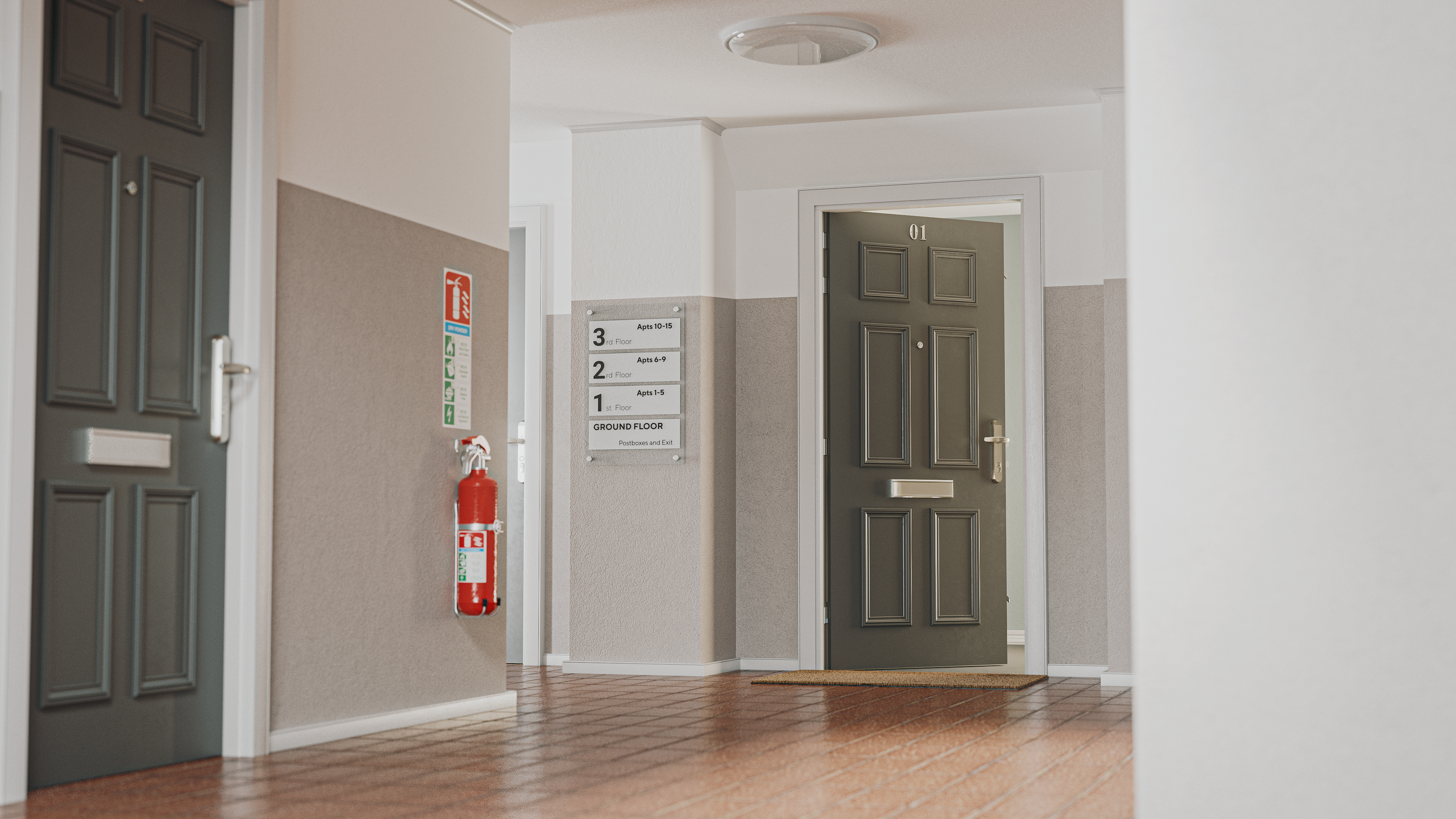
Sentry Doors, the fast-growing provider of fire safety doors to the social housing sector, is reflecting significant investment with a fresh new brand and website, showcasing its bespoke and fully compliant FD30 and FD60 fire safety door sets.

Established in 1989 by Gordon and Carolyn Yates to offer a reliable solution to fire door safety the company has recently celebrated its 30-year anniversary and is going from strength to strength. With an established team, a catalogue of certification, and a product and service offering built on quality, the brand is well positioned as the supplier of choice for timber fire door sets.

In celebration of this rich heritage and signifying strategic growth plans, the company is pleased and excited to announce a resigned and refreshed brand identity.

The company is constantly developing their door sets to meet the very latest design and safety standards, so felt it only necessary to update the brand image too. This refreshed identity is being launched alongside a dynamic, redeveloped website which is designed to make it as easy as possible for customers to navigate through the extensive product range to find the fully certified timber fire door set they are looking for.

Sales & Marketing Strategist Catherine Hadwick explains the creative process behind this refreshed identity:

“Sentry Doors have built a strong reputation for being the supplier of choice for fire and security door sets. The brand refresh is designed to retain the strong elements that has defined the brand over the past thirty years and translate this into a modern, simple visual identity that reflects the innovation and growth of the brand which has put it at the forefront of fire safety.

The newly designed website has everything you need to help choose a fully compliant, bespoke door set for your fire safety requirements. Whatever the project requirements, it is important to have confidence when procuring fire door sets and Sentry Doors constantly strive to provide this confidence with investment in strict testing and certification, highest quality standards and friendly and knowledgeable team. These core principles remain exactly the same yet this is strengthened with this fresh new brand appearance.

We hope this reflects clearly the direction and image of our business as we look to the future and continue to offer a secure choice for fire safety.”

This redeveloped website will include regular case studies, blogs, a virtual factory tour with many new features to be announced over the next few months.

Managing Director Ty Aziz sees this as an important step in celebrating the success of the business and preparing for future growth plans;

“Sentry doors has built a strong reputation and even stronger customer relationships, and this is a vital step in solidifying this. Despite the current climate, we have expanded our team, invested in manufacturing capabilities and with the support of recent investment from Cairngorm Capital we are well positioned to expand on this success.”

OGUK welcomes plans to drive for net-zero emissions

OGUK, the representative body for the UK offshore oil and gas industry have responded to Shell’s pleadge to accelerate the drive for net-zero emissions in the industry.

Commenting on Shell’s pledge made today OGUK Sustainability Director Mike Tholen said: “It is an exciting time for the country’s oil and gas industry as we see companies including Shell demonstrate how our sector is transforming to meet the clean energy challenge, putting their expertise to work, as other companies are also doing, to help achieve our climate goals here in the UK.

“Now is the time to develop a sustainable future. By reducing the carbon impact of oil and gas as we invest in low carbon technologies, we can unlock a homegrown move towards net zero which maintains consumer affordability, promotes our world class supply chain and protects jobs and the energy communities we support.

“Everyday we see more examples of how this industry is changing. As we continue to face the challenges brought about by the pandemic, the UK economy should build on its strengths. The North Sea Transition Deal proposed in the Energy White Paper will be essential to accelerating investment and creating employment opportunities in new technologies while reducing emissions from production.”

Euralarm call for harmonised standards for green and digital transition

Euralarm have congratulated the Portuguese EU Council Presidency and have given their support to the Presidency’s objectives of supporting the European Single Market and leading the European Union towards a more resilient, global, greener, fair and more digital society.

Since 1970, the association has worked hard to contribute to the European ideals by representing the interests of the fire safety and security industry in the areas of standardisation development and legislation.

Over the past years Euralarm has repeatedly expressed its concern over the European Commission’s interference in EU harmonised standards. Euralarm, together with its partners and stakeholders, consider harmonised standards to be a market-driven implementation tool, rather than an “extension of EU law”.

To successfully recover from the present crisis and enable the industry to fully contribute to the green and digital transition, Euralarm urges the EU to stop treating harmonised standards as part of EU law but rather consider them to be part of the revision of the Industrial Strategy for Europe and the NLF for products.

Euralarm believes that the standardisation processes that have been effective for so many years will continue to be successful, if the Commission, Member States, European standardisation organisations and other stakeholders participate in that process. By doing so, they support innovation in Europe and enable industry to thrive on a global scale.

The very essence of standardisation is that it is a bottom-up process driven by a consensus of the industry through European standardisation organisations. Using standards as a legislation tool not only contradicts this concept but adds unnecessary burden and costs to the industry and consequently has a negative impact on innovation, loss of competitive edge in the global standardisation.

Euralarm therefore urges that, rather than changing today’s process, the stakeholders involved in European standardisation should continue to cooperate and strive for an innovative, and transparent market to deliver high quality products, systems, and services for the benefit of Europe’s society and economy.

Patol protects flagship Jaguar Land Rover showroom

A combination of two detection methods from industrial fire specialists Patol have been employed to protect the flagship site of one of the UK’s best known car marques.

Jaguar Land Rover is a name synonymous with British quality. This is reflected in the large new Guy Salmon showroom recently completed at Cribbs Causeway and set to become a landmark building in the local Bristol community.

Protecting the 3.7acre site from the threat of fire is obviously a fundamental requirement in the design & construction process. Main contractor on the project is Midas Construction, with Evans Electrical appointed as the electrical contractor and Astron Fire and Security responsible for the fire detection system.

Guy Salmon Showroom

Guy Salmon is part of the Sytner Group and as a flagship facility in the Group’s portfolio one of the main features on the site is the showroom. 22 new vehicles will be displayed on the ground floor with an additional 20 Approved Used cars on the first floor. A further seventy Used cars will be on show outside and the roof can accommodate up to 236 cars. With such a high value stock, in addition to the building itself, it is vital to provide effective fire protection.

Astron Fire & Security selected an aspirating smoke detection system from Patol as a method particularly suited to covering the voids on the showroom’s two floors. To ensure pipework did not impact on the building interior, aesthetic test points were employed at the end of each pipe run which also enable ease of access. Two 535-2 detectors, with their two-zone capability and powerful fan, protect these areas, with an additional 532 detector used in a smaller drive-through area of the site.

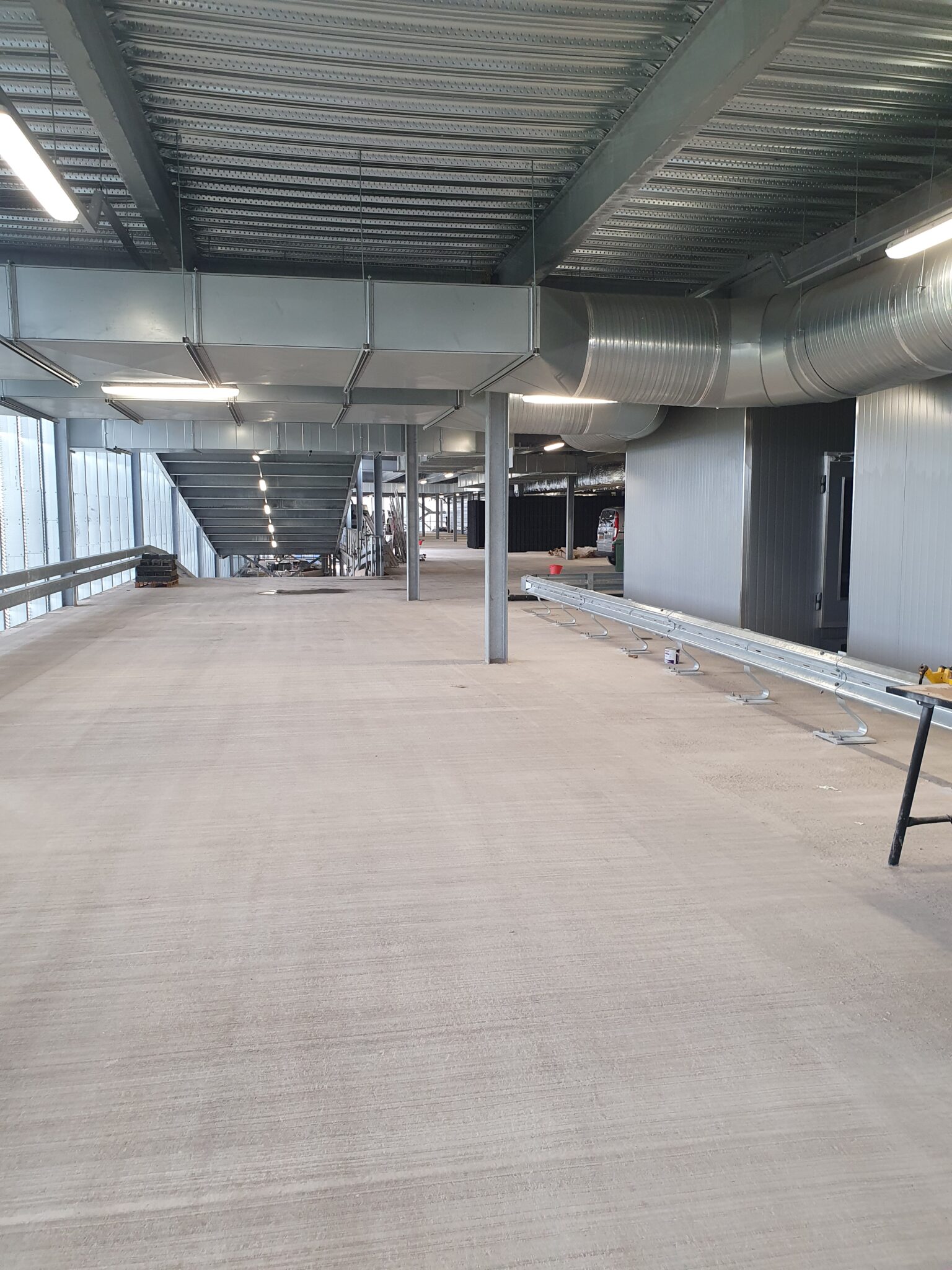
Addressing the site’s parking areas and its significant number of cars, Astron also installed Patol’s analogue resettable linear heat detection cable (LHDC). LHDC is a solution widely employed and well proven in car park applications as high air flows and exhaust fumes can be challenging for conventional smoke detectors. It offers a cost-effective option which is unaffected by damp or high humidity and which is not prone to false alarms. On the Guy Salmon Bristol site, the LHDC features test key switches at the end of the lines and LDM-519-LP controllers.

The site will also have a three-lane drive-in bay for servicing customers’ vehicles and a 29-bay workshop.

Welsh FRS praised by the NFCC for COVID-19 support

The National Fire Chiefs Council (NFCC) has praised staff volunteers at the three Fire and Rescue Services in Wales, for their hard work and commitment to supporting local ambulance colleagues, during the COVID-19 pandemic.  

Since May 2020, Mid and West Wales Fire and Rescue Service, North Wales Fire and Rescue Service and South Wales Fire and Rescue Service have worked in partnership with colleagues at the Welsh Ambulance Service Trust (WAST), with a pool of volunteers ready, willing and able to carry out a number of support roles. 

Over the last eight months, volunteers at Mid and West Wales FRS have undertaken 349 shifts and completed an estimated 4,105 hours of work with WAST. 

Four volunteers at North Wales FRS began their WAST support in December 2020 and have since carried out 128 driving shifts, approximately 1,536 hours’ cover. 

And at South Wales Fire and Rescue Service, volunteers have been supporting WAST since July 2020, carrying out 4,560 hours’ support in over 380 shifts.  

Speaking about the UK FRS response, NFCC Chair Roy Wilsher, said:  “I am immensely proud of crews in Wales for offering this vital support during COVID-19, while continuing to respond to emergencies. WAST colleagues have expressed their appreciation for the FRS support which has allowed them to increase their capacity and effectively carry out their essential emergency work. 

“I am grateful too, to all FRS staff that have supported their local ambulance service during the pandemic and who have gained extra skills and insight as a result of this additional activity. This commitment to their communities during such a critical time is typical of Fire and Rescue Services and a true reflection of their continued humanity and care.” 

Since the beginning of the pandemic, 22 FRSs in England and Wales (almost half) have supported their local ambulance service with 12 FRSs having carried out over 9,300 blue light and non-blue light patient transfers in the last four weeks alone.  

Commenting on the support his staff have offered to the Welsh Ambulance Service Trust (WAST), Chief Fire Officer Chris Davies QFSM from Mid and West Wales, added: The three Fire and Rescue Service’s in Wales have been working in partnership with the Welsh Ambulance Service for the last 20 years so it was only natural that we continued that support by providing driver resilience and ensuring our operational staff are on hand to drive non-blue light vehicles.  

“I am very proud of all of the Welsh FRS colleagues who have stepped forward and come together as one team to undertake this vital duty and I am grateful to WAST for providing the appropriate training that has allowed staff to be mobilised as needed.” 

“Also, as of this week, Welsh firefighters have been assisting health boards to enhance the roll out of the COVID-19 vaccine to their communities. 

“I am delighted that we have been able to fulfil a request for assistance from our partners to assist with the transportation of people within their communities to and from Mass vaccination centres, set up to assist in the administering of the COVID-19 vaccination.” 

New firefighters register will quantify health risks to first responders

Alongside researchers at the University of Central Lancashire (UCLan), the Fire Brigades Union (FBU) have launched a firefighters register that will quantify the health risks that firefighters face.

The new nationwide database will assess the potential link between exposure to fire toxicants and the increased occurrence of cancers and other diseases among firefighters.

The union is calling on every current and former UK firefighter suffering from a serious or chronic illness to add their name to the registry, to help save firefighters’ lives in the future.

Known as the UK Firefighters Cancer and Disease Registry (FCDR), the database will collect information on firefighters’ work routines, exposure to fire effluents, lifestyle and health. This will enable scientists to identify and recognise most common cancers and diseases related to firefighters’ work, and, in the future, offer preventative health screening, education and support that is specifically designed to protect firefighter’s health.

The project, initiated and co-sponsored by the FBU and clinicians working at the Royal Preston Hospital, will allow UCLan researchers to analyse data on a long-term basis. As part of this, they will track the number of cancer cases amongst firefighters over time, investigate possible causes of cancer and other diseases – such as exposure to fire toxicants – and evaluate the risk of different cancers among firefighters compared with the rest of the population.

This research will allow scientists to fully understand the link between the exposure to fire effluents that firefighters face at work and the prevalence of cancers or other diseases.  All firefighters, both serving and retired, as well as those that have or have not been previously diagnosed with an illness, will be invited to register.

This research follows an independent UCLan report commissioned by the FBU that provides guidance for fire brigades on how to minimise exposure to fire effluents, as well as highlighting the high levels of carcinogens present in the working environment of firefighters.

Matt Wrack, FBU General Secretary, said: “Firefighters take on huge risks when tackling an emergency, but the hazard to their health does not stop when a fire is extinguished. Every current and former firefighter who has suffered a serious or chronic illness needs to add their name to this register so we can further expose the shocking numbers of firefighters suffering from cancer and other diseases.

“In Canada and parts of the US, the link between firefighting and deadly diseases has been recognised in legislation, allowing firefighters and their families to receive compensation where health has been affected or where firefighters have died as a result. We need to be doing far more to avoid contamination in the first place but also, as the body of evidence continues to grow here, politicians in the UK must be willing to step up and protect their own firefighters.”

Professor Anna Stec, Professor in fire chemistry and toxicity at the University of Central Lancashire (UCLan), said: “The UK’s National Cancer Registry and Analysis Service is currently not able to provide any reliable data on cancer incidence or mortality amongst firefighters. Setting up the UK Firefighters Cancer and Disease Registry will enable us to identify and keep track of all firefighters who have been diagnosed with the diseases and cancers, as well as identify any association between firefighter’s occupation and exposure to fire carcinogens.

“We are calling on all firefighters, including those new to the career and those that have moved on, to register with the UK FCDR. Filling in this registry will help us to track the rates of cancer and disease case over time, as well as helping us to recognise most common diseases and cancers related to firefighters work and exposure to fire toxins.”

The UK Firefighters Cancer and Disease Registry can be accessed here. All data is stored securely and anonymously, and firefighters can request that their data is withdrawn at any time.

NFCC responds to latest non-fire related statistics

The NFCC have responded to Home Office statistics that have revealed a six per cent increase in fatalities and call outs during last year 12 months.

Responding to the figures, Chair of the National Fire Chiefs Council (NFCC) Roy Wilsher said: “I am saddened to see this increase in fatalities, and we need to see this reduce. We will continue to work with our partners, with a focus on the areas these deaths are happening.

“It is also disappointing to see an increase in callouts across a range of areas. However, it truly reflects what I have always known – the fire service is on hand to assist where and when it is needed the most and it’s not just fires.

“The increase in assisting other agencies is a clear example of how FRSs respond to requests from our partners. This has never been more apparent that during the response to the pandemic, with the fire service carrying out more than 400,000, the majority supporting other organisations. The fire service is on hand to assist where and when it is needed – and it’s not just fires.

“This is one area I expect to see rise in the next set of statistics, showing how dedicated FRS staff are here to help. The pride shown by fire service staff undertaking work in the heart of their communities is humbling, and we can see the different it is making.

“This particular set of statistics is always disappointing for me, as it clearly highlights the positive impact the emergency medical trials had following their introduction in 2015 and the reduction in numbers following the subsequent withdrawal in 2017.

“This work had agreements in place with ambulance trusts to undertake health and care related work.

“Yet we have seen in recent months how the FRS is well-placed to support this work. Centrally collated statistics show firefighters have carried out a shift for ambulance service more than 93,000 times since March.”