Motorola Solutions help responders prepare for wildfires

Last year, public safety agencies across the country faced a multitude of extreme and historic weather events, including the highest-ever number of named hurricanes and storms, and record California wildfires. This year is predicted to bring much of the same, and public safety agencies across the country will rely on technology and support from Motorola Solutions to help keep communities safe and protected.

“Motorola Solutions has been providing mission-critical communications networks and devices that reliably connect first responders during natural disasters for more than 90 years,” said Mahesh Saptharishi, chief technology officer and senior vice president, Motorola Solutions. “Today, our integrated technology ecosystem mobilizes the flow of intelligence across agencies during disasters, captures fixed and aerial video for unprecedented situational awareness and safeguards customer operations through cloud-based resiliency, and monitors customer networks 24-7.”

The use of Project 25 (P25) land mobile radio (LMR) networks and devices remains the standard for reliable voice communications during natural disasters, allowing federal, state and local agencies to collaborate even when cellular networks are down. For example, the Butte County Information Systems Department managed the August 2020 North Complex fire in California using Motorola Solutions’ APX Radio Management for over-the-air programming of radios relied upon by county law enforcement and more than 300 volunteers who helped with search and rescue efforts.

“Our ASTRO 25 radio system is essential for interoperable communications when law enforcement and volunteers are coordinating evacuations, clearing roads, conducting search and rescue or helping residents return to their homes,” said Matthew Van Gent, radio systems technologist, Butte County. “To help volunteers get to the scene quickly, we virtually programmed hundreds of APX radios provided to us by cooperating law enforcement agencies. Motorola Solutions experts were also onsite to support our relief efforts, functioning as extended members of our team.”

Using Motorola Solutions’ command center software suite, agencies are migrating their software operations to the cloud for increased security, system redundancy and resilience. With cloud-based systems, non-essential public safety personnel can work remotely if their workplaces are impacted by natural disasters.

Agencies are also using drones to quickly assess the impact of severe storms and monitor the spread of wildfires. Motorola Solutions’ CAPE software provides semi-autonomous drone deployment and operations that enable real-time aerial video streaming. The Chula Vista, Calif. ‘Drone as a First Responder’ (DFR) program — the first of its kind in the U.S. — deploys drones to incident scenes to assess the impacts in real time.

“We’ve seen tremendous success since deploying drones as first responders,” said Captain Don Redmond, Chula Vista Police Department. “A natural extension is to use drones and CAPE software to provide additional situational awareness for natural disasters, such as wildfires or landslides, and provide critical insights for command centers to better allocate resources during emergencies. First responders are also provided with the information they need to better prepare before they arrive at the scene.”

More information is available on Motorola Solutions Disaster Preparedness website, including a comprehensive preparedness checklist and tips for public safety agencies.
NFPA and HFSC team up for home fire sprinklers awareness

Fire departments and public safety advocates across North America will unite May 16-22 to participate in a digital campaign and conduct community outreach activities to increase awareness about how dangerous home fires can be and the benefits of home fire sprinklers. Home Fire Sprinkler Week is co-hosted by the Fire Sprinkler Initiative project of the National Fire Protection Association (NFPA) and the HFSC.

Whether urban or rural, large or small, fire departments in every community share one problem in common: the tragedy of home fire injuries, deaths and property destruction. According to NFPA, more than three-quarters of all civilian fire deaths are caused by home fires.

This universal challenge is due to the fact that today’s home fires become deadly in as little as two minutes. Our homes are filled with synthetic furnishings that burn hotter and faster than natural materials and they produce toxic smoke. Unprotected home fires are fast and deadly – to residents as well as responding firefighters. 

When installed, home fire sprinklers overcome this vulnerability and protect residents and responders. They work automatically, controlling or extinguishing a fire in seconds. Their fast action makes it possible for residents to escape to safety and reduces the chance for structural collapse. Home fire sprinklers uniquely prevent injuries and deaths, and they protect the structure making it safer for responding firefighters.

Yet this lifesaving technology remains underutilized. While a million homes will be built in 2021, the prevalent myths, legislative barriers and lack of public awareness in most states will result in only a tiny fraction being protected with installed fire sprinklers.

“That’s unacceptable,” says Lorraine Carli, NFPA vice president of Outreach and Advocacy and president of the HFSC.  “We know that home fires are needlessly killing thousands of people every year. We know that new homes can easily and inexpensively be protected with sprinkler technology that’s been proven over more than a century.

We safety advocates know; but clearly local stakeholders, the homebuilding community and homebuyers don’t know. So we are setting aside a week to try to reset this lack of public knowledge in the interest in better public safety.”

A wide range of digital content will post daily on the Home Fire Sprinkler Week Website to encourage the spread of facts and educational resources through local news and social media messaging and other online platforms. These will include dramatic home fire sprinkler videos, colorful graphics, stories and interviews, and other awareness tools to help tell the story of home fire sprinkler protection.

The week coincides with HFSC’s 25th anniversary. In 1996 HFSC was founded to provide a singular focus on home fire sprinkler education. What began as a small group working with local and state fire service has grown into a national, independent 501(c)(3) nonprofit continuing its original mission.

“The data has been clear for decades that installing home fire sprinklers will dramatically reduce home fire deaths for residents and responding firefighters,” Carli said. “As a result, all national building codes require sprinklers in new construction. What that means is that every new home that is built without fire sprinklers today is substandard. The public deserves better than that. It’s our hope that the shared messaging during Home Fire Sprinkler Week will tip the scales toward a safer future for new developments, communities and all for decades to come.”

Axon launches VR Simulator for public safety challenges

To aid with increasing public safety challenges, Axon have launched its first wireless Virtual Reality (VR) Simulator Training. Axon’s VR Simulator will provide immersive virtual reality content that can help officers develop critical thinking, de-escalation and tactical skills.

Today’s police training methods can be time-consuming, unrealistic and expensive. In addition, the majority of trainings are focused on “hands-on” use of force, which is necessary, but accounts for less than one percent of police and citizen interactions nationwide. Axon’s VR Simulator provides officers with more access to what they need most: training on how to best interact with the community, de-escalate effectively and support individuals in crisis.

“Officers on patrol frequently encounter individuals in crisis. Through the use of this breakthrough simulator, we are able to fully immerse officers into common situations, helping prepare them for a number of different variables with an emphasis on de-escalation,” says Rick Smith, Axon CEO and founder. “Our mission has always been to protect life, and by giving law enforcement the ability to work through the situations they see in the field daily, we can help create outcomes that are better for everyone.”

The VR Simulator provides industry-leading content and allows trainees to work through complex scenarios that have been refined and validated by a diverse network of first responders and subject matter experts. One of the first training modules included at launch will cover domestic violence. It allows officers to actually talk and walk through the scenario as they would in the field, with feedback from trainers and supervisors, allowing them to practice more and enhance their skills, better preparing them for the situations they encounter each day.

The wireless VR headsets, provided by industry leading partner, HTC VIVE and their latest HTC VIVE Focus 3, delivers an all-in-one unit that’s simple to deploy and use, with no extraneous hardware, time or space constraints. The VR training provides connectivity for both in-person and remote experiences, creating an on-demand platform that can be accessed anytime instead of at a designated training facility.

Axon’s VR Simulator training will also integrate the TASER 7 device and training handguns, so officers can use real hardware in the virtual world, creating muscle memory and familiar responses in the most critical high-risk situations while leveraging a fully-immersive environment.

The Phoenix Police Department will be the first agency to adopt Axon’s new VR Simulator into its existing training curriculum.

“We are always looking for opportunities to innovate and improve our officers’ abilities to handle various calls for service,” says Phoenix Police Chief Jeri Williams. “Axon’s new training platform allows our officers to run through scenarios in the safety of a controlled learning environment. This technology lets us train more efficiently, benefiting the responding officer and our community.”

The VR Training seamlessly integrates into an agency’s current training program with connection to the Axon Academy learning management system. The learning objectives and content of Axon Academy and Axon’s Community Engagement VR Training feed into the scenarios of the VR Simulator. The Community Engagement VR Training launched in 2018 and is now used by more than one thousand police agencies in the U.S. and Canada. Currently available modules include Schizophrenia, Autism, Suicidal Ideation, Hard of Hearing, Alzheimer’s/ Dementia, Veteran Post-Traumatic Stress Injury, Peer Intervention and Domestic Violence. New content is released each month.

Axon is currently accepting orders for the VR Simulator Training, and will ship to U.S. customers in Q3 2021.

NFPA offers tips to prevent fires over the summer months

Often considered the unofficial kick-off to summer, Memorial Day weekend typically includes lots of celebrations and cookouts, often with outdoor grilling as a focal point. As the holiday and summer months near, the National Fire Protection Association (NFPA) reminds everyone of basic safety tips and precautions to grill and celebrate safely.

NFPA data shows that from 2014-2018, fire departments responded to an annual average of 10,600 home fires annually involving grills, hibachis, or barbecues. This includes 4,900 structure fires and 5,700 outside or unclassified fires. These fires resulted in an annual average of 10 civilian deaths, 160 civilian injuries, and $149 million in direct property damage.

The peak months for grilling fires are July (18 percent of grilling fires), June (15 percent), May (13 percent), and August (12 percent), though grill fires occur year-round. Leading causes of grill fires include failing to clean the grill, the heat source being located too close to combustible materials, leaving equipment unattended, and leaks or breaks in the grill or fuel source.

“As grilling season approaches, it is important to review basic safety tips to ensure grillers are using equipment properly and safely, especially if the grill hasn’t been used over the winter,” said Lorraine Carli, vice president of Outreach and Advocacy at NFPA. “Establishing a firesafe location for using your grill is also crucial. It should be a safe distance from your home and other items that can burn.”

Carli notes that as people continue to stay home in response to the pandemic, there may be an increased use of grills and other outdoor cooking equipment this season, making it critically important to share these messages with the public.

A yearly average of 19,700 patients went to emergency rooms because of injuries involving grills. Nearly half (9,500 or 48 percent) of the injuries were thermal burns, including both burns from fire and from contact with hot objects; 5,200 thermal burns were caused by such contact or other non-fire events.

Children under five accounted for an average of 2,000 (39 percent) of the contact-type burns per year. These burns typically occurred when a child bumped into, touched, or fell on the grill, grill part, or hot coals.

NFPA offers these and other tips and recommendations for enjoying a fire-safe grilling season:

  • For propane grills, check the gas tank for leaks before use in the months ahead. (Watch NFPA’s video on how to check for leaks.)
  • Keep your grill clean by removing grease or fat buildup from the grills and in trays below the grill.
  • Place the grill well away from the home, deck railings, and out from under eaves and overhanging branches.
  • Always make sure your gas grill lid is open before lighting it.
  • Keep children and pets at least three feet away from the grilling area.
  • If you use starter fluid when charcoal grilling, only use charcoal starter fluid. Never add charcoal fluid or any other flammable liquids to the fire. When you have or are finished grilling, let the coals cool completely before disposing in a metal container.
  • Never leave your grill unattended when in use.

Jensen Hughes rebrands Hillard Heintze, RPA and TRP

Jensen Hughes, a global leader in safety, security and risk-based engineering and consulting, announced today the official rebranding of Hillard Heintze, Technical Response Planning Corporation (TRP) and Russell Phillips & Associates (RPA).

Over the last three years, Jensen Hughes has strategically acquired Hillard Heintze, TRP and RPA, cementing its status as the only firm in the industry that provides an end-to-end suite of services focused completely on making the world safe, secure and resilient. These acquisitions have further strengthened Jensen Hughes’ ability to offer a holistic approach to protecting its clients and their families, stakeholders and assets.

“Hillard Heintze, TRP and RPA have each brought unique and powerful strengths to our organization,” said Raj Arora, CEO, Jensen Hughes. “Through our combined capabilities, resources and team of experts, we have been able to provide clients with the best possible prevention, preparedness, and peace of mind.” 

Hillard Heintze, formerly headquartered in Chicago, Illinois, is one of the leading security risk management firms in the world, serving Fortune-ranked enterprises, professional sports leagues and law enforcement agencies as well as many of the world’s most affluent families.

“Since our inception, we have been committed to providing insight, assurance and confidence to clients around the world,” said Ken Bouche, Chief Operating Officer, Hillard Heintze. “Merging with Jensen Hughes was a strategic step in providing our clients with a complete portfolio of expertise, from security and emergency preparedness to fire and life safety and protecting what matters most to them.”

TRP, formerly headquartered in Houston, Texas, is a market leader specializing in emergency, business continuity, and security planning services and systems. TRP’s advanced technologies, including its innovative SMARTPLAN™ software, have helped organizations dramatically improve their emergency response plans and compliance with requirements.

“For more than two decades, we have successfully provided innovative technologies and solutions to our clients within the energy, automotive, manufacturing oil, and transportation industries who faced challenges related to response planning and regulatory compliance,” said Steve Bassine, President, TRP. “Working within Jensen Hughes has allowed us to build upon our accomplishments, sharing our expertise widely and expanding our reach to other industries.”

RPA, formerly headquartered in Fairport, New York, is a team of fire, code compliance and emergency management experts, providing specialized technology and professional services to the healthcare industry.

“At RPA, we have worked with thousands of healthcare facilities and leaders, offering in-depth insights, hands-on trainings and custom emergency response procedures with the goal of keeping patients and staff safe,” said Nick Gabriele, Vice President, RPA. “We have remained steadfast in that commitment, partnering with Jensen Hughes to develop a more holistic approach that better meets the current and future needs of healthcare organizations.”

Beginning May 3, the Hillard Heintze, TRP and RPA brands will officially merge under the Jensen Hughes name, solidifying their position, offerings and direction in the industry. One team. One company like no other. For more information, visit www.jensenhughes.com or follow Jensen Hughes on LinkedInFacebook and Twitter.

NFPA calls for first responders to learn about hazards and response tactics

An electric vehicle (EV) crash in Woodlands, Texas has prompted significant scrutiny and calls for emergency personnel to be trained on the fire risks associated with high voltage, lithium batteries within EVs (electric vehicles). In response to the tragic accident that killed two occupants last week, the National Fire Protection Association (NFPA) and the National Transportation Safety Board (NTSB) are reminding first and second responders that resources are available to help safely address incidents involving EVs.

Although the cause of the recent Tesla incident is still being determined, news reports indicate that, despite intense heat, the fire was extinguished within four minutes. Firefighters; however, remained on scene for four hours cooling the car’s battery with tens of thousands of gallons of water.

The popularity of EVs is growing, according to online car shopping site Edmunds. “We’re not only about to see a massive leap in the number of EVs available in the market; we’re also going to see a more diverse lineup of electric vehicles that better reflect current consumer preferences.

And given that the new presidential administration has pledged its support for electrification, the U.S. is likely to see incentive programs targeted at fostering the growth of this technology further,” Jessica Caldwell, Edmunds’ executive director of insights said. The company went on to say that 30 EVs from 21 brands will become available for sale this year, compared to 17 vehicles from 12 brands in 2020. Notably, this will be the first year that there will be offerings in all three major vehicle categories: cars, SUVs, and trucks.

While EVs are great for the environment, new technologies often present a learning curve for first responders. In the interest of public and responder safety, NTSB investigated four EV incidents and released a thorough report in November on hazards and gaps. In particular, the NTSB identified two concerning trends:

  • inadequate vehicle manufacturers’ emergency response guides
  • gaps in both safety standards and research related to lithium-ion batteries involved in high-speed, high-severity crashes

The NTSB also found, in part, that:

  • Damage and fire because of a crash may prevent first responders from disabling the high voltage in electric vehicles
  • Thermal runaway and battery reignitions after initial fire suppression can pose additional challenges
  • Stranded energy can cause electric shock and potential fire hazards
  • Safely storing an electric vehicle with a damaged high-voltage lithium-ion battery in a tow yard may not be feasible

NFPA has been developing EV safety information for 12 years. The association has worked with every auto/truck/bus manufacturer who sells EVs and hybrids in this country and has received pre-market safety information so that responders have the most up-to-date training, tools, and resources.

The NFPA EV Safety Training website, www.evsafetytraining.org, is the most accessed repository in the U.S. for EV responder safety information. This dedicated site offers videos on stranded energy, responder tactics, a fact sheet with on-scene safety information, and direct links to all NFPA EV Safety Training courses and vehicle resources, including U.S. EV Emergency Response Guides.

To help communities deal with EV-related response and the infrastructure challenges that go together with market growth, NFPA has secured two Department of Energy (DOE) grants related to EVs. The first, entitled NFPA Spurs the Safe Adoption of EVs through Education and Outreach, will allow NFPA to develop free EV safety training for utilities, code officials, charging station installers, EV fleet owners, tow and salvage responders, crash reconstruction teams, manufacturers, dealerships, garage maintenance workers, insurance companies, and EV owners.

As part of that effort, NFPA, in conjunction with Clean Cities Coalitions, will also set up community planning meetings in 30 cities around the country to help prepare these locations for a large influx of EVs.

The second effort calls for enhancing and promoting an NFPA Distributed Energy Resources Safety Training program. NFPA will update its current EV Safety classroom training for the fire service and develop an online gamification version of the distributed energy resource including how to respond to electric vehicle fires.

Pye-Barker Fire hits 80 locations with T & S Fire acquisition

Pye-Barker Fire & Safety have announce the acquisition of T & S Fire and Security, Inc., located in Greensboro, North Carolina. The purchase was finalized in April and complements Pye-Barker Fire’s existing location in the area.  Financial details have not been disclosed.  

T & S Fire was established in 1975 by Micah Testerman and specializes in fire alarm systems, portables, pre-engineered systems, and special hazard services.  T & S Fire will become Pye-Barker Fire’s second Greensboro location and work closely with the existing branch.  Tracy Adams, Branch Manager for PBFS Greensboro, will act as manager over the new location.

With this acquisition, Pye-Barker Fire now has 80 locations across the country.  This reflects the impressive and rapid growth of the company over the past five years.  In April 2016, Pye-Barker Fire had less than 20 locations and serviced a five-state region in the Southeast.  Through the company’s acquisitions efforts, it now serves 19 states across the continental United States.

“We are not the typical synergy-driven consolidator,” shared Pye-Barker Fire CFO Jason Brinkman in a recent interview for the 2021 Atlanta Pacesetter Awards.  “We focus on the preservation of culture. We are buying the employee base and the relationships they have with their customers. It is important for us to leave it intact.”

Pye-Barker Fire is focused on growing its core markets while adding strategic new territories as opportunities arise. The Company’s main focus is to acquire market-leading businesses with a solid historical financial performance to join its impressive and expanding footprint. Pye-Barker Fire values its culture and promotes an entrepreneurial environment where individual performance is recognized. The Company works with sellers to develop a post-close plan that aims to minimize business disruptions while offering professional employee development into the future. 

Groups seek liability reforms to fight wildfire

A diverse coalition representing tribes, ranchers and conservationists have announced strong support of Senate Bill (SB) 332, state legislation that would enable more cultural and prescribed burns. Tribes like the Karuk want to use prescribed fire to protect homes and restore watersheds, much like their ancestors did, and farmers, ranchers and conservationists use fire to manage noxious weeds, restore wildlife habitat and protect biodiversity. In many cases the legal and policy barriers for all of these groups are the same.

According to the bill’s author, Senator Bill Dodd (D-Napa), “California has to work harder to protect our communities from catastrophic wildfire. I’m proud to work with Tribes, conservation groups and ranchers to help our local communities play a larger role in fire management.”

For over 100 years fire suppression policies have led to a dangerous build-up of brush and unhealthy trees. Climate change and increased rural development have dramatically increased the risk of catastrophic wildfires in recent years. In order to incentivize the use of prescribed and cultural burning to fight dangerous wildfires, groups say California must reform its liability laws.

“Prescribed fire is an essential tool for ranchers managing rangelands and controlling invasive weeds, not to mention the part it plays in helping mitigate wildfire,” explains Tony Toso, Mariposa County cattle rancher and California Cattlemen’s Association President. “Currently, it’s nearly impossible to find someone willing to take on the personal liability risks associated with a burn project.”

According to Karuk Natural Resources Director and traditional fire practitioner Bill Tripp, “My ancestors practiced cultural burning for millennia along the Klamath and Salmon Rivers. Low intensity burns at the right time of year reduce wildfire risks in our communities and promote forest health. We must enact policies to enable and encourage rural communities to do this important work.”

“Ramping up the pace and scale of prescribed burning is an important way to fight fire with fire,” said Pamela Flick, California program director for Defenders of Wildlife. “These efforts will succeed only if property owners have better liability protections in order to participate at a meaningful scale. We thank Senator Dodd for leading on this issue and addressing California’s wildfire resiliency in the face of a changing climate and increased fire risk.”

California is currently rolling out its new State-Certified Burn Boss Program, which will certify highly experienced practitioners to plan and lead prescribed burns. Though more rigorous than most other states’ programs, the California certification does not provide the same level of liability relief that other states do. This means California Burn Bosses risk personal liability for damages even when meeting all legal and permit requirements of a project, while their federal and state counterparts enjoy indemnification from their agencies for the same work.

In other words, highly qualified individuals will not be interested in gaining certification unless California can offer better liability protections.

“You can’t expect an individual to take on prescribed fire projects unless they have liability protections. California is simply behind the times when it comes to providing incentives to communities to protect their homes and restore their watersheds,” explains Lenya Quinn-Davidson, Director of the Northern California Prescribed Fire Council.

Currently, SB 332 enjoys support from over 60 organizations from around the state representing a wide range of interests. Opponents include insurance and trial lawyers who financially benefit from the status quo.

Structurus releases new software for chiefs and training managers

UK-based technology and project management company Structurus developed the first subscription-based training software for fire chiefs and training managers.

STRX is an effective training tool intended to replace tabletop exercises and PowerPoint presentations, as well as providing an immersive yet cost-effective alternative to complex command and control software.

The company says they have identified a gap between traditional training and expensive technology solutions. According to Structurus, the available training solutions on hand have limited and repetetive scenario options, and instructors do not have the flexibility to create as many training scenarios as they would like.

Better training for everyone, everywhere

With STRX, training managers and fire chiefs can create as many scenarios as they would like in less than 5 minutes. They can swiftly switch between different settings, and with the online multi-user functionality, they are able to add colleagues from different locations to join the same training session. With a click of a button, they can add content from a diverse library of scenarios and hazards; which are designed to replicate their real settings. Training managers can talk, chat, and collaborate with their teams locally and remotely all through the same platform so there is no need to use another software.

To facilitate such a versatile training platform at a low cost, Structurus says they followed a “software as a service subscription” model whereby customers choose from 3 different levels according to their training need and team size.

Structurus states, “We have simplified the process of building interactive virtual training environments for everyone working in a high-hazard industry, so that better training experiences can be delivered to their teams. With STRX, the new training experience platform, we aim to improve the quality of training being delivered at every location – be it an oil company, a training institution, or an airport.”

Brilliant thinking: The importance of lighting in search & rescue missions

Any search and rescue mission can be fraught with danger. The potential for a hazardous environment or high-risk situation can be found around every corner of your journey. Even in broad daylight, time is of the essence and chances of success can be slim, so when operating in the dark the odds can stack up against you.   

Reliable, versatile and high-quality lighting products are key to optimising success. Trusted around the world in many industries, the team at Streamlight have worked closely with customers operating on the front line, ensuring they offer lighting solutions for every eventuality. Whether spotting a catastrophe before it happens, planning a safe route over treacherous terrain, locating obstructions or signalling to others, employing a Streamlight safety-rated torch or lantern could be the deciding lifeline in perilous urban and remote environments.  

Innovation to saves lives 

Defined by their innovation in delivering effective, efficient and high-performance lighting solutions, Streamlight’s research and development team puts in the necessary time and effort to make sure their next product helps save lives and protect firefighters on the job. It’s not just firefighters the company works with, but other first responders, military and law enforcement operators too. Creating new products can take anywhere from months to years, depending on the complexity of the product. Features and output may change, but the commitment to quality and innovation remains the same. Streamlight is proud to have garnered the reputation as a leading provider of trusted high-performance torches and lanterns, and is able to offer products that exceed certification requirements for applications in the fire safety market worldwide. 

President and CEO of Streamlight, Ray Sharrah, explains: “We are revolutionising LED lights, making them brighter, safer and incredibly durable. After we’ve met the challenges involved in designing and engineering a light, we put it through the most demanding industry testing to ensure the highest levels of performance and dependability.” 

Some of the company’s latest advancements enable their lights to be used in some of the most dangerous environments, including the ability to operate in dense smoke, hazardous landscapes and severe weather. Some Streamlight models can illuminate a vast area or project a defined beam of light up to a mile away. The company has developed products with unique articulating heads so a beam can be directed precisely where it is needed, while other units can be attached in multiple ways for hands-free use in situations where both hands are necessary. Plus, Streamlight’s multi-fuel torches are easy to recharge and can hold power for extreme durations.  

Equipment that offers versatility 

When choosing lighting options for search and rescue operations, there are multiple factors to consider. Brightness (lumens), beam width and range (candela), power source, size, functionality and safety rating are all factors to weigh when selecting a light. While many products are versatile, your choice will ultimately depend on your specific needs and the environments you intend to deploy them in. 

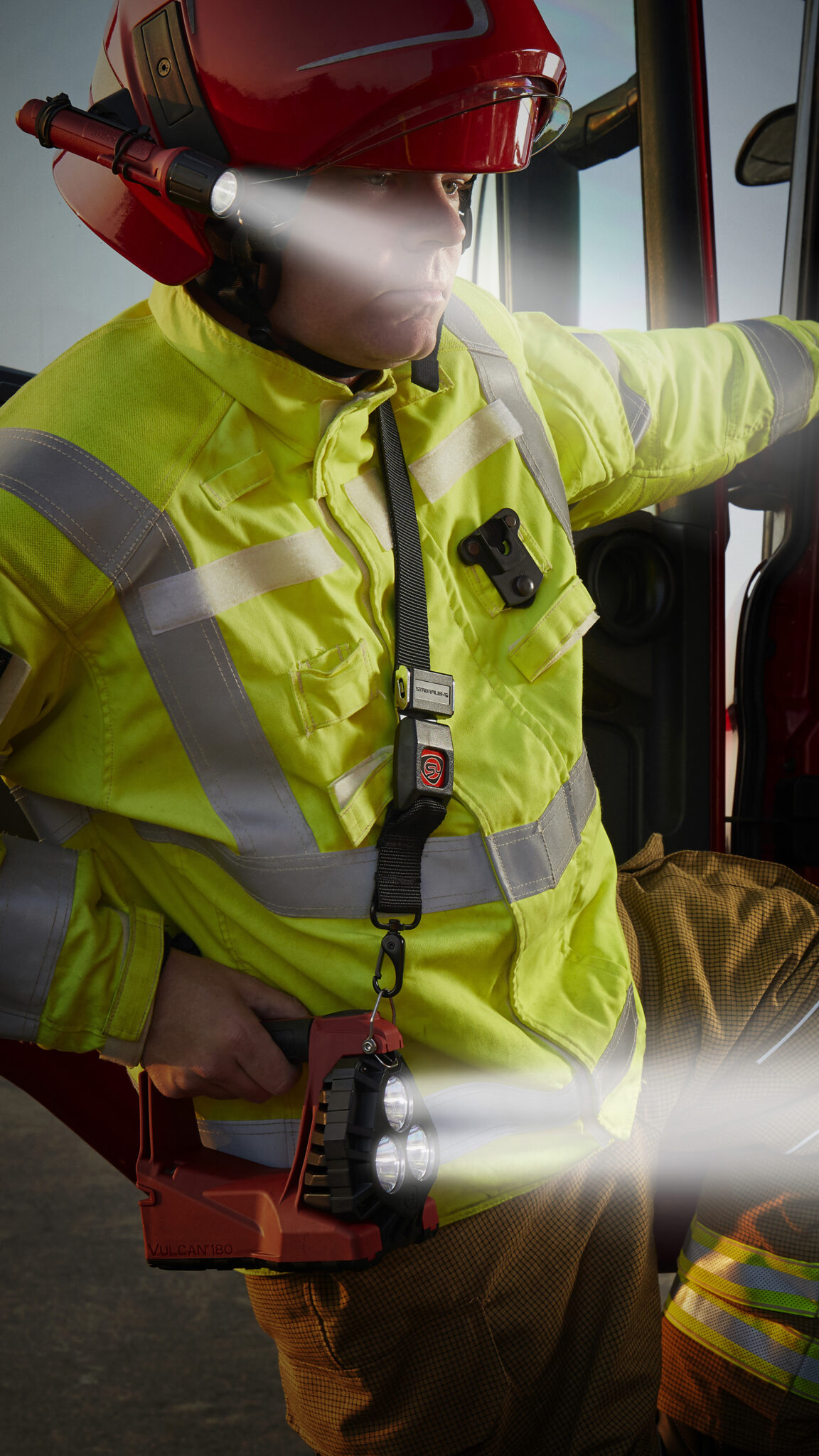
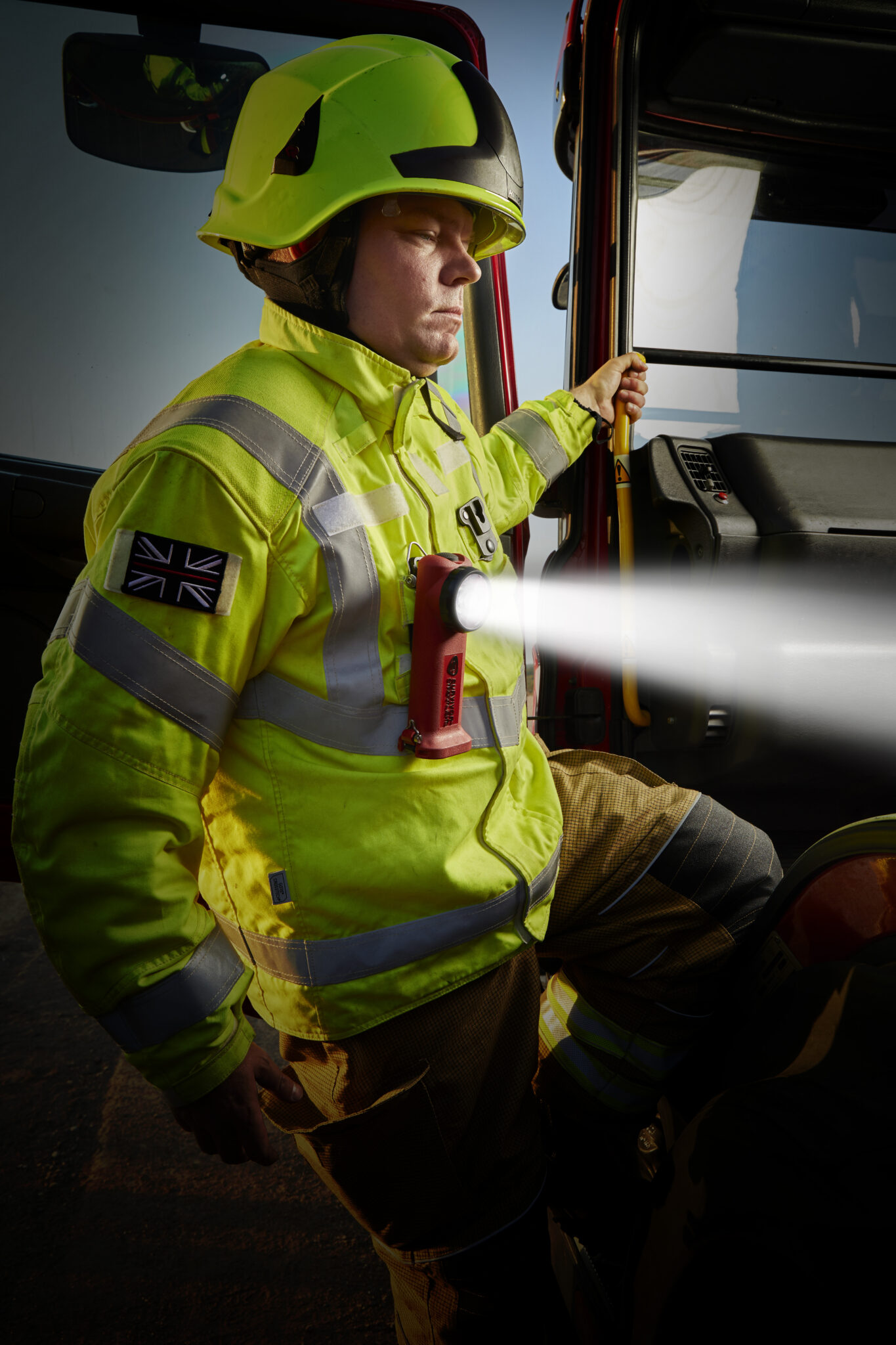
Personal right-angle models are respected favourites among firefighters around the world, offering extreme brightness and durability in a compact size. By using this type of light as a handheld torch, responders can locate a target in need in low light situations. If both hands are required to conduct the rescue phase of the operation, a right-angle torch can be clipped to a belt or harness, allowing full use of hands to operate machinery or remove obstructions. The versatility and small size allow these lights to work great in tight, enclosed spaces, where a mission can sometimes lead to.  

The PolyTac® 90X USB, for example, is a multi-fuel torch, meaning you can conveniently charge rechargeable batteries through the USB port on the light or use disposable batteries when needs arise. Plus, it offers up to 500 lumens, which is more than an adequate amount of light for most scenarios. The Survivor® is another model with extreme brightness, compact size and exceptional durability. The light is designed with easy to operate buttons and fast, universal clip-on, clip-off features, making it easy to use when wearing heavy gloves. It also benefits from unique interchangeable ‘Smoke Cutter’ plugs that help create your preferred beam pattern and reduce peripheral light and eye fatigue caused by glare. In addition, the Survivor® is IPX4-rated water resistant, HAZ-LO Division 1 approved and ATEX Rated, 2-metre impact resistant and utilises a scratch resistant polycarbonate lens. Its four lighting modes even include a ‘moonlight’ setting which can sustain use for 20 days.   

When more coverage is needed to brighten a greater expanse of land for important search and rescue missions, look to lanterns and area lights to light up the scene. Such lights provide far greater brightness, with options that can clearly illuminate a subject up to a mile away, aiding in searching a vast area quickly. Some of these lights used in search and rescue feature newly developed diffusers that can transform a spotlight into a scene light in seconds, casting light over an entire rescue scene or warehouse.  

Vice President of Sales and Marketing at Streamlight, Michael F. Dineen, explains the latest edition to the Vulcanâ series of lanterns, “We are very proud of the new Vulcanâ180 HAZ-LOâ ATEX lantern. Our new intrinsically safe, portable lantern is ATEX and IECEx certified for use in Zone 0 locations. It features a 180° articulating head with three bright white LEDs and two ultrabright blue taillights to provide visibility in thick smoke. In addition, it operates cordlessly, eliminating a possible trip hazard in already dangerous environments. 

“This lantern has the ability to keep first responders safe in dangerous situations, which is something we take a lot of pride in. Not only are we aiming to make the brightest, best lighting tools on the market, we also make lights that people can rely on every single day to do their jobs and keep them safe.” 

Strategy plays a huge part in a search and rescue mission, and lighting should be a big consideration that is never overlooked. International safety rated products, like Streamlight flashlights, will provide you with the confidence and trust needed to improve the odds of success in any search and rescue operation.