UK fire industry develops action plan to improve culture

The UK fire industry has renewed calls to improve culture across fire and rescue services by bringing an end to misogyny, racism, bullying and harassment.

A new action plan has been announced following the two-day National Fire Chiefs Council (NFCC) event on culture and inclusion which brought together representatives from all UK Fire and Rescue services. Attendees were unanimous in their commitment to to improve culture and inclusion across fire and rescue services, with the publication of a clear and renewed national action plan within a month.

Th action plan is expected to set out milestones and success measures, giving the public, staff and wider stakeholders a benchmark to improve and can hold them to account. This will include NFCC setting up an independent external advisory panel to provide challenge, support and scrutiny to the NFCC plan.

Culture Review

The NFCC conference was opened by keynote speaker Nazir Afzal OBE who set out concerns and reflections following the recent culture review of London Fire Brigade and subsequent conversations with Fire and Rescue officers and staff from other services.

Afal spoke about the importance of people being able to report incidents safely and confidentially, confident that action would be taken.

Other leaders from across the fire and rescue services and more widely were in attendance including the Home Office, Women in the Fire Service, Asian Fire Service Association, Local Government Association, Fire Brigades Union, Fire & Rescue Services Association, Fire Officers Association, Fire Fighters Charity, HMICFRS and more widely.

‘Must not be tolerated’

NFCC Chair Mark Hardingham deemed any form of discrimination, bullying or harassment is ‘completely unacceptable’ in a modern-day fire and rescue service and that it ‘must not be tolerated.

“These forms of behaviours need to stop and stop now,” said Hardingham. “All UK fire and rescue services come together this week to renew their focus and commitment to making fire and rescue services open, inclusive and welcoming environments – services that the public and our staff can have every confidence in. As Chair of the NFCC, this is my number one priority.

He said that the discussions over the two day conference will help provide a further and collective step change to increase momentum, commitment and focus to culture change: “We have listened and identified key actions to take forward together, learning from other organisations as well as from each other.”

The NFCC Chair said it now intends to publish a new plan within a month, setting out clear actions to improve our culture. “This includes a commitment to ensuring every FRS has an independent, confidential reporting line so staff and the public can report concerns with confidence that they will be heard and action will be taken,” he said. “We will also be establishing an independent external advisory group who can provide check and challenge to ensure NFCC deliver against our commitments.

“I want the public and every member of staff to see and experience a fire and rescue service which values diversity, equality, inclusion, aspiration and fair challenge.  A key theme from the event was absolute agreement and commitment to learning; a commitment to transparency, to tackling poor practises and to celebrating good practises and behaviour; all underpinned by robust policies, processes, standards and inspection.”

‘Loud and clear’

NFCC Equality, Diversity and Inclusion lead, and Cornwall Chief Fire Officer Kathryn Billing said that the commitment from all fire and rescue services in the room came across loud and clear: “Eradicating inappropriate behaviours and cultural reform are a priority for fire and rescue services and we need to tackle it,” said Billing. Everyone within all fire and rescue services must see and experience the benefits of being in a safe, trusted and inclusive environment.

“We heard a number of positive examples from fire and rescue services who are creating positive, inclusive environments – as recognised by recent inspection outcomes. We need to learn from them and from other sectors about the work they are doing to improve workplace cultures. Everyone has the right to feel safe, supported and respected at work and we are absolutely committed to delivering this vital change, ensuring the public continue to get the high-quality services they deserve, to keep our communities safe.” 

‘The right to work without fear’

In a new statement, the Fire Brigades Union (FBU) Executive Council called equality ‘a trade union principle’ and that it deplores abusive and discriminatory behaviour in our service. “Firefighters have the right to work without fear of being mistreated because of their gender, ethnicity, sexuality, disability or neurodiversity – or bullied or abused while doing their job,” said the statement, “Just as much as fire contaminants and unsafe working practices, this kind of toxic culture is a matter of health and safety in the workplace.”

It also said: “Work is under way within the FBU to look at our record as a union, challenge our employers, and set out a path to transforming the culture of the Fire and Rescue Service.”
Bollé Safety presents first ESG report

PPE eye protection manufacturer Bollé Safety has presented its first ESG report: A complete approach combining the transformation of its products and its entire value chain. The new report follows the publication of its carbon footprint last year.

Accompanied by an ambitious transformation strategy involving all its products and processes, the report outline’s the brand’s aim to achieve international B-Corp certification by 2024 and to reduce the carbon emissions of each of its products by 35% by 2027.

Reducing the environmental impacts

Bollé Safety’s first major project is to reduce the environmental impact of its products and packaging.

After becoming aware that a significant part of its carbon footprint relates to the life cycle of its products (>75%), Bollé Safety said this project is a priority with a clear objective: to propose an eco-friendly version of 100% of its new products and 50% of its top sellers by 2025.

A a result, Bollé Safety has developed three eco-friendly products for professionals in the health and industry sector (see opposite). These have enabled the company to test different recycled and biosourced raw materials, new production processes and recycling solutions. Products that will serve as a basis for imagining the brand’s next eco-responsible innovations and reaching the final goal of 2025.

The products are:

  • The Cura F, made in England with 97% recycled polyamide
  • The Solis Go Green, of which 33% of the frame is made from recycled materials (nylon made from recycled fishing line)
  • The Klassee, with a frame made of 48% of organic castor oil

Packaging

The brand, which equips 20 million users worldwide, is also working on its packaging with the ambition that 95% of them will be eco-friendly by 2024.

Bollé Safety was the first PPE eyewear manufacturer to provide BPA-free polyethylene bags for all its products since the 2000s. Currently, two types of packaging are available: the eco-packaging and the eco-polybag.

The eco-packaging is batch packaging, plastic-free, 100% recycled and recyclable and optimized for 30% less waste compared to plastic alternatives. The instructions for use are printed directly on the cardboard with vegetable-based ink and the size of the packaging is optimised for transport without empty space. The eco-packaging is the most sustainable packaging available on the market.

The eco-polybag: A unitary plastic packaging with 100% recycled polyethylene bags. New since January 2023, Bollé Safety manufactures all its products with this packaging, which is easy to recycle.

Ian Walbeoff – Vice President of Sales EMEA commented: “Reducing our greenhouse gas emissions across our entire value chain is a central topic for us. It is part of the objective of contributing to long-term carbon neutrality.

“To develop our climate objectives, we have chosen a short-term objective of reducing the carbon intensity of our products, at a pace compatible with the Paris Agreement. Our new objective, from 2024, is that each subject of innovation contributes to reducing the environmental footprint of Bollé Safety products”.

Long term value chain transformation

Bollé Safety has said it aspires to effect its transformation in a global and sustainable manner. It, therefore, includes in its CSR approach, actions to improve its social impact: Ensure ethical working practices in the supply chain; Developing diversity, inclusion, and employee engagement; Support, through its philanthropic commitment, causes aligned with its values.

A roadmap that aims to include its social and environmental purpose directly in its legal statutes and to be B Corp certified by 2024.

To move towards a sustainable model, Bollé Safety has become a member of SEDEX, an independent organisation supporting companies in their management of social and environmental risk.

The eye protection brand has established that 100% of its suppliers must sign its code of conduct aimed at respect with the United Nations Global Pact by the end of March 2023. This legal document requires the respect of regulations and social and environmental standards.

It allows the French company to audit them and sanction them in the event of non-compliance with the code. Presently, only three of its suppliers present a high risk of non-compliance.

Responsible and Respectful

Quentin Chapelain, Bollé Safety ESG Manager said: “Our responsible purchasing approach aims to make our supply chain ever more responsible and respectful of people and the environment. This CSR report goes beyond an environmental strategy, it also encompasses the social side and governance. We hope that our action will help engage all stakeholders towards a more sustainable model”

Bollé Safety’s ESG report highlights an additional step for the brand, whose ambition is to move towards a sustainable model, both in terms of economic and social strategy. The UK is a priority market for Bollé Safety, the latter aims to help transform the market to position itself as a national and international prime-mover.

IFSJ Exclusive: The Last Word with Hochiki Europe

Robert Drake, Director of Research and Development at Hochiki Europe talks R&D, teamwork and future plans

What does a typical day in research and development look like for you and the team?

As part of the R&D management team I not only guide the development activities I also act as a filter to protect the manager and team of engineers, who are a mix of hardware, software, and mechanical experts as well as test teams, from interruptions – something which is key to keep our new product designs on target, while providing our technical expertise in support of the rest of the business.

We hold daily stand ups, which are short meetings to discuss progress and identify blockers. The reason we call it a “stand-up” is because we hold the meeting standing, which helps to keep the meeting short and focused. The rest of my day is a mixture of sustaining, recruitment and product planning and building a strong product development funnel for the next 3-5 years.

What would you say are the fundamentals to a successful research and development team as well as output?

I think, and I’m sure the team here would agree, that the fundamentals to a successful R&D team output is clear goals, excellent communication and limited interruptions.  The processes we have in place here at Hochiki allow for this.  For example, our team is separate to production, but we have ensured that the link is still well maintained.  We work with support tickets and priority levels and ensure an engineer is available in the factory each week to help with improvements.

How important is customer insight and legislation to R&D at Hochiki?

Customer insight is critical to the success of our products. The voice of the customer alongside legislation drives everything from our department, through to customer support, sales, marketing, manufacturing, even the administrational side of the business. I’d say we are a customer first company.

In my career I’ve mostly worked with heavily regulated industries, and the fire industry is possibly one of the most heavily regulated there is. Legislation can make things slow moving, rightly so because it’s important, but I enjoy that challenge and Hochiki are committed to making sure the products they design, develop, manufacture, and put to market are 100% safe. We can only do this though through customer insight and having those experts in house to ensure we work closely with the governing bodies.

What can we expect to see from Hochiki over the next 12 months?

We’ve got some exciting research underway with Japan and with the BRE, plus some new products coming out this year, one being our newest intelligent emergency lighting product. The Middle East team were able to share a preview demo of this new system with the visitors to Intersec in Dubai. I can’t go into too much detail, but I’m excited to see how this is received by customers, new and old. I’ll just say watch this space because it’s an exciting road map year ahead for Hochiki Europe customers.

This article was originally published in the March edition of IFSJ. To read your FREE digital copy, click here.

New UK Managing Director appointed at ROCKWOOL

Insulation manufacturer ROCKWOOL has announced the appointment of Nick Wilson as Managing Director for the UK and Irish markets. He brings over 20 years of experience from across the industrial, appliance and heating sectors, having previously held senior positions across commercial, marketing and operations functions.

‘A proven leader

Rafael Rodriguez, Senior Vice President at ROCKWOOL Group, said that Wilson is a proven leader with exceptional commercial and operational acumen: “We are delighted that he will drive the company’s efforts through a period of heightened need for both energy efficiency and fire safety solutions in the UK and Ireland, whilst also championing our own sustainability goals”.

Commenting on his new position, Nick Wilson, Managing Director of ROCKWOOL UK, said: “This is a pivotal moment in the path to net zero and I am delighted to be working with ROCKWOOL’s dedicated teams to continue our long legacy of stone wool production in Bridgend. I have been hugely impressed by everyone’s passion for our products and I look forward to working together with our customers to meet the UK and Ireland’s thermal, acoustic and non-combustible insulation needs.”

Sustainability focus

He joins ROCKWOOL amid the Climate Change Committee’s most recent Progress Report to Parliament which called for a “sustained push” on energy efficiency, bringing pressure on the government to accelerate retrofitting rates to reduce bills and carbon emissions.

ROCKWOOL’s range of sustainable stone wool insulation products is also designed to tackle noise pollution and deliver fire resilience in buildings, offering solutions for a range of sustainability and performance needs in residential, commercial and public buildings.

The stone wool insulation ROCKWOOL sold in 2022 will already save more than 100 times the energy used to produce it. The company has further ambitions to become yet more sustainable with a clear set of global goals driving action.

The manufacturer’s Science Based Targets initiative-verified decarbonisation plan, as well as its performance against a wide range of social and environmental indicators, saw the Corporate Knights ‘2023 Global 100’ sustainability index rank ROCKWOOL Group number one globally among building products companies and 16th overall.

Locally, ROCKWOOL UK has also been at the forefront of testing new technologies and innovations, including working with Swansea University on a carbon capture initiative and with industry partners on a government-funded pilot for using green hydrogen in insulation production.

FDIC International: Looking ahead at North America’s leading firefighter conference

IFSJ takes a look at some of the key sessions, speakers and opportunities in store at FDIC International

FDIC International is North America’s Leading Firefighter Conference, bringing together thousands of Fire & Rescue professionals from around the world, world-class instructors, classrooms, workshops, training, and the innovative products and services on display from 800+ exhibiting companies. Being held in Indianapolis form 24-29 of April, FDIC is a show that focuses on learning and sharing with your peers formally and informally through hallway conversations, developing life-long friendships, and recharging your passion for the industry.

More than 35,000 industry professionals from around the world will be in Indianapolis for FDIC International 2023, giving you the opportunity to develop stronger industry relationships, learning from other departments on the issues they are facing and bringing back these insights to our department.

The week-long event begins with FDIC’s interactive hands-on training evolutions where firefighters and fire and rescue professionals can advance their skills by participating in live training courses, pre-conference workshops and over 200 conference sessions taught by renowned instructors presenting new areas of interest within the fire service along with updated content on important topics. 

Hands on Training

Hands-on Training (H.O.T.) Evolutions at FDIC International are training sessions on the latest technology and techniques in the fire service, instructed by key players within the industry. They are designed so that firefighters that attend will become better firefighters and take back information to their hometown departments that will have an impact on the safety of their community

Among the training sessions on offer is one from Leigh Hollins, Battalion Chief (Ret.), Cedar Hammock (FL) Fire Department, who will host a session on ‘Advanced Vehicle Extrication’, presenting challenging, difficult extrication scenarios requiring advanced skills to stabilise the vehicles, gain entry, and remove patients entrapped and entangled in the wreckage.

With electric and hybrid vehicles on the rise, Jason Defosse, Firefighter, Quinte West Fire Department. will lead a training course on ‘Electric and Hybrid Vehicle Response’. Students will have the opportunity to receive hands-on training on the latest vehicles on the market today. The class will focus on electric hybrid vehicle response as well as new emerging technologies and attendees will be given a unique perspective on proper shutdown procedures, extrication tactics, the removal of patients entrapped and entangled in the wreckage, and firefighting considerations while applying real hands-on training with brand new and late model hybrid and electric vehicles.

Pre-conference workshops

Pre-conference workshops are offered on Monday, April 24 and Tuesday, April 25 ahead of the conference program. These 4-hour sessions provide an in-depth look at specific topics covering new areas of interest within the fire service as well as traditional training topics. Attendees can choose from a variety of topics and should be prepared to walk away with new insights, ideas and approaches.

Among the workshops is ‘25 to Survive: The Commercial Building Fire’, with Doug Mitchell, Captain, Fire Department of New York. This interactive program will address 25 critical firefighting concerns common to the commercial building fire and tactically sound tips, techniques, and drills that firefighters can implement into their firehouse.

Justin Bailey, Chief, Oliver Springs (TN) Fire Department, will host a session on ‘Prioritising Your Department’s Training Program’. This course will help determine the need for training for firefighters and their department and how to make it the leading priority. Topics include organisational training needs and expectations, the selection of a training officer, training program delivery, and personal responsibility in maintaining a healthy training environment.

In the classroom

FDIC International offers more ways than ever to learn the latest tactics, techniques, and technologies designed to take your knowledge to the next level with world-renowned instructors.

‘Cancer: Prevent It, Detect It Early, and Survive It’ will see an interactive presentation and discussions, where students will learn about the scope of the problem of cancer in the fire service, hosted by Russell Osgood, Chief, Ogunquit (ME) Fire Department; Firefighter Cancer Support Network.

 ‘Fight the Fire, Not the Building’, hosted by Ron Kanterman, Executive Inspector, Fire Department of New York Bureau of Fire Protection, will review the built-in active and passive fire protection systems that make up the building’s fire and life safety system and the basic working of these systems.

Women in Fire

Women in Fire Conference returns to FDIC International. This conference will begin with an opening ceremony, followed by a line-up of educational classes that provide training, support, and advocacy for women in the fire service.

Its keynote address on Monday 24 April at 8am comes from Mira Leinonen, a senior officer for a state administrative state agency in Southern Finland and chairperson for the international association CTIF’s Women in Fire and Rescue Services commission.

A seminar called ‘Health and Wellness for Women in the Fire Service’ will present attendees with information and resources regarding the impacts of culture, harassment and bullying, mental health, and suicide among women in the fire service. Included are resources for pregnant firefighters along with information about risks, impacts, and best practices. The session will be hosted by Amy Hanifan, President; Operations Chief, Women in Fire; McMinnville (OR) Fire Department.

‘Your Guide to Responding to Harassment, Discrimination, and Retaliation in Emergency’, with Candice McDonald, Deputy CEO; Firefighter/EMT, NVFC; Cumberland Valley Volunteer Firemen’s Association, will educate on protected groups; define and identify types of unlawful discrimination; examine the behaviours of unlawful harassment; educate on what liability has in addressing harassment and discrimination, and more.

Networking

FDIC International brings together members of the fire service from around the world to exchange information, network, reconnect with old friends and meet new ones. Attendees can maximise their experience by attending a variety of special events planned throughout the week.

Returning this year to facilitate networking is the MATCH! Program. It is designed help participant get business done in the most efficient and convenient way possible and is available to officers (or committee members) who are decision-makers and actively sourcing products or services for their department. Meetings are pre-scheduled and mutually agreed upon, which allows both parties to come prepared for a productive business conversation while saving precious time at the event.

IGNITE

Finally, not to be missed at FDIC International is IGNITE: an exhibiting destination for start-up businesses owned by emergency service entrepreneurs looking to make their debut at the show. Companies will feature alongside other start-up and small businesses, creating a dedicated community within the Lucas Oil Stadium exhibit hall. Participating exhibitors will be looking to build relationships, connect and network with industry professionals including fire chiefs, officers, firefighters, EMTs, paramedics, distributors, and other manufacturers large and small.

This article was originally published in the March edition of IFSJ. To read your FREE digital copy, click here.

IFSJ Exclusive: First responder drones

Charles L. Werner. Founder and Director of the DRONERESPONDERS Public Safety Alliance, tells all about the Drone as a First Responder Program

Several years ago, the Chula Vista California Police Department created the Drone as a First Responder (DFR) Program through the Federal Aviation Administration’s (FAA) Uncrewed Aircraft System (UAS) Integration Pilot Project (IPP). This DFR program launches a drone to high priority calls immediately upon receiving the emergency call.

In most cases, the drone is over the emergency scene prior to arrival of ground units while streaming real time video back to the dispatch center and out to responding law enforcement officers. This drone’s eye view allows responders to have critical information on the circumstances at the scene.

Chula Vista Police Chief Roxanna Kennedy said in an interview: “DFR has become the best de-escalation tool in our department’s tool box and greatly enhanced for the safety of citizens and responders.” 

Since the DFR program’s inception, the program has flown over 13,000 flights, assisted in 1534 arrests, avoided dispatching ground units 3284 times, on scene first 7284 times, average response time when first on scene 209 seconds.

The DFR response provides information that helps to increase or decrease priority which ensures that the appropriate resources are responding.  It is clear to see the value of the DFR program through de-escalation, returning units to service more quickly, enhancing safety and protecting the community.

While the program was initiated by the Chula Vista PD has now expanded to include fire responses. On one of the first fire-EMS calls, it was able to quickly locate a patient in an alley where the initial call information was vague. Dispatch was quickly able to provide EMS units the location as well as scene reconnaissance. There present responses now also include structure fires, brush fires, and hazmat incidents and provides invaluable information to responding firefighters.

DFR Programs in the United States has been made possible by the innovative visionaries and through cooperation with the FAA which enabled a 2 mile beyond visual line of sight (BVLOS) waiver which allows the drone to fly beyond the normal visual line of sight (VLOS). Today there are over 16 public safety agencies operating a DFR program.

In addition to Chula Vista, some of the other cities include, but not limited to Clovis California, Santa Monica California, Beverly Hills California, Pearland Texas, Brookhaven Georgia, Elizabeth New Jersey, Easley South Carolina with many more in the process.

Even though the DFR programs are similar, each of them have their own nuances based on the operations needed for their specific needs. Some programs may fly only for specific times as needed and others may fly a great deal more for slightly different needs.

The Fire Service

More recently, the Fremont California Fire Department is one of the first fire departments initiating a DFR program with plans to launch from the rooftops of five fire stations which will provide coverage for most of the city.

From a fire service perspective, these flights provide invaluable information for structure fires by providing a full 360 and aerial view to identify hazards that may not be seen from the ground. Thermal imaging can provide heat signatures that may reveal location of hidden fire and structural integrity issues.

During hazmat situations, drones can provide a much better situational assessment of area involved, waterways contaminated and with thermal to be able to see invisible plumes and/or vapor clouds. In both law enforcement and fire service situations, the DFR program is a game changer which enhances safety, provides better operational effectiveness and real time situational awareness.

As DFR has proven to be such an effective and life saving tool, DRONERESPONDERS initiated a Nationwide DFR Working Group to share information between departments, vendors and industry. From this working group, documents have been created on policy, privacy, community outreach, CONOPS and more which can be accessed free in the DRONERESPONDERS.org Resource Center. The goal is to share information to assist other departments advance the implementation of DFR programs.

Drone as a First Responder International Initiative

In November 2022, DRONERESPONDERS and UAS Norway partnered to create the DFR International Initiative to expand this DFR concept globally. Regarding this DFR International Initiative, Anders Martinsen with UAS Norway said, “Drone as a First Responder has had great success in the United States and it is our goal to collaborate between UAS Norway and DRONERESPONDERS to advance this life saving program internationally, and the network both organisations bring together in this initiative can globally help law enforcement and public safety further use drones more widely as a tool and also focus on flight safety during operations.”

About the author

Chief Charles L. Werner (Ret.) is a 49 year public safety professional, the retired fire chief from Charlottesville VA Fire Department and founder/director of the DRONERESPONDERS Public Safety Alliance.

This article was originally published in the March edition of IFSJ. To read your FREE digital copy, click here.

‘Misguided and ill-informed’ – NFPA responds to IAFF lawsuit

The National Fire Protection Association (NFPA) has issued a statement in response to the International Association of Fire Fighters’ (IAFF) lawsuit against the NFPA for its role in imposing a testing standard that effectively requires the use of PFAS in fire fighter protective gear.  

Lorraine Carli, Vice President for Outreach and Advocacy said “NFPA understands the complex health risks that come with firefighting, and we’re deeply sympathetic to the terrible toll that cancer takes on firefighters and their families.

“We’re proud of the role we’ve played in educating the fire service about firefighter cancer risks and supporting federal legislation to better understand the epidemiology around this important public health issue. For more than a century, we’ve worked hand-in-hand with the fire service on a shared mission to protect life and property in our communities, and that important work will continue.

“Unfortunately, the IAFF has chosen to pursue a legal strategy the facts make clear is misguided and ill-informed. What’s more, the IAFF’s recent public comments about the lawsuit falsely portray NFPA, our standards development process, and the role the IAFF itself plays in that process.

“We won’t allow our organisation, our people, or our valued volunteers to be disparaged or our long-standing process to be politicized by a meritless lawsuit.”

Carli went on to say that  The IAFF’s suggestion that the NFPA’s expert volunteers are not acting to make the best technical decisions based on the information presented to them devalues their ‘inestimable contributions’ to the standards development process.

She said that the IAFF’s suggestion that any group exerts undue influence over NFPA’s process is false and defamatory.

“At no point has the IAFF, or anyone else for that matter, recommended language to the technical committee that would prohibit the use of PFAS in firefighter protective gear,” Carli added. “The NFPA protective gear standard does not specify or require the use of any particular materials, chemicals or treatments for that gear.”

Exclusive: The drop safety challenge with Perimeter Solutions

Perimeter Solutions Director of Research and Development Melissa Kim and Agency Liaison Ron Raley look at safe fire retardant drops

When asked to comment on the proliferation of wildfires in recent years, a recurrent theme among leaders in fire management over the past 12 months has been that we no longer have a wildfire season, but a wildfire year. In 2021 alone, more than 8,500 wildfires took place across North America with fires burning through the end of December into January 2022. And conditions aren’t expected to get any better.

 Earlier this year, a new report from the United Nations forecast that the total number of wildfires around the world will increase 50% by the end of the century. With that expected growth in activity and considering that developers are continuing to build homes and businesses within the wildland-urban interface (WUI), there will be increased dependency on aerial attack to suppress and stop the spread of wildfires in order to save lives and protect property. Whenever pilots take to the skies to battle wildfire, they are not only putting their lives at risk to protect others, but also firefighters on the ground working to extinguish the fire.

Pilots have to deal with the heat from the fire, turbulence, reduced visibility from smoke, and a host of other dangers inherent with fire. The act of dropping fire retardant is one of the most significant threats faced by both pilots and fire suppression crews on the ground. This article will outline years of innovation in fire retardant formulation that have helped to improve drop safety for pilots and firefighters.

Challenges with drop safety

The predominant safety issue when applying retardant on active fires is “low drops” – when retardant is released by aircraft from an altitude that is not sufficiently high to ensure safety. Low visibility from smoke can block obscure trees or mountainsides from view, creating safety issues for pilots. For those on the ground, the retardant itself presents a major safety issue.

In order to understand the safety issues associated with low drops it is important to first understand the dynamics of a safe and effective drop.  As the aircraft doors open and the retardant is released from the tanks it forms into a mass of fluid.  The retardant is moving at the same forward airspeed as the aircraft, which can be anywhere between 120 to 150 knots, depending on the airtanker type. This forward-moving mass of fluid is immediately subjected to winds equivalent to the forward airspeed.  It begins to erode by wind shear and break apart into smaller droplets. As these smaller droplets are formed, their forward airspeed begins to decline to a point where they reach terminal forward velocity and begin entering the fuel vertically.

When the aircraft is at an altitude in which this dynamic occurs, it is considered a safe and effective drop height. These safe and effective altitudes are contingent upon the type of tank door system, forward airspeed, and volume of retardant. The United States Forest Service (USFS) has issued guidance requiring drop heights to be no lower than 150’ above ground level (AGL). In actuality, it is the altitude above the top of the target fuels or vegetation that is important. Higher safe drop heights have been established for Very Large Airtankers (VLATs). 

A mixed solution of retardant weighs roughly nine pounds per gallon. If a 3,000-gallon airtanker drops 2,000 gallons of retardant on a fire, that means 18,000 pounds of retardant are coming out of the plane all at once. Drops released at less than the safe and effective drop heights do not have sufficient time to erode and reach terminal velocity. These drops will impact terrain, vegetation—and many times—firefighters with this tremendous weight and at full force. (See figure 1 below.) When this happens, the results can be devastating, as was the case during the Mendocino Complex Fire that burned in Northern California during the summer of 2018.

The Mendocino fire burned nearly 460,000 acres before it was completely contained. During the firefight, an airtanker was cleared by the Air Tactical Group Supervisor to drop and inadvertently released the retardant load below the established safe drop height. An 87-foot tree was toppled and, unfortunately, killed a firefighter and injured three others.

The minimum safe drop height for a VLAT like a 747 or DC 10, is at 250 feet AGL. As mentioned earlier, the USFS has established a minimum safe drop height of 150 feet for large air tankers (LATs), while there is a minimum safe drop height of 90 feet AGL for single-engine air tankers (SEATs) according to the Bureau of Land Management.

While minimum drop heights are established for different aircraft, calculating the optimal drop height for each aircraft is challenging, primarily because each type of aircraft has a different gating system, different volumes of product it can safely transport, drop speeds and more. The sweet spot for each aircraft must be established, which is why drop testing and immediate pilot feedback is critical.

Improving Safety with Fire Retardant

Even after determining the sweet spot for any given aircraft, reduced visibility and unfamiliarity with surrounding geography will continue to present challenges to aerial firefighters. The use of highly advanced fire-retardant formulations today plays a role in improving drop performance and safety.

Recovery is an important parameter when dealing with long-term fire retardant. Recovery is a measure of the amount of solution that actually reaches the target compared to the quantity dropped.  It is represented as a percentage.  Gum thickeners are critical to drop performance, allowing for drop effectiveness at much higher altitudes while increasing recovery. 

Typically, gum-thickened retardants will have recovery rates over 85 percent while those without gum thickeners may have as little as 50 percent. The gum thickeners increase viscosity, droplet size, provide cohesion and elasticity, which combine to result in less evaporation and drift, and therefore higher recovery rates. Elevating drop heights provides for a much higher level of safety for both firefighters and pilots.

How effective the retardant drop is—regardless of altitude—is heavily dependent on properly mixing the solution. Whether you’re 150 feet in the air or 850 feet in the air, retardant mixed improperly can clump together, creating a mass of retardant that weighs thousands of pounds and is falling through the air at up to 140 miles an hour.  Thoroughly mixed solutions of fire retardant improve safety for aerial firefighters. Current day advanced retardant mixing systems have nearly eliminated these issues providing for a higher degree of safety.

Visibility of retardant is another advancement that has improved performance. When fire retardant solutions are applied, successive drops are often made by the aircraft to form a fire line. When creating the line, it is essential for the aircraft’s pilot to visually determine where the preceding loads were dropped and ensure that the next load sufficiently overlaps the previous drop. This will provide a continuous line with no breaks, which helps prevent the active wildfire from burning through any gaps in that line.

Since fire retardant components may be colorless or include colors that do not contrast well with the ground or vegetation, coloring agents are added to give fire retardant solutions their distinct red color. This color provides significant contrast with the hue of the ground vegetation, enhancing the ability of the pilot to determine where the last loads of fire retardants were dropped.

One of the less obvious ways retardants helps improve drop safety is through improved solutions that inhibit corrosion and damage to aircraft parts.  When the US Forest Service created the first modern specification for long-term fire retardants in 1986, it covered a broad range of issues relating to efficacy and use of fire-retardant chemicals, including “uniform and intergranular corrosion”. These new formulations of retardant have essentially eliminated corrosion on aircraft as a critical safety issue.

While wildfire season continues to grow in length and intensity the demands on aerial firefighting will continue to increase. Responsible fire-retardant manufacturers like Perimeter Solutions are working with leaders in the fire management industry to continually introduce innovations that improve environmental footprint, help pilots do their job more effectively, and make it safer for them to protect themselves and firefighters.

This article was originally published in the March edition of IFSJ. To read your FREE digital copy, click here.

Exclusive: The future of foam with Fomtec

Fomtec looks at some of the challenges around firefighting foam in the Middle East

Foam remains the predominant agent for use on liquid hydrocarbon fuel fires because of its unique ability to both extinguish and to provide post extinguishment security against reflash, which other agents are unable to do. The majority of firefighting foams have for more than 50 years been based on “fluorine chemistry”.

This chemistry was extremely beneficial to the fire performance of the foams but environmental concerns on the impact of PFAS mean that in many parts of the world there are already restrictions on what foams can be used and how they can be used. These restrictions are likely to see the use of our current PFAS containing foams having an end date in the next decade – in some locations and for some industries this end date has already past.

Environmental transitions

The Middle East Region is one of the largest producers of oil and has an increasing downstream petrochemical industry. This allied to the requirements of municipal, military and aviation fire and rescue services means that the region has an inventory of firefighting foam in excess of 10 million litres that should be considered for transition to more environmentally responsible fluorine free foam (SFFF) in the coming years.

Fomtec was established in 2001 and since then has earned a reputation for the supply of high performance foams and for formulating an extensive range of products to meet their clients requirement. Fomtec has sought to be customer focussed and to provide innovative solutions for their clients needs.

Fomtec’s commitment to continuous development has seen the company forge a presence in a market that was for so many years dominated by large corporations. Fomtec has committed significant resources to the development of high performance fluorine free foam agents and the Enviro Programme today stands at over 2,000 full scale fire tests with the Enviro range of foams boasting more than 15 different products for different applications.

Of particular note is the fact that Fomtec was the first company to achieve an FM Approval for a fluorine free foam suitable for use on water miscible fuels through a standard sprinkler. This was achieved in 2021 with the ENVIRO ARK.

This transition away from PFAS containing foams is not without it’s challenges and these will be faced in the Middle East region as well. The current SFFF’s commercially available are rarely “drop-in” replacements and the need to adopt a holistic approach to the design and deployment of SFFF’s rather that the PFAS containing foams is critic if the mission to suppress a liquic hydrocarbon fuel fire is to be successfully achieved.

The safety margins that we were used to with our AFFF’s and AR-AFFF’s were generally forgiving when foams were used with foam proportioning and discharge devices that the foam was not actually tested and approved with. Fomtec’s experience with our Enviro range of foams is that making that assumption is not a safe policy.

Tried and tested

Fomtec works in the principle of data not opinion, such that when we promote a foam solution to a client it is backed by testing and approvals to established international standards, witnessed and approved by independent third parties such as FM or UL.

Since we launched our Enviro range of SFFF’s we have worked with end users on their transition projects by sharing our data and clearly defining what has been tested and proved, and what has not. This in some cases has led to establishing fire performance test programmes with specific discharge devices and / or specific fuels to prove the suitability of the foam system solution. We are looking at the IFSJ Conference as an opportunity to meet key industry professionals and share our experiences .

Fomtec have never tried to say that fluorine free foams perform the same as PFAS containing foams but after 2,000 + fire performance tests and participation in many end user evaluations we are comfortable in saying that “Fluorine Free Foams DO work”. We will use the IFSJ Conference as a platform to explain why we are comfortable in making that statement, and discussing the data that we draw upon that allows us to state this.

We are excited that the Conference will also allow us to hear from industry leaders how they think the transition will take place in the region and further how fire professionals in the region will embrace (or not) the new “fluorine free foam” technology. We are also keen to learn if there are other factors unique to the region that will impact the transition. We look forward to meeting like minded professionals and sharing information.

Dafo Fomtec is proud to be a Gold Sponsor at the forthcoming IFSJ Leader in Fire & Safety Conference in Dubai. Fomtec is a Sweden based manufacturer of firefighting foam concentrates and foam systems and firmly supports events such as this where valuable knowledge can be shared between manufacturers, consultants, and end users.

This article was originally published in the March edition of IFSJ. To read your FREE digital copy, click here.

Lithium Ion Battery Dangers: Understanding the Risks

Lithium-ion batteries (LIBs) are widely used in portable electronics and electric vehicles (EVs), and they are now a part of everyday life.

Lithium-ion batteries offer a number of advantages, but if damaged, mishandled or poorly manufactured, they can suffer stability issues and be subject to what is called a ‘thermal runaway‘.

Thermal runaway is a chain reaction within a battery cell that can be very difficult if not impossible to stop once it has started.

It occurs when the temperature inside a battery reaches a point that causes a chemical reaction to occur inside the battery.

This chemical reaction produces even more heat, which drives the temperature higher, causing further chemical reactions that create more heat.

In thermal runaway, the battery cell temperature rises incredibly fast, often within seconds and the energy stored in that battery is released very suddenly and violently.

This chain reaction creates extremely high temperatures and if the right conditions exist, significant explosions.

The associated hazards then are fire, explosion, electric arc flash, highly toxic gases/fumes, chemicals, potentially high voltage, potentially high currents.

In addition to the super high temperatures generated by a Thermal Runaway incident, the “smoke” emanating from a lithium-ion battery fire is actually a vapour cloud containing a cocktail of highly toxic acids.

This includes hydrogen cyanide, hydrogen fluoride, and hydrogen chloride as well as gases such as methane and ethane and other toxic organic compounds such as benzene, styrene and acrolein.

This cloud is lethal to an unprotected person.

The thermal runaway phenomenon is well recognised, and it can be mitigated against providing awareness and prevention actions are taken.

The aim of training is to raise awareness of the hazards of lithium-ion battery systems, and to assist and support employees to work safely around LIB battery systems and to educate people of the risks within their own homes.

What’s Being Done to Combat Lithium Ion Battery Fires?

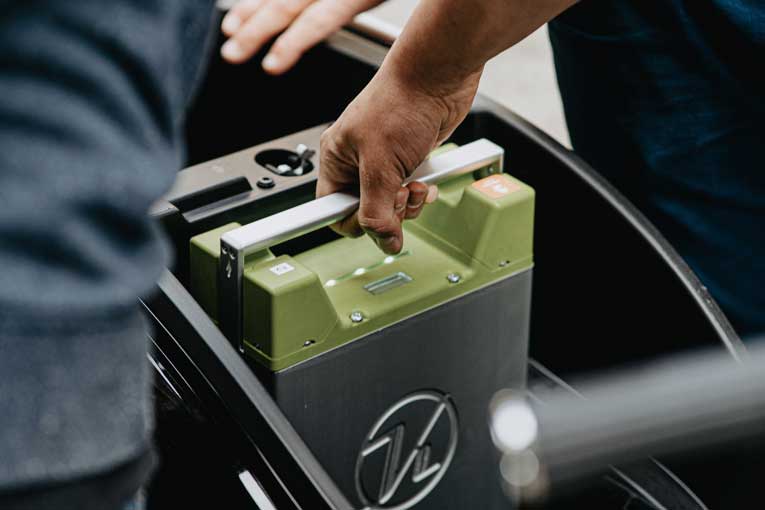
Electric Scooter Lithium Ion Battery
Electric Scooter Lithium Ion Battery. Image credit: Unsplash

Considerable research is being undertaken to determine why thermal runaway occurs and how it can be prevented.

LIB manufacturers are also looking to build detection and extinguishing capacity into LIBs, but all this will take time and considerable cost.

This is why as Fire Safety specialist we feel training is essential in the interim period.

We have also, with our associates, produced thermal material sacks and thermal blankets with built in detection until LIBs are safer and easier to extinguish.

Training on Lithium Ion Battery Dangers

JGS Fire Safety has been working with the world’s leading scientists, fire experts and energy engineers.

Their aim is to develop a series of online Lithium-ion Battery Safety courses for personnel who handle, store, transport or work in the vicinity of lithium-ion batteries and those who may have to extinguish the fires or deal with an incident.

In addition, with more people working remotely, the potential risk for incidents within the home is increasing and these types of incidents are routinely being reported in the media around the world.

The courses are the only ones approved by the Institute of Fire Safety Managers (IFSM) and have CPD accreditation.

They are also accredited with the Nautical Institute for the maritime environment.

At JGS Fire Safety, they consider it essential that clients have training ratified by external independent accreditors.

Why Were Online Courses Developed?

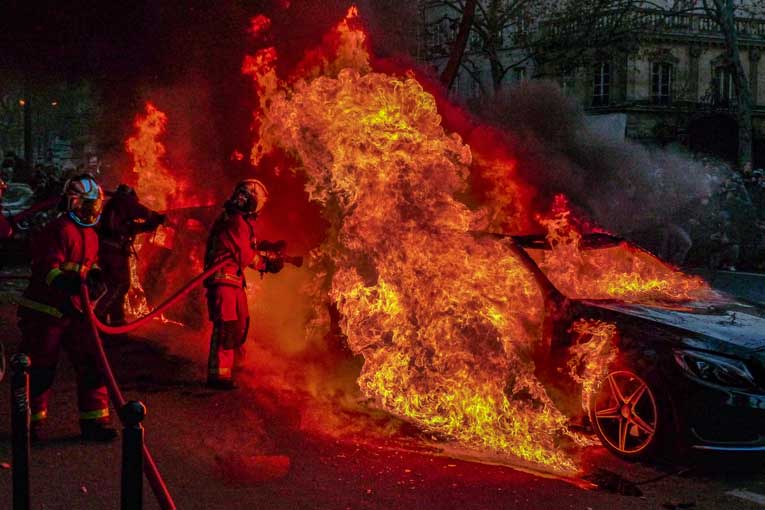
Firefighters Extinguish Burning EV
Firefighters Extinguish Burning EV. Image credit: Pexels

We work with companies who provide risk assessment and risk mitigation in high-threat environments and LIBs were being recorded as having started fires, or gassed off, in these environments.

Very few people were aware of the thermal runaway phenomenon at the time, so they set about finding out about the associated risks because many clients were using LIBs.

In doing so, they realised that an LIB incident is particularly hard to deal with and that many Fire Services had not, at the time, set up any Standard Operating Procedures to deal with them.

Currently there are no ISO’s for dealing with lithium ion battery dangers and most British Standard/EU Standards, or sector specific guidance, deals only with the construction of batteries.

They also realised no awareness courses existed.

Thus, they identified the problem and then implemented practical operational solutions and training to mitigate the risks to our clients.

Who Are the Courses For?

The courses are for people who handle, store, transport or work with lithium ion battery powered devices such as laptops, mobile phones, tablets, tools, appliances or energy storage equipment and electric vehicles.

This could be in their workplace, in their homes, travelling or during leisure time.

Currently people that are doing courses come from the maritime Industry, waste services, e-bike providers, fire safety managers, H&S Inspectors, mining, transport providers, cadet corps and school children.

They are in discussions with a local authority Fire & Rescue Service to provide courses to their Protection Officers initially.

These officers liaise directly with businesses within their areas and following the initial courses it is proposed to offer the courses to all operational and non-operational staff.

They offer greatly reduced course rates for the Emergency Services as a way of giving back to the people who gave me my opportunity in fire safety and who continue to do such great work for us all.

What Do the Courses Cover?

Module 1

Awareness of LIBs – ensures that students will be able to understand the hazards and dangers of lithium ion batteries, identify warning signs for lithium-ion battery incidents – especially potential vapour cloud explosion and thermal runaway fires and recall initial action if you are the first person on scene at a potential gas venting or fire.

Module 2

Dealing with LIBs Incidents – ensures the students understand the hazards and risks lithium ion battery fires pose; understand how you can potentially prevent and/or spot a LIB overheating; the initial actions you must take if you are the first trained person on scene; various techniques you can use to fight a lithium-ion battery fire and what to expect if the fire is out, but the battery is in thermal runaway; understand the structure of operational response (bronze) and tactical response (silver); and ways in which you can prevent a lithium-ion battery fire from occurring, looking at best practice.

Module 3

Strategic Management of LIBs – aims to build on the learning from our level 1 and 2 courses which considered the hazards and how to deal with lithium battery incidents.

The assumption is that anyone undertaking this course has completed at least one of these previous courses and has a working knowledge of the risks.

The learning aims of this course focus on how a student would assess and deal with a significant lithium ion battery fire in their business or organisation.

It stresses the importance of developing proper procedures for dealing with the dangers and challenges their staff could potentially face.

The course focuses on three areas of priority:

  • early Information and detection (EI)
  • early Intervention (EI)
  • Operational Handover to emergency services (OH).

By the end of Module 3 the student will be able to: understand the risks – and understand the importance of EI, EI, OH, and what systems can be adopted to implement a successful fire strategy, deploy a solution, understand ways to contain Lithium-Ion battery fires, especially the importance of textile solutions and textile innovation, and understand the post incident actions to take following a thermal runaway incident.

Why Should People Undertake the Training?

At this time LIB fires are extremely difficult to extinguish safely and the gasses that are given off are extremely poisonous.

The fire is intense and at times explosive.

Fire spread is rapid and containment is challenging.

For these reasons JGS Fire Safety provide the courses that will help reduce the risk to the workplace, the home, and anyone who may have to deal with an incident.

Why wouldn’t you want to undertake this training?

We all have a duty of care, both to ourselves and to others.

For more information on JGS’s training courses contact info@jgsfiresafety.co.uk or visit the JGC Fire Safety website: at www.jgsfiresafety.co.uk.

This article was originally published in the March edition of IFSJ. To read your FREE digital copy, click here.

About the Author

Guy Solly is the Director at JGS Fire Safety Limited.

he joined the Fire Service in January 1986 aged 19 and little did he know the impact it would have on his life.

He served his whole fire service career within Essex, starting as a firefighter in Tilbury, before moving to Orsett when the Tilbury Station was closed.

Afterwards he got promoted and moved to serve in Grays, where finally after a total of 25 years riding fire appliances operationally he got promoted into the Technical Fire Safety Department as an Inspecting Officer.

This role gave him a greater insight into fire safety as a whole and provided the training and knowledge to assist others during his time within that department and then also following his retirement in October 2016.

He established JGS Fire Safety Ltd when he retired, with the aim to provide guidance, assistance, and support to clients and to raise the awareness of the fire safety issues which impact on everyone’s workplace and home environments.

They work with individuals and companies who are working on new ways to address the potential issues with lithium-ion batteries.

They are developing new ways of mitigating the effects of an incident and ways of dealing with a fire situation quickly, effectively, and safely.