Women in Fire Sciences and Fire Safety Engineering

Esther Gitau, Testing Technician at Emirates Safety Lab, looks at notable and accomplished scientists and engineers in fire sciences and fire safety engineering.

Fire sciences and fire safety engineering are crucial fields of study and practice, as they aim to understand fire behaviour, prevent and mitigate its negative impacts, and and ensure the safety of people and protection of property.  Over the years, many scientists and engineers have made significant contributions to these fields, bringing innovative ideas, critical thinking, and diverse perspectives.

In this article, Dubai Civil Defense’s Emirates Safety Laboratory highlights some of the notable and accomplished women working in the fire sciences and fire safety engineering fields.
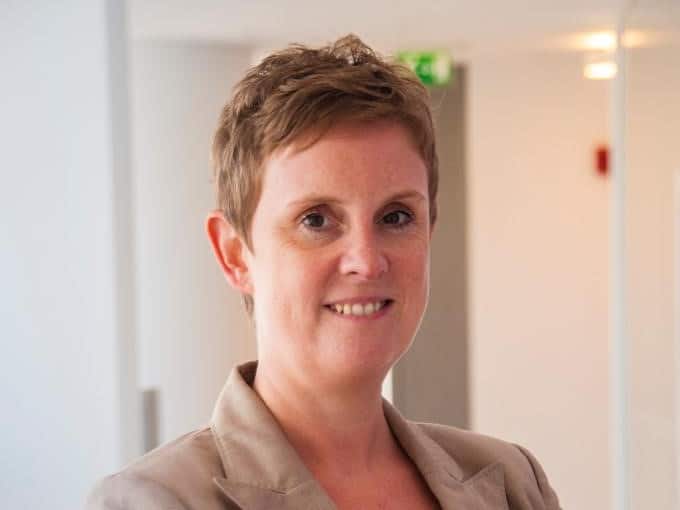
Dr Susan Lamont

Dr Susan Lamont is a renowned fire safety engineer and fire scientist, Fellow of the Society of Fire Protection Engineers and Fellow of Arup, a global engineering and consulting firm where she has spent her career. 

Throughout her career, Dr Lamont has made significant contributions to the field of fire safety engineering and fire sciences, earning her recognition as one of the leading experts in these areas.  Her work has focused on delivering holistic fire safety solutions for Arup clients across a range of new and existing assets in the Middle East, Africa and further afield.

Dr Susan Lamont is a highly respected fire safety engineer and fire scientist who has conducted extensive research over 20 years into the behaviour of fires and the effects of fire on building materials and structures.  She has developed new risk assessment methods for fire spread across existing building envelopes. 

Her research has helped to inform the development of more effective fire safety strategies and has contributed to the advancement of fire sciences as a discipline. Fire safety associated with sustainable forms of construction including emerging technologies and repurposing of existing assets is a focus of her current work.

Engineer Salma Humaid Saeed AlAli

Engineer Salma Humaid Saeed AlAli is a dedicated and accomplished fire safety engineer working for Dubai Civil Defence.  Her extensive knowledge and experience in fire safety engineering and fire sciences have made her an invaluable asset to the organisation.

Eng. Salma’s work has played a critical role in ensuring that buildings and structures in Dubai are equipped with the latest fire safety systems and technologies.  She works tirelessly to ensure that her team assists “major projects” and construction across the Emirate of Dubai and satisfies the UAE Fire and Life Safety Code.

One of her significant contributions has been implementing fire safety regulations and codes in Dubai, which have helped reduce the number of fires and the severity of their consequences.  Eng Salma has worked closely with architects, contractors, and engineers to ensure that all new buildings meet the highest fire safety standards and are fitted with the latest technologies.

In addition to her professional contributions, she is also highly committed to education and training in fire safety.  She has delivered numerous presentations and lectures at various industry conferences and exhibitions, helping to raise awareness about the importance of fire safety for protecting life, properties and the environment.

Eng. Salma has been recognised as a leader in her field on numerous occasions and commended for her dedication and commitment to the fire safety of the Dubai community.

Engineer Salma Humaid Saeed AlAli is a genuine fire safety hero.  Her work has helped make Dubai safer and more secure for residents, and her contributions to the field of fire science and engineering will continue to have a lasting impact for years to come.

Jennifer O’Connell

Jennifer O’Connell is a well-respected professional in the field of fire protection engineering, specialising in regulatory compliance. She currently works as the Director of Regulatory Compliance and Fire Protection Engineer at Vanguard Resources, Inc. 

She has significantly impacted the fire industry with her 20 years of experience with fire protection and life safety within healthcare facilities, new building & construction, renovations, general code consulting, code analysis, standards development, and code compliance.

Her research has been critical in developing building codes and standards for fire protection and safety. Jennifer is a member of several professional organisations, including the National Fire Protection Association (NFPA).

Amna Akram

Amna Akram is prominent in the region’s fire and life safety industry, achieving accreditation from leading international professional organisations.  With an all-encompassing educational background, including an MBA and BEng, MIFireE, and CFPS, she contributes to the fire and life safety sector with her extensive experience and expertise.

Eng Amna was the first woman certified as a Fire Protection Specialist in Pakistan.  By achieving this, she has set an example for other female engineers to enter the fire sciences and fire protection engineering field.  She was also the first female member of the Institution of Fire Engineers, Pakistan branch, a respected international organisation promoting excellence in fire engineering and fire safety.

In addition to her local accomplishments, Akram is a member of the National Fire Protection Association (NFPA) and the Society of Fire Protection Engineers (SFPE), two other leading international organisations that develop industry standards and guide fire and life safety globally.

Eng Akram works as the Engineering Manager for Fire Protection at CDC | Consulting & Design Consortium (Pvt) Ltd, one of Pakistan’s leading engineering firms.   She is also a registered member of the Pakistan Engineering Council, the regulatory body for engineering professionals in the country. 

Her continued Fire Protection Association Pakistan membership and contribution demonstrate her commitment to fire safety advocacy and standards.  Her contributions to the fire and life safety industry demonstrate her passion, determination, and drive to succeed in promoting fire safety across Pakistan and around the world.

Cristina Perez Domper

Cristina Perez Domper MSc. is a prominent fire safety professional with a degree in Civil Engineering and an MSc. Structural Engineering. Cristina has made significant contributions to the field of fire sciences and the Testing, Certification and Inspection (TIC) industry both in Spain and the Middle East. With over a decade of experience in the TIC industry, she has a wealth of knowledge and expertise in this area.

Cristina’s work in fire safety engineering started with her role as a researcher and engineer at The Spanish Association for the Promotion of Research and Fire Safety Technology (AFITI). During her time at AFITI, she was involved in numerous positions and was notable for recommissioning a fire test laboratory to be an accredited and commercially operating facility. In her current role as the MEA Regional Manager at Intertek Testing Services (ITS) based out of Dubai, Cristina continues to make a significant impact in the field of fire sciences.

As part of her role at ITS, she provides fire safety testing and certification services to clients across the UAE, ensuring that buildings and structures meet international fire safety standards. Her expertise in TIC and fire safety engineering helps clients to achieve safer fire safety products and systems for the wider community. She has been a frequent speaker at industry conferences and events, sharing her insights and experiences with others in the field.

Lori Greene

Lori Greene is a professional in the field of doors and hardware codes and resources.  With over 35 years of experience in the fire industry, she has developed a wealth of knowledge about the various code requirements that pertain to the design, construction, and installation of doors and hardware to ensure that the codes and standards that develop are accurate, up-to-date, and relevant to the industry.  Through her efforts, Lori has become a well-respected and trusted resource in the fire protection industry.

One of Lori’s most notable achievements in her career was the creation of iDigHardware.com in 2009.  This website was created as a resource for industry professionals to access information about doors and hardware codes and the functionality to ask technical questions and share information with others in the fire industry.  Over the years, iDigHardware.com has become a popular resource for those in the industry and has helped to provide access to the information and support that people need to get their projects done right.

Engineer Tamara Arafat

Engineer Tamara Arafat is a seasoned professional in the specialisation of product certification, factory production control auditing, fire safety engineering and fire sciences.  With over 25 years of experience in the manufacturing, consulting, and TIC industry.  She has made significant contributions to the TIC industry, especially working with fire safety products and systems, earning her a reputation as an expert in the area.

In her previous assignment as Certification Support Manager at Warringtonfire Testing and Certification, she was responsible for overseeing the certification process and factory auditing for key clients across the Middle East, North Africa and Indian Sub-continent regions of fire safety products and ensuring that these factories and production met international standards and best practice.  During her time at Warringtonfire, Tamara demonstrated extensive knowledge and experience in fire safety engineering, and she quickly became renowned for her expertise.

In her current role as Certification Business Manager at Emirates Safety Laboratory (ESL), Tamara continues to positively impact the field of fire safety engineering and the TIC industry.  Tamara’s work has profoundly influenced the Middle East’s fire safety industry and has been recognised for her contributions.

Engineer Tamara Arafat’s contributions to the Middle Eastern regions’ fire safety engineering, fire sciences and TIC sector cannot be overstated.  Her work has helped advance the understanding of product certification and improved the safety of buildings and those who occupy them.  Tamara’s dedication and commitment to her work have earned her the respect of the community and industry peers, and she continues to significantly influence the fire safety industry in the area of conformity assessment.

Conclusion

These scientists and engineers have significantly contributed to the fire sciences, fire safety engineering, fire testing, conformity assessment activities and codes and standards development. Their innovative ideas, critical thinking, and diversity of perspectives have brought new insights and approaches to the field and have significantly impacted fire protection as a whole. Their work has advanced fire protection engineering, fire testing, understanding material science and fire behaviour, its impact on people, property, and the environment, product certification and the development of fire safety practices and standards.

About the Author

Esther Gitau is a Testing Technician at  Emirates Safety Laboratory (ESL). She has a background in Mechanical Engineering, having earned her Bachelor’s in 2018. She worked at Kengen, Kipevu ( power production) in Kenya before joining ESL.

Contact Esther at: esther.gitau@emirateslaboratory.com

IFSJ Leaders in Fire & Safety: Conference Preview

International Fire and Safety Journal’s official preview of the ISFJ Leaders in Fire and Safety Conference, held in association with MSA, The Safety Company. By Duncan J. White, IFSJ Managing Editor.

On 11 May 2023, the ISFJ Leaders in Fire and Safety conference will bring together over 120 of the most influential figures from the Middle East and Africa fire and safety industry to deliver a high-class business forum that focuses on business strategy, latest trends, regulations and innovations from the region.

Working alongside key associations, regional authorities, leading manufacturers and innovative solutions providers, this much-anticipated conference – which is taking place at The Grosvenor Hotel, Dubai Marina – will provide a unique platform for the very best fire and safety companies and personnel in the region to network with one another and learn from the host of influential speakers in attendance.

Connecting likeminded senior fire and safety professionals throughout the course of this one day, invite-only event, the ISFJ Leaders in Fire and Safety Conference is taking a closer look at the key topics influencing the region from a fire and safety perspective whilst exploring the biggest challenges facing organisations in the Middle East and beyond. By utilising interactive panel discussions and face-to-face networking opportunities, delegates can anticipate high level conversations which will explore key areas for business growth in the region.

This event will bring together regional fire and safety leadership professionals from all facets of the industry, who all have a single goal, to promote and enhance professional fire and safety practices and develop understanding of an ever-evolving industry. Those attending the ISFJ Leaders in Fire and Safety Conference will get to hear from a wealth of industry experts working in and around the Middle East and Africa region.

As well as its proud partnership with Dubai Civil Defense, the IFSJ Leaders in Fire and Safety Conference is also delighted to be working alongside The Institution of Fire Engineers (IFE). From a technology perspective, the conference has also attracted a significant amount of interest from solutions providers and manufacturers including MSA, Global Fire Equipment, Dafo Fomtec, Reacton, Performance Advantage Company, Nightstick, PBI Performance Products and De-Wipe.

The ISFJ Leaders in Fire and Safety Conference is pivotal in promoting higher standards of fire and safety in the region. The UAE is a rapidly evolving region, with fascinating new approaches and advancements in fire and safety. This event will offer an insight into a few of these, by leading regional fire and safety subject matter experts.

Everything you need to know

Hosted by Centurian Media Ltd, IFSJ’s Leaders in Fire & Safety Conference will bring together leading figures from the Middle East fire and safety industries to deliver a high-class business forum that focuses on business strategy, the latest trends, new regulations and the most exciting innovations from the region.

Taking place at The Grosvenor Hotel, Dubai Marina on Thursday 11 May 2023, the one-day in-person conference will focus on the most important topics and verticals from the fire and safety sector, with expert commentary and views provided by our advisory panel, conference speakers, industry expert panellists and a host of high-profile influencers.

Who is involved?

The Conference, held in association with MSA Safety, will bring together over 120 of the region’s senior fire and safety professionals to network and share ideas on the latest trends and developments impacting the fire and safety sectors in the Middle East.

As well as its proud partnership with Dubai Civil Defense, the IFSJ Leaders in Fire and Safety Conference is also delighted to be working alongside The Institution of Fire Engineers (IFE).

From a technology perspective, the conference is being supported by an elite range of solutions providers and manufacturers including MSA Safety, Global Fire Equipment, Dafo Fomtec, Reacton, Performance Advantage Company, Nightstick, PBI Performance Products and De-Wipe. Hear from our sponsors (p42-54) about their view on the Middle East Market and why they are looking forward to the exclusive event.

In late 2022, International Fire and Safety Journal announced MSA as the event’s Platinum Partner. Jason Traynor, General Manager, Global Fire Service for MSA Safety, said: “At MSA Safety, we’re proud of the strong relationships we have built in the Middle East since we opened our first office in Dubai in the early 1980s.  We’re proud to partner with IFSJ for Leaders in Fire to continue to advance the strong relationships we have built in the Middle East since we opened our first office in Dubai in the early 1980s. Bringing together leaders in the industry in a platform like this will help ensure the very best protective equipment is available to firefighters on the front line, wherever they are in the world.”

The Conference Chair

International Fire & Safety Journal is pleased to announce that Terry Johnson, Manager Crisis Preparedness & Emergency Response – Group HSE Department, ENOC, and recently appointed Regional President of the Institution of Fire Engineer’s GCC UAE branch, will Chair the inaugural IFSJ Leaders in Fire & Safety Conference.

“I am extremely proud to be Chairing the inaugural IFSJ Leaders in Fire & Safety Event,” said Johnson. “This will be an excellent opportunity to bring together the most influential leaders from across the region, and further afield, to discuss current high-level issues and to explore opportunities for greater collaboration in the future.”

Advisory panel

David Campbell, General Manager, Dubai Civil Defense’s Emirates Safety Laboratory, and Robert Davies BSc (Hons) MSc CEng MIFireE CFPS, Operations Director at WSP in the Middle East have joined advisory panel for the inaugural IFSJ Leaders in Fire & Safety Conference.

Campbell and Davies join fellow advisory panel members Mark Buckingham, Head of Emergency Preparedness at Abu Dhabi Airports, John Cowling, Security & Safety Specialist, Sinclair Duffie, Chief Fire Officer at Nawah Energy Company, Jonathan O’Neill OBE, Managing Director of the Fire Protection Association, and Conference Chair Terry Johnson, IFE GCC UAE Branch President and Technical Service Manager – Group HSE Department, Emirates National Oil Company (ENOC).

The advisory panel have been instrumental in supporting the event and sharing their expertise, providing insight into the biggest challenges facing the Middle East and the issues which are keeping fire and safety professionals up at night. Thanks to their support, guidance and influence, the conference is surely the must-attend event for all leaders in fire and safety in the region.

On the agenda

After an introduction from Terry Johnson, Conference Chair, delegates will have the pleasure of being greeted by H.E. Brigadier Expert Ali Hassan Al Mutawa, Assistant Director-General of Dubai Civil Defense for Fire and Rescue Affairs, who will be presenting the Keynote Address and laying out the roadmap for fire and safety in Dubai throughout the rest of 2023 and beyond.

Panellists will be focussing their discussions on topics such as:  fire safety in buildings and construction, improving sustainability in the fire industry, the changing role of facilities management, equipment for the modern firefighter, industrial and airport firefighting challenges, the Middle East fire and safety landscape, firefighter health and safety, digital innovation, new constructions methods, fire and safety regulations, recruitment and training, product certification, integrated life safety systems and

The deadline for speaker submissions for the IFSJ Leaders in Fire & Safety conference is 24th March 2023, so if you have experience and skills that you would like to share in order to help other professionals within the region, contact Iain Hoey at iain.hoey@intfireandsafetyjournal.com.

This article was originally published in the March edition of IFSJ. To read your FREE digital copy, click here.

IFSJ Exclusive: Data over opinion with Fomtec

John Ottesen, CEO and Founder of Dafo Fomtec AB, sits down with IFSJ Editor Iain Hoey to talk about his life, his company and why the fluorine-free foam pioneer is focused on a data-driven approach

Fomtec has been around for 22 years – can you tell me about your background in the firefighting foam industry and what led to the founding of the company?

I’ve been in the industry for 30 years now. I started my career in the fire industry at Tyco back in Norway in the early 1990s. I spent almost 10 years at the company in various positions, but everything I did related to foam – that is how I became connected to the foam industry.

I found that there is a lot of good things about working in a corporate environment, but I thought there might be an opening for more agile customer-focused company, where decisions could be made more dynamically and quickly and with strong customer focus – that is how the idea for Fomtec came to life.

Going back to 2000 something big happened in the industry – 3M exited the foam market, leaving a significant gap. This was a natural opening for how we came to enter the market, and I have now spent 22 years at the helm of Fomtec.

What were your initial plans and goals for Fomtec back in 2001? Has this changed in the intervening years?

I wanted Fomtec to be an agile, customer-focused, and innovative company. It was about creating the marriage of the product focus and the customer focus: putting the product in perspective as to how it is being used in the system.

We are a fire protection company that makes foam concentrates and hardware, not a chemical company blending a product. The idea I had was to be strongly customer and product-focused and offer in-depth insights into how our products are being deployed in a holistic approach.

My overarching goal was to have the company playing in the ‘Premier League’. You never know when you start something where it will end, but my ambition was always to be coming to a point where we have that kind of position in the market.

The industry has in many ways stayed the same, but there have been many changes over the past couple of decades. When I started back in 2001 and you looked at the UL listings – which is very important in our industry – there were only a small handful of companies with UL-approved products. Today there are many, so in that way, it has become very competitive on the approved-products side of things

After the PFAS story started when 3M exited the sector, the forever chemicals narrative has been impacting our industry ever since and has been strengthening our ambitions year on year to the point where in 2023 we are standing in front of a major phase-out of PFAS products.

How has the industry changed over the course of Fomtec’s lifespan?

Even though we had the internet and emails back in 2001, the internet is today very different from what it was, whether that’s marketing, finding customers, or even down how you deal with people online – it has changed the way we conduct our business. The mediums that we use to communicate and the role the internet plays in how we are visible to the market is a huge transition.

On the chemistry side, obviously, the impact of PFAS restrictions is big. This forces the industry into product development and innovation, it brings in new players into the market, and it challenges us in all aspects of what we do.

Product-wise there have not been any huge changes to the systems. The only thing that has really grown over the years, apart from the chemistry, is CAFS [Compressed Air Foam Systems] has become more of a product than it was back in the day. It was not a big thing back in the early 2000s, but now it has become something more significant. Other than that, it is pretty much the same except for the conditions which are around us. It can be a very volatile market from time to time, just as we are experiencing right now.

What are the biggest milestones/achievements for you and the company to date?

When we set out to do this, I wanted to play ‘Premier League’ when it comes to being one of the top companies in the world when it comes to product offerings and approvals and our overall position. I must say that when we got our first FM approval in 2007 it was a huge thing for me because FM does not approve products, it approves systems. Fomtec is not just a product offering, it is a system – that was a big thing that really lifted the position of the company.

The next big milestone for me was when we got our Military Specification (MIL-SPEC) in 2014 –  there are very few companies on the Qualified Products List (QPL) for the American military, and that was a hugely significant step for Fomtec. At the same time, we made a very smooth transition to C6 – we finished with the transition to C6 in 2014, which I’m proud of.

C6 is short for Short-chain fluorochemistry, and the move from long-chain (C8) chemistry to short-chain (C6) fluorochemistry was a big push by our industry to take steps to introduce more environmentally responsible chemistry. The industry had a voluntary deadline of January 2015 to make this transition from C8 to C6. These days C6 is being regulated as well, and that leads to the transition away from fluorochemistry (PFAS) altogether.

The thing that I’m most proud of is that we were the first company to bring an FM-approved fluorine-free sprinkler foam suitable for both hydrocarbon and polar solvent fires to the market. Being the first to introduce something to the market, to me, stands out as a fantastic achievement.

Those are my three – if you look at it, it’s 2007, 2014, and 2021 – it’s a seven-year cycle between these things.

We’ll have to check back in 2028 to see what you’ve done next!

That was my thinking too.

What is the current focus for Fomtec for the years ahead? What do you foresee being the main focus for yourself and the company?

It’s all about innovation now. It’s really important to be innovative and to continue to drive innovation at this time. We want to bring first-class products to the market. In the way we conduct our business and our innovation, what we talk about is to inspire the industry to focus on data, not opinion.

This transition [to fluorine free foam] is a major technological change and it affects not only the concentrate, but the whole system and the way the products are being used. We who take part in this early transition carry quite a heavy burden because we are setting the stage for what this is going to be. Is the future of foam going to be based on data and facts or are we going to take a short cut by making assumptions based on old truths?

In future generations, when people 10-20 years from now base their system designs and approach to fire protection, they’re going to look back at what was done in the early transition, just as we did. We have relied on the PFAS and testing that was carried out in the 70s and 80s – these we know now are old truths. We are making the new truths, and it is really important for us to do that in the correct way. That is the main focus for us now: to base everything on data, not opinion, to be innovative, and to continue being customer focused, which is key.

This is what I do. I have been doing it for my whole career, and for me, it is about carrying on what I have done and trying to keep that spirit we have had from the very beginning – to be customer focused, innovative, and never lose sight of where we started.

Has the response to your approach been positive?

I think so – I cannot speak for others in the industry, only for us, but it is a commitment to say data not opinion, because it puts a lot of responsibility on our shoulders. We have to really generate data and stick to data, and sometimes that is a heavy burden – you can do something wrong out of ignorance because you really do not have data, but if you do know and you still take the shortcut then that is a heavy responsibility. Our approach has been well received, and customers and users appreciate that, but it comes at a cost – it is not for free.

You have been in foam for most of your career – if you were not doing this, what do you think you would be doing instead?

That is a difficult question because you never know where you’ll wind up! Often it is a pure coincidence, and I think in my case it was a coincidence winding up in the fire industry altogether. But I have always said that if I was not making foam, I would be brewing beer.

Do you have any word of advice/wisdom for the readers of IFSJ?

I just want to reiterate that what Fomtec is all about these days which is: data not opinion. That is really key for the audience and everyone involved in foam and fire systems – that their design and approach to fire protection is data not opinion. It is really important. Fire systems, for most users, are an overhead – it does not contribute to the bottom line of the company who buys the system – but the day it needs to work, it definitively needs to work, which is why the data is absolutely critical. That is my wisdom to share: base your decisions on data not opinions.

This article was originally published in the March edition of IFSJ. To read your FREE digital copy, click here.

IFSJ Exclusive: Behind the Red Plaque Scheme

Tam McFarlane, Fire Brigades Union National Officer talks about the project commemorating the lives of those lost in the line of duty

What is The Red Plaque Scheme?

The Red Plaque Scheme is a project designed to ensure that firefighters who have lost their lives in the line of duty are remembered through a permanent memorial. This is designed as a striking red plaque which bears the firefighters name. It is normally placed either at the scene of the fire, where the firefighter lost their life, or at the fire station from where they were based.

It was established as part of the Fire Brigades Union’s centenary, which took place in 2018. It is part of a Firefighters 100 Lottery project which was put in place to come up with memorials for fallen firefighters.

In 2017, in the lead up to the centenary, it struck a group of us, that there should be a similar scheme as the blue plaques they have in London, placed on houses where people of historical significance lived. But for real heroes – firefighters who have lost their lives in the line of duty.

We then engaged with different designers to come up with the design for the red plaque before putting it forward to the executive where it was agreed upon. It has been entirely funded by the Firefighters 100 Lottery, which was launched at the same time as the centenary. Since it began, the Scheme has really caught the imagination of firefighters and communities right across the country.

We have set up a website for the project. People are encouraged to make applications to have a red plaque put in place. To date we’ve got over 70 plaques that have been unveiled, that carry the names of over 180 firefighters – some plaques have more than one firefighter that lost their life in the line of duty. We’ve got a whole list of pending plaques that are under consideration at this time.

How has the FBU chosen which firefighters to recognise?

It is specific to firefighters who have lost their lives in the line of duty. We’ve got a team in place in the Fire Brigades Union (FBU) and they consider all applications on their own merits. We assess the name against the firefighters’ memorial trust records, and if the name is registered then that is taken as appropriate. If it’s not there, we undertake an investigation to see if it’s viable.

Can you give details of some more notable examples?

Every firefighter that gets a plaque laid in their memory is notable. It would be wrong to pick out one name. Every plaque I’ve attended has been notable in its own way.

Recently there was a red plaque unveiled at Maryhill Fire Station, where a firefighter called Adrian McGill had lost his life in the line of duty on 18 November 1972. In many ways Adrian’s red plaque is typical of the courage and bravery shown by firefighters on a daily basis.  He was attempting to rescue a trapped woman in a fire at Maryhill Road in Glasgow, and it is thought that in an attempt to save her life he gave her his oxygen mask. Unfortunately, both died in the incident.

It is that sort of real courage that defines the service in many ways and is what we think is so important to remember. We hope when the public see the red plaque they’ll see the sacrifice that firefighters have made over the years in service to their communities.

This project has primarily been driven by serving firefighters: the Red Plaque Scheme has come to their attention and they know of instances within their own brigade where firefighters have lost their lives. It only takes one or two people at a station to research that person, make an application and drive forward the process.

The majority of these plaques are driven by firefighters, which I think shows a real connection between the service of firefighters today and their recognition and understanding of the sacrifice that colleagues who built the fire service have made in the past.

Firefighters know their history. We understand the legacy that has been left to us and its driven home to us whenever we are on duty. We understand the sacrifice of previous generations, whether that be in building the service, improving the service, and developing safe policies, procedures and practices. We understand our history and we know how important it is that it is recognised at a wider level across communities. That’s what the Red Plaque Scheme is all about.  

How can people support the Red Plaque Scheme?

I’d ask people who would like to participate in the project to go to the Red Plaque website (redplaque.org.uk) where you can see a list of all the plaques that we’ve laid so far and make an application for a new plaque. Every single plaque is funded in its entirety by the proceeds of the Firefighters 100 Lottery. That’s only a pound a week to buy a lottery ticket, and a portion of the proceeds from each ticket goes to good causes, including the Red Plaque Scheme.

The project is going from strength to strength, but behind every plaque there is a personal tragedy. People are always surprised by the number of firefighters that have lost their lives in the line of duty – well over 2000 in the UK – and I think there’s a real desire to see these heroes recognised, which this project is designed to do. 

This article was originally published in the January edition of IFSJ. To read your FREE digital copy, click here.

IFSJ Exclusive: The Last Word with De-Wipe

Jo Taylor MBE, Director of De-Wipe talks education, decontamination and plans for expansion

Tell me about yourself and the company’s background?

I’ve worked in the fire and rescue industry for over 12 years. I was previously involved with the development of an innovative rescue tool which was designed for water rescue for firefighters. Because of my knowledge, network and respect in the industry I got to know people I learned of potential risks, so we looked at introducing a decontamination wipe into the UK market.

Tell us about De-Wipe and your presence in the fire market?

De-Wipe is a decontamination wipe which is scientifically proven to eliminate harmful toxins from the skin. Recent research from across the world, including that from the World Health Organisation, has identified that the increased risk of cancer amongst workers and industry including firefighters. People have become aware of the risk and need to take action.

How is the wipe used?

Post fire, firefighters will use the wipes over their face, neck, hands and torso areas as studies have shown that these are the areas where there is the most exposure. It’s a case of wiping off the contaminants post-fire and then following that with a shower. In the UK we have a mantra of shower within the hour, so they would wipe themselves down, and then have a shower using the De-Wipe hair and body wash which is scientifically proven to remove contaminants and also removes the smell of smoke – which is ground-breaking results.

How has the industry responded to the wipe?

In the early days the focus was on giving fire and rescue teams an education rather than just a sales pitch. We wanted people to really understand what was going on which was around the same time the Fire Brigades Union were also doing some studies into firefighter health.

The doctor we have onboard with De-Wipe has already studied this for over ten years in the US, so he had a lot background knowledge about the contaminants that firefighters are being exposed to. All we had to do was find the right solution to remove the contaminants. In the UK, we supply to over 90% of UK fire and rescue – they really took it on board and are committed to protect their workers.

What are you plans in markets outside the UK?

We have got the product out to a few countries in Europe who are getting on board. Its always great to get out to Intersec as we’ve got customers in the Middle East, particularly from the airport side and the oil and gas industry. We’ve also got customers in Australia and New Zealand, as well as some trials in progress in Chile, South America.

What does the next year and beyond look like for you?

We’ve got huge growth plans for the business. We are looking to finalise everything, including signing a partnership with a distributor in the UAE, which we’re really excited for. We’re also looking at new industries – people often forget about aviation firefighting and industrial firefighting which seem to get missed. We’re looking forward to branching out into other industry segments.

This article was originally published in the January edition of IFSJ. To read your FREE digital copy, click here.

High rise firefighting: From practical to tactical with Brent Brooks

Brent Brooks, Specialist at HighRise Firefighting, considers the high rise challenge

High rise fires have been a growing issue around the world, and with cities continuing to build upwards it is inevitable that this is a scenario firefighting teams will be faced with over and over. In every tragedy, there is a lesson to be learned, which is why Brent Brooks, acting Captain with Toronto Fire Services, has made it his mission to understand the challenges of high rise firefighting to ensure that, whenever the next tragedy strikes, firefighting teams will be prepared for every outcome.

Brooks spoke at Intersec 2023 Fire & Rescue Conference, hosted by the Directorate General of Dubai Civil Defense, to talk about developing a tactical approach to high rise firefighting and minimising loss of life.

Background

“I am a boots on the ground firefighter,” opened Brooks, “I could be going into a high rise fire every single time I go into work.” This is certainly no exaggeration. Brooks is part of High-Rise Unit 332 in Toronto, Canada, and he noted that the unit get called to around 16 fires a day. The number of calls in the city was so high that there was the need to add a second high rise unit and are expecting add two more high rise units in the near future.

In 2010, Brooks and his team attended an incident that caused a career pivot and saw him refocus his energy towards researching high rise firefighting: “If you get to a point in your career, regardless of what your career is, and you think you know it all – it’s time for a reality check. You’ll never know everything you need to know about your topic.”

He spoke about the six-alarm fire at a high rise building that changed his career: “It was my crew that had the mayday. We almost lost two firefighters lives that had to be rescued. The other firefighters were burned very badly. This fire burned for eight hours. It was contained to a room and contents – how can that burn for eight hours?”

This question drove Brooks down the rabbit hole of research, vowing to understand the nature of high-rise fires to ensure that this would never happen again. He listened back to the audio recorded during the fire and found that their response was ‘absolutely textbook’: “There was nothing we did wrong, we followed the policies and procedures. We accepted that.

“In the investigation following the fire, they said that ‘this is high rise firefighting, its wind impacted, it is going to be difficult’. I still wasn’t ok with that.”

On the job research

At 650 parliament street, Toronto, the team faced had two fires in under a year. The building’s inner workings were burned from the bottom right through to the top: “There was nothing we could have done about it. We gathered every single 100-pound CO2 extinguisher city wide and brought it to the fire. We can learn from this.”

In another incident where Brooks and his team were first on the scene, they actioned the flow rates that Brooks had been researching: “It proved to us that big water matters. Our flow rates matter. What we’re putting on the fire really matters. We made really quick work of this fire.”

In 2018, the team had realised the value of staging resources inside the building in the event of emergency – and that’s exactly what happened when they were able to use equipment that they had previously positioned at the location of the fire: “There was a firefighter mayday, the firefighter went down, our team were in position and we were able to rescue this captains life because we were in position to be proactive, not reactive.”

At another alarm in 2019 at the building that sparked Brooks’ focus, they learned about pressure isolation and keeping the smoke contained to the fire floor. “We also learned door control – that is a big thing when you look at high rise buildings with the compartmentalisation. Door control is key.”

Brooks added that he was at the Tall Buildings Conference where he learned about vertical metal cladding: “This is the future. We did the research, the science and the investigation into this. We know what fire does. We know the megawatts that the fire puts out – and how many litres per minute we need to put on that fire to put it out. The science and math are correct.”

A new approach

When looking at his unit’s tactics, he went to the city planning department and asked for history of the city of Toronto. The gist was that firefighting tactics have been designed around 1960s-70s building types, but that this does not account for new building structures developed in the intervening years.

“These are all a lot more complicated than the 1960s buildings that our high rise firefighting tactics are built around. We have high rises, wide rise, vertical village, horizontal high rise, high rise buildings on its side, ground scraper, ply-rised and tooth picked towers.”

With this in mind, he says the idea, he says, is to develop a tactic for every scenario and not be caught out or delayed by not having the right equipment or taking the wrong approach.

Part of this tactical planning involved timing: “We started timing every single thing that we do in Toronto, we know how long takes us to get to any building address – but we don’t know how long it took to get to the true fire location. It takes us longer to get from parking the truck to the fire.”

Brooks noted that there is an NFPA standard of two minutes to get out of the fire station: “There’s another four minutes to get to the call. That’s six minutes to get to the building address. It takes a further six minutes to get to our alarm location. We have to enter the building and do our investigation – this is taking 12 minutes after we arrive to get water on the fire.

“During that 12 minutes we have to start setting the stage for our vertical response: figure out the ventilation profile of the building, wet-test the Fire Department Connection, I need to begin staging equipment then here is the difficult decision – are we going to shelter in place, evacuate, or are we going to defer this? We can predict and forecast what that 12 minutes is going to look like in our city. High rise fires are predictable now.”

He said that his team’s Plan A is to use the building’s fire model, Plan B is using the fire truck pumping in from the department connection. If A and B fail, they are going to run a line into the ground floor stand pipe and if it will accept it. If they all fail, Brooks’ unit has eight different tactical options for the crew that went up: “There’s no added equipment that has to go along. We also started staging equipment – we’re being proactive, not reactive.”

He added: “We can predict what’s going to happen with a fire in the next 12 minutes, so we can know if a fire is going to the roof and be prepared for that. We’re ready for the effect for wind, door control, we are getting better and better, but it takes research.

“The point is being ready for anything and knowing how fire works. We have tactics for everything. We did all this research, putting the science into high rise firefighting, but it takes your feedback to help me.”

This article was originally published in the January edition of IFSJ. To read your FREE digital copy, click here.

Head-on train trash kills 38 in Greece, death toll to rise

 At least 38 people have died as the result of a passenger train in Greece collided head-on with a freight train late on Tuesday. Carriages derailed before bursting into flames in what has been deemed the country’s deadliest rail crash in living memory.

Officials said the death toll was expected to rise further, as temperatures in one carriage had risen to 1,300 Celsius (2,370 F) after it caught fire. Many of the victims were thought to be university students returning home after a long holiday weekend.

Authorities have said they are working to establish how the high-speed passenger train collided with another carrying shipping containers, coming in the opposite direction and on the same track at speeds of up to 100 miles per hour.

Greek Prime Minister Kyriakos Mitsotakis said in a televised address on Wednesday: “Everything in this tragedy points, unfortunately, mainly to human error.”

Engulfed in flames

Passengers reportedly described a ‘nightmarish’ crash which engulfed their train in flames just before midnight near the central town of Larissa around 200 miles north of Athens. The train had departed from the Greek capital and was headed to the northern city of Thessaloniki. Some broke through windows to escape the fire whilst others were thrown up to 40 metres (130 ft) on impact.

Stergios Minenis, a 28-year-old who jumped to safety, said: “There was panic… The fire was immediate. As we were turning over we were being burned, fire was right and left.”

Another passenger, who escaped from the fifth carriage, told Skai TV: “Windows were being smashed and people were screaming… One of the windows caved in from the impact of iron from the other train.

Death toll ‘likely to rise’

A station master has been arrested as investigators try to work out why the two trains had been on the same track, whilst the country’s transport minister has resigned.

As rescuers continue to search the wreckage, fire brigade spokesman Vassilis Varthakogiannis said the temperatures in the first carriage made it hard to identify those trapped inside, or say how many died and based on this, the death toll was likely to rise.

Strike action

In later statements, Prime Minister Kyriakos Mitsotakis said he had accepted the resignations of senior officials in rail operator OSE and its subsidiary ERGOSE.

In Athens, around 1,000 people have been protesting outside the offices of Hellenic Train, another branch of the rail network, where some threw stones at windows.

Hellenic Train said it had suspended all scheduled trains on Thursday after railway workers said they would strike.

“Pain has turned into anger for the dozens of dead and wounded colleagues and fellow citizens,” the workers’ union said in a statement announcing the strike. “The disrespect shown over the years by governments to the Greek railways led to the tragic result.”

IFSJ Exclusive: Evacuation – Have you got a plan for that?

Kevin Carr, Senior Fire Protection Specialist, talks about the NFPA’s emergency evacuation guide

Recently, someone that I know was in a building that needed to be evacuated due to an emergency situation. As many of us have experienced, building evacuations are often unplanned events that require an immediate response from occupants. Even under the least stressful conditions, relocating people to a specific area within a building, or having them vacate entirely, can be an arduous process. In this particular case, the individual I mentioned has a cognitive disability, which makes processing information and responding calmly difficult for them. Thankfully, due to a previously developed emergency evacuation plan that was properly executed, both the individual, as well as his companions, were able to egress the building safely without incident.

This example underlines the critical role that emergency evacuation plans play for occupants within a given building. These plans can take many forms, and may be required by applicable building, fire, and life safety codes. I would argue that a key consideration of these documents is understanding the occupants who are likely to be present. This includes people with disabilities, as they may have specific challenges and assistance needs, some of which may not be apparent. Unless carefully considered during the plan’s development or update, these concerns could potentially be overlooked.

To assist with these endeavors, NFPA recently released the third edition of the publication, Emergency Evacuation Planning Guide for People with Disabilities (herein, the Guide). The document’s main purpose is to provide building occupants, as well as building managers in non-residential buildings, guidance on how to develop an emergency evacuation plan that is inclusive of people with disabilities. Similar to previous editions, the document was developed by the NFPA Disability Access Review and Advisory Committee (DARAC), who specialises in advising NFPA regarding disability concerns.

DARAC, along with NFPA staff, sought to reimagine the publication from previous iterations. Most pressing, the focus was to guide the reader through practical considerations to develop a plan, explaining the fundamentals of evacuation, and provide a tool to record their findings. Given this premise, the Guide was reformatted into four distinct areas listed below, with some practical questions to consider:

1. Preparing an emergency evacuation plan

It could be argued that one of the most difficult challenges with emergency evacuation planning is where to begin. This section outlines practical considerations that should be considered before, during and after the plan’s creation. For many organisations, emergency evacuation plans could be a component within a larger emergency plan, and include other aspects, such as business continuity operations, for example. Others may develop a stand-alone document that is not reliant on outside factors.

In either case, the emergency evacuation plan often originates with the creation of a planning team. This team should ideally be composed of key stakeholders, such as building management, and seek to include people with disabilities among its members, as they are able to offer specific and relevant information. The team, once constructed, should assess the building, its operation, and occupants, leading to the creation of relevant and detailed plan.

Once developed, and most critically, the plan should be practiced. This step cannot be overstated enough, as testing will reveal how occupants might respond during an actual emergency. The planning team should review any exposed deficiencies to determine the most appropriate course of action. Finally, the planning team should establish a time to review the plan and provide updates at appropriate intervals.

Are you developing a new emergency evacuation plan or revising an existing one? If so, you may wish to consider these questions to get you started:

  • Does my organisation or building have a current plan?
  • When was this plan developed?
  • When was the last time a test of the plan was performed?
  • Who is responsible for the plan?
  • How is the plan communicated to occupants?
  • Has input, specific to people with disabilities, been received for inclusion within the plan?

2. Stages of an emergency evacuation

Understanding the building, and its operation, is an essential component for the creation of an effective plan. This section reviews five stages of evacuation to help the reader ensure that each phase is considered. The phases (Notification, Exit Signs, Exit Access, Exits, and Exit Discharge) are provided with associated images to visualise these concepts for the reader.

These five components, which are steeped in aspects of NFPA codes and standards (for more information, see www.nfpa.org), are provided in simple terms so both new and experienced individuals may participate in the plan’s development. It is important to note that while the Guide is a tool, it does not take the place of local, state, federal or other legal or regulatory requirements applicable in any jurisdiction. Please contact your authority having jurisdiction (otherwise known as “AHJ”) for information regarding your specific responsibilities.

Questions to Consider:

  • How is your building arranged?
  • How does your building utilise each phase of evacuation?
  • Who can assist you with questions you may have about your building’s arrangement?

2. Checklist for emergency evacuation planning

Having a tool to collect information is essential to crafting an effective plan. This section provides a checklist for the planning team, or individuals, to document their findings. The checklist is provided in five separate parts, based on the topics covered under the Stages of Emergency Evacuation, mentioned above. This is by design, as it allows the checklist to work in tandem with the source material to assist in uncovering any gaps that might be exposed.

Questions to Consider:

  • What items on the checklist are most applicable to the building’s arrangement?
  • Does the checklist need any additional areas to be added?
  • How will the information from the checklist be used and stored?

4. Resources

As the Guide is provided as a tool only and is not intended to replace legal or regulatory requirements, the planning team may determine that additional resources are needed to assist them with specific considerations. This section provides a partial list of NFPA and other resources that have expertise in a variety of areas and topics. As mentioned previously, a key resource to consider is the AHJ, who may include, but is not limited to, a building or fire official. Please consider contacting them with specific questions or concerns, as well as guidance.

Questions to Consider:

  • What resources are essential for your emergency evacuation plan to consider?
  • What outside resources should be consulted?
  • Have any areas for training been identified? If so, how will they be addressed?

As this brief outline of the Guide demonstrates, emergency evacuation plans are vital documents that have the ability to assist all occupants, including people with disabilities, in emergency situations. It is imperative that careful thought and consideration be undertaken when developing and revising these plans to achieve the most inclusive results.

When practiced and executed effectively, these plans have shown to have a significant impact on occupants’ ability to observe safer, calmer, and orderly evacuations. I challenge you to examine your own building’s plan and ask questions about how it could be improved for the benefit of everyone.

Stay healthy, stay safe, and stay inclusive.

About the author

Kevin Carr is a Senior Fire Protection Specialist at NFPA. He is the staff liaison for several technical committees, including NFPA DARAC. He may be reached at kcarr@nfpa.org.

Any opinion expressed in this column is the personal opinion of the author and does not necessarily represent the official position of NFPA or its Technical Committees. In addition, this piece is neither intended, nor should it be relied upon, to provide professional consultation or services.

This article was originally published in the January edition of IFSJ. To read your FREE digital copy, click here.

England high-rise owners given until October to register with new Building Safety Regulator

People responsible for the safety of high-rise residential buildings in England have been given until October 2023 to register with the new Building Safety Regulator, which was established in response to the Grenfell Tower fire to protect high-rise residents from unsafe building practices in England.

Under the Building Safety Act, high-rise residential buildings which are 18 metres tall or higher, or at least seven storeys, with two or more residential units are defined as ‘higher-risk’.

There are approximately 12,500 of these buildings across England and the new regulator will require all of them to be registered from April 2023, with a named person responsible for maintaining their safety.

A new campaign aimed at owners and managers of high-rise residential buildings will highlight their new legal duties and will call on those responsible for the safety management of higher-risk buildings to prepare for a new wave of regulatory change to ensure that they are ready to step up and comply. 

The campaign will run throughout March to help owners and managers of high-rise residential buildings prepare for their legal responsibilities. For more information, go to buildingsafety.campaign.gov.uk

A landmark moment for building safety

Registering buildings in scope will be a legal requirement and owners and managers who fail to comply by October 2023 will be investigated and may face prosecution.

HSE Chief Executive Sarah Albon said: “This registration process is an important step towards building a safer future for residents of high-rise buildings. We want it to be clear where responsibility for safety in these buildings lies.

“As the Building Safety Regulator, we will draw from our experience to provide guidance and oversight for the industry and lay the foundation for a world-leading building safety regime, which is a part of our mission to protect people and places.”

Chief Inspector of Buildings Peter Baker said: “Our message is clear – industry must raise its standards and residents of high-rise buildings in England must be kept safe.

“This is a landmark moment for building safety, the information provided through registration will be an invaluable part of our crackdown on unsafe building practices. Those who are responsible for high-rise residential buildings must register; failure to do so will be against the law.”

Building registration is a major step in a package of measures to ensure high-rise residential buildings are safe for residents and users.  It follows the introduction of Planning Gateway One in August 2021 and will be followed by more robust building control of high-rise developments, and the certification of occupied high-rise buildings by the new Regulator.

Civil Defense Day Fire Fighting Challenge supported by Intersec

The Fire Fighting Challenge takes place today (28 February) until 2 March as part of the Civil Defense Day celebrations in Dubai and is being supported by Intersec to bring the event to the United Arab Emirates.

As Diamond sponsors, Intersec is supporting the challenge as part of its 25th anniversary celebrations ahead of its Silver Jubilee edition in January 2024.

The Fire Fighting Challenge has been developed by organisers 911 Challenge Events Management to draw attention to the requirements of firefighting, both physical and mental. Competitors will showcase their real-life actions through a series of challenges, allowing visitors to see equipment in action, as well as witness the extraordinary levels of fitness required of firefighters.

Raising the profile of unsung heroes

Alex Nicholl, Portfolio Director at Messe Frankfurt Middle East, organisers of Intersec, said, “The Fire Fighting Challenge is a fantastic opportunity to build appreciation for the incredible people who undertake the role by establishing the challenges involved, something that can only be fully achieved in a live event situation. It also raises the profile of these unsung heroes and puts them in the spotlight.”

He added, “Intersec is proud to show our support for those at the frontline of fire safety in the UAE by standing together with our firefighters and the Civil Defence in keeping our communities safe.”

As the Middle East’s premier exhibition for the safety, security and fire protection industries, Intersec works closely with Civil Defence to drive the industry forwards in the region and beyond.

Celebrating its Silver Jubilee 25th edition in January 2024, Intersec will continue to provide the premier platform for international interaction and thought leadership, bringing global leaders together in Dubai.