Manufacturer of engineered doors, Rhino Doors, has called on architects and specifiers to consider the importance of installing higher performance fire door systems within residential and commercial developments across the country.
Earlier this year the Government’s new Building Safety Act came into force. The new act makes changes to the way residential buildings are constructed following the Grenfell Tower fire of 2017 and holds builders and developers responsible for constructional safety, rather than residents.
The overhauling of legislation will see fire safety take precedence in residential developments, with the introduction of a new Building Safety Regulator to secure the safety of people and increase building standards.
While external cladding has dominated the political and media discourse in the aftermath of Grenfell, Rhino Doors is urging architects and specifiers to install high-performance fire doors to enhance building safety standards.
“It’s clear that changes are needed to ensure public safety in residential dwellings and public areas, particularly in high-rise developments, but greater attention needs to be paid to fire door systems,” said Jon Walter, Managing Director of Rhino Doors.
“While it’s a legal requirement that fire doors achieve an integrity rating of 30 minutes, many of our high-performance products boast ratings of up to 2 hours, providing enhanced protection against the unforeseen. Of even greater value is the specification of doors with an insulation rating, as well as an integrity rating, providing even greater protection for residents.
“Now, with new regulations in place, as well as a renewed understanding of the importance of fire safety in residential dwellings, architects and specifiers should be seeking out the very best fire door systems to safeguard residents.”
Fire door holder and closer manufacturer Geofire has marked a significant milestone with the celebration of 50 years in business showing its commitment to innovation in the fire safety industry.
Originally established as an electromagnetic brake and clutch manufacturer in the north east of England in 1972, the company has grown significantly into a leading specialist in electromagnetic fire door safety solutions and its products are exported globally.
In 2013, the company moved to a purpose built manufacturing facility in County Durham, to meet the existing and future capacity demands of the business and ensure the capability for small or large volume orders.
Keith Thompson, Production Scheduler at Geofire, and the company’s longest serving employee, said that the business has changed massively since he started 39 years ago: “We were originally a team of 10 with two central lathes and only one CNC lath machine! I love being part of a larger team that achieves and exceeds. I have seen the company continually improve standards of manufacturing to supply some of the world’s leading projects. We receive new enquiries from global equipment manufacturers every day.”
Andy Collinson, CEO, Geofire added: “It’s the people, our processes and the continuous innovation that make this company, and we are delighted to be marking half a century of engineering expertise. We have a wealth of experience and product knowledge coupled with investments in our in-house manufacturing facility and workforce to execute our progression. I am confident that with the support of our management team and the British Engines Group, we will continue to flourish.”
This acquisition will add new products complementing Sentry Doors’ product range, focused on the specialist fire doorset requirements of the social housing, public sector, commercial and residential markets.
Established in 1923, E. & S. W. Knowles manufactures specialist timber internal doorsets with fire rated, acoustic and PAS 24 security certification. Knowles employs approximately 100 people and in 2021, achieved revenue of £10m.
Both companies are set to benefit from the possibilities offered by their new market sectors and an expanded range of products and finishes. The enlarged business continues to be headquartered in Doncaster.
Ty Aziz, Sentry’s Chief Executive, said: “I am delighted to welcome Knowles to Sentry Doors – they have a fantastic manufacturing heritage, an exceptional team and a superb product range so we can learn a lot from one another.
“This partnership will help us to respond to the surge in demand for our products, as well as providing our customers with a fully comprehensive range of fire safety and security solutions, and a greater choice of features and finishes. It marks a key milestone in the growth strategy for our businesses and advances our collective ambition to be UK leaders in this sector.”
Martin Wright, majority owner of Knowles, added: “Next year Knowles celebrates its centenary and while I am extremely proud of all that we have achieved in the last 99 years, I know that the company has the capability to achieve much more in the future.
“I believe that this is the natural point for me to pass the company to new, trusted custodians who can deliver on its future potential. Knowles has a perfect partner in Sentry and together, the companies should achieve great things.”
The annual awards, which are the longest running and most established in the UK health and safety industry, celebrate the organisations leading the way in health and safety management.
Nearly 2,000 organisations enter the awards each year to demonstrate their excellence in safety performance and their commitment to the health and wellbeing of their teams.
This year, Rhino Doors joins winning organisations from over 50 countries around the world, spanning sectors including construction, transport logistics, engineering and manufacturing.
The receipt of this coveted accolade comes after Rhino was awarded ISO 45001 certification in 2021, demonstrating the efficiency of its systems to improve health and safety and minimise or eliminate hazards.
Stuart Lawrence, Group Managing Director of Rhino Engineering Group, said: “I’m very proud of the Rhino Doors team for the part they’ve played in securing this incredible achievement.
“Working in complex, challenging environments means that the health and safety of our people is of paramount importance, and we’re committed to keeping robust systems in place to mitigate the risks to our team.
“This award is testament to that commitment, and I look forward to building on this success as we move forwards.”
Julia Small, RoSPA’s Achievements Director, said: “This is a fantastic and well-deserved accomplishment. All our award entrants demonstrate their unwavering commitment and passion for keeping people safe at work.
“By receiving this recognition, Rhino Doors joins like-minded businesses and organisations worldwide, who represent the very best in their approach to health and safety.
“I would like to add my personal thanks for all the work that it has taken to secure this well-deserved award – congratulations to all those involved, who champion and drive up health and safety standards every day. You are a fantastic example to others in your sector.”
Rhino will collect its RoSPA Gold Award at a presentation evening at Nunsmere Hall, Cheshire, on June 23, 2022.
Rhino Doors has successfully tested its full range of CPNI doors, with both single and double leaf variations achieving impressive results for fire integrity and acoustic attenuation.
Following successful tests on its single leaf door in September 2021, the company put its double leaf CPNI product to the test in March 2022.
The FD30 door, which was fire tested in accordance with EN1634-1: 2014, achieved the same 60-minute integrity rating as its single leaf counterpart and an insulation rating of 30 minutes.
It was also tested to measure its effectiveness at sound reduction, achieving an impressive attenuation rating of Rw 40dB.
Rhino has been producing CPNI doors for many years and is now manufacturing its range of personnel doors with fire and acoustic ratings as an option, to cater to the needs of its diverse client base and to deliver high-security products capable of withstanding complex environmental stressors.
“We’re very pleased with the recent successful performance of our double leaf CPNI door”, said Ceri Couser, Head of Security Projects of Rhino Doors.
“These fire and acoustic tests, which conclude our testing on our full CPNI range, solidify our industry-wide reputation for producing high-security doors built to safeguard people and assets in challenging environments.
“As we continue on our path of growth, building on the successes of the last year, we’re delighted that our CPNI range continues to offer our clients the strength to protect.”
For over a decade the Winkhaus UK technical team have been involved in the creation and implementation of the latest standards and guidance for fire doorsets. Following the launch of a series of new fire training modules, Winkhaus share how these changes impact the entire life cycle of a fire doorset and what a compliant fire doorset specification should contain.
Over the last five years, since the Grenfell disaster, there have been many changes in legislation and guidance, but important question remains: “Do specifiers and those responsible for fire safety in social housing understand the changes and have they implemented these changes into their specifications?”
In October 2021, Winkhaus UK commissioned a survey that asked respondents to vote for which tests they think are required for a MHCLG (Ministry of Housing, Communities & Local Government) 2020 compliant fire doorset. Following the results of the survey, only 40% of respondents said fire doorsets should be smoke and fire tested, 20% said security tested and 20% said that fire doorsets should be third party accredited. The results from the survey provided an insight into the respondents’ knowledge about the new legislation and guidance. The conclusion highlights that in all likelihood, some specifications may have not changed in line with the correct guidance.
Guidance on fire regulations have changed post-Grenfell, with changes in recent years highlighting the requirements for compliance, how this should be delivered and maintained through the lifecycle of a fire doorset. The 2020 MHCLG guideline identified the three critical performances for a fire doorset as: ‘fire, smoke, and security’. The MHCLG guideline, along with the independent review of building regulations and fire safety, also clearly states that these critical performances should be third party audited and certified.
Traditional test evidences most often include smoke resistance but the smoke evidence has not been controlled by the 3rd Party independent audit / Certification scheme as recommended by the MHCLG. To precisely follow this guidance the independent audits must relate to fire, smoke and security.
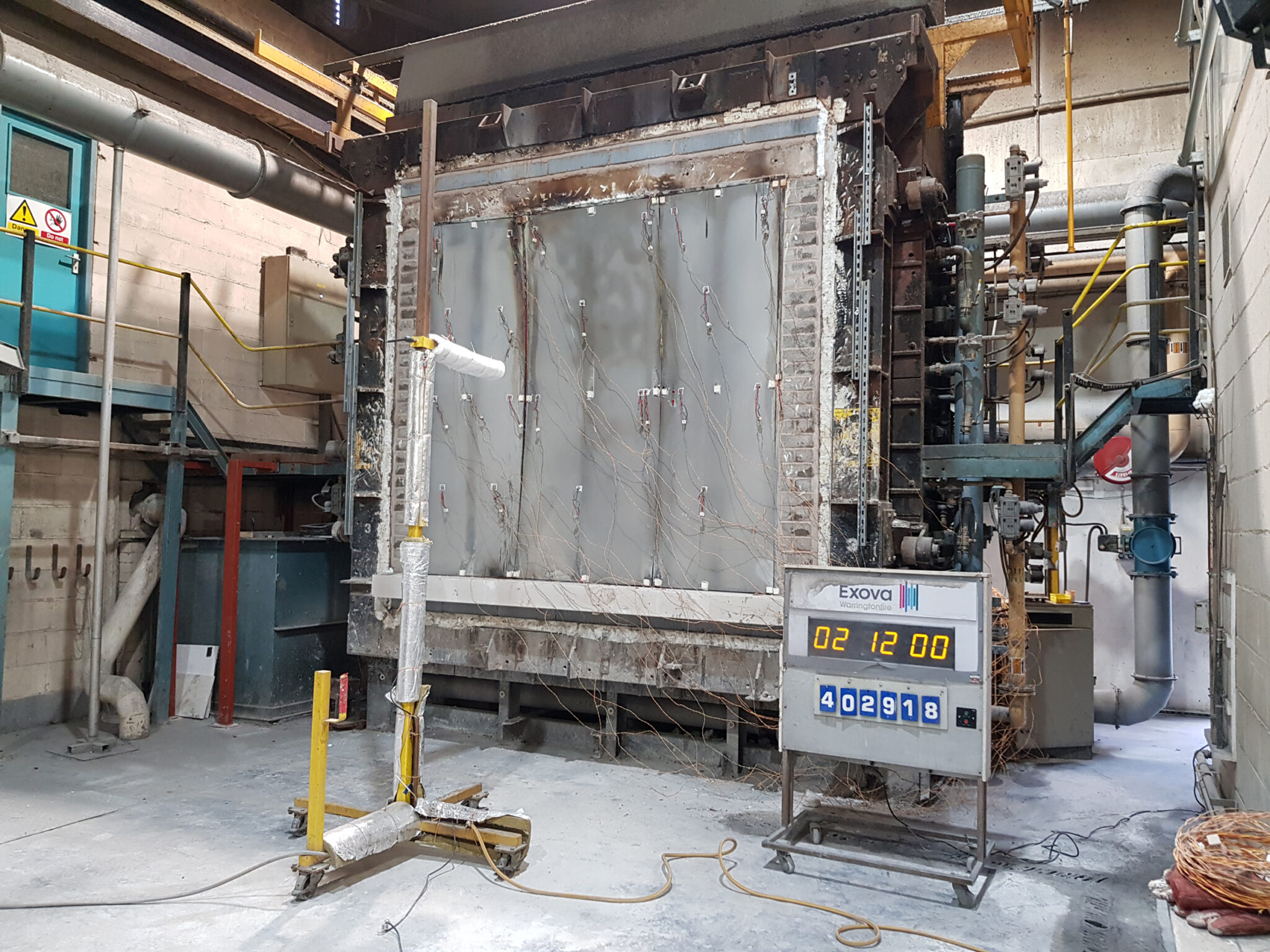
Insert test images (IMG_0022 and IMG_3892) with caption: Picture shows: Successful fire testing of the most complex and definitely the largest construction Winkhaus have ever tested.
Both Winkhaus and Secured by Design (SBD) agree, to precisely follow this guidance the independent audits must relate to fire, smoke and security. This change ensures that all three performances are tested and regularly independently audited to prove all production this week, next month, and next year continue to provide the safest door set solution, for the lifecycle of the door.
Winkhaus FireFrame composite fire doorset solutions are the first to attain the new Q Mark third party audit certification for ‘Smoke’ and Winkhaus is the first company to attain individual ‘Q Mark’ certification for all three critical performance requirements: fire, smoke and security. The company’s timber door set solutions are currently completing the same certification process.
As a business Winkhaus has always tested its fire doorset solutions against all three critical performances, with both fire and smoke now having their own mirrored FoAp (Field of Application) that identifies the design and range of products that are covered. The Q Mark certification system brings together the information from these FoAp’s and consolidates the approved design range within the door manufacturers “Scope of Certification”.
Importance of 3rd Party Auditing
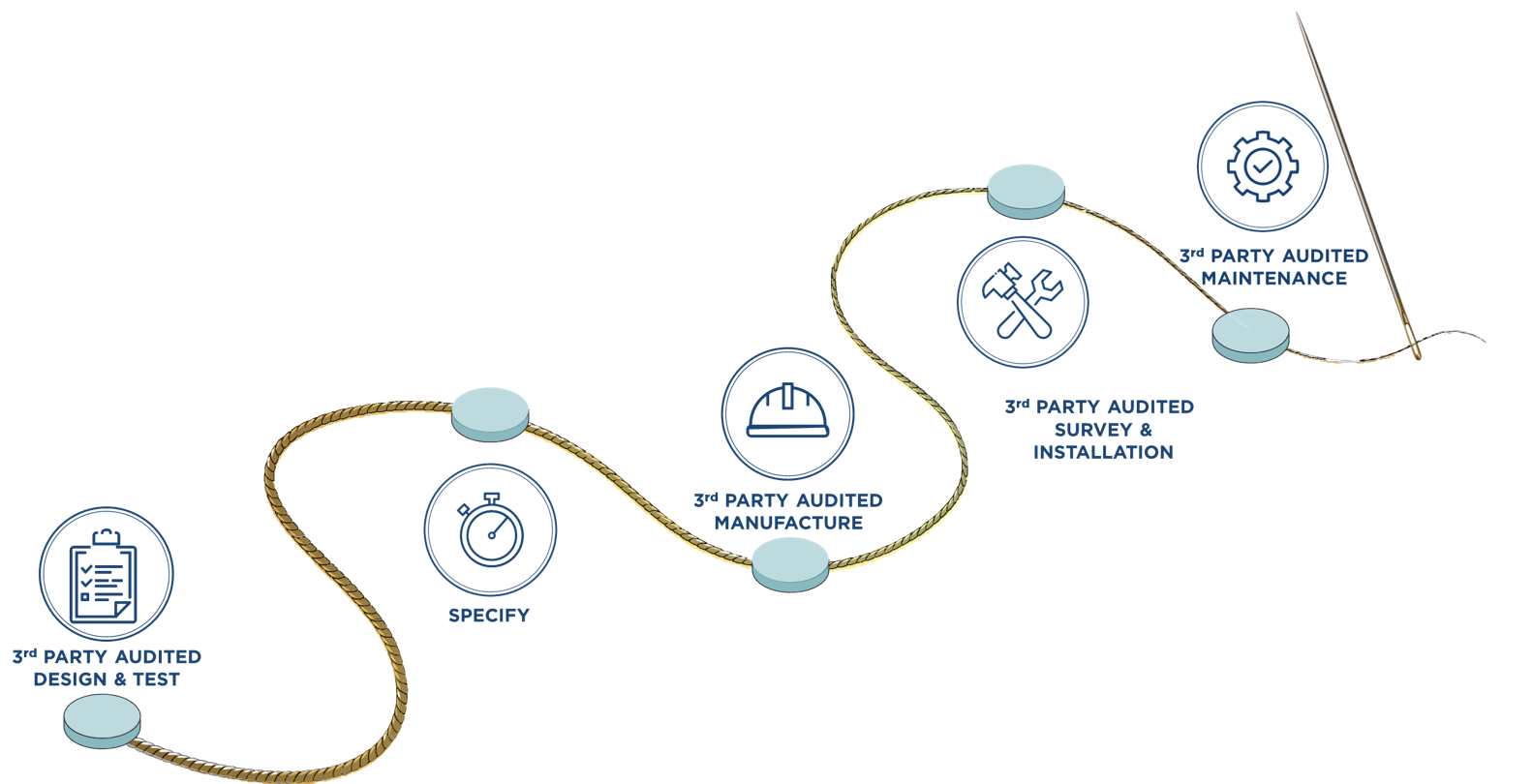
UKAS accredited third party auditing is not just required to verify test data for fire doors, it is a critical requirement throughout the ‘Golden Thread’ or lifecycle of a fire doorset. There are five key stages within the Golden Thread: design and test; specify; manufacture; survey and installation; and maintenance.
Design and test is the first stage of the Golden Thread and this is where the doorset is tested for fire resistance, smoke control and to PAS24 for enhanced security, both inside and outside. All the test reports are compiled and become a FoAP that shows all the variations and permitted parameters. Testing must be done with an independent UKAS accredited test house or laboratory.
A specification is then written which outlines the requirement of skills and other specifics required for each doorset. The specification stage must follow the Golden Thread and ensures every stage is third party audited to ensure test evidence is current and correct. The key purpose of the specification is to ensure the fire door set is consistent and compliant through manufacture, installation, and maintenance.
Next in the Golden Thread is the ‘manufacture’ stage; which is third party audited to ensure the fire doorset is consistently manufactured to the same standards as the test evidence and specification.
Survey and installation is conducted by a third party accredited installer with an additional system training to ensure consistency and clear understanding of the tested solutions specified. This then leads to ‘maintenance’ which is the final stage of the Golden Thread. It is mandatory that annual audits are carried out and undertaken by a third party audited and accredited company to ensure compliance throughout the life of the doorset. Any remedial work identified through annual or routine inspection should be related back to the original test evidence, so again we recommend training is provided throughout the golden thread.
Every stage from manufacturing, through survey and installation, annual inspection, and any remedial maintenance required must be third party audited. All of the stages within the Golden Thread refer back to the original design testing ensuring the correct components are being used to make or maintain a door.
To aid the understanding of the new requirements for a compliant fire doorset specification, Winkhaus has recently expanded its free training. The firm now offers three different levels of training which can be tailored to the audience to ensure it meets company / client requirements and we will even write your fire door set specification:
First option – This training provides an overview of the Golden Thread for fire doorsets, covering the requirements for a compliant doorset throughout its lifecycle. The five key stages in the lifecycle are covered from design and testing, specification, manufacture, survey, and installation through to inspection and maintenance.
Second option – This training module covers the fire doorset legislation which is the next level of data for those who need a more detailed understanding of the changes that have been made to legislation for fire doorset standards over the past few years. Topics covered include the latest legislation and guidance, testing requirements for the three critical fire doorset performances of Fire, Smoke and Security and third party auditing.
Third option – If you require a deeper understanding on legislation and guidance, need support in writing your specification or require further advice on compliance, we can arrange for a question-and-answer session with a member of our expert fire doorset team.
Both option one and option two can be presented as a formal CPD or informally without CPD certification.
For further information about our Fire, Smoke & Security doorset solutions, support with your fire door specifications or to register for our free training, please visit firetraining.winkhaus.com or email marketing@winkhaus.co.uk
Independent Fire Training Ltd.’s range of fire training courses have been tailored to varying levels of experience and training outcomes, Ben Freeman talks to IFSJ
Fire safety has never been more of a focus than it is currently within facilities, construction, and maintenance. It is at the forefront of media following the unnecessary loss of life at the Grenfell Tower and further-more in relation to the subsequent ongoing enquiry.
Independent Fire Training Ltd (IFI) are passionate about developing knowledge and competency to ensure that the buildings of the future are safer than the past.
Fire doorsets, their importance and compliance has been a focus point for discussion and opinion in the Fire Safety Industry recently. Brought to the attention of the world following the tragedies at Grenfell and the failures in compartmentation, the importance of fire doors in life safety has never been more relevant.
The purpose of fire doorsets is to restrict the spread of fire and smoke by maintaining the fire separation of compartmentation, to protect escape routes and to restrict the initial development of fire. Fire resisting doorsets are generally required along escape routes, staircases, at the principal entrance to flats and in locations where fires are expected to occur. A fire doorset and its importance is often overlooked, and that is why it is paramount that fire door training isn’t just limited to those people within the industry who are looking to develop their wealth of knowledge and is made more accessible to the wider audience.
It is important to recognise that not all candidates require the same level of training. Many will not require to become a Fire Door Inspector but do need to understand the properties of a fire doorset and the tell-tale signs of a poor installation or maintenance. Those candidates who are manufacturing, installing, maintaining, repairing, and inspecting fire doorsets should be held to a higher standard of training.
IFI pride themselves on providing a range of courses suitable for varying levels of experience and training outcomes, assisting the varying levels of candidate looking to continue their professional development and support competency within the industry.
The company’s fire doorset training portfolio includes a variety of training formats such as classroom-based, e-Learning and virtual training to suit any training preference and availability. The classroom-based courses include the Level 3 Award in the Inspection and Testing of Fire Resisting Door Installations (a formal inspection qualification), Timber Fire Doorsets and Fire Door Maintenance & Repair Modules with options for additional practical on-site training, and the BWF Fire Door Installation and Awareness Course. Recently launched, The Fire Doorset Inspection Course is an e-Learning training option.
Training courses dates are pre-booked for throughout 2022 and any candidate can join these courses by contacting the Training team to reserve their place. IFI also conducts training for clients at a site of their choosing for groups of candidates where this is more suitable.
The Level 3 Award in the Inspection and Testing of Fire Resisting Door Installation offers a formal qualification in the inspection of fire doorsets. This is a ProQual qualification regulated by Ofqual, the governments office for examination and qualifications. The qualification is best suited to site managers, supervisors, inspectors and to anyone else who works directly with fire doors. However, one of the major benefits of this qualification is that a 3-day theory and practical course is ran prior to their respective assessments which details all the information and knowledge required for the assessment. For those candidates lacking prior experience and learning with inspecting fire resisting doorsets, the Fire Doorset Inspection e-Learning Course will provide a comprehensive foundation of knowledge to enable them to progress to the qualification in the future.
Launched in March 2022, The Fire Doorset Inspection e-Learning Course is the newest addition to IFI.’s course portfolio. This course was developed in response to the ever-increasing demand for comprehensive fire doorset training. This would include key topics such as inspection, installation, maintenance, specification and testing but in a more accessible format. This course also consolidates the importance of a fire doorset and its upkeep with in-depth information on the Building Regulations and associated legislation that is specific to fire doors. A major benefit of this course is that once purchased, the candidate will have access to the training material via the Independent Fire Training website for 3 years, allowing them to refer to the course material as required. This e-Learning course is accredited by the Institute of Fire Safety Managers (IFSM), meaning a well-respected and recognised body within the Fire Safety Industry has reviewed the course content and are happy that it is up to a standard that they approve of.
It is important to mention that IFI’s trainers and assessors are Senior Fire Door and Fire Stopping Inspectors by trade, meaning that the training is being delivered by an expert within the industry and allows delegates to ask specific questions and promotes a wealth of active discussion throughout the training.
IFI is a registered delivery centre of the National Open College Network (NOCN) an Ofqual regulated Awarding Organisation and licensed by the British Woodworking Federation (BWF). As an approved NOCN training provider IFI are approved to deliver the SiteRight assured BWF Fire Door Installation Awareness 2-day course. The course has been developed in collaboration between NOCN Group and the British Woodworking Federation to promote awareness in the construction and manufacturing industries of the factors involved in the appropriate installation of timber fire doors and doors sets. IFI hold this course publicly at a central location throughout the year and it can also be delivered at a customer’s premises for a minimum number of participants.
IFI take fire doorset training very seriously and aim to make their training accessible to everyone. By providing top quality, recognised and accredited training IFI ensure that they uphold the integrity that should be seen across the industry. All training courses are continually reviewed and amended in line with current best practice, Building Regulations, and associated Legislation.
IFI’s overall course portfolio covers all aspects of passive fire protection, such as fire stopping, cavity barriers, linear gap seals, structural steel protection, fire rated partitions and ceilings, fire dampers and fire rated ductwork and many other courses at varying levels of expertise.
IFI are committed to maintaining the integrity of the industry and the high standards outlined Regulation and Legislation. IFI makes a promise to stay current within this developing industry so that everyone taking part in our training receives informative relevant learning and excellent service.
Ben Freeman, MD, IFI Group Ltd and Founder of IFI says; “As a leading training provider, our focus is on increasing the knowledge and competency of all those who are involved in the delivery and management of fire safety within buildings. We ensure that our training is fit for purpose regardless of what level of experience the training is aimed at and deliver training that covers varying levels of expertise. We work in an industry where you can certainly be under qualified, but never overqualified.”
For further information around the courses available, please contact info@thefiretraining.co.uk or visit our website for further details.
In the aftermath of the tragic Grenfell Tower fire in 2017, authorities in the UK decided to investigate several different facets of fire, life, and safety in buildings. Several companies were invited to give their technical expertise on the subject – these included experts in cladding, doorsets, panels, and fire evacuation routes to name a few. Secured by Design, a British based official police security initiative, that works to improve the security of buildings and their immediate surroundings was also involved.
Alfie Hosker is the technical manager at Secured by Design (SBD) and writes about technical recommendations, and new guidelines that have come about following the efforts of the Grenfell Technical Group.
Hosker joined SBD in 2014 after serving for more than 20 years in the UK Police Service across many disciplines including CID, Stolen Vehicle Squad, Public Order, Neighbourhood Policing, Licensing and Crime Prevention. He also spent several years within the various Planning, Highways and Building Control Departments advising on Designing Out Crime, Counter Terrorism, enforcement, planning policy & applications. He studied at the Leeds University and later at Oxford Brookes University in the field of Crime Prevention. He is also a qualified teacher.
In his own words, Hosker recounts the work of the Grenfell Technical Group since 2018.
Enhanced security & fire performance of doorsets
Alfie Hosker
Post Grenfell, the government quite rightly called for further investigations and Secured by Design (SBD) took an active part as a member of the Grenfell Technical Group, which was set up in March 2018 to provide technical advice specifically on entrance doorsets to individual flats – which includes the door, associated frame and all component parts, such as the glazing and door hardware.
The Group, which included other not-for-profit organisations including the Fire Industry Association (FIA) and the Door and Hardware Federation (DHF), met frequently throughout the rest of that year. Our comprehensive technical findings were duly reported to government via the Grenfell Independent Expert Panel.
Building on the collective expertise and experience within SBD, FIA and DHF the three organisations took the unprecedented step of collaborating on a document entitled ‘Guide For Selecting Flat Entrance Doorsets’ which was published in March 2019.
Aimed at housing associations, landlords, building owners, developers and local authorities in England (but much of the advice is equally applicable to other countries of the UK, even though Building Regulations may differ slightly), the publication brings together the best collaborative advice available from the industry in one straightforward document to highlight the fundamental issues of fire safety and security for those selecting such doorsets.
Importantly, the publication makes the point that there is no conflict between fire and security with Building Regulations Approved Document B (fire) and Approved Document Q (security) carrying equal weight with neither taking precedence over the other.
The publication also covers
Why only factory produced doorsets can meet both Approved Document B and Q
What to look for in terms of performance for fire
What to look for with third-party certification for fire
What to look for regarding security
Other performance affecting flat entrance doorsets
Glazing considerations
Assessments – what to be aware of
Installation
Maintenance
Multi-occupancy buildings
Government advice to Building Control
Certification to include smoke control Currently doorset thresholds can legitimately be tested to BS 476-31.1 or BS EN 1634-3 with the threshold taped up, and be assigned an ‘S’ designation (according to the guidance within Approved Document B) or an ‘Sa’ classification (when classified according to EN 13501-2), as the threshold gap is effectively discounted in both instances. It is also possible to maintain designated smoke performances (i.e. S or Sa) when following the guidance given in BS 8214, which allows for a 3mm gap at the threshold in situations where fitting a threshold seal is not practicable.
It is the opinion of SBD that neither are acceptable in a ‘real world’ fire scenario. The former (taping up the threshold) proves nothing when the doorset is exposed to smoke in an apartment block and could therefore lead to smoke unnecessarily entering an area designed to be a safe haven. The latter (the 3 mm gap allowance) has been independently proven to allow smoke leakage of up to 10.5m3/h/m – three times the allowance of 3m3/h/m in the current Building Regulations. You can find out more about a series of tests commissioned by the Intumescent Fire Seals Association (IFSA) into this here: https://www.ifsa.org.uk/wp-content/uploads/2021/04/IFSA-Fact-Sheet-02-v0321.pdf
As soon as we realised that smoke was at risk of not being treated in the same way as fire and security evidence, it was critical we sought to resolve this issue specifically for all Secured by Design Developments and by all doorset manufacturers recognised by us through our SBD Membership scheme. In early 2021 we secured agreement from all of the UK certification bodies working in this area to incorporate smoke control into their fire and security schemes for flat / apartment entrance doorsets.
With the safety and security of residents in mind, we have confirmed our requirements for all fire, security and smoke rated doorsets carrying SBD approval to the UK test and certification organisations – i.e. all smoke control tests – should be conducted with the doorset threshold un-taped, and furthermore the allowance of a 3mm gap under the door will also be unacceptable. Therefore, by summer 2022 SBD will require all member companies with doorsets listed on their SBD schedule that are fire rated and that are required by UK Building Regulations (England, Scotland, Wales and Northern Ireland) to have smoke control properties for the intended installation – e.g. flat entrance doorsets to be certificated for the following attributes – Security, Fire and Smoke Control. Thus, all SBD Fire, security and Smoke rated doorsets will require a thresh detail that enables the doorset to comply with the Building Regulation maximum requirement for smoke leakage of 3m3/h/m.
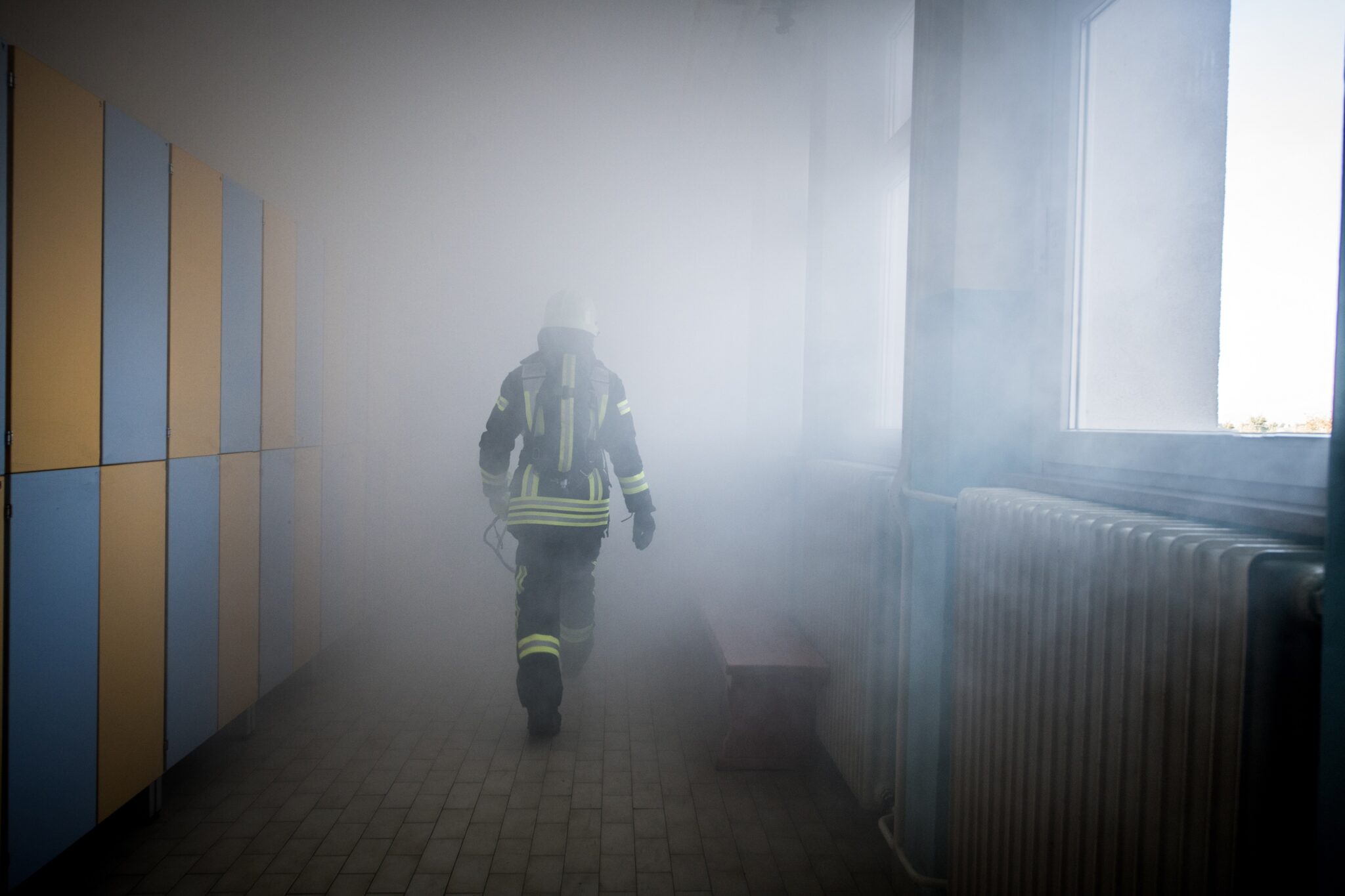
Firefighter in a fire and rescue operation.
SBD has committed to both promoting our requirements and to support other organisations lobbying for change in this important area. We are adamant that any doorset that carries SBD accreditation should be fit for purpose in all declared characteristics, but especially those that are life critical such as fire, security and smoke control. We are committed to saving lives and making homes safer places in which to live, work and play.
The ‘Guide For Selecting Flat Entrance Doorsets’ is currently being updated to include these new SBD requirements. You can have confidence in using this publication as an authoritative source of information, which will guide you through the complexities of an extremely important area of Building Regulations. The publication can be downloaded for free here:
Sentry Doors is growing fast, driven by an absolute commitment to compliance and quality, its Managing Director, Ty Aziz, tells IFSJ.
Tell us about the legacy of Sentry and process of innovation over the last 33 years of existence… In the last couple of years however, the company has seen a step change in growth. First, we received considerable new investment from our partner, Cairngorm Capital. This enabled us to invest in our manufacturing facilities — new CNC machines, new paint lines, as well as the advancement of an additional facility across the road. We’ve also invested in testing, compliance, and accreditation — all the hallmarks our customers associate with Sentry Doors.
Most importantly though, we have invested in our people — bringing in new expertise to work alongside the existing management team and production staff to ensure that Sentry has the right resources to take it from strength to strength. This has resulted in new customers, typically housing associations, local authorities and their contractors who see the considerable benefits of our bespoke timber doorsets as they replace non-compliant fire doors. By choosing Sentry, customers always know they have the highest standards of certification in their fire doorset partner.
Reflecting that growth is the new look and feel of the Sentry logo which you might have seen out and about or online. We like to think of it as ‘same great company but with an updated look and feel’. We have a new website, new brochures to showcase our range of certified fire doorsets, as well as our certification portfolio to make it easy for customers to immediately focus on the testing or accreditation required — and you can even visit our factory virtually online. We’d rather people came in person though – the quality of our manufacturing really speaks for itself, plus we’re a friendly bunch.
Looking to the immediate future, Sentry has a stand at the upcoming Fire Safety Event in early April at the NEC. We’ll all be there, meeting customers old and new, and we’d love to tell everyone the Sentry story. It’s something we’re really proud of.
A great example of innovation was the ‘timber doors’ that were on display at Intersec 2022 which were high spec, and purpose-built fire doors. Tell us about the research and development of your products?
Sentry is a specialist provider of bespoke timber FD30s, FD60s doorsets, screens, and fanlights – that’s all we manufacture and consequently, we like to think we are experts! Every single doorset that leaves our factory is made specifically for a particular aperture — in order to ensure the highest safety standards and customer care, we manufacture each product specifically for an individual address, with a comprehensive choice of paint finish, glazing, security and ironmongery to complement it. Our Research & Development takes place at our facility in Doncaster, but it always has customers at its heart — we work closely with them to respond to their requirements. Budgets are whatever is required to keep us at the top of our industry.
Designed to offer peace of mind, our FD30s and FD60s doorsets undergo independent testing and approval from BM TRADA and Certifire standards. Both are certified by Secured by Design, and we are one of the few companies nationally to have achieved dual certification (Q-Mark Fire Door Manufacture and Q-Mark Enhanced Security) for both our FD30s and FD60s flat entrance doorsets. We were also the first fire and security door set manufacturer to hold the new UKCA mark, as certified by UK-approved body BM Trada. The standards, certification and compliance can be a complicated subject however, so we aim to provide ease via our certification portfolio, and we are always on hand to guide customers to ensure peace of mind.
Tell us about some of your major geographical markets, and expansion plans for 2022? Sentry has a history of serving London boroughs and their contractors — we’ve been involved in manufacturing fire safety doorsets for many of the major replacement programmes in the capital’s housing stock both pre and post the dreadful events of Grenfell. We also work widely across the rest of the UK — we have ongoing projects in the north of England, Scotland and the across the South-East. Let me put it another way: if you’ve got a project that requires fire safety doors in the UK, you ought to be partnering with Sentry!
What are some major trends in the fire door market, and what can we learn from them? The trend is clearly towards ensuring only the highest standards of fire protection: that means timber because of its clear safety advantages over other materials, it means bespoke, because UK housing stock is diverse and not standardised like other markets.
Most importantly, it is about making sure that the choice you make is tested to the extreme and then certified to show that the specific doorset will protect people in the face of disaster. Those who specify and procure fire doors are absolutely committed to avoiding another disaster, and so is Sentry. That’s not so much a trend as the only right way, of course.
Sentry had previously predicted a 30% increase of “production operatives over the next 12 months”. How confident are you about your growth in 2022?
We’re growing really fast, and we are looking for more great people who share our ethos to join us: it could be more than 30% in 2022 and beyond. We are consistently recruiting in our factory, training, and developing people to achieve our manufacturing quality through open days, via our website and more. As more and more customers understand the benefits of the Sentry solution, we have invested in another CNC and a new paint line as well as expanding into our capacity across the road from our main factory. We also have opportunities in business development, customer service and more — so anyone who shares our values and wants to be part of the exciting Sentry story, do get in touch.
In conclusion, I would like to tell your reader: Sentry is growing from strength to strength as the secure choice in fire safety doorsets. We look forward to meeting people from across our industry at the Fire Safety Event — we’ll have a prominent stand but do please contact us if you would like to book an appointment in advance. It will be great to tell you the Sentry story in person.
Marcus Parnham, commercial director at Profab Access, discusses how professionals can successfully futureproof a building
The construction sector is currently facing one of its biggest transitions to date, with legal requirements regarding the testing and certification of building products, including fire critical solutions, under much needed scrutiny and reform.
The recent introduction of the Building Safety Bill is the latest stage in the government’s strategy to creating a new era of accountability throughout the construction industry. The draft regulation outlined within the Construction Products Regulations 2022 summaries the general safety requirements that all construction products being placed on the UK market must meet.
With regard to safety-critical products, Part 3 outlines the obligations that manufacturers must fulfil, with tougher penalties applying to those who do not meet their obligations. Special focus has also been placed on the communication of false or misleading claims regarding the performance of a product.
The revised regulations have been drafted following the learning of Phase 1 of the Grenfell Inquiry, which highlighted the inefficacy of the government’s current testing regime and its enforcement. This included associated complications regarding how key building information is obtained or interpreted by relevant individuals throughout the construction and maintenance stages of a development.
The inquiry also exposed concerning ambiguities regarding current guidelines and regulations, not only in relation to the testing of building materials that are specified, installed and maintained, but also the roles and responsibilities of each individual involved throughout these pivotal points to ensure continued compliance.
For example, in relation to fire integrity riser doors in particular, there are current disparities between the guidelines outlined in BS EN 1634 Standard and Annex B of Approved Document B2. As a result, some manufacturers may only conduct product assessments via a third party, whilst others may undertake continuous rigorous independent product testing and certification to evidence their products are consistently suitable for installation.
For those manufacturers who may submit evidence in the form of assessment reports, it is often based on primary testing that may have been conducted many years ago. Providing that a manufacturer states nothing has changed in terms of product materials, specifications and manufacturing techniques, assessments will often be renewed for a further five-year period, without any substantial fire performance tests being completed.
This is a prime example of the substantial dissimilarities and associated misperceptions that the industry currently faces.
In response to this, Phase 2 of the Grenfell Inquiry is addressing whether existing guidance on how to comply with Building Regulations is sufficiently clear and reliable. In addition to the Building Safety Bill, the National Construction Products Regulator will also be responsible for identifying the corresponding weaknesses of the current product testing regime in relation to legal requirements.
Whilst the regulator will have the ability to conduct its own tests of building materials specified in fire critical environments, it is also the responsibility of the manufacturer to ensure the products they supply are not only compliant, but suitable for the proposed application.
This responsibility is also shared by the customer, who has a legal obligation to undertake and evidence comprehensive due diligence by ensuring they request demonstration of compliance and subsequent testing reports, not just product assessments, for each building component specified on their project. This will ensure no assumptions are made regarding the suitability and performance of the materials installed to ensure the long term suitability and safety of the building for its entire lifecycle.
First raised in Dame Hackitt’s Independent Review of Building Regulations and Fire Safety, the fire-resistance of a building product should also be tested in ‘real-world conditions’, to ensure that all performance figures stated by the manufacturer are factual and represent the final installation.
In this new era of accountability, simply meeting current standards and regulations will no longer be acceptable – it is imperative that the industry sets the standard for achieving a proactive and comprehensive approach to building safety.
By undertaking product testing and certification by an accredited third party, manufacturers can prove they have fulfilled their duty of care in terms of best practice. This can be done by providing evidence that the solution is not only fit for purpose, but goes above and beyond current requirements to offer the highest possible standards in quality, performance and safety.
The certification of a product by an accredited third party via a dedicated testing programme, rather than through product assessments, also reassures each party involved throughout the construction and maintenance stages that it will not fail in the event of a fire. This is because testing provides continued assurance with regard to the product being supplied, whereas product assessments alone do not provide continuous surveillance and assurance of consistency and quality.
This is further reflected throughout third party testers’ involvement throughout the entire construction process, as they ensure manufacturers implement appropriate measures that maintain manufacturing consistency and that the product tested is a true representative of production.
With regard to riser doors in particular, this extensive testing process will guarantee a manufacturer goes above the guidance outlined in BS EN 1634 to ensure complete compliance with the legislation defined in Annex B of Approved Document B2, to consistently provide construction professionals and their clients with the highest levels of protection, certification and compliance.
However, for manufacturers to completely fulfil their duty of care and for customers to also ensure they are taking all reasonable measures to ensure the building is complaint, safe and suitable, third party testing should be undertaken for the complete doorset, including each individual component, to successfully futureproof the project.
Beyond the testing of the doorset, it is also critical that it is installed into an approved wall construction in a method consistent with the sample originally tested. In practice, the installation process poses a number of risks to the overall fire integrity of a construction through variables such as the packer type and intumescent mastic bead application.
To overcome this potential gap in compliance, professionals should look to work with manufacturers that are taking this commitment to third party testing and certification even further through latest advancements in technology and product design, which are providing a revolutionary approach to the installation and maintenance processes.
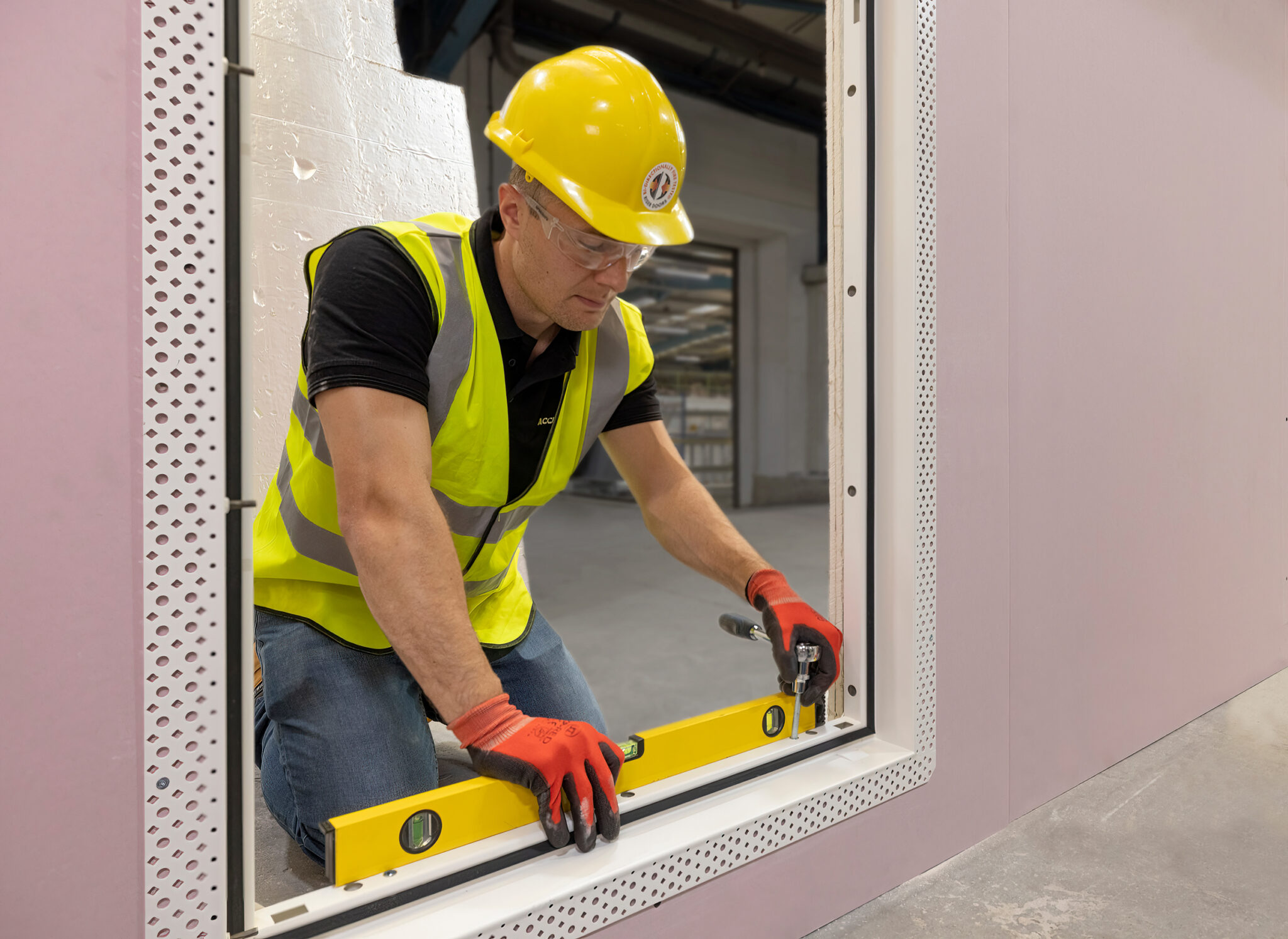
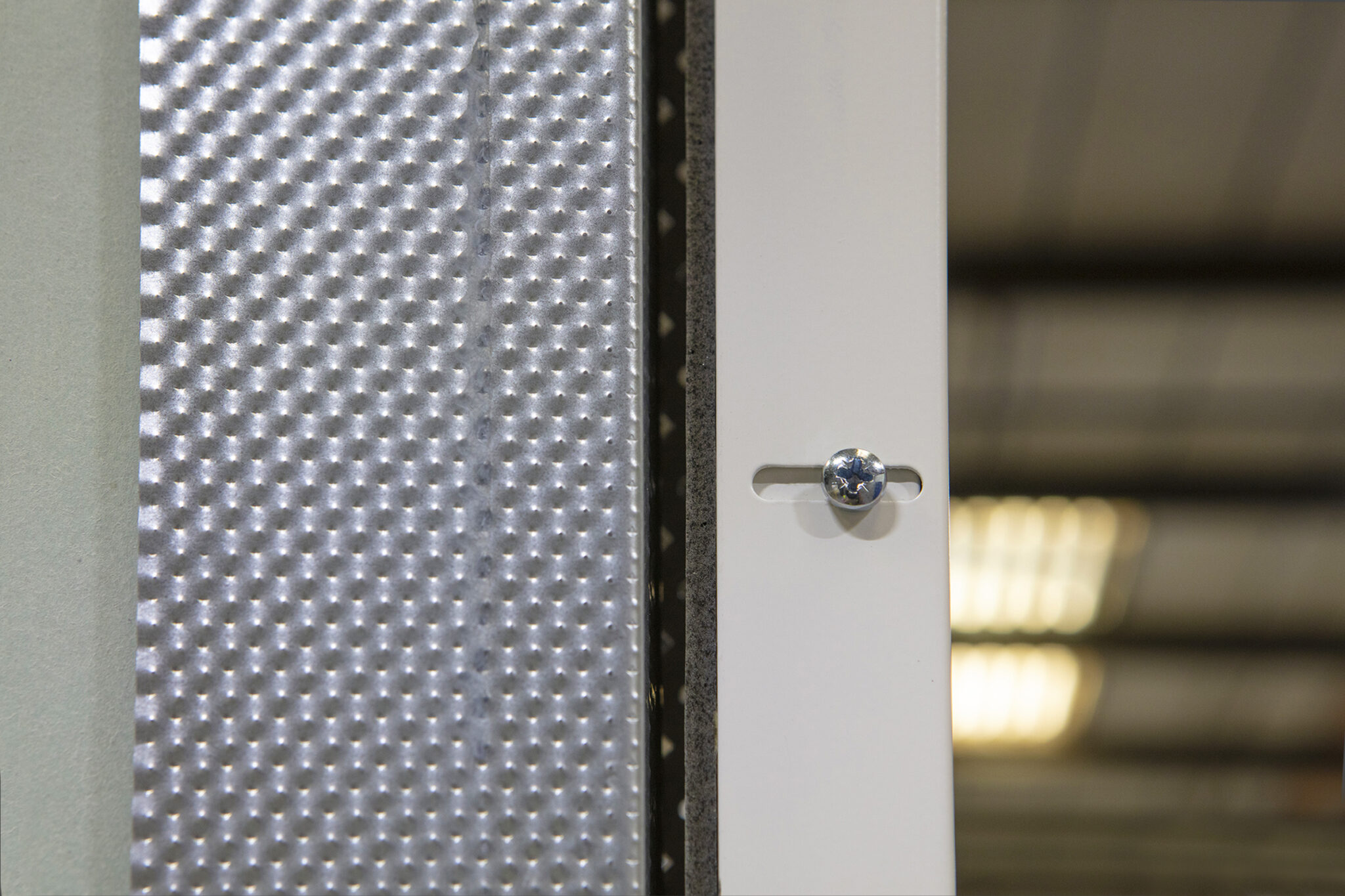
This includes the design and manufacture of high-quality steel riser doors that are supplied with adjustable frames that include an integral intumescent strip to provide fire stopping between the wall and frame. This not only eliminates the requirement of packers and the reliance of the correct thickness of intumescent mastic bead, but most importantly ensures the compliance and adequacy of the entire installation, as its fire integrity performance has been sufficiently documented by an independent assessor. As a result, this also subsequently increases the efficiencies of installation and removes any potential margins for error.
By considering each individual element that forms part of the entire installation and ensuring that the relevant components have undergone the necessary testing and certification processes, professionals can not only streamline the initial design and specification stages but produce an extensive digital audit trail that documents compliance and product suitability at every stage of the construction process.
As the construction sector continues to unearth deep rooted issues regarding the development, testing and certification of products, we are starting to see proficient changes in action, as manufacturers, architects, specifiers and contractors work together to create and communicate an uninterrupted set of information and certification that goes above and beyond adhering to regulations.
For further information on Profab Access and its range of riser doors, access panels, and steel doors, call +44(0)1827 719051 or visit www.profabaccess.com.