Nittan Europe, UK manufacturer of conventional and addressable fire detection products and systems, has had its Evolution analogue addressable fire detection system installed into a new student accommodation development in Beeston, Nottingham. The system was installed by Nottinghamshire based integrated safety and security solutions provider, TIS.
Dagfa House is a unique development of townhouses, clusters and studios adjacent to The University of Nottingham campus. It provides accommodation to 229 students and a range of leisure and study amenities.
At the heart of the development is a Grade two listed building that dates back to the 18th-century and was converted into a school in 1948. This latest development has been undertaken by the Cassidy Group, which has over 30 years of experience in construction and property.
One of the key fire safety challenges posed by the Dagfa House development was the mix of accommodation blocks, with some being relatively small. A cost-effective fire detection system was required that could potentially evacuate each site in the event of a fire and that would also be future proof, with spares readily available.
A Nittan Evolution analogue addressable fire alarm system, comprising two individually networked systems, each utilising eight Evolution1 panels and Nittan devices was chosen as the solution.
Chris Mills, Head of Fire Division at TIS explains: “TIS carried out market research of a number of fire alarm manufacturers before finally settling on the Nittan Evolution panel with Nittan devices which provided a single source approach while providing a cost effective and reliable solution.”
Evolution is Nittan’s advanced, premium fire system. Evolution uses ASIC technology in the sensors and sophisticated detection algorithms, combining extremely reliable fire detection together with a very high degree of protection against unwanted false alarms.
Nittan Evolution1 Panel
Its advanced, highly flexible protocol allows for substantial amounts of information to be transmitted at high speed and is not affected by the number of devices on the loop.
At Dagfa House, the Nittan Evolution1 Panel was selected because of its built-in network connectivity, making it extremely cost effective, plus its ease of installation and cause & effect configuration.
For the primary detection in the majority of locations, Nittan’s EV-PYS Optical Detector with built-in sounder was selected for convenience, due to the reduced cost and time required compared to installing separate detectors and sounders, as well as the combined detector/sounder providing a more aesthetically pleasing solution.
In the open areas, such as the cinema room, games room, common room and the communal garden terrace, Nittan EV-HIOP-SB High Output Sounder Beacon VADs were installed. These devices provide high volume sound, EN 54-23 compliant visual alarm and are waterproofed to IP65, making them suitable for the outdoor areas.
One of the most important devices in any fire alarm system is Manual Call Points, which are strategically located in the Dagfa House development at points of evacuation. Nittan EV-MCP2-SCI Call Point with built in short circuit isolators were chosen to ensure the loops were adequately protected, so the system remains compliant even under short circuit fault conditions.
Each Call Point was also fitted with a hinged front cover for compliance with BS-5839-1: 2017, the code of practice for designing, installing, commissioning, and maintaining fire detection and alarm systems.
Nittan fire detection systems are a popular choice for student accommodation, with many applications around the UK. For more information, please contact Nittan on 01483 769 555 or by email at sales@nittan.co.uk or go to www.nittan.co.uk.
A FREEDOM of information request revealed that Greater Manchester Fire and Rescue Service (GMFRS) attended 224 fires in the last five years, ‘an average of almost one a week’.
Mancunian Matters reported on the findings from the request, which revealed that GMFRS attended 224 school fires between 2015 and 2020, ‘an average of almost one a week’, with three of these destroying entire school buildings and ten resulting in injuries.
The leading causes of fire in the metropolitan region included malfunctioning appliances or equipment, faulty electrics and kitchen fires, with 43 logged as having been ‘started deliberately’.
Asked to respond, the government said it was ‘committed’ to revising Building Bulletin 100: Design for fire safety in schools (BB100)– and was planning to launch a public consultation soon. A spokesman stated: ‘All schools are required to have an uptodate Fire Risk Assessment and to conduct regular fire drills.
All new school buildings must be signed off by an inspector to certify that they meet the requirements of building regulations. Where sprinklers are considered necessary to protect pupils and staff, they must be installed.’
Last month, a study by Zurich found that English schools were ‘twice as likely’ to suffer fires than other buildings, with the study including personal inspections of over 1,000 primary and secondary schools.
It said that there was a ‘perfect storm’ of risky buildings and ‘poor fire detection and prevention measures’, with 26,866 schools analysed and the average fire risk ‘almost double that of non-residential buildings’.
Despite there being a ‘greater risk of a fire starting’, inspections by the insurer found that 66% of schools lack ‘adequate fixed fire protection measures’ such as sprinklers, while 24% were rated ‘poor’ for fire detection’.
Additionally, firefighters have been called to ‘nearly 2,000’ school fires in the last three years, with the insurer and other organisations calling for sprinklers to be mandatory in English schools as part of the government’s £1bn school rebuilding programme.
The average school posed a fire risk 1.7 times greater than non residential buildings, with Zurich’s model giving schools a fire risk score of 0.58 compared to non residential buildings’ score of 0.33.
In comparison to 2.9m non household properties, schools were ‘three times more likely’ to be in the high fire risk category, with 33,000 fires from the last six years analysed ‘to identify factors that increase the likelihood of a blaze’, and a fire risk score produced.
Factors for calculating this consisted of listed status, the presence of cooking equipment and the building’s size, with Zurich adding that ‘despite being far riskier than average’ in terms of fire, many schools ‘also lack the equipment needed to prevent small fires becoming major disasters’.
Out of the inspections, only 14% of the schools were rated good or excellent by Zurich, with the leading causes of fires including ‘malfunctioning appliances or equipment, faulty electrics, arson and kitchen’ fires.
Larger school fires cost an average of £2.8m to repair, ‘and in some cases over’ £20m, while bigger and older schools – such as those with canteens, or secondary schools that have ‘more complex and dangerous equipment – were ‘identified as particularly at risk’, with a correlation between poor Ofsted ratings and a ‘greater risk of fire’ also seen in the analysis.
Zurich’s findings have led it to launch a parliamentary petition urging MPs to ‘change the law on sprinklers in schools’, as while they are compulsory in ‘all new major or refurbished’ school buildings in Scotland and Wales, ‘this is not the case in England’ where ‘in fact, they are fitted in fewer than one in six new schools’. Its analysis has found that over 7m pupils at primary and secondary schools are taught in the 58% of buildings that are a ‘high fire risk’.
The insurer noted that Prime Minister Boris Johnson has recently pledged £1.56bn to fund a school rebuilding and repair programme over the next ten years, and it estimates that the repair costs for school fires could reach £320m in that time, a ‘significant portion’ of the investment pledged. As a result, it said it wants the government to ‘ring-fence’ some of this to ‘improve the resilience of schools at high risk of fire’.
With insurers working closely with schools to help them manage fire risks, ‘the installation of sprinklers minimise the dangers from the outset’. Earlier this month, the National Fire Chiefs Council (NFCC) called for all schools to have sprinklers fitted in the aftermath of two schools being lost to fire in Derbyshire.
It ‘once again called for all schools to have sprinklers fitted’, after the ‘devastating loss’ of the two schools, where it was reported neither had sprinklers installed, which ‘could have reduced the damage suffered substantially’.
It has been calling for sprinklers to be installed in schools ‘for a number of years’, and said that with around 1,500 fires in UK schools every year, this ‘disrupts the education of approximately 90,000 students’, and the NFCC pointed out that school closures also have a ‘large social and economic impact on local communities’, something that ‘could be reduced by the fitting of sprinklers’.
Figures from the Association of British Insurers revealed that the most expensive school fires can cost up to £2.8m to ‘address’, and over the course of a four year period, an average of 24 large loss fires occurred annually, costing £67.2m.
The NFCC said that its chair Roy Wilsher has now urged the government to ‘ensure legislation in England is the same as in Scotland and Wales’, where it is ‘mandatory for sprinkler systems to be fitted in all new and refurbished’ schools.
In the NFCC’s response to the technical review of BB100, it highlighted that the rate of schools being fitted with sprinklers ‘may have fallen’ from 70% to 15% of new builds, and stated that schools ‘are important community assets which need to be protected’, emphasising the ‘importance of ensuring fire safety remains a key priority’ during the COVID-19 pandemic and making it part of planning, along with revisiting escape routes and fire drills.
Most recently this month, Derbyshire County Council (DCC) ‘refused to name’ schools in the county that have no sprinklers fitted, ‘despite’ three having been destroyed in fires in the last four months’, and ‘displacing hundreds of pupils and resulting in millions of pounds of rebuild costs’. There have been ‘more than 30 fires’ at Derbyshire schools in the past five years alone, with Harrington Junior School in Long Eaton was destroyed in May.
That fire saw the Local Democracy Reporting Service (LDRS) submit a freedom of information request to DCC asking it to name schools without sprinklers, and it had a ‘legal duty to respond within 20 working days’, but ‘chose to take nearly triple that time’, or 58 days, to respond – and only after the two schools destroyed by fires most recently, Ravensdale Infant and Nursery School and St Mary’s Catholic Voluntary Academy.
The fire at Ravensdale was ‘ruled as arson’, while the fire at Harrington was ‘accidental and caused by county council staff carrying out refurbishments’, with the cause of the fire at St Mary’s having ‘not yet been disclosed’.
A temporary replacement for Harrington, built by DCC without planning permission in July, was constructed without sprinklers ‘despite the demise of its predecessor’, with DCC stating that this was ‘standard for temporary buildings of this nature’.
In the past five years, Derbyshire Fire and Rescue Service (DFRS) had been called out to 32 fires at schools across the county and city, and noted that eight of those had occurred since April 2019. The council said ‘it would not be providing the names’, and cited the ‘perceived risk of potential arsonists targeting schools without sprinklers’, claiming that the ‘public interest in naming the schools is outweighed by the public interest in refusing to do so’.
The Insights from the Field series features insight from FLIR experts who recommend, deploy, and use thermal imaging technology every day. Join us as we discuss the diverse applications of thermal technology in security, safety, and equipment protection for critical infrastructure. This issue focuses on thermal automation cameras.
Thermal automation cameras are not only used to safeguard property and people but also to protect mission-critical equipment. At manufacturing plants, maintenance teams want to aggregate data to continually evaluate an asset’s health and know if it is about to fail.
Production managers are keen to catch process anomalies that result in faulty products or packaging before these products leave the production line.
Safety managers need to detect excessive heat buildup on fuel, hazardous material, and electrical components before combustion occurs and a fire breaks out.
By deploying thermal cameras for condition monitoring, process control, and fire prevention applications, plant managers ensure maximum uptime and avoid catastrophic events.
Why Thermalautomation cameras?
Because temperature changes can be an early indicator of equipment deterioration, non-uniform temperature profiles on products, or a hotspot area, thermal automation cameras are a premier choice for plant managers.
Radiometric thermal cameras yield a temperature value for every pixel in an image and clearly visualize the temperature differences of a surveyed area. Upon exceeding a specific temperature threshold, a thermal automation camera sends an alarm, or, if integrated with other control processes, triggers an action to deescalate the situation.
FLIR automation cameras in action
FLIR offers an array of radiometric thermal automation cameras that are highly effective automation solutions. Here are three examples of how FLIR automation cameras made a difference for critical facilities in the industrial sector.
Steel Mill and Condition Monitoring
Few equipment failures are as dangerous and damaging as a steel breakout at a steel mill, where a ladle or torpedo enclosure ruptures and pours out hundreds of tons of 1400°C (2552°F) molten iron onto the plant floor.
Because hotspots can occur on this machinery in less than a minute, engineer service company ANT Automation provides its steel mill customers with a Continuous Infrared Analysis (CIRA) platform.
The cornerstone of the CIRA solution is reliable thermal imaging from a FLIR automation camera, which monitors the entire surface of ladles and torpedoes; provides historical temperature data to distinguish between typical splashes and hotspots, and sends an alarm to personnel to act upon true hotspot detection.
As a result, ANT Automation customers experience heightened equipment protection, cheaper insurance premiums, and greater peace of mind.
Paper Mill and Process Control
At paper mills, calendaring—or the process of putting paper webs through hard pressure rollers to smooth the paper—is important. However, excess moisture can occur on the paper web between the rollers, damaging roll covers and causing downtime.
One North America paper manufacturer experienced an average of 30 moisture events annually where each event equated to $100,000 in losses. To remedy the situation, the manufacturer turned to Eigen, an AI-enabled vision solution provider.
Eigen provided a platform that featured FLIR automation cameras, an edge computing device, and analytics software. The FLIR cameras continuously monitor the paper web prior to it entering the calendar machine and upon detection of cold streaks, trigger an unload alarm so that calendar stacks are opened and roll covers are cleaned.
Eigen estimates its automation solution will result in 300 unloads for a total savings of $1.2 million. Thermal monitoring solutions help avoid build-up on calender rolls and damage to the paper processing systems.
Waste Facility and Fire Prevention
Based in the town of Legnago in Northern Italy, Ecologica Tredi operates an 11,000 square meter facility that specializes in the recovery and treatment of special, hazardous, and non-hazardous waste.
Should material combust and cause a fire at the plant, the consequences include unwanted pollutants released into the environment, damaged equipment, and lengthy business interruptions.
To enhance workplace safety and meet regulation compliance, Ecologica Tredi partnered with Thermostick Elettrotecnica, who specializes in unconventional fire detection systems.
Thermostick Elettrotecnica provided a comprehensive monitoring control and alarm system based on FLIR automation cameras. These FLIR cameras monitor work and storage areas and upon specified alarm events, can activate sprinklers or cannons.
Thermostick Elettrotecnica also deployed a FLIR AX8 camera to survey material on the conveyor belt coming out of a shredder. Upon identifying abnormally high temperatures, the belt stops.
After completing its audit of the facility, the Ministry of Interior said Ecologica Tredi was one of the most equipped for fire prevention. These are just a few deployments that demonstrate how automation solutions, like the FLIR A400/A700 smart Thermal Sensor camera, can be used to avoid unplanned outages, production line shutdowns, fires, and other “surprise” events that cause substantial disruptions and financial loss.
Deployment recommendation When evaluating how to implement thermal cameras for your automation application, there are several factors to consider. Here are a few recommendations to get you started.
Select an Accurate Camera: For automation, accurate radiometric thermal images is key. Select a high-resolution radiometric thermal camera that yields sharp images and rich image detail. FLIR offers two optimal thermal detector arrays, 320 × 240 or 640 × 480, which provide up to ±2°C accuracy within temperature ranges of -40°C to 2000°C.
Choose an Analytics Software: Easily integrate FLIR automation cameras with your preferred analytics software. Some of the software that FLIR cameras currently integrate with include Cognex Designer Pro, NI Software, Pleora Ebus, Teledyne, and Spinaker SDK.
Determine Regions of Interest and Alarm Settings: Define what critical areas need to be surveyed for hotspots or temperature variances. When deploying FLIR cameras, you can select up to 10 regions of interest. Simply use the web-based configuration window on your mobile device or computer to select spots, draw boxes, or create custom areas. Create your alarm parameters as well as the desired response by defining the data acquisition output type.
Integrate with Control Processes: For improved intervention, integrate thermal automation cameras with other control processes. To do this, ensure your automation camera is compliant with communication protocols such as GigE Vision, RTSP, MQTT, RESTful API, MODBUS TCP & Master, Ethernet IP, and FTP.
Global safety science provider, UL reports on fires in high rise buildings and the role of firestopping for improved fire safety.
After the Grenfell Tower disaster in June 2017 which claimed the lives of 72 people, Dame Judith Hackitt’s review of UK fire safety and construction identified systemic construction failures that contributed to a system that was, in her words, not fit for purpose.
Her recommendations addressed issues in all areas of the construction system, from design through planning, building and occupation. The problems she identified appear to be ones repeated all over the globe.
Although her adopted recommendations are primarily aimed at high rise residential buildings, the UK Government intends to encourage good practice in all new build construction. Regardless, fire safety in residential buildings will definitely change as a result of the essential primary focus, resident safety.
With regulatory changes proposed by government to address the Hackitt Review findings, more control over the process of construction is on the horizon. With more control, improvements can be made throughout the build process to deliver safe buildings.
In particular, the UK Government will increase focus on improving the standard of installed fire protection measures. This new regime will force cultural change for those who are involved in making our buildings fire safe for occupation.
One crucial part of a building’s fire prevention measures is that of firestopping: sealing holes made in fire compartment walls and floors by services’ penetrations passing through those fire resisting walls and floors. Ventilation systems, electrical, communication and plumbing services all cause breaches in compartment lines through which fire can spread.
Competence is the key to compliance and underpins every element of fire safety in our built environment. Lack of competence has led to failures in fire containment, with the total loss of buildings and tragic loss of life.
After the publication of Dame Judith Hackitt’s report, a steering group was established to specifically look at required competences and examine how each profession within the construction chain can demonstrate proficiency. In the summer of 2019, the steering group issued their interim report, ‘Raising the Bar’.
The main working group, WG0, identified what competence is: skills, attitude, knowledge and education, or SAKE. Each of the supporting working groups adopted the SAKE principle when examining the required competences for each profession and how best that defined competence can be demonstrated. Competence is essential if any new regulations are to deliver the required outcomes.
Getting fire stopping right depends on making it a priority in any new build project. Early engagement in fire safety is paramount; it sets up fire safety as an essential part of construction and not an afterthought. If fire safety is on the agenda from the design and concept of a new build project, it has a better chance of staying on the agenda for the entirety of the new build project.
The Royal Institute of British Architects (RIBA) plan of works provides a framework of best practice, which when applied to a new build should identify the specific safety requirements and the safety roles at every stage of the project.
Construction, design and management (CDM) regulations define the roles of principal designer and principal contractor, who will be the accountable persons within the new gateway system proposed by the U.K. Government.
The gateways will effectively prevent projects from moving forward if the correct information is not submitted to the building safety regulator by the correct accountable person.
The building safety regulator will be responsible for all major regulatory decisions made at key points during the design, construction, occupation and refurbishment of a building in scope.
They will have powers to prevent new buildings from being occupied, if the evidence of fire safety compliance is insufficient to confirm that fire safety is appropriate for that specific building and the intended occupant type. Therefore, diligence in the early stages of a build will help prevent issues later in the process.
Building Information Modelling (BIM) provides a template for capturing digital information about fire safety systems within a building. The 3D virtual construction of a building allows the project team to produce a collaborative fire safe design.
By understanding what services are required and which floors and walls they pass through, it is possible for the main contractor to adequately plan for and resource firestopping.
Information in a BIM format is addressable and, in theory, could be passed on to the building owner to enable management throughout a building’s life cycle and through any refurbishments.
Digital information will be required for all buildings in scope of the new regulations; having quality information that is accessible and addressable will mean all key stakeholders can have access, giving them a transparent view of building safety.
Manufacturers of fire safety products and systems will need to embrace the new digital era and ensure that the quality of their product information is detailed and in an appropriate format. Clarity over the type and amount of testing done to support their performance claims will be imperative if they wish to be included in specifications.
Evidence of products and systems fitness will need to be included in the building’s digital dataset, making the use of products with the best assurances of performance a more popular option.
Quality of performance evidence may ultimately have more value than price, thus pushing out the lowest price but less evidenced options.
To summarise, many of the UK issues which have been identified in the Hackitt Review are issues repeated world-wide. It therefore stands to reason that many of the solutions being implemented to enforce a change in the construction sector in the UK could be adapted for different regions.
Fire protection, including firestopping, needs to be on the radar much earlier in the build process. Getting it right needs to be a collaborative cause and not an afterthought.
Those who are designated as the accountable person can be assured that the buck will stop with them. Quality digital information about fire protection (firestopping) is going to be essential.
E2S Warning Signals manufacture an extensive range of manual call points, MCP, designed to be installed in hazardous areas, primarily for the control of fire and gas detection and alarm systems.
They are available in different enclosure materials: STEx in 316L stainless steel for use in the harshest of environments, GNEx in anti-static, UV-stable corrosion proof GRP, and BEx in corrosion proof marine grade copper free LM6 (A413) aluminium with a chromated and powder coat finish.
Specifiers can choose the most suitable enclosure for the installation location and operating environment. There is a choice of four operating mechanisms.
The traditional break glass has a lifting protective flap to minimise accidental operation featuring a safety membrane to ensure that no glass fragments are released during activation.
All new E2S versions are SIL2 compliant
A push button where the operating mechanism is again protected by a latching lift flap and a tool is required to reset the unit after operation, a momentary action push button unit and a dual action push button, which requires the operating mechanism to be twisted through 90° and then pushed to activate.
All versions are SIL2 compliant to IEC 61508 (2010). To reduce installation time and cost, there are dual cable entries in the top and another in the side of the enclosure.
The backbox can be rotated through 180° to position the entries in the required direction. Two M20 stopping plugs, user-definable in brass, stainless steel or nickel-plated brass are supplied as standard. ½ and ¾ inch NPT and M25 adaptors are also available.
The latest updates include the BExCP3C and GNExCP6C call points, now with extended approval temperatures and a wider range of EOL and series resistor values, approved to IECEx and ATEX standards with additional PESO, INMETRO and Ex EAC approvals.
The GNExCP7 Ex d units are globally approved to IECEx, ATEX, UL and cUL standard for all Zone 1, 2, 21 and 22 and Class I/II Div 2 installations with a variant approved to UL 38, Manual Signalling Boxes for Fire Alarm Systems and ULC-S528, Manual Stations for Fire Alarm Systems.
The flameproof STExCP8 is ATEX and IECEx approved for Zone 1 and 2 and also carries DNV type approval for exposed locations. For installation outside hazardous areas, IP66/IP67 weatherproof versions WP3, WP6 and WP7 call points units are now available.
A global pandemic, ever-increasing volumes of data to manage and greater demand to do more with limited resources – the world has never been more complex for public safety agencies. Siloed systems and devices that don’t talk with each other can add to an already existing complexity.
First responders need mission-critical technology that offers an intuitive and smart experience to respond effectively in the “heat of the moment”, as well as flexible tools that enable them to connect seamlessly with a broader ecosystem of technologies.
Motorola Solutions is launching its next-generation Terrestrial Trunked Radio (TETRA) device: the smart and powerful MXP600, to meet the needs of public safety personnel today and well into the future. The lightweight yet highly rugged radio takes the proven capabilities of mission-critical voice communication to new levels and can collaborate with other solutions.
“Frontline professionals will always need their radio in high-stress situations to serve as their lifeline, but they also might require collaboration with other devices that they carry, including smartphones and body worn video cameras, without compromising the security or reliability of their radio voice communications,” said Mark Schmidl, senior vice president at Motorola Solutions.
“Instead of handling multiple devices simultaneously they can activate other devices through the one that feels most natural and intuitive to use in that situation.
For example, if a police officer presses the emergency button in a life-threatening situation, the radio will in the future be able to automatically activate the body worn camera, without the officer needing to start the process separately. It’s all about simplifying yet elevating key features of mission-critical communications,” explained Katja Millard, senior director devices at Motorola Solutions.
The introduction of the MXP600 will help agencies to flexibly evolve their mission-critical solutions while taking full advantage of the benefits of secure radio voice communications:
Be clearly heard in the noisiest environments. The MXP600 uses intelligent microphone technology to suppress background noise and has a maximum loudness that is around four times louder than a typical smartphone. When operating in windy conditions, the device automatically uses the loudspeaker as an additional microphone for optimal wind noise mitigation. When multiple radios are in close proximity, the MXP600 automatically eliminates acoustic feedback to allow for effective communication.
Radically accelerate device management to keep frontline workers in the field. Over-The-Air-Programming (OTAP) makes it possible for radios to be updated on-the-go and within minutes, avoiding the time, logistics and costs involved with traditional radio programming. OTAP is fast, secure and convenient to maximize the productivity of frontline workers and help to keep them in the field.
Flexible collaboration. Use your radio in the way that suits you best, with a smartphone app for scrolling through talkgroups, sending secure messages and discreet radio communication when you need it. The new M-RadioControl app offers a flexible way for smartphones to work alongside the MXP600. The NFC chip embedded in the MXP600 makes pairing quick and easy, while Bluetooth 5.0 means the wireless connection between radio, smartphone and other devices remains secure.
The MXP600 integrates the technologies emergency services rely upon to focus on their mission to keep the community safe.
Motorola Solutions is a global leader in mission-critical communications and analytics. Our technology platforms in mission-critical communications, command centre software, video security & analytics, bolstered by managed & support services, make communities safer and help businesses stay productive and secure. At Motorola Solutions, we are ushering in a new era in public safety and security. Learn more at www.motorolasolutions.com.
Honeywell, a global leader in fire and life safety, today launched the first tools from its new suite of Connected Life Safety Services (CLSS), its first all-in-one cloud platform for fire safety systems.
Honeywell’s CLSS suite of tools, built on the Honeywell Forge platform, enable fire technicians to minimize disruption, prove compliance and reduce time needed for design, installation, commissioning, inspection, maintenance and reporting of life safety systems.
“In line with the regional focus on innovation, this new offering enables facility managers and systems integrators to monitor their fire systems and diagnose issues anytime and from anywhere,” said Hakan Arkan, general manager of Commercial Fire, Honeywell Building Technologies, Middle East, Turkey, and Africa.
“Many facilities in the region are working to create healthier environments and even limiting occupant density to comply with social distancing. With CLSS, we help system integrators provide their customers with the highest level of safety and service and work more efficiently by giving them insight into the system problem before they even get to the site.”
Especially in today’s environment, organizations across the fire safety value chain face multiple challenges:
Achieving more with fewer resources – many facility maintenance teams are working with reduced staff.
Managing challenges of limited access to facilities due to shutdowns.
Dealing effectively with safety incidents, where risks remain the same at any occupancy level.
Honeywell’s CLSS platform addresses these challenges by enabling systems integrators and facilities management firms to access the data within a fire system from anywhere, without necessarily being physically be at the control panel.
Firetron, the largest individually owned life safety systems company in Texas, is using the Honeywell CLSS platform to support the development of compliance records for its customers.
“We’re always looking for the most technologically advanced reporting so that we can reduce customer time and effort during audits,” said David Maloy, president, Firetron.
“For example, our healthcare facility customers are under increasing pressure to provide accurate compliance records per The Joint Commission reporting requirements. With more than 600,000 devices under our management, CLSS provides us with a scalable tool to meet our customer service aspirations.”
Honeywell’s CLSS platform is also being employed by EDSB Group of Companies, a UK-based provider of fire, security, electrical, mechanical and building services, in a 50,000-square-meterlogistics center for a freight carrier at East Midlands Airport.
“CLSS offers a level of connectivity that provides invaluable reassurance that the system has been commissioned effectively and is being maintained safely,” said Jonathan Parker, managing director, EDSB Group of Companies.
“We can also see how old every detector is and when it needs to be changed based on prevailing regulations. With CLSS, we can tailor settings based on a customer’s requirements and verify weekly testing is carried out according to their specifications while also logging faults and fire activations.”
Improves Fire System Commissioning and Maintenance
Through application of digitization principles and Industrial Internet of Things technology, Honeywell’s CLSS tools make it easier to design, install, test and commission fire systems while helping eliminate errors and manual data entry throughout the designing, commissioning and maintenance processes.
These tools can also improve the delivery of on-time completions and the handover of a compliant system with the relevant reports, saving channel partners – and end users – time and money. During planned maintenance, CLSS streamlines the verification of compliant fire system testing and automatically generates and archives compliance reports for audit purposes.
Whether using the CLSS mobile app or a PC, facility managers can monitor their systems and easily access compliance reporting. This real-time view also enables technicians to troubleshoot a system remotely, allowing them to arrive on site with the right tools to service a system the first time, truly maximizing efficiency and minimizing disruption. This is even more critical given the industry’s talent gap of skilled fire technicians.
Using CLSS tools, Honeywell partners can reassure their end users that they are in full alignment with mandated inspection and maintenance requirements. CLSS automatically captures the testing activity thereby removing any doubt on which device was tested, when and by whom. It also automatically generates suggested corrective actions and planned maintenance recommendations based upon local regulations.
CLSS is protected with extensive built-in cybersecurity provisions. Honeywell is committed to proactively monitoring the cybersecurity landscape, ensuring data is safely stored and securely accessible to permitted system users.
Delivering full backwards compatibility, CLSS safeguards investment in legacy systems, while preparing Honeywell partners and end users for ongoing digital transformation. Honeywell’s CLSS platform will continue to integrate the latest smart solutions, enabled by cloud connectivity, to ensure buildings and their occupants are as safe as possible. The CLSS tools are accessible via a mobile app and web browser.
The CLSS tools are available in markets globally via several Honeywell Fire brands, including: Gent, NOTIFIER and ESSER. It will be rolled out to additional portfolios over the next year. For more information, please visit https://hwll.co/ltc8v .
Abloy UK has added another course to its comprehensive Academy – Electric Locking for Fire and Escape Doors, after gaining RIBA accreditation. The CPD is designed to provide a greater understanding of the different types of access control systems, explaining their basic requirements and the considerations of fire safety.
RIBA approved the course for giving participants the required understanding of fire and escape door safety standards. The one-hour seminar includes building regulations, legislation and ‘best practice’ standards in electric locking options and access control fundamentals.
Knowledge of escape locking for fire and escape doors will provide value to many professions, from architects, system integrators, access control installers, facilities managers and owners of commercial buildings.
Traditional requirements for Escape and Panic doors (BS EN 179 for Emergency Escape Hardware and BS EN 1125 for Panic Escape Hardware) are a key focus of the course. It also explores BS EN 13637, the standard for Electrically Controlled Escape doors which came into effect in 2015.
Attendees will also be shown how electric locks can be used to help create Dynamic Lockdown if needed. This considers the specification and different Electric Locking solutions needed depending on the type of risk relevant to the commercial building.
Pat Jeffries, Commercial Director at Abloy UK, said: “It’s fantastic to be recognised as a RIBA accredited course, that enforces the importance of continual professional development within our industry.
“As the presenter of this course, I’m also a strong advocate in educating the importance of the correct specification for fire and escape doors. BS EN 179, BS EN 1125 and BS EN 13637 are all essential standards in ensuring the reliability and effectiveness of escapes to help save lives in emergencies.
“The course provides vital information in keeping the highest level of safety and provides new perspectives for professionals when choosing an access control system.”
To register your interest in attending a CPD seminar, please click the link: https://bit.ly/3dQjKl2.
Leading life-safety systems manufacturer, C-TEC, has created a new Evacuation Alert Systems video.
Aimed at anyone involved in residential fire safety, the animated video shows exactly how Evacuation Systems can be used to assist the Fire and Rescue Services evacuate all or part of a high-rise residential building in an emergency situation.
Engaging, educational and fast-moving, the video highlights how devices in individual flats can be programmed to evacuate residents on a zone by zone basis in an emergency should stay put/defend in place fail.
Evacuation alert systems meet BS 8629 requirements
Said Andy Green, C-TEC’s Marketing Manager: “New recommendations in the Grenfell Tower Enquiry Report and the new BS 8629 code of practice for evacuation alert systems for use by fire and rescue services in buildings containing flats means the demand for evacuation alert systems is rising.
“Our new 2-minute video provides an excellent overview of why, where and how they are used and is timed to coincide with the launch of EVAC-ALERT, a new evacuation alert system specifically designed by C-TEC to meet the requirements of BS 8629.”
Currently progressing its way through Parliament, the Fire Safety Bill 2020 proposes fundamental changes to the Regulatory Reform (Fire Safety) Order 2005.
The changes will action the recommendations identified by the Grenfell Tower public inquiry and the Dame Judith Hackett review which found current building and fire safety regulations needed a “major reform” in order to prioritise and protect resident’s safety. In conjunction with the Building Safety Bill, which overhauls legislation around building construction methods and materials, the Fire Safety Reform represents a landmark change to current fire safety legislation.
Lord Greenhalgh, Building Safety and Fire Minister, said: “These are the biggest changes to building safety legislation for nearly 40 years, and they will raise standards across the industry and ensure building owners have nowhere to hide if they break the rules”.
The reform will provide clearer accountability to those responsible for high rise buildings, increase sanctions to deter non-compliance and amplify the voices of residents raising concerns.
What does the Fire Safety Bill 2020 mean for fire door safety? The bill will impact any managed residential blocks in England, Wales and Northern Ireland where the main use of the building is sleeping, such as; blocks of flats, student accommodation, hotels and hostels
Fire safety bill will aim to make tower blocks more compliant
Buildings will be required to identify an ‘accountable person’ in each premises who will be responsible for the implementation of fire safety measures. These measures are likely to include carrying out risk assessments, ensuring fire-fighting and fire-detection equipment is supplied and establishing fire safety drills and emergency routes. In additional to this, the ‘accountable person’ will also be responsible for carrying out and keeping record of regular inspections of flat entrance fire doors, as well any doors adjacent to common areas or escape routes from multi-occupied residential buildings.
Previously the responsibility of non-communal fire doors was not a legal obligation of building owners or managers, who were able to satisfy legal requirements by asking residents to carry out their own inspection and reporting back any problems. The lack of clarity around responsibility for flat entrance fire doors often resulted in essential maintenance and repairs not being carried out.
Why are fire doors important? Fire doors are an essential measure in preventing the spread of flames, smoke and toxic fumes should a fire occur. A fire door allows the fire to be compartmentalised, delaying the time it takes to spread from one area to another.
A standard fire door should meet the FD30s standard, which provides up to 30 minutes of protection and should be fitted with a self-closing device. This not only protects the other areas within the building or block, but provides essential time for evacuation.
How can a radio controlled fire door system help? Building regulations dictate that fire doors must be fitted with a BS EN 1154: 1997 standard self-closing device in order to ensure fire doors ‘swing-shut’ after use. These devices can make heavy fire doors cumbersome, presenting significant obstacles to the young, elderly or disabled.
In residential settings, such as student accommodation or care homes where isolation, access or ventilation can be a problem, residents often risk fire door integrity by using wedges to prop open bedroom and flat entrance doors. Wedging open of a fire door prevents it from functioning effectively; risking lives, prosecutions, significant fines and voided insurance policies.
A BS EN1155 standard hold-open, free-swing door closer removes many of the risks associated with standard self-closing devices ensuring that heavy fire doors feel lightweight, easy to move and can be held open at any angle whilst closing in the event of a fire.
The BS 7273-4:2015 code of practice specifically relates to the operation of fire protection measures and the actuation of release mechanisms for doors. There are three actuation types for door devices in different settings; critical, standard and indirect.
Critical actuation (Category A) is the highest level of protection available, ensuring that self-closing devices are fail-safe to any potential fault and can actuate within two minutes of power failure.
Category A devices are required when holding open any fire door which forms part of the stair enclosure in a residential building. From November 2020, flat entrance fire doors will also be required to use Category A devices.
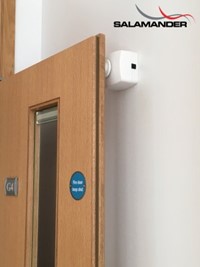
Which radio-controlled systems comply with Category A of BS7273-4? Salamander offers the only wire-free system of radio controlled fire door holders and closers which complies with Category A of BS7273-4.
Each Salamander device connects wirelessly to a mains-powered controller unit, which is connected to the building’s existing fire alarm system. One controller unit can manage up to 99 fire door closers or fire door holders.
All products in the Salamander range are battery-powered, wire-free and offer two-way communication between controller and device, allowing the ‘accountable person’ to easily manage and oversee any faults within the building.
The Salamander door closer is suitable for most fire doors, holding them open at any desired position, while the Salamander door holder is designed for doors where standard closers are already in place.
The system uses innovative, wire-free, magnetic technology to safely hold open fire doors and release them upon activation of the fire alarm.
Currently, there is nothing to protect leaseholders and building owners from the cost of bringing existing buildings up to standard when the Fire Safety Bill 2020 is passed.
As the wireless Salamander system can be retrofitted to existing buildings, it offers the same benefits as a hard-wired system whilst saving time, installation costs and disruption to a building’s fabric or occupants.