Dräger secures position on NFCC Emergency Response Equipment framework

Dräger has earned a place on the Emergency Response Equipment and Associated Services Framework agreement C00268, awarded by the NFCC Fire Commercial Transformation Programme along with the lead contracting Authority West Midlands Fire Service.

Thermal Imaging Camera equipment supplied by Dräger, an international leader in the fields of safety and technology, will now be available to the National Fire Chiefs Council’s (NFCC) through its Emergency Response Equipment (ERE) framework, with the company having been awarded a position on Lot 5 Thermal Imaging Cameras.

The procurement framework is available to: UK Fire and Rescue Services, Police Forces, Ambulance Trusts NHS and UK Government Departments, agencies and public bodies including the Defence Fire Risk Management Organisation, the Environment Agency, and HM Prison Service (full list here). The framework will give these public sector organisations the flexibility to order life safety equipment as and when it is needed without going through the full tender process. 

UK Fire and Rescue services will be able to choose from Dräger’s UCF® 8000 and UCF® 9000, both of which provide vital insight when visibility is reduced due to smoke, fire or darkness, and can be easily carried with one hand.

The 8000 model delivers first-rate image quality, a robust design, and continued recording with a full memory card. It can also be used in potentially explosive atmospheres including zone 1 according to ATEX. Further functionality includes temperature resolution to help identify trapped individuals, the ability to ‘see around corners’, and the ‘snapshot function for the temporary freezeframe of an image.

Drager’s UCF® 9000, meanwhile, is a thermal imaging and digital camera all in one, with eight image modes available, including outdoor, persons (search and rescue), thermal scan (for hotspot search), and scan PLUS (for heat sources). The camera also comes with a laser pointer, snapshot function, and extended dynamic range to clearly detect persons and objects.  

Liz Millward, Marketing Manager Emergency and Rescue Services at Dräger UK, says the cameras have been built to increase incident efficiency and enhance firefighter safety: “The cameras provide instant access to high quality images of the incident, allowing emergency responders to locate victims, as well as the source of the fire quickly.

“This not only serves to improve incident responses, but also protects the firefighters, who are provided with the additional visibility needed to get in and out of the area as quickly as possible. In an industry where a split second can be the difference between life and death, these technologies are crucial for the safety of our firefighters.”  
London Fire Brigade issue warning on heating fires

London Fire Brigade (LFB) has issued a warning on the dangers of central heating as temperatures drop in the UK.

As thousands of people continue to work from home more regularly and the weather takes a noticeably colder turn, there is a real risk of a rise in fires as people look for cheaper ways to heat their homes as gas prices soar.

Portable heaters – such as halogen heaters – are one of the most common alternatives people use to keep warm, particularly if they are spending a lot of time in one room and want to avoid switching on their central heating.

Fires caused by these types of heaters can have devastating consequences and they are not an unusual occurrence. The Brigade has attended more than 1,200 of them in the last five years. Firefighters are concerned that home workers, confined for most of the day to their spare room or office, may be tempted to use these heaters more this year.

There have already been 160 heating-related fires in London this year, with 26 peoples suffering injuries as a result.

Home workers tempted to use a portable heater should be aware of the dangers. Common causes of heater fires are people using the heaters to dry clothing or leaving things too close to them which then catch light. They can also be started by things like nearby paperwork and in a worst case – could even catch light to a person’s clothes, bedding or blankets if they are too close to the heater.

Fires involving heaters have a high mortality rate and sadly, portable heaters have been the cause of 14 fatal fires in London in the past five years. Almost 200 people have suffered injuries from these types of fires since 2017.

Those with mobility issues using unsafe heating methods are also, sadly, more likely to sustain a fatal injury.

The Brigade is also calling on Londoners to also consider the fire risk of other alternative ways to heat their homes. Never leave the cooker, oven or hob on for heating. A build-up of heat can cause a fire, carbon monoxide poisoning or even death.   Never use a barbeque or solid fuel fire indoors unless properly ventilated as this may also cause a significant risk from carbon monoxide. The Brigade encourages everyone to fit carbon monoxide alarms in their home, especially in rooms with solid fuel, gas or paraffin heaters

Electric blankets are also a way to keep warm, but there are some simple tips to follow to keep safe if using them.

They should always be stored flat, rolled up or loosely folded to prevent damaging the internal wiring. Always unplug them before you get into bed unless it has a thermostat control for safe all-night use.

Never use an electric blanket if you have an air flow pressure relief mattress or use emollient creams and if your blanket gets wet, don’t use it and never switch it on to dry it.

Do not buy second-hand electric blankets and check regularly for wear and tear and replace at least every 10 years.

There is help available if energy costs are getting beyond your budget. Citizens Advice provides lots of information about grants and benefits to help you pay your energy bills or you can contact your energy company for advice.

If you’re concerned about fire safety in your home or the home of a loved one, it’s worth checking out our online Home Fire Safety Checker, which allows people to receive tailored advice based on their building and guides Londoners around the rooms of their home to help them identify any risks and hazards.

Hochiki life safety devices play vital role in keeping hospital safe

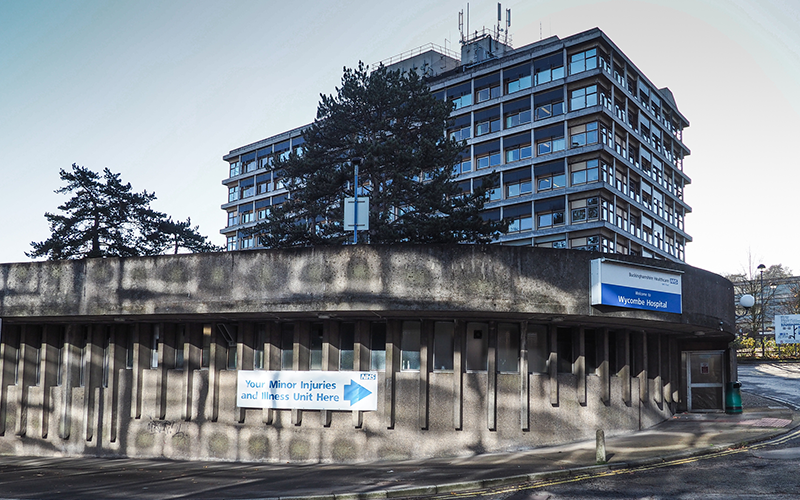
Fitting a new life safety system to any public space can be a complex job, but when undertaking this task in a hospital, during a pandemic, the complexity increases tenfold. When Pyrotec Fire and Security were chosen as the contractors to update an existing fire detection system at Wycombe General Hospital, there was only one life safety device manufacturer that would fit the job – Hochiki.

 Based in High Wycombe in the heart of Buckinghamshire, Wycombe Hospital provides urgent treatment and planned (elective) surgery, specialist treatment for patients with heart conditions and strokes, cancer, and urological conditions along with a midwifery led unit. The project, commissioned by Buckinghamshire Health NHS Foundation Trust, was to replace an existing network of obsolete control panels and devices. Pyrotec, with over 40 years’ experience in the industry, looked to Hochiki fire detection devices to help support the project.

The hospital was fitted with a network of 26 control panels, pre-programmed off site. Loop by loop, each fire zone had old devices switched out and replaced with Hochiki’s ESP Intelligent range of addressable fire detection and alarm equipment. The range has been designed and manufactured to the highest international standards, offering a sensor solution which can be adjusted for sensitivity reducing false alarms – vital for a hospital environment.

What made Hochiki products the standout choice for this project, however, is the ease of compatibility with other brand control panels. It is for this reason that so many life safety engineers and contractors choose to fit Hochiki, including Pyrotec Fire and Security.

Justyn Soames, lead Project Manager for this job explains “when you are working in a hospital it is vital that the job is carefully managed to ensure there is no loss of old or new fire alarm system coverage.  Therefore, it is imperative that you work with systems and devices that are simple to fit and test. Hochiki life safety devices were chosen because, despite the innovative technology at play, the devices are incredibly simple to fit and most importantly for this project at Wycombe Hospital, Hochiki technology is highly flexible and compatible with other systems.”

He continues “The NHS trust we work with use Hochiki across several of their sites, so it was important for them to have consistency and familiarity, it makes the training of the system and evacuation procedures much easier for example. The client’s management teams trust the reliability of Hochiki technology – for us, that is the best form of testimony.”

The main challenge of this job was undertaking the changeover during the restrictions of the COVID-19 pandemic. The Pyrotec engineers worked closely with the client managers and hospital departments to manage the working areas in respect to staffing and patient levels, with each fire zone given its own timescale as part of the project “It was important to manage the needs of the client to continue the operational requirements of the hospital against the requirement to change over the system. This needed to be done in a timely manner as we were changing over large fire detection loops to ensure round the clock detection.

“It was an exceptionally smooth transition from the old set up to the new with minimal disruption to the site and project programme. All project targets were met at each stage, the use of Hochiki devices definitely played a key part in this.”

MP cuts the ribbon at Kentec Electronics’ factory extension

Local Dartford MP, Gareth Johnson, has officially opened a new extension at Kentec Electronics, the manufacturer of life-critical fire control systems, enabling the firm to expand its manufacturing, dispatch and stores capability by a third.

The extension not only enhances Kentec’s core production capabilities, but also adds further capability to its ‘Specials’ Department for niche and complex projects, such as those delivered to historic buildings or even yachts.

Kevin Swann, the Managing Director of Kentec and Hiroshi Kamei, the Finance Director of Kentec, met with Gareth Johnson to give a tour of the factory and to discuss how the factory extension is helping Kentec business to grow and answer the needs of its customers better. A plaque was put up in the factory to honour the day.

Gareth says he is thrilled to witness Kentec’s achievements: “Kentec has grown considerably over the last thirty-five years to become one of Dartford’s top 10 employers and it was fantastic to see how the new production space is furthering its business goals. Kentec is one of the big success stories of the area.”

Kevin Swann says he was honoured to have had Gareth Johnson officially open the factory: “I was particularly pleased that Gareth took the time to talk to many of our great people on the tour and showed a real interest in their work and lives. We are very proud of our accomplishments and excited to showcase the new factory extension. It was an excellent day that has given the whole team encouragement and confirmation that efforts have been very much worthwhile.”

The official opening followed a virtual launch that took place in July 2020.

IAFC-VCOS and NVFC release report update to reduce occupational cancer risks

The International Association of Fire Chiefs’ Volunteer and Combination Officers Section (VCOS) and the National Volunteer Fire Council (NVFC) have released an update to the Lavender Ribbon Report that provides 11 best practices for reducing exposure risks and preventing occupationally caused cancer in firefighters. The new Lavender Ribbon Report Update includes additional information, essays, articles, research, and ideas for successfully implementing the best practices.

Cancer is a leading health risk facing firefighters, largely due to the chemicals and carcinogens they are exposed to while on the job. In 2018, VCOS and the NVFC released the original Lavender Ribbon Report to provide specific actions that firefighters can take to protect themselves and their team from these risks. The Lavender Ribbon Report Update takes things a step further by sharing personal stories, examples of how departments are implementing the best practices, and other information to reinforce the actions firefighters need to take to lessen their exposure risks.

“The risks we face aren’t going anywhere, and we can’t remain stagnant in addressing this critical health and safety issue,” said Chief Brian McQueen, chair of the NVFC’s cancer subcommittee and co-author of both the Lavender Ribbon Report and the Lavender Ribbon Report Update. “This new release will equip firefighters with further tools and knowledge so they can successfully implement the best practices, along with motivation for why it is so urgent that we take action now. Don’t let this document sit on the shelf – use it so that we can prevent the tragedy of firefighter cancer.”

Chief John M. Buckman III, VCOS educational coordinator, commented, “The VCOS hopes that all public safety personnel will read both the original Lavender Ribbon Report and this updated version. Firefighter health and wellness, especially occupational cancer, must be a top priority and is a continuous process that requires strong leadership and commitment to take the right actions. This updated report is designed to reignite the passion for helping firefighters protect themselves from carcinogen exposure. This is a large document and will require significant individual and organizational commitment. Don’t let its size stop you from using each piece to improve your organization.”

Studies show that firefighters have higher rates of many types of cancer than the general population. It is critical that both individual firefighters and fire service leaders implement the best practices to reduce exposures to toxic chemicals and carcinogens. Use the Lavender Ribbon Report Update to implement practices that will make the department safer and reduce the number of firefighters who have to face the anguish of a cancer diagnosis.

NFCC launch Online Home Fire Safety Check tool

The National Fire Chiefs Council (NFCC) have launched a new Online Home Fire Safety Check (OHFSC) tool, available free of charge to all fire and rescue services (FRSs) in England.

The user-friendly resource has been developed following a successful pilot study in collaboration with Fire Kills and Safelincs under NFCC’s Prevention Programme.  It was officially launched at NFCC’s recent Prevention and Protection Conference which was attended by more than 150 protection and prevention leads from FRSs across the country.

OHFSC has been developed to complement the Person-Centred Framework, which underpins the work of virtual and face to face Home Fire Safety Visits, and deliver a product available to households who may not reach the threshold for a physical visit, or to be used when and where physical visits are restricted or not possible. It has been designed to provide a person-centred self-assessment of fire risk for individuals that may have low or medium fire risk.

To ensure the vulnerable are not overlooked, the tool has a mechanism to flag a user to their local FRS where a physical visit would be recommended as a consequence of completing the self-assessment.It has been designed to be used by either the home occupant directly, a third party (police, social worker, paramedic etc) who may have concerns to an occupant’s welfare/safety, or simply aid the FRS directly with home visits.

Neil Odin, Chair of NFCC’s Prevention Committee and NFCC’s Prevention Programme Executive, said: “We have been overwhelmed by the positive feedback from FRSs who attended the Conference, with many having already signed up to the on-boarding process. 

“In the long-term NFCC would like to see all FRSs adopt the new Online Home Fire Safety Check and use it as an integral part of their prevention activities.  This, we hope, will provide a consistent approach to identifying and logging issues related to home safety prevention activities, and assist with centrally capturing valuable data which will be made available for all FRSs to use and plan future prevention strategies.”

Perimeter Solutions helps preserve Reagan Ranch from wildfire

The Reagan Ranch in Santa Barbara, California now has greater protection from wildfires, courtesy of Perimeter Solutions. The producers of high-quality firefighting products recently treated the 688-acre property with PHOS-CHEK® FORTIFY® long-term fire retardant, a ground-based retardant that is formulated, so that one application provides protection from wildfires that will continue to remain effective even after a significant rain event.

Perimeter Solutions and its team treated the Reagan Ranch with thousands of gallons of PHOS-CHEK FORTIFY, applying it to areas around the property that are at risk for wildfires. Once PHOS-CHEK FORTIFY is applied it helps render vegetation and other fuels where it’s applied nonflammable. PHOS-CHEK FORTIFY is formulated to have extended durability and greater adherence to vegetation and other fuels in order to provide protection for an extended period of time. Unlike retardant dropped from aircraft, which is colored red to help pilots track where the retardant is dropped, the solution is clear.

This innovation in long-term retardants is relatively new and is starting to be widely adopted by utilities, railroads, insurance companies, homeowners and other high hazard industries who are helping to prevent wildfire ignitions and proactively protecting their property from wildfires.

The contribution of PHOS-CHEK FORTIFY to protect the Reagan Ranch stemmed from a meeting Perimeter Solutions CEO Edward Goldberg had with representatives from the Ranch at a political event in California this past summer.

“The 2021 wildfire season is highly active in the Western United States, and it is important for everyone whose home or business is at risk from wildfires to take the necessary steps to protect their property,” says Goldberg. “The Reagan Ranch is an important, historical site and it is facing the same danger. I am proud of the fact that Perimeter Solutions is helping to preserve our nation’s history by protecting the Reagan Ranch from the devastation that can be caused by wildfires.”

President Ronald Reagan purchased Rancho del Cielo in 1974, planning to retire there with his wife Nancy after the conclusion of his second term as governor of California the next year, but history had other plans. Following his Presidential election in 1980, Rancho del Cielo was transformed into the Western White House, the place where President Reagan signed major legislation, hosted dignitaries including Queen Elizabeth and Mikhail Gorbachev, and spoke by phone with the crew of the Challenger space shuttle.

In 1998, the Young America’s Foundation acquired the property directly from the Reagan family “to preserve, protect, and utilize the Ranch as a unique and impactful tool to pass on Ronald Reagan’s ideas and lasting accomplishments to future generations,” according to the Ranch’s website. Young America’s Foundation continues to protect the property to this day.

“During the summer of 2018, the Sherpa wildfire ignited about a quarter of a mile from the Reagan Ranch and consumed nearly 8,000 acres. Fortunately, it never reached the Ranch, but wildfires continue to present the greatest threat to the preservation of the property. We want future generations to be able to visit and learn about President Reagan, and we are grateful to Perimeter Solutions for working with us, and for donating PHOS-CHEK FORTIFY to protect the Reagan Ranch from wildfire,” says Brent Kilpper, Associate Director for the Reagan Ranch.

Perimeter Solutions produced a video to capture the Reagan Ranch application, which you can view on their YouTube channel at https://www.youtube.com/watch?v=rWG_remaeRM.

For more information on Perimeter Solutions, visit https://www.perimeter-solutions.com.

ARFF: Airports transition to environmentally friendly fire fighting

In case of fire emergency at airport, every second counts. Aircraft Rescue Fire Firefighters (ARFF) have to be effective in a short time to save people lives in a burning aircraft. The firefighting foam must be quickly efficient.

The move from AFFF to FFF at airports

The world of firefighting is quickly moving toward fluorine-free foam products, getting away from PFAS-containing products (AFFF and AR-AFFF foams). The industry challenge was to provide efficient fluorine-free foams with same performance that fluorinated products.

Performing fluorine-free foams (FFF) that meet ICAO (International Civil Aviation Organization) specification are available in the aviation market. Some international airports are changing or have already changed for fluorine-free foam onboard fire trucks or in aircraft hangar fire safety systems.

New fluorine-free foam dedicated to aircraft fires ECOPOL A+

Thanks to its long experience in environmentally friendly foams and aircraft fire safety, BIOEX launched ECOPOL A+ fluorine-free foam: an high-performance FFF dedicated to aircraft fire extinguishment.

This fluorine-free foam quickly extinguishes a wide range of hydrocarbon fuels fires faced at airports, such as kerosene, jet A1, gasoline and heptane. ECOPOL A+ meets International Civil Aviation Organization (ICAO) certification and European Standard EN1568 Part 3 v2018 certification.

ECOPOL A+ forms a stable and thick foam blanket which flows rapidly above burning fuel to seals vapours and cut off oxygen supply, to quickly extinguish fire and prevent from reignition. ECOPOL A+ is a viable alternative to AFFF foams and offers equal or better performance than traditional AFFF foams.

The foam adheres to vertical surfaces to cool aircraft parts such as fuselage or body, providing long thermal insulation and allowing passenger evacuation. Formulated without PFAS-components, this fluorine-free foam is an environmentally friendly solution for airports fire protection. ECOPOL A+ meets environmental concerns balanced with high fire safety performances. ECOPOL A+ is fully biodegradable, fluorine-free and silicone-free.

ECOPOL A+ foam applications

ECOPOL A+ can be used in low or medium expansion depending on the fire scenario (landing gear, engine, fuel line fires…). Contained within ARFF vehicle, the foam concentrate can be applied on direct application by the airport fire truck monitor. For fires that cannot be reach by the aircraft fire vehicle, it can be put out with fixed or mobile foam proportioning and foam discharge devices. The foam concentrate is available in 3% and 6% version. Fire fighters can use it with fresh, brackish and sea water. BIOEX aviation foam concentrates are tested and approved by many international airports such as Paris airports, Geneve airport and Ottawa airport.

Fire and Rescue Service invest in Dräger mechanical cleaning systems to protect firefighter health

County Durham and Darlington Fire and Rescue Service (CDDFRS) has implemented Dräger’s Cleaning Solution as part of its new state-of-the art decontamination facility, designed to ensure optimal cleaning and disinfection of firefighter equipment.

The initiative will not only help protect firefighters from harmful carcinogens and germs, but the innovative nature of the new decontamination and cleaning regime will also help improve the useful working life of the equipment the firefighters use.

Dräger’s Cleaning Solution package includes Harstra’s Wash 9DR and Wash 6DR mechanical cleaning machines plus additional self-contained breathing apparatus (SCBA) and associated equipment to enhance operational logistics.

The compact Wash 9DR stainless steel cleaning machine is an automatic solution for cleaning breathing masks that has low water and energy consumption. The Wash 6DR is a solution for cleaning higher volumes of complete breathing apparatus, including full face masks, compressed air breathing apparatus, helmets, and back plates (without the cylinder). In-built dosing pumps ensure consistency of cleaning, and the high-pressure 4-sided bayonet nozzles maintain water pressure during the cleaning process, preventing moisture from getting into equipment. Two compartments prevent cross-contamination and during washing the doors are electrically locked.

Modular in design and simple to use, the mechanical cleaning machines can be configured to suit specific workshop areas and capacity requirements, with washing and rinsing cycle options available in as low as 5, 10 and 22 minutes and featuring in-built water softening.

CDDFRS’s new decontamination facility is part of a remodelling of the fire service’s existing training facility, and now provides additional showering and changing areas for firefighters as well as distinct areas for washing, drying, and servicing equipment. New protocols have been introduced to minimise cross contamination of equipment and firefighters’ exposure to combustion products from leaving an incident to shift end.

The decision to commission the facility is a part CDDFRS’s commitment to its core values of pioneering innovation, prioritising firefighter wellbeing and safety, and driving improvements in managing contaminants. CDDFRS is part of a working group that brings together firefighters, fire chiefs, estates, governance, the FBU and public organisations to agree best practice.

Dan Wootton, Fire Officer for CDDFRS, says while mechanical washing of equipment is new to the UK fire services, in recent years the benefits have come to the fore: “Dutch fire services have invested in mechanical washing over recent years, leading to clear benefits in terms of disinfection and cleaning consistency, and an awareness of this is what drove us to move away from manual cleaning.”

CDDFRS opted for Dräger because it was able to provide the right approved equipment for the service’s needs (including capacity and wash cycle lengths) and critically was able to provide on-the-ground logistical support in installation and ongoing servicing and maintenance. Logistical support encompasses ensuring there is enough equipment ready for use at any one time, and – with firefighters being required to spend less time manually cleaning – advising on operational processes that maximise working capacity.

Liz Millward, Marketing Manager Emergency and Rescue Services at Draeger Safety UK, says in recent years there has seen a welcomed cultural shift with greater awareness of firefighter long-term health:

“We now know that carcinogens on dirty kit have a long-term impact on firefighters’ health, which has been compounded by the pandemic. As part of our Health for the Firefighter campaign we surveyed firefighters and found there to be considerable concern around their long-term health with regard to both carcinogens and Covid-19,” she explains.

“It is fantastic and testament to CDDFRS’s culture that it is trailblazing proven advancements to cleaning and disinfection – for the sole purpose of furthering firefighter health and wellbeing.”

CDDFRS implemented a staged introduction, by initially only utilising the new facility following training exercises. This gave crews the opportunity to feedback and hone the process with heavily exposed equipment to ensure a streamlined introduction to wider use.

“Other fire services are keen to see how it works and how well firefighters have adapted,” adds Dan. “We have various video and online communication tools that we have used to ensure firefighters have been on board with changes at every step of the way.

“Overall, through our new facility we’ve been able to improve firefighter working conditions and support their health and wellbeing – and we’re proud that this has been the driving force behind investment,” he concludes.

West Sussex Fire & Rescue Service secures £196,000 government grant for pioneering collaboration

West Sussex Fire & Rescue Service (WSFRS) has been awarded nearly £196,000 from the Regulators’ Pioneer Fund (RPF) to help keep businesses safer.

The money will allow the service to work with its partners on developing a ‘fire safety awareness tool’ to help businesses carry out interactive fire risk assessments.

It is being developed as a collaborative partnership between WSFRS, the National Fire Chiefs Council (NFCC), University of Northampton and Eyecademy Ltd.

This awareness tool includes vital tips and advice to help keep premises and people safer. Once launched, the new tool will be accessible to all fire services around the country free of charge to use with their local businesses.

The collaboration secured a grant of £195,840 from the RPF, which is administered by the Department for Business, Energy & Industrial Strategy (BEIS). The grant is part of a £3 million fund for innovative projects and products.

West Sussex Deputy Chief Fire Officer Mark Andrews said: “I am delighted that the Regulator’s Pioneer Fund have recognised in awarding this grant just what a real difference this new virtual training tool will make to both businesses and residents across the country.

“This is a fantastic joint project that will draw on expertise across the sector to create something that is not just free and easy to use, but informative and helps businesses to understand their legal obligations and how to comply with them, while reducing the risk of suffering a significant impact from fire.

“Using new technology, we intend to encourage a cultural shift in the way that businesses seek, and are provided with, fire safety advice.”

The Regulators’ Pioneer Fund enables UK regulators and local authorities to help create a UK regulatory environment that unleashes innovation and makes the UK the best place to start and grow a business.

Business Minister Lord Callanan said: “Good regulation should spur entrepreneurship, not stand in its way, and this project will help keep the UK at the cutting-edge of innovation.

“This new project could pave the way for exciting developments in the sector, bringing benefits to British businesses and consumers alike.”