LEADER GROUP acquires MERCEDES TEXTILES to strengthen firefighting equipment portfolio

LEADER GROUP acquisition of MERCEDES TEXTILES expands its North American presence

LEADER GROUP has acquired Canadian manufacturer MERCEDES TEXTILES as part of its strategy to expand its international presence and strengthen its portfolio of firefighting and rescue equipment.

The acquisition brings together LEADER GROUP’s existing range of emergency response technologies with MERCEDES TEXTILES’ expertise in manufacturing fire hoses, fittings and portable pumps, enhancing the Group’s offering for fire and rescue services worldwide.

Founded in 1979 in Quebec, MERCEDES TEXTILES designs and manufactures equipment for municipal, military, industrial and wildland firefighting services. The company exports products to more than 50 countries through its three entities – MERCEDES TEXTILES Ltd., HIGHWATER HOSE Inc. and HYDRO-WICK INDUSTRIES Ltd.

LEADER GROUP said the acquisition will strengthen its long-term presence in North America while expanding its product offering, particularly for wildland firefighting, and supporting MERCEDES TEXTILES’ international growth through the Group’s global distribution network.

The move represents the latest stage in LEADER GROUP’s transformation from a specialist manufacturer into an international provider of complementary firefighting and rescue solutions.

Since 2021, the Group has doubled its revenue through a combination of organic growth and strategic acquisitions, including ZELUP in France and C.E.T. Fire Pumps in Canada.

The expanded portfolio now covers key operational requirements across emergency response, including fluorine-free foam concentrates, firefighting nozzles and monitors, ventilators, search and rescue equipment, portable pumps and high-performance fire hoses.

Miguel Ferreira, President & CEO of LEADER GROUP, said: “This operation marks a major milestone in the development of LEADER GROUP. With MERCEDES TEXTILES, we strengthen our presence in North America and expand our range of solutions dedicated to firefightingng and rescue professionals.

“This complementarity enables us to support our customers with an ever more complete, innovative, and high-performance offering, driven by a single mission: helping save lives.”

Eccotarp introduces Foldable Drain Cover for spill response and environmental protection

The Foldable Drain Cover (FDC) developed by Eccotarp is designed to help prevent hazardous liquids from entering drainage systems during spill incidents and environmental protection emergencies.

According to the manufacturer, the product is intended for rapid deployment on steel and horizontal plastic drain grates, including those with side inlets or gullies. It is used in spill response situations to help contain liquids at the source and reduce the risk of environmental contamination.

The drain cover is described as foldable, reusable and chemically resistant, and is designed to be applied directly onto a cleaned drain surface with a flexible sealing membrane that uses pressure differences to help improve contact with uneven surfaces.

Eccotarp states that the product is suitable for use across a range of applications, including emergency response operations and industrial environments, and can be deployed on different types of drainage systems.

The Foldable Drain Cover is made from a combination of flexible magnetic and chemical-resistant foil materials and is designed to be compact for transport and storage, allowing it to be carried and deployed when required in spill situations.

The company says the product is part of its wider range of spill containment solutions used to support emergency responders and industry in managing accidental releases of hazardous substances.

The company is showcasing the Foldable Drain Cover at Booth E13, Hall 17, where it will be available for demonstration to visitors and industry professionals.

Eccotarp to exhibit at INTERSCHUTZ 2026

Eccotarp is to exhibit at INTERSCHUTZ 2026 (Hall 17, Booth E13), the world’s leading trade fair for fire and rescue services, emergency protection, safety and security, taking place in Hannover.

Visitors can explore and test solutions for firefighters and industry, including the ET-Roller 7 electric hose roller (for hoses up to 6″), magnetic leak patches, folding spill containment berms and tanks, drain covers, and more. Visitors can discover also the new range of spill containment berms made from the unique recyclable ReccoPro material.

INTERSCHUTZ , held every five years, brings together global leaders in firefighting, civil protection, rescue services and safety innovation. The event serves as a key platform for showcasing advancements in emergency response technology and fostering international collaboration.

What is a K Class Fire Extinguisher Used For?

Fire extinguishers are critical tools for stopping small fires before they spread, but it’s vital to use the correct type for each kind of fire. 

Using the wrong extinguisher can even make a fire worse.

Spraying water on a kitchen grease fire will only spread the flames. 

One particularly dangerous class of fire occurs in kitchens when cooking oils or fats overheat. 

These high-temperature grease fires. 

These are classified as Class K fires in the US, equivalent to Class F in the UK. 

They ignite suddenly and burn intensely. 

They require a special kind of extinguisher formulated specifically to handle burning oil and fat safely. 

This is where the Class K fire extinguisher comes into play: it is designed to tackle blazing cooking oils and keep a kitchen fire from turning into a disaster.

What is a K Class Fire Extinguisher Used For?

what is k class fire extinguisher

A Class K fire extinguisher is used for fires involving cooking oils, fats, and grease.

These are the types of fires that erupt in kitchens due to overheated oil. 

This extinguisher is specifically designed to combat blazing oil in deep fryers, frying pans, griddles, and other commercial cooking equipment. 

According to fire safety standards, a Class K extinguisher is the only effective means to safely put out fires fueled by vegetable oils, animal fats, or grease in cooking appliances.

What Makes a Class K Fire Extinguisher Unique

What makes the Class K extinguisher unique is its extinguishing agent. 

Unlike a water or dry powder extinguisher, a Class K unit contains a special wet chemical solution.

This is often potassium acetate or similar compounds. 

These chemical solutions are extremely effective on hot grease fires. 

When you discharge a Class K extinguisher onto burning oil, the wet chemical comes out as a fine mist and reacts with the fat. 

This reaction forms a thick, soapy foam blanket over the oil.

This process is called saponification

The foam smothers the flames by sealing off the oil from oxygen and also cools the oil below its ignition temperature, preventing the fire from reigniting.

Basically, the Class K extinguisher both starves the fire of oxygen and removes the heat, which are two essential elements needed for the fire to continue burning.

Why Can’t I Use a Different Fire Extinguisher on a K Class Fire?

why cant use other type fire extinguisher

You cannot substitute other types of fire extinguishers for a Class K fire because grease fires behave very differently from ordinary combustibles or flammable liquid fires

Fires involving cooking oil or fat require Class K extinguishers because no other extinguisher type can reliably or safely extinguish them. 

Using the wrong type can be ineffective or downright dangerous. 

Here’s why Class K fires need their own extinguisher and why other extinguishers won’t work:

Water Will Make a Grease Fire Worse

Never throw water on a burning pan of oil. 

Water is denser than oil, so it sinks below the burning grease and instantly turns into steam. 

As it evaporates, it expands to about 1,600 times its volume, erupting upward and carrying burning oil droplets with it. 

This causes the fire to explode and spread. 

Instead of cooling the fire, a splash of water can fling the flames to new areas (and possibly onto anyone nearby). 

Water and oil don’t mix, and using water will spread a Class K fire.

Standard Foam or Powder Extinguishers Aren’t Effective

Class B foam or dry powder extinguishers, which work for petrol or chemical fires, are not formulated for the extreme high-temperature conditions of cooking oil fires. 

Deep fryer oil can reach temperatures far above the ignition point of other flammable liquids.

A regular dry chemical extinguisher might knock down the flames briefly, but it does not cool the oil sufficiently. 

The oil can remain hot enough to reignite on its own a moment later.

This is essentially a ticking time bomb of fire. 

Also, dry chemical agents (like monoammonium phosphate powders) can form a crust on top of the oil that looks like it’s out, while underneath the oil is still burning or hot. 

When that crust is disturbed or if heat builds up again, the fire can flash back. 

Because they lack the cooling and smothering foam effect, normal Class B/C extinguishers often fail to prevent re-ignition of grease fires.

Co₂ (Carbon Dioxide) Extinguishers Aren’t Suitable

A CO₂ extinguisher fights fire by flooding the area with carbon dioxide to displace oxygen and cool the flames. 

However, with a Class K fire, CO₂ will only cool the surface of the oil while the deeper oil remains extremely hot. 

Once the CO₂ gas dissipates, the oxygen returns and the still-hot oil can reignite itself. 

Moreover, the high-pressure discharge from a CO₂ extinguisher can splatter the burning oil around, potentially spreading the fire to new areas. 

Thus, CO₂ might temporarily appear to put out a grease fire, but the fire is very likely to come roaring back.

How to Use a K Class Fire Extinguisher

how to use k class fire extinguisher

If a cooking oil fire breaks out and it’s safe for you to attempt extinguishing it, you should follow proper steps to use the Class K fire extinguisher. 

Using this extinguisher is similar to using any portable extinguisher, but there are a few additional considerations for grease fires. 

Always remember the acronym PASS:

  • Pull
  • Aim
  • Squeeze
  • Sweep

This acronym outlines the basic steps for knowing how to use a fire extinguisher:

  • Pull the safety pin out of the extinguisher’s handle. This pin prevents accidental discharge; pulling it will unlock the handle.
  • Aim the nozzle or hose at the base of the fire, not at the flames. In a grease fire, that means aim where the oil is burning (the surface of the oil). You want to hit the burning oil directly with the extinguishing agent.
  • Squeeze the handle slowly and evenly. This will start the flow of the wet chemical agent. Class K extinguishers are typically designed to discharge in a controlled, gentle spray to avoid splashing the oil.
  • Sweep the nozzle from side to side across the base of the fire while continuing to aim at the oil. Cover the entire area that’s on fire with the mist, and keep spraying until the flames are completely out.

Keeping Safe

While performing these steps, maintain a safe distance. 

It’s recommended to start about 8 to 10 feet (roughly 3 metres) back from the fire and move forward carefully as the flames subside. 

Holding the extinguisher upright, direct the spray low and evenly over the burning oil. 

The wet chemical will create a foamy layer as it contacts the hot grease. 

Make sure to coat the whole surface of the burning oil with this foam. 

This ensures that the fire is fully smothered and cooled. 

Class K extinguishers are engineered to discharge at a lower pressure than other types precisely to avoid splattering the burning oil. 

However, a steady hand control is important to keep the spray directed where it’s needed.

As you fight the fire with the extinguisher, avoid getting too close to splattering grease and never attempt to carry a burning pan outside.

Let the extinguisher do the work of dousing the flames. 

Keep discharging the agent until you’re absolutely sure the fire is out. 

After Extinguishing the Fire

After the flames appear to be extinguished, watch the area closely for a minute or two in case of re-ignition. 

The wet chemical foam should prevent the oil from reigniting, but it’s wise to be vigilant. 

Once everything is under control, ventilate the area if possible. 

Remember to call the fire brigade or emergency services if the fire was significant or if there’s any doubt it might flare up again. 

Also, any used extinguisher will need to be recharged or replaced promptly.

Suppression Systems

If the kitchen has an automatic hood fire suppression system, activate that first or ensure it has activated before using the portable extinguisher. 

The hood system will release its own suppressing agent and often shut off the heat source to the cooking equipment. 

This reduces the intensity of the fire and prevents new fuel from feeding it, making it safer and more effective when you follow up with the handheld Class K extinguisher.

Where are K Class Fire Extinguishers Usually Found?

where k class fire extinguisher found

Class K fire extinguishers are typically found anywhere there is a significant risk of cooking oil or grease fires. 

This means they are most often located in commercial and institutional kitchens. 

These are some of the common places you’ll see Class K extinguishers installed and ready for use:

Restaurant and Café Kitchens

Restaurants, diners, cafeterias, and coffee shops with kitchens all contain cooking appliances that use oil or grease. 

Class K extinguishers are normally required in these kitchens, often positioned near deep fryers or grill areas.

Hotel and Catering Kitchens

Hotel restaurants, banquet hall kitchens, and catering companies prepare food on a large scale and usually have multiple high-temperature cooking stations. 

These sites will have Class K units handy in the cooking areas to address any fryer or skillet fires.

Food Trucks and Mobile Kitchens

Food trucks, street food stalls, and mobile catering vans often operate with compact deep fryers or woks in a tight space. 

A Class K extinguisher is crucial in these environments due to the elevated risk of grease fires in a confined area.

Institutional and Cafeteria Kitchens

Large kitchens in schools, universities, healthcare buildings, nursing homes, prisons, and other institutions commonly cook for many people using industrial-sized equipment. 

These facilities will have Class K extinguishers in the galley or kitchen area to meet fire codes and protect occupants.

Bakeries and Other Food Prep Facilities

Bakeries, pastry shops, or any food production facility that involves frying or high temperature oils will also keep a Class K extinguisher nearby. 

Any facility with commercial cooking equipment is likely to have one.

Key Takeaways

Class K fire extinguishers play a crucial role in kitchen safety. 

They are uniquely formulated to tackle the high-temperature oil and grease fires that frequently occur in cooking environments.

These are fires that other extinguishers simply cannot deal with safely. 

Statistics show that a large share of fires in restaurants and cafes start in the kitchen, where hot cooking equipment can ignite oils and fats. 

Having a Class K extinguisher on the premises (and knowing how to use it) is therefore an essential safeguard for anyone who operates commercial cooking equipment.

A Class K fire extinguisher is a kitchen’s best defense against one of its most perilous fire hazards, and ensures that a fire doesn’t turn into a tragedy.

Changing a Battery in a Smoke Alarm

Smoke alarms are essential life-saving devices that warn us of fire, but they can only do their job if they have power. 

You are around 8 times more likely to die in a fire if you do not have a working smoke alarm. 

Many fatal home fires occur in houses that had smoke alarms installed but the alarms failed to go off, often due to missing or dead batteries. 

But how does changing a battery in a smoke alarm work?

Whether your smoke alarm is a standalone battery-powered unit or a mains-wired alarm with a backup battery, checking and changing the battery regularly is critical. 

This ensures the alarm will function when it’s needed most..

How to Change a Battery in a Smoke Alarm?

how to change a battery in a smoke alarm

Changing the battery in a smoke alarm is a straightforward task, but it’s important to do it correctly for the alarm to work. 

If you have a battery-powered smoke detector, the process involves opening the device, swapping the old battery for a new one. 

Here is a simple step-by-step guide for typical battery replacement:

Open the Alarm Cover

Most alarms either have a cover that twists or lifts off. 

Gently remove or twist the cover or the body of the alarm to expose the battery compartment. 

Remove the Old Battery

Unclip or slide out the old battery from its holder. 

It may be connected by a snap-on connector or simply held in a slot. 

Take note of how it was oriented.

Insert the New Battery

Put the new battery in the same way the old one was. 

Match the + and – terminals correctly so the markings on the battery align with those on the alarm’s battery contacts. 

Push the new battery firmly into place or reconnect the snap-on connector if there is one. 

Use the type of battery recommended by the alarm manufacturer.

Close the Alarm

Fit the cover or alarm unit back into place and make sure it clicks or twists closed securely. 

Finally, press and hold the test button on the smoke alarm until the alarm sounds a loud beep. 

This confirms that the new battery is working and the alarm is functioning.

What Types of Batteries are in Smoke Alarms?

what types of batteries in smoke alarm

Smoke alarms can use a few different types of batteries, and it’s important to use the right kind. 

9-Volt / AA

Most standard smoke alarms use either a 9-volt battery or AA batteries as their power source. 

Traditionally, many alarms took a single rectangular 9V battery (often called a PP3 battery). 

In newer models, it’s common to find replaceable AA batteries (usually 2 or 3 AA cells) instead of a 9V. 

These AA batteries together provide the required power and often have a higher combined capacity, meaning they can keep the alarm running longer.

Always check your alarm’s manual or look at the existing battery to know what type to use as a replacement. 

Long Life Lithium

There are also long-life lithium batteries available for smoke alarms. 

Some modern alarms come with 10-year sealed lithium batteries built in. 

These batteries are not removable; instead, the entire alarm is designed to operate for ten years on that sealed battery, after which you replace the whole alarm unit. 

Ten-year sealed battery alarms are popular because you don’t have to change the battery every year.

They give continuous power for the life of the alarm, and then you dispose of the unit once the battery is exhausted.

Mains

For mains-powered smoke alarms, the primary power comes from your house’s electrical supply, but they almost always have a backup battery. 

This backup is usually a 9V battery or sometimes a couple of AA batteries, depending on the model. 

The backup battery is there to ensure the alarm will still work if there’s a power cut. 

Mains-powered alarms still need their batteries replaced periodically, just like battery-only alarms. 

The difference is that a mains-wired unit will draw its daily power from the mains electricity.

However, if that backup battery is dead or missing, the alarm won’t sound. 

So keep the backup battery fresh.

Coin Cell

Occasionally, some compact smoke detectors use other battery types like built-in coin cell batteries or special long-life batteries. 

For example, a few small-form smoke alarms might use a lithium coin cell or a specialised lithium pack. 

These are less common, but the key point is to always use the exact type of battery recommended by the alarm’s manufacturer. 

Using an incorrect battery type (for instance, the wrong voltage or chemistry) could either prevent the alarm from working or cause it to underperform.

What to Avoid When Changing a Battery in a Smoke Alarm?

While changing a smoke alarm battery is simple, there are some important things to avoid to ensure your alarm remains effective and safe:

Not Replacing Battery

Do NOT leave the alarm without a battery. 

One of the biggest mistakes is removing the old battery and then forgetting to insert a new one immediately. 

Even leaving a smoke alarm without a battery for a short time is risky.

You might get distracted and not return to it. 

Always have a new battery on hand before you take the old one out. 

If an alarm is beeping in the middle of the night due to low battery, resist the temptation to just take the battery out to silence it and then go back to sleep. 

Unfortunately, some people do this and then neglect to put a new battery in later, leaving them unprotected. 

Never disable or remove the battery to quiet a ‘nuisance alarm’, instead fan out the smoke or use a hush button if your alarm has one. 

An alarm with no power won’t save your life in an emergency.

Wrong Battery Type

Avoid using the wrong type or a poor-quality battery. 

Smoke alarms are designed to use a specific battery type. 

Don’t try to fit a physically incompatible battery or one with incorrect voltage. 

For instance, do not try to power a 9V-only alarm with some makeshift combination of other batteries. 

Also, it’s best to use good quality batteries from reputable brands for smoke detectors. 

Cheap or old batteries may not last as long or could leak. 

Follow any guidance in your alarm’s manual about which batteries are recommended. 

Using the exact type (alkaline vs lithium, etc.) that’s advised will ensure the alarm functions correctly. 

If your alarm uses multiple cells (like 2×AA), always replace all of them at the same time with new batteries from the same pack.

Never mix old and new batteries together in the alarm, as this can cause leakage or reduced performance.

Recharge Batteries

Do not use rechargeable batteries in smoke alarms (unless the manufacturer specifically allows it). 

Rechargeable batteries are generally not recommended for smoke alarms. 

This is because rechargeables (like NiMH 9V or NiMH AA cells) have a slightly lower voltage and they self-discharge over time. 

They can run down much faster than normal alkaline batteries, even if you don’t use the alarm often. 

For example, some rechargeable 9V batteries might lose their charge in a matter of weeks or a couple of months, which is not reliable for a device that needs to work 24/7. 

Most smoke alarm manufacturers and fire safety experts advise against using rechargeable cells, as they may not meet the required backup time and reliability standards for an alarm. 

Stick to standard alkaline or lithium batteries as recommended.

Damage

Avoid damaging the alarm or its parts during battery replacement. 

When opening the alarm and handling the battery, be careful. 

Do not force the battery in or bend the contacts excessively.. 

If you accidentally pull a wire or break the battery clip, the alarm could malfunction. 

In such cases it would be better to replace the entire alarm. 

So take your time and handle everything gently. 

If the battery has a little plastic ribbon or tab designed to help pop it out, use that to remove it rather than prying roughly with tools.

When to Change a Battery in a Smoke Alarm?

when to change a battery in a smoke alarm

Knowing when to replace your smoke alarm’s battery is just as important as knowing how. 

Batteries don’t last forever, and a smoke alarm will give you warnings when its battery is weak, but you shouldn’t rely solely on the alarm’s chirp. 

Here are the key guidelines on when to change the battery:

At Least Once Every Year

For typical smoke alarms with replaceable batteries, the standard recommendation is to replace the battery annually. 

Many fire services advise changing the battery every 12 months, even if the alarm hasn’t started chirping yet. 

This pre-emptive change ensures the alarm will not run low at an inconvenient or dangerous time. 

Choosing a date you’ll remember, like your birthday or New Year’s Day, is a good way to make it part of your yearly routine. 

If your alarm uses standard alkaline batteries, they are inexpensive, and it’s worth the small cost for peace of mind.

Low Battery Warning

Your alarm will alert you when its battery is getting weak by emitting a regular ‘beep’ or ‘chirp’ sound. 

When you hear this, replace the battery immediately. 

The alarm is telling you it doesn’t have much power left. 

Don’t ignore it. 

Once chirping starts, install a fresh battery right away. 

This should stop the beeping and restore full function. 

If the alarm continues to chirp after a battery change, it could indicate a different issue, such as a fault in the alarm or that the unit is at the end of its life.

If it Fails a Test

You should be testing your smoke alarms regularly. 

If you press the test button and it doesn’t sound, it could mean the battery is dead. 

First, check if the battery is properly fitted. 

If the alarm still doesn’t sound, try a fresh battery. 

If that doesn’t solve the issue, the alarm itself may be faulty or too old and should be replaced.

Key Takeaways

You should now have an understanding of changing a battery in a smoke alarm.

Maintaining your smoke alarm’s battery is a small chore that carries a huge reward.

it could save your life and the lives of your loved ones. 

Many fire fatalities happen in homes where smoke alarms were present but had failed, often due to flat or missing batteries. 

This is a tragic statistic because it’s preventable with simple maintenance.

The bottom line is that a few minutes of simple maintenance can provide around-the-clock protection. 

Keep your smoke alarms powered, tested, and in good shape.

This way, if a fire ever breaks out, the alarm will reliably give you that urgent warning to get out safely. 

Stay safe!

FBU announce call for Israel to release fire engine donated to Palestine

The Fire Brigades Union has announced that 20 MPs have signed an open letter calling for Israeli authorities to release a fire engine donated to Palestinian firefighters.

Fire Brigades Union members in Scotland donated a fire engine last year, packed with firefighting kit, equipment and medical supplies and arranged delivery to the port of Ashdod to be transported to Nablus in the West Bank.

It has been impounded by Israeli customs at the port since July 2024 despite having the necessary paperwork.

In November, firefighters and supporters held a demonstration outside the London embassy to demand the release of the fire engine.

The letter, signed by firefighters, trade unionists and MPs, calls for the immediate release of the fire engine so that it can be safely delivered to aid firefighters in Nablus.

The full statement

The full statement from the MPs and trade unionists reads: “As firefighters and fire and rescue service workers, members of the Fire Brigades Union, other trade unionists, Members of Parliament and campaigners for justice and human rights, we are calling for safe release of the fire engine sent by FBU Scotland to aid Palestinian firefighters – but impounded by the Israeli authorities.

“This appliance, packed with firefighting kit, personal protective equipment, breathing apparatus, cutting tools and medical supplies, was sent for use by the Palestinian fire and rescue service in Nablus, in the West Bank. It has been held in the Israeli port of Ashdod since July 2024.

“In November London firefighters and supporters demonstrated outside the Israeli embassy to demand its release. We add our voices to this call, so that the fire engine can be used for its intended purpose, to help firefighters in Palestine save lives.”

Call for Israel to release fire engine donated to Palestine announced by FBU: Summary

20 MPs have signed an open letter calling for Israeli authorities to release a fire engine donated to Palestinian firefighters, announce the FBU.

The statement explains how the fire engine needs to be used for its intended purpose, to help firefighters in Palestine save lives.

ZIEGLER delivers ARFF to Tibet Airport

Firefighting vehicle manufacturer ZIEGLER delivered a type Z8 Aircraft Rescue and Fire Fighting Vehicle (ARFF) to Lhasa Gonggar Airport in Tibet, China. With a extinguishing agent volume of 17,000 litres of water and 2,040 litres of foam compound, the Z8 is ready for extinguishing attacks in an emergency and for the increased requirements at one of the world’s highest airports.

Features of the Z8

The Z8 is equipped with two traction motors that enable acceleration and a top speed of 140 km/h- even under demanding climactic and geographical conditions. As a result of ZIEGLER’S extinguishing technology, the Z8 is designed to ensure efficiency in operations where every second counts.

Lhasa-Gonggar Airport, which is located at an altitude of 3,570 metres above seal level is a transportation hub in Western China. The delivery of the ZIEGLER is helping to further increase safety at this location and raise the international standard in the field of airport fire protection technology.

ZIEGLER’s Product Manager ARFF, Fabian Schmidt’s statement

Fabian Schmidt, Product Manager ARFF at ZIEGLER said: “With the Z8 at Lhasa Airport, ZIEGLER is once again demonstrating its leading role in the development and provision of Aircraft Rescue and Fire Fighting Vehicles for the most demanding operational scenarios worldwide.”

Tibetian Airport receive ARFF from ZIEGLER: Summary

ZIEGLER have delivered a Z8 ARFF to Lhasa Gonggar Airport in Tibet. The Z8 has been designed to combat emergency attacks and to maintain efficiency.

EmiControls sends TAF Firefighting Robot to support Ukrainian firefighters

EmiControls, a company based in Italy, who design innovative firefighting solutions using water mist technology, has recently delivered a TAF firefighting robot to Ukrainian firefighters in collaboration with its local partner.

EmiControls have sent its TAF Firefighting Robot to enhance the safety of emergency responders in the war zone, where over 100 firefighters have already lost their lives and many others have been injured.

The handover of the TAF Firefighting Robot to Ukraine’s State Emergency Service (DSNS) took place during an event attended by German Development Minister Svenja Schulze.

Innovative technology for enhanced safety

The TAF AirCore firefighting robot has been designed by EmiContols to tackle challenging scenarios. Its modular design and remote-control capability make the TAF AirCore suited for operations in crisis areas.

Equipped with thermal imaging and high-resolution cameras, the robot allows firefighters to operate from a safe distance of up to 300 meters. This protects them from dangers such as fires, explosions and firearms.

The aim is to support the work of firefighters and increase their safety under extreme conditions. The use of water mist enables targeted firefighting but also helps to suppress gas or smoke and create escape routes.

International cooperation for deployment in Ukraine

EmiControls is headquartered in Bolzano, Italy, and is part of the TechnoAlpin Group. The company develops solutions for firefighting, dust suppression and odor control using water mist technology, which is deployed worldwide. The TAF AirCore firefighting robot, distributed via Magirus GmbH, is based on the idea of using an air stream generated by a turbine to distribute water mist on a mobile platform, allowing for more efficient firefighting.

CEO OF EmiControls, Martin Eppacher’s statement

CEO of EmiControls, Martin Eppacher said of the delivery that: “Our goal is to provide innovative technologies that protect people in dangerous situations and make the work of emergency responders easier.”

TAF Firefighting Robot sent to Ukrainian firefighters by EmiControls: Summary

EmiControls have sent one of their TAF Firefighting Robots to Ukrainian firefighters, to help emergency responders feel safer.

Firefighter Ranks in Order (Low to High)

Firefighting is a noble profession that requires bravery, dedication, and skill. 

Firefighters play a crucial role in protecting lives and property from fire hazards. 

The firefighting profession in the U.S. is organised with a clear hierarchy of ranks. 

But what are the firefighter ranks in the U.S.?

Firefighter ranks indicate a firefighter’s experience, responsibilities, and leadership within the department. 

Understanding the different firefighter ranks helps to clarify the structure and functioning of fire departments across the country.

The History of Firefighting in the US

history of firefighting

The Beginning of Firefighting the in US

Firefighting in the United States has a rich history that dates back to the colonial era

The first organised firefighting efforts began in the early 1600s, with bucket brigades made up of volunteers. 

These early firefighters would form lines to pass buckets of water from the nearest source to the fire. 

In 1736, Benjamin Franklin assisted in the creation of the Union Fire Company in Philadelphia, the first formal firefighting company in the colonies. 

This marked the beginning of organised fire departments.

The Evolution of Firefighting

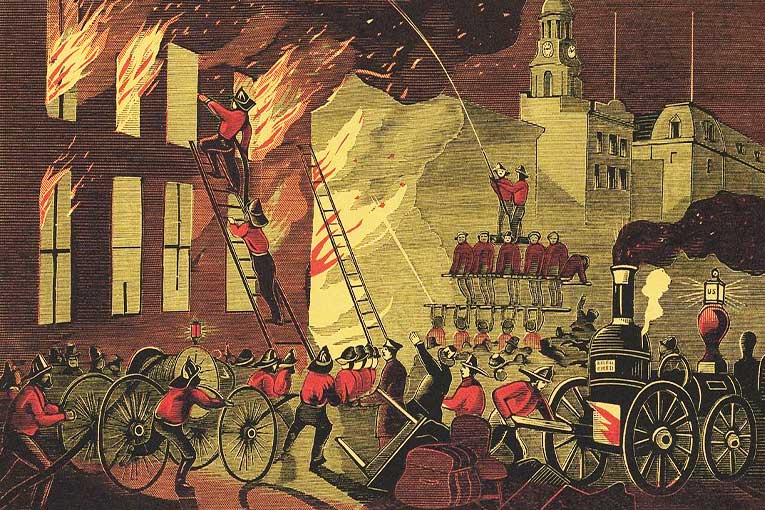
Throughout the 19th century, fire suppression evolved with the introduction of hand-pumped fire engines, steam-powered engines, and, eventually, motorised fire trucks. 

The development of better firefighting equipment and techniques significantly improved the effectiveness of fire departments. 

The formation of paid, professional fire departments in major cities further enhanced the ability to respond quickly and efficiently to fires.

Modern Firefighting

In the 20th century, advancements in technology and communication, along with improved building codes and fire detection and prevention measures, contributed to a significant reduction in fire-related deaths and property damage. 

Today, firefighting is a highly professionalised field, with rigorous firefighter training and a clear rank structure that ensures the efficient operation of fire departments across the country.

Firefighter Ranks in the US

The U.S. fire service is organised into several ranks, each with specific roles and responsibilities. 

The firefighter ranks, listed from lowest to highest, reflect a firefighter’s level of experience, training, and leadership within the department.

Probationary Firefighter

The probationary firefighter is the entry-level of firefighter ranks in the fire service. 

After completing initial training at a fire academy, probationary firefighters are assigned to a fire station, where they gain practical experience under the supervision of senior firefighters.

During the probationary period, which typically lasts six months to a year, new firefighters must demonstrate their ability to perform the duties required of them. 

This includes responding to emergencies, maintaining equipment, and participating in ongoing training. 

Successful completion of the probationary period is required to be promoted to the next rank.

Firefighter

Once the probationary period is successfully completed, the firefighter becomes a full-fledged member of the department. 

Firefighters are responsible for responding to emergency calls, including fires, medical emergencies, and hazardous material incidents. 

They work as part of a team to extinguish fires, rescue victims, and provide emergency medical care. 

Firefighters also participate in ongoing training to maintain their skills and stay updated on the latest firefighting techniques. 

The role of a firefighter is physically demanding and requires a strong commitment to public service.

Driver Engineer

The driver engineer, also known as a fire apparatus operator, is responsible for driving the fire truck to and from emergency scenes. 

In addition to operating the vehicles, driver engineers are responsible for maintaining and operating the pumps, hoses, and other equipment on the fire truck. 

This role requires a thorough understanding of the mechanical aspects of fire apparatus and the ability to operate the equipment under high-pressure situations. 

Driver engineers also assist with firefighting and rescue operations when not engaged in driving duties. 

This rank is typically achieved after several years of experience as a firefighter and requires additional training in vehicle operation and equipment maintenance.

Lieutenant

firefighter ranks lieutenant

A lieutenant is the first level of officer in the firefighter ranks.

Lieutenants are responsible for leading a small team of firefighters during emergency operations and daily activities. 

They are in charge of directing the team’s efforts at the scene of a fire or other emergency, making critical decisions, and ensuring that all safety protocols are followed. 

In addition to their leadership duties, lieutenants are responsible for training and mentoring junior firefighters. 

The role of a lieutenant requires strong leadership skills, decision-making ability, and a thorough understanding of firefighting tactics.

Captain

firefighter ranks captain

The captain is a higher-ranking officer who oversees a larger team of firefighters and often manages an entire fire station. 

Captains are responsible for coordinating emergency response efforts, developing operational plans, and ensuring that all equipment is properly maintained and ready for use. 

They also play a key role in the training and development of their team members, ensuring that they are prepared to handle a wide range of emergency situations. 

Captains are often involved in administrative tasks, such as scheduling shifts, managing budgets, and conducting performance evaluations. 

This rank requires extensive experience, strong leadership skills, and the ability to manage complex operations.

Battalion Chief

firefighter ranks battalion chief

A battalion chief is a senior officer responsible for overseeing multiple fire stations or a specific geographic area within a fire department. 

They manage several teams of firefighters, including lieutenants and captains, and coordinate their efforts during large-scale emergencies. 

Battalion chiefs are responsible for making high-level strategic decisions, allocating resources, and ensuring that all operations are conducted safely and efficiently. 

They also serve as the primary point of contact between the fire department and other emergency services, such as police and medical teams, during major incidents. 

The role of a battalion chief requires extensive experience in the fire service, strong leadership abilities, and the capacity to manage complex, high-pressure situations.

Assistant Chief

firefighter ranks assistant chief

The assistant chief is a top-level officer who assists the fire chief in managing the entire fire department. 

Assistant chiefs oversee major divisions within the department, such as operations, training, or administration. 

They are responsible for developing and implementing department-wide policies, managing budgets, and ensuring that all personnel and resources are effectively utilised. 

Assistant chiefs also play a key role in strategic planning, working closely with the fire chief to set long-term goals and priorities for the department. 

This rank requires extensive experience in leadership and management, as well as a deep understanding of all aspects of fire department operations.

Fire Chief

firefighter ranks fire chief

The fire chief is the highest-ranking officer for firefighter ranks. 

The chief is responsible for the overall leadership and administration of the department, including setting the vision and direction for the organisation. 

Fire chiefs manage all aspects of the department’s operations, from emergency response and training to budgeting and public relations. 

They work closely with city or county officials, other emergency services, and the community to ensure that the department meets its public safety objectives. 

The fire chief is ultimately responsible for the department’s performance and plays a key role in shaping its future. 

This rank requires extensive experience, strong leadership skills, and the ability to manage a large, complex organisation.

How do you get Promoted as a Firefighter?

firefighter promotion

Promotion within the fire service is based on a combination of experience, training, and performance. 

To be considered for promotion, firefighters must meet specific criteria set by their department. 

This often includes a minimum number of years in service, completion of advanced training courses, and demonstrated leadership ability.

Promotions are typically awarded through a competitive process that may include written exams, practical assessments, and interviews. 

The process is designed to ensure that only the most qualified and capable individuals are selected for higher ranks.

In addition to technical skills, leadership and communication skills are crucial for promotion, as higher-ranking officers are responsible for managing teams and making critical decisions during emergencies. 

Continuous learning and professional development are also important, as firefighting techniques and technologies are constantly evolving.

How do you Become a Firefighter?

how to become firefighter

Becoming a firefighter requires a combination of education, training, and physical fitness. 

The first step is to obtain a high school diploma or equivalent, followed by completing a firefighter training program at a fire academy. 

These programs provide the necessary skills and knowledge to perform the duties of a firefighter, including fire suppression, rescue techniques, and emergency medical care.

In addition to formal training, aspiring firefighters must pass a series of physical fitness tests to demonstrate their ability to perform the physically demanding tasks required in the field. 

These tests may include endurance exercises, strength assessments, and obstacle courses.

After completing training and passing the required tests, candidates must apply to a fire department. 

The application process may include additional testing, background checks, and interviews. 

Once hired, new firefighters typically undergo a probationary period, during which they receive on-the-job training and evaluation before becoming full members of the department

Conclusion

You should now have more of an understanding of firefighter ranks. 

Firefighting is a challenging and rewarding profession with a well-defined rank structure. 

Each of the firefighter ranks carry specific responsibilities and reflects a firefighter’s experience and leadership within the department. 

From the entry-level probationary firefighter to the top-ranking fire chief, each position plays a vital role in ensuring public safety and protecting lives and property. 

Becoming a firefighter requires dedication, physical fitness, and a commitment to continuous learning, but it offers the opportunity to serve the community and make a real difference in people’s lives.

8 Types of Fire Alarm Systems

Fire alarm systems play a crucial role in keeping buildings safe. 

They detect smoke, heat, or flames and alert occupants to evacuate. 

There are various types of fire alarm systems, each designed for different needs and building types. 

Understanding these systems helps in choosing the right one for effective fire protection. 

This article explores nine types of fire alarm systems, classified into different categories.

Why Different Types of Fire Alarm System Exist

different types of fire alarm

Different types of fire alarm systems exist to address the unique safety needs of various buildings and environments. 

Fire risks can vary significantly depending on factors like building size, occupancy, use, and potential fire hazards. Here’s why diverse systems are necessary:

Varying Levels of Risk

Buildings have different levels of risk associated with fire. 

High-risk environments, such as hospitals or chemical factories, require advanced systems for early fire detection

Lower-risk settings, like small offices, might need less comprehensive coverage.

Building Complexity

The complexity and layout of a building affect the type of fire alarm system needed. 

Large or multi-story buildings may require intricate systems with multiple detectors and alarms. 

Smaller or simpler structures might only need basic systems.

Specific Needs

Certain buildings have unique requirements based on their use. 

For instance, museums may need systems that avoid false alarms while protecting valuable artefacts. 

Laboratories might need detectors sensitive to specific types of chemicals.

Compliance and Regulations

Different types of fire alarm systems help meet specific legal and safety regulations. 

Compliance with these regulations ensures that buildings adhere to fire safety standards, protecting both occupants and property.

9 Types of Fire Alarm Systems

M Category

m category fire alarm

The M category focuses on manual fire alarm systems. 

These systems require human intervention to activate the alarm and alert occupants to a fire. 

They are designed for situations where manual activation is practical and effective.

Manual Call Points

Manual call points are a primary component of M category systems. 

These devices are typically mounted on walls throughout a building. In the event of a fire, someone pulls the handle to trigger the alarm. 

This action sends a signal to the fire alarm system, initiating an alert. 

Manual call points are commonly found in schools, offices, and public buildings where manual intervention is feasible.

Manual Alarm Bells

Manual alarm bells are another form of M category systems. 

These bells emit a loud sound when activated. 

They are often used in smaller buildings or areas where manual activation is practical. 

Manual alarm bells alert everyone in the vicinity to evacuate immediately.

L Category

The L category of fire alarm systems refers to automatic fire detection systems designed to provide early warning and minimise the risk of fire spreading. 

These systems are crucial in safeguarding lives and property by detecting fires before they become uncontrollable. 

The L category is subdivided into several classes based on the level of protection provided and the specific needs of the building.

L1 Category

l1 category fire alarm

L1 systems offer the highest level of protection and are designed for buildings where early detection is crucial. 

They provide comprehensive coverage by installing detectors throughout the entire building. This includes smoke detectors, heat detectors, and manual call points in every area.

L1 systems cover all areas of the building, including all rooms, corridors, and staircases.

These systems use a combination of smoke, heat, and sometimes flame detectors to ensure early and accurate detection.

L1 systems are equipped with alarms that provide immediate notifications to occupants, giving them more time to evacuate safely.

L1 systems are typically used in high-risk buildings such as hospitals, high-rise buildings, and large commercial properties. 

In these environments, the prompt detection of a fire can prevent significant damage and save lives.

L2 Category

l2 category fire alarm

L2 systems offer a slightly less extensive level of coverage compared to L1 systems. 

They focus on protecting specific high-risk areas within a building while providing basic coverage for other parts.

L2 systems include detectors in high-risk areas such as kitchens, laboratories, and electrical rooms. 

These areas are more likely to experience fires due to the nature of their activities.

While L2 systems provide detection in high-risk areas, they do not cover every room or corridor. 

The coverage is focused on areas where fires are more likely to start.

L2 systems often include manual call points in other areas of the building, allowing occupants to manually activate the alarm if necessary.

L2 systems are suitable for buildings where specific areas pose a higher fire risk but where full L1 coverage is not required. 

L3 Category

l3 category fire alarm

L3 systems provide protection primarily for escape routes such as corridors and stairwells. 

These systems ensure that people can safely evacuate in the event of a fire by detecting smoke or heat along these critical paths.

L3 systems focus on protecting escape routes, ensuring that these paths are clear of smoke and allowing for safe evacuation.

Detection is typically limited to areas along escape routes. 

The system may not include detectors in other parts of the building.

Manual call points may be included near escape routes, enabling occupants to trigger the alarm if they notice a fire.

L3 systems are used in buildings where ensuring safe evacuation is the primary concern. 

They are commonly found in residential buildings, small commercial properties, and places where escape routes are crucial for safety.

L4 Category

l4 category fire alarm

L4 systems are designed for buildings with specific fire risks, such as storage areas or specialised equipment rooms. 

These systems provide detection and protection tailored to the unique needs of these areas.

L4 systems include detectors in areas with specific fire risks. 

For example, they may be used in data centres, warehouses, or areas with high-value assets.

The detection system is tailored to the types of hazards present in the protected area, such as smoke detectors in a server room or heat detectors in a storage area.

L4 systems are appropriate for buildings with unique or high-value areas that require specialised fire protection. 

They are often used in facilities with critical equipment or valuable inventory, where targeted detection is essential.

L5 Category

l5 category fire alarm

L5 systems are customised to meet specific needs and requirements based on the building’s layout and fire risks. 

These systems are highly adaptable and can be designed to address unique fire safety challenges.

L5 systems are tailored to the specific requirements of a building, including its size, use, and fire risks. 

This customization ensures that the fire alarm system meets the exact needs of the environment.

The system may include a combination of smoke, heat, and other detectors, depending on the building’s needs. 

It can also integrate with other fire safety systems for comprehensive protection.

L5 systems are used in buildings with unusual layouts or specialised fire safety needs. 

Examples include historical buildings, museums, and custom-built facilities where standard systems may not provide adequate protection.

P Category

The P category of fire alarm systems focuses on providing automatic fire detection and alerting occupants to evacuate. 

These systems are designed to ensure that a fire is detected early and that people are promptly informed. 

The P category is divided into two sub-categories based on the level of coverage and protection provided:

P1 Category

p1 category fire alarm

P1 systems offer the highest level of protection by providing comprehensive coverage throughout an entire building. 

These systems are designed to detect fires early in all areas, ensuring that any outbreak is quickly identified and addressed.

P1 systems include detectors in every area of the building, such as offices, corridors, storage rooms, and stairwells.

The system uses a variety of detectors, including smoke, heat, and sometimes flame detectors, to ensure early and accurate detection of fires.

P1 systems are equipped with alarms that notify all occupants immediately, allowing for quick evacuation and reducing the risk of injury or damage.

P1 systems are suitable for high-risk environments like shopping centres, large industrial sites, and multi-story buildings where early detection and prompt evacuation are critical for safety.

P2 Category

p2 category fire alarm

P2 systems offer a more targeted approach compared to P1 systems. 

They provide automatic fire detection in specific areas or zones within a building.

P2 systems focus on high-risk areas or zones, such as kitchens, server rooms, or laboratories, while providing basic detection in other areas.

The system can be tailored to address specific fire risks in the protected areas, using the appropriate types of detectors.

P2 systems may include alarms and notifications tailored to the specific areas being protected.

P2 systems are ideal for buildings where full P1 coverage is not necessary but where specific areas require targeted fire detection. 

Examples include schools, smaller offices, and specialised facilities.

Conclusion

The different types of fire alarm systems are essential for protecting buildings and their occupants from fire hazards. 

The different categories and subcategories of fire alarm systems provide varying levels of protection based on specific needs and risks. 

The M category includes manual systems, while the L and P categories focus on automatic detection and warning systems. 

By understanding these systems, you can choose the right fire alarm system for your building and ensure effective fire safety measures.