London Fire Brigade ‘welcome’ Waking Watch Fund announcement

London Fire Brigade have responded to the Governments announcement that funds of £30 million will pay for costs of installing an alarm system in buildings with unsafe cladding.

London Fire Brigade Commissioner Andy Roe said: “The announcement of the Waking Watch Relief Fund is a welcome step in the right direction towards reducing some of the costs to leaseholders for remediation work to make their buildings safer.

“The deadline for building owners to apply for support to remove dangerous cladding from their buildings has also been extended and while we welcome the opportunity this gives for more people to apply, we remain concerned about the length of time people are still being forced to live in buildings with dangerous cladding.

“The number of buildings in London with waking watches in place continues to rise as more work is done to uncover potential fire safety risks in the built environment. We are deeply concerned about the scale of the issues being uncovered and will continue our work with building owners and those responsible for fire safety to identify and address risks and keep Londoners safe.

“We should all feel safe in our homes and those responsible for residential buildings have a legal obligation to meet their responsibilities and address all fire safety risks identified. We will continue to work with Government around how this fund can be best used to ensure the safety of buildings now and in future.”

For more information, visit the London Fire Brigade website

ASFP membership to make qualifications in Passive Fire Protection mandatory

The Association for Specialist Fire Protection (ASFP) will be introducing new membership requirements from 1 January 2021, which will make it mandatory for member companies to demonstrate that a proportion of their employees have been suitably trained and/or have achieved appropriate qualifications in Passive Fire Protection.

The new requirements are intended to further assist the Association and its members to clearly demonstrate that ASFP members are more professional than non-members and exceed the current competency expectations of the passive fire industry. By meeting the ASFP’s strict entry requirements, members will be able to clearly demonstrate their skills, competence and professionalism.

The requirements, which will be implemented over a period of three years, will require member companies to demonstrate that certain relevant staff in defined roles have obtained Institution of Fire Engineers (IFE) Level 2 or 3 qualifications; NVQ Level 2 qualifications in passive fire protection via manufacturer training and relevant CSCS cards; or have undertaken the ASFP Online Introduction to Passive Fire Protection.

Commenting on the new requirements, ASFP CEO Niall Rowan declared:

“The ASFP has long been the standard bearer for technical excellence in passive fire protection, for instance with our requirement that installer members hold third party certification for products that they install.

Passive Fire Protection
Niall Rowan

“The Grenfell tragedy has further triggered significant change in the way fire safety is perceived. Improving the quality of installation and demonstrating the competency of those involved in manufacturing, testing, installing and maintaining fire protection products is now seen as vital.

“The ASFP’s new requirements will enable members to clearly demonstrate their skills, competence and professionalism. This will offer architects, specifiers, fire engineers and Tier One contractors further peace of mind that by specifying ASFP members for all passive fire protection products, services and installations quality and professionalism is assured.”

The ASFP Foundation Course in Passive Fire Protection courses offer a foundation in fire safety and fire science, as well as units on different forms of passive fire protection. The courses and the IFE Level 2 and Level 3 qualifications were developed in partnership by the ASFP and the IFE to provide recognition of individuals who have attained the essential knowledge and understanding to work efficiently and safely in passive fire protection roles.

The Level 2 and Level 3 qualifications are the only passive fire qualifications in the UK and Ireland recognised by regulator Ofqual. Furthermore, those who obtain the IFE Level 3 Certificate are eligible to apply to join the IFE at Technician grade enabling them to gain professional recognition in the global fire sector and use the post nominal TIFireE.

The ASFP Online Introduction to Passive Fire Protection provides a basic overview of passive fire protection covering key elements of design, installation and inspection. Delivered in 13 video modules, it is intended to provide a first step for those considering a career in the passive fire protection industry.  On successful completion of an online test, candidates are awarded 3 hours CPD.

OGUK welcome Scottish Government’s Hydrogen Policy Statement

The leading UK oil and gas industry body OGUK has today welcomed the Scottish Government’s Hydrogen Policy Statement, which recognises that the critical role the country’s oil and gas industry has to play in realising a hydrogen economy.

Commenting, OGUK Sustainability Director Mike Tholen said:

“The Scottish Government’s Hydrogen Policy Statement released today recognises the critical role our industry has to play in creating a hydrogen industry, both through the expertise of our supply chain and the talents of our workforce, and in the opportunities presented by repurposing of our infrastructure.

“Investing in these new energy resources will be key to unlocking the challenge of achieving net-zero emissions across the economy. Many businesses within our industry are already actively involved in the development of such hydrogen projects, recognised by the Committee on Climate Change as an essential part of the energy mix in years to come.

“While it’s encouraging to see investments like this, today’s Hydrogen Policy Statement reiterates the importance of securing a sector deal for our industry. We will continue to work at pace with the Scottish government to ensure that our supply chain is supported throughout the transition, securing jobs and the energy supply, whilst supporting our energy communities.”

DNV GL awarded contract for Trion oil field development

DNV GL have announced it has been awarded a multidisciplinary contract by BHP Billiton Petróleo Operaciones de México, S. De R.L. De C.V. (BHP) to provide classification, verification, and independent analysis of the Trion FPU.

Located approximately 19 miles south of the U.S./Mexico border and approximately 112 miles from the Mexican coastline, the FPU will be installed in a water depth of approximately 8,200 feet. BHP holds a 60% interest in the development and PEMEX a 40% interest.   

“The Trion oil field development is historic in the Mexican gulf and a milestone for all of us involved,” said Frank Ketelaars, Regional Manager, Americas, DNV GL – Oil & Gas. “It is indeed a recognition of DNV GL for our competence in professionally executing mega projects of this scale internationally. DNV GL is honored to be the Classification Society involved in such a significant project, and we look forward to the growth of our partnership with BHP for years to come.”   

Frank_Ketelaars
Frank Ketelaars, Regional Manager

The contracted verification scope DNV GL will carry out includes full project compliance to the Mexican offshore regulations, NOMs (Official Mexican) standards and BHP’s safety case requirements. The scope of work also includes several independent analyses from DNV GL to be conducted during the front-end engineering design and detailed design phase of the project   

“I am delighted BHP has recognized that we possess the technical expertise and knowledge, particularly with respect to local regulatory requirements, to assure the safety and compliance for this deepwater project,” concluded  Ketelaars. “We have worked with BHP on many different projects around the world and this contract win is a sign of the strength of our relationship with BHP in the Americas.”

BSI publish ISO/PAS 45005, international safe working guidelines

BSI, in its role as the UK National Standards Body, has today published new international guidelines for organisations to protect staff while operating effectively.

The free standard, named ISO/PAS 45005, Occupational health and safety management General guidelines for safe working during the COVID-19 pandemicdefines international best practice for managing the health and safety of workers and other stakeholders during the COVID-19 pandemic. It is intended to complement any existing national guidelines and regulations.

The ISO/PAS 45005 guidelines cover everything from safely reopening business premises that have had to shut down, to steps for working more safely with the public and looking after workers’ psychological health and wellbeing – including for those working from home. It also includes recommendations on:

  • Personal protective equipment and face coverings
  • Ensuring people with disabilities are taken into account
  • What to do if someone becomes ill in the workplace
  • Co-ordinating with other businesses in shared work premises

The standard provides businesses with practical guidance on how to overcome the immediate difficulties that organisations are facing up and down the country and around the world, including supply chain management and will help businesses bounce back once the crisis passes.

Sally Swingewood, Lead Standards Development Manager for business improvement and occupational health and safety management at BSI, who manages the committee that developed the new international guidelines, commented:

“As the National Standards Body for the UK, it is our duty to help improve the quality and safety of business by developing voluntary standards that can be effectively applied across workplaces. The global pandemic has overturned social and business norms and it is a challenge to organisations across the world to keep operating whilst also keeping people safe: today’s publication is step toward a resumption of stable business.

“We understand that not every organisation has a dedicated human resources or OH&S function, so we have developed this guidance to be practical and easy to understand. It can be used in any organisation, regardless of type, size or country of operations.”

The committee1 gathered experts from 26 countries, who used the original guidelines developed and shared by BSI in the UK in May to develop this international standard. Its development was fast-tracked, taking three months rather than the average three years to publication.

Any organisation that wishes to download the ISO/PAS 45005 guidelines should visit the BSI website here.

FLIR to Provide Thermal Imaging Cameras for Zoox Robotaxi

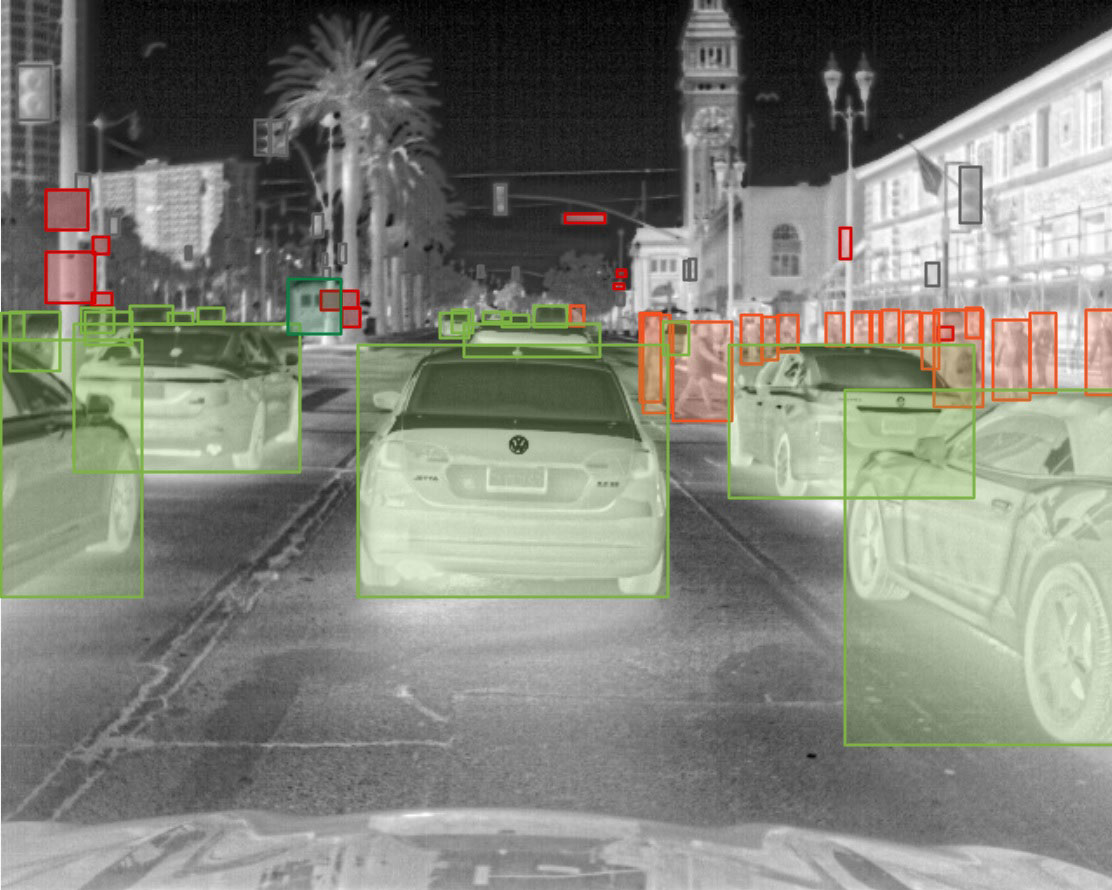
This week, Zoox revealed the first look of its driving, electric, autonomous vehicle built for the rider, not the driver. Today, the Zoox team confirmed that FLIR Systems will supply Zoox with thermal imaging cameras, and we wanted to share more details on our involvement with Zoox and why this is such an important milestone for autonomous vehicles.

As a sensing technology that performs the complex task of detecting and classifying roadway objects in challenging lighting conditions, thermal cameras add additional layers of safety through increased situational awareness and redundancy as part of complex sensor suites, ranging from radar to LIDAR to visible cameras.

The Zoox robotaxi vehicle features FLIR thermal cameras in its bi-directional vehicle, bringing improved visibility to more confidently identify and classify pedestrians, cyclists, and animals in both day and night driving conditions on urban streets, all around the vehicle.

Although thermal imaging is a more recent sensing modality in autonomy, mobility innovators, like Zoox, have come to realize its benefits for improving safety.

Thermal imaging is a passive sensing modality that does not require illumination and performs equally well in bright sun glare, headlight glare, and complete darkness, while offering additional awareness in adverse weather conditions such as fog, smoke, rain and snow. In short, by using thermal imaging, ADAS vehicles can recognize and adapt to these changing conditions quickly, and as a result, improve the safety across all levels of autonomy, including automatic emergency braking (AEB). This level of safety is crucial for all occupants and other road users, especially pedestrians and bicyclists that can be more difficult to spot in crowded urban environments, to help avoid injury or potential fatalities.

A History of Thermal Imaging and Automotive Innovation

FLIR’s initial foray into thermal imaging for automotive use 15 years ago has evolved to creating integrated thermal imaging systems that provide additional situational awareness and safety for advanced driver-assist systems (ADAS). This includes the development of robust thermal imaging datasets to enable machine vision classification in the infrared spectrum, as part of broader artificial intelligence technology stacks.

embarcadero.jpg

Last year, FLIR announced its Boson thermal camera technology will be part of a leading automaker’s level-four autonomous vehicle (AV) sensor suite through our long-time partner Veoneer. And now with the introduction of the Zoox autonomous vehicle, FLIR Systems is thrilled to see its technology continue to gain wider acceptance as a crucial component of safer mobility.

Recently, FLIR teamed up with VSI Labs to develop a proof-of-concept vehicle and testing program that looks at how fusing thermal sensor data with radar a visible sensor data via a trained neural network can improve pedestrian detection for AEB systems. By adding thermal to current sensor suites, the testing showed significant improvement in nighttime and poor visibility scenarios. 

Autonomous innovation remains a strategic priority at FLIR, and as the automotive industry continues to evolve and perfect its safety systems, FLIR will play an integral role to support the future of travel.

New £30 million Waking Watch Relief Fund announced

The government has announced a £30 million fund to help end the scandal of excessive waking watch costs, as part of a further move to support thousands of residents in high-rise buildings.

The new Waking Watch Relief Fund will pay for the installation of fire alarm systems in high-rise buildings with cladding, removing or reducing the need for costly interim safety measures such as ‘waking watch’.

The National Fire Chiefs Council have been clear in recent guidance that building owners should move to install common fire alarm systems as quickly as possible to reduce or remove dependence on waking watches.

The steps today will help worried leaseholders who may have faced high costs for interim safety measures by providing financial support and delivering a better, long term fire safety system in their buildings.

Some buildings have already installed these systems due to the significant savings this offers, with leaseholders in those buildings, who on average were paying £137 per month for a waking watch, expected to collectively save over £3 million per month.

The same research shows the wide range in costs faced by leaseholders and evidence of disproportionate charges – the Housing Secretary Robert Jenrick is writing to Trading Standards asking them to use their powers to investigate.

The fund will open in January, but will also provide immediate, emergency support to Wicker Riverside Apartments in Sheffield to ensure that the 35 recently evacuated families should be able to return to their homes before Christmas.

A 6-month extension to the deadline for building owners to complete their applications to the £1 billion Building Safety Fund has also been announced – with a new deadline for submissions of 30 June 2021.

Waking Watch Fund ‘will help reduce financial pressure’

This means hundreds more buildings will be remediated and thousands of leasehold residents will be protected from costs. Progress is being made on current applications with many more expected to be agreed before Christmas.

Housing Secretary Robert Jenrick said:

I’ve heard first-hand from leaseholders the misery that rip-off waking watch costs have been bringing to residents of high-rise buildings with cladding.

I’m announcing today a £30m Waking Watch Relief Fund to help relieve the financial pressure on those residents and to ensure they are safe. I’m confident that this will make a real difference to worried leaseholders up and down the country this Christmas.

We have continued to prioritise the removal of unsafe ACM cladding throughout the pandemic and expect around 95% of remediation work will have been completed or be underway by the end of this year.

National Fire Chiefs Council Chair, Roy Wilsher said:

We welcome this new Waking Watch Relief Fund, which will help to reduce the financial burden for some leaseholders having to fund the costs of waking watches.

It has been our firm and long held expectation that building owners should move to install common fire alarms as quickly as possible and this funding is a positive step.

Building Safety Minister Lord Greenhalgh said:

Our priority is making sure people are safer in their homes and we are working tirelessly to make this happen.

The measures announced today build on our commitment, which will be enshrined in law through our Building Safety Bill, to improve the safety of buildings across the country.

Building owners are responsible for making sure that their buildings, and the people who live in them, are safe. We continue to actively pursue them to encourage swift action and have supported this with £1.6 billion in government funding.

This builds on steps the government has already made to support leaseholders including securing an agreement that owners of flats in buildings without cladding do not need an EWS1 form to sell or re-mortgage their property – benefitting nearly 450,000 homeowners.

These measures are part of the government’s commitment to improve the safety of buildings across the country which will be enshrined in law through the Building Safety Bill in 2021.

The government is clear the building industry must contribute towards the costs of making these homes safe once more, to set right decades of unsafe practices.  Work continues at pace to develop further financial solutions to protect leaseholders with details to be announced in the new year.

Fire Protection Association release residential care home fire safety advice

The Fire Protection Association have released a guide in best procedures to mainatain safety standards in resedintial care homes,

The guide provides basic steps that advises users on how to maintain safety procedures, and is published with the expectation to work alongside the fire risk assesment and fire warden on site.

Included in this guide is:

  • The fire triangle
  • General housekeeping
  • Typical sources of fuel
  • Typical sources of ignition
  • Action in the event of fire
  • Evacuation strategies
  • First aid firefighting

For full access to the guide visit the Fire Protection Association website

Johnson Controls release Energy Efficiency Indicator survey findings

Johnson Controls, the global leader for smart and sustainable buildings, released the findings of its annual Energy Efficiency Indicator survey, which found that more than half of organizations plan to increase investment in energy efficiency, renewable energy and smart building technology next year, comparable with investment trends after the 2010 recession.

Of the factors determining investment, the majority (85 percent) said that reducing energy costs was a very or extremely important driver of investment and more than three-quarters (76 percent) believe that protecting the health and safety of occupants during emergencies was a very or an extremely important driver of investment.

“The Covid-19 pandemic has highlighted the need to improve the health and safety of buildings, particularly by increasing their ability to operate under different conditions, both planned and unforeseen,” said Clay Nesler, vice president of global energy and sustainability at Johnson Controls.

“Though the pandemic has altered how people are investing in their buildings, occupant health and energy efficiency continue to be top of mind and we anticipate these investments will be a priority in 2021 as more people return to shared spaces.”

Despite reduced occupancy, the study found that facility energy use dropped surprisingly little during the pandemic, with less than 10 percent of facilities reducing energy use more than 20 percent.

Investments in Air Quality and Flexibility

As the world learns more about the spread of Covid-19 through aerosol transmission, indoor air quality has become one of the most pressing issues for facility managers to address.

The survey found that 79 percent have already or are planning to increase air filtration, three-quarters have already or are planning to install an air treatment system and 72 percent have already or are planning to increase outdoor air ventilation rates.

The majority of respondents, 81 percent said that increasing the flexibility of facilities to quickly respond to a variety of emergency conditions was very or extremely important driver of investment.

Further, in an increasingly digital world, the integration of systems has become more important than ever. Three-quarters (75 percent) of respondents’ organizations have invested in the integration of security systems with other building technology systems, a 36 percent increase from the 2019 study. And one-third of respondents (33 percent) plan to invest in the integration of building technology systems with distributed energy resources in the next year, a 15 percent increase over 2020.

“Digital offerings that integrate a number of systems are more of a priority than ever for organizations evaluating their investment plans for 2021,” said Michael Ellis, executive vice president and chief customer and chief digital officer at Johnson Controls.

“We took note of this trend, which is why we invested in our comprehensive OpenBlue offerings and continue to expand those with partners to meet their increasingly interconnected needs around energy efficiency, sustainability, digitization and occupant health.”

The integration of new technology continues to be a theme, with 79 percent of respondents noting that data analytics and machine learning will have an extremely or very significant impact on buildings, up five percent from last year’s study.

Increased Interest in Net Zero Energy Buildings

The study found growing interest in net zero energy buildings and resiliency, with 70 percent of organizations very or extremely likely to have one or more facilities that are nearly zero, net zero or positive energy or carbon status in the next ten years – an increase of seven percent from 2019.

Further, two-thirds of organizations are very or extremely likely to have one or more facilities able to operate off the grid in the next ten years – an increase of three percent from 2019.

Additionally, 63 percent of organizations invested in onsite renewable energy in 2020, a 22 percent increase from the organizations that said they were planning to in the 2019 study.

Funding Facility Improvements

The 2020 survey found that funding for facility improvements increasingly came from internal capital budgets (71 percent), energy services agreements (24 percent) and economic stimulus and recovery funds (20 percent).

To download a summary of the 2020 Energy Efficiency Index please go to: https://www.johnsoncontrols.com/-/media/jci/corp/media/news/files/2020/2020_eei_survey.pdf

Survey methodology: This independent survey was fielded online to 150 energy and facility management executives across the U.S. between September 11, 2020 through October 5, 2020. Of respondents, 27 percent held roles in commercial organizations, 37 percent in institutions, 23 percent in industry and 13 percent in other organizations.


FIA offer training and recruitment of next generation fire protection engineers


The FIA has unveiled its participation as a founding member in a new, industry-wide initiative designed to attract and develop a new generation of fire protection engineers.

What is Zitko Talent?

Zitko Talent is an alliance of leading manufacturers, installation companies and educators who will be providing an intensive 12-month programme of salaried work experience, training and development.

The programme is suitable for a wide audience, from college leavers and career changers to engineers wishing to cross-train from other sectors. Trainees combine frontline installation experience with intensive training and education customised to their specific workplace.

The FIA will be the principal training provider for all Fire aspects. This will include adapting courses for individual employers and their trainees – drawing on an extensive catalogue that includes BS5839 Fundamentals and the Advanced FD&A qualifications.

For employers, it’s the opportunity to attract and develop new talent far more efficiently and cost-effectively than they could do so alone, with all recruitment, selection and training sourced and administered centrally as part of the fee.

Why are FIA doing it?

In 2018/2019 FIA conducted surveys in which employers revealed they need fire detection and alarm technicians – making it clear that there is a real and urgent need for skills in this area.  This applies to new entrants to the industry as well as experienced engineers.

Finding suitably qualified people is somewhat difficult as the surveys suggest, therefore FIA are delighted to be able to provide the training programme to support the industry with skills development to become competent fire systems technicians.

Partnering with ZITKO Talent affords us the opportunity to promote the Fire industry to a wide audience, including talented young people who are the future of our industry.

We’ll also be working with our partners on another key aspect of our mission: championing and continually raising standards. And we’ll be helping to deliver a lasting solution to the looming skills shortage.

Who does it benefit?

It benefits you as a member. The programme fee is normally £10,000 per trainee, but as an FIA member you qualify for a 20% discount and additional guarantees should your trainee not complete their course.

The programme provides:-

 A solid launchpad for developing and employing high calibre engineers long-term – starting in installation and commissioning.

  • A thoroughly vetted pool of trainees from which to choose – ranging from college leavers and career changers to experienced engineers from other industries;
  • Over 160 hours of world-class education, including the FIA’s BS5839 Fundamentals, Advanced FD&A and Portable Extinguisher Maintenance courses;
  • Up to 150 hours of manufacturer certified product training, in up to six of the systems you use in your business;
  • All training administration is taken care of by the Zitko Talent team.