Third-Party Certification achieved by BAFE and BSI

BAFE and BSI are pleased to announce that the first registration and Third-Party Certification has been achieved for the new wet and dry riser service and maintenance scheme.

A crucial service for high-rise buildings and the tall building environment to ensure these remain effective in the event of an emergency.

The Scheme, known as BAFE SP105 Service & Maintenance of Dry and Wet Riser/Falling Installations, offers evidence of competency for organisations who deliver service and maintenance of dry and wet riser/falling installations.

It observes best practice, including working to several British Standards including BS 9990 (code of practice for non-automatic fire-fighting systems in buildings) and BS 5041 Parts 1 – 5 (Fire hydrant systems equipment).

The first company to achieve this Third-Party Certification and BAFE Registration is Nationwide Fire & Security based in Rowley Regis. Speaking to Steve Small, Managing Director of Nationwide Fire & Security, he said: “It is great to have achieved Third Party Certification to the BAFE wet and dry riser Scheme.

We are extremely proud of our achievement and can confidently state and now prove our competency to provide this service. BSI were very thorough during the assessment, which was good as this cemented our judgements of this being the right direction to venture down.

Competency is a huge topic now, especially with high rise buildings, and we want our company to be ready to provide this significant evidence.”

Chris Auger, Director of Schemes at BAFE, stated: “We introduced SP105 to the BAFE portfolio of competency Schemes in December 2019 but due to the national lockdown, as a result COVID, progress with the scheme paused in early 2020. We are delighted to award the first BAFE SP105 Registration to Nationwide Fire & Security and we congratulate them on their achievement.

BAFE continues to develop its diverse range of Schemes available to enable niche, but extremely important specialised markets, gain access to Third Party Certification, prove their competence and have a clear differentiator to their competition as a USP.”

Auger continued “BAFE have been actively involved in the CSG (Competence Steering Group) Working Groups and we look forward to a much stronger emphasis on competency with UKAS Accredited Third Party Certification in the interest of life safety and property protection for the whole built environment, not just high-rise or high risk. We aim to support industry with said access to appropriate Third-Party Certification.”

Richard Gurney, Group Certification & Laboratory Manager – Fire Safety Products & Associated Directives at BSI added: “We join BAFE in congratulating Nationwide Fire & Security in achieving SP105 Third Party Certification with BSI.

It confirms that the organization complies with the BAFE SP105 Scheme requirements and provides continued assurance to end users that they are receiving a service by a competent organization and technician.”

The BAFE SP105 Scheme, Competency of Organisations for the Service & Maintenance of Dry and Wet Riser/Falling Installations, is available for Third Party Certification assessment via BSI (British Standards Institution). For further information visit https://bit.ly/3m6nPFi
Government urged to invest in fire and rescue in the spending review

Firefighters, climate campaigners and scientists have urged UK Chancellor Rishi Sunak to invest in the fire and rescue service to protect the public and vital infrastructure from the devastating effects of climate change – or risk ruining the chance of a green recovery. 

In a letter to the Chancellor ahead of the Spending Review on 25 November, the Fire Brigades Union and climate groups including Green New Deal UK, Greenpeace UK, Friends of the Earth, and the Campaign Against Climate Change (CACC), call for the recruitment of “at least an additional 5,000 frontline firefighters in the next year” to deal with severe weather events such as mass flooding and wildfires that are “increasing in occurrence and intensity.” 

Signatories to the letter, which also include Robin Hood Tax UK, We Own It, Tax Justice UK, and Economist Ann Pettifor, say that “Climate change is posing a serious and growing threat to the United Kingdom” and that as the risk from climate change has grown “the fire and rescue service has not seen its funding increase to match the threat”. 

shutterstock_1640186719-1024x768
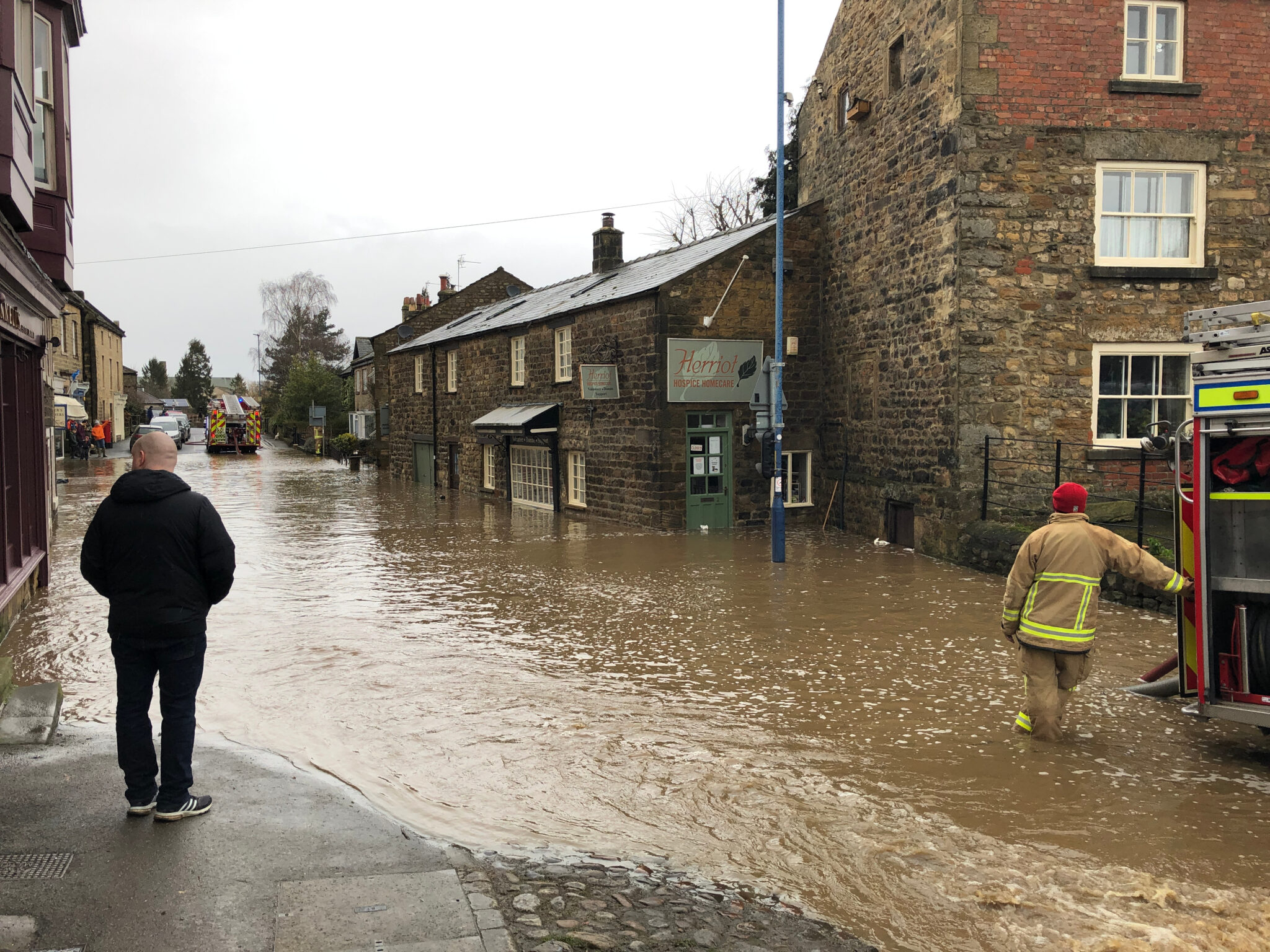
Fire services assess flooding in Yorkshire

In England over the last decade, non-fire incidents attended by the fire and rescue services have soared by 12%. In the last year alone, there was a 16% increase in the number of flooding events requiring a fire and rescue service response . However, across the UK there are 11,200 fewer firefighters than a decade ago, with central funding cut by 30% since 2013-14. 

The letter points to storms Ciara, Jorge, Dennis and the record number of wildfires that hit regions all over the UK in 2019 and 2020 as evidence of a climate in breakdown. 

The UK government’s own National Risk Register categorises extreme weather events including flooding as ‘high consequence risks’ .  Fire and Rescue Service in the UK is the major responder to severe weather related events rescuing people and animals as well as protecting property and infrastructure.  

In the letter, firefighters, climate campaigners, scientists and economists say that investing in the “key frontline defence against climate change” will “protect the infrastructure that is vital to delivering a green recovery.” 

The demands are made as part of the FBU’s #FundTheFrontline campaign which has been lobbying the Chancellor for investment in the fire and rescue service in the upcoming Spending Review.  

Matt Wrack, FBU general secretary, said: 

“Climate change is one of the biggest threats facing the UK, and it is firefighters that are on the frontline protecting people, property, businesses and infrastructure from some of its worst effects including mass flooding and wildfires. 

“But whilst the climate crisis has worsened the fire and rescue service has faced devastating cuts leaving it with 11,200 fewer firefighters than a decade ago. Already crews on the ground are stretched thin but as severe weather events become more frequent, it’s clear we will need more frontline firefighters. 

“The science is clear – we’re only going to see more extreme weather events as this crisis unfolds. If the fire and rescue service continues to creep into decay as it has under austerity, we’ll be left without adequate frontline defences against this existential threat.”

Hannah Martin, co-director of Green New Deal UK, said: 

“Frontline workers have been at the heart of the UK’s response to Covid-19 and the fight against climate breakdown will be no different. With the increasing intensity and frequency of climate impacts, we need to ensure that those on the frontline are as well-equipped as possible to deal with the many challenges that the climate crisis will throw up.  

“Austerity has created a situation where fire and rescue services are having to do more with less – and this cannot be allowed to continue. To keep us safe now, and in the future, and to deliver a green recovery, we need this government to invest in the people working tirelessly on the frontline.” 

Jamie Peters, Interim Director of Campaigns, Friends of the Earth England, Wales and Northern Ireland 

“The climate crisis and the response to COVID are the defining problems of our time. The pandemic is disproportionately hitting those most vulnerable, the parallel is that extreme weather does the same, but the recovery from both share a lot in common.  

“As we look to bounce back we have a unique opportunity to rebuild our economy to get us to a carbon-neutral future. That requires the right levels of funding of course, but what government wouldn’t think this was a sensible and obviously needed investment?”  

FIA join Zitko Talent initiative as founding member

The FIA has unveiled its participation as a founding member in a new, industry-wide initiative designed to attract and develop a new generation of fire protection engineers. Zitko Talent is an alliance of leading manufacturers, installation companies and educators who will be providing an intensive 12-month programme of salaried work experience, training and development.

The programme is suitable for a wide audience, from college leavers and career changers to engineers wishing to cross-train from other sectors. Trainees combine frontline installation experience with intensive training and education customised to their specific workplace.

The FIA will be the principal training provider for all Fire aspects. This will include adapting courses for individual employers and their trainees – drawing on an extensive catalogue that includes BS 5839 Fundamentals and the Advanced FD&A qualifications.

For employers, it is the opportunity to attract and develop new talent far more efficiently and cost-effectively than they could do so alone, with all training sourced and administered centrally as part of the fee.

Employers who are FIA members will qualify for a 20% programme discount. That represents a saving of almost £2,000 for every trainee they take on.

Ian Moore, FIA CEO said: “I’m delighted we’re taking part in the Zitko Talent programme. It affords us the opportunity to promote the fire safety industry to a wider audience, including talented young people who are the future of our industry.

“We’ll also be working with our partners on another key aspect of our mission: championing and continually raising the bar on professional standards. The reason I am behind this programme is that it is bringing people in from outside the fire safety industry and not “fishing in the same pond”; and will undoubtedly help to deliver a lasting solution to the looming skills shortage”

Zitko Talent MD George Zitko continued: “Zitko Talent has been three years in the making and from the start we viewed FIA involvement as essential. Their involvement as our Fire training partner provides access to the sector’s Gold standard training, with courses such as BS5839 Fundamentals and Advanced FD&A included in the Zitko Talent fee.

“I’m thoroughly looking forward to working with the FIA on developing the next generation of Fire engineers.”

Joseph Keltos, Telgian, to host online training course

Telgian Engineering & Consulting fire protection industry expert Joseph Keltos will present a Fire Smarts “Fire Protection Training on Hydraulic Calculations for Sprinkler Systems” Training Opportunity on December 1 from 8:00 am – 5:00 pm Pacific. This course introduces participants to hydraulic calculations including sprinkler operating pressure, elevation pressure, and friction-loss.

Keltos has more than 30 years of experience within the fire protection industry in construction, design and engineering. He holds a Level IV certification from NICET in Fire Sprinkler Layout, a Level II certification from NICET in Special Hazard Systems Layout and Fire Alarm Systems and is a Certified Fire Protection Specialist (CFPS).

He has extensive experience with water-based fire sprinkler systems including applications in healthcare, higher education and special hazard occupancies. Joseph serves on the NFPA 16 technical committee for the installation of foam-water systems. He is also a member of NFPA, AFSA, and NFSA.

During the course, Keltos will examine the density/area approach to determine design criteria including water demand for sprinklers and hose allowance. A review of the common system configurations will be conducted examining the benefits of each.

In addition, the requirements for performing hydraulic calculations, as per NFPA 13, will discussed including the required forms, C-values, and equivalent lengths.

Participants will also review hydraulic principles for calculating specific application sprinklers using minimum K-factors and pressure, the principles for determining the hydraulically most demanding area, and changing the sprinkler area of coverage, density, and orifice size to find the most efficient system layout and configuration. And, the calculation concepts for using looped and gridded configurations will be reviewed.

Washington State residents may register at no charge through Washington State Fire Marshal’s Office. Students not in Washington State may register online through Fire Smarts with an applicable registration fee.

Due to the COVID-19 pandemic, this Hydraulic Calculations for Sprinkler Systems Training Opportunity is being taught in a virtual classroom.  Please visit the Fire Smarts course details and registration page to register.

NFCC support Fire Services helping in vaccine programme

The National Fire Chiefs Council has announced it is is fully supportive of firefighters assisting with the rollout of a COVID-19 vaccination programme.

Their COVID Lead Phil Garrigan spoke to Sky News about how fire services could support the roll out.

According to reports, the Department of Health and Social Care will be asking retired healthcare professionals, workers with first aid skills – such as firefighters – to help deliver and administer the vaccines.

This is on the back of a consultation carried out by the government to support the rollout of COVID-19 and flu vaccinations. This will allow a wider range of people to be able to administer these – following training.

With almost 23,000 wholetime firefighters across England alone, there is a real opportunity for Fire and Rescue Services to play a key role in helping to deliver and administer vaccinations across the entire UK. There are an additional 12,498 on-call firefighters.

According to the consultation, there would be a new national protocol, which will allow people who are not registered health care professionals, to safely administer a COVID-19 or influenza vaccine.

NFCC Chair Roy Wilsher said: “NFCC is hugely supportive of fire and rescue services helping to roll out a vaccination programme across the UK.

“We have thousands of firefighters who are ready, willing and able to take on more in the fight against COVID-19. Firefighters cover the entire country and are well placed to assist with this vital activity and reduce the devastating ongoing impacts of the pandemic.”

NFCC has made it clear the health and safety of all staff is paramount to every Chief Fire Officer, all of whom take this duty of care very seriously. Firefighters would be not asked to do this until the correct training and risk assessments were put in place.

To date Fire and Rescue Services have delivered: 111,000 essential items delivered to the most vulnerable people;  assembly of 68,135 single use facemasks; 25,000 deliveries of PPE; 4,135 face masks fitted for frontline NHS and clinical care staff; training for staff to drive ambulances; 22,500 food parcels were packed; assisting with taking more than 1,000 antigen samples; transported 1,446 COVID patients and 3,337 non-COVID patients to hospital, and assisted with the movement of more than 2000 bodies.

New fire safety programme to be launched by RICS in 2021

Chartered building and building control surveyors can now further progress their knowledge in fire safety to help thousands of homeowners, by completing a new training course created to help speed up the EWS1 process.

As part of the announcement, made in line with Government, RICS is set to launch the new training programme, in January 2021, with the course projected to take up to eight weeks.

The programme is being launched following the Government (20/11/20) announcement and ahead of the Fire Safety Bill, which is set to receive Royal Assent in 2021, to increase the number of professionals who will be required to complete future mandatory fire safety checks.

The training programme is designed for chartered building and building control surveyors who already have a base knowledge to undertake external wall system assessments for low to medium risk residential buildings; increasing the number of professionals to support the current market demand. Buildings over 18m or those which require specialist testing will still require a qualified fire safety engineer to carry out the EWS1 assessments.

rics
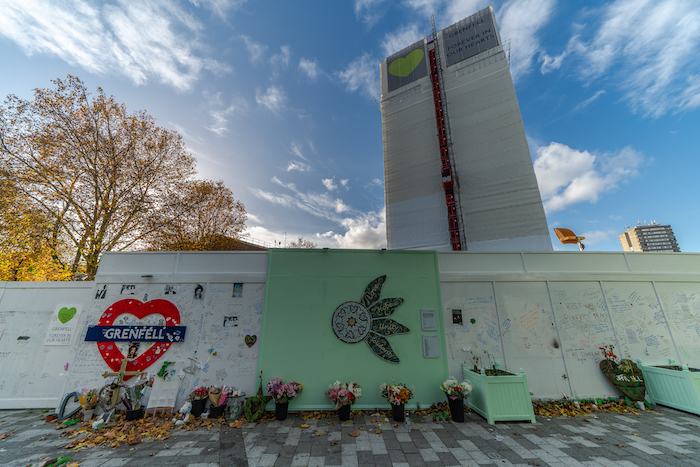
Grenfell Tower commemorations

The course will ensure professionals can:

  • Identify and interpret effective information required for inspections from stakeholders
  • Undertake the inspection process and intrusive inspection processes
  • Assess an external wall system including the materials, construction and their fire safety performance
  • Understand the fire risk presented by external wall materials and systems
  • Define the scope of work effectively through contracts and terms of engagement when taking instructions
  • Identify the legal framework and key standards affecting fire safety, and legal liability
  • Prepare a comprehensive report with recommendations

RICS CEO Sean Tompkins said:

“We recognise the acute market shortage of fire engineers to carry out EWS1 assessments and welcome the Government’s support to upskilling other regulated professions, such as Chartered Surveyors, to create additional capacity in the market.”

RICS will also work with Government and industry to address the ongoing concerns about the availability of professional indemnity insurance (PII) which will be an essential element to deliver the number of trained professionals across the UK

NFPA Faces of Fire campaign highlights firefighter safety

The National Fire Protection Association (NFPA) and the Phoenix Society for Burn Survivors have introduced the latest video interview in their six-part campaign series, Faces of Fire/Electrical, which features personal stories of people impacted by electrical incidents, demonstrating the need for continued education and awareness about electrical hazards in the workplace and at home.

Luis Nevarez, a division chief in the City of Tulare Fire Department in California, is the fourth video interview in the campaign. While responding to a call as a firefighter in 2002, Nevarez accidentally touched a hidden 12,000-volt line while breaking a limb off a smoldering tree. The incident caused severe burn injuries, which resulted in the amputation of his left forearm. Nevarez spent 35 days in the hospital following his accident, and months recovering from his injuries.

According to the latest U.S. Firefighter Injury Report from NFPA, an estimated 58,250 firefighter injuries occurred in the line of duty in 2018; more than 4,000 injuries happened while responding to or returning from an incident. Firefighters were also more likely to be injured at fireground operations (nearly 23,000 injuries) than at other types of duties. Although the majority of firefighter injuries are minor, a significant number are often debilitating and career ending. The cost of firefighter injuries is estimated to range between $1.6 and $5.9 billion annually.

“Exposure to electricity can pose a real injury risk to non-electrical workers, including firefighters operating at emergency scenes,” said Lorraine Carli, NFPA’s vice president of Outreach and Advocacy. “The Faces of Fire/Electrical campaign reminds us that gaps still exist in the understanding and treatment of electrical hazards in the workplace, including the fireground.”

Contrary to the belief that electrical dangers are present only at vehicle accidents or structure fires, electrical lines can present safety risks in nearly every fire and emergency situation. The warning signs, however, are not always visible that allow firefighters to recognize the dangers. Through more systemic change including training and education about the electrical hazards firefighters face while on call, they can be better equipped to identify the warnings early and reduce their risk of injuries from electricity, including treating all electrical lines and components as live until such time they are deemed safe.

Faces of Fire/Electrical features six personal stories of electrical burn survivors whose lives have been forever altered and how more understanding, training, and a change in work culture could have significantly impacted these outcomes. Woven into these stories of resilience is an additional interview with a physician dedicated to the complete physical and emotional healing of patients suffering from a burn injury. Through these video interviews, written profiles, and related information, Faces of Fire/Electrical is a resource for electrical and non-electrical workers, and the general public to learn more about the importance of electrical safety.

While many electrical injuries prove fatal, those that are not can be particularly debilitating, oftentimes involving complicated recoveries and lasting emotional and physical impact. The Faces of Fire/Electrical campaign ultimately works to help build a safer world by teaching others and supporting the burn survivor community in advancing lifelong healing, optimal recovery, and burn and injury prevention.

Since his injury, Nevarez trained his way back to full-duty firefighter status and later division chief; he continues to advocate for workplace safety for members of the fire service.

Visit www.nfpa.org/facesoffire each month to watch the videos. Free resources are now available to download and share, and additional information about the Faces of Fire/Electrical campaign can be found on NFPA’s website.

Is Covid-19 affecting safety procedures?

While the pandemic has altered many aspects of ‘routine operations’, businesses must be careful that any changes have not had a detrimental impact on fire safety.

From office-based premises, through to independent retailers and service providers, it continues to be crucially important to keep staff, visitors and assets safe.

Dakota Murphey explores some of the ways that COVID-19 has affected fire safety procedures at smaller businesses, many of who may not have dedicated safety officials, and what they need to consider upon reassessment.

The first thing to note regarding fire safety at small businesses is that you must not assume that due to the change in circumstances as a result of the COVID-19 pandemic that this excuses you from your obligations.

Support continues to be available, with fire safety professionals being considered ‘key’ or ‘critical’ workers early on in the first UK lockdown.

“Due to these unprecedented circumstances,” says Tony Clark, Managing Director of EFL Fire and Security, “we have adopted measures to ensure we can still provide essential services in line with government guidelines to new and existing customers.”

It is essential that you continue with your fire safety requirements as normal, with all testing and maintenance regarding fire safety equipment must continue.

If your business has changed anything regarding fire safety services, such as putting off inspections of fire extinguishers or cancelling maintenance of fire alarm systems, citing COVID-19 as your reason for doing so, this needs to be changed.

The closing of premises

It might seem like if you have closed up your premises due to the coronavirus pandemic, that it minimises the fire risk at your property. However, this is not the case, and even empty premises have issues that small businesses need to consider.

The first thing to note is that businesses need to ensure that their empty premises have clear entrances and exits and that excessive amounts of stock or supplies are not being stored in an unsafe manner.

Additionally, it is up to companies to make sure that they are not leaving electrical devices turned on or even plugged in.

It could be a great idea to install a connected fire alarm system that automatically alerts the fire services, or even one that provides real-time monitoring updates on an app or web portal that can be accessed remotely.

And, it is also worth noting that empty buildings are at a potentially greater risk of arson attacks, so measures should be put in place to minimise this possibility.

This could include the installation of CCTV systems that can be remotely monitored, as well as acting as a deterrent – especially useful if you don’t have access to guarding services to provide protection.

Alterations to buildings

FireDoor-FDSW-20-232x300

For those small businesses that have been able to remain operational and not had to close, buildings may have been altered to adapt to the changing health and safety government guidelines, such as social distancing measures.

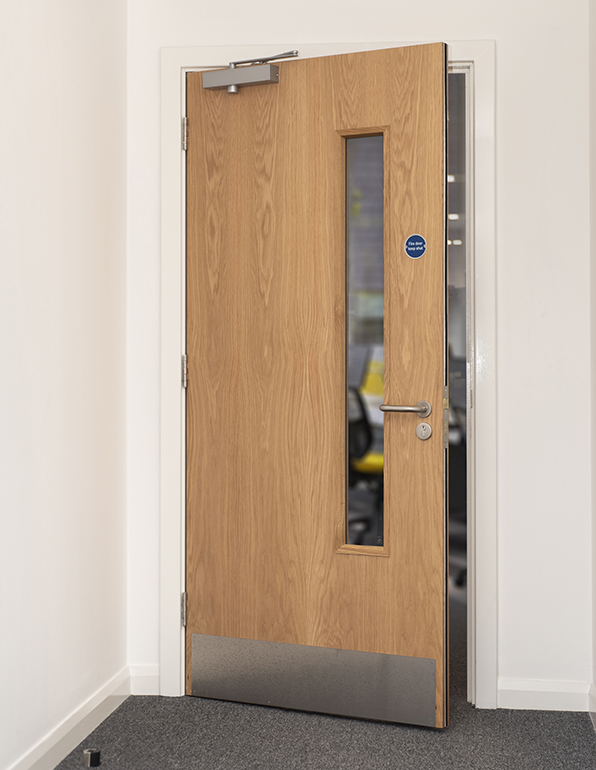
Examples may include the wedging open of fire doors in order to remove the need to open doors by touch, or the sealing off of doors that were previously part of the fastest route out of the building.

In such cases, businesses need to ensure that they reassess their fire and emergency evacuation procedures, to ensure potential issues are spotted before it is too late.

For example, if certain doors that were previously a part of the fastest fire exit are now closed, this needs to be made clear, and a new fast fire exit route should be created to ensure that no-one is put at risk.

In any case, businesses need to be aware that practical changes that have been made as a result of the pandemic can have an effect on fire safety. Perhaps the building’s occupants have changed, with the previous fire safety officer working from home indefinitely, and so a new employee needs training, for instance.

Reassessing fire safety requirements

Undoubtedly one of the most important things to say here is that small businesses clearly need to take this time to reassess fire safety requirements.

It is up to all SMEs – whether they believe they have been changed or not – to carry out fire risk assessments that take into account the range of new circumstances.

When anything changes at a business, fire safety precautions and procedures have the potential to be affected. SMEs still have a duty of care to take everyone involved protected against the risk of fire – so all small businesses should carry out new fire risk assessments as a priority.

For example, have you considered that if your business remains open while others close you may see a spike in demand? Greater footfall at the business premises can necessitate re-thinking scenarios and establishing new emergency plans.

Whether a small business has closed its doors temporarily or it has had to modify its behaviour to stay in line with government regulations, it will need to reassess whether its previous fire safety procedures remain relevant to the circumstances.

Prioritising fire safety this Thanksgiving

The National Fire Protection Association (NFPA) is urging the public to make fire safety a priority when preparing this year’s Thanksgiving feast. The association’s latest Home Cooking Fires report shows that Thanksgiving is the peak day for U.S. home cooking fires followed by the day before Thanksgiving and Christmas Day.

According to the report, U.S. fire departments responded to an estimated 1,630 home cooking fires on Thanksgiving Day, three and half times an average day. Unattended cooking was by far the leading cause of associated fires and fire deaths. Cooking is the leading cause of U.S. home and home fire injuries year-round, and the second-leading cause of home fire deaths. 

“Thanksgiving often involves cooking multiple dishes at once, which can be particularly tricky with lots of distractions in and around the kitchen,” said Lorraine Carli, vice president of Outreach and Advocacy at NFPA. “From getting ready for guests and managing family needs to entertaining when everyone arrives – these types of activities make it all too easy to lose track of what’s cooking, and that’s where a lot of fires tend to happen.”

Make fire safety a when cooking

Carli notes that the pandemic may reduce the number of larger group gatherings in favor of smaller celebrations, which may mean more kitchens being used to cook Thanksgiving meals this year.

NFPA offers these tips and recommendations for safely cooking this Thanksgiving:

  • Never leave the kitchen while cooking on the stovetop. Some types of cooking, especially those that involve frying or sautéing with oil, need continuous attention.
  • When cooking a turkey, or other items in the oven, stay in your home and check on it regularly.
  • Set a timer on your stove or phone to keep track of cooking times, particularly for foods that require longer cook times.
  • Keep things that can catch fire like oven mitts, wooden utensils, food wrappers, and towels away from direct contact with the cooking area.
  • Avoid long sleeves and hanging fabrics that could come in contact with a heat source.
  • Always cook with a lid beside your pan. If you have a fire, slide the lid over the pan and turn off the burner. Do not remove the cover because the fire could start again. Let the pan cool for a long time. Never throw water or use a fire extinguisher on a grease fire.
  • For an oven fire, turn off the heat and keep the door closed. Only open the door once you’re confident the fire is completely out, standing to the side as you do. If you have any doubts or concerns, contact the fire department for assistance.
  • Keep children at least three feet away from the stove and areas where hot food or drink is being prepared or served. Steam or spills from these items can cause severe burns.

“The pandemic may limit the number of people in homes this year, but there will still be lots of the usual cooking and distractions that contribute to a sharp increase in cooking fires on and around Thanksgiving,” said Carli. “Being vigilant in the kitchen remains critical to ensuring a fire-safe holiday.”

In addition, NFPA strongly discourages the use of turkey fryers, as these can lead to severe burns, injuries, and property damage. For a safe alternative, NFPA recommends grocery stores, food retailers, and restaurants that sell deep-fried turkey.

For this release and other announcements about NFPA initiatives, research and resources, please visit the NFPA press room.

As all of us continue to navigate the evolving situation with COVID-19, NFPA remains committed to supporting you with the resources you need to minimise risk and help prevent loss, injuries, and death from fire, electrical, and other hazards. For information on NFPA’s response to the coronavirus, please visit our webpage.

Scottish Council propose high rise building safety changes

West Dunbartonshire Council is seeking comments from the Scottish Government on a plan to introduce enhanced fire safety measures across the area’s high rise buildings.

The proposed programme of further enhancements, including upgrades to window panels in 11 blocks, as well as installation of sprinkler systems within waste rooms, fire detection measures added in all service areas, fire detectors and alarms in common areas and manual call points installed across all 19 of our properties, seek to exceed all current safety standards.

The new plan was developed following an enhanced Fire Safety Risk Assessment, which the council instructed to be undertaken by an external fire safety specialist. 

The proposed programme of works was discussed and agreed by members of the council’s Housing and Communities Committee last week.

The proposal will now be passed to the Scottish Government ministerial working group for comment on the different options outlined. Following this, the finalised plan will be considered at a future meeting of West Dunbartonshire Council.

It is anticipated that the proposed measures will mean the area’s existing high rise buildings match or exceed standards currently being developed by the Scottish Government for new build properties.

Members were told that in addition to physical safety enhancements, blocks have also seen changes in the management of buildings, with a designated officer responsible for each block and the Neighbourhood Team patrolling buildings in evenings and at weekends.

Councillor Diane Docherty, convener of housing and communities, said: “We want our residents to feel safe in their homes, and these proposed enhancements are designed to ensure our high rise flats are the safest they can possibly be.

“This will now be passed to the Scottish Government ministerial working group for their feedback before we progress this further.”

Councillor Caroline McAllister, vice convener of housing and communities, added: “It’s vital to reassure all tenants and residents that fire safety in our high rise blocks is of paramount importance.

Whilst we already comfortably meet the safety standards, as a landlord we believe it is important to enhance those standards where possible and the proposed measures will ensure the properties remain in high demand for decades to come.”