NFCC launches water incident dashboard for Fire and Rescue Services

The National Fire Chiefs Council (NFCC) has launched a new water incident dashboard to help Fire and Rescue Services (FRS) gather information on incidents in their area.

It uses live data from the Water Incident Database (WAID) which records vital information from agencies such as the Royal National Lifeboat Institution (RNLI), Maritime and Coastguard Agency (MCA) and the Royal Society for the Prevention of Accidents (RoSPA).

The dashboard was developed through the NFCC Data Portal and Digital and Data Programme in partnership with WAID. NFCC’s Water Safety Group worked with the National Water Safety Forum (NWSF) to develop the brand new resource.

Aimed at analysts, performance managers, prevention practitioners, community safety managers, water safety advocates and communication professionals, this new tool helps FRSs refine searches and use information tailored to their area.

It also drills down and provides information such as area, risk and days of the week, with the aim that this valuable information can be used help reduce incidents and drownings.

This means FRSs will have access to better data to gain more understanding of local risks – which can then be used to further develop development prevention, education and communication strategies.

An estimated 235,600 people drown every year worldwide. It is among the ten leading causes of death for children aged 5-14 years. More than 90% of drowning deaths occur in rivers, lakes, wells, domestic water storage vessels and swimming pools in low and middle-income countries, with children and adolescents in rural areas disproportionately affected. In the UK 2020 has seen an increase of accidental drownings with 254 people dying. Progress has already been made in drowning prevention through work with the National Water Safety Forum, Water Safety Scotland and Water Safety Wales. The UK has a drowning prevention strategy which aims to reduce accidental drowning fatalities as well as contributing to the reduction of water-based suicide.

NFCC – along with its partners – is committed to reducing drownings in the UK. This dashboard provides valuable data and information to assist FRSs to understand risk better and develop their prevention and education strategies.

Dawn Whittaker, NFCC’s Water Prevention Lead and Vice Chair of NFCC’s Prevention Committee commented:

“I am delighted to see the launch of this database which will provide detailed, local and national data for FRSs across the UK, giving real time insights into water safety incidents and drowning.

“Every year in the UK we see so many people lose their lives to drowning which could – and should – be prevented. This tool will allow FRSs to interrogate risks, peak times for incidents and plan accordingly.

“In 2019, 233 people accidentally drowned in the UK, with 44 per cent of these people having no intention to enter the water. We need to see these figures drastically reduce; work such as this could have a positive impact on how we plan our prevention activities.

“I would like to thank everyone who has been involved in this; from NFCC’s Water Safety Group and NFCC’s Data Portal Team, RoSPA and WAID for helping to deliver this vital piece of work.”

And Steve Holton, Data Lead for NFCC Water Safety Executive Group, said:

“This new dashboard is a culmination of a number of months of work with our partners. By having this easy-to-access and real time data, it will undoubtedly be an invaluable tool for all.

“It will help shape education and prevention agendas through evidence driven data, leading to a positive impact on what we are trying to achieve; ensuring people are ‘water aware’ and working towards our aim of reducing incidents and ultimately preventable loss of life.”

NFCC helped to develop the UK’s Drowning Prevention Strategy and works as an active member of the NWSF, as well as running its annual ‘Be Water Aware’ campaign.  

World Drowning Prevention Day – held annually on July 25th – was declared through the April 2021 UN General Assembly resolution A/75/L.76 “Global drowning prevention” and coordinated through the World Health Organisation.

It as an opportunity to highlight the tragic and profound impact of drowning on families and communities and offer life-saving solutions to prevent it.

Everyone involved – from governments, UN agencies, civil society organizations, the private sector, academia and individuals – are all invited to mark World Drowning Prevention Day by highlighting the need for urgent, coordinated and multi-sectoral action on proven measures such as:   

  • Installing barriers controlling access to water
  • Providing safe places away from water such as crèches for pre-school children with capable childcare
  • Teaching swimming, water safety and safe rescue skills
  • Training bystanders in safe rescue and resuscitation
  • Setting and enforcing safe boating, shipping and ferry regulations
  • Improving flood risk management

NFCC welcomes this UN resolution passed which creates global recognition and awareness of drowning as an avoidable epidemic, which also offers the chance to highlight the numbers – national and globally – lost to these preventable deaths. 
Firefighters identify deadly private sector inspection threat in Building Safety Bill

Fire Brigades Union general secretary Matt Wrack has responded to the Building Safety Bill passing its second reading in Parliament yesterday by saying that it is ‘vitally flawed’ in its present form. The bill is set to see private sector firms turned to if fire and rescue services are not in a position to assist the new Building Safety Regulator with fire matters.

The Building Safety Regulator, which the bill is set to introduce, will be a new statutory body responsible for building safety in higher-risk buildings.

The FBU fears safety will be weakened as profit is prioritised if the Building Safety Regulator is allowed to turn to private firms, and that this policy might lead to further private sector involvement in fire safety of new developments.

The bill is the most substantial legislative response to the Grenfell Tower disaster to date, and aims to reform building safety with measures including a requirement to have an ‘accountable person’ for higher-risk buildings, as well as the new Building Safety Regulator.

The union has also criticised the bill on the grounds that it does not address the crisis in existing buildings. In the wake of Grenfell hundreds of thousands of people’s homes have been discovered to be unsafe, with many facing huge costs to remedy their homes. The bill does nothing to address the need for these repairs nor their cost.

Other issues with the bill identified by the Fire Brigades Union include concerns around funding some of the work required from the fire and rescue service, and the need for residents to have a voice in decisions and processes concerning them.

Matt Wrack, general secretary of the Fire Brigades Union, said: “This bill will be vitally flawed if it allows the new Building Safety Regulator to turn to private firms for assistance with fire matters. The FBU has vigorously opposed this type of activity over the long term and will continue to do so. Building safety cannot be an opportunity for profiteering: this risks public safety, as history shows us. The answer is to invest in the public fire and rescue service, by recruiting and training sufficient firefighters to carry out these duties.

“Furthermore, whilst this bill puts in place some good protections for new buildings, we would like to see this bill resolve the building safety crisis in existing buildings. Finally, there need to be provisions in the bill to fund the fire service properly for the extra work it mandates for, and protect resident’s voices in matters which concern them.”

EWS1 Forms: UK government and lenders intervene to support leaseholders

Leaseholders in blocks of flats with cladding should be supported to buy, sell or re-mortgage their homes after the government agreed with major lenders to pave the way to ending the need for EWS1 forms. It comes following expert advice that the forms should no longer be needed on buildings below 18 metres.

The announcement by Housing Secretary Robert Jenrick follows new advice from fire safety experts that the government commissioned earlier in the year to investigate risk in medium and lower-rise buildings, which makes clear that there is no systemic risk of fire in these blocks of flats.

The report recommends that residents are reassured as to safety, and a more proportionate approach is urgently instituted, requiring action by all market participants.

A group of major high street lenders has committed to review their practices following the new advice; HSBC UK, Barclays, Lloyds Banking Group and others have said that the expert report and government statement paves the way for EWS1 forms to no longer be required for buildings below 18 metres and will help further unlock the housing market.

The government welcomes their support but is now calling on others to demonstrate leadership by working rapidly to update guidance and policies in line with the expert advice.

The expert advice was commissioned by the Secretary of State after witnessing what Dame Judith Hackitt, Chair of the Independent Review of Building Regulations and Fire Safety, has described as extreme risk aversion, which has left leaseholders across the country receiving costly bills for remediation that is not necessary.

It states that fire risks should be managed wherever possible through measures such as alarm systems or sprinklers, and that the overwhelming majority of medium and low- rise buildings (those under 18m) with cladding should not require expensive remediation.

The intervention is designed to reduce needless and costly remediation in lower rise buildings and is part of wider efforts to restore balance to the market, helping flat owners to buy, sell or re-mortgage homes.

Risk to life in blocks of flats remains very low. The number of fires in homes in England has been on a general downward trend for many years, reaching an all-time low last year. 91% were in houses, bungalows, converted or low rise flats, while only 9% were in blocks of flats of four storeys or more.

The government is already fully funding the cost of replacing unsafe cladding on all buildings over 18 metres, through the unprecedented £5 billion Building Safety Fund, and has been clear with building owners, lenders and the industry throughout that they must take a proportionate response to fire safety and enable homeowners to get on with their lives.

Today’s announcement – outlined by the Secretary of State during the second reading of the Building Safety Bill – demonstrates that the industry should now be actively taking an evidence-based approach to fire safety.

The move has been backed by the National Fire Chiefs Council and the Institution of Fire Engineers.

Housing Secretary Robert Jenrick said: “Today’s announcement is a significant step forward for leaseholders in medium and lower-rise buildings who have faced difficulty in selling, anxiety at the potential cost of remediation and concern at the safety of their homes.

While we are strengthening the overall regulatory system, leaseholders cannot remain stuck in homes they cannot sell because of excessive industry caution, nor should they feel that they are living in homes that are unsafe, when the evidence demonstrates otherwise.

That’s why I commissioned an expert group to further examine the issue, and have already agreed with many major lenders that lower-rise buildings will no longer need an EWS1 form, and the presumption should be that these homes can be bought and sold as normal.

We hope that this intervention will help restore balance to the market and provide reassurance for existing and aspiring homeowners alike. The government has made its position very clear and I urge the rest of the market to show leadership and endorse this propionate, evidence based, safety approach.

There is a longstanding legal duty on the Responsible Person for all purpose-built blocks of flats to have an up-to-date fire risk assessment. Moving forward, where the Responsible Person has identified fire safety issues they should update their fire risk assessments to determine any actions required. This could include measures such as installing sprinklers or alarms and in exceptional cases, remediation to ensure buildings are safe and people feel safe.

To help with this, new guidance for the risk assessment of external wall systems will be introduced. The PAS9980 will ensure that fire risk assessments are consistent, proportionate to risk and actions to manage risk are cost-effective, and the Consolidated Advice Note will be withdrawn.

For buildings under 18m which do require remediation, the government will introduce a financing scheme so that no leaseholder will have to pay more than £50 a month for the cost of replacing unsafe cladding. Further details of this scheme will be set out in due course.

Welcoming the support from the fire safety profession and from major lenders, Dame Judith Hackitt said:”I am pleased to see the support and commitment to returning to an evidence-based proportionate approach to fire and building safety. It’s critical, given the significant – and in many cases unnecessary – impact this is having on people who live in and own homes in blocks of flats.

What’s needed now is for the remaining bodies and lenders to get onboard so we have a collective, fact-based system that is reflective of the reality of the situation and reassures leaseholders that they, their homes and their investments are safe.

CEO of the Institution of Fire Engineers, Steve Hamm, said: “The IFE supports the expert statement issued today. We expect this will lead to a significant reduction in the demand for the EWS1 process from mortgage valuers, particularly for buildings under 18m in height.

Today’s statement will support competent fire engineers to use their professional training, judgement and expertise to assess buildings based on professional appraisal of risk. This should enable a move away from the often risk-averse and overly cautious approach that has been seen in many cases.

We welcome the commitment of all parties to ensure a proportionate and evidence-based approach to fire and building safety for all buildings along with the increased scrutiny to be provided by the new Regulators and the gateway approval process, which we expect will lead to improved levels of safety, providing comfort and reassurance for residents and homeowners as well as the wider market.”

Chair of the National Fire Chiefs Council (NFCC), Mark Hardingham said:

“We fully support this new advice and welcome the challenge to those who are applying an overly risk-averse approach in many buildings below 18 metres. We expect this will start to redress the balance where disproportionate measures have been put in place to manage fire risks. We want to ensure that buildings are safe and will work closely with fire and rescue services to apply the advice for buildings in their area.”

The government has also set out plans for developers of high-rises in England to contribute to the cost of remediating safety defects in a major step towards ensuring industry contributes to righting the wrongs of the past.

A consultation published today outlines that the levy will be applied when developers seek permission to build certain high-rise residential buildings of 18 metres or more in height.

The money recouped would contribute towards fixing historic fire safety defects, including unsafe cladding, protecting leaseholders and taxpayers from shouldering the burden of remediation costs.

The government is calling for views on the proposed design of the levy, which was first announced earlier this year as part of multi-billion-pound package to fix unsafe cladding on high-rise residential buildings, alongside wider financial and regulatory support.

The government has also confirmed today that the Building Safety Fund will reopen for applications in Autumn for any eligible buildings that missed the original deadline in June, with more details to be published in the coming months.

Survitec enhances lifeboat inspection solution 402 to deliver savings and flexibility

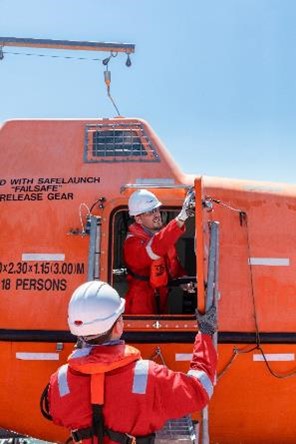
Leading survival technology provider, Survitec, has relaunched its lifeboat inspection solution underpinned by the company’s novel ‘Hub and Spoke’ network model.

Lifeboat Inspection 402, devised in line with regulations mandated in 2020 under SOLAS Chapter III & IMO MSC.402(96), has been enhanced to deliver greater flexibility and convenience to vessel operators.

Metkel Yohannes, Survitec’s Lifeboat Product Category Manager said: “We have significantly optimised our global lifeboat inspection solution to better reflect the operational needs of our customers and local dynamics.

“In addition, our Lifeboat Inspection 402 solution includes further enhancements to its agreement options. For instance, as well as traditional spot market lifeboat inspections, Survitec offers more cost-effective frame or subscription-based agreements. Customers can benefit from lower costs, port priority and due-date management – all from a single point of contact.”

Inspections must be carried out annually, with a more extensive inspection and load testing taking place at five-year intervals. But, as Yohannes explained, waiting until the certificate’s expiry date to sort out an inspection is not the most efficient approach.


Lifeboat Inspection 402 delivers greater flexibility and convenience to vessel operators

Yohannes continued: “This is where the Hub and Spoke model combined with the available agreement options really comes into its own.

“The hub is the main port where our multi-skilled technicians are based, with spokes radiating out to secondary ports. Fully approved and authorised lifeboat inspections can be carried out at any port along the spoke. It has been developed to deliver transparent and predictable pricing, but also a greater degree of operational flexibility and convenience.”

Paul Watkins, Survitec’s Regulatory and Compliance Manager and Chair of the Technical Committee for ILAMA, added: “We want to simplify the lifeboat inspection process and demystify regulation, so our customers have total confidence in their safety equipment. Our Lifeboat Inspection 402 offer delivers a more effective way to achieve compliance and help keep our customers’ vessels operational and our seafarers safe.”

Survitec encourages ship operators and managers to reach out with their inspection requirements. For more information visit the Survitec website.

Partnership to promote safety and health of temporary workers announced

The National Institute for Occupational Safety and Health (NIOSH), which is part of the U.S. Centers for Disease Control and Prevention (CDC), and the American Staffing Association (ASA), are pleased to announce a five-year partnership agreement to advance the protection of temporary workers, those who are paid by a staffing company and assigned to work for a host employer company.

The new partnership will ensure the promotion of best practices, support the application of research to practice, and encourage staffing companies and host employers to develop and utilise safety and health management programs and effective prevention strategies and technologies.

“A key issue presented by the future of work is the growing number of nonstandard work arrangements, including employment in the temporary staffing industry,” said NIOSH director John Howard, M.D. “Through this partnership, we will increase outreach to staffing companies and host employers and provide information and resources that are vital to protecting temporary workers.”

“Protecting and promoting the safety and well-being of temporary workers has long been a top priority of the ASA and its member companies,” said Stephen C. Dwyer, Esq., ASA Senior Vice President, Chief Legal and Operating Officer. “We are proud to work together with NIOSH to raise awareness of NIOSH’s research, develop new guidance and resources, and enhance outreach and communication, especially among staffing companies.”

Specifically, NIOSH and ASA intend to work together to

  • Advance research and understanding of the value occupational safety and health brings to business and the American people
  • Explore potential areas for joint research to better understand and promote the safety and health of temporary workers
  • Develop information on the recognition and prevention of workplace hazards and disseminate such information to staffing companies, host employers, and temporary workers through print and electronic media, educational conferences, meetings, and other dissemination channels
  • Promote the translation of research results and the implementation of injury and illness prevention strategies and technologies among both staffing companies and host employers to better protect the safety and health of temporary workers

One of the first activities NIOSH and ASA plan to undertake is to collaborate on the dissemination of a new set of recommended practices for host employers to better protect temporary workers. These recommended practices are being developed by the National Occupational Research Agenda (NORA) Services Sector Council, on which ASA and some of its member companies currently serve.

Throughout the COVID-19 pandemic, NIOSH and ASA, along with other representatives from the NORA Services Sector Council, have been working together to ensure temporary workers doing essential work are afforded the same protections and access to vaccines as non-temporary workers doing the same or similar work.

The partnership agreement will be in effect through January 2025.

Agriculture remains worst performing industrial sector for fatal injuries

HSE has published a report detailing that agriculture has the worst rate of fatal injuries of all the major industrial sectors, around 20 times higher than the average five-year annual rate across all industries. Provisional figures from 1 April 2020 until 31 March 2021 show 41 people were killed in agriculture related activities, almost double the number of deaths in the previous year, which was 23.

The report, Fatal injuries in agriculture, forestry and fishing in Great Britain 2020/21, has been published to coincide with the start of Farm Safety Week (19 – 23 July). 

While the number of people killed fluctuates each year, the five most common causes of fatal injuries over the last five years remain – being struck by moving vehicles, killed by an animal, struck by an object, falling from height and contact with moving machinery. Transport-related incidents, such as overturning vehicles or being struck by moving vehicles were responsible for more deaths than any other cause.

Older workers at higher risk of fatal injuries

Older workers are most at risk, with more than half of victims of fatal injuries aged 60 years or older. When comparing older and younger age groups, the fatal injury rate is more than four times higher for the 65s and over, compared to the 16-24 age group. The youngest person killed was a two-year-old child who died after being overcome by slurry fumes


Acting head of agriculture at HSE Adrian Hodkinson said: “Agriculture is a vital part of our economy and everyone involved is rightly proud of the quality and standard of the food produced. “It is not acceptable that agriculture continues to fail to manage risk in the workplace. We need everyone to play their part to improve their behaviour, do things the right way and ‘call out’ poor practices whenever they are seen.


“Agriculture will continue to be a priority sector for HSE, which will be achieved through the delivery of HSE’s sector plan for tackling the high rates of injury and ill health.” He added: “It is disappointing to be highlighting another high annual fatality rate in the industry when the causes are well known and the precautions to avoid injury are straightforward.


“There are simple safety measures people should follow to reduce injury like remembering to put on handbrakes, fasten lap belts in cabs, make sure anyone operating a quad bike wears a helmet and receives sufficient training, don’t put cows and calves in fields with public footpaths; and make sure to switch off the power to vehicles or machinery before attempting to carry out repairs.”

The full report and more information on working safely in agriculture is available on the HSE website. HSE’s plan for tackling the high rates of injury and ill health is available here: Sector plan for health and safety in the agriculture.

Farm safety week, which shines a light on safety in the sector, is led by the Farm Safety Foundation.

FBU fears underreporting of Covid infections in the fire service

The Fire Brigades Union have raised concerns that Covid infections in the fire service are being underreported. The government has failed to provide details of the number of Covid deaths and disease reported by employers in the fire service, after being asked to do so in a Parliamentary Question and through an FOI to the Health and Safety Executive.

This has aroused concern in the Fire Brigades Union (FBU) that the government is hiding failure of fire and rescue service employers to report Covid figures properly. Employers, including in the fire service, have a legal obligation to report cases of Covid exposure, infection and deaths to the Health and Safety Executive (HSE) where exposure occurs as a result of a person’s work.

The TUC has previously expressed concerns that widespread underreporting in relation to this legal obligation may be taking place across sectors, something the HSE has accepted.

The fire and rescue service is a public-facing service, where staff are at significant risk of both catching the disease and of passing it on to members of the public, and monitoring of the disease is therefore considered vital by the Fire Brigades Union.

Labour’s Grahame Morris MP asked the Home Office about the number of cases of the disease, death, dangerous occurrences and workplace outbreaks amongst fire and rescue service employees that have been reported by fire bosses, in a Parliamentary Question tabled on 8 July 2021. But minister Kit Malthouse MP replied with no figures in relation to these, on 15 July.

He did, however, say that “Ministers receive regular updates on levels of COVID-19 related employee absence in fire and rescue services”, suggesting that the government has some relevant data – which it did not take the opportunity to share. Besides, workplace absence data alone does not indicate that employers are meeting their obligation to report cases of Covid-19 infection where exposure occurs as a result of a person’s work.

This is the second instance there has been a failure to provide details on the extent to which the disease has been present and reported by employers in the fire and rescue service, after the Health and Safety Executive refused to provide these details in response to a freedom of information request from the Fire Brigades Union on grounds of cost. In addition, approaches by FBU representatives locally to ensure cases are being reported has often been met with silence or refusal by some Chief Officers.

Covid infections in the fire service may not be reported correctly

Matt Wrack, general secretary of the Fire Brigades Union, said “The repeated refusal to provide basic, up-to-date statistics on Covid and how it is reported in the fire and rescue service is a disgrace. It suggests that fire service employers aren’t reporting these cases correctly.

“As frontline workers our members are risking their safety to go to work – not least when they perform extra Covid duties, such as transferring Covid patients and moving the bodies of the deceased, which they have done. The least the government can do is to help keep track of the situation, and provide data to improve working conditions and support those workers who need it. We have battled fire bosses throughout the pandemic to try and get them to put proper Covid safety measures in place, and to report workplace cases and outbreaks accurately. Unless cases are reported correctly, we simply cannot plan properly to keep firefighters safe.”

Positive vote on EN 50710 opens the doors to the provision of secure remote services

Euralarm’s Services Section reports an important step forward for service providers and end-users of remote services: the very positive vote on the EN 50710, Requirements for the provision of secure remote services for fire safety systems and security systems.

The successful vote is the icing on the cake of the section’s efforts to guarantee more certainty for a future in which remote services play an increasingly important role. Jon Könz, Chair of Euralarm’s Services Section said, “It is an excellent result and an advancement for the fire safety and security industry. We would like to thank those who helped in the CEN/CENELEC JTC4/WG1 and who contributed to the ‘yes’ of 95% of the countries that could bring out a vote.” With the acceptance as a European Norm, it should be ready for publication in early 2022, after which the implementation in the respective countries will begin.

With the requirements for the provision of secure remote services via a remote access infrastructure being specified, both end-users and service providers will benefit from it. Both will also be able to take advantage of the technological developments within fire safety systems and/or security systems (FSSS) and the remote access infrastructure.

Background of Remote services

It has been common practice for many years to monitor the alarm and fault status of fire safety and security systems (FSSS) installed in premises from remote locations. Technological developments as well as the telecommunication paths nowadays permit remote access to those FSSS with a wide variety of available functions up to and including full operation and programming as if an authorized person was on-site.

Remote service supplements the on-site visits of a competent person and enables new possibilities for customers (end-users). Euralarm’s Mr. Bernd Giegerich, the convenor of WG1 said, “The overall service quality offered by the various types of professional services providers at the time of installation, maintenance or operation increases significantly. On one hand, end-users experience faster response times leading to higher system reliability and availability. On the other hand, service providers can provide new services such as predictive maintenance, which also improves staff utilisation.”

Common ground for all stakeholders

Not all countries have industry standards for the use of remote access, which are crucial for end-users and service providers. Jon Könz stated, “With the arrival of this new European Norm, there will be a robust criteria against which remote services will be measured. Further, it will contribute to overcoming any hesitation about design requirements and strict operational procedures that are fundamental in avoiding actions such as unintended deactivation of parts of an FSSS.”

It is important to outline that the EN 16763 (Services standard for fire safety and security systems) is referenced in the EN 50710

Bernd Giegerich adds, “Apart from giving a framework for service providers, there are also the manufacturers who will benefit from the new standard. Certain manufacturers might go directly with their services. Updates for instance can now be done by the manufacturers themselves or in consultation with the system integrator. And for services providers there is the additional benefit of having a structure to explain to their customers what they can expect. In short, it will bring more clarity for the market on the provision and use of remote services as well as more transparency on what a client can expect from a service provider.”

The pan-European approach of remote services is in line with the key objective of the European Services Directive in making provisions for cross-border services. It is important to outline that the EN 16763 (Services standard for fire safety and security systems) is referenced in the EN 50710. The EN 16763 is applied in conjunction with installation guidelines, either European (if any) or national, as well as with national laws and regulations in the field of the systems. It sets the foundation for quality in services provision and is so an important basis for the EN 50710.

RIBA launches Fire Safety Compliance Tracker

The Royal Institute of British Architects (RIBA) has launched a new tool for its members to record and share fire safety information. The RIBA Fire Safety Compliance Tracker records how a project has been designed and developed in accordance with Part B (Fire Safety) of the Building Regulations.

It can be used to provide compliance information to the design team or kept internally within your practice to help your team track compliance and to confirm the architectural design aligns with the fire strategy The Tracker is based on the International Fire Safety Standard: Common Principles (IFSS-CP) and its associated Framework.

Find out more about RIBA’s work to drive building safety regulatory reform here.

RIBA President, Alan Jones, said: “This is a valuable new tool that will help architects to demonstrate the detailed steps they have taken to protect buildings and people from the risk of fire. We remain seriously concerned about the rising costs of Professional Indemnity Insurance and the increasing prevalence of fire safety exclusions, and hope this new Tracker will provide additional reassurance for brokers and clients. I strongly encourage all practices to start working with it on their projects.”

RIBA Fire Safety Expert Advisory Group Chair, Jane Duncan, said: “2021 marks the beginning of long-overdue regulatory reform prompted by the tragedy at Grenfell Tower, subsequent Hackitt Review and vociferous calls from the RIBA and others for clearer, stronger and enforceable regulations. It’s clear the whole industry requires a culture change, and I’m proud of RIBA’s efforts to place architects at the forefront. That includes the introduction of fire safety mandatory competences and this new tool, which will guide critical decision making and assist members to demonstrate regulatory compliance.”

IOSH calls for caution around return to workplaces

Following the relaxing of COVID-19 lockdown restrictions on the 19th of July, the Institution of Occupational Safety and Health (IOSH) has called for caution around people returning to workplaces.

Duncan Spencer, IOSH’s Head of Advice and Practice, said: “Despite the relaxations, we encourage employers to ensure they continue to put in place preventative measures to reduce the likelihood of COVID-19 being transmitted in their workplaces.

IOSH

“Risk assessments can help to identify proportionate controls to protect workers, clients, consumers and communities. With COVID risks, this might include a reasonable request for people to continue wearing face masks and observe social distancing measures. Employers might wish to emulate other socially conscious organisations by asking workers to test themselves regularly, including supplying them with lateral flow test kits. It is crucial that any preventative measures are communicated clearly, thereby empowering people to work safely while this disease remains a significant threat.

“In addition to preventing COVID transmission, employers also need to consider the impact of returning to work on people’s mental health and wellbeing, with the possibility that staff may be deeply concerned about returning. We advocate that open and non-stigmatised conversations are proactively arranged by line managers as part of a strong overall mental health and wellbeing strategy. Organisations need to be safe from COVID and safe from the mental health consequences of this pandemic and the impact it has on people’s lives.”