Exploring the impact of VR on firefighter training with FLAIM’s innovative platform

The shift towards virtual reality in firefighter training

The world of firefighter training is witnessing a transformative shift with the introduction of virtual reality (VR) platforms that offer an immersive learning experience.

Traditional training methods, though effective, often fall short in replicating the diverse and complex scenarios that firefighters face.

FLAIM Trainer, a revolutionary VR training platform, steps in to bridge this gap by providing realistic and controlled training environments.

This innovation not only enhances safety but also ensures firefighters are well-prepared for real-world challenges.

In a series of recent blog posts, FLAIM’s the advantages of VR training: “Our VR solution enhances traditional training methods by providing an immersive, safe, and controlled environment where firefighters can learn and refine their skills without the risks associated with live fire training.”

Enhancing safety and environmental benefits

VR training offers significant safety benefits by eliminating the physical risks inherent in traditional methods such as burns and smoke inhalation.

Furthermore, it aligns with environmental sustainability goals by reducing the need for live fire exercises, thus minimising the release of pollutants.

The ability to simulate various fire scenarios, including chemical spills and electrical fires, ensures that firefighters can prepare for such incidents safely and effectively.

FLAIM further emphasised the environmental impact: “The reduction in live fire exercises not only enhances safety but also significantly decreases the environmental footprint of our training processes.”

Cost-effectiveness and global reach

The introduction of VR training solutions like FLAIM Trainer also addresses cost and accessibility challenges faced by firefighting departments worldwide.

Traditional live fire training is resource-intensive, requiring specific facilities and equipment.

VR technology, on the other hand, allows for flexible and on-demand training that can be conducted anywhere, making it a cost-effective solution.

“By enabling training anytime, anywhere, we are making high-quality firefighter training accessible globally, particularly to remote or under-resourced teams,” FLAIM added.

IFSJ Comment

The integration of VR technology into firefighter training by FLAIM represents a significant advancement in preparing firefighters more effectively and safely.

With its numerous benefits ranging from safety to environmental sustainability, VR training is poised to revolutionise how firefighters are prepared for the complexities of their roles.

The proactive adoption of such technologies is crucial for enhancing the capabilities and safety of firefighters everywhere.

UK qualifications regulator approves new fire sprinkler system course

BAFSA announces new qualification for fire safety professionals

The British Automatic Fire Sprinkler Association (BAFSA) has gained approval from OFQUAL for the ABBE Level 3 Award in Inspection and Commissioning of Commercial Fire Sprinkler Systems.

This qualification is tailored for professionals in the fire safety sector, focusing on the inspection and commissioning of commercial fire sprinkler systems in alignment with LPC Rules and BS EN 12845 standards.

Participants in the course will acquire critical skills, including assessing sprinkler designs against various storage configurations and overseeing the installation and maintenance processes.

This marks a significant development in enhancing the competency and capabilities within the fire safety industry.

Course details and industry implications

OFQUAL’s endorsement signifies a crucial step forward in standardized training for fire safety professionals.

The newly named ABBE Level 3 Award will equip individuals with essential knowledge for managing and implementing fire sprinkler systems, a fundamental component of modern commercial building safety protocols.

Ali Perry, Chief Executive of BAFSA, expressed satisfaction with the course’s approval, stating: “I would like to congratulate BAFSA’s Ruth Oliver and Alan Crichton and our partners at ABBE for achieving this milestone in BAFSA’s ongoing commitment to further enhance the competence of those working within our life saving industry.

We will continue to work to deliver approved qualifications for the suite of new courses BAFSA is currently developing.”

Further information and future prospects

The qualification also serves as part of the criteria for obtaining the Industry Skillcard Fire Sprinkler Engineer (Blue Skilled Worker card), which is pivotal for professionals in the sector.

For those interested in enrolling in this course, further details are available on the BAFSA Training Centre website.

As part of its commitment to advancing fire safety education, BAFSA continues to develop and introduce new courses aimed at addressing the evolving needs of the fire safety industry.

These efforts underscore the association’s dedication to fostering a safer working environment through accredited training and qualifications.

IFSJ Comment

The approval of the ABBE Level 3 Award in Inspection and Commissioning of Commercial Fire Sprinkler Systems by OFQUAL is a positive step towards standardising qualifications within the fire safety sector.

By setting a benchmark for educational excellence in this field, BAFSA is contributing to the overall enhancement of industry standards and safety.

NFCC launches new Middle Leadership Programme to enhance UK fire service leadership

Launch of the NFCC Middle Leadership Programme

The National Fire Chiefs Council (NFCC) announced the introduction of the Middle Leadership Programme (MLP) on Monday, 8 April, aiming to support and standardise leadership development across the UK fire and rescue services.

The programme is designed to cater to new, existing, and aspiring middle leaders, providing a comprehensive suite of resources to support their progression and ensure consistent leadership skills across the sector.

Programme aims and structure

The MLP seeks to bridge the gap between supervisory and middle leadership roles, offering a progression path that builds on existing knowledge and skills.

It emphasises the importance of standardising leadership development practices and includes resources to support leaders irrespective of their role, contract type, and location.

Assistant Chief Fire Officer Matt Cook highlighted the significance of the MLP, noting its role in complementing existing leadership programmes and addressing the evolving needs of the fire service community.

Collaboration and feedback

The development of the MLP involved contributions from fire and rescue services across the UK, reflecting the programme’s commitment to meeting the sector’s needs.

Tanya Aitken from the Chartered Management Institute (CMI) expressed pride in collaborating with the NFCC, emphasising the programme’s role in enhancing management skills and leadership qualities essential for career progression.

IFSJ Comment

By focusing on middle leadership, the NFCC addresses a critical transition point in the career paths of fire service personnel, ensuring they are equipped with the skills and support needed for their roles.

The collaborative effort in developing the MLP, with input from across the sector and partnership with the Chartered Management Institute, underscores a collective commitment to improving leadership capabilities.

This initiative not only promises to enhance the operational effectiveness of fire services but also supports the sector’s adaptability and resilience in meeting community needs.

As the fire and rescue service continues to evolve, programmes like the MLP play a crucial role in preparing leaders who can navigate the complexities of modern emergency response and community safety.

Viking introduces advancements in virtual reality training for fire protection professionals

Viking group announces updates to Virtual Viking, its VR training platform

Viking Group, Inc., a renowned Michigan-based firm specialising in fire protection solutions, has announced significant advancements in its virtual reality (VR) training platform, Virtual Viking.

This initiative aims to transform the educational landscape for fire protection professionals.

By incorporating state-of-the-art training simulations and guided programs, Virtual Viking seeks to deepen the understanding of Viking’s valves and systems among its users.

Virtual Viking is now accessible via the Steam platform and features a revamped menu design for improved navigation.

This upgrade enables trainees to immerse themselves in a VR environment at their convenience, whether at home, in the office, or on the job site.

The platform also introduces new courses, including F1 and VXD Hydraulic simulations, alongside “Startup” modules to facilitate users through system startup processes.

Enhanced user experience and navigation

Rob Rudaitis, Manager – Digital Products, expressed his enthusiasm for the updates: “We are excited to introduce these new updates to Virtual Viking which help simplify user experience and provide easier navigation.

Virtual Viking continues to set the standard for immersive and effective VR training, empowering fire protection professionals to enhance their skillset.”

The platform’s compatibility with VR headsets and web browsers ensures flexible and convenient access to high-quality fire protection training.

This initiative underscores Viking’s commitment to leveraging technology for educational purposes, providing professionals with the tools they need to succeed in their field.

Viking’s legacy in fire protection

Viking has been a global leader in the manufacture and distribution of fire protection and life safety systems for over a century.

The company’s products and services have played a crucial role in safeguarding lives and properties against the devastating effects of fire.

IFSJ Comment

The introduction of Virtual Viking’s latest advancements highlights Viking Group, Inc.’s ongoing dedication to innovation and education within the fire protection industry.

By harnessing the power of virtual reality, Viking provides professionals with an unparalleled training experience that is both immersive and effective.

This approach enhances the skillset of fire protection professionals and contributes significantly to the safety and well-being of communities worldwide.

The initiative exemplifies how technology can be leveraged to advance educational methods, offering a glimpse into the future of professional training in critical industries.

New lithium-ion battery fire safety course introduced by Fire Industry Association

Introduction to the lithium-ion battery fires awareness day

The Fire Industry Association (FIA) recently announced the launch of a new course, “Lithium-Ion Battery Fires Awareness Day,” aimed at enhancing safety protocols amid the growing use of lithium-ion batteries.

Scheduled to take place in Northwich, this one-day course is designed specifically for first responders, including fire consultants, safety managers, operational F&RS crews, police, and ambulance staff.

The course will cover critical aspects of lithium battery operation, the phenomenon of thermal runaway, its consequences, and strategies for effective incident management.

Course content and objectives

The “Lithium-Ion Battery Fires Awareness Day” will delve into the technicalities of battery chemistry, potential hazards, toxicity issues, and the various types of Battery Energy Storage Systems (BESS) and Domestic Battery Storage Systems (DBESS).

It aims to provide invaluable knowledge and tools for those on the frontline of emergency responses, enabling them to assess and mitigate the risks associated with lithium-ion batteries effectively.

This initiative underscores the FIA’s commitment to elevating safety and education standards within the fire industry.

Future sessions and industry-wide implications

While the inaugural course in Northwich is exclusively for first responders, the FIA plans to conduct subsequent sessions tailored to other industry sectors.

This approach ensures comprehensive coverage across the fire safety and emergency response spectrum, reflecting the expanding role of lithium-ion batteries in various technologies.

The FIA encourages first responders to participate in the Northwich session, highlighting its importance in setting the foundation for future courses aimed at empowering the wider industry with essential knowledge and skills.

IFSJ comment

The introduction of the “Lithium-Ion Battery Fires Awareness Day” by the Fire Industry Association marks a proactive step towards addressing the challenges posed by the increasing use of lithium-ion batteries in various technologies.

By focusing on equipping first responders and subsequently other sectors with specialized knowledge and strategies, the FIA demonstrates its dedication to advancing safety standards and preparedness within the fire industry.

As lithium-ion batteries become more prevalent, such educational initiatives are critical for ensuring that professionals across the fire safety and emergency response fields are well-equipped to handle potential incidents, thereby enhancing overall safety and mitigating risks.

Abu Dhabi Civil Defence Authority advances emergency preparedness through training

Abu Dhabi’s new approach to emergency response training

Abu Dhabi Civil Defence Authority is implementing a systematic training approach to enhance the readiness of emergency response teams.

This initiative, known as T-SAT (Training Systematic Approach to Training), is being adopted across centres in Abu Dhabi.

It includes unscheduled drills that simulate major incidents, fire responses, rescue operations, and the handling of hazardous materials.

This programme is part of a broader effort to strengthen the capabilities of emergency services in the region.

Colonel Issa Abdullah Al Marzouqi, director of the Rescue and Fire Department at Abu Dhabi Civil Defence Authority, emphasised the benefits of continuous training: “We are committed to ensuring the safety of our society and its gains through the continued development of our capabilities and improving our response to emergency situations.”

The broader impact of improved emergency training

The implementation of T-SAT in Abu Dhabi is expected to have a substantial impact on the overall safety and preparedness of the region.

By enhancing the skills and capabilities of emergency responders, the authority aims to ensure a swift and effective response to any incident, thereby minimising risks to the public and property.

This approach aligns with global trends in emergency services, where there is an increasing focus on continuous improvement and adaptation to new challenges.

The initiative in Abu Dhabi serves as an example for other regions seeking to enhance their emergency response capabilities.

IFSJ Comment

The Abu Dhabi Civil Defence Authority’s adoption of T-SAT for training emergency response teams reflects a commitment to enhancing public safety and emergency preparedness.

By focusing on continuous training and realistic simulations, Abu Dhabi is setting a standard for emergency response that other regions could follow.

Such initiatives are essential in a world where the nature and complexity of emergencies are constantly evolving.

Annual Field Exercise at Glen Innes to showcase Rural Fire Service firefighter skills

Overview of the Northern Field Exercise

This weekend, Glen Innes Showground will be the hub for the 22nd annual Northern Field Exercise, a key event where hundreds of New South Wales Rura Fire Service (NSWRFS) members will sharpen their firefighting and emergency response skills.

Deputy Commissioner Field Operations, Peter McKechnie AFSM, is set to welcome over 300 RFS members on Saturday morning.

Participants include more than 40 crews from 15 RFS Districts and two Queensland fire services.

The exercise is designed to test members in roles like firefighting, catering, communications, and incident management, essential in large-scale emergencies.

Training Scenarios and Crew Participation

Crews will engage in 11 training scenarios, encompassing bush firefighting, motor vehicle accident response, gas attack, and vehicle maintenance.

Deputy Commissioner McKechnie remarked: “Members will have their skills tested across the weekend in a number of roles including firefighting, catering, communications and incident management functions; all critical roles in large scale emergencies.”

He also noted the significance of this event following one of the busiest bush fire seasons since 2019-20, with over 1,100 bush and grass fires attended by RFS crews in the state’s north.

Commitment to Comprehensive Training

The RFS’s commitment to equipping its members with thorough training and state-of-the-art equipment is echoed by Deputy Commissioner Preparedness and Capability Kyle Stewart APM.

Stewart, attending Sunday’s exercises, emphasised the importance of such events: “These exercises provide a safe learning environment in which volunteers and staff can refine their skills, learn new techniques and share ideas with each other,” he said.

Additionally, he highlighted the value of the exercise in recognising the volunteers’ dedication to community protection.

IFSJ Comment

The 22nd annual Northern Field Exercise at Glen Innes exemplifies the dedication and continuous skill enhancement of RFS members.

The diverse and realistic scenarios ensure that RFS crews are well-prepared for a range of emergencies.

Such initiatives are crucial in maintaining high standards of emergency response and community safety.

By providing a platform for practical training and knowledge exchange, the RFS reinforces its commitment to excellence in firefighting and emergency services.

This event not only strengthens the capabilities of individual members but also enhances the collective readiness of the RFS, making it an invaluable component of their training regimen.

Nuaire introduces new CPD on high temperature axial fans and VSDs for smoke control systems

Nuaire’s latest CPD focuses on high temperature axial fans and VSDs

Nuaire, a specialist in indoor air quality and ventilation, has launched a comprehensive Continued Professional Development (CPD) programme.

This latest CPD aims to provide clear insights into high temperature axial fans and Variable Speed Drives (VSDs), focusing on the standard ‘BS EN 12101-3:2002 Smoke and heat control systems – Specification for powered smoke and heat exhaust ventilators’.

The CPD is designed to ensure compliance and understanding of these critical systems in building safety.

Simon Plummer, Nuaire Axials Divisional Manager, and a renowned expert in fire safety in the UK, developed the CPD to address prevalent industry queries and misconceptions.

Plummer said: “Frequency converters have been permitted for use during a fire event since 2015, enabling dual mode fans (those used for both day-to-day ventilation and high temperature smoke extraction) to be controlled by VSDs, even during fires.

“Prior to this, the VSD had to be bypassed during a fire event, with the fan running at 100%.

“However, there remains some confusion in the industry about how high temperature fans and VSDs can be certified and used for the various smoke applications within buildings.

“Our new CPD directly addresses this, explaining the standard in detail and the flexibility it offers Consultant and Smoke Designers when it comes to designing solutions.”

Understanding the standards and best practices in fan design

The CPD not only clarifies the standard but also delves into the specific test conditions that high temperature axial fans and VSDs must meet.

It further discusses best practices in high temperature fan design.

Emphasising the significance of selecting a fan/VSD that has been tested as a unified package, the CPD also explains the necessity of a VSD “Fire Mode”, which is essential for smoke clearance.

Availability and booking of the CPD programme

Nuaire offers this educational CPD free of charge, demonstrating its commitment to industry knowledge and safety.

The sessions are available at Nuaire’s head office in Caerphilly, South Wales, online via Teams, or on-site at a customer’s premises.

Participants will earn full CPD credits and certificates, reinforcing the professional value of this learning opportunity.

To enroll in this informative CPD, interested individuals are encouraged to visit Nuaire’s website at www.nuaire.co.uk/support/continuing-professional-development/high-temperature-axials-and-vsds.

IFSJ Comment

The initiative by Nuaire to provide a CPD on high temperature axial fans and VSDs represents a proactive approach to educating industry professionals about key standards and best practices in smoke control system design.

It demonstrates Nuaire’s dedication to advancing knowledge and compliance in the field, ensuring that professionals are equipped with the necessary understanding to implement effective smoke ventilation solutions.

Such educational efforts are essential in promoting safety and efficiency in building design and management.

How Long Does It Take to Become a Firefighter?

Becoming a firefighter is a noble pursuit that requires dedication, training, and a strong sense of public service, but how long does it take to become a firefighter? 

Aspiring firefighters embark on a journey that involves meeting specific requirements, undergoing rigorous training, and gaining the necessary skills to handle emergencies. 

In this article, we’ll explore the various steps involved in becoming a firefighter, how long it takes to become a firefighter, what the requirements are, and what can stop you from becoming one.

What Are the Requirements to Be a Firefighter?

firefighter requirements

To embark on the path of becoming a firefighter, individuals must meet specific requirements that vary depending on state regulations and fire department policies. 

Typically, aspiring firefighters must be between the ages of 18 and 37, though these age limits can vary by jurisdiction.

Qualifications play a crucial role, with most fire departments requiring candidates to possess a high school diploma or equivalent. 

Some departments may prefer or mandate candidates to have completed college-level coursework or earned a degree in fire science or a related field.

Physical fitness is a non-negotiable requirement, as firefighters often find themselves in physically demanding situations. 

Candidates must pass rigorous fitness assessments to demonstrate their ability to handle the strenuous tasks associated with firefighting.

A valid driver’s licence is usually a prerequisite, considering the need for firefighters to operate emergency vehicles. 

Additionally, having a clean driving record is essential.

Candidates with criminal convictions may face disqualification, emphasising the importance of a clean legal history. 

Fire departments seek individuals with high moral character and reliability, ensuring the public’s trust in their service. 

Meeting these requirements lays the foundation for individuals aspiring to join the ranks of dedicated and capable firefighters.

How Long Does It Take to Become a Firefighter?

Becoming a firefighter involves a multi-step process, and the duration can vary based on individual choices and career paths. 

The primary components of firefighter training include the Fire Academy, college degree, paramedic training, and emergency medical training. 

Notably, not every step is mandatory, and aspiring firefighters can combine certain elements to streamline the process.

The Fire Academy

The Fire Academy is a foundational training program that typically spans 3 to 6 months. 

It provides essential skills in fire suppression, rescue operations, and emergency response. 

Some individuals opt to attend the Fire Academy after obtaining other qualifications, while others make it their initial step.

College

firefighter training-college

A college degree, often in fire science or a related field, is another avenue for aspiring firefighters. 

This educational path can take anywhere from 2 to 4 years to complete. 

While a degree enhances a candidate’s knowledge and credentials, it’s not a prerequisite for all fire departments.

Paramedic Training

firefighter training paramedic

Paramedic training, lasting 1 to 2 years, is crucial for those aspiring to work as firefighter-paramedics. 

This additional certification enables firefighters to provide advanced medical care in emergencies, enhancing their versatility on the job.

EMT Training

firefighter emt training

Emergency medical technician training, typically lasting around 6 months, focuses on basic life support skills. 

While not as comprehensive as paramedic training, it equips firefighters with essential medical knowledge to address immediate needs in emergency situations.

Individuals can choose to combine these steps based on their career goals and department requirements. 

For example, someone aiming to become a firefighter-paramedic might opt for simultaneous paramedic training while attending the Fire Academy. 

This flexibility allows aspiring firefighters to tailor their journey to align with their specific career objectives and the demands of their chosen fire department.

Why Does Firefighter Training Take So Long?

firefighter training takes so long

Firefighter training is comprehensive and extensive due to the diverse range of skills and knowledge required for the profession, and the reason why it takes so long to become a firefighter. 

The length of training reflects the demanding nature of the job and the need for firefighters to be well-prepared for various emergency situations.

The thoroughness of firefighter training is essential to ensure that individuals can respond effectively to a wide range of incidents, from fires and rescues to medical emergencies. 

The extended duration allows for practical, hands-on experience, simulation exercises, and theoretical learning, ensuring that firefighters are well-prepared and confident in their abilities when facing real-life challenges.

Why Do You Need EMT Training to be a Firefighter?

firefighter need emt training

EMT training is a crucial component of firefighter preparation, enhancing their ability to respond to a variety of emergencies. 

Firefighters often serve as first responders in medical incidents, and EMT training equips them with the necessary skills to provide immediate and potentially life-saving care.

Firefighters frequently encounter situations where medical intervention is required, such as accidents, injuries, or incidents involving hazardous materials. 

EMT training allows them to assess and stabilise patients, manage trauma, administer medications, and perform other critical medical procedures. 

This capability ensures a well-rounded response to emergencies, addressing both fire-related and medical aspects.

Moreover, EMT training aligns with the broader trend of emergency services convergence, emphasising the integration of firefighting and emergency medical services. 

This approach recognizes the interconnected nature of emergencies, where incidents often involve both fire and medical components. 

As such, firefighters with EMT training can offer a comprehensive and immediate response to a diverse array of situations, contributing to public safety and well-being.

What Does Firefighter Training Look Like?

Firefighter training is a comprehensive and rigorous process designed to equip individuals with the skills and knowledge necessary for the challenging and diverse aspects of the profession. 

The training encompasses a blend of classroom instruction, hands-on practical exercises, and physical fitness regimens.

Classroom Sessions

firefighter training classroom sessions

Classroom sessions cover essential theoretical knowledge, including fire science, hazardous materials awareness, emergency medical procedures, and incident command systems. 

These foundational concepts provide a theoretical framework for understanding firefighting principles.

Practical Exercises

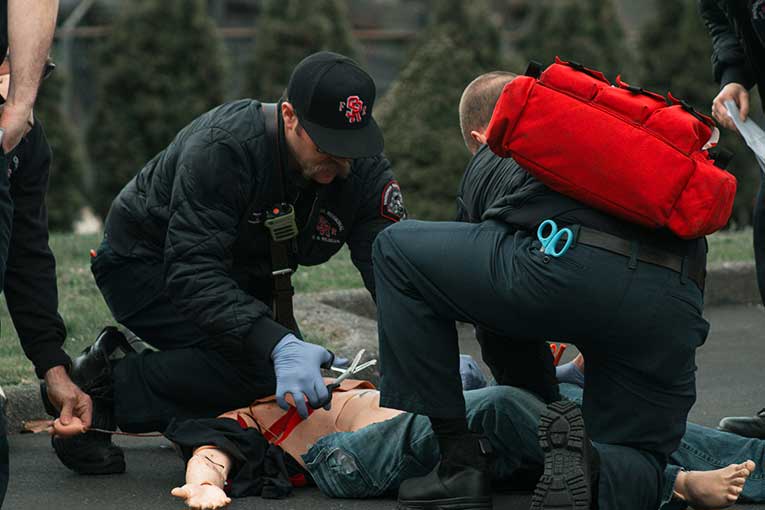
firefighter training practical exercises

Hands-on practical exercises are a vital component, allowing trainees to apply theoretical knowledge in realistic scenarios. 

This includes fire suppression techniques, search and rescue operations, handling specialised equipment, and responding to various emergency situations. 

Practical training fosters muscle memory and enhances the ability to perform under pressure.

Physical Fitness

firefighter training physical fitness

Physical fitness is a core focus throughout firefighter training. 

The demanding nature of firefighting requires firefighters to be in excellent physical condition. 

Training includes endurance exercises, strength training, agility drills, and simulations to prepare individuals for the physical demands of the job.

Live-fire Training

firefighter training live fire training

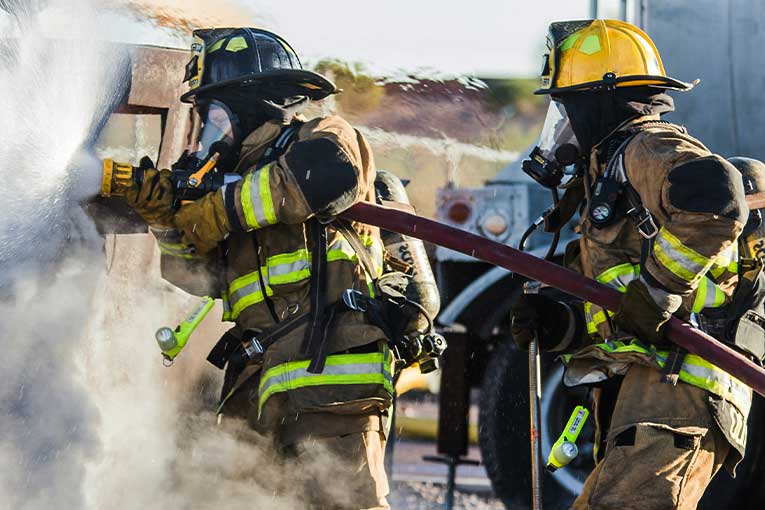
Live-fire training exercises in controlled environments simulate real-life scenarios, allowing trainees to experience the intensity and dynamics of firefighting. 

These exercises involve using firefighting equipment, coordinating team efforts, and making quick decisions in a dynamic environment.

How Often do Fire Departments Hire Firefighters?

firefighter hiring

The frequency of firefighter hiring by fire departments varies based on factors such as department size, budget constraints, retirements, and community needs. 

In larger urban areas, where the demand for firefighting services is higher, fire departments may have more frequent recruitment cycles. 

Smaller communities or rural fire departments may have less frequent hiring cycles due to budgetary constraints and lower call volumes. 

In such cases, hiring may occur less regularly, typically when there is a need to replace retiring firefighters or expand the department’s capabilities.

Fire departments often plan recruitment drives strategically, considering long-term projections for retirements and community growth. 

They may announce openings, conduct written exams, physical assessments, and interviews as part of the selection process. 

Prospective firefighters should monitor announcements from local fire departments, municipalities, or government websites for information about upcoming hiring processes. 

Additionally, networking with current firefighters, attending job fairs, and staying informed about industry trends can provide valuable insights into potential opportunities.

What Can Disqualify You From Becoming a Firefighter?

Several factors can disqualify individuals from becoming firefighters, as fire departments have stringent requirements to ensure the safety and effectiveness of their teams. 

Criminal Record

firefighter disqualify criminal record

Common disqualifiers include a history of felonies or serious criminal offences, as they can undermine the public’s trust and pose a potential risk in emergency situations. 

Substance abuse issues or a history of drug-related offences may also lead to disqualification due to the importance of maintaining a clear-headed and focused mindset during emergencies.

Poor driving records, especially if they involve serious offences or a history of reckless driving, may be grounds for disqualification, as firefighters often operate emergency vehicles.

Medical Conditions

firefighter disqualify medical conditions

Certain medical conditions or physical limitations may disqualify candidates, as firefighting demands a high level of physical fitness and endurance. 

Conditions that may affect a candidate’s ability to perform essential job functions, such as severe vision or hearing impairments, can be disqualifying.

Why Can’t You Become a Firefighter With No Training?

firefighter no training

Becoming a firefighter without training is typically not possible due to the complex and demanding nature of the profession. 

Firefighters are required to handle a wide range of emergencies, from fires to medical incidents, and they must possess the necessary skills and knowledge to respond effectively.

Training provides essential instruction on fire behaviour, rescue techniques, emergency medical procedures, and the operation of specialised equipment. 

Firefighters need to understand how to navigate hazardous environments, conduct search and rescue operations, and administer first aid. 

Moreover, they must be proficient in using firefighting tools and apparatus, such as hoses, ladders, and breathing apparatus.

Conclusion

Becoming a firefighter is a rewarding but challenging journey that demands commitment and perseverance. 

Answering the question of ‘how long does it take to become a firefighter’ is a difficult one, as the time it takes to become a firefighter varies based on individual choices and department requirements. 

Whether attending the fire academy, pursuing a college degree, or completing paramedic training, each step contributes to shaping competent and capable firefighters ready to serve their communities.
Kenyon Emergency Services launches new training academy for crisis management

Kenyon International Emergency Services, a leading provider of disaster response services and part of the global aviation services group Air Partner, has unveiled its new training academy initiative set to commence in 2024.

Delivering comprehensive crisis training

The Kenyon Academy programme aims to provide industry-leading crisis training to delegates from various companies around the globe.

This initiative is designed to empower participants to respond and operate professionally and effectively in emergency or crisis situations.

Kenyon’s extensive experience in managing complex international crises, such as search and rescue operations and providing support after Hurricane Katrina and the Grenfell Tower fire, underpins its capacity to offer specialised training.

Expanding course offerings

The academy will initially launch with four courses: Crisis Leadership, Airline Station Manager, Emergency Response Plan Writing, and Special Assistance Team Management.

Kenyon plans to extend its course offerings to include more from its comprehensive training suite, covering topics like Humanitarian/Family Assistance, Crisis Communications, and Aviation Crisis Management.

These courses will be available both virtually and in-person, depending on the course type, at Kenyon’s locations in Bracknell, UK, and Houston, USA.

The academy will be led by Kenyon’s team of skilled professionals, who are experts in the field of emergency response.

Enhancing accessibility and collaboration

Jonathan Astill, Air Partner Services Division Executive Vice President and Managing Director, emphasised Kenyon’s commitment to high-quality training: “Kenyon International Emergency Services is committed to delivering comprehensive, industry-leading training for emergency response and crisis management.

“With the launch of the 2024 Kenyon Academy programme, we’re excited to make our training more accessible and enable more companies equip themselves with the crucial skills and competencies required to confidently handle any situation.”

The academy introduces a new model allowing individuals to enrol on a ‘per seat basis’, in addition to the in-house training Kenyon already provides.

This model is designed to foster collaboration and knowledge exchange among professionals from different companies.

Kenyon also launched a new website, making it easier for customers to access its leading consultancy services and training programmes.

IFSJ Comment

By leveraging its century-long expertise in disaster response, Kenyon is set to enrich the professional skillset of individuals across various industries, enhancing their ability to manage emergencies and crises effectively.

This initiative demonstrates Kenyon’s leadership in disaster response services, underscoring the importance of preparedness and professional development in ensuring effective emergency response.

The academy’s approach to combining theoretical knowledge with practical application, through both virtual and in-person training, reflects an innovative and accessible model for professional education in crisis management.