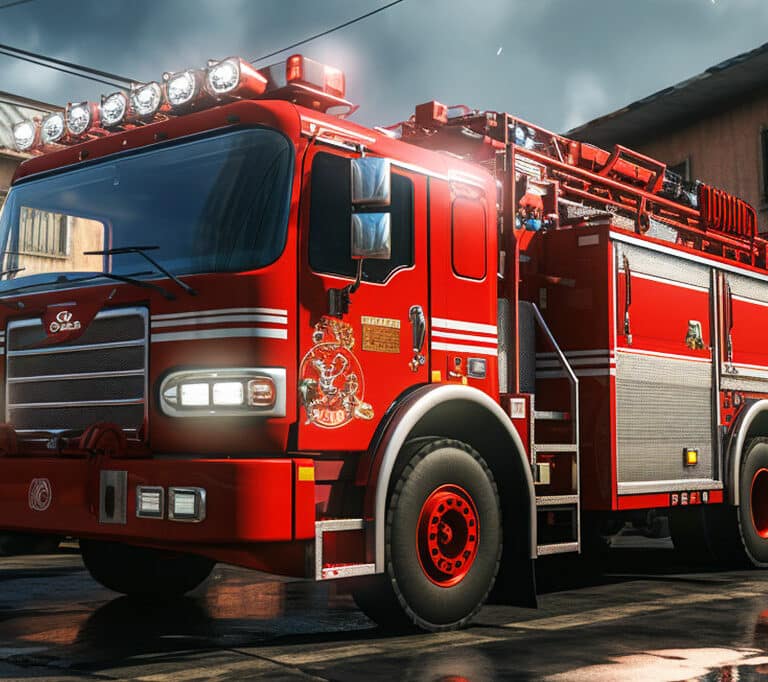
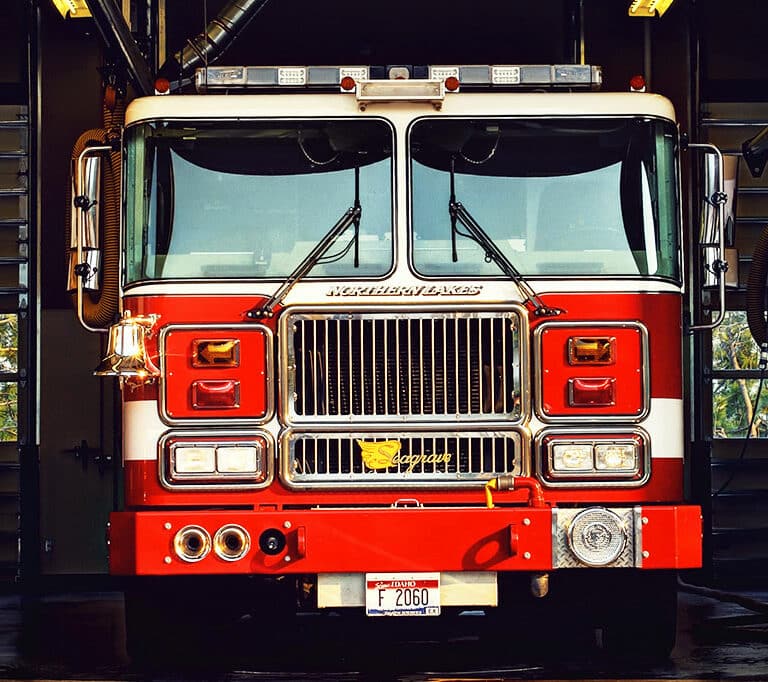
The international fire truck market is set to experience substantial growth, with a predicted market size of USD 8.77 billion by 2028, according to a recent report by Mordor Intelligence.
The report, titled “Fire Truck Market Report (2023-2028),” notes that the market stood at USD 6.30 billion in 2023 and expects a compounded annual growth rate (CAGR) of 6.83% over the forecast period.
The anticipated surge in the fire truck market is linked to a rebound in the automotive industry, as manufacturers worldwide resume operations amid falling COVID-19 cases.
As a response to the pandemic’s potential future impact, these manufacturers are developing contingency plans to maintain business continuity with clients.
Moreover, the report identifies stringent fire safety standards, city councils renewing their ageing fire truck fleets, and increased R&D investments as key long-term growth drivers for the fire truck market.
Market leaders and geographical trends in the fire truck market
Key industry players are making moves to meet the increased demand for fire trucks. Notable developments include the Rosenbauer Group’s delivery of a fully electric fire truck to the Norvenich municipality in North Westphalia, Germany in June 2022.
Geographically, Asia-Pacific, particularly China and India, are the world’s largest fire truck markets.
This dominance stems from rigorous fire protection measures in these countries and the ongoing addition of new fire trucks to their firefighting fleets.
Segmentation of the global fire truck industry
Fire trucks, equipped with a range of specialist equipment, including Hurst tools, ground ladders, rescue ropes, and cutting torches, are vital in supporting fire fighting and rescue operations.
The market segmentation includes type of fire truck (Rescue Trucks, Tanker, Pumper, and Multi-Tasking Trucks), application (Residential and Commercial, Enterprises and Airports, and Military), and geography.
Demand for fire trucks in the residential and commercial sector on the rise
As per the National Fire Protection Association (NFPA), more than 400,000 house fire cases are reported annually in the United States.
These incidents, not unique to the US, underscore the need for effective fire fighting measures worldwide.
Wildfires, too, have taken a significant toll on life and property, pushing the government to procure more firefighting equipment, including fire trucks.
For instance, The National Interagency Fire Center (NIFC) reported 58,733 wildfires in the United States in 2021.
IFSJ Comment
The burgeoning growth in the fire truck market underscores the increased awareness of fire safety worldwide.
This trend signifies more investment in advanced fire fighting equipment, which is paramount in improving public safety and reducing fire-related casualties.
From championing innovation to fostering customer relationships, Pierce Manufacturing’s President, Bob Schulz, discusses his vision for the company
Congratulations on your recent appointment as President of Pierce Manufacturing. How does it feel to be in this new role, and what excites you most about it?
It’s honouring and humbling to be appointed as the President. Pierce Manufacturing is an incredible company, and we have an amazing purpose – serving the fire services and the work that they do to serve communities, to save property and lives.
What I’m most excited about is the team we have here – the team we get to work with on a daily basis, our dealer network, and our customer base.
To me, the most exciting part is the interactions with all the people.
Can you share a little bit about your journey from joining Pierce to your present role as President?
I met my wife, who was born and raised in Wisconsin, when I was 12 years old. I joke that it’s a good thing that she fell in love with 12-year-old me so 20-something-year-old me had a chance with her.
We started dating in our early 20s and I decided to relocate to Wisconsin. I had a job with a different company, which I was content with, and I travelled quite a bit internationally.
It was enjoyable and I was travelling with someone that didn’t enjoy it. They were on the phone with a recruiter, and they said, ‘I’m not interested in that job, but this guy might be, and he threw me the phone and it was a job for Pierce Manufacturing. I ended up at Pierce out of blind luck.
I’ve been with the company going on nearly 20 years. It’s a fantastic company and I’ve moved a little bit, but it’s all been within the fire service side of the business.
I really cut my teeth in our airport products business – aircraft rescue firefighting vehicles, in which we have a strong international presence.
I had leaders there that provided a lot of opportunities for me and got me involved in a lot of different things – anything from customer service items to new product development, to production, scheduling, and manufacturing, procurement negotiations, all sorts of tasks. I got a wide variety of experience at our airport business.
Four years ago, I was asked to come over to our Pierce business and lead our aerial product line.
I had the opportunity to help with the development and introduction of Pierce’s 100’ Heavy-Duty Aerial Tower with mid-mount configuration. The opportunities and the experiences of that role helped prepare me for my current role as President.
My background is in finance. I tend to avoid saying that out loud because I think there’s a lot of preconceived notions about individuals in finance, and one of those is that data drives all of our decisions.
I do believe strongly that data is very important; however, it’s not meaningful if you don’t have people’s perspective.
Perspective can either validate or invalidate data or vice versa. If the data and the perspective are aligned, you’re going down the right path of finding the right problem to solve or the right solution.
To get that perspective, though, you need to have strong relationships. The core of that is building trust across team members, and that’s what I try to do.
I’m very forthright and very honest, and I believe that doing the right thing is paramount. I’m going to connect with people on a personal level whenever I can to start understanding those perspectives.
How will you maintain Pierce’s customer commitment and customised solutions culture under your leadership?
This will be a shorter answer: it’s listening. Listening to customers’ problems, the battles they’re fighting, the challenges that they endure, and then trying to find the right solutions that address those challenges.
Pierce was built on this philosophy as a core way in which we do business. We listen to suggestions, but it’s even more important to understand the problems people are facing and then see how we can help contribute through a variety of product offerings, through innovative solutions, and trial and error to a certain degree.
What are some strategies you’ve found effective in maintaining partnerships with dealers and ensuring customer satisfaction?
I have a fundamental belief that for every challenge there’s likely solutions that can be mutually beneficial to all parties involved. That’s customers, that’s our dealer network, and it’s Pierce.
Some of the strategies include proper investment. Proper investment isn’t just buildings, it’s also in training. It’s in education. It’s in parts as well as service – having the right parts inventory on the shelf and having the right systems in place.
It’s all about proper investment in the right areas because we are total lifecycle providers. It’s not just a whole goods business. You have to be a total solution provider and generally, when you are, you’re finding things that will benefit all parties involved.
What are your thoughts on the current state of the firefighting vehicle market?
The North American market has seen tremendous industry growth where orders have significantly outpaced shipments – and that’s in a time of significantly elevated inflation.
I don’t know how many times in the last three years I’ve heard people say ‘I’ve never, ever experienced something like this’. Some of the things we’re doing to address these challenges include making significant investment in facilities including tens of millions of dollars within our Wisconsin facility, as well as various other campuses.
That facilities investment comes along with better operational flow to help increase throughput, as well as training centres to develop our team members. I want to emphasise that throughput does not come at the sacrifice of quality.
It starts with investment in facilities, also an investment in automation. This isn’t about displacing people; this is about supplementing the resources that we have.
When you’re at near full employment, you must look at other ways to improve efficiencies. We’ve invested in robotic painting and automated fabrication equipment, all the while growing and developing those teams.
We’ve also addressed the challenges faced in recent years by remaining focused on people. It’s where we started this conversation.
Our Pierce team can invest in all the facilities and all the equipment we want, but if we’re not investing in our people, it’s for nought. We need to continue these efforts.
These are the types of strategies that will help address that tremendous growth in the North American fire apparatus market and help us improve lead times along the way.
Can you share some of your future plans for the company? What are the main objectives and milestones you want to achieve?
I believe in evolution not revolution. To a certain degree, we emulate our industry, and we need to make sure that we’re evolving at the proper pace, and that’s internal.
We have a lot of positive momentum with our growth and our market share. But we need to remain true to our core, and our core is quality products.
We will continue to maintain that focus, even as we continue to produce more to meet the market demands.
Also at our core is the strong relationships we have with the fire service, our customers, our dealers, and our suppliers.
We’ll continue to maintain these strong relationships, and ultimately, our commitment to total lifecycle support.
How was Pierce’s experience at FDIC 2023?
FDIC was a great event. It was a great event to display our latest technology, talk through customer needs, and build industry partnerships along the way.
We’re always learning new things when we’re at the show that we contemplate, build upon, validate what we’re doing, and continue to go about our business.
What’s next in terms of innovation and craftsmanship at Pierce?
I tend to look at history to understand where we’ve been, and where we’re from. What have we learned from past historical events that have propelled our business and team to where we are today, and how do we apply this to the future?
When you consider our mission to serve dedicated firefighters and first responders, quality must be our top priority to ensure they have the necessary resources to best serve their communities, and in their critical role of protecting lives and property.
We have a robust quality system, but any system or process can fail along the way if you don’t have the right people.
Team member development is an essential focus as we work with each individual, support them, and invest in their understanding of our quality systems and processes within our facilities.
Our dedication to listening, understanding our customers’ needs, and maintaining a genuine passion for helping solve unique problems through relationship development, quality, and lifecycle support is our continued approach as we look toward the future.
This exclusive article was originally published in the August 2023 issue of International Fire & Safety Journal. To read your FREE digital copy, click here.
How much does a fire truck weigh is one of the most common questions asked by school kids whenever the fire service comes to visit.
Fire trucks, with their red flashing lights and blaring sirens, are a symbol of emergency response and safety in communities around the world.
These impressive vehicles are equipped with specialised tools and equipment to combat fires and save lives.
But have you ever wondered as an adult, not just how much does a fire truck weigh, but what equipment does it carry or even what types of fire truck are there?
In this article, we will answer these common questions and provide insights into the fascinating world of fire trucks.
How Much Does a Fire Truck Weigh?
The weight of a fire truck is a critical factor in its design and functionality.
The range in weight is primarily due to the size and capacity of the vehicle.
To answer the question of how much does a fire truck weigh, the simplest answer is that a standard fire engine, which is commonly used for responding to fires and emergencies, typically falls within the 20,000 to 40,000-pound range.
These trucks are equipped with essential firefighting equipment which add to their overall weight.
On the other hand, larger aerial ladder trucks, often used for rescuing people from tall buildings and providing elevated water streams, can be significantly heavier.
These trucks feature an extendable ladder, which requires additional structural support and hydraulic systems, contributing to their weight of up to 70,000 pounds.
A fire truck can weigh up to 70,000 pounds
The total weight of a fire truck includes various components.
The chassis, which serves as the foundation of the vehicle, contributes a significant portion to the overall weight.
The body of the fire truck, made of steel or aluminium, houses the equipment and water tanks.
Additionally, the equipment carried on the truck, such as ladders, firefighting tools, and medical supplies, further adds to the weight.
All these factors are carefully considered during the design and construction of fire trucks to ensure they are efficient, durable, and capable of responding effectively to emergencies.
How Much Does a Fire Truck Weigh When Full of Water?
Probably the second most asked question in relation to how much does a fire truck weigh, is how much does it weigh when full of water.
When a fire truck is filled with water, its weight can increase significantly due to the large water tank it carries.
On average, a fire engine can hold between 500 to 1,500 gallons (1,893 to 5,678 litres) of water.
Since each gallon of water weighs around 8.3 pounds (3.8 kilograms), a full tank can add an extra 4,150 to 12,450 pounds (1,882 to 5,647 kilograms) to the vehicle’s weight.
This added weight is a crucial consideration for firefighters and drivers, as it affects the truck’s handling and performance during emergency responses.
Properly managing the water supply is essential to ensure the fire truck can manoeuvre effectively and safely while combating fires and providing vital support to emergency situations.
How Long is a Fire Truck?
The length of a fire truck varies based on its type and model.
Standard fire engines typically measure around 25 to 35 feet (7.6 to 10.7 metres) in length.
However, aerial ladder trucks, equipped with extendable ladders, can reach impressive lengths of 75 to 100 feet (22.9 to 30.5 metres).
These longer fire trucks are often employed in high-rise firefighting and rescue operations, where their extended reach is essential for accessing upper floors and providing a safe evacuation route.
The varying lengths of fire trucks allow firefighting teams to choose the most suitable vehicle for specific emergency scenarios, ensuring an effective response to fires and other critical incidents.
How Wide is a Fire Truck?
The typical width of a fire truck ranges from 8 to 10 feet (2.4 to 3 metres).
This dimension is carefully designed to ensure that the vehicle can manoeuvre through narrow streets and tight spaces in urban areas without encountering difficulties or causing damage to buildings and obstacles.
A fire truck can be up to 3 meters wide
The compact width enables fire crews to quickly reach emergency scenes and provide timely assistance, even in congested environments.
What Types of Fire Trucks Are There?
Fire trucks come in various types, each designed for specific firefighting tasks, depending on the cause and type of fire. The most common ones include:
Fire Engines
Standard fire trucks equipped with water tanks, hoses, and firefighting equipment. They respond to most fire emergencies and carry a crew of firefighters. Recently, electric fire trucks have also been rolled out.
Aerial Ladder Trucks
Also known as ladder trucks or hook-and-ladder trucks, these vehicles feature extendable ladders and platforms for rescue operations in tall buildings.
Rescue Trucks
Rescue trucks are equipped with specialised equipment for rescuing people from hazardous situations, such as vehicle accidents or collapsed buildings.
Wildland Fire Engines
Designed for fighting wildfires in rural and forested areas, these trucks have off-road capabilities and carry water to extinguish smaller fires.
Airport Crash Trucks
Specialised fire trucks used at airports to respond to aircraft emergencies, such as fires or crashes.
Foam Trucks
Equipped with foam-generating systems to fight fires involving flammable liquids.
Each type of fire safety vehicle is carefully designed to address specific fire scenarios, ensuring that firefighters have the right tools and resources to combat various emergencies effectively.
The diversity of fire truck types enables firefighting teams to be prepared for a wide range of incidents, from standard structural fires to specialised hazardous material incidents.
These versatile vehicles play a crucial role in ensuring the safety of communities and protecting lives and property during emergencies.
What Equipment is on a Fire Truck?
Fire trucks are equipped with a wide range of tools and equipment to handle various emergency situations.
Some common equipment found on a fire truck includes hoses, nozzles, axes, saws, ladders, breathing apparatus such as oxygen masks, medical supplies, and thermal imaging cameras.
The exact equipment may vary depending on the specific type and purpose of the fire truck.
For example, ladder trucks will have extendable ladders and platforms for tall building rescues, while hazmat trucks will carry specialised gear for handling hazardous materials incidents.
The availability of this diverse firefighting equipment ensures that firefighters have the necessary tools to effectively and safely respond to different emergencies they may encounter.
How Long is a Fire Truck Hose?
The length of a fire truck hose varies based on the truck’s size and intended use.
Standard fire hoses used for firefighting operations are typically 50 feet (15 metres) long.
Aerial ladder trucks may carry longer hoses, up to 100 feet (30 metres), to reach higher floors in tall buildings.
The length of the hose is crucial in ensuring firefighters can effectively deliver water to the source of the fire, regardless of the building’s height or accessibility.
How Much Water Does a Fire Truck Hose Deliver?
The amount of water a fire truck hose can produce is determined by its diameter and water pressure.
Most fire hoses have a diameter of 1.5 to 2.5 inches (3.8 to 6.4 centimetres) and can deliver water at pressures ranging from 50 to 150 pounds per square inch (psi).
At an average flow rate of 100 psi, a fire hose can deliver around 50 to 125 gallons (189 to 473 litres) of water per minute.
This water flow is critical for effectively extinguishing fires and controlling their spread, especially in larger and more intense fire incidents.
Firefighters must skillfully operate the hoses to direct the water precisely and efficiently, making the most of their water supply to combat the flames and protect lives and property.
Firefighters need a special licence to drive a fire truck
The exact licence requirements vary depending on the fire truck’s weight, size, and type. For instance, a firefighter operating a standard fire engine may need a different endorsement than one operating an aerial ladder truck.
To obtain the necessary CDL and endorsements, firefighters must undergo specialised training to operate these vehicles safely and effectively.
This training includes learning how to handle the larger dimensions of fire trucks, understanding the unique challenges of emergency driving, and practising manoeuvres such as backing up, turning, and navigating tight spaces.
Firefighters also receive instruction on vehicle maintenance and safety protocols to ensure the proper functioning of the fire truck during emergencies.
Conclusion
Hopefully this article provided a clear and concise answer to how much does a fire truck weigh, and some of the most common questions to do with fire trucks.
Fire trucks are essential vehicles in emergency response and play a crucial role in safeguarding communities.
Their size, weight, and equipment are carefully designed to handle various firefighting and rescue tasks effectively.
The training and expertise of firefighters who operate these machines are vital in ensuring their efficient use during emergencies.
From carrying large amounts of water to navigating through tight spaces, fire trucks are equipped to tackle a wide range of challenges.
Understanding the capabilities of these vehicles helps us appreciate the dedication and skill of firefighters who work tirelessly to protect lives and property in times of crisis.
New data shows an average of 23 fire engines unavailable daily in London
In data obtained by the Fire Brigades Union, a startling revelation has emerged. So far this July, an average of 23 of London’s fire engines have been unavailable every day due to understaffing, as the source reveals here.
This figure equates to approximately one in every six of London’s 142 fire engines.
A peak of 28 fire engines were off-duty on July 16th.
London’s only fireboat, a critical asset for river rescue and firefighting efforts, has not been operational for 13 shifts this month.
These statistics only account for appliances rendered ‘off the run’ due to insufficient firefighter numbers.
Fire engine understaffing on the anniversary of 2022 wildfires
These figures come to light on the anniversary of the 2022 London wildfires.
They also coincide with the release of the London Fire Brigade’s Major Incident Review about the events of July 19th, 2022.
On that day, which marked the highest recorded temperature, London saw a total of 822 fire engine mobilisations.
A staggering 39 fire engines were unavailable due to understaffing as fires engulfed Greater London, causing the destruction of 18 homes in Wennington.
The LFB’s report acknowledges that understaffing likely led to slower response times and insufficient resources or firefighter numbers.
Since 2010, the London fire service has experienced the loss of 1,388 firefighters, including control staff, 10 fire stations, and 26 fire appliances due to cuts.
Fire Brigades Union secretary’s warning about understaffed fire engines
Fire Brigades Union general secretary, Matt Wrack, stated: “One year on from the devastation of last summer’s wildfires, cuts are still leaving the fire service unprepared.”
“This is putting lives and homes at risk,” he continued, “Londoners should be furious that in the capital city of one of the richest countries in the world, firefighter numbers have been cut so badly that more than 20 fire engines are sitting idle every day.”
Wrack describes the situation as a disaster waiting to happen again.
“We will continue to face an increasing number of wildfires and extreme weather events due to the impact of the climate emergency,” Wrack added. “We need a UK-wide wildfire strategy, but above all, we need proper investment and funding for the fire service.”
Jon Lambe, FBU London Regional Secretary, echoed Wrack’s sentiment: “London’s firefighters are protecting lives under immense, unsustainable pressure.”
“Since 2010, we’ve seen over 1,100 London frontline firefighters lost to cuts. Fire engines are left empty in stations because there are not enough firefighters to crew them,” Lambe stated.
He concluded by calling for serious investment to ensure firefighters can save people’s homes and lives across London.
IFSJ Comment
This news is significant due to the potential safety risks posed by understaffing of fire services.
This situation is particularly alarming given the increasing threat of wildfires and extreme weather events due to climate change.
Ensuring adequate staffing and resourcing for fire services is crucial for community safety and disaster resilience.
About the Fire Brigades Union
The Fire Brigades Union is a professional trade union body representing firefighters and other professionals in fire and rescue services across the United Kingdom.
Their aim is to provide a voice for firefighters and the fire and rescue service, promoting the interests of their members on matters relating to employment, health and safety, fire and rescue policy and wider issues.
In a significant development, the Department of Homeland Security’s Science and Technology Directorate (S&T) has recently concluded a series of comprehensive tests and demonstrations on a prototype hybrid fuel rescue truck. The news comes from an official announcement available on their website.
New strides in emergency response
This prototype rescue truck, known as the H2@Rescue Emergency Relief Truck, is a first-of-its kind hybrid vehicle that employs both hydrogen fuel cell and battery technology. The hybrid vehicle is capable of providing on-site power at disaster recovery locations for up to 72 hours without needing to be refuelled.
Innovative features to enhance disaster response
The rescue truck can also operate as a self-propelled electric generator, with a considerable range of 180 miles and an ability to generate up to 25 kilowatts of power. This is sufficient to power approximately 20 average US homes. Furthermore, the rescue truck is capable of operating at full capacity whilst producing minimal noise, exhaust, or emissions.
The innovative hybrid vehicle was funded and designed by a collaboration that included the Department of Energy, the U.S. Army Corps of Engineers, the Federal Emergency Management Agency, and Accelera by Cummins Inc.
“The H2@Rescue vehicle represents a significant leap forward in emergency response capabilities,” said Dr. Dimitri Kusnezov, DHS Under Secretary for Science and Technology. “The hydrogen-powered technology ensures first responders can reach affected areas swiftly and provide critical assistance in times of crisis.”
Environmental resilience and operational flexibility
The vehicle’s hydrogen fuel cell offers first responders a practical alternative fuel while operating almost silently and without producing harmful exhaust. Hydrogen fuel cells present a potential for being a stable and easily transportable energy storage medium for use in disaster response operations. They are energy efficient, utilising 80% of the created energy, and environmentally friendly, producing only water and heat as byproducts.
Ron Langhelm, S&T Mission & Capability Support programme manager, shared: “Imagine a hydrogen-powered temporary shelter operating fully without noise, exhaust, or emissions. In addition, the potential exists to capture both heat and water to further support the operation. The innovative hydrogen-powered system not only offers climate resilience advantages but also provides first responders with increased operational flexibility, extended range and rapid charging capabilities.”
Future development of the rescue truck
Following the conclusion of this project, Accelera by Cummins will assume ownership of the vehicle. This allows for the potential for further research and development to enhance the capabilities of the hybrid rescue truck.
IFSJ Comment
The successful completion of testing for this hybrid rescue truck demonstrates innovative advancements in emergency response technology. This could vastly improve our ability to provide effective disaster recovery services, enhancing both the efficiency and environmental friendliness of emergency response operations.
Frontline Communications delivers advanced firefighting vehicle to Seattle
The Seattle Fire Department has revealed a pioneering energy response unit (ERU), kitted out with an innovative carbon dioxide (CO2) fire suppression system.
This technology has been designed to tackle fires in underground electrical vaults, a frequent issue in large, densely populated cities like Seattle.
The vehicle’s funding was procured from Seattle City Light, the public utility providing electricity to the city.
You can find more information on Frontline Communications’ official website.
The innovative firefighting vehicle aims to combat underground electrical vault fires
About 20% of the US electric distribution network is located underground, making accessibility and fire combat difficult, especially when traditional fire suppression agents like water can cause significant damage to the infrastructure.
The new CO2 technology presents a fresh offensive approach to this challenge.
By depriving fires of oxygen, it prevents the spread of fire through an entire electrical vault system.
Fire Captain Chris Greene, a leading U.S. authority on fighting energy fires, played a significant role in the development of the new ERU.
He expressed his thoughts on the project: “The revolutionary design of our new emergency response unit is a remarkable evolution of the Pierce vehicle retrofitted for us back in 2018.”
Unravelling the enhancements of the new firefighting vehicle
In 2018, a unique method was adopted to fight electrical vault fires by retrofitting a decommissioned Pierce vehicle with CO2 canisters.
This method has since been developed to address limitations identified in the department’s original design.
Captain Greene elaborated on the upgrades: “We increased our capacity by 11-fold compared to our old rig, now with three hose lines 200 feet each, which can be deployed simultaneously or connected for a total of 600 feet of hose line.”
The ERU’s residence is at Seattle Fire Department’s Station 25.
The station houses 48 members of an energy response team, trained to handle public safety needs arising from energy hazard incidents.
Upon the occurrence of an electrical vault fire, the team uses CO2 to extinguish the fire and once cleared, the area is made safe by Seattle City Light personnel.
IFSJ Comment
This is a pivotal development in the field of fire safety.
By addressing the often overlooked challenge of underground fires, the Seattle Fire Department, in collaboration with Frontline Communications, is setting a global standard.
We eagerly anticipate witnessing the impacts of this innovative firefighting vehicle in action.
About Frontline Communications
A division of Pierce Manufacturing, Inc., and a subsidiary of Oshkosh Corporation, Frontline Communications is a leading provider of custom broadcast and communications vehicles. Their technology, including the newly unveiled CO2 Vault Fire Response Truck, plays a crucial role in public safety, furthering their mission to create vehicles that help communities around the world.
Oshkosh Airport Products, a division of Pierce Manufacturing Inc. and subsidiary of Oshkosh Corporation, has revealed that the King County International Airport-Boeing Field (KCIA) is now the proud owner of the first-ever hybrid electric fire engine in the United States. This environmentally-friendly vehicle represents a revolutionary stride in airport rescue and fire fighting (ARFF) vehicles.
The first of its kind: A hybrid electric fire engine
With the addition of this pioneering vehicle to its fleet, KCIA is setting a precedent for other airports in the nation to follow. The advanced vehicle will contribute to the replacement of older fire engines in KCIA’s existing fleet.
The hybrid electric ARFF vehicle, known as the Striker Volterra 6×6, is the brainchild of Oshkosh Corporation. Thanks to the company’s proprietary technology, this fire engine not only meets the urgent response needs of an airport but also adheres to environmental sustainability goals.
Technical details: How the hybrid fire truck operates
Built with an Oshkosh patented hybrid-electric drivetrain, the Striker Volterra 6×6 offers zero-emissions operation. This is made possible through integrated onboard batteries and an uninterrupted power supply, which pairs with the internal combustion engine to keep the pumping and drive systems running smoothly.
Contributing to environmental sustainability
Speaking about the commitment to environmental sustainability, King County Executive Dow Constantine stated: “Climate change is an urgent global crisis that requires us all to do our part, in ways large and small, to shrink our carbon footprint.” He added, “Operating a major international airport, this first-of-its-kind hybrid fire truck is another way we are leading the way on reducing both carbon emissions and the harms to communities most impacted by ambient pollution.”
The role of King County International Airport
The Striker Volterra 6×6 will be a significant addition to KCIA’s resources. The airport, located just four miles south of downtown Seattle, is one of the nation’s busiest primary non-hub airports with an average of 180,000 takeoffs and landings each year. Its emergency personnel maintain a unique combination of roles, holding certifications as commissioned police officers, Washington State Firefighter I and II certifications, and ARFF training, as well as Emergency Medical Technician certification.
Looking ahead: The future of environmentally friendly fire fighting
John Parrott, Director of KCIA, expressed his enthusiasm for the project, stating: “We are thrilled to lead the way in bringing the Striker Volterra ARFF vehicle to KCIA.” He highlighted the superior performance and environmental benefits of the hybrid electric vehicle, calling it a “significant investment in our climate goals and vision of a world-class airport.”
In conclusion, Jack Bermingham, Business Unit Director for Oshkosh Airport Products, stated: “The Striker Volterra ARFF is tailored to provide operational excellence without compromising on environmental values.” He expressed confidence that KCIA will benefit from reduced fuel consumption and emissions, while also maintaining top-tier safety and reliability standards. The airport is set to take delivery of its new Striker Volterra ARFF in mid-2024.
Vienna marks another milestone in firefighting history
The City of Vienna’s Fire Department and Civil Protection has recently procured two cutting-edge electric firefighting vehicles, strengthening their commitment to sustainability and environmental consciousness. This development was unveiled at the Landstrasse fire station by Peter Hanke, Vienna’s City Councilor for Fire Services, Fire Director Mario Rauch, and Andreas Zeller, the Chief Sales Officer of Rosenbauer International AG.
Almost 120 years ago, Vienna’s Professional Fire Department made history by incorporating the first electric fire truck into their fleet. This seminal electric vehicle, currently preserved and maintained in working condition by the Vienna Fire Brigade Museum, was presented alongside the current collection of electric vehicles from the city’s fire department.
The vehicles were produced by Rosenbauer, a renowned manufacturer who has so far delivered 21 units of this new electric vehicle worldwide. With this recent addition, Vienna’s Professional Fire Department takes a substantial step forward, positioning itself as a leader in innovation within the Austrian firefighting industry.
Unveiling the future of firefighting with electric Basic Firefighting Vehicles (BLFs)
The new Basic Firefighting Vehicles (BLFs) are powered by a high-capacity 66 kWh battery, neatly housed at the bottom of the vehicle. With two electric motors, these vehicles can produce a whopping 360 kW of peak electric drive power. In anticipation of longer missions or potential power outages, these BLFs come with a 225 kW Energy Backup System (EBU) and successfully blend the capabilities of both rescue and tank firefighting vehicles.
Vienna Fire Brigade takes a step towards climate neutrality
“Thanks to its high level of professionalism, the Vienna Professional Fire Brigade rightly ranks among the best emergency services in the world. By gradually switching to environmentally friendly vehicles, it is also making a contribution to a climate-neutral Vienna. This is important because the commitment to the safety of the Viennese population also requires constant further development and the use of new technologies,” stated Peter Hanke, the Fire Department City Councilor.
A journey of eight years of innovation and development
The vehicles’ rollout comes after eight years of development, which Andreas Zeller describes as a “challenge as big as the development work behind it.” He also emphasised their redundant energy supply, which makes these BLFs “particularly crisis-proof firefighting vehicles,” enabling “virtually emission-free operations.”
Equipping the future of firefighting
These state-of-the-art vehicles are not just about emission-free operations; they also herald a new approach to the equipment onboard. The objective was to replace corded or combustion engine devices with battery-powered ones, subjecting new products to practical tests in everyday operations.
“The BLF concept is holistically innovative. The basic idea of those responsible for tactics and technology was to expand the vehicle’s range of applications and make it as universal as possible. The firefighters are already looking forward to testing the new vehicles, equipment and technologies in their everyday work. The feedback we receive from them is and always has been a key driver for further development and improvement of the vehicles and equipment,” expressed Fire Director Mario Rauch.
The innovative BLFs, with dimensions of approximately 7,800 x 2,350 x 3,200 mm and a total weight of 16,000 kg, sport a 4×4 Rosenbauer RT Basic chassis with selectable ride levels for comfortable entry and ergonomic removal. They are equipped with an electric drive system and an Energy Backup System, and also feature an impressive extinguishing technology setup, including a built-in pump, water tank capacity of 2,000 litres, foam tank capacity of 100 litres, and a water cannon for water and foam operation on the cabin roof. They also possess an electrohydraulic cable winch and an integrated generator for external equipment.
In procuring these advanced electric firefighting vehicles, Vienna not only demonstrates its commitment to sustainability and environmental protection but also paves the way for the future of firefighting.
Pierce Manufacturing Inc., has disclosed that the Anderson County Fire Department in South Carolina has requested 19 custom fire vehicles, including 18 Saber pumpers and an Enforcer 100’ Heavy-Duty Aerial Platform. This request, the most substantial of its kind in the history of the county, mirrors the department’s devotion to equipping its emergency personnel with top-quality resources.
The influential factors
The decision to place this order was influenced by the continual development in their coverage area, the varying needs of the community in terms of responses, and an unwavering commitment to firefighter safety and efficiency. Spartan Fire and Emergency Apparatus, the authorised Pierce dealer, orchestrated the order for the new fire equipment.
Anderson County Fire Department’s Fire Chief, Jimmy Sutherland, noted a longstanding relationship with Pierce and Spartan Fire. Sutherland revealed that their consistent quality, reliability, and support have culminated in this latest fleet upgrade, which will see fire vehicles nearing three decades in service replaced.
Vehicle capabilities
The 18 Saber pumpers, fitted with Cummins L9 380 HP engines, come with 1250 gpm pumps, 1000-gallon water tanks, and low hosebeds. The Enforcer 100’ Heavy-Duty Aerial Platform, powered by a PACCAR MX-13 510 hp engine, boasts features such as a Waterous 2000 gpm pump, a 300-gallon water tank, and the TAK-4 Independent Suspension.
Chief Sutherland asserted that with the ongoing growth in Anderson County, there has been an escalation in emergency call volume and the complexity of incidents. He expressed confidence that this latest purchase would greatly improve their fleet and enhance the department’s ability to transport personnel and equipment, thereby improving the safety of firefighters when dealing with emergencies.
About the Anderson County Fire Department and Spartan Fire
The Anderson County Fire Department, which serves over 200,000 citizens, runs its operations from 31 stations with 900 volunteer firefighters. The expansive county, located in upstate South Carolina, includes rapidly growing residential, commercial, and industrial areas along the Interstate 85 corridor.
In his closing remarks, the President of Spartan Fire and Emergency Apparatus, Robby Fore, referred to the partnership with the Anderson County Fire Department as an “incredible privilege”. As the fleet evolves, he reaffirmed his team’s commitment to offering the highest level of support at all stages of the process, ensuring the longevity of these critical vehicles.
Portland welcomes electric fire truck from Pierce with push-in ceremony
Portland Fire and Rescue, in a stirring nod to tradition, is heralding in the future on 12 June with an old-world “push-in” ceremony marking the entrance of a groundbreaking Pierce Volterra electric pumper into service. The event, set to start at midday at Station 1, located at 55 SW Ash, Portland, Oregon, will be open to all.
The Pierce Volterra, an electric fire pumper first launched in 2021, is a trailblazer in its own right. As the first of its kind in service in North America, the new truck is set to strengthen Portland’s environmental sustainability initiatives with its innovative green technology.
The ‘Push-In’ Ceremony
The tradition of the ‘push-in’ ceremony dates back to the 1800s when firefighters would disconnect the fire equipment from the horses and manually push the fire apparatus back into the bays. This tradition has survived the times, and even today, when a new fire engine is purchased, fire departments often mark the occasion with a ceremonially push of the new truck into the bay.
Public viewing and live Q&A
In-person attendees will have a unique opportunity to get an up-close view of the electric fire apparatus, explore the cab and its cutting-edge technology, and even ask their burning questions. According to event details, photography and video during the event are welcome. For those who can’t attend, footage of the “push-in” ceremony will be posted after the event.
Public officials and fire chiefs at the forefront
The ceremony will see the participation of an array of public officials and firefighters, including Rick Graves, Public Information Officer for Portland Fire and Rescue; Rene Gonzalez, Portland City Commissioner of Public Safety; Sara Boone, Fire Chief, Portland Fire and Rescue; Bill Goforth, Deputy Chief, Portland Fire and Rescue; and Marc Faluotico, Regional Vice President, Pierce Manufacturing. The session will conclude with a “push-in” conducted by the on-duty crew and a closing address by Rick Graves.