Glasgow fire forces closure of Scotland’s busiest rail station

Firefighters respond to Union Street blaze in Glasgow

A major fire near Glasgow Central Station forced the closure of the station and the suspension of rail services after a blaze broke out in a commercial building on Union Street in Glasgow city centre on Sunday 8 March.

Media reporting and statements from Scottish Fire and Rescue Service indicate the alarm was raised at about 15:45 after a fire was reported in a shop within the building, which forms part of a block of multi-storey Victorian commercial properties close to the entrance of the station.

Firefighters attended the incident with 15 appliances, including three high-reach vehicles, while crews pumped water from the River Clyde as the fire developed during the afternoon and evening.

Scottish Fire and Rescue Service said there had been no reported casualties as of 20:30 on Sunday evening.

Fire first reported in Union Street shop

Reports indicated the fire was first reported in a vape shop on Union Street near Glasgow Central Station after emergency services were alerted to the incident at about 15:45.

Images and aerial footage from the area showed flames spreading through the structure as fire spread across the building during the incident.

Fire damage was visible across several floors of the property as firefighters continued working to control the blaze.

Large-scale fire service response mounted

Scottish Fire and Rescue Service said 15 appliances were deployed to tackle the fire, including three high-reach vehicles used by firefighters operating above street level.

Firefighters used aerial platforms to direct water onto the upper sections of the building while crews at street level worked to contain the flames.

Water supply operations included pumping water from the River Clyde as crews continued the firefighting operation.

Fire spread through historic city centre buildings

The fire affected a row of Victorian buildings around Union Street and Renfield Street in Glasgow city centre.

Drone images from the scene showed the building’s roof had collapsed and that the fire had spread through the structure.

Several sections of the building appeared to be heavily damaged as the incident continued.

Structural damage and fire development

A structural collapse was reported during the firefighting operation as the fire progressed through the building.

BBC Scotland journalist Paul Ward reported from the scene: “I’ve just watched the dome on the building next to Central Station fall in the fire.

“Four floors of the building are still standing from what I can see on Renfield Street.

“Two firefighters on height appliances are dampening down flames.

“Embers can still be seen burning in the lower levels of the building.”

Impact on transport and city infrastructure

The incident resulted in the closure of Glasgow Central Station and the suspension of rail services through the station.

ScotRail said the closure would continue into Monday morning while passengers were advised to check travel updates with their operators.

Network Rail said: “Glasgow Central Station has been closed until further notice, and will not reopen on Monday morning, following a fire at a vape shop on Union Street this afternoon.

“Emergency services, including Police Scotland and the Scottish Fire and Rescue Service, are on site and managing the incident. As a precaution, all services through Glasgow Central have been suspended and passengers are advised to seek alternative travel arrangements.

“We will provide further updates as soon as more information becomes available.”

Bus operators said some services would accept train tickets for affected passengers as disruption continued in the city centre.

Public safety response

Police urged members of the public to stay away from the area around the fire as crowds gathered near cordons around Union Street and Gordon Street.

Journalist Jamie McIvor reported from the area that the fire was “one of the biggest – and most visible – in the city centre for many years”, adding that “Central Staton is closed and bus routes are disrupted.”

First Minister John Swinney said he was “deeply concerned” about the fire near Glasgow Central Station and was “very grateful to all of the emergency services who are responding.”

He added: “Please continue to follow travel guidance, avoid the area and stay safe.”

Businesses describe damage after blaze

Several businesses based in the affected building posted statements on social media following the fire.

Sexy Coffee said it was “devastated” that its Union Street branch had been destroyed, describing the situation as “heartbreaking” and adding that it would “rebuild, revamp the shop and reopen”.

Lucky in Love tattooing said it was “devastated”, adding that the business was in “complete shock”.

Nail salon Amore said it was “absolutely heartbroken”, describing the situation as “horrendous”.

The owner of Willow hair salon said her business had been “burned to the ground”.

Firefighters remained at the scene as crews continued working to extinguish the fire and secure the building.
UL Research Institutes turns lithium-ion incident data into practical battery safety actions

UL Research Institutes promotes battery safety with Take C.H.A.R.G.E.

UL Research Institutes has launched its Take C.H.A.R.G.E. of Battery Safety guidance on lithium-ion powered devices as holiday technology gifting and travel increase in the US.

The organisation noted that lithium-ion batteries now power smartphones, laptops, e-bikes, electric vehicles, power tools, toys and home energy systems.

According to UL Standards & Engagement, an average of two flights per week experienced lithium-ion battery incidents in 2024.

The data also showed that most travellers carry four lithium-ion battery-powered devices, with smartphones carried by 81% of passengers, laptops by 40%, wireless headphones by 38% and tablets by 35%.

UL Research Institutes reported that 50% of Americans say they do not know anything about lithium-ion batteries.

It added that 60% of travellers remain unaware of how common lithium-ion batteries are in everyday devices and of the dangers linked to damaged, counterfeit or improperly charged products.

The organisation stated that lithium-ion batteries store energy more densely than traditional batteries, and that damaged, overheated or improperly charged units can be at risk of catching fire.

Take C.H.A.R.G.E. campaign on battery safety

UL Research Institutes said the Take C.H.A.R.G.E. of Battery Safety campaign is designed to improve public understanding of lithium-ion risks at home and in transit environments.

Nicole Sanders, Public Education Lead for UL Research Institutes, said: “Recent spikes in lithium-ion battery incidents in transit environments have underscored the need to expand public education.

“To improve public safety, we’ve developed clear guidelines for how to ‘Take C.H.A.R.G.E. of Battery Safety’ at home and on-the-go using best practices informed by response data and firefighter testimonials.”

The organisation explained that the guidance sets out practical steps for handling, charging and storing lithium-ion devices.

It added that the campaign emphasises keeping devices visible when charging, particularly while travelling.

UL Research Institutes also highlighted the need to keep lithium-ion battery-powered devices out of checked luggage.

The campaign frames the Take C.H.A.R.G.E. actions as an interconnected set of measures rather than standalone tips.

Key Take C.H.A.R.G.E. safety messages

UL Research Institutes advised that users should choose lithium-ion battery-powered devices that have been certified by a nationally recognised testing laboratory so they meet defined safety requirements.

The organisation recommended that people follow manufacturer instructions, use the charger supplied with the device, avoid modifying batteries or chargers and charge only in locations away from extreme temperatures, direct sunlight and flammable materials.

It added that devices should never be charged under pillows, blankets or inside bags and that users should unplug devices at home and check size limits set by transit providers before travelling.

UL Research Institutes stated that people should regularly inspect devices for swelling, punctures, unusual sounds such as hissing or popping, excess heat, unfamiliar odours or white or grey wispy smoke, which indicates immediate fire danger.

If these warning signs appear, the organisation said users should unplug the device immediately, stop using it and keep it in sight when travelling or charging.

It advised that lithium-ion battery-powered devices and gifts should not be placed in checked bags.

The organisation said that devices and batteries must not be placed in public rubbish bins or abandoned when travelling and that recycling routes should be used instead.

UL Research Institutes explained that if there is a fire, people at home should follow their escape plan, leave immediately, shut doors behind them and call 9-1-1.

It recommended that people create and practise a home escape plan and, in public spaces such as transit hubs, identify exits and escape routes so they can evacuate quickly and alert authorities if a device shows warning signs.

The organisation stated that people gifting battery-powered devices should share the Take C.H.A.R.G.E. guidance, encourage safe charging and travel practices and remind travel companions to keep devices in carry-on luggage rather than checked bags.

UL Research Institutes noted that the full Take C.H.A.R.G.E. guidance is presented as a set of linked steps which reinforce one another, and that following them can reduce risk in homes and workplaces, with further information available at batteryfiresafety.org.

Survitec awarded €22.7m contract for dry inert gas systems

Survitec to supply LNG carrier safety systems in China

Survitec has announced that its brand Maritime Protection will provide dry inert gas systems for 24 LNG carriers under construction in China.

The company confirmed on 9 June that the contract is valued at €22.7 million and covers equipment deliveries between 2026 and 2030.

According to Survitec, the deal is the largest single order in Maritime Protection’s history and supports Qatar’s second LNG fleet expansion programme.

The systems will be installed on vessels owned by a consortium of five shipowners.

Each unit will include a high-capacity dry inert gas generator rated at 21,000 Nm³/h.

Design and delivery to span four years

Survitec stated that deliveries will be phased to align with vessel completion schedules.

The manufacturer said the systems will be installed between 2026 and 2030 across 24 ships.

It added that the project will contribute to meeting rising global demand for liquefied natural gas transport.

According to Survitec, system design maturity and operational reliability were central to the contract evaluation process.

The company noted that the order followed a multi-party selection process involving detailed technical reviews.

Bernt Øhrn, Managing Director at Maritime Protection, said: “This is a defining contract for Maritime Protection.

“It’s the largest single order in our history and reflects the growing demand for engineered safety systems in the LNG sector.”

Technical specifications and compliance

Survitec confirmed that each system includes a combustion chamber, cooler, chiller and dryer arranged in a horizontal configuration.

The company stated that this layout helps eliminate hydrocarbon risk in the seawater drain.

It added that the dry inert gas systems are designed to maintain an oxygen level near 1 percent in cargo tanks, minimising fire and explosion risk during operations such as dry docking.

Survitec explained that the design meets approval standards set by DNV, BV, ABS and Lloyd’s Register.

These approvals are required by the shipowners commissioning the new LNG carriers.

Market confidence in existing performance

Survitec highlighted that Maritime Protection has delivered dry inert gas generators for over 400 gas tankers since 2005.

It stated that more than half of those deliveries occurred in the past five years.

Knut Kaupang, Director of Sales at Maritime Protection, said: “Throughout the quotation process, it became clear that the shipowners were focused on securing a technically mature solution from a supplier with a long-standing track record in the LNG sector.

“The vessels involved are among the largest and most advanced of their type, and the equipment requirements reflect that scale.

“Our system design has been proven across a wide range of vessel types and operating conditions, which has helped build confidence among all stakeholders involved.

“When equipment is this integral to a ship’s infrastructure, owners need to have certainty in the design, the delivery capability, and the long-term support behind it.”

Industry relevance and contract background

Survitec reported that the contract was awarded following an extended negotiation period.

It stated that performance history, system maturity and lifecycle support were all key evaluation criteria.

The LNG carriers form part of a wider expansion programme aiming to support increased liquefied natural gas distribution worldwide.

Maritime Protection is responsible for engineering, manufacturing and service delivery across the lifecycle of the supplied systems.

The company noted that its integrated delivery model was a factor in the contract decision.

Survitec awarded €22.7m contract for dry inert gas systems: Summary

Survitec announced a €22.7 million contract to supply dry inert gas systems.

The contract was awarded to Survitec’s brand Maritime Protection.

It covers 24 LNG carriers being built in China for five shipowners.

The project is part of Qatar’s second LNG fleet expansion programme.

Deliveries will occur between 2026 and 2030.

Each system includes a 21,000 Nm³/h dry inert gas generator.

System design includes a combustion chamber, cooler, chiller and dryer.

The layout eliminates hydrocarbon risk in the seawater drain.

The systems are approved by DNV, BV, ABS and Lloyd’s Register.

They are used to maintain oxygen levels of around 1 percent.

This reduces explosion and fire risk during cargo operations.

The contract followed a competitive evaluation and negotiation process.

More than 400 tankers have been fitted with Maritime Protection systems since 2005.

Over half were delivered in the past five years.

Survitec stated that design maturity and lifecycle support influenced the contract award.

EU shipowners must upgrade firefighting suits to Level 2 by June 2025

Regulatory changes require new firefighting suit standards

Shipowners and operators of EU-flagged vessels must ensure that all new firefighting suits meet enhanced protection standards by June 2025, according to VIKING Life-Saving Equipment.

The updated Marine Equipment Directive (MED) regulations (EU) 2024/1975 mandate that new firefighting suits comply with ‘Level 2’ standards, which provide enhanced protection against heat, water penetration, and breathability.

These requirements build on rules introduced in August 2024, which already require suits to be tested to EN469:2020 standards.

Existing ‘Level 1’ firefighting suits may remain in use until they are no longer fit for service.

However, once replaced, they must meet the Level 2 standard.

Enhanced protection requirements for firefighting suits

The Level 2 classification introduces additional safety measures designed for high-risk firefighting scenarios.

These include improved resistance to radiant and convective heat (X2), enhanced water penetration protection (Y2), and increased breathability (Z2).

The Y2 classification has been introduced to address rising concerns over electrical fires and high-volume water use in enclosed spaces.

Firefighting suits with Y2 protection include an extra moisture barrier to guard against steam burns and chemical exposure.

“There has been widespread acknowledgement that seafarers need more protection, including from electric vehicle and battery fires, and in enclosed spaces,” said Charlotte Nielsen, Product Manager PPE at VIKING Life-Saving Equipment.

Compliance checks advised for shipowners

To avoid potential issues with Port State Control inspections, shipowners should confirm that all new firefighting suits meet the Level 2 requirements at the time of purchase.

VIKING recommends fleet managers conduct risk assessments on their firefighting gear and update each vessel’s Safety Management System (SMS) to reflect the new standards.

“We recommend customers conduct risk assessments on the condition and certification of suits and update each vessel’s Safety Management System (SMS),” Nielsen added.

International impact of EU firefighting regulations

VIKING has been supplying Level 2 marine firefighting suits since 2016, with its existing models already meeting X2 and Z2 requirements.

With the new MED regulations coming into force, the company expects more non-EU countries to adopt similar standards.

The UK has already updated its legislation to reflect Y2 requirements.

VIKING has reported increased demand for its YouSafe Torch firefighting suit, which meets the Level 2 EN469:2020 standard.

“As a one-stop shop for marine life-saving equipment, we respond well ahead of the regulators, with a strong lead provided by the products we develop for land-based firefighting professionals,” Nielsen said.

EU shipowners must upgrade firefighting suits to Level 2 by June 2025: Summary

Shipowners operating EU-flagged vessels must ensure that all new firefighting suits meet Level 2 protection standards by June 2025, as required by MED regulations (EU) 2024/1975.

The updated rules introduce enhanced safety measures, including improved heat resistance (X2), water penetration protection (Y2), and breathability (Z2).

Existing Level 1 suits may remain in service but must be replaced with Level 2 models when no longer fit for use.

VIKING Life-Saving Equipment advises fleet managers to conduct risk assessments and update their vessel’s Safety Management System (SMS) to ensure compliance.

The company expects more non-EU countries to follow the EU’s regulatory changes, with the UK already incorporating Y2 requirements into its legislation.

Consilium Safety Group to acquire ISE, expanding rolling stock safety solutions

Consilium expands global safety solutions with ISE acquisition

Consilium Safety Group has announced an agreement to acquire ISE (Ingegneria dei Sistemi elettronici), an Italian company specialising in customisable SIL 2 fire safety solutions for the rolling stock industry.

The acquisition is subject to regulatory approvals, as reported by Consilium.

The acquisition is set to strengthen Consilium’s capabilities in advanced fire and safety technologies, especially in the regulated and high-demand rolling stock sector.

Philip Isell Lind af Hageby, CEO of Consilium Safety Group, expressed his enthusiasm for the deal, stating: “I am both excited and proud that ISE is joining Consilium.

“This acquisition aligns perfectly with our Safety Tech leadership strategy.”

He emphasised how this move would expand their expertise and market reach while reinforcing their commitment to safety in demanding environments.

ISE’s specialised solutions set to enhance Consilium’s offerings

ISE is recognised for its advanced fire safety solutions within the railway industry.

With over three decades of experience, the company’s SIL 2 solutions are designed to operate in critical fire protection and suppression environments within the rolling stock sector.

Their offerings meet the stringent safety demands necessary for railway systems.

As part of the acquisition, ISE’s capabilities will bolster Consilium’s existing portfolio of safety technologies.

ISE’s CEO, Daniele Bianchi, welcomed the partnership, stating: “By combining our forces, we will provide a comprehensive safety solutions portfolio to our customers.”

He highlighted how the acquisition would provide greater access to resources, enhancing safety for passengers and assets.

Global expansion through Consilium’s extensive network

The acquisition will benefit from Consilium’s extensive global presence, with operations in over 55 countries.

According to Daniele Bianchi, the merger will unlock additional opportunities to expand their market reach.

ISE will gain the ability to tap into Consilium’s worldwide aftermarket coverage, allowing the company to reach new international customers.

Philip Isell Lind af Hageby further emphasised the partnership’s potential for growth: “ISE has been a long-standing partner of Consilium, and this acquisition enables us both to continue expanding together.”

He also noted that the deal would open new opportunities for expansion into sectors beyond rolling stock, including renewable energy industries like wind power.

Strengthened focus on innovation and customer value

Consilium’s acquisition of ISE marks a strategic step towards advancing its Safety Tech leadership strategy.

The combination of both companies’ expertise will result in broader innovation capabilities, particularly in fire detection and suppression technologies for rolling stock.

The focus on certified solutions tailored for highly regulated environments reinforces both companies’ dedication to customer value and safety.

This acquisition is also expected to create synergies that will benefit future product development, allowing both companies to explore new segments beyond their current market base.

With Consilium’s support, ISE will continue to innovate in the rolling stock safety sector while broadening its impact across additional industries.

Consilium Safety Group to acquire ISE: Summary

Consilium Safety Group has agreed to acquire ISE, an Italian company specialising in SIL 2 fire safety solutions for the railway industry.

The deal will strengthen Consilium’s position in the rolling stock sector, enhance their innovation capabilities, and broaden their market reach globally.

Both companies will benefit from expanded resources and expertise.

ISE’s advanced fire safety systems will complement Consilium’s existing offerings, further enabling them to deliver comprehensive safety solutions.

Regulatory approvals are still pending, but once finalised, this acquisition will open new opportunities in other customer segments, including renewable energy industries such as wind power.

How Much Does a Fire Truck Weigh?

How much does a fire truck weigh is one of the most common questions asked by school kids whenever the fire service comes to visit. 

Fire trucks, with their red flashing lights and blaring sirens, are a symbol of emergency response and safety in communities around the world. 

These impressive vehicles are equipped with specialised tools and equipment to combat fires and save lives. 

But have you ever wondered as an adult, not just how much does a fire truck weigh, but what equipment does it carry or even what types of fire truck are there? 

In this article, we will answer these common questions and provide insights into the fascinating world of fire trucks.

How Much Does a Fire Truck Weigh?

The weight of a fire truck is a critical factor in its design and functionality. 

The range in weight is primarily due to the size and capacity of the vehicle. 

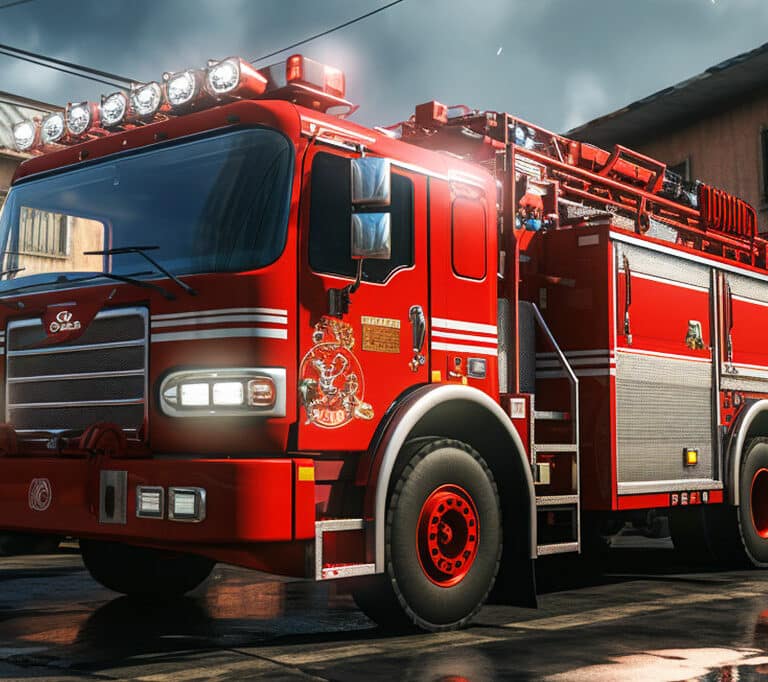
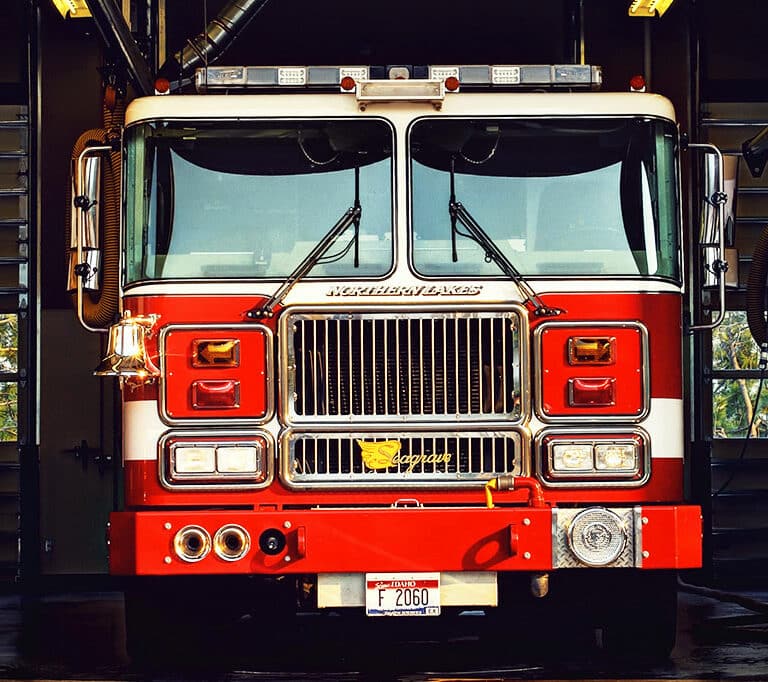
To answer the question of how much does a fire truck weigh, the simplest answer is that a standard fire engine, which is commonly used for responding to fires and emergencies, typically falls within the 20,000 to 40,000-pound range. 

These trucks are equipped with essential firefighting equipment which add to their overall weight.

On the other hand, larger aerial ladder trucks, often used for rescuing people from tall buildings and providing elevated water streams, can be significantly heavier. 

These trucks feature an extendable ladder, which requires additional structural support and hydraulic systems, contributing to their weight of up to 70,000 pounds.

A fire truck can weigh up to 70,000 pounds

The total weight of a fire truck includes various components. 

The chassis, which serves as the foundation of the vehicle, contributes a significant portion to the overall weight. 

The body of the fire truck, made of steel or aluminium, houses the equipment and water tanks. 

Additionally, the equipment carried on the truck, such as ladders, firefighting tools, and medical supplies, further adds to the weight. 

All these factors are carefully considered during the design and construction of fire trucks to ensure they are efficient, durable, and capable of responding effectively to emergencies.

How Much Does a Fire Truck Weigh When Full of Water?

Probably the second most asked question in relation to how much does a fire truck weigh, is how much does it weigh when full of water. 

When a fire truck is filled with water, its weight can increase significantly due to the large water tank it carries. 

On average, a fire engine can hold between 500 to 1,500 gallons (1,893 to 5,678 litres) of water. 

Since each gallon of water weighs around 8.3 pounds (3.8 kilograms), a full tank can add an extra 4,150 to 12,450 pounds (1,882 to 5,647 kilograms) to the vehicle’s weight. 

This added weight is a crucial consideration for firefighters and drivers, as it affects the truck’s handling and performance during emergency responses. 

Properly managing the water supply is essential to ensure the fire truck can manoeuvre effectively and safely while combating fires and providing vital support to emergency situations.

How Long is a Fire Truck?

The length of a fire truck varies based on its type and model. 

Standard fire engines typically measure around 25 to 35 feet (7.6 to 10.7 metres) in length. 

However, aerial ladder trucks, equipped with extendable ladders, can reach impressive lengths of 75 to 100 feet (22.9 to 30.5 metres). 

These longer fire trucks are often employed in high-rise firefighting and rescue operations, where their extended reach is essential for accessing upper floors and providing a safe evacuation route. 

The varying lengths of fire trucks allow firefighting teams to choose the most suitable vehicle for specific emergency scenarios, ensuring an effective response to fires and other critical incidents.

How Wide is a Fire Truck?

The typical width of a fire truck ranges from 8 to 10 feet (2.4 to 3 metres). 

This dimension is carefully designed to ensure that the vehicle can manoeuvre through narrow streets and tight spaces in urban areas without encountering difficulties or causing damage to buildings and obstacles. 

A fire truck can be up to 3 meters wide

The compact width enables fire crews to quickly reach emergency scenes and provide timely assistance, even in congested environments.

What Types of Fire Trucks Are There?

Fire trucks come in various types, each designed for specific firefighting tasks, depending on the cause and type of fire. The most common ones include:

Fire Engines 

Standard fire trucks equipped with water tanks, hoses, and firefighting equipment. They respond to most fire emergencies and carry a crew of firefighters. Recently, electric fire trucks have also been rolled out.

Aerial Ladder Trucks 

Also known as ladder trucks or hook-and-ladder trucks, these vehicles feature extendable ladders and platforms for rescue operations in tall buildings.

Rescue Trucks

Rescue trucks are equipped with specialised equipment for rescuing people from hazardous situations, such as vehicle accidents or collapsed buildings.

Wildland Fire Engines

Designed for fighting wildfires in rural and forested areas, these trucks have off-road capabilities and carry water to extinguish smaller fires.

Airport Crash Trucks

Specialised fire trucks used at airports to respond to aircraft emergencies, such as fires or crashes.

Foam Trucks

Equipped with foam-generating systems to fight fires involving flammable liquids.

Each type of fire safety vehicle is carefully designed to address specific fire scenarios, ensuring that firefighters have the right tools and resources to combat various emergencies effectively. 

The diversity of fire truck types enables firefighting teams to be prepared for a wide range of incidents, from standard structural fires to specialised hazardous material incidents. 

These versatile vehicles play a crucial role in ensuring the safety of communities and protecting lives and property during emergencies.

What Equipment is on a Fire Truck?

Fire trucks are equipped with a wide range of tools and equipment to handle various emergency situations. 

Some common equipment found on a fire truck includes hoses, nozzles, axes, saws, ladders, breathing apparatus such as oxygen masks, medical supplies, and thermal imaging cameras. 

The exact equipment may vary depending on the specific type and purpose of the fire truck. 

For example, ladder trucks will have extendable ladders and platforms for tall building rescues, while hazmat trucks will carry specialised gear for handling hazardous materials incidents. 

The availability of this diverse firefighting equipment ensures that firefighters have the necessary tools to effectively and safely respond to different emergencies they may encounter.

How Long is a Fire Truck Hose?

The length of a fire truck hose varies based on the truck’s size and intended use. 

Standard fire hoses used for firefighting operations are typically 50 feet (15 metres) long. 

Aerial ladder trucks may carry longer hoses, up to 100 feet (30 metres), to reach higher floors in tall buildings. 

The length of the hose is crucial in ensuring firefighters can effectively deliver water to the source of the fire, regardless of the building’s height or accessibility.

How Much Water Does a Fire Truck Hose Deliver?

The amount of water a fire truck hose can produce is determined by its diameter and water pressure. 

Most fire hoses have a diameter of 1.5 to 2.5 inches (3.8 to 6.4 centimetres) and can deliver water at pressures ranging from 50 to 150 pounds per square inch (psi). 

At an average flow rate of 100 psi, a fire hose can deliver around 50 to 125 gallons (189 to 473 litres) of water per minute. 

This water flow is critical for effectively extinguishing fires and controlling their spread, especially in larger and more intense fire incidents. 

Firefighters must skillfully operate the hoses to direct the water precisely and efficiently, making the most of their water supply to combat the flames and protect lives and property.

What Licence Do You Need to Drive a Fire Truck?

Driving a fire truck requires a specific commercial driver’s licence (CDL) with appropriate endorsements. 

Firefighters need a special licence to drive a fire truck

The exact licence requirements vary depending on the fire truck’s weight, size, and type. For instance, a firefighter operating a standard fire engine may need a different endorsement than one operating an aerial ladder truck. 

To obtain the necessary CDL and endorsements, firefighters must undergo specialised training to operate these vehicles safely and effectively. 

This training includes learning how to handle the larger dimensions of fire trucks, understanding the unique challenges of emergency driving, and practising manoeuvres such as backing up, turning, and navigating tight spaces. 

Firefighters also receive instruction on vehicle maintenance and safety protocols to ensure the proper functioning of the fire truck during emergencies.

Conclusion

Hopefully this article provided a clear and concise answer to how much does a fire truck weigh, and some of the most common questions to do with fire trucks.

Fire trucks are essential vehicles in emergency response and play a crucial role in safeguarding communities. 

Their size, weight, and equipment are carefully designed to handle various firefighting and rescue tasks effectively. 

The training and expertise of firefighters who operate these machines are vital in ensuring their efficient use during emergencies. 

From carrying large amounts of water to navigating through tight spaces, fire trucks are equipped to tackle a wide range of challenges. 

Understanding the capabilities of these vehicles helps us appreciate the dedication and skill of firefighters who work tirelessly to protect lives and property in times of crisis.

The Criticality of Fire Prevention in Shipping

Lessons from the North Sea Tragedy: Understanding fire risks in the era of electric vehicle transportation and essential strategies for prevention and suppression

A recent disaster involving a major fire onboard a cargo ship, the Fremantle Highway, off the coast of the Netherlands has underscored the risks and challenges associated with shipping.

The ship, loaded with around 3,000 cars, including 25 electric vehicles (EVs), was en route from the German port of Bremen to Port Said in Egypt when a fire broke out.

The incident led to one fatality and several injuries, highlighting the necessity of enhanced fire safety measures in maritime transportation.

The Perils of EV Transportation at Sea

Electric Vehicles (EVs), powered by lithium-ion batteries, have emerged as an innovative solution to curb greenhouse gas emissions.

However, while their adoption in terrestrial transportation has been substantial, their carriage in maritime transport introduces a set of unique fire safety challenges.

One of the most significant risks associated with EVs on ships is the propensity of lithium-ion batteries to ignite under certain conditions, a phenomenon known as ‘thermal runaway‘.

This typically occurs when a battery overheats, causing a reaction that further increases the temperature and can lead to the battery catching fire.

The likelihood of thermal runaway increases if batteries are damaged, defective, or improperly handled or stored.

What makes these fires particularly dangerous is that they are notoriously difficult to extinguish.

When a lithium-ion battery ignites, it can produce its own oxygen, meaning a fire can continue even in the absence of ambient oxygen.

This makes traditional fire suppression methods, like smothering, less effective.

Further complicating matters is the issue of ‘stranded energy’.

After an initial fire involving a lithium-ion battery is extinguished, the battery can reignite.

This can occur hours, or even days, after the original fire, which presents a unique hazard not typically encountered with traditional vehicle fires.

To add to the risk, a fire originating from a lithium-ion battery produces toxic gases such as hydrogen fluoride and phosphorus pentafluoride, posing both a health risk to those in the immediate vicinity and a potential environmental hazard.

Moreover, the high energy density of lithium-ion batteries can lead to fires that are far hotter than typical combustible material fires.

The intensity of such fires can make them difficult to control and suppress, while also increasing the risk of the fire spreading.

Finally, the sheer volume of EVs transported on some vessels can exacerbate these risks.

With larger numbers of EVs in close proximity, a fire that starts in one vehicle can quickly spread to others, leading to a much larger and more dangerous situation.

This makes early detection, isolation, and suppression of fires critical in scenarios involving the transportation of EVs at sea.

Best Practices for Fire Suppression and Prevention Onboard

Fire safety in shipping, particularly concerning EVs, requires proactive measures for prevention, early detection, and effective suppression.

Leading Survival Technology solutions provider Survitec emphasises the importance of early fire detection systems, specially designed to monitor lithium-ion battery conditions.

Indicators like heat, smoke, popping sounds, and toxic gas emissions from batteries can serve as early warnings.

Current safety innovations focus on monitoring car decks for these early-stage fire conditions.

Survitec is investing in developing new solutions capable of pre-ignition monitoring, highlighting the importance of the type and location of sensors for effective detection.

New solutions are also emerging in the field of fire suppression.

An integrated graphical monitoring system, currently under development, aims to provide real-time status of all the fire-protected zones onboard.

It aims to link all the detection systems and sensors onboard for remote or local activation of a compartment’s fire suppression system.

Fire Suppression Techniques and Challenges

While tackling a fire onboard, understanding the unique nature of EV battery fires is crucial.

Such fires generate explosive and toxic gases, increasing the fire’s intensity and size, and can potentially reignite until the battery is completely burnt down.

This presents a real challenge for traditional gas-based fire systems.

Water-based solutions provide the best cooling effect.

However, they also introduce the risk of impacting ship stability due to the volume of water needed.

Therefore, an effective drainage system is a must.

Research suggests that a water mist system is the most effective for this type of fire, and numerous research and development initiatives are looking into the best water spraying method for EV fires.

The Path Ahead: Prevention and Early Detection

“Prevention is certainly better than the cure,” says Rafal Kolodziejski from Survitec.

Early monitoring and detection are increasingly important safety factors for ship operators and crew.

With an EV cargo, the earlier the crew can detect pre-fire conditions, the better. For instance, ship operators are being urged to increase the space between each vehicle or reduce the number of units transported.

As the maritime industry continues to grapple with these challenges, the recent North Sea incident serves as a tragic reminder of the importance of fire prevention and early detection in shipping, especially in the era of EV transportation.

Striking the balance between the efficient transportation of goods and the safety of crew and cargo will be pivotal in the shipping industry’s future.