SkyBound Rescuer introduces automated drone service with Transport for West Midlands
Public safety drone company, SkyBound Rescuer, is testing a new fully automated drone service in partnership with Transport for West Midlands (TfWM).
The aim of the test is to identify and resolve transport issues more quickly across bus, train, road, and tram networks in the West Midlands.
SkyBound Rescuer has installed an automated drone station in Walsall to enhance the local public’s transport experience.
Why the collaboration between SkyBound Rescuer and TfWM matters
Currently, TfWM utilises over 2,500 fixed CCTV cameras across the West Midlands region to monitor the bus, train, road, and tram networks.
This extensive surveillance network operates in conjunction with the Regional Transport Coordination Centre to manage transport disruptions in the area.
TfWM also monitors town centre CCTV cameras on behalf of Walsall Borough Council, making them the perfect partner for SkyBound Rescuer to trial their automated drone service.
The addition of SkyBound’s drone technology will bolster TfWM’s existing estate of CCTV cameras.
It will not only enhance oversight but also improve response to live incidents, such as road traffic collisions, and mitigate issues like public transport delays.
The drone technology behind SkyBound Rescuer’s new service
SkyBound Rescuer has developed software called the SkyBound Coordinator that automatically creates data-driven drone mission plans.
This software has been integrated with automated drone station (ADS) technology, making the drone fully self-sufficient.
This combination allows for fully automated end-to-end flights, with humans monitoring the flight and imagery, resulting in a more cost-effective and responsive drone service.
During the trial, the drone flights are overseen by a qualified remote pilot and an onsite remote safety pilot.
SkyBound also created a 3D model of Walsall town centre and a database of transport points of interest (POIs) to ensure safe transit routes for the drones.
A promising start for the automated drone service in the West Midlands
The first week of the trial was successful. SkyBound’s automated drones responded almost three times faster to transport emergencies than the National Police Air Service.
In one incident, an altercation in the town centre was observed by TfWM’s CCTV operators.
SkyBound Rescuer was instructed to use the drone to monitor the situation, demonstrating the technology’s real-world applicability.
Gemma Alcock, Founder & CEO of SkyBound Rescuer, said: “We’ve conducted hundreds of test flights in preparation for this trial service to optimise performance and safety.
“We at SkyBound Rescuer focus solely on drone use cases that can improve society, so we’re excited to be using our technology to benefit the Walsall community.”
Kerry Blakeman, Head of Security and Policing of TfWM, said: “We’re delighted to be partnering with SkyBound Rescuer to explore the potential of automated drone technology which will revolutionise the CCTV industry.
“The team at SkyBound Rescuer have been meticulous in their planning of this trial to deliver a safe and effective trial to allow us to evaluate the benefits of the ADS.”
SkyBound Rescuer and TfWM are evaluating the outcome of the trial and looking forward to potential expansion across the West Midlands region.
The aspiration is also to create a national network of automated drones for rapid response to high-risk areas.
IFSJ Comment
The introduction of SkyBound Rescuer’s automated drone service with TfWM is a notable advancement in public safety and transport management.
By integrating drone technology with existing surveillance systems, there is significant potential to enhance response times, efficiency, and cost-effectiveness.
This trial exemplifies how innovation in drone technology can serve the greater public interest, making it a significant development to follow closely.
About SkyBound Rescuer and Transport for West Midlands
SkyBound Rescuer is a team of experienced emergency managers, aviators, and technologists that specialise in automating drones for public safety.
SkyBound aims to optimise drone performance through their data-driven approach to problem solving.
The company is led by female founder, Gemma Alcock, an award-winning innovator and thought-leader in the use of drones for public safety.
Transport for West Midlands currently have a dedicated CCTV control room with more than 2500 cameras covering the bus, train, road, and tram network.
The control room is independently assessed annually to ensure it is compliant with the Surveillance Commissioners Code of Practice to British Standard 7958. The control room’s annual renewal was granted in April 2023.
Federal Aviation Administration pushed for advancement of drone technology
Legislation from both the House and the Senate in the United States has put forward a call for the Federal Aviation Administration (FAA) to make plans to develop and broaden the usage of drones in tackling wildfires.
This plan will additionally involve opening up federal lands to serve as testing sites, according to Roll Coll.
The use of drones to better inform wildland firefighters
Drone advocates have expressed that these moves will provide wildland firefighters with enhanced information on conditions, thus reducing the need for personnel to be physically present in high-risk areas.
Rep. Dina Titus, D-Nev. stated: “I’ve heard from wildland firefighters and local governments first hand about the need to better coordinate all aerial aspects of wildfire detection, prevention and suppression.”
She added that the use of drones has shown promising results in firefighting, leading her to include language in the FAA legislation to facilitate safer and more effective drone operations.
Improving regulations for drone usage in wildfire efforts
The legislation from the House FAA, inspired by bills introduced by Titus and Transportation and Infrastructure Aviation Subcommittee Chair Garret Graves, aims to enable the use of commercial drones in “beyond visual line of sight operations,” or BVLOS.
This will involve the FAA collaborating with the Forest Service to identify public areas where drones can operate safely without the operator having visual contact.
The Senate bill follows a similar course, pushing the FAA to instigate rule-making for commercial BVLOS operations and also earmarking drone test ranges for priority research areas.
The future of drones in the fight against wildfires
There are further issues beyond the FAA reauthorisation bill that advocates hope Congress and agencies will address.
These include countering Chinese dominance in the drone industry and better coordination between agencies to manage the complexities of drones and wildfires.
The use of drones in wildfire management is already in practice at the state and local levels.
This technology is employed to capture thermal images of the landscape and in some cases, carry out prescribed burns in remote areas.
As technology evolves, the need to resolve certain regulatory challenges becomes more evident.
For instance, current rules requiring drone operators to maintain visual contact with their drones at all times can be restrictive, especially in vast, remote wildfire areas.
IFSJ Comment
This demonstrates how technological advancement in drone usage can provide pivotal support in tackling wildfires.
It highlights the ongoing commitment of lawmakers to leverage technology in mitigating the risk and impact of wildfires.
About the FAA
The Federal Aviation Administration is the governing body responsible for all civil aviation in the United States. Its duties range from air traffic control, certifying personnel and aircraft, and investigating accidents. The FAA is also responsible for installing and maintaining air navigation facilities. The agency has been involved in the development and implementation of drone technologies, regulations, and policies.
DRONRESPONDERS and DRONELIFE have announced the launch of The Public Safety Drone Review, a new monthly resource for the public safety community.
The free event will be held live on February 7, 2023 at 3pm EST: and on the first Tuesday afternoon of each month going forward. The Public Safety Drone Review is a FreeWebinar Series, sponsored by DRONELIFE.
Hosted by DRONELIFE Editor Miriam McNabb and veteran public safety officer Tim Martin, The Public Safety Drone Review will be a 1-hour conversation on the drones, technology, trends, and current news that impact public safety.
With occasional guest speakers, McNabb and Martin will address the newest developments in the use of unmanned systems – and address or research questions from the audience. After the live event, the webcast will be available on the DRONELIFE TV YouTube channel.
About the show
DRONERESPONDERS is a leading non-profit program with over 7000 members dedicated to uniting aerial first responders, emergency managers, and search and rescue specialists help learn, train, and test with one another with the ultimate objective of maximising drone operations for public safety. DRONERESPONDERS program is led by director Chief Charles Werner (ret.), and is an official 501(c)3 non-profit Drones for Good™ program of AIRT, Inc.
Miriam McNabb is the Editor of DRONELIFE.com, a global commercial drone news site established in 2013 to support and inform the industry. DRONELIFE is proud to support the public safety community as a sponsor and platform for The Public Safety Drone Review.
Timothy Martin is a recently retired Police Captain with 28 years of law enforcement experience, serving as the UAS Program Manager for the Huntington Beach Police Department for more than 5 years. Tim has extensive public safety UAS experience in patrol operations, crowd management, special events, 3D mapping, and indoor tactical flying.
The Los Angeles County Fire Department and the Federal Bureau of Investigation’s Los Angeles field office are working together in a first-of-its-kind drone deterrent program to target drones near wildfire emergencies and get them out of the sky.
During a wildfire, firefighters often attack a blaze from the sky using sending in fixed-wing aircraft and helicopters to drop water and fire retardant to impede a fire’s progress. If an unauthorised drone flies into an emergency response zone, the aerial assault comes to a standstill.
“The main reason they have to avert those drones is we have no idea what the intention is of the operator,” said Capt. David Laub of the Los Angeles County Fire Department, who told CNN that they have had cases of drones buzzing just over firefighters’ heads, posing myriad hazards to its personnel and aircraft.
Through the new partnership, the officials say offending drones are identified and located in about 30 seconds of taking to the air. “When the detection equipment finds the drone and identifies the operator’s location, we can very rapidly get that information to a ground intercept team who can then go make contact with that drone operator and essentially get them to stop flying that drone,” said James Peaco III, the weapons of mass destruction coordinator for the FBI’s Los Angeles field office.
Using a special sensor the team can set up a boundary as large or as small as desired and be alerted if a drone flies into that area, then obtaining precise details such as elevation, direction, speed as well as where the drone took off from and where the controller is currently standing.
“The first thing we do is order them to bring the drone back, explain to him that there’s a wildfire and flying that drone during a wildland fire is actually a federal felony,” Peaco said, adding that violators fall into three categories: clueless, careless and criminal.
“If it’s just clueless or careless, we’ll either issue a citation or even just warn them off and tell them not to do it,” he continued. “If they’ve done something very egregious and really interrupted operations or they refuse to comply, then we have federal felony charges that we can apply to the situation.”
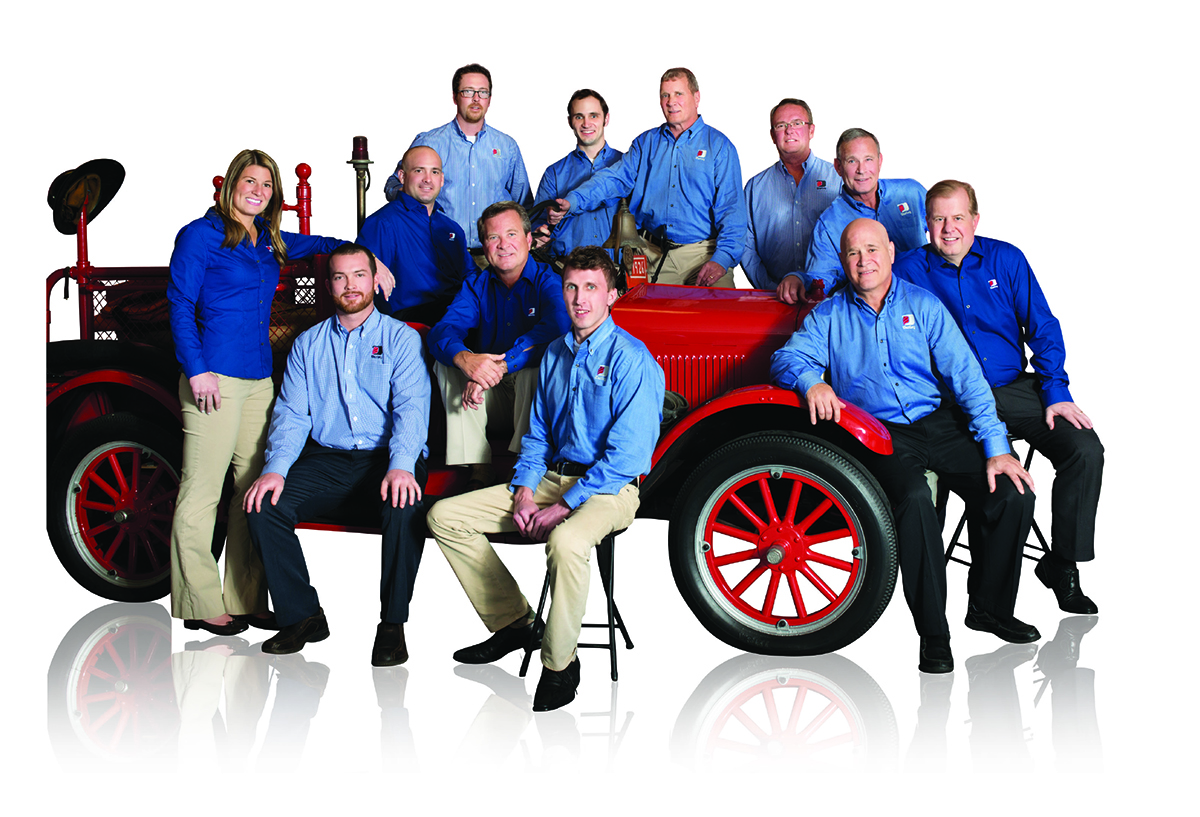
Entering the Darley stand at Intersec 2022, we are greeted by a wide smile, and a warm handshake. It’s Ryan Darley. It was his great grandfather who founded the company 114 years ago. Darley is there to greet the International Fire and Safety Journal team. We sit at a table, and engage in conversation about the grey Dubai skies, an anomaly for the Gulf state. Just then he is visited by another gentleman. “They are one of our customers from Saudi Arabia,” Ryan says to me after they leave. The Kingdom is one of the 100-odd countries Darley operates in.
Ryan has been heading the international sales unit for more than 11 years. Business is in his blood; Ryan has been connected to Darley since he was a young boy playing baseball in the parks. “My father would pick me up from a ball game and we would drive to the office where he continued work late into the night. I would mow the lawn, sweep the floors, or do other odd jobs around the factory,” he recalls.
Through his college years, Ryan spent his summer breaks assembling pumps and working in different parts of the business. “From assembly to crating, I spent a lot of time in the factory and understood what it took to make fire pumps.”
As a company policy, a Darley family member usually spends some time outside of the company, to gain valuable work experience in different working environments before they begin working at Darley. For Ryan, it was a three-year stint after finishing his education before he returned to the family business.
The roots
“My great grandfather was an inventor. He developed quite a few products which he sold to the fire and the oil and gas industry. He then went on to build fire trucks and fire pumps, 100 years later we are still owned and operated by the Darley family.”
The Darley family is in its fourth generation of business.
Now in its fourth generation, Ryan says the family has done a lot of due diligence and created a company culture that has kept them successful. The company is part of different family business groups, and works closely with a university in Chicago, Illinois that is dedicated to studying family-run businesses.
“We are involved in, and constantly looking into succession planning, equipping the next generation to take the business to the next level. If you are not growing, you are dying. We want to make sure we are ready (for changes in the market). It’s important to gauge whether the next generation can take over the business. It’s a constant process of looking inwards and aligning with best practices, and what can be done to improve.
Corporate governance and IPO
The company has been operating under an outside board of directors for over 25 years. “One member has been on the board for almost 20 years.”
As the company grew, Darley has incorporated different board structures within the company that have helped it scale – fire advisory board, military division board, and the latest is a cyber security unit. “These boards have industry experts from their fields. They advise us on best practices and future trends. The board helps us better serve different industries.”
I naturally had to ask Darley whether an IPO has crossed their minds.
From the outside looking in, it seems like a natural progression. Right? “No,” Darley says, as he smiles and explains the group’s rationale.
“We take pride in being family owned and operated. It (an IPO) doesn’t even come up. We have seen how things can dramatically change when family businesses go public. We like the family ownership model; it’s what we take forward as a philosophy. The Darley family is not just the bloodline; it’s our employees and our customers. We have no plans for an IPO, that’s for sure.”
Ryan Darley, International Sales Manager, Darley
Investment and market segment diversification
“We invest almost all our profits back into the company. If we have a good year, they have a good year, and so does our research and development division. We need to diversify, change, and be the leader or we will be the dinosaur that goes extinct,” he says.
Over the last 20 years, a major share of Darley’s business came from the fire market. Today fire accounts for 20% or less of its total business. “The military division has taken over as the largest in our company. In addition, we are experimenting with different technologies and trialing them in the market.
“Kyle Darley is currently working on an electrification project where our fire pumps will be driven with electric motors,” Darley notes. “Around 12 years ago, we introduced drones to the fire service industry and showcased it to the industry at our stand in a tradeshow. People laughed at us for having a helicopter in our stand. ‘There is no place for drones in the fire service,’ was the popular myth then. Today, every major fire service has a drone in their armory.”
Darley also introduced a water purification system to the fire service market which has been integrated into fire trucks. “The fire pump enables a fire truck to have an on-board water purification system. If there is a natural disaster, for example, and people are scarce of drinking water these trucks can plug the gap. Alternately, it is also capable of drawing groundwater, purify it, and supply it to the public,” he informs.
The innovations do not end there, Darley says. Ten years ago, the company offered decontamination units using reverse osmosis and ozone technology. “We were way ahead of our time… Today, there are different systems that have come up to clean fire trucks, gear, and cabins. Cancer within the fire industry has also gained widespread attention, everyone is looking at decontamination and proper hygiene methods. It used to be cool to have a dirty helmet and coat, but that’s simply not acceptable today.”
“Software and technology will dictate the future of the fire industry. We are not too far from running a fire truck via our smartphones that will be able to control pumps, aerial devices, and so forth. We are already looking at those technologies to stay ahead of the curve.”
Robotics and future technology
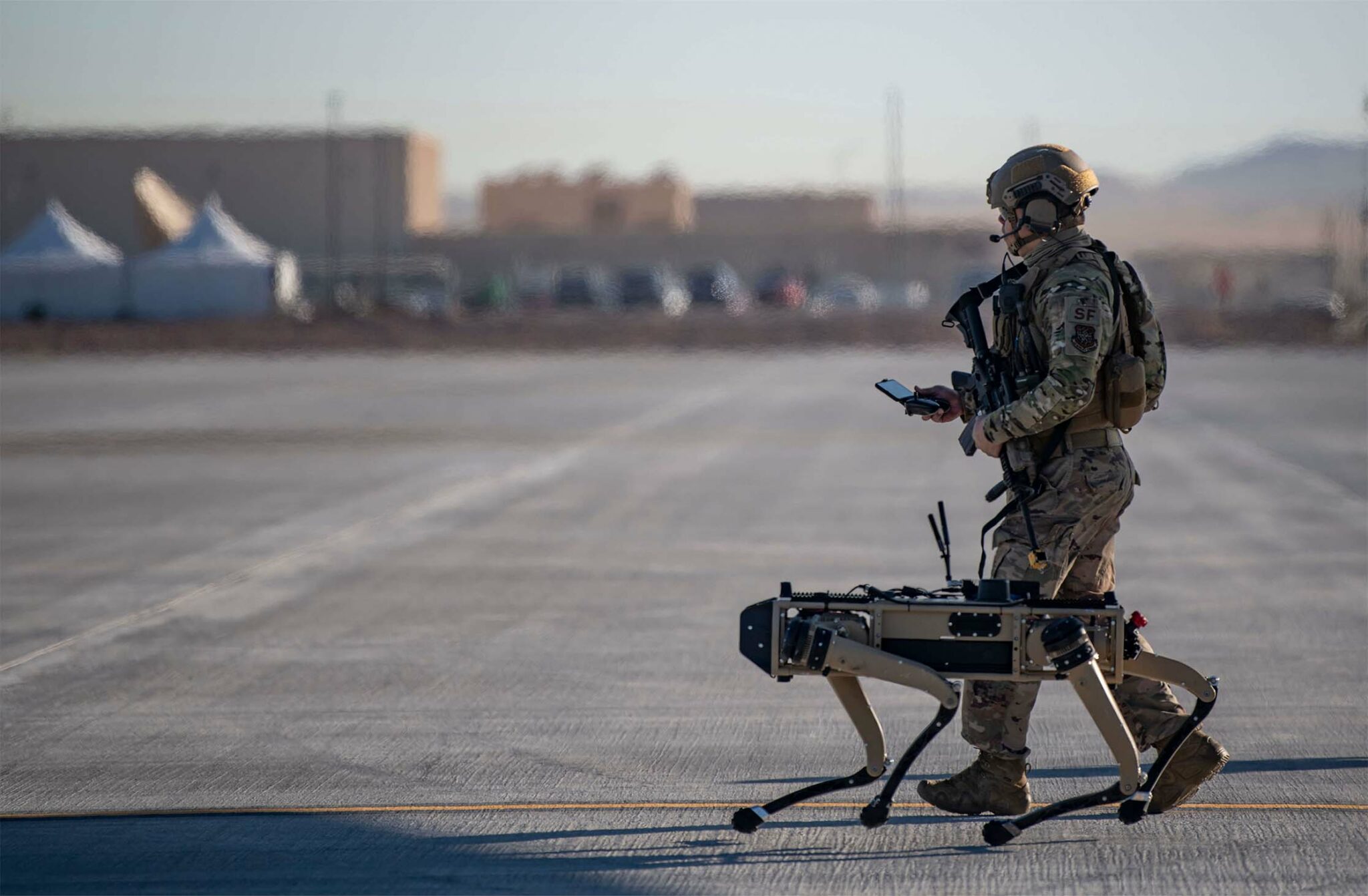
Darley started making its own drones a decade ago before it realized that the task was best left to specialized companies. “We decided to partner with drone specialists while adding fire technologies on its framework, like a thermal imagining camera that could help in search and rescue operations. The goal is to use their expertise, research, and development in drone technology, and kit it out with our products. There isn’t a purpose-built drone for the fire industry just yet,” he notes.
Darley is pioneering new technologies, and pushing boundaries of the norms within the fire and rescue service industry.
The company is also testing the waters with decontamination robots which will substitute fire fighters to go into hot zones to decontaminate other fire fighters. “It’s better to expose a mechanical robot to the carcinogens.”
All these developments are tied into Darley’s new division that will investigate future technologies. “This division is set to play a crucial role in the future of Darley… drones and UAVs are going to be part of everyday life.
“We are researching electric car fires as well. A typical gasoline vehicle that catches fire is easy to put out, however, it’s not the same with electric vehicles. We are currently researching whether the addition of a chemical to car battery packs can help put out the fire sooner. Our R&D team is also constantly researching with different materials and components across all our business divisions. We are working on driving efficiencies, increasing safety, and improving the lifecycle of our products.
Markets
In terms of markets and global presence the company is well stacked. Ryan says the United States accounts for 90% of its business “including the work we do with the US military”. Although it has been difficult to crack into foreign militaries, it remains a key focus for the future.
“40% of our fire business comes from export sales. Following the Second World War a market opportunity developed to service pumps that were left behind by the US military. Back then, we used to get contacted from France or Germany asking for parts and service support. That’s how it started”
Ryan Darley, International Sales Manager, Darley
Business took a slight dip during the pandemic, sales were down 20%, whereas profits fell below that, Ryan tells IFSJ poignantly. “2021 was a difficult year but we improvised and sold Covid-related equipment such as gloves, face masks, and trailers to the military.
“We will bounce back but we must remember that budgets were re-allocated to make room to fight the virus. Medical equipment was prioritized over fire, emergency response, military. We are on track to make up for last year’s dip. We had plenty of momentum going into the pandemic, and it seems to be returning. Prior to the pandemic, we kept registering record sales and profits every year.
Although an IPO is not on the cards Ryan says the company is constantly assessing the possibilities of mergers, acquisitions, and partnerships. The group currently manufactures 10% of its sales volumes, a number it wants to significantly improve.
“We look at four or five different companies every week, but there aren’t any immediate acquisition plans. We bought Fire Boy seven years ago but sold it last year because we weren’t adding as much value as we envisaged. The company grew under our ownership, and we found some suitable partners who we were comfortable selling it to. We knew the buyers, they were going to sustain the staff, which reassured us,” Darley says stating that the welfare and security of all its employees is of paramount importance, all 270 of them.
Looking ahead, the groundwork to keep the business successful for the next 100 years is being put in place today. “If the fire market goes away, we have the military market. Maybe a few decades down the line we will be known as a major player in robotics or drones. We are a forward-thinking family business, and we want to keep pushing the envelope of innovation just as our founder did over 100 years ago,” Ryan concludes.
The National Volunteer Fire Council (NVFC), the non-profit membership association representing the interests of the volunteer fire, EMS, and rescue services, has announced a partnership with DRONERESPONDERS – the world’s fastest growing program supporting public safety – to help coordinate, cooperate, and co-promote efforts to enhance the use of drones in the pursuit of public safety.
Drone Operations
The memorandum of understanding outlines the key initiatives under which the NVFC and DRONERESPONDERS will collaborate together to assist America’s volunteer fire, EMS, and rescue services in adopting and perfecting the use of unmanned aircraft systems (UAS) to help save lives.
“Our members are increasingly interested in learning more about how they can use drones to enhance their ability to serve the public,” said Steve Hirsch, chair of the NVFC. “At the same time, we are also hearing concerns from members about privately operated drones interfering with their operations. Our partnership with DRONERESPONDERS will focus on both of these issues, providing information to the volunteer emergency services about drone operations, and educating public safety and the public in general about the benefits and challenges associated with drone use at emergency scenes.”
Aerial First Responders
The partnership works towards the common goal of enhancing public safety and furthering the capabilities of emergency responders. DRONERESPONDERS was created to unite aerial first responders, emergency managers, and search and rescue specialists to maximize drone operations for public safety. With volunteers comprising 65 percent of the nation’s fire service, it is important to educate this segment of the emergency responder community on this growing technology. It could also benefit departments struggling to meet staffing needs by helping them be more effective and efficient in their operations.
“Volunteer firefighters are the backbone of our nation’s fire service, providing life-safety services across most smaller towns and rural communities in the U.S.,” said Charles Werner, director of DRONERESPONDERS and retired fire chief from Charlottesville, VA. “Drones represent an amazing new capability to help these departments conduct a wide-array of operations, ranging from search and rescue missions to structure fires to HAZMAT incidents.”
Drones For Good
Werner says DRONERESPONDERS and the NVFC will work together to provide resources to help volunteer fire departments adopt and implement Drones For Good™, a program designed to utilise unmanned aviation capabilities in disaster response.