It’s a busy time of year for emergency services around the world, and Hampshire Fire and Rescue Service have given their best Halloween safety tips this year.
This Halloween you may be celebrating in a different way but it’s still important to stay safe. Follow our simple Halloween safety tips to keep your little pumpkins safe.
Follow social distancing guidelines and remember, ‘hands, face, space’.
Keep all fancy dress costumes away from naked flames
Use LED candles in pumpkins – they don’t blow out and they are much safer
Check the labels on any fancy dress outfits you buy for fire resistance and a registered trademark
Remember, cheaper products are more likely to be counterfeit and could burn quickly if they caught fire
Burns and scalds last a lifetime. Remember if clothing does catch fire, stop, drop and roll until the fire is out
In an emergency cool any burns with large amounts of water and get urgent medical assistance
Follow social distancing guidelines and remember, ‘hands, face, space’.
Keep all fancy dress costumes away from naked flames
Use LED candles in pumpkins – they don’t blow out and they are much safer
Check the labels on any fancy dress outfits you buy for fire resistance and a registered trademark
Remember, cheaper products are more likely to be counterfeit and could burn quickly if they caught fire
Burns and scalds last a lifetime. Remember if clothing does catch fire, stop, drop and roll until the fire is out
In an emergency cool any burns with large amounts of water and get urgent medical assistance
Credit: Hampshire Fire and Rescue ServiceCredit: Hampshire Fire and Rescue Service
Alternatives to trick or treating
This Halloween may be different but it doesn’t mean you can’t still have some family fun. Here are just a few ideas:
Prime Minister Boris Johnson has revealed in parliament that a reassessment of the external wall fire review (EWS1) form was being undertaken by the Royal Institution of Chartered Surveyors (RICS).
Earlier this year, the housing, communities and local government committee (HCLGC) branded the EWS1 form ‘slow and expensive’, and asked for the government to step in, as not only was the process ‘not working’, but it should create a ‘faster and fairer’ system, because the ‘industry-designed’ form was ‘slow and expensive’ and ‘applied to an unnecessarily wide range of buildings’.
The form, introduced last December, came from collaborations between UK Finance, the Building Societies Association (BSA) and RICS, to ‘create a standardised process that would make it easier for brokers and homeowners to find suitable mortgages’. A valuer could request it from a building owner or representative, and require a building professional ‘confirm that the actual material on the walls posed a limited risk or was non-combustible’.
Should it contain materials that ‘posed a significant fire risk’, a ‘detailed description of what was needed to fix it had to be issued’, but lenders began rejecting mortgage applications. This was because of ‘outstanding cladding inspections trapping borrowers with their current providers’, and so applications were being cancelled due to inspection requests being delayed.
As a result of fire safety advice from the Ministry of Housing, Communities and Local Government (MHCLG), ‘a much larger number of buildings’ fell into scope ‘than had been envisaged’, and the process ‘lacked sufficient input from leaseholder representatives, but also other important stakeholders, including the insurance industry’.
RICS urged the government ‘to take greater ownership of the situation’, and more recently, Minister for Fire and Building Safety Lord Greenhalgh held talks with RICS to ‘attempt to resolve confusion’, before Housing Minister Christopher Pincher stated mortgage lenders are reviewing how the forms are used, though some residents have been told by housing associations that they ‘cannot produce’ the form for possibly ‘several years’.
In late August, Which? revealed that leaseholders are ‘being duped into paying thousands’ to fraudsters using fake EWS1 forms, with the government notified, and the growing crisis has now seen mortgage brokers report ‘delays and scuppered plans’ for their clients. Most recently, a survey of leaseholders found that ‘nearly nine in 10’ or 89% who have received EWS1 checks have been told their buildings require remediation work.
Mortgage Solutions has now reported however on Mr Johnson’s comments, confirmed by RICS, that a ‘reassessment’ of the form and valuation of buildings ‘suspected of having unsafe cladding’ is ‘underway’, with RICS having a ‘risk matrix’ being worked on to support building valuations under 18m. Mr Johnson revealed this in response to Hendon MP Matthew Offord’s question over unsafe cladding guidance being extended to buildings under 18m.
Mr Offord had asked whether, having found out that MHCLG had given advice stating that this had been extended, this meant there would be ‘any specific advice for shorter buildings’. In response, the Prime Minister said that buildings over 18m were being ‘prioritised’, but that ‘I understand’ that RICS is ‘producing a risk matrix to support mortgage valuation under 18 metres, and that, led by the National Fire Chiefs Council, a risk prioritisation tool for blocks of flats will be available shortly’.
In addition, a RICS spokesperson confirmed this, stating: ‘We are working on a review of EWS1 and guidance generally with a range of industry stakeholders. Any changes made as a result of that review will still have to follow the most up to date government advice.’
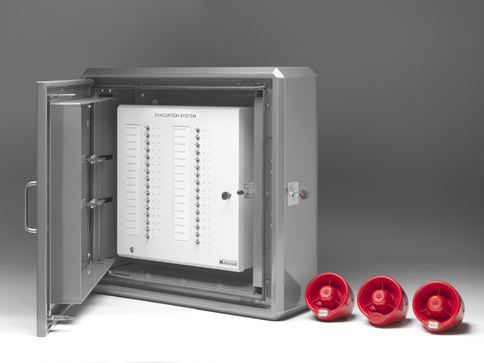
Fire and life safety systems manufacturer, Advanced, has announced the decision to appoint a dedicated business development manager responsible for the launch and growth of EvacGo, Advanced’s new BS 8629-compliant evacuation alert system.
Ken Bullock, who joined Advanced as Regional Sales Manager for South East England four years ago, brings over 35 years of fire industry experience to his new role as Business Development Manager – Evacuation Alert Systems.
Ken has been instrumental in the development of the EvacGo solution and ensuring that it will make life easy for anyone who needs to meet the BS 8629 Code of Practice recommendation applicable to buildings over 18m containing flats.
Ken Bullock, Business Development Manager – Emergency Evacuation Systems, said: “I’ve been heavily involved in developing our evacuation alert system and am passionate about the ability of this product to help improve fire safety for residents in high-rise buildings. It therefore seemed natural for me to focus on educating the market about the importance of following BS 8629 recommendations and to raise awareness of our evacuation alert solution EvacGo.
In developing our system, we’ve worked with leading fire industry experts to ensure it delivers maximum performance, quality and ease of use. I now look forward to developing these relationships still further as we all strive to build a safer future.
The EvacGo panel is built using Advanced’s industry-leading MxPro 5 fire panel components, providing the added assurance for installers and building owners that their sites will be protected with robust and proven technology that’s been rigorously tested to EN 54 parts 2 and 4 as recommended in BS 8629.
To ensure every aspect of the BS 8629 Code of Practice was followed, the panel is housed in a tamper-proof STS 205 class BR2 security-rated enclosure made by leading manufacturer Gerda with a patented BS EN 1303-compliant lock and key mechanism for exclusive access by the fire and rescue service.
BS 8629:2019 is the new Code of Practice for the design, installation, commissioning and maintenance of evacuation alert systems for use by fire and rescue services in England. In place since November 2019, this code of practice recommends the installation of a dedicated evacuation alert system intended for the sole use of the fire and rescue services and separate from the building’s fire alarm system.
It is relevant to blocks of flats with a storey located at a height of more than 18 metres above ground level. Although not yet a legal requirement in England, evacuation alert control and indicating equipment (EACIE) installation is already mandatory in new buildings containing flat over 18 metres in Scotland and considered best practice by a number of fire and rescue services.
Gary Craig, Sales Director at Advanced, added: “Over recent months, Ken’s work on EvacGo has focused on ensuring it is easy for building owners and installers to meet the recommendations of the BS 8629 Code of Practice, whilst ensuring optimum safety for the residents of high-rise buildings and ease of use for the fire service. Ken’s expertise will help ensure the process of specifying, designing and sourcing a BS 8629 system is simple, straightforward and stress-free.
“Ken’s appointment adds a vastly experienced voice to this project and the future direction of our evacuation alert systems business. His expertise and track record in driving growth and expansion within the UK market will be immensely valuable as we experience rising demand for this new product.”
Account customers currently looked after by Ken will continue to receive excellent support as they transfer to Business Development Manager, Amanda Hope.
Advanced, owned by FTSE 100 company Halma PLC, protects a wide range of prestigious and high-profile sites across the globe – from London’s Shard and 22 Bishopsgate to Abu Dhabi International Airport and Istanbul’s Hagia Sophia.
Halma is a global group of life-saving technology companies with a clear purpose to grow a safer, cleaner, healthier future for everyone, every day
London Fire Brigade has joined forces with a national regulator to reduce the risk to the public from dangerous products which can cause fires, and make consumers safer.
The Brigade and the Office for Product Safety and Standards (OPSS) has strengthened its existing work together by signing a Memorandum of Understanding (MoU) to formalise the process of sharing information.
The Brigade’s Assistant Commissioner for Fire Safety Paul Jennings and OPSS Chief Executive Graham Russell signed the MoU on Friday (October 9).
The OPSS was formed in 2018 and was welcomed by the Brigade following its years of campaign work for changes to make consumers safer. The Brigade has worked closely with the regulator for consumer products since its inception, including on pushing for a public database of potentially deadly faulty white goods and on its safety review of Whirlpool tumble dryers.
The MoU will allow the Brigade access to a specific area of the database, which Trading Standards and the Health and Safety Executive use, to enable the sharing of intelligence about product safety risk between key stakeholders.
It has also put in place a formal process for the Brigade’s current practice of notifying the OPSS of fires which could be an indication of a product safety issue – such as fires involving white goods – and allows the two organisations to work together on what changes are needed as a result.
The Brigade is also looking to work with the OPSS to explore other issues relating to product safety.
Assistant Commissioner Jennings said: “We work very hard to keep people safe and this MoU is a hugely positive step forward in our Total Recalls campaign, which has been calling on the Government to do more to make white goods safer.
Consumers need more awareness
“The OPSS’s remit for product safety also includes smaller electrical goods such as hair straighteners, toasters and chargers, which will support both our prevention work providing home fire safety advice to residents but also our Fire Investigation work in investigating the causes of fires and recording trends or faulty products.
“Through better information and intelligence sharing as well as improved analysis of threat and risk, we can work more effectively together to improve standards and raise awareness amongst consumers about product safety.
“There is still lots of work to be done on product safety but this closer relationship with the OPSS will help us work together to reduce the risk to the public from dangerous products which can cause fires, particularly white goods.”
Mr Russell said: “The Office for Product Safety and Standards and London Fire Brigade share a common objective in protecting public safety so it makes sense for us to work in partnership in achieving that goal.
“This Memorandum of Understanding underlines the partnership working that has already started and makes a firm commitment to continue and increase that support to enable focused enforcement and improve product safety.
“Together we can drive improvements in product safety and save lives.”
Leading life-safety systems manufacturer, C-TEC, has created a new Evacuation Alert Systems video.
Aimed at anyone involved in residential fire safety, the animated video shows exactly how Evacuation Systems can be used to assist the Fire and Rescue Services evacuate all or part of a high-rise residential building in an emergency situation.
Engaging, educational and fast-moving, the video highlights how devices in individual flats can be programmed to evacuate residents on a zone by zone basis in an emergency should stay put/defend in place fail.
Evacuation alert systems meet BS 8629 requirements
Said Andy Green, C-TEC’s Marketing Manager: “New recommendations in the Grenfell Tower Enquiry Report and the new BS 8629 code of practice for evacuation alert systems for use by fire and rescue services in buildings containing flats means the demand for evacuation alert systems is rising.
“Our new 2-minute video provides an excellent overview of why, where and how they are used and is timed to coincide with the launch of EVAC-ALERT, a new evacuation alert system specifically designed by C-TEC to meet the requirements of BS 8629.”
THE FIRE Protection Association (FPA) and the Association of British Insurers (ABI) ‘broadly welcome the proposals’ – in their response to the consultation on the Regulatory Reform (Fire Safety) Order 2005 [FSO] – but believe there are ‘areas’ where the government ‘should go further’.
In June 2019, the Home Office launched a call for evidence relating to the FSO alongside a government consultation ‘seeking views’ on the FSO, which ‘underpins fire safety in non-domestic premises’, with both employers and business owners being asked for their perspectives. The call for evidence had come as part of the changes being made since Dame Judith Hackitt’s review of building regulations and fire safety was published in May 2018.
An analysis of responses was to be published and ‘inform the government’s next steps’, and the call for evidence ‘complement[ed]’ the Building a Safer Future consultation, which ‘outlines how the government proposes to take forward meaningful legislative reform in the building safety regulatory system’.
FPA believe Government should go further
In March this year, as part of its announcement on the Fire Safety Bill, the government published a summary of the responses received in the call for evidence, whereby it ‘invited views on the application of the FSO and sought to identify any changes that might be needed and how they could be best achieved’.
Some respondents identified areas where the FSO ‘could be amended to provide greater clarity’, though most agreed its ‘scope and objectives […] remain appropriate for all regulated premises’. Additionally, most also agreed that the FSO should ‘retain its focus on protecting lives over property’, and that it ‘should continue to provide a framework for a risk-based and proportionate approach to regulating fire safety’.
The government concluded by noting that a consultation ‘will be held later in the year on proposals and next steps’, which was launched in July ‘seeking views on proposals to strengthen’ the FSO and the regulatory framework ‘for how building control bodies consult with fire and rescue authorities’, as well as on how to ‘implement Grenfell Tower Inquiry recommendations’.
This was open until 12 October 2020, with the government ‘determined to continue to learn the lessons from the Grenfell Tower fire’ as well as ‘reform building and fire safety to ensure that such a tragedy can never happen again’. The consultation’s proposals include strengthening the FSO to ‘improve compliance’ and implementing the inquiry’s first phase recommendations requiring a law change and ‘new requirements’ on building owners and manager of multi occupant residential buildings.
Grenfell Tower commemorations
Finally, the consultation proposes that the government ‘strengthen the regulatory framework for how building control bodies consult with fire and rescue authorities and the handover of fire safety information’.
Both organisations noted that while they ‘broadly welcome’ the proposals put forward by the government, ‘which should help to improve fire safety’, there are ‘areas where we believe the government should go further in order to effectively address fire safety issues in the current buildings regulations regime’.
The FPA and ABI noted that it is their belief that ‘the definition of high-risk buildings should go further and include a wider range of buildings’, specifically those 11m or taller and those with vulnerable occupants, such as care homes and schools. The two also ‘strongly believe’ that ‘considerations of risk should not be driven solely by a specific trigger height’, but should ‘reflect the risk and vulnerability of the building and those within it’.
Concerning proposals made about building maintenance, both organisations said that ‘we would like to see the use of independent third-party certification as an indicator of competence and quality for the companies and individuals involved in the maintenance of fire protection equipment and systems’.
On false fire alarms, the FPA and ABI said that evidence ‘demonstrates that the installation of high integrity fire alarms would be a more effective measure to reduce the level of false alarms, as opposed to charging responsible persons or duty holders’. Such alarms mean most fire and rescue services (FRSs) ‘do not require other verifiable information of a fire to respond’, and their use ‘could significantly reduce’ the number of false alarms attended.
This in turn would enable FRSs to ‘focus their resources to actual fires and reduce the damage that occurs’. Finally, the two organisations disagreed that installing sprinklers in buildings ‘should continue to be guided by fire risk assessment’, and ‘are calling for mandatory sprinkler installation in newly built, high risk buildings such as warehouses, care homes and schools, no matter what the height of the building’.
Kings Secure Technologies (KST) today announced that it has signed a definitive agreement to acquire Luton-based supplier of fire safety systems, smoke ventilation and security technology solutions, Silver (UK) Ltd T/A Silver Group.
Bob Forsyth, Chief Executive Officer of Kings Secure Technologies stated: “KST has been a leader in the Fire & Security sector for over 50 years – our proposed acquisition of Silver Group will further expand this position.
“This combination has tremendous benefits for both companies, our customers, and the industry. Our exciting plans for the future will give us the capacity to compete in the innovative world of Fire & Security solutions at pace and scale.”
Silver Group will remain headquartered in Luton, Bedfordshire with Mario Vaianella as Business Lead. Commenting on the acquisition Mario said: “We look forward to building even better services in the future for our customers, with the backing of Kings’ resources and reach.
“Moving forward, we expect to combine our core strengths with Kings’ deep industry expertise in verticals like financial services, utilities, public sector and datacentres. I would like to take this opportunity to thank Sergio De Michele for the fantastic business that he has built over the last 15 years and to wish him every success for the future.”
KST was advised on the acquisition by Squire Patton Boggs’ Leeds Office, led by Senior Associate Louise Parker and Partner Paul Mann.
AMA Research has released a report this morning that has forecasted a dip in the Passive Fire Market this year.
During 2020, the Passive Fire market is expected to suffer a major downturn due to Covid-19 and the accompanying adverse effects upon construction activity, economic outlook and business confidence. For these reasons, the market is forecast to dip by 9% over the course of the year.
Prior to 2020, the market experienced a period of consistent growth, increasing in value terms by 11% between 2015 and 2019. Much of this can be attributed to a positive performance in various sectors of the non-residential construction industry, such as commercial offices, infrastructure and leisure/entertainment.
The market is expected to remain heavily dependent upon trends in construction output, especially for non-residential applications. The present Government’s intention to invest in infrastructure projects via its Getting Building Fund should provide some market impetus in the short term.
In the residential sector, new regulations are being introduced aimed at rectifying problems identified in ‘The Hackitt Report’ which followed the Grenfell Tower disaster. The Fire Safety Bill of March 2020 covers fire safety in residential dwellings and has created new areas of responsibility and accountability. More stringent regulations are also expected to affect the wider industry, as the pressure continues to grow upon manufacturers and specifiers alike to provide safer and more fire-resistant environments.
Some positives for Passive Fire Market
Michelle Turner, Market Research Analyst at AMA Research, comments “positive performance in key end use sectors pre-2020 helped bring a spurt of growth to the Passive Fire Market. These same end use sectors are now experiencing detrimental effects as a result of COVID-19 and investment has tightened. Supported by the very need of the products found within this market, and driven by further calls for tighter legislation and stricter accountabilities as a result of the Hackitt Review, the Passive Fire Market looks set to remain relatively strong as fire safety remains paramount, helping to keep the boat steady in such adverse conditions.”
Overall, the longer-term scenario for the passive fire protection market remains mixed. Much of this will depend on how well the UK emerges from the various political and economic challenges posed by Covid-19, as well as what form Brexit will eventually take. Growth is projected to return to the market after the downturn experienced in 2020. Between 2021 and 2025, market value is forecast to rise by more than 11%.
For more information, visit the AMA Research website: https://www.amaresearch.co.uk/report/passive-fire-2020/
Fraport Aviation Academy has announced a new partnership with STHAMER, one of the leading researchers, developers and producers of foam fire extinguishing compounds, as it prepares for stricter European legislative requirements, develops safer aviation foam training, and tries to decrease the overall impact of fire intervention on the environment and health of firefighters.
Growing environmental awareness and the related requirements are becoming increasingly challenging for the field of firefighting, but they also promote the development of environmentally sound technologies and products.
This particularly affects firefighting with foam agents; there is a push to replace the currently most-used foam agent worldwide, AFFF (Aqueous Film Forming Foam), with Fluorine-Free Foam, which has been developed to avoid issues with recent European regulations on fluorine-containing chemicals.
AFFF is known for its high performance, which is based on fluoro-organic compounds such as fluorosurfactants and fluoropolymers. As these chemicals make foam bubbles fuel repellent, AFFF has proven to be very efficient at extinguishing chemical and petrochemical fires.
However, apart from its lack of biodegradability, it poses hazards to health and the environment, and so its use is going to become more and more limited by both legal restrictions and the fear of liability issues following AFFF-use.
Fluorine-Free Foam agents have been known for a long time, and under the pressure on AFFF have improved significantly and are now able to yield a fire performance similar to AFFF if properly applied.
Fraport Aviation Academy and STHAMER have wealth of experience
Fraport Aviation Academy provides training for airport firefighters based on several European, non-European and national standards and regulations, which all require safe and realistic training with all the available extinguishing agents.
“Although our training field is well-equipped for training with AFFF, we have decided to use Fluorine-Free Foam as the safer alternative. It not only preserves the environment and the health of the training participants, but prepares them for the future,”said Thomas Uihlein, Director of Aviation Academy.
The new generation of foams require the development of new extinguishing/application methods and tactics to maximise their extinguishing capabilities, which can only be carried out through testing. The partners will work together to develop these tactics, increase awareness of raising environmental demands, and create better understanding of the new generation of Fluorine-Free Foams.
Fraport Aviation Academy and STHAMER both have a long tradition and huge experience in their respective fields. Outstanding theoretical knowledge and practical experience set the foundation for the development of new products, procedures and guidelines. The partners are committed to increasing firefighters’ knowledge of Fluorine-Free Foam and helping them understand how to best apply this new foam type in order to maximize results.
The companies already began to pursue this goal last week, when they prepared the first lecture and presentation for representatives of the Slovene firefighting community. At the same time, they have also begun to develop new training courses for aviation firefighters in order to fill the identified knowledge gap and equip firefighters with better skills for the future.
As Pelican’s new CIO, Lance Ralls is responsible for all information systems and functions within the company, as well as ongoing maintenance and future technological direction. The role includes developing and executing information technology strategic plans, policies, programs, and schedules for the Pelican business.
As part of the executive leadership team, Lance will head finance data processing, computer services, network communications, and management information services to accomplish Pelican’s corporate goals and objectives.
“Lance is a multi-dimensional, technical leader well suited to steer Pelican’s global IT strategy,” stated Chief Financial Officer, George Platisa. “We look forward to him driving innovation and revenue-generating programs within our organization that will continue to support a high level of customer service”.
Prior to joining, Ralls has held CIO and senior leadership positions at fast-growing startups, small businesses and large fortune 500 companies such as DirecTV, Mattel, Fuhu, Rent-a-Wheel, and most recently, Belkin International.
Ralls holds a Bachelor of Science degree in Mechanical Engineering from UCLA and has served as an Executive Board Member for several organizations such as Innovate@UCLA and the Southern California Society of Information Management. Lance Ralls was selected as a finalist for CIO of the Year by the Los Angeles Business Journal in 2019.