How radio controlled fire doors can help you comply with 2020 fire safety laws

Currently progressing its way through Parliament, the Fire Safety Bill 2020 proposes fundamental changes to the Regulatory Reform (Fire Safety) Order 2005.
 

The changes will action the recommendations identified by the Grenfell Tower public inquiry and the Dame Judith Hackett review which found current building and fire safety regulations needed a “major reform” in order to prioritise and protect resident’s safety. In conjunction with the Building Safety Bill, which overhauls legislation around building construction methods and materials, the Fire Safety Reform represents a landmark change to current fire safety legislation.

Lord Greenhalgh, Building Safety and Fire Minister, said: “These are the biggest changes to building safety legislation for nearly 40 years, and they will raise standards across the industry and ensure building owners have nowhere to hide if they break the rules”.

The reform will provide clearer accountability to those responsible for high rise buildings, increase sanctions to deter non-compliance and amplify the voices of residents raising concerns.

Read the Draft Building Safety Bill: www.gov.uk/government/publications/draft-building-safety-bill

What does the Fire Safety Bill 2020 mean for fire door safety?
The bill will impact any managed residential blocks in England, Wales and Northern Ireland where the main use of the building is sleeping, such as; blocks of flats, student accommodation, hotels and hostels

Labour will try to amend the government’s fire safety bill this week as over 80% of Grenfell-style flammable cladding has not been removed.
Fire safety bill will aim to make tower blocks more compliant


Buildings will be required to identify an ‘accountable person’ in each premises who will be responsible for the implementation of fire safety measures. These measures are likely to include carrying out risk assessments, ensuring fire-fighting and fire-detection equipment is supplied and establishing fire safety drills and emergency routes. In additional to this, the ‘accountable person’ will also be responsible for carrying out and keeping record of regular inspections of flat entrance fire doors, as well any doors adjacent to common areas or escape routes from multi-occupied residential buildings.

Previously the responsibility of non-communal fire doors was not a legal obligation of building owners or managers, who were able to satisfy legal requirements by asking residents to carry out their own inspection and reporting back any problems. The lack of clarity around responsibility for flat entrance fire doors often resulted in essential maintenance and repairs not being carried out.

Why are fire doors important?
Fire doors are an essential measure in preventing the spread of flames, smoke and toxic fumes should a fire occur. A fire door allows the fire to be compartmentalised, delaying the time it takes to spread from one area to another.

A standard fire door should meet the FD30s standard, which provides up to 30 minutes of protection and should be fitted with a self-closing device. This not only protects the other areas within the building or block, but provides essential time for evacuation.

How can a radio controlled fire door system help?
Building regulations dictate that fire doors must be fitted with a BS EN 1154: 1997 standard self-closing device in order to ensure fire doors ‘swing-shut’ after use. These devices can make heavy fire doors cumbersome, presenting significant obstacles to the young, elderly or disabled.

In residential settings, such as student accommodation or care homes where isolation, access or ventilation can be a problem, residents often risk fire door integrity by using wedges to prop open bedroom and flat entrance doors. Wedging open of a fire door prevents it from functioning effectively; risking lives, prosecutions, significant fines and voided insurance policies.

A BS EN1155 standard hold-open, free-swing door closer removes many of the risks associated with standard self-closing devices ensuring that heavy fire doors feel lightweight, easy to move and can be held open at any angle whilst closing in the event of a fire.

The BS 7273-4:2015 code of practice specifically relates to the operation of fire protection measures and the actuation of release mechanisms for doors. There are three actuation types for door devices in different settings; critical, standard and indirect.

Critical actuation (Category A) is the highest level of protection available, ensuring that self-closing devices are fail-safe to any potential fault and can actuate within two minutes of power failure.

Category A devices are required when holding open any fire door which forms part of the stair enclosure in a residential building. From November 2020, flat entrance fire doors will also be required to use Category A devices.


Which radio-controlled systems comply with Category A of BS7273-4?
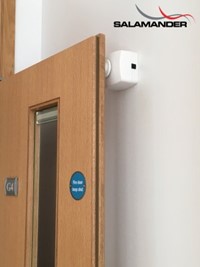
Salamander offers the only wire-free system of radio controlled fire door holders and closers which complies with Category A of BS7273-4.

Each Salamander device connects wirelessly to a mains-powered controller unit, which is connected to the building’s existing fire alarm system. One controller unit can manage up to 99 fire door closers or fire door holders.

All products in the Salamander range are battery-powered, wire-free and offer two-way communication between controller and device, allowing the ‘accountable person’ to easily manage and oversee any faults within the building.

The Salamander door closer is suitable for most fire doors, holding them open at any desired position, while the Salamander door holder is designed for doors where standard closers are already in place.
Picture2

The system uses innovative, wire-free, magnetic technology to safely hold open fire doors and release them upon activation of the fire alarm.

Currently, there is nothing to protect leaseholders and building owners from the cost of bringing existing buildings up to standard when the Fire Safety Bill 2020 is passed.

As the wireless Salamander system can be retrofitted to existing buildings, it offers the same benefits as a hard-wired system whilst saving time, installation costs and disruption to a building’s fabric or occupants.

Comelit announce EN54 – 13 approvals

Comelit’s dedicated fire division has achieved the stringent EN54 – 13 standards for its Analogue Addressable Fire Detection System.

The Italian security specialist, known for its high specification solutions, presents a range of specialist fire solutions, including conventional systems that are particularly suited to fire detection in smaller facilities and buildings with simple layouts. 

Comelit’s Atena addressable panels can identify the precise location of a fire and are suitable for applications of all types.

Says Mandy Bowden, Comelit’s Fire Business Development Manager: “Those operating in the fire sector, will not only be familiar with the requirement for fire protection products, but also the need to provide evidence that a complete system will function as intended under all expected operating conditions.

“EN54-13 is a rigorous system test procedure that goes beyond any individual standard.  Complying demonstrates how our products really go over and above the requirements needed to satisfy the CPD / CPR, operating as a full fire detection and alarm system and not just as a sum of components. 

Great accomplishment for Comelit

“It’s a great accomplishment for Comelit, proving our complete system performance capability at all times, in every environment.”

EN54-13 (referencing the compatibility and connectability assessment of system components) was first published in 2005. In most European countries it is an essential requirement for fire detection and alarm systems. It’s also a British Standard and referenced in BS 5839 Part 1.

Francesca Boeris, UK Managing Director added: “This is a great achievement for the fire team and one we are particularly proud, to demonstrate our commitment to innovation and compliance.” 

“It provides our customers and the supply chain as a whole with peace of mind that, in using our fire products portfolio, lives are always protected in the event of a fire, even in the most demanding situations, when you need the system most.”

To find out more about Comelit’s Fire Division, please visit https://www.comelitgroup.com/en-gb/

2 dead and more injured after gas explosion in Southall

London Fire Brigade have confirmed that two people have died after a suspected gas explosion in West London earlier this afternoon.

The explosion took place in a shop in the Southall region of London, and the fire service rescued five others at the back of the property.

Station Commander Paul Morgan said: “Our crews have searched the property using specialist equipment including the use of a USAR dogs. We can confirm that sadly two people have died at the scene.

London Fire Brigade’s deputy assistant commissioner for fire safety has praised the new safety regulations in the private rental sector. 
London Fire and Rescue have suspended work until tomorrow

“It has been a painstaking and protracted incident with firefighters working systematically to stabilise the building and search for people involved. Operations have been concluded for the evening and will restart in the morning.

Gas explosion caused substantial damage

“The explosion caused substantial damage to the shop and structural damage throughout.

“In the initial stages firefighters rescued four adults and one child were rescued at the rear of the property using a ladder. A further fourteen adults and two children self-evacuated from surrounding properties.”

The number of fatalities and casualties are so far unknown with the emergency services still attending. A total of six fire engines and 40 fire fighters tackled the blaze and work has been suspended until tomorrow morning.

The Metropolitan Police are not treating the incident as suspicious.

Euralarm organises online industry webinar

Following its General Assembly Euralarm will organise an industry webinar that will run from 16:00 – 16:50 (CET) on October 29, 2020. The webinar is intended to look at the key regulations and standards that affect gaseous extinguishing systems in Europe and to distinguish between approved gaseous fire extinguishing systems and approved components, which is the subject of the recent Euralarm document titled, Guidance on Gaseous Systems: approved systems versus approved components. Free registration is open for members and other non-member professionals from the industry.

Gaseous fire webinar

Gaseous fire extinguishing systems are a very effective way to protect critical hazards and high value assets, when it is important to have no collateral damage caused by the extinguishant or residues. But how should the efficiency and reliability of a gaseous fire extinguishing system be assessed? And what is the role and the influence of the various standards, regulations and approvals that are used to validate the efficacy of the systems. This Event will make you aware of the major differences between voluntary and mandatory standards quality marks and will help you to make decisions based on clear and balanced information.

Attendees should register for the Euralarm industry webinar in advance. Prior to the event a separate link to the webinar will be sent to you.  In case one or more of your colleagues would be interested in joining us, please do not hesitate to forward them the invitation.

Registration for the event can be done here.

Government delay new fire safety laws

Controversial changes to fire safety laws in Scotland have been delayed by a year due to a lack of awareness of the rules being circulated in the country.

First Minister Nicola Sturgeon confirmed that the Government would be delaying the deadline due to an influx of concerned emails as the deadline to be compliant approached.

The new fire safety rules meant that homes would have to be fitted with connected fire alarm systems to be fitted to key rooms around the home, however, some have branded the move as too costly.

Delay to fire safety law down to concerns

Nicola Sturgeon said: “I think there is a strong case to be made for a delay of a year, given the practical issues with the pandemic of people doing what is required to meet with that standard.

I have had quite a few e-mails about it, because I think people have been getting leaflets from companies about it, which has sparked a bit of concern, but we will make the outcome of that process of consideration known, hopefully, very soon.

Many within the Government have claimed that there has been a lack of communication from within and that the only possible measure was to postpone the new measures.

The delay now means that the law is likely to come in to place in 2022, giving homeowners a year to become compliant with the safety measures.

Exclusive interview: Carl Stephen Patrick Hunter OBE, CEO of Coltraco Ultrasonics

International Fire and Safety Journal spoke exclusively with Carl Stephen Patrick Hunter OBE, CEO of Coltraco Ultrasonics, to find out more about the company’s offshore presence, product developments as well as the oil and gas sector’s response to the impacts of Covid-19.  

For the last 30 years, Coltraco have been focussing on improving safety for people, assets and infrastructure on land and sea through instruments and constant monitoring systems which focus on liquid level indication, seal integrity, flow rate monitoring, thickness gauging and bearing indication. The company also aims to protect critical and high value environments to enhance fire safety and their continued support towards ships and maritime structures have made them an integral partner in offshore safety.  

“One of the main reasons for ships, offshore platforms or maritime structures being lost at sea is fire,” Carl stated. “We can monitor the contents of the pressurised gas extinguishing systems that protect those maritime structures against the risk of fire and pride ourselves in achieving an accuracy of plus or minus 1.5 mm, which has never been done before.”  

He continued: “We really are at the heart of the offshore sector globally in the contents monitoring of pressurised gases extinguishing systems and because they are pressurised they can accidentally leak or discharge and if the contents are not there, the design concentration to put out that fire will not be achieved, so we are literally at the core of safety critical infrastructure.”  

Coltraco Ultrasonics offshore presence  

Coltraco’s equipment is installed in 90% of the UK sectors oil and gas platforms, in the North Sea oil fields. The company are also on board about 70% of the Norwegian sector, nearly 80% in the Gulf of Mexico and in the Persian Gulf and finally, 50% of Asian platforms.  

Carl explained that one of the other primary reasons for the loss of ships and offshore structures at sea is sinking. Coltraco have been a continued asset to offshore platforms due to their successful detections of water ingress into pontoon legs and through watertight compartments. This means oil and gas platforms are given peace of mind that they are not going to take on any water, despite the extreme water and weather conditions they face.  

Carl
Carl Stephen Patrick Hunter OBE

Mr Hunter provided an example of a successful implementation in the West Coast of Africa: “We had a platform that did take on water into one of its pontoon legs and nearly capsized which led to the owner of nearly 200 others platforms around the world spending two years trying to identify whether a technological solution existed in the market for that particular risk. They eventually selected us, and we have spent the last few years fitting out that monitoring equipment across the global fleet.”  

Among other products, Cultraco eventually manufactured the PortascannerTM , the world’s first dedicated portable ultrasonic watertight integrity test indicator for ships and offshore structure hatch-cover testing. Particularly popular with Bulk Carrier operators, this allows all hatch covers to be inspected, ensuring all leaks can be repaired before port departure or during cargo loading or unloading operations. This drastically reduces the chance of cargo damage and increases the safety of vessel and crew. Also regularly used on Multiple Cable Transit Areas (MCTs), Watertight Doors, Hatch Covers and other similar applications. 

“The main benefit to the PortascannerTM is its complete accuracy,” Mr Hunter explained. “Getting down to 0.06 mm diameter leak sight is such an incredible and world-leading capability and we are able to deliver this because we understand the science behind its development. We were able to design a hand held ergonomic unit for an offshore engineer to use, intuitively, with relatively little training, so that the unit effectively becomes a part of that engineers’ objective – to secure the water tight integrity of maritime structures or oil and gas platforms.”  

Safety measurements  

The oil and gas sector distinguishes itself by its understanding of the application of safety and fire safety and is arguably unrivalled in the commercial sector and rivalled only by the Royal navy in the damage control space, and the US Navy in the safety and survivability space.   

Reasons for this can be traced back to 1988 when a series of explosions ripped through the Piper Alpha platform in the North Sea. Engulfed in fire, over the next few hours, most of the oil rig topside modules collapsed into the sea and resulted in nearly 170 deaths.  

Mr Hunter explained, “At that point the off shore oil and gas industry really energised itself, resourced itself, developed understanding of the need to install serious gas extinguishing systems on board all off shore oil and gas platforms, and to understand the need to monitor their pressurisation and potential contents loss. 

“This was concluded in the oil and gas industry nearly four decades before other sectors had the same realisation and in more recent years, the Deepwater Horizon oil spill in the gulf of Mexico has led to an appreciation to the complexity of interface between the owner, operator and contractors that are functioning off shore on gas platforms today.”  

He continued: “What is extraordinary about the oil and gas sector offshore is the sheer amount of oil and gas that is being generated and yet there are relatively low levels of fire safety and safety incidents.  

“That is relative to a fundamental understanding of the application of engineering principles, science and mathematics that runs through the heart of one of the most complex engineering sectors on earth, and that industry should be congratulated, because the men and women who populate its engineering heart are the reason that it operates hugely successfully and safely.”  

Covid-19 impact  

The spread of the coronavirus has inevitably forced many oil and gas companies to either stop or slow down their physical operations, which has impacted production in both upstream and downstream operations. Players in the oil and gas sectors are ultimately struggling with declining demand, ensuring employee safety and business stability, oil price war, and need to focus on building a flexible business model that can lead to long-term resilience. 

Regarding the overall impact, Mr Hunter explained: “We have seen many recessions in the past, but what distinguished this one was that it is the only global economic crisis in the last 900 years which was driven so completely by a health crisis. The oil market was already being disturbed by disputes between oil producing nations such as Saudi Arabia and Russia, and so it coincided, with the beginning of Covid 19 in the UK and Europe.  

“At that point, the oil price lowered dramatically – to a state that has never been seen before which meant that that all capital expenditure, unless it was super-safety related, was extinguished overnight. For a time in March 2020 when the oil prices went through the floor, we had essentially lost the global oil and gas sector. Luckily, we have seen it recover in recent months, but with that being our primary market sector, it was a very disturbing and concerning time for us.”  

He continued: “I fundamentally believe that Covid 19 offers the United Kingdom opportunity to reconfigure its economy and I believe that to give economic hope to those people that may face the prospect of unemployment.  

“I think instead of just trying to restore the economy that we had pre-Covid, we could realise that a lot of that economy comprised low-skilled, low pay, employment opportunity for people, where I believe that if we took a fundamental reassessment of the opportunities for science research and innovation, we could generate economic hope, reassure manufacturing and build an economy of genuine value for all those that are in it.”  

It led to us adjusting our own strategy to one based on “Resilience – Diversification – Growth” and to making even better our refined understanding of the sequences required to apply Science through its various stages of R&D, general innovation, manufacturing better and quicker, accelerating certification tracks and moving to rapid commercialisation at home, and overseas in our ever-important export markets” 

A brighter future  

Predicting the future of the oil and gas market, Mr Hunter concluded: “I think we will start to see a magnificent effort by the oil and gas and other fossil fuel industries to really generate serious global technologies in renewable energies. The strategic nature of energy will never be removed and therefore we should welcome rather than suspect the interface between government and the energy sector, encourage both to operate in a collaborative and cooperative manner.  

“We should continue to energise our world, but safe in the knowledge that we have a greater understanding that we can do things better today, and that we will do them tomorrow. As long as we begin to understand the central and fundamental importance of science to every person on this planet, and to do so in an optimistic way that energises and gives hope to people, both personal and economic, that tomorrow can be brighter than it is already today.”  

Streamlight release STINGER 2020

Streamlight have announced the launch of the rechargeable STINGER 2020, the next evolution in duty-ready flashlights designed for search, detection and defensive uses, on 10 July.

The new light delivers 2,000 lumens and up to 24hr run time, featuring an anti-roll body design, non-slip side panels and an ergonomic shape for easier grip. Dual power switches and an intuitive mode selector slide switch allow for flexibility in lighting intensity and run time. 

Revolutionary new STINGER model

Streamlight VP, Sales and Marketing, Michael F Dineen said: “From clearing a room to searching for evidence or writing a ticket, the STINGER 2020 revolutionises the idea of a rechargeable, super-bright duty light for police, military and other first responders.

“This newest model features a cutting edge ergonomic flat design, so that you can hold the light in your hand, under your arm or even in the crook of your neck without losing your grip or hold. And with its dual power switches, plus an easy to use mode selector switch, you can just set the light and not have to cycle between modes.” 

The STINGER 2020 is powered by two long-lasting SL-B26 protected Li-Ion USB rechargeable battery packs. The light features multiple charging options: battery USB port and battery bank charger, or existing STINGER smart chargers and bank charger.

On high, the STINGER 2020 delivers 2,000 lumens, a 315m beam distance and a 2hr run time; on medium, 850 lumens, 200m and 4hr; and on low, 100 lumens, 70m and 24hr, respectively.  A strobe for disorienting or signalling use runs for 3.25hr.

Made from aluminium alloy, the Stinger® 2020 features a Borofloat® glass lens that is corrosion-resistant and gasket-sealed. The light features an IPX7-rated design that makes it waterproof to 1-metre for 30 minutes and it is impact-resistant tested to 2-metres.

For more information visit www.streamlight.com

Case study: Moray Fire Protection

Moray Fire Protection provides personal and comprehensive fire detection and protection services to companies, government organisations and individuals throughout Scotland. The company is BAFE registered and operates under industry recognised standards.

Located in Elgin, they are ideally situated to service clients throughout the whole of Scotland including Moray, the Highlands, Aberdeen and Aberdeenshire. Moray Fire Protection have recently taken over a contract to maintain eight care homes across Moray and the Highlands.

Having inherited these sites from a previous contractor, Moray Fire Protection decided to upgrade and replace the installations with new equipment including the latest alarm signalling.

With analogue telephone (PSTN) lines soon to be redundant, Moray Fire Protection reached out to CSL as they felt that the DigiAir Pro Fire was the best suited signalling product for these installations.

CSL-Web-1024x480
Moray Fire Protection are working with CSL

DigiAir Pro Fire is a SP3 graded, radio only single path signalling solution, utilising all mobile networks via our WorldSIM to signal an alarm. As a tailor-made fire signalling solution, DigiAir Pro Fire also offers the faster catastrophic failure reporting time of 31 minutes.

With EN54 certified monitored signalling, they now have a fully compliant system, that can report any faults or issues in a much shorter period, providing peace of mind for their customers.

The UDL functionality available with DigiAir Pro Fire, plus the addition of the My Base App for remote configuration changes, allows Moray Fire Protection to manage their devices for their customers and
ensure the service is always working correctly.

Tower Block Evacuated After Faults Found

Residents of a tower block in Brentford were evacuated last night after faulty cavity barriers were found within the structure.

The barriers are designed to prevent flames spreading, but issues were raised by technical consultants who said safety for tenants could not be guaranteed.

Notting Hill Genesis, the housing association responsible for the accommodation have apologised for the “distressing time” and said it was working to discover the full extent of the faults.

Group Chief Executive Kate Davies said: “This is a complex situation, and we don’t yet have all the answers. We are working to uncover the full extent of the issues at Paragon so that we can provide residents with clarity about timescales, next steps and options as quickly as possible.”

Tower block monitored since 2017

The tower block has been one of many that have been monitored since the Grenfell tower fire in 2017 and the evacuation means that every occupant of the 1,059 high-rise homes will be moved out this week.

This has raised concerns for some of the residents living on site who will now not be able to isolate, even with positive Covid-19 test results.  One occupant claimed that the housing association were “panicking” in their response to the findings.

Telgian announces recipient of the Pat Ryan Team Spirit Award

Telgian have recently announced Branko Mitkovski is the recipient of the 2020 Pat Ryan Team Spirit Award. The award is the most prestigious honour bestowed at Telgian each year and was created in memory of former Telgian associate Pat Ryan.

This award recognizes the spirit of teamwork and it is presented annually to the Telgian Team Associate who best embodies Pat Ryan’s legendary example.

“It is a great honor to present the Pat Ryan Team Spirit Award,” says Telgian Executive Chairman Russell Leavitt. “We are blessed with hundreds of deserving associates which makes the decision most difficult, but incredibly rewarding.”

Essential member

This year’s recipient, Branko Mitkovski, is the company’s Director of Information Technology and is a 22-year veteran of the firm. As an essential member of the Telgian team, Mitkovski is responsible for managing the entire IT infrastructure across all offices throughout the country and abroad.

In addition, he handles server issues, equipment purchases, software updates and implements switches, firewalls and servers. Although he says, “My goal is always to do my job well enough that people aren’t even conscious of what I’m doing behind the scenes,” his teammates are highly aware of the incredible value he brings.

“I love my job and enjoy being able to help people in any way I can. It truly makes me smile when I know I’ve made a difference to someone, be it large or small,” says Mitkovski. In addition to Mitkovski, two other finalists were recognized for their outstanding contributions to the company. These include Account Manager Cecilia Lopez and Security Designer John Carosello