National Fire Protection Association announced theme for Fire Prevention Week

The National Fire Protection Association (NFPA) has announced “Fire Won’t Wait. Plan Your Escape” as the theme for Fire Prevention Week which takes place on 9-15 October. The initiative is designed to reinforce the critical importance of developing a home escape plan with all members of the household and practicing it regularly.

According to NFPA data, home is where people are at greatest risk, with three-quarters (74 percent) of all US fire deaths occurring in homes. When a home fire does occur, it’s more likely to be serious; people are more likely to die in a home fire today than they were in 1980.

“Today’s homes burn faster and hotter than they used to, minimizing the amount of time they have to escape safely,” aid Lorraine Carli, vice president of the NFPA Outreach and Advocacy division. “In a typical home fire, you may have as little as two minutes to get out from the time the smoke alarms sounds.”

The Fire Prevention Week 2022 theme, “Fire Won’t Wait. Plan Your Escape,” promotes messages that the NFPA said could mean the difference between life and death in a fire. Developing a home escape plan with all members of the household and practicing it regularly ensures that everyone knows what to do when the smoke alarm sounds and uses that time wisely.

Following are key messages behind this year’s “Fire Won’t Wait. Plan Your Escape” theme:

  • Make sure your home escape plan meets the needs of all your family members, including those with sensory or physical disabilities.
  • Smoke alarms should be installed inside every sleeping room, outside each separate sleeping area, and on every level of your home. Smoke alarms should be interconnected so when one sounds, they all sound.
  • Know at least two ways out of every room, if possible. Make sure all doors and windows open easily.
  • Have an outside meeting place a safe distance from your home where everyone should meet.
  • Practice your home fire drill at least twice a year with everyone in the household, including guests. Practice at least once during the day and at night.

As the biggest annual campaign at NFPA, Fire Prevention Week works to educate people about the leading risks to home fires and ways they can better protect themselves and their loved ones. Local fire departments are invited to play a key role in bringing Fire Prevention Week to life in their communities each year and spreading basic but critical fire safety messages.

To learn more about Fire Prevention Week, its 100th anniversary, and this year’s theme, “Fire Won’t Wait. Plan Your Escape,” visit www.nfpa.org/fpw.

Wildfire forces thousands to evacuate in Arizona and California

Authorities have issued evacuation orders for communities in the path of a wildfire that broke out over the weekend in the San Gabriel Mountains northeast of Los Angeles and was burning toward populated areas.

The so-called Sheep Fire, which broke out on Saturday evening in the Angeles National Forest, had burned across some 990 acres of brush and vegetation as of Monday afternoon in an area that had been affected by the ongoing drought plaguing California and much of the US Southwest.

The San Bernardino County Sheriff’s Office ordered evacuations for Wrightwood, a ski town of some 4,500 people at along the Pacific Crest Trail, as well as homes dotted along Highway 2.

The blaze was listed as only 5 percent contained as of Monday morning. Nearly 700 firefighters were thwarted by flames burning in dense vegetation and steep terrain, fanned by erratic winds, fire managers said on tracking website InciWeb.

No casualties had been reported and no structures burned, according to fire managers, but downed power lines were hampering communications. An evacuation center for pets and small animals had been set up in San Bernardino.

California has endured a string of devastating wildfires over the past several years as a lingering drought and warmer temperatures have left forest and grasslands bone dry.

Meanwhile, in Arizona, hundreds of residents near Flagstaff were evacuated over the weekend due to the ‘Pipeline’ fire, burning to the north of Flagstaff, Arizona, which grew to an estimated 5,000 acres (2,000 hectares) after igniting on Sunday, fueled by gusty winds through the desiccated grasses and brush. The windy, warm conditions complicated containment efforts, according to officials, who added that the fire continues to be active on all sides.

At the height of the fire threat, more than 2,100 homes were placed under mandatory evacuation orders, and at least one home was confirmed to have gone up in flames.

The cause of the blaze is still under investigation and there have not been any destroyed structures, but a 57-year-old man has been arrested with reports stating he was disposing of toilet paper by setting it on fire.

Man’s body found on fire in West London park

A body has been found on fire in a west London park, according to reports.

Police were called to Belvue Park, Northolt, just after 4.30am today following calls from the public.

The Metropolitan Police said work is ongoing to identify the body, who is believed to be male, and inform their family.

The death is being described as “unexplained” and there have been no arrests. A cordon remains in place at the scene.

Fire engines were initially sent after a fire in the West London park was reported to 999.

A London Fire Brigade spokesperson said: ‘Firefighters were called to reports of a fire in a park on Rowdell Road in Northolt.

‘Sadly, a person was pronounced dead at the scene.

‘The Brigade was called at 0419 and the incident was over for firefighters by 0456. One fire engine from Northolt Fire Station attended the scene.

‘The cause of the fire is under investigation by the Brigade and the Metropolitan Police Service.’

Fire breaks out at Smurfit Kappa’s Birmingham recycling plant

More than 100 firefighters have been on scene to bring a large blaze at a Smurfit Kappa recycling plant in Nechells, Birmingham, under control.

West Midlands Fire Service was called to the plant at 19:40 BST on Sunday. The fire service said 30 appliances had been sent due to the scale of the fire, including two aerial hydraulic platforms, multiple fire engines, a high volume water pumping unit, and one of our drones.

The fire was been declared a major incident, due to the amount of resources in use and the likely extended nature of the incident. Area commander Sam Burton said: “When we arrived on scene, there was around 8,000 tonnes of compressed cardboard on fire.”

Ireland’s Smurfit Kappa is Europe’s largest paper packaging producer. The Birmingham plant is one of two paper mills it operates in the U.K. and it produces 500-700 tonnes of packaging paper every day, which is later converted into cardboard boxes.

Crews from stations across the West Midlands are working to tackle the blaze using main jets. They are working with police and ambulance colleagues, the Environment Agency, Severn Trent Water, and on-site staff, to bring the incident to a safe conclusion. There are no reports of any casualties.

Smurfit Kappa has confirmed that its paper mill in central England was unaffected by a large fire that spread from an adjacent premises and that it did not expect any material impact on production.

JBS launches forest fire taskforce to protect Brazilian Pantanal

A new JBS-funded Pantanal forest fire taskforce comprising one degree, Brigada Aliança, Instituto Homem Pantaneiro (IHP) and Polo Socioambiental Sesc Pantanal, has been launched with the aim of protect 2.5 million hectares of the biome through early fire detection, big data analysis and rapid response. 

The Embrace the Pantanal initiative will combine highly equipped and qualified forestry brigades with next generation analytical, operational and community impact data, to avoid an estimated 15 million tons of CO2 throughout the project. JBS is investing R$ 26 million (US$ 5.33 million) in the initiative.

Initially more than 2.5 million hectares (an area roughly the size of Belgium) will be monitored in Serra do Amolar, the central Pantanal region, overseen by IHP which had more than 90% of its protection network affected by the 2020 mega fires. 

Early detection of outbreaks will be facilitated by Pantera software developed by umgrauemeio. The 24/7 system processes high resolution images captured from the communication tower through an artificial intelligence algorithm and automatically identifies the fire teams outbreaks and notifies the cameras. There are plans to triple the scope of the area protected in a second phase.

Embrace the Pantanal is part of a larger Embrace the Forest initiative providing a holistic approach to monitor and manage firefighting in real time, while protecting biodiversity through the integrated Pantera platform for managing forest fires. 

Umgrauemeio aims to expand the preserved area in the Pantanal after the first phase as well as extend the project to other national parks and reserves, such as Chapada dos Veadeiros (Goiás), Chapada dos Guimarães (MT), and areas of the Amazon. 

“These resources and satellite information provide a  breakthrough for fire outbreak detection,” commented  Liège Correia, JBS Friboi’s director of Sustainability. “ Actions like this benefit the entire livestock value chain, as fires devastate the ecosystem, seriously harm rural properties and release polluting gases into the atmosphere that causes global warming.”

“In 2020, it was disturbing to see 26% of the Pantanal, one of the world’s main UNESCO biosphere reserves, be consumed by fire, compromising more than 4 million hectares, killing about 17 million vertebrates and emitting millions of tons of CO2 in the atmosphere”, commented Osmar Bambini, Chief Innovation Officer and co-founder of umgrauemeio,  when describing the motivation to design the Pantanal monitoring strategy and resilience plan. 

The task force brings together Public Ministry representatives, scientists and researchers, non-governmental organizations, and the private sector with the common goal of supporting local institutions that historically fight fires in the biome.

At least 49 killed in Bangladesh container fire

Firefighters worked for a second day on Sunday (5 June) to extinguish a large fire that has killed at least 49 people at a container depot in southeast Bangladesh at Sitakunda, 40 km (25 miles) from the port city of Chittagong, injuring more than 200 after breaking out at the shipping container facility on Saturday night, triggering a huge blast and multiple container explosions.

Chemical-filled containers were still exploding on Sunday as firefighters attempted to douse the fire and officials said the army had joined the mission. Drone footage showed thick columns of smoke and rows of burnt-out containers and local residents commented that the explosions had shaken the neighbourhood and shattered windows in nearby buildings

Chittagong civil surgeon Mohammed Elias Hossain said that the death toll could rise as some injured were in critical condition and the rescue operations were ongoing. All doctors in the district had been called in to help tackle the situation, while social media was flooded with appeals for emergency blood donations.

Five firefighters have been confirmed as among the deceased.

It has not yet been confirmed as to the cause of the fire, but fire service officials said they suspected it may have originated in a container of hydrogen peroxide and spread quickly to other containers.

Newton Das, a fire service official, said there were still explosions on Sunday afternoon of containers containing hydrogen peroxide and others containing sulphur. “It’s really getting harder as toxic fumes engulfed the area,” he said.

National Weather Service issues critical fire warning across US south-west

The National Weather Service has issued critical fire condition warnings across the US South West as wind gusts have been predicted to case fire-jumps across containment lines.

The warning comes as fire crews in New Mexico continue their efforts to stop growth of the country’s biggest wildfire – the result of two fires that merged to create the largest wildfire in the history of New Mexico.

The seven-week fire has burned 491 square miles of forest and rugged terrain east of Santa Fe since the beginning of April after being started by two intentionally-set blazes by authorities.

The National Weather Service has now issued a red flag warning of critical fire conditions for parts of Arizona, Colorado, Kansas, Nevada, New Mexico, Oklahoma, Texas and Utah with predictions of strong winds, low relative humidity and dry vegetation.

Bruno Rodriguez, the fire management team’s meteorologist, said that forecasts predict wind gusts up to 50mph, with critical fire conditions continuing into Monday, followed by more favourable weather later in the coming week.

John Chest, a fire operations manager, commented: “Imagine traveling in your car and the fire can outpace you. That’s the kind of extreme fire behavior that we’re talking about.”

Baltimore fire industry unions oppose proposed bill

Two unions which represent firefighters in Baltimore City have come out in oppositions of a proposed bill, that members of the City Council said will keep department members safe when responding to vacant house fires.

Both the Baltimore Firefighters Association and the Baltimore Fire Officers Association have expressed opposition to the bill known as the Firefighter Safety Act in a May 17 letter to the City Council.

This proposed bill would mandate firefighters to only work from the outside when battling flames from vacant buildings unless they can confirm that someone is inside trapped or that conditions are safe enough to go in. It also calls for firefighters to wear thermal imaging cameras while at fire scenes.

The unions said the bill complicates their existing protocols, and are asking the council to reconsider.

The letter of opposition concluded by saying: “While we can never make an incident scene completely safe from injury or death, we will continue to pursue the latest technology and refine our methods to make it as safe as we can.

“Having said that, the fireground is inherently unsafe. We cannot support legislation that seems poised to unreasonably restrict us from the performance of our duties.”

Regional focus: Watershed moment in the UK fire market

In the past month major new changes and fire protection laws have come into effect across Great Britain, IFSJ shines the light on the UK in our market focus for May 2022

The UK has one of the most advanced fire protection markets in the world, despite legislation only catching up now in critical areas. According to FPA managing director Jonathan O’Neill the ingenuity and innovation of various stakeholders, manufacturers, fire training professionals, consultants, and the fire services themselves has contributed to a thriving fire protection and detection market across the UK.  

The United Kingdom government spent approximately 3.13 billion British pounds on fire-protection services in 2020-2021, the highest amount spent since 2010/11 when the government spent 3.02 billion pounds. 

More statistics 

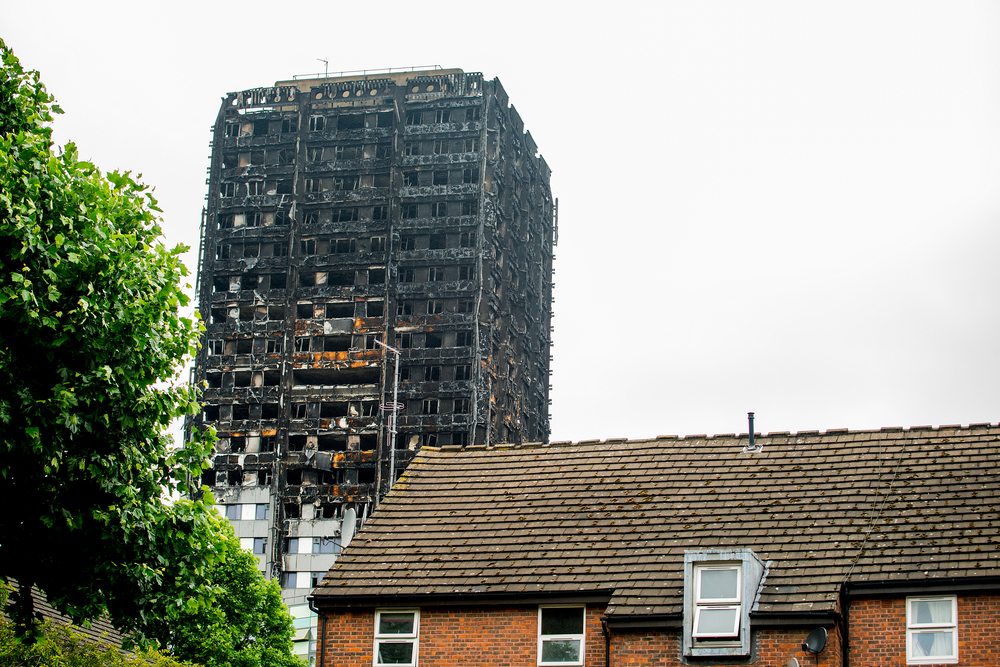
Since the late 90s various government efforts, resulting in orders, bills, and acts have come into effect to protect assets. But more importantly, painstaking efforts have been taken to minimise fatalities. Plenty of movement has taken place in the last five years, in the aftermath of the horrific Grenfell Tower disaster. The incident is considered as one of the UK’s worst modern disasters. As many as 72 people died in the disaster that took plan on June 14, 2017, which made up a staggering 18% of all deaths caused by fires in the UK that year. In 2019-2020 fatalities caused by fire accidents dipped below the 300 figures for the first time in several decades.  

There were 311 fire-related fatalities in Great Britain during 20120/21, 22 more than occurred in the previous reporting year when there were 289. In the early 2000s, the annual number of fire fatalities was consistently over 500, with numbers gradually falling throughout that decade. In 2011/12 the number of fatalities related to fire fell below 400 for the first time, and has remained below 400 since that point. 

Although there has been a net decrease in the number of incidents attended by fire and rescue services in the United Kingdom since 2010/11 the current trend from 2014/15 onwards has been one of increase. In 2018/19 there were over half a million incidents attended in England, over 92,000 in Scotland and almost 37,000 in Wales. Northern Ireland had the least number of incidents attended at around 24,600. 

Since peaking at over 55,600 workers in 2010 there has been a marked decline in the number of fire and rescue workers in England, with the service losing more than 10,000 workers by 2019. In a similar time period, the expenditure on fire-protection services in the United Kingdom fell from 3.1 billion in 2009/10, to around 3 billion in 2019/20. 

Building Safety Bill 

At the end of April 2022, the UK Government’s Building Safety Bill completed all the parliamentary stages in both houses, ready to receive Royal Assent. The 252-page bill, which began the process of going through the houses of parliament in July 2021, is aimed at improving building standards, ensuring the safety of residents, and protecting leaseholders from the costs of fixing their blocks.   

The Building Safety Bill’s main aims is to reform the safety system for properties higher than 11 metres by appointing a Building Safety Regulator, giving a greater voice to residents, driving industry change, and creating a national framework for increased oversight.  

London,,Uk.,28th,June,2017.,Editorial,-,The,Grenfell,Tower

UK Minister for Building Safety Stephen Greenhalgh has branded the Building Safety Bill as the “biggest changes in building safety legislation in our history”. The act will now also include measures to ensure leaseholders avoid footing the bill for remediation costs, known as ‘waterfall’ protections. 

Ministers have faced growing pressure over the building safety crisis. Thousands of leaseholders have been hit with crippling costs for fixing their buildings and have been unable to sell their flats. 

The Royal Institute of Chartered Surveyors (RICS) welcomed the passing of the bill as a ‘positive step’ and acknowledged that it “may not have been what everyone hoped for”. The bill will at the least provide greater protections for leaseholders and delivering a new building safety regime. 

“It is critical for RICS and other organisations representing the professions impacted by the Act, to have the opportunity to offer their continued support in finding and shaping the solutions alongside government,” it explained. 

According to law firm Clyde and Co, major changes to the Bill include scrapping building safety managers or the need to appoint one. There is now an “accountable person” who takes over day-to-day responsibility for higher risk buildings over 18 metres. 

Another amendment that has been enshrined into law is extending the limitation period to 15 years for defective premises claims and 30 years for retrospective claims. The law firm said that this could come into force two months after royal assent. 

Sadly, new builds or restored properties opting to use environmentally sustainable materials remain at greater fire risk. Expressing his concern on the matter O’Neill says: “there’s no way to escape the influx of sustainable, albeit combustible, building materials making a mark in our cities and towns. We need a unified code on buildings in the UK that incorporates evolving building techniques and materials.” 

The ripples of the Grenfell disaster, and the impact of its subsequent inquiry, have left its mark across Britain’s devolved governments. Since October 2006 the fire safety law in Scotland has differed from that of England and Wales and Northern Ireland. Last month, a legislation by ministers in Scotland proposed ban on use of combustible materials on high-rise buildings. 

Since 2005, cladding used on high-rise blocks in Scotland had to feature non-combustible materials or pass a large-scale fire test. The new building standards legislation removes the option of a fire test, completely prohibiting such materials in buildings with floors above 11 metres. 

The law on fire alarms has changed in Scotland, requiring all homes to have interlinked alarms. Interlinked means if one goes off, they all go off, so you will always hear an alarm wherever you are in your home. The new law has come about because of the Grenfell fire in London in 2017, and it applies to all Scottish homes. It is the property owner’s responsibility for meeting the new standard. Could we see a similar move coming into effect across the rest of the UK? Watch this space.  

Accountability in the amendment 

But the amendment to the Building Safety Bill, which removes the requirement for landlords to appoint Building Safety Managers in leasehold buildings seven storeys and over, is being challenged by a leading tall buildings fire safety expert. 

Russ Timpson – a former firefighter and Managing Director of the Tall Buildings Fire Safety Network -is urging the government to reconsider its decision to scrap the recommendation first proposed by Dame Judith Hackitt in the wake of the Grenfell Tower fire. 

“This latest iteration of the all-important Building Safety Bill states that responsibility for fire safety will now fall squarely on the squarely on the shoulders of an ‘Accountable Person’, such as the freeholder or head lessee or a management company. It is fundamentally important that anyone who is put in charge of tall building fire safety has undergone specialist training, which is backed up by a recognised qualification.” 

A similar concern has been raised by several experts and veterans of UK fire safety protection. A logical solution to this conundrum, according to the FPA, is the appointment of independent assessors. It’s a case of assessing the assessor, where there is a constant loop of checks and balances put in place to ensure there are strong grounds of accountability at all times from all parties. 

The 5-billion-pound change 

In a significant intervention in January 2022, UK housing secretary Michael Gove announced plans to get developers and construction product manufacturers to pay for defective buildings through a multi billion-pound billion levy. In April 2022, following months of negotiations, 35 builders pledged to fix all buildings they had built in the past 30 years that have “life-critical fire safety defects”.  

The agreement includes buildings they have developed on behalf of social landlords as part of Section 106 agreements. Leaseholders will also be able to launch retrospective legal action going back 30 years against developers or contractors that have built unsafe properties. 

The 35 developers collectively agreed to contribute £2bn towards fixing buildings they had a role in constructing. Under the Gove plan, in addition to the £2bn from developers to fix their own buildings, the industry will commit a further £3bn for the removal of unsafe cladding through an expansion of the building safety levy, a charge on new residential buildings. Firms refusing to contribute to the fund set up to fix dangerous cladding will be warned they could be blocked from selling new homes. 
Global fire suppression systems Market to reach $26.6 Billion by 2027

The global market for Fire Suppression Systems is estimated at US$19 Billion in the year 2020, is projected to reach a revised size of US$26.6 Billion by 2027, growing at a CAGR of 4.9% over the analysis period 2020-2027.

Dry Chemical-Based, one of the segments analyzed in the report, is projected to grow at a 5.6% CAGR to reach US$10.8 Billion by the end of the analysis period.

After an early analysis of the business implications of the pandemic and its induced economic crisis, growth in the Water-Based segment is readjusted to a revised 4.6% CAGR for the next 7-year period. This segment currently accounts for a 28.7% share of the global Fire Suppression Systems market.

The U.S. Accounts for Over 29.7% of Global Market Size in 2020, While China is Forecast to Grow at a 6.7% CAGR for the Period of 2020-2027

The Fire Suppression Systems market in the U.S. is estimated at US$5.6 Billion in the year 2020. The country currently accounts for a 29.69% share in the global market. China, the world second largest economy, is forecast to reach an estimated market size of US$3.8 Billion in the year 2027 trailing a CAGR of 6.7% through 2027.

Among the other noteworthy geographic markets are Japan and Canada, each forecast to grow at 3.5% and 4.2% respectively over the 2020-2027 period. Within Europe, Germany is forecast to grow at approximately 4.1% CAGR while Rest of European market (as defined in the study) will reach US$3.8 Billion by the year 2027.

Other Product Types Segment Corners a 32.6% Share in 2020

In the global Other Product Types segment, USA, Canada, Japan, China and Europe will drive the 4.1% CAGR estimated for this segment. These regional markets accounting for a combined market size of US$4.9 Billion in the year 2020 will reach a projected size of US$6.5 Billion by the close of the analysis period.

China will remain among the fastest growing in this cluster of regional markets. Led by countries such as Australia, India, and South Korea, the market in Asia-Pacific is forecast to reach US$3 Billion by the year 2027, while Latin America will expand at a 4.9% CAGR through the analysis period.