Fire Master expands its services into Oklahoma with Ferrara backing

Ferrara Fire Apparatus, Inc., a subsidiary of REV Group and a renowned manufacturer of custom-built, heavy-duty fire apparatus, has confirmed its dealership, Fire Master, will branch out into Oklahoma.

The expansion will be managed from their service centre located in Springfield, MO.

Fire Master’s growing footprint in the region

Currently, Fire Master caters to both fire service and industrial sectors across Missouri, Kansas, and Arkansas, providing sales, support, and equipment.

As part of their growth strategy, there are plans in motion to augment their existing facility by an additional 14,000 square feet.

Furthermore, there’s an initiative to launch new service centres in both Oklahoma and Arkansas.

Scott Shelton, the president of the company, shared: “We at Fire Master are very excited to expand not only our sales for Ferrara into Oklahoma but also our service.

“We currently have a full-time service technician dedicated to the Oklahoma territory and have plans in the near future for a brick-and-mortar service center located in the Tulsa metro area.”

The journey of Fire Master with Ferrara

Operating out of a 16,000 square foot service centre in Springfield, Fire Master employs around 28 individuals.

Their facility houses 13 service bays, and all of their technicians hold EVT certification.

Fire Master’s association with Ferrara dates back to 2010. The business, initially established in 1972 by Gerald and Carol Shelton, now thrives as a second-generation family venture led by brothers Scott and Donny Shelton.

Jim Stover, the sales manager at Ferrara, expressed his optimism about the partnership: “Scott and the entire Fire Master team have demonstrated their commitment to serving our customers in Missouri, Kansas and Arkansas and we are confident that together we can bring that same level of commitment and service to Oklahoma.”

IFSJ Comment

The expansion of Fire Master into Oklahoma, backed by Ferrara, underscores a growing trend of businesses broadening their horizons to meet emerging market demands.

The commitment of Fire Master in offering quality service, coupled with Ferrara’s expertise in fire apparatus, hints at a promising future for fire and safety services in Oklahoma.

Their combined dedication to excellence might very well set a new benchmark for others in the region.

Magirus introduces “M-Eye” UAV for enhanced safety in rescue operations

A new aerial perspective for emergency services

Magirus, a renowned name in the emergency response sector, has announced the launch of its proprietary UAV named “M-Eye”.

The unmanned aerial vehicle promises to offer real-time information from above, augmenting the decision-making capabilities of emergency services on the ground.

Integration with the existing operational network

The drone’s design ensures it can easily merge with current systems and networks, providing not only firefighters but other rescue and aid agencies additional safety in their fieldwork.

The use of UAVs is rapidly becoming integral in tactical and operational command due to the depth of information they supply.

Marcel Kessler, a Product Manager at Magirus, shared: “Thanks to the sophisticated technology of the M-Eye drone, emergency forces have access to high-resolution images and video footage… M-Eye enables full integration into the mobile, tactical operations network Magirus TacticNet and is thus an important link between digital systems, people and technology on the ground.”

Technical specifications of the Magirus M-Eye

This quadcopter, which boasts a maximum take-off weight of 4000 grams, is tailored for use by official bodies and organisations focused on security tasks.

Some standout features include a flight duration of up to 68 minutes, a dual RTK navigation sensor for precise positioning, and advanced functionalities like AI tracking mode and return-to-launch function.

Magirus has also partnered with Alpha Robotics during its development phase, ensuring the drone meets the specific needs and applications of fire and rescue services.

Furthermore, an optional gimbal attachment allows for additions such as an extra camera or LED lighting system.

Seamless integration with TacticNet

The TacticNet mobile response network ensures that responders face no compatibility issues while deploying the UAV.

With the M-Eye, emergency services are given both the hardware and software to leverage the latest technology seamlessly.

This UAV doesn’t need a cloud infrastructure link for its local data storage, ensuring uninterrupted operations regardless of internet connection quality and ensuring data security at all times.

Enhanced efficiency in diverse missions

In high-risk missions, such as addressing forest fires or dealing with hazardous spills, the combination of the M-Eye with the Wolf tactical robot promises heightened efficiency.

Both these innovative tools work in synergy, providing rescue teams with a comprehensive view and an enhanced foundation for decision-making and execution.

Magirus’ commitment to innovation and safety

Magirus has always positioned itself at the forefront of innovation, especially when it comes to ensuring the safety of emergency service personnel.

Thomas Hilse, CEO of Magirus GmbH, commented: “As a component of the Next Generation Firefighting innovation portfolio, the M-Eye drone fits perfectly into Magirus’ smart product range… we see it as our responsibility to make the use and handling of our products as simple as possible and to support the emergency services in digitalisation.”

IFSJ Comment

Magirus’ introduction of the M-Eye drone showcases the company’s unwavering commitment to technological innovation in the emergency services field.

By providing a bird’s-eye view, it’s expected that decision-making in critical situations will be significantly enhanced.

Coupled with the Wolf tactical robot, this duo presents a promising future for tackling challenging scenarios with precision and safety.

The seamless integration of the M-Eye into existing systems further solidifies its potential as a game-changer in modern rescue operations.

Maui fires investigation: Fire Safety Research Institute appointed by Attorney General Lopez

In a recent announcement, Hawaiʻi Attorney General Anne E. Lopez disclosed her choice for a comprehensive probe into the Maui wildfires.

FSRI to evaluate state and county preparedness for Maui fires

The Fire Safety Research Institute (FSRI), a leading nonprofit research body, will assess state and county agency strategies and response to the Maui wildfires.

These catastrophic fires led to a tragic loss of life and caused damages approximating $5.5 billion.

Attorney General seeks clarity and accountability

Attorney General Lopez stated: “I am committed to an independent, unbiased, and transparent investigation into government actions during the fires.”

Her commitment aims to renew the public’s faith in the government, especially after this devastating event.

In a reassuring tone, she added: “We can improve our responsiveness and resilience. Once the FSRI investigation is completed, our next step is to take decisive action.”

The investigation will scrutinise government agency actions during the initial 24 to 72 hours of the fire outbreak.

Lopez intends to keep the Hawaiʻi community updated at the conclusion of each investigation phase and once the final report is ready in late 2024.

FSRI’s three-phase investigation

Dr. Steve Kerber, FSRI vice president and executive director, expressed FSRI’s empathy with the Maui community.

His team aims to offer an evidence-based understanding of the incident to prevent future recurrences.

This investigation, which will closely involve local emergency services and federal, state, and local organisations, will span three phases:

  1. Fact-finding on Maui fires’ progression: This initial phase, estimated to last three months, focuses on gathering data to construct a comprehensive incident timeline.
  2. Data analysis and agency response: In approximately six months, this phase aims to evaluate the functioning of various fire protection systems during the Maui fires.
  3. Future prevention strategies: The final phase will offer insight into preventing such disasters in the future, producing a Forward-Looking Report after approximately 12 months.

“The FSRI investigation and what we learn from science and sound investigative practices will result in a set of concrete policy recommendations that will help ensure a safer, more prepared Hawaiʻi,” added Attorney General Lopez.

IFSJ Comment

The selection of the Fire Safety Research Institute by Attorney General Lopez to investigate the Maui fires holds significant implications for the global fire and safety community.

The scale of the Maui wildfires, both in terms of human tragedy and financial costs, underscores the urgent need for rigorous, evidence-based investigations.

The three-phase approach proposed by FSRI, particularly its emphasis on producing actionable, forward-looking recommendations, has the potential to greatly influence fire preparedness and response strategies not just in Hawaiʻi but around the world.

Collaborative efforts between government bodies and research institutes, as seen here, might very well set the gold standard for addressing future fire-related challenges.

Fire protective clothing: Finding the best fit

Nik Blymiller, MSA Safety Product Group Manager for Fire Protective Clothing, highlights the evolution of firefighter PPE

Where do things currently stand with fire protective gear across the fire industry and the latest trends you are seeing?

We’ve been seeing the market evolve over the years and the roles firefighters are playing in responding to all different kinds of incidents, not just house fires.

Today, technical rescue situations are becoming more prominent, like during wildland fires and flooding, and we’re also seeing a desire for garments that can perform across new and different scenarios.

It’s these kinds of trends that are driving innovation and diversity in the fire protective clothing market.

The market used to desire having one set of garments that were suitable for everything, but customers have been calling for change.

We’re working to develop new solutions in our fire protective clothing offerings to address these changes.

Not every firefighter is built in the same way.

How is customer feedback incorporated into fire protection clothing design?

Customer feedback is imperative to what we do and how we work to design and deliver new protective firefighting equipment.

MSA Safety and its affiliates, like Globe Manufacturing Company and MSA Bristol, invest heavily in Voice of Customer (VOC) activities during the product development process, and that is critical in firefighter product development.

We work closely with customers throughout their selection, evaluation and tender process to ensure we’re putting forth a garment and solution that aligns with their needs.

That can include different fabric combinations, designs, trims, pockets, whatever it might be.

The flexibility that Globe and Bristol offer is what makes them differentiators in the fire protective clothing industry.

We see that with just the number of different fabric combinations and garment styles that Globe and Bristol can provide.

We’re seeing a move toward lighter, more flexible material, and we’re getting more requests for comfort shields.

Additionally, working through our service Care Teams, we are able to use real life wear experience to design common repairs that can help optimise the cost of ownership.

What efforts are being made to accommodate the diverse physical builds of firefighters?

When it comes to fitting firefighters for protective clothing, we have an array of solutions, whether it’s our MSA Bristol or Globe fire protective clothing.

We offer a wide range of sizes, both male and female, for chest and waist widths, along with five different height groups ranging from extra short to extra tall.

All of our styles are available in women’s fit, which is important as we see the number of women in the fire service continue to grow.

Ultimately, it’s about helping firefighters find their best fit and so they can concentrate on safely doing their jobs.

If you have the feeling that something with a garment is stopping you or is uncomfortable or is physically restrictive, it might be time to consider the latest options.

Layer combinations are becoming lighter and more flexible and there is also the desire for gear that looks nice, as well.

What recent developments have impacted fire protection clothing?

It is well documented that there has been a rise in the frequency and intensity of wildland fires.

We’re seeing a demand for more flexible PPE that allows firefighters to fight those types of incidents in a way that can help reduce or prevent excess heat stress or burden on their person while they’re fighting such fires.

As we speak with customers, we’re hearing more about the different kinds of PPE needed for these types of wildland responses.

To develop solutions for these situations, we’re looking at balancing appropriate levels of thermal protection, particulate protection, heat stress and garment weight for these responses.

A second lesson is about the diversity in the type of firefighter. We are seeing more women and diverse firefighters.

As such, we’re working to make sure we offer products that work effectively to help protect firefighters across a wide range of body types and sizes.

How are hygiene and maintenance aspects being balanced with PPE design?

Cleanability and serviceability are two important factors we look at when designing PPE for firefighters.

In the United Kingdom we offer the Bristol Care managed service, which gives us the ability to help maintain garments for our customers.

We’re also looking at ways to help more of our US fire and rescue customers care for their gear because, after all, purchasing fire protective clothing is an investment and having longevity in protective gear is important.

In addition, observing best practices in cleaning is an important way that our fire and rescue customers can help protect themselves against exposures in the field, so helping to streamline that process can really add value.

We also take attention to selecting trims and seam tapes that can help reduce or prevent particulates from being trapped in the clothing.

For example, we heat seal labels for turnouts with a heat activated adhesive. This eliminates stitching and gives a smoother surface that’s easier to clean.

These tapes also tend to be lighter, more supple and breathable in challenging environments.

How is MSA Bristol staying on top of evolving rules and standards?

MSA Bristol is actively engaged with the various standards organisations, including EN, NFPA and ISO.

We work with these standards making organisations and help provide input on areas like the latest technology and trends in fire protective clothing.

By working through leading laboratories and approval bodies, we ensure our products meet the standards that our customers expect.

This exclusive article was originally published in the September 2023 issue of International Fire & Safety Journal. To read your FREE digital copy, click here.
Fire Prevention Week – Everything You Need to Know

Fire, in all its elemental splendour, has long been a double-edged sword in human history. 

It’s been the beacon that guided our ancestors through dark nights and the hearth around which stories were spun. 

Yet, it’s also been the beast that consumed entire cities and forests, leaving destruction in its fiery wake. 

In recognising the duality of fire’s nature, we find ourselves face to face with the elemental truth: fire is a force to be reckoned with.

It’s this very duality that underscores the importance of understanding the role of fire safety in our lives. 

While fire has been instrumental in shaping our progress and culture, it has equally posed threats to our safety, often when we least expect it. 

In this delicate balance between harnessing fire’s potential and protecting ourselves from its destructive tendencies, we find the essence of Fire Prevention Week.

Fire Prevention Week stands as an annual reminder, a beacon of awareness that illuminates the path to safeguarding our homes, families, and communities from the perils of fire. 

In the following pages, we’ll delve into the heart of this vital event, exploring its significance, tracing its historical roots, and uncovering why it’s a pivotal moment on the calendar for everyone. 

So, let’s embark on this journey to unravel the essence of Fire Prevention Week and discover how it shapes our understanding of fire in the modern world.

What is Fire Prevention Week?

Fire Prevention Week is an annual event that brings together communities and organisations throughout the United States, rallying under the common banner of fire safety. 

This crucial week serves as a powerful reminder of the paramount importance of fire prevention and preparedness in our lives. 

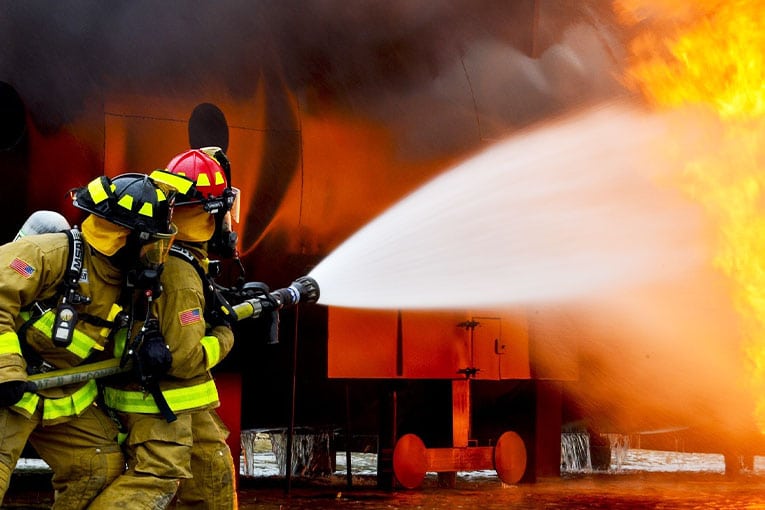
Firemen putting out fire
Promoting fire safety helps the fire service

It’s a time when our collective focus sharpens, and we turn our attention towards understanding the hazards posed by fire and some of the most common causes of fire, and learning how to mitigate them.

Throughout the duration of Fire Prevention Week, an array of activities and educational programs are thoughtfully organised to enlighten people about the ever-present risks of fires and, most importantly, how to actively mitigate these risks. 

It’s a concerted effort to ensure that individuals, families, and communities are equipped with the knowledge and tools necessary to protect themselves and their surroundings.

These activities and programs span a wide spectrum, catering to diverse audiences. 

For instance, schools often incorporate fire safety lessons into their curricula, ensuring that young minds grasp the fundamentals of fire prevention early on. 

Fire departments and local organisations host open houses, where the public is invited to explore fire stations, interact with firefighters, and witness live demonstrations that highlight fire safety techniques.

Furthermore, many local communities conduct fire drills and evacuation exercises, enabling residents to practice their response to potential fire emergencies. 

These drills instil a sense of readiness and ensure that everyone knows how to react swiftly and effectively in the event of a fire. 

Additionally, fire safety workshops and seminars are commonly held, where experts share invaluable insights on fire prevention strategies, home fire safety, and the proper use of fire extinguishers.

The collective aim during Fire Prevention Week is to foster a culture of fire safety that transcends this specific week and becomes an integral part of our daily lives. 

It’s about ingraining the knowledge of fire risks and safety measures into our consciousness, ensuring that fire safety is not just an annual event but a lifelong commitment. 

By actively participating in the activities and programs offered during this week, individuals and communities stand better prepared to protect themselves against the devastating impact of fires.

When is Fire Prevention Week?

Fire Prevention Week is observed in the United States and Canada during the week in which October 9th falls. 

October 9th holds historical significance as it commemorates the Great Chicago Fire of 1871, one of the most devastating fires in American history. 

This tragic event serves as a stark reminder of the destructive power of fires and the need for fire prevention measures.

When is Fire Prevention Week 2023?

Fire Prevention Week is between October 8-14 in 2023. 

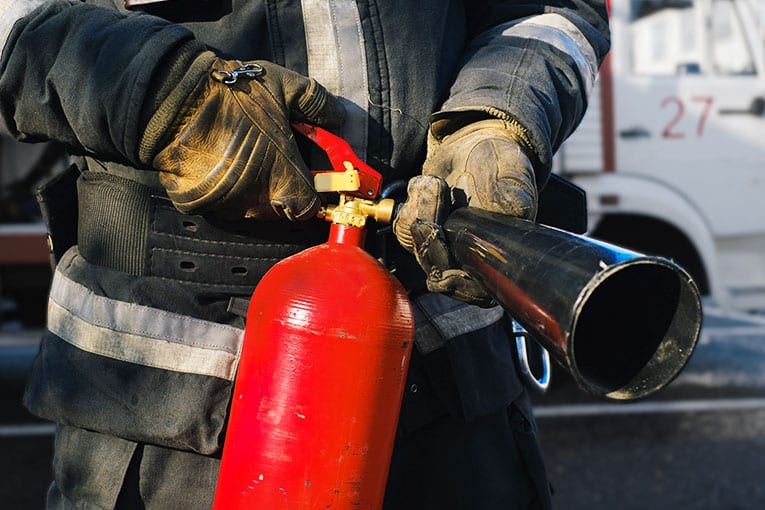
fireman holding fire extinguisher
Promoting fire prevention is in everyone’s best interest

What is the History of Fire Prevention Week?

The origins of Fire Prevention Week are deeply rooted in one of the most tragic and defining events in American history – The Great Chicago Fire of 1871. 

This devastating fire, which ignited on the fateful night of October 8 and continued to rage into October 9, marked a turning point in the nation’s understanding of fire safety.

The Great Chicago Fire was an inferno of unparalleled proportions. 

It consumed over 2,000 acres of land, leaving behind a trail of destruction that stretched as far as the eye could see. 

The flames roared through the city, devouring everything in their path. 

The devastation was not limited to property; it also claimed the lives of hundreds of people and displaced thousands more, rendering them homeless in its wake.

The aftermath of this catastrophic event left a profound impact on the collective consciousness of the nation. 

It served as a stark reminder of the destructive force of fire and the imperative need for comprehensive fire prevention measures.

In the wake of this tragedy, the Fire Marshals Association of North America, an organisation that later evolved into the International Fire Marshals Association, took a decisive step to honour the memory of the Great Chicago Fire. 

In 1920, they designated October 9 as National Fire Prevention Day, a solemn day to remember the fire’s victims and to reflect on the importance of fire safety.

However, recognizing that a single day of reflection and awareness was insufficient to address the magnitude of the fire safety challenge, the event was expanded.

In 1922, it was transformed into a week-long initiative, evolving into the enduring institution we now know as Fire Prevention Week. 

This extension allowed for a more comprehensive approach to fire safety education and outreach, enabling communities to delve deeper into the complexities of fire prevention.

Fire Prevention Week, with its roots firmly embedded in the lessons of the Great Chicago Fire, has since become a poignant annual tribute to the resilience of communities in the face of disaster and a platform for educating generations on the vital importance of fire safety. 

It stands as a testament to the enduring commitment to the evolution of fire safety that arose from the ashes of one of the nation’s most devastating fires.

What is the Theme of Fire Prevention Week 2023?

Each year, Fire Prevention Week has a specific theme that guides its educational efforts.

The theme for Fire Prevention Week 2023 is “Prevent Kitchen Fires.” 

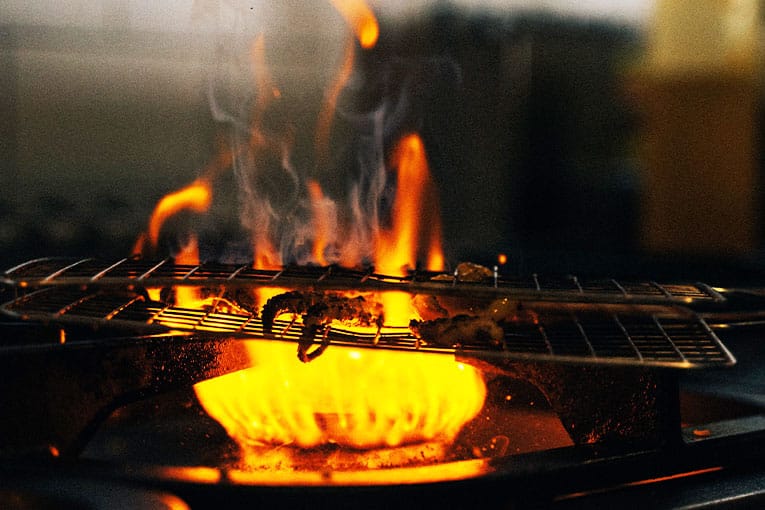
a fire in a kitchen
Fire Prevention week for 2023 promotes fire safety in the kitchen

This theme emphasises the importance of fire safety in the kitchen, one of the most common types of fire, where a significant number of fires originate. 

It aims to educate people on how to prevent kitchen fires, what to do if one occurs, and how to keep their families safe.

What Were the Themes of Previous Fire Prevention Weeks?

Since its inception, Fire Prevention Week has tackled various fire safety topics, evolving to address contemporary concerns. 

Here are some recent themes and their associated messages:

2022: “Fire Won’t Wait, Plan Your Escape”

  • Theme: Focused on the importance of having an escape plan and practicing it regularly.
  • Message: Encouraged people to be proactive in fire safety by planning and rehearsing escape routes from their homes. Fire doesn’t wait, and being prepared saves lives.

2021: “Learn the Sounds of Fire Safety”

  • Theme: Emphasised understanding the different sounds of smoke and carbon monoxide alarms.
  • Message: Educated people about the significance of smoke alarms and carbon monoxide detectors in early fire detection and prevention.

2020: “Serve Up Fire Safety in the Kitchen”

  • Theme: Centred on kitchen fire safety and the prevention of cooking-related fires.
  • Message: Highlighted the importance of safe cooking practices, including attention to stovetop and oven cooking to prevent kitchen fires.

2019: “Not Every Hero Wears a Cape. Plan and Practice Your Escape!”

  • Theme: Highlighted the importance of fire escape planning.
  • Message: Encouraged families and individuals to create and practice fire escape plans for their homes. Being prepared can make a life-saving difference in emergencies.

2018: “Look. Listen. Learn. Fire Can Happen Anywhere”

  • Theme: Focused on the importance of learning fire safety in various settings.
  • Message: Urged people to understand the basics of fire safety, whether at home, work, or in public spaces.

2017: “Every Second Counts. Plan Two Ways Out”

  • Theme: Emphasised the need for multiple escape routes in case of fire.
  • Message: Encouraged households to plan not just one but two ways to exit their homes during a fire. Seconds matter in emergencies.

2016: “Don’t Wait. Check the Date. Replace Smoke Alarms Every 10 Years”

  • Theme: Highlighted the importance of regularly maintaining and replacing smoke alarms.
  • Message: Informed people about the necessity of checking the age and condition of smoke alarms and replacing them every decade for reliable fire detection.

2015: “Hear the Beep Where You Sleep. Every Bedroom Needs a Working Smoke Alarm”

  • Theme: Advocated for smoke alarms in every bedroom.
  • Message: Promoted installing smoke alarms in all sleeping areas to ensure early warning and escape in case of fire.

2014: “Working Smoke Alarms Save Lives. Test Yours Every Month”

  • Theme: Focused on the life-saving role of smoke alarms.
  • Message: Encouraged monthly testing of smoke alarms to ensure they are functioning correctly.

2013: “Prevent Kitchen Fires”

  • Theme: Centred on kitchen fire prevention.
  • Message: Raised awareness about the common causes of kitchen fires and promoted safe cooking practices.

2012: “Have 2 Ways Out”

  • Theme: Stressed the importance of having multiple exit routes.
  • Message: Reminded people that having two ways out of every room is vital for swift evacuation during a fire.

2011: “Protect Your Family From Fire”

  • Theme: Focused on overall family fire safety.
  • Message: Encouraged households to take comprehensive measures to safeguard their loved ones from fire hazards.

2010: “Smoke Alarms: A Sound You Can Live With”

  • Theme: Emphasised the importance of smoke alarms.
  • Message: Highlighted the life-saving role of smoke alarms in providing early warning of fires.

These themes illustrate the evolving focus of Fire Prevention Week, aiming to address current fire safety challenges and educate the public on ways to prevent fires and protect lives.

Conclusion

Fire Prevention Week is important. It reminds us that fires are dangerous, both in the past and today.

It started because of the Great Chicago Fire, but it’s not just about that. Fires can hurt anyone, anywhere.

During this week, we learn about fire safety. We should use this knowledge to protect our homes.

This week’s actions should last all year. We need to stay safe from fires, always.

So, during Fire Prevention Week and always, remember to be safe from fires. Teach your family and community about fire safety. 

Let’s keep our homes and loved ones safe from fires. Fire Prevention Week is more than just a week; it’s a promise to stay safe.

Fire automation system market projected to reach a value of USD 130.37 billion by 2030

In a recent report by Adroit Market Research, predictions indicate that the fire automation system market is on track to achieve a value of USD 130.37 billion by 2030.

This growth is expected at a compound annual growth rate (CAGR) of 6.7% between 2021 and 2030.

Integration with modern technologies: Key to efficiency

Harnessing the power of smart building and Internet of Things (IoT) technologies is proving beneficial for fire automation systems.

These integrations offer real-time data, sophisticated analytics capabilities, and remote monitoring.

Such developments result in a comprehensive building management solution, enhancing the efficacy of fire detection and prevention.

Cloud-based fire automation technologies present a promising future. Perks of these systems include scalability, flexibility, and the elimination of bulky on-site equipment.

Advanced sensors: Improving fire detection

Emerging advanced sensor technologies, such as multi-sensor detectors and thermal imaging cameras, are finding their way into fire automation systems.

These innovations boost the system’s speed and accuracy in detecting fires.

Additionally, advanced sensors minimise false alarms and offer early warning signals, further solidifying the system’s dependability.

Increasing demand: A safety-driven market

The market is seeing growth driven by heightened fire safety awareness and the implementation of stringent building codes.

Government bodies and regulatory agencies worldwide emphasise the importance of fire detection in various structures, from commercial to residential.

Factors such as the surge in fire incidents globally amplify the need for early detection and swift response systems.

Furthermore, as urban landscapes evolve, so does the demand for robust fire automation systems in multiple establishments.

Insurance companies often mandate the installation of fire automation systems, promoting industry growth.

This requirement is a reflection of businesses’ efforts to adhere to insurance regulations and minimise potential fire-related financial risks.

Market benefits are also seen from the upgrades and retrofitting of existing fire automation systems, especially when building regulations undergo changes.

Equipment breakdown: Ensuring comprehensive protection

The critical components in these systems are devices like smoke and heat detectors.

Smoke detectors use various mechanisms like ionization and photoelectric methods to sense smoke and activate alarms.

Heat detectors respond to abrupt temperature increases or when temperatures surpass set limits.

The Fire Alarm Control Panel (FACP) acts as the system’s central hub, triggering audio-visual alarms, including sirens and emergency messages, upon detecting threats.

Visual and auditory sirens are strategically placed to ensure residents are promptly alerted during emergencies.

Additionally, buildings are equipped with manual call points, allowing individuals to activate alarms manually during fire emergencies.

North America: Leading the market

North America, particularly the US and Canada, remains at the forefront of the fire automation system market.

Emphasising fire prevention, the region’s well-established safety regulations play a significant role in driving demand.

Strict construction standards, technological advancements, and renovation projects further fuel the market’s expansion in this region.

IFSJ Comment

The insights provided by Adroit Market Research shed light on the evolving landscape of fire safety.

As urbanisation continues at an unprecedented rate, ensuring the safety of infrastructures becomes paramount.

Fire automation systems, particularly with their integration of modern technologies like IoT, are proving to be invaluable tools in this quest.

Their adaptability, efficiency, and increasing dependability make them indispensable in today’s safety-first environment.

This growth trajectory is not just a testament to technological advancements but reflects the global emphasis on prioritising safety.

Such market projections underscore the significance of continued innovation and adherence to safety standards, ensuring a safer future for all.

Versatility, adjustability, durability

Exploring Ziamatic’s new Heavy Rescue Tool Mounts and their impact on firefighting

When it comes to mounting heavy rescue tools, Ziamatic is a top player in the game.

The Yardley, Pennsylvania based company offers over a dozen heavy rescue tool mounting solutions for firefighters – from the Single Extrication Tool Holder (QM-ETS-1) to the more recently available Heavy Rescue Tool Mounts.

“Although we have many options when it comes to heavy rescue tool mounting, our newest designs are focused on versatility, adjustability, and durability,” says Keith Creely, VP of Ziamatic.

“Because of this, we now have a product line that can be used with almost all heavy rescue tools being used in the fire industry.”

According to Creely, Ziamatic’s rescue tool mounting options needed to be versatile so that all popular tool brands could be retained in their mounts efficiently.

Adjustability was important too because as he says: “The easier it is to install and adjust a Ziamatic product, the better chance Ziamatic has of them using the same product in the future.”

Creely continues: “We design durability into our products because we understand the importance of having product that does not break and we understand the frustration the comes along with parts that break frequently.”

Durability

For Ziamatic, durability is the name of the game with the newest mounts being made of tough HDPE material.

“We chose this because of its strength and durability,” says Creely.

“HDPE is also gentle on equipment. Being plastic, one will not see corrosion nor will they have any dissimilar metal issues.”

Ziamatic’s new Heavy Rescue Tool Mounts are a great example.

The brackets of the tool use mounts made of HDPE material and are designed to store most extrication tools available to fire departments today.

The mounts are most effective when combined with one of the brackets from Ziamatic’s SURE-GRIP product line.

The Heavy Rescue Tool Mounts have been rigorously tested by receiving free falling weight drops of 60 pounds, over 100 times in a row to assure they will withstand the day-to-day use of firefighting.

The tool mounts are designed to fit most brands of hydraulic and battery-operated tools.

They can be flush-mounted or spaced from the mounting surface to provide clearance from the mounting surface.

They are tested with a maximum 5″ spacing using 3/8″ fasteners (not included).

The tool mounts are easy to use. A user simply places the jaws into the mount and secures the handle as desired.

Ziamatic suggests using mounts from its SURE-GRIP product line such as the Adjustable SURE-GRIP (model SG-VM-A-1625) and SURE-GRIP mounts (models SG-VM-A, SG-VM-XL or SG-VM-XLS).

The following models of Heavy Rescue Tool Mounts are available: QM-ET-TTS (the tool mount for combination tools and spreader – bracket only); QM-ET-TTC (the tool mount for a cutter – bracket only); SG-VM-XL-TTS (the SURE-GRIP spreader kit); SG-VM-XL-TTC (the SURE-GRIP cutter kit); SG-VM-A-TTS – (the Adjustable SURE-GRIP tool spreader kit with UMVS-1625-11 strap); SG-VM-A-TTC (the Adjustable SURE-GRIP tool cutter kit with UMVS-1625-11 strap).

Easy to use design

Ziamatic also offers another mounting option with its popular Multiple Extrication Tool Holder.

Firefighters can secure up to four extrication tools in minimal space with this easy-to-use “Lazy Susan” rotating platform.

Adjustable mounting brackets accommodate most brands of cutter, spreader, and combination tool – including both hydraulic and battery-powered models.

Users can simply press down on the easily accessible yellow paddle to disengage the lock and rotate the turntable to access the tool they need.

The turntable safely locks into place after each 90-degree rotation for a quick and safe tool retrieval.

In order to replace one of the four standard tool brackets with a ram bracket, customers should order Model QM-MEH-1-R.

In order to replace two of the four standard tool brackets with ram brackets, customers should order Model QM-MEH-2-R.

According to Creely, the selling points of the Multiple Extrication Tool Holder are clear.

“Our multiple extrication tool turn table is made up of powder coated steel and aluminium parts,” says Creely.

“This space saving system has a 23” diameter at its widest point, locks in each position so one can safely remove and store tools, and sets just a little over 3” off of the mounting surface.

“This system is adjustable in almost every way.

“We are proud to say that there has not been one complaint or return and we can contribute that to the great engineering and design right from the beginning.”

Ziamatic offers other rescue tool mounting solutions. For upright storage, customers can also consider the following: the Multiversal Extrication Tool Holder (QM-ET-MV), the Extrication Tool Holder for Battery-Powered Cutter (QM-ET-MVE), Extrication Tool Holder for Cutters (QM-ET-C), Extrication Tool Holders for Spreaders (QM-ET-J), Single Extrication Tool Holder (QM-ETS-1), and Double Extrication Tool Holder (QM-ETD-1).

The Vertical Extrication Tool Holder (QM-ET-V) allows users to hang rescue tools on virtually any flat, vertical surface such as the doors/walls of a compartment or trailer.

Rescue tools can be stored horizontally with Ziamatic’s Horizontal Extrication Tool Holder (QM-ET-H).

It is comprised of four components that can be arranged in various ways. Ziamatic also offers a Horizontal Extrication Tool Holder with Strap (QM-ET-H2).

According to Creely, the feedback Ziamatic has received has been overwhelmingly positive.

“The feedback we have received and continue to hear is that our heavy rescue tool mounting product line is durable, user friendly, and versatile,” he says.

“Our market research leads us in the direction of our customer’s preference.

“From there we take the information and build on to their suggestion designing a user friendly, efficient, answer to their need.”

Safe and secure

With all of these choices available, it is important to consider a simple piece of advice from Creely.

“Rescue tools are heavy and bulky, so making sure that there is strong, ridged, structure to mount to, is imperative,” he says.

“Our mounts can be the strongest option out there, but if it’s mounted to an inferior surface our brackets strength and durability will not matter.”

According to Creely, customers should be on the lookout for new developments from Ziamatic in the future.

“Equipment frequently used side by side with Heavy Rescue Tools are struts and stabilisers.

“We will be looking to add to our product line low profile, space saving mounts, and systems for equipment like this in the near future.

“Keep an eye on our social media and monthly emails for updates.”

For over 50 years, Ziamatic Corp. has provided first responders with the tools and equipment they need to make their jobs safer, easier, and more efficient every day.

This exclusive article was originally published in the September 2023 issue of International Fire & Safety Journal. To read your FREE digital copy, click here.
Firematic Supply Co. expands in the Northeast with Churchville Fire Equipment acquisition

Pierce Manufacturing makes a significant move

Today, Pierce Manufacturing Inc., a part of Oshkosh Corporation, revealed that Firematic Supply Co. Inc. has completed the acquisition of Churchville Fire Equipment.

This move marks a considerable step in expanding its influence in the Northeast region.

The acquisition enables Firematic to further diversify its portfolio by incorporating Churchville’s rich 70-year history of distinguished service and premium equipment.

Churchville’s long-standing reputation

“Churchville Fire Equipment has been a stalwart in the sector for more than seven decades,” noted Peter Hanratty, president of Firematic Supply Co. “Beginning with Gerald Spotts and continuing through a line of outstanding leadership which culminated in employee-owners taking 100 percent ownership in 2004,”

“We deeply respect the sturdy foundation and lasting relationships that Churchville’s team has cultivated over the years.

“Our teams are eager to unify and enhance the resources and services available to our valued customers.”

The acquisition’s broader impact on the community

Both entities share a core commitment to integrity, creativity, and attentive customer service.

As such, incorporating Churchville Fire Equipment into Firematic Supply Co. is poised to strengthen the assistance given to the communities they cater to.

The agreement incorporates all of Churchville’s facilities and service centres across the region.

Furthermore, employees will continue their roles from existing locations.

Churchville and Firematic joining forces

Due to this acquisition, Firematic Supply Co. plans to launch multiple projects to expand sales and service support throughout their combined territories.

This includes:

  • Merging the extensive expertise of Churchville Fire Equipment with Firematic’s advanced processes and resources.
  • Introducing more Pierce certified master technicians to the regions for enhanced support.
  • Broadening Firematic’s Parts Central initiative over the coming two years.
  • Undertaking recruitment drives to boost the local workforce, which in turn will elevate sales and service potential.

“We’ve built a proud legacy over time and view this transition as a pivotal move to align ourselves with one of the fire apparatus sales industry’s most esteemed names,” remarked John Alfieri, Vice President of Apparatus Sales for Churchville Fire Equipment.

“Joining forces with Firematic’s resources and service approach, especially for the fire departments who’ve trusted us for many years, is a thrilling prospect.

“Maintaining our customers’ trust is crucial, and we are confident our partnership with Firematic will further enhance our support for their crucial missions.”

For more details about the Pierce dealer network and Firematic Supply Co.’s growth, one can visit Pierce or Firematic.

IFSJ Comment

The acquisition of Churchville Fire Equipment by Firematic Supply Co. underscores a strategic shift in the Northeast region’s fire safety landscape.

By integrating the strengths of both entities, there’s a clear intention to elevate service standards, diversify offerings, and extend support to communities.

Churchville, with its seven-decade history, brings a wealth of experience and trust, while Firematic, backed by Pierce Manufacturing, ensures cutting-edge processes and resources.

This fusion promises enhanced service delivery, greater community outreach, and a broader range of equipment and solutions for the fire departments they serve.

Emergency lighting: Let’s get personal

From brightness and runtime to multiple operating modes, leading provider of high-performance lighting devices, Streamlight® Inc., shares their trusted advice

Every firefighter needs to be able to deploy and trust a personal lighting device that will cover critical tasks excellently so every operation in the dark is a success.

We have worked with countless emergency service professionals in our 50-year history to shape our products and deliver lighting tools that have been proven to help save lives.

Before you begin searching for your optimum personal flashlight, you must pin down what you require the light for and how much versatility you need – otherwise you can be overwhelmed by the vast options available and can inevitably base your final decision on price and aesthetics.

You might initially think, for example, all you need is a flashlight that clips to your jacket or gear at a 90o angle and is bright enough to cast a beam of light in front of you as far as a couple of buildings away.

But what happens when you locate a missing person who is trapped and said light is needed to carefully assess the scene to help remove obstructions and debris throughout the night?

Will it last that long, have you given enough thought to the run time, rechargeability or universal power supplies of your flashlight?

What if the distressed individual is concussed and subsequently suffering from sensitivity to light, does the device feature a low intensity mode?

Are you required to work, and thus, shine a light above or below you – is the head articulating or does it offer a helmet-mounting facility?

Or what if all the above is taking place in a hazardous environment where a non-safety rated light could risk igniting flammable vapours leading to a catastrophic explosion?

There are countless factors to consider when selecting a flashlight.

With a light that checks all the boxes, you can focus your full attention on the task at hand.

Such things like short-life power sources can be avoided if you know what you’re looking for, and there are many options which can make your job easier and ultimately increase the odds of success and saving lives.

So, to help you make more informed decisions, we’ve compiled a condensed list of features and benefits to look out for when selecting a personal lighting device for you or your team.

Brightness and runtime

As you might imagine, brightness and runtime have a close relationship; the brighter something is, the quicker it’s going to fizzle out.

Therefore, it’s important not to over-do the brightness element if you don’t really need it and utilise the different modes available.

Runtime is measured from the initial light output value (30 seconds after the light is turned on with fresh batteries) until the light output drops to 10% of the initial value, measured in hours.

Light output may gradually decrease over time or remain largely constant and then suddenly drop out. A runtime graph, if available, provides the best illustration of the performance of a light over time.

As for brightness, this is measured in ‘lumens’ and stands for the total quantity of emitted light energy from the light source on its highest setting, powered by new or fully charged batteries.

Flashlights can range from lumens in the single digits (great for reading a book) to a terrain-scorching 10,000 lumens.

While these values represent a great comparison tool, they do not tell the whole story about brightness, with beam intensity, distance and type all influencing the effectiveness of a light in different applications.

Of course, the better the technology, the longer the runtime – so even the brightest of flashlights can operate for lengthy periods.

Indeed, this is one factor that will affect the broad price range for what might initially appear to be similar products.

The Streamlight Vulcan® 180 HAZ-LO® ATEX is such a product that falls into that territory, offering a runtime of 16.5 hours while providing 450 lumens of light – enough to flood a whole room.

An aesthetically similar lantern may be half the price, but if it only delivers 40 lumens for 10-hours, it would not be suitable for much other than dimly illuminating a pathway, as it likely won’t offer different modes nor will it perform well in bad weather or hazardous atmospheres.

Batteries: disposable vs chargeable

Power source should be at the top of your checklist when choosing a flashlight, either by way of disposable or rechargeable batteries.

Disposable batteries, either alkaline or lithium, have an excellent storage life – 7 and 10 years respectively.

They generally offer longer runtimes for a given bulb power, are typically lower in initial purchase price, and spares are readily available.

In the long run though, operating costs are considerably higher than rechargeable alternatives.

Rechargeable flashlight batteries can feature extraordinarily low operating expenses – as little as a penny per day – and are well suited for frequent use.

Depending on the model, they often store conveniently in custom charger holders.

Their initial purchase price can be higher, but considerable cost savings are seen over the total life of ownership.

High-performance lights, like our PolyTac 90® X USB, can operate with different fuel type batteries or work as a rechargeable system using universal connections.

As such, these can be plugged into charging ports safely to ensure they are fully powered before every operation.

As with other rechargeable flashlights, the initial purchase price is understandably higher, but there are significant cost savings over the total life of ownership.

You should also look to source devices with battery life indicators. We include them on many of our models, conveniently located inside the button to highlight when batteries need replacing or recharging.

Knowing your device has ample power is one less thing to focus on in an emergency.

LED types

LEDs (Light Emitting Diodes) offer the flexibility to adjust a flashlight’s output and beam patterns to meet a multitude of needs.

LEDs are of a solid-state construction offering a high-intensity light which lasts up to 100,000 hours.

“Chip On Board” (COB) LEDs are made of multiple LED chips that are packaged together as one lighting module.

When it lights up, it looks more like a lighting panel than multiple individual lights for a smooth, flood beam for up-close work.

Flashlights offering a combination of LEDs and COB LEDs provide a multi-function solution to provide much greater flexibility for the task at hand.

An example would be our Dualie® series of flashlights, which feature dual lighting modes to offer convenient spot and flood lighting from the same device.

This is an intrinsically safe flashlight which allows you to light up what is ahead of you and at your feet at the same time or individually, over long periods of time.

Lighting modes

Having more than one lighting intensity setting can be the difference between success and failure on many levels.

When everything goes to plan, a fixed intensity flashlight can likely stand up to a task for a couple hours.

However, if other factors arise, which they often do, changing between low and high intensity can extend the use of a flashlight considerably, lasting from dusk till dawn with constant use.

Looking at our Survivor® X ATEX model again, this features a high, super bright beam that delivers 250 lumens over 447m with a runtime of 3.75 hours.

Its low mode, on the other hand, delivers 60 lumens over 237m but increases the runtime up to 15 hours.

It also features a flash mode for signalling (8-hour runtime). Lighting modes can also allow you to switch between flood beams – for less intense light over a bigger area – or spot beams – intense light focused on a narrow subject over a greater distance.

Safety ratings

There are several types of locations where it can be extremely dangerous to use any light that has not been specifically designed – and approved – for that location.

Areas such as those with flammable gases, liquids, vapours, or fibres present, which could lead to catastrophic explosions, are incredibly dangerous with the wrong lighting tool.

It is critical that you have a safety-rated flashlight you can trust to operate in these atmospheres, such as our HAZ-LO Division 1 and ATEX safety-rated series.

As manufacturers of the broadest range of professional lighting tools, we understand that the term ‘spoilt for choice’ can certainly be applied when selecting a flashlight.

The options are pretty endless, and this can make your final choice quite difficult, but with thorough understanding, a light that balances the cost against the specification is out there for you.

This exclusive article was originally published in the September 2023 issue of International Fire & Safety Journal. To read your FREE digital copy, click here.
Editor’s Comment: Chances and opportunities

I recently returned from the International Association of Fire Chiefs (IAFC) Conference and Expo in Kansas City, Missouri where I was afforded many opportunities to enhance my knowledge and understanding of new technology and innovation on display, writes IFSJ Managing Editor Duncan J. White.

Having joined the UK fire service at the age of eighteen, with the sole intention of driving big red lorries and wearing breathing apparatus to fight fires, I very quickly realised that there was much more to being ‘just a firefighter’ if you are prepared to take your chances and explore the opportunities offered.

Within a couple of years, I became frustrated with the management style of my immediate superiors and decided that if I wanted to influence change, I would need to pass my promotion examinations and apply for promotion.

With each promotion came additional responsibilities as well as more frequent and varied opportunities to move into new roles, which provided a more rounded understanding of the running of a modern fire and rescue service / fire department (FRS).

Despite undertaking several roles during my career which included incident commander, specialist trainer, project manager and supervisory officer I never felt my true potential was being nurtured or even understood by the organisation.

I became bored and to make best use of my time undertook voluntary roles, one of which afforded me the opportunity to attend fire trade shows.

This opportunity presented me with the opportunity to learn about another side of the industry and I soon received a commercial opportunity, which resulted in me setting up my own company and becoming a freelance consultant, alongside my fire service career.

I once heard a client comment: “Anyone working with a fire service should secure the services of an insider who knows the industry as it ensures that no questions are left unanswered, and all requirements can be understood and taken into consideration.”

There have been times when I was not always sure if I had the necessary skills or experience to fulfil opportunities but have always remembered a quote made by Sir Richard Branson, “If someone offers you an amazing opportunity but you are not sure you can do it, say yes – then learn how to do it later.”

This has proven to be extremely valuable!

I retired after almost thirty years’ service; however, throughout my time I was never afforded an appraisal which specifically looked at my transferrable skills which could have been of benefit to the FRS.

This was disappointing, although more concerning is that it seems like this is still the norm today and skilled people are being pigeonholed by rank / role rather than utilising their skills to best effect for the organisation.

For the fire service to remain an attractive career option it must look at new ways to get the best out of employees by implementing remuneration structures which allows them to reward staff who choose to specialise in one area or use their skills for the good of the FRS rather than continually changing roles because they are chasing the next promotion.

Never underestimate the demoralising and disruptive effect that boredom can have on the most aspirational members of your team.

This exclusive article was originally published in the September 2023 issue of International Fire & Safety Journal. To read your FREE digital copy, click here.