International Fire and Safety Journal analyses the firefighter Personal Protective Equipment market
The firefighter personal protective equipment (PPE) market primarily focuses on gear designed to safeguard firefighters from the inherent dangers of their job.
The equipment ensures their safety in situations like wildfires, building fires, and marine emergencies.
With global market dynamics shifting, the demand for this equipment is evolving. The market size was US $1.81 billion in 2022 and is projected to reach US $2.53 billion by 2029, growing at a CAGR of 4.9% between 2023 and 2029.
Stringent regulatory framework
Over the years, the tragic consequences of fires, both urban and wild, have highlighted the need for enhanced safety protocols.
Governments and international bodies are tightening safety standards to minimise risks, both for firefighters and the general populace.
This has led to the formulation of more rigorous safety and training guidelines for firefighting units globally.
The stricter the regulation, the higher the standard of equipment required. This has resulted in an increased demand for advanced PPE that meets these evolving standards.
Companies in the PPE industry now need to ensure that their products not only meet these rigorous standards but are also certified by relevant bodies.
Climate change, along with certain human activities, has seen an uptick in the frequency and intensity of wildfires worldwide.
With an increasing number of wildfires, there is an amplified need for specialised equipment tailored to these harsh environments.
This also suggests an urgent demand for research and development initiatives to innovate and improve PPE specifically for such challenging scenarios.
Specialised clothing costs
Firefighter PPE is not just regular clothing. It is a combination of advanced materials and engineering, designed to protect against extreme temperatures, toxic fumes, and other hazards associated with fires.
The complex manufacturing process and high-quality materials result in increased costs for these specialised products. This might be a deterrent, especially for developing countries or smaller firefighting units with limited budgets.
Companies might need to find a balance between affordability and quality or explore financing or subsidising solutions.
Comfort vs functionality
Firefighters often work long hours in their PPE, especially during prolonged incidents like wildfires. While their primary need is safety, comfort becomes essential for them to function effectively over extended periods.
This dynamic presents a challenge for PPE manufacturers. They need to innovate and integrate ergonomic designs without compromising on safety.
It might mean researching new materials, incorporating wearable tech for better heat and sweat management, or designing for improved mobility.
Ensuring comfort while retaining safety will likely lead to increased acceptance and trust among end-users.
Segment analysis
Helmets lead the PPE market, representing 28% in 2021, vital for protecting firefighters and victims alike. Fire suits, safeguarding wearers from direct flames, account for 21%.
Face masks follow with a 20% share, filtering harmful smoke. Gloves and fire boots each possess a 13% share, essential for hands and feet during rescues. Air cylinders, though not always used, contribute 5%, providing fresh air in dense smoke.
Indoor firefighting dominates the application segment with a 62% share in 2021, reflecting the frequent indoor fire occurrences.
Wildfire firefighting holds 30%, a segment expected to grow due to increasing global wildfires. Marine firefighting, addressing unique challenges, comprises 8% of the market.
Regional analysis
North America, with its expansive industrial network and heightened fire risks, leads the Firefighter PPE market, securing a 30.39% market share in 2021.
The robust regulatory frameworks and stringent fire safety standards in countries like the US and Canada amplify the demand. Not to mention, many key players in the PPE industry have established their presence in this region. Europe trails behind with a 25% market share in 2021.
However, the rapidly developing Asia Pacific region, including economies like China and India, holds significant promise for the PPE market. In 2021, this region accounted for 19.65% of the market share.
The growth rate in this region is expected to surpass others due to burgeoning urbanisation and the associated risks, coupled with economic growth. South America, known for its vast forests and associated wildfire risks, accounted for 15.56%.
This region’s demand is primarily driven by the necessity to protect its unique biodiversity from wildfires.
Lastly, the Middle East & Africa make up 9.4% of the market. While industrialisation is budding slowly, the region’s GDP growth and per capita income are not scaling as quickly, which might impact its future market share.
Looking ahead
The firefighter PPE market stands at a crucial juncture, poised for significant growth in the coming years.
Multiple dynamics, from the rise in global wildfires to the stringent safety regulations being adopted worldwide, are driving an increased demand for advanced and efficient PPE. The market’s historic and current trends give a clear indication of its trajectory.
The rising frequency of wildfires, fuelled by climate change and urban encroachment into woodlands, emphasises the market’s urgency and the need to innovate firefighting approaches and equipment.
This necessity signals potential advancements in PPE for improved durability and adaptability.
Concurrently, the swift urban and industrial growth in the Asia Pacific, especially in manufacturing giants like China and India, suggests an impending shift in market dynamics, potentially positioning them as global PPE leaders.
As the firefighting landscape evolves, with extended operations becoming standard and an increasing focus on outdoor and marine fires, the PPE industry faces the dual challenge of blending functionality with comfort, prompting novel R&D endeavours and necessitating adaptive strategies.
The firefighter PPE market’s future seems vibrant, marked by innovations, regional shifts, and an ever-growing emphasis on safety and comfort.
Stakeholders across the spectrum, from manufacturers to end-users, should remain vigilant and adaptable to ensure they not only meet the market’s demands but also contribute to its evolution.
MSA’s ground breaking modular system is tailored to unique fire brigade needs
Specifically designed for the European and International fire services, The MSA M1 Self-Contained Breathing Apparatus (SCBA) represents the most advanced, ergonomic and modular breathing apparatus the company has ever developed for those markets.
With the M1 as a breathing apparatus, the M stands for modularity. That modularity allows individual customers with unique needs to build or configure their product in the way that best suits them.
Knowing that there are regional differences when it comes to selecting an SCBA, the M1 is designed to allow for flexibility with product design to allow the end-user to more efficiently and effectively design a product that is going to fulfil their needs.
Designed to meet the European Norm 137 (EN137) safety, health and environmental protection standards, as well as ATEX intrinsic safety standards for usage in hazardous or explosive atmospheres, the M1 SCBA is fully customisable and can be configured to meet a broad range of firefighter needs and brigade budgets.
Its groundbreaking design and several other patented and customisable features that enhance ergonomics, hygiene and firefighter comfort have been noted by European fire brigades as key factors in their decisions to purchase the platform.
Its unique features allow for a deeper, more efficient clean and easy service and maintenance without compromising safety.
Featuring the industry’s lightest-weight backplate with a unique one-handed height adjustment; an advanced hip belt that evenly distributes the weight of the SCBA; and a padded harness that is fully water-repellent, it makes the entire SCBA system machine washable without disassembly.
The M1 SCBA also includes a high-pressure cylinder connection for fast cylinder exchanges and is compatible with MSA’s industry-leading G1 facepiece.
Beyond the breathing apparatus, the M1 SCBA is the centrepiece of MSA Safety’s Connected Firefighter Platform in the International market.
A key feature of this enhanced technology is the MSA Entry Control Board (ECB), which is designed to meet the unique needs of the UK fire service.
Serving as a cloud-connected fire-ground management tool, it provides incident commanders with air and alarm status of all telemetry-enabled breathing apparatus on scene.
It also features the fully integrated voice communication C1 headset, offering exceptional voice transmission and reception of incoming messages.
These are all essential features to enable firefighters to communicate effectively and reliably with each other, and to enable close monitoring of each team member.
MSA’s ECB is capable of providing post-incident reporting and automated documentation and integrates seamlessly with FireGrid, a cloud-based MSA software platform that gives incident commanders the ability to evaluate and manage multiple situations in real time on scene, and from any location in the world.
The data available from post-incident reporting and automated documentation can help in the long-term monitoring of firefighters.
With graphic displays of on-air consumption rates, the data can show where and when a firefighter is breathing more heavily during an incident and make it possible to help identify any trends, patterns or possible areas of concern when it comes to individual firefighter health and wellness.
The M1 has been tried and tested alongside MSA Bristol’s fire protective clothing lines and together they provide a particularly ergonomic PPE combination, with the seams and shape of the jacket positioned to comfortably accommodate the SCBA harness.
The National Volunteer Fire Council (NVFC) has revealed its plans to organise the annual NVFC Training Summit.
This summit is scheduled for June 21-22, 2024, in Buffalo, NY.
Those interested can find more details and submit their proposals here.
NVFC Training Summit 2024: A platform for learning and networking
As one of the notable events in the fire and emergency services sector, the NVFC Training Summit serves as a hub for idea-sharing, networking, and training on critical industry topics.
For the 2024 edition, the summit will offer breakout sessions across three main tracks: Health, Safety, and Training; Recruitment and Retention; and Leadership.
These 90-minute sessions will address various subjects including effective training, physical health, diversity, equity, inclusion, recruitment strategies, and resource management among others.
How to participate and contribute
The NVFC emphasises the importance of diverse experiences and perspectives from first responders across the country.
To aid potential presenters, the NVFC’s training and education team, namely Rachel Buczynski and Maggie Mojab, will be available for two virtual Q&A drop-in sessions in September.
All applications need to be submitted by October 1, 2023, after which a peer review team will assess the proposals based on several criteria including relevance, quality, and presenter experience.
Notifications to selected presenters will be sent out by November 3, 2023.
Successful applicants can expect travel expenses to be covered by the NVFC.
Furthermore, selected presenters will be offered a stipend. However, it’s worth noting that while teaching teams can apply, only one instructor per course will receive the travel stipend.
It’s also important for potential presenters to remember that all sessions should remain educational in focus, even if they represent a particular organisation or company.
For more information about the summit or the application process, interested parties can reach out to Rachel Buczynski, chief of training and education, directly.
IFSJ Comment
The NVFC Training Summit consistently provides invaluable insights and training opportunities for fire and emergency service professionals.
By opening up a call for presentations, NVFC ensures a diverse range of topics and voices at the forefront of the summit.
This approach not only enhances the quality of the event but also ensures that attendees benefit from the broadest possible spectrum of knowledge and experience in the field.
Fire, as a natural phenomenon, has been intertwined with human history for millennia.
It has served as a steadfast companion, offering warmth on cold nights, providing protection from predators, and allowing us to cook our food for sustenance.
The mastery of fire was one of the defining moments of human evolution, enabling our ancestors to forge tools, tame the wilderness, and build thriving civilizations.
However, fire’s dual nature must not be overlooked.
As much as it has been our friend, it can also be a formidable foe.
When fire becomes unbridled and uncontrollable, it can wreak havoc, causing devastating consequences to lives, homes, and natural landscapes.
The destructive power of wildfires, building fires, and industrial accidents reminds us of the need for vigilance and preparedness in the face of this primal force.
To navigate the complexities of fire and its potential dangers, understanding how many types of fire there are, as well the differences between them is of paramount importance.
Knowing the right fire extinguisher for the right fire type is vital
Different types of fires arise from a diverse range of materials, each requiring an evolution of fire safety and a tailored approach for effective extinguishing.
From the common Class A fires involving ordinary combustible materials to the specialised challenges of Class D fires involving combustible metals, a comprehensive knowledge of fire classifications empowers us to respond confidently and responsibly to fire emergencies.
How Many Types of Fire Are There?
There are six main classes of fires, each involving different materials and posing unique challenges for firefighting:
1. Class A – Solids
2. Class B – Liquids
3. Class C – Gasses
4. Class D – Metals
5. Class F – Oils and Fats
6. Electrical Fires – These are not given their own class, as they can fall into any of the above categories, however due to the different requirements of electrical fires we will be covering them here.
What are Class A Fires?
Class A fires are the most common type of fire encountered in various settings, ranging from residential homes to commercial offices and public spaces.
These fires are characterised by their ignition of ordinary combustible materials, which are readily available in our everyday surroundings.
Understanding the nature of Class A fires and how to handle them is crucial for effective fire safety and prevention.
The fuel sources that feed Class A fires include materials such as wood, paper, cloth, cardboard, and common plastics.
These materials are typically found in abundance in residential and commercial spaces, making Class A fires a significant concern for fire safety.
How Do You Extinguish a Class A Fire?
The primary method for extinguishing Class A fires is to use water or water-based extinguishers.
Water is a versatile and readily available firefighting agent that cools down the burning material, reducing the heat and ultimately smothering the flames.
By removing the heat element of the fire triangle (heat, fuel, and oxygen), water effectively puts out the fire and prevents re-ignition.
When using water to extinguish Class A fires, it is essential to apply the water directly to the base of the flames.
This ensures that the water reaches the burning material and cools it down, preventing the fire from spreading further.
Class A fires are one of the most common types of fire
If possible, avoid spraying water directly onto electrical equipment or live electrical wires to prevent electric shock and potential electrocution hazards.
Another effective method to combat small Class A fires is by using fire blankets.
Fire blankets are made of fire-resistant materials and can be quickly deployed to smother flames.
They work by cutting off the oxygen supply to the fire, suffocating it and extinguishing the flames.
Fire blankets are particularly useful for smothering fires on clothing, curtains, or small household items.
What are Class B Fires?
Class B fires pose a unique set of challenges due to the involvement of flammable liquids such as gasoline, oil, grease, and alcohol.
These fires can occur in various settings, including kitchens, garages, workshops, industrial facilities, and places where flammable liquids are stored or used.
Understanding how to handle Class B fires is crucial for effective fire safety and prevention.
Flammable liquids are highly volatile and can ignite easily, making Class B fires more intense and difficult to control compared to Class A fires.
When a flammable liquid catches fire, it can quickly spread and produce intense flames, creating a dangerous and rapidly evolving situation.
Additionally, flammable liquid fires can re-ignite if not fully extinguished, making them particularly challenging to manage.
How Do You Extinguish a Class B Fire?
To effectively control and extinguish Class B fires, it is crucial to use the appropriate firefighting agent.
Water is generally not recommended for Class B fires as it can cause the flammable liquid to spread, potentially making the fire more dangerous.
Instead, foam-based extinguishers or dry chemical extinguishers are the preferred choices for combating Class B fires.
Foam-based extinguishers work by covering the flammable liquid with a layer of foam, creating a barrier that prevents the release of flammable vapours and cutting off the oxygen supply to the fire.
This smothers the flames and cools down the burning liquid, eventually extinguishing the fire.
Dry chemical extinguishers, on the other hand, are effective for Class B fires because they disrupt the chemical reaction of the fire.
These extinguishers release a fine powder that separates the fuel from the oxygen, extinguishing the flames.
They also work well on Class A fires, making them versatile and useful in various fire situations.
It is important to remember that when dealing with Class B fires, safety is paramount.
Before attempting to extinguish a fire, assess the situation and ensure you have an escape route in case the fire becomes uncontrollable.
If the fire continues to spread or becomes too intense, evacuate the area immediately and call the emergency services for professional assistance.
What are Class C Fires?
Class C fires involve flammable gases, which can create a hazardous and potentially explosive atmosphere.
These fires present unique challenges and require specific precautions to ensure safety and prevent accidents.
Class C fires pose a significant threat to locations like manufacturing and industrial warehouses, chemical plants, and facilities storing substantial quantities of flammable gases. These settings are particularly vulnerable to these types of fires.
Understanding the risks associated with flammable gases and implementing proper safety measures is crucial in managing Class C fires.
How Do You Extinguish a Class C Fire?
Extinguishing a Class C fire requires a methodical and cautious approach due to the volatile nature of flammable gases involved.
When facing such a fire, two crucial steps come into play: shutting off the gas supply and utilising a dry powder extinguisher.
The first and most crucial step is to quickly shut off the gas supply at its source.
This action prevents the continuous flow of fuel to the fire, thereby hindering its ability to grow and spread.
Cutting off the gas supply is paramount to prevent the fire from intensifying and posing a greater threat to individuals attempting to extinguish it and those nearby.
After successfully shutting off the gas supply, the use of a dry powder extinguisher is recommended for extinguishing the Class C fire.
Dry powder extinguishers are specifically designed to combat fires involving flammable gases effectively.
The dry powder agent works by smothering the flames, cutting off their oxygen supply, and interrupting the fire’s chemical chain reaction, which leads to its rapid extinguishment.
It is important to note that while dry powder extinguishers are effective for Class C fires, water-based extinguishers should never be used in this scenario.
Water-based extinguishers may cause the fire to spread or result in an explosion due to the reactive nature of certain flammable gases.
Additionally, individuals attempting to extinguish a Class C fire should prioritise their safety at all times.
If the fire is beyond their control or if they are unsure about the gas source, it is best to evacuate the area immediately and call for professional help.
The handling of Class C fires requires a level of expertise and knowledge to ensure the safety of both individuals and property
What are Class D Fires?
Class D fires present a unique and highly hazardous situation, involving combustible metals such as magnesium, titanium, potassium, sodium, and lithium.
These fires can be particularly dangerous due to the reactive properties of these metals, which make them prone to violent and rapid combustion when exposed to air or water.
The presence of combustible metals in specific industrial settings or laboratories increases the risk of Class D fires, and proper precautions must be taken to handle and store these materials safely.
One of the critical challenges in dealing with Class D fires is the limited effectiveness of conventional firefighting methods.
Water, commonly used to extinguish other types of fires, can exacerbate Class D fires.
When water comes into contact with burning combustible metals, it reacts vigorously, releasing hydrogen gas, intensifying the fire, and causing potential explosions.
How Do You Extinguish a Class D Fire?
To extinguish Class D fires safely and effectively, specialised dry powder extinguishing agents must be used.
These agents, typically made of sodium chloride or graphite-based compounds, form a smothering layer over the burning metal, cutting off the supply of oxygen and heat.
This action disrupts the combustion process and gradually cools the metal, leading to the fire’s suppression.
Due to the specialised nature of Class D fires and the need for specific extinguishing agents, it is essential to have personnel trained in handling such emergencies.
Firefighters and other responders must be equipped with the appropriate dry powder extinguishers and knowledgeable about the risks and characteristics of combustible metal fires.
These fires can be unpredictable and require careful planning and coordinated efforts to control and eliminate them safely.
What are Class F Fires?
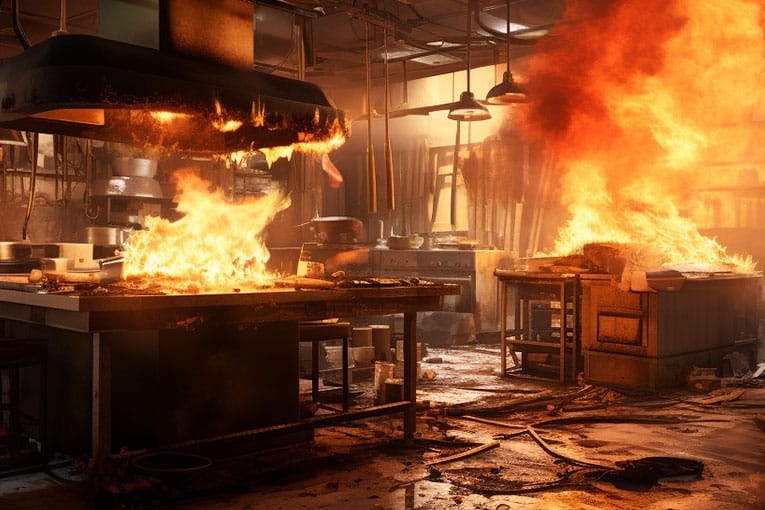
Class F fires, also known as cooking oil fires or fat fires, are a specific type of fire that commonly occurs in commercial kitchens, restaurants, and other food preparation areas.
These fires involve cooking oils and fats and can quickly escalate into intense and challenging situations to control.
The high temperatures used in cooking, especially deep frying, can cause cooking oils and fats to reach their autoignition point, leading to spontaneous combustion.
Once ignited, the flames can rapidly spread and generate intense heat, posing a severe threat to kitchen staff, customers, and the entire building.
Class F fires can be incredibly dangerous due to the oil involved
One of the primary reasons Class F fires are so dangerous is that water, a common extinguishing agent used for other types of fires, is ineffective and dangerous when applied to cooking oil fires.
When water comes into contact with hot oil, it instantly vaporises and expands, splattering the burning oil and spreading the fire further.
This reaction can cause severe burns and injuries to anyone nearby.
The most effective method to extinguish Class F fires is to smother the flames with a fire blanket or use a wet chemical extinguisher specifically designed for cooking oil fires.
Wet chemical extinguishers contain a special solution that creates a thick, soapy foam, which cools the burning oil, forms a barrier, and prevents the release of flammable vapours.
This action starves the fire of oxygen, extinguishing it safely and effectively.
Preventing Class F fires involves implementing several safety measures in commercial kitchens and food preparation areas.
Regular cleaning and maintenance of cooking equipment, ventilation systems, and hoods help reduce the buildup of grease and oil residues that could fuel a fire.
Additionally, kitchen staff should be properly trained in fire safety, including the proper use of fire extinguishers and the importance of using fire blankets when dealing with cooking oil fires.
Commercial kitchens should have well-maintained fire suppression systems, such as automatic fire suppression systems installed in hoods above cooking areas.
These systems can quickly detect and suppress cooking oil fires, minimising the risk of fire spreading to other parts of the kitchen.
What are Electrical Fires?
Electrical fires are a prevalent and concerning type of fire that poses a significant risk in modern life.
Unlike other classes of fire (Class A, B, C, etc.), electrical fires are not categorised under a specific class.
Instead, they are a distinct category of fires caused by electrical faults and malfunctions.
These fires can result from various factors, such as faulty wiring, overloaded circuits, damaged appliances, or improper use of electrical equipment.
Over time, electrical wires can deteriorate, become frayed, or develop loose connections. These issues create resistance and generate heat, which can ignite nearby combustible materials.
Similarly, overloaded circuits, often caused by plugging too many electrical devices into a single outlet or circuit, can lead to overheating and ultimately trigger an electrical fire.
Another common cause of electrical fires is damaged appliances and electrical equipment.
Ageing or poorly maintained appliances can develop electrical faults, leading to short circuits and fires.
Electrical fires can also be triggered by the misuse of electrical equipment, such as using extension cords or power strips inappropriately or using appliances with damaged cords or plugs.
How Do You Extinguish an Electrical Fire?
In the event of an electrical fire, using water to extinguish the flames is extremely dangerous due to the risk of electrical shock.
Instead, it is best to de-energize the electrical source by shutting off power at the circuit breaker or main electrical panel, if safe to do so.
For smaller electrical fires, a Class C fire extinguisher or a dry powder extinguisher can be used.
However, it is essential to prioritise personal safety and evacuate the area if the fire becomes uncontrollable.
To prevent electrical fires, regular electrical inspections and maintenance are essential.
Homeowners and businesses should have their electrical systems inspected by qualified electricians to identify and address any potential issues.
It is crucial to avoid overloading circuits, use proper wattage bulbs in light fixtures, and refrain from using damaged electrical equipment.
Conclusion
Understanding how many types of fire there are, and the appropriate methods to extinguish them is vital for everyone’s safety.
In case of an emergency, knowing how to act quickly and effectively can make a significant difference in protecting lives and property.
Fire safety training, having the right fire extinguishers, and staying informed about potential hazards are all crucial steps towards ensuring a safer environment for ourselves and those around us.
With the current shift to electric cars, and the rise in the usage of lithium-ion batteries, it is now more important than ever to understand the difference in fire types and how to safely deal with them, with lithium-ion battery fires costing the UK £158 million a year alone.
Let us all be proactive in fire prevention and response to mitigate the risks of fire-related incidents and create a safer world for everyone.
MSA Safety‘s Gustavo Lopez and Nik Blymiller discuss solutions and the latest advancements in the fire protective clothing
From cloud-connected technology, self-contained breathing apparatus, incident monitoring, and firefighter protective clothing, Gustavo Lopez, MSA Safety Vice President of Product Strategy and Pricing, and Nik Blymiller, MSA Safety Product Group Manager for Fire Protective Clothing, discuss solutions and the latest advancements in the fire service.
With insights from cloud data and from the recent investment in a state-of-the-art manufacturing facility, it paints a picture of MSA’s commitment to enhancing global firefighter safety by offering new-to-world solutions to help keep firefighters safe on the job.
Can you provide an overview of MSA Safety’s Connected Firefighter Platform?
GL: The Connected Firefighter Platform utilises connectivity and technology to help make firefighters and fire departments more capable.
We look at this as offering a solution for three primary areas: people, products and processes.
The first, people, is about making firefighters safer with new technological tools.
Second, products, is about developing functionality that leverages technology and data to help inform maintenance procedures to make products last longer and be less burdensome to maintain.
Third, process, is about collecting information on firefighter behaviour to inform departments of additional training opportunities to make them safer by raising awareness of their behaviours.
In order to do this, you have to have a comprehensive suite of products that work together to leverage these capabilities.
The MSA Connected Firefighter Platform is an ecosystem of technology-based equipment and tools centred around MSA Safety’s self-contained breathing apparatus (SCBA), which are the G1 SCBA, primarily in North America, and the M1 SCBA, primarily in Europe, the Middle East and Asia.
The Platform includes the LUNAR® Connected Device, a handheld device that provides search and rescue capabilities for firefighters and serves as a personal thermal imaging camera, FireGrid software, HUB, and ALTAIR® portable gas detectors.
The FireGrid software is a big part of the Connected Firefighter Platform.
All of our connected products have wireless transmission capabilities to FireGrid, which is our centralised location for storing and providing insights from customer data.
FireGrid is essentially the central focal point that’s gluing our entire platform together.
Can you share the latest enhancements to the Connected Firefighter Platform?
GL: This year, we’ve launched FireGrid Map View, which is currently rolling out in the European market.
As a software enhancement of MSA’s LUNAR Connected Device that enables tracking of a firefighter’s estimated location when outside of a structure, it’s putting firefighters on the map.
Map View is accessible through FireGrid Monitor, our tablet-based on-scene monitoring application.
Map View shows a firefighter’s approximate location as a color-coded marker, using a LUNAR device’s GPS capabilities and coordinates.
In addition to seeing an individual firefighter’s estimated location, a tap of a marker in Map View allows an incident commander to see additional firefighter information, including team assignment, SCBA air pressure, and alarm status.
If LTE cellular connection or GPS connection is lost, Map View will display the last known location of the firefighter.
Incident commanders are also able to see the same information for a team of firefighters, allowing for better visualisation of where team members are located and to help support the rapid decision making that occurs on scene.
There are three selectable views in Map View: street view, satellite and terrain.
In addition to location monitoring with Map View, we’re also advancing the ways data can be used to better inform PPE maintenance, and specifically with MSA Safety’s SCBA products.
Customers with a HUB, LUNAR, any of our cloud-connected devices, can benefit because having their SCBA linked to the cloud allows for SCBA data to immediately be stored in the cloud and accessible through FireGrid.
With the SCBA usage data going to the cloud, fire departments have a solution to help with overhaul maintenance on their SCBAs.
The data transmitted to the cloud includes the number of hours an SCBA is under pressure.
Thinking about it like milage on a vehicle, knowing how long an SCBA is being used helps with maintenance needs and can help fire departments better manage their SCBA fleet and rotating units to evenly disperse usage.
This can help with the longevity of the SCBA and help manage expenses knowing how many SCBA will need to be serviced at a given time.
With the M1 SCBA and G1 SCBA cloud-connected capabilities, we’re able to help fire departments save time and resources by streamlining the process for updates and maintenance.
We’re able to meet our customers’ needs by looking at the data we collect from their devices, turn that around, and give them useful insights and information to help better manage their operations.
Can you explain how does FireGrid uses beyond on-scene monitoring?
GL: We think about FireGrid in terms of four key functionalities: live incident management, post-incident analytics, inventory management and compliance and individual firefighter health and safety.
When you get into FireGrid and see all these capabilities, it really shows how it can be a solution for bringing together what can be fragmented pieces of on-scene and post-scene reporting and data.
Having all this information and data at your fingertips, so to speak, can help make departments more efficient and increase safety.
For live incident monitoring, you can monitor live MSA product data to help the incident commander make more informed decisions in real time.
With post-incident analytics, using our SCBA as an example, firefighters don’t have to change anything about the way that they’re using the breathing apparatus, but because our devices are cloud-connected, all that data is stored in their account in the cloud, and we’re able to utilise that data to provide more insightful analytics and reporting for the customer to better inform things like training or on-scene procedures.
We currently offer an inventory management solution where you’re able to track all of your MSA products and manage all of the relevant maintenance and compliance requirements for each asset.
We’ll be continuing to update the inventory management tool to encompass more products from the MSA portfolio and other products departments may have.
Lastly, for the individual firefighter health and safety component, it primarily takes the focus from looking at individual products to looking at individuals and behaviours.
How does MSA Bristol works to help develop and produce fire protective clothing?
NB: MSA Bristol has been designing and manufacturing speciality firefighting PPE for decades.
MSA Safety acquired Bristol in 2021, bringing MSA Safety into the international fire protective clothing space.
We’re well-placed to help take care of the garments to clean, decontaminate, inspect and repair each item.
Currently, we supply more than two thirds of the fire services in the United Kingdom with PPE.
MSA Safety and its affiliates, like MSA Bristol, invest heavily in Voice of Customer (VOC) activities during the product development process, and that is critical in firefighter product development.
MSA Bristol is actively engaged with the various standards organisations, including EN, NFPA and ISO.
We work with these standards making organisations and help provide input on areas like the latest technology and trends in fire protective clothing.
What are the key materials and technologies that set MSA Bristol’s fire protective clothing apart?
NB: Our sophisticated core garment blocks are one example of what sets the MSA Bristol products apart.
We offer a wide range of sizes, both male and female, for chest and waist widths, along with five different height groups ranging from extra short to extra tall.
All of our styles are available in women’s fit, which is important as we see the number of women in the fire service continue to grow.
We partner with leading fabric producers to help develop and implement the latest fibre and fabric technology in our garments.
We work closely with customers throughout their selection, evaluation and tender process to ensure we’re putting forth a garment and solution for their needs.
That can include different fabric combinations, designs, trims, pockets, whatever it might be.
Ultimately, it’s about helping firefighters find their best fit and so they can concentrate on safely doing their jobs.
How do the accessories like helmets, boots, and gloves integrate with the clothing?
NB: We’re always looking to develop and source accessories that complement our structural and rescue product lines to help enhance firefighter safety from head to toe.
We saw this take shape with the introduction of our X4 product line.
This line integrates Bristol’s high-performance protective clothing with MSA Safety’s market-leading experience in firefighting technologies and connected solutions.
The result is a range of new fire protective options that provide enhanced comfort, ergonomics and compatibility with MSA’s suite of state-of-the art firefighter equipment, from helmets and SCBA, to the very latest in monitoring accountability and communication devices.
We are designing a system for the end user to complement how protective clothing interconnect with the SCBA, with our sights set on developing the next generation of comprehensive firefighter safety.
Where is MSA heading in terms of future developments in fire protective clothing?
NB: We’re looking to bring fire protective clothing into a more connected ecosystem to help customers be better informed about usage and management of their PPE fleet.
This could include usage, cleaning, inspections, compliance and end of life or disposal of these products.
It’s about offering solutions to simplify the process of tracking all the different products firefighters use.
Additionally, we continue looking at how to more effectively link together fire protective clothing with our products firefighters are wearing and using.
GL: We’re looking forward to the Emergency Services Show and showcasing our solutions to help fire departments simplify on-scene incident management, post-event reporting and inventory management.
Additionally, our full line of fire protective clothing will be on display, and when combined with our Connected Firefighter Platform, attendees will see how MSA Safety has got firefighters covered from head to toe.
We will be expanding on how data and technology are being applied across fire grounds during a panel session we’re hosting and highlighting how UK firefighters are deploying innovative technologies to help improve scene management.
This exclusive article was originally published in the September 2023 issue of International Fire & Safety Journal. To read your FREE digital copy, click here.
Read the latest edition of International Fire and Safety Journal here
Editor’s Note
Hello and welcome to the September Edition of International Fire and Safety Journal.
The magnitude of the wildfires on Hawaii’s Maui and across parts of Europe serve as poignant reminders of the fire and safety sector’s pivotal role in protecting lives and property.
With the devastating blazes in Greece, Turkey, and Tenerife wreaking havoc, it underscores our mission’s gravity.
Once again, we’re confronted with the need to remain proactive, fostering innovation and adopting globally recognised safety standards.
Addressing the wildfire phenomenon, WFCA’s Bob Roper, Gabriel Reza of the Glendale Fire Department, and The Institution of Fire Engineers CEO Steve Hamm shed light on global wildfire policies, combat techniques, and the urgent need for mitigation.
This month, in an exclusive Head to Head, we sit down with Clive Miles, the newly appointed Chair of the ASFP.
Our conversation travels through nearly four decades, revealing the changing landscape of the PFP sector.
Miles’ first-hand accounts provide a comprehensive look into its growth and challenges.
Our Special Report, in collaboration with MSA Safety, puts a spotlight on firefighter Personal Protective Equipment (PPE).
As we have seen, firefighters face unpredictable challenges, and their PPE remains a non-negotiable shield in the face of adversity.
In this issue, we delve into Building Safety regulations with experts including Dan Rossiter, explore Black Rainbow’s Nimbus with Nikki Moscrop, and uncover innovations in Fire Engineering from Ahmed Allam and VR training by James Mullins.
Additionally, Jo Taylor and Jeff Dill address decontamination and moral injury in first responders, while Fredric Pettersson and Rafal Kolodziejski discusses firefighting foams and maritime safety, capped by our Last Word from Amthal’s Reece Paprotny’s on his new role and the company’s rebrand.
We’re also thrilled to give a sneak peek into The Emergency Services Show 2023 which comes to the NEC in Birmingham on the 19-20 September.
Don’t miss out on this premier event that promises cutting-edge technologies and unmatched learning opportunities, and be sure to come see the IFSJ team at the show in Hall 5/L186.
Enjoy the magazine!
In this issue of International Fire and Safety Journal
A forthcoming webinar will delve into the fire hazard considerations of Energy Storage Systems (ESS).
The webinar, scheduled for September 14, 2023, between 2:00 pm – 3:30 pm Eastern, will be presented by fire protection industry expert Russell Leavitt from Telgian.
The evolving world of energy storage
With the evolution of power systems, there’s a growing capacity for continuous operation of equipment and its transferability from one location to another.
The drive for sustainability has intensified the demand to store energy for future use. Energy Storage Systems (ESS) fulfil the requirement of having a dependable power source for later use.
However, they introduce significant challenges and dangers to facility owners, fire protection professionals, and firefighters.
Ensuring safety in a powered-up world
This webinar aims to give participants a refreshed understanding of the different types of Energy Storage Systems, their construction techniques, and their associated fire hazards.
“Current code requirements for ESS fire protection will be reviewed,” and there will be insights into best practices to ensure safety for both facilities and their occupants.
By the webinar’s end, attendees should be able to:
Recognise and detail the diverse Energy Storage Systems (ESS) currently in use.
Understand the fire risks linked with battery storage systems.
Highlight the specific fire dangers posed by Lithium-Ion batteries.
Recognise and implement the latest code guidelines for Energy Storage System (ESS) fire protection.
For further information or to sign up for the “Energy Storage Systems – Fire Hazard Considerations Webinar”, potential participants are directed to visit Fire Smarts.
IFSJ Comment
The realm of Energy Storage Systems (ESS) has seen substantial advancements, making it a crucial area for understanding associated fire hazards.
These systems are undeniably revolutionising the way we utilise and store energy.
However, the safety risks that accompany them are significant, especially considering the growth of Lithium-Ion batteries in various applications.
This webinar by Telgian promises to be an insightful resource for those involved in fire protection, offering guidance on how to navigate these new challenges effectively and ensure that innovation doesn’t come at the expense of safety.
A recent article from the University of Hawaii sheds light on the often-overlooked challenges faced by firefighters in their line of work – firefighter syndrome.
With firefighters having to grapple with a variety of scenarios that can cause trauma, both physically and mentally, are we ignoring a potentially health time-bomb by not addressing the elephant in the room?
We address this very real and present concern in the chapters below.
The Science Behind Firefighter Syndrome
Chris Frueh, a respected psychology professor at the University of Hawaiʻi at Hilo, teamed up with researchers Isabella Zingray and Gina Rudine, offering insights into the wide-ranging medical, psychological, and social risks firefighters grapple with.
Due to the nature of their job, firefighters are constantly exposed to chronic stress and life-threatening situations.
These repeated exposures can lead to serious physiological changes, such as traumatic brain injuries and toxic exposures.
Frueh commented on the objective of their research:
“What we want to do is provide a framework for people who are midcareer to late career to retired to begin to understand their injuries and to begin to be able to understand how to take care of themselves and how to look for medical care that they may need.”
A Disparity in Medical Research
It’s concerning to note the significant gap in medical research concerning firefighters’ health.
In 2021, a study highlighted that firefighters remain one of the least researched high-risk groups.
There was a 30 to 1 ratio in medical journal articles about veterans compared to firefighters.
Frueh emphasised the disparity, stating: “It means we know almost nothing about the types of injuries and health problems that firefighters develop over the course of a career.”
A Framework for Understanding & Support
Frueh’s team, inspired by their previous work on “Operator Syndrome” with military special operators, introduced a framework addressing what they’ve termed “Firefighter Syndrome”.
This comprehensive approach aims to provide holistic support for first-responders.
The ambition is for this groundwork to have a positive effect on firefighters not just in Hawaiʻi, but across the world.
They’ve also crafted a questionnaire, allowing firefighters to self-assess and gauge potential elements they might be experiencing.
This public-domain tool is available for medical professionals and firefighters, intended to inform and guide them back to safety.
Firefighter Syndrome Characteristics
The framework highlights a variety of concerns:
Traumatic brain injury (TBI) and toxic exposures.
Hormonal issues.
Sleep problems.
Chronic pain and orthopedic issues.
Substance abuse.
Post-traumatic stress disorder (PTSD) and depression.
Challenges with memory, concentration, and cognitive functions.
Issues with family relations and intimacy.
Constant state of high alertness.
Problems transitioning between home and work.
Frueh elaborated on its importance: “An individual firefighter can look through it and see ‘Oh, my goodness, I check these boxes.’
“It can also be used as a way to educate spouses or family members—and, importantly, to review with their healthcare providers.”
Moreover, the researchers provided guidelines for firefighters, addressing essential topics from suicide risk assessment to finding a reliable primary care provider.
Conclusion
The often-overlooked challenges firefighters face in their profession, both physically and psychologically, deserve our attention and action.
The disparity in research concerning their health risks compared to other high-risk professions is alarming.
Equipping these brave individuals with knowledge, resources, and support systems can make a world of difference, ensuring their well-being as they continue their vital role in our communities.
The Department of Fire Protection Engineering at the University of Maryland recently concluded its Summer School focused on “Fire Safety Science – Wildland/WUI fire behaviour” from June 5-9, 2023.
In an exciting update for those keen on the topic, all the PowerPoint presentations and video lectures from this event are now available for viewing on the summer school website.
Notable lectures and their esteemed presenters
The programme featured a robust list of lectures delivered by global experts:
“Introduction to Wildland and Wildland-Urban-Interface Fires,” presented by Alex Filkov from the University of Melbourne.
“Fire behaviour” by Albert Simeoni of Worcester Polytechnic Institute.
University of Maryland’s own Stas Stoliarov and Arnaud Trouvé discussing “Ignition and Pyrolysis” and “Combustion” respectively.
And many more covering diverse topics from “Flame Spread” to “Technology: Real-Time Fire Forecasting”.
Panel discussion delves into challenges of large outdoor fires
A panel was also convened, which comprised notable figures like Danielle Antonellis of Kindling, USA, Erica Kuligowski from RMIT University, Australia, and Albert Simeoni from Worcester Polytechnic Institute, among others.
These panellists deliberated on the pressing challenges in large outdoor fires, offering invaluable insights into the domain.
IAFSS remarked: “Learn from 20 international experts. Listen to the engineering point of view on wildland/WUI fire behaviour: Join us in trying to develop solutions to these growing fire problems!
“Also, please spread the word on these resources and share this material with fellow students and colleagues!”
IFSJ Comment
As urban areas continue to expand and intertwine with natural landscapes, understanding the science behind these fires becomes imperative.
The University of Maryland’s effort in bringing together global experts to deliberate, discuss, and share knowledge is a commendable step.
We encourage our readership to delve into these resources, as collaborative learning is key in our collective quest to enhance fire safety in such vulnerable terrains.
After the devastating wildfires in Maui, considered among the deadliest in the history of the US, and current destructive fires in Washington, the National Fire Protection Association (NFPA) is calling on governments, local communities, and individual property owners to implement scientifically-backed measures to prepare for wildfires, lessen risks, and bolster firefighting measures locally.
Recent events emphasise the importance to mitigate wildfire risks
“The recent tragedy in Maui and the ongoing fires in Washington underscore the vital need for collective action,” said Lorraine Carli, vice president of outreach and advocacy at NFPA.
“From local homeowners to top-tier governmental bodies, embracing mitigation strategies is essential for the safety of our communities.”
Around 45 million homes sit within the wildland/urban interface (WUI). The National Interagency Fire Center states that nearly 71.8 million US properties are at potential risk from wildfires.
Each year, the WUI witnesses some of the most damaging fires.
Over the past half-decade, wildfires have led to the destruction of close to 63,000 US structures, with a significant portion being residential properties, excluding the recent Maui incidents.
The US Forest Service has found that under 10% of communities facing such risks have put community action plans into place to minimise wildfire damages.
Mitigating wildfire risks: Steps and statistics
“These concerning figures emphasise the pressing need for an all-encompassing approach to the wildfire situation.
The NFPA’s Outthink Wildfire initiative offers a policy framework along with suggestions on preparing for, mitigating, and combating wildfires,” added Carli.
Outlined below are the Five Tenets of Outthink Wildfire:
Ensuring homes and businesses in the WUI can withstand wildfire threats: It’s essential to guide, incentivise, and set clear directives to assist property owners in lowering ignition risks. Given the vast number of properties in wildfire zones, risk reduction efforts should be proportionate to the threat’s magnitude.
Adherence to current codes and practices for construction in wildfire areas: Governments are urged to adopt and enforce present fire and building codes, along with effective land use practices to mitigate wildfire risks.
Adequate preparation of fire departments in the WUI: There’s a dire need to equip local fire departments with necessary training, safety gear, and tools. A majority of these departments attend to wildfires, yet they often lack ample resources for efficient and safe operations.
Increased vegetative fuel management on public terrains: Emphasising methods like cultural burning, prescribed burning, mechanical methods, and restoration practices.
Public involvement in reducing wildfire hazards: Individual homeowners play a crucial role in wildfire preparedness. They can take several measures to ready their homes and families against potential wildfire threats.
The escalating number of wildfires and their resultant destruction in the US underlines the pressing need for comprehensive and science-backed mitigation strategies.
The recent events in Maui and Washington are stark reminders of the vulnerabilities communities face, especially those in the wildland/urban interface.
As the NFPA points out, the onus isn’t just on governmental bodies, but equally on local communities and individual homeowners.
Adopting well-researched and robust mitigation strategies is not just about property protection, but also about safeguarding lives.
The statistics reveal a concerning trend, and collective action has become not just necessary but imperative.