What is a Photoelectric Smoke Detector?

Within fire safety, smoke detectors play a pivotal role in the preservation of lives and protection of property. 

Amidst the diverse array of smoke detection technologies, the photoelectric smoke detectors have been gaining popularity since their invention in 1972. 

This article will look into the depths of photoelectric smoke detectors, and why they are indispensable. 

We will delve into the inner workings of these devices, understanding their unique advantages, acknowledging their limitations, and discerning how they stack up against their counterparts in the vast market of fire safety solutions. 

So, let’s venture into the world of photoelectric smoke detectors, where innovation meets necessity, and safety takes centre stage.

What is a Photoelectric Smoke Detector? 
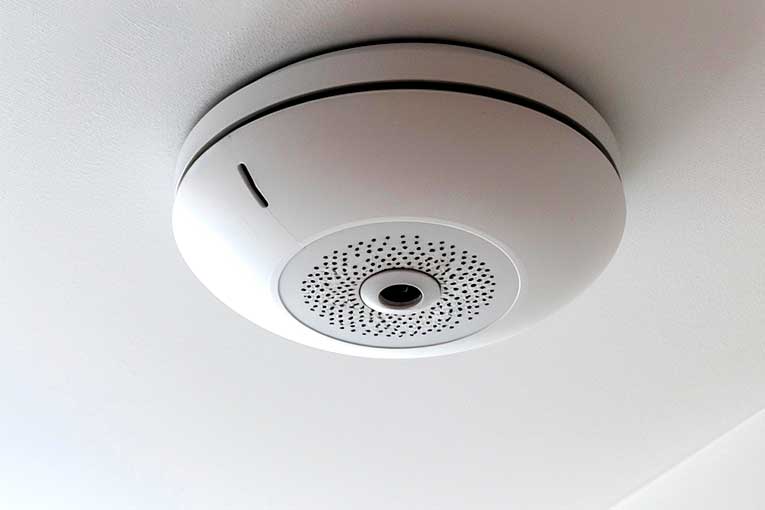
photoelectric smoke detector image

A photoelectric smoke detector is a device designed to detect smoke particles in the air and set off an alarm if smoke is detected. 

It operates based on the photoelectric effect – the emission of electrons when light falls on a material. 

In the context of smoke detection, the device uses a light source and a sensor to identify the presence of smoke.

The history of the photoelectric smoke detector dates back to the mid-20th century, marked by a continuous quest to enhance fire detection technology. 

Albert Einstein’s groundbreaking work on the photoelectric effect in the early 20th century laid the theoretical foundation for the development of photoelectric sensors.

In 1972, Donald Steele and Robert Emmark, researchers at Electro Signal Lab, invented and patented the photoelectric (optical) smoke detector.

Throughout the ensuing decades, advancements in electronics and materials science contributed to refining the efficiency and reliability of photoelectric smoke detectors. 

These devices became integral components of residential and commercial fire safety systems, playing a vital role in providing early detection of potential fire hazards.

Continued research and development in the field have led to the integration of photoelectric technology with other detection methods, contributing to more comprehensive fire safety solutions. 

The evolution of the photoelectric smoke detector stands as a testament to the ongoing commitment to innovation in enhancing our ability to detect and respond to fire threats effectively.

How does a Photoelectric Smoke Detector Work?
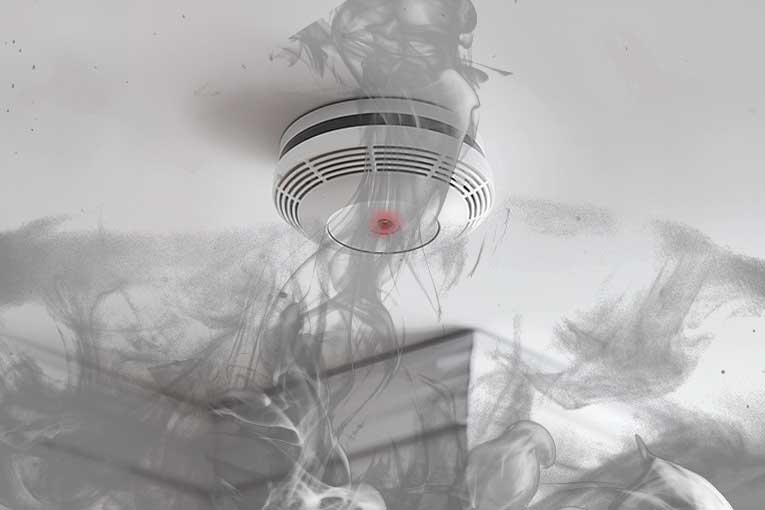
how photoelectric smoke detector works

A photoelectric smoke detector operates on the principle of light obscuration to identify the presence of smoke particles in its surroundings. 

This innovative technology relies on the photoelectric effect, a fundamental phenomenon in physics where light striking a material induces the emission of electrons. 

The device comprises a light source and a sensor strategically placed at an angle within a detection chamber.

In the absence of smoke, the light beam from the source does not reach the sensor directly. 

However, when smoke particles enter the detection chamber, they scatter the light, causing some of it to deviate towards the sensor. 

This triggers the sensor to send a signal, setting off the alarm and alerting occupants to the potential presence of a fire.

This design makes photoelectric smoke detectors particularly effective in detecting smouldering fires, characterised by slow combustion and the production of larger smoke particles. 

The early detection of such fires is crucial for timely response and evacuation.

The strategic placement of the light source and sensor, coupled with the sensitivity to the scattering of light by smoke particles, ensures a prompt and accurate reaction to the initial signs of a fire. 

This swift response provides valuable time for intervention and evacuation, enhancing the overall efficiency of fire safety systems

What are the Advantages to a Photoelectric Smoke Detector?

photoelectric smoke detector advantages

Photoelectric smoke detectors have a wide range of positives for their use: 

Early Detection of Smouldering Fires

One notable advantage of photoelectric smoke detectors is their efficacy in detecting smouldering fires. 

This type of fire is characterised by slow combustion and the production of larger smoke particles. 

Photoelectric detectors excel in identifying these larger particles, providing an early warning that is crucial for timely intervention and evacuation.

Reduced False Alarms

Photoelectric smoke detectors are less prone to false alarms triggered by non-fire-related particles like cooking smoke or steam. 

The technology’s focus on the scattering of light by smoke particles contributes to a more accurate and reliable response, minimising unnecessary disruptions and ensuring the alarm is activated only when a genuine fire hazard is present.

Enhanced Sensitivity

The strategic design of photoelectric smoke detectors, with a light source and sensor at an angle within a detection chamber, enhances their sensitivity to the early signs of a fire. 

This heightened sensitivity allows for a swift response, giving occupants more time to react and facilitating effective fire safety measures.

Broader Applicability

Photoelectric detectors are suitable for a wide range of environments, making them versatile for residential, commercial, and industrial use. 

Their effectiveness in various settings, coupled with reduced false alarms, contributes to their widespread adoption as a reliable component in comprehensive fire safety systems.

What are the Disadvantages to a Photoelectric Smoke Detector?
photoelectric smoke detector disadvantages

While incredibly useful, photoelectric smoke detectors do have some drawbacks:

Limited Effectiveness for Fast-Flaming Fires

One notable disadvantage of photoelectric smoke detectors is their potential limitation in effectively detecting fast-flaming fires. 

As these detectors primarily focus on larger smoke particles produced by smouldering fires, they may have a slight delay in responding to rapidly developing fires that produce smaller particles. 

While they excel in certain scenarios, their effectiveness may vary depending on the type of fire.

Dependency on Smoke Particles

Photoelectric smoke detectors rely on the presence of smoke particles to trigger an alarm. 

In environments where smoke is not readily produced, such as clean or well-ventilated spaces, these detectors might not provide timely alerts. 

This dependency on smoke particles may limit their effectiveness in certain conditions.

Potential for False Positives in Dusty Environments

While photoelectric detectors are generally less prone to false alarms, they can still be triggered in dusty environments. 

Particulate matter in the air, such as dust or insect debris, may scatter light and lead to false positives. 

Although less frequent than with other types of smoke detectors, false alarms can still occur in specific situations.

Slightly Higher Cost

Compared to some other types of smoke detectors, photoelectric models may have a slightly higher initial cost. 

While the difference in price is often marginal, it remains a factor to consider for budget-conscious consumers or businesses. 

Despite their advantages, the cost factor might influence the choice of smoke detectors in certain applications.

What Other Types of Smoke Detectors are Available?
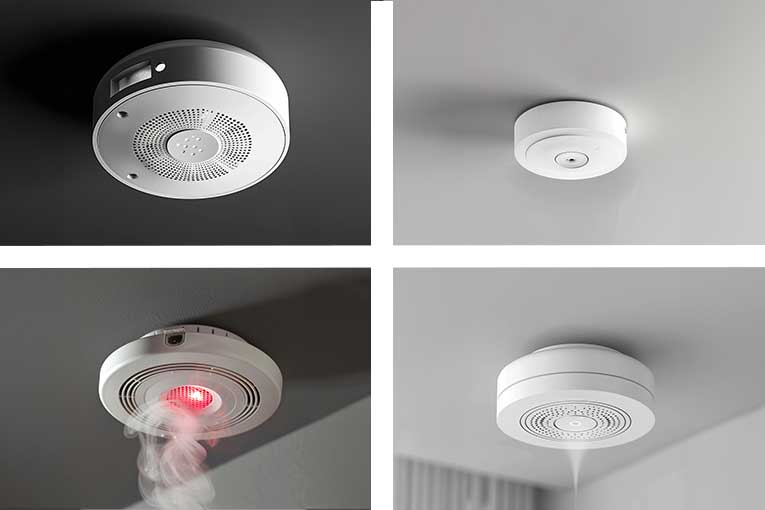
other types smoke detectors

Several types of smoke detectors are available, each utilising distinct technologies to detect the presence of smoke and potential fire hazards. 

Apart from photoelectric smoke detectors, other common types include:

Ionisation Smoke Detectors

Ionisation smoke detectors use a small amount of radioactive material to ionise air particles within a detection chamber. 

When smoke enters the chamber, it disrupts the ionisation process, triggering the alarm.

Optical Smoke Detectors

Similar to photoelectric detectors, optical smoke detectors use light to detect smoke. However, they operate on the principle of infrared beams. 

When smoke particles scatter light within the detection chamber, the alarm is activated.

Heat Smoke Detectors

Unlike smoke detectors, heat detectors respond to changes in temperature. 

When the ambient temperature reaches a certain threshold, indicating a potential fire, the heat detector triggers the alarm.

Dual-Sensor Smoke Detectors

These detectors combine the features of both ionisation and photoelectric technologies. 

By integrating these two methods, dual-sensor detectors aim to provide comprehensive coverage, effectively detecting a wide range of fire types.

Air Sampling Smoke Detectors

These advanced detectors use a network of pipes to actively draw in air from the monitored space. 

The air is then analysed for the presence of smoke particles, providing early detection in environments where rapid response is critical.

Photoelectric vs Ionisation Smoke Detectors 
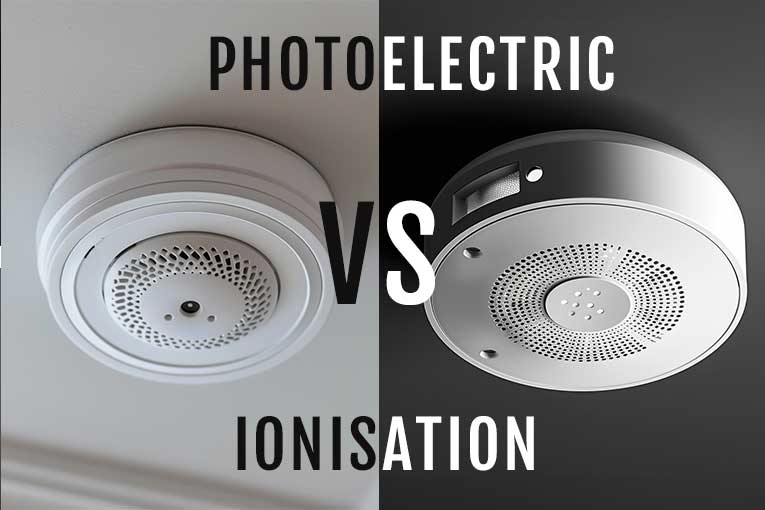
photoelectric vs ionisation

Photoelectric and ionisation smoke detectors are two common types that operate on distinct principles, influencing their performance in detecting different types of fires. 

Photoelectric detectors utilise the principle of light obscuration, employing a light source and sensor within a detection chamber. 

These detectors excel in detecting smouldering fires characterised by larger smoke particles, offering a timely response and reduced risk of false alarms from non-fire-related particles like cooking smoke.

On the other hand, ionisation detectors rely on a small amount of radioactive material to ionise air particles in a detection chamber. 

When smoke disrupts this ionisation process, the alarm is activated. 

Ionisation detectors respond quickly to fast-flaming fires that produce smaller smoke particles, making them cost-effective. 

However, they are more susceptible to false alarms, especially in dusty environments, and may have limitations in detecting smouldering fires.

Choosing between these detectors depends on factors such as the specific fire hazards expected and preferences regarding sensitivity and potential false alarms in a given environment. 

Dual-sensor detectors that combine both technologies are also available for comprehensive fire detection.

Photoelectric vs Heat Smoke Detectors
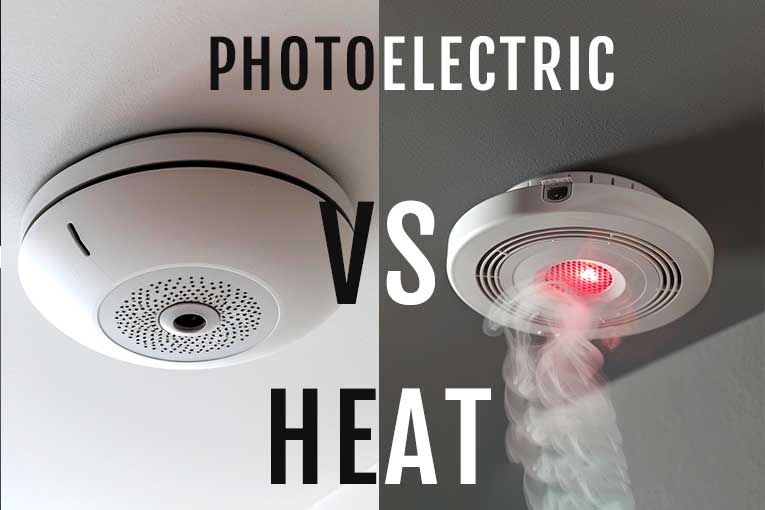
photoelectric vs heat

Photoelectric and heat smoke detectors represent two distinct approaches to fire detection, each tailored to address specific aspects of fire hazards. 

When smoke enters a photoelectric smoke detector, it scatters the light, triggering the sensor and activating the alarm. 

These detectors excel in identifying smouldering fires with larger smoke particles, offering early detection and reducing the risk of false alarms from non-fire-related particles.

Conversely, heat smoke detectors respond to changes in temperature rather than smoke particles. 

When the ambient temperature reaches a predetermined threshold indicative of a potential fire, the heat detector triggers the alarm. 

These detectors are particularly effective in areas where the presence of smoke is expected, and a faster response to elevated temperatures is crucial.

The choice between photoelectric and heat smoke detectors depends on factors such as the nature of the environment, the likelihood of different types of fires, and the desired sensitivity. 

Combining these detectors in a comprehensive fire safety system ensures a multifaceted approach to early detection, enhancing overall safety measures.

Conclusion

With regards to smoke detectors, the photoelectric variety stands out for its efficacy in detecting smouldering fires. 

While no detector is perfect for all scenarios, understanding the strengths and limitations of photoelectric smoke detectors allows individuals and businesses to make informed choices for enhanced fire safety.

Ajax Systems joins the Fire Industry Association to enhance fire safety collaboration

Ajax Systems enhances fire safety standards through FIA membership

Ajax Systems has officially become a member of the Fire Industry Association (FIA), Europe’s largest fire protection trade association.

This partnership grants Ajax Systems access to an expansive network of over 1,000 industry professionals and resources, fostering collaboration and advancements in fire safety standards.

Paul Pope, Global Head of Fire & Life Safety Business at Ajax Systems and a board member at the FIA, emphasized the strategic value of this alliance: “Our partnership with the FIA is not just about mutual benefit; it signifies a shared commitment to enriching the fire safety community with cutting-edge technology and knowledge.”

Ajax Systems’ commitment to the UK fire safety market

Established as a global entity, Ajax Systems’ decision to join the FIA aligns with its strategy to deepen its presence in the UK fire safety market.

The FIA’s influence is notable, with its involvement in over 200 working groups and educational initiatives that reach approximately 40,000 professionals annually.

Ajax Systems entered fire safety in 2016 with the release of the first Ajax fire detector, FireProtect, which was later evolved into a new model with an added CO sensor, FireProtect Plus.

Over the years, the company gained valuable experience from the wide application of FireProtect detectors.

Innovative developments in fire safety technology

Ajax Systems has shown significant advancements in fire safety technology with the launch of the FireProtect 2 series in 2022.

This series features next-generation fire detectors equipped with patented detection technologies, designed for easy installation, minimal maintenance, and remote configuration and testing via Ajax apps.

The series includes 17 models with various sensor combinations and power supply options, certified to several fire safety standards including EN 14604:2005/AC:2008 and EN 50291-1:2018.

IFSJ Comment

The inclusion of Ajax Systems into the Fire Industry Association marks a proactive step towards enhancing fire safety standards and fostering technological innovation within the industry.

By aligning with the FIA, Ajax Systems not only gains credibility and visibility but also contributes to the broader mission of improving safety and excellence in fire protection.

This collaboration highlights the importance of integrating advanced technologies with industry expertise to address the evolving needs of fire safety.

Safety and sound with ATEIS Middle East

Philip Witts – COO of ATEIS Middle East, talks about the evolving landscape of fire safety, showcasing how ATEIS leads with innovation and regional expertise

Can you introduce ATEIS and VELOX and give a short overview of the key milestones that led to your current position in the fire safety industry?

Ateis Middle East are manufacturers of life safety & audio products, focussing on PAVA, PA, IP – PA, loudspeakers and pro-audio solutions. Velox is our fire alarm brand which we proudly manufacture in our facilities in Dubai and Canada. Ateis originated in France over 40 years ago, with the Middle East operation starting 17 years ago.

We have been successful in supply our systems to some of the landmark projects in the Middle East, including the Burj Al Arab, Dubai Metro, Mall of the Emirates, King Khaled International Airport in Riyadh, Sports City in Cairo and many more. Our Velox fire detection products are now sold in nearly 40 countries and our diverse ranges cover from a single villa to huge mega projects such as  the multiple Malls we have completed, some with in excess of 20,000 devices.

What are the core products and services offered by ATEIS and VELOX?

Ateis have multiple ranges of fire alarm and PAVA solutions with class-leading specifications. On the audio side, we specialize in ‘Pro-Audio PAVA’, meaning that we provide life safety voice evacuation messaging through high specification speakers that can be used to play beautiful sounding music, as well as being approved to international life safety standards for emergency messages.

Our pro audio products can deliver amazing PA and Music performance (including live performances) in any sized venue including stadiums and nightclubs. The Velox fire alarm products offer powerful networking, advanced detector technology and installer friendly hardware & software making it the favourite choice for installations of all sizes.

How do you  stay ahead in terms of innovation and technology in fire safety solutions?

Our in-house R&D department blends local requirements with international standards to develop products suitable for even the most demanding of environments. We are constantly looking to innovate, within the acceptable life safety standards to introduce safer, faster and more intelligent features.

How have you tailored its strategies and products to meet the specific needs of the Middle East?

We have vast experience of the requirements and challenges of the Middle East region. We pioneered and delivered the first fire alarm control panel, approved to EN54 with a built-in 4G/TCPIP communicator to report to our own monitoring cloud without the need for additional ATE (Alarm Transmission Equipment) which subsequently was adopted for use in villas across the UAE.

We invented the ‘BAKHOOR’ feature for our control panels, which, through a simple to operate user interface, will temporarily adjust the sensitivity of the systems to allow the burning of Bakhoor (Incense) or smoking of Shisha in the building, without triggering an alarm.  This feature has a built-in countdown timer to ensure that the system returns to a normal state after a selected period (maximum of 15 minutes). This password-protected feature delivers a system that can be trusted to alarm only in a real fire situation.

One further ‘region-centric’ patented feature, is the ‘double dust trap’ design of our smoke detectors. This innovation makes it almost impossible for dust to enter the detector chamber, particularly useful in a dusty/sandy environment. If the chamber remains clean, then the lifetime of the detector gets extended substantially. The intelligent devices do have drift compensation to keep the sensitivity constant if some dust does enter, so this, couple with the double dust trap means years more trouble-free use.

What are your key strategies for maintaining high standards in your products and services?

We pride ourselves on our QAQC department and their impartial role in assessing our processes and activities. We constantly strive for improvement in all areas of the business and are so confident in our high quality and reliability that we offer a 10 year warranty on our Velox Fire Alarm solutions.

Would you like to highlight any new or upcoming products that you are excited about?

The new Ateis ‘Boutique’ range of PAVA controllers and amplifiers brings high-end features to a more budget conscious solution. Powerful enough to cover most requirements, Boutique will be a major contender in commercial projects going forward and now it is Civil Defence approved we can officially launch here in the UAE. Our Fire Alarm range is always being innovated and we have some exciting new features to be launched in 2024 including our Earth Fault detection locator and quick-learn automated loop initialisation to speed-up the commissioning process.

What motivated ATEIS and VELOX to sponsor the IFSJ Leaders in Fire and Safety Conference 2024?

We attended the conference in 2023 as delegates and it was evident that the majority-of the senior personnel associated with our industry were not only in-attendance, but also agreed that the content of the day was first class. As leaders in Fire Safety ourselves, we knew we should support the event in 2024.

The IFSJ Leaders in Fire & Safety Conference 2024 returns on 9 May – visit the official website here.

This article was originally published in the April 2024 issue of International Fire & Safety Journal. To read your FREE digital copy, click here.

Comelit-PAC launches wireless fire alarm solutions for modern buildings

Details of the new Comelit-PAC wireless range

Comelit-PAC, known for its LogiFire system, has expanded its fire alarm solutions with a new series of wireless devices.

This range is tailored for locations where wired installations are impractical.

Designed for easy installation, the system includes transceivers that can extend the coverage of the fire detection network.

The devices, available in both addressable and conventional options, support cloud-based and remote monitoring.

This advancement eliminates the need for extensive wiring, which can reduce installation times and costs significantly.

These systems are ideal for a variety of building types, accommodating both new constructions and retrofits.

Industry response and features

According to Mandy Bowden, Fire Manager at Comelit-PAC, the market for wireless fire detection systems is experiencing robust growth.

She explained: “The demand for wireless fire detection systems is growing significantly.

“Their increasing popularity can be attributed to the ease of installation, reliability, and flexibility in configuration, ideal for a seamless new build or retrofit system for both residential and commercial applications.”

The new range also incorporates a design that aligns with the aesthetics of the LogiFire series, ensuring a cohesive look throughout the building.

Bowden said: “We believe we are one of the few to offer as standard an addressable wireless solution that can benefit from remote monitoring via cloud integration, especially useful to reduce reliance on waking watch facilities and associated costs.”

Technical specifications and certifications

The addressable transceivers of the new range are notable for their ability to integrate directly into the existing loops of a fire alarm system, complete with built-in isolators to enhance safety.

They can support up to 32 devices per loop, with a maximum of five loops per panel, providing extensive coverage.

The system’s wireless capability extends to 1500 meters with a battery life expectancy of ten years for detectors and manual call points, and eight years for sounder beacons.

All devices are certified according to EN54-25, EN54-17, and EN54-18 standards, ensuring compliance with European safety regulations.

Bowden added: “As wireless fire detection systems become more common, we have a duty of care and responsibility as an industry to provide systems that can accommodate the evolving needs and priorities of all building types, based on a thorough site survey.”

IFSJ Comment

The introduction of Comelit-PAC‘s new wireless fire alarm system represents a forward-thinking approach to fire safety technology.

By embracing wireless solutions, the company addresses the needs of modern building projects that require flexible and efficient safety systems.

The integration of cloud and remote monitoring capabilities further enhances the functionality of these systems, providing valuable advancements in fire detection technology.

This development is part of a broader trend towards smarter, more adaptable fire safety solutions that can meet the diverse needs of today’s buildings and regulatory environments.

Bull Products unveils Cygnus Alert for advanced site safety monitoring

Introduction of Cygnus Alert platform

Bull Products has introduced the Cygnus Alert, a new remote notification and monitoring platform designed to enhance safety at various sites.

The platform is integrated with the SITENET fire detection and alarm system, which is EN 54 certified and operates completely wirelessly.

This combination aims to provide comprehensive safety solutions for construction sites and other critical environments.

The Cygnus Alert system enables real-time communication of event, fault, or mesh information through its cloud-based solution, allowing site managers and construction professionals to respond promptly to any incidents.

Accessible via a 2G and 4G cellular module, the platform offers user-friendly management features through both a web-based cloud portal and a dedicated Android app.

Features and benefits of the Cygnus Alert system

The Cygnus Alert is designed for flexibility and ease of integration with the existing SITENET range.

It can be installed during the initial setup of the fire alarm control panel or added later to existing setups.

“The ability for integrators to assign engineers and also end users provides enhanced support not only to the integrator but also added benefit to on-site managers,” explained Carl Leeson, Head of Sales at Bull Products.

Real-time alerts and notifications about system statuses such as battery faults, mesh issues, and fault history are sent directly to site administrators, facilitating quicker decision-making and enhancing overall response times.

The system’s scalability allows it to manage multiple sites simultaneously, proving its adaptability across different industries and project sizes.

Industry applications and user feedback

Beyond its technical capabilities, Cygnus Alert is versatile enough for use in industrial facilities, transport hubs, airports, shipyards, and more.

The system’s design focuses on not only addressing immediate safety concerns but also providing a robust communication link between the site conditions and the management teams.

Leeson shared his enthusiasm about the new platform: “The Cygnus protocol is the backbone of the SITENET system, and we are delighted to be building on our solution with the new Cygnus Alert platform.

“It offers impressive efficiency and responsiveness and when combined with its seamless integration with SITENET, easy to use cloud portal and app, Cygnus Alert ticks every box.

“We are delivering solutions to our customers that allow them to stay a step ahead whilst ensuring optimum safety and peace of mind.”

IFSJ comment

The introduction of the Cygnus Alert by Bull Products marks a significant advancement in remote monitoring and safety management technologies.

With its innovative approach to integrating cloud-based notifications and real-time monitoring, it ensures that safety managers and site operators have immediate access to critical information, which is essential for maintaining high safety standards and responding efficiently to potential risks.

The case for wireless fire systems

Martin Lee, Business Development Manager for the UK and Ireland at Hyfire, delves into the financial burden of waking watches and highlights the benefits of advanced wireless fire systems

In a startling revelation, a waking watch attendant hired as part of a £500,000 contract was reportedly found ‘hiding’ in a cupboard instead of patrolling a Plymouth block of flats.

The incident at the development known as Latitude 52 – where waking watch was introduced post-Grenfell due to defective cladding – has cast a shadow over the reliability and cost-effectiveness of waking watch services, prompting a reevaluation of temporary fire safety measures in residential buildings.

The high cost of human monitoring

Waking watch, while initially seen as a necessary immediate response to fire safety concerns post-Grenfell, have proven to be an expensive and, at times, unreliable solution.

The annual service charges for residents of Latitude 52 skyrocketed fivefold within a year, from £1,600 to £8,000, largely due to the costs associated with maintaining a 24-hour patrol.

This financial strain, coupled with the recent incident, has left many in the fire industry questioning the sustainability and efficiency of such human-centric approaches to fire safety.

The technological alternative: smarter, cheaper, more reliable

In contrast to the traditional waking watch, modern fire technologies offer a more efficient and cost-effective solution.

Systems equipped with wireless fire devices, such as Hyfire’s own Taurus range, capable of monitoring not just smoke but also the status of doors and windows in exterior walls, represent a significant advancement in ensuring building safety.

These devices can be added rapidly to new or existing fire systems, providing continuous monitoring without the need for human intervention, reducing the potential for error and the hefty price tag associated with waking watches.

Enhanced effectiveness through comprehensive monitoring

Unlike waking watch, which relies on the presence and attentiveness of individuals, technological solutions offer constant surveillance of all critical points within a building.

This not only includes the detection of smoke or fire but also monitors the integrity of escape routes and barriers against fire spread.

The integration of such technology ensures that any irregularities are immediately identified and addressed, offering a proactive approach to fire safety.

Substantial cost savings

The initial investment in fire safety technology can be offset by the significant savings over time, especially when compared to the ongoing costs of a waking watch.

For instance, the residents of Latitude 52 faced nearly £900,000 in fire safety-related charges over two years, a financial burden that could have been drastically reduced with the adoption of a comprehensive wireless fire system.

The scalability and flexibility of technological solutions also mean that they can be tailored to the specific needs of each building, ensuring effective protection without unnecessary expenditure.

Insurance implications and risk management

The use of combustible cladding has not only increased the risk of fire outbreaks in high-rise buildings; it has also led to a surge in insurance premiums.

Insurers now demand more stringent fire safety measures as a precondition for coverage.

The adoption of comprehensive fire systems like Hyfire’s wireless solutions, pending the replacement of defective cladding, are becoming vital to meet these demands.

In light of this, property managers must engage in proactive risk management, incorporating advanced fire safety systems to align with the insurers’ requirements, mitigate potential fire hazards, and ensure insurability of the property.

Long-term safety and property value

Fire systems have a direct correlation with the long-term viability and value of property assets.

The installation of state-of-the-art wireless systems is an investment in the building’s infrastructure that can offset the devaluation caused by combustible cladding, even if it cannot be immediately replaced.

Such systems, beyond providing immediate safety benefits, signal to prospective buyers and tenants that the building is managed with a forward-looking approach to safety and compliance, potentially boosting its market value and appeal in a waking that Waking Watch cannot.

Installation logistics and occupant considerations

The logistical challenges of upgrading fire systems in occupied buildings are significant.

Wireless systems present a less intrusive option, with minimal installation impact, avoiding the need for disruptive cabling work and significantly reducing the time required on-site.

This benefits both the installers and residents by ensuring quick, efficient, and non-invasive upgrades to the building’s fire safety infrastructure.

Once they systems are commissioned, they also offer far less intrusion than the physical presence of a Waking Watch service, as well as removing the daily reminder that human patrols provide.

Future-proofing fire safety measures

Adopting adaptable and scalable fire safety solutions ensures that buildings are prepared for both current and future safety standards.

Modern fire safety systems are designed with flexibility and adaptability in mind, ensuring that they remain effective as standards evolve.

The modular design of Hyfire devices, for example, allows for straightforward reconfiguration, making wireless an enduring solution that can be updated or expanded in line with new technologies or regulations, or repurposed as part of a BS8629-compliant evacuation alert system once the cladding issue has been rectified.

Moving forward: policy and implementation

The incident at Latitude 52 serves as a critical reminder of the need for a paradigm shift in fire safety strategies.

With a backlog of up to a decade in cladding remediation, it also underscores the importance of transitioning from temporary, human-dependent measures to semi-permanent, technology-based solutions.

Policymakers and building owners must prioritise the installation of advanced fire safety systems, not only to enhance the safety and security of residents but also to ensure economic viability of residential buildings.

Government and industry support

The transition to technology-driven fire solutions requires the support of both government and industry stakeholders.

Initiatives to provide funding and incentives for the installation of modern fire safety systems can facilitate this shift, ensuring that residents are not burdened with prohibitive costs.

Moreover, regulatory frameworks must evolve to recognise and encourage the adoption of these advanced technologies, setting new standards for fire safety in residential buildings.

A call for change

The case of Latitude 52 is a poignant illustration of the limitations and risks associated with waking watches.

It serves as a catalyst for change, urging a move towards smarter, more reliable, and cost-effective fire solutions for cladding-blighted buildings.

By embracing technological advances, we can ensure the safety of our buildings and the wellbeing of their residents, leaving the outdated and costly methods of the past behind.

About the author

Martin Lee is Business Development Manager for the UK and Ireland at Hyfire.

He brings over 26 years of experience in the fire industry, having previously held senior sales roles with several globally recognised manufacturers.

Now at Hyfire, Martin is charged with developing the brand and promoting it to key partners, end users, and consultants.

He envisions a future where wireless continues to grow and becomes the default choice for installers and end users.

This article was originally published in the April 2024 issue of International Fire & Safety Journal. To read your FREE digital copy, click here.

Ramtech signs exclusive distribution deal in Saudi Arabia

Ramtech, a provider of wireless solutions, announces exclusive distribution agreement in Saudi Arabia

Ramtech has announced an exclusive distribution agreement with Mimar to provide fire safety solutions in Saudi Arabia.

This partnership aims to distribute Ramtech’s advanced products, including the Wireless Evacuation System (WES3) and the REACT platform, in the Saudi Arabian construction market.

The collaboration is set to enhance fire safety measures during the temporary construction phases across the region.

Details of the partnership

Mimar, known for its engineering solutions, will facilitate the distribution of Ramtech’s product range.

This move is anticipated to make significant advancements in Saudi Arabia’s construction safety standards.

Previously, Ramtech’s solutions have been instrumental in major projects in the Middle East, including a $2.5bn Dubai megaproject, Sobha Hartland.

Comments from the executives

James Pecz, head of global business development at Ramtech, commented on the partnership: “Partnering with Mimar represents a significant step forward for Ramtech as we continue to expand our global footprint.

Mimar’s reputation for excellence and its deep understanding of the Saudi market make it an ideal partner for us, and we are excited about the opportunities that lie ahead.”

Omar Alsakkaf, managing partner at Mimar, expressed his enthusiasm for the collaboration: “We are thrilled to collaborate with Ramtech and bring their innovative solutions to the Saudi market.

“This partnership aligns perfectly with our commitment to providing our clients with the best-in-class products and services, and we look forward to the positive impact it will have on the construction industry in Saudi Arabia.”

IFSJ comment

This new partnership between Ramtech and Mimar marks a progressive step in addressing fire safety in the Saudi Arabian construction sector.

By integrating advanced wireless fire safety solutions, the collaboration aims to enhance safety standards and contribute to the development of the construction industry in the region.

Such strategic alliances are vital in fostering a safer building environment and advancing industry standards.

Advanced fire control: NURIA analogue addressable panel

NIBBLE’s NURIA is fully configurable and can be networked with up to 32 fire control panels and networked repeaters

NIBBLE is a leading manufacturer of a complete portfolio of fire and security systems, including cutting-edge wired and wireless addressable systems, complemented by a range of conventional products.

NURIA is NIBBLE’s technologically advanced 1 – 4 loop analogue addressable fire alarm panel which meets the needs of the global market today. Its flexible, modular design makes NIBBLE ideally suited to medium/large projects such as hotels, banks, airports, concert halls, museums, hospitals, large industrial facilities, stadiums and universities, etc.

Fully CPR certified to EN54-2 and EN54-4, the NURIA panel is functional, extremely robust and designed with the user experience in mind.

In addition to being easy to install, configure and use, an intuitive user interface provides a superior user experience and reduces the costs and time associated with installation and configuration. The panel features a high-resolution back-lit 7-inch touch screen LCD display which provides a clear and user-friendly interface.

Advanced diagnostics have been integrated into the panel, allowing installers to quickly and easily pinpoint any circuit faults, as well as control isolators. The panel also boasts powerful cause-and-effect programming capabilities.

NURIA is fully configurable and can be networked with up to 32 fire control panels and networked repeaters. Ethernet and/or CAN is available by default to network the panels, with redundancy, and a fibre optic card, networkable in a ring topology, is also available as an option. The panel has a high-integrity digital protocol for resilient high-speed monitoring and data communication with up to 254 devices on a single loop.

NURIA’s modular metal case can be flush or surface mounted. Easy access to the panel’s interior reduces the time associated with any required maintenance. The panel’s electronics are removable which means the box can be installed on site prior to the electronics being connected.  

Three fully programmable relay auxiliary outputs are provided on the panel, giving freedom to adapt them for any requirement.

Remote communication to the panel via web access (app and browser) will soon be available, making monitoring and maintenance easier and improving the efficiency and management of the panel.

Also available in a Fire Brigade Panel option (SBSC Certified), the NURIA panel is a new generation technology in fire detection.

Safety, technology, innovation, connectivity and sustainability are at the heart of NIBBLE’s product development, powered by its R&D capacity. This is very much aligned with the GSS Group’s focus on continued growth through innovation and ongoing commitment to being a standout global leader in advanced fire safety systems and security solutions.  

This article was originally published in the April 2024 issue of International Fire & Safety Journal. To read your FREE digital copy, click here.

New Cygnus Alert platform enhances site safety with real-time monitoring

Cygnus introduces cloud-based alert and monitoring platform

Cygnus has launched a new notification and monitoring platform, Cygnus Alert, as a cloud-based solution aimed at enhancing site safety.

This platform is part of Cygnus’ SmartNet range of fire detection and alarm systems, which are notable for being fully wireless and meeting EN 54 certification standards.

Cygnus Alert allows integrators and site administrators to receive real-time updates on events, faults, or system status, facilitating quick responses to any situations that may arise on site.

The service is accessed via a cellular module that supports both 2G and 4G networks and includes features like user management and notifications through a cloud portal.

This can be accessed through a web browser or via an Android app, providing flexibility for users in different settings.

The platform’s design ensures it integrates smoothly with the existing SmartNet systems either at the time of installation or as a retrofit to enhance capabilities of current setups.

Enhanced response capabilities with real-time data

Real-time data transmission is a core feature of the Cygnus Alert system, ensuring that site administrators are always informed of the status of their fire safety systems through the cloud portal, app, and SMS notifications.

Each control panel in the SmartNet range can accommodate a Cygnus Alert module, with the cloud portal capable of managing and notifying multiple sites simultaneously.

This scalability makes the platform suitable for a variety of environments including residential, commercial, and industrial facilities, as well as transport hubs and construction sites.

The system’s ability to display detailed system information such as battery status, mesh connectivity, and fault history remotely is particularly valuable for comprehensive monitoring.

Chris Bolger, Chief Technology Officer at Cygnus, highlighted the benefits of the new system: “We’re delighted to be introducing Cygnus Alert to enhance user features for our SmartNet range.

“This allows for a new era of efficiency and responsiveness with remote monitoring to our systems.

“With its seamless hardware integration, easy to use cloud portal and app, the Cygnus Alert system empowers organisations and individuals to stay one step ahead and ensure optimum safety and efficiency.

“It brings peace of mind to both site administrators and their clients.”

IFSJ Comment

The introduction of the Cygnus Alert platform by Cygnus represents a thoughtful expansion of their safety technology offerings, focusing on real-time monitoring and immediate responsiveness.

This initiative is part of a broader trend in the fire safety industry towards integrating more advanced technological solutions to enhance safety protocols and reduce response times.

Such developments are critical as they provide both safety managers and site occupants with enhanced tools to manage potential fire risks effectively.

Advancing alarm agility: The rising demand for fire detection systems

IFSJ looks at the driving forces behind the rising demand for advanced fire detection systems, from stringent safety regulations to the surge in smart home integration

Initially developed to mitigate the risk of fires, smoke, and carbon monoxide poisoning, detection systems have become integral in both residential and commercial settings.

The market encapsulates a broad range of products, from basic smoke detectors to sophisticated CO2 monitoring systems, with a primary focus on ensuring safety and compliance with regulatory standards.

Trends

Currently, the market is shaped by several trends.

Technological advancements have been pivotal, particularly the integration of IoT and AI in detection systems.

These innovations improve the reliability of the systems and allow for remote monitoring and data analysis, enhancing overall safety.

Additionally, the rising trend of smart homes has bolstered the integration of detection systems with home automation, offering users enhanced control and real-time alerts.

Regulatory requirements and increased awareness about safety are key drivers of this market.

Globally, governments and safety regulatory bodies have been implementing stringent fire and CO2 detection norms, particularly in the wake of recent tragic fire incidents.

This has led to a surge in demand for these systems.

Moreover, the growing construction industry worldwide, with a focus on safer and smarter buildings, further propels the market growth.

Challenges

However, challenges persist.

High installation and maintenance costs of advanced systems can be a deterrent, especially in cost-sensitive markets.

Additionally, technological limitations, such as issues related to false alarms and detection failure, have been restraining factors.

Despite these challenges, the market is poised for growth, driven by technological innovation, regulatory mandates, and an overall heightened emphasis on safety and prevention.

Regional breakdown

In North America  detection market thrives under stringent safety regulations and technological innovation.

The United States leads, driven by rigorous building codes and a high adoption rate of smart home systems.

Canada follows suit, with a focus on compliance with national safety standards and a growing preference for technologically advanced systems.

Europe presents a diverse market, with Western European countries exhibiting strong demand, propelled by strict EU safety regulations and a high level of awareness regarding fire safety.

Eastern Europe shows potential growth, primarily due to ongoing infrastructural development and the gradual adoption of newer technologies.

Asia-Pacific is the fastest-growing region in the detection market.

Rapid urbanisation and industrialisation, particularly in China and India, have significantly increased the demand for detection systems.

Furthermore, governmental initiatives to improve safety standards in buildings are contributing to market expansion in this region.

Latin America and the Middle East, while slower in adoption, are gradually recognising the importance of these systems.

In Latin America, growth is driven by urban development and a rising awareness of safety.

In the Middle East, investment in infrastructure and an increasing emphasis on safety standards, especially in the UAE and Saudi Arabia, are key growth factors.

Overall, while market penetration and growth rates vary, the global trajectory for the detection market is one of steady expansion, driven by technological advancements, regulatory mandates, and a universal focus on safety.

Future projections

By 2030, the detection market is expected to significantly expand, with the Asia-Pacific region leading in terms of growth rate, driven by rapid urbanization and industrialization.

North America and Europe will continue to be substantial markets, sustained by stringent safety regulations and technological advancements.

Emerging markets in Latin America and the Middle East are also expected to show considerable growth due to increased safety awareness and infrastructural investments.

Technological innovation remains a key driver in this market.

The integration of Artificial Intelligence (AI) and the Internet of Things (IoT) is set to revolutionize detection systems, offering more precise and efficient monitoring capabilities.

Advances in sensor technology, including the development of more sophisticated smoke and gas detectors, are likely to enhance detection accuracy and speed, thereby reducing false alarms.

Additionally, the incorporation of machine learning algorithms can facilitate predictive maintenance, foreseeing system failures before they occur.

Market players will consider investing in AI and IoT capabilities to stay competitive.

This technology is enhancing product offerings and opening avenues for new service models, like real-time monitoring services.

Companies will also focus on emerging markets in Asia-Pacific and Latin America, where the demand for advanced detection systems is increasing.

Tailoring products to meet regional regulations and preferences will likely provide a competitive edge.

There is also an opportunity in developing affordable, easy-to-install solutions for markets with cost constraints.

Collaboration with smart home system manufacturers may also prove fruitful, given the rise in smart home adoption globally.

Detection companies will be sure to engage in continuous R&D to stay abreast of technological advancements and evolving safety standards, ensuring their products meet the highest efficacy and reliability standards.

This article was originally published in the April 2024 issue of International Fire & Safety Journal. To read your FREE digital copy, click here.