IFSJ Exclusive: Advanced Technology Delivered Simply

Ed Chivers, Global Product and Certification Director at Reacton, talks about competency, common component concept and plans for Intersec and beyond

Even though Reacton were incorporated in June of 1996, Reacton has roots going back 50 years and is one of the pioneering companies for the burst tube technology, specialising in the manufacture of automatic fire suppression systems. The organisation has a great foundation and supporting businesses that position it to develop and understand the market in detail, with connections in the waste and recycling sector and its sister company that installs these systems.

These connections have enabled Reacton to quickly understand the demands of the market from both design and durability, to fast response times and a close feedback cycle that allows it to bring brilliant products to the market in exceptionally quick timescales.

Fast forward to today and Reacton is a true leader and global manufacturer of critical asset fire protection through highly innovative suppression systems. At the heart of Reacton is its word class talent that provides its leading service on show today.

Ed Chivers, Global Product and Certification Director, is responsible for implementing and delivering Reacton’s global certification initiative that has his sights on becoming the most approved pre-engineered pneumatic tube-based manufacturer in the world. IFSJ sat down with Ed to find out about his background in the industry, Reacton’s common component concept and its plans for Intersec and beyond.

Can you tell me about yourself, your professional background?

I’ve been in the fire industry for over 20 years and worked with some of the biggest fire suppression OEM’s in the market. I’ve held roles from design engineer and technical manager through to sales manager and general manager which has allowed me to gain invaluable experience in all aspects of fire protection. During my career I’ve contributed to the ongoing development of fire suppression products, industry-related documents and articles, innovative web-based systems and sales tools, whilst having trained many companies worldwide.

Today’s role is extremely varied and demanding but very rewarding, working closely with the leading laboratories from across world, putting products through their paces and seeing them perform. Having great performing and approved products is only one part of the process, I have always had the vison of allowing these products to be understood and supported easily, this is what we see in the technical and supporting documentation from Reacton. Advanced technology delivered simply.

I also sit on certain trade association working groups that assist the industry, I am honoured to work with some of the best minds in the industry who all share the same passion which is to strive for a safer industry. We do this by creating guidance, key stakeholders and assisting on current and future standards/legislation.

Are there any trends in the industry that have been impacting your business and your product development?

Competency: as we introduce more approved products to the markets, ensuring that they’re delivered and installed to our strict requirements becomes essential. We have great innovative online tools to make sure that people can remain compliant, especially when the world has changed through Covid and face-to-face training was not an option. This goes back to our focus of clear and concise supporting information, we need our customers and partners to demonstrate a high level of knowledge and qualification of their expertise is essential, these are life safety products and command the correct approach.

Another important one is supply. As Reacton are a global leader of the manufacturing of automatic fire suppression systems, maintaining uninterrupted supply is vital. We’ve invested a significant amount in becoming self-sufficient through multiple means wherever possible. This includes specialised machines to make our components, state-of-the-art test equipment, larger stocks, and having multiple high-quality suppliers to ensure continuous supply through full redundancy. All of the time ensuring we can meet or exceed Reacton’s exceptionally high standards as this is something we would never compromise on.

Are there any solutions you have created that you think will become more prominent in the years ahead?

My general feeling is that there is a global shift in our market. Our market is the direct and indirect technology utilising pneumatic detection tube. That’s a global shift from only utilising the more traditional total flooding systems. This is mainly due to people becoming much more aware of the risks that are on their premises, education via manufacturers along with more insurance lead requirements. People are moving towards protecting the risk itself, not just configuring a system that protects the entire room which holds the risk. We’re looking at targeting the risk and protecting it at its earlier stages when the fire is as small as possible, extinguishing it before it has an opportunity to spread.

People understand that this delivers protection that is much more cost-effective, as the total cost of ownership of that system is reduced because we’re using a much smaller system which can be put back up and online again much faster. There is still a place for those total flood systems and a lot of the time people actually use them in conjunction, which means if there’s a fire then you’re not having to deliver hundreds of kilos of extinguishing agent which has a cost associated with it, you’re only delivering a few kilos right where the problem exists.

We’re seeing people becoming much more exposed and clearer on that product line whereas before it wasn’t as well adopted. That’s where we see this is going to be increasing as the years go on and Reacton are positioned extremely well for that. We want to set the standard for the industry that approved systems are the way forward, we must all be adopting this stance which provides official, independent scrutiny of the products and systems. Therefore, superior quality, reliability and performance is a natural by-product of this process.

What has Reacton been working on recently?

We’ve been working on our suite of internationally approved products through testing laboratories across the world, such as Underwriters Laboratories (UL), Research Institutes of Sweden (RISE), the Building Research Establishment (BRE) and The Commonwealth Scientific and Industrial Research Organisation (CSIRO) to name a few. Developing our systems to become one of the most approved and versatile, whilst keeping the product range easy and simple to install.

We’ve been working on the approvals for ours clean agent systems, but just as important as all the testing that goes on behind the scenes is the documentation and training that allows people to understand the product. We’ve created a product that we believe is extremely effective but is delivered with simplicity. Our technical manuals, training, any sales collateral will be extremely easy to use.

One of the main concepts of our product is that we use the same valve throughout the product range, but we also have just one nozzle that is used across the range of systems which range from one kilo all the way up to an 18 kilo system when used on our clean agent system. Customers don’t have to worry about whether they are installing the right nozzle or having to stock different types of nozzles, there is only one nozzle that they will use.

Are there any regions you’re currently focused on working in/increasing your presence in?

With our latest suite of approvals coming online we’re going to be opening up the American market in a much bigger way. We have an office there, but we’ve got some key partners who will now have an approved product that’s going to expand with huge traction.

The Middle East is a significant focus for us, our CEO of the business moved out there due to the demand and potential we have with our product, and we won one of the biggest bus tenders ever given to protect buses across the UAE. We’re also expanding in Australia with our latest testing and approvals which open up the large mining sector. We’re focusing on trying to increase our awareness globally.

One thing Reacton is very good at is trying to make sure we’re very transparent with what goes into developing a system. We’re not one of those companies that will sit back and say ‘here’s our certificate, that’s all you need to know’. We’re very open and show people how we arrive at that product, what’s actually involved with the testing – we’ll share videos of the vibration testing, climatic chambers, corrosion testing results, the fire tests we record – we’ll show all the information of what those fires look like, what you’ll have to put out, and the capabilities of the system.

What is your focus for Intersec? Is there anything specific you’re showcasing or hoping to achieve?

 The Middle East is extremely driven by approved systems. We’re going to be launching some clean agent systems at the show. We’ll be showcasing that new product line and also discussing certain parts of our lithium-ion battery suppression technology. We’re showcasing our approved clean agent systems which we’ve developed using 3M™ Novec™ 1230 fire protection fluid and FM-200™ Waterless Fire Suppression from Chemours.

We’re hoping to achieve awareness of the product and the fact that you can have an approved system that can be accessible to all markets. We’ve always prided ourselves on being able to have a product line which has an extremely high level of quality and high precision parts, and we try to deliver that at a price point that’s accessible to everyone. We don’t feel that anyone should be excluded from having fire suppression just because of price.

Looking ahead, what is next for Reacton? What are your aims for the years ahead?

One of the key parts that differentiates Reacton from other companies is that we have a common component concept. Instrumental to the current and ongoing success of the entire Reacton brand is our intentional common component concept. This approach allows us to rapidly upscale our business. We have a product line which covers electrical panels, wind turbines, CNC machines, heavy plant vehicles, bus market, kitchens – the product range is large, but we use common components throughout, which allows us to deliver approvals in a much faster fashion.

The great thing about the years ahead is that we’ve gone through a lot of the tough testing on those components now. We will be rapidly delivering more approvals in a much faster timescale than we have been because the components that are used throughout have already gone through the harsh environmental tests. It allows customers to hold fewer parts, there are fewer parts to control and support and the documentation they need. We can provide literature much faster and it is more economical to create because it’s got the common component. We can bring new approvals online much, much faster.

That’s what the future looks like for us – more approvals, coming much faster than we have done before. We are not stopping – we’re going to be delivering more and more approvals until we are the most approved pre-engineered direct and indirect system manufacturer in the market. We’re looking to forge partnerships with key partners across the world now that we have all the approvals that have come online.

This article was originally published in the January edition of IFSJ. To read your FREE digital copy, click here.
Fomtec gains GreenScreen certification

Firefighting foam manufacturer Fomtec has received GreenScreen certification for several products.

GreenScreen Certified is an independent, non-profit certification standard that promotes the use of PFAS-free and preferred chemicals in products and manufacturing.

PFAS-free is defined as zero intentionally added PFAS to the product and PFAS contamination in the product must be less than 0.0001 percent by weight of the product (1 part per million) total organic fluorine as measured by combustion ion chromatography.

Fomtec’s Enviro ARK, Enviro USP, Enviro ERS and Enviro Ultra are all not GreenScreen certified.

Small space suppression system launched by Fike

Fike Corporation, a global manufacturer and supplier of fire protection systems, has launched its latest product, Fike Small Space Suppression. This new technology uses a flexible pneumatic tube, which is strategically routed through small applications to detect and suppress fires at their source using 3MTM NovecTM 1230 Fire Protection Fluid.

Fike Small Space Suppression comes in two configurations: direct and indirect.

The direct system is engineered for electrical cabinets, as heat-reactive tubing is routed through the confined space. Any fires in the space will melt a hole in the tubing, which is pressurized with nitrogen and will open the suppression cylinder. Agent will then be released from the hole and directly onto the fire.

The indirect system is designed for CNC machines and uses heat-reactive tubing. However, rather than the agent flowing through the hole in the tubing, the agent will flow through UL-listed suppression nozzles for 3MTM NovecTM 1230 fluid.

The system is available in 1kg, 2kg, 4kg, 6kg, 9kg and 18kg cylinders to ensure the most cost-effective size is selected for the unique application. Each cylinder comes fitted with a proprietary valve designed specifically for Fike Small Space Suppression. The ball valve is integrated into a stainless-steel body to reliably deliver agent into the tubing network and prevent leaks.

Amos Leap, Fike Fire Suppression Product Manager commented: “We are excited to add Fike Small Space Suppression to our comprehensive line of fire protection products. This new system ensures hard-to-reach assets are protected 24/7 and supported with unmatched customer service and technical support for which Fike is known.”

‘We can do better, we can do more’: NFSA responds to child fire fatalities

The National Fire Sprinkler Association (NFSA) has responded to media-reported child fire fatalities since the beginning of 2022 calling for improved fire protection measures.

The Association has logged news articles that report 217 children as victims of fatal fires since January. These fires occurred in apartments, town homes, single family residences and condominiums. NFSA said that although the residences varied, one thing did not; none were equipped with fire sprinklers.

“We can do better, and we can do more,” said NFSA President Shane Ray. “Losing children in fires underscores the importance of fire protection, and there’s no better prevention technology than fire sprinklers. This also reminds us that fire risks increase during the holidays.”  

He continued: “We represent the most effective means of buying you time to escape a fire and for the fire department to arrive. We also represent the only product in residences that is singled out in 26 state laws as prohibited in the code adoption process. Shame on these states.

“The deaths of these children and the thousands of others that die in fire in the future are on the hands of those who work to exclude fire sprinklers.” 

NFSA collects information from across the country on when fire sprinklers save lives and property. Over 37,000 people have died in building fires since 2010 without fire sprinklers. In the same time period, only 68 people have died in building fires with fire sprinklers.  

“It doesn’t matter how old the residence is, it’s the contents that kill people and causes cancer to firefighters,” Ray added. “According to the United States Fire Administration there has been a 24% increase in fire deaths. This will only continue to get worse as more houses are built with more and more unregulated contents that are brought into this country.”  

Industry Expert: The reinvention of firefighting foam

John-Olav Ottesen, Managing Director and Founder of Dafo Fomtec AB, spoke to IFSJ about the ban on forever chemicals, data vs opinion, and the future of firefighting foam

There is currently a proposal to ban ‘forever chemical’ (PFAS) in firefighting foam across the EU. Why has this happened and what impact will it have?

This is the culmination of a long process in EU and legislators want to eliminate the use of PFAS, plain and simple. You use the term forever chemicals and PFAS molecules does not biodegrade in the environment and that is the main concern.

The transition to SFFF requires a holistic approach by end users – they must understand that this transition is not just about changing the concentrate. There is a wish for drop-in replacements among end users, but this is seldom achievable as the transition will often require, new storage tanks, new or recalibrated proportioning systems and the discharge device must be able to generate foam within the performance criteria of the individual foam concentrates. In many cases the application density as well as the operational tactics must be changed.

The finished foam fighting the fire is a product of foam concentrate as a part of a system, with tested and approved proportioning, and a foam quality generated by the discharge device that matches foam qualities proven by testing.

Why, when it comes to foam, is data more important than opinion?

It has always been the case that data is vital to enable correct design. With fluorinated foam, there was a higher degree of safety margin, they were simply more forgiving when it comes to issues like varying fuels and equipment. This is not the case with SFFF just now. We are still in the infancy with these products, so to base your fire protection on opinions can be disastrous, even fatal. We need to keep on gathering data and define the limitations of these products and base our fire protection on data collected through rigorous testing.

There has been a huge evolvement in performance of SFFF over the past 10 years, but as we reinvent foam, we understand that many old truths must be reconfirmed. We see that SFFF products are more fuel sensitive, and they must be used within the limitations that is defined by real test data and approvals. To use the words of the NFPA report on SFFF, the products must be deployed strictly within the listed parameter.

How have foam and fire suppression systems and solutions changed and evolved in recent years?

 Foam systems have been more or less the same during my 30 years in the industry. Compressed air foam systems have been introduced during this period and concentrates and equipment have evolved, but fundamentally they have not changed. With the move to SFFF, we see perhaps a need for more application specific approach. In some cases we will need higher application densities and change of discharge devices to accommodate for the use of SFFF foam, where a foam blanket plays a more vital role than with fluorinated foam.

With the inevitable move away from PFAS, and towards fluorine free foam, what are the main challenges that are a result of this transition and how can these be overcome?

First of all, the need for test data when designing systems. This puts a lot of responsibility on foam manufacturers but also on standards developers, designers, and end users. There is no way around it, we just need to keep on gathering data. The standards must adopt new insight and implement this going forwards. Designers and users must embrace the holistic approach and require real data.

Secondly, I would say that the cleaning of systems and handling of old concentrate is a real challenge, as we still do not know enough about the best way of doing this. The test methods for PFAS content are still being developed and refined, and the industry and laboratories are taking big steps to enable better methods. Methods for cleaning are available but the efficacy not yet 100% clear. The handling of old PFAS foam is also a challenge as questions are raised if high temperature incineration is effective enough. This is being discussed among regulators and industry right now.

What does the future hold for firefighting foam?

 For as long as there are flammable liquids in use, foam will play a central role in fire protection. We see a constant development towards ever more effective PFAS free foams, and this will carry on going forwards. I see this as a very exciting and innovative part of the industry and the next decade is going to be both challenging and interesting.

What are Fomtec’s core values and how do these impact its products and its customers?

Our core values are: Performance, Trust and Sustainability. In fire protection, Performance is driving us to keep on innovating and testing. Trust is essential for Fomtec and our products, and you build trust through all your interactions with partners and clients, and most of all trust in our products based on the data that we provide.

Sustainability for Fomtec starts with the way we conduct our own business and strive to reduce our environmental footprint. We have no emissions of process water, we recycle our waste and we develop our products based on environmentally responsible chemistry. This will at the end bring high performance and future proof products to our clients.

CTIF calls for 10-year extension for fluorine-free foam transition

The International Association of Fire and Rescue Services (CTIF) has called on the EU to give a 10-year extension for the transition period to fluorine-free firefighting foams.

In order to give European firefighters a chance to safely and economically transition away from traditional foams, the CTIF HazMat Commission has asked for a 10 year transition time, instead of the proposed 18 month transition,  for fire services to completely end the use of fluorine foams in firefighting. 

CTIF pointed out that For European fire brigades to completely end the use of fluorinated firefighting foams in 18 months could become very expensive for many communities, particularly as fire stations already have large stocks of foam and the cost for replacing equipment could become even more costly since tests have shown fluorine free foams react differently to fluorinated foams. 

Due to the different properties of fluorine free foams, the Hazardous Materials Commission said in their letter to the EU that there is also a need for fire brigades to assess new equipment, to train and conduct practical exercises with the new proposed foams.  

In the conclusion to its letter, CTIF Hazmat Commission proposed to introduce a smooth and natural transition from PFAS-containing foams to fluorine-free foams, with both types of foams to coexist for the next 8-10 years.

The Commission also recommended to ECHA more detailed description of sectors or type of use to avoid misunderstanding.

Read the letter in full here.

Exclusive: Keeping fire suppression in proportion

IFSJ sat down with Frank Preiss, Managing Director at FireDos GmbH, to discuss the development of proportioning systems and extinguishing monitors for fire suppression

Over twenty years ago, FireDos developed and established the proportioning concept consisting of a water motor and piston pump and with it the environmentally friendly and cost-effective testing of the proportioning rate, without the production of foam or premix. Since then, it has delivered more than 14,000 units to municipalities and industrial customers around the world.

In 1979 the technology was initially developed and used in industrial dosing systems. In 1994, the first proportioners were used by fire brigades. In the following year the proportioners were optimised for use for stationary fire protection. In 2013 FireDos made the decision to expand the product portfolio and a range for fire extinguishing monitors was developed. The focus was put on big flow volumes, extended reach, and remote control, but product for mechanical operation with small water flows are available.

“Our focus is on customer service, including technical training and quick response to any industry inquiries,” says Frank Preiss, Managing Director at FireDos. “We have the products certified by globally recognised institution such as FM Approvals and VdS and are certified according to ISO 9001 (Quality Management System) and 140001 (Environmental Management System). All of the systems that leave our plant have been 100% tested over the complete operating range at our state-of-the-art test bench.”

Proportioning systems

Foam, says Preiss, has proven to be the best medium to extinguish fluid fires. It consists of water, foam concentrate and air. The foam concentrate is mixed with the extinguishing water at a precisely defined rate. Air is then added to this premix to generate the foam.

NFPA 11, a standard written be the internationally recognised US National Fire Protection Association, describes various types of foam concentrate proportioning equipment. There are three technologies that are most commonly used: the bladder tank in combination with mainly venturi proportioners, the driven proportioning pumps with flow meter and the water motor with proportioning pump.

Preiss says that whilst there are various differences and advantages and disadvantages for all technologies, tight limits for the proportioning of foam concentrate apply to all of them. He explains: “The proportioning rate must not be less than the permitted values – i.e. 3% for a 3% foam concentrate or 6% for a 6% foam concentrate.

“The proportioning rate must not exceed 30% or an absolute maximum of 1% above the permitted value i.e. 3,9% for a 3% foam concentrate or 7,0% for a 6% foam concentrate. And to guarantee correct proportioning, the proportioner, including the proportioning rate must be tested at least once per year and its correct functioning must be checked.”

FireDos has decided to focus on water motors with proportioning pumps, Preiss tells. “We have engineered a proportioning system specifically for firefighting foams. All other technologies are using pumps that have been designed for various liquids, but we see that with our in-house developed and optimised water motor coupled with a piston pump specifically designed for foam concentrates we get the best results over a wide range of foam concentrate viscosities and operating ranges.

“The operating ranges being system pressures and extinguishing water flow rates. In addition, the system is purely mechanical, and the proportioning rate can be tested without creating foam or premix. This is cost-effective and eco-friendly.”

When selecting a proportioning system, Preiss advises first to decide on what foam concentrate to use. Once this has been decided the suitable fire protection concept, including alternative scenarios, must be developed. Only then, he says, should the decision be made on which proportioning system is to be used.

Extinguishing monitors

Extinguishing systems typically consist of a fire pump, a proportioning system and tank for the foam concentrate, discharge devices such as foam nozzles, sprinklers, foam pipes or fire monitors and the corresponding piping.

Firefighting monitors are discharge devices mounted stationary on pillars or towers or mobile on vehicles or trailers and available in many sizes. They are suitable to discharge water to extinguish regular class A (solid combustible materials) fires or foam, e.g., to extinguish flammable liquids such as a surface fire in an oil storage tank. The extinguishing agent flow rate can be over 50 000 l/min and the reach can be up to 180m if the pressure of the fire pumps is sufficient.

The main advantage of using firefighting monitors, says Preiss, is their ability to allow you to place the water or foam on a specific location, opposed to fixed extinguishing systems such as sprinklers, that can only act in their immediate vicinity. In addition, they have far throwing ranges that allow the firefighting personnel to stay outside of danger zones.

The most important consideration, he says, is the question on what must be protected and what functionality is necessary to do this: “Here the minimum and maximum water flow and the maximum required throwing range are important factors.

“For this the available maximum pressure of the fire pump, the pressure drop of the hose system and the pressure drop within the monitor is essential. Here FireDos is especially proud to have engineered their fire monitors using special hydrodynamic modelling that resulted in the innovative, flow-optimised ‘Oval Flat Design’, that ensures minimum pressure loss which in return guarantees maximum throwing ranges.”

Since the introduction of the FireDos proportioning technology over 14,000 units have been installed in over 45 countries worldwide. The installations range from small proportioning systems with a maximum water flow of 500 l/min protecting facilities such as a distillery to an installation with 5 pieces of FireDos FD20000 with a combined flow of up to 100,000 l/min protecting the tank farm of an international airport.

Recently, the company installed its biggest proportioner, an FD25000, in a Methanol plant in the US. Elsewhere for a project in the Middle East at an oil storage facility it supplied the proportioners and firefighting monitors for a mobile extinguishing system.

In recent years, Preiss says he has seen an increasing number of customers combining the FireDos proportioners and firefighting monitors as well as an increase in the quantity of remote-controlled monitors coupled with heat detection systems.

“The early fire detection system allows the full-surface monitoring of large areas using panoramic thermal imaging,” he says. “Combined with intelligent analysing software, this enables the precise localisation of a fire source. The remote-controlled FireDos monitors can then be automatically activated and used for pinpointed extinguishing of a hot spot with water or foam. This reduces the damage a fire can do and helps avoid lengthy and costly system downtime and collateral damage with little effort.”

What’s next for fire protection?

Preiss says that FireDos is seeing is a continued demand for quality extinguishing components and systems: “The industry has seen a lot of fires over the last years that have sensitised the awareness for the need of functioning and reliable fire extinguishing technology. We are also seeing a drive in the recycling and waste management facilities towards modern technology.

“In addition, the transition in a lot of countries from older, fluorine containing foam concentrates to new fluorine free and more environmentally friendly products has opened the door for rethinking the technology that has been used to date.

“Firefighting is essential for all industrial applications, and we anticipate seeing a continued demand for our technology. It will though remain to be seen if we will have a global recession in 2023 and what effect this will have on all safety related installations.”

For FireDos, Preiss says they will continue to be a world class leader in the development and production of innovative and reliable proportioning systems, extinguishing monitors and trailers for firefighting. The company will concentrate on two product lines: “For one the enhancement of our remote-controlled monitor technology in combination with early fire detection and the improvement of automatic fire extinguishing and for the other the expansion of our smart proportioning technology.

“This will allow remote monitoring of our mechanical proportioners to optimise the maintenance process through predictive analysis, allow remote troubleshooting and ultimately increase the equipment reliability and reduce costs.”

Fluorine Free Foam – A Century in the Making

People tasked with extinguishing flammable liquid fires have known the limitations of water as a fire suppressant for years.

The pursuit for a better solution led Russian chemist Aleksandr Loran to develop and introduce in 1902 the first firefighting foam for flammable liquid/oil fires, after witnessing thedestruction they caused in his hometown. 

The foam is used to create a foam blanket, which has lower density than water and floats on top of the fuel surface separating the flammable liquid from oxygen.

Through the years, technological innovations have improved on the effectiveness of firefighting foam.

While the advancements to foam technology helped firefighters to save thousands of lives over the years, they sometimes also brought unwelcome properties that had an impact on the environment. 

Emergence of Aqueous Film Forming Foam

Aqueous Film Forming Foam (AFFF) containing PFAS (per- or polyfluoroalkyl substance) were introduced in the mid-1960s, first commercialised in the early 1970s, and have served as the industry workhorse ever since.

PFAS is a term used to describe a broad category of fluorochemicals (polymers and non-polymers) of different carbon chain lengths, physical and toxicological properties, and environmental impacts.

It includes long-chain PFAS such as PFOS and PFOA that are considered persistent, bio-accumulative, and toxic (PBT).

It also includes short-chain PFAS, such as C6 fluorotelomer fluorosurfactants used in current-day AFFF agents.

Short-chain (C6) fluorosurfactants do not contain or breakdown in the environment to PFOS or PFOA, and they’re currently considered lower in toxicity with significantly reduced bio-accumulative potential compared to long-chain PFAS.

Foams made with only short-chain fluorosurfactants likely contain trace quantities of PFOA and PFOA precursors as an unavoidable byproduct of the manufacturing process.

Advanced analytical methods and more sensitive instrumentation developed in the 1990s led to the detection of small amounts of PFAS chemicals, specifically PFOS and PFOA, in blood and the environment.

In response to getting this data, some manufacturers, like 3M, began phasing out PFOS and PFOA production in 2002.

In the early 2000s, government environmental agencies around the world intensified their scrutiny of PFAS chemicals, and over the past twenty years, many governments have passed legislation that restricts or bans the use of PFAS-based foams.

Because of these changes, many end users are transitioning or planning their transition to the next generation of fire protection.  

Making that transition, however, is a big decision for any company.

End users need to confirm compatibility between the next generation foam and existing hardware in the foam system.

A couple of key considerations include maintaining business continuity and minimizing the capital investment required to make the transition.

The final solution is almost always influenced by the Authority Having Jurisdiction (AHJ) approving the foam system – i.e., Fire Marshall, Municipal Fire Department, or Insurance company.

These organisations also must factor in third party approvals from Underwriter Laboratories (UL), Factory Mutual, EN 1568 standard and or other vertical market foam standards, including U.S. MIL-SPEC, International Civil Aviation Organisation (ICAO), International Maritime Organisation, or the U.S. Coast Guard. 

Foam systems are often in place for decades, and end users must make sure that their solution is sustainable for years to come. 

What to Consider When Moving to a New Foam System 

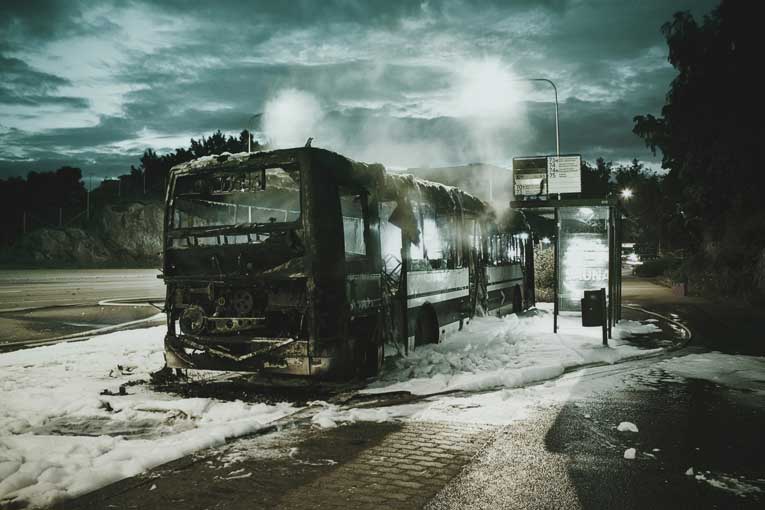
Burning Bus Extinguished by Fluorine Free Foam
Burning Bus Extinguished by Fluorine Free Foam. Image credit: Unsplash

Class B foams are used to address the two primary types of fuel hazards – hydrocarbon and polar solvent.

Hydrocarbon fuels typically have a lower density than water and are not water miscible – i.e., gasoline, diesel, and aviation fuels.

Polar solvents include fuels such as ethanol, methanol, and isopropyl alcohol, which are miscible with water.

AFFF foams are used to create a foam blanket that readily spreads across the surface of the fuel separating the fuel source from the oxygen in the air and drainage of the foam blanket provides continual cooling to the surface of the fuel.

Alcohol resistant AFFF (AR-AFFF) firefighting foams have an additional feature that includes polymer(s) that are insoluble in the fuel.

These polymers precipitate out on the fuel surface and provide protection for the foam blanket from the polar solvent fuels that are hydrophilic (attracted to water).

This foam blanket separates the fuel from the oxygen in the air, suppressing the fire.  

Perimeter Solutions’ new SOLBERG® VERSAGARD™ AS-100, is a fluorine-free alcohol type concentrate (ATC™) proportioned at 3% for both hydrocarbon and polar solvent fuel fires.

This is a tremendous advantage for municipal and/or industrial firefighters because they don’t have to worry about whether the foam they are using is the right foam for the job. 

With all the focus on the use and regulations around PFAS based foams, there is little attention being paid to the inclusion of certain kinds of siloxanes in new fluorine-free solutions.

Some of these siloxanes are very persistent in the environment, and they are facing the same environmental pressures as fluorinated chemistries.

In fact, regulatory bodies including the Stockholm Convention for Persistent Organic Pollutants and California’s Prop 65 have already flagged certain siloxanes for their environmental persistence. 

Case Studies – Making the Move to Fluorine Free 

Perimeter Solutions is working with many customers to help them transition their fire safety systems. Each project is unique based on the customer, their industry and how old the system is that they are replacing. 

One of the more recent projects we completed was with the Lehigh Valley Airport Authority.

They were interested in updating the fluorinated foam system used in one of their 40,000 square foot hangars.

This is considered one of the largest hangar sizes and is a National Fire Protection Association 409 Group 1 hangar.

That means that it requires an aircraft access door height of more than 28’, it can house an aircraft with a tail height over 28’, and that it needs to have a single fire area in excess of 40,000 square feet.  

We helped the Airport Authority to convert its deluge fire sprinkler system, which was designed for 0.16 gallons per minute per square foot.

We were able to retrofit that existing system to use SOLBERG RE-HEALING™ foam 3%, fluorine-free 3%. This version of RE-HEALING foam has the exact same design application rate as the AFFF foam that they were previously using. 

By selecting a foam with the same design application rate, the customer didn’t need to change out its discharge devices, or the piping infrastructure, dramatically reducing the amount they needed to invest to upgrade.

It was simply a matter of bringing in new foam storage, a change in the proportioner, and a change in the foam.  

Another project recently completed involved the installation of a foam system at an 800,000 square-foot flammable liquid storage facility.

This was a racked storage facility that included a significant amount of flammable and combustible liquids on the property – both hydrocarbon and polar solvents. 

The facility needed to transition to a versatile foam that would allow them to extinguish fires regardless of the fuel source.

Based on its versatility, the customer decided to use VERSAGARD AS-100 and has had great success with the new foam. 

Fluorine Free Foam Technology- A Look Ahead 

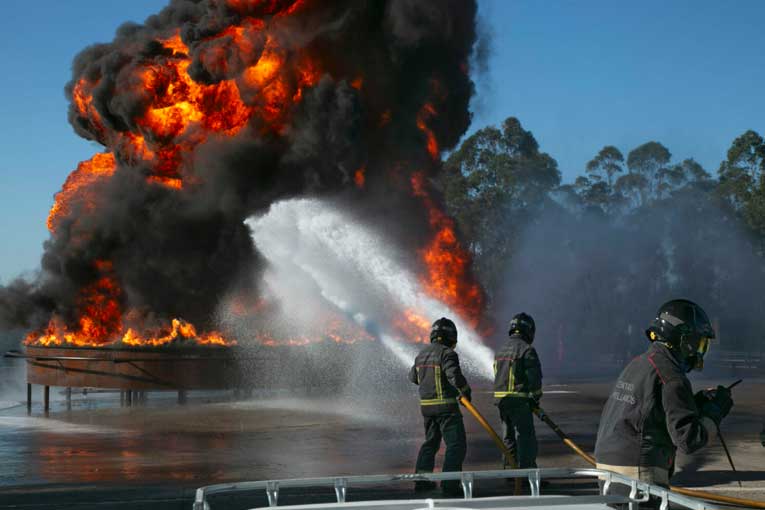
Fire Fighters Using Fluorine Free Foam
Fire Fighters Using Fluorine Free Foam.

Both of these transitions demonstrate that fluorine-free foams can now meet the needs of end-users who are looking for alternatives to legacy AFFF and AR-AFFF foams.

It will still be some time before AFFF and AR-AFF foams are completely replaced by fluorine-free alternatives, but we will see more of it in the next few years as regulations and requirements are updated.

In fact, the United States Federal Aviation Administration (FAA) recently issued a certification alert that removed a mandate to use fluorinated foams.

The FAA didn’t alter the existing performance specifications within the certification, so fluorine-free solutions must meet those specifications, but this shows that US agencies are creating inroads for fluorine-free technology. 

The U.S. MIL-SPEC is also expected to transition to fluorine-free foam, and the U.S. military has stated that it will no longer purchase and/or use fluorinated foams starting in 2024, except for shipboard for the navy.

For those of you that have been around since the early days of AFFF and AR-AFFF, you may recall that they were proportioned up to 9% foam concentrate. 

Through continued innovation, those percentages dropped to 3% and in some cases all the way down to 1%, meeting or exceeding the same level of effectiveness.

It is likely that fluorine-free foams will see the same type of development and will ultimately catch up to the legacy foams with the same proportioning percentage and application rates.

About the Author

Craig McDonnell is the General Manager at Fire Suppressions Americas, Perimeter Solutions profiles the history of fluorine-free Foam