Exclusive: The future of foam with Fomtec

Fomtec looks at some of the challenges around firefighting foam in the Middle East

Foam remains the predominant agent for use on liquid hydrocarbon fuel fires because of its unique ability to both extinguish and to provide post extinguishment security against reflash, which other agents are unable to do. The majority of firefighting foams have for more than 50 years been based on “fluorine chemistry”.

This chemistry was extremely beneficial to the fire performance of the foams but environmental concerns on the impact of PFAS mean that in many parts of the world there are already restrictions on what foams can be used and how they can be used. These restrictions are likely to see the use of our current PFAS containing foams having an end date in the next decade – in some locations and for some industries this end date has already past.

Environmental transitions

The Middle East Region is one of the largest producers of oil and has an increasing downstream petrochemical industry. This allied to the requirements of municipal, military and aviation fire and rescue services means that the region has an inventory of firefighting foam in excess of 10 million litres that should be considered for transition to more environmentally responsible fluorine free foam (SFFF) in the coming years.

Fomtec was established in 2001 and since then has earned a reputation for the supply of high performance foams and for formulating an extensive range of products to meet their clients requirement. Fomtec has sought to be customer focussed and to provide innovative solutions for their clients needs.

Fomtec’s commitment to continuous development has seen the company forge a presence in a market that was for so many years dominated by large corporations. Fomtec has committed significant resources to the development of high performance fluorine free foam agents and the Enviro Programme today stands at over 2,000 full scale fire tests with the Enviro range of foams boasting more than 15 different products for different applications.

Of particular note is the fact that Fomtec was the first company to achieve an FM Approval for a fluorine free foam suitable for use on water miscible fuels through a standard sprinkler. This was achieved in 2021 with the ENVIRO ARK.

This transition away from PFAS containing foams is not without it’s challenges and these will be faced in the Middle East region as well. The current SFFF’s commercially available are rarely “drop-in” replacements and the need to adopt a holistic approach to the design and deployment of SFFF’s rather that the PFAS containing foams is critic if the mission to suppress a liquic hydrocarbon fuel fire is to be successfully achieved.

The safety margins that we were used to with our AFFF’s and AR-AFFF’s were generally forgiving when foams were used with foam proportioning and discharge devices that the foam was not actually tested and approved with. Fomtec’s experience with our Enviro range of foams is that making that assumption is not a safe policy.

Tried and tested

Fomtec works in the principle of data not opinion, such that when we promote a foam solution to a client it is backed by testing and approvals to established international standards, witnessed and approved by independent third parties such as FM or UL.

Since we launched our Enviro range of SFFF’s we have worked with end users on their transition projects by sharing our data and clearly defining what has been tested and proved, and what has not. This in some cases has led to establishing fire performance test programmes with specific discharge devices and / or specific fuels to prove the suitability of the foam system solution. We are looking at the IFSJ Conference as an opportunity to meet key industry professionals and share our experiences .

Fomtec have never tried to say that fluorine free foams perform the same as PFAS containing foams but after 2,000 + fire performance tests and participation in many end user evaluations we are comfortable in saying that “Fluorine Free Foams DO work”. We will use the IFSJ Conference as a platform to explain why we are comfortable in making that statement, and discussing the data that we draw upon that allows us to state this.

We are excited that the Conference will also allow us to hear from industry leaders how they think the transition will take place in the region and further how fire professionals in the region will embrace (or not) the new “fluorine free foam” technology. We are also keen to learn if there are other factors unique to the region that will impact the transition. We look forward to meeting like minded professionals and sharing information.

Dafo Fomtec is proud to be a Gold Sponsor at the forthcoming IFSJ Leader in Fire & Safety Conference in Dubai. Fomtec is a Sweden based manufacturer of firefighting foam concentrates and foam systems and firmly supports events such as this where valuable knowledge can be shared between manufacturers, consultants, and end users.

This article was originally published in the March edition of IFSJ. To read your FREE digital copy, click here.
Lithium Ion Battery Dangers: Understanding the Risks

Lithium-ion batteries (LIBs) are widely used in portable electronics and electric vehicles (EVs), and they are now a part of everyday life.

Lithium-ion batteries offer a number of advantages, but if damaged, mishandled or poorly manufactured, they can suffer stability issues and be subject to what is called a ‘thermal runaway‘.

Thermal runaway is a chain reaction within a battery cell that can be very difficult if not impossible to stop once it has started.

It occurs when the temperature inside a battery reaches a point that causes a chemical reaction to occur inside the battery.

This chemical reaction produces even more heat, which drives the temperature higher, causing further chemical reactions that create more heat.

In thermal runaway, the battery cell temperature rises incredibly fast, often within seconds and the energy stored in that battery is released very suddenly and violently.

This chain reaction creates extremely high temperatures and if the right conditions exist, significant explosions.

The associated hazards then are fire, explosion, electric arc flash, highly toxic gases/fumes, chemicals, potentially high voltage, potentially high currents.

In addition to the super high temperatures generated by a Thermal Runaway incident, the “smoke” emanating from a lithium-ion battery fire is actually a vapour cloud containing a cocktail of highly toxic acids.

This includes hydrogen cyanide, hydrogen fluoride, and hydrogen chloride as well as gases such as methane and ethane and other toxic organic compounds such as benzene, styrene and acrolein.

This cloud is lethal to an unprotected person.

The thermal runaway phenomenon is well recognised, and it can be mitigated against providing awareness and prevention actions are taken.

The aim of training is to raise awareness of the hazards of lithium-ion battery systems, and to assist and support employees to work safely around LIB battery systems and to educate people of the risks within their own homes.

What’s Being Done to Combat Lithium Ion Battery Fires?

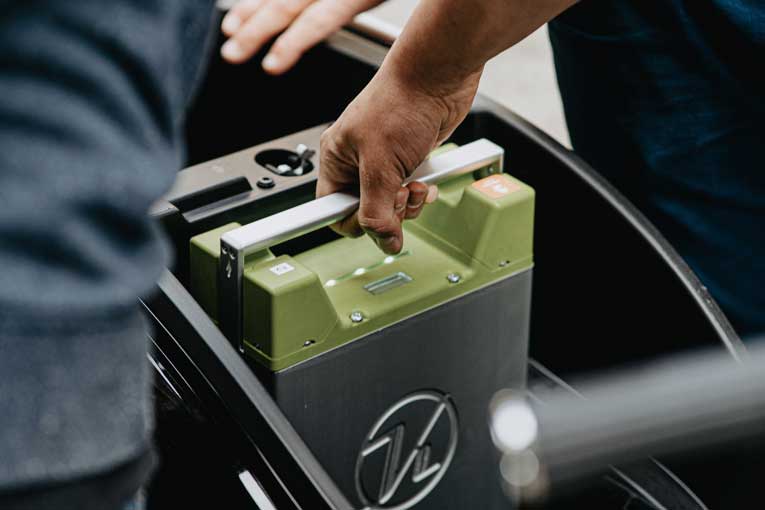
Electric Scooter Lithium Ion Battery
Electric Scooter Lithium Ion Battery. Image credit: Unsplash

Considerable research is being undertaken to determine why thermal runaway occurs and how it can be prevented.

LIB manufacturers are also looking to build detection and extinguishing capacity into LIBs, but all this will take time and considerable cost.

This is why as Fire Safety specialist we feel training is essential in the interim period.

We have also, with our associates, produced thermal material sacks and thermal blankets with built in detection until LIBs are safer and easier to extinguish.

Training on Lithium Ion Battery Dangers

JGS Fire Safety has been working with the world’s leading scientists, fire experts and energy engineers.

Their aim is to develop a series of online Lithium-ion Battery Safety courses for personnel who handle, store, transport or work in the vicinity of lithium-ion batteries and those who may have to extinguish the fires or deal with an incident.

In addition, with more people working remotely, the potential risk for incidents within the home is increasing and these types of incidents are routinely being reported in the media around the world.

The courses are the only ones approved by the Institute of Fire Safety Managers (IFSM) and have CPD accreditation.

They are also accredited with the Nautical Institute for the maritime environment.

At JGS Fire Safety, they consider it essential that clients have training ratified by external independent accreditors.

Why Were Online Courses Developed?

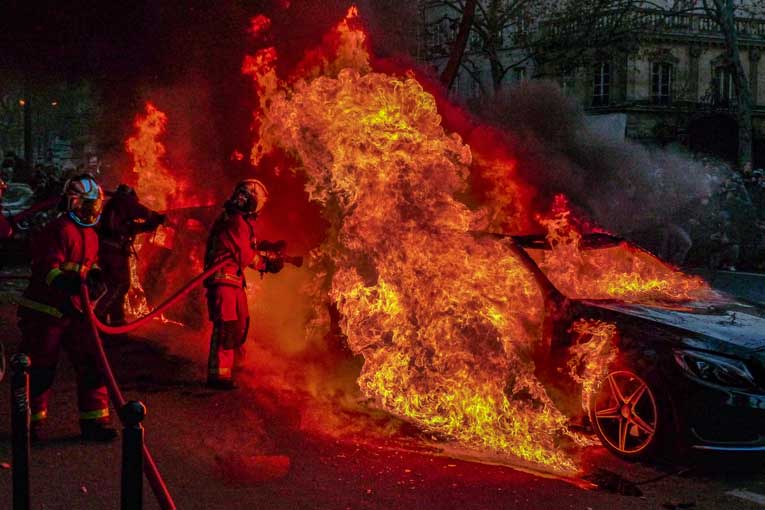
Firefighters Extinguish Burning EV
Firefighters Extinguish Burning EV. Image credit: Pexels

We work with companies who provide risk assessment and risk mitigation in high-threat environments and LIBs were being recorded as having started fires, or gassed off, in these environments.

Very few people were aware of the thermal runaway phenomenon at the time, so they set about finding out about the associated risks because many clients were using LIBs.

In doing so, they realised that an LIB incident is particularly hard to deal with and that many Fire Services had not, at the time, set up any Standard Operating Procedures to deal with them.

Currently there are no ISO’s for dealing with lithium ion battery dangers and most British Standard/EU Standards, or sector specific guidance, deals only with the construction of batteries.

They also realised no awareness courses existed.

Thus, they identified the problem and then implemented practical operational solutions and training to mitigate the risks to our clients.

Who Are the Courses For?

The courses are for people who handle, store, transport or work with lithium ion battery powered devices such as laptops, mobile phones, tablets, tools, appliances or energy storage equipment and electric vehicles.

This could be in their workplace, in their homes, travelling or during leisure time.

Currently people that are doing courses come from the maritime Industry, waste services, e-bike providers, fire safety managers, H&S Inspectors, mining, transport providers, cadet corps and school children.

They are in discussions with a local authority Fire & Rescue Service to provide courses to their Protection Officers initially.

These officers liaise directly with businesses within their areas and following the initial courses it is proposed to offer the courses to all operational and non-operational staff.

They offer greatly reduced course rates for the Emergency Services as a way of giving back to the people who gave me my opportunity in fire safety and who continue to do such great work for us all.

What Do the Courses Cover?

Module 1

Awareness of LIBs – ensures that students will be able to understand the hazards and dangers of lithium ion batteries, identify warning signs for lithium-ion battery incidents – especially potential vapour cloud explosion and thermal runaway fires and recall initial action if you are the first person on scene at a potential gas venting or fire.

Module 2

Dealing with LIBs Incidents – ensures the students understand the hazards and risks lithium ion battery fires pose; understand how you can potentially prevent and/or spot a LIB overheating; the initial actions you must take if you are the first trained person on scene; various techniques you can use to fight a lithium-ion battery fire and what to expect if the fire is out, but the battery is in thermal runaway; understand the structure of operational response (bronze) and tactical response (silver); and ways in which you can prevent a lithium-ion battery fire from occurring, looking at best practice.

Module 3

Strategic Management of LIBs – aims to build on the learning from our level 1 and 2 courses which considered the hazards and how to deal with lithium battery incidents.

The assumption is that anyone undertaking this course has completed at least one of these previous courses and has a working knowledge of the risks.

The learning aims of this course focus on how a student would assess and deal with a significant lithium ion battery fire in their business or organisation.

It stresses the importance of developing proper procedures for dealing with the dangers and challenges their staff could potentially face.

The course focuses on three areas of priority:

  • early Information and detection (EI)
  • early Intervention (EI)
  • Operational Handover to emergency services (OH).

By the end of Module 3 the student will be able to: understand the risks – and understand the importance of EI, EI, OH, and what systems can be adopted to implement a successful fire strategy, deploy a solution, understand ways to contain Lithium-Ion battery fires, especially the importance of textile solutions and textile innovation, and understand the post incident actions to take following a thermal runaway incident.

Why Should People Undertake the Training?

At this time LIB fires are extremely difficult to extinguish safely and the gasses that are given off are extremely poisonous.

The fire is intense and at times explosive.

Fire spread is rapid and containment is challenging.

For these reasons JGS Fire Safety provide the courses that will help reduce the risk to the workplace, the home, and anyone who may have to deal with an incident.

Why wouldn’t you want to undertake this training?

We all have a duty of care, both to ourselves and to others.

For more information on JGS’s training courses contact info@jgsfiresafety.co.uk or visit the JGC Fire Safety website: at www.jgsfiresafety.co.uk.

This article was originally published in the March edition of IFSJ. To read your FREE digital copy, click here.
About the Author

Guy Solly is the Director at JGS Fire Safety Limited.

he joined the Fire Service in January 1986 aged 19 and little did he know the impact it would have on his life.

He served his whole fire service career within Essex, starting as a firefighter in Tilbury, before moving to Orsett when the Tilbury Station was closed.

Afterwards he got promoted and moved to serve in Grays, where finally after a total of 25 years riding fire appliances operationally he got promoted into the Technical Fire Safety Department as an Inspecting Officer.

This role gave him a greater insight into fire safety as a whole and provided the training and knowledge to assist others during his time within that department and then also following his retirement in October 2016.

He established JGS Fire Safety Ltd when he retired, with the aim to provide guidance, assistance, and support to clients and to raise the awareness of the fire safety issues which impact on everyone’s workplace and home environments.

They work with individuals and companies who are working on new ways to address the potential issues with lithium-ion batteries.

They are developing new ways of mitigating the effects of an incident and ways of dealing with a fire situation quickly, effectively, and safely.

Exclusive: The Invisible Risk with Chris Thain

Chris Thain, G3 Systems Business Development Manager, looks at the risk of cancer among firefighters

A seminar held on 22 November 2022 at Cranfield University, organised by John Lord, MD of Simtrainer UK and Alisdair Couper, MD of Terberg DTS, brought more than 140 Fire Officers from services around the UK together with Scientific researchers and Suppliers to discuss the cancer risks faced by those in the fire service. The seminar’s purpose was to spread important knowledge and to raise awareness and understanding of the risks posed by carcinogenic ultrafine particles (UFP) contamination and to discuss better ways to manage and mitigate this insidious health issue.

This hard hitting one-day seminar drove home the message that the incidence of cancer among firefighters is rapidly increasing and that the fire sector must act now to better protect its personnel from this malignant, life-threatening disease.

The key-note presentation was made by Anna Stec, Professor in Fire Chemistry and Toxicology at the University of Lancashire. Professor Stec has worked in the field of Fire Chemistry for over 20 years of and for the past six years has been researching and reporting upon the carcinogenic properties of fire emissions and their derived toxicology particularly in respect to firefighting. Commissioned by the UK Fire Brigades Union, this independent research seeks to understand the link between firefighters’ occupational exposure to toxic fire effluents, and cancer and other diseases.

The report not only provides evidence of the heightened risk faced by firefighters through their work, but also delivers clear and authoritative guidance to fire and rescue services across the UK about the measures they can take to minimise firefighters’ exposure to contaminants.

Exposure to ultrafine particles

Professor Stec explained that any products of combustion, from the smouldering embers of a wildfire to the exhaust gases from an aircraft jet engine on an airport stand, will emit large quantities of carcinogenic UFP, both in gaseous and particulate forms.

UFP are lighter than air and can travel significant distances from the actual source of combustion, and can deposit or condense in large quantities, particularly on the clothing, equipment and appliances used by firefighters when dealing with an incident. Furthermore, the fire-retardant chemicals used on modern fire kit will ‘gas off’ when subjected to extremely high thermal temperatures, again emitting carcinogenic UFP.

Abby Hannah, a Biomedical Scientist focussing on particulates at Stedfast Barrier Technologies informed the audience that these ‘ultra-fine’ can easily be breathed into the lungs if inadequate or no respiratory protection is being utilised, resulting in the possibility of lung cancers developing.  

They can also be ingested with food and drink if hands are not cleaned prior to eating or drinking, resulting in stomach cancers and finally, these particulates are very easily absorbed into exposed skin and then into the bloodstream, if proper barrier protection is not worn or is not decontaminated properly after exposure to combustion, either at an incident or during live fire training. This can lead to skin cancers, brain cancer, leukaemia, testicular cancer, breast cancer, bladder cancer, Non-Hodgkin’s Lymphoma, and many other fatal cancers.

Thorough Scientific Research

Professor Stec and her team at UCLAN have conducted thorough scientific research over the past six years to establish the types, quantity, and dispersion of UFP affecting firefighters in the United Kingdom. 22 Fire Stations were swabbed for UFP, with over 1000 samples taken from work surfaces, fire kit, appliances and from skin samples, and the results analysed at the University of Lancashire. It was discovered that high quantities of UFP were omni-present in Fire Stations, not only in the appliance bays and fire kit storage areas, but also in the officers’ offices, around their desks and computer keyboards etc.

Helmets, flash hoods, gloves and fire kit were obviously highly contaminated, as were SCBA and respirator filters. It is highly recommended that BA should not be removed prematurely or donned too late.

It was also worrying that often firefighters or technicians would clean SCBA sets and replace filters back at the Fire Station without wearing RPE when doing so. It was stated that the smell of smoke in a Fire Station was indicative of odourless Benzene UFP contamination that was 50% higher than the maximum safe level. Good ventilation is essential in Fire Stations and particularly in any areas where fire kit is stored.

Research from 10,600+ UK firefighters has shown that 84% attended fires without wearing RPE, 82% admitted to eating or drinking while in their PPE (fire kit) and 63% admitted to not washing their hands before doing so. Only 58% changed fully changed their uniform/workwear following attendance at an incident.

Exposure Prevention

It is essential for firefighters to remove contaminated fire kit as quickly as possible after use and to bag it up in plastic bags, ready for professional decontamination. Dirty fire kit should be stowed in a ‘dirty zone’ on the appliance, not in the crew cabin, which should be designated as a ‘clean zone’.

Efforts should be taken to ensure that dirty fire kit and clothing does not cross-contaminate clean fire kit and clothing. This may mean Fire and Rescue Services investing in additional fire kit and workwear for all firefighting staff.

Fire kit and workwear should be professionally laundered, either on station using washing machines and detergents designed for the purpose or sent to an outsourced OEM/service provider/laundry that can handle UFP contaminated clothing. This will also avoid firefighters taking contaminated clothing home to be laundered, thus exposing their families to this unseen carcinogenic hazard.

It is also strongly advised that FRS encourage all operational personnel to record and monitor their attendance at fire incidents over the course of their career to maintain an ‘Exposure Log’.

Early detection can have a significant impact on cancer survival rates. Of firefighters diagnosed with cancer, 92% were diagnosed at terminal stage. Only 8% receive an early diagnosis. This is why it is essential for all firefighters to have regular, early health screening.

Preventative health screening programs should be initiated annually for all firefighting staff and firefighters actively encouraged to ensure that their Doctors/GP’s register their occupation on their medical records.

Firefighters should ask their Doctor/GP for a blood test highlighting the common clinical markers for cancer detection. Firefighter Instructors should be tested biannually.

It was also emphasised that following a trial in Edmonton, Canada, an effective health screening programme can be more cost effective for the employer in the long run as staff medical problems caught early are less costly to the organisation over the longer term.

Recommendations for Firefighting Personnel

Respiratory protective equipment (e.g., SCBA) should always be worn whilst firefighting This should also include during salvage and turning over activities and other activities undertaken by FRS personnel (and/or others) after firefighting has been completed, but whilst the building contents are still ‘gassing off’. Respiratory protective equipment (RPE) should be one of the last items of PPE removed during de-robing (after decontamination).

PPE that is suspected of being contaminated should be transported back to the station or workplace in an air-tight container to prevent cross-contamination. “Scrub then grub” – Avoid eating, drinking, or smoking with unwashed hands whilst wearing, or after de-robing PPE that may be contaminated.

After attending a fire incident, all personnel should change into a set of clean, dry clothes as soon as possible, ideally before re-entering the appliance (or any other vehicle). PPE should be clean and should be thoroughly decontaminated after every incident to avoid a build-up of toxic contaminants. PPE should be inspected for wear and damage on a regular basis and replaced as necessary.

It is important to protect areas of exposed skin and airways when cleaning soiled PPE/equipment. This requires appropriate respiratory protection (e.g., face masks or face coverings) and gloves. “Shower within an hour” when returning to the station from an incident or following a live fire training exercise.

Regular health screening and recording attendance at fire incidents over the course of a firefighter’s career is strongly advised and will be key to the longer-term monitoring and management of health.

Recommendations for Fire and Rescue Services

Every Fire and Rescue Service (FRS) must have fully risk-assessed decontamination procedures (en-route to, during and after fire incidents), and ensure all relevant staff are trained in implementing these procedures. All FRS personnel should receive regular and up-to-date training on the harmful health effects of exposure to toxic fire effluents, and how these exposures can be reduced, minimised, or eliminated.

All FRSs should have policies in place for the routine care, maintenance, inspection, and professional cleaning of PPE. Finally, establishing and strictly maintaining “designated zones” within the fire station must be a priority for preventing cross-contamination. PPE should never be worn in areas of the station designated a clean zone (e.g., kitchens, living quarters etc.) and should be stored away from personal items.

This article was originally published in the March edition of IFSJ. To read your FREE digital copy, click here.
Exclusive: Protecting critical assets with Reacton

Ed Chivers, Global Product & Certification Director at Reacton talks about automatic fire suppression and Reacton’s plans in the Middle East

Reacton are global manufacturers of automatic fire suppression systems, providing industry-leading fire protection for a range of critical assets and industries. Our systems protect assets as small as residential kitchens, electrical panels and enclosures and as large as heavy plant and machinery, mining vehicles and buses and coaches.

Reacton systems are automatic and require no external power for operation, meaning your critical assets are protected even during any downtime. The system utilises a pneumatic tube as our means of fire detection, when the tube detects a fire it will burst which triggers a loss of pressure and the activation of the system.

From this, the extinguishing agent is delivered via the discharge network consisting of the discharge hose and nozzles (for our indirect system) or straight to the point of detection through the detection tube (in the case of the direct system).

We are proud to have numerous global partners who are supported by our international branches. With offices based in Phoenix (USA), Essex (UK) and Dubai (UAE), our offices and the expert teams behind them we ensure that all of our partners receive the best support possible.

The Middle Eastern market is of particular interest to Reacton and is very heavily supported through our office in Dubai, UAE. The growth that areas of the region has seen over the past 30 years has been incredible and with discussions of further developments being made, there is a lot of opportunity for Reacton to showcase our global presence.

With an industry-leading product and various global approvals to support us, we have already had an impact in the Middle East and have plans to continue this. In November of 2021, we announced our partnership with Tabra Trading who specialise in vehicle safety. We are proud to supply Tabra with systems and resources to protect thousands of buses across the entirety of the United Arab Emirates.

Our work with Tabra Trading is just one example of how Reacton has supplied industry-leading fire protection to the Middle East. We have had numerous projects in the past, in present-day and plans for future projects in the region as demand for our products grows.

There are multiple sectors of interest in the Middle East when it comes to fire protection, notably the vehicle industry which we have already been able to target. Our plans extend beyond vehicle fire protection in the Middle East, our systems are suited for an array of sectors with common components and factors involved- making the Reacton system versatile and suitable for any market or industry.

Reacton is a Silver Sponsor of the IFSJ Leader in Fire & Safety Conference which will be held on Thursday 11 May 2023 at The Grosvenor Hotel, Dubai Marina. For more information please visit https://ifsjleadersinfireandsafety.com/.

This article was originally published in the March edition of IFSJ. To read your FREE digital copy, click here.

Exclusive: The stress of firefighting with Fire-Dex

Lauren Burke DeVere, President, Fire-Dex talks about the impact of firefighting on mental health

The physical dangers of working in fire service are well known. Fewer people, however, are aware of the psychological risks that come with the job.

Fear, stress, anxiety, depression—firefighters commonly experience a range of negative emotions when performing their duties. The intensity of traumatic events and the constant threat of danger can leave even the most veteran emergency responders feeling vulnerable. Understanding how to achieve and maintain good mental health is therefore essential for continued safety and long-term success in their careers.

Yet the topic of mental health is often swept up in the commotion of station life and quickly forgotten about. At Fire-Dex we manufacture head-to-toe turnout gear for fire departments and have become very aware of the mental health issues affecting firefighters.

Recognising the symptoms

The first step toward mental health preventive care is learning to recognise both physical and psychological symptoms. It is not uncommon for physical symptoms of poor mental health—fatigue, headaches, insomnia, digestive problems—to manifest themselves.

Psychological symptoms of deteriorating mental health may include difficulty concentrating, negative thinking, an inability to enjoy activities, difficulty connecting with colleagues, family and friends, and/or an overall feeling of being overwhelmed. If a firefighter notices that they are experiencing any of these symptoms, or that a fellow firefighter is struggling, they should not hesitate to reach out to a friend or counselor, or to gently open the door to a conversation as a concerned party.

PTSD is real, and it is a real problem for firefighters. About 20% of fire service professionals meet the criteria for PTSD at some point during their career according to a Journal of Occupational Health and Psychology study. To put this in perspective, less than 7% of the general population will experience PTSD over the course of a lifetime. It is important to stay mindful of the fact that one in five firefighters is likely to deal with the effects of PTSD at some point, which can manifest in different ways, some being more subtle than others.

Rest, relaxation and reflection

Self-care is important, and while it may seem obvious, all firefighters should permit themselves the necessary time to unwind. This may include relaxation techniques such as yoga or meditation, physical activities or exercise, getting enough sleep as well as maintaining a healthy diet. It can also help to develop and maintain a strong social support system; firefighters need to build relationships with fellow firefighters and friends both inside and outside of their organisation.

In conversation with fire service professionals, it has occurred to me that the personal problems these heroes face can seem insignificant compared to any number of disasters, emergency situations or other traumatic events they have experienced. Acknowledging that one’s own struggles and needs are both authentic and deserving is not an easy step. Allowing time to process these feelings can do just as much to put the mind and body at ease as rest and relaxation.

The power of words

It is also notable that good mental health is closely associated with healthy sleeping habits. Sleep itself is a form of self-care that can help to relieve mismanaged stress and anxiety that tends to build up during the day. Often, it is not until a person has managed to relax in a peaceful setting that these feelings begin to subside.

Studies on college campuses, in prisons and in rest homes, for instance, have found that journaling about negative events is an incredible way to process them. It is easy to be intimidated by the thought, or to think that one must write a lot in order to benefit; however, the simple act of repeating even one line over and over—of simply committing the thought to paper—can be therapeutic.

Or for those outright opposed to the pen, a peer support group can make it much easier to talk about the difficulties of PTSD. Many departments have formed their own support groups led by veteran firefighters. Breaking through the stigma of mental health is the biggest barrier to seeking out this type of assistance.

A study published in Psychiatric Services indicated that 58% of participants reported stigma-related barriers when seeking help for suicidal thoughts during their firefighting careers. Firefighters with fewer years of service were also less likely to access treatment than those with more years, which underscores the importance of educating young professionals, especially, to the effects of depression and PTSD.

When enough is enough

When the symptoms of poor mental health become too much to handle, seeking professional help is always the best course of action. Finding the right professional is essential; it is important that they not only have experience dealing with firefighters, but also that they are available in a timely manner as the circumstances of a career in fire service can change quite suddenly.

Feeling comfortable with this person is also important as it makes the process of sharing one’s inner thoughts and feelings more bearable. If a firefighter feels they are not connecting with their therapist, they should not hesitate to look for a different one.

Mental health is an important issue, and it is essential to understand how to treat and prevent further physical and psychological issues. Recognising the symptoms, establishing a routine of self-care and speaking up when problems persist are all critical steps to maintaining good mental health.

For those seeking more information, organisations such as the Firefighter’s Support Alliance and the International Association of Fire Fighters through its Behavioral Health Program offer a variety of education programs and training sessions that can help individuals identify their problem areas and equip them with the skills to better manage stress and anxiety.

A career in fire services can be incredibly rewarding, but with this profession comes risks, both physical and psychological. Caring for mental health and well-being is key to ensuring that firefighters stay safe, happy and successful in their roles.

This article was originally published in the March edition of IFSJ. To read your FREE digital copy, click here.

Base of Operations: A Disaster Responder’s Home

Bruce Wong, Ambassador to Asia Pacific, Institute of Civil Protection and Emergency Management, looks at setting up the Base of Operations for search and rescue operations

The Base of Operations (BoO) is an important setting in international Urban Search and Rescue (USAR) operations. It allows frontline responders to be fully committed to performing their duties without worrying about resolving daily needs. Nowadays, cross-territorial support is very common in disaster response, such as flood response and wildland firefighting. The USAR experience provides us with a useful example.

When emergency response teams conduct cross-territorial missions, it is not feasible to have ceaseless logistic support since they usually travel a long distance to the disaster scene. They cannot request spare parts from their homebase or easily take rest at home. This means that they must be self-sufficient to ensure they are not a burden to the already overwhelmed place they are trying to assist. The affected place will likely be facing a shortage of power, food, water or other supplies, which is where a BoO becomes a viable solution.

The idea of a BoO stems from USAR. According to the International Search and Rescue Advisory Group (INSARAG) Guidelines, which are the recognized global reference documents, the BoO serves as the USAR Teams’ “Big Home” with functions such as headquarters, communication and transportation centre, equipment storage and maintenance hub, canteen, clinic, and accommodation. It applies in international USAR missions since air traffic can usually be controlled in major disasters, but reinforcement is not as easy compared to local operations. This article will look at BoO in USAR operations.

Location of BoO

The Local Emergency Management Agency (LEMA) is responsible for designating the location of the BoO because they are familiar the environment and facilities. In order to rapidly respond to the disaster and reduce journey time and travel distance, the BoO should be set up near the incident site and be easily accessible. In some countries, disaster prevention parks are built for mass evacuation as emergency shelters. These are equipped with a large number of water supply devices, drainages, and open areas making them a suitable location for the BoO.

Entrance and exit

Safety and security are important considerations during times of disaster as the risk of theft may be heightened due to people experiencing poverty and hunger. An entrance gate guard should be stationed to deter these types of crimes. In addition, a decontamination area should also be set up at the entrance gate for effectively preventing any contamination being brought into the BoO, such as bloods or contaminated soil. When the responders return from the incident site they should be required to clean their soles and change their rescue suits to ensure the BoO stays clean.

Command, coordination, communication and transportation centre

Disasters are time sensitive and all responders will be working around the clock undertaking life-saving tasks. For example, the management team needs to plan, coordinate and command the operation through the internal and external meetings based on the latest intelligence from the disaster scene and their homebase. The transport service should also be well-planned in advanced for carrying responders and equipment to and from the incident site. 

To meet these operational demands, strong communication support is necessary and mobile network service is essential as this allows the team to connect to the internet for operational purposes. It also enables footage at an incident site to be instantly transferred to the BoO to provide better command, coordination and communication of the situation. Traditional radio network and Inmarsat telephone are also important because the communication between incident site and a BoO can be maintained in case of network outage.

Equipment storage and maintenance hub

All equipment should be well prepared and in best condition for operation. However, it is unavoidable that repair will be necessary due to minor mechanical problems. The maintenance hub provides a good environment for inspection and quick repairs as well as serving as storage. In addition, the tent can also serve as the issuing and receiving point for equipment. For better delivery, equipment should be stored in weather resistant containers with different labels for easy identification.

Canteen

The duration of overseas USAR deployment is typically 5-10 days depending on the scale of the disaster and the capacity level of the USAR team. Catering is a basic need for every responder because food provides energy for life-saving activities. The canteen also serves as both dining area and a place for responders to socialise, talk and share together while having meal.

For the balance between health and operational need, ease of preparation, sufficient nutrients, freshness and the hygiene conditions of food should be taken into account. Meal, Ready-to-Eat (MRE) is commonly used in the industry. It is precooked, packaged and ready for consumption without prior preparation or cooking. Nowadays, the MRE is available in different flavors including spicy, halal, vegetarian and more options meaning it is not only plentiful but also diverse to suit different culture.

Staying hydrated is essential for human survival. Dehydration increases the risk for heat exhaustion and heat stroke. In the deployment, pre-packed water bins could be a consideration. Alternatively or in addition, a water purification device can also provide a continuously clean water supply in the BoO.

Clinic

Medical support is necessary in a BoO as the responders might not acclimatise during the deployment or, in the worst scenario, the may suffer a work injury whilst on the job. The medical tent provides a clean and comfortable environment for emergency treatment and recovery. Isolation areas should also be set up for infectious disease case.

Accommodation and Bathroom

Inadequate sleeping can seriously affect performance which is why responders need a comfortable environment for high quality sleeping. Different types of accommodation are available on the market, such as 1-2 person camping tent or an inflatable tent which can accommodate 4 to 6 persons. A foldable bed could be used if necessary.

Good personal hygiene is important to prevent the spread of communicable diseases and support positive mental health. The mobile toilet is a must for satisfying basic physiological needs. Portable toilets with wastewater tanks or urine absorbers are commonly used for deployment. In some countries such as Japan a mobile toilet unit converted from lorry may be used.

After a day of hard work, everyone also wants to have a good shower. Nowadays, camp shower can help to provide a comfortable temporary shower – it is easy to set up in a tent quickly and heat up the water after few hours with direct sunlight.

Water supply is a valuable resource in disaster scene which can be found in parks, arenas, football stadiums or via fire hydrants. However, if the infrastructures such as water pipes are damaged, or the BoO is set up in a location where there is lack of water supply, bathing would become be less important.

Formation

It helps to operate the BoO rapidly. More and more USAR teams use rigid framed or inflatable tents because they are both easy to store and set up quickly using only a few people. In recent years, the military techniques also apply to the search and rescue field. A folding-modular hub is one example: this is an integrated module which can be flat packed for transport and be connected with other modules to enlarge workspaces.

Electricity Supply

A mobile generator is the sole solution for providing electricity supply to the BoO. The number of generators and the amount of its fuel are based on individual operation. Noise is a big issue as it might cause disturbance to the responders nearby. It is more acute when generators are operating at night time. Luckily there are inverter generators on the market which can reduce noise emission.

Waste

The management of waste is necessary to protect the environment and maintain hygiene in a BoO. The wastes which come from BoO are solid waste, wastewater, and clinical waste. Usually, the solid waste can be handled as general waste. But the wastewater from cleaning, showering and dining should be as filtered before discharge to sewer as possible. Clinical waste, such as needles, cartridges which have been used as well as surgical dressings should be segregated from other solid waste and be packed by designated containers.

Conclusion

The experience from USAR operation is worthwhile to learn and enhance the capacity for long-distance deployment. However, the BoO setting is flexible and different teams can have their own design regard to the conditions, resources and operational needs at the scene.

This article was originally published in the March edition of IFSJ. To read your FREE digital copy, click here.

IFSJ Exclusive: Wildland firefighting with Vallfirest

Vallfirest looks at the changing face of wildland firefighting and how its Tactical Unit a responds to new lessons learned

Just one month into the year 2023, fires are continuing to provide new lessons—lessons that we must continue learning. In this case in particular, we are referring to the simultaneous large forest fires in Chile where the emergency climax extended for more than a week and more than 300,000 hectares have been affected with entire neighborhoods burnt down and thousands wounded with some even dead.

Given the magnitude and complexity, it is an episode that led to the mobilisation of specialists and operational forces from beyond the country’s and even the continent’s borders.

A Global Problem

This is not a single episode or something that sporadically occurs. In 2017, Chile already witnessed the occurrence of multiple fires with extreme and sixth-generation behaviors such as the one at Las Máquinas. There has also been simultaneity in the northeast of Argentina (2022, 2023) as well as extreme events, such as in La Pampa (2018) and Patagonia (2021); and in Bolivia, no one can forget the Roboré fire with one of the fastest spreads seen thus far (2019).

This is not something that only happens in Latin America as it is recurrently seen on the west coast of the United States. These fires have also been seen in Australia (2020), in Siberia, in the Mediterranean Arc countries affected by the dust cloud advection from the Sahara Desert in 2021, and throughout Europe in general following heatwaves, prolonged periods of drought and dry lightning storms.

Fires of this magnitude are not typical of a specific ecosystem or climate, but rather viewed as a worldwide disturbance occurring more and more often and conquering more and more regions across the planet.

Global Knowledge

The worst episodes have revealed the need for more resources beyond those of the affected state, like in Chile, as already mentioned, or in France which activated the European civil protection mechanism (RescEU) last summer, receiving help from Germany, Greece, Poland, Romania and Austria.

However, the truth is that there are countries for which this current reality is relatively new and the knowledge of or possible experiences involving emergency management are also new. Hence, the importance of international cooperation, which allows everyone to grow by nourishing and learning from the diversity of situations and local knowledge.

At Vallfirest, we are aware of this importance and put it into practice by actively working with leaders from around the world and experts in different subject areas: analysts, operational forces and sector professionals who transmit their needs and experiences in the field.

We firmly believe that this is one thing that makes us stand out above other manufacturers. We closely follow fire news, analysing what is happening on the ground internally, and actively surveying and listening to the professionals who test our products before launching them on the market.

We implement the improvements they recommend and never consider anything finalised because this constant feedback encourages us to continue searching for innovative solutions to the ever-changing and increasingly challenging reality for everyone.

Innovating how we work on and think about fires

In recent years, we have observed a real jump in behavior: unprecedented dry periods, increased average temperatures, pyro phenomena or firestorms, wildland fires capable of modifying the environment while destroying ecosystems and the populations within them. The rules of the game have changed.

Fires can no longer be faced by increasing resources because more often than not, they simply exceed the extinguishing capabilities. Just to give an example, a direct attack with a water line is considered neither safe nor effective from the ground when the height of the flame exceeds three meters; and five meters when using aerial means.

This is why we must move from the obsolete traditional methods of extinction to others requiring strategical thinking, the application of advanced maneuvers and the use of new equipment and tools that help services as a whole avoid collapse with the ability to respond to extreme situations, thereby guaranteeing the safety of their forces.

Any talk of extreme behavior must also refer to sudden changes in propagation speeds, directions of advance and the intensity of fires. Being able to anticipate these changes makes the difference between having to face an active front a few dozen meters wide and one that’s several kilometers wide. It can also make the difference in situations of life or death.

Tools alone can really do very little. The key lies in human resources having up-to-date knowledge and a developed capacity to read and analyse fire behavior, knowing when and where there is a window for action, and knowing which maneuvers should be deployed when the opportunity arises. But the other side of the coin is that it’s impossible to rapidly and decisively respond as required by these new types of emergencies without the right tools. 

A toolbox for this global nature: The Tactical Unit

Analysing the situation on a unit level within extinguishing services, the need to provide teams with greater independence becomes clear. This involves training that allows them to quickly analyse situations and, above all, make decisions all while gaining muscle when it comes to extinction.

And that’s how the Tactical Unit came about. It’s a multifunctional module designed to handle any type of vegetation fire emergency in any possible scenario that may be changing either because the vegetation or terrain makes work difficult, because resources are limited or because the fire becomes more violent.

The Tactical Unit is a revolutionary, unprecedented tool. It’s a fire truck and a toolbox with great off-road capability. This means remote areas will no longer be a problem. But beyond that, this module enables the use of many different maneuvers to adapt to a whole range of scenarios that may occur during a wildland fire from transporting the emergency robot Dronster, a Heliskid helitransportable defense system, portable fire pumps, extinguishing tools, PPE, self-protection equipment in addition to other firefighting accessories

Many may be familiar with situations where aerial means cannot be operated or where the fire front considerably progresses in just a matter of hours due to local wind conditions in addition to scenarios where changes in wind direction or any change in fire behavior can compromise a maneuver.

These are situations where having an emergency vehicle capable of reaching remote areas and enabling the best combination of maneuvers without all those tools together creating any limitations is decisive. In other words, having the possibility of deploying a Heliskid to lay a water line, using a Dronster, having hand tools to mechanically draw defense lines, and added to all this, using drip torches to apply technical fire.

The Tactical Unit is the futuristic solution we are offering for today’s needs. Our goal is to improve the responsiveness of extinguishing services, give crews the opportunity to anticipate and work safely and effectively, and adapt to each scenario and the potential variability with a range of high-performance tools that can be used alone or simultaneously. It is a logistics platform for working which combines advanced maneuvers all while multiplying the potential of extinguishing systems.

We are talking about frequent episodes like the one in Chile, which extend over time and take wildland firefighters to the limit as far as the physical and mental effort required. So, beyond the tools mentioned, no one must forget one key aspect which is safety, in addition to the possibility of transporting self-protection equipment with fireproof Xtreme Shelters, Xtreme-K breathing equipment for entrapment situations, fireproof curtains and self-protection lances.

Faced with a situation where fires are evolving, Vallfirest is revolutionising with an all-new generation of equipment designed for tomorrow’s fires.

This article was originally published in the March edition of IFSJ. To read your FREE digital copy, click here.

Exclusive: Feature rich, technology driven with MSA Safety

Jason Traynor, General Manager at MSA Safety, talks about the Middle East region and what to look out for at IFSJ Leaders in Fire & Safety Conference

What is MSA’s current position in the Middle East?

Over the past few years we’ve made some organisational changes to be able to more effectively support the fire and rescue services in the Middle East. The means having dedicated resources to help support the end users there.

We made a decision about a year and a half ago to hire people that are focussed specifically on fire – on breathing apparatus, on fire protective clothing, on fire helmets – and make sure that when they have a question about a product and need attention from MSA they have a dedicated resource to help support them. We wanted customers to feel peace of mind knowing they have a large multinational brand that is ready to support them.

What is the current state of the market for Firefighting Equipment in the Middle East?

It is a well-established market. It is sophisticated and users in the region value the products in a way that helps to make it an approachable market for someone like us. It’s not just a case of ‘we want the least expensive thing that meets the standard’ – there are real opportunities for growth in the region.

We had a multi-day meeting recently to talk about connectivity and the value to the end user of data that collecting knowledge about the product and people that are wearing it gives. That’s an area where we feel the market can go, moving from compliance and ‘meeting the standard’ to something that is more feature-rich and technology driven. This is not necessarily unique to the Middle East, but it is an example of an opportunity where better technology could enhance the experience for the end user.

Do you have any key considerations when catering to Middle East end users?

When I think about heat stress and physiological monitoring and core body temperature specifically, the Middle East is top of mind because of the extreme weather. We needed to develop products in a way that protects the firefighter but doesn’t overheat them in extreme temperatures. Our product development is focused on the aspect of physiological strain on firefighters knowing that they’re wearing a lot of heavy equipment in a very hot environment.

It’s difficult for us talk completely generally as there is so much variability in the region as we work in several countries in the region all with different approaches. In the core countries (UAE, Saudi Arabia, Qatar, Kuwait) we have a uniform approach. Our go-to-market approach in the sales cycle has to be a little bit different because of the nature of the fire service in these countries, so we respect the tradition, and we try to most effectively serve the market with this in mind.

Do you foresee any significant developments in the region in the months ahead?

We try to avoid are region-specific product developments because when we think about an EN standard it covers a large area of the world. We want to bring scale to our investments, so we are conscious of the differences in regions and we work to build those into our product development process.

When we think about the M1 as a breathing apparatus, M stands for modularity. That modularity allows individual customers with unique needs to build or configure their product in the way that best suits them. We try to think about regional differences and flexibility with product design, to allow the end-user to more efficiently and effectively design a product that is going to fulfil their needs rather than saying ‘here’s our Asia Pacific SCBA, here’s our Middle East SCBA etc.’ because that just dilutes the product development efforts and makes less bang for the buck.

When we think about investing in new technologies we take into account through voice of customer and work with the different regions, but we don’t have a regional specific product effort, it’s always NFPA or EN.

That is kind of a long way of saying ‘no’ – it’s an interesting question, it’s just that, from a global product, standpoint we try to build solutions that are application specific more than region specific. It means that we understand firefighting and the demands that that brings and try to solve unmet needs that are globally relevant for the application of firefighting more than a unique regional need.

That said, if there is a contract or opportunity that requires unique product development we are flexible with regards to being able to tailor a large customers needs. One example happened in Kazakhstan several years ago: we had a large oil and gas customer there that would function at negative 40 degrees centigrade and so we went through a product development effort to be able to support an extreme cold solution.

Has there been anything that you have learned from have a presence in the region and speaking to your customers that you’ve been able to apply to your products?

Voice of customer is a really important part of our process. We have a long history and a well-established brand in the Middle East, so it gives us an opportunity to meet with end users and understand their needs.

We’ve done a lot of that with Saudi Aramco Special Fire Brigade, with Civil Defense Saudi Arabia, with Abu Dhabi National Oil Company, and with Dubai Civil Defense. One specific thing we learned were the differences in cleaning a how a product is cleaned and maintained and that casued us to consider different make ups and compounds.

As an example, this would be looking at face piece where the cleaning agent might react well with one product and less well with another. Talking with customers in the region and understanding their needs has led to solutions that we would not have thought if we only considered how products were looked after in the US and the UK.

What do you expect to see in the region in the years ahead?

We see it as an emerging region in terms of opportunities for growth for MSA. It’s a region that we’re happy to be investing in and be present in, and we look forward to having those dedicated resources to drive MSA’s value proposition. It’s a region for MSA that is important for investment, for growth, and for opportunities to enhance the end users experience through technology. 

What does it mean to you to be attending IFSJ Leaders in Fire & Safety?

Our connection with the IFSJ team has been really positive so we’ve got a lot of confidence in your team to put on a great event. In terms of Leaders in Fire, we consider ourselves a global leader in the fire service. What that means in terms of product and production is that we’re the leading manufacturer of breathing apparatus in the world, we’re the leading manufacturer of fire helmets in the world, and the leading manufacturer of fire protective clothing in the world.

When we talk about leaders in fire in the region, we ought to have a seat at the table. Listening to the needs and applying our ability to make change and drive innovation to supports that, so when we heard about this event the thought process was that we should certainly have a presence and should be not only talking but listening at the day’s event.

What will MSA be focusing on for its presentation at the conference?

There’s two things, somewhat in parallel. One is the opportunity that being a head-to-toe manufacturer brings us. If you think about fire protective clothing and its interaction with the breathing apparatus, with the collar on your jacket, and with the face piece and hood and helmet, MSA is in a position to control that whole system. We have designed a system that was thoughtfully built to work together to reduce the physiological strain and make it more streamlined, with a human centred design for a person doing a very unique job.

We’re in a position to design those products as a whole system rather than a series of products that need a standard or are later put together – if a manufacturer can control all those pieces, they can make a better and more controlled ecosystem of products.

The parallel to that is the importance of data and productivity. In the history of firefighting we have a lot of information that was lost such as what firefighting equipment was exposed to, what the individual was exposed to, and how it performed over time – maybe it’s in a log book somewhere in a filing cabinet in a fire house, but it’s not something that you can effectively tap into.

When we think about data, that’s an emerging space within the fire and rescue service and one in the next ten years that I think it really going to become a fundamental part of how they do their jobs, how they manage their fleet of products, and how they manage their people. I think that’s an exciting emergence that we can speak to. Those are clear strategic priorities for MSA.

Why should people attend the IFSJ Leaders in Fire & Safety conference?

It is an opportunity to learn and engage with global manufacturers who wake up every day thinking about firefighters and firefighting safety. It is a unique opportunity for people in region in the industry to have something at home rather than being asked to fly to a massive trade show where you have a less controlled, more arbitrary experience. Leaders in Fire has a very clear agenda and opportunity to learn and engage and do it in a way that is specifically tailored towards the fire rescue service in the Middle East.

This article was originally published in the March edition of IFSJ. To read your FREE digital copy, click here.

About IFSJ Leaders in Fire & Safety the event

Hosted by Centurian Media Ltd, IFSJ’s Leaders in Fire & Safety Conference will bring together leading figures from the Middle East fire and safety industries to deliver a high-class business forum that focuses on business strategy, latest trends, regulations and innovations from the region.

Taking place at The Grosvenor Hotel, Dubai Marina on Thursday 11 May 2023, this one-day in-person conference will focus on the most important topics and verticals from the fire and safety sector, with expert commentary and views provided by our advisory panel, conference speakers, industry expert panellists and a host of high profile influencers.

For more information about the event and to register your interest, please visit the official IFSJ Leaders in Fire & Safety Conference website.

Women in Fire Sciences and Fire Safety Engineering

Esther Gitau, Testing Technician at Emirates Safety Lab, looks at notable and accomplished scientists and engineers in fire sciences and fire safety engineering.

Fire sciences and fire safety engineering are crucial fields of study and practice, as they aim to understand fire behaviour, prevent and mitigate its negative impacts, and and ensure the safety of people and protection of property.  Over the years, many scientists and engineers have made significant contributions to these fields, bringing innovative ideas, critical thinking, and diverse perspectives.

In this article, Dubai Civil Defense’s Emirates Safety Laboratory highlights some of the notable and accomplished women working in the fire sciences and fire safety engineering fields.

Dr Susan Lamont

Dr Susan Lamont is a renowned fire safety engineer and fire scientist, Fellow of the Society of Fire Protection Engineers and Fellow of Arup, a global engineering and consulting firm where she has spent her career. 

Throughout her career, Dr Lamont has made significant contributions to the field of fire safety engineering and fire sciences, earning her recognition as one of the leading experts in these areas.  Her work has focused on delivering holistic fire safety solutions for Arup clients across a range of new and existing assets in the Middle East, Africa and further afield.

Dr Susan Lamont is a highly respected fire safety engineer and fire scientist who has conducted extensive research over 20 years into the behaviour of fires and the effects of fire on building materials and structures.  She has developed new risk assessment methods for fire spread across existing building envelopes. 

Her research has helped to inform the development of more effective fire safety strategies and has contributed to the advancement of fire sciences as a discipline. Fire safety associated with sustainable forms of construction including emerging technologies and repurposing of existing assets is a focus of her current work.

Engineer Salma Humaid Saeed AlAli

Engineer Salma Humaid Saeed AlAli is a dedicated and accomplished fire safety engineer working for Dubai Civil Defence.  Her extensive knowledge and experience in fire safety engineering and fire sciences have made her an invaluable asset to the organisation.

Eng. Salma’s work has played a critical role in ensuring that buildings and structures in Dubai are equipped with the latest fire safety systems and technologies.  She works tirelessly to ensure that her team assists “major projects” and construction across the Emirate of Dubai and satisfies the UAE Fire and Life Safety Code.

One of her significant contributions has been implementing fire safety regulations and codes in Dubai, which have helped reduce the number of fires and the severity of their consequences.  Eng Salma has worked closely with architects, contractors, and engineers to ensure that all new buildings meet the highest fire safety standards and are fitted with the latest technologies.

In addition to her professional contributions, she is also highly committed to education and training in fire safety.  She has delivered numerous presentations and lectures at various industry conferences and exhibitions, helping to raise awareness about the importance of fire safety for protecting life, properties and the environment.

Eng. Salma has been recognised as a leader in her field on numerous occasions and commended for her dedication and commitment to the fire safety of the Dubai community.

Engineer Salma Humaid Saeed AlAli is a genuine fire safety hero.  Her work has helped make Dubai safer and more secure for residents, and her contributions to the field of fire science and engineering will continue to have a lasting impact for years to come.

Jennifer O’Connell

Jennifer O’Connell is a well-respected professional in the field of fire protection engineering, specialising in regulatory compliance. She currently works as the Director of Regulatory Compliance and Fire Protection Engineer at Vanguard Resources, Inc. 

She has significantly impacted the fire industry with her 20 years of experience with fire protection and life safety within healthcare facilities, new building & construction, renovations, general code consulting, code analysis, standards development, and code compliance.

Her research has been critical in developing building codes and standards for fire protection and safety. Jennifer is a member of several professional organisations, including the National Fire Protection Association (NFPA).

Amna Akram

Amna Akram is prominent in the region’s fire and life safety industry, achieving accreditation from leading international professional organisations.  With an all-encompassing educational background, including an MBA and BEng, MIFireE, and CFPS, she contributes to the fire and life safety sector with her extensive experience and expertise.

Eng Amna was the first woman certified as a Fire Protection Specialist in Pakistan.  By achieving this, she has set an example for other female engineers to enter the fire sciences and fire protection engineering field.  She was also the first female member of the Institution of Fire Engineers, Pakistan branch, a respected international organisation promoting excellence in fire engineering and fire safety.

In addition to her local accomplishments, Akram is a member of the National Fire Protection Association (NFPA) and the Society of Fire Protection Engineers (SFPE), two other leading international organisations that develop industry standards and guide fire and life safety globally.

Eng Akram works as the Engineering Manager for Fire Protection at CDC | Consulting & Design Consortium (Pvt) Ltd, one of Pakistan’s leading engineering firms.   She is also a registered member of the Pakistan Engineering Council, the regulatory body for engineering professionals in the country. 

Her continued Fire Protection Association Pakistan membership and contribution demonstrate her commitment to fire safety advocacy and standards.  Her contributions to the fire and life safety industry demonstrate her passion, determination, and drive to succeed in promoting fire safety across Pakistan and around the world.

Cristina Perez Domper

Cristina Perez Domper MSc. is a prominent fire safety professional with a degree in Civil Engineering and an MSc. Structural Engineering. Cristina has made significant contributions to the field of fire sciences and the Testing, Certification and Inspection (TIC) industry both in Spain and the Middle East. With over a decade of experience in the TIC industry, she has a wealth of knowledge and expertise in this area.

Cristina’s work in fire safety engineering started with her role as a researcher and engineer at The Spanish Association for the Promotion of Research and Fire Safety Technology (AFITI). During her time at AFITI, she was involved in numerous positions and was notable for recommissioning a fire test laboratory to be an accredited and commercially operating facility. In her current role as the MEA Regional Manager at Intertek Testing Services (ITS) based out of Dubai, Cristina continues to make a significant impact in the field of fire sciences.

As part of her role at ITS, she provides fire safety testing and certification services to clients across the UAE, ensuring that buildings and structures meet international fire safety standards. Her expertise in TIC and fire safety engineering helps clients to achieve safer fire safety products and systems for the wider community. She has been a frequent speaker at industry conferences and events, sharing her insights and experiences with others in the field.

Lori Greene

Lori Greene is a professional in the field of doors and hardware codes and resources.  With over 35 years of experience in the fire industry, she has developed a wealth of knowledge about the various code requirements that pertain to the design, construction, and installation of doors and hardware to ensure that the codes and standards that develop are accurate, up-to-date, and relevant to the industry.  Through her efforts, Lori has become a well-respected and trusted resource in the fire protection industry.

One of Lori’s most notable achievements in her career was the creation of iDigHardware.com in 2009.  This website was created as a resource for industry professionals to access information about doors and hardware codes and the functionality to ask technical questions and share information with others in the fire industry.  Over the years, iDigHardware.com has become a popular resource for those in the industry and has helped to provide access to the information and support that people need to get their projects done right.

Engineer Tamara Arafat

Engineer Tamara Arafat is a seasoned professional in the specialisation of product certification, factory production control auditing, fire safety engineering and fire sciences.  With over 25 years of experience in the manufacturing, consulting, and TIC industry.  She has made significant contributions to the TIC industry, especially working with fire safety products and systems, earning her a reputation as an expert in the area.

In her previous assignment as Certification Support Manager at Warringtonfire Testing and Certification, she was responsible for overseeing the certification process and factory auditing for key clients across the Middle East, North Africa and Indian Sub-continent regions of fire safety products and ensuring that these factories and production met international standards and best practice.  During her time at Warringtonfire, Tamara demonstrated extensive knowledge and experience in fire safety engineering, and she quickly became renowned for her expertise.

In her current role as Certification Business Manager at Emirates Safety Laboratory (ESL), Tamara continues to positively impact the field of fire safety engineering and the TIC industry.  Tamara’s work has profoundly influenced the Middle East’s fire safety industry and has been recognised for her contributions.

Engineer Tamara Arafat’s contributions to the Middle Eastern regions’ fire safety engineering, fire sciences and TIC sector cannot be overstated.  Her work has helped advance the understanding of product certification and improved the safety of buildings and those who occupy them.  Tamara’s dedication and commitment to her work have earned her the respect of the community and industry peers, and she continues to significantly influence the fire safety industry in the area of conformity assessment.

Conclusion

These scientists and engineers have significantly contributed to the fire sciences, fire safety engineering, fire testing, conformity assessment activities and codes and standards development. Their innovative ideas, critical thinking, and diversity of perspectives have brought new insights and approaches to the field and have significantly impacted fire protection as a whole. Their work has advanced fire protection engineering, fire testing, understanding material science and fire behaviour, its impact on people, property, and the environment, product certification and the development of fire safety practices and standards.

About the Author

Esther Gitau is a Testing Technician at  Emirates Safety Laboratory (ESL). She has a background in Mechanical Engineering, having earned her Bachelor’s in 2018. She worked at Kengen, Kipevu ( power production) in Kenya before joining ESL.

Contact Esther at: esther.gitau@emirateslaboratory.com

IFSJ Leaders in Fire & Safety: Conference Preview

International Fire and Safety Journal’s official preview of the ISFJ Leaders in Fire and Safety Conference, held in association with MSA, The Safety Company. By Duncan J. White, IFSJ Managing Editor.

On 11 May 2023, the ISFJ Leaders in Fire and Safety conference will bring together over 120 of the most influential figures from the Middle East and Africa fire and safety industry to deliver a high-class business forum that focuses on business strategy, latest trends, regulations and innovations from the region.

Working alongside key associations, regional authorities, leading manufacturers and innovative solutions providers, this much-anticipated conference – which is taking place at The Grosvenor Hotel, Dubai Marina – will provide a unique platform for the very best fire and safety companies and personnel in the region to network with one another and learn from the host of influential speakers in attendance.

Connecting likeminded senior fire and safety professionals throughout the course of this one day, invite-only event, the ISFJ Leaders in Fire and Safety Conference is taking a closer look at the key topics influencing the region from a fire and safety perspective whilst exploring the biggest challenges facing organisations in the Middle East and beyond. By utilising interactive panel discussions and face-to-face networking opportunities, delegates can anticipate high level conversations which will explore key areas for business growth in the region.

This event will bring together regional fire and safety leadership professionals from all facets of the industry, who all have a single goal, to promote and enhance professional fire and safety practices and develop understanding of an ever-evolving industry. Those attending the ISFJ Leaders in Fire and Safety Conference will get to hear from a wealth of industry experts working in and around the Middle East and Africa region.

As well as its proud partnership with Dubai Civil Defense, the IFSJ Leaders in Fire and Safety Conference is also delighted to be working alongside The Institution of Fire Engineers (IFE). From a technology perspective, the conference has also attracted a significant amount of interest from solutions providers and manufacturers including MSA, Global Fire Equipment, Dafo Fomtec, Reacton, Performance Advantage Company, Nightstick, PBI Performance Products and De-Wipe.

The ISFJ Leaders in Fire and Safety Conference is pivotal in promoting higher standards of fire and safety in the region. The UAE is a rapidly evolving region, with fascinating new approaches and advancements in fire and safety. This event will offer an insight into a few of these, by leading regional fire and safety subject matter experts.

Everything you need to know

Hosted by Centurian Media Ltd, IFSJ’s Leaders in Fire & Safety Conference will bring together leading figures from the Middle East fire and safety industries to deliver a high-class business forum that focuses on business strategy, the latest trends, new regulations and the most exciting innovations from the region.

Taking place at The Grosvenor Hotel, Dubai Marina on Thursday 11 May 2023, the one-day in-person conference will focus on the most important topics and verticals from the fire and safety sector, with expert commentary and views provided by our advisory panel, conference speakers, industry expert panellists and a host of high-profile influencers.

Who is involved?

The Conference, held in association with MSA Safety, will bring together over 120 of the region’s senior fire and safety professionals to network and share ideas on the latest trends and developments impacting the fire and safety sectors in the Middle East.

As well as its proud partnership with Dubai Civil Defense, the IFSJ Leaders in Fire and Safety Conference is also delighted to be working alongside The Institution of Fire Engineers (IFE).

From a technology perspective, the conference is being supported by an elite range of solutions providers and manufacturers including MSA Safety, Global Fire Equipment, Dafo Fomtec, Reacton, Performance Advantage Company, Nightstick, PBI Performance Products and De-Wipe. Hear from our sponsors (p42-54) about their view on the Middle East Market and why they are looking forward to the exclusive event.

In late 2022, International Fire and Safety Journal announced MSA as the event’s Platinum Partner. Jason Traynor, General Manager, Global Fire Service for MSA Safety, said: “At MSA Safety, we’re proud of the strong relationships we have built in the Middle East since we opened our first office in Dubai in the early 1980s.  We’re proud to partner with IFSJ for Leaders in Fire to continue to advance the strong relationships we have built in the Middle East since we opened our first office in Dubai in the early 1980s. Bringing together leaders in the industry in a platform like this will help ensure the very best protective equipment is available to firefighters on the front line, wherever they are in the world.”

The Conference Chair

International Fire & Safety Journal is pleased to announce that Terry Johnson, Manager Crisis Preparedness & Emergency Response – Group HSE Department, ENOC, and recently appointed Regional President of the Institution of Fire Engineer’s GCC UAE branch, will Chair the inaugural IFSJ Leaders in Fire & Safety Conference.

“I am extremely proud to be Chairing the inaugural IFSJ Leaders in Fire & Safety Event,” said Johnson. “This will be an excellent opportunity to bring together the most influential leaders from across the region, and further afield, to discuss current high-level issues and to explore opportunities for greater collaboration in the future.”

Advisory panel

David Campbell, General Manager, Dubai Civil Defense’s Emirates Safety Laboratory, and Robert Davies BSc (Hons) MSc CEng MIFireE CFPS, Operations Director at WSP in the Middle East have joined advisory panel for the inaugural IFSJ Leaders in Fire & Safety Conference.

Campbell and Davies join fellow advisory panel members Mark Buckingham, Head of Emergency Preparedness at Abu Dhabi Airports, John Cowling, Security & Safety Specialist, Sinclair Duffie, Chief Fire Officer at Nawah Energy Company, Jonathan O’Neill OBE, Managing Director of the Fire Protection Association, and Conference Chair Terry Johnson, IFE GCC UAE Branch President and Technical Service Manager – Group HSE Department, Emirates National Oil Company (ENOC).

The advisory panel have been instrumental in supporting the event and sharing their expertise, providing insight into the biggest challenges facing the Middle East and the issues which are keeping fire and safety professionals up at night. Thanks to their support, guidance and influence, the conference is surely the must-attend event for all leaders in fire and safety in the region.

On the agenda

After an introduction from Terry Johnson, Conference Chair, delegates will have the pleasure of being greeted by H.E. Brigadier Expert Ali Hassan Al Mutawa, Assistant Director-General of Dubai Civil Defense for Fire and Rescue Affairs, who will be presenting the Keynote Address and laying out the roadmap for fire and safety in Dubai throughout the rest of 2023 and beyond.

Panellists will be focussing their discussions on topics such as:  fire safety in buildings and construction, improving sustainability in the fire industry, the changing role of facilities management, equipment for the modern firefighter, industrial and airport firefighting challenges, the Middle East fire and safety landscape, firefighter health and safety, digital innovation, new constructions methods, fire and safety regulations, recruitment and training, product certification, integrated life safety systems and

The deadline for speaker submissions for the IFSJ Leaders in Fire & Safety conference is 24th March 2023, so if you have experience and skills that you would like to share in order to help other professionals within the region, contact Iain Hoey at iain.hoey@intfireandsafetyjournal.com.

This article was originally published in the March edition of IFSJ. To read your FREE digital copy, click here.