Let there be light

We take a look at some of Streamlight’s top lighting products for the fire industry

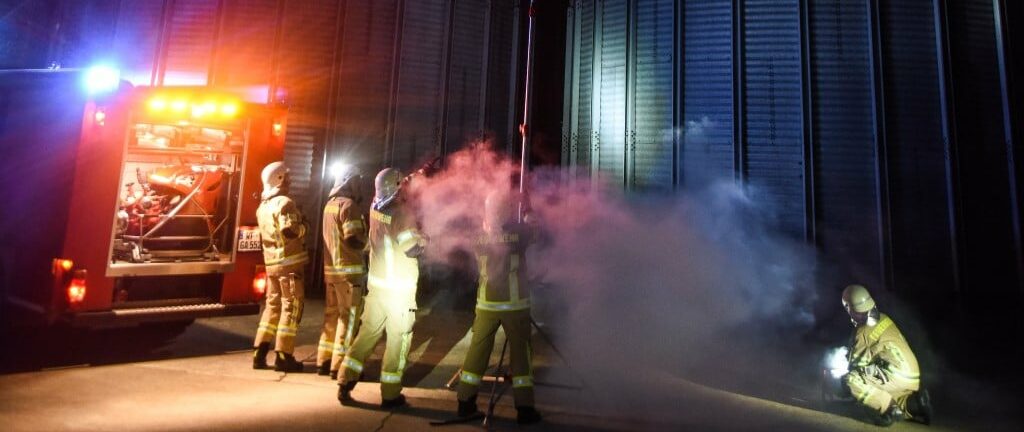
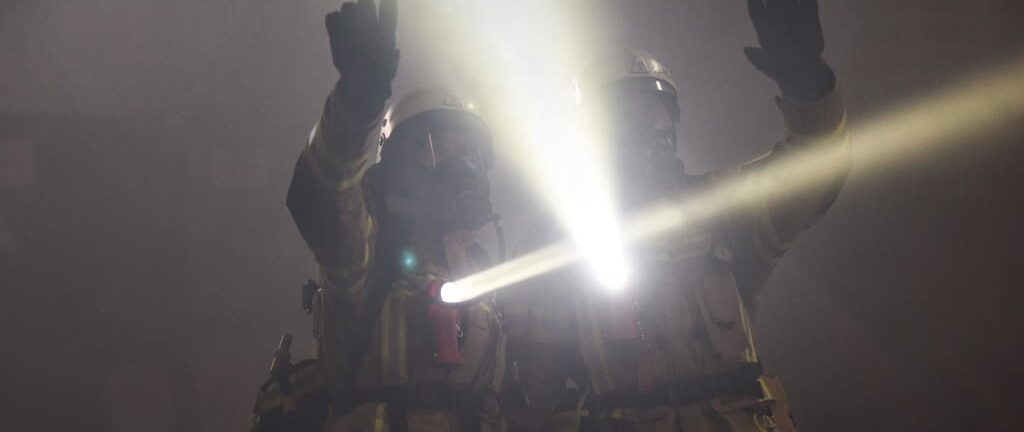
As a provider of high-performance lighting, Streamlight has a reputation for making tough, ultra-bright flashlights, and their advances in lighting technology have resulted in many specialised products for the fire market.

As the role of a firefighter is highly varied, they have worked with countless emergency service professionals in their 50-year history to shape their products and deliver lighting tools that have been proven to help save lives.

Within this article, you can discover some of the company’s top recommendations.

Survivor® X ATEX

The Survivor® X ATEX is an updated version of Streamlight’s compact Survivor® right-angle torch, now offering 250 lumens, new features for improved operation, and multiple power options to suit user needs and budgets.

The low-profile, Zone 0 rated light is available as a Rechargeable System or as an Alkaline model.

Also available is the Survivor X® USB, a budget-friendly USB rechargeable option for use in Division 2 conditions.

The Alkaline model provides a 25 percent cost saving on batteries compared to the original Survivor, and the Survivor X USB is an economical, USB rechargeable alternative that can also accept alkaline batteries.

Fire and rescue personnel, industrial firefighters, utility workers and others now have an even more powerful and versatile tool to use when operating in the trying conditions they often face.

Vulcan® 180 HAZ-LO® ATEX

Next up, the intrinsically safe Vulcan® 180 HAZ-LO® ATEX.

The perfect lantern for working in dangerous environments such as those with smoke, industrial hazards, or inclement weather.

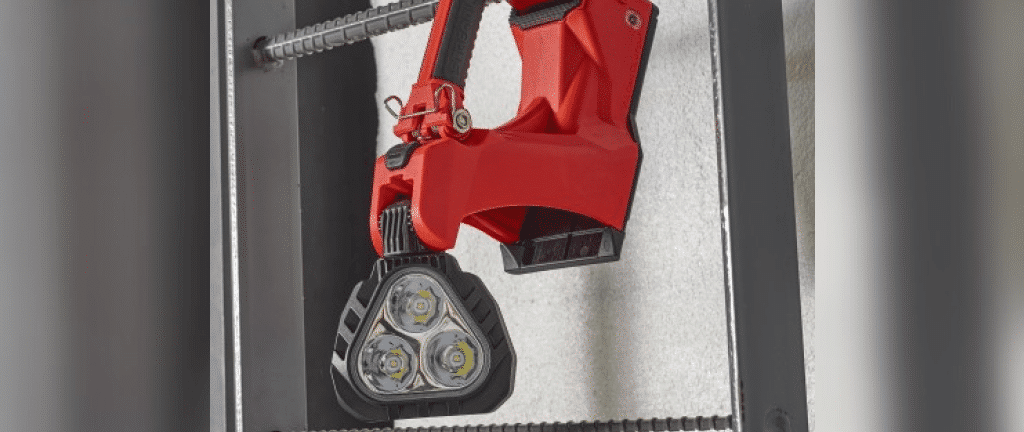
With its 180° triangular articulating head, firemen, first responders and other users can aim the light beam precisely where it is needed for task lighting purposes.

Powered by a lithium-ion battery, it is also one of the lightest lanterns in its category.

Featuring a 32-hour run time on low, and two ultra-bright blue taillights for visibility in thick smoke, the new model is ATEX and IECEx-certified for use in Zone 0 locations.

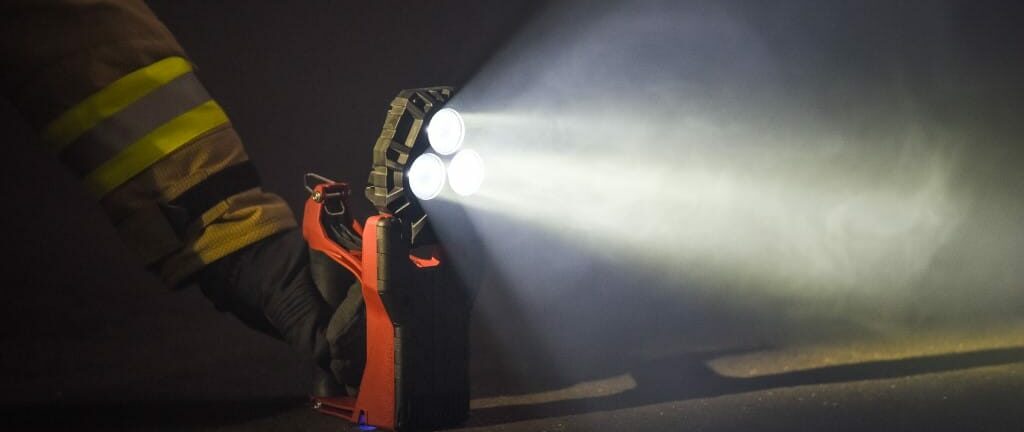
The light uses three white powerful LEDs for extreme brightness, and three deep-dish parabolic reflectors produce a tight spot beam with optimum peripheral illumination to aid in navigation.

The flat base area also allows the light to stand on its own for scene lighting.

Portable Scene Light II

The Portable Scene Light II from Streamlight is a 10,000-lumen rechargeable, waterproof scene light featuring a versatile steel frame and 360° rotating head for precise aiming.

It is the perfect scene light for marking exits, post-fire investigation, fire ground clean-up, mobile triage centre lighting, etc.

With zero deployment time and a compact footprint, the Portable Scene Light II requires no set up and is easily used in rapid response situations.

Housed in a high-impact thermoplastic, the virtually indestructible alloy steel frame can be stacked up to three units, creating a bright “light tower” effect with even more lumens for multi-level lighting.

The hooked feet of the light are designed to hang on doors, framing and guard rails.

Enduro® Pro HAZ-LO® ATEX

The Enduro® Pro HAZ-LO® ATEX headlamp is ideal in dangerous environments with potentially hazardous conditions that require flexible lighting options.

For example, the flood LED is strategically placed high on the light to ensure shadow-free lighting when mounted on a hard hat, and the light’s 45° tilting head makes the headlamp easy to use in a variety of settings.

This safety-rated model is ATEX and IECEx-certified for use in Zone 0 locations.

Powered by easily sourced AAA batteries, the headlamp features two power LEDs and three output modes: spot, flood and a spot/flood combination for maximum brightness.

On high, the spot beam delivers 160 lumens, 1,320 candela and a 73-metre beam distance; the flood beam offers 160 lumens and 100 candela over a 20-metre beam distance.

The combined spot/flood setting provides 235 lumens.

On spot or flood, the run time is 5 hours; in the combination mode, the run time is 4.75 hours.

Dualie® 3AA Color-Rite® ATEX

Last but not least, the Dualie® 3AA Color-Rite® from Streamlight is an intrinsically safe, high-performance LED flashlight that provides the option of bright, white light or high CRI light with Streamlight’s Color-Rite Technology® for true colour recognition.

The compact, handheld light, which is powered by easily sourced AA batteries, is safety-rated for use in Division 1 environments faced by many professionals; it is also ATEX and IECEx-certified for use in Zone 0 locations and InMetro approved.

The dual beam light includes a high-power white LED for bright area illumination and a High Colour Rendering Index (90 CRI) LED with Streamlight’s proprietary Color-Rite Technology to better see the colour spectrum.

It offers three output modes: a spot beam for distance illumination, a soft, wide flood beam to illuminate work areas and to aid in true colour recognition, and a combined spot and flood beam.
The new light’s spot beam provides 225 lumens and 8,000 candela over a 179-metre beam distance, while the flood beam delivers 175 lumens, 380 candela, and a 39-metre beam distance.

The combined spot and flood beams offer 320 lumens, 7,000 candela and a 167-metre beam distance.

The light includes separate dual head switches for easy user activation of either function.

The two beams can be activated simultaneously by depressing both switches.

Future Endeavours

Streamlight launches many new lighting products each year to multiple markets that they support, including the fire service industry, in which their innovations will only continue.

They work on products right from the very first step, to ensure that they are reliable, high-quality products that provide the latest in technology and in some models, meet the certification requirements for applications in the fire safety market.

Soon you can expect to see the new Stylus Pro® HAZ-LO®, the perfect compact light to carry with you daily, intrinsically safe and withstands the toughest of environments – definitely one to keep an eye out for.

Lighting has evolved at an exponential rate over recent years and with such evolution comes the need for better understanding.

Strategy plays a huge part in firefighting operations, and dependable lighting should be a big consideration that is never overlooked.

Tested, certified products, like Streamlight flashlights and lanterns, will provide you with the confidence and trust needed to save lives.
This article was originally published in the November 2023 issue of International Fire & Safety Journal. To read your FREE digital copy, click here.

Emergency lighting: The future is compliance

Matthew Jones, UK & Ireland Head of Sales at Advanced discusses current and future trends in emergency lighting

The fire safety landscape has transformed since the Grenfell tragedy as the Government rolls out a raft of changes to make buildings safer.

These measures range from the updated Part B of the Building Regulations to the introduction of the Building Safety Regulator, with yet further policy changes on the horizon.

As a result, the fire and life safety sectors are being affected across the board, including emergency lighting where current and future trends are focusing on both compliance and connectivity.

With these new challenges ahead building owners, specifiers and facilities managers (FMs) need to stay up-to-date to ensure compliance.

Fortunately, manufacturers, like Advanced, with a pedigree in both the fire and the life safety sectors, are experts in the field and can explain exactly how to comply with new regulations and guidance.

Dynamic safety signage

One emergency lighting area which looks set for compliance changes soon is dynamic safety signage (DSS).

In the next 12 months we are set to see the publication of the amended EN 1838 Emergency Lighting which the industry hopes will include a technical specification on adaptive emergency lighting systems.

This should consolidate the importance of dynamic safety signage in fire evacuations, improving safety for building occupants.

In emergencies, dynamic safety signage is vital since the lack of information and confusion means people often make poor decisions.

Occupants unaware of standard escape signage tend to leave via their known, proven route – often the main entrance – which causes slower evacuation times and potentially dangerous bottlenecking; this is especially dangerous if the main entrance is blocked in an incident.

Advanced’s range of dynamic safety signage has been developed following research into human behaviour during fire incidents.

By directing building occupants to the closest, safest exits in emergencies, DSS measurably reduces evacuation time, congestion, and threat to life.

DSS is a vital life safety system helping enable safe evacuations when a fire takes place and therefore is an essential addition to Advanced’s fire protection range.

Ideal for settings where large numbers of people may be unfamiliar with emergency escape routes, e.g.

university campuses, hospitals, stadiums and transport hubs, Advanced’s DSS range provides different tiers of functionality making it very versatile in meeting requirements across a wide range of sites and scenarios.

DSS gives clarity on the best exit routes, proven to make building evacuations faster and safer.

In many fatal fires, the most familiar exit is also the most dangerous – DSS enables better decision-making and quicker escape.

It complies with visibility standards, is self-testing and fully monitored for peace of mind.

Cause and effect can be programmed, allowing DSS to be used adaptively, ensuring as evacuation situations evolve only the safest escape routes are highlighted while unviable exits are clearly marked as no-go areas.

Symbols instead of words ensure clarity for all nationalities, especially useful in airports.

While DSS is compatible with multiple fire systems, we recommend using it with the likes of Advanced’s MxPro 5 addressable fire system to make use of our world class cause and effect programming.

To guarantee compliance with the BS 5266 Code of Practice for the Emergency Lighting of Premises, DSS can also be used alongside our LuxIntelligent system, which actively tests and monitors the signage.

Remote connectivity

To be compliant with BS 5266, it is vital to consistently test that emergency lighting is functioning correctly.

 A common pitfall is not testing emergency lighting frequently enough.

With emergency lighting a short function test should be completed each month.

 Then once a year a full duration test is required which normally takes 180 minutes.

Test results must be recorded, and any remedial work performed within an appropriate timeframe.

However, conducting tests across multiple sites or large systems presents logistical challenges.

Although manual system testing is still common, as budgets shrink the cost of engineers spending significant amounts of time on manual testing is increasingly hard to justify.

To address this challenge, at Advanced we developed LuxIntelligent, an addressable, cloud-ready, automatic emergency lighting test system.

The system automatically, routinely tests a building’s emergency lighting to check for faults, test failures or advisories to prove the system is compliant and functioning.

Testing can be completed without human intervention and the system can be set at the beginning of the year and then will trigger testing throughout the year automatically, delivering prompt and accurate reporting of test results, as well as providing definitive work instructions for any necessary maintenance, representing significant long-term time and cost reductions for FMs.

The LuxIntelligent emergency light testing system makes compliance with emergency lighting guidelines easy and cost effective.

It is quick to install and simple for technical engineers and security staff to operate, providing a robust solution that will take care of your emergency light testing for the next 15 years or more.

LuxIntelligent offers a standalone portal that engineers can log into to view all the testing and compliance data allowing them to produce reports and replace a manual logbook as required in BS 5266.

Cloud-storage functionality eliminates the task of having to record test results by hand and the hassle associated with filing such records – a particularly useful feature when managing a large portfolio of buildings and sites that require secure storage of test and maintenance reports.

The control panel has a dynamic event log of 1000 events as well as a separate log for recording test results.

Records of all automatic (and manual) tests are generated and data can be accessed from the panel, a connected laptop or remote PC.

Plus, LuxIntelligent makes maintenance simple, since it will automatically tell an engineer exactly which device has an issue, what the issue is and where in the building it is.

LuxIntelligent provides Cloud monitoring and system management via mobile and web apps.

This makes routine tasks now possible to do remotely.

With data stored securely in the Cloud, those responsible for the emergency lighting system can access live details on status, test and maintenance reports from a smartphone, tablet or via a web browser.

Integrating emergency lighting control panel data with portable technology in this way, enables users to monitor all their sites, anywhere in the world.

LuxIntelligent is not only suitable for new installations.

Whether an engineer is working on an existing site or a new one it is possible to monitor the emergency lighting system from anywhere across the installation from anywhere in the world, using its local area network via an ethernet port or WiFi connection; via the 4G connectivity option.

A 4G router is available in a wall-mounted panel and can be particularly useful for external fire safety engineers to gain direct access to Luxintelligent to monitor testing and maintenance needs.

LED

Finally, if a building has not already moved from fluorescent lighting to LED, now is the time to do so with a ban on the sale of mercury containing lamps, like fluorescent lamps, set to come in.

This change forms part of the restriction of hazardous substances (RoHS) Directive.

As a result, many common fluorescent light fittings will become obsolete on 1st February 2024.

Concerns around disruption, inconvenience and cost are often cited as reasons to delay swapping old for new technology.

However, LuxIntelligent LED luminaires are quick and easy to install and deliver demonstrable long-term cost-saving benefits.

At Advanced we pride ourselves in providing support and advice to our clients through the whole lifecycle of our products from the first enquiry, to training, offering installation guidance, ensuring customers use the correct software tools, and finally helping with commissioning to ensure a system operates as designed.

As building safety compliance becomes ever more stringent as Government tightens regulations, at Advanced we are here to offer advice and support on how to comply to ensure peace of mind.

To find out more please contact us for further information or guidance on emergency lighting or fire safety systems.

We also run CPDs including Your Best Route to Compliance for Emergency Lighting: https://www.advancedco.com/product/luxintelligent-emergency-lighting-system/the-best-route-to-compliance-for-your-emergency-lighting/

This article was originally published in the October 2023 issue of International Fire & Safety Journal. To read your FREE digital copy, click here.

Introducing Streamlight’s Enduro® Pro HAZ-LO® ATEX

Introducing the intrinsically safe version of the Streamlight® Enduro® Pro HAZ-LO® headlamp, the Enduro® Pro HAZ-LO® ATEX.

This safety-rated model of the high-performance headlamp is ATEX and IECEx-certified for use in Zone 0 locations, faced by many first responders.

“The Enduro Pro HAZ-LO ATEX is ideal in dangerous environments with potentially hazardous conditions that require flexible lighting options,” said Streamlight’s Chief Revenue officer, Michael F. Dineen.

“For example, the flood LED is strategically placed high on the light to ensure shadow-free lighting when mounted on a hard hat. And the light’s 45° tilting head makes the headlamp easy to use in a variety of settings.”

Powered by easily sourced AAA batteries, the headlamp features two power LEDs and three output modes: spot, flood and a spot/flood combination for maximum brightness.

On high, the spot beam delivers 160 lumens, 1,320 candela and a 73-metre beam distance; the flood beam offers 160 lumens and 100 candela over a 20-metre beam distance.

The combined spot/flood setting provides 235 lumens.

On spot or flood, the run time is 5 hours; in the combination mode, the run time is 4.75 hours.

The Enduro Pro HAZ-LO ATEX features a case constructed from tough thermoplastic material with elastomer over mould and unbreakable polycarbonate lenses.

The light includes an adjustable elastic head strap, and also comes with two additional options: a rubber strap and 3M® Dual Lock® re-closable fasteners for mounting on hard hats.

The light is IP67-rated and is waterproof to 1 metre for 30 minutes. It is impact-resistance tested to 2 metres.

Check out more of Streamlight’s lighting solutions here

Rosenbauer introduces guidelines for optimal light mast maintenance

The need for perfectly illuminating operational sites has been a consistent concern in emergency operations.

In line with this, Rosenbauer has combined LED illuminants to produce maximum light yield, offering full flexibility, including upward illumination.

The light mast doesn’t only serve as extended scene lighting but can also highlight any point around the vehicle when positioned appropriately.

Such utility does expose the light mast to various conditions, demanding periodic care to ensure durability.

Rosenbauer’s essential care for light mast longevity

  1. Drain condensation water every 1-3 months: Depending on weather conditions, it’s advisable to drain the condensation water. The process involves extending the light mast by approximately one metre and manually draining water through the valve. One should ensure the light mast head is positioned correctly to prevent any potential collisions. This procedure can also serve as an emergency operation.
  2. Clean and maintain for smooth operation: If the light mast exhibits delayed lowering, it might be due to insufficient lubrication in the telescopic area. The solution involves extending the light mast, cleaning the telescopic section with a damp cloth (using grease remover or soap-based cleaner), and evenly applying a non-branded PTFE-based spray over the entire telescopic tube.

Rosenbauer’s practical advice for enhanced illumination

Older light mast models, especially those fitted with halogen floodlights (either 230V or 24V), can benefit from an upgrade to LED illuminants.

LEDs are known to be three times as efficient as conventional bulbs, producing significant illumination.

An added advantage is that the earlier required 230V supply is no longer necessary, with power now sourced from the 24V vehicle supply.

IFSJ Comment

Rosenbauer’s emphasis on regular maintenance of light masts underlines the significance of optimal performance in emergency operations.

Proper illumination is crucial to ensuring safety and effectiveness on the ground.

The steps highlighted by Rosenbauer not only ensure longevity but also enhanced performance.

Upgrading to LED illuminants and adhering to the suggested maintenance routines can provide a tangible improvement in emergency response scenarios, reflecting the innovation-driven approach of Rosenbauer.

Precision in Peril with Nightstick

Jonathan Gordon, Marketing Manager for Fire & Rescue at Nightstick, explores the intricate relationship between firefighting principles and explosive environments.

In the world of firefighting, three things matter most: precision, knowledge, and reliable equipment. In the fast-paced firefighting environment, where every second counts, understanding your tools is crucial.

But how do these principles apply when dealing with situations that might explode?

ATEX, a set of European Union regulations about equipment and protective systems for use in places that might explode, helps us make equipment choices.

ATEX sorts areas into different categories called zones. Zone 0 means there’s always a risk of explosive gas and is very dangerous.

Zone 1 means there’s a chance of explosive gas sometimes, but it’s not as risky as Zone 0.

However, choosing lighting equipment based only on Zones can be misleading.

Let’s go to São Paulo, Brazil, and check out the Lapa Train Station.

Here, we’ll learn about the importance of ATEX LED flashlights for firefighters.

While Brazil and other countries outside of the EU might have their own regulations, such as INMETRO in Brazil, ATEX provides a globally recognized framework that many industries reference.

Let’s visualize the scene: the iconic Lapa Train Station is getting a makeover, including upgrades to its train fuel storage systems.

They put temporary fuel tanks near the platforms, and sometimes these tanks release flammable gas because of temperature changes and filling.

The gas detectors sometimes show high levels of dangerous gas, like Ethanol.

Because of this, the place is called Zone 1, not because of the specific gases but because of how often explosive conditions happen.

Comandante (Commander) Filipe and his crew rush to Lapa Train Station after a sewage line breaks near the fuel tankers.

There might be Hydrogen Sulfide (H2S) in the sewage water, which is a dangerous gas.

Filipe’s team has Zone 0 flashlights in a Zone 1 area, but there’s another important thing to consider: temperature ratings or T-codes.

These codes tell us the maximum heat a flashlight can reach if it malfunctions.

It’s crucial that the flashlight doesn’t get hotter than the temperature at which the gas in the area can catch fire.

For instance, a flashlight with a T1 rating means it won’t get hotter than 450°C (842°F), which is safe for gases that ignite at higher temperatures.

On the other hand, a T4-rated flashlight won’t go above 135°C (275°F) during a problem.

A higher T-rating means it stays cooler during an issue, which reduces the risk of ignition.

Hydrogen Sulfide ignites at about 260°C (500°F), and Ethanol ignites at 363°C (685°F) from the fuel tanks.

So, Filipe’s team needs a T3-rated flashlight or better, which means it won’t get hotter than 200°C (392°F).

Enter Douglas, the team’s resourceful, determined rookie.

Quick on his feet, he promptly distributes backup Zone 1 T3-rated flashlights from the viatura (apparatus).

These flashlights stay cool even during electrical malfunction, so the team can safely move around the station and sewage line.

This situation shows why it’s important to understand both Zones and T-codes.

Sometimes, in dangerous places, a Zone 1 light might be better suited for the situation than a Zone 0 light.

The Lapa Train Station scenario in Brazil brings to mind an important firefighting rule: mastery of your equipment and staying flexible are vital.

Understanding zones and T-codes isn’t just industry lingo—it can mean the difference between peril and preservation.

In the firefighting world, the right equipment, chosen for safety and utility, remains essential.

Visit Nightstick’s website to find a distributor near you in one of the 70+ countries where products are sold.

Product Focus: Streamlight’s Dualie 3AA Color-Rite ATEX

The Dualie® 3AA Color-Rite® from Streamlight is an intrinsically safe, high-performance LED flashlight that provides the option of bright, white light or high CRI light with Streamlight’s Color-Rite Technology® for true colour recognition in industrial, automotive and other applications.

The compact, handheld light, which is powered by easily sourced AA batteries, is safety-rated for use in Division 1 environments faced by many professionals; it is also ATEX and IECEx-certified for use in Zone 0 locations and InMetro approved.

The dual beam light includes a high-power white LED for bright area illumination and a High Colour Rendering Index (90 CRI) LED with Streamlight’s proprietary Color-Rite Technology to better see the colour spectrum.

It offers three output modes: a spot beam for distance illumination, a soft, wide flood beam to illuminate work areas and to aid in true colour recognition, and a combined spot and flood beam.

“The Dualie 3AA Color-Rite provides the option of bright white light for illuminating large areas, or a high CRI beam that is ideal for auto detailing and painting, differentiating coloured wires, spotting finish imperfections or other tasks that require exacting attention to detail,” said Streamlight Chief Revenue Officer Michael F. Dineen. “With the Dualie 3AA Color-Rite, users have two lights in one.”

The new light’s spot beam provides 225 lumens and 8,000 candela over a 179-metre beam distance, while the flood beam delivers 175 lumens, 380 candela, and a 39-metre beam distance.

The combined spot and flood beams offer 320 lumens, 7,000 candela and a 167-metre beam distance.

The light includes separate dual head switches for easy user activation of either function.

The two beams can be activated simultaneously by depressing both switches.

Find out more about the Dualie 3AA Color-Rite here.

Lighting You Can Trust

This year, Streamlight® Inc. is marking 50 years of manufacturing high-quality flashlight products. Since its founding, Streamlight has grown from a small company with a single product to a global manufacturer of a broad range of high-performance lights for the fire industry.

Survivor® X Right-Angle ATEX Light

The Survivor® X ATEX was recently introduced as an updated version of the compact Survivor® right-angle torch, with new features for improved operations, 250 lumens, and multiple power options to suit user needs and budgets. The low-profile light is available either as a rechargeable system or as an economical alkaline model, both approved for Zone 0.

Vulcan® 180 HAZ-LO ® ATEX

The intrinsically safe Vulcan® 180 HAZ-LO® ATEX, is a multifunction and rechargeable high-performance lantern designed for use in hazardous environments. Featuring a 32-hour run time on low, a 180° articulating head, and two ultra-bright blue taillights for visibility in thick smoke, this light is ATEX and IECEx-certified for use in Zone 0 locations faced by many first responders.

Vulcan Clutch®

The new Vulcan Clutchâ is a rechargeable multi-function lantern that delivers 1,700 lumens and features a swivel neck and a 340° rotating head. The new light includes a versatile clamping handle, enabling first responders to attach it virtually anywhere to provide light in multiple directions.

Portable Scene Light II

The Portable Scene Light II is a 10,000-lumen rechargeable, waterproof scene light featuring a versatile steel frame and 360° rotating head for precise aiming. It is the perfect scene light for marking exits, post-fire investigation, fire ground clean-up, mobile triage centre lighting, etc.

Visit the Venari Stand Hall 5/ B130 at The Emergency Services Show at the NEC Birmingham, to learn more about these products and a variety of our other most popular lights for firefighting.

Website: Streamlight.com

Facebook: StreamlightDE

Twitter: StreamlightDE

Instagram: Streamlight_europe

LinkedIn: Streamlight-inc

Product Focus: Streamlight’s Portable Scene Light II

The Portable Scene Light II from Streamlight is a 10,000-lumen rechargeable, waterproof scene light featuring a versatile steel frame and 360° rotating head for precise aiming.

It is the perfect scene light for marking exits, post-fire investigation, fire ground clean-up, mobile triage centre lighting, etc.

With zero deployment time and a compact footprint, the Portable Scene Light II requires no set up and is easily used in rapid response situations.

Housed in a high-impact thermoplastic, the virtually indestructible alloy steel frame can be stacked up to three units, creating a bright “light tower” effect with even more lumens for multi-level lighting.

The hooked feet of the light are designed to hang on doors, framing and guard rails.

Bright, waterproof and rechargeable

“The Portable Scene Light II is the brightest waterproof and rechargeable scene light on the market today,” said Streamlight’s Chief Revenue Officer, Michael F. Dineen.

“The steel frame is virtually unbreakable, and the light offers exceptional brightness.

“This versatile tool is ideal for tactical and industrial uses such as lighting triage centres, accident scenes and vehicle check points, and inspecting construction sites and remote equipment.”

Featuring five intensity levels, the Portable Scene Light II has a toggle switch on the digital display that allows users to adjust up or down for brightness intensity and run time. The user can change the output at any time as needed.

Read more about Streamlight’s portable scene light solution here.

Emergency lighting: Let’s get personal

From brightness and runtime to multiple operating modes, leading provider of high-performance lighting devices, Streamlight® Inc., shares their trusted advice

Every firefighter needs to be able to deploy and trust a personal lighting device that will cover critical tasks excellently so every operation in the dark is a success.

We have worked with countless emergency service professionals in our 50-year history to shape our products and deliver lighting tools that have been proven to help save lives.

Before you begin searching for your optimum personal flashlight, you must pin down what you require the light for and how much versatility you need – otherwise you can be overwhelmed by the vast options available and can inevitably base your final decision on price and aesthetics.

You might initially think, for example, all you need is a flashlight that clips to your jacket or gear at a 90o angle and is bright enough to cast a beam of light in front of you as far as a couple of buildings away.

But what happens when you locate a missing person who is trapped and said light is needed to carefully assess the scene to help remove obstructions and debris throughout the night?

Will it last that long, have you given enough thought to the run time, rechargeability or universal power supplies of your flashlight?

What if the distressed individual is concussed and subsequently suffering from sensitivity to light, does the device feature a low intensity mode?

Are you required to work, and thus, shine a light above or below you – is the head articulating or does it offer a helmet-mounting facility?

Or what if all the above is taking place in a hazardous environment where a non-safety rated light could risk igniting flammable vapours leading to a catastrophic explosion?

There are countless factors to consider when selecting a flashlight.

With a light that checks all the boxes, you can focus your full attention on the task at hand.

Such things like short-life power sources can be avoided if you know what you’re looking for, and there are many options which can make your job easier and ultimately increase the odds of success and saving lives.

So, to help you make more informed decisions, we’ve compiled a condensed list of features and benefits to look out for when selecting a personal lighting device for you or your team.

Brightness and runtime

As you might imagine, brightness and runtime have a close relationship; the brighter something is, the quicker it’s going to fizzle out.

Therefore, it’s important not to over-do the brightness element if you don’t really need it and utilise the different modes available.

Runtime is measured from the initial light output value (30 seconds after the light is turned on with fresh batteries) until the light output drops to 10% of the initial value, measured in hours.

Light output may gradually decrease over time or remain largely constant and then suddenly drop out. A runtime graph, if available, provides the best illustration of the performance of a light over time.

As for brightness, this is measured in ‘lumens’ and stands for the total quantity of emitted light energy from the light source on its highest setting, powered by new or fully charged batteries.

Flashlights can range from lumens in the single digits (great for reading a book) to a terrain-scorching 10,000 lumens.

While these values represent a great comparison tool, they do not tell the whole story about brightness, with beam intensity, distance and type all influencing the effectiveness of a light in different applications.

Of course, the better the technology, the longer the runtime – so even the brightest of flashlights can operate for lengthy periods.

Indeed, this is one factor that will affect the broad price range for what might initially appear to be similar products.

The Streamlight Vulcan® 180 HAZ-LO® ATEX is such a product that falls into that territory, offering a runtime of 16.5 hours while providing 450 lumens of light – enough to flood a whole room.

An aesthetically similar lantern may be half the price, but if it only delivers 40 lumens for 10-hours, it would not be suitable for much other than dimly illuminating a pathway, as it likely won’t offer different modes nor will it perform well in bad weather or hazardous atmospheres.

Batteries: disposable vs chargeable

Power source should be at the top of your checklist when choosing a flashlight, either by way of disposable or rechargeable batteries.

Disposable batteries, either alkaline or lithium, have an excellent storage life – 7 and 10 years respectively.

They generally offer longer runtimes for a given bulb power, are typically lower in initial purchase price, and spares are readily available.

In the long run though, operating costs are considerably higher than rechargeable alternatives.

Rechargeable flashlight batteries can feature extraordinarily low operating expenses – as little as a penny per day – and are well suited for frequent use.

Depending on the model, they often store conveniently in custom charger holders.

Their initial purchase price can be higher, but considerable cost savings are seen over the total life of ownership.

High-performance lights, like our PolyTac 90® X USB, can operate with different fuel type batteries or work as a rechargeable system using universal connections.

As such, these can be plugged into charging ports safely to ensure they are fully powered before every operation.

As with other rechargeable flashlights, the initial purchase price is understandably higher, but there are significant cost savings over the total life of ownership.

You should also look to source devices with battery life indicators. We include them on many of our models, conveniently located inside the button to highlight when batteries need replacing or recharging.

Knowing your device has ample power is one less thing to focus on in an emergency.

LED types

LEDs (Light Emitting Diodes) offer the flexibility to adjust a flashlight’s output and beam patterns to meet a multitude of needs.

LEDs are of a solid-state construction offering a high-intensity light which lasts up to 100,000 hours.

“Chip On Board” (COB) LEDs are made of multiple LED chips that are packaged together as one lighting module.

When it lights up, it looks more like a lighting panel than multiple individual lights for a smooth, flood beam for up-close work.

Flashlights offering a combination of LEDs and COB LEDs provide a multi-function solution to provide much greater flexibility for the task at hand.

An example would be our Dualie® series of flashlights, which feature dual lighting modes to offer convenient spot and flood lighting from the same device.

This is an intrinsically safe flashlight which allows you to light up what is ahead of you and at your feet at the same time or individually, over long periods of time.

Lighting modes

Having more than one lighting intensity setting can be the difference between success and failure on many levels.

When everything goes to plan, a fixed intensity flashlight can likely stand up to a task for a couple hours.

However, if other factors arise, which they often do, changing between low and high intensity can extend the use of a flashlight considerably, lasting from dusk till dawn with constant use.

Looking at our Survivor® X ATEX model again, this features a high, super bright beam that delivers 250 lumens over 447m with a runtime of 3.75 hours.

Its low mode, on the other hand, delivers 60 lumens over 237m but increases the runtime up to 15 hours.

It also features a flash mode for signalling (8-hour runtime). Lighting modes can also allow you to switch between flood beams – for less intense light over a bigger area – or spot beams – intense light focused on a narrow subject over a greater distance.

Safety ratings

There are several types of locations where it can be extremely dangerous to use any light that has not been specifically designed – and approved – for that location.

Areas such as those with flammable gases, liquids, vapours, or fibres present, which could lead to catastrophic explosions, are incredibly dangerous with the wrong lighting tool.

It is critical that you have a safety-rated flashlight you can trust to operate in these atmospheres, such as our HAZ-LO Division 1 and ATEX safety-rated series.

As manufacturers of the broadest range of professional lighting tools, we understand that the term ‘spoilt for choice’ can certainly be applied when selecting a flashlight.

The options are pretty endless, and this can make your final choice quite difficult, but with thorough understanding, a light that balances the cost against the specification is out there for you.

This exclusive article was originally published in the September 2023 issue of International Fire & Safety Journal. To read your FREE digital copy, click here.

The Last Word with Nightstick

Jonathan Gordon, Marketing Manager – Fire & Rescue at Nightstick, talks about his recent appointment and new solutions

Can you tell us about your recent appointment at Nightstick and what led you to this position?

Coming from SaaS marketing, I intentionally sought out a digital based role with an emphasis on content creation to carve my niche.

I saw over and over that the Nightstick team did things a little differently, which is extremely exciting.

From their social responsibility to an emphasis on open communication and continuous development, the foundation is solid.

While providing digital services for customer engagement is noble, equipping firefighters and first responders with life-saving tools certainly tipped the scale for me.

What expertise do you bring to the table, and how will this strengthen Nightstick’s position in the fire and safety market?

With a background in content marketing, video production, and having a millennial’s perspective on today’s digital landscape, I bring a creative, intentional approach to gather increased awareness to the established Nightstick LED portable lighting lineup.

Being able to build relationships with departments and volunteers alike through visual and print media, the fire and safety market is put on notice: there’s a new chief in town.

How will your appointment influence Nightstick’s strategic direction?

With an already expansive and established product line-up for fire and rescue at Nightstick, I am here to supercharge Nightstick’s marketing reach while leveraging the significant growth that comes along with global brand recognition.

Alongside a student mentality, taking the time to acquire field expertise and conducting proper research will lead me to focus on creating relative content that consistently educates and engages the fire and rescue audience.

Can you share any specific initiatives or changes that you will be spearheading?

Conducting in-depth market research will be priority one. I will analyse industry trends and customer feedback to identify areas of opportunity and respond with lightning speed.

My role is to stay ahead of the curve and deliver solutions that meet evolving needs.

Building strategic partnerships and collaborations will also be instrumental.

I carry the torch to expand Nightstick’s cultural history of collaboration with fire departments, rescue organisations, and industry associations.

These partnership opportunities are as vast as they are globally diverse.

What are the biggest challenges currently facing the fire and rescue industry?

Smaller divisions have limited budgets and resources compared to larger sectors. This makes it challenging to invest in R&D, upgrade equipment, or afford the latest technology.

Let’s face it: the fire industry is steeped in loyalty and tradition. Access to safety innovative products should not be a concern.

The prevailing mindset of “how it’s always been” is my job to destroy, along with the notion that one should depend on inferior legacy equipment from entrenched brands.

Nightstick has a 40-year history in lighting innovation, so I will promote knowledge sharing and offer scalable solutions regardless of department size or awareness.

Are there any new solutions coming from Nightstick for the fire and safety sector?

Nightstick was, is, and remains the originator of Dual-Light technology.

By combining multiple beam patterns of light, Nightstick incorporates a floodlight for proximity illumination with a traditional spotlight for smoke-cutting distance illumination.

Purpose based directional lighting allows firefighters and first responders to move quickly and assuredly, while being aware of any possible slips or trips in the heat of the moment.