A landlord has been handed a heavy fine over several fire safety failings, as reported on the Fire Protection Association website.
Manjit Dulay was prosecuted alongside former firefighter Martin Ballard over the failings at a development he owned in Leicester, which put ‘dozens of tenants’ lives at risk’.
Leicester Mercury reported on the prosecutions of both Mr Dulay and Mr Ballard over the issues at St Clement’s Court in Leicester, which Mr Dulay owns and which contains over 70 flats.
In 2014, Leicestershire Fire and Rescue Service (LFRS) found – after repeated inspections – a range of ‘urgent improvements’ that he needed to make in order to ‘raise fire safety standards’ across the site.
Issues discovered included a ‘non-functioning’ fire alarm system, ‘useless’ smoke detectors, ‘unsuitable’ fire escape routes and a ‘broken emergency air venting system’.
Mr Dulay failed to ‘do all the work required’, so LFRS issued him with an enforcement notice in April 2016, but a ‘more thorough’ assessment by LFRS in 2017 found both ‘recurring problems and new ones’, including that ‘not a single smoke detector in the corridors was functioning’.
LFRS, ‘not wanting to force people out of their homes’, fitted new detectors themselves at the time, and that year Mr Dulay ‘finally’ hired an online company to undertake a fire risk assessment, paying them £400.
However, he ‘never informed them of the enforcement notice or the scale of problems’, and the company sent Mr Bullard – a retired LFRS firefighter – to undertake the assessment.
Mr Bullard was ‘unqualified for the job’, and as such his work on the assessment was ‘so poor’ that he ended up being prosecuted alongside Mr Dulay, who had spent money on ‘illegally’ building two penthouses on the blocks ‘without planning permission’, and yet ‘failed to do the work required to meet fire safety requirements’.
After growing concerns from residents, Mr Dulay was prosecuted at Leicester Crown Court alongside Mr Bullard, pleading guilty to six counts of ‘risking people’s death or injury’ by breaching fire safety regulations, as well as ‘failing to surrender to bail’ in February this year, having ‘absconded for 130 days’ and then missed a later appointment ‘to sign in at a police station’. He was fined £80,000, given a 12 month prison sentence suspended for 24 months, and ordered to pay £66,418 in costs.
Mr Bullard meanwhile was charged with four counts of breaching regulations, and was fined £1,600 and ordered to pay £7,864 in costs. Prosecutor Bernard Thorogood stated: ‘This was a building on occasion without fire alarm protection, which was a very serious situation.
Fire safety failings “increased risk of death”
Each breach gave rise to the risk of death or serious injury. Fire is an indiscriminate killer. Fire and the products of combustion can spread very rapidly.’
He also noted that the building had a ‘serious lack’ of fire resistant barrier, doors that did not fit frames and other units that ‘should have been self-closing’ in a fire, adding: ‘A corridor can quickly become completely filled [with smoke] so that visibility is removed and a single breath can have terrible consequences.’
With 30 to 40 fires in residential blocks every day in the UK, he added, ‘insecure front doors and anti-social behaviour problems’ in the area around the block ‘made the risk of fire greater’.
Mr Thorogood noted in turn: ‘There were repeated attempts by the fire service to help him raise standards. It was his choice to ignore regulatory requirements in the hope they would go away.’
Defending Mr Dulay, Lawrence Henderson said that ‘he’s no businessman – he’s a builder. He has taken on far more than he could manage. He’s trying to keep up with what he’s created’. In response, Judge Robert Brown said: ‘You’re describing a multi-national being run like a corner shop. He’s completely out of his depth.’
He also told Mr Dulay that ‘you’re a builder, not a businessman’, and that ‘a radical new approach to compliance is now necessary’. Defending Mr Ballard, Olivia Beesley said that ‘he was simply out of his depth’, and that ‘it was beyond the training he had.
He knows he’s let down his profession by these offences’. Mr Thorogood concluded by noting that fire safety at the development was ‘much improved’, but still ‘not quite where it should be’.
Telgian VP Tom Parrish recently celebrated a 20-year milestone at Telgian. His many outstanding contributions to the growth and success of the fire, life safety and security company were recognized during the Telgian Annual Meeting.
Telgian Executive Chairman Russell Leavitt says, “Tom Parrish is thoughtful, passionate about our industry, cares about our customers, and has always demonstrated the best in servant-leadership.”
Over the past two decades, Parrish has held numerous roles including Lead Alarm Designer, Vice President of Integration and Vice President of Integrated Systems.
He has more than 25 years of experience in fire protection and emergency response and, as a leader in the industry, he serves on National Fire Protection Association (NFPA) technical committees such as NFPA 72 Signaling Systems for the Protection of Life and Property and Emergency Communications Systems.
In addition, Parrish is the Vice President of the Automatic Fire Alarm Association (AFAA) and is a senior instructor for NFPA. His professional credentials include Level IV NICET Certified Fire Alarm Technician, Level III NICET Inspections and Testing, Certified Fire Protection Specialist and Master Electrician.
“Telgian has allowed me to grow as a person and grow in the industry and has supported me all the way. Over 20 years ago I came out of the field as an installer and became part of the bigger solution, moving into designing fire alarm systems.
Having been in the field allowed me a perspective a lot of our designers didn’t have. Because of my field experience I was sent to Anaheim California to help a project for a few days and came home many weeks later.
This was my first involvement if a fast-paced design team that went from design to approval to installation of separate system segments in less than 48 hours,” says Parrish. “Today my focus is on training and maintaining our compliance with the many licenses we need to hold in order to serve our clients.”
Peter Maddison, who was director of assets and regeneration at Kensington and Chelsea Tenant Management Organisation (KCTMO) continued giving evidence at the Grenfell inquiry about cladding, cost quotes and his recently submitted diaries.
The Guardian, BD Online and ITV News all reported on the final day of Mr Maddison’s evidence at the inquiry, in which he was asked about the ‘candour’ of his testimony by inquiry counsel Richard Millett in relation to why he did not mention a ‘secret’ meeting with contractor Rydon in his witness statement, with the March 2014 meeting potentially having ‘breached procurement rules’ and called to discuss ways to cut £800,000 from the cost of the project.
This included swapping zinc cladding for aluminium composite material (ACM), but Rydon ‘had not yet been appointed’, with concerns that rival bidders who were not allowed to negotiate further budget changes ‘could complain’.
KCTMO director owed ‘duty of candour’
Questioned about this, Mr Maddison said ‘until recently I had forgotten about this dialogue entirely’, with Mr Millett then asking him whether he realised, ‘as an officer of a public authority having exercised a public function’, he owed a ‘duty of candour’.
Mr Maddison responded ‘absolutely, that’s why I’m here’; to which Mr Millett asked in turn whether he accepted that ‘by not coming clean about these discussions in any of your statements […] you failed in that duty’.
Mr Maddison disagreed, and said ‘I didn’t remember the detail of this particular moment’. A 2014 email from KCTMO’s lawyers was shown, which asked if KCTMO had considered whether Rydon’s £9.2m bid was ‘abnormally low’ and ‘are you satisfied Rydon’s bid is sustainable?’.
It also emerged that a meeting of KCTMO’s executive board had questioned this as well, and in response to this, Mr Maddison said that ‘the project was delivered on budget and that’s the best sign as to whether or not the price was the correct price’, as well as noting he believed the board had been asking ‘sensible questions’ – but Artelia, as cost consultants for the project, had evaluated it and ‘felt that it was sustainable’.
Mr Millett retorted that ‘the fact that the project was delivered on budget is not of great assistance to us given that we know what happened to the building’, before asking Mr Maddison if he had personally had any concerns about the low bid. Mr Maddison said he did not, and also did not consider the ‘abnormally low’ cost being cut by a further £800,000 ‘unsustainable’ either.
He stated: ‘We didn’t get a large number of bidders in the end, and there was a spread between first and second and then second to third. Artelia carried out an analysis and recommended we go forward, so they didn’t flag up any specific issues. I took the advice from Artelia. I didn’t see anything that suggested to me that this was an artificially low price.’
Mr Maddison also said he did not believe that KCTMO’s lawyers at the time, Trowers and Hamlins, were warning of a problem, adding: ‘Our solicitors here are saying: “Have you thought of this?”. And the answer is: “Yes, we have thought of this. The professional team has considered this and it is felt to be a sustainable scheme”.’
On the meeting between KCTMO and Rydon, Mr Maddison said it was ‘necessary’ to secure agreement on the ‘principle’ of making savings before appointing the latter as main contractor, and that this approach was ‘driven’ by the ‘desire to avoid’ a six week delay in moving the project forward if Rydon could not be chosen as the preferred candidate by KCTMO’s executive board.
Mr Millett suggested this was evidence of KCTMO playing ‘fast and loose” withprocurement rules, to which Mr Maddison said: ‘I don’t think it’s about playing fast and loose, I think it’s about trying to work within the rules and assessing risks as appropriate.
The Ojeu rules are complex, and things move within the quite extended time process of the procurement. I don’t think it’s uncommon for clients to have to weigh up these sort of risks in a process that can be challenging.’
Asked if he had questioned ‘whether there would be a difference in quality or performance’ with the switch to ACM, Mr Maddison said he didn’t ‘remember having a specific conversation on that personally.
The assumption here is that all materials proposed by the designers comply with building regs and the law’. He also said he did not ask why ACM was ‘so much cheaper’, or whether it was fire safety compliant.
Asked why he had not handed over diaries or notebooks about the project until just under a fortnight ago, Mr Maddison said that post Grenfell he was ‘not asked to retain’ all of his documents in relation to it or hand them over, stating that he told KCTMO’s solicitors Kennedys about them, and that one of the firm’s partners told him to ‘keep hold’ of them but ‘didn’t ask him to hand them over’.
Mr Maddison noted that he had used these to produce a timeline of events about the ‘lead-up’ to the fire, which was used by Kennedys to write his witness statement for him.
He was then asked why the KCTMO and Rydon meeting was not recorded in the diaries and notebooks, described by Mr Millett as a ‘yawning gap’ amid Mr Maddison’s ‘thorough and quite prolific’ notes on the project.
In response, Mr Maddison said he did not ‘agree that I’m a prolific taker of notes’, stating in turn that ‘what I do is note action points’. He also noted that he had not discussed the notebooks and diaries with KCTMO’s previous legal firm Devonshires, and had not looked at any of them since 2018.
He continued: ‘The thing that triggered me to think of them was when I saw a couple of references when watching witnesses from the TMO, there was some mention of notebooks.
‘It triggered that thought and I flagged that up to Kennedys and they immediately disclosed them. In the weeks after the fire, I went through and did a transcript of all of my notebooks to try and create a timeline of what had happened, and did the same with my emails. I sent that document across to Kennedys. It was a transcription of what was basically in my notebooks.
‘I wouldn’t call it verbatim but it was a summary of each entry. I didn’t do the diaries… it was the notebooks. I just went through and wrote down what was in there. Trying to get some order into what had happened and what the timeline was.’
Asked finally what he would have done differently in hindsight, he stated: ‘Knowing what I know now, there’s no way that we would have ever clad that building with anything that was flammable.
This was a traditional design-and-build contract that seemed very straightforward and very ordinary in many ways. That it’s ended up in this tragedy, it’s just devastating. I’m so sorry for the impact that’s had on so many people’s lives.’
Fire departments are in a perpetual state of recruitment. Volunteer fire departments are regularly looking to ensure their ranks are sufficient for response. Yet recruiting is only the first step to maintaining adequate staffing. The long-term retention of new firefighters is the most important piece. That begins with the onboarding process.
This article will examine the best practices for onboarding new firefighters in volunteer fire departments. For the new firefighter, what should the first days look like? How does the department make that possible?
There are plenty of opportunities to make mistakes along the way. The following will provide a blueprint for your department to help avoid the pitfalls that can push new firefighters out the door shortly after they arrive.
The Importance of the Onboarding Process
The onboarding process, arguably the most critical stage in the recruitment process, is one of organisational socialisation and acculturation. As new firefighters move through the process, they experience a wide array of emotions that will ultimately result in a change in perceptions about how their experience will play out and what it will mean to their life as a whole.
As they become integrated into the daily operation of the fire department, minor or major adjustments and internal re-negotiations take place as expectations evolve and become more realistic. As reality replaces imagination, their new world will either be deemed acceptable, and they will choose to stay, or it will be judged as unacceptable, and they may move on.
Stress, good or bad, is also often present as new firefighters struggle to make sense of their new environment. A well-designed onboarding process, therefore, helps new members and department leaders both manage expectations and supports them as they negotiate uncertain and stressful waters.
Communication is Key
As new volunteers join your ranks, be open and engage them on a regular basis. Do not lose them due to lack of communication. Establish a clear path for new members to ask questions, as they will have many.
Make sure the new member understands the organization and provide an honest overview of what they should expect and what is expected of them. Guide them through your organizational culture and share with them the mission statement, mission vision, and values of your department.
Explain to them everything that your department does for the community. Many people believe that the fire department responds to only one thing: fires. Provide them with a good backdrop of your daily or weekly call volume, what the peak times for calls tend to be, what types of calls are most frequent, some of your most responded to areas or facilities, and other types of duties they will be expected to participate in, such as community outreach events. Detail to them your department’s vision for the future and what the primary goals are for the next five years.
Volunteer departments might not have daily checks, but they likely check equipment and apparatus on a weekly basis. These weekly work nights are excellent opportunities for new firefighters to become familiar with apparatus, equipment, and members of the department.
Assign a Mentor
Partner new members with a mentor who will be there to answer questions, show them the ropes, and help them acclimate to the department. The mentor should introduce the new firefighter to everyone and explain their roles. Ensure that new members meet with all department members within the first couple of weeks, starting with the administrative and officer staff along with senior firefighters.
The role of the mentor will be extremely important in the first few weeks of the onboarding process. Carefully select who these mentors are as they will set the tone for how the department functions both operationally and administratively.
Engage the New Member
Get the new members involved in something that lets them contribute right away. Get to know what skills they can bring to the department. This will help you identify some things they can do right away to get involved in the operation of the department. Having them take on responsibilities from the start will help them become invested in the department and feel like their time is being well-spent.
The precise nature of what new members can do is dependent on your department’s SOPs/SOGs, how long the probationary period lasts, and the requirements for completing an entry level firefighter course. However, with all of the tasks needed to make the department run, there is some way new members can participate. Your onboarding process should include a plan for engaging new members immediately.
Plan for the Future
Provide new members with a professional development plan. They need to understand what the training and certification requirements are very early in the process. Make sure they are clear on what they need to do to perform as an interior firefighter, apparatus operator, or support member. Also provide an explanation of the path needed to progress in the department so new members are aware of what they need to do should they desire to rise in the ranks.
The development plan you create should clearly define both internal training expectations and outside training they are expected to complete, such as attendance at a Fire Fighter I program. New members must know the time commitment involved to successfully complete any entry level training. Beyond the initial class, it is important to set up continued education as part of the development plan.
Involve the Family
The success of a new member in your department is directly correlated with family support. Remember, their lives are also about to change. Engage the family members and provide them with the requirements the new member will need to meet. Prepare the family for the time commitment required and explain to them why the training is necessary.
The National Volunteer Fire Council (NVFC) has a resource designed to help introduce family members to the basics of the volunteer life and help them adjust to the lifestyle changes they will be facing. What to Expect: A Guide for Family Members of Volunteer Firefighters is available for free download on the NVFC web site at www.nvfc.org.
Final Thoughts
Properly onboarding volunteer firefighters is a challenging but very necessary process. This article has provided some best practices to avoid pitfalls that can result in potentially losing new firefighters. Make sure that your department has an onboarding plan in place. Make the proper introductions, ensure expectations are clearly defined, provide a mentor, and provide positive reinforcement as new skills are learned and tasks accomplished.
Originally posted by Jason Decremer on the National Volunteer Fire Council Website
Prime Minister Boris Johnson has revealed in parliament that a reassessment of the external wall fire review (EWS1) form was being undertaken by the Royal Institution of Chartered Surveyors (RICS).
Earlier this year, the housing, communities and local government committee (HCLGC) branded the EWS1 form ‘slow and expensive’, and asked for the government to step in, as not only was the process ‘not working’, but it should create a ‘faster and fairer’ system, because the ‘industry-designed’ form was ‘slow and expensive’ and ‘applied to an unnecessarily wide range of buildings’.
The form, introduced last December, came from collaborations between UK Finance, the Building Societies Association (BSA) and RICS, to ‘create a standardised process that would make it easier for brokers and homeowners to find suitable mortgages’. A valuer could request it from a building owner or representative, and require a building professional ‘confirm that the actual material on the walls posed a limited risk or was non-combustible’.
Should it contain materials that ‘posed a significant fire risk’, a ‘detailed description of what was needed to fix it had to be issued’, but lenders began rejecting mortgage applications. This was because of ‘outstanding cladding inspections trapping borrowers with their current providers’, and so applications were being cancelled due to inspection requests being delayed.
As a result of fire safety advice from the Ministry of Housing, Communities and Local Government (MHCLG), ‘a much larger number of buildings’ fell into scope ‘than had been envisaged’, and the process ‘lacked sufficient input from leaseholder representatives, but also other important stakeholders, including the insurance industry’.
RICS urged the government ‘to take greater ownership of the situation’, and more recently, Minister for Fire and Building Safety Lord Greenhalgh held talks with RICS to ‘attempt to resolve confusion’, before Housing Minister Christopher Pincher stated mortgage lenders are reviewing how the forms are used, though some residents have been told by housing associations that they ‘cannot produce’ the form for possibly ‘several years’.
In late August, Which? revealed that leaseholders are ‘being duped into paying thousands’ to fraudsters using fake EWS1 forms, with the government notified, and the growing crisis has now seen mortgage brokers report ‘delays and scuppered plans’ for their clients. Most recently, a survey of leaseholders found that ‘nearly nine in 10’ or 89% who have received EWS1 checks have been told their buildings require remediation work.
Mortgage Solutions has now reported however on Mr Johnson’s comments, confirmed by RICS, that a ‘reassessment’ of the form and valuation of buildings ‘suspected of having unsafe cladding’ is ‘underway’, with RICS having a ‘risk matrix’ being worked on to support building valuations under 18m. Mr Johnson revealed this in response to Hendon MP Matthew Offord’s question over unsafe cladding guidance being extended to buildings under 18m.
Mr Offord had asked whether, having found out that MHCLG had given advice stating that this had been extended, this meant there would be ‘any specific advice for shorter buildings’. In response, the Prime Minister said that buildings over 18m were being ‘prioritised’, but that ‘I understand’ that RICS is ‘producing a risk matrix to support mortgage valuation under 18 metres, and that, led by the National Fire Chiefs Council, a risk prioritisation tool for blocks of flats will be available shortly’.
In addition, a RICS spokesperson confirmed this, stating: ‘We are working on a review of EWS1 and guidance generally with a range of industry stakeholders. Any changes made as a result of that review will still have to follow the most up to date government advice.’
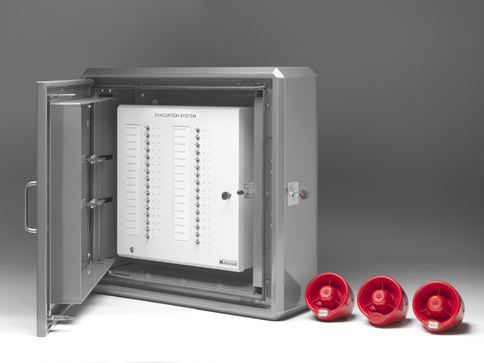
Fire and life safety systems manufacturer, Advanced, has announced the decision to appoint a dedicated business development manager responsible for the launch and growth of EvacGo, Advanced’s new BS 8629-compliant evacuation alert system.
Ken Bullock, who joined Advanced as Regional Sales Manager for South East England four years ago, brings over 35 years of fire industry experience to his new role as Business Development Manager – Evacuation Alert Systems.
Ken has been instrumental in the development of the EvacGo solution and ensuring that it will make life easy for anyone who needs to meet the BS 8629 Code of Practice recommendation applicable to buildings over 18m containing flats.
Ken Bullock, Business Development Manager – Emergency Evacuation Systems, said: “I’ve been heavily involved in developing our evacuation alert system and am passionate about the ability of this product to help improve fire safety for residents in high-rise buildings. It therefore seemed natural for me to focus on educating the market about the importance of following BS 8629 recommendations and to raise awareness of our evacuation alert solution EvacGo.
In developing our system, we’ve worked with leading fire industry experts to ensure it delivers maximum performance, quality and ease of use. I now look forward to developing these relationships still further as we all strive to build a safer future.
The EvacGo panel is built using Advanced’s industry-leading MxPro 5 fire panel components, providing the added assurance for installers and building owners that their sites will be protected with robust and proven technology that’s been rigorously tested to EN 54 parts 2 and 4 as recommended in BS 8629.
To ensure every aspect of the BS 8629 Code of Practice was followed, the panel is housed in a tamper-proof STS 205 class BR2 security-rated enclosure made by leading manufacturer Gerda with a patented BS EN 1303-compliant lock and key mechanism for exclusive access by the fire and rescue service.
BS 8629:2019 is the new Code of Practice for the design, installation, commissioning and maintenance of evacuation alert systems for use by fire and rescue services in England. In place since November 2019, this code of practice recommends the installation of a dedicated evacuation alert system intended for the sole use of the fire and rescue services and separate from the building’s fire alarm system.
It is relevant to blocks of flats with a storey located at a height of more than 18 metres above ground level. Although not yet a legal requirement in England, evacuation alert control and indicating equipment (EACIE) installation is already mandatory in new buildings containing flat over 18 metres in Scotland and considered best practice by a number of fire and rescue services.
Gary Craig, Sales Director at Advanced, added: “Over recent months, Ken’s work on EvacGo has focused on ensuring it is easy for building owners and installers to meet the recommendations of the BS 8629 Code of Practice, whilst ensuring optimum safety for the residents of high-rise buildings and ease of use for the fire service. Ken’s expertise will help ensure the process of specifying, designing and sourcing a BS 8629 system is simple, straightforward and stress-free.
“Ken’s appointment adds a vastly experienced voice to this project and the future direction of our evacuation alert systems business. His expertise and track record in driving growth and expansion within the UK market will be immensely valuable as we experience rising demand for this new product.”
Account customers currently looked after by Ken will continue to receive excellent support as they transfer to Business Development Manager, Amanda Hope.
Advanced, owned by FTSE 100 company Halma PLC, protects a wide range of prestigious and high-profile sites across the globe – from London’s Shard and 22 Bishopsgate to Abu Dhabi International Airport and Istanbul’s Hagia Sophia.
Halma is a global group of life-saving technology companies with a clear purpose to grow a safer, cleaner, healthier future for everyone, every day
As Pelican’s new CIO, Lance Ralls is responsible for all information systems and functions within the company, as well as ongoing maintenance and future technological direction. The role includes developing and executing information technology strategic plans, policies, programs, and schedules for the Pelican business.
As part of the executive leadership team, Lance will head finance data processing, computer services, network communications, and management information services to accomplish Pelican’s corporate goals and objectives.
“Lance is a multi-dimensional, technical leader well suited to steer Pelican’s global IT strategy,” stated Chief Financial Officer, George Platisa. “We look forward to him driving innovation and revenue-generating programs within our organization that will continue to support a high level of customer service”.
Prior to joining, Ralls has held CIO and senior leadership positions at fast-growing startups, small businesses and large fortune 500 companies such as DirecTV, Mattel, Fuhu, Rent-a-Wheel, and most recently, Belkin International.
Ralls holds a Bachelor of Science degree in Mechanical Engineering from UCLA and has served as an Executive Board Member for several organizations such as Innovate@UCLA and the Southern California Society of Information Management. Lance Ralls was selected as a finalist for CIO of the Year by the Los Angeles Business Journal in 2019.
International Fire and Safety Journal spoke exclusively with Carl Stephen Patrick Hunter OBE, CEO of Coltraco Ultrasonics, to find out more about the company’s offshore presence, product developments as well as the oil and gas sector’s response to the impacts of Covid-19.
For the last 30 years, Coltraco have been focussing on improving safety for people, assets and infrastructure on land and sea through instruments and constant monitoring systems which focus on liquid level indication, seal integrity, flow rate monitoring, thickness gauging and bearing indication. The company also aims to protect critical and high value environments to enhance fire safety and their continued support towards ships and maritime structures have made them an integral partner in offshore safety.
“One of the main reasons for ships, offshore platforms or maritime structures being lost at sea is fire,” Carl stated. “We can monitor the contents of the pressurised gas extinguishing systems that protect those maritime structures against the risk of fire and pride ourselves in achieving an accuracy of plus or minus 1.5 mm, which has never been done before.”
He continued: “We really are at the heart of the offshore sector globally in the contents monitoring of pressurised gases extinguishing systems and because they are pressurised they can accidentally leak or discharge and if the contents are not there, the design concentration to put out that fire will not be achieved, so we are literally at the core of safety critical infrastructure.”
Coltraco Ultrasonics offshore presence
Coltraco’s equipment is installed in 90% of the UK sectors oil and gas platforms, in the North Sea oil fields. The company are also on board about 70% of the Norwegian sector, nearly 80% in the Gulf of Mexico and in the Persian Gulf and finally, 50% of Asian platforms.
Carl explained that one of the other primary reasons for the loss of ships and offshore structures at sea is sinking. Coltraco have been a continued asset to offshore platforms due to their successful detections of water ingress into pontoon legs and through watertight compartments. This means oil and gas platforms are given peace of mind that they are not going to take on any water, despite the extreme water and weather conditions they face.
Carl Stephen Patrick Hunter OBE
Mr Hunter provided an example of a successful implementation in the West Coast of Africa: “We had a platform that did take on water into one of its pontoon legs and nearly capsized which led to the owner of nearly 200 others platforms around the world spending two years trying to identify whether a technological solution existed in the market for that particular risk. They eventually selected us, and we have spent the last few years fitting out that monitoring equipment across the global fleet.”
Among other products, Cultraco eventually manufactured the PortascannerTM , the world’s first dedicated portable ultrasonic watertight integrity test indicator for ships and offshore structure hatch-cover testing. Particularly popular with Bulk Carrier operators, this allows all hatch covers to be inspected, ensuring all leaks can be repaired before port departure or during cargo loading or unloading operations. This drastically reduces the chance of cargo damage and increases the safety of vessel and crew. Also regularly used on Multiple Cable Transit Areas (MCTs), Watertight Doors, Hatch Covers and other similar applications.
“The main benefit to the PortascannerTM is its complete accuracy,” Mr Hunter explained. “Getting down to 0.06 mm diameter leak sight is such an incredible and world-leading capability and we are able to deliver this because we understand the science behind its development. We were able to design a hand held ergonomic unit for an offshore engineer to use, intuitively, with relatively little training, so that the unit effectively becomes a part of that engineers’ objective – to secure the water tight integrity of maritime structures or oil and gas platforms.”
Safety measurements
The oil and gas sector distinguishes itself by its understanding of the application of safety and fire safety and is arguably unrivalled in the commercial sector and rivalled only by the Royal navy in the damage control space, and the US Navy in the safety and survivability space.
Reasons for this can be traced back to 1988 when a series of explosions ripped through the Piper Alpha platform in the North Sea. Engulfed in fire, over the next few hours, most of the oil rig topside modules collapsed into the sea and resulted in nearly 170 deaths.
Mr Hunter explained, “At that point the off shore oil and gas industry really energised itself, resourced itself, developed understanding of the need to install serious gas extinguishing systems on board all off shore oil and gas platforms, and to understand the need to monitor their pressurisation and potential contents loss.
“This was concluded in the oil and gas industry nearly four decades before other sectors had the same realisation and in more recent years, the Deepwater Horizon oil spill in the gulf of Mexico has led to an appreciation to the complexity of interface between the owner, operator and contractors that are functioning off shore on gas platforms today.”
He continued: “What is extraordinary about the oil and gas sector offshore is the sheer amount of oil and gas that is being generated and yet there are relatively low levels of fire safety and safety incidents.
“That is relative to a fundamental understanding of the application of engineering principles, science and mathematics that runs through the heart of one of the most complex engineering sectors on earth, and that industry should be congratulated, because the men and women who populate its engineering heart are the reason that it operates hugely successfully and safely.”
Covid-19 impact
The spread of the coronavirus has inevitably forced many oil and gas companies to either stop or slow down their physical operations, which has impacted production in both upstream and downstream operations. Players in the oil and gas sectors are ultimately struggling with declining demand, ensuring employee safety and business stability, oil price war, and need to focus on building a flexible business model that can lead to long-term resilience.
Regarding the overall impact, Mr Hunter explained: “We have seen many recessions in the past, but what distinguished this one was that it is the only global economic crisis in the last 900 years which was driven so completely by a health crisis. The oil market was already being disturbed by disputes between oil producing nations such as Saudi Arabia and Russia, and so it coincided, with the beginning of Covid 19 in the UK and Europe.
“At that point, the oil price lowered dramatically – to a state that has never been seen before which meant that that all capital expenditure, unless it was super-safety related, was extinguished overnight. For a time in March 2020 when the oil prices went through the floor, we had essentially lost the global oil and gas sector. Luckily, we have seen it recover in recent months, but with that being our primary market sector, it was a very disturbing and concerning time for us.”
He continued: “I fundamentally believe that Covid 19 offers the United Kingdom opportunity to reconfigure its economy and I believe that to give economic hope to those people that may face the prospect of unemployment.
“I think instead of just trying to restore the economy that we had pre-Covid, we could realise that a lot of that economy comprised low-skilled, low pay, employment opportunity for people, where I believe that if we took a fundamental reassessment of the opportunities for science research and innovation, we could generate economic hope, reassure manufacturing and build an economy of genuine value for all those that are in it.”
It led to us adjusting our own strategy to one based on “Resilience – Diversification – Growth” and to making even better our refined understanding of the sequences required to apply Science through its various stages of R&D, general innovation, manufacturing better and quicker, accelerating certification tracks and moving to rapid commercialisation at home, and overseas in our ever-important export markets”
A brighter future
Predicting the future of the oil and gas market, Mr Hunter concluded: “I think we will start to see a magnificent effort by the oil and gas and other fossil fuel industries to really generate serious global technologies in renewable energies. The strategic nature of energy will never be removed and therefore we should welcome rather than suspect the interface between government and the energy sector, encourage both to operate in a collaborative and cooperative manner.
“We should continue to energise our world, but safe in the knowledge that we have a greater understanding that we can do things better today, and that we will do them tomorrow. As long as we begin to understand the central and fundamental importance of science to every person on this planet, and to do so in an optimistic way that energises and gives hope to people, both personal and economic, that tomorrow can be brighter than it is already today.”
International Fire and Safety Journal speaks exclusively with Jim Pauley, President and Chief Executive Officer of the NFPA.
In the US, the term ‘fire code’ is defined as a code adopted by the state or local jurisdiction and enforced by fire prevention officers within municipal fire departments – a familiar term that ensures a systematic safety procedure.
While local, state and federal authorities establish their own fire prevention and emergency laws, they pretty much all base their rulemaking on the National Fire Protection Association (NFPA) codes and standards. With more than 300 technical codes staffed by more than 9,000 volunteer experts from 43 different countries, the non-profit organisation continuously provides information based on the latest research, lessons learned and emerging issues.
International Fire and Safety Journal spoke exclusively with Jim Pauley, President and Chief Executive Officer of NFPA to find out more about the importance of codes and standards and how after nearly 125 years in the industry, the association plans on meeting the various fire and safety demands of today.
Adapting to current needs
Discussing today’s standards and safety values, Pauley stated: “I believe we have now let it get to the point where people take standards for granted. Yes, they still exist and are implemented when buildings are being constructed, but we at NFPA are trying to raise the level of awareness surrounding these standards by constantly providing information and by staying relevant to today’s issues.
“Like any business organisation, you must adapt and adjust – we have hundreds of different codes and standards that are updated with time. The vast majority are revised every three years or so. Having correct codes and standards is critical to meeting the fire safety demands of today. NFPA codes and standards ultimately cover a wide range of topics and thus the reason we have a broad spectrum of stakeholders.”
For example, NFPA’s research affiliate, The Fire Protection Research Foundation, has been doing research into enhanced cleaning of fire personnel protective equipment (PPE) – specifically looking into how clean their equipment is after an incident and how it is protecting firefighters appropriately from the toxins that naturally occur in those environments. With occupational exposure being such a big focus in recent years and, more recently, COVID-19 raising new concerns, the topic of PPE cleaning is certainly relevant.
Pauley also spoke about the association’s fire protection efforts: “We are looking at cybersecurity for fire protection systems, as well as technology trends. Another good example is NFPA 855 Standard for the Installation of Stationary Energy Storage Systems. The topic of ESS has become more popular today, but NFPA developed the world’s first ESS training more than five years ago and then it was updated last spring.
“The Research Foundation also recently released new research on sprinkler energy storage units. We have found that by staying connected and adjusting to whatever the most pressing fire and safety issues are today, we are able to successfully transfer the right information to the people that need it the most.”
Fire & Life Ecosystem: Broadening the lens
To further minimise the risk of fire, the organisation developed the NFPA Fire & Life Ecosystem – a unique framework that works to prevent loss, injuries and death from fire, electrical and other hazards. The impetus for the Ecosystem began when Pauley was travelling around parts of the world in 2017, discussing different catastrophic fire events that were occurring at the time.
He explained: “We were seeing these tragic events occur around the same time as Grenfell; the wildfires in Portugal, the ship fire in the US, the Notre Dame fire in Paris – all of these made us think ‘are we really looking at these through the right lens?’
“We found that everybody was looking at these events through a singular lens based on their particular fire safety component – for example, fire suppressant manufacturers would be blamed for the lack of appropriate suppressant solutions, an enforcer would be criticised for not implementing the correct rules and labour skills were often scrutinised. We were mistakenly looking at safety in a vacuum. The Ecosystem was created to encourage people to take a holistic approach to safety.”
The Ecosystem consists of eight integral components; Government Responsibility, Development and Use of Current Codes, Referenced Standards, Investment in Safety, Skilled Workforce, Code Compliance, Preparedness and Emergency Response and an Informed Public. NFPA challenges different authorities to determine which Ecosystem element or series of elements did not perform to the level they should have when a disaster occurs.
“I think the best way to describe the Ecosystem is to foster the mindset that safety is a system rather than a singular element. I have to admit the Ecosystem has been a very successful barometer for the fire and safety sector and has fostered forward-thinking conversations,” Pauley added. “It has been translated into eight different languages now and the most exciting part is hearing people say, ‘this is exactly what I have been wanting to see in the market, but have never been able to vocalise.’ We have broadened the approach to fire risk management and I think that’s what makes this such a unique framework.”
Jim Pauley
Conduct through COVID
As the threat of coronavirus began to grow in the US this past spring, NFPA quickly mobilised to ensure that people in various safety roles had the information they needed to help mitigate impact and protect communities. This content was designed to help policy makers, emergency responders, code officials, health care officials, facility managers and the public navigate the new normal that came with COVID-19. It delved into ITM (inspection, testing and maintenance) of fire protections systems, closing and reopening buildings, dealing with new 911 protocol and even the dangers that might accompany hand sanitisers.
“We had a lot of situations where temporary hospitals needed to be constructed so we had to generate real world guidance that covered the important life safety elements that need to be implemented in a medical environment,” Pauley explained.
“I suspect that when our technical committees start to get back together, we are going to see more discussions about temporary hospitals. But the environment was not going to wait on the committee recommendations, so it was ultimately about us trying to gather the relevant insights and sharing that information via our social media channels, articles, blogs, press releases and media interviews so that people charged with moving forward in the interest of safety had the right information to do so.”
With more and more people working remotely this year, NFPA worked hard to ensure that there would not be a decrease in the ITM of fire and life safety systems, such as sprinklers, throughout office buildings.
Pauley said: “People were saying, ‘the building is empty so what is the urgency?’ So, we began putting out information about the critical role that ITM personnel play and the fact that they should be deemed essential workers during the pandemic.
“Additionally, we had to consider school strategies during COVID-19. For example, how to conduct a fire drill while trying to maintain social distancing. For this, schools need to work with local officials to think in terms of what is a reasonable exiting time and potentially creating temporary distance markers so students can congregate at their assembly points at a safe proximity.
“In general, it has been less about big alterations for standards and more about responding to needs very quickly as they arise; and I think those needs will get carried over as the standards go back into their cycles.”
Middle Eastern presence
NFPA has a long-standing presence in the Middle East – for decades, the organisation has been working with government officials and private entities responsible for building, fire and life safety in the Gulf region.
“I was in a jurisdiction in the Middle East and we were talking to the people responsible for enforcement and one of the questions was, ‘how do you handle a sudden change of occupancy? For example, a bakery owner wanted his business to become a night club the next day. Now, if this were to happen in the US or the UK, new permits and requirements would have to be put in place and it would definitely need to be re-inspected.”
Pauley continued: “This element is missing in the Middle East enforcement system so we had a long discussion about how this change could be implemented properly. It is ultimately not standards that they should be focused on, it is all of the supporting elements of the system.
“Their use of standards is moving forward but it is very technical and that’s when discussion becomes even more important. You need to consider all of the other safety elements in the Eco-system – just having the standard is not the only answer.”
NFPA LiNK
Outlining NFPA’s plans for the next year, Pauley stated: “Our focus is going to be on how we deliver information and knowledge to our stakeholders across the globe. We just launched a brand-new, digital information platform called NFPA LiNK. NFPA LiNK is a prime example of how NFPA is innovating. Despite being over a century old, our organisation knows that we can no longer simply offer a code or a standard. More importantly, we need to provide a wide range of people with the information and insights that will help them solve problems and do their jobs more successfully.”
Pauley concluded: “We are changing how we deliver critical safety information – how it is packaged, how people can gain access to it. We are revisiting the way people can use our codes and standards on a daily basis – I can tell you, it is an exciting time at NFPA because we know that with each innovation, we are meeting our stakeholders where they are.”
Telgian have recently announced Branko Mitkovski is the recipient of the 2020 Pat Ryan Team Spirit Award. The award is the most prestigious honour bestowed at Telgian each year and was created in memory of former Telgian associate Pat Ryan.
This award recognizes the spirit of teamwork and it is presented annually to the Telgian Team Associate who best embodies Pat Ryan’s legendary example.
“It is a great honor to present the Pat Ryan Team Spirit Award,” says Telgian Executive Chairman Russell Leavitt. “We are blessed with hundreds of deserving associates which makes the decision most difficult, but incredibly rewarding.”
Essential member
This year’s recipient, Branko Mitkovski, is the company’s Director of Information Technology and is a 22-year veteran of the firm. As an essential member of the Telgian team, Mitkovski is responsible for managing the entire IT infrastructure across all offices throughout the country and abroad.
In addition, he handles server issues, equipment purchases, software updates and implements switches, firewalls and servers. Although he says, “My goal is always to do my job well enough that people aren’t even conscious of what I’m doing behind the scenes,” his teammates are highly aware of the incredible value he brings.
“I love my job and enjoy being able to help people in any way I can. It truly makes me smile when I know I’ve made a difference to someone, be it large or small,” says Mitkovski. In addition to Mitkovski, two other finalists were recognized for their outstanding contributions to the company. These include Account Manager Cecilia Lopez and Security Designer John Carosello