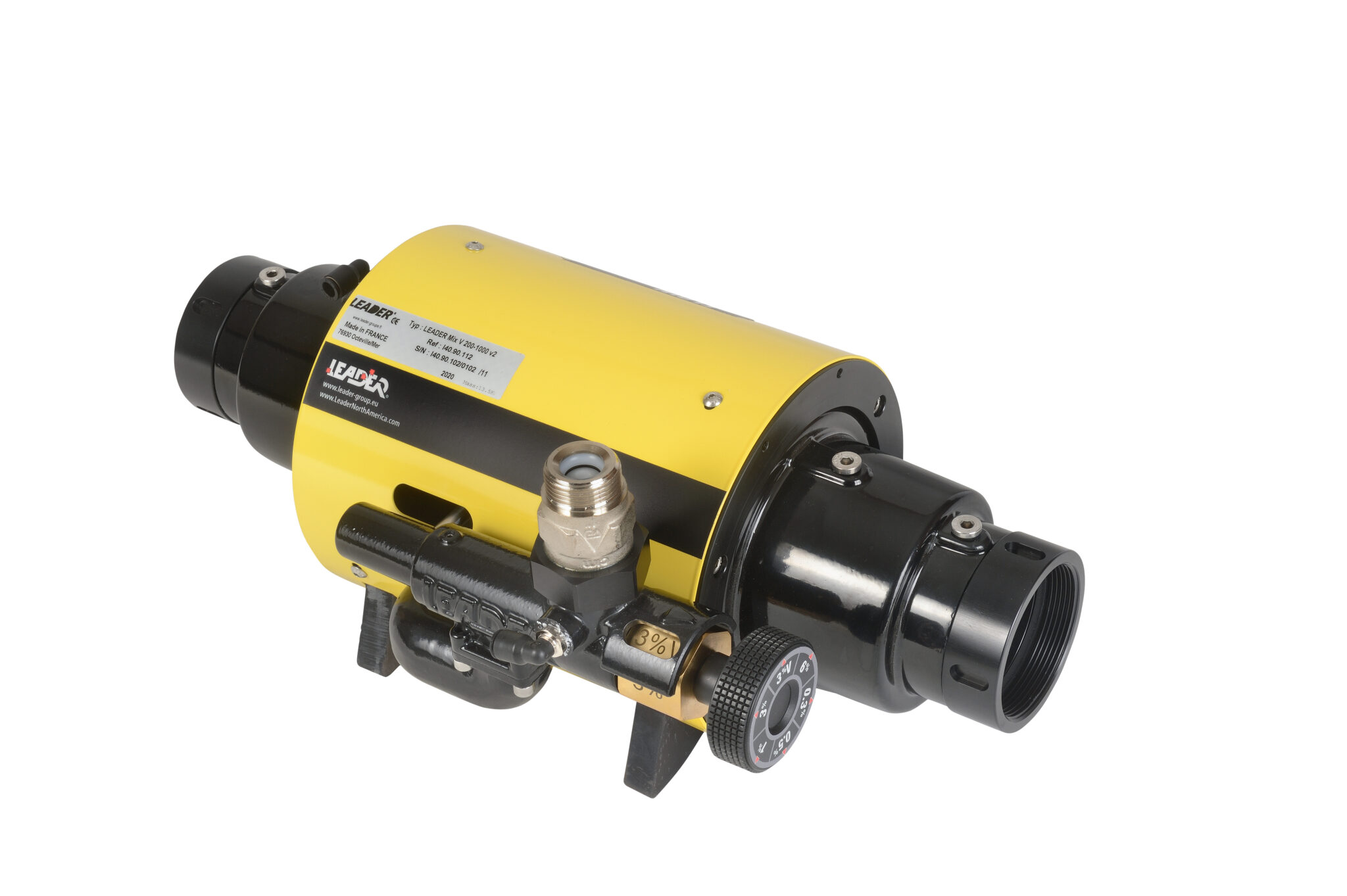
In the family of autonomous foam proportioners from the firefighting equipment manufacturer LEADER, here is the latest: the LEADER MIX A 1000. With its patented automatic dosing principle, the new LEADER MIX A 1000 meets the expectations of firefighters faced with class A fires, and more specifically forest fires wildland fires. It completes the range of autonomous foam proportioners. We tell you more!
The ideal equipment for interventions on class A fires, the LEADER MIX A 1000 proportioner is calibrated for class A additives (foam concentrates and wetting-foaming agents). Designed and patented by the LEADER company’s R&D team, its unique operation is based upon a powerful venturi system that allows it to precisely aspirate the quantity of additive requested (0.3%, 0.5% or 1%) and to mix it with water.
Just turn the selector to instantly change the concentration rate. The LEADER MIX A 1000 adapts in real time the amount of foam concentrate to be aspirated according to flow variations. It operates over a wide flow range, from 200 to 1000 l/min, for a pressure between 5 bar and 16 bar. Successful fire extinction is closely linked to the proper functioning of the equipment and the quality of the additive used.
With LEADER MIX A 1000, get precise foam dosing to avoid wasting precious foam concentrate stock and to extinguish fires efficiently. Unlike electronic foam proportioners which require a power supply and regular maintenance, the LEADER MIX A 1000 operates without electronics and without power supply: it is a 100% mechanical system that is reliable and autonomous.
The absence of a metering pump increases the reliability of the system and allows dry operation if the end of the tank is reached. No periodic maintenance is required.
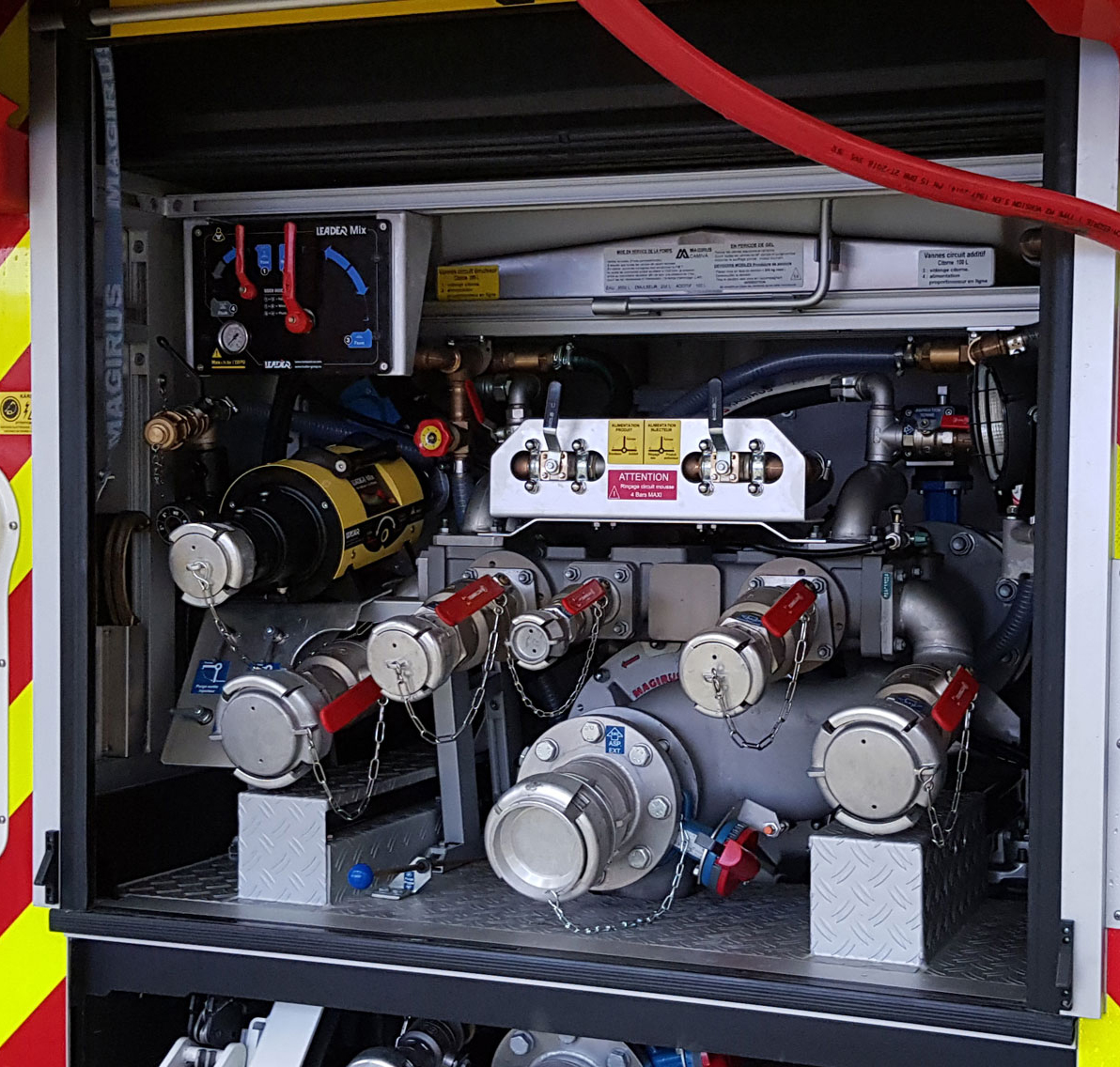
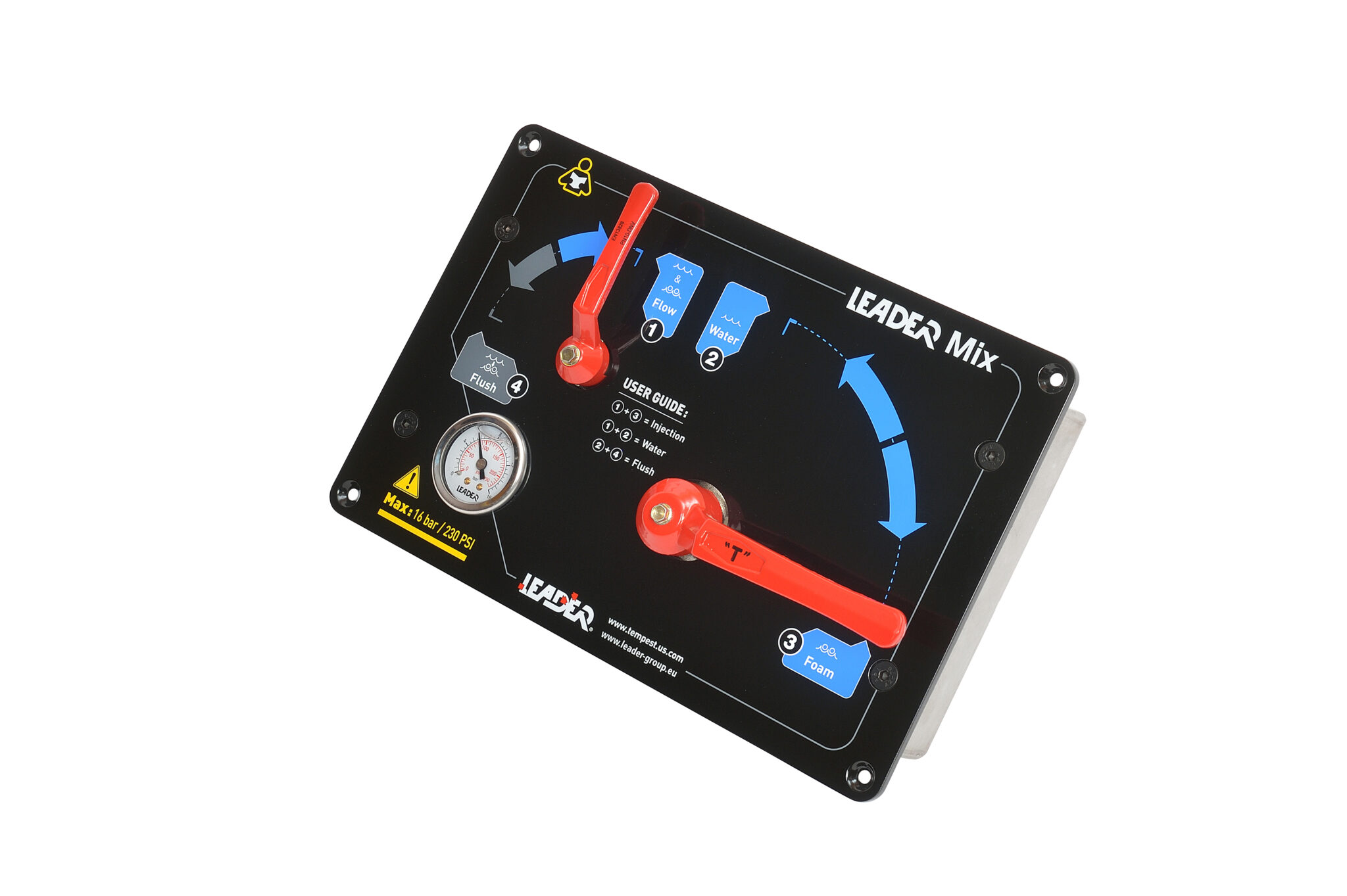
Its robust construction, as well as its extremely compact and light format (16 kg), allow it to be easily installed in fire fighting vehicles (fire truck, skid, pick-up, trailer). The remote-control panel allows you to view the inlet pressure and select the intervention position: water only, foam or flush. The “water” position (bypass) reduces pressure drops when injection is not necessary.
The “flush” position allows the dosing system to be rinsed in anticipation of the next intervention. The simple interface is easily understandable allowing fast and flawless action. Many fire departments have already tested and approved the performance of LEADER MIX automatic dosing systems. To try it is to adopt it!
Highlight Parking, an innovator in parking information systems for multi-storey car parks has announce the launch of its AI-powered Smoke and Fire Early Warning System S.A.F.E. which can detect smoke or fire within just a few seconds. Since the King’s Dock multi-storey car park at Liverpool Echo Arena was devastated by fire on New Year’s Eve 2017, causing millions of pounds’ of damage, Highlight Parking has been developing S.A.F.E. to help prevent similar events and improve the overall safety of car parks.
This innovative solution works with around-the-clock unattended monitoring, detecting smoke within seconds. Connected to a cloud application, S.A.F.E. immediately triggers a visual and audible alert, with email/SMS warnings sent automatically to smart devices and to car park control room screens. S.A.F.E.’s AI capability means that smoke can be detected as fast as the human eye, rather than relying on smoke to reach a car park’s ceiling mounted fire wire detectors. The outcome is that emergency measures can be taken far more quickly, so the likelihood of serious damage or injury is dramatically reduced.
“We developed S.A.F.E. because conventional fire systems are based on heat detection, which means a fire may already be out of control before it is detected, as was the case at King’s Dock”, explains David Harrison, MD at Highlight Parking. “By the time fire services had been alerted (13 minutes), despite their quick response, it was too late; nearly 1,200 vehicles were destroyed, and the insurance bill was a massive £20 million. Thankfully nobody was injured.”
As well as the existing risk of a petrol or diesel fire, as electric vehicle become more popular and EV charging points in car parks are increasingly commonplace, there is the additional increased threat of an electrical fire. Consequently, the need for a more sophisticated fire detection solution such as S.A.F.E. is even more imperative.
Harrison continues, “Obviously, fire safety is extremely important to car park operators and Chief Fire Officers who cite speed of response as absolutely crucial when it comes to preventing a fire disaster, like the one in Liverpool. We believe S.A.F.E. provides this.”
FTSE 100 company, Severn Trent Water, has installed S.A.F.E. at its headquarters in the West Midlands. Richard Carney, Project Manager at Severn Trent comments, “The S.A.F.E. system was a guaranteed investment for us. We did of course have a fire alarm system in the car park but, S.A.F.E. provides a far quicker response; we timed it at between seven and eight seconds compared to 12 minutes for our existing system.”
While S.A.F.E. has been developed for car parks, its AI software can be implemented in any other setting such as warehouses, storage facilities, retail and other large building where there is a fire risk. It can be installed using an existing or a new CCTV camera system.
People tasked with extinguishing flammable liquid fires have known the limitations of water as a fire suppressant for years.
The pursuit for a better solution led Russian chemist Aleksandr Loran to develop and introduce in 1902 the first firefighting foam for flammable liquid/oil fires, after witnessing thedestruction they caused in his hometown.
The foam is used to create a foam blanket, which has lower density than water and floats on top of the fuel surface separating the flammable liquid from oxygen.
Through the years, technological innovations have improved on the effectiveness of firefighting foam.
While the advancements to foam technology helped firefighters to save thousands of lives over the years, they sometimes also brought unwelcome properties that had an impact on the environment.
Emergence of Aqueous Film Forming Foam
Aqueous Film Forming Foam (AFFF) containing PFAS (per- or polyfluoroalkyl substance) were introduced in the mid-1960s, first commercialised in the early 1970s, and have served as the industry workhorse ever since.
PFAS is a term used to describe a broad category of fluorochemicals (polymers and non-polymers) of different carbon chain lengths, physical and toxicological properties, and environmental impacts.
It includes long-chain PFAS such as PFOS and PFOA that are considered persistent, bio-accumulative, and toxic (PBT).
It also includes short-chain PFAS, such as C6 fluorotelomer fluorosurfactants used in current-day AFFF agents.
Short-chain (C6) fluorosurfactants do not contain or breakdown in the environment to PFOS or PFOA, and they’re currently considered lower in toxicity with significantly reduced bio-accumulative potential compared to long-chain PFAS.
Foams made with only short-chain fluorosurfactants likely contain trace quantities of PFOA and PFOA precursors as an unavoidable byproduct of the manufacturing process.
Advanced analytical methods and more sensitive instrumentation developed in the 1990s led to the detection of small amounts of PFAS chemicals, specifically PFOS and PFOA, in blood and the environment.
In response to getting this data, some manufacturers, like 3M, began phasing out PFOS and PFOA production in 2002.
In the early 2000s, government environmental agencies around the world intensified their scrutiny of PFAS chemicals, and over the past twenty years, many governments have passed legislation that restricts or bans the use of PFAS-based foams.
Because of these changes, many end users are transitioning or planning their transition to the next generation of fire protection.
Making that transition, however, is a big decision for any company.
End users need to confirm compatibility between the next generation foam and existing hardware in the foam system.
A couple of key considerations include maintaining business continuity and minimizing the capital investment required to make the transition.
The final solution is almost always influenced by the Authority Having Jurisdiction (AHJ) approving the foam system – i.e., Fire Marshall, Municipal Fire Department, or Insurance company.
These organisations also must factor in third party approvals from Underwriter Laboratories (UL), Factory Mutual, EN 1568 standard and or other vertical market foam standards, including U.S. MIL-SPEC, International Civil Aviation Organisation (ICAO), International Maritime Organisation, or the U.S. Coast Guard.
Foam systems are often in place for decades, and end users must make sure that their solution is sustainable for years to come.
What to Consider When Moving to a New Foam System
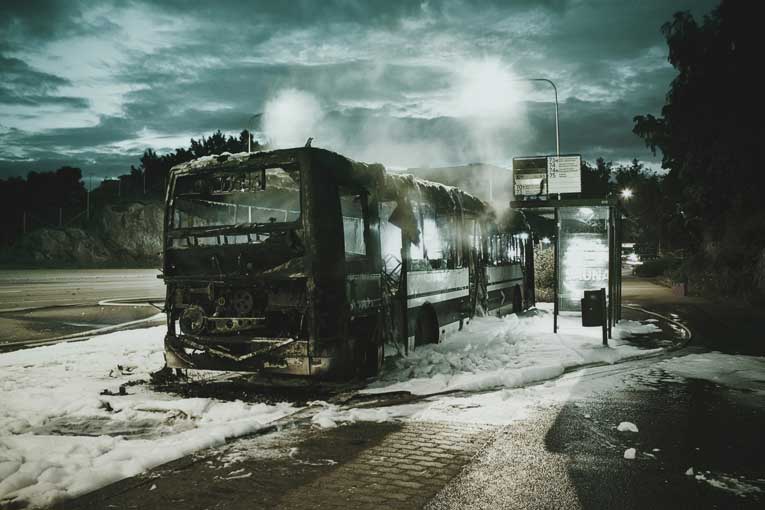
Burning Bus Extinguished by Fluorine Free Foam. Image credit: Unsplash
Class B foams are used to address the two primary types of fuel hazards – hydrocarbon and polar solvent.
Hydrocarbon fuels typically have a lower density than water and are not water miscible – i.e., gasoline, diesel, and aviation fuels.
Polar solvents include fuels such as ethanol, methanol, and isopropyl alcohol, which are miscible with water.
AFFF foams are used to create a foam blanket that readily spreads across the surface of the fuel separating the fuel source from the oxygen in the air and drainage of the foam blanket provides continual cooling to the surface of the fuel.
Alcohol resistant AFFF (AR-AFFF) firefighting foams have an additional feature that includes polymer(s) that are insoluble in the fuel.
These polymers precipitate out on the fuel surface and provide protection for the foam blanket from the polar solvent fuels that are hydrophilic (attracted to water).
This foam blanket separates the fuel from the oxygen in the air, suppressing the fire.
Perimeter Solutions’ new SOLBERG® VERSAGARD™ AS-100, is a fluorine-free alcohol type concentrate (ATC™) proportioned at 3% for both hydrocarbon and polar solvent fuel fires.
This is a tremendous advantage for municipal and/or industrial firefighters because they don’t have to worry about whether the foam they are using is the right foam for the job.
With all the focus on the use and regulations around PFAS based foams, there is little attention being paid to the inclusion of certain kinds of siloxanes in new fluorine-free solutions.
Some of these siloxanes are very persistent in the environment, and they are facing the same environmental pressures as fluorinated chemistries.
In fact, regulatory bodies including the Stockholm Convention for Persistent Organic Pollutants and California’s Prop 65 have already flagged certain siloxanes for their environmental persistence.
Case Studies – Making the Move to Fluorine Free
Perimeter Solutions is working with many customers to help them transition their fire safety systems. Each project is unique based on the customer, their industry and how old the system is that they are replacing.
One of the more recent projects we completed was with the Lehigh Valley Airport Authority.
They were interested in updating the fluorinated foam system used in one of their 40,000 square foot hangars.
That means that it requires an aircraft access door height of more than 28’, it can house an aircraft with a tail height over 28’, and that it needs to have a single fire area in excess of 40,000 square feet.
We helped the Airport Authority to convert its deluge fire sprinkler system, which was designed for 0.16 gallons per minute per square foot.
We were able to retrofit that existing system to use SOLBERG RE-HEALING™ foam 3%, fluorine-free 3%. This version of RE-HEALING foam has the exact same design application rate as the AFFF foam that they were previously using.
By selecting a foam with the same design application rate, the customer didn’t need to change out its discharge devices, or the piping infrastructure, dramatically reducing the amount they needed to invest to upgrade.
It was simply a matter of bringing in new foam storage, a change in the proportioner, and a change in the foam.
Another project recently completed involved the installation of a foam system at an 800,000 square-foot flammable liquid storage facility.
This was a racked storage facility that included a significant amount of flammable and combustible liquids on the property – both hydrocarbon and polar solvents.
The facility needed to transition to a versatile foam that would allow them to extinguish fires regardless of the fuel source.
Based on its versatility, the customer decided to use VERSAGARD AS-100 and has had great success with the new foam.
Fluorine Free Foam Technology- A Look Ahead
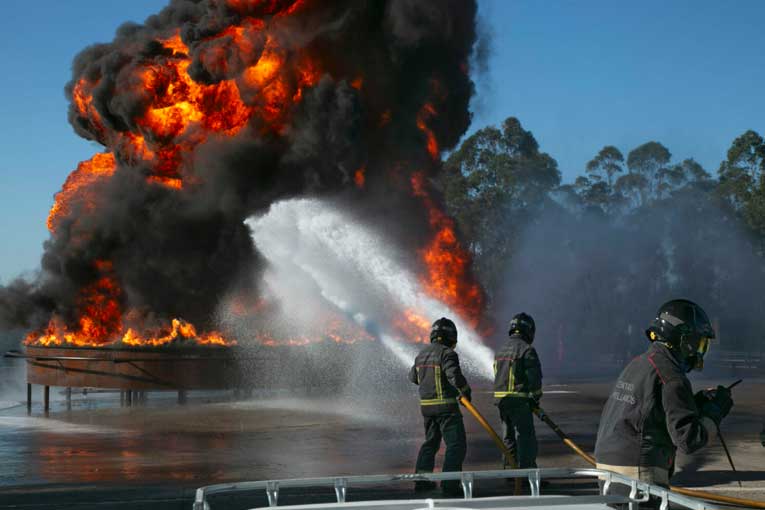
Fire Fighters Using Fluorine Free Foam.
Both of these transitions demonstrate that fluorine-free foams can now meet the needs of end-users who are looking for alternatives to legacy AFFF and AR-AFFF foams.
It will still be some time before AFFF and AR-AFF foams are completely replaced by fluorine-free alternatives, but we will see more of it in the next few years as regulations and requirements are updated.
In fact, the United States Federal Aviation Administration (FAA) recently issued a certification alert that removed a mandate to use fluorinated foams.
The FAA didn’t alter the existing performance specifications within the certification, so fluorine-free solutions must meet those specifications, but this shows that US agencies are creating inroads for fluorine-free technology.
The U.S. MIL-SPEC is also expected to transition to fluorine-free foam, and the U.S. military has stated that it will no longer purchase and/or use fluorinated foams starting in 2024, except for shipboard for the navy.
For those of you that have been around since the early days of AFFF and AR-AFFF, you may recall that they were proportioned up to 9% foam concentrate.
Through continued innovation, those percentages dropped to 3% and in some cases all the way down to 1%, meeting or exceeding the same level of effectiveness.
It is likely that fluorine-free foams will see the same type of development and will ultimately catch up to the legacy foams with the same proportioning percentage and application rates.
About the Author
Craig McDonnell is the General Manager at Fire Suppressions Americas, Perimeter Solutions profiles the history of fluorine-free Foam
The National Fire Protection Association (NFPA) and State Farm announce that the funding award application period for Wildfire Community Preparedness Day is now open. Up to 100 participants from across the country are eligible to receive $500 awards to complete a planned wildfire risk reduction project on event day, Saturday, May 7, 2022. To be considered for a project funding award, participants must submit an application by Friday, February 25, 2022. Apply for an award.
The national campaign, which began in 2014, provides an opportunity for groups and individuals who live in wildfire-prone areas to come together on a single day to complete projects that can help make their homes and communities safer from wildfire. Research shows risks can be lessened when residents invest time in preparing their homes and landscaping to reduce the damage caused by embers during a wildfire. Projects undertaken on Preparedness Day, which can range from a short time commitment up to an entire day, can include:
Raking and removing pine needles and dry leaves within a minimum of three to five feet of a home’s foundation, continuing up to a 30-foot distance around the home, as time permits, and disposing of collected debris in appropriate trash receptacles.
Clearing roofs and gutters of dead leaves, debris, and pine needles that could catch embers.
Collecting downed tree limbs and broken branches and taking them to a disposal site.
Screening or boxing-in areas below patios and decks with wire mesh to prevent debris and combustible materials from accumulating.
“Major wildfire incidents resulting in thousands of destroyed homes continue to occur annually in the U.S. and are quickly becoming the dominant type of fire that causes catastrophic multiple deaths and structure loss,” said Lorraine Carli, NFPA vice president of Outreach and Advocacy. “Homeowners need to understand they have a role to play and that they can take action in reducing wildfire risk.
Preparedness Day 2022 gives people the chance to not only make a difference in safety on event day but all through the year as well.”
According to the latest NFPA “Fire Safety in the United States since 1980, Through the Lens of the NFPA Fire & Life Safety Ecosystem” report, one million homes were within the perimeter of human-caused wildland/urban interface (WUI) fires from 1992 – 2015, and more than 60 million homes were threatened by such incidents in the same 24-year period. Data from annual reports from NFPA of catastrophic multiple death fires state that a total of 248 people have died in WUI fires from 1988 through 2018.
For more information about Wildfire Community Preparedness Day, how to apply for funding awards, project ideas, and free resources to download, please visit www.wildfireprepday.org.
The team at BIOEX reveals the details behind their movement towards environmentally friendly solutions
How long have Bio-Ex been producing FFF? What drove the company’s decision to produce FFF?
First, environmentally friendly solutions are in the essence of BIOEX name. The company was established in 1998 and its name means “bio-extinguishment”.
Fluorine-Free Foam technology is not new for BIOEX. For 20 years, BIOEX has been committed to offering a safe alternative to PFAS-containing foams to firefighters and to preserve population’s health. In 2002, BIOEX launched ECOPOL: the first Class A/B efficient fluorine-free foam (FFF) in the market. During this time, the firefighting foam market was not focused on fluorine-free foam technologies.
Some industries with high environmental concerns were convinced early on about ECOPOL fluorine-free foam performances and have chosen it for their fire safety. Other fire services were more reluctant about fluorine-free performances on large class B fires. Impressive fire tests were conducted to show the fluorine-free foam efficiency on class B hydrocarbon and polar solvent fires, as well as on class A fires.
For more than 20 years, ourcustomers have been confident in using BIOEX fluorine-free foams. Some of them still have BIOEX first foam batches in stock. Despite time, our foams have been analysed, tested, and acknowledged as performant. We have a good traceability of our foam’s evolution overtime. BIOEX is recognized as an expert and a leading company in fluorine-free foam solutions.
What are the differences between FFF and AFFF foams?
A lot of “F” but these are different firefighting foam technologies based on hydrocarbon surfactants! Both are synthetic firefighting foams for class A and B fires.
AFFF (Aqueous Film Forming Foam) contain fluorosurfactants (PFAS substances) responsible of the aqueous film forming on the fuel surface. This film is very fluid and spreads quickly above the fuel surface. It blocks the oxygen supply and suppresses flammable vapours.
AR-AFFF (Alcohol-Resistant Aqueous Film Forming Foam) foams are based on fluorosurfactant technology and contain polymers. Polymers are not water soluble, they form a membrane between the fuel surface and the foam blanket which protects the foam blanket from destruction by polar solvents.
FFF (Fluorine-Free Foams) are totally PFAS-free. FFF forms a thick and stable foam blanket with lot of bubbles. Efficient FFF form foam blanket which spread rapidly above the fuel surface. This foam blanket suppresses oxygen supply, resulting in quick fire suppression and have a cooling effect. The drainage time is long and provide good resistance to reignition. FFF could also be AR-FFF (Alcohol-Resistant Fluorine-Free Foam) with the addition of polymer in the formulation. AR-FFF foam blanket will not be destroyed by polar solvents.
BIOEX offers both high performance traditional (AFFF) and fluorine-free (F3) firefighting foam solutions. They are efficient against class A and class B fires. The foam formulations are different depending on the fire risk.
What are the benefits of using FFF? Does FFF still perform at the same level as traditional foam?
Fluorine-free foams are environmentally friendly firefighting solutions. They do not contain PFAS substances and have no impact on the environment and human health.
They can be applied in the same way of traditional foams and are mostly compatible with foam mixing and discharge equipment.
Fluorine-free foams have proven that they can be as efficient as traditional AFFF foams, as well as on large scale fires. LASTFIRE is currently doing huge research and tests with several fluorine-free foams on 300m² hydrocarbon fire. Results are positive. The study is highlighting the relation between foam equipment, foam concentrate and settings.
BIOEX fluorine-free foam solutions for firefighters
BIOEX fluorine-free foams offer equivalent or better performances than traditional foams in terms of extinguishment or burnback resistance. They are certified under international standards (such as EN1568, NFPA, IMO, ICAO, LASTFIRE, UL, USDA Forest Service…). BIOEX continues to prove that its fluorine-free solutions can be efficient while enviro-minded.
What risks are reduced by using FFF?
A global PFAS concernis rising. PFAS are extremely persistent and have high mobility. Recent studies are showing that PFAS are potentially harmful for the environment and for health. People are more and more sensitive to environment preservation and health concerns.
Worldwide, regulations are becoming increasingly restrictive regarding the use of PFAS-containing foams (AFFF and AR-AFFF). The fire industry could have an impact on soil preservation and groundwater quality, but also on future generation living conditions, which partly rest on a fragile balance.
The fire industry must be prepared to move away from PFAS and to turn to more environmentally friendly technologies, such as FFF.
BIOEX fluorine-free foams are biodegradable and environmentally friendly solutions. Some of our products have obtained GreenScreen certification. GreenScreen is the first independent ecolabel for PFAS-free firefighting foams. It certifies that the foam is totally free of PFAS and over 2000 chemicals of high concern for the environment and human health.
Are Bio-Ex continuing to research and innovate within the firefighting foam sector?
For over twenty years BIOEX has built strong expertise and has extensive experience in fluorine-free foam research and production. The company offers a wide range of fire foams for class A and class B fires; environmentally friendly solutions that comply with international certifications.
In a fire industry that is increasingly turning to fluorine-free foams, BIOEX is committed to providing green solutions. The company maintains its own laboratory, composed of PhD and chemical scientists. BIOEX continues to develop green and efficient fluorine-free foam formulations as the demands and necessity for this product increases. Foam performances are always verified at small-scale and large-scale burning test facilities, including all the testing that is done for certifications.
Our goal is to continuously bring new innovative products to the fire industry market. That is the BIOEX commitment – to offer high performance foams and environmentally friendly solutions.
How Bio-Ex helps fire professionals in the transition to FFF?
Several questions are emerging when discussing the subject of transition to FFF: What are the steps? How to proceed? Is it compatible with current foam equipment? How to dispose of AFFF foam?…
Moving to FFF is certainly not a “drop-in” replacement for AFFF foam. BIOEX helps our customers to answers their questions and support them through the transition to FFF.
Some phases are key. Fire services must check fluorine-free foam properties and ensure that they meet the latest standard requirements and performances expected. Then, it is necessary to check the compatibility of the FFF with their foam equipment, especially proportioning and discharge devices. BIOEX also recommends cleaning the tank before refilling with FFF. One of the main challenges in this process is to avoid spills and contamination of the equipment outside the foam concentrate tank. The old foam and any rinsing water must be disposed of properly. Firefighters can test the whole installation to check that it is working properly, then train with the new foam.
BIOEX adapts its transition protocols to each customer case, installation, and local regulation. BIOEX has supported the successful transitions to FFF of several airports, refineries, and chemical plants throughout the world.
How BIOEX company is structured?
BIOEX is part of the LEADER Group, a global fire and rescue equipment manufacturer. A dedicated team of foam experts is focused on customer requests worldwide. The company is very reactive in an industry which evolves quickly. We can offer custom-made products that meet specific requirements or standards. Our capacities were recently increased to answer the growing demand. We recently moved into brand-new facilities with extended capacities. Our foam concentrates are produced and dispatched rapidly all over the world. Since its establishment, BIOEX have built strong relationships with a wide network of dealers and rely on subsidiaries located in the USA, Germany, and China.
BIOEX offer efficient Class A/B fluorine-free foams.
Our former location was too small and limited. The expansion was essential to meet increasing customer demand across the world. In the beginning of 2020, BIOEX moved in a brand-new facility built to the latest standards, located near Lyon, France and closer to major highways and airports to better improve our supply chain availability. We extended our production, laboratory, storage, and logistics capacities. Our team is equipped with high-tech analysis laboratory, meeting rooms, and spacious and modular offices. These new infrastructures have been designed to evolve with the development of BIOEX in the future. We also installed two separate production lines for fluorinated and non-fluorinated foam concentrates.
In accordance with our commitment to provide solutions that respect the environment and for our customers, we must ensure that our ecological foam concentrates are free of all traces of fluorinated derivatives. For this reason, we have opted for the construction of two separate production lines to avoid any pollution of the line with fluorine compounds. BIOEX customers can feel confident and rely on a company that has been a global pioneer in the development and manufacturing of fluorine-free foams.
Environmentally-friendly and efficient firefighting foam solutions used in low, medium and high expansion
Transitioning away from PFAS based foam agents presents challenges, but Fomtec already has solutions writes John Olav Ottesen, Managing Director and founder of Dafo Fomtec AB
With inventories of PFAS based foams which run to tens of millions of litres, the Middle East Region will face major challenges as legislation in Europe and the USA impacts the availability and even restriction of foam manufacturers to make and supply these products in the current decade.
The concerns of the environmental impact of PFAS is leading to legislation in the US, Europe and Australia, aimed at controlling and limiting the further dispersion of PFAS into the air, land or water. Whilst it would be speculation to say that the countries in the region will follow legislation in place or pending from the US or the EU, the largest manufacturers of firefighting foam agents are based in the US and EU. If the legislation restricts the manufacture and supply of fluoro-based chemicals to the foam agent manufacturers then these products would no longer be available for end users in this region.
The good news is that R&D efforts by Fomtec and other foam agent manufacturers has seen a growing number of synthetic fluorine free foams (SFFF) being launched and sold. A lot of focus has been on the differences in performance and operational challenges of deploying these new SFFF agents in an emergency response mission. For many industries that utilise and store Class B, and to a lesser extent Class A fuels, fixed head foam systems are the primary defence against fire. These systems have a finite availability of foam concentrate and once this has been used up the system will just be flowing water.
The desire from all existing foam users is to have a “drop-in” replacement. Aside from cleaning issues and removing the PFAS foam concentrate from the existing system, the wish is that once the old foam is removed that they can fill the tank with a new SFFF agent, and that the system will provide them with the same level of protection. As a manufacturer of foam agents, Fomtec already knows that SFFF agents don’t perform the same as the PFAS based agents, so we embarked on our “Enviro Programme” with the goal of developing high performance SFFF agents and foam hardware combinations that can be deployed in new foam systems or incorporated as part of a clients’ transition away from PFAS. A few months ago Fomtec was able to announce the receipt of UL listings and FM approvals for our Enviro USP and Enviro ARK agents.
Fomtecs’ “Enviro Programme”
During the past decade our industry has gone through a transition from old C8 chemistry to C6. Fomtec finished this transition in 2014 and was one of the first companies to make a complete transition to C6.
The new C6 versions of our UL/FM approved AFFF 3% S and ARC 3×3 S that have been a standard for high performance systems foam needed SFFF alternatives as PFAS restrictions start to be implemented. We began the development of these alternatives with the internal project name of the “Enviro Programme” as soon as our C6 project was completed.
The performance of SFFF products is more reliant on a well expanded and longer draining foam. The lack of oleophobicity, combined with greater fuel and water type sensitivity strengthens the requirement for test data. This can only be achieved through the marriage of foam concentrate with equipment into a holistic solution. Over the past 6 years we have made sure our new SFFF products are tested with market leading equipment from a number of equipment manufacturers, not least the Viking Group. Our Enviro programme has (so far) resulted in almost 1000 fire tests in order to obtain the required test data to determine the operational limits of the equipment with our SFFF agents.
So how can an end-user choose an alternative SFFF agent?
Fire performance can be gauged by “approvals” against recognised international fire performance test standards. Whilst these approvals represent good repeatable test data it is important to be aware that testing is done with a specific fuel and a nozzle designed to give good expansion of the foam bubble. Mobile firefighting will always use far higher rates of application than are used in the approval fire performance tests, but numerous test programmes run by bodies such as NRL or NFPA Research have shown that with SFFF foam agent fuels, rates of application, expansion ratio and drainage time can lead to far greater variation in performance of SFFF foam agents in comparison to PFAS agents.
Determination of whether the SFFF foam agent can be used with existing equipment, or if changes need to be made is also an important selection criteria. The SFFF foam agent needs to be moved from the storage tank to the proportioner, where it is mixed with water to become a foam solution. When the foam solution reaches the discharge device the energy imparted to the solution along with the air used to create the finished foam (bubbles) must be able to give a suitable expansion ratio and 25% drain time, that ideally matches the foam qualities tested to successfully extinguish and prevent reignition of the fire.
When we look at fixed head foam systems it is critical to adopt a “holistic system” approach to the selection of alternative SFFF agent. Fixed head foam systems have to be “engineered” and require minimum available quantities of water and foam concentrate to achieve suppression. Established standards exist but these standards are based on our accumulated knowledge of working with PFAS based foam agents over the past 50 years. Work is ongoing within standard bodies to evaluate what changes are required to allow engineers to design equivalent systems based on SFFF agents.
Following an NFPA standard for design of a foam system will reference the use of UL and/or FM systems which means that all the components in the system have been tested with the foam agent. Specifically flow ranges for the proportioner and the inlet pressures and flows from the discharge devices which match the foam qualities tested in the top side fire tests.
It has been a misconception that by just using a collection of UL listed component that the final “system” will be UL Listed. That is not the case and with the SFFF foam agents this is even more true. The system requires that ALL components are tested and approved with the specific foam agent to be used.
As a manufacturer we will only provide our recommendations in the consultation phase when we have independent third-party test data to a recognised and appropriate international standard.
Enviro Programme Verification
From our experience with C6 “S” products, the way forward with our SFFF agents was to follow testing requirements of UL and FM. Both bodies require that top side fire tests are done with foam qualities that match the discharge devices, as well as dedicated test protocols for foam sprinklers.
In May 2021 we received approvals for two fluorine free products, the Fomtec Enviro USP and the Fomtec Enviro ARK. Both are approved by UL and FM for use in sprinklers and topside devices. Fomtec Enviro ARK is the first fluorine free foam that is approved for use with sprinklers on polar solvent fuels.
Apart from sprinklers, UL and FM approvals cover proportioning devices and other topside discharge devices. Foam qualities achieved in flow testing each of these discharge devices has been replicated in the topside fire testing carried out to UL 162 and/or FM 5130 test standards.
Achieving these approvals allows Fomtec to provide our clients with recommendations supported by data that is based on testing and approval by independent third parties.
Fomtec provides solutions based on data, rather than opinions
SFFF agents are relatively new technology, and we can expect new innovations in the future. The current UL listings and FM approvals that Fomtec Enviro USP and ARK have achieved with the Viking hardware allows engineers to design and end users to install and operate fixed head foam systems with SFFF agents, with confidence that the recommendations from Fomtec are based on independently tested performance and data, rather than opinions.
Do end-users in the region really need to be looking at transition?
The likelihood is that foam manufacturers won’t be able to make these PFAS based products in the future. Also, with SFFF foam agents not being drop-in replacements the transition involves more than just the purchase of a new foam agent.
Even without legislation supporting the transition to non PFAS based foam agents, three airports in the UAE already use SFFF agents in the ARFF vehicles and other facilities in the region will soon deploy SFFF for firefighting and bund protection. Additionally, a number of global companies have committed to removing all PFAS foams from all their operations around the world and this will involve their facilities in the region.
Perimeter Solutions, makers of PHOS-CHEK® long-term fire retardant and other high-quality firefighting products, announced today that its ground-based long-term fire retardant PHOS-CHEK LCE20W is now on the USDA Forest Service (USFS) Qualified Products List (QPL).
PHOS-CHEK LCE20W is an uncolored version of Perimeter Solutions flagship long-term fire retardant, PHOS-CHEK LCE20-Fx, which is a red solution dropped from aircraft during active wildfires to prevent their spread. PHOS-CHEK LCE20W is delivered to application sites as a low-viscosity liquid. It is a next generation solution that can be applied on vegetation and other surfaces around vulnerable facilities to protect them from wildfires. An innovative 100% phosphate product, this new formula combines high performance with improved environmental characteristics. This new retardant also improves stability, making it easier to handle and store.
“The introduction of PHOS-CHEK LCE20W demonstrates our continuous efforts to develop solutions that save lives, while improving on the environmental profile of our products,” says Edward Goldberg, CEO of Perimeter Solutions. “Wildfires are growing in intensity and the amount of devastation they cause is increasing exponentially. In the years ahead, we will see fire management organizations becoming more proactive when it comes to wildfire prevention. PHOS-CHEK LCE20W along with PHOS-CHEK FORTIFY® ground-based long-term fire retardant, which was also added to the QPL this month, are two valuable resources that can be used to help stop wildfires before they start.”
Products included on the QPL are approved after a rigorous testing and evaluation period. These include testing to ensure low levels of mammalian and aquatic toxicity, as well as evaluations of impact on human health and the environment. Retardants added to the list are also put through corrosion testing and measured for retardant efficacy. PHOS-CHEK LCE20W has met all the criteria to be listed on the QPL, and it now can be used on federal and most state forest lands in the United States. With the addition of PHOS-CHEK LCE20W and PHOS-CHEK FORTIFY, Perimeter Solutions now has 10 long-term fire retardants on the QPL, more than any other organization.
“Our line of PHOS-CHEK LC95 products were the fire safety industry standard for more almost two decades. With the improvements that we have made to its effectiveness and environmental profile, we believe the PHOS-CHEK LCE20 line, including PHOS-CHEK LCE20W, will be the standard for years to come,” says Melissa Kim, Director of R&D at Perimeter Solutions.
That’s why TFT has partnered with Purafil – part of the largest air filtration company in the world – to integrate proven and patented filtration technology into StationProtectTM. The device cleans the station air and protects crews from those same cancer-causing soots and VOCs, and also improves overall air quality by removing aerosols carrying viruses, bacteria and even mold. More info at https://vimeo.com/629187400/6dd3feab20.
StationProtect is designed for areas like gear rooms, sleeping quarters, and living spaces. It’s portable on casters for placement anywhere in the facility. It’s also low maintenance, easy to use with a single knob, and works on standard electrical outlets. The system includes a filtration kit that only needs to be changed annually. Systems with similar filtration technologies are used globally today in hospitals, industrial sites, schools, telecom, energy sites, agriculture, and food production.
Don’t select a system that only deals with one or two threats. StationProtect is proven technology that tackles cancer, viral, and even mold threats. For more information contact your local TFT dealer or go to https://crewprotect.net/
Safespill, a leader in environmentally safe fire protection systems, has announced that the company’s core technology — the Safespill flooring system, also known as an ignitable liquid drainage floor assembly — will be added to National Fire Protection Association (NFPA) 409, the industry’s Standard on Aircraft Hangars, 2022 Edition as an equivalent to traditional foam-based systems in hangars.
For the first time in more than 30 years, military and airport operators now have a new, environmentally friendly option for hangars at risk of liquid fuel fires. Until now, the industry has relied on two fire suppression systems — aqueous film forming foam (AFFF) and high expansion foam (HEF).
AFFF, while providing effective fire suppression, contains PFAS chemicals proven to be dangerous to the environment and human health, and a source of drinking water contamination at military bases and in communities nationwide. Additionally, HEF poses significant risks, damaging aircraft and creating unsafe situations for personnel during accidental discharges, which engulf hangars with large quantities of foam.
The NFPA 409 Technical Committee voted in July 2021 to add Ignitable Liquid Drainage Floor Assemblies (ILDFAs) to the standard following years of fire tests, including performance demonstrations at Safespill’s test facility in Houston, TX.
In the ILDFA’s basics, it is a hollow aluminum extruded floor with a perforated top surface and underlying channels, connected to a trench system to remove any spilled liquid to an acceptable location (i.e., oil/water separator, containment system, or as directed by the local authority). If a spill is ignited, the ILDFA will rapidly control and extinguish the flammable or combustible liquid fire.
“It’s our mission to transition the world to environmentally safe fire protection,” notes Safespill founder and CEO Tristan Mackintosh. “We have been on a journey to introduce our new approach to aircraft hangar fire protection to the NFPA 409 committee and the public as well. Now that Safespill’s system will be included as an option in the NFPA standard, airport and hangar operators now have an environmentally safe alternative to the chemical-based systems they have been required to use for the past 60 years.”
In a recent article by John Frank, leader of AXA XL Insurance’s Loss Prevention Center of Excellence and a member of the NFPA 409 Technical Committee, he describes the new ILDFA system. Compared to foam-based fire suppression systems, Frank notes, “The ILDFA technology eliminates all concerns about engulfment while delivering equal or better fire suppression performance. This is a multi-win technology that meets the needs of hangar operators, aircraft owners, insurers of all types, and local authorities.”
Frank adds, “If you are considering building a new hangar — and the NFPA agrees to adopt this new technology [now adopted] — the ILDFA should be your first consideration. It solves everyone’s concerns.”
Perimeter Solutions have announced the introduction of a new line of fluorine-free firefighting foam concentrates for general purpose use. Called SOLBERG® VERSAGARD™, the fluorine-free line debuts with SOLBERG VERSAGARD AS-100.
SOLBERG VERSAGARD AS-100 multipurpose 3×3 fluorine-free firefighting foam concentrate is an alcohol resistant, state-of-the-art pseudoplastic foam technology designed for extinguishing and securing both Class B (hydrocarbon and polar solvent liquid fuel) and deep-seated Class A fires.
This biodegradable and non-persistent concentrate is made with no siloxanes and is a combination of hydrocarbon surfactants and additives that delivers excellent foaming, vapor sealing, extinguishment and burnback properties using fresh, sea or brackish water. Some fluorine-free firefighting foams are viscous and often show viscosity increase when in contact with water.
SOLBERG VERSAGARD AS-100 creates very stable foams while keeping a similar viscosity to traditional AR-AFFF foams. This significantly improves storage, handling and long-term stability. SOLBERG VERSAGARD enters the market with a growing number of international certifications, including EN-1568-1/2/3/4:2018, LASTFIRE, ICAO B and International Maritime Organization.
According to Javier Castro, General Manager for Perimeter Solutions Fire Safety Group, SOLBERG VERSAGARD AS-100 is an example of the continuing technology innovation by the company in the area of fluorine-free firefighting foams. “At Perimeter Solutions, we’re engaged in an intensive development program for fluorine-free technology that meets the highest level of fire suppression requirements,” he said.
He continued: “In addition to the excellent firefighting performance, one of the key advances of SOLBERG VERSAGARD is its consistent viscosity when in contact with water, which is vastly different from many other fluorine-free foams on the market. This can have a dramatic effect on handling and use rates in firefighting operations.” he said.
A Broad Range of Use Applications
SOLBERG VERSAGARD AS-100 is designed to generate stable foams with high fluidity and slow drainage. This novel technology allows SOLBERG VERSAGARD to perform similarly to fluorinated products. It may be used with low expansion foam equipment (nozzles and monitors) and medium & high-expansion foam discharge devices to fight fires involving Class B hydrocarbon and polar solvent fuel fires.
It is fully compatible and easily proportioned with standard firefighting equipment, including in-line inductors, self-inducting nozzles, fire truck pumps, bladder tanks, pump skids, balanced pressure systems and more.
In addition to its excellent foamability and bubble stability, SOLBERG VERSAGARD AS-100 has excellent wetting ability, making it also an effective tool for the extinguishment of Class A fuel fires.
Multiple Certifications Demonstrate Effectiveness
Perimeter Solutions has achieved a broad range of certifications for SOLBERG VERSAGARD AS-100 required for various regions and applications. The firefighting foam concentrate:
· Has achieved the maximum rating and is certified to European Standard EN-1568:2018 part 3 & 4 on all fuels with fresh water and seawater – IA/IA – IA/IA
· Passes and certified to European Standard EN-1568:2018 part 1 & 2 – for use with medium and high-expansion foam discharge devices
· Has achieved International Maritime Organization certification MSC.1/Circ. 1312
· Been LASTFIRE batch-certified as GOOD/GOOD/GOOD with 3 nozzles (semi, asp, system)
· Achieved ICAO Level B
The company is pursuing additional certifications for the product. SOLBERG VERSAGARD AS-100 is available immediately on a global basis. Perimeter Solutions will be discussing the new foam technology at the AOG Energy Conference in Perth, Australia, March 11 and 12, 2021, Stand D23. For more information, visit www.perimeter-solutions.com.