Reacton secures approval for electrical fire suppression

Reacton has secured the LPCB LPS 1666 approval for its electrical panel protection systems. The approval comes as the latest step in its ongoing global product certification initiative, adding to Reacton’s ever-growing list of internationally recognised certifications. Gaining LPCB LPS 1666 guarantees the form’s commitment to delivering a safe, tested, and high-quality product.  

Reacton has secured the approval for its range of direct clean agent protection systems which include 3M Novec 1230 and Chemours FM-200 Fire Protection Fluid. These clean agents are extremely reliable with zero clean-up to ensure a business can resume operations quickly, paired with the LPCB LPS 1666 approval, the supply of these clean agents adds to the firm’s commitment to delivering a high-quality product. 

Electrical fires are incredibly challenging to predict and once started, if left to burn undetected, their effects can destroy equipment beyond repair and spread quickly to nearby equipment or structures. Outdated infrastructure, faulty wires, poor maintenance, and overloaded circuits are all risk factors for fire. If fire strikes, it can bring a business crashing down, with operations coming to a standstill and a loss of sales being very real scenarios. Where downtime extends into days or even weeks, the interruption can prove seriously costly and can have a major impact on a businesses’ bottom line. The damage to a businesses’ brand can be so severe, that it simply never recovers. 

Reacton Fire Suppression’s electrical equipment systems are designed for use in small enclosures to protect people, assets, and critical infrastructure from the devastating impact of fire. Approved to LPCB standard LPS 1666, the systems are engineered and tested to safeguard enclosures that have air vents and/or forced ventilation, which are both significant factors and commonplace in energised enclosures. 

What is Direct Fire Suppression 

The critical concept is to detect and suppressing a fire right where it originates. Due to the nature of the contents being valuable and dangerous, most of the energised equipment is exceptionally well enclosed. This means that traditional fire detection and protection systems are mounted externally to the cabinet, delaying the detection of the fire, and impeding the extinguishing medium from reaching the heart of the fire quickly. It’s here that a direct fire suppression system will offer exceptional protection. 

Not only will the system offer protection directly to where the fire originates, it is also compact and sized for the electrical enclosure or cabinet it is protecting. This will result in a significantly reduced cost of ownership as only a few kilograms of clean agent is being used and therefore need replacing in any fire conditions. Compared to that of a large-scale total flood solution where the system sizes are much higher, so every discharge will come with a bigger price tag to replace or refill, not to mention the logistics and downtime. 

Direct systems comprise two key areas: the Direct cylinder assembly, which contains the clean agent extinguishing medium, and the pneumatic heat detection tube (Reacton Detection Tube) which provides the detection and delivery of the system. 

The Direct cylinder assembly will contain either 3M Novec 1230 Fire Protection Fluid or FM-200 Fire Suppressant which are effective on Class A, B, C and electrical fires. All cylinder assemblies are superpressurised with dry nitrogen at 15.0bar @ 20°C (217.5psig at 68°F) in approved cylinders. 

All cylinder assemblies comprise of a Direct valve. Which comes complete with pressure indication via a pressure gauge and an integrated ball valve to control the communication with the detection tube. 

Automatic detection is controlled through the use of the Reacton Detection Tube, which is pressurised with dry nitrogen at 15.0bar @ 20°C (217.5psig @ 68°F). It is the detection tube that provides the detection and delivery of the extinguishing medium. 

The Reacton Direct system utilises the CT Direct valve technology and tubing to automatically detect a fire and actuate the system. The pressurised tubing is installed in and around the fire risks within the protected areas and is always in communication with the system contents. When a fire occurs, the tubing will burst at the point of highest heat, and as the contents of the systems is directly in communication with the detection tube, immediate discharge of the extinguishing agent is started at the point of detection. 

This means that fully automatic fire suppression is ready 24/7 365, day and night, keeping watch over the asset it is protecting. With no power requirements, when a system detects a fire, it automatically activates, rapidly discharging the suppression agent inside the cylinder to the seat of the fire, knocking it down before it has an opportunity to take hold. 

Reacton’s Clean Agent range consists of 3M Novec 1230 Fire Protection Fluid and FM-200 waterless fire suppressant from Chemours. These clean agents are the most trusted and tested liquefiable gases on the market with all supply being solely through the biggest names in the industry when it comes to clean agents.  

Reacton’s Clean Agent extinguishing mediums all have the following approvals: 

  • Underwriters Laboratories (UL) 
  • Underwriters Laboratories of Canada (ULC) 
  • Factory Mutual (FM) 
  • Significant New Alternatives Policy (SNAP) listed through the United States Environment Protection Agency (U.S. EPA) 

All products are recognised and listed in standards such as ISO 14520 & NFPA 2001. 

These Clean Agents are the leading choice for fire suppression when rapid protection and zero clean-up is essential for sensitive electrical equipment. All systems are stored as a liquid and discharged as a gaseous vapour. They work at a molecular level by removing the thermal energy of a fire to an extent where the combustion reaction cannot sustain itself. 

Reacton’s Clean Agents are electrically nonconductive, noncorrosive and leave no residue, meaning that the most delicate and sensitive equipment can be protected safely and effectively. The Reacton system can be scaled for use with a wide range of applications ranging from a single electrical panel right through to wind turbines. 

Reacton’s research and development team lead the way with state-of-the-art in-house testing and simulation. Whilst this provides vital product knowledge and confidence in its system and components, the firm recognised the importance to have all innovation, performance and exceptional quality verified. The best way to do this is by third party approval and certification, such as LPCB approval to LPS 1666, where Reacton’s products meet or exceed international standards, ensuring that its products perform at the highest level in these controlled environments. Ultimately, it gives users the same confidence that’s shared by Reacton’s engineers and teams. 

Reacton also work with some of the fire industries most active and influential bodies. This provides us with a platform to raise the level of safety within the industry by allowing experts to formulate best practises and clear guidance that genuinely helps to improve the safety of people and assets across the world. 

What is LPCB 

Reacton Fire Suppression has recently received a certification for the LPCB LPS 1666 approval at the Intersec Dubai exhibition in January 2022. The LPS 1666 standard developed by LPCB / BRE in the UK is the world’s first third-party fire test standard for small enclosure fire suppression systems and provides a much more appropriate performance assessment for such applications. 

The Building Research Establishment (BRE) has a certification arm called BRE Global. This is an independent, third-party certification body responsible for certification schemes, the Loss Prevention Certification Board (LPCB) certification is specifically for fire and security products and services. The standards within this scheme are called Loss Prevention Standards (LPS); this is where Reacton find the LPS 1666 which sets out the requirements and test procedures for the LPCB approval of the direct low pressure (DLP) application fixed fire suppression systems. 

The LPCB approval process involves assessment and testing of the products through fire test scenarios and component examinations. Full factory production control, training assessment and site audits ensure that not only the product performs, but the manufacturer can consistently produce quality items that are installed correctly. 

The main requirements and limits of the LPS 1666 standard are: 

  • A single container heat detection tube installation protecting a maximum single volume of 2m3
  • Up to 4 heat detection tube runs connected to a single container where no single protected volume exceeds a 2m3 volume.    
  • A maximum heat detection tube length of 10m from the container outlet to the end of any single detection tube run.   

The testing of the system is broken down into different categories allowing for a thorough review of the system and its performance. 

Fire Extinguishing Tests: which includes Detection Tube Activation Height, Agent Extinguishing tests, and Cabinet Perimeter Protection. System Discharge Tests: Minimum Flow Conditions test and Maximum Flow Conditions test. And finally, Component Examination and Tests that include testing pressure strength, leakage, corrosion, and ageing. 

 
An extremely practical and unique feature of the LPS 1666 standard is the testing and performance capabilities for openings and forced ventilation. This allows manufacturers to advise guidelines on the sizes of openings and ventilation rates within the protected risk.  

Reacton advise the following steps in their hazard analysis to arrive at a robust real-life system: Determine Fire Classification, Determine Hazard Compartments, Determine Dimensions, Determine Openings, and Determine Forced Ventilation. 

As market education continues, this standard is increasing in recognition and is now the benchmark standard for small space protection. Having a LPCB approved system installed provides full confidence that the system will deliver the performance when required. 

Reacton have both 3M Novec 1230 Fire Protection Fluid & FM-200 Fire Suppressant LPCB approved to LPS 1666. Both systems are approved for enclosures with open ventilation and forced or natural airflow. 

The high performance of the Reacton equipment can easily been seen with maximum ventilation openings being used with only 2.0kgs of extinguishing agent. Please see www.reactonfire.com for more information. 
Trading bans could be slapped on firms that refuse to fund cladding repairs

Firms refusing to contribute to the fund set up to fix dangerous cladding will be warned they could be blocked from selling new homes, the Guardian has reported.

Michael Gove, the UKs levelling up secretary, will explicitly threaten retaliation, citing powers in the building safety bill that would stop uncooperative developers getting planning permission.

It is understood that Galliard Homes will be one of the major developers singled out as a potential target for the punitive measures, although other companies are also expected to be named by Gove.

Earlier this month Gove, who was tasked with addressing the cladding scandal – which has involved thousands of leaseholders facing crippling bills for the removal of dangerous cladding – signed an agreement with 35 developers, which collectively agreed to contribute £2bn towards fixing buildings they had a role in constructing.

Some developers did not sign up to this supposedly voluntary agreement, and Gove will this week ratchet up the pressure by reminding them that if they continue to refuse, they risk harsh sanctions under legislation about to become law.

The Building Safety Bill was introduced to create a new regulatory framework for building safety after the Grenfell Tower fire. But as it was going through its final stages in the House of Lords Gove introduced amendments that would give him the power to stop firms that have failed to sign his cladding pledge from selling homes.

Under the bill, these firms could be blocked from obtaining planning permission, or prevented from getting building control signoff.

Ministers believe that even the threat of these sanctions could be enough to deter investors. According to an internal document about the strategy seen by the Sunday Times, officials are arguing that it would be “irresponsible” not to warn prospective consumers of the potential risks.

Galliard is one of at least nine large developers that has yet to sign the Gove pledge. They are expected to be given just a few weeks more to comply. Galliard said at the weekend that it had acted quickly on cladding but that, before signing the pledge, it required “certainty” from the government and “a clear and succinct plan for developers, the government, the supply chain and insurers to all work together to find an equitable solution”.

Under the Gove plan, in addition to the £2bn from developers to fix their own buildings, the industry will commit a further £3bn for the removal of unsafe cladding through an expansion of the building safety levy, a charge on new residential buildings.

Under the current system, local authorities can impose section 106 agreements on developers telling them that, as a condition of getting permission, they must construct a certain number of affordable homes.

Gove wants to abandon these arrangements and instead force developers to contribute to an infrastructure fund that could be used by councils. In a recent white paper, the Department for Levelling Up, Housing & Communities argued that a new approach was needed because the current system “enables some developers to benefit disproportionately and unfairly from the land they develop”.

NFPA reiterates mandatory sprinkler installation guidance

The NFPA has reiterated that fire sprinkler systems should be installed according to NFPA 13D, the standard for one- and two-family dwellings and manufactured homes. Regardless of whether fire sprinklers are mandated in new one- or two-family dwellings by the use of a code or ordinance, or if sprinklers are installed voluntarily by the developer, builder or homeowner.

The intent of NFPA 13D, Standard for the Installation of Sprinkler Systems in One- and Two-Family Dwellings and Manufactured Homes, is to provide an affordable sprinkler system in homes while maintaining a high level of life safety. NFPA 13D is intended to prevent injury and life loss. It requires sprinklers to be installed in living areas, sprinklers are not required in smaller bathrooms or closets, pantries, garages or carports, attached open structures, attics, and other concealed non-living spaces.

The standard requires at least 10 minutes of sprinkler water on the fire in its initial stage of development. That controls the fire early, giving residents the time to safely escape and the fire department time to respond. A typical home fire will be controlled and may even be extinguished by the time the fire department arrives.

NFPA 13D has been around for more than 45 years and is constantly being reviewed, tweaked, and republished to reflect the latest in technology and our experiences with fires.

The 2022 Edition contains an important new feature, Annex B, to provide the fire service and other fire sprinkler advocates with informative tools to expand the use of installed sprinklers in new homes.

Annex B contains valuable resources for helping advocates educate planning officials, community leaders, developers, builders, and consumers about the value of home fire sprinklers in new homes.  However, like all annexes within NFPA standards, Annex B in NFPA 13D is not a mandatory part of the standard and it would not be included as part of any incorporation by reference within a statewide code or local ordinance.   

Annex B contains six important sections:

  1. Community process and infrastructure
  2. Site planning and development
  3. Building construction
  4. Community risk reduction
  5. Environmental stewardship
  6. Sustainability of homes and affordable housing

While the fire service and fire sprinkler advocates will recognize most, if not all, of the key points, resources and references contained within Annex B, this is the first time all this valuable information has been gathered and categorized in a single document. 

The Home Fire Sprinkler Coalition (HFSC) offers free resources based on the information in Annex B, that AHJs can use to educate stakeholders involved in new home developments. Visit www.HomeFireSprinkler.org/CRR for more information.

Comelit-PAC insists on integrating fire safety systems early

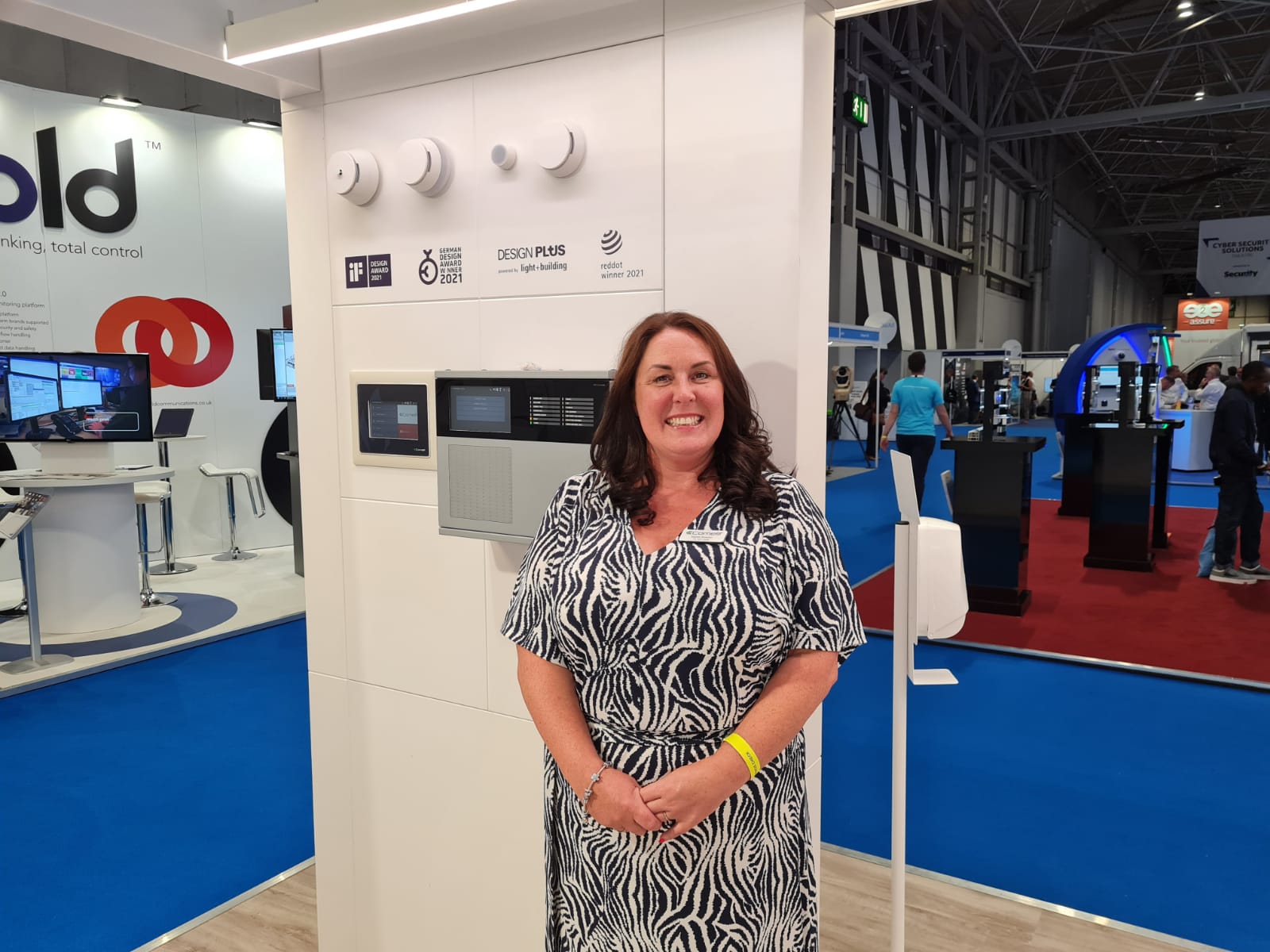
Mandy Bowden, fire manager, Comelit-PAC highlights how legislation and fire detection and alarm systems have evolved to enable tailor made solutions to meet individual smart building requirements 

Fire safety is vital to consider in new buildings, construction, or refurbishment projects as early in the specification process as possible, to ensure systems can be designed in compliance with latest legislation and still blend with their surroundings, without losing their function.  

Historically, fire safety design of buildings has been seen as a constraint to innovative design, but this needn’t be the case.  

The future of fire detection and alarm systems is changing. From predictive advancements to sustainable technologies, there is now an opportunity to specify preventative protection systems tailored to each individual property together with their owners and users. 

Setting the Scene 

Successful fire systems design requires an understanding of a wide range of issues and components, and the interactions between them such as, fire source, smoke movement, heat transfer to the building structure, detection, human behaviour and toxicity. 

Mandy Bowden.

Finding the right fire detection system and design is the most difficult task. And currently, this is set against time, budget and resource stretched personnel, who especially during the pandemic, had essential Government guidelines to comply, and fire safety found itself slipping down the agenda.  

Yet the findings of the Grenfell Tower tragedy and Fire Safety Act 2021 (alongside the forthcoming Building Safety Bill) as part of the ‘biggest changes to building safety in a generation,’ demonstrate the importance of fire safety.  

With its significant ramifications for those organisations considered “responsible persons” it highlights the need for compliance and the risk of enforcement powers and sanctions for those that do not prioritise fire safety. 

Today’s global environment requires the fire and life safety industry to innovate with solutions, installing systems that can adapt to its environment and support and understand the specific needs of a building’s purpose. 

It is down to consideration of these elements and all who occupy the facilities early in the specification process of any works programme, to determine the best technology and installation of compliant fire detection. 

Fire systems by design 

Above all else, fire detection is there to save lives; but the way in which systems are presented, will depend on their surroundings. Fire systems specification can begin as early as during the briefing and continue into the handover and close out stages.   

Even then the need for risk assessments are essential to maintain on a regular basis, again, especially in line with new expectations of the Fire Safety Act 2021. 

If fire safety is outlined in the initial design process, it can contribute to the smooth and efficient running of the building construction, which together with identifying design and consultancy services early on, can deliver on even the most demanding fire safety and security specification requirements, of today and the future. 

The same is true for refurbishment projects, and change-of-use schemes.  When you alter how a building is used, you also change the measures required to make it safe. 

It’s not a case of one size fits all as different buildings need different approaches. Areas within those buildings also need to be treated differently – for instance, escape routes in a residential block (like public corridors and staircases), need greater fire protection than individual flats to allow people time to evacuate.    

 The best fire protection strategies consider the design of individual buildings and how they are used by occupiers, using both active and passive measures in a holistic approach.   

Fire systems in education 

Comelit-PAC was involved in an award-winning eight-form entry secondary school and sixth form academy, designed as part of a £100m development in Broxbourne, Hertfordshire. 

Designed by architects Bond Bryan and built by Chase Homes, Broxbourne School offers multiple educational buildings, including a new indoor sports hall, 3G football pitch, a multi-use games area for sports such as netball and tennis, together with The Broxbourne Music Centre. 

Winner of the School Building Awards, presented by the Education Business Awards, the new campus, completed five months ahead of schedule, will cater to the 1,500 students aged 11 to 18, as well as the wider community.  

By integrating fire safety into the specification detail, systems could be installed that  

have the flexibility to expand with a facility or building requirement, to enable more to benefit from this ambitious new college. 

The LogFire system.

Says Ben Lewis, of Matrix Fire & Security: “We knew instantly that Atena would accommodate the requirements of the school and blend seamlessly with the fabulous teaching and learning environment that has been created.”   

What this demonstrates is when creating school buildings fit for 21st Century learning, holistic design principles must be adopted. While the Comelit-PAC Atena addressable panels represented just one component of this amazing new build, by being so easy to use, they provide an effective way to keep the school community, and the broader range of buildings’ users, safe and protected. 

Fire systems in healthcare 

Any fire detection technology must be strategically placed, unobtrusive and not affect the aesthetics or daily busy operations of the staff on site. And risk assessments were essential to maintain a safe environment. 

This is also particularly essential in new hospitals and mental health facilities, where the focus is the use of natural light and bright, airy spaces, to positively impact both workforce well-being and where every part of the site is seen as potentially having therapeutic value. 

Comelit fire specification 

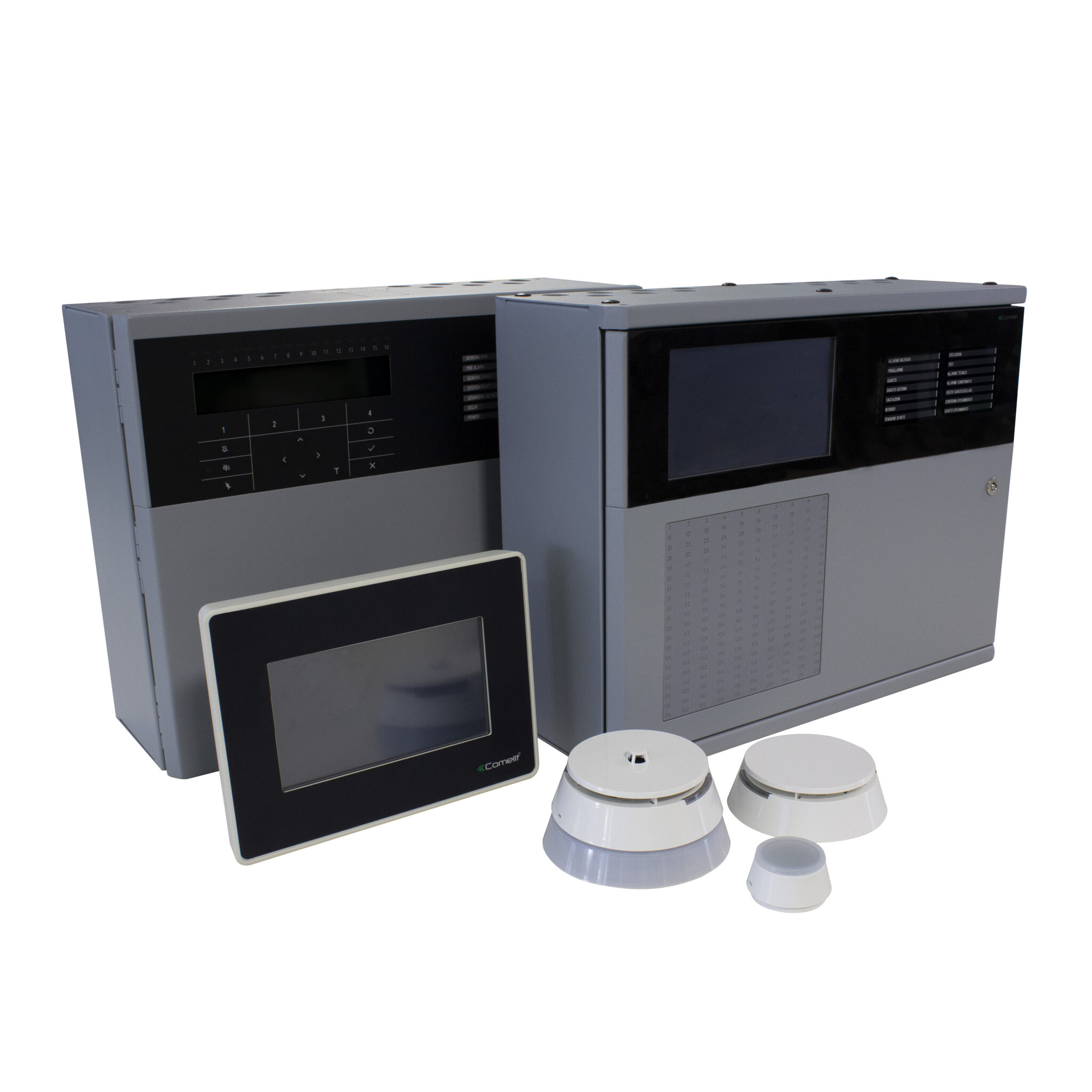
Comelit-PAC is evolving with the specification requirements of discerning end users, providing the products and services necessary for installers to meet burgeoning expectations. 

Most recently, it has upgraded its entire fire system range with the launch of LogiFire, which represents a complete technical and aesthetic evolution of its innovative addressable platforms. 

LogiFire is guaranteed by a new range of control panels. The systems can be expanded from 1 to 8 loops and support up to 2000 devices on an 8-loop system and have a greater loop capacity of 700mAh. The panels are feature rich and have many onboard fault-finding diagnostics. 

The stylish product design is a unique feature of the range, with carefully constructed lines and a neutral appearance to ensure fire safety has a natural blending with surroundings, without affecting the experience for visitors or staff on any site development. 

Most of all, LogiFire prioritises reliability and performance levels. Its development has taken consideration of increasing reliance on integrated systems with security through the internet of things, leaving room for LogiFire to evolve to meet changing fire safety requirements. 

In summary, many innovative building designs now utilise fire safety engineering rather than having to rely solely on functional-based codes. This approach can enable architects to achieve innovative cost-effective designs while meeting fire safety design needs. 

The introduction of the stringent Fire Safety Act 2021, added extra pressures on Responsible Persons as accountable for reducing the risk of fires. 

By considering fire detection and alarm systems early on in any works programme, establishing the facts about a building, its usage and purpose and engaging with experts through design and specification, project teams can ensure they navigate the issues safely and meet the needs of building users.    

Comelit-PAC can help to incorporate tailor-made fire system design principles into a building design project without impacting on the function, aesthetics or appearance of the building. 

BigChange showcases job management tech at FSE

BigChange will be showcasing the latest version of its field service management software at the Fire Safety Event (Stand 3a/G10). The Leeds-based company has been developing its multiple award-winning job management pla¬tform since 2013 and is now trusted by over 1,700 field-based organisations around the world.

BigChange brings together customer relationship management (CRM), job scheduling, live tracking, field resource management, job finance and business intelligence into one simple to use and easy to integrate platform. Visitors to the show will also see how the cloud-based solution allows fire and security operatives use mobile devices to synchronise in real-time with office operations and managers out and about, providing 24/7 visibility of all jobs.

The latest enhancements on show include features to help boost job profitability and save valuable time managing company finances. BigChange’s Price Profit Calculator helps fire and security firms ensure pricing is profitable on every job. This financial tool uses sophisticated pricing models to show the true cost of jobs based on the required resources, travel time and vehicle costs.

Of particular interest to the fire and security industry will be the safety and compliance on site. The BigChange mobile app, which replaces all paper reports with easy to navigate data entry screens, offers workflows that guide users, step-by-step, through correct procedures on site. This ensures stringent safety and compliance requirements are met and is also an excellent tool for training staff.

Mobile devices, linked to vehicle trackers, meanwhile provide accurate, time-stamped records, backed up with accompanying photographs from site. The BigChange digital job cards are also easily customised to meet specific customer reporting needs as well as allowing additional services to be added so companies can expand their service offerings.

Faelsafe Life Safety has transformed its business using BigChange as Andrew Hutchinson, Director of Faelsafe explains. “Since implementing BigChange we have slashed our administrative resource, we have removed every filing cabinet from the office, eliminated delays in invoicing and query resolutions and improved the efficiency of our engineers.”

“As it is truly cloud based, every member of the team can access and share the information they need, when they need it and from wherever they are, which positively impacts the service we provide every single day.”

Orpington-based Trustee Fire and Security meanwhile has boosted productivity by 25 per cent using BigChange. Director Nick Toomey commented; “We work in an industry bound by a lot of health and safety legislation and it is still an industry burdened with paperwork. We knew that moving to a real-time digital reporting system was the future but finding a suitable system proved difficult. BigChange proved to be by far the best option and offers tremendous potential as the platform to transform this industry.”

Another adopter is Wirral-based AinsCo Fire and Security. Dan Ainscough, Operations and Finance Manager said; “BigChange has allowed us to streamline our business and has been instrumental in allowing us to scale up our operation whilst still maintaining the high levels of customer service we demand and our customers expect.”

Elsewhere, Edward Barnes, CEO of fire-suppression specialist Fireward commented. “We had been through a long and unsuccessful process trying to get three different systems working for our business and all had failed. We then discovered BigChange and due to the ease of set-up, we were able to implement BigChange ourselves in just two weeks.”

For further information, please visit www.bigchange.com

Plans for Fire Safety Support Hub in Cardiff turned down

Plans for a new fire safety support hub in Cardiff have been turned down. The hub was proposed to help victims of the cladding scandal. Currently, thousands in the city are still living in apartments at serious risk of fire, five years after the Grenfell Tower disaster, with many facing gigantic bills for work to make their homes safe.

A fire safety support hub could help those affected with financial and legal advice, as well as signposting and counselling for those suffering from mental health issues, councillors said. Liberal Democrats in Cardiff put forward a motion on Thursday, March 17 to set up a hub, with backing from other opposition councillors.

But this was voted down by the ruling Labour group. Councillor Rhys Taylor, leader of the Liberal Democrat group, said: “Five years on and people are still trapped in potentially unsafe homes, and are paying the price both financially and mentally for the mistakes of developers.

“Leaseholders in some instances have faced bills of thousands of pounds due to be paid with less than 28 days’ notice. That’s because kettles have more consumer protection than the leaseholders who are trapped in this scandal. People are looking to pay their whole life savings to meet these bills, and war veterans are even considering selling their medals, Wales Online reported.

“In June, management companies will be issuing the second half of annual services charges. For the Celestia buildings in Cardiff Bay, that’s half of the £2.4m needed to repair defects. If leaseholders can’t pay, of which there will be many, they’ll be pursued by debtors. A support hub would provide help and advice for people in these situations.”

Extra costs heaped onto affected residents include skyrocketing insurance premiums, service charges, patrolling fire wardens, and remediation work like replacing cladding. Many of the issues faced by affected residents in Cardiff are complex and technical, including fraudulent fire safety certificates and inadequate wall inspections.

Lots of residents also suffer from poor mental health as a result of the issues, according to recent surveys. Labour said the fire safety issues were difficult to address and had previously explored council tax residents for affected residents, but later ruled this out as too expensive.

Cllr Lynda Thorne, cabinet member for housing, dismissed the motion as a pre-election stunt. She said: “This administration is committed to doing all we can to help and support all those residents affected by the plethora of faults and design failures built into these developments. It’s a whole gambit of failures that makes this issue so difficult to address. These issues aren’t straightforward.

Extensive growth of US Fire Pump

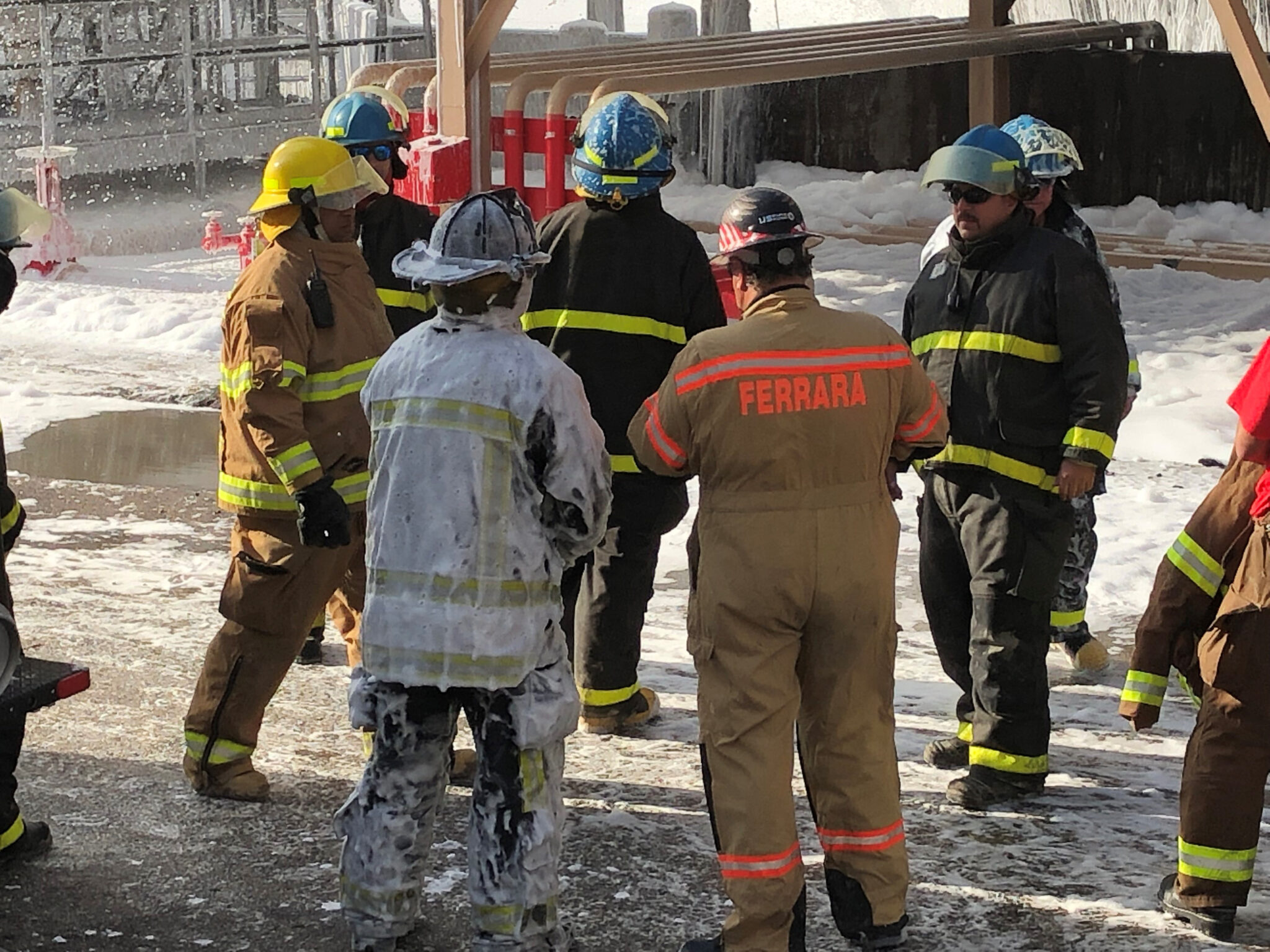
In 2014 Chris Ferrara, president, and CEO of US Fire Pump, saw a glaring need for the petrochemical industry to have high quality equipment adapted specifically for its needs. In addition, Ferrara saw that supplemental emergency response teams to aid in larger than usual fires, something that many customers requested.  

With this in mind, and using his more than four decades of knowledge in manufacturing, Ferrara embarked on a journey eight years ago. He was also backed with the expertise of having been the owner of one of the largest fire apparatus manufactures, and his decades of fire service experience. Marrying these rich experiences he founded US Fire Pump, a manufacturer of fire equipment and the world’s largest Emergency Response Organization. Ferrara’s vision to provide innovative equipment and firefighting methods has taken the world by storm.  

Ferrera quotes one of the USA’s founding fathers Benjamin Franklin. He said: “Without continual growth and progress, such words as improvement, achievement, and success have no meaning.”  

Already having satellite offices in Texas and manufacturing in Louisiana, Ferrara continued his vision for growth via expansion, and progress by constructing a new world class manufacturing facility in Holden, Louisiana in 2020.The facilities are not only home to state-of-the-art manufacturing equipment but large testing and training facilities and the largest fleet of emergency response and fire rental equipment on the globe. Since is construction, many pieces of custom designed and built fire equipment have been delivered from the facility to customers spanning several continents.  

Facilities and expansion  

Being growth minded Ferrara knew that creating a presence strong regional and global presence to better serve the industry would need to be a top priority. Ferrara says: “Our locations in Holden and Baton Rouge, Los Angeles, Vidor, Texas and additional firefighting foam storage in Green Bay, Wisconsin, Rancho Cucamonga, California, and Spain ensure that we are able to serve our customers strategically. As you can see, from locations across the Gulf South, we have a heavy presence in the region due to the sheer amount of the industrial facilities concentrated in the area.  

“To enhance our already robust coverage across the region, I’m excited to announce that we are opening a brand-new facility on I-10 in Mt. Belvieu, TX. The new facility in Texas will be a hub in the region for warranty, repair, service and dispatch of rental and emergency response equipment.”  

On the opening of the new facility Ferrara adds: “These new openings are paramount in achieving the success of US Fire Pump and allows for continued growth and success in the industry.” 

The new Texas facility is located at 11331 I-10 East Mont Belvieu, TX 77523. Of course, having additional space for service is going to ease the demand on each location, but as we opened this location in Texas because of the demand that the “Everything is bigger in Texas created”. Although the rest of the United States and in particular the Gulf South have many petrochemical plants, Texas is an anomaly due to the sheer volume of product required in the Greater Houston Region and the Golden Triangle. Having this facility in Mont Belvieu allows for us to have dedicated resources to this region. From a petrochemical industry standpoint, it’s mindboggling as to how many companies are concentrated in Texas. For us being in the region and providing exclusive dedicated resources to the area makes the most sense for speed of service to the customer. 

Five biggest changes in the industry 

Ferrara says: “From my humble beginnings as a welder / pipefitter, volunteer fireman to building a company that manufactures fire apparatus’, I have seen a massive evolution of the fire services, emergency responders, and safety industry.” 

Technology would be number one; the speed that advancements in technology within the fire service industry has been rapid. “I’ve always prided myself and our company on being innovative and developing new technologies to introduce to the fire service market. It’s what always has set us apart from the competition.  

Secondly, firefighting foam and the regulations with PFAS and PFOA’s have seen several changes. This goes hand-in-hand with technology but the speed of the regulations has caused the technology of using fluorinated foams to the use of non-fluorinated firefighting foam. Third, is the clean cab technology in the fire service. A shift to move firefighters from, for instance wearing bunker gear in the apparatus cab due to the constant exposure to carcinogens is something someone would not have even entertained 30 years ago, for that that even as recent as 10 years ago.  

This goes back to technology but the robust filtrations systems to reduce these exposures to the hazardous substances is something that is one of the biggest changes I have seen to date. Number four: The use of passenger and commercial electric cars on our roads, and the demand on firefighters to extinguish electric car fires. This is all new to the fire servicepeople and it’s here to stay. There is major difference in the way traditional fossil fuel powered cars are extinguished.  

Lastly, it’s not something that has changed but an element that has remained constant. It’s the people. The emergency responders who serve the public everyday are the same today as they were 40 years ago and will continue to be heroes for generations. Their passion and dedication drive people like myself and our company, to continue to innovate products to serve them.  

We have a long list of clients who use our products and services, and I would like to thank them all. From building high velocity pumps for FDNY’s ‘Super Pumper’ to our Emergency Response Teams extinguishing major fires for numerous corporations and government agencies, we have nothing but gratitude for the trust shown in our services, people, and products. 

The pandemic and giving back 

The nature and impact of Covid was devastating. The pandemic, and resulting illness that it cause, affected many companies with employee welfare severely affected in some cases leading to fatalities. However, for US Fire Pump employees saw no major impacts to their health. Such was our strength that we never ceased operating for a single day throughout the last two years. This was down to the high demand of Emergency Response calls during the pandemic and the subsequent waves that hit different states in the US, at different times. During the pandemic, we also witnessed an uptick in request for our rental equipment and other services that we offer different market segments. The one negative implication of the pandemic has been the severely restrained global logistics sector. Components that are typically considered ‘everyday’ items are considerably harder to source. Even when in stock procuring them in a timely manner is still a major issue.  

Speaking about employee welfare, US Fire Pump are major believers in giving back to the community through our various corporate social responsibility efforts. Ferrara says: “I’ve always been a firm believer in giving back to the fire service industry. For many years, even with my previous company that manufactured fire apparatus’ and now through US Fire Pump, giving back to first responders has been a key pillar of our DNA. We give back in many ways, the obvious ones are through donations that support fire and security conferences.  

“But I feel the best way to do give back and leave a lasting impression is through education. Here at US Fire Pump, we hold free training sessions for first responders. These modules would otherwise cost each individual member a few thousand dollars. The reason we have kept our trainings free is because knowledge and expertise are worth their weight in gold, not only in terms of career progress but also to save lives. Afterall, serving the public and protecting lives is our main aim and mission and education is key to its success. 

Sherwin-Williams protects London’s Brunel Building

Sherwin-Williams has supplied FIRETEX intumescent fire protective coatings to the Brunel Building, a 22,500 sqm workspace in London. The 16-floor construction features a 3.5m high column-free space throughout, due to its unique structural design.

Passive fire protection experts from Sherwin-Williams worked with the contractor Laing O’Rourke, structural engineers Arup and in collaboration with specialist structural steel supplier Severfield to ensure the interior and exterior steelwork was fire-protected for up to 60 minutes.

For the interior steelwork, FIRETEX C69 primer, FIRETEX FX2003 intumescent coating and FIRETEX M71V2 decorative topcoat was chosen. For the exterior steelwork, the solution was Macropoxy 400 primer, FIRETEX FX6000 intumescent coating and Acrolon C237 topcoat. The epoxy zinc phosphate primer and Certifire-approved intumescent coat were applied in shop, allowing the contractor to benefit from its fast-drying properties. The fire-tested and fully-approved acrylic urethane topcoat also offered strong colour retention to help maintain the Brunel Building’s striking aesthetic appearance.

Andy Luter, Senior Project Manager, Severfield said: “The architectural features and design required a fabricated steel which could be protected off-site and installed with minimum damage. The team at Sherwin-Williams offered a technical solution which allowed the exposed interior steel and exoskeleton to meet the desired fire protection levels without compromising on design or delivery.”

Rick Perkins, Global Technical Manager, at Sherwin-Williams, said: “The FIRETEX range of products allows us to coat steelwork off-site where relevant with fast drying times, resulting in minimal damage, as well as cost and time savings to help steel fabricators to meet their requirements for fire protection.”

NFCC issues precautions as 70 UK wildfires breakout in 2022

Following more than 25 wildfires last weekend alone, the National Fire Chiefs Council is urging the public to take additional precautions. And there is now a large-scale wildfire in Devon and Somerset which has ten fire appliances in attendance, with alerts out for similar fires in both South Wales and Lancashire.

In additon, a six hectare wildfire in East Sussex has also been reported earlier this week. To date in 2022, there have already been more than 70 significant wildfires across England and Wales – showing how serious the issue is this early into the year.

Over the last weekend, firefighters tackled wildfires which broke out in Cornwall, Wales, Cumbria and areas of the Pennines, with incidents in Derbyshire, Greater Manchester, West Yorkshire and Lancashire. With the additional incidents reported today, firefighters across the UK will be battling these over the coming days.

According to NFCC, the dry weather conditions the UK is currently experiencing – combined with strong winds and dead vegetation which has built up over the winter can lead to spate conditions for such fires – and makes fighting and controlling wildfires incredibly difficult.

Wildfires often result in sustained and prolonged operations by UK fire & rescue services and other partner agencies.

Often, firefighters from across the country will be deployed to deal with just one in a different part of the country, depending on its severity. This includes specialist equipment, tools and vehicles, as well as national tactical advisers to give expert help and assistance on how to tackle them.

As the weather improves and temperatures rise, NFCC is calling on the public to ensure they are not putting our green spaces and natural habitat at risk. While encouraging people to enjoy the countryside, simple measures can help prevent wildfires.

Fire chiefs and fire services across the UK are urging the public to enjoy the countryside responsibly; asking them not to have barbeques or campfires and to ensure cigarettes are fully extinguished before disposing of them.

Paul Hedley, NFCC’s wildfire lead points out: “We have seen over 20 wildfires in just one weekend; these can take hold incredibly quickly, destroying land and habitats, while impacting on local communities. They also create one of the most challenging incidents for firefighters as they not only battle with the fire itself, but also the weather conditions.

“We want the public to enjoy our wonderful green spaces, but the use of portable barbecues and campfires can be catastrophic for our countryside. Even a poorly discarded cigarette or a glass bottle can spark a wildfire, leading to a major incident.”

TBA Firefly set to show expanded range to FIREX

TBA Firefly is set to display a wide array of products at the 2022 FIREX show in London’s Excel Centre. The company is looking to building on its success of 2021 in terms of winning new business and the scale of the contracts the company was involved in delivering.

Among its products the company will display its recent launches such as Penowrap and the FR120 Access Panel, as well as its versatile Athena fire barrier, suited for timber lofts.

The new 600 x 600mm, IFC certified panel has been developed to facilitate regular maintenance access to roof spaces and other fire compartments, created using the Firefly barriers and offers two hours fire resistance.  

Penowrap, meanwhile, is a lightweight and flexible wrap which complements other TBA Firefly flexible fire barrier systems: intended to protect steel or timber structural members up to 300mm beyond the main barrier, giving additional protection.

Simon James, marketing manager, Firefly’s said: “Firex gives us an ideal opportunity to showcase our product range to key players in the industry, including existing clients and those companies not yet familiar with the products we offer. We serve a specialist part of the passive fire protection market, offering some unique solutions, all supported by the relevant accreditations and full technical back-up.”