Rosenbauer has delivered 800 HEROS Titan protective helmets to Secours Sud Fribourgeois in the canton of Fribourg, the company said on Tuesday 09/12/2025.
Rosenbauer said the order followed a joint tender issued by 52 municipalities in Western Switzerland.
The company described the procurement as one of the largest collective tenders of its kind in Western Switzerland.
It added that the delivery is the largest single delivery it has made in Switzerland.
Heribert Glauser, Regional Sales Manager for Western Switzerland and Ticino at Rosenbauer Schweiz, said: “Secours Sud Fribourgeois makes an indispensable contribution to safety and disaster relief.
“Reliable protective equipment is crucial for this mission.
“We are very pleased that the organization has chosen Rosenbauer’s modern helmets.
“Beyond the technical performance, the overall package was decisive: professional and transparent project management, comprehensive training services, and long-term availability of spare parts.
“These factors ultimately tipped the balance.
“Rosenbauer was therefore able to clearly win the tender.”
Helmets specified for extreme conditions
Rosenbauer said the HEROS Titan is designed for firefighting operations under extreme conditions.
The company said the helmet meets EN 443, EN 16741, EN 16473, ISO 16073 and EN 14458.
It added that the helmet provides protection against heat, impact, chemicals and mechanical influences.
Rosenbauer said the shell is made of a highly impact-resistant high-tech material.
The company said the shell remains dimensionally stable from –40 °C to over 300 °C.
Rosenbauer said the standard version weighs around 1,350 grams.
It added that weight distribution is designed to support wearing comfort during long operations.
Options for communications and accessories
Rosenbauer said the helmet system includes reflective stickers and preparation for a radio system.
The company said accessories include a face shield, eye protection visor, neck protection and side mask adapters.
It added that the accessory range also includes LED helmet lamps.
Rosenbauer said the configuration options are intended to allow adaptation for different operational requirements.
Inner helmet design and maintenance claims
Rosenbauer said the HEROS Titan uses a patented interior helmet design that is largely independent of the outer shell.
The company said padded straps distribute weight evenly and are designed to reduce pressure points.
It added that adjustment options include sliding the helmet shell over the inner helmet to tailor fit.
Rosenbauer said the helmet can be cleaned without tools and returned to service within minutes.
The company added that material durability is intended to support a long service life.
Global delivery figures cited by Rosenbauer
Rosenbauer said the HEROS Titan is used worldwide and has received multiple design awards.
The company said the helmet has more than 500,000 deliveries across 146 countries.
Matteo Paraluppi, Head of Product Division Fire & Safety Equipment at Rosenbauer, said: “The demand for the HEROS Titan with its unique qualities remains strong.
“The helmet continues to set the standard in interior firefighting operations.”
The University of East London (UEL) has reported that its Sugarcrete® low-carbon building material has achieved an EI 240 fire resistance rating in full-scale testing in Spain, supporting its use in high-risk and safety-critical building applications.
According to UEL, Sugarcrete is formed from sugarcane by-product bagasse combined with sand-mineral binders and is intended as an alternative to conventional bricks and concrete blocks.
The university stated that the material has an estimated carbon footprint around six times smaller than traditional clay brick while maintaining performance in use.
Sugarcrete was developed at UEL’s Sustainability Research Institute, where researchers have focused on combining lower embodied carbon with stringent safety outcomes.
UEL indicated that fire performance has been a central element of the development programme in order to move the material into more demanding settings.
Full-scale AFITI test conditions and results
UEL reported that recent trials at AFITI Laboratories in Spain exposed Sugarcrete walls to one of the construction sector’s more demanding standardised fire resistance tests.
During the test, the internal face of the Sugarcrete wall was subjected to temperatures of 1,100°C inside the kiln chamber.
The external face of the wall reportedly remained at 26°C throughout the trial.
The test was run for 240 minutes, with UEL confirming that the wall maintained its integrity for the full four-hour duration.
Independent assessors concluded that the system achieved an EI 240 classification under EN 13501-2:2023.
The EI 240 rating indicates that the construction prevented fire penetration and limited heat transfer for at least 240 minutes.
UEL stated that this outcome places Sugarcrete among the highest-performing materials in current use for sustained fire resistance.
Performance compared with existing wall systems
According to the university, Sugarcrete’s performance in the AFITI test outstripped that of standard clay brick and concrete block walls assessed under comparable conditions.
The results were also reported to be in line with specialist fire-partition systems designed for higher-risk environments.
UEL said this brings Sugarcrete into the same category as systems currently specified for installations where extended fire resistance is required.
The university added that the testing focused on both structural integrity and thermal insulation across the four-hour exposure.
The material maintained stability while holding the temperature differential between the exposed and unexposed faces of the wall.
Potential use in safety-critical applications
On the basis of the AFITI trial and independent assessment, UEL stated that Sugarcrete is now a viable candidate for a range of safety-critical applications.
The university highlighted potential use in industrial fire walls designed to separate high-hazard areas within facilities.
It also identified protected escape routes as a key area where long-duration fire resistance and controlled heat transfer are required.
Further potential applications include data centres, where thermal protection and compartmentation form part of wider resilience strategies.
UEL added that petrochemical environments are another target sector, given their reliance on robust fire-rated separation systems.
Low-carbon profile alongside fire performance
UEL noted that Sugarcrete had already drawn attention for its lower embodied carbon profile before the latest fire tests.
The university presented the new data as evidence that reducing embodied carbon does not have to come at the expense of fire resistance or durability in use.
It said that the combination of lower carbon footprint and high fire performance could give construction clients another option when assessing materials for high-risk settings.
Alan Chandler, co-creator of Sugarcrete and Associate at the Sustainability Research Institute, said: “This is a defining moment.
“To hold back fire at over 1,000 degrees for four hours proves Sugarcrete® is not only sustainable, but also safe and resilient enough for the most demanding environments.”
Nightstick has introduced three USB-C rechargeable penlights – the USB-210, USB-200 and USB-205ZF – for professionals who need compact lighting for inspection and routine work.
Nightstick said the new models are designed for demanding environments and include USB-C charging, rugged construction and IP-54 resistance to water and dust.
The USB-210 produces 500 lumens on high for 1.5 hours and 130 lumens on low for 4 hours.
Its aluminium body measures 5.75 inches and is intended for use in tight spaces or shirt pockets.
The USB-200 is the smallest model in the range at just over 4 inches long.
It produces 300 lumens on high for 1.5 hours and 60 lumens on low for 4 hours.
Nightstick details beam options and included features
The USB-205ZF Zoom Focus model adds an adjustable beam that shifts from a wide flood to a tight spotlight for close work or longer-range inspection.
It runs at 200 lumens on high for 3 hours and 30 lumens on low for 9 hours.
Each penlight includes a sliding sleeve over the USB-C port and a USB-C charging cable.
The range also includes a pocket clip for attaching the light to a uniform, clipboard or cap.
All three models include momentary and constant-on modes and are described as built for everyday job use.
Nightstick said the penlights are intended for industrial workers, utility crews, law enforcement personnel and other users who need compact illumination.
Nightstick has announced the FORGE II, a compact fire helmet light released from Wylie, Texas, with a stated output of 350 lumens and 7,360 candela.
The company said the new model is its smallest fire helmet light so far and is based on the original FORGE.
The light measures 2.36 inches in length and weighs 3.4 ounces.
Nightstick said the unit is designed to reduce bulk when mounted above or below a helmet brim.
It is also described as providing visibility through smoke and steam at distances of up to 172 metres.
The company said the FORGE II is designed to fit MSA Cairns 1010/1044 helmets and other traditional fire helmets.
It is also intended to mount to full-brim hard hats used in wildland firefighting.
Nightstick sets out output and durability details
Jonathan Gordon, Nightstick’s Marketing Manager for Fire & Industrial, said: “Feedback from first responders showed the need for a compact, high-intensity helmet light.
“FORGE II delivers powerful candela and reliable performance in a smaller footprint.”
A rear-facing green Follow Me LED is included for crew tracking in low-visibility conditions.
The tail switch is designed for gloved use and changes between high and low brightness modes.
A side-to-side swivel allows users to aim the beam without adjusting other gear.
Nightstick said the housing is made from aircraft-grade aluminium with a hard-anodised finish and that the light is rated IP67 for waterproof and dustproof protection.
The unit is also described as drop-tested from 2 metres, compliant with NFPA 1971-8.6 (2018) helmet lighting standards and supplied with a CR123 battery.
Nightstick said the FORGE II is backed by a limited lifetime warranty.
Nightstick has launched the NSR-1518, a rechargeable portable LED scene light with a maximum output of 12,500 lumens.
Nightstick announced the product as a new addition to its lighting range, describing it as the most powerful scene light in its lineup.
The light has a 6,250-lumen low mode and is designed for jobs where rapid scene lighting is needed.
A 360-degree rotating handle allows it to be carried or hooked over doors, ladders and tree limbs.
The light head oscillates forward and back so crews can direct the beam where needed.
Nightstick said the unit weighs 8.5 pounds and is compact enough for one-handed deployment.
Design, runtime and compliance details
The NSR-1518 uses a cast aluminium body with a fin design intended to manage heat in demanding work environments.
A rare earth magnetic base provides 40 pounds of pull force for attachment to metal surfaces without clamps or stands.
Sealed push-button controls are intended to support use while wearing gloves.
The light can be charged using AC power and has a five-hour runtime on high.
An integrated battery life indicator shows remaining runtime during use.
Jonathan Gordon, Marketing Manager for Industrial and Fire at Nightstick, said: “Crews told us they needed high performance they could deploy with one hand and without a truck.”
“The NSR-1518 delivers full-scene lighting in seconds without bulky towers or complex setup.”
Nightstick said the NSR-1518 is backed by a one-year limited warranty and meets the requirements of NFPA-1971-8.6 (2018).
Minimax has adapted its Minifog marine XP high-pressure water mist extinguishing system for methanol-fuelled ship engines, with a focus on bilge fire risks in engine rooms.
The company announced the further development from Bad Oldesloe on 2 December 2025.
According to Minimax, the system can now be applied to both pure methanol engines and dual-fuel propulsion arrangements.
The bilge area beneath engine room machinery is identified as a location where flammable liquids can collect and create rapid fire spread.
Minimax states that the updated Minifog marine XP configuration is intended to address new requirements for bilge protection when methanol is used as a marine fuel.
Testing Minifog marine XP against methanol fires
Minimax reports that the methanol-focused version of Minifog marine XP has undergone testing at the company’s in-house fire research centre.
The manufacturer carried out guideline-compliant trials using a standardised replica of an engine room space with methanol fuel present.
Various nozzle configurations were evaluated to understand their performance when controlling and extinguishing real methanol pool fires.
Each test used a 30-second pre-burn period followed by a requirement to extinguish the fire completely within 15 minutes.
Minimax states that the fire tests followed International Maritime Organization (IMO) circular MSC.1/Circ. 1165 for high-pressure water mist systems.
The effectiveness of the Minifog marine XP configuration against methanol fires has been confirmed by Lloyd’s Register, according to the company.
According to Minimax, methanol is considered a future marine fuel option because it produces fewer emissions than diesel or heavy fuel oil.
From a fire protection perspective, the company notes that methanol burns with an almost invisible flame, produces no smoke and has a low flash point that can support rapid fire development.
Foam-based fire protection for bilge areas
Minifog marine XP for methanol applications is supplied with an associated fluorine-free foam concentrate for use in machinery space and bilge protection.
Minimax states that this foam concentrate is less harmful to the environment and aligned with current regulatory expectations on fluorinated substances.
Otto Stoehr, Foam Project Manager, Minimax Fire Solutions International GmbH, linked the system design to the company’s global support capability.
Otto Stoehr, Foam Project Manager, Minimax Fire Solutions International GmbH, said: “Minimax Minifog marine XP fights methanol fires safely and completely.
“In combination with our global service network, you can rely on reliable, sustainable, and high-quality fire protection from the market leader.”
Mathias-Christian Herrmann, Head of Competence Center Marine, Minimax Fire Solutions International GmbH, highlighted the emphasis on performance under regulatory test conditions.
Mathias-Christian Herrmann, Head of Competence Center Marine, Minimax Fire Solutions International GmbH, explained: “Our customers need solutions that work in an emergency case.
“That’s why we test according to international regulations and even go a step further with our systems.
“Research and development are part of our DNA.”
Dr Matthias Prall, Extinguishing System Manager, Minimax GmbH, focused on the behaviour of foam when applied to methanol fires.
Dr Matthias Prall, Extinguishing System Manager, Minimax GmbH, said: “The quality of the foam is crucial.
“In previous tests, we were able to show that water mist is not effective for extinguishing fires in this case.
“We need to form a blanket of foam on the burning material that covers it and then separates it from the oxygen in the air.
“The foam must be able to withstand the aggressive medium.
“Our system has been tested and proven to do this reliably.”
Minimax states that the validated performance of Minifog marine XP in these tests supports its use for bilge protection on methanol engine and dual-fuel ships.
Implications for methanol marine engine safety planning
Methanol-ready high-pressure water mist systems with confirmed performance in bilge areas are directly relevant for marine and shipping fire officers responsible for engine room risk control.
The detailed test procedure, including pre-burn duration and extinguishing time, provides technical context for fire engineering consultants and mechanical and electrical engineers evaluating methanol machinery space solutions.
Information on compliance with International Maritime Organization circular MSC.1/Circ. 1165 gives standards and certification bodies, including organisations in roles similar to Lloyd’s Register, a reference point when reviewing methanol-capable systems.
The use of fluorine-free foam concentrate in Minifog marine XP may inform decisions by equipment specifiers, fire-protection contractors and system installers working on bilge protection for methanol and dual-fuel engines.
By outlining how Minifog marine XP is configured for methanol engines and bilge areas, Minimax provides data for risk assessors and facility managers in marine operations considering future fuel choices and associated fire protection measures.
Bollé Brands Group has released the results of its latest environmental, social and governance report, confirming 2025 progress on emissions reduction and product sustainability targets across its eyewear and helmet portfolio from Lyon, France.
According to Bollé Brands Group, the report follows B Corp certification in 2024 and work during 2025 to integrate social, societal and environmental considerations into its overall business strategy.
The company positions the new data as evidence of ongoing implementation of its environmental, social and governance strategy rather than a single-year initiative.
Emissions reductions reach 2030 target early
Bollé Brands Group reports a 46% reduction in Scope 1 and Scope 2 emissions in 2025 compared with 2022.
This reduction means the group has met its 2030 Scope 1 and Scope 2 emissions targets five years earlier than planned.
The company links this outcome to its aim of placing environmental responsibility at the centre of its growth strategy.
Recycled materials in Bollé products and packaging
Bollé Brands Group states that all Bollé sunglasses for summer 2026 will be manufactured using recycled materials.
The group reports that 33% of Bollé Safety products sold now either contain recycled content or are produced using low-carbon energy.
It adds that 90% of packaging across its brands falls into the same category, using recycled content or low-carbon energy.
These product and packaging changes have lowered CO₂ emissions per product by up to 31%, depending on the product category.
The company notes that these steps contribute toward its target of reducing CO₂ emissions per product by 35% by 2027.
Supply chain checks and staff engagement on ESG
Bollé Brands Group reports that 68% of its strategic suppliers have undergone SMETA audits in the past two years.
These audits are intended to assess whether responsible practices are maintained across the group’s supply chain.
Internally, the company states that 95% of employees took part in sustainability activities during the year, including climate change training and volunteering programmes.
The group has also extended its environmental, social and governance bonus so that all eligible employees can access the scheme.
Peter Smith, CEO of Bollé Brands Group, said: “Our environmental and social commitments are not simply areas of focus for us; they are embedded in how we run and grow this business.
“Over recent years we have worked hard to raise the ambition of our ESG agenda and this report reflects the progress made.
“It is the result of sustained effort across the organisation and a clear decision to place environmental responsibility as a core element of our growth strategy.
“We are committed to understanding our impacts in a rigorous and transparent way, and to putting the right actions in place to reduce them.
“At the same time, we want to maximise our positive contribution by designing products with the lowest possible environmental impact”.
B Corp recertification and stakeholder input
According to Bollé Brands Group, the latest results form part of a wider global performance strategy that places sustainability at the centre of its business model.
The company plans to use the B Corp recertification process in 2027 as a further opportunity to strengthen its social and environmental standards.
Bollé Brands Group is currently consulting employees, customers, suppliers and distributors through a dedicated survey on its corporate social responsibility strategy.
The firm states that the aim of the survey is to ensure that its plan focuses on the most relevant priorities and does not overlook key topics.
Claire Marion, Global Head of ESG at Bollé Brands Group, said: “These results reflect our global performance strategy, which places sustainability at the heart of our business model.
“We remain determined in our commitment, notably through the B Corp recertification process in 2027, which will allow us to strengthen our social and environmental excellence standards.
“This approach involves all our stakeholders: we are currently consulting employees, customers, suppliers and distributors through a dedicated survey on our CSR strategy.
“The goal is to ensure we focus on the right priorities and leave no blind spots.
“We are convinced that sustainable performance is built collectively, by integrating everyone’s feedback as the foundation of our future actions.”
On the morning of September 11, 2001, four commercial airplanes were hijacked by 19 terrorists belonging to the extremist group al-Qaeda.
Their coordinated plan was to use the planes as weapons against key symbols of the United States.
Within less than two hours, two of the aircraft struck New York City’s World Trade Center towers, one hit the Pentagon in Virginia, and the fourth crashed into a field in Shanksville, Pennsylvania after passengers fought back.
The scale, coordination, and devastation of the attacks shocked the world and permanently reshaped global security, aviation, and counterterrorism efforts.
The impact and resulting fire caused catastrophic damage.
Despite being hit second, the South Tower collapsed first at 9:59 a.m, just 56 minutes after impact.
Both towers’ destruction created enormous debris fields and released toxic dust that would later contribute to long-term illnesses among survivors and emergency workers.
At 9:37 a.m, American Airlines Flight 77 crashed into the western side of the Pentagon, the U.S. Department of Defense headquarters, located in Arlington, Virginia.
The impact caused a partial collapse of the building and a massive fire.
A total of 184 people were killed, including 59 passengers and crew on the plane and 125 military and civilian personnel inside the Pentagon.
WTC 7
The World Trade Center 7 building, located north of the Twin Towers, was not hit by an aircraft but was heavily damaged by falling debris when the towers collapsed.
Fires burned for hours throughout the structure, and at 5:20 p.m, WTC 7 also collapsed.
Although no one inside died because the building had been evacuated, its fall marked the third high-rise collapse in New York that day; an unprecedented event in modern history.
After learning about the other attacks through phone calls, passengers and crew members fought to regain control of the plane.
Their heroic struggle caused the aircraft to crash into a field near Shanksville, Pennsylvania, at 10:03 a.m, preventing it from reaching its intended target in Washington, D.C.
All 40 passengers and crew members aboard were killed, but their actions saved countless lives on the ground.
The majority of victims were civilians from more than 90 countries.
At the World Trade Center site in New York City, 2,753 people were killed, including passengers from both planes, office workers in the towers, and individuals on the ground.
At the Pentagon, 125 military and civilian personnel died, along with 59 passengers and crew from Flight 77.
In Shanksville, Pennsylvania, all 40 passengers and crew members on Flight 93 lost their lives.
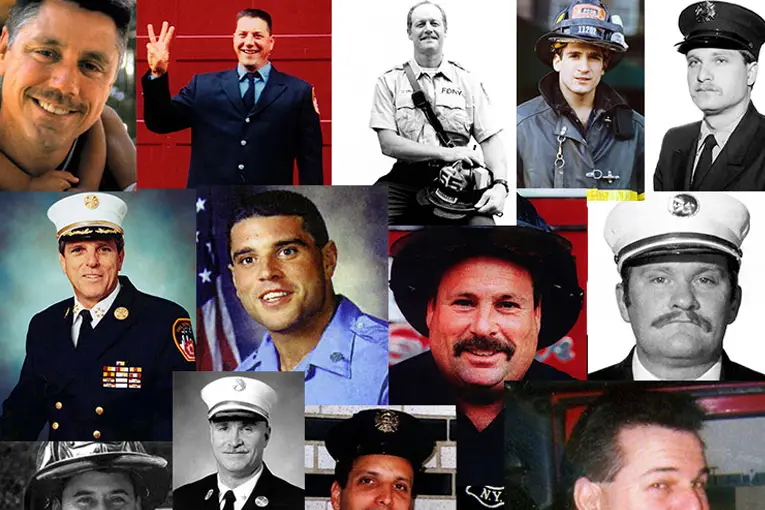
Among the dead were 343 firefighters, 60 police officers, 8 paramedics, and thousands of office workers, airline staff, and visitors.
The bravery of first responders on 9/11 remains one of the most profound aspects of the tragedy.
Many firefighters and police officers entered the Twin Towers to rescue trapped occupants, knowing the risks.
When the towers collapsed, 344 firefighters died of the 442 first responders killed.
343 were from the New York City Fire Department (FDNY), 23 from the New York City Police Department (NYPD), 37 from the Port Authority Police Department (PAPD), and several emergency medical technicians and paramedics.
It remains the largest single-day loss of emergency personnel in U.S. history.
How Many People Survived the 9/11 Attacks?
Despite the enormous loss of life, thousands of people were rescued or managed to escape the World Trade Center before the towers collapsed.
Estimates suggest more than 14,000 people were safely evacuated from the Twin Towers and surrounding buildings.
Many survivors owe their lives to quick-thinking colleagues, emergency personnel, and ordinary bystanders who helped guide others to safety.
At the Pentagon, approximately 18,000 people were inside at the time of the attack.
Due to its vast size and rapid evacuation procedures, most were able to escape before parts of the building gave way.
The collapse released a massive cloud of asbestos, heavy metals, and microscopic glass particles that blanketed Lower Manhattan.
According to the World Trade Center Health Program and the September 11th Victim Compensation Fund, more than 5,000 additional deaths have since been attributed to respiratory diseases, cancers, and other conditions related to 9/11 exposure.
Tens of thousands of survivors and responders continue to live with long-term health effects, making the tragedy’s human toll far greater than the original numbers suggest.
Who Carried Out the 9/11 Attacks?
The attacks were orchestrated by al-Qaeda, a militant Islamist terrorist organization founded by Osama bin Laden.
The 19 hijackers were divided among the four flights and received training in aviation and coordination to carry out the suicide missions.
Following the attacks, the United States and its allies launched the Global War on Terror, including the invasion of Afghanistan to dismantle al-Qaeda and remove the Taliban regime that harbored its leaders.
Osama bin Laden remained a fugitive until May 2, 2011, when he was killed by U.S. Navy SEALs in Pakistan during Operation Neptune Spear.
Key Takeaways
The 9/11 attacks were an act of terrorism that claimed 2,977 lives on the day itself and have since led to thousands more deaths due to illness and long-term exposure.
Four coordinated plane hijackings caused massive destruction in New York City, Virginia, and Pennsylvania, changing the course of global history.
Behind every statistic were people including families, friends, and colleagues; whose loss continues to shape the collective memory of nations worldwide.
Remembering the human impact of 9/11 ensures that the courage, sacrifice, and unity shown in the face of tragedy are never forgotten.
Auro by Harmony launches Auro Lume emergency lighting
Auro by Harmony has launched Auro Lume, an Internet of Things (IoT) self-testing emergency lighting system for landlords that aligns with the updated BS 5266-1:2025 standard in the UK.
The company described Auro Lume as a plug and play range of luminaires that removes the need for manual emergency lighting inspections.
According to Auro by Harmony, the system provides 24/7 auditable golden thread compliance data on operational readiness from first installation.
The launch follows extensive testing in housing and wider public sector environments, the firm said.
Auro Lume is intended to support life-safety resilience and provide regulatory assurance for asset owners responsible for residential and public buildings.
The system is positioned as an alternative to retrofit self-testing modules that can create compatibility questions and affect existing warranties.
Auro by Harmony said Auro Lume installs in the same way as a standard fitting and self-validates from the first day of operation.
New emergency lighting system automates testing
Auro by Harmony stated that Auro Lume connects to a secure Auro central compliance portal via IoT infrastructure.
Through this portal, landlords and facilities management teams can schedule emergency lighting tests across their property portfolios.
Testing can be automated floor by floor or according to other patterns that match the layout and usage of individual buildings.
The dashboard is described as highly configurable to reflect different asset management requirements.
Active system monitoring tracks the operational condition of luminaires and flags issues in real time for follow-up.
Annual power down inspections no longer require direct observation on site, the company said.
Sensors within Auro Lume fittings measure power supply, light levels and battery performance and send data back to the portal.
These readings form part of the recorded golden thread of information on system status and testing history.
Predictive maintenance and reduced site visits
According to Auro by Harmony, Auro Lume runs continuous checks on both emergency lighting function and wider asset condition.
The system gathers predictive maintenance data on light output and battery charging status.
This data is intended to help landlords and facilities teams identify performance changes and plan interventions before failures occur.
The company said the move to automated self-testing removes the requirement for annual manual emergency light tests.
This change is described as a cost and resource saving for landlords managing large property portfolios.
Auro by Harmony estimates that automating this single aspect of testing could reduce engineer site visits by up to 85%.
The firm added that fewer site visits can also cut associated indirect costs such as travel time.
Auro Lume is presented as contributing to sustainability efficiencies alongside compliance and maintenance outcomes.
Auro connected life-safety range expands
Auro Lume is the latest connected life-safety product in the Auro by Harmony range.
Earlier in the year, the company unveiled Auro Door, which it describes as the world’s first fully integrated and certified IoT fire door.
Auro by Harmony is also preparing to introduce Auro Myco, a connected solution to monitor damp, mould and environmental conditions within homes.
These devices form what the company calls a growing universe of smart, connected life-safety systems across the built environment.
The firm said all three devices are conceived, designed and built in the UK by its fire safety specialists.
Ged Moore, Managing Director at Auro by Harmony, said: “The constantly evolving life-safety regulatory regime demands more of landlords than ever before to further reduce risk to residents from avoidable incidents.
“A central theme of these reforms is the requirement for golden thread compliance data to provide assurance for residents, landlords and the regulator that there is constant and pro-active vigilance and action around life-safety risk.
“Auro Lume is the latest in an expanding universe of IoT connected devices developed by our in-house research and development teams to address critical life-safety challenges.
“We have an uncompromising approach to developing best of breed solutions, underpinned by real-time safety assurance that protects residents and landlords from risk.”
How automated compliance data can be used in practice
Auro Lume’s focus on automated self-testing and golden thread records is directly relevant to landlords and facility managers responsible for housing and public sector buildings.
By creating a continuous audit trail on emergency lighting status and test outcomes, the system provides evidence that can be used to demonstrate alignment with BS 5266-1:2025.
The ability to configure test schedules by floor or other groupings may support building services engineers and fire safety officers who need to coordinate checks around occupation patterns.
For system installers, fire-protection contractors and electrical contractors, the plug and play design and absence of additional cabling requirements may affect installation planning and labour estimates.
Predictive maintenance data on light levels and battery charging status can inform planned maintenance regimes for facility managers and maintenance teams.
The estimate that engineer site visits could be reduced by up to 85% may influence how organisations structure call-out arrangements and internal inspection workloads.
Integration with Auro Door and the forthcoming Auro Myco product means specifiers and consultants can view emergency lighting, fire doors and environmental monitoring within a single connected life-safety approach.
Anthony Bafile, Global Senior Product Line Manager at MSA Safety, details how the ALTAIR io 6 debut at A+A Düsseldorf supports confined space safety under European frameworks
The A+A Düsseldorf trade fair and Congress remains one of the most important international stages for occupational safety, health and workplace culture.
Every two years, it brings together global experts, manufacturers and decision-makers to explore how technology, policy and best practices can shape safer working environments.
The 2025 edition is expected to highlight digitalisation, smart PPE, data-driven prevention and the role of connected solutions in reducing risk across sectors ranging from construction to manufacturing.
For MSA Safety, A+A is an opportunity to demonstrate how innovation in design and technology can translate into meaningful improvements in worker protection.
From intelligent respiratory and head protection systems to integrated software platforms that connect personnel, supervisors and command centres, MSA’s portfolio reflects a growing shift towards information-enabled safety.
The company’s participation at A+A will also highlight its continued collaboration with regional partners and its commitment to meeting diverse regulatory and operational needs across Europe and beyond.
In this interview, MSA Safety Global Senior Product Line Manager Antony Bafile discusses what the company is bringing to A+A Düsseldorf, how its connected detection solutions support the future of occupational safety and what wider lessons can be drawn from the evolution of connected PPE and digital safety systems.
Could you introduce yourself, your role and how MSA Safety’s work connects with the core themes of A+A Düsseldorf?
I’m Anthony Bafile, Global Senior Product Line Manager for MSA Safety portable detection devices.
I’ve been managing the portables line at MSA for 8 years.
I’ve spent my entire career in Product Development and Management in gas detection and prior to MSA, on sleep and respiratory medical devices.
We’re a mission driven company focused on helping to keep people safe at work.
With A+A’s core themes of safety, efficiency, and health, those all align into our mission.
With our extensive portfolio of safety hardware and software solutions, we have the expertise to help customers work toward better safety outcomes.
What technologies or product lines will MSA Safety be showcasing at A+A?
Our newest portable detection device, the ALTAIR io™ 6 Multigas Detector, will be making its European debut at the show.
As the newest addition to the MSA Connected Work Platform, this six-gas detector is ideal for confined space monitoring and sampling applications.
It will be MSA’s first cellular-connected gas detector featuring an integrated pump; features MSA’s XCell® sensors; has a large, highly visible screen; a removable, rechargeable external battery; and is small enough for handheld use or to wear.
Along with the ALTAIR io 6, we’ll be featuring our Connected Work Platform, which includes the ALTAIR io™ 4 Wearable Gas Detector and the MSA Grid software.
Additionally, we will be featuring our industry-leading head protection solutions, including the V-Gard line of hard hats and helmets; our fall protection solutions, including the V-SERIES® line of harnesses, and our M1 industrial SCBA respiratory protection portfolio.
How does the ALTAIR io 6 fit into the Connected Work Platform?
It joins the ALTAIR io 4 on the Connected Work Platform.
While the ALTAIR io 4 is primarily used as a personal, continuous monitoring device, the ALTAIR io 6 is primarily designed for sampling confined spaces on job sites and detecting leaks and spills, supporting emergency responses, and is even small enough to wear as a personal monitor.
The devices share similar technologies, with both detectors having the same user interface and using MSA Grid software.
This makes it easy for safety managers to integrate both devices and connect them into their fleet of gas monitors.
When combined, this can create a powerful Connected Work experience to enhance safety management on worksites.
MSA Grid provides information about device location and alerts in real-time, while also providing immediate access to data from a single device or fleet of devices.
The devices are complementary, so you don’t need to have an ALTAIR io 4 to have an ALTAIR io 6 and vice versa.
How does MSA Safety define the concept of connected PPE and what benefits does it bring to users in the field?
We look at connected PPE as solutions that can be relied on to provide data and insights to help improve worker and worksite safety.
This can include facilitating adequate maintenance programs, keeping inspections and records up-to-date, and identifying issues before they pose a risk to workplace safety.
For workers in the field, it can be about having the ability to take action when seconds count.
With connected devices, like wearable gas detectors, for a worker to be able to alert a crew on a worksite, or alert a safety supervisor onsite or offsite, to a potential danger within seconds, that’s a huge benefit.
We see it as a way to empower organizations to leverage connected technology to help keep their workers and worksites safe.
What technical or operational challenges does MSA Safety hear about when embedding connectivity within protective equipment and safety programs?
We’re happy to see that in today’s market, more and more companies are leveraging data to drive safety and operational decisions.
But, there are those still trying to figure out how to implement and make a connected safety program work for them.
That’s why we believe it’s important to meet customers where they are, whether it’s introducing a few connected devices and showing how the data can be impactful for their worksite or bringing in an entire fleet of connected devices and start generating reports from day one.
Otherwise, we hear a lot about the difficulty of accessing data easily in real time, especially with pumped gas detection.
That is why the ALTAIR io 6 will hold a unique place in the detection market.
By being a robust gas detector and having an integrated pump, and automatic cellular connectivity and integration with MSA Grid software all in one handheld device, it can ultimately help to address the real-time data challenge customers are facing.
How does MSA Safety balance the complexity of connected features with the need for reliability and ease of use in demanding environments?
We see connectivity as transforming hardware from traditional PPE to a technology-based, future-forward safety solution.
For connected devices to have the impact and to provide the protection workers are expecting, the network is an important component to the device.
The most advanced wearables feature built-in cellular connectivity and deploy right out of the box in seconds, which is what happens with the ALTAIR io 4 and will happen with the ALTAIR io 6.
There is no waiting, and no IT required, making for a better ease of use experience.
For years, we’ve taken pride in setting the standard for ruggedness and durability with our portable detectors.
These devices can go into some of the harshest environments, and that’s why our engineers test our instruments to the extremes.
From cold environments, hot environments, humidity, dropping from heights, tumble tests, spraying and splashing, they go through all the rigorous tests that every MSA portable gas detector goes through.
Which sectors are driving the strongest demand for connected PPE and how is MSA Safety adapting to those specific needs?
The strongest demand is coming across the construction, manufacturing, oil and gas, and utilities markets, but we are seeing an increase in demand within the fire service.
Regardless of the industry, we know the demand is there for connected solutions, especially for devices that help with accountability and are easy to service.
MSA devices utilise MSA ID tags for digital device assignment, and using these help safety managers, operations managers or incident commanders know who is using what devices, and where they are located.
The ALTAIR io 4 users have been using ID tags for the past few years, and now with the same ability coming with the ALTAIR io 6 and their ability to automatically upload data to the Grid in real time, getting readings from a pumped detector in real-time will help with visibility and accountability.
Plus, a feature that customers like is being able to see what detectors need maintenance.
From an overdue bump test to sensor replacements, being able to identify maintenance issues in real time can help keep crews working with proper equipment which is great for safety and productivity.
Is MSA Safety applying data analytics, AI or cloud-based systems to improve incident insight and predictive safety outcomes?
We are exploring ways to continue to enhance our safety solutions and thoughtfully looking at how AI can make a positive impact on worker safety.
We’re exploring ways to run AI programs to analyse the data in MSA Grid and provide more information on safety habits and behaviours, to help safety managers understand how devices are being used or develop training protocols.