Keeping contaminants out of the station with Rescue Intellitech

Robert Malmsten, Sales Director EMEA and APAC at Rescue Intellitech, explains how on-site PPE decontamination supports firefighter health, operational continuity and compliance

Can you tell us about Rescue Intellitech and its role in the sector?

Rescue Intellitech is a leading provider of specialist PPE cleaning solutions for fire and rescue services across the world.

 We’re based in Sweden and began selling our Solo Rescue Decon Washers to fire services in Scandinavia back in 2012.

Today our machines are used daily by hundreds of fire departments across Europe, North America, Asia and Oceania.

Our aim is to help improve the health, safety and wellbeing of firefighters, by providing station-based decontamination equipment for all firefighting PPE including self-contained breathing apparatus (SCBA), boots, gloves, helmets, masks, and firefighter clothing.

What sets us apart is that we specialise in decontaminating firefighting kit, unlike our competitors who tend to focus on the supply of household and commercial dishwashers.

As a result, everything we do from equipment design to servicing, is based on the unique needs and challenges faced by the fire services.

How is Rescue Intellitech supporting services in addressing firefighter exposure to harmful contaminants?

Exposure to smoke during firefighting can pose serious long-term health risks, including heart disease, lung damage and cancer.

While firefighters wear specialist protective clothing and SCBA to stay safe during incidents, toxic residues from smoke can linger on PPE long after the fire is extinguished, where they can later be inhaled or absorbed through the skin.

Research published in 2023 for the Fire Brigades Union by UCLan Professor, Anna Stec, provided evidence of the heightened health risks faced by UK firefighters through their exposure to contaminants.

The report made a number of urgent recommendations to address this and specifically noted that PPE should be thoroughly decontaminated after every fire-related incident to avoid a build-up of toxic contaminants.

Our Solo Rescue and DeconWasher Pro S machines have been specifically designed to clean firefighter helmets, SCBA, boots, and gloves swiftly and effectively.

 Earlier this year we launched our specialist washing machines for firefighter clothing, as well as drying cabinets for all PPE, so that we now offer a full suite of equipment suitable for fire station decontamination rooms.

What is the role of on-site PPE care compared with outsourcing cleaning?

On-site decontamination with decon washers and dryers can provide a total cleaning solution for smaller Fire and Rescue Services (FRSs) and are a game-changer for firefighter training facilities that are constantly using a relatively small amount of stock PPE.

All top-to-toe PPE can be swiftly cleaned and dried on-site and put back into service.

For those larger FRSs with managed services contracts, our solutions are an ideal supplement.

Most FRSs have a weekly collection for dirty PPE, which is then returned seven days later.

New cleaning recommendations mean that a cluster of fire-related call-outs can leave firefighters without a set of clean kit to use, or having to use the wrong size from a spare pool.

Some FRSs have even taken the step to invest in three sets of personal issue kit to rectify this, at considerable expense.

By supplementing managed services contracts with on-site decontamination facilities, FRSs can expediate turn-around for essential kit and reduce expenditure on spares.

Many FRSs that have managed services contracts for clothing still hand wash their own helmets and SCBA at the station.

One Solo Rescue decontamination machine can wash up to 21 helmets or 14 full SCBAs in an hour, making this process far quicker and safer.

How does your equipment balance effective decontamination with preserving PPE lifespan?

Although decontamination is essential to protect against carcinogens, over time frequent or improper washing of PPE can weaken fabrics and components, and impact protective performance.

 Rescue Intellitech’s machines have been specifically designed to ensure that the decontamination process is thorough but remarkably gentle, preserving the integrity of the gear.

The Solo Rescue and Decon Washer Pro S machines use technology to optimise water flow to even the most inaccessible parts of equipment without compromising function and quality.

Similarly, our new washing machines for firefighter clothing have15 pre-programmed gentle and effective wash cycles suitable for everything from heavy-duty textiles to delicate technical fabrics.

We’ve adopted the same careful consideration with our dryers too, with technology that simultaneously dries the outside and inside of the PPE without mechanical action, preventing damage and helping to prolong the life of the kit.

How has feedback from fire services influenced equipment design and development?

Feedback from FRSs and their input into our designs is crucial.

The development of the narrower, streamlined DeconWasher Pro S was a direct result of feedback from UK fire services requesting machines for smaller fire stations with limited space.

Fire services have also helped us develop our range of baskets to hold specific pieces of kit.

The small parts holder, for example, enables safe washing of even the smallest pieces of PPE such as disassembled SCBA valves and regulators.

We also launched our popular Decon as a Service subscription model in response to feedback from FRSs, enabling access to Rescue Intellitech machines and services without upfront investment costs.

What are the next steps for PPE management and how does Rescue Intellitech see its role in supporting firefighter health and safety in future?

A lot of work is being done on fire station design to incorporate best practice procedures, such as minimising exposure to contaminated gear through the creation of green, amber and red designated spaces.

Fire services are also considering how best to accommodate more frequent cleaning of PPE, with station-based systems emerging as a sensible and cost-effective solution or addition.

At Rescue Intellitech, our long-term goal is to assist with this transition by providing FRSs across the world with quality, station-based decontamination solutions.

We’ll continue to innovate and develop products that prioritise firefighter health, safety and operational resilience.

This was originally published in the November 2025 Edition of International Fire & Safety Journal. To read your FREE copy, click here.

Trusted for comfort and performance: How Ballyclare’s approach reshapes frontline PPE

Philip Tasker, Global Sales Lead (Fire and Security), explains how Ballyclare combines deep expertise with customer collaboration to create PPE that is comfortable, durable and dependable

When it comes to creating PPE, our core philosophy at Ballyclare is simple.

We work as closely as possible with our customers to create protective gear that’s practical, comfortable, affordable and safe.

Ballyclare has been at the forefront of firefighter PPE design for many years, providing high-quality kit for fire and rescue services (FRSs) both in the UK and across Europe.

As a family-owned SME based in Cheshire, we have cultivated a core UK customer base securing and delivering on major contracts with the North West Region, All Wales and All Yorkshire FRSs.

Over the last decade, we’ve also secured significant contracts across Europe, establishing ourselves as a leading supplier to fire services across Poland, Benelux and Germany.

As an SME, we have the flexibility to adapt quickly to our customers’ needs without unnecessary bureaucracy.

We’re also fortunate to have our own in-house manufacturing facility so we can prioritise orders and minimise lead times.

Expertise that drives performance

Our knowledgeable and highly skilled team of industry experts are at the heart of our success.

A series of recent senior appointments has further strengthened our team, creating an unrivalled depth of experience across the UK and European markets.

Together, we bring deep technical expertise in firefighter PPE requirements, a practical understanding of the day-to-day realities on the front line, and vital proficiency in logistics and aftercare.

One particular characteristic that has been key to Ballyclare’s success in each and every contract win is the importance we place on collaborating and working in partnership with fire services.

We ask the right questions, listen to firefighters’ needs and preferences, and adapt and refine our PPE to provide solutions that make a real difference on the frontline.

This commitment to excellent customer service has helped us forge long-term partnerships with our customers, who trust our advice and know we can deliver.

Balancing safety and comfort

Designing firefighter PPE is complex and highly specialised.

The challenge lies in striking the right balance: creating garments that protect wearers from external heat, flames, and contaminants, while also helping them stay cool and comfortable.

Our design team are proud to work closely with several quality fibre and fabric manufacturers.

This flexibility allows customers to choose from a wide-range of fabric combinations to suit all needs and budgets.

Whilst some FRSs prefer to invest in the premium options, others find that different solutions are equally effective or better suited to their needs.

Ultimately, safety and protection are never compromised.

Every garment undergoes rigorous testing and certification to meet or exceed the relevant industry standards.

Collaborating with customers and trialling kit is key to creating highly protective garments that fit the bill, whether that’s selecting a moisture barrier or determining the placement and size of pockets and loops to suit a crew’s existing equipment.

As a result, our product ranges are constantly evolving in response to feedback from firefighters.

Sometimes the smallest of details can make all the difference for comfort and convenience.”

Case study: All Wales Fire & Rescue Services 

In 2019 following a competitive tender, the All Wales Fire and Rescue Services (FRS) procurement group, representing South Wales FRS, Mid and West Wales FRS and North Wales FRS, appointed Ballyclare to provide its Xenon structural PPE for the nation’s 3,000 firefighters.

Tony Jackson, Group Manager on the Operational Appliances & Equipment Team at South Wales FRS, reflects on the rigorous selection process and the successful delivery of this contract, from sizing and roll-out to ongoing care and maintenance:

“Although we have separate budgets and financing, the three fire and rescue services in Wales frequently procure firefighting equipment together, so that we can benefit from shared resources and economies of scale.

“In 2019, we were looking to replace our structural firefighting kit, so published an All Wales tender outlining the industry standards to be met and our agreed specifications.

“In general, there were four key elements we were looking for. The first was breathability.

“We needed the kit to be significantly more lightweight and breathable so that it would be more comfortable to wear on hot days.

“Our existing kit was hot, heavy and cumbersome.

“Our next requirement was durability.

“We wanted kit that was tough, long-lasting and resistant to wear and tear, particularly in susceptible areas such as the elbows, knees and shoulders.

“We find shoulders are a typical point of abrasion due to the fit of our self-contained breathing apparatus (SCBA), and also when operating firefighting jets or hose reels.

“Another important consideration was visibility.

“A high vis element was needed to help   keep our crews seen and safe.

“Finally, we were keen to offer a wide range of sizes to ensure all our firefighters had comfortable kit that fitted them properly.

“As part of the tender process, we undertook wearer trials with a team of volunteers from all three FRSs.

“The volunteers wore sample kits for a series of typical firefighting activities including hose running, crawling, wearing SCBA sets and climbing ladders.

“We then used a scoring matrix to gather feedback on specific points such as comfort, flexibility and suitability for the task.

“Wearer feedback is crucial to our tender processes.

“We want our firefighters to feel supported and involved in the decision making process, particularly for kit they will be wearing almost every day.

“Based on the tender submission and the trials, Ballyclare kit came out as the clear front-runner.

“The final decision was based on a combination of performance, comfort, cost and customer service.

“The Xenon structural kit meets all our requirements. It’s lightweight and comfortable to wear, it’s our firefighters’ ‘go to’ kit.

“Even on warmer days working on incidents not involving fire, they tend to wear it rather than our current technical rescue kit.

“It has reinforced elbows, knees and shoulder panels designed to resist wear and tear, and has highly effective high vis reflective and photoluminescent tape for visibility.

“It’s almost eerie on a dark night to see the fighters glowing as they move around the fire ground!

“Ballyclare provided us with a wide range of sizes for both male and female firefighters and came to the stations to undertake a sizing programme to ensure everyone got the right fit.

“At SWFRS, we decided to purchase two sets of personal issue kit for each firefighter, whereas colleagues at MAWWFRS and NWFRS opted for a pool system for their kit.

“Roll-out was tricky as the country was hit with the first wave of COVID.

“We agreed to pause for six months to let the situation settle before delivery got underway.

“Ballyclare handled the entire process efficiently and without incident despite the challenging circumstances.

“All crews switched to the new kit on the same day, which worked well and presented us as a unified team.

“We also opted for Ballyclare’s ongoing care and maintenance service, which is fulfilled by a professional laundry company and works well.

“We have weekly collections of used kit, which is cleaned, dried, inspected, repaired if necessary, and returned within seven days.

“Over the years, our experience with Ballyclare has been very good and we have an excellent working relationship with our account manager, Lee Porter.

“We continue to work closely together to fine tune our processes and procedures.

“Above all, our firefighters are really pleased with the kit.

“They find it comfortable and easy to work in, and they trust it to keep them safe.”

This was originally published in the November 2025 Edition of International Fire & Safety Journal. To read your FREE copy, click here.

The Last Word on gas detection with Sensitron

Sensitron’s Key Account Manager HVAC-R, Emanuele Barbieri, explains how accurate gas detection safeguards people and assets in regulated high-risk environments

How long have you worked at Sensitron, and what does your current role involve in HVAC-R?

I’ve been working at Sensitron for over five years as a Key Account Manager focusing on the HVAC-R sector.

My role involves developing the refrigeration market by identifying customer needs and providing bespoke solutions, ranging from integrated machine-side systems for chillers and heat pumps to standalone gas-detection products.

For new audiences, what does Sensitron do and which industry problems is it addressing?

Sensitron designs and manufactures gas-detection systems, including both detectors and control panels, capable of monitoring more than 70 different gases.

We are committed to staying ahead of technological developments, particularly with new refrigerants, and to addressing the potential risks they introduce, such as flammability, toxicity, and environmental concerns.

Our goal is to help our customers protect people, environments, and infrastructure from gas-related hazards.

Can you outline Sensitron’s main product series and how they are used in daily operations?

Our product portfolio includes four main series: SMART 3G, SMART 3, SMART S, and the PARK system.

Each is designed to meet specific application needs; for instance, the SMART 3G series is ideal for high-performance settings.

We provide complete gas-detection systems, including both control panels and detectors, that operate autonomously when a gas hazard is detected.

However, regular maintenance is essential to ensure continued performance.

Maintenance personnel play a critical role in keeping each system efficient and reliable.

How do Sensitron’s detectors manage various gases, and why is accurate differentiation important?

Each type of gas requires a specific detection technology to ensure accurate readings.

We use infrared sensors for A1 and A2L refrigerants, carbon dioxide, and flammable gases; electrochemical cells for toxic gases and oxygen; catalytic sensors for flammable gases; and photo-ionisation detectors for volatile organic compounds.

New-generation refrigerants, owing to their complex compositions, have been particularly challenging, but we’ve achieved excellent results by using infrared sensing technologies.

We remain open to evaluating new detection technologies to continuously improve performance and accuracy.

How does Sensitron ensure product reliability in harsh or industrial environments?

Our approach always starts with understanding the customer’s specific requirements so we can provide the most suitable solutions.

Our systems are built to perform in difficult environments, including classified areas, and meet rigorous standards such as ATEX and EN 60079-29-1.

This ensures both reliability and accuracy, even under the most demanding conditions.

What developments should safety professionals expect next from Sensitron’s HVAC-R division?

We are focused on responding to evolving market needs by continuously adapting and reinventing ourselves.

We are currently developing new products that we believe will align with future safety requirements.

The HVAC-R sector, in particular, is experiencing strong growth, and we anticipate further consolidation in ATEX-classified areas as well as expansion into non-classified environments.

This was originally published in the November 2025 Edition of International Fire & Safety Journal. To read your FREE copy, click here.

PFAS-free Contempo Gold fire extinguisher range targets premium interior projects

Contempo Gold range fire extinguisher returns for 50th year

CheckFire has reintroduced the Gold finish in its PFAS-free Contempo fire extinguisher range to mark the company’s 50th anniversary and support design-led environments where aesthetics and compliance must align.

According to the fire safety supplier, the revised Gold option is positioned as an industry first that combines high performance, PFAS-free credentials and a contemporary appearance for mandatory fire safety equipment.

The relaunched units are aimed at designers, facilities managers and fire safety professionals who need extinguishers that satisfy regulatory requirements while contributing to the overall look of a space.

CheckFire stated that the Gold finish has been developed to work within contemporary offices and retail locations, hospitality and wedding venues and historical sites where visual integration is a priority.

The company added that the refreshed range is intended for projects where both interior character and environmental considerations are taken into account at specification stage.

Contempo Gold fire extinguisher range relaunch

CheckFire reported that the updated Contempo Gold range is now entirely PFAS free across all models.

The portfolio covers CO2, foam, water and powder units alongside a newly introduced 3 litre PFAS-free wet chemical fire extinguisher.

The new wet chemical model carries an 8A 75F rating for its compact size and is positioned as a premium option for hospitality settings that require Class F fire protection.

The supplier said the full range is UKCA and CE approved.

It added that the portfolio delivers high fire ratings in line with its premium positioning.

By removing per- and polyfluoroalkyl substances from the Gold finish line-up, CheckFire stated that the range supports an environmentally responsible approach to fire safety while retaining performance expectations.

Finish, settings and coordinated accessories

CheckFire highlighted that the reintroduced Gold finish now uses a deeper, richer colour tone than the previous version.

The revised appearance is described as providing a warmer profile intended to sit alongside high-end interior schemes.

The company indicated that the range is suited to contemporary offices, retail environments, hospitality and wedding venues and heritage locations where visual coherence is important.

Matching fire extinguisher identification signs and tubular stands are available to support a consistent presentation when the units are installed.

These accessories are designed to maintain a minimal aesthetic while ensuring equipment remains clearly identified and accessible.

Josh Marshall, Product Manager at CheckFire, commented: “We are delighted to bring the much-loved Gold finish back to the Contempo range.

“It’s now deeper in colour and manufactured to a high-quality standard, and, importantly, it’s much more in line with the expectations of prestigious interior spaces.

“By combining PFAS-free credentials with a finish that has become something of a design icon in its own right, we’re setting a new benchmark for how fire safety can enhance the overall aesthetic of a space.”

CheckFire noted that the wider Contempo range is also available in a stainless steel finish for schemes where that appearance is preferred.

Design-led PFAS-free extinguishers for interior projects

Architects, interior designers and facility managers working on offices, retail schemes, hospitality venues and historical sites can use the relaunched Contempo Gold range where interior appearance is a key consideration alongside fire safety compliance.

The deeper Gold finish and coordinated accessories allow project teams to position fire extinguishers and associated signage in prominent locations without compromising the visual approach of premium environments.

Fire safety officers, equipment specifiers and procurement teams gain an additional PFAS-free option covering CO2, foam, water, powder and wet chemical units when planning extinguisher schedules for mixed-use or high-end sites.

The inclusion of a compact 3 litre wet chemical extinguisher with an 8A 75F rating provides a Class F solution that aligns with the rest of the Gold line, which may simplify selection for hospitality projects.

Installers and contractors can standardise on a single aesthetic across multiple agent types while retaining UKCA and CE approvals and stated high fire ratings from the supplier.

Twiceme and SCHUBERTH add digital safety to firefighting helmet range

Twiceme enters firefighting market with SCHUBERTH

Twiceme Technology has partnered with SCHUBERTH to integrate digital safety data into professional firefighting helmet designs launched in Germany on Tuesday 18 November 2025.

The company said the collaboration marks its move into the firefighting market from its existing focus on digital safety for jobsites and outdoor activities.

According to Twiceme Technology, the integrated system allows users to record equipment health, inspection dates and compliance information directly within the helmet.

The data structure is intended to support tracking of certifications and expiration dates so that helmet condition and documentation remain current.

Twiceme Technology stated that this approach aims to support safety standards, reduce the risk of incidents linked to equipment issues and cut costs by streamlining safety management.

Christian Connolly, Chief Executive Officer of Twiceme Technology, said: “This is a historic step for Twiceme and for the firefighting community.

“We turn to firefighters when we need help the most, yet we rarely think about how dangerous their profession is.

“For the first time, they will have access to integrated digital safety information directly in their helmets, empowering action when seconds matter.”

Digital data built into firefighting helmet range

According to SCHUBERTH, the new F300, F220 and F130 models are the first professional firefighter helmets to include integrated digital safety information technology.

Each helmet is described as a high-performance model for use under extreme thermal stress in structural firefighting, rescue operations and traffic-accident response.

The manufacturer said the shells incorporate HighTemp-Fibre materials designed to resist high temperatures while maintaining impact protection.

All three models are certified to Deutsches Institut für Normung and European Committee for Standardization EN 443: 2008 structural firefighter helmet standards.

SCHUBERTH noted that all three helmets are Type A, with the F220 using a modern three-quarter shell, the F130 retaining a traditional half-shell and the F300 tailored to tasks requiring work overhead or extended upward vision.

Helmet design based on SCHUBERTH experience

SCHUBERTH said its firefighting helmet range draws on its long history of developing protective headgear for professional users in Germany.

The company described the HighTemp-Fibre shells as delivering protection against heat and impact while allowing for comfort and modularity.

Florian Brunck, Head of Business Unit industrial safety and firefighting at SCHUBERTH, said: “Our high-performance firefighter helmets were developed specifically to withstand increased thermal stress and meet the highest standards of safety and performance.

“We’ve always worked to set the benchmark in head protection, and now with Twiceme, we’ve introduced a bridge that connects the firefighter, the equipment, and the responder.”

Availability in Germany and industrial helmet rollout

According to SCHUBERTH, the firefighting helmets featuring Twiceme Technology are now available via authorised SCHUBERTH distributors and firefighting equipment partners in Germany.

The company added that Twiceme Technology has also been integrated into its CROSSGUARD and BOP industrial safety helmets.

These industrial models include functions for logging helmet inspections and keeping records of training certifications for workers.

Both companies direct interested users to their websites for more information about Twiceme-enabled helmets and wider digital safety features.

Operational impact of digital helmet data

Fire and rescue chiefs and senior officers may use this development to assess how digital records embedded in helmets could support fleet-wide oversight of structural firefighting PPE across German crews.

Procurement officers and equipment specifiers may examine whether integrated tracking of inspections, certifications and expiration dates within each helmet can simplify compliance checks and budget planning for helmet replacement cycles.

Standards and certification bodies can reference the DIN and EN 443: 2008 compliance of the F300, F220 and F130 models when reviewing how digital data layers sit alongside established structural firefighter helmet requirements.

Training officers and instructors, particularly in organisations that also deploy CROSSGUARD and BOP industrial helmets, could apply Twiceme-based records to verify that personnel training certifications align with helmet status before operational deployment.

Industrial facility managers responsible for high-risk environments may review the industrial implementations of Twiceme Technology as examples of how helmet-based data can be used to document inspections and workforce training in day-to-day operations.

Bull Products refreshes Fire 360° for end to end site compliance

Bull Products updates Fire 360° service

Bull Products has refreshed its Fire 360° service for construction sites across the country, positioning the offer as an end to end fire protection and compliance solution.

The company said the updated service is designed to provide comprehensive fire safety coverage and support 100% compliance on construction projects.

Fire 360° covers pre-construction fire protection strategy, on-site execution, service and maintenance and ongoing asset management.

Bull Products presents itself as a single partner handling every stage of fire protection from project start to completion.

The firm stated that this one-stop approach is intended to streamline fire safety planning and delivery for clients.

According to the company, the refreshed service is aimed at making fire safety management more consistent across different project phases.

Service focused on construction professionals

Bull Products said Fire 360° is targeted at construction professionals with formal responsibility for site safety and compliance.

The service is aimed at contractors overseeing day to day operations on site.

It is also directed at developers managing both small and large-scale construction projects.

Site managers responsible for maintaining safe working environments are another core audience described by the company.

Bull Products added that Fire 360° is intended for organisations that place sustainability alongside strict safety requirements.

The firm stated that the service is structured so that legal duties and environmental objectives can be considered throughout the life of a construction project.

Certified support and compliance frameworks

According to Bull Products, customers receive nationwide technical support from British Approvals for Fire Equipment (BAFE) registered professionals and Construction Skills Certification Scheme (CSCS) certified engineers.

The company said Fire 360° is built around compliance, rather than viewing compliance as a one-off exercise.

Bull Products stated that EN 54 certified systems are available within the service.

The firm added that Fire 360° is structured to support compliance with Health and Safety Executive (HSE) guidance HSG 168, the Joint Code of Practice (JCoP), the UK Timber Frame Association (UKTFA) and British Standard 5839-1 (BS 5839-1).

Automated service reminders within the Fire 360° model are intended to help keep equipment maintenance on schedule.

Bull Products said monthly stock reports form part of the asset management support, helping clients track and manage fire protection equipment across their projects.

Sustainability and Green Bull equipment recovery

Bull Products stated that Fire 360° incorporates sustainability measures alongside its compliance activity.

The company said its Green Bull service sits within the wider Fire 360° framework.

According to Bull Products, Green Bull covers recovery, cleaning and reuse of suitable equipment at the end of a project phase.

The firm explained that this model is intended to help clients reduce costs linked to new purchases.

Bull Products added that Green Bull is also aimed at reducing the environmental footprint of construction projects through reuse of equipment where appropriate.

The company stressed that these sustainability measures are delivered without relaxing the fire safety requirements applied to equipment and systems.

Customer support and ongoing guidance

Bull Products said Fire 360° is designed as a guided process rather than a one-off installation package.

The company described how clients are supported from initial planning through to ongoing service and asset management.

Nationwide technical support is intended to give project teams access to advice throughout the lifecycle of a site.

Bull Products said the aim is to provide a consistent point of contact for fire protection issues on construction projects.

Carl Leeson, Head of Sales at Bull Products, said: “With our streamlined Fire 360°, we’re making fire safety management more efficient and accessible for construction sites across the country,

“Our dedicated team is there for our customers every step of the way, providing expert advice and responsive service nationwide.

“We’re proud to lead in both fire protection and sustainable practices, helping clients reduce their operational costs, protect their sites and contribute to a greener future.”

Bull Products framed the service as a response to the risks of partial protection on construction sites.

The company stated that Fire 360° is presented as a complete approach to protection, reliability and support from project beginning to end.

For more information, Bull Products directs interested parties to its Fire 360° service page at www.bullproducts.co.uk/en-gb/services/fire-360/.

How Fire 360° could affect construction duty holders

Fire 360° is targeted at construction stakeholders with specific safety responsibilities, which includes contractors, developers and site managers responsible for day to day conditions on live projects.

These roles overlap with fire-protection contractors, system installers and electrical contractors who are involved in specifying, installing and maintaining temporary and permanent fire protection while work is underway.

By combining strategy, execution, maintenance and asset management, Fire 360° offers these groups a structured route to address compliance duties over the full duration of a project rather than at isolated points.

The involvement of British Approvals for Fire Equipment (BAFE) registered professionals and Construction Skills Certification Scheme (CSCS) certified engineers provides a defined competence pathway for technical support on construction sites.

Compliance with Health and Safety Executive (HSE) guidance HSG 168, the Joint Code of Practice (JCoP), the UK Timber Frame Association (UKTFA) and British Standard 5839-1 (BS 5839-1) aligns the service with established frameworks already used by fire engineering consultants, building services engineers and risk assessors.

The Green Bull equipment recovery, cleaning and reuse offer links fire safety planning with sustainability targets, which may be relevant for developers and facility managers who must report on resource use and environmental performance alongside safety outcomes.

FFE Sensis smoke detection range targets data centres and secure facilities

New smoke detection platform for early warning

FFE has launched its Sensis aspirating smoke detection range for sites where very early warning and stable performance are required.

The company said the system is designed for environments where conventional point detectors can be harder to apply or may not provide early enough response.

Target applications include data centres, high-security facilities, warehousing and logistics, libraries and archives.

FFE stated that Sensis is intended as a single aspirating smoke detection platform that can be deployed across these varied building types.

Single chamber approach to EN54-20 classes

According to FFE, the core of the Sensis range is a “one chamber” design philosophy.

Each Sensis detector can be configured to meet EN54-20 Classes A, B and C using the same detection chamber.

The company contrasted this with aspirating smoke detection systems that use different chambers for each sensitivity class.

FFE noted that using a single chamber for all three classes can reduce the chance of incorrect product selection for a given site.

It added that this approach can also simplify stockholding and specification activity for project teams.

Blue-light technology and on-board tools

FFE reported that Sensis uses blue-light detection technology to increase sensitivity to the small smoke particles associated with incipient fires.

By using blue light instead of red laser or LED sources, the system is designed to detect early-stage smoke more quickly while maintaining stability under normal conditions.

The manufacturer explained that the Sensis 500 and Sensis 2000 models include on-board programming so configuration can be carried out directly on the detector.

This feature is aimed at data centres and high-security locations where laptops may be restricted or not permitted on site.

FFE said that once engineers are familiar with Sensis Flow and SensisTool, they can apply the same software tools across the full Sensis aspirating smoke detection range.

This is intended to streamline training, commissioning and ongoing configuration work for installers and commissioning engineers.

Event logging and Smart Smoke Level operation

FFE stated that Sensis provides extensive event logging to support fault-finding and post-event review.

Each detector can store up to 180,000 events for later interrogation.

The company indicated that this depth of recorded history can help maintenance teams review site behaviour over time, recognise trends and examine incidents in more detail.

Another element of the platform is SSL – Smart Smoke Level – which FFE describes as a dynamic background algorithm.

SSL continuously gathers information on ambient particulate levels and calculates an average contamination baseline.

Alarm thresholds are then controlled so they remain above naturally occurring contamination levels.

FFE said this is intended to support stable day-to-day operation and lower the likelihood of unwanted alarms in more challenging environments.

With Sensis, the company aims to combine very early warning detection performance, algorithm-based stability and installer-focused features in one aspirating smoke detection platform that can be used across a broad range of sectors and building types.

Operational considerations for specifiers and engineers

System installers and fire-protection contractors working in data centres, high-security facilities, warehousing and archives can apply Sensis where very early warning is required but point detectors are less practical.

Equipment specifiers and fire engineering consultants can use the single-chamber coverage of EN54-20 Classes A, B and C to simplify product selection, documentation and stock management across projects.

For commissioning engineers, on-board programming on Sensis 500 and 2000 offers a configuration route on sites where laptop access is limited or controlled.

Facility managers and risk assessors can draw on the 180,000-event log to review site behaviour over extended periods and to support incident investigation.

In environments with fluctuating background contamination, the SSL – Smart Smoke Level – algorithm provides a method of maintaining alarm thresholds above typical particulate levels, which can help manage unwanted alarms in day-to-day operation.

How Many Firefighters Died in 9/11 Attack?

The September 11, 2001 attacks were one of the darkest days in American history.

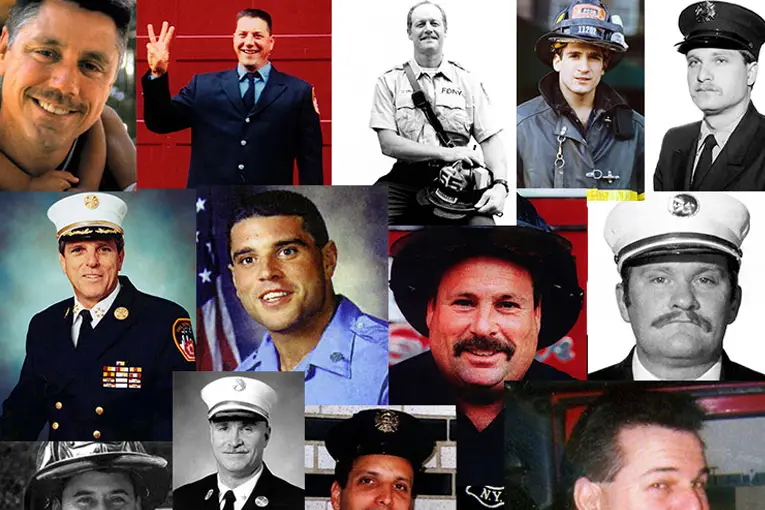
Among the thousands of lives lost, 343 firefighters from the New York City Fire Department (FDNY) died during the attacks, along with one firefighter from the New York City Fire Patrol, bringing the total number of firefighters who died on that day to 344.

In the years since, many additional firefighters and first responders have died from illnesses directly linked to exposure at the World Trade Center site, highlighting the long-term sacrifices made by these heroes.

What Happened on September 11, 2001?

911 Twin Towers Burning

On the morning of September 11, 2001, a series of coordinated terrorist attacks were carried out in the United States.

Hijackers flew four commercial airplanes, two of which crashed into the Twin Towers of the World Trade Center in New York City.

The South Tower collapsed less than an hour after being hit, followed by the North Tower.

This was followed by the total collapse of World Trade Center Building 7 later that day at 5:20pm, with the building falling onto its own footprint.

A third plane struck the Pentagon, while the fourth, United Flight 93, crashed in Pennsylvania after passengers attempted to retake control of the aircraft.

The attacks resulted in widespread devastation and prompted an immediate, massive emergency response.

How Many People Died on 9/11?

Approximately 2,996 people lost their lives as a result of the 9/11 attacks, not including the 19 terrorists involved.

This total includes civilians, law enforcement officers, and firefighters.

In New York City alone, the World Trade Center attacks caused 2,753 deaths, making it the single deadliest terrorist incident in U.S. history.

What Fire Departments Responded to 9/11?

911 First Responders
Image credit: CNN

The FDNY was the primary responder to the World Trade Center attacks.

Firefighters from all five boroughs of New York City, as well as mutual aid companies from nearby areas, rushed to the scene.

Other notable departments and organizations included the New York City Police Department (NYPD), Port Authority Police, and private firefighting units, all of which played crucial roles in evacuation, rescue, and firefighting efforts.

The response was immediate and heroic, with personnel entering collapsing structures to save civilians and fellow first responders.

How Many Firefighters Died on 9/11?

Firefighters Who Died on 911
Image credit: Fire Engineering

During the attacks themselves, 343 FDNY firefighters were killed while performing rescue operations and attempting to evacuate the Twin Towers.

These men and women included firefighters of all ranks, from probationary firefighters to chiefs, reflecting the broad participation of the FDNY workforce that day.

Additionally, Keith Roma, a firefighter with the New York City Fire Patrol, also died responding to the scene, which brings some records to cite 344 total firefighter deaths.

Many of these individuals were trapped in the towers when the structures collapsed, illustrating the extreme danger and heroism of the operation.

How Many First Responders Died on 9/11?

Firefighter at Ground Zero

Beyond firefighters, other first responders also lost their lives, including 23 police officers and 37 Port Authority officers.

Collectively, the number of first responders who perished that day amounted to approximately 403 individuals, highlighting the extreme risk faced by those on the front lines of the attacks.

How Many Firefighters Have Died from 9/11 Related Illnesses Since the Attack?

Tragically, the toll of 9/11 extends far beyond that single day.

Exposure to toxic dust, smoke, and debris at Ground Zero has resulted in chronic illnesses and cancers among first responders.

As of 2024, over 200 additional FDNY firefighters have died from 9/11-related illnesses, including respiratory diseases, gastrointestinal cancers, and other health complications directly linked to their work at the site.

This ongoing loss underscores the long-term dangers faced by first responders and the need for continued healthcare support and monitoring for those who served during the recovery and cleanup efforts.

Why We Should “Never Forget”

911 Memorial
Image credit: Wikipedia

The heroism displayed by firefighters and other first responders on 9/11 serves as a lasting testament to courage and selflessness.

Remembering their sacrifices not only honors the fallen but also emphasizes the importance of preparedness, training, and community support for emergency responders.

Memorials, educational programs, and annual ceremonies ensure that their bravery and the lessons of 9/11 continue to be recognized worldwide.

Key Takeaways

  • 343 FDNY firefighters died on 9/11, with an additional firefighter from the Fire Patrol, totaling 344 firefighter deaths on the day.
  • Thousands more first responders have died in subsequent years due to 9/11-related illnesses.
  • The FDNY, NYPD, Port Authority Police, and other agencies worked heroically to save lives amid unprecedented chaos.
  • Ground Zero exposure has long-term health consequences, emphasizing the sacrifices of first responders.
  • Remembering these heroes helps educate and inspire future generations while highlighting the risks and responsibilities of emergency personnel.

The 9/11 attacks resulted in an immense and lasting loss for firefighters and first responders. 

343 FDNY firefighters perished during the attacks, and hundreds more have died since due to illnesses caused by exposure at the World Trade Center site.

Their bravery, sacrifice, and continued impact are a powerful reminder to honor and support those who serve in the fire and rescue professions.

MSA Safety introduces new six-gas detector for confined spaces

MSA Safety launches ALTAIR io 6 gas detector at A+A 2025

MSA Safety has introduced the ALTAIR io 6 Multigas Detector at the 2025 A+A International Trade Fair and Congress in Düsseldorf, Germany.

The company said the six-gas detector is designed for confined space monitoring and sampling applications.

It will become part of the MSA Connected Work Platform and will be the company’s first cellular-connected gas detector to include an integrated pump.

According to MSA Safety, the ALTAIR io 6 features XCell sensors, a large and clear display, and a removable rechargeable external battery.

It can be handheld or worn, depending on site needs.

The device will join the existing ALTAIR io 4 Gas Detection Wearable on the same platform.

Integration with the MSA Connected Work Platform

The company said the io 6 and io 4 share the same interface and use MSA Grid software, which allows safety managers to integrate both models into a single monitoring network.

MSA Grid can display device locations and alerts in real time, as well as provide immediate access to data from individual units or entire fleets.

The io 6 is expected to be available for order in early 2026.

Designed for industrial and confined space applications

MSA Safety stated that the io 6 is suited for use across construction, manufacturing, oil and gas, and utilities sectors.

The io 4 model supports continuous personal monitoring, while the io 6 is intended for sampling confined spaces and job sites before entry.

Dave Howells, President of MSA International, said: “Our focus is on helping to keep workers safe by developing innovative safety solutions so our customers can enhance protection, compliance, and efficiency.”

He added: “By featuring our Connected Work Platform and broad range of industrial safety solutions, we’ll give A+A attendees a hands-on experience to learn more about how MSA is using technology and data to help make it easier for workers to have the best solution for their job.”

Additional MSA products on display at A+A 2025

The company confirmed that its stand in Hall 1, Stand C42, also features a wide range of safety products.

These include V-SERIES Harnesses designed for flexibility and comfort, MSA Latchways Lifeline Systems for mobility and fall safety, and V-Gard Safety Helmets listed in the Chartered Institute of Building #PPEthatfits Directory.

Other products on display include the M1 Self-Contained Breathing Apparatus, suitable for industrial, confined space and fire service use; the FL500-H2 UV/IR Flame Detector for Hydrogen; and the ULTIMA X5000 Gas Monitor, which supports dual sensing and Bluetooth connectivity for remote monitoring.

Relevance for fire and safety professionals

The introduction of the ALTAIR io 6 Multigas Detector could be of interest to safety officers, equipment specifiers and industrial site managers involved in confined space entry or hazardous gas monitoring.

Its cellular connectivity and integration through MSA Grid may support teams managing multiple detectors across large or complex worksites.

Fire protection contractors and facility safety engineers in industries such as oil and gas, manufacturing and utilities may find relevance in the device’s sampling capabilities and integration with existing monitoring systems.

Attendees at trade events like A+A 2025 can assess its performance alongside MSA’s broader range of fall protection, respiratory and flame detection products.

AkzoNobel debuts Chartek 2218E for shop-applied steel protection in Abu Dhabi

Chartek 2218E launch announced at ADIPEC 2025

AkzoNobel said its protective coatings brand International has launched Chartek 2218E at ADIPEC 2025 in Abu Dhabi from 3–6 November, located at stand 15038.

The company described the product as the next generation of its epoxy passive fire protection solution within the Chartek range.

It said the new coating builds on more than 50 years of development in the portfolio.

International stated that the product focuses on enhanced performance and efficiency while maintaining established protection characteristics.

Single-coat, two-hour pool fire rating

According to the company, Chartek 2218E achieves a two-hour hydrocarbon pool fire rating in a single-coat application over Charlok mesh.

International said the coating is designed for shop-applied steel.

It is a patented boron-free epoxy intumescent, the firm added.

UL1709 thickness and weight claims

AkzoNobel said Chartek 2218E offers the lowest UL1709-certified thickness and weight in the industry for a W10x49 steel section.

The manufacturer linked these characteristics to installation efficiency on qualifying projects.

It positioned the product for large two-hour pool fire use cases in oil and gas assets.

Application efficiency and project impact

International stated that a streamlined application process enables faster project turnaround, lower energy consumption and reduced risk of delays.

The company said the coating can deliver up to 50% fewer application hours, up to 25% savings in shop-applied costs and up to a 25% reduction in material use.

It said these factors are intended to support both fabricators and applicators.

According to AkzoNobel, fewer hours, reduced material use and high durability can also lower maintenance costs.

The firm added that these benefits align with its aim to cut emissions by 50% across its value chain.

Durability, weathering and certification details

International said Chartek 2218E is part of a range with field-proven technology platforms.

The company stated that the product has been tested against ASTM D5894 and certified to UL2431 without a prescribed topcoat.

It added that this provides fire performance after weathering and allows a cosmetic topcoat to be specified without affecting long-term performance.

The firm said this combination is intended to give operators confidence that assets remain protected across the lifecycle.

Quotes from AkzoNobel representatives

Robin Wade, Global Fire Protection Manager at AkzoNobel, said: “Chartek 2218E represents the latest innovation in passive fire protection for the large two-hour pool fire market, which is critical for many oil and gas assets.

“It reflects our continued commitment to investing in innovation and sustainability in structural fire protection.

“Chartek 2218E can be applied in a single coat with Charlok mesh, maximizing productivity without compromising robustness and durability.

“Its patented polysiloxane-modified epoxy technology means steelwork can be stacked with minimal damage, enhancing throughput and overall fire efficiency.”

Andy Holt, Business Development Manager of AkzoNobel’s Middle East division, said: “Feedback from customers highlights that productivity and workshop efficiency remain some of the biggest challenges in oil and gas construction, and that’s exactly where Chartek 2218E delivers.

“Early demonstrations have been met with strong confidence from applicators and fabricators alike, who see the benefits first-hand in speed, consistency and ease of application.

“Maintaining that close collaboration with our customers is what drives continuous improvement and long-term trust.”

Visitor access and regional availability

According to the company, visitors to the ADIPEC stand can view product samples and speak with subject matter experts.

International said a dinner event on 5 November will include a presentation on Chartek 2218E efficiency and project value.

AkzoNobel stated the product will be available across the Middle East, South Asia and Australasia from November following the launch.

The firm said further regional rollouts are planned and that customers can contact local sales representatives for availability details.

Relevance for fire and safety professionals

Procurement officers and equipment specifiers can assess a single-coat approach that the company says achieves a two-hour hydrocarbon pool fire rating over Charlok mesh.

Oil and gas safety officers and fire engineering consultants may examine the claim of lowest UL1709-certified thickness and weight for a W10x49 section, alongside stated savings in application hours and material use.

Fabricators and applicators can review the stated reductions of up to 50% in application hours, up to 25% in shop-applied costs and up to 25% in material use for planning and throughput.

Standards and certification bodies may note testing to ASTM D5894 and certification to UL2431 without a prescribed topcoat, which the company says maintains fire performance after weathering.