Fire Standards Board launches seventh professional fire standard

The Fire Standards Board (FSB) have launched its seventh professional Fire Standard – Prevention.

Alongside the Protection Fire Standard, which is due for publication in early September, this sees completion of Fire Standards covering the three pillars of service delivery for fire and rescue services – Operational Response, Prevention and Protection.

With Prevention specifically, and in response to the findings from Her Majesty’s Inspectorate of Constabulary and Fire and Rescue Services (HMICFRS), targeting the right people; having consistency in the approach taken; and evaluating their Prevention activities, are key to improving the health, safety and wellbeing of communities.

The Prevention Fire Standard is underpinned by the work of the National Fire Chiefs Council (NFCC) Prevention Programme, whose work on the Person-Centred Approach and other guidance and tools will be pivotal to supporting services in future.

A Fire Standard focussed on Resilience and Emergency Planning is part of the next phase of standards development. Other Fire Standards in development include;

  • Safeguarding;
  • Fire Investigation;
  • Leadership standards covering Service Leadership, Developing Leaders and Service Management; and
  • Data Management.

The journey to develop the first professional Fire Standards for services in England in over 10 years started in 2019 with the establishment of the FSB. To help determine the scope of the Fire Standards, work was undertaken by the FSB to understand the activities carried out by all services and where standards were needed and should apply. This resulted in the development of an Activity Framework.

The framework acts as a road map for the FSB helping it to plan its development work and to identify and avoid areas of overlap or duplication. The FSB found that much of what would support each Fire Standard already existed in the form of good practice guidance and tools produced by the NFCC. However, without the national recognition that a Fire Standard provides, application across the country was varied and inconsistent.

The Board considered many factors when deciding on the scope of each standard and the order in which they should be produced. They felt it imperative that the first standards to be developed should help to address the areas for improvement identified and highlighted by Her Majesty’s Inspectorate of Constabulary and Fire and Rescue Services (HMICFRS). Driving improvement and seeing more consistency in how services deliver to the public across the country, is the Board’s overarching goal.

FSB Chair, Suzanne McCarthy, said: “Ensuring that services target the right people when delivering prevention initiatives and effectively evaluate their work is essential to help reduce risks and prevent harm in our communities. Like all Fire Standards, this standard will help clarify what is expected of services to enable them to deliver the best service possible to the public no matter where in England.”

Fire Minister Lord Greenhalgh said: “I am delighted that another Fire Standard is being launched to provide clear expectations and support to our fire and rescue services.

“This Prevention Standard sets the bar so that fire and rescue services can keep communities all over England safe by taking a consistent, targeted approach to stop fires from happening in the first place.”
UL launches building and fire safety management compliance tools

UL have announced the release of a new digital platform and third-party certification scheme to help building safety and fire professionals around the world increase their safety protocols, demonstrate best practice and reassure residents, investors, boards and other stakeholders.  

UL’s Built InForm software tracks and manages certification, testing schedules, professional competencies and other activities across single buildings or whole portfolios, empowering effective safety monitoring and management. Information in Built InForm also is easily accessible to regulators and residents when requested. 

“Digitalisation is an inevitable and powerful way to boost building safety,” said Simon Ince, project engineer at UL. “The use of outdated paper-based methods, such as fire safety logbooks and operations and maintenance manuals, is widespread. But this is no longer enough to satisfy regulators, residents and investors, so we have developed Built InForm to help building and fire safety managers confidently make the digitalisation transition.”

In addition the new Building Safety Management (BSM) Certification Scheme provides independent third-party audit and certification of fire and structural safety management systems, offering confidence in results.

“Third-party audit and certification is essential,” Ince said. “It gives you and others the reassurance that you have the requisite safety systems in place, and it will help to promote that you are doing your utmost to keep occupants safe. The BSM Certification Scheme will help to give everyone peace of mind.”

Learn more about the Built InForm and the BSR Certification Scheme.

ASFP releases new advisory notes on the fire protection of structural steel

The Association for Specialist Fire Protection (ASFP) has released three new Advisory Notes which offer guidance on the fire protection of structural steel, addressing specific concerns identified by industry.

Advisory Note 19: ASFP Position on the Use of Critical Steel Temperatures above 650°C updates a previous edition released in July 2020. It highlights that it is vital to ensure that the appropriate limiting temperature is used in the specification of a reactive coating. Use of an elevated temperature (above 650°C) without the appropriate engineering checks could potentially leave a structure under-protected in a fire situation.

This reinforces the best practice guidance contained within Advisory Note 12: Best Practice Guide for Specifying reactive coatings for structural steel fire protection, published jointly by the ASFP and the British Coatings Federation, which advises that if a limiting temperature of above 650°C is specified, then a second opinion must be sought from a structural engineer with appropriate fire design and engineering experience.

ASFP Advisory Note 23: ASFP Position on Secondary Steelwork provides advice on the protection of secondary steelwork, offering a useful flowchart to assist in determining whether protection is necessary and how best to provide it in different scenarios. The document defines what is deemed to be primary and secondary steelwork. It advises that steel bracing members required to provide stability to the structure at the fire limit state should have adequate fire resistance unless alternative load paths can be identified.

The Note recommends that Project Design Teams and / or Structural Engineers review all available advisory documents regarding the need for the provision of fire protection for secondary steelwork, stating that this is not the responsibility of the fire protection installers or manufacturers of fire protection systems. It states that the Steelwork Designer should be consulted to identify Primary Bracing versus Secondary Elements highlighting that, where doubt exists, the assumption should be that the bracing is a Primary member and full protection provided. Where fire protection to secondary bracing members is necessary, the protection thickness should be based on the section factor of the member or a value of 200 m-1, whichever is the smaller value.

Where the actual section factor is less than 200m-1, then the corresponding limiting steel temperature should be in accordance with the Column default temperature for Eurocode or British Standard designs as per ASFP guidance in Tables 16-18. Where the actual section factor is greater than 200m-1, a section factor of 200m-1 should be used  and a limiting steel temperature of 500°C. For all Secondary Element members, the protection thickness should also be based upon the appropriate Column data set (I section or Hollow section). The document provides guidance on scenarios where it might not be necessary to apply fire protection to Bracing members.

Advisory Note 24 ASFP Position Paper on the use of Yellow Book Critical Temperatures for the UK (or equivalent) Market offers a range of proposals aimed at updating certain tables in the fifth edition of the ASFP’s Yellow Book: Fire protection for structural steel in buildings.

The 5th Edition of the Yellow book was published to enable adoption of new European testing and Assessment methods – alongside amendments to the pre-existing UK test and assessment methods.

In 2014, the ASFP introduced three new tables (Tables 16-18) of default temperatures in the Yellow Book, covering both the historical BS 5950 and newer Eurocode design scenarios. These tables were accompanied by a flow chart to help specifiers chose the correct table. However, these were considered over complicated, and have now been reviewed to offer clearer and easier to understand guidance.

Advisory Note 24 introduces the proposed revisions. It highlights the importance of understanding and using the correct Codes and Occupancy (Building Category) in the design process as these can have a significant effect on the Critical Temperature of a steel frame; and consequently on the required thickness of Intumescent coating. It states that if the use of the building is not known, whether using BS 5950 or Eurocode, use of the Storage Category should be adopted.

All ASFP guidance documents are available for free download from the Publications area of the ASFP website: www.asfp.org.uk.

Euralarm announces FirePro as new member

Following a decision of its Board, Euralarm has welcomed FirePro as new member. The company will join the Extinguishing Section of Euralarm which activities cover automatic extinguishing systems using gas, water, foam, powder and aerosols, oxygen reduction systems, portable equipment and other manual means of fire-fighting as well as fire-fighting agents used in either fixed automatic systems or in portable equipment.

FirePro will now benefit from Euralarm’s services in terms of representation towards European institutions and standardisation organisations. This includes the monitoring of legislative and standardisation issues relevant to the industry. FirePro will have access to the extended network of national associations and major companies in the electronic fire safety and security sectors, which form Euralarm’s members. The new membership will create opportunities for both sides, as it also strengthens the association.

Market expertise and insights

Companies joining Euralarm get a unique insight into what is happening on other European markets and the opportunities that they might offer. They not only tap into the expertise and understanding of the EU policy but can also make personal connections with technical and policy making experts and potential business partners.

Being a member of Euralarm enables companies and associations to gain expertise on standardisation. Members like FirePro have their voice heard in Brussels and can support and direct standardisation and legislative processes.

MSA Safety announces investment and collaboration agreement with Perspective Robotics AG

MSA Safety Incorporated, the global leader in the development, manufacture and supply of safety products that protect people and facility infrastructures have announced it has established a Joint Development Agreement with Perspective Robotics AG of Zurich, Switzerland.  Established in 2014, Perspective Robotics AG develops advanced situational awareness tools that utilise tethered drone technology for first responder applications under the brand name Fotokite.  

The two companies will collaborate to advance fire scene situational awareness, both locally and through the cloud, through the development of enhanced products and services that leverage key strengths of both organisations — Fotokite’s expertise in autonomous and actively tethered drone technology and situational intelligence solutions and MSA’s deep experience in developing breakthrough products, systems and technologies for firefighter safety and accountability. 

“This is an exciting partnership for all of us at MSA, because it opens the door for us to explore new-to-world ways to enhance and simplify firefighter safety through increased situational awareness,” said Greg Martin, MSA Safety’s Vice President of Product Strategy and Development. “Identifying and adapting new technologies in ways that improve worker safety is really the foundation of the MSA mission. Our collaboration with Fotokite aligns very well with that mission. I know from a product development standpoint, our engineering teams are excited to begin this work and start thinking about the many possibilities that exist when you’re thinking from a birds-eye perspective.”

“Our entire team is excited about the opportunity to have a market leader such as MSA Safety onboard,” said Chris McCall, Fotokite Chief Executive Officer. “Both MSA’s investment and our joint development roadmap build a strong foundation towards expanding each other’s game-changing solutions for firefighters,” he said.  Dr. Sergei Lupashin, Founder and Chairman of Perspective Robotics AG, added:  “It has been clear from the start that we both share a common mission focused on safety and having a passion for the fire service. Our unique technology solution combined with MSA’s strong presence and brand in the fire service will allow us both to accelerate innovation and enhance firefighter safety.”

ASFP refresh branding with aims to enhance recognition

The Association for Specialist Fire Protection (ASFP) has refreshed its branding to promote a cleaner and more simple design and to improve readability and consistency, as well as offering a more modern and versatile logo.

While maintaining the iconic flames motif, the new logo features the flames emerging from the ASFP name. The font has also been updated to improve legibility, ensuring readers quickly gain a clear understanding of the logo with a single glance. A heavier font has been selected to emphasise the Association’s strength of voice and authority.

A new square shape for the logo offers greater versatility, while black and white versions ensure the branding can be used against a wide variety of backgrounds. Consistency is maintained with the continued use of the signature red flames matched with navy blue to symbolise the Association’s professionalism. 

Launching the new branding, CEO Steve Davies declared: “The ASFP has a strong reputation as a leading authority on passive fire protection but our research suggests that our brand is not universally recognised and understood. Evolution of branding across our products and services has resulted in a lack of consistency and added to the dilution.

“By retaining the ASFP’s iconic flames, the refreshed logo builds on the Association’s long and successful history and its past achievements, while offering greater versatility and encouraging more rapid comprehension. The new branding aims to establish a stronger more consistent profile which reflects the ASFP’s values of independence and authority; professionalism; technical competence; and leading by excellence.

“By building a stronger brand profile, the ASFP hopes to broaden its reach and influence and re-enforce its position as the UK’s most trusted authority on passive fire protection.”

For further information on passive fire protection advice, visit the ASFP website.

Fire Protection Association expands collaboration with UL to support fire testing

The UK’s national fire safety organisation, the Fire Protection Association (FPA), is further developing its collaboration with UL, a global leader in safety science, to support fire testing in the UK by expanding testing and laboratory capacities at the FPA’s test laboratory in Blockley, Gloucestershire.

UL is investing in the installation of fire resistance test furnaces at the FPA’s test laboratory. As part of the collaboration, tests for fire resistance, which form the basis of UK Regulations and support third party product certification, will be processed quickly and effectively. Negotiations and construction planning for the new laboratory facility have commenced, with the new lab due to open in early 2022.

FPA Managing Director, Jonathan O’Neill OBE said: “The FPA is delighted to be part of this developing collaboration with UL which will further enhance our capacity and capability at our Blockley site. UL certificates are universally recognised as an important demonstration of code compliance for construction projects and products across the globe. As a result of this agreement therefore, manufacturers and system providers will not only have access to the tests and certifications required by UK Regulations and but will also be able to satisfy the requirements of regulators around the world.”

UL Regional Business Manager, Chris Miles said: “This agreement between UL and the FPA is the next step in a continued cooperation and will provide the UK with much needed extra capacity for fire resistance testing. The location in Central England, the excellent fire safety knowledge that the two parties bring and, of course, the synergies that come from cooperating with the FPA will ensure the success of this venture.”

SimpliSafe and RapidSOS partner to improve emergency response

SimpliSafe, creator of award-winning home security solutions, today announced a multi-year partnership with RapidSOS, developer of the world’s first emergency response data platform, to improve emergency response during an alarm event. By providing first responders with more timely and detailed information, this partnership will improve the SimpliSafe customer experience and response during an emergency. The partnership delivers potentially life-saving data from SimpliSafe’s platform to first responders during an alarm incident – helping first responders provide a more effective data-driven response when SimpliSafe customers need it most.  

Previously, when an alarm event was triggered, signals from SimpliSafe systems were sent to their monitoring centers, where a call was initiated to the homeowner to gather more details. These same details were then shared via phone call to a dedicated line at the local 911 call centers and sent to dispatchers.

Through this partnership, when an alarm event happens, information from SimpliSafe devices is now digitally routed to the local 911 center even before a phone call is placed. This enables SimpliSafe to share critical details so first responders in the field can make data-driven decisions, and deploy the right resources needed for the event. Critical emergency data, including household details SimpliSafe users provide within their profiles, such as number of family members or pets in the home, is readily available to dispatchers and first responders so they can respond accordingly. 

“Our mission is to make every home secure, and we are singularly focused on delivering better home security for all,” said Christian Cerda, Chief Executive Officer at SimpliSafe. “Our partnership with RapidSOS is the latest example of how we’re making that a reality. Together, we will strengthen communications with first responders, and ultimately, this tighter integration will better protect our customers.”  

“SimpliSafe is a leader in smart home security with millions of Americans protected. Through this partnership, we’re able to help deliver their customers a more intelligent response from police, firefighters and EMTs when it matters most,” explains Michael Martin, RapidSOS CEO. “By bridging the data gap, we’re working together to empower first responders with the information they need to protect property and save lives.” 

SimpliSafe shares relevant data from a device, sensor and/or customer profile when an alarm is triggered with RapidSOS’s network of Emergency Communication Centers (ECCs). The partnership remains true to SimpliSafe’s commitment to customers’ privacy. Data will solely be used to deliver customers best-in-class protection, and there are stringent data policies in place. SimpliSafe and RapidSOS share in the mission of transforming emergency response and have future plans to explore data integrations that will continue to strengthen communication with emergency responders and benefit SimpliSafe customers. 

SimpliSafe data is already available to more than 2,000 ECCs nationwide, ultimately helping drive positive results for first responders and customers.

“We receive thousands of home alarms annually, but often we don’t receive all the information we need to quickly dispatch the right resources,” said Michelle Potts, Communications Manager at Chandler Police Department, Arizona. “With SimpliSafe and RapidSOS, we’re receiving critical alarm information right on our screens, often before the phone call from the alarm monitoring companies even arrives. This partnership helps us respond to emergencies faster and more efficiently, saving lives and property.”

DNV verifies Survitec’s new ultrasound method for fire fighting foam tests

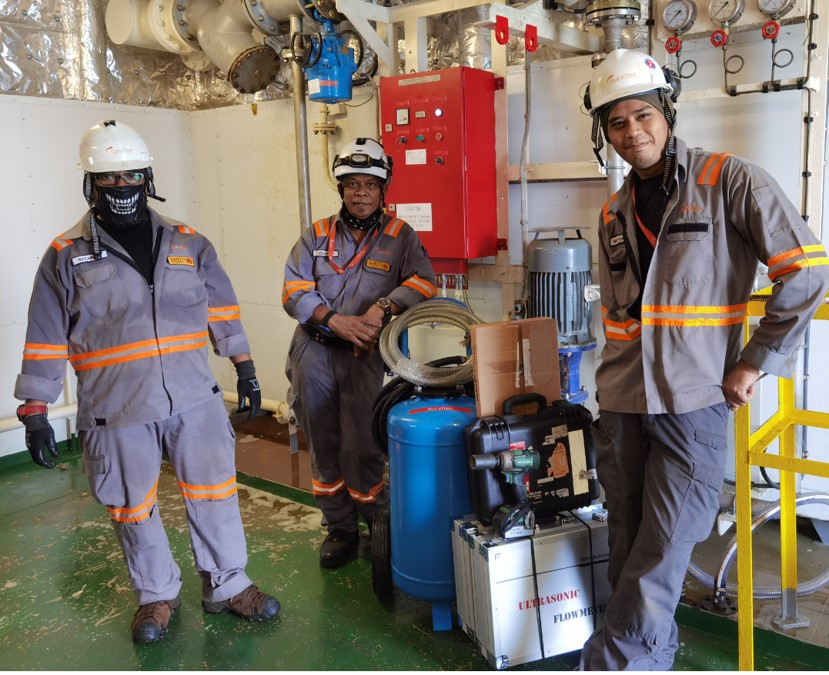
Classification society DNV has issued a verification statement allowing global survival technology specialist Survitec to use its game-changing fire fighting foam testing process onboard maritime vessels or offshore structures.

Survitec’s new Produced Foam Live Test method uses ultrasound technology to verify the effectiveness of fire-fighting foam, according to the mandatory requirements set out in IMO MSC.1/Circ.1432 9.2.4.

The ruling applies to any vessel or offshore structure that has a deck foam system, a high expansion foam system (engine room) or Heli-deck foam system.

Foam proportioners or other mixing devices need to be tested every five years to confirm that the mixing ratio is within +30 to -10% of the nominal mixing ratio defined by the manufacturer.

However, while ultrasonic flow meters are commonly to measure fluid flow in pipework, it is thought to be the first time ultrasound technology has been used to quantify the exact water/foam ratio. Two ultrasonic flow meters are used to compare both values.

Safe fire fighting foam testing

Jan-Oskar Lid, Technical Sales Manager, Survitec, said: “We have developed a safe, environmentally sound and predictable test method removing a lot of the time and expense involved in foam sampling and testing. It delivers peace of mind to ship operators and crews.”

Unlike existing techniques, the Survitec method means testing can be performed while the vessel is berthed alongside, without having to discharge any foam overboard or send samples to testing labs.

Current test methodologies have to run the fire-fighting system with foam for at least two minutes, so there is a heavy consumption of costly concentrate, often resulting in the need to replace the entire tank volume. The produced foam is discharged overboard.

Survitec’s Produced Foam Live Test does not need to use the concentrate or produce foam in the test, using only seawater, which is more environmentally friendly than alternative solutions.

“Samples also have to be sent to a service station for testing and if the sample fails, then the foam proportioner has to be adjusted, and the process repeated, which makes other available solutions more costly and time-consuming, compared with Survitec’s new test process,” said Lid.

Most commercial ships and rigs will have a fixed system that uses foam to extinguish a fire, but the ratio of foam concentrate and seawater has to be correct for the produced foam to work.

Service experience is demonstrating that wear and tear, plus aging of the foam mixing equipment, can have a negative effect on the correct mixing ratio given by the foam system.

On using the new ultrasound technique, Lid said: “All the crew has to do is ensure that a fire pump is running at the required capacity for the test’s duration. The procedure obviates the need to use the system’s foam concentrate.

“As no foam is used, there is no need to top up or refill the tank. And if any adjustments are required then the foam proportioner can be tweaked during the test and not in interludes, which can affect normal service.”

Survitec has now trained teams to use the new process at service stations in Singapore, Fujairah, Barcelona, Rotterdam, Bremerhaven, Aberdeen, Liverpool, Houston, Panama and Macae (Brazil), and will roll out the system to other locations over the coming months. Survitec’s Produced Foam Live Test method has already been used by several well-known gas carrier operators.

firefighting foam

Bosch equips IncarPalm cardboard factory in Ecuador with video-based fire detection

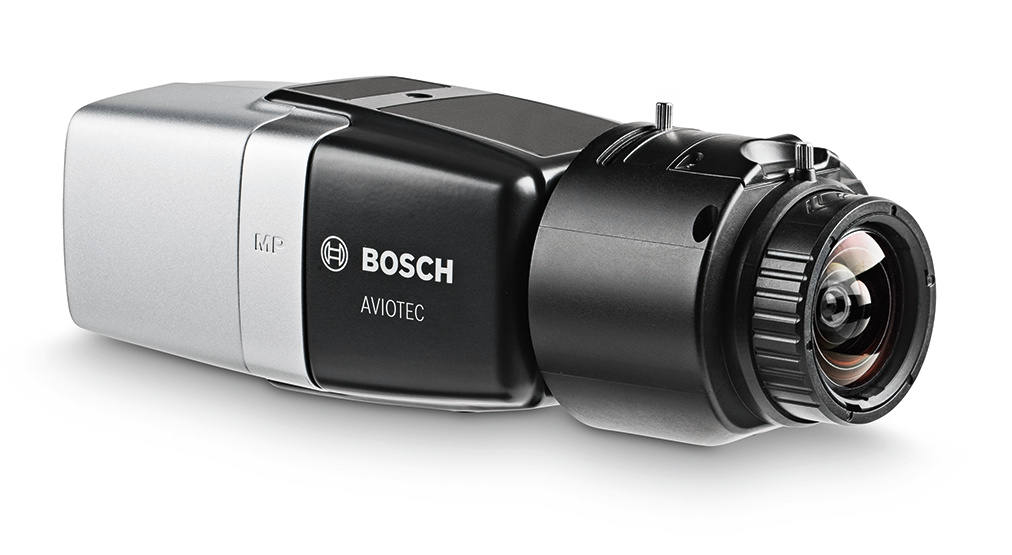
  • Aviotec smoke and fire detection cameras from Bosch protect large cardboard packaging factory in city of Machala, the capital of the country’s banana export industry.
  • Powered by AI algorithms, the video-based fire detection solution senses smouldering fires within seconds; faster than conventional point-type detectors.
  • Integrated solution is customized toward client requirements and challenging environmental conditions inside factory.

Bosch Building Technologies has installed an innovative fire detection system at a key manufacturing site for corrugated cardboard in Ecuador. At the factory operated by Industria Cartonera Palmar (IncarPalm), the video-based fire detection system Aviotec provides around-the-clock fire safety amid challenging conditions thanks to innovative AI algorithms.

IncarPalm is a key supplier of shipping materials for Ecuadorian export goods such as bananas, seafood and flowers. Typical for pulp and paper manufacturing, the factory deals with large concentrations of dust that lead to high flammability and low visibility. IncarPalm relied on Bosch partner Adeatel to install a system that complies with legal guidelines for high-risk manufacturing sites while exceeding the performance of conventional fire detectors and reducing false alarms. Integrated on the Bosch Video Management System (BVMS), the intelligent video sensors rely on machine learning algorithms to detect fires at their source within seconds, thereby ensuring safety and business continuity at the site in Machala, capital of Ecuador’s banana industry.

“Designing and implementing a fire detection system including video analytics has been a very satisfactory achievement. Being able to count on different technologies that generate high added value for our client reinforces us as certified installers and encourages us to promote these alternatives to the local market,” said Alberto Serrano, Project Engineer at Adeatel S.A.

Around-the-clock fire safety under challenging conditions

Before choosing the video-based solution from Bosch, IncarPalm was looking to comply with local legal requirements for the pulp and paper industry, which had been updated in collaboration with fire protection services. What’s more, the paperboard factory houses large amounts of industrial machinery while the paper-based raw materials generate a dry, dusty, and highly flammable environment. Plus, heat from machinery such as IR dryers and conveyor belts poses additional fire hazards to raw pulp paper sheets and finished cardboard products.

As IncarPalm learned, conventional point-type detectors fall short of providing fire safety under these conditions. That’s because these devices rely on detecting smoke particles in the air, which can take several minutes to rise – especially when detectors are mounted on high warehouse and factory ceilings. But in that short time span, fire can already spread and potentially harm employees, while an entire business could literally go up in smoke.

Responding to IncarPalm’s specific requirements, the experts performed a thorough site assessment and conceptualised an integrated system based on a new generation of intelligent fire detection: It relies on light signals that travel much faster than smoke particles to spot smoke and fire even in the smouldering stages. Built-in machine learning algorithms, programmed to sound alarms for colour changes and visual patterns associated with fires, can detect fires within seconds.

The Aviotec IP Starlight 8000 devices deployed at the warehouse are VdS-certifiedand highly resistant against false alarms; they can also operate in the dusty and low visibility environment that is typical for cardboard manufacturing. Additional challenges included vibrations from the machinery and pipes, solved by adjusting the position and sensitivity settings of Aviotec devices on the premises. As live tests confirm, the solution can now sense active flames within seconds.

The installation of the video-based fire safety solution is the first of its kind in all of Ecuador, but not the last: IncarPalm is currently expanding Aviotec coverage across its compound, including new infrastructure for cardboard manufacturing and storage. Meanwhile, other businesses in the region are noticing the added safety, and supply chain integrity afforded by the intelligent system.

fire detection
DINION IP starlight 8000 MP