Nittan Sponsors ‘Fire Engineering Apprentice of the Year’ for 5 years

Following its inaugural sponsorship of South Eastern Regional College’s (SERC) Fire Engineering Apprentice of the Year award in 2020, fire detection manufacturer Nittan Europe is pleased to announce its continued support of the award across five years. As part of the sponsorship, Nittan has supplied a trophy and a prize, plus donated over 80 fire alarm products for students to train on.

This year’s Fire Engineering Apprentice of the Year was Megan Davidson, who was presented with the trophy alongside 2020’s winner Adam Smylie who was unable to collect his award last year due to Covid restrictions.  Stuart Rankin, Deputy Head of School for Construction, Engineering Services and Skills for Work at SERC, said “Both of these students have represented the college and their employers at regional and national level. They are excellent apprentices within the college and a real asset to their employers. Both were very deserving of the award”.  He added: “On behalf of the college I would like to send my thanks to Nittan for support and arranging the ‘Nittan Shield’.”

SERC, based in Northern Ireland, provides a wide range of courses, apprenticeships and professional development training.  The college has close links with fire and security companies which enables students and apprentices on relevant programmes to gain valuable knowledge and experience. 

Tutored by Fire and Security Lecturer Robin Hamill, the fire alarm apprenticeship programme requires students to attend SERC one day a week for four years whilst working towards Level 2 and Level 3 City & Guilds in Electronic Security and Emergency Systems qualifications.  To recognise the apprentice who has worked the hardest and excelled in all levels – but not necessarily the person who has the highest grades – the Fire Engineering Apprentice of the Year award was introduced in 2020 and has proven to be a welcome encouragement; so much so, that Nittan is pleased to continue sponsoring it until 2025.

Nittan was introduced to Robin Hamill of SERC through its Elite Partner in Northern Ireland, Solutions for Systems – an independently owned business providing design, supply, installation, commissioning, integration and maintenance of fire, security, electrical and satellite & aerial communication systems.  Solutions for Systems has a close working relationship with SERC and has actively supported the fire and security engineering apprenticeships by helping lecturers to develop demonstration models and help promote the programmes. Both Nittan and Solutions for Systems have contributed £100 each in gift vouchers for the Fire Engineering Apprentice of the Year award winners.

Whilst the trophy and prize recognise the achievement of one particular, stand-out apprentice each year, all apprentices benefit from Nittan’s sponsorship through the range of fire detection products it has supplied the college for students to learn and practice on.  This includes Evolution EVC-P optical detectors with internal current limiting resistor, and the award winning Nittan Evolution EVC-DP detectors with dual optical technology to reduce false alarms caused by non-combustion products such as steam, dust and aerosols.  A range of heat detectors, detector bases, sounders, beacon and mounted call points have also been supplied.  To provide students with the full system experience on which to train, fire alarm control panels were supplied by Solutions for Systems.
 

Nittan’s Regional Sales Manager (North), Steve McCarley, has worked closely with both SERC and Solutions for Systems to ensure the college has the products it needs to train the apprentices on and to get the Fire Engineering Apprentice of the Year award underway.  “Now more than ever, we need to ensure young people have the training resources they need to be able to learn and develop their skills” says Steve.  “The fire industry represents a good career choice with engineers always in demand.  We value the work being done by SERC, and by our Elite Partner installers such as Solutions for Systems who take the time to support these apprentices.”


Fire Brigades Union agree to new pay proposal

A new pay proposal put forward by fire and rescue service employers has been accepted and agreed by the Fire Brigades Union, according to a statement on the Fire Brigades Union website. The agreement was made on the 28th of June after the Executive Council considered consultation from the Unions members.

Despite the Union not believing that the agreed 1.5% increase is enough to address the issues that members and policies face, the Executive Council agreed to the increase as they believed there is an urgent need to improve the wage structure for members of the Fire Brigades Union.

FBU general secretary Matt Wrack wrote to PM Boris Johnson in opposition to an “attack on firefighters”

The Fire Brigades Union and central government have had a fractious relationship in recent years, with the Unions general secretary Matt Wrack recently writing to Boris Johnson in opposition to what he claims is an attack on firefighters.

In November 2020, the Chancellor announced a further pay freeze for public sector workers, and some FRS employers responded to this by budgeting for a freeze on pay. A significant number of Chief Fire Officers and local employers had then refused to clarify if they would support a pay increase offer at the National Joint Council. It has emerged that a number of fire service employers had argued within the employers’ side of the NJC for a further pay freeze for 2021.

The increase is effective from from 1 July 2021.

Institution of Fire Engineers unveils future global strategy

The Institution of Fire Engineers has undertaken a comprehensive review of its communications and activities to improve its services and qualifications for members and strengthen its global influence in the two key areas of competence and sustainability.

With over 100 years of history, the professional membership body enables those in the fire sector to increase their knowledge, professional recognition and understanding of fire through a global discourse. It is instrumental in shaping a future world that is safer from fire.

Chief executive of the Institution of Fire Engineers, Steve Hamm explains: “The fire safety landscape in which our members operate is changing at a faster pace than at any time since the foundation of the organisation in 1918. This is both exciting and challenging and we have had valuable input from members, volunteers, staff and stakeholders in shaping our future direction.

“Across the board our members’ roles and responsibilities are evolving, influenced by advances in technologies and materials, external factors such as climate change and learnings from major incidents such as Grenfell. These are all influencing new regulations and standards, new ways of working and highlighting the importance of knowledge and information sharing to evolve our skills and capabilities worldwide.”

To support its future strategy, the Institution of Fire Engineers has expanded its team to include technical director Peter Wilkinson to lead on the Institution of Fire Engineers technical collaborations, special interest groups and input into consultations. The new position of relationships manager has also been created and Gill Haynes has taken on this role to lead on developing support for the organisation’s international network of branches and extensive cohort of volunteers.

As part of its plans to enhance competency, the Institution of Fire Engineers has introduced a new suite of qualifications inspired by global industry needs and feedback from members and examiners. There are plans to build on the success of these by bringing in at least two new qualifications for 2022. The final selections are yet to be made but urban search and rescue and fire risk assessment are currently being explored.

The Institution of Fire Engineers is also building closer relationships with higher education and university establishments to broaden the depth and diversity of skills and competency across both technical and social disciplines. This work will create clear competency frameworks centred on membership, professional registrations, knowledge sharing and accessible career development pathways for all.

The shift to virtual learning and events during 2020 will continue. This will widen access to CPD and other events to members around the world, increasing their ability to knowledge share and learn from each other.

Aligned with these plans, are the Institution of Fire Engineers initiatives to address sustainability, from adapting to the challenges driven by climate change to building resilience in the profession. Future practice will be informed by smart cities, connectivity and big data alongside advances in building materials, fuels, transport, energy storage, water and waste management, together with the technologies that fire professionals can use to predict, manage, monitor and deal with fire risk and fires.

Steve concludes: “Sustainability is an area where we feel the true value of our global community will come to the fore and we will be looking at ways to expand our branch network and CPD opportunities to share ideas and expertise that can inform best practice, spark fresh research and deliver advances in our professional capabilities and understanding.

Institution of Fire Engineers
Chief executive of the Institution of Fire Engineers, Steve Hamm

“This will be a transformational year for our organisation, one in which we will build upon feedback from members around the world to strengthen our leadership, our communications, our responsiveness and our relevance to fast changing global fire safety and competency needs to ensure our members continue to thrive as trusted professionals.”

Outside the trench box: Using hydrovac for trench rescues

In late February, Badger Daylighting’s team in Salt Lake City, UT, received a call from a customer facing an emergency: one of his guys was in trouble. He had been standing on flat, level ground six feet away from a trench when the earth gave way and pulled him into the trench.

When the Badger team arrived on site with one of our hydro excavation trucks, more than 30 firefighters and heavy rescue personnel were onsite working to free this worker, who was buried up to his armpit and pinned between the outside of a trench box and the soil that had caved in. He was struggling to get out but seemed calm.

Badger’s team, with the assistance of the onsite rescue team, began removing the soil and rock from around the trapped worker using our truck’s vacuum excavation tube. As Badger quickly removed the soil, the fire department set up cribbing and jacks to keep the earth from sloughing in.

Badger’s team removed soil for about 45 minutes and made enough progress that the worker was able to be safely extracted. Thankfully, he was ok and was able to walk on his own.

After the man was rescued, we were asked to stay for a de-brief with the firefighters and heavy rescue team. During the session, we learned that that the fire department had never trained on the rescue of someone on the outside of the trench box.

“Looking back on the incident, we are all grateful that he is ok. I have heard about the few times that Badger has been a part of rescue events like this, and I thought it would probably not happen to us. It was nerve-racking, but satisfying, to be a part of this knowing that our services assisted in helping a fellow construction worker,” shared Brian Parkinson, Badger Daylighting area manager in Utah.

The fire department thanked the team for their quick response, sharing that Badger Daylighting’s help was instrumental in getting the trapped worker out of the trench safely.

Outside the Trench Box

This story is one of several in which Badger Daylighting has had an opportunity to support local fire and rescue crews with events such as this. Hydrovac technology provides a safe, effective, and fast way to free individuals trapped in earth and debris. There are no charges for these emergency services.

Contacting a Local Hydrovac Team

In the event that your team is facing a rescue such as the one shared above, it’s critical to get a hydrovac team on site as early in the rescue as possible.

Fortunately, the Badger team is available around the clock to support in rescues and in the aftermath of natural disasters. And, with more than 140 locations and 1,400 trucks across the U.S. and Canada, we are well positioned to help.

Our recommendation is to get to know your local Badger team so you’ll know who to call if an emergency such as the one shared here happens on your watch. You can also call us for support at 877-322-3437.

Liz Peterson is Badger Daylighting’s vice president, North America operations – east. Badger Daylighting, and its parent company Badger Infrastructure Solutions Ltd., is North America’s largest provider of non-destructive excavating services. They work for contractors and facility owners in a broad range of infrastructure industries, including energy generation, electricity and natural gas transmission networks, roads and highways, telecommunications, water and sewage treatment, and general municipal infrastructure.

This article was originally published on the National Volunteer Fire Councils Website

BSI issues reminder as UKCA deadline approaches

With six months to go before the UKCA marking becomes a requirement, BSI, the business improvement and standards company, has issued a reminder to all manufacturers looking to place relevant regulated products on the Great Britain (GB) market.

The new marking will replace traditional CE marking from 1 January 2022 and almost all products that previously required the CE marking will need to have the marking affixed by an Approved Body. CE marking will cease to be recognised for most products from the 1 January 2022 however, marine equipment, medical devices and IVDs have been granted slightly longer.

Shahm Barhom, Group Product Certification Director at BSI, said: “We have been in a transition period since we left the European Union on 31 January 2020; both the UKCA and the CE marking have been accepted, however from 1 January 2022 this will no longer be the case. Most products placed on the market in Great Britain will require the UKCA marking from next year and the associated testing and certification to support the UKCA marking must be undertaken by a UK Approved Body.

“We are committed to helping our clients build resilience through this new regulatory landscape, however a significant number of manufacturers are yet to apply for UKCA marking. We urge all manufacturers who plan to sell their products in Great Britain next year to act now to avoid disruption to their supply chains.”

David Reynolds, Technical Director for AGA Rangemaster, said: “It wasn’t a difficult transition as the testing for conformity remains largely unchanged across CE and UKCA marking. As a British manufacturer of range cookers and sinks, it was vital to obtain the UKCA mark for our products to eliminate the risk of disruption for customers. Affixing our products with UKCA marking instils confidence there won’t be any interruptions that will affect customers in the future.

“The technical expertise and knowledge of standards and regulations displayed by BSI made it a smooth and easy process.”

BSI has already issued over 1,000 certificates to manufacturers. The organisations certified by BSI to date can be viewed here in the BSI Verifeye directory.

Government place regulator at heart of Building Safety Bill

The Building Safety Bill will create lasting generational change and set out a clear pathway for the future on how residential buildings should be constructed and maintained.

Housing Secretary Robert Jenrick has outlined the next key step in an extensive overhaul to building safety legislation, giving residents more power to hold builders and developers to account and toughening sanctions against those who threaten their safety.    

The Building Safety Regulator will oversee the new regime and will be responsible for ensuring that any building safety risks in new and existing high rise residential buildings of 18m and above are effectively managed and resolved, taking cost into account.

This will include implementing specific gateway points at design, construction and completion phases to ensure that safety is considered at each and every stage of a building’s construction, and safety risks are considered at the earliest stage of the planning process.      

These changes will simplify the existing system to ensure high standards are continuously met, with a ‘golden thread’ of information created, stored and updated throughout the building’s lifecycle, establishing clear obligations on owners and enabling swift action to be taken by the regulator, wherever necessary.

Housing Secretary Rt Hon Robert Jenrick MP said:    ”This Bill will ensure high standards of safety for people’s homes, and in particular for high rise buildings, with a new regulator providing essential oversight at every stage of a building’s lifecycle, from design, construction, completion to occupation.

“The new building safety regime will be a proportionate one, ensuring those buildings requiring remediation are brought to an acceptable standard of safety swiftly, and reassuring the vast majority of residents and leaseholders in those buildings that their homes are safe.”

The reforms will tackle bad practice head on, building on Dame Judith Hackitt’s review of Building Regulations and Fire Safety, which highlighted a need for significant cultural and regulatory change.

Under the proposals, the government is more than doubling the amount of time, from 6 to 15 years, that residents can seek compensation for substandard construction work.

The changes will apply retrospectively. This means that residents of a building completed in 2010 would be able to bring proceedings against the developer until 2025.

These reforms also include new measures which apply to those seeking compensation for shoddy refurbishments which make the home unliveable.

New measures in the Building Safety Bill introduced today will:

  • Ensure there are clearly identified people responsible for safety during the design, build and occupation of a high-rise residential building.
  • Establish a Building Safety Regulator to hold to account those who break the rules and are not properly managing building safety risks, including taking enforcement action where needed.
  • Give residents in these buildings more routes to raise concerns about safety, and mechanisms to ensure their concerns will be heard and taken seriously.   
  • Extend rights to compensation for substandard workmanship and unacceptable defects.    
  • Drive the culture change needed across the industry to enable the design and construction of high-quality, safe homes in the years to come.

Minister for Building and Fire Safety Lord Greenhalgh said:    ”The comprehensive steps we are taking today will ensure that industry and the regulatory system fully address the concerns raised in the ‘Building a Safer Future’ report by Dame Judith Hackitt.

“Though the overall risk of fire across all buildings remains low, we can’t be complacent – the more robust regime will take a proportionate and risk-based approach to remediation and other safety risks. By increasing our measures of enforcement, we will make sure industry follows the rules – and is held to account when it doesn’t.”

The Bill will include powers to strengthen the regulatory framework for construction products, underpinned by a market surveillance and enforcement regime led nationally by the Office for Product Safety and Standards (OPSS).

The national regulator will be able to remove products from the market that present safety risks and prosecute or use civil penalties against any business that breaks the rules and compromises public safety.

The Bill also contains measures to protect leaseholders by providing a legal requirement for building owners to explore alternative ways to meet remediation costs before passing these onto leaseholders, along with evidence that this has been done.

This builds on the government’s commitment to fully fund the cost of replacing unsafe cladding for all leaseholders in residential buildings 18 metres and over in England, with an unprecedented £5 billion investment in building safety. This is alongside the introduction of a new levy and a tax to ensure that industry pays its fair share towards the costs of cladding remediation.

Developers will also be required to join and remain members of the New Homes Ombudsman scheme, which will require them to provide redress to a homebuyer, including through the awarding of compensation. Developers who breach the requirement to belong to the New Homes Ombudsman may receive additional sanctions.

Chair of the Independent Review of Building Regulations and Fire Safety Dame Judith Hackitt said:  “I am delighted that we have reached this important milestone for the Building Safety Bill. It is vital that we focus on getting the system right for the future and set new standards for building safety.

“Residents and other stakeholders need to have their confidence in high rise buildings restored and those who undertake such projects must be held to account for delivering safe buildings.”

National Fire Chiefs Council Chair, Mark Hardingham said: “We welcome this important Bill’s introduction as it will contribute to essential developments in fire safety.

“We are focused on working with government and partners to fix the broken building regime, make buildings safer and restore public confidence.”

Community Risk Management Standard welcomed by the NFCC

The National Fire Chiefs Council (NFCC) has welcomed the launch of the Community Risk Management Planning Fire Standard.

Published by the Fire Standards Board, the Fire Standard aims to bring consistency to the way Community Risk Management Plans – a statutory requirement for fire and rescue services since 2004 – are developed and used.  These plans, also known as Integrated Risk Management Plans, outline how services will use staff and resources to keep communities safe from fire and other fire service-related risks.

The Fire Standard will provide a framework for the work of the NFCC’s Community Risk Programme (CRP) which is developing a set of standardised tools and guidance to support fire and rescue services when developing their Community Risk Management Plans.

NFCC established the Programme to deliver part of its strategic commitment to reducing community risk and vulnerability.

The outcomes of an independent review in 2019 into how fire and rescue services are developing these plans provided, for the first time, a benchmark of what is being done at a local level.  Findings from the review commissioned by the programme board, showed that there was much variation in how these plans were being developed and used across the UK.

With existing guidance on how to produce these plans being mostly outdated, researchers from Nottingham Trent University (NTU) recommended the creation of a sector endorsed toolkit that could be applicable by all UK fire and rescue services regardless of their size, structure or geography. 43 UK services took part in the review, which highlighted gaps, good practice and areas for improvement for the Community Risk Programme to base its work on.

NFCC Chair Mark Hardingham said: “I’m pleased to see the launch of the Community Risk Management Planning Fire Standard which will provide the framework for the tools and guidance being produced by the NFCC’s Community Risk Programme. These tools are being developed with UK fire and rescue services and will support them in achieving the Fire Standard.

“NFCC recognised the need for improvement in the approach to Community Risk Management Planning nationally; this was then echoed in the findings of HMICFRS’s first tranche of inspections of English fire and rescue services.

“Standardised tools based on evidence and research will assist services in focusing resources on activities where they will have the greatest impact on reducing and mitigating risk and vulnerability in their communities.”

CRP Programme Executive Phil Loach added: “The Community Risk Programme has already released some initial tools such as the national definition of risk and risk concept model, with fire and rescue services telling us they are keen to access more.  These will be delivered as and when they are complete – rather than waiting for the full suite to be produced – to allow services to implement the tools into business as usual as efficiently and effectively as possible.

“A consistent approach to community risk management through standardised tools and guidance will help services in their collaboration with partners and support fire authorities in justifying decision-making to their communities.  The resulting benefits to communities of this is clear.”

The Community Risk Programme currently has five live projects with further projects due to commence in the next 12 months.  The programme’s final product, a digital toolkit, will be comprised of the products of all its projects to date.

MSA Safety launches FIRE AID philanthropic project

MSA Safety Incorporated, the global leader in the development, manufacture and supply of sophisticated safety solutions that protect people and facility infrastructures, today announced a new partnership with UK-based non-profit FIRE AID to help protect firefighters in developing countries.  The program will help deploy repurposed Self-Contained Breathing Apparatus (SCBA) to firefighters in developing countries, who often times may have limited access to protective equipment.        

“MSA’s mission is to see to it that men and women may work in health and safety throughout the world, and that speaks to the heart as to why we chose to partner with FIRE AID,” said Bob Leenen, President of MSA Safety’s International business segment.  “We want to do what we can to help firefighters in need, while also being environmentally responsible.  In working with FIRE AID, we can assist in the repurposing of equipment in a way that helps protect firefighters, the communities they serve, and the environment.  It truly is a win, win, win initiative.”

Founded in 2014, FIRE AID is an association of charities and services with a mutual interest in providing ethical and sustainable donations of fire and rescue equipment, as well as training services, in more than 50 countries around the world.  The non-profit organization has long-standing experience in coordinating humanitarian aid projects, facilitating product donations, and supporting the volunteer efforts of firefighters around the world to help train more than 5,000 firefighters residing in countries in need.

Under the three-year partnership, MSA will facilitate and fund the logistics associated with all donated and refurbished SCBA originating from the UK Fire and Rescue Services.  The UK Fire and Rescue Services group represents more than 50 fire brigades across the United Kingdom, Scotland and Wales. 

The company will also provide a direct donation of new MSA firefighting equipment, providing these fire services access to the latest technology in firefighter personal protective equipment (PPE).  Members of the MSA team will provide training and support to FIRE AID volunteers, and to the brigades receiving the equipment, once the new PPE is delivered.   

Stephanie Sciullo, MSA’s Chief Legal Officer and Executive Sponsor of the company’s Corporate Social Responsibility endeavors, explained that the partnership with FIRE AID is a natural fit with MSA’s CSR platform.  “Safety is the mission of MSA, and creating a better world is a goal of our CSR efforts.  We are proud to be able to partner with FIRE AID on this meaningful initiative.  For more than a century, MSA products have helped protect the lives of tens of millions of workers around the world every day. We are proud that our mission can make a lasting impact on communities worldwide,” said Ms. Sciullo.

First responders in many developing countries endeavour to save lives every day while they themselves work without basic personal protective equipment, commented Claire Hoyland, FIRE AID Coordinator. “Because we deliver equipment and training around the globe to those first responders in desperate need, MSA Safety’s donation is very much appreciated and will go a long way in helping protect emergency workers as they help to protect civilian lives,” Ms. Hoyland said.

Notifire alerting systems: Responding to Grenfell

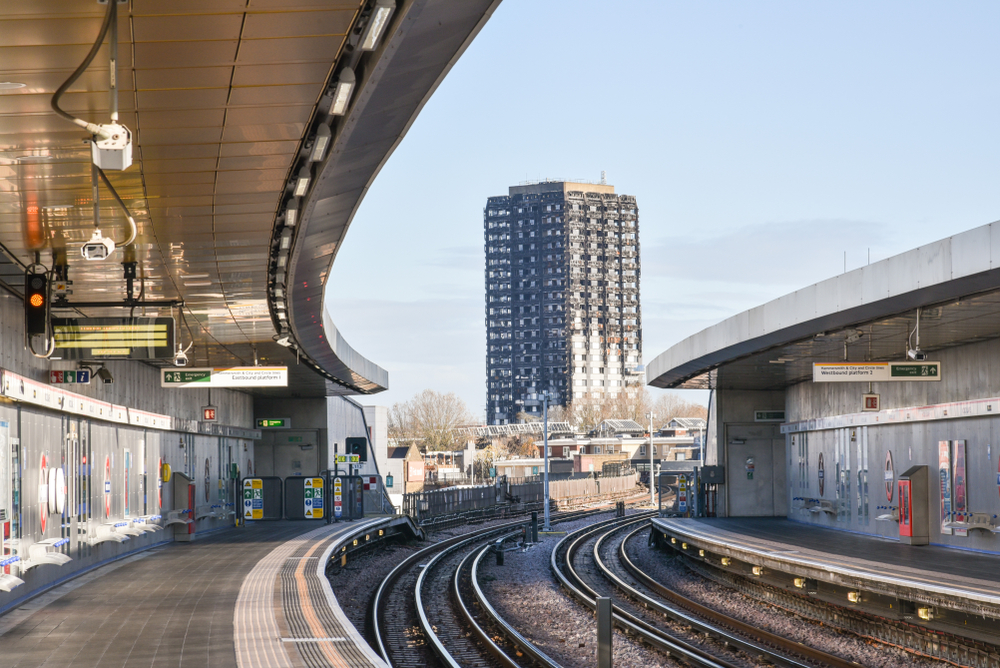
The tragic loss of 72 lives in the Grenfell Tower fire that occurred on 14 June 2017 prompted a review of building regulations led by Dame Judith Hackitt and the Grenfell Inquiry chaired by Sir Martin Moore-Bick.  The review and the phase one report from the Inquiry have led to legislative, policy and procedural changes that set challenges for building owners, Fire and Rescue Services (FRSs) and the fire safety industry in general.

A key finding of the Grenfell Inquiry phase one report was that the longstanding policy of keeping residents in situ in the event of a fire is no longer tenable and that full or partial evacuation must be considered as a tactical option where appropriate.  However, with very few of the existing 6,500 residential tower blocks across the UK being fitted with voice evacuation systems, how are building owners or the Fire and Rescue Service to effect such evacuations? 

Retrospective fitting of conventional VESs to these legacy buildings would take years to carry out, be hugely costly and result in considerable disruption to the lives of those affected, many of whom would have to be temporarily relocated whilst the necessary works were conducted (adding yet further to the costs).

Other key findings include

  • lack of contingency planning and training in conducting evacuations,
  • no ready access for FRSs to fire safety data pertaining to specific buildings,
  • the absence of structured plans to evacuate those with limited mobility, and
  • local control rooms being overwhelmed with incoming 999 calls, resulting in “cascading” to control rooms that are increasingly remote from the incident itself.

Ged Smart, a qualified electrical engineer with extensive experience of managing the design of fire detection and fire prevention systems in the UK and overseas, resolved to do something practical and tangible in an effort to prevent such a tragic toll occurring again.

Recognising the fear and anxiety that the tragedy had generated in those who reside in tower blocks across the UK and beyond, he also wanted to reduce stress and provide reassurance.

Whilst striving to make provision for evacuations, Ged was alarmed at the confusion amongst many tower block dwellers around what they should do in the event of a fire.  He recognised that, in many instances, “remain in situ” would absolutely be the right thing to do, and that disorderly evacuation could imperil residents striving to leave the building and firefighters seeking to access. 

Ged formed Rissington Applications Ltd with the aim of developing solutions that better equip the emergency services to provide reassurance to the public and keep people safe. 

The inaugural product of Rissington Applications is Notifire, a fire safety alerting system using existing mobile telephony technology to create a text-based evacuation system, but at a tiny fraction of the cost of a conventional voice evacuation system (VES). It also avoids the huge disruption and consequential costs (eg decanting residents to alternative premises during works) that retrospective installation of a conventional VES in legacy buildings might entail.

Notifire can be used by building owners/managing agents to send routine messages to residents (eg advance notice of community meetings, alerts regarding water or power outages, maintenance works, etc).  It can also be used by Fire and Rescue Services (FRSs) to send routine fire safety messages or in emergencies such as fires, toxic emissions, serious structural defects, etc). Routine and emergency messages are immediately identifiable through use of different coloured backgrounds and lettering. 

When Notifire is adopted, building owners, residents and FRS personal are trained in its operation.  Residents will be better informed about how to prepare and what to do in the event of a fire, structural fault or toxic emission, and thereby better equipped to respond appropriately and effectively.  This in turn should help reduce the fear and anxiety that undoubtedly exists in many tower blocks across the UK and beyond.

Notifire also enables fire safety data for specific buildings to be made available to Fire and Rescue Services (FRSs) digitally. This can greatly enhance operational planning and allow training to be based on the actual characteristics of real-world buildings.

Notifire also makes provisions for the registration and storage of personal emergency evacuation plans (PEEPs) required under the Fire and Building Safety legislation. 

The focus for Notifire is the UK market, but given the ubiquitous nature of mobile telephony, it could prove to be a real game-changer in developing countries where significant proportions of the population reside in tower blocks and own or rent mobile phones.  Notifire could prove to be a highly valuable international development initiative, helping to save lives and improve safety at a very modest cost..

Notifire is ready for operational deployment, but we are keen to have the system independently certified and to run trials to identify and iron out any glitches that might exist.

We would also look to make ongoing improvements, for example developing cost effective alternative technology to protect residents who may not possess a mobile phone, and to provide for automated language translation for those whose first language is not English.

For further information about Notifire, please visit our website (https://rissingtonapplications.com) or contact us via enquiries@rissiapps.com.

FBU writes to PM over central government threats

FBU general secretary Matt Wrack has written to Prime Minister Boris Johnson in opposition to his government’s forthcoming attack on firefighters. 

In the letter Matt explains that the union is aware “of the likelihood of a White Paper addressing issues within the fire and rescue service”, and that there are concerns around “two specific areas which appear to be under consideration; the role of Police and Crime Commissioners and the issue of collective bargaining within the service”. 

With regards to PCCs it is thought that takeovers by them of fire services could be mandated, threatening local democracy and the clear distinction between the police and fire services. 

The union believes that collective bargaining is under threat due to a series of government-led inspection reports which heavily criticised current arrangements. However these criticisms came from a small number of chiefs, and are not reflective of the majority of comments from chief fire officers.  

The removal of collective bargaining would threaten the pay and conditions of firefighters and control staff in the future, and could even contradict the Brexit agreement. 

You can read the letter here