British Airways Plc has been fined following a vehicle collision at Terminal 5 of Heathrow Airport.
Southwark Crown Court heard that on 16 March 2018, an employee was struck by a tug pulling a train of dollies (vehicles used to transport baggage around the airport). She was knocked under another passing tug with dollies loaded with luggage, sustaining serious crush injuries.
An investigation by the Health and Safety Executive (HSE) found that the injured worker was using the centre of the roadway between the two lanes as a walking route and this unsafe practice had been commonplace in the baggage hall for at least ten years. The investigation also identified significant failings in the general management of health and safety and workplace transport risks, including issues relating to supervision and monitoring, risk assessment and training.
British Airways PLC of Waterside, Harmondsworth, Greater London pleaded guilty to breaching section 2(1) of the Health and Safety at Work etc. Act 1974. The company was fined £1.8 million and ordered to pay costs of £35,724.
Speaking after the hearing, HSE inspector Megan Carr said: “The situation in the baggage hall at Heathrow Terminal 5 was an incident waiting to happen.
“British Airways failed to appreciate the serious nature of the risks to which its employees were exposed and as a result failed to take appropriate action to ensure they were properly protected.”
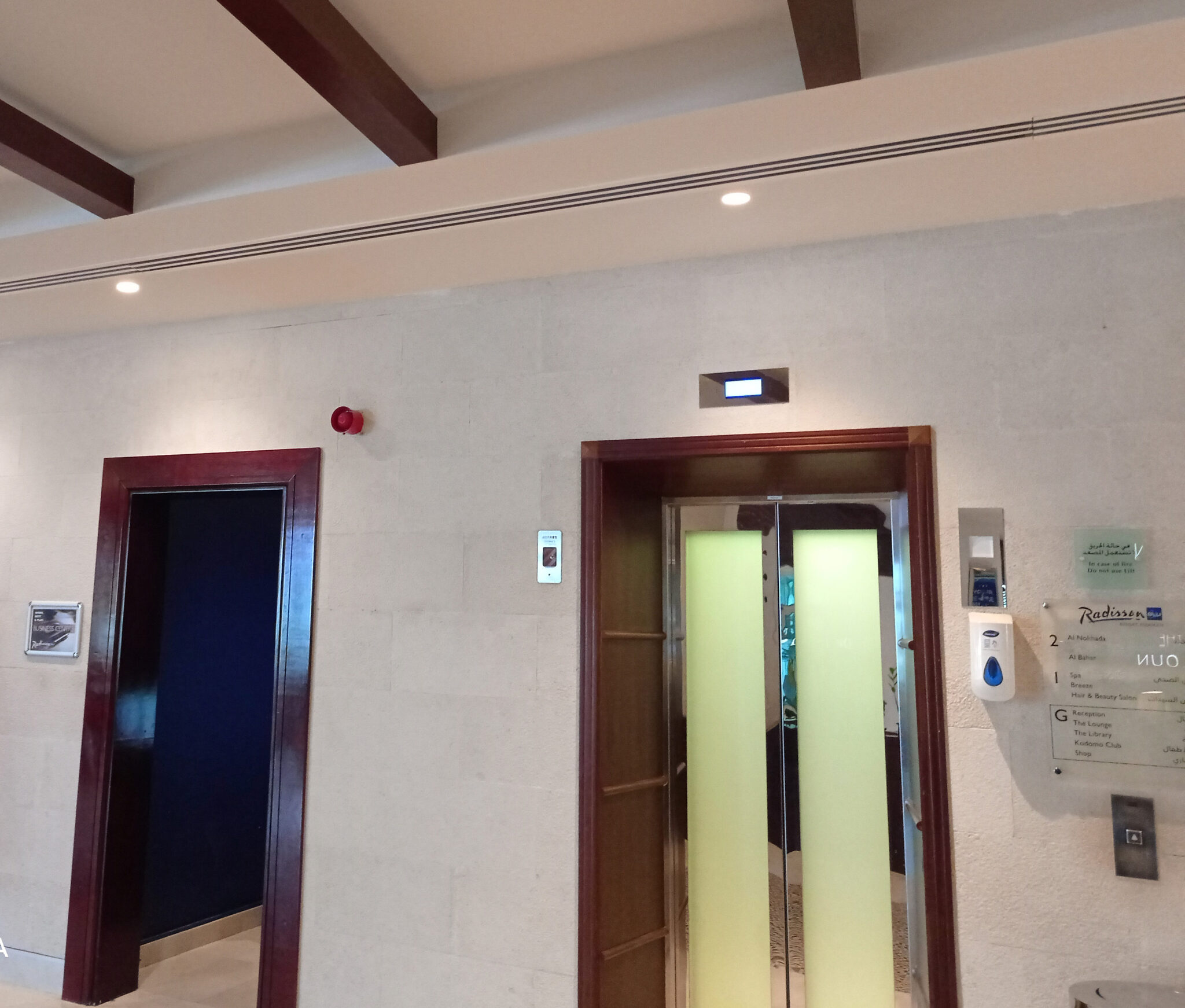
Following a competitive tender, leading European-based fire detection manufacturer Global Fire Equipment (GFE) has designed, supplied and commissioned a new fire alarm system for the Radisson Blu Fujairah, a 5-star resort nestled along 500 metres of private beach in Dibba, Fujairah in the northeast of the United Arab Emirates (UAE).
Radisson Hotel Group is one of the world’s largest hotel companies with more than 1,400 hotels in its portfolio. Its 257-room Radisson Blu Fujairah luxury resort boasts five outdoor swimming pools, a spa, a health club, meeting rooms, a diving centre, restaurants, bars and a kids’ club.
When the engineering team at Radisson Blu was looking to replace the existing fire alarm system within the resort because of mounting maintenance costs, GFE was appointed to design a system for the hotel’s main building and three further connected buildings, along with a health club, a diving centre, a bar and four villas.
GFE, which also trades under the name of Eurotech in the Middle East, has a well-established reputation in the region having operated there since 2008. As a result, Radisson Blu’s engineering team was already aware of the high quality of GFE’s fire detection solutions. Once GFE had designed the new system, GFE’s agents in the UAE, Najd Electronics & Safety Equipment, undertook the installation, testing and commissioning as they already had the maintenance contract for Radisson Blu Fujairah and two other hotels in the Radisson Hotel Group.
The chosen 9-loop system for Radisson Blu Fujairah comprises two panels. The first panel has four loops, each of which connects to 110 devices which cover the main four-storey hotel building and two other connected four-storey buildings.
The second panel has five loops, each of which connects to over 100 devices which cover the third connected four-storey building, the external areas of the three-storey health club, the two-storey diving centre, a bar and the four three-storey villas. In total, the system comprises 780 smoke detectors, ten heat detectors, 40 manual call points (MCPs), 100 input output modules, 50 sounders, two network cards and ten amplifier modules.
Eng. Yaser Ahmed Ouda El Deheny, Director of the engineering department at Radisson Blu Fujairah, comments: “When the maintenance costs associated with our previous fire alarm system kept increasing, we wanted to invest in a cost-effective and modern solution that would meet our requirements. The support we received from GFE and Najd throughout the project was excellent, and we are very impressed with the quality of GFE’s fire detection solutions.”
Kamal A. Hadi, Regional Director Middle East & North Africa (MENA) at GFE, adds: “This was an exciting project to work on and it’s the first time we’ve supplied our equipment to the prestigious Radisson Blu hotel group. One of the biggest challenges we faced during this project was undertaking the installation work in a ‘live’ environment where the hotel remained open to guests throughout the installation and commissioning. To facilitate this, we worked closely with the hotel’s management team to undertake the work one storey at a time, clearing each area of hotel guests while works were underway.”
Dafo Energy Storage Protection is participating in a project together with the Swedish company Wireflow that is developing a system for battery cell testing. The project called Tord is co-funded by Vinnova, Toyota Material Handling, and WireFlow and will be finalized during the summer.
The objective of Project Tord is to design a prototype that can perform tests for Lithium-Ion cells. In the test rig, the cells will be tested for many different scenarios. Dafo Energy Storage Protection is providing its expertise and products in terms of fire protection. Sensors have been installed in the test rig that will indicate any sign of fire in the electronic parts.
“We are very happy to be a part of this project and to contribute with our knowledge of safety in terms of fire protection in such an important area like this” says Kristoffer Eldin, CEO at Dafo Energy Storage Protection. A mini container with a Dafo Vehicle Fire Protection fire suppression system has also been supplied to be used for additional testing.
The basis of Dafo Vehicle’s fire suppression system is the suppression agent Forrex™ which combines the features of liquid and dry chemicals, includes unique and propriety tailormade solutions and further on will cool down the overheated engine parts in case of a thermal event. “Instant detection of fire is essential, especially when it comes to Lithium-Ion batteries as the consequences of a thermal runaway fire can be devastating”, concludes Kristoffer.
Decon7 Systems, Inc. has partnered with RedLine Gear Cleaning to launch a mobile decontamination unit for firefighter gear in Texas and across the South Central United States.
“As the go-to decontamination agent for major government agencies and commercial decon applications in the food and beverage industry, Decon7 is perfectly poised to become the first national partner for RedLine Gear Cleaning as they expand outside of the Northeast,” says William Joe Hill, Senior Vice President of Decon7 Systems.
edLine Gear Cleaning has developed a state-of-the-art Mobile Extraction Unit® (MEU)—a self-contained decontamination station that can clean large amounts of firefighter turnout gear directly at a fire station. Known throughout the fire service as a “high-tech mobile laundromat,” the fourth MEU deployed in the country will be operated by Decon7 Systems. The new Texas location marks the first major expansion for RedLine Gear Cleaning and its first partner-operated location.
Decon7 products have always been the preferred solutions of RedLine Gear Cleaning when decontaminating PPE and workspaces. The partnership for the MEU deployment formed organically over recent months, as Decon7 Systems is continuously looking for innovative growth opportunities and RedLine Gear Cleaning has seen a surge in demand across the country.
“When looking at our expansion strategy, it was clear that we wanted to form a partnership with Decon7 Systems because, like us, they are an industry leader and innovator. We are excited to partner with a company that shares our values and truly cares about the first responder community,” says Mike Matros, President of RedLine Gear Cleaning.
The two companies will be unveiling the new MEU at the FireHouse Expo in Columbus, Ohio on Sept. 14. After the official unveiling of the MEU, it will be held at the Decon7 Systems headquarters and deployed to provide NFPA 1851 verified cleanings to hundreds of fire departments across the Southwestern United States.
The Royal Society for The Prevention of Accidents (RoSPA) welcomes the report, ‘Protecting the Consumer from Unsafe Products’, conducted by the National Audit Office (NAO).
In their report, launched today, NAO examine the extent to which the UK’s product safety regime protects consumers from harm, with a specific focus on the role of The Office for Product Safety and Standards (OPSS) since its creation in 2018.
In January 2018, the government established the OPSS to strengthen the regulatory regime and take leadership on product safety issues. The report highlights progress in key areas where the OPSS has played an important leadership role, including noting some of their impactful responses to some high-profile national product safety issues.
RoSPA have been keen champions of product safety and raising consumer awareness over many years and have worked closely with the OPSS on many issues and campaigns, including the delivery of key safety messaging around magnets, button batteries and whirlpool tumble dryers, some of which are mentioned in the report.
RoSPA and OPSS are also delivering a pilot project that will provide more data and intelligence from hospitals on product related injuries. This project aligns with the importance of attaining specific product safety data and information identified in the NAO report.
With consumer engagement on product safety reported as weak, and the OPSS research estimates that only 17% of consumers consider product safety when making purchase decisions6, RoSPA recognises the importance of continuing to inform and protect people and businesses across the UK by supporting the OPSS and their regulatory efforts.
RoSPA have contributed to the current Product Safety Review being conducted by OPSS and looks forward to continue working with OPSS on future product safety developments driven by the information and evidence on product safety, and the findings of the NAO report.
Perimeter Solutions, a leading global manufacturer of high-quality firefighting products and lubricant additives, have announced an agreement in which EverArc Holdings Ltd, a publicly-listed acquisition company with fully committed capital, will acquire Perimeter Solutions from SK Invictus Holdings S.à.r.l., an affiliate of funds advised by SK Capital Partners, LP (“SK Capital”) in a transaction valued at approximately $2 billion.
Upon closing of the Transaction, it is intended that W. Nicholas Howley and William N. Thorndike, Jr., Founders and Co-Chairmen of EverArc, will serve as Co-Chairmen of the combined business. The Company’s current management team, led by CEO Edward Goldberg, will continue to lead Perimeter Solutions.
“This transaction is a great opportunity for Perimeter Solutions to partner with an experienced team with an extensive operating and investing track record,” said Perimeter Solutions CEO Edward Goldberg. “EverArc’s fully committed capital provides Perimeter Solutions access to resources to further enhance our integrated product and service offering and, most importantly, provide crucial protection to communities around the world and peace of mind to our customers as they increasingly rely on our services. We thank SK Capital for our successful and collaborative partnership and are excited to join forces with a unique partner like EverArc.”
“Perimeter Solutions’ comprehensive, safe and effective wildfire prevention and suppression technology is more critical than ever as the severity of wildfires unfortunately shows a steady increase around the world,” said EverArc Holdings Founder Haitham Khouri. “The Company’s unwavering focus on consistent innovation, exceptional service and strong and durable relationships with key customers have all contributed to its unmatched success. As a public company, Perimeter Solutions will have even greater, long-term access to additional debt and equity capital. We look forward to partnering with Eddie and the rest of Perimeter’s talented team in the Company’s next phase of growth.”
“EverArc’s goal is to give our shareholders private equity-like returns with the liquidity and long-term focus of a public market,” said W. Nicholas Howley and William N. Thorndike, Jr., Founders and Co-Chairmen of EverArc. “To do so, we target specific economic criteria, including: recurring revenue streams; long-term secular growth tailwinds; high-value yet low-cost products and services; high returns on tangible capital; and accretive growth through acquisitions. We believe that Perimeter Solutions is an excellent fit with our target criteria and look forward to supporting the Company’s growth objectives.”
“We have been delighted to partner with the management and employees of Perimeter Solutions over these past three years. Since our acquisition, we have successfully transitioned what was previously a non-core segment within a public company into a thriving standalone organization, with an uncompromising commitment to the highest quality, safety, and reliability standards. The Company has grown significantly during our ownership, driven by investments in innovation and commercial excellence, as well as five highly strategic add-on acquisitions,” said Aaron Davenport, a Managing Director of SK Capital. “We believe Eddie and the Perimeter Solutions management team are well-positioned to carry this momentum forward and we wish them all the best under EverArc’s ownership.”
Transaction financing is fully committed and, consistent with EverArc’s structure, is not subject to shareholder approval. The transaction is expected to close in Q4 2021, subject to customary closing conditions. EverArc will now begin the process to transition its public listing from London to New York, where the combined entity is expected to begin trading in Q4 2021.
The Valence Group of Piper Sandler and Morgan Stanley acted as financial advisors to EverArc and Greenberg Traurig LLP acted as English and US legal advisor and Maples and Calder acted as BVI and Luxembourg legal advisor to EverArc in relation to the Transaction. Kirkland & Ellis LLP acted as legal advisor to SK Capital Partners. Morgan Stanley and UBS acted as placement agents in relation to the Private Placement.
In the spring of 2021, the Vernadsky Research Base, a Ukrainian Antarctic Station, was equipped with an Ajax security system featuring FireProtect and FireProtect Plus fire detectors. The Ajax equipment was delivered at a distance of 16 thousand kilometers and now protects the scientific base in Antarctica. From this article, you will learn how to install a fire alarm system at a facility if that facility is a polar station.
Wasn’t there already a fire alarm at the Vernadsky Research Base?
There was, but no one upgraded it for 36 years (since 1985). For the first 10 years, the base was used by British polar explorers. At the time, the base was called “Faraday” and belonged to the United Kingdom. Since then, it changed name, flag, and country, but not its fire detection equipment.
The old system malfunctioned and caused false alarms. Some detectors were inoperable. But finding spare parts for them (and bringing them to Antarctica) was becoming more difficult.
What happens if there is a fire in Antarctica?
Antarctica is the windiest place on earth, where hurricane-force winds blow most of the time. Even a tiny flame can quickly turn into a large blaze.
Most of the buildings at Antarctic stations were built decades ago. These are often small wooden houses with metal panels insulated with foam. When the foam burns, it releases the deadly phosgene gas.
In 2020, there was a short circuit at the Russian “Mirny” station. The fire burned down laboratories, the radio room, and other buildings.
A polar station is an unusual facility. What to consider when choosing an alarm system?
Communication reliability. The station is a complex of buildings, so it is important to cover them with one system. For this, the most reliable radio communication with a long range is required.
Maintenance. You can’t invite a professional installer to a station in Antarctica; the station engineers maintain the system themselves. It mustn’t require a lot of attention. Devices must operate from batteries for years, and instantly alert if something goes wrong. For example, if a detector loses connection or if batteries need to be replaced in a couple of months.
Fire alert. There is a person at the station who monitors the system. You need a system with a handy alarm-monitoring app for PCs as well as loud sirens to alert people to danger.
Сlimate impact. During the cold season, the temperature outside drops to -27°C. In residential premises , it is kept at +16-18°C, and in non-residential ones, it is kept with a slight “plus”. The specifications of the detectors must correspond to these conditions.
Why was Ajax chosen for Antarctica?
Why was Ajax chosen for Antarctica?
The policy of the Antarctic Center is to buy Ukrainian. And only buy the best — you can’t economize on Antarctica. The price of failure is very high, and shipping costs a lot of money. A marker was triggered: if a security system — then Ajax. And we were not mistaken with the choice.Viacheslav Marchenko, Deputy Director of the National Antarctic Scientific Center (NASC)
In addition to the hub (the security system control panel) and two sirens, ten Ajax fire detectors were delivered to Galindez Island in West Antarctica. They protect against fire, detect smoke and rapid temperature swings, and prevent carbon monoxide poisoning.
When connected to the Ajax security system via the secure Jeweller radio protocol, the detectors can operate at distances of up to 1,300 meters from the hub.
Ajax fire detectors will do the job even if the station loses access to the Internet or there is no one to monitor alarms. The devices can operate independently from the system control panel. Even if there will be no connection with the hub, detectors will recognize the threat, and the built-in sirens will alert the danger. The siren volume is 85 dB to wake up even those who fast asleep.
Ajax will also handle it when the temperature in the station premises drops to +11-12°C (happens when there are strong winds). Detector’s operating temperature ranges from 0°C to +65°C.
Finally, there is no need to worry about how frequently you have to send new batteries to the station. The autonomous operation period of the detectors is up to 4 years.
How to bring equipment to the edge of the world?
All Ajax devices were bought in Ukraine. It took three planes, one ship, and about seven days to get them to Antarctica. Five of those were spent traveling by ship, which crossed the most stormy place on the planet — the Drake Passage.
Each polar explorer brings three bags: two with their own stuff and one shared. Ajax was delivered in such a bag.
Installation and setup. How did everything go?
Ajax devices are ready to work out of the box; the battery is already pre-installed, and the detectors don’t need to be disassembled. They connect to a hub in one tap in the apps and mount in a few minutes on a SmartBracket. Any questions can always be resolved by contacting the Ajax support team, which is available 24/7 and helps users from all over the world in six languages.
How does station alarm monitoring work?
The station uses the computer with the PRO Desktop app installed. A screen with all the indicators is placed in the lobby of the main building. Another computer in the on-duty person’s office is used as an alarm monitoring station.
To manage the system on the go, station engineers have Ajax apps on their smartphones. The station has Internet, but it became unlimited only this spring after installing a satellite antenna.
During the two months of operation, there were two alarms at the station: in the kitchen, when the polar explorers were grilling steaks, and in the carpentry shop, where welding work was taking place. In both cases, the equipment responded to the smoke.
What’s next?
The plan is to install 20 more fire detectors at the station as well as to supplement the Ajax system with the ReX radio signal range extender. The polar station consists of 12 buildings (including living quarters, a carpentry workshop, and a boathouse), located at a distance from each other. The buildings are covered with profiled iron, which can interfere with the radio signal. The range extender will increase the reach of the devices and become a reliable link between the detectors and the hub.
Neil Pedersen, CEO of International Road Rescue and Trauma Consultancy (IRRTC) discusses the need to find new ways to work when on the scene of a vehicle rescue mission
They say that having a near death experience can change a person’s perspective, and that’s what happened to me in 2016. Whilst on a humanitarian training mission in Tajikistan and travelling along the Pamir highway through the Khorog mountains the vehicle we were travelling in was hit by an oncoming vehicle. Our vehicle came to rest inches from the edge of a hundred-foot ravine (no barriers) into a river deep below.
Luckily no one was injured in this collision, but it certainly made me think how ironic it was how we were travelling to deliver vehicle extrication training and trauma care training to volunteers in the Khorog and yet we had no rescue gear ourselves whilst travelling along the 7th most dangerous road in the world.
The Khorog mountains contain the 7th most dangerous road in the world
This incident was one of the Catalysts for the formation of International Road Rescue and Trauma Consultancy (IRRTC) in 2017 whilst training Tajikistan’s first ever Road Traffic Collision instructors on behalf of SESHAA, EASST and FireAid.
Every year 1.25 million road users are killed globally and another 50 million are injured (WHO global statistics) and this incident made me think what more can be done to improve these awful statistics and provide rapid provision of effective roadside rescue in all countries.
Even in major cities across the world it can take as long as 15-20 minutes for an emergency response to arrive at the scene of an accident from the time of call and in rural or remote areas it can be much longer. I know from experience after 30 years as an operational fire officer that these times can be affected by weather conditions, location of incident, road conditions, crew availability (Retained/Part time or volunteer stations) and traffic build up.
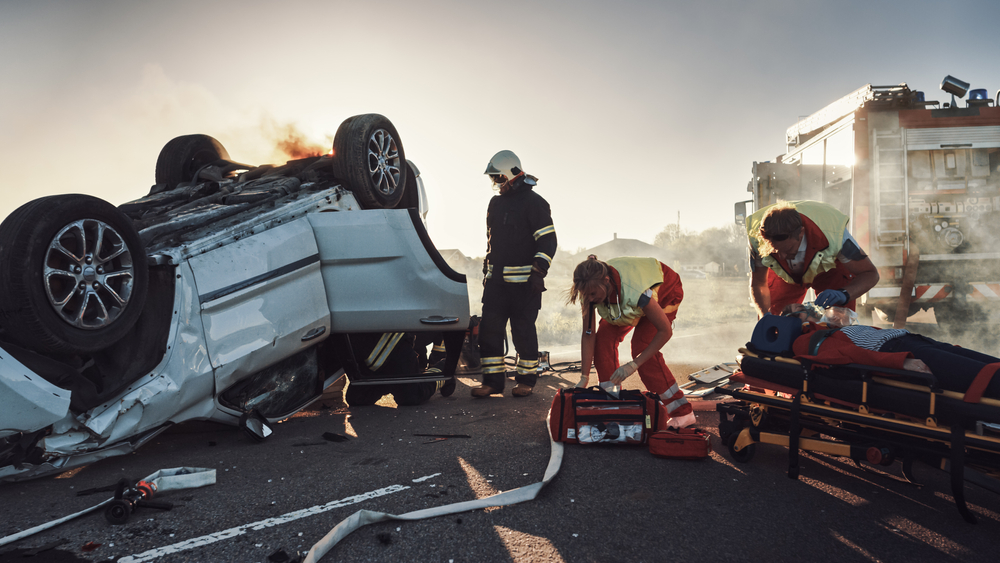
It is true that modern vehicles are stronger and safer than vehicles of years gone by but the flip side to this is that when these vehicles are involved in severe collisions it is much more difficult to release any trapped casualties within the vehicle due to the strength of modern materials such as high strength steels etc. Many of you will have years of vehicle rescue experience and have witnessed numerous first-hand incidents where the only way to release occupants is with the use of specialist hydraulic rescue equipment.
Rescue First Responders
I would like you to consider the following question. Should other emergency services and non-emergency organisations be trained in vehicle rescue so that the first to arrive on scene can perform rapid release or begin release operations?
I know that the above question may seem alien to many but consider that medical response worldwide tends to be a mix of varying level of expertise ranging from trauma consultants in helicopters to voluntary responders with limited trauma experience in their own vehicles but they all have one thing in common – they are trying to save lives. Therefore, why don’t we at least consider the possibility of having ‘Rescue first responders’ who may be able to provide initial stabilisation of a scene, casualties and begin rescue operations until a full response arrives and the rescue is then transferred to them?
In many situations in the UK the police or medical services are on scene first before the fire service that then assess the situation and then mobilise the fire service leading to delays in rescue activities. If they had even a limited capability and basic awareness, they could carry out a rapid release of a severely injured vehicle occupant or begin rescue operations in readiness for a full rescue attendance when it arrives. In fact, there are already many countries who have adopted this approach.
The fire services are often the last on scene of vehicle rescue missions
Another example one which I have experienced personally is being caught in traffic on the ‘Smart’ motorway system with all running lanes unable to get to the incident because there is no hard shoulder and you are faced with 4 lanes of solid traffic build up. Some of you will have experienced this I’m sure.
So, in this instance consider that often in these situations the Highways agency (UK) are very often first on scene and could carry out a life saving rescue with basic battery powered rescue tools, PPE and casualty protection. The technology is now out there to achieve this, the only thing that needs to change is the understanding of what now can be achieved and a willingness to embrace change to save lives.
Ask yourself this question – does the injured person care which organisation rescues them as long as the rescuer is making their situation better for them and they are receiving good quality care and support?
Why hasn’t this approach been taken before?
For many years it was only possible to have a sufficient rescue capability if you had a large hydraulic generator, hydraulic hoses, and large heavy rescue tools. This meant that it was not realistically possible to provide a portable rescue solution.
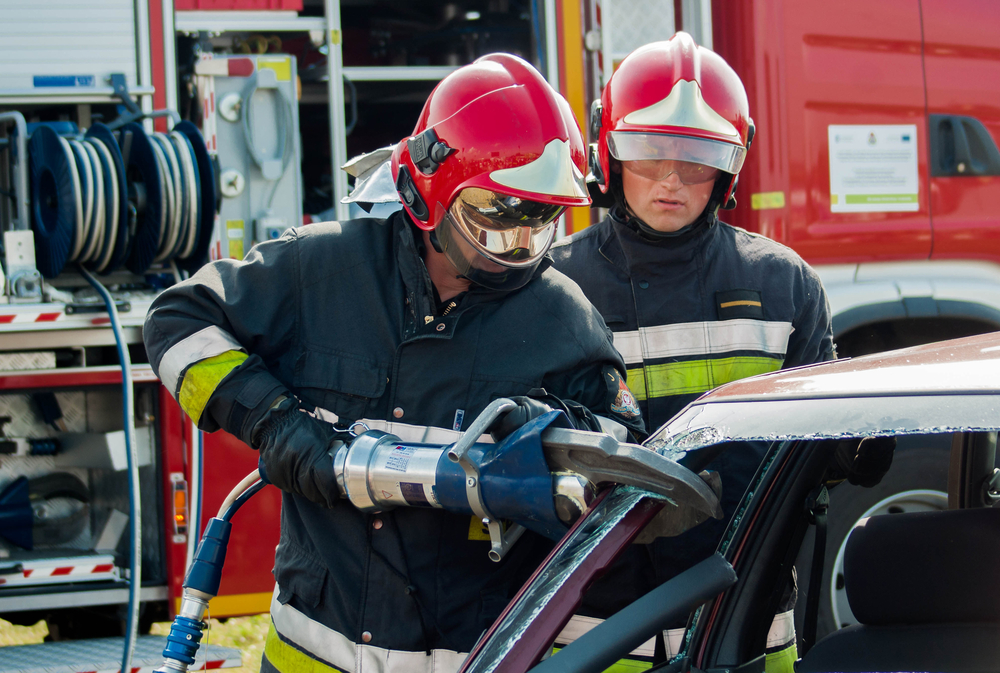
However, advancements in hydraulic tool design and the advances in battery technology now mean that it is possible to produce tools capable of in excess of 30 tons of cutting and spreading forces that can now be combined into smaller and lighter tools without theneed for generators or hoses. As a result, it is now possible to have a state-of-the-art rescue capability in any vehicle which will allow an immediate rescue intervention on the scene of any accident or incident.
There is now a wide range of small powerful rescue tools which will permit rescue operations and greatly increase survivability rates by allowing rapid extrication of seriously injured casualties whatever your location.
These tools and associated training will also be particularly useful to the following sectors:
Law enforcement agencies
Medical response organisations
Security, Close protection and military organisations
Remote medical teams
Motorsports organisations
International media teams
Emergency Responders worldwide
Mining, Oil and Gas sectors
Any organisations working in remote locations
This list is not exhaustive and in relation to using these tools it is vitally important that they are used in the correct manner and that personnel are familiar with the wide multitude of techniques employed during rescue operations. Failure to do so could result in damage to the tools or even worse – Injury to the users or occupants!
Therefore at IRRTC as well as our standard rescue courses for the Fire and Rescue service ranging from basic hydraulic safety up to Road Traffic collision instructors and Heavy vehicle rescue we have developed two ‘specialist rescue courses’ – a ‘2-day introduction to rescue’ and a ‘5-day full rescue course’ which are now accredited through Skills for Justice (SFJ) in order to ensure that any organisation who wishes to adopt this capability is effectively trained to use this equipment safely. These courses have been developed for rescue with limited personnel and equipment in mind.
In addition to these courses we are also aware of the very limited capabilities nationally to carry out effective rescue from railway incidents so we are now developing a passenger rail rescue course with a full size rail derailment scenario and the ability to carry out physical internal and external space creation, hot cutting, rope access and egress, confined space as well as scene safety and rescuer safety. This will be the first training site of its kind in the UK specifically developed to prepare responders for major rail derailment and rescue operations.
Medical vs Physical rescue
The way to view rescue provision is to consider this; it has an equal weighting in relation to the problem. This means that ideally the methodology is fifty percent technical/physical rescue and fifty percent medical rescue. These two ideally work harmoniously with each other, to simply save life in the context of a vehicle accident. It must be borne in mind however, even with the odds stacked against you having a technical rescue capability and a medical capability is not to be underestimated.
Our methodology is borne out of military experience, humanitarian experience, professional rescue experience and exposure gained from operational functionality over a prolonged period. This methodology works, it gets results it can make a difference meaning it can save lives anywhere in the world.
It is certainly clear to us that when it comes to trauma field care then the military are amongst the world leaders and when it comes to vehicle rescue then Fire and Rescue services are the experts. So, therefore we have brought together the best and most experienced instructors in both fields to help develop packages and educate others to help preserve life.
In order to ensure the very best trauma care qualification is delivered IRRTC are delivering the Rescue Trauma and Casualty Care qualification (RTACC) to provide a 3 day high intensity pre hospital care course preparing learners for real world traumatic injuries with immersive and realistic scenarios using live casualties and simulated wounds.
We hope that you have found this article thought provoking and if you would like to know more please visit our website at – “IRRTCrescue.com” to find all our full contact details and further information of instructional staff , training venues and services available.
Ultimately, we just want to help save lives globally. “Drive Carefully.”
Global survival and safety solutions leader, Survitec, announced today that it has completed a £27.5 million Super Senior Revolving Capital Facility (RCF) with Santander UK. This new facility is in addition to the recently finalised £270m refinancing announced by the company in April.
Both agreements support Survitec’s growth plans for its survival technology products and services.
The new RCF is complemented by a foreign exchange facility, which is also provided by Santander UK. Santander UK is one of the UK’s leading retail and commercial banks and is a wholly owned subsidiary of the major global bank Banco Santander.
Ray Leclercq, Survitec’s Chief Financial Officer said: “This transaction is a demonstration of confidence by one of the UK’s leading banks in Survitec’s business, our growth plans and our ability to execute those plans. This complements other key 2021 Survitec milestones, including completion of a £270m refinancing and the acquisition of Hansen Protection.”
In May 2021, Survitec announced the acquisition of Hansen Protection, a leading European provider of protective wear for the energy, defence and agriculture sectors.
“Adding Hansen Protection’s highly regarded products to Survitec’s portfolio is consistent with our goal to be a single global partner for maritime and defence customers across the globe,” continued Mr. Leclercq. Commenting on the new RCF transaction, Chris Thomas, Director, Structured Finance, Santander UK said: “Survitec is a global leader in the survival and safety solutions markets. We are delighted to provide funding to support the next important phase of its growth strategy.”
The number of people who have died from exposure to Covid at work is being “massively under-reported” by employers, according to a new TUC report.
According to the report there is a huge discrepancy between Covid work-related deaths reported by employers and data from the Office for National Statistics (ONS) and Public Health England.
Between April 2020 and April 2021 the ONS reported that 15,263 people of working age died from Covid, but reports filed by employers found that just 387 (2.5 per cent) of these deaths came from workers contracting Covid at work.
The union body says this under-reporting has badly undermined health and safety regulation enforcement during the pandemic with employers less likely to face action from regulators for putting staff at risk.
Under-reporting in at-risk sectors
The TUC’s report shows that in sectors with high numbers of deaths during the pandemic – like food production and transport – only a small fraction of deaths have been reported as work-related by employers. Figures from the ONS show that between March 2020 and December 2020 more than 600 people working in the transport sector died.
But according to reports filed by employers (over the longer period of April 2020 to April 2021) just 10 deaths in the transport sector were work-related. And figures from the ONS show that 63 food production workers died between March 2020 and December 2020.
But according to data supplied by employers (over the longer period of April 2020 to April 2021) just three of these deaths were the result of work. The TUC believes the true number of work-related deaths in these and other sectors are much higher, especially considering the high number of breaches of safety protocols we have seen during the pandemic and the high numbers of outbreaks.
Reporting system “letting bad bosses off the hook”
Employers are required by law to report deaths, injuries and illnesses that take place at work or in connection with work.
This is done through a mechanism called RIDDOR (The Reporting of Injuries, Diseases and Dangerous Occurrences Regulations 2013) which logs work-related deaths, illnesses and injuries for the Health and Safety Executive (HSE).
But under the current reporting system employers are given “free rein” to decide whether a Covid-19 diagnosis is the result of occupational exposure or from exposure outside of work premises.
The TUC says this loophole has led to employers not reporting the true scale of Covid work-related deaths and infections to the HSE, despite this information being vital to containing the spread of the virus.
Enforcement crisis
The TUC says that for the HSE to do its job effectively it must possess an accurate and up-to-date picture of where and when work-related deaths and infections are taking place.
But during the pandemic it has only been provided with very partial information from employers.
This has prevented the HSE from carrying out potentially urgent inspections and ensuring employers take the necessary action to keep workers and the public safe, says the report.
TUC analysis shows that just 1 in 218 workplaces has been inspected by the HSE (between March 2020 and April 2021) and not one single employer has been prosecuted for putting staff at risk.
The union body says this “crisis of regulation and enforcement” has allowed bad bosses to get away with flagrant labour rights abuses – adding that the pandemic has highlighted Britain’s enforcement system’s long-standing deficiencies.
New approach needed to health and safety
As well as calling for improvements in the way work-related delated deaths and infections are reported, the union body says government must reverse cuts to the HSE of the past decade, which it says left the country “under-prepared and vulnerable” to the pandemic.
The last ten years has seen real term cuts of 50 per cent to the HSE budget, on top of local authority budgets being slashed.
There has also been a dramatic decline in inspections. There were 27 per cent fewer HSE inspections carried out in the UK in 2019 than 2011, amounting to a fall of over 5,700 a year.
TUC General Secretary Frances O’Grady said: “Everybody deserves to be safe at work. But this pandemic has exposed a crisis in health and safety regulation and enforcement. Employers have massively under-reported Covid work-related deaths and infections.
“This has made it much harder for regulators to track where outbreaks are happening and allowed bad bosses to get away with flagrant labour rights abuses. It’s staggering that not a single employer has been prosecuted for putting workers at risk of contracting Covid-19.
“The government must fix the deficiencies in how workplace deaths, illnesses and injuries are reported. The current system is letting bosses off the hook. And ministers must fund enforcement bodies properly so they can recruit and train qualified workplace inspectors, inspect more workplaces, and prosecute companies who don’t keep their workers safe.”