Warning issued as electric vehicles catch fire following Hurricane Ian

Following the destruction caused by Hurricane Ian, officials have warned of that electric vehicles that have been damaged by the storm may now pose a fire risk as a result of being submerged in salt water.

Firefighters in Naples have responded to at least six fires involving EVs that had been damaged in the storm, according to the Florida Phoenix.

Experts have said that vehicles that may have been submerged in saltwater for extended periods of time are of particular concern.

“Electric vehicles that have been submerged in water, especially saltwater, have a potential risk of experiencing a high-voltage electrical battery fire,” said Victoria Hutchison, a project manager at the Fire Protection Research Foundation, the research affiliate of NFPA.

“First responders should be prepared to respond to a potential fire and should handle EVs that may have been submerged with greater caution.” 

Hutchison explained that saltwater can accelerate corrosion, meaning that following a saltwater storm surge scenario, the salt deposits that can remain on the EV batteries after the water has receded and can cause rapid corrosion and increase the risk of thermal runaway.

“Furthermore, there’s no set period in which this potential thermal reaction will occur—it can be hours, days, or even weeks later,” she warned

In a statement sent to Florida State Fire Marshal Jimmy Patronis, the National Transportation Safety Board (NTSB) said in that when EVs batteries are submerged in saltwater, specifically, “salt bridges can form within the battery pack and provide a path for short-circuit and self-heating.”

In a Facebook post, the North Collier Fire Control and Rescue District Administration advised EV owners whose vehicles may have been damaged during Hurricane Ian to tow the affected vehicle from their home using towing operator that knows how to safely and properly tow EV vehicles.

NFCC launches Stay Fire Safe campaign

As the cost of living crisis worsens across the UK, the National Fire Chiefs Council (NFCC) is launching the new national campaign ‘Stay Fire Safe‘ amid warnings there could be a sharp increase in accidental fires in the home.

The NFCC said it is concerned that the UK could see an increase in fire-related serious injuries – and potentially fatalities – as people try to find alternative ways to stay warm, light their homes and reduce energy as bills soar.

Th new campaign – supported by UK fire and rescue services – will provide vital information to help keep communities safe.

Accidental fires in the home caused by candles in England, year ending March 2022 totalled 940, the highest recorded in more than 10 years. Around a third of these fires resulted in death or injury.

The NFCC expressed concerns that these figures could rise as members of the public look at ways to deal with rising costs as inflation rates increase.

The campaign also shares advice on heating appliances, carbon monoxide and smoke detectors, candles and electrical safety. A key area of the campaign is signposting to where additional help could be available.

Rick Hylton, NFCC’s Home Safety Chair commented: “We know there are going to be face additional hardships as we move into the colder months and we want to ensure advice is easily available. It is likely more people than ever before will need essential prevention advice as energy bills rise.

“The National Fire Chiefs Council has real concerns we could see an increase in fires which could easily lead to serious injuries or worse.

“It is entirely possible individuals and families who would never consider themselves as vulnerable in the home could move into that bracket, as they make changes at home – increasing their risk of fire.

“We absolutely acknowledge that many may be doing things differently as they face difficult decisions as the weather changes. We hope our new campaign will help to highlight the dangers, offer simple solutions and help keep loved ones safer in their homes.”

The NFCC is also calling on people to carry out an online home safety fire check for themselves and their loved ones.

This toolkit, which can be found here, provides vital fire safety advice which are personalised. And for those who are at a higher risk, local fire and rescue services can conduct home visits to provide additional help and support.

The NFCC said that tenants should also ensure their landlords – or housing providers – have installed smoke and carbon monoxide detectors, which is a legal obligation with further changes are coming into force at the start of October in parts of the UK.

Exclusive: Stopping electrical fires before they start

Matthew McKaig, Director of Communications at Thermarestor, talks about the electrical overheating detection system that is preventing ignition.

Anything that uses electricity as a source of supply has the potential to cause a fire. In the UK alone there are approximately 25,000 fires of an electrical origin each year. Unfortunately, the problem is not just confirmed to this country; in many countries around the world electricity is the most significant factor in terms of the cause of fires. In electrical fires the source of ignition – the thing that actually causes a fire – is excessive heat.

Thermarestor was created because there was not a low cost and accessible product on the market which could alert a third party to excessive, pre-ignition heat in electrical locations. As a pre-ignition solution to the problem, it represents a step change in fire safety. The vast majority of fire safety measures are post-ignition and seek to contain the effects of a fire. Thermarestor prevents such fires from happening in the first place.

The major cause of fires involving fixed wire installations is localised resistive heating – loose, poorly made and oxidized electrical connections generates excessive heat, often confined to a relatively small area. If the heating process continues unnoticed over a period of time, ‘thermal runaway’ can occur, whereby the heat generated cannot be dissipated, resulting in temperatures exceeding 1300˚C, hot enough to ignite any adjacent combustible materials. Prolonged electrical overload can have a similar effect, especially in relation to electrical intakes.

Unfortunately, existing circuit devices such as MCBs and RCDs offer no protection, as they are unable to detect heat generated at the points of connection. Similarly, regularly inspecting and testing the electrical installation (an EICR in the UK) does not necessarily provide protection, because it is primarily concerned with determining if the installation is electrically safe for continued use, rather than focusing upon the risk of an electrical fire. Given the recommended interval between inspections – and the fact that only a sample of the connected accessories, such as sockets, are routinely inspected – a resistive heating fault can easily develop unnoticed.

Identifying hotspots

Thermal imaging using infrared cameras to detect ‘hotspots’ is another means of assessing the health of an electrical installation. However, the usefulness of such a survey is dependent upon all electrical loads being present at the time of inspection, as the survey only records a snapshot at that moment in time when the camera passes over the connection point. As an example, many older properties rely upon ‘off-peak’ electric heating and this is perhaps their biggest electrical load; unless the thermal survey is undertaken at night during the winter months this load will not be present.

The advantage Thermarestor has over thermal scanning is that it is present 24/7 and has the added benefit of being able to notify someone the instant that excessive heat is present. This means that a potential emergency situation is avoided – becoming a maintenance issue instead; the fault causing the overheating can be investigated and rectified.

Pre-ignition warning

Thermarestor provides continuous monitoring and protection of electrical components and accessories in a variety of environments. It actively prevents electrical fires from happening. It is a heat detection system that can be installed to permanently monitor the temperature of electrical connections and components. In the event that abnormal temperatures are detected, it can be configured to instantly notify occupants, and/or make a power disconnection.

The technology protects installations by sensing heat from high resistance connections and overload. It is fundamentally a small electro-mechanical switch which, on activation, closes a circuit – which means that it can send an alert to a third party, and/or disconnect the power.

As a fire prevention system, Thermarestor provides protection against the most common cause of electrical fires in low voltage electrical installations – localised resistive heating, caused by loose and poor connections. It can be installed to both new and existing installations, allowing thermal monitoring of incoming supplies, distribution boards, switchgear and accessories, such as socket outlets.

Connection to existing fire alarm and Building Management Systems is simple and straightforward and provides a highly effective means of notifying occupants of any overheat conditions. We also offer a ‘standalone’ notification system, by means of our ‘MetaCom’ communicator, which sends text messages and e-mail alerts, immediately identifying the location of the fault.

This allows such incidents to be investigated as a maintenance issue, thus mitigating the risk of a fire developing and avoiding the need for an emergency response, by providing permanently installed protection for people and property.

Early detection

Thermarestor can be a game changer because it facilitates the sending of an alert to a third party prior to ignition, whereas most detection systems are post ignition. That is not to say that post ignition measures lack credibility, not in the slightest, but if there is an opportunity to turn a potential fire into a maintenance issue, then – and on balance – this must be a good path to tread. Thermarestor thereby builds further fire safety into the whole dynamic.

The device is also important because it could provide the ‘missing link’ in the IOT dynamic. Whilst Thermarestor’s role within the piece is small, its significance is arguably substantive, as it helps enable the prevention of fires, sending early warning of developing problems to nominated individuals prior to ignition – whereas the current emphasis is on post ignition measures when, some might argue, it’s simply too late.

Looking ahead

To date, Thermarestor’s pre-ignition detection solution has been installed at a number of locations, including Scotney Castle, Salisbury Cathedral, Newbury Race Course Apartments, at a solar farm in Wymeswold, Hinckley Point C Nuclear Data Centre, Forum des Halles and Nestle HQ in Paris. There are also pilot projects taking place at McDonald’s in Switzerland, Germany, England and Chile.  

Looking ahead we have several plans and projects in the works. One is to continue with the installation of ‘standard’ Thermarestor applications, particularly electrical Distribution Boards in all types of building, especially heritage structures. Social Housing estates might also find the device fulfils an important role in fire prevention. There are also plans for a pilot at a large PV Solar farm in Brazil whilst researching similar applications within the same industry.

In addition, we will continue to scope other applications for the device, including within the Lithium-Ion battery industry; with potential for domestic EVs particularly, also with battery charge/storage boxes. We will remain open to further applications for Thermarestor, particularly with white goods, also perhaps with the detection of excessive heat due to friction.

Finally, a certain sector of the insurance industry has shown some interest in the device, as it is thought that this innovation may well be able to reduce the incidence of fire. That it can do this prior to ignition is likely to be an attractive feature from both the insured’s and insurer’s perspectives. This must be an area which should also be investigated more thoroughly.

In terms of emphasis, the Fire Safety industry can sometimes appear to concentrate more on detecting and dealing with a fire than with its prevention. There are complicated reasons for this, but Thermarestor should help contribute towards righting this balance, so that more attention is given to trying to ensure that the fire does not start in the first place – so less smoke/fire damage to property, little interruption in business continuity, lower insurance premiums also a potentially lower level of harm to human life.
National blueprint for safety launched by Fire Sector Federation

The Fire Sector Federation has launched an initiative calling for wider discussion to create a national fire safety strategy, which goes beyond current legislative proposals, to comprehensively address measures to mitigate fire risk in the UK.

The Federation has published a white paper, Developing a National Strategy for Fire Safety, setting out a possible pathway for the fire sector and government to work together to create a safer society from fire.

The white paper seeks government support to ensure that fire remains a priority, to integrate policy across departments and devolved administrations, and to make full use of the technical expertise within the specialised fire sector to achieve success.

The Federation has suggested three areas for immediate priority: raising competency; mitigating fire risk in modular and other buildings using mass timber; together with partnering the construction sector to raise awareness of fire risk from innovative new products and methodologies.

The proposals were developed by a new Fire Sector Federation Fire Safety Strategy Board, chaired by the Federation’s Policy and Strategy Lead, Jonathan O’Neill, with leadership expertise drawn  from across a diverse range of sectors including, fire safety, fire and rescue, construction, insurance and building control.

Fire Sector Federation Chair, John Spencer, said: “While we have seen significant new legislation introduced in the wake of the Grenfell Tower tragedy, it is incumbent upon everyone in the built environment to avoid further complacency and address problems we know continue to exist and may evolve in future. Industry is well placed to understand these problems, and just as importantly, some of their solutions.

“Engaging positively and supportively with government, we believe a National Fire Strategy is the most effective way to achieve the shared aim of a fire safe society. Our desire is to have a road map to deliver an effective and resilient fire safety agenda aligned within a secure and sustainable environment and that requires collective actions in both industry and government.”

Jonathan O’Neill, Chair of the Federation Fire Safety Strategy Board, said: “The Board’s vision is to create a single voice to support the management of fire risk and achieve a safer and sustainable solution with a clear, integrated pathway to success.  As an industry, we can use our unrivalled knowledge and experience to define the route to better fire safety. 

“We need to break the cycle of stable door legislation following major tragedies and replace it with a proactive approach that secures for government and the sector a holistic solution to prevent and protect society and the economy from foreseen losses”.

“A new strategy will address the current gaps in fire safety and in doing so will enable the industry to help government set appropriate policy priorities for success. The white paper highlights the need for ‘fire’ to be a priority for government with a better understanding of the complex factors involved and for better integration of policy across ministerial portfolios. The fire sector promotes professional understanding in a responsible industry and wants a vibrant and successful UK. Awaiting another tragedy as the precursor to moving fire safety up the policy agenda would only represent  failure and suffering.”

The current membership of the Federation Fire Safety Strategy Board comprises a wide range of recognised leaders and experts in fire safety from the following organisations:

  • Fire Sector Federation
  • Association for Specialist Fire Protection
  • Fire Industry Association
  • AXA Insurance
  • Local Authority Building Control
  • Construction Products Association Marketing Group
  • Institution of Fire Engineers
  • National Fire Chiefs Council
  • Construction Industry Council
  • Royal Institution of Chartered Surveyors

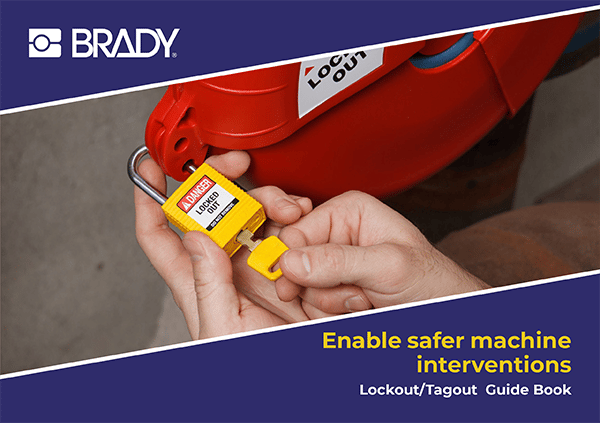
Smart ways to make machine interventions safer

Brady has unveiled a guide to increase workplace safety with a world-class Lockout/Tagout solution from a single supplier.

Lockout/Tagout is a safety procedure that temporarily isolates machinery from all energy sources, and that secures this de-energised state while machine interventions are ongoing. It enables safer machine interventions and helps avoid accidents caused by moving parts or premature machine energisation.

The main principle of Lockout/Tagout is “one person, one lock, one key”. Every padlock in a Lockout/Tagout programme has a unique key, which is kept by the person intervening on a machine. This effectively enables relevant employees to protect their own safety. Master and Grandmaster keys are possible, however their use is best restricted and usually part of strict procedures performed by Safety or Site managers.

An experienced, global partner

Brady Corporation is one of the largest suppliers of Lockout/Tagout solutions. It works with large and nimble companies to advance Go for Zero ambitions and compliance in workplace safety anywhere in the world.

Brody offers global experience back to our customers by harnessing all worldwide best practices and custom solutions in our Lockout/Tagout offer to help prevent any maintenance accident caused by machine energy or moving machine parts.

A complete Lockout/Tagout implementation from A to Z with Brady:

Best-in-class lockout procedures: No time to set up safe Lockout/Tagout procedures? Invite a Brady Safety Engineer to identify all machine energy isolation points and create illustrated, machine specific, world-wide best practice Lockout/Tagout procedures for your approval.

Optimal procedure management: The process of managing, creating, updating, reviewing, scaling and communicating visually instructive lockout procedures becomes a matter of clicks.

Block access to any energy control point: Temporarily block access to valves, buttons, fuses and any energy isolation point with our complete range of dedicated Lockout/Tagout devices.

Best safety padlocks in the world: Effectively secure the isolated state of your machines during maintenance with our unique SafeKey padlocks that offer 700% more lock and key options for elaborate, futureproof lockout programmes.

Reliably identify every lockout: Easily communicate about ongoing maintenance interventions with reliable Lockout/Tagout tags that can be delivered to, or created at your premises with our safety printers.

Practical lockouts: make Lockout/Tagout even more practical and efficient using our wide range of clever accessories.

Easily distribute lockout tools: Highlight the right solutions for specific lockouts, and encourage tool returns to the right location with our custom shadow boards.

Draw inspiration from Brady’s free guidebook “Enable safer machine interventions

Lockout/Tagout prevents workplace accidents by completely and temporarily isolating machinery from its energy sources. When implemented well, it stops machine movement and machine energisation while interventions are ongoing.

Use this guide for ideas on how to implement or strengthen your Lockout/Tagout programme, or contact Brady for answers to any questions you may have.

Cooking appliances responsible for 45% of accidental dwelling fires

The Office for National Statistics has released its annual detailed analysis of fires attended by fire and rescue services, England, April 2021 to March 2022.

Cooking appliances were responsible for 45 per cent of accidental dwelling fires, but only 11 per cent of fire-related fatalities in the year ending March 2022.

Smoking materials showed the reverse pattern, accounting for only seven per cent of accidental dwelling fires, but resulting in 24 per cent of fire-related fatalities.

Almost half (49%) of all fires occurred where the time of call was between 16:00 and 22:00, but the number of fire-related fatalities was roughly equal between day and night hours.

The findings also revealed that by combining IRS and English Housing Survey data, Home Office statisticians have calculated that you are around nine times more likely to die in a fire if you do not have a working smoke alarm in your home.

Fire-related fatality rate per million is higher for men and older people. For men the fatality rate was 5.9 per million population, compared to 3.6 per million population for women. For men aged 65 to 79 the fatality rate was 13.3 per million population while the equivalent rate in the same age group for women was 7.8 per million. For those aged 80 and over, the rate for men was 20.2 per million and for women was 19.3 per million.

The full breakdown can be found here.

Energy operators warn against meter tampering over fire risk

Energy operators have warned of the risks associated with meter tampering and general electrical equipment interference with new figures showing an almost 400% increase in reported incidents between 2017 and 2021, a trend officials predict will continue to rise in 2022. 

It was shown that tampering with meters and cutting into wires or pipes to interfere with energy supplies has caused house fires, gas leaks and electrocutions and that electricity meters in UK premises are connected to a voltage that can be fatal if not installed by a qualified professional and gas meters ensure there’s a constant and safe flow of gas into a property.  

Investigators recently identified illegal meter tampering as the cause of a tragic fire that gutted a property in Glasgow and led to a woman’s death. Police discovered the fire was started by a spark from a prepayment meter that had been illegally bypassed. 

The dramatic rise in tampering and electrical equipment interference is causing increased risk of incidents for householders as operators are seeing DIY attempts at meter tampering that frequently lead to live electricity conductors being exposed or unsealed holes in gas supply pipes. 

David Spillett, Head of Safety, Health and Environment at Energy Networks Association (ENA), which represents the UK’s electricity and gas network operators, had the following safety warning:  “Tampering with your meter can create a ticking time bomb in your home.   

“The UK’s electrical and gas engineers are highly trained professionals who ensure your home’s power system is entirely safe –  tampering with their work risks serious harm to yourself, neighbours and your loved ones and damage to your property that will not be covered by insurance –  it’s just not worth the risk. 

“If you are struggling to pay your energy bill, please speak to your energy supplier or contact Citizen’s Advice for free and impartial advice.” 
 

Peter Smith,  Director of Policy, National Energy Action said: “National Energy Action campaigns to ensure everyone in the UK can live in a warm and safe home. Given the recent relentless increases in energy bills, we know 6.7 million UK households are now in fuel poverty. The crisis is fuelling many types of unsafe and dangerous coping strategies in the home as millions try and adjust to record high bills.

“This worrying research indicates tampering with energy meters is now on the rise and while the motives, scale and the impact of related injuries or incidents is still largely unknown, it’s right to warn people of the risks.

“Meter tampering can be exceptionally dangerous and in extreme incidents can be life threatening – not only to the perpetrators but also nearby neighbours.”

President Biden addresses summit on Fire Prevention and Control

President Joe Biden addressed attendees of the US Fire Administrator’s Summit on fire Prevention and Control, held during the 100th annual Fire Prevention Week.

During his speech, President Biden paid tribute to firefighters who lost their lives: “Over the years, I’ve spoken to — at too many — too many funerals for fallen firefighters.  From the national events like the memorial of Arizona 19 Hotshots in 2013, to the individuals in my home state that unfortunately are too numerous to name.

“And each one — each one of you is a hero to the community.  You’ve touched people’s lives.  So I’d — I’d like to take a moment at the top here to honour the lives we’ve lost of those in the past two years, including from COVID — 135 on-duty firefighters in 2021, another 77 to date in 20- — 2022.”

He noted the extreme heat and prolonged drought have turned wildfire season into wildfire years: “And local firefighters are being called in more to respond to the fires in the wildland urban interface where we’re moving out into the forest areas to develop and it becomes local and federal.

“So I want you to know that my administration is doing everything we can to make sure you have the resources you need to do your job as safely and effectively and efficiently as possible.”

He also made reference to cancer prevention: “Cancer is a leading killer of firefighters.  Toxic substances you’ve been exposed to as part of your job are almost certainly — certainly connected to those cancer diagnoses.  And we’re doing — we’re going to do something about it.” He said that the Government has created a special claims unit at the Department of Labor to ensure that they are processing federal firefighters’ cancer claims quickly. 

He finished by stating that the administration was doing everything it can to ease the burden on our firefighters by preventing fires: “This is the 100th — hard to believe — it’s the 100th anniversary of Fire Prevention Week.  And the landmark legislation I’ve signed into law includes historic investments to reduce the risk of fire.

“The Bipar- — the Bipartisan Infrastructure Law includes significant forest management, increases community resilience and — to wildfires, and harnesses new technologies to keep communities safe.  It’s also repairing vital infrastructure and — firefighters and other first responders rely on to quickly get to the — to those — those in need.”

Home fire deaths hit 14 year high in the US across 2021

The latest Fire Loss in the US report released by the National Fire Protection Association (NFPA) has revealed that 2021 saw the largest number of home fire deaths since 2007, reflecting a 14-year high.

According to the report, people are more likely to die in a reported home fire today than they were in 1980. While the number of US home fires has continued to decline over time, the home fire death rate has stagnated in recent years, with annual spikes like the most recent one seen in 2021. 

According to NFPA data, home is where people are at greatest risk of fire, with three-quarters (75 percent) of all US fire deaths occurring in homes.

Lorraine Carli, vice president of the Outreach and Advocacy division at NFPA, commented: “While we’ve made great strides in reducing the public’s risk to fire on many fronts, the latest number of home fire deaths reinforces that today’s home fires present real challenges.

“Educating the public about the increased speed at which today’s home fires grow, along with the importance of knowing how to escape quickly and safely, is critical to reducing that risk.”

This week the NFPA celebrates the 100th anniversary of Fire Prevention Week  with the theme, “Fire won’t wait. Plan your escape.” which reinforces the potentially life-saving importance of home escape planning and practice.

Carli continued: “To many, the concepts of home escape planning and practice may sound so simple that their value is underestimated, but the reality is that these advance preparations can truly mean the difference between life and death in a home fire – now more than ever.

“Ask anyone who’s experienced a home fire and they will tell you how dark, scary, and disorienting a home fire can become within moments. Having a practiced plan with all members of the household builds the muscle memory needed to get out as quickly and safely as possible.”

The following are key messages behind this year’s Fire Prevention Week theme:

  • Make sure your home escape plan meets the needs of all your family members, including those with sensory or physical disabilities.
  • Smoke alarms should be installed inside every sleeping room, outside each separate sleeping area, and on every level of your home. Smoke alarms should be interconnected so when one sounds, they all sound.
  • Know at least two ways out of every room, if possible. Make sure all doors and windows open easily.
  • Have an outside meeting place a safe distance from your home where everyone should meet.
  • Practice your home fire drill at least twice a year with everyone in the household, including guests. Practice at least once during the day and at night.

To learn more about Fire Prevention Week, visit www.firepreventionweek.org

Balcony fires up 46% across the UK in the past year

Aluminium decking and balcony manufacturer AliDeck has published its 2021-2022 Balcony Fires Report which recorded that the number of balcony fire in the UK has risen by 46% year on year.

Collating data from Fire Services across the UK using the Freedom of Information Act (FOIA), the data returned found that 310 Balcony Fires occurred between 1 August 2021 and 31 July 2022, up from 213 the year prior for a 46% year-on-year increase.

According to the report, of the 310 fires on balconies, 182 were related to smoking, marking for 59% of the total.

London accounted for more than half (163) fires on balconies, an increase on the previous year’s tally of 150. Two-thirds of these balcony fires in the capital were caused by smoking, with arson, candles, and electrical faults making up the bulk of the rest.

Richard Izzard, managing director at AliDeck, said that with over three quarters (76%) of the recorded fires caused by human action, an urgent intervention is required.

Izzard said: “We saw in our previous Balcony Fires Reports a similar story, that most fires on balconies are completely avoidable. A carelessly discarded cigarette can easily ignite flammable materials, and there have been fires where aimlessly flicked cigarette butts have landed onto balconies below made of combustible materials and caused major fires. This has to stop.”

He noted that the data in this report is an indication that property managers and the housing sector should take firm action to prevent their residents from smoking on their balconies, as doing so could prevent hundreds of fires, many of which would otherwise threaten life and cost tens of thousands of pounds to rectify.

Izzard continued: “Balcony fires are a real danger to a building and residents must be made more aware of this.

“If it’s not possible, though, to remove the human element to prevent these fires, the surest route to minimise the risk is to fully remediate balconies and replace any combustible materials, such as timber decking, with non-combustible alternatives.”