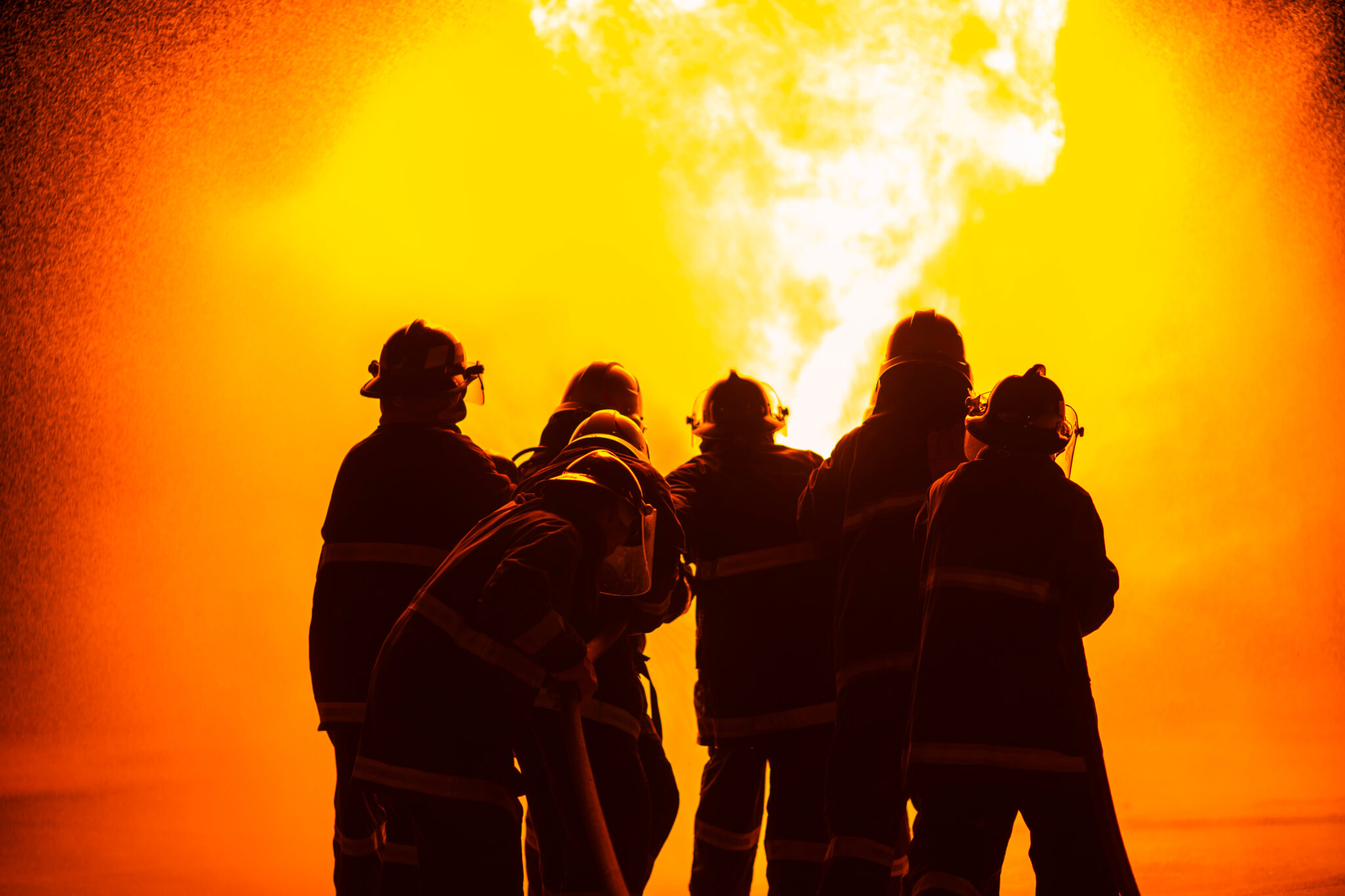
The general secretary of the Fire Brigades Union Matt Wrack has told a cross-party committee of MPs that “governments for decades” have been responsible for reducing emphasis on fire safety, in a session on post-Grenfell building rule changes yesterday.
He said “I lived through a decade where the endless mantra, and I have to say it here, from… government ministers, of both parties… had been that fire is a declining risk and therefore we can afford to reduce our emphasis on fire safety. That was very clearly a theme we heard for more than a decade”.
He concluded that “there has been a deep, deep complacency about fire safety that has emerged… and Grenfell hopefully is a major turning point on that”.
He went on to lay out the impact that weak fire safety standards can have, saying that “We have had incidents where our own members have died and it has emerged that fire risk assessor for the building concerned had no qualifications, and so I think that’s quite shocking and that’s a sign of a deregulated sector”.
During the session Wrack highlighted falls in fire safety inspector numbers as a key part of the “financial pressure on fire and rescue services”. He said that “I do not see how you can cut in the London Fire Brigade, for example, 25% of your fire safety inspectors and not think that that will have implications for public safety. Something like 20% to 25% of fire safety inspecting officers have gone over the past 11 years, and something like 40% over the past 20 years”.
Wrack was appearing in front of the committee of MPs tasked with scrutinising the Building Safety Bill, the most significant piece of post-Grenfell legislation to date.
Wrack criticised the bill for allowing the new Building Safety Regulator to potentially turn to the private sector for assistance if fire and rescue services were stretched. He said that, under the proposals, if a fire and rescue service “could not provide that assistance [to the Building Safety Regulator], the regulator could… go to the private sector, and we would object to the role of private sector provider within that. If we’ve got a problem with resources in the appropriate public service then those resources should be provided”.
He was asked by MPs whether height was the best measure of risk – the bill stipulates a higher level of regulation for buildings over 18 metres. Wrack said “We don’t agree with the 18 metre cut-off… If there is to be a height measure then a more logical one would be 11 metres”. External rescue is far riskier above 11m metres.
He also said that “we have questions about resources” in relation to the new Building Safety Regulator, which will sit in the Health and Safety Executive. He said that there were “concerns about the scale of reductions in Health and Safety Executive inspectors, reduced by something like a quarter”. He also highlighted “fire and rescue services being subject to unprecedented cuts in staffing numbers over the past decade, and that will raise questions about resources in their ability to cooperate with the requests of the regulator”. He concluded that “while we welcome the move towards regulation, that regulation has to be resourced adequately”.
Chemical company Briar Chemicals Ltd has been fined £1million after a man died in an explosion at its site in Sweet Briar Road, Norwich.
Chelmsford Magistrates Court heard how on the 27 July 2018, maintenance contractor, Rob Cranston, aged 46, was carrying out repair work on a mixing vessel during a planned period of shutdown maintenance. It is thought that his welding torch or grinder accidentally ignited flammable Toluene vapour inside the vessel, which should not have been present when the work commenced. Mr Cranston’s son Owen, aged 22, was working alongside his father when he was killed in the blast.
The HSE investigation found that a quantity of Toluene residue had been left inside the vessel after shutdown cleaning at the beginning of June 2018. Two damaged valves situated above the vessel in the Toluene supply pipe, were also found to be leaking. Operatives had been instructed to transfer a large quantity of Toluene from one storage tank to another via this pipe which allowed additional flammable liquid to leak into the vessel which was supposed to be empty and clean.
In a Victim Impact Statement read out in court, Mr Cranston’s widow, Claire, said:
“We married on 16 August 2003; he would have been 50 years old this year. He was so well-known and liked. I had his funeral at the Norwich Cathedral, there were over 750 people in attendance.
“This has obviously been horrendous for both our sons, particularly Owen having to deal with actually being there at the time. Our lives changed forever that day. We will never forget him and are only left wondering what the future would have held for us all together. We were still young enough to have had years of happiness ahead. He will miss seeing our sons’ lives develop and grandchildren in years to come.”
Briar Chemicals Ltd of Sweet Briar Road, Norwich, Norfolk failed to take all necessary measures to prevent the explosion and pleaded guilty to a breach of Regulation 5 of the COMAH Regulations 2015. The company was fined £1million and ordered to pay costs of £10,967.20.
Speaking after the hearing, HSE inspector Frances Bailey, who led the three-year investigation, commented:
“This was a complex and highly technical investigation, due to the chemical hazards on site and the number of underlying issues which combined to cause the explosion. HSE hope that this case helps to communicate important safety messages to wider industry so that other fires and explosions are prevented in future.
“Any company handling or storing flammables should consider the potential risk of fire and explosion and ensure they have robust procedures in place to minimise and control risk at all times, including during planned maintenance work.”
The National Volunteer Fire Council (NVFC) has been awarded a Fire Prevention and Safety (FP&S) grant by the Federal Emergency Management Agency (FEMA) to further its firefighter health and safety initiatives and reduce line-of-duty injuries and deaths.
FP&S grants are part of the Assistance to Firefighters Grant program and support projects that enhance the safety of the public and firefighters from fire and related hazards. This is the sixteenth FP&S grant the NVFC has been awarded. Thanks to support from these grants, the NVFC has been able to implement groundbreaking programs, including the Share the Load behavioral health support program and Heart-Healthy Firefighter Program, as well as release critical resources and training relating to cancer prevention, vehicle safety, culture change, injury prevention, and more.
With the new grant, the NVFC will be able to continue its work to mitigate the incidence of firefighter deaths and injuries through awareness, training, and resources. The project will build upon the success of the NVFC’s previous FP&S grant projects and focus on several key factors affecting firefighter health and safety, including cancer, behavioral health, and risks while responding to or on the incident scene. While many of the project components impact all firefighters and emergency services personnel, the NVFC will focus specifically on health and safety considerations for the nation’s volunteer responders.
Deliverables will include an awareness campaign, online and in-person training, and the development and distribution of resources. The grant also enables the NVFC to host its annual Training Summit, a two-day event that brings together firefighters and emergency responders from across the country to participate in health and safety training as well as promotes collaboration and information-sharing among attendees. Travel stipends will be offered to enable more responders to participate.
“The health and safety of our nation’s volunteer firefighters, EMS providers, and rescue workers are of the utmost importance to the NVFC,” said NVFC chair Steve Hirsch. “We thank FEMA for providing us this FP&S grant so that we can continue to do our important work to do everything we can to reduce injuries and deaths among those who serve. We look forward to building on the success of our previous campaigns and moving forward with new and exciting initiatives to provide responders with the knowledge and tools they need to protect themselves and their crew.”
Firefighters were called out yesterday to the scene of a huge fire that broke out at the interconnexion France-Angleterre electrical grid interconnector site in Ashford, England.
The fire caused a mass evacuation of staff and nearby residents while fire engines line up to tackle the blaze.
In a statement, Kent Fire and Rescue Service commented: “Kent Fire and Rescue Service remains at the scene of a fire at a National Grid site in Church Lane, Sellindge near Ashford. Ten fire engines, a height vehicle and a bulk water carrier are now in attendance. Progress is being made, however firefighters are expected to be on site for some hours to come.
There has been a fire at our IFA interconnector site in #Sellindge and emergency services are in attendance. The site has been evacuated and the safety of our staff, emergency teams and local residents is our highest priority. We will provide a further update in due course.
At the height of the incident, 12 fire engines plus other specialist vehicles were fighting the fire using compressed air foam to prevent the fire from spreading to other nearby buildings. So far there has been no confirmation as to what caused the fire, but the operator, RTE, have confirmed that the site is expected to be out of operation until at least mid October.
Mark Gamble, PPE Technologist at SATRA discusses the company’s role in ensuring the safety of PPE
According to the World Health Organization (WHO), there are an estimated 180,000 deaths every year caused by burns and many more individuals who suffer life changing injuries. Damage to people by burning occurs mainly in domestic settings and in places of employment. Importantly, most burn injuries are preventable. Satra Technology plays its part in the process of helping manufacturers and suppliers of Personal Protective Equipment (PPE) provide products that protect against contact against thermal risks.
SATRA’s role
SATRA Technology acts as an international services provider to those who wish to sell safety products into EU, British and other world markets. SATRA assists companies by supplying a wide range of testing and certification services, including the heat and flame testing of products that are used to protect the whole body. These products include, face and neck coverings, body clothing, gloves, footwear and headwear.
SATRA’s CEO, John Hooker, has stated previously that the company’s approach is to offer comprehensive “top-to-toe” testing services, especially as so many product suppliers offer PPE ranges that are intended to give comprehensive, all-body, protection. The provision of products that are designed to be used in conjunction with each other are often superior in fit. This is because they will have been designed for ergonomic efficiency as well as ensuring the protection of specific areas of the body.
The assessment of products and their fitness for use also describes the role of SATRA as a product certifier. SATRA Technology Europe Limited, based in Dublin, operates as a Notified Body for certifying products that require them to be CE marked for sale within the European Union. SATRA is also an ‘Approved Body’ (reference AB0321) that offers product certification against the requirements of the British UKCA marking regulations. SATRA’s technologists and certifiers are also engaged in the activities of International (ISO), European (CEN) and British (BSI) standard making committees and working groups, as well as developing and publishing SATRA guidelines and test methods.
Responders are faced with dangerous environments. Therefore, the PPE must be tested to improve safety
Heat and flame testing of clothing
There are many International (ISO), European (EN), and British (BS) standards in use whose respective scopes are intended to address the heat and flammability responses of materials and products. Amongst the standards that SATRA regularly uses to test the performance of clothing products and their component materials are: BS EN ISO 14116:2015 – ‘Limited flame spread materials, material assemblies and clothing’. BS EN ISO 11611:2015 – ‘Protective clothing for use in welding and allied processes’. BS EN ISO 11612:2015 – ‘Clothing to protect against heat and flame’. BS EN 469:2020 – ‘Performance requirements for protective clothing for firefighting activities’. BS EN ISO 15384:2020 – ‘Laboratory test methods and performance requirements for wildland firefighting clothing’.
Each of the above product standards reference test method standards that are used to determine a variety of specific properties of materials. For example, the tensile strength and tear resistance of materials are evaluated. If a material meets the minimum performance levels specified in a standard, this may indicate that a garment will remain durable during its time in use. Although it is difficult to predict the wear that any single garment may undergo, the durability of materials is also assessed by subjecting them, and finished garments, to repeated after-care treatments, such as domestic washing (ISO 6330), industrial washing (ISO 15797), and commercial dry cleaning (ISO 3175). SATRA has the facilities to carry out all of these tests.
Importantly, there is a test method common to each of the above clothing standards that provides two procedures for assessing the ignition responses of materials to a standard flame. The standard – BS EN ISO 15025:2016 – ‘Method of test for limited flame spread’ – permits a single layer of material, or composite layers of materials, used in a garment to be tested. The test flame can be applied to the surface or to the bottom-edge of a material. The latter test is primarily designed to determine the response of the hem of a garment to a flame. This test can be used to show if materials within a structure are susceptible to ignition.
The application of a test flame to different materials produces varied physical responses, the standard requires the recording of information about a response to a flame. If a material melts, forms a hole, or ignites, or if debris or flaming debris is observed this is recorded. If a material continues to burn after the removal of the igniting flame (afterflame) or if non-burning combustion (afterglow) is exhibited, these details are also recorded. Depending on how a material is intended to be used, certain flammability features are allowed whilst other are prohibited, as individual product standards require.
For example, a single layer of material that is susceptible to holing would not be used in a PPE garment that was next to the skin. Materials that support combustion for more than two seconds after the removal of an igniting flame are not used. Materials that exhibit afterglow more than two seconds after testing would be likely to suffer from re-ignition in a real-world situation and are therefore not used.
After-care testing
Flame testing may be carried out on material in a manufactured state or after it has been subjected to after-care treatments. After-care testing is undertaken after a minimum of five standardised cleaning cycles, as specified by a material manufacturer, or may be undertaken according to the claim of performance made for a product. If a material or garment has been treated with a flame retardant (FR) repeat cleaning is a way of demonstrating the durability of an FR application.
The evaluation of other properties such as contact, radiant, and convective heat of molten metal splash materials is also assessed after the application of after-care treatments. Washing in particular can cause physical changes in materials that may easily degrade protection against sources of heat.
Fibre loss from materials or fillings; material compaction (loss of loft), particularly of wadding materials; and the movement of materials with a garment structure, may mean that heat becomes more easily transmitted through a structure. If this is discovered in testing then remedial actions can be taken, such as the sourcing of different fillings or waddings, using different types of quilting, or employing different layers in a construction.
Determining that the performance characteristics of a heat and flame protective material is appropriate to a particular garment type is only one aspect of ensuring that a person is protected. All PPE clothing standards are based upon the evaluation of a finished product. This is because the safety of an individual is only achieved by having products whose design and construction also protects a wearer.
Heat and flame protective garments are designed to cover vulnerable parts of a body, and where required neck and sleeve openings are designed to ensure close fit around a body. For example, firefighting clothing is required to have close-fitting collars that prevent the ingress of burning materials into a garment. Similarly, garments used in welding activities are required not to have points in their construction that could trap hot or molten materials. Complying with all the minimum design requirements of a PPE standard is essential to achieving a SATRA test report that shows that a product is fit for the purpose for which it is intended.
Product limitations
When product certification or approval is sought, a SATRA product assessor will require reports that have been produced under the exacting requirements of those placed on an ISO 17025 accredited laboratory. The manufacturer or supplier of PPE needs to demonstrate that their product is ergonomically sound and that it has instructions for use that ensure it offers the best level of protection. A user also has to be made aware of any limitations.
The failure to protect a person has consequences for the user and employer, who may be obliged to involve outside agencies in a serious accident, and also lose the service of an employee. A PPE supplier may also find that they come under public scrutiny if it is made known that one of their products is implicated in a case of personal injury. It is therefore important to ensure that garments are tested and given appropriate oversight through a process of certification.
London’s Fire Commissioner has called for urgent change in the building industry as the number of blocks of flats in London with fire safety failings passes an unacceptable milestone of 1,000.
The latest London Fire Brigade figures show that 1,006 buildings in the capital have currently suspended the ‘stay put’ building design strategy, with an interim simultaneous evacuation strategy being put in place, as the buildings are not deemed safe enough for residents to stay inside in the event of a fire.
This could mean the buildings have a waking watch or a common alarm in place, with consideration also being given to evacuation management.
Of the buildings currently subject to a simultaneous evacuation strategy, 718 are due to issues with cladding – both ACM and other types of cladding – and the remainder have other fire safety defects. The majority of the buildings (818) are over 18m tall.
The figures show an increase of 39 buildings in August compared to July.
National guidance states waking watches should be temporary
The 1,006 buildings with fire safety failings are subject to simultaneous evacuation which may include a waking watch but not necessarily.
Waking watches are put in place by those responsible for fire safety in buildings. This is the ‘responsible person’, who will use a competent fire safety professional to advise on what interim measures are appropriate.
While the Brigade has a role in enforcing fire safety legislation, it does not make a decision on which interim measures are put in place in a building and the national guidance[1] is that any waking watches which are introduced should be a temporary measure and be replaced with a common alarm system as soon as possible, pending remediation.
London Fire Commissioner Andy Roe said: “We are extremely concerned that more than four years after the Grenfell Tower tragedy, the number of buildings being identified with fire safety issues is increasing.
“The scale of issues being uncovered in buildings across the UK is worrying and there are much wider issues than just dangerous cladding.
“There is a far higher number of high-risk buildings in London than anywhere else in the country and it’s clear that there has not yet been a complete culture change when it comes to fire safety in residential buildings.
“Unacceptable for residents to be burdened with knowledge their building may not be safe”
“We’re calling on all building owners and managers to take urgent action to remediate their buildings if there are serious fire safety failings. It is completely unacceptable for residents to be burdened with the knowledge, and the fear that can bring, that their building may not be safe in the event of a fire.”
Commissioner Roe has also highlighted the pressure being put on Fire Safety Inspection Officers, who have to inspect or re-inspect buildings that have changed their evacuation strategy. Front line fire crews are also carrying out regular familiarisation visits at these high-risk buildings.
He said that while it is a draw on Brigade resources, it is vital work which has to be maintained into the future until all these buildings have been remediated.
Diving contractor Orkney Dived Scallops Ltd has been fined for breaches of the Diving at Work Regulations 1997, following an investigation by the Health and Safety Executive.
Kirkwall Sheriff Court heard that the company were carrying out commercial diving operations for scallops without the required safety measures in place.
An investigation by the Health and Safety Executive (HSE) found that in 2016, the dive contractor carried out a diving operation where two divers were in the water, leaving only one person on board. One of the divers was a young person who did not have the necessary diving qualification or certificate of medical fitness to dive.
In 2017 there was a further incident where a diver went missing whilst diving for scallops in the Pentland Firth. He was found alive 11 hours later drifting off the Scottish mainland near Duncansby.
Neither of these dives were planned, managed or conducted safely and the dive contractor has important legal duties to ensure the diving operations are carried out properly.
Orkney Dived Scallops Ltd pleaded guilty to breaching Section 15 and 33 of the Health & Safety at Work etc Act 1974 and Regulation 6 of the Diving at Work Regulations 1997. The company has been fined £15,000.
After the hearing, HSE inspector of Diving Bill Elrick commented, “The company showed a complete lack of duty of care to their divers. Young people are vulnerable and need to be protected in their workplace. Having only one person on the vessel meant it would be virtually impossible to recover a stricken diver and divers must be appropriately qualified and medically fit to dive.”
“Orkney Dived Scallops Ltd failed to comply with health and safety regulations which led to the incident in 2017. It is very unusual for a missing diver to survive in Scottish waters for this length of time.”
While carrying out the investigation, the inspectors wore body-worn CCTV cameras which is now common practice and is an excellent way of capturing evidence.
Local Security, a Canadian security technology company, today announced a partnership with RapidSOS to connect 911 personnel with remote operators in an emergency through the Local Security platform. Built-in partnership with public safety, RapidSOS’s emergency response data platform securely links life-saving data from over 350M connected devices directly to over 5,000 Emergency Communications Centers (ECCs) nationwide.
With this partnership, remote operators can instantly transmit the entire incident profile, including device location, video, and pictures available on the Local Security platform, to 911 in supported jurisdictions through RapidSOS. RapidSOS also supports the sharing of other emergency intelligence data, including health and medical information, connected building and alarm data, and more, to increase the amount of information first responders can obtain during a call. This empowers faster and more effective emergency response and provides first responders with the critical information they need to protect lives.
“Local Security is committed to partnerships with communities and the organizations that use cutting-edge technology to secure them,” said Adam Power, CEO, Local Security. “Our partners can now deliver a complete digital status update including pictures and video to first responders with the click of a button, eliminating the typical bottlenecks of emergency dispatch.”
According to Jess Reed, VP of Strategy and Global Partners at RapidSOS, “We’re united in our commitment to empower safer, stronger communities with intelligent, data-driven emergency response worldwide. Together with our RapidSOS Ready Emergency Community, we’re providing people with an added layer of safety and security and we’re supporting our heroic first responders in saving millions of lives annually.”
Local Security supports service providers around the world. The Local Security platform offers analytics and real-time insights, and connects directly to a network of security guards, ECCs, and local support agencies, avoiding unnecessary phone calls and wait time during an incident. Local Security works with guard service providers, systems integrators, and IT service providers to equip them with advanced technologies to better serve their clients.
Sought-after products include Bounty Hunter and Camera Glue. Bounty Hunter helps service providers make every mission a success. Camera Glue connects to virtually any stream source including IP cameras, NVRs, hybrid encoders and more. The toolkit allows Surveillance Operations Centers an end-to-end solution for managing incidents from a video-first perspective.
With the launch of this solution in Fall 2021, Local Security will be recognized as RapidSOS Ready – allowing critical data to be sent directly to local 911 agencies in an emergency through the RapidSOS Platform. To learn more, visit: www.localsecurity.io
As I complete my first year as Chair of the HSE, I have an overriding feeling of pride in the people and achievements of the whole organisation. Our resilience, flexibility and determination to deliver on our mission, values and business plans during these testing times continues to be an inspiration.
HSE stepped up and continues to contribute to the national response to the global pandemic. At the same time, colleagues are taking on significant new responsibilities and expanding others so that we enable more people to be safe and feel safe in their homes, whether houses , apartments or high-rise buildings as well as protecting people and the environment from harmful exposure to chemicals and explosives.
Behind the scenes colleagues have enabled new ways of working, including the continuity of our helplines and an extraordinary growth in our online advice and information communications reach. Right across the organisation there is much learning that is valuable and will inform our new strategy and future business plans.
Many of our partnerships are deeper and stronger than before. The British Occupational Health Society (BOHS) has recognised HSE’s efforts in putting together a unique team of specialists to assist the Government in their efforts in providing frontline health care workers with life-saving personal protective equipment (PPE), as a part of the pandemic response.
The Peter Isaac award recognises “an outstanding initiative that has contributed to the reduction of ill health at work.” The HSE PPE technical team was assembled to respond to unprecedented global demand for equipment, not only to provide NHS workers with access to high-quality PPE, but also to conduct research, provide expertise, and support policy making and practical guidelines across a whole variety of workplaces.
The celebrated team comprised of experts in occupational hygiene, science, microbiology and infection prevention, as well as policy-making experts and support staff, who combined their skills and knowledge across a wide range of interrelated disciplines.
Working closely with the Department of Health and Social Care (DHSC), Public Health England (PHE), Medicines and Healthcare Regulatory Agency (MHRA), the NHS and other government bodies, the HSE team evaluated materials and specifications against relevant PPE requirements, to rapidly provide agreement that new and novel sources of supply had been properly assessed and could be deployed to frontline workers without unnecessary delay.
At the same time, colleagues developed the new Spot Check service that has enabled HSE to support local authorities across GB to support workplaces to be to as Covid secure as possible. Colleagues have completed some complex and significant prosecutions including an NHS Trust, National Gas Grid and an Adventure Theme Park operator. While we remain focused on prevention, it is also essential that we also hold people to account and secure justice.
I am one of many colleagues who joined HSE during the pandemic and while I have valued participating in our virtual events, I am very much looking forward to meeting as many colleagues as possible during the forthcoming ‘One HSE’ events this autumn. These events will provide us all with a good opportunity to appreciate the breadth and depth of our work and think about our shared purpose, values and direction of travel. I am confident and positive about the year ahead and the contribution that HSE will make during these challenging times.
This article was originally featured on the HSE website.
Profab Access is highlighting the importance of independent fire testing and certification, as part of Fire Door Safety Week 2021.
For this year’s campaign, which is being hosted from 20th to 26th September, Profab Access is raising awareness of the adequate testing requirements of fire integrity products, including riser doors, to achieve the highest standards of compliance.
The recent introduction of the Building Safety Bill, in addition to the formation of the National Construction Products Regulator and the findings of the Grenfell Inquiry, is continuing to highlight the consequences of insufficient testing of fire doors.
With regard to fire rated riser doors, there are current disparities between the guidelines outlined in BS EN 1634 Standard and Annex B of Approved Document B2.
As a result, some manufacturers may only conduct product assessments by a third party, which may be renewed for up to five years, whilst others may continuously undertake rigorous product testing by a third party to gain independent certifications.
This is a prime example of the substantial dissimilarities and associated misperceptions that the industry currently faces.
To support architects, specifiers and contractors in overcoming this and achieving a new standard of compliance throughout each stage of the design, construction and maintenance processes, Profab Access’ fire rated riser doors are rigorously fire tested by an accredited third party and are supplied with comprehensive certification.
This provides continued assurance with regard to the products it manufactures and supplies, whereas product assessments alone do not provide continuous surveillance and assurance of consistency and quality.
As a result, Profab Access leads the field in accreditation as the first manufacturer in the UK to supply riser doors and access solutions that have been independently bi-directionally fire tested.
Marcus Parnham, Commercial Director at Profab Access, said: “As a manufacturer who is committed to ensuring the highest standards of performance and compliance, Fire Door Safety Week provides us with the ideal opportunity to highlight the importance of in-depth testing and certification.
“We understand the responsibility we have to assist architects, specifiers and contractors in ensuring the building products they install throughout new build and retrofit projects are not only fit for purpose, but fit for the future, by undertaking a proactive approach to certification and compliance that supersedes current regulations, achieving best practice.”
Profab Access’ INTEGRA 4000 Series Riser Doors, are supplied with a two hour CERTIFIRE independent third party certification to provide ultimate levels of fire safety. This successfully future proofs every project to ensure the materials meet the legislative requirements of tomorrow.
For further information on Profab Access and its range of fire rated riser doors, access panels, and steel doors, call +44(0)1827 718222 or visit www.profabaccess.com.