Expecting the Unexpected: Why fire safety in airports should never be left to chance

The fire that occurred at the substation serving Heathrow Airport, on March 21 2025, caused massive flight delays and cancellations all over the world; despite the actual cause of the fire is still unknown, experts believe that a lack of automatic fire detectors present at the substation may have been a contributing factor to the amount of damage and delays caused.

Experts believe that if automated fire systems were in place the damage would have been immensely reduced.

Substations like the one in Heathrow can be susceptible to numerous types of fire hazards.

From the risk of short-circuiting or overheating to leaks in the oil-cooled transformers, project managers must be aware of every possibility and prepare for the worst.

The risks present in airport construction sites

When it comes to airports, any kind of disruption can have major repercussions, which is why extensive planning and security measures are crucial.

Electrical fires and leaks, which may have caused the Heathrow disaster, are very common hazards on construction sites, and pose an even bigger issue when said sites are located in airports.

Ramtech, the wireless fire and safety detection systems company, has had experience in dealing with such environments, having provided WES3 temporary fire devices to aid in the expansion of one of Europe’s biggest major airports.

The goal is to expand the airport by 2026 to accommodate over 70 million passengers annually, an increase of 14 million from current levels.

This massive expansion includes the construction of a new pier and terminal, operational and commercial spaces, aprons, and taxiways.

To handle the increase in passengers, parking capacity will be expanded with landside access to the new terminal.

This major project demanded strict adherence to safety regulations to prevent significant disruptions across the entire airport.

To ensure comprehensive coverage, Ramtech provided and installed the WES3 Water Leak Detection System, the WES3 Wireless Fire Alarm System, and the REACT Emergency Notification platform at the airport.

Another significant airport fire incident occurred at London Luton Airport in October 2023, when a fire broke out in a multi-story car park, causing extensive damage and the partial collapse of the structure.

The blaze, which affected over 1,200 vehicles, forced the suspension of flights and created major travel disruptions.

Investigations suggested that the fire may have started from a single vehicle before spreading rapidly due to the lack of sufficient fire suppression measures in the car park.

This incident highlighted the vulnerability of airport infrastructure to fire hazards and underscored the necessity of stringent fire safety systems in parking facilities as well as operational areas.

The path moving forward

The Heathrow substation fire serves as a stark reminder that fire safety in airports can never be left to chance.

Airports are critical hubs of global connectivity, and any disruption, especially one caused by preventable hazards, can have widespread economic and safety consequences.

As demonstrated by Ramtech’s prior experience, implementing proactive fire detection and emergency response systems is essential to mitigating risks and maintaining operational stability.

Moving forward, investing in cutting-edge safety technology and stringent regulatory compliance will be key to ensuring that airports remain resilient in the face of unexpected challenges.

Beyond the immediate operational disruptions, incidents like this highlight the importance of infrastructure resilience.

Airports must continuously evaluate and upgrade their electrical and fire suppression systems to adapt to new risks, including the growing demand for sustainable energy solutions.

A well-maintained and thoroughly inspected infrastructure can significantly reduce the likelihood of catastrophic failures, ensuring passenger safety and minimizing financial losses.

Moreover, collaboration between airport authorities, fire safety experts, and technology providers is crucial in developing robust emergency response strategies.

By integrating smart monitoring systems, artificial intelligence-driven risk assessments, and real-time alert mechanisms, airports can stay ahead of potential threats.

The Heathrow incident underscores the need for a forward-thinking approach, one that prioritizes innovation, preparedness, and a commitment to safety at every level of airport operations.

The not-so-hidden fire risk: CheckFire calls for clearer guidance on rising lithium-ion incidents

Bruce Robins, Director of CheckFire, discusses the need for education and collaboration if the industry is to raise greater awareness of fire safety risks associated with lithium-ion batteries

The use of lithium-ion battery-powered devices is widespread, from smartwatches and phones, to laptops, tablets, vapes and e-bikes and is now embedded in every aspect of modern life.

However, many remain unaware of the risks associated with improper handling, storage and charging of lithium-ion batteries.

It is rare for these batteries to pose a risk if manufactured and used safely and correctly.

However, if damaged (by overcharging, malfunction or overheating for example), lithium-ion batteries pose a serious fire risk and can ignite without warning.

As these devices become essential in every sector (from education and hospitality to logistics, construction and healthcare), the fire safety industry must raise awareness, promote regular fire risk assessments and facilitate effective prevention strategies.

Widespread use and the ensuing risk

Lithium-ion batteries are valued for their lightweight design, high-energy density and rechargeability.

Schools, college and universities depend heavily on this portable technology for daily use, while the hospitality sector relies on the batteries for catering equipment, rechargeable cleaning appliances and emergency back-up power supplies.

The healthcare sector is also reliant, given the batteries’ necessary (and sometimes lifesaving) application across equipment including portable diagnostic devices, precision instruments and emergency power in the case of grid instability.

Meanwhile, retail spaces, warehouses and office blocks increasingly rely on lithium-ion battery-operated tools and apparatus – and many on a much larger scale, with e-bikes, e-scooters and electric vehicles (EVs) on site.

The integration of rechargeable devices, tools and systems into our everyday work means there is not one sector exempt from this unique fire risk.

According to insurance company QBE and figures released earlier this year, UK fire and rescue services now attend at least three lithium-ion battery fires every day, highlighting an urgent need for greater awareness and proactive risk management.

Those responsible for fire safety must be understanding of the risks associated with lithium-ion battery-powered devices.

But, more crucially, they must be equipped with the right knowledge and specialised tools to mitigate these risks.

How fire takes hold: understanding thermal runaway

Lithium-ion battery fires are unlike other more commonly experienced fires typical of most settings (that may involve wood, paper or textiles).

Instead, they are chemically driven.

While this type of battery is generally safe when correctly manufactured, used and charged in normal conditions, the primary hazard lies in a phenomenon known as thermal runaway.

It occurs when a battery cell enters an uncontrollable and self-heating state caused by manufacturing defects, overcharging, overheating or improper storage.

This dangerous condition takes place when a battery temperature reaches 60°C and above and a chain reaction of events leads to an explosive fire that’s hard to extinguish, coupled with the release of toxic gas and smoke.

Additionally, the intense, self-perpetuating nature of this type of fire can trigger thermal runaway in nearby undamaged battery cells and increase the risk of secondary ignitions.

The explosive nature of molten metal and the likelihood of collateral fires it causes is vast, meaning it is highly likely the fire will spread to surrounding areas – making fighting lithium-ion battery fires a challenge.

It is imperative those responsible for fire safety understand that lithium-ion battery fires require a distinctly different response to that of a traditional class of fire.

While fire extinguisher installation should align with an identified fire hazard in any setting, `traditional’ fire extinguishers (plain water, foam, powder, CO2 and wet chemical) are not suitable for tackling lithium-ion battery fires.

Given the potential for rapid escalation and thermal runaway, these fires demand specialised fire extinguishers designed to not only extinguish flames, but halt thermal runaway, dissipate intense heat and mitigate the risk of reignition or peripheral fires.

A growing risk across sectors

Addressing these unique risks requires a proactive and targeted approach – one that’s reliably informed and clearly communicated to all users of a building.

This applies whatever the setting, whether office space, a warehouse, an educational setting, a residential care home or elsewhere.

Precautionary steps can be taken to ensure there is little chance as possible of thermal runaway occurring.

Firstly, businesses and authorities should only choose high-quality products from reputable manufacturers to be confident batteries meet stringent safety standards and have undergone rigorous testing.

This will reduce any chance of malfunction.

When devices are overcharged, heat builds up, which can then lead to thermal runaway.

Manufacturers’ guidance and charging recommendations must be followed.

Avoid stacking devices when charging, unplug once fully charged and do not charge overnight or for extended periods.

Additionally, devices should not be exposed to extreme hot or cold temperatures – keep them out of direct sunlight and when not in use, store in a cool, dry place.

For some settings, like warehouses and factories, it is important that designated charging areas are distanced from flammable materials.

Routine visual inspections of lithium-ion battery-powered devices will enable identification of wear and tear, swollen batteries, cracks and any other warning signs.

When the time comes to dispose of the batteries, they must not be thrown in the bin or incinerated.

Instead, designated recycling centres ensure safe disposal.

Finally, proactive preparedness is critical.

As well as raising greater awareness of this type of fire, it would be wise to install a specialised lithium-ion battery fire extinguisher, which is also equipped to tackle Class A fires to combat peripheral fires, in any setting with an FRA-recognised lithium-ion battery risk.

Adhering to regulations

Compliance with fire safety regulations is crucial for all facilities and premises across every sector.

In England and Wales, the Regulatory Reform (Fire Safety) Order 2005 (RRFSO) covers ‘general fire precautions’ and fire safety duties required to protect ‘relevant persons’ in the event of a fire.

The RRFSO places the legal duty for overseeing fire safety on the “responsible person” – anyone with significant control over the premises, for example a business owner, employer, a landlord or a facilities manager.

In schools, the responsible person is typically the headteacher, while in healthcare and medical facilities, it is likely the Chief Executive of the healthcare organisation.

The responsible person must make sure the setting is as free from fire risks as reasonably possible, including emerging threats like those from lithium-ion batteries.

The RRFSO was recently updated to stipulate considerations for lithium-ion batteries in all fire risk assessments.

A critical requirement of this legislation, the fire risk assessment (which is overseen by the responsible person but completed by a trustworthy fire safety expert) must be subject to regular review.

This means every workplace, warehouse, healthcare setting and educational institution (to give only a few examples) must take into account any changes in activities or to the way the building is used or if usage of technology or rechargeable devices is altered and formally review and adapt the existing fire risk assessment.

Collaboration and education of vital importance

The effective management of this growing threat is not the responsibility of one group alone.

Manufacturers must be well-informed so they can prioritise safer designs, reduce the risk of malfunction and provide clearer guidance on battery usage and disposal.

Every business and workplace, whatever the sector and setting, must be equipped with the detailed knowledge and correct fire safety equipment to produce targeted fire safety plans and ensure compliance with safety standards and regulations.

Meanwhile, fire and rescue services and other fire safety experts, must continue to share insights, impart best practice precautions and prevention and develop and maintain fire safety protocols.

Preparedness, education and collaboration is key.

This proactive approach, incorporating all those with responsibility for fire safety, will ensure thorough and proper mitigation of the growing lithium-ion battery threat.

This was originally published in the December 2025 Edition of International Fire & Safety Journal. To read your FREE copy, click here.

PFAS timelines clarified as OHEAP advises UK businesses there is no ban

OHEAP responds to PFAS questions in the UK

OHEAP Fire & Security is advising UK businesses that no PFAS firefighting foam ban currently applies in the country, despite new rules introduced in the European Union.

The company said headlines about per- and polyfluoroalkyl substances (PFAS) have led some organisations to believe their existing foam extinguishers are no longer compliant.

According to OHEAP Fire & Security, there is currently no legal requirement for any UK organisation to remove or replace PFAS-containing extinguishers.

The firm stated that it is already preparing for possible regulatory change but stressed that current equipment remains compliant in the UK.

OHEAP Fire & Security said it wants customers to avoid unnecessary expenditure or disruption based on mistaken assumptions about EU legislation.

EU PFAS regulation and current UK position

OHEAP Fire & Security explained that the European Union has introduced a PFAS ban under Regulation 2025/1988.

The regulation came into force on 23 October 2025.

It includes a ban on the sale of PFAS-containing foams in the EU after 23 October 2030.

It also requires the complete removal of PFAS-containing extinguishers in EU member states by 31 December 2030.

OHEAP Fire & Security emphasised that these deadlines do not apply in the United Kingdom.

The company noted that the UK Government and the Health and Safety Executive (HSE) are following their own process.

According to OHEAP Fire & Security, the HSE launched a six-month consultation on PFAS use in firefighting foam on Monday 18 August 2025.

The consultation is scheduled to close on Wednesday 18 February 2026.

OHEAP Fire & Security stated that UK decisions on PFAS in firefighting foam will only be made after this review concludes.

The firm reiterated that, for now, nothing has changed for UK businesses and all existing fire safety equipment remains compliant.

PFAS timelines and planning for UK businesses

OHEAP Fire & Security is calling for calm and clarity from organisations reviewing their firefighting foam provisions.

Nicholas Heap, Managing Director at OHEAP Fire & Security, said: “There is a lot of misinformation circulating, and we want to reassure our customers.

“The UK has not introduced any PFAS ban, and UK businesses do not need to remove or replace equipment at this time.

“OHEAP Fire & Security will guide customers through any future changes in a planned, cost-effective way.”

The company stated that early indications point to the earliest possible UK ban falling in late 2026.

OHEAP Fire & Security reported that a phase-out period of around five years is likely if a UK ban is introduced.

On that basis, the firm said existing PFAS foam extinguishers might not need to be removed until 2031 or later.

The company highlighted that these projected timelines would allow businesses to plan budgets and replacements in a controlled way.

OHEAP Fire & Security added that long notice periods should help organisations avoid unnecessary disruption to operations.

PFAS-free alternatives and ongoing support from OHEAP

OHEAP Fire & Security stated that it is already helping customers prepare for possible future PFAS restrictions.

The company said it is monitoring legislative developments and will provide factual updates as new information becomes available.

OHEAP Fire & Security confirmed it will offer guidance on replacement options only when regulations require change.

The firm outlined that it is already transitioning some organisations to the Hydrex ECO Fire Extinguisher.

According to OHEAP Fire & Security, Hydrex ECO is a PFAS-free extinguisher that is positioned as an environmentally responsible option.

The company said Hydrex ECO allows customers to move towards PFAS-free equipment in line with the direction of anticipated future regulations.

OHEAP Fire & Security added that this approach enables businesses to upgrade at their own pace over a longer term.

The firm stated that it aims to help organisations manage any eventual transition smoothly and in a cost-effective manner.

PFAS decision-making and equipment strategy in the UK

Procurement officers responsible for extinguishers and firefighting foam in UK organisations can use this information to avoid premature replacement of PFAS-containing equipment.

OHEAP Fire & Security’s explanation that current PFAS foam extinguishers remain compliant in the United Kingdom means replacement cycles can be aligned with confirmed regulatory decisions rather than media coverage.

Facility managers in industrial, commercial and public buildings can factor the potential earliest ban date of late 2026 and a likely five-year phase-out into asset planning.

This allows them to phase in PFAS-free extinguishers such as Hydrex ECO Fire Extinguishers alongside normal renewal programmes instead of undertaking immediate whole-site changeovers.

Risk assessors and fire engineering consultants can reference the distinction between European Union Regulation 2025/1988 and the current UK position when reviewing firefighting foam specifications and advising clients.

Fire-protection contractors, system installers and fire engineers can use the projected timelines and OHEAP Fire & Security’s stated support offer to plan service visits, replacement programmes and stock management over several years.

Specialists working with multi-site portfolios across the EU and UK can also separate EU deadlines from UK consultation dates when coordinating equipment strategies in different jurisdictions.

Correction: this article previously incorrectly stated ‘It includes a ban on the sale of PFAS-containing foams in the EU after 23 October 2025.

Pye-Barker launches What Matters life safety platform across US branches

Pye-Barker launches What Matters community platform

Pye-Barker Fire & Safety has launched its What Matters community impact platform in the US to align the work of more than 250 branches with its stated purpose of protecting what matters most.

According to the company, the initiative is structured around three pillars focused on supporting employees, providing peace of mind in local communities and backing fellow protectors in life safety and risk prevention.

The platform brings together branch-led activities under a common framework that links operational work in fire protection, life safety and security services with wider community engagement.

Pye-Barker described What Matters as an extension of its position as a fully integrated and full-service provider across these sectors.

The company said the platform is intended to connect internal programmes, charitable partnerships and local initiatives under one banner.

Pye-Barker has framed the launch as part of its broader approach to community safety and risk reduction through both services and voluntary activity.

Life safety focus in national partnership

A central element of the What Matters platform is a new partnership with the National Fallen Firefighters Foundation (NFFF), the organisation created by the US Congress to honour fallen firefighters, support their families and work to prevent firefighter line-of-duty deaths and injuries.

Pye-Barker’s sponsorship is directed to the NFFF Staff Rides programme, which takes participants to the site of a line-of-duty death to study the incident.

During these Staff Rides, participants hear first-hand accounts from firefighters who responded to the incident and from members of the Fire Hero Families Network.

The programme is designed to strengthen decision-making and leadership skills by examining how events unfolded on the ground.

According to NFFF, Staff Rides are held at locations across the US and aim to help participants identify ways to prevent similar tragedies in future.

Victor Stagnaro, CEO of the National Fallen Firefighters Foundation, said: “Our Staff Rides program offers an essential opportunity for firefighters and their communities to honor those we have lost—learning from past experiences and carrying those lessons forward to protect more lives in the future.

“Pye-Barker’s support strengthens our ability to deliver this life-saving training and helps us advance our shared mission of reducing preventable death and injury.”

The company stated that its support for the programme reflects its purpose of creating peace of mind by protecting what matters most.

Employee support and local branch initiatives

Pye-Barker said the What Matters platform builds on its existing family culture and its Achieving Lasting Legacy Incentive (ALL-In) ownership programme.

The ALL-In programme grants incentive awards at no cost to eligible full-time team members.

As part of What Matters, the company has introduced a Safety Net Fund to assist employees facing unexpected hardship.

Pye-Barker said the fund can provide support in situations such as illness, fire or natural disaster.

The aim is to help staff recover from personal crises and remain secure in their roles.

The company also highlighted the role of local branches in continuing their own community initiatives under the What Matters framework.

Branches already carry out activities such as providing firefighter care kits and free smoke detectors, contributing to local safety training, collecting gifts for Toys for Tots and fundraising for organisations including the American Lung Association.

Pye-Barker said branches will continue these activities, focusing on creating peace of mind and providing protection for their neighbours in ways that reflect local needs.

Bart Proctor, CEO of Pye-Barker, said: “We take our role in keeping our communities safe very seriously.

“It’s what motivates our team members to provide dedicated service and innovative solutions day in and day out.

“Our new program solidifies our commitment to what we value most: our people, our communities, and those who help protect both.”

How the What Matters platform relates to sector practice

The partnership between Pye-Barker and the National Fallen Firefighters Foundation centres on the Staff Rides programme, which uses historical line-of-duty incidents to develop decision-making and leadership skills.

This is directly relevant for fire and rescue chiefs, emergency and disaster response managers, and training officers who use case studies and incident reviews to shape operational learning.

For standards and certification bodies, the NFFF focus on reducing preventable deaths and injuries through Staff Rides links practical training experiences with ongoing efforts to improve safety outcomes.

The creation of a Safety Net Fund for employees experiencing hardship is also pertinent to facility managers and fire-protection contractors who manage workforce welfare alongside operational risk.

At branch level, activities such as providing smoke detectors, supporting safety training and contributing to local health-related charities show how a large life safety provider aligns commercial services with community risk-reduction measures.

These examples may inform how other organisations structure staff support and community engagement around life safety objectives.

Bollé ESG report details early emissions cuts and recycled eyewear targets

Bollé ESG report outlines 2025 emissions results

Bollé Brands Group has released the results of its latest environmental, social and governance report, confirming 2025 progress on emissions reduction and product sustainability targets across its eyewear and helmet portfolio from Lyon, France.

According to Bollé Brands Group, the report follows B Corp certification in 2024 and work during 2025 to integrate social, societal and environmental considerations into its overall business strategy.

The company positions the new data as evidence of ongoing implementation of its environmental, social and governance strategy rather than a single-year initiative.

Emissions reductions reach 2030 target early

Bollé Brands Group reports a 46% reduction in Scope 1 and Scope 2 emissions in 2025 compared with 2022.

This reduction means the group has met its 2030 Scope 1 and Scope 2 emissions targets five years earlier than planned.

The company links this outcome to its aim of placing environmental responsibility at the centre of its growth strategy.

Recycled materials in Bollé products and packaging

Bollé Brands Group states that all Bollé sunglasses for summer 2026 will be manufactured using recycled materials.

The group reports that 33% of Bollé Safety products sold now either contain recycled content or are produced using low-carbon energy.

It adds that 90% of packaging across its brands falls into the same category, using recycled content or low-carbon energy.

These product and packaging changes have lowered CO₂ emissions per product by up to 31%, depending on the product category.

The company notes that these steps contribute toward its target of reducing CO₂ emissions per product by 35% by 2027.

Supply chain checks and staff engagement on ESG

Bollé Brands Group reports that 68% of its strategic suppliers have undergone SMETA audits in the past two years.

These audits are intended to assess whether responsible practices are maintained across the group’s supply chain.

Internally, the company states that 95% of employees took part in sustainability activities during the year, including climate change training and volunteering programmes.

The group has also extended its environmental, social and governance bonus so that all eligible employees can access the scheme.

Peter Smith, CEO of Bollé Brands Group, said: “Our environmental and social commitments are not simply areas of focus for us; they are embedded in how we run and grow this business.

“Over recent years we have worked hard to raise the ambition of our ESG agenda and this report reflects the progress made.

“It is the result of sustained effort across the organisation and a clear decision to place environmental responsibility as a core element of our growth strategy.

“We are committed to understanding our impacts in a rigorous and transparent way, and to putting the right actions in place to reduce them.

“At the same time, we want to maximise our positive contribution by designing products with the lowest possible environmental impact”.

B Corp recertification and stakeholder input

According to Bollé Brands Group, the latest results form part of a wider global performance strategy that places sustainability at the centre of its business model.

The company plans to use the B Corp recertification process in 2027 as a further opportunity to strengthen its social and environmental standards.

Bollé Brands Group is currently consulting employees, customers, suppliers and distributors through a dedicated survey on its corporate social responsibility strategy.

The firm states that the aim of the survey is to ensure that its plan focuses on the most relevant priorities and does not overlook key topics.

Claire Marion, Global Head of ESG at Bollé Brands Group, said: “These results reflect our global performance strategy, which places sustainability at the heart of our business model.

“We remain determined in our commitment, notably through the B Corp recertification process in 2027, which will allow us to strengthen our social and environmental excellence standards.

“This approach involves all our stakeholders: we are currently consulting employees, customers, suppliers and distributors through a dedicated survey on our CSR strategy.

“The goal is to ensure we focus on the right priorities and leave no blind spots.

“We are convinced that sustainable performance is built collectively, by integrating everyone’s feedback as the foundation of our future actions.”

Building Safety Regulator reports rising Gateway 2 approvals across high-rise projects

Record Gateway 2 decisions to 24 November

The Building Safety Regulator (BSR) has reported a record 272 Gateway 2 building control decisions to 24 November 2025 for new high-rise residential buildings, with overall determinations now totalling 578 since 31 August.

According to BSR, Gateway 2 determinations have continued to rise across all application types under its pilot operational processes.

The regulator reported an approval rate of 73%, with a large proportion of these decisions made through the recently enhanced approval with requirements route.

BSR stated that 76% of all Gateway 2 decisions to 24 November related to London cases, equating to 206 determinations in the latest update period.

Since 31 August, 409 Gateway 2 decisions have been made for London projects, with 85% of these utilising the approval with requirements pathway.

Historic applications, live cases and unit numbers

BSR confirmed that 40 of 103 historic new build applications submitted under the previous model had been resolved between 31 August and 24 November.

Of these 40 decisions, 20 related to London cases.

The regulator said a minimum of 9 further previous model applications have been assessed as ready to move through the approval with requirements route, subject to final checks and applicant agreement.

The remaining 54 historic applications are a key focus for BSR through to the end of the year.

Face-to-face meetings with regulatory partners are planned during December to finalise the majority of these outstanding cases.

Up to 24 November, BSR reported that new build applications representing 16,313 residential units had been received under Gateway 2.

Over the same period, approvals representing 11,138 units had been issued.

The regulator stated that 36,023 residential units are currently covered within 167 live Gateway 2 cases.

Innovation Unit and batching process in operation

BSR’s latest update highlighted the role of its Innovation Unit (IU) in managing high-rise residential applications.

The IU, described as a dedicated team of registered building inspectors and technical engineers, is currently handling 73 live new build applications representing 17,076 residential units.

According to BSR, the IU is delivering shorter processing times by validating applications rapidly and rejecting incomplete submissions so that applicants can address issues and resubmit.

The regulator reported that the early cohort of IU-managed applications is now being expedited to resolve technical issues, with first approvals from this route expected during December.

BSR is also implementing a batching process, launched in September, which groups applications for assessment by specialised engineering services suppliers.

Mixed-category bundles covering 217 new build and remediation cases have been dispatched under this pilot process.

The organisation said bundles continue to be issued weekly, based on supplier capacity.

BSR is developing a focused plan to apply lessons from these recent processes to remediation cases in the new year.

BSR outlook for Gateway 2 operations

BSR stated that its Operational Team is directly engaging with applicants and regulatory partners while working through individual blockers to keep cases moving.

The regulator linked this approach to the rate at which historic applications are now being closed.

Charlie Pugsley, Chief Executive Officer of the Building Safety Regulator, said: “The immediate, positive results we saw from our pilot operational changes have established a strong foundation for continued success.

“We are on track to continue to clear the majority historic cases by the end of December by engaging with applicants and our regulatory partners, seeing the benefits of our new batching system, and building upon the initial hard work of the Innovation Unit.

“Across BSR there is a confidence that projected milestones remain achievable, but rightly we remain cautiously optimistic.

“We are fully committed to supporting the pace of essential construction while upholding the essential safety standards that keep people safe in new and also existing homes.”

What the latest Gateway 2 data means for built environment projects

The latest Gateway 2 figures from BSR provide new detail on how high-rise residential building control applications are moving through the new regime.

Architects, fire engineering consultants and building services engineers working on high-rise residential projects can see that 73% of Gateway 2 determinations have resulted in approval, often through the approval with requirements route, which sets a clear pattern for how compliant submissions are being handled.

For developers, facility managers and risk assessors, BSR’s focus on resolving the remaining 54 historic applications, supported by face-to-face meetings with regulatory partners in December, indicates how historic cases may be brought into line with current expectations on structure and evidence.

The Innovation Unit’s management of 73 live applications representing 17,076 units, combined with rapid validation and rejection of incomplete submissions, sets practical expectations for the quality and completeness required at submission stage.

System installers and fire-protection contractors engaged in high-rise residential schemes can relate the reported unit and case volumes – including 36,023 units in 167 live cases – to likely sequencing of design, installation and inspection activity under the Gateway 2 process.

The batching of 217 new build and remediation cases for external engineering assessment shows how capacity is being organised around specialist review, which may affect how technical information is prepared and presented in complex projects.

The Role of AI and Digital Transformation in Advanced Fire and Safety Management

One of the biggest advantages of AI is its predictive analytics capabilities. Modern AI models can analyse current and historical data and use machine learning and statistical algorithms to predict what is likely to happen next. That’s predictive analytics, and it can be instrumental in creating proactive measures that enhance fire and safety management. 

But that’s only one use case of AI in fire and safety management. 

Below is a quick breakdown of how AI and digital transformation can support advanced fire and safety management. 

Provides predictive analytics that support proactive safety measures

AI can process vast amounts of data to identify patterns and trends. It can analyse historical data on fires and safety incidents, for example. It can also analyse building layouts, tenant behaviour, material flammability, electrical load patterns, and even weather conditions. 

Advanced machine learning algorithms use the insights from that analysis to predict potential fire and safety hazards. These algorithms can even pinpoint specific rooms within buildings that are most at risk. 

That means fire and safety managers can move from reactive to proactive measures. Key decision-makers will have the valuable insights they need to make the necessary changes and allocate resources correctly to prevent fire and safety hazards before they happen. 

Supports real-time fire and safety monitoring 

Several tech startups are building AI-powered tools to tackle the wildfire problem. In one story covered by Newsweek, a teenager created an AI-powered app that’s currently monitoring over 200 million hectares across 19 countries. 

The app uses satellites owned by NASA, NOAA, and the European Space Agency. It has enhanced response capabilities because it gives firefighters the exact coordinates of the wildfires.

Urban areas are also benefiting from AI-powered fire-detection tools. Consider thermal CCTV as an example. These cameras use smart analytics for enhanced threat detection and to prevent false alarms. Besides detecting fire and safety threats, they can also classify objects, which gives response teams complete situational awareness. 

Modern digital fire-detection tools also support thermal imaging and acoustic signatures that speed up detection. Unlike traditional smoke sensors that only raise an alarm when there’s smoke, these systems can detect sparks or abnormal heat from equipment. They then trigger an alert to the response team since these tools also integrate with other safety and security systems, including communication tools.

Improves the training of fire and safety personnel 

AI and other technologies like augmented reality (AR) and virtual reality (VR) are improving how firefighters train for safety incidents. The tech helps response teams train based on actual building layouts that exist. 

For example, a hospital building can be recreated through AR/VR simulations. Firefighters use these simulations to train on how they can respond to different emergency scenarios. This improves the preparedness of the teams. Plus, the tools provide detailed analytics that allow team members to see how their individual decisions affect the overall outcome. 

Besides training, AI enhances the safety of firefighters when they’re responding to fires. AI-powered tools like the app and the thermal cameras discussed above enhance the situational awareness of firefighters. They know exactly where the fires are, the presence and condition of the people there, whether the exits are blocked or not, and so on. 

These details allow firefighters to approach situations with a clear understanding of what threats lie ahead and what they should do to stay safe while containing the threat. 

Improves decision-making

There’s only so much data you can consume and use for decision-making as a human. It’s even harder to make a sound decision in a high-pressure environment when responding to a fire or safety threat. 

Thankfully, decision-making is one area where AI and modern digital tools thrive. These tools can ingest massive amounts of data and use it to suggest practical ways forward. 

The result? Better decision-making for the humans who make the final call. 

AI systems analyse historical data to help you make informed decisions on how to allocate resources. They can analyse real-time data during an ongoing emergency to help you create a smart response strategy. Lastly, they can analyse data from a fire and safety incident that has just happened, so you can know what went wrong and how you can prevent a similar incident in future. 

AI and digital transformation can totally transform fire and safety management. Still, you must be careful how you use these systems. Remember that AI’s predictive analytics are based on the data you feed the system. So, if there’s something off with the data, then the output will also be incorrect. 

Follow the best practices for safe AI adoption to ensure these systems support your human team.

Fire safety focus as IFE unveils twelve day festive advice programme

Holiday fire safety campaign targets seasonal risks

The Institution of Fire Engineers (IFE) has launched its first 12 days of fire safety campaign, running from Monday 1 December for twelve days with a focus on reducing domestic fire risks during the holiday period.

The organisation said the initiative will deliver daily themed messages through digital channels and community networks, covering topics such as decorative lighting, candle use, cooking routines and night-time safety checks.

IFE stated that the campaign is intended to make practical fire safety actions easy to understand and apply at home during a time when households often introduce extra candles, fairy lights and electrical devices.

According to the organisation, the increased presence of these items in homes during the holidays is linked to a higher likelihood of domestic fires, many of which can be prevented with simple precautions.

The IFE added that fire crews face added pressure at this time of year and that any reduction in avoidable incidents can ease that demand.

The campaign is presented as a way for households to take straightforward steps that support both their own safety and the workload of local fire services.

Daily themes and resources for the public

IFE explained that each of the twelve days will focus on a specific topic, pairing a clear theme with practical steps the public can follow to reduce risk.

Daily messages will include prompts to check decorations for damage, avoid overloading sockets, use candles safely and maintain safe cooking practices in busy kitchens.

The campaign will also encourage households to test smoke alarms, plan escape routes and adopt safer night-time routines during the festive period.

IFE will publish graphics and downloadable guidance that can be used both in the home and in community settings, with all materials made available through the organisation’s website and social media channels.

The organisation said the content is designed to be easy to follow and share, and it is inviting people to pass on posts and documents to friends, family and colleagues.

The campaign will also invite the public to share their own safety tips and holiday setups using the hashtag #12DaysOfFireSafety, creating a visible focus on safer festive practices.

IFE confirmed that it will release a free downloadable Fire-Safe Holidays Guide at the end of the campaign, bringing the daily advice together in one document.

Shared responsibility and community engagement goals

IFE stated that the objective of the 12 days of fire safety campaign is to educate the public, reduce fire incidents and support a safer holiday season for everyone.

The organisation highlighted that the initiative is intended for a broad audience, including fire safety professionals, educators and members of the public.

By framing the campaign as a shared effort, IFE is encouraging participation from individuals, families and professionals who can extend the reach of the messages in their own networks.

The organisation is asking people to engage with the campaign by sharing official posts, distributing downloadable materials and adding their own practical examples of safe festive practices online.

IFE emphasised that the success of the campaign relies on widespread engagement, with every shared message or resource regarded as a way to reinforce simple, preventative behaviours.

Further information about the campaign and access to materials is available through the IFE website and its LinkedIn presence.

Implications for seasonal public education and outreach

Fire safety professionals involved in community outreach can use the IFE 12 days of fire safety campaign as a ready-made set of seasonal messages and resources.

The availability of graphics, themed daily guidance and a consolidated Fire-Safe Holidays Guide provides material that can be incorporated into local campaigns, social media schedules and school or community sessions.

Educators responsible for holiday safety messaging can align their own content with the IFE daily themes, reinforcing public understanding of decoration checks, candle use, cooking safety and night-time routines.

Teams that manage organisational social media channels can also amplify the campaign by sharing IFE posts and using the #12DaysOfFireSafety hashtag, extending the reach of the messages beyond IFE’s own audience.

Household-facing professionals, such as housing officers and community safety workers, can direct residents to the downloadable documents and encourage them to apply the advice at home across the holiday period.

AEI Cables urges expert guidance on fire-safe cables amid market confusion

AEI Cables highlights confusion over new rules

AEI Cables has urged those responsible for specifying and procuring fire performance cables to seek expert technical advice amid what it describes as growing confusion around new legislation and compliance.

The company said many decision-makers in the supply chain are facing difficult choices about fire-safe products and may be unsure how to interpret current requirements.

AEI Cables stated that technical specialists within the company and within member organisations are available to support project teams who are uncertain about product selection.

Stuart Dover, General Manager of AEI Cables, said: “There seems to be a lot of confusion in the marketplace at the moment around new legislation which makes the selection of cables even more difficult.

“We are advising those who are faced with making these decisions to ask the experts.

“We have technical experts and there are industry specialists attached to member organisations.

“We would ask the decision-makers to seek another opinion if they are in any doubt because the effects of installing the wrong cables can be catastrophic.”

Fire performance cable categories and their uses

According to AEI Cables, clarity on the different fire performance categories is central to making appropriate choices for individual systems.

The company explained that Category 1 fire performance cables provide 30 minutes of fire resistance and are typically used for emergency lighting circuits.

Category 2 fire performance cables are described as offering 60 minutes of protection and are commonly installed for fire alarm systems.

For firefighting situations, AEI Cables noted that extended circuit integrity is required, with Category 3 fire performance cables specified to withstand exposure to fire for up to 120 minutes.

These higher-rated cables are used to maintain emergency power for critical safety circuits in tall buildings, office developments, hospitals, shopping centres and large venues such as stadia.

Category 3 control cables in life-safety systems

AEI Cables highlighted that the guidance for Category 3 Control fire performance cables covers a range of life-safety applications.

The company said these applications include evacuation alarms for disabled occupants in care homes, emergency voice communication systems and voice alarm systems in relevant buildings.

Systems supplied by these cables also power smoke and heat extraction installations, which support firefighting operations and help maintain conditions for safe evacuation.

AEI Cables added that the specified cable designs are intended to reduce harmful smoke, toxic gases and flame spread during a fire incident.

Firetec Enhanced and BS8519 compliance framework

AEI Cables reported that its Firetec Enhanced cabling range has been approved and certified by the Loss Prevention Certification Board (LPCB) to BS8519 Annex B as a Category 3 Control cable, as well as meeting Category 2 Control requirements.

The company said the British Standard Code of Practice BS8519 sets out six categories of cables, with three categories for power cables and three for control cables.

Each category in BS8519 is associated with a defined survival time of 30, 60 or 120 minutes, providing a framework for matching cable performance to the operational needs of different safety circuits.

How cable selection guidance affects building and safety projects

The information provided by AEI Cables is directly relevant for electrical contractors, system installers and fire-protection contractors who are tasked with choosing suitable fire performance cables for projects.

These groups often need to match cable survival times to specific systems such as emergency lighting, fire alarms and emergency voice communications, making the distinctions between Category 1, Category 2 and Category 3 products central to their work.

For fire engineering consultants, mechanical and electrical engineers and building services engineers, the clarification around BS8519 categories provides a reference point for design decisions on critical safety circuits in tall buildings, hospitals, office complexes, shopping centres and stadia.

Facility managers in these settings also rely on compliant cabling to keep evacuation alarms, emergency voice communication and smoke and heat extraction systems operational during a fire, which AEI Cables noted can affect firefighting and evacuation conditions over 30, 60 or 120 minutes.

By drawing attention to available technical support, AEI Cables has indicated that specifiers and decision-makers who are uncertain about new legislation or about how to apply cable categories can obtain additional guidance before making purchasing decisions.

How Many People Died in 9/11 Attacks?

The September 11, 2001 attacks killed 2,977 innocent people, including civilians, airline passengers, and first responders.

It remains the deadliest terrorist attack in world history and the single largest loss of life from a foreign assault on American soil.

What Occurred on 9/11?

911 Flight Paths
Image credit: Britannica

On the morning of September 11, 2001, four commercial airplanes were hijacked by 19 terrorists belonging to the extremist group al-Qaeda.

Their coordinated plan was to use the planes as weapons against key symbols of the United States.

Within less than two hours, two of the aircraft struck New York City’s World Trade Center towers, one hit the Pentagon in Virginia, and the fourth crashed into a field in Shanksville, Pennsylvania after passengers fought back.

The scale, coordination, and devastation of the attacks shocked the world and permanently reshaped global security, aviation, and counterterrorism efforts.

WTC 1 North Tower

WTC1 After Impact
Image credit: ABC News (Australia)

At 8:46 a.m, American Airlines Flight 11 crashed into the North Tower of the World Trade Center between the 93rd and 99th floors.

The impact instantly killed hundreds of people and trapped many others on the upper floors. 

The intense fire weakened the building’s steel structure until it collapsed at 10:28 a.m., 102 minutes after being struck.

Thousands of office workers, building staff, and first responders were killed or injured.

The collapse sent a massive cloud of dust and debris across Lower Manhattan.

WTC 2 South Tower

WTC2 During Impact
Image credit: Reddit

At 9:03 a.m, United Airlines Flight 175 struck the South Tower between the 77th and 85th floors. 

The impact and resulting fire caused catastrophic damage.

Despite being hit second, the South Tower collapsed first at 9:59 a.m, just 56 minutes after impact.

Both towers’ destruction created enormous debris fields and released toxic dust that would later contribute to long-term illnesses among survivors and emergency workers.

The Pentagon

The Pentagon After Impact
Image credit: History

At 9:37 a.m, American Airlines Flight 77 crashed into the western side of the Pentagon, the U.S. Department of Defense headquarters, located in Arlington, Virginia.

The impact caused a partial collapse of the building and a massive fire.

A total of 184 people were killed, including 59 passengers and crew on the plane and 125 military and civilian personnel inside the Pentagon.

WTC 7

WTC 7 Before Collapse

The World Trade Center 7 building, located north of the Twin Towers, was not hit by an aircraft but was heavily damaged by falling debris when the towers collapsed.

Fires burned for hours throughout the structure, and at 5:20 p.m, WTC 7 also collapsed.

Although no one inside died because the building had been evacuated, its fall marked the third high-rise collapse in New York that day; an unprecedented event in modern history.

Shanksville, Pennsylvania

Shanksville Crash Site
Image credit: Britannica

United Airlines Flight 93 was the fourth hijacked aircraft.

After learning about the other attacks through phone calls, passengers and crew members fought to regain control of the plane.

Their heroic struggle caused the aircraft to crash into a field near Shanksville, Pennsylvania, at 10:03 a.m, preventing it from reaching its intended target in Washington, D.C.

All 40 passengers and crew members aboard were killed, but their actions saved countless lives on the ground.

How Many Buildings Collapsed on 9/11?

911 Ground Zero
Image credit: Wikipedia

A total of seven buildings within the World Trade Center complex were destroyed or severely damaged beyond repair.

The most notable were WTC 1 (North Tower), WTC 2 (South Tower), and WTC 7, all of which collapsed completely.

Surrounding structures, including WTC 3 (the Marriott Hotel), WTC 4, WTC 5, and WTC 6, sustained heavy damage from falling debris and fires.

How Many People Died on 9/11?

In total, 2,977 victims were killed as a direct result of the 9/11 attacks.

This number excludes the 19 hijackers, who also died that day.

Civilian Deaths

911 Victim Photographs
Image credit: The Times of Israel

The majority of victims were civilians from more than 90 countries.

At the World Trade Center site in New York City, 2,753 people were killed, including passengers from both planes, office workers in the towers, and individuals on the ground.

At the Pentagon, 125 military and civilian personnel died, along with 59 passengers and crew from Flight 77.

In Shanksville, Pennsylvania, all 40 passengers and crew members on Flight 93 lost their lives.

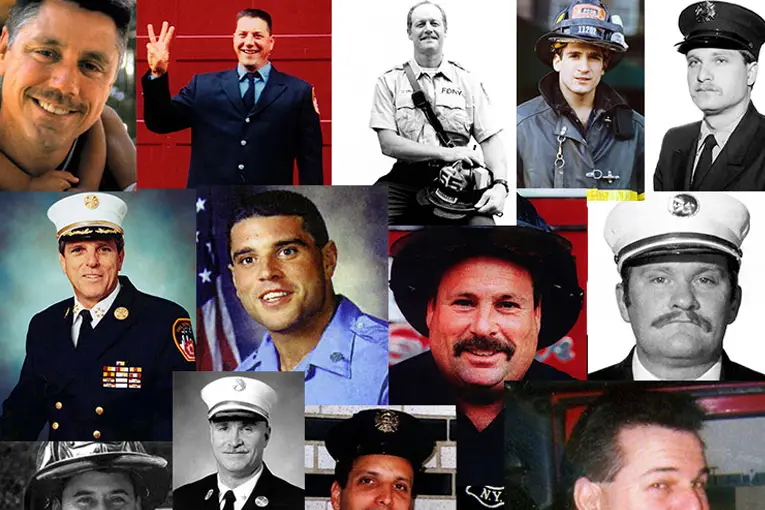
Among the dead were 343 firefighters, 60 police officers, 8 paramedics, and thousands of office workers, airline staff, and visitors.

First Responders

Firefighters Who Died on 911
Image credit: Fire Engineering

The bravery of first responders on 9/11 remains one of the most profound aspects of the tragedy.

Many firefighters and police officers entered the Twin Towers to rescue trapped occupants, knowing the risks.

When the towers collapsed, 344 firefighters died of the 442 first responders killed.

343 were from the New York City Fire Department (FDNY), 23 from the New York City Police Department (NYPD), 37 from the Port Authority Police Department (PAPD), and several emergency medical technicians and paramedics.

It remains the largest single-day loss of emergency personnel in U.S. history.

How Many People Survived the 9/11 Attacks?

Despite the enormous loss of life, thousands of people were rescued or managed to escape the World Trade Center before the towers collapsed.

Estimates suggest more than 14,000 people were safely evacuated from the Twin Towers and surrounding buildings.

Many survivors owe their lives to quick-thinking colleagues, emergency personnel, and ordinary bystanders who helped guide others to safety.

At the Pentagon, approximately 18,000 people were inside at the time of the attack.

Due to its vast size and rapid evacuation procedures, most were able to escape before parts of the building gave way.

Deaths Caused by Illness Since 9/11

Image source: Asbestos.com

In the years that followed, thousands more people have died from illnesses linked to exposure to toxic dust and debris from the World Trade Center site.

The collapse released a massive cloud of asbestos, heavy metals, and microscopic glass particles that blanketed Lower Manhattan.

According to the World Trade Center Health Program and the September 11th Victim Compensation Fund, more than 5,000 additional deaths have since been attributed to respiratory diseases, cancers, and other conditions related to 9/11 exposure.

Tens of thousands of survivors and responders continue to live with long-term health effects, making the tragedy’s human toll far greater than the original numbers suggest.

Who Carried Out the 9/11 Attacks?

Osama bin Laden and Khalid Sheikh Mohammed

The attacks were orchestrated by al-Qaeda, a militant Islamist terrorist organization founded by Osama bin Laden.

The 19 hijackers were divided among the four flights and received training in aviation and coordination to carry out the suicide missions.

Following the attacks, the United States and its allies launched the Global War on Terror, including the invasion of Afghanistan to dismantle al-Qaeda and remove the Taliban regime that harbored its leaders.

Osama bin Laden remained a fugitive until May 2, 2011, when he was killed by U.S. Navy SEALs in Pakistan during Operation Neptune Spear.

Key Takeaways

The 9/11 attacks were an act of terrorism that claimed 2,977 lives on the day itself and have since led to thousands more deaths due to illness and long-term exposure.

Four coordinated plane hijackings caused massive destruction in New York City, Virginia, and Pennsylvania, changing the course of global history.

Behind every statistic were people including families, friends, and colleagues; whose loss continues to shape the collective memory of nations worldwide.

Remembering the human impact of 9/11 ensures that the courage, sacrifice, and unity shown in the face of tragedy are never forgotten.