Survitec blog outlines Hansen Protection offshore contract
Hansen Protection has secured a multi-year contract to supply life-protection equipment to Lufttransport for offshore helicopter operations in Northern Norway.
In a blog post, Survitec wrote that the agreement covers a comprehensive suite of personal protective equipment, with servicing and maintenance conducted within Norway.
The contract is initially for three years with an option to extend.
The equipment scope includes immersion suits, lifejackets and rescue swimmer equipment.
Lufttransport is described as Norway’s largest and fastest-growing offshore helicopter operator.
The blog post states Lufttransport is on track to grow its fleet to 18 helicopters by the end of 2026.
Contract structure, servicing model and sector context
Survitec’s blog post describes the contract as using a hybrid model combining the sale of crew suits and rescue swimmer equipment with the rental of HALO lifejacket systems.
The post describes this approach as intended to streamline logistics, support regulatory compliance and support safe, efficient offshore operations.
Fredrik Joachim Eriksen of Hansen Protection said: “Our ability to provide not only quality Survival Technology but also a robust local service and maintenance network was instrumental in securing this contract.
“We are not just delivering equipment; we are delivering peace of mind and operational continuity in some of the world’s most challenging environments in northern Norway.”
Eriksen added: “We’re always looking to the future, whether it’s integrating digital safety management systems, adopting sustainable materials, or responding to the unique risks of remote and harsh environments.
“Our investment in local service infrastructure, product innovation, and customer service is helping drive our business growth.”
Erlend H. Olsen, CEO at Lufttransport, said: “Safety is at the core of everything we do at Lufttransport.
“As we expand to meet growing demand in offshore energy, partnering with Hansen Protection ensures our crews are equipped with the most advanced Survival Technology.
“This agreement reflects our shared commitment to maintaining the highest standards of safety and reliability in some of the world’s most challenging environments.”
The blog post says Lufttransport’s recent developments include introducing advanced helicopters and securing long-term service agreements.
On the morning of September 11, 2001, four commercial airplanes were hijacked by 19 terrorists belonging to the extremist group al-Qaeda.
Their coordinated plan was to use the planes as weapons against key symbols of the United States.
Within less than two hours, two of the aircraft struck New York City’s World Trade Center towers, one hit the Pentagon in Virginia, and the fourth crashed into a field in Shanksville, Pennsylvania after passengers fought back.
The scale, coordination, and devastation of the attacks shocked the world and permanently reshaped global security, aviation, and counterterrorism efforts.
The impact and resulting fire caused catastrophic damage.
Despite being hit second, the South Tower collapsed first at 9:59 a.m, just 56 minutes after impact.
Both towers’ destruction created enormous debris fields and released toxic dust that would later contribute to long-term illnesses among survivors and emergency workers.
At 9:37 a.m, American Airlines Flight 77 crashed into the western side of the Pentagon, the U.S. Department of Defense headquarters, located in Arlington, Virginia.
The impact caused a partial collapse of the building and a massive fire.
A total of 184 people were killed, including 59 passengers and crew on the plane and 125 military and civilian personnel inside the Pentagon.
WTC 7
The World Trade Center 7 building, located north of the Twin Towers, was not hit by an aircraft but was heavily damaged by falling debris when the towers collapsed.
Fires burned for hours throughout the structure, and at 5:20 p.m, WTC 7 also collapsed.
Although no one inside died because the building had been evacuated, its fall marked the third high-rise collapse in New York that day; an unprecedented event in modern history.
After learning about the other attacks through phone calls, passengers and crew members fought to regain control of the plane.
Their heroic struggle caused the aircraft to crash into a field near Shanksville, Pennsylvania, at 10:03 a.m, preventing it from reaching its intended target in Washington, D.C.
All 40 passengers and crew members aboard were killed, but their actions saved countless lives on the ground.
The majority of victims were civilians from more than 90 countries.
At the World Trade Center site in New York City, 2,753 people were killed, including passengers from both planes, office workers in the towers, and individuals on the ground.
At the Pentagon, 125 military and civilian personnel died, along with 59 passengers and crew from Flight 77.
In Shanksville, Pennsylvania, all 40 passengers and crew members on Flight 93 lost their lives.
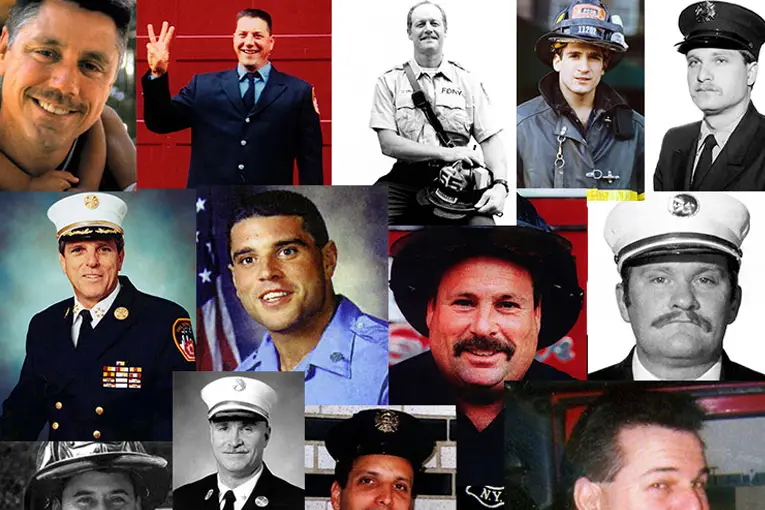
Among the dead were 343 firefighters, 60 police officers, 8 paramedics, and thousands of office workers, airline staff, and visitors.
The bravery of first responders on 9/11 remains one of the most profound aspects of the tragedy.
Many firefighters and police officers entered the Twin Towers to rescue trapped occupants, knowing the risks.
When the towers collapsed, 344 firefighters died of the 442 first responders killed.
343 were from the New York City Fire Department (FDNY), 23 from the New York City Police Department (NYPD), 37 from the Port Authority Police Department (PAPD), and several emergency medical technicians and paramedics.
It remains the largest single-day loss of emergency personnel in U.S. history.
How Many People Survived the 9/11 Attacks?
Despite the enormous loss of life, thousands of people were rescued or managed to escape the World Trade Center before the towers collapsed.
Estimates suggest more than 14,000 people were safely evacuated from the Twin Towers and surrounding buildings.
Many survivors owe their lives to quick-thinking colleagues, emergency personnel, and ordinary bystanders who helped guide others to safety.
At the Pentagon, approximately 18,000 people were inside at the time of the attack.
Due to its vast size and rapid evacuation procedures, most were able to escape before parts of the building gave way.
The collapse released a massive cloud of asbestos, heavy metals, and microscopic glass particles that blanketed Lower Manhattan.
According to the World Trade Center Health Program and the September 11th Victim Compensation Fund, more than 5,000 additional deaths have since been attributed to respiratory diseases, cancers, and other conditions related to 9/11 exposure.
Tens of thousands of survivors and responders continue to live with long-term health effects, making the tragedy’s human toll far greater than the original numbers suggest.
Who Carried Out the 9/11 Attacks?
The attacks were orchestrated by al-Qaeda, a militant Islamist terrorist organization founded by Osama bin Laden.
The 19 hijackers were divided among the four flights and received training in aviation and coordination to carry out the suicide missions.
Following the attacks, the United States and its allies launched the Global War on Terror, including the invasion of Afghanistan to dismantle al-Qaeda and remove the Taliban regime that harbored its leaders.
Osama bin Laden remained a fugitive until May 2, 2011, when he was killed by U.S. Navy SEALs in Pakistan during Operation Neptune Spear.
Key Takeaways
The 9/11 attacks were an act of terrorism that claimed 2,977 lives on the day itself and have since led to thousands more deaths due to illness and long-term exposure.
Four coordinated plane hijackings caused massive destruction in New York City, Virginia, and Pennsylvania, changing the course of global history.
Behind every statistic were people including families, friends, and colleagues; whose loss continues to shape the collective memory of nations worldwide.
Remembering the human impact of 9/11 ensures that the courage, sacrifice, and unity shown in the face of tragedy are never forgotten.
Andrew Starnes, Founder of Insight Training LLC highlights how fire service thermography can assist firefighters, sharing key advice on how it can be utilised and why it is so beneficial
Insight Training LLC, led by Andrew Starnes, focuses on giving firefighters the skills to interpret what they see, apply it in real conditions and integrate thermal awareness into everyday operations.
In this article, Andy discusses how Insight’s programmes translate complex thermography principles into practical fireground tactics, how they adapt to different departmental needs and what developments may change the way firefighters learn and train in the years ahead.
Could you begin by introducing yourself, your background in the fire service and how Insight Training LLC came to specialise in thermal imaging for firefighters?
My name is Andy Starnes.
I began my journey in the fire service as a junior volunteer firefighter following in 1990 under the guidance of my father Joe Starnes, who served as the volunteer Fire Chief in our community.
I began my career in the fire service with Charlotte Fire Department in 1998 and served for over 25 years before retiring at the rank of Battalion Chief in 2023.
During this journey, I was blessed to be involved in Project Kill the Flashover which was started by my father Joe Starnes and his dear friend Chief Shawn Oke.
I was fortunate to begin studying thermal imaging in 2010 through this project.
In 2015, I was injured while preparing one of our acquired structures for a research burn.
While I was out of work for seven months, I was able to research the field of thermography and formed the company Insight Fire Training (Insight Training LLC).
With special encouragement from my wife, I pursued this path beginning in May of 2015 by enrolling in thermography certification courses.
Through intense study and many wonderful opportunities, I was fortunate to develop a thermography-based curriculum for firefighters.
Since then, Insight Fire Training has grown to a cadre of over 20 thermography certified fire service instructors, traveling and training internationally, and we provided consulting services to many fire service product manufacturers.
We also now offer the world’s first collegiate thermal imaging certification through Western Kentucky University in partnership with Kentucky Thermal Institute.
For those unfamiliar with the concept, how would you describe tactical fire service thermography and its importance for modern fireground operations?
Fire service thermography is the process of interpreting qualitative thermal imaging data for the purposes of enhancing strategies and tactics in emergency situations.
It allows firefighters to quickly locate the source of the fire, the direction of the fire spread and the intensity of the fire.
It allows firefighters to ascertain the layout of the structures to quickly search and locate anyone trapped within the structure.
What key principles of thermal imaging should every firefighter understand to make effective tactical decisions during an incident?
Firefighters should be proficient in ten key areas of thermal imaging usage- we will cover five of them here.
Do not over rely on technology.
Carry the device: Over 50% of the fire responses surveyed showed that the TIC was being left on the fire apparatus and not being used immediately.
Power the device on early: Fire Service TICs are required to be fully operational after 30 seconds of pressing the power button. Firefighters have realized that powering on the device at the entry point or inside the environment is not effective as they must wait on the device to fully power up and in many cases, they then realize their battery isn’t fully charged.
Learn to scan properly: Fire Service TICs have been in use since the 1990’s and a six-sided scanning technique was introduced by a firefighter (Woodsworth) which incorporated all sides of the area that firefighters are entering. The issue with this technique is that it advocates that the scan should start high in the room. Firefighters have fallen victim to “tunnel vision” by scanning high and immediately detecting heat. They then fail to scan low to look for victims, hazards and layout of the structure. Many fire service TICs are dual gain which causes the lower cooler environment to darken down when the firefighter scans high. This has also been reported as a contributing factor for missing victims, fire beneath them, stairs and other critically important information. For this reason and more, we advocate a simple four principle of scanning technique that begins with TIC low in the space.
Wipe the lens: Firefighters consistently report that their fire service TIC “whited-out” during a fire. Fire service TICs haven’t produced a white out effect due to heat in over 25 years. The most common reason for this problem is the failure to wipe the lens. As a firefighter makes entry to the fire environment, they experience a temperature change and condensation/smoke builds up on their facepiece. It is a common practice to wipe the facepiece so they can see. However, many have not been instructed to wipe the lens on the front of the TIC. This lens is made of germanium and has a scratch resistant diamond lined coating on it to reduce scratches. As a firefighter wipes the lens, the image dramatically improves for a few moments before the lens is covered again by moisture and smoke. This process shall be repeated each time during the scanning process.
What are the most common challenges or misconceptions firefighters face when first incorporating thermal imaging cameras into their work?
The most common misconception is that these devices measure temperatures accurately.
Fire Service TICs are qualitative in nature meaning that they are designed to detect heat emitted by surfaces in the 7–14-micron LWIR range thereby providing apparent temperature measurements.
These measurements are often grossly inaccurate.
NFPA 1801-2021 edition removed the spot temperature feature from TI Basic as it was listed as a contributing factor in three separate line of duty death incidents.
Firefighters are using this device incorrectly to measure lithium-ion battery incidents, spot temperature measurements during overhaul, and there are fire departments that require firefighters to call out temperatures as they move through the fire environment.
This is dangerous and inaccurate.
When combined with the fact, the fire service TICs do not detect gases and can only provide an estimated value; it is not surprising that we see firefighters consistently having problems with these devices.
This is a global issue and will not be resolved until the fire service improves their overall education and training in this area.
What knowledge, confidence and decision-making skills do firefighters gain from completing Insight’s courses and how can this training influence their performance on the fireground?
Insight Fire Training trains over 20,000 individuals each year across the globe.
Our courses have been reviewed by countless departments and manufacturers.
Our greatest blessing is to receive the emails of firefighter testimonials each week stating how they have applied the concepts they learned in our training to make a difference on the fireground.
How do you help departments integrate thermal imaging into their standard operating guidelines, crew coordination and broader safety culture?
We have helped hundreds of fire departments across the globe integrate basic thermal imaging concepts and assisted them with developing their own thermal imaging training programs.
For example, in our train the trainer program we provide an implementation criteria training session in which we discuss operational guidelines, training recommendations and more.
Poland and Germany have both integrated thermal imaging training into many of their standard training guidelines because of our training programs.
In addition, any student who completes our training receives access to a resource folder that consists of policy examples, procedures, lesson plans and more.
We also provide virtual follow-up consultations to these departments at no charge to assist them with training program development.
What steps do you think the industry should take to build a more consistent and informed approach to thermal imaging training across different fire services?
The current market is moving forward at a rapid pace regarding infrared technologies.
Manufacturers who decide to look beyond traditional methods of producing a “thermal imaging camera” will innovate the future of thermal imaging.
However, the most innovative and advanced technology will not solve the greatest problem in the fire service: a lack of consistent and standardized education and training in thermal imaging.
This is the mission of Insight Fire Training.
We have produced a collegiate program that has been peer reviewed and credentialed by Western Kentucky University.
We also are building more online free educational content for the fire service to use to assist in this area.
Our goal is create a generation of “intelligently aggressive” firefighters who change the world.
Extending reach without entering danger, Reach and Rescue equipment has redefined what is possible in urgent response situations everywhere
When every second counts, the difference between life and death often depends on the equipment in the hands of rescuers.
For decades, those working in emergency services faced a common frustration: the gap between themselves and the person in danger.
Whether at sea, in fast-flowing rivers, or high above ground, rescuers were forced to put themselves at enormous risk to save others.
That challenge became the spark behind one of the most innovative companies in modern rescue technology: Reach and Rescue.
At the heart of this journey is Jo Taylor MBE, co-founder and driving force behind the company’s vision.
Jo recognised that too many rescues were hindered by outdated methods and that every additional step into danger risked turning one casualty into two.
With a relentless determination to improve rescue safety, she helped transform a simple concept – extending the rescuer’s reach – into a lifesaving reality.
The introduction of the pioneering long-reach telescopic rescue pole revolutionised emergency response.
The concept was elegantly simple: extend the rescuer’s reach without moving them into danger.
Early prototypes were designed, tested, and refined until they were robust enough to withstand the harshest conditions.
The innovation quickly caught the attention of fire services, coastguards, and water safety teams across the UK, who recognised how dramatically it improved rescue outcomes.
What started as an ambitious idea soon evolved into an indispensable piece of equipment for professionals around the world.
Saving lives across the world
From its modest beginnings, Reach and Rescue has grown into a globally recognised name in emergency response.
Today, their equipment is used by rescue organisations in more than 50 countries, proving its worth in countless high-stakes scenarios.
From saving swimmers caught in rip currents to reaching trapped flood victims, the telescopic pole has redefined what is possible in a rescue.
The journey hasn’t gone unnoticed.
Reach and Rescue has earned numerous awards and accreditations, including the prestigious Queen’s Award for Innovation – recognition of the company’s commitment to developing products that set new industry standards.
In 2022, Jo Taylor’s outstanding contribution to lifesaving innovation was formally recognised when she was awarded an MBE.
Her honour reflects not just her entrepreneurial success, but also her tireless advocacy for safety and innovation in the rescue sector.
Perhaps most powerful of all are the voices of the rescuers themselves.
Coastguards have credited Reach and Rescue equipment with saving lives in dangerous surf, while firefighters report faster, safer extractions in urban and industrial settings.
“It changes everything,” remarked one emergency services officer: “because it means we can act immediately without risking additional lives.”
The company has also developed a growing portfolio of specialist attachments designed for diverse environments – from grappling hooks and nets to water rescue devices.
Each tool has been created with one goal: to expand the possibilities of safe and efficient rescues.
The next leap in rescue technology
As the world changes, so too do the challenges faced by emergency responders.
Urbanisation, climate change, and rising natural disasters demand faster, more flexible, and more effective tools.
For Reach and Rescue, standing still has never been an option.
That’s why the company is proud to announce its partnership with FRed Fast Rescue Device – a collaboration that signals the next great leap forward in rescue technology.
The FRed device brings unmatched speed and simplicity to critical situations.
Designed to be deployed in moments, it empowers both professional rescuers and members of the public to respond effectively to emergencies.
By integrating FRed with Reach and Rescue’s proven telescopic systems, the two organisations are creating a rescue ecosystem that prioritises speed, reach, and safety like never before.
This partnership is more than a business decision – it is a shared vision for the future of rescue.
Together, Reach and Rescue and FRed are working to democratise lifesaving technology, ensuring it is accessible, intuitive, and ready for use in any environment.
From professional services to community groups and schools, the joint mission is clear: everyone should have the means to act in an emergency.
Building a shared future vision
The implications are profound.
Imagine a world where a teacher can respond instantly to a water incident on a school trip, or where bystanders at a riverbank can safely extend a lifeline without entering the water.
By combining the innovation and experience of Reach and Rescue with the agility of FRed, that world is not just possible – it is within reach.
As Jo Taylor MBE reflects: “Our mission has always been about saving lives while protecting rescuers.
“With FRed, we are taking the next step in making lifesaving equipment accessible to all.
“This is the future of rescue.”
The future of rescue is faster, safer, and closer than we ever imagined.
Fire and Emergency New Zealand has marked 30 years since the creation of its Urban Search and Rescue (USAR) capability.
Celebrations took place this week across the organisation’s Northern, Central and Southern USAR bases.
The milestone brought together current and former personnel who have contributed to the development of the programme since its inception in 1995.
The first USAR course in New Zealand was held that year at Linton Army Camp with instruction from a team of trainers from the United States.
Some of the original trainees and instructors attended the anniversary event in Palmerston North.
Programme origins and international partnerships
According to Fire and Emergency New Zealand, the event recognised the contributions of the original programme architect, United States instructors and the New Zealand personnel who completed the first USAR training course.
The collaboration between New Zealand and the United States in 1995 laid the foundation for a specialised national search and rescue capability that has since developed into a key component of Fire and Emergency’s disaster response operations.
The anniversary events were held to acknowledge both the early foundations and the continuing service of the teams that operate across the country.
Expanding role in national and international emergencies
Fire and Emergency National Manager Response Capability Ken Cooper said the USAR teams have been deployed to major domestic and international disasters.
Ken Cooper said: “Our USAR team has been deployed to disasters such as the Christchurch earthquake, the Kaikoura earthquake, Cyclone Gabrielle, and overseas assisting at tropical cyclones in Fiji, Tonga, and Vanuatu, floods in the Solomon Islands, and to Papua New Guinea to help with the COVID-19 pandemic.
“Both locally and globally we are seeing an increase in both the frequency and severity of the effects of natural hazards.
“All of these phenomena will see an increasing need for the skills and expertise of our USAR teams.”
The anniversary week also served as an opportunity for the service to reaffirm its role in national emergency preparedness and regional humanitarian support.
Relevance for fire and safety professionals
The 30th anniversary of Urban Search and Rescue (USAR) in New Zealand highlights how structured training and international collaboration have strengthened response capabilities across multiple hazards.
For emergency response managers and training officers, the event demonstrates the long-term impact of sustained investment in technical rescue skills.
For fire and rescue chiefs, it underscores the operational value of maintaining multi-agency partnerships and specialised deployment readiness.
USAR’s history of responding to earthquakes, cyclones and floods also illustrates how integrated response frameworks can adapt to increasing natural hazard risks.
This article was informed by information from the following source: Fire and Emergency New Zealand
Sam Mayall, CEO of Zelim, outlines how AI-enabled detection, unmanned rescue craft and automated retrieval systems are reshaping man overboard response in the maritime sector
Zelim has called for mandatory use of advanced situational awareness systems following findings by the UK’s Marine Accident Investigation Branch (MAIB).