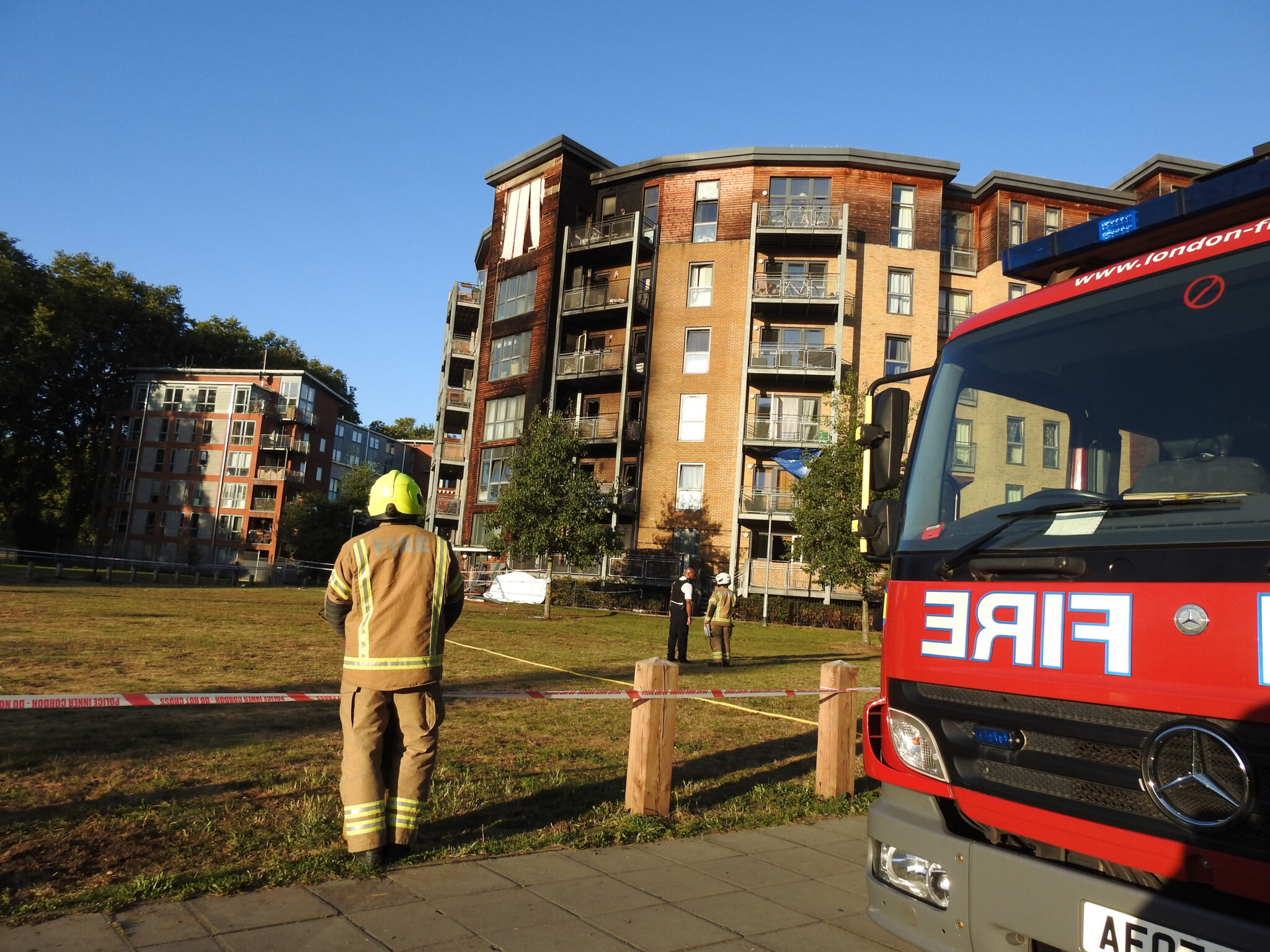
NFPA issues guidance on Sprinkler usage

The National Fire Protection Association (NFPA) has issued guidance on best practice for sprinkler systems following National Sprinkler Week which took place from 16-22nd of May.

Today NFPA 13E – the ‘Standard for the Installation of Sprinkler Systems – provides the information necessary to ensure fire departments are trained on and operate effectively with automatic fire sprinkler systems.

The guidance document explains that although some fire sprinkler systems are designed to suppress a fire, most are designed to control a fire. The main difference between fire control and fire suppression is related to the fire sprinkler systems impact on the fires heat release rate. 

The three principal causes of fire sprinkler system failures identified in NFPA 13E are a closed control valve, inadequate water supply for the system and occupancy changes that render the installed system unsuitable.

Beyond the primary causes found in the recommended practice, NFPA has conducted research on the U.S. Experience with Fire Sprinklers to help understand fire sprinkler effectiveness. 

The NFPA said that familiarisation with the types of control valves and their layout in a system will allow firefighters to both understand what valves will disrupt water flow and what position have they should be in for effective operation. 

If firefighters encounter a valve which is not in the correct position during a fire, placing that valve in the correct position may restore the system effectiveness.

Additionally, fire departments should never turn off a sprinkler system that has activated until they have confirmed the fire is fully extinguished and overhaul has taken place, and noted that simply turning the system back on may not reestablish fire control.

On water supply, it said it may be inadequate due to a lack of available water flow, lack of available pressure or both, and since fire department pumpers often have the capacity to supply water at higher flow rates and pressures than the normal water supply, utilising a fire department pumper to supply water to the fire department connection (FDC) can address most inadequate supply concerns. 

On occupancy changes, it said that although the fire department does not have an ability to impact occupancy changes during a fire incident, an effective pre-plan and inspection program has the potential to identify occupancy changes which can adversely impact fire sprinkler system effectiveness before fires occur.

It advised training those conducting these inspections to understand what types of commodities would represent a high heat release rate fire and how to identify if a sprinkler system could be designed to deliver the necessary water density can reduce this potential cause of failure.

It concluded by saying: “As with all NFPA recommended practices, the language is less rigid than a standard or code, utilising “should” instead of “shall” as to not limit the individual fire departments, allowing them to adopt more effective procedures.

“Familiarisation with NFPA 13E provides anyone who may be utilising a fire sprinkler system the knowledge necessary to positively impact the systems effectiveness. 

Fifteen buildings in Jeypore in violation of fire safety regulations

Following Odisha Fire Service directing all units to carry out a fire safety audit in all important state establishments by 21 May in the wake of a fire at a four-storey commercial building in Dehli, 15 out of 40 buildings that were scanned were found to be violating the safety norms.

The Jeypore unit of Odisha Fire Services on Wednesday slapped notices on 15 government and private buildings including Koraput Medical College and Hospital (MCH) for violating the prescribed norms as it lacks minimum safety measures.

All 15 buildings in violation were served notices to put in place measures and requisite equipment for fire prevention, safety and emergency evacuation in case of emergency.

Kunu Nayak, a fire officer from Jeypore, said the team will again inspect fire safety norms in other parts of the district: “Our staff checked all major government and private establishments and authorities concerned have been asked to maintain the norms for public safety.”

Chairman of Koraput rice millers’ association Girija Sankar Dash, said: “Every building used by public should maintain basic resources to ensure prevention and fire safety measures so that there’s minimum loss to life and property. This is needed not just in urban areas but in remote tribal pockets as well.

“The recent drive by the fire services unit here is a welcome move and should be carried out on regular basis to ensure strict adherence to the rules,” commented social activist Chitaranjan Satpathy.

Kentec Installation Programme hits three year mark

Life-critical control systems manufacturer, Kentec, has celebrated the third anniversary of its Kentec Installation Programme (KIP) at this year’s FIREX, now with more than 200 installers registered across 19 countries.

Since its launch at Firex three years ago, installers have been benefiting from the scheme which include training to ensure every installation is optimised to realise the technology’s full potential. The scheme also provides KIP-dedicated technical support (including on-site), and advanced access to the latest Kentec systems and software.

Kevin Swann, Managing Director of Kentec Electronics, said: “In addition to training and support, our KIPs tell us that their membership supports client tenders by demonstrating individual competency on the award-winning Taktis panel and ever-loved Syncro AS, which is fantastic to hear.

“Covid-19 hit while the scheme was still in its infancy, which forced us to look to ways to make virtual training as impactful as possible. That’s opened the doors to so many efficiencies and opportunities – and has helped build the scheme into one that we are very proud of,” he adds. “The team and I are looking forward to speaking to customers and taking them through the highlights of our stand, at what promises to be another fantastic industry event.”

Kentec’s latest wireless Mesh technology was a leading focus on its FIREX stand this year. The team demonstrated how it reduces installation costs and timescales and removes the installation and construction limitations associated with wired systems, including building work, fire stopping and containment systems.

Walker fire expands into detection market with double acquisition

Fire safety firm Walker Fire has made two acquisitions to drive its expansion in the fire detection and security sector.

The Preston-based firm has acquired Leicestershire-based Detector Alarms and Hampshire-based Southern Fire Protection, for an undisclosed sum.

Detector Alarms, which trades as Detector Fire and Security, operates across Leicestershire and the Midlands, specialising in the installation and servicing of security and fire safety systems.

Southern Fire Protection operates across Hampshire and specialises in fire safety equipment installation and servicing.

David Cosgrove, Walker Fire managing director, said: “Our goal is to become one of the UK’s foremost providers of fire safety and building security services.

“The two businesses we have acquired have operational capabilities and values that are very aligned with our own and further strengthen our service offering and national footprint.”

Walker Fire is part of Ireland’s Moyne Roberts Group. Based at Roman Way Industrial Estate in Preston, the business has 238 staff and offers services in the installation and servicing of fire alarms, fire suppression systems and other fire safety equipment, as well as fire risk assessment and fire safety training services.

Walker Fire was advised on the transactions by the corporate finance, property and employment teams at law firm Harrison Drury solicitors. Stuart Hinnigan, partner at Scott & Wilkinson accountants, advised on the financial aspects of the deal.

Jack Stephenson, associate solicitor in the corporate team at Harrison Drury, said: “We’re proud to have supported Walker Fire’s growth strategy by advising them on a significant number of transactions over the last few years.

“These latest strategic acquisitions help Walker Fire grow its capabilities and geographical coverage and we’re pleased to have played our role in making this possible.”

Sarah Astley, associate solicitor in the employment team, added: “We’re pleased to be working alongside the team at Walker Fire, supporting them with the employment aspects of these acquisitions and ensuring a smooth transition for all staff, clients and stakeholders.”

ASFP releases new and updated guidance documents

The Association for Specialist Fire Protection (ASFP) has expanded its range of guidance with the release of three new and three updated documents covering steel beams, firestopping of metal pipes, and planned maintenance.

The first document, Advisory Note 27, provides advice on the structural fire protection of steel beams with corrugated webs which were recently introduced to the market and offer a thinner steel plate than can be used in traditional webs.

The fire-resisting performance of these sections is not fully understood and so the advisory note warns against the use of plain section data in support of a corrugated web section without extra testing.

Advisory Note 28 covers the firestopping of metal pipes where flanges are located close to service penetration seals and encourages earlier involvement of passive fire specialists to prevent the construction of untested service penetration arrangements, particularly in the presence of flanges within the secondary insulation zone.

The guidance says that for the avoidance of issues with certification and installation it is best to keep the flanges more than 500mm away from the wall, pointing out that this detail is not always considered during the spatial coordination of services. 

The final new publication, Advisory Note 29 covers planned maintenance and draws upon advice from within the Regulatory Reform (Fire Safety) Order; BS 9999: Code of practice for fire safety in the design, management and use of buildings; and BS 8524: Active fire curtain barrier assemblies to ensure that a competent person conducts that maintenance

Meanwhile, Advisory Note 21 has been updated covering coatback to secondary structural steel, highlighting thatthat this can prevent conduction of heat into a primary structural member and its consequent early failure.

Technical Guidance Documents (TGDs) 15 and 20 have also been revised, with the former giving advice on the installation and inspection of spray-applied passive fire protection. The document has been updated to align the film thickness measurement criteria and to take the implications of Brexit into account and the consequent changes to UK Construction Product regulations.

The changes to UK Construction Product regulations and the introduction of the UKCA mark also prompted the revision of TGD 20, which covers the CE marking of fire-resisting and smoke control duct sections. 

All the documents are available for download from the Publications area of the ASFP website.

Bengal Fire Department launches fire safety awareness drive

The Bengal Fire and Emergency department has launched an awareness drive on fire safety through drills and to inform people about the precautions to take if a fire breaks out.

The campaign, which kicked off on 5 May in Calcutta will run for a month until 5 June. Teams from the department will travel to various locations carrying equipment and will demonstrate how one should respond to a fire.

The demonstrations are touring shopping malls, hospitals, hotels, office buildings, industrial units, petroleum outlets and in crowded locations in and around the city of Siliguri.

Bhaskar Nag, the officer-in-charge of the Siliguri fire station, said during the campaign, they will also conduct fire audits at these sites to determine whether the places have adequate fire-fighting equipment and arrangements to evacuate people.

“We are carrying out mock fire drills, which include evacuation exercises. Also, during our visit, we are training people, for example, employees of industrial units and security men of shopping malls, as to how they should douse a fire,” he said.

The department is also promoting the need to keep adequate fire extinguishers in hotels, hospitals, schools, colleges, offices, markets and factories, and will for employees of petrol pumps it will conduct a separate training “as we cannot have on-site demonstrations at a pump.”

Report highlights failings of fire prevention mechanism in Greece

A new report by WWF Greece points to a series of failings in the management of wildfire prevention funds and the need for better oversight. Last year’s devastating fire season in the Mediterranean country has concluded.

According to the study by the wildlife conservation group covering the five-year period from 2016 to 2020, Greek authorities spent 778 million euros putting out wildfires as opposed to just 189 million euros on forest management and fire prevention measures. In terms of percentages, this means that authorities used more than 80% of their resources fighting fires and less than 20% preventing them.

It also found that just under 50% of funding available for fire prevention at the local level via the EU’s National Strategic Reference Framework (ESPA in Greek) was absorbed during that period, as well as evidence of poor reporting on how funding was used. 

WWF also noted the absence of a centralized mechanism that is responsible for overseeing firefighting funds and tracking how they are spent, as an annual assessment of how each fire season was managed.

“We do not have an exact estimate at the national level of the resources poured into prevention and fire-fighting and this obviously creates problems in planning and in evaluating the system,” said Elias Tziritis, from WWF’s Nature Policy Department.

The report also noted that in the past 20 years, the number of staff employed in the Forestry Service has dropped by 53%, while funding to the agency has plummeted by 80%.

“The fires of the past few years showed us the limitations and failures of the fire-fighting mechanism and also demonstrated the importance of prevention,” said Panayiota Marangou, who is responsible for WWF’s environmental protection programs.

IRDAI allows insurers to design alternative products to cover fire, other perils

India’s Insurance Regulatory and Development Authority of India (IRDAI) has permitted general insurers to design alternative products to cover risk from fire and allied perils for dwellings and small businesses.

The IRDAI issued guidelines for standard products for fire and allied perils for dwellings, micro and small businesses (Bharat Griha Raksha, Bharat Sookshma Udyam Suraksha and Bharat Laghu Udyam Suraksha) in January 2021.

These standard products replaced the Standard Fire and Special Perils (SFSP) policy for the named risks and no product other than the standard products was permitted for fire and allied risks.

“After considering the increasing demand for new covers in the fire line of business, the Authority. hereby permits general insurers to design and file alternative products covering fire and allied perils for the risks (de-notified earlier,” IRDAI said in a circular.

Such alternative products, it added, may be variations of the standard product and may include already approved add-ons as part of the base product or may delete an existing provision.

“However, the definitions and wordings of terms used in the standard product shall be the reference point for those terms when used in the alternative products as well. Needless to add, the pricing of the products shall be commensurate to the risks involved,” it said. One of the objectives of permitting alternative products is to insure evolving fire insurance risks of Dwellings, Micro and Small Businesses to increase insurance penetration.

It also aims to identify protection gaps in the existing fire insurance products and address the changing needs of market with due consideration to the policyholders’ interests in terms of suitability and affordability.

Another objective is to promote healthy and sustainable development of fire insurance market with new and alternative products that provides wide options to policyholders in addition to standard products, IRDAI said.

The latest directives will come in force on June 1, 2022. In another circular, the regulator said it has been receiving several complaints from policyholders, both directly and through various platforms such as industry associations, that insurers are referring to the Burning Cost as a ‘mandated minimum rate’.

It said that the Insurance Information Bureau of India has been periodically publishing the industry Burning Cost for Fire perils (FLEXA). All insurers, it said, have been informed that the purpose of this is to give an indication to insurers of the industry Burning Cost for various occupancies, for appropriate use in the matter of pricing the various risks.

IRDAI said the objective of IIBI publishing details of Burning Costs occupancy-wise is only to give information to insurers with regard to industry-level experience for appropriate use while rating risks.

“By no means does this even remotely imply that this is a ‘mandated minimum rate’,” it said. The regulator further said that it is expected of insurers to consider all applicable risk factors for rating a risk and give appropriate discounts or charge loading as warranted.

It is reiterated that insurers shall ensure that policyholders are not misinformed that the Burning Cost is a ‘mandated minimum rate’ for insurers to charge, IRDAI said.

Regional focus: Watershed moment in the UK fire market

In the past month major new changes and fire protection laws have come into effect across Great Britain, IFSJ shines the light on the UK in our market focus for May 2022

The UK has one of the most advanced fire protection markets in the world, despite legislation only catching up now in critical areas. According to FPA managing director Jonathan O’Neill the ingenuity and innovation of various stakeholders, manufacturers, fire training professionals, consultants, and the fire services themselves has contributed to a thriving fire protection and detection market across the UK.  

The United Kingdom government spent approximately 3.13 billion British pounds on fire-protection services in 2020-2021, the highest amount spent since 2010/11 when the government spent 3.02 billion pounds. 

More statistics 

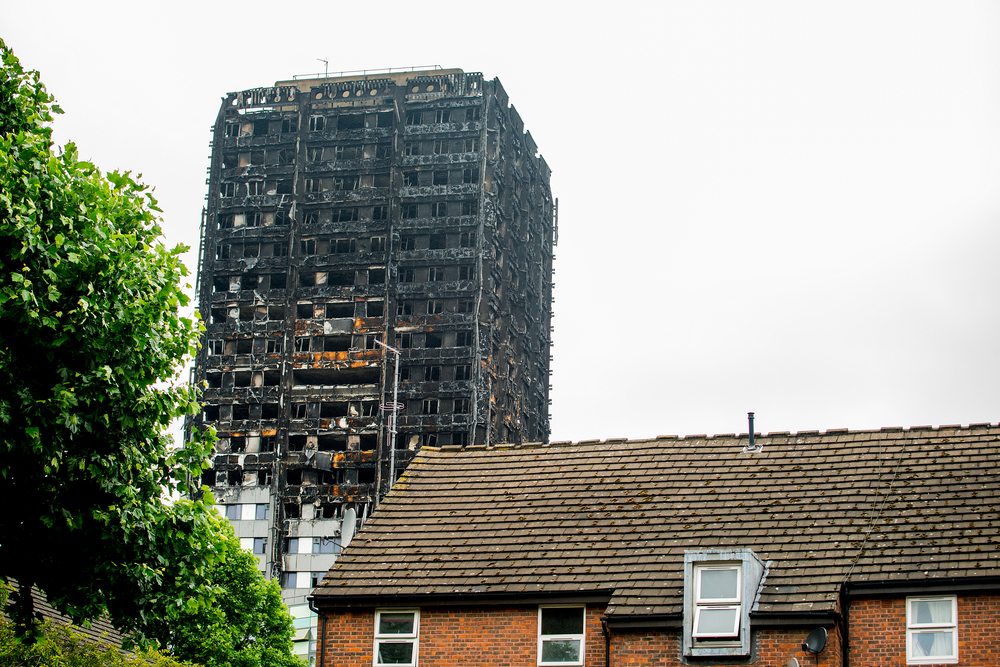
Since the late 90s various government efforts, resulting in orders, bills, and acts have come into effect to protect assets. But more importantly, painstaking efforts have been taken to minimise fatalities. Plenty of movement has taken place in the last five years, in the aftermath of the horrific Grenfell Tower disaster. The incident is considered as one of the UK’s worst modern disasters. As many as 72 people died in the disaster that took plan on June 14, 2017, which made up a staggering 18% of all deaths caused by fires in the UK that year. In 2019-2020 fatalities caused by fire accidents dipped below the 300 figures for the first time in several decades.  

There were 311 fire-related fatalities in Great Britain during 20120/21, 22 more than occurred in the previous reporting year when there were 289. In the early 2000s, the annual number of fire fatalities was consistently over 500, with numbers gradually falling throughout that decade. In 2011/12 the number of fatalities related to fire fell below 400 for the first time, and has remained below 400 since that point. 

Although there has been a net decrease in the number of incidents attended by fire and rescue services in the United Kingdom since 2010/11 the current trend from 2014/15 onwards has been one of increase. In 2018/19 there were over half a million incidents attended in England, over 92,000 in Scotland and almost 37,000 in Wales. Northern Ireland had the least number of incidents attended at around 24,600. 

Since peaking at over 55,600 workers in 2010 there has been a marked decline in the number of fire and rescue workers in England, with the service losing more than 10,000 workers by 2019. In a similar time period, the expenditure on fire-protection services in the United Kingdom fell from 3.1 billion in 2009/10, to around 3 billion in 2019/20. 

Building Safety Bill 

At the end of April 2022, the UK Government’s Building Safety Bill completed all the parliamentary stages in both houses, ready to receive Royal Assent. The 252-page bill, which began the process of going through the houses of parliament in July 2021, is aimed at improving building standards, ensuring the safety of residents, and protecting leaseholders from the costs of fixing their blocks.   

The Building Safety Bill’s main aims is to reform the safety system for properties higher than 11 metres by appointing a Building Safety Regulator, giving a greater voice to residents, driving industry change, and creating a national framework for increased oversight.  

London,,Uk.,28th,June,2017.,Editorial,-,The,Grenfell,Tower

UK Minister for Building Safety Stephen Greenhalgh has branded the Building Safety Bill as the “biggest changes in building safety legislation in our history”. The act will now also include measures to ensure leaseholders avoid footing the bill for remediation costs, known as ‘waterfall’ protections. 

Ministers have faced growing pressure over the building safety crisis. Thousands of leaseholders have been hit with crippling costs for fixing their buildings and have been unable to sell their flats. 

The Royal Institute of Chartered Surveyors (RICS) welcomed the passing of the bill as a ‘positive step’ and acknowledged that it “may not have been what everyone hoped for”. The bill will at the least provide greater protections for leaseholders and delivering a new building safety regime. 

“It is critical for RICS and other organisations representing the professions impacted by the Act, to have the opportunity to offer their continued support in finding and shaping the solutions alongside government,” it explained. 

According to law firm Clyde and Co, major changes to the Bill include scrapping building safety managers or the need to appoint one. There is now an “accountable person” who takes over day-to-day responsibility for higher risk buildings over 18 metres. 

Another amendment that has been enshrined into law is extending the limitation period to 15 years for defective premises claims and 30 years for retrospective claims. The law firm said that this could come into force two months after royal assent. 

Sadly, new builds or restored properties opting to use environmentally sustainable materials remain at greater fire risk. Expressing his concern on the matter O’Neill says: “there’s no way to escape the influx of sustainable, albeit combustible, building materials making a mark in our cities and towns. We need a unified code on buildings in the UK that incorporates evolving building techniques and materials.” 

The ripples of the Grenfell disaster, and the impact of its subsequent inquiry, have left its mark across Britain’s devolved governments. Since October 2006 the fire safety law in Scotland has differed from that of England and Wales and Northern Ireland. Last month, a legislation by ministers in Scotland proposed ban on use of combustible materials on high-rise buildings. 

Since 2005, cladding used on high-rise blocks in Scotland had to feature non-combustible materials or pass a large-scale fire test. The new building standards legislation removes the option of a fire test, completely prohibiting such materials in buildings with floors above 11 metres. 

The law on fire alarms has changed in Scotland, requiring all homes to have interlinked alarms. Interlinked means if one goes off, they all go off, so you will always hear an alarm wherever you are in your home. The new law has come about because of the Grenfell fire in London in 2017, and it applies to all Scottish homes. It is the property owner’s responsibility for meeting the new standard. Could we see a similar move coming into effect across the rest of the UK? Watch this space.  

Accountability in the amendment 

But the amendment to the Building Safety Bill, which removes the requirement for landlords to appoint Building Safety Managers in leasehold buildings seven storeys and over, is being challenged by a leading tall buildings fire safety expert. 

Russ Timpson – a former firefighter and Managing Director of the Tall Buildings Fire Safety Network -is urging the government to reconsider its decision to scrap the recommendation first proposed by Dame Judith Hackitt in the wake of the Grenfell Tower fire. 

“This latest iteration of the all-important Building Safety Bill states that responsibility for fire safety will now fall squarely on the squarely on the shoulders of an ‘Accountable Person’, such as the freeholder or head lessee or a management company. It is fundamentally important that anyone who is put in charge of tall building fire safety has undergone specialist training, which is backed up by a recognised qualification.” 

A similar concern has been raised by several experts and veterans of UK fire safety protection. A logical solution to this conundrum, according to the FPA, is the appointment of independent assessors. It’s a case of assessing the assessor, where there is a constant loop of checks and balances put in place to ensure there are strong grounds of accountability at all times from all parties. 

The 5-billion-pound change 

In a significant intervention in January 2022, UK housing secretary Michael Gove announced plans to get developers and construction product manufacturers to pay for defective buildings through a multi billion-pound billion levy. In April 2022, following months of negotiations, 35 builders pledged to fix all buildings they had built in the past 30 years that have “life-critical fire safety defects”.  

The agreement includes buildings they have developed on behalf of social landlords as part of Section 106 agreements. Leaseholders will also be able to launch retrospective legal action going back 30 years against developers or contractors that have built unsafe properties. 

The 35 developers collectively agreed to contribute £2bn towards fixing buildings they had a role in constructing. Under the Gove plan, in addition to the £2bn from developers to fix their own buildings, the industry will commit a further £3bn for the removal of unsafe cladding through an expansion of the building safety levy, a charge on new residential buildings. Firms refusing to contribute to the fund set up to fix dangerous cladding will be warned they could be blocked from selling new homes. 
GFCI wins NFPA’s Philip J. DiNenno Prize for 2022

The National Fire Protection Association (NFPA) has announced Electrical Shock Hazard Protection by Ground Fault Circuit Interrupter (GFCI) Protection as the winner of the 2022 Phillip J. DiNenno Prize, which recognizes pioneering innovations that have significantly impacted building, fire, and electrical safety. The prestigious award is named for the late Philip J. DiNenno, the greatly respected former CEO of Hughes Associates, in recognition of his extraordinary contributions to fire safety.

The 2022 DiNenno Prize selection reflects a departure from the traditional recognition of one or more individuals who have played a pivotal role in the creation of a fire and life safety technology. Instead, it honors the ground-breaking technology itself, as its innovators are no longer living.

The (GFCI) concept has evolved since its inception in the 1940s into a series of sophisticated protection devices that have increased protection of people from electric shock. It has also allowed for greater degrees of safe electrical power usage among numerous applications in all types of environments. In addition, widespread installation of GFCI protection throughout the built environment has directly led to significant, quantifiable increases in society’s current levels of electrical safety. Furthermore, GFCI technologies will continue to prevent tragedies attributable to electrocutions even more so in the future.

“GFCI technology in itself is very important in electrical safety, saving hundreds of lives per year,” said Craig Beyler, DiNenno Selection and Prize Committee Chair. “This year’s recommendation remains true to the core tenets of the DiNenno Prize and continues to honor live and deceased innovators equally.”

The DiNenno Prize typically features a $50,000 award to its recipients. In absence of living recipients, the Phoenix Burn Society for Burn Survivors and the Electrical Fire Safety International (ESFI) have been selected as the beneficiaries of the prize and will each receive a cash donation to support their work in reducing loss from electrical hazards.

The award will be officially presented at the NFPA “Stars at Night” award ceremony in coordination with the NFPA Conference & Expo (C&E) in Boston this June. Jack Wells and Henry Zylstra, who each played a critical role in the advancement of GFCI technology, will serve as legacy presenters of the DiNenno Prize.

In addition, there will be a special panel presentation on Ground Fault Circuit (GFCI) Protection at C&E on Monday morning at 8:00 am. Wells, Zylstra, Alan Manche and Steve Rood will serve as presenters, reviewing the role GFCI has played in electrical safety; Wells and Zylstra will share stories about their involvement in the development and commercialization of GFCI technology.