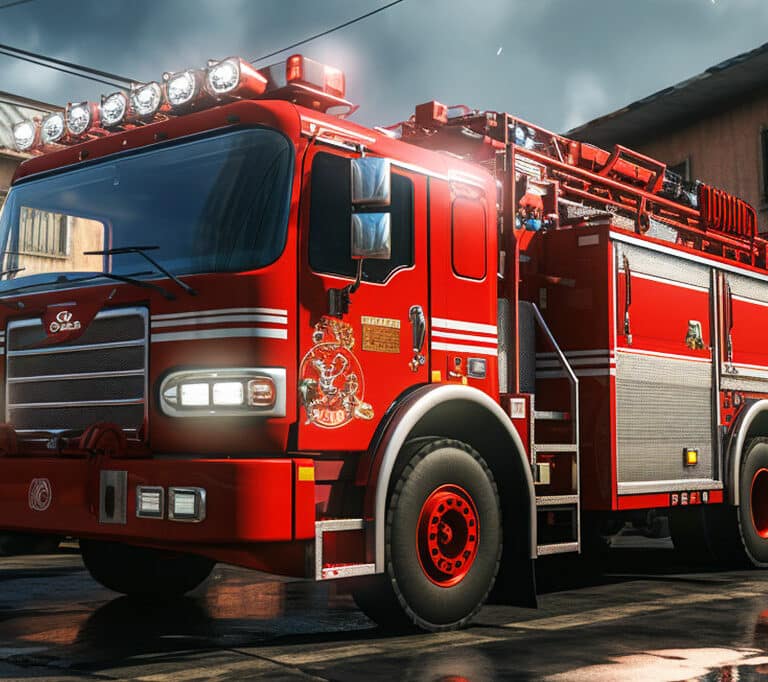
BwFuhrparkService GmbH has begun delivering 90 firefighting vehicles (FLKfz HLF) to the German Armed Forces, according to a statement from ZIEGLER.
Delivery had been delayed due to supply chain disruptions caused by the pandemic and the Ukraine conflict, with the first vehicles finally handed over in April 2024.
The vehicles will operate at various Bundeswehr locations across Germany.
Vehicle specifications and testing
The FLKfz HLF firefighting vehicles are built on MAN TGM 18.320 4×4 chassis with 320 horsepower engines.
Each vehicle features a 2,500-litre water tank, a 150-litre foam tank, and the latest ALPAS and Z-Control systems.
Extensive testing was conducted at the “NBC Defence and Legal Protection Tasks” school in Stetten am Kalten Markt. Selected Bundeswehr personnel were trained to use the vehicles safely and pass on this knowledge.
Expanding the Bundeswehr’s fleet
The Bundeswehr’s existing vehicle portfolio is being expanded with this delivery.
ZIEGLER stated that the new vehicles meet and, in some cases, exceed the tender requirements.
Markus W. Weber, ZIEGLER Group’s CSO, said: “We are proud to make an important contribution to the operational readiness and safety of the Bundeswehr.”
Ongoing delivery schedule
Delivery of the remaining vehicles is progressing as planned and is expected to be completed by February 2025.
ZIEGLER has previously produced over 500 vehicles for the Bundeswehr, including specialised fire and rescue trucks.
This latest collaboration reflects the long-standing relationship between ZIEGLER and BwFuhrparkService GmbH.
Summary: German military receives delivery of ZIEGLER fire trucks
BwFuhrparkService GmbH has commenced delivery of 90 ZIEGLER firefighting vehicles to the German Armed Forces.
Supply chain disruptions delayed the first deliveries until April 2024.
The FLKfz HLF vehicles, equipped with advanced systems and extensive water and foam capacities, underwent rigorous testing before deployment.
The delivery is scheduled to complete by February 2025, expanding the Bundeswehr’s fleet and enhancing operational readiness.
Ziegler has announced the successful handover and commissioning of two new Aircraft Rescue and Firefighting vehicles (ARFF) to Saarbrücken airport, marking a significant enhancement in emergency response capabilities.
The identical Advancer models introduce advanced technology, including thermal imaging cameras, setting new standards in their class for firefighting and rescue operations.
The vehicles are celebrated for their versatility, suitable for both airport premises and external areas due to their road license.
This adaptability ensures rapid and effective response wherever needed.
A notable improvement in maneuverability and a reduction in weight by approximately eight tonnes make these new ARFF vehicles more agile and flexible than their predecessors, while still maintaining substantial extinguishing agent reserves.
These advancements contribute to decreased response times in emergencies and increased efficiency for emergency services.
Technical prowess behind the new ARFF vehicles
The Advancer models boast state-of-the-art features such as the Z-Control control panel, ALPAS superstructure, Z-Vision LED ambient lighting, and the Ziegler foam proportioning system EAD 60.
Technical specifications include a Mercedes-Benz 3353 6×6 Arocs chassis, a powerful 390 kW (530 HP) engine compliant with Euro 6 emissions standards, and comprehensive firefighting equipment capable of addressing various emergency situations.
The vehicles come equipped with a water tank of 10,000 litres and a foam tank of 1,100 litres, supported by a Ziegler FPN 10-6.000-2M pump.
The inclusion of a roof turret ZW 40/20 and a front turret ZW 10, each with a thermal camera, enhances the efficiency and effectiveness of firefighting efforts.
Renewing Saarbrücken airport’s firefighting fleet
The acquisition of these ARFF vehicles was a crucial step in replacing the airport’s previous models, which had served for two decades.
This upgrade underscores Saarbrücken airport’s commitment to maintaining the highest standards of safety and operational readiness.
“Ziegler is delighted to announce the successful handover and commissioning of two new Aircraft Rescue and Firefighting vehicles to the airport of Saarbrücken. The two identical Advancer are setting a new standard in their class,” said a Ziegler spokesperson.
“Equipped with advanced technology, including thermal imaging cameras, these vehicles offer unrivalled performance in terms of firefighting and rescue operations.”
IFSJ Comment
The introduction of Ziegler’s new Aircraft Rescue and Firefighting vehicles at Saarbrücken airport is a testament to the airport’s dedication to enhancing its emergency response capabilities.
The Advancer models, with their advanced technological features, improved maneuverability, and reduced weight, represent a significant step forward in airport safety and efficiency.
As the aviation industry continues to evolve, such advancements in emergency response technology are crucial for maintaining high safety standards and protecting both passengers and infrastructure.
Allison Transmission recently showcased its latest innovations at Ecomondo, an event held in Turin, Italy.
These advancements include a comprehensive range of fully electric axles and fuel-agnostic transmissions aimed at reducing fuel consumption and emissions in various sectors, including sanitation, municipal services, waste collection, and firefighting.
Innovations in transmission technology
The company displayed its 3000 Series transmission, ideal for vehicles with engines up to 276 kilowatts (370 horsepower).
This transmission is widely used in the municipal and waste collection sectors, showcasing Allison’s commitment to diverse applications.
Trond Johansen, Allison’s EMEA Sales Manager, emphasised the transmission’s reliability and improved total cost of ownership (TCO) as key factors for its popularity among municipal services companies.
Proven efficiency and reduced operational costs
Allison’s improved TCO has been validated through several field trials.
A notable example is the recent agreement with France’s third-largest private waste collection company, Poly-Environement, part of the Derichenbourg Group.
Comparative fuel economy tests were conducted between vehicles equipped with automated manual transmissions (AMT) and those with Allison’s fully automatic transmissions.
The results showed a two percent cost reduction in TCO for Allison transmissions over a three-year period.
Simone Pace, Italy Sales Manager, Allison, highlighted the company’s exceptional productivity in heavy-duty applications and urban cycles, making it the preferred choice for large waste collection fleets in Italy.
Advanced fuel economy and emission reduction technologies
Allison has focused on developing solutions to enhance fuel economy without compromising productivity.
The xFE (extra fuel economy) technology, combined with FuelSense 2.0, offers up to 6 percent fuel savings.
This innovation provides a balance between fuel efficiency and performance, particularly beneficial for vehicles in waste collection and street cleaning.
Recently, the Eurometropolis of Strasbourg in France adopted Allison transmissions to lower emissions, aligning with the implementation of the Low-Emission Zone (LEZ).
This move signifies a significant investment in renewing the city’s refuse collection fleet, with plans to continue the upgrade until 2025.
Transition to electrification with eGen Power axles
Aligning with the commercial vehicle industry’s shift towards electrification, Allison has expanded its lineup to include electric propulsion solutions.
The eGen Power 130S, designed for heavier commercial vehicles, offers significant power and torque, supporting the industry’s move towards sustainable transportation.
The eGen Power 100S, a single-motor variant, and the eGen Power 85S, recently integrated into the fully electric Isuzu Novo VOLT bus, further demonstrate Allison’s commitment to electrification.
Applications for fire trucks
These developments hold significant implications for fire trucks, which require reliable, high-performance transmissions capable of handling demanding environments.
Allison’s transmissions, especially the 3000 Series, are well-suited for fire and emergency vehicles, offering durability, efficiency, and reduced operational costs.
The move towards electrification, with products like the eGen Power axles, presents new opportunities for fire trucks to become more environmentally friendly while maintaining their critical performance standards.
IFSJ Comment
Allison Transmission’s latest offerings at Ecomondo highlight the company’s continuous innovation in the field of transmission technology, particularly in the context of sustainability and efficiency.
These developments are not only crucial for the sanitation and waste collection sectors but also have significant implications for the fire and emergency services.
The integration of electric axles and fuel-efficient technologies aligns with the global shift towards more sustainable and environmentally friendly transportation solutions.
These advancements could lead to more efficient, cost-effective, and environmentally responsible fire trucks, ultimately enhancing the capabilities and sustainability of fire and emergency services worldwide.
The international fire truck market is set to experience substantial growth, with a predicted market size of USD 8.77 billion by 2028, according to a recent report by Mordor Intelligence.
The report, titled “Fire Truck Market Report (2023-2028),” notes that the market stood at USD 6.30 billion in 2023 and expects a compounded annual growth rate (CAGR) of 6.83% over the forecast period.
The anticipated surge in the fire truck market is linked to a rebound in the automotive industry, as manufacturers worldwide resume operations amid falling COVID-19 cases.
As a response to the pandemic’s potential future impact, these manufacturers are developing contingency plans to maintain business continuity with clients.
Moreover, the report identifies stringent fire safety standards, city councils renewing their ageing fire truck fleets, and increased R&D investments as key long-term growth drivers for the fire truck market.
Market leaders and geographical trends in the fire truck market
Key industry players are making moves to meet the increased demand for fire trucks. Notable developments include the Rosenbauer Group’s delivery of a fully electric fire truck to the Norvenich municipality in North Westphalia, Germany in June 2022.
Geographically, Asia-Pacific, particularly China and India, are the world’s largest fire truck markets.
This dominance stems from rigorous fire protection measures in these countries and the ongoing addition of new fire trucks to their firefighting fleets.
Segmentation of the global fire truck industry
Fire trucks, equipped with a range of specialist equipment, including Hurst tools, ground ladders, rescue ropes, and cutting torches, are vital in supporting fire fighting and rescue operations.
The market segmentation includes type of fire truck (Rescue Trucks, Tanker, Pumper, and Multi-Tasking Trucks), application (Residential and Commercial, Enterprises and Airports, and Military), and geography.
Demand for fire trucks in the residential and commercial sector on the rise
As per the National Fire Protection Association (NFPA), more than 400,000 house fire cases are reported annually in the United States.
These incidents, not unique to the US, underscore the need for effective fire fighting measures worldwide.
Wildfires, too, have taken a significant toll on life and property, pushing the government to procure more firefighting equipment, including fire trucks.
For instance, The National Interagency Fire Center (NIFC) reported 58,733 wildfires in the United States in 2021.
IFSJ Comment
The burgeoning growth in the fire truck market underscores the increased awareness of fire safety worldwide.
This trend signifies more investment in advanced fire fighting equipment, which is paramount in improving public safety and reducing fire-related casualties.
How much does a fire truck weigh is one of the most common questions asked by school kids whenever the fire service comes to visit.
Fire trucks, with their red flashing lights and blaring sirens, are a symbol of emergency response and safety in communities around the world.
These impressive vehicles are equipped with specialised tools and equipment to combat fires and save lives.
But have you ever wondered as an adult, not just how much does a fire truck weigh, but what equipment does it carry or even what types of fire truck are there?
In this article, we will answer these common questions and provide insights into the fascinating world of fire trucks.
How Much Does a Fire Truck Weigh?
The weight of a fire truck is a critical factor in its design and functionality.
The range in weight is primarily due to the size and capacity of the vehicle.
To answer the question of how much does a fire truck weigh, the simplest answer is that a standard fire engine, which is commonly used for responding to fires and emergencies, typically falls within the 20,000 to 40,000-pound range.
These trucks are equipped with essential firefighting equipment which add to their overall weight.
On the other hand, larger aerial ladder trucks, often used for rescuing people from tall buildings and providing elevated water streams, can be significantly heavier.
These trucks feature an extendable ladder, which requires additional structural support and hydraulic systems, contributing to their weight of up to 70,000 pounds.
A fire truck can weigh up to 70,000 pounds
The total weight of a fire truck includes various components.
The chassis, which serves as the foundation of the vehicle, contributes a significant portion to the overall weight.
The body of the fire truck, made of steel or aluminium, houses the equipment and water tanks.
Additionally, the equipment carried on the truck, such as ladders, firefighting tools, and medical supplies, further adds to the weight.
All these factors are carefully considered during the design and construction of fire trucks to ensure they are efficient, durable, and capable of responding effectively to emergencies.
How Much Does a Fire Truck Weigh When Full of Water?
Probably the second most asked question in relation to how much does a fire truck weigh, is how much does it weigh when full of water.
When a fire truck is filled with water, its weight can increase significantly due to the large water tank it carries.
On average, a fire engine can hold between 500 to 1,500 gallons (1,893 to 5,678 litres) of water.
Since each gallon of water weighs around 8.3 pounds (3.8 kilograms), a full tank can add an extra 4,150 to 12,450 pounds (1,882 to 5,647 kilograms) to the vehicle’s weight.
This added weight is a crucial consideration for firefighters and drivers, as it affects the truck’s handling and performance during emergency responses.
Properly managing the water supply is essential to ensure the fire truck can manoeuvre effectively and safely while combating fires and providing vital support to emergency situations.
How Long is a Fire Truck?
The length of a fire truck varies based on its type and model.
Standard fire engines typically measure around 25 to 35 feet (7.6 to 10.7 metres) in length.
However, aerial ladder trucks, equipped with extendable ladders, can reach impressive lengths of 75 to 100 feet (22.9 to 30.5 metres).
These longer fire trucks are often employed in high-rise firefighting and rescue operations, where their extended reach is essential for accessing upper floors and providing a safe evacuation route.
The varying lengths of fire trucks allow firefighting teams to choose the most suitable vehicle for specific emergency scenarios, ensuring an effective response to fires and other critical incidents.
How Wide is a Fire Truck?
The typical width of a fire truck ranges from 8 to 10 feet (2.4 to 3 metres).
This dimension is carefully designed to ensure that the vehicle can manoeuvre through narrow streets and tight spaces in urban areas without encountering difficulties or causing damage to buildings and obstacles.
A fire truck can be up to 3 meters wide
The compact width enables fire crews to quickly reach emergency scenes and provide timely assistance, even in congested environments.
What Types of Fire Trucks Are There?
Fire trucks come in various types, each designed for specific firefighting tasks, depending on the cause and type of fire. The most common ones include:
Fire Engines
Standard fire trucks equipped with water tanks, hoses, and firefighting equipment. They respond to most fire emergencies and carry a crew of firefighters. Recently, electric fire trucks have also been rolled out.
Aerial Ladder Trucks
Also known as ladder trucks or hook-and-ladder trucks, these vehicles feature extendable ladders and platforms for rescue operations in tall buildings.
Rescue Trucks
Rescue trucks are equipped with specialised equipment for rescuing people from hazardous situations, such as vehicle accidents or collapsed buildings.
Wildland Fire Engines
Designed for fighting wildfires in rural and forested areas, these trucks have off-road capabilities and carry water to extinguish smaller fires.
Airport Crash Trucks
Specialised fire trucks used at airports to respond to aircraft emergencies, such as fires or crashes.
Foam Trucks
Equipped with foam-generating systems to fight fires involving flammable liquids.
Each type of fire safety vehicle is carefully designed to address specific fire scenarios, ensuring that firefighters have the right tools and resources to combat various emergencies effectively.
The diversity of fire truck types enables firefighting teams to be prepared for a wide range of incidents, from standard structural fires to specialised hazardous material incidents.
These versatile vehicles play a crucial role in ensuring the safety of communities and protecting lives and property during emergencies.
What Equipment is on a Fire Truck?
Fire trucks are equipped with a wide range of tools and equipment to handle various emergency situations.
Some common equipment found on a fire truck includes hoses, nozzles, axes, saws, ladders, breathing apparatus such as oxygen masks, medical supplies, and thermal imaging cameras.
The exact equipment may vary depending on the specific type and purpose of the fire truck.
For example, ladder trucks will have extendable ladders and platforms for tall building rescues, while hazmat trucks will carry specialised gear for handling hazardous materials incidents.
The availability of this diverse firefighting equipment ensures that firefighters have the necessary tools to effectively and safely respond to different emergencies they may encounter.
How Long is a Fire Truck Hose?
The length of a fire truck hose varies based on the truck’s size and intended use.
Standard fire hoses used for firefighting operations are typically 50 feet (15 metres) long.
Aerial ladder trucks may carry longer hoses, up to 100 feet (30 metres), to reach higher floors in tall buildings.
The length of the hose is crucial in ensuring firefighters can effectively deliver water to the source of the fire, regardless of the building’s height or accessibility.
How Much Water Does a Fire Truck Hose Deliver?
The amount of water a fire truck hose can produce is determined by its diameter and water pressure.
Most fire hoses have a diameter of 1.5 to 2.5 inches (3.8 to 6.4 centimetres) and can deliver water at pressures ranging from 50 to 150 pounds per square inch (psi).
At an average flow rate of 100 psi, a fire hose can deliver around 50 to 125 gallons (189 to 473 litres) of water per minute.
This water flow is critical for effectively extinguishing fires and controlling their spread, especially in larger and more intense fire incidents.
Firefighters must skillfully operate the hoses to direct the water precisely and efficiently, making the most of their water supply to combat the flames and protect lives and property.
Firefighters need a special licence to drive a fire truck
The exact licence requirements vary depending on the fire truck’s weight, size, and type. For instance, a firefighter operating a standard fire engine may need a different endorsement than one operating an aerial ladder truck.
To obtain the necessary CDL and endorsements, firefighters must undergo specialised training to operate these vehicles safely and effectively.
This training includes learning how to handle the larger dimensions of fire trucks, understanding the unique challenges of emergency driving, and practising manoeuvres such as backing up, turning, and navigating tight spaces.
Firefighters also receive instruction on vehicle maintenance and safety protocols to ensure the proper functioning of the fire truck during emergencies.
Conclusion
Hopefully this article provided a clear and concise answer to how much does a fire truck weigh, and some of the most common questions to do with fire trucks.
Fire trucks are essential vehicles in emergency response and play a crucial role in safeguarding communities.
Their size, weight, and equipment are carefully designed to handle various firefighting and rescue tasks effectively.
The training and expertise of firefighters who operate these machines are vital in ensuring their efficient use during emergencies.
From carrying large amounts of water to navigating through tight spaces, fire trucks are equipped to tackle a wide range of challenges.
Understanding the capabilities of these vehicles helps us appreciate the dedication and skill of firefighters who work tirelessly to protect lives and property in times of crisis.
Vienna marks another milestone in firefighting history
The City of Vienna’s Fire Department and Civil Protection has recently procured two cutting-edge electric firefighting vehicles, strengthening their commitment to sustainability and environmental consciousness. This development was unveiled at the Landstrasse fire station by Peter Hanke, Vienna’s City Councilor for Fire Services, Fire Director Mario Rauch, and Andreas Zeller, the Chief Sales Officer of Rosenbauer International AG.
Almost 120 years ago, Vienna’s Professional Fire Department made history by incorporating the first electric fire truck into their fleet. This seminal electric vehicle, currently preserved and maintained in working condition by the Vienna Fire Brigade Museum, was presented alongside the current collection of electric vehicles from the city’s fire department.
The vehicles were produced by Rosenbauer, a renowned manufacturer who has so far delivered 21 units of this new electric vehicle worldwide. With this recent addition, Vienna’s Professional Fire Department takes a substantial step forward, positioning itself as a leader in innovation within the Austrian firefighting industry.
Unveiling the future of firefighting with electric Basic Firefighting Vehicles (BLFs)
The new Basic Firefighting Vehicles (BLFs) are powered by a high-capacity 66 kWh battery, neatly housed at the bottom of the vehicle. With two electric motors, these vehicles can produce a whopping 360 kW of peak electric drive power. In anticipation of longer missions or potential power outages, these BLFs come with a 225 kW Energy Backup System (EBU) and successfully blend the capabilities of both rescue and tank firefighting vehicles.
Vienna Fire Brigade takes a step towards climate neutrality
“Thanks to its high level of professionalism, the Vienna Professional Fire Brigade rightly ranks among the best emergency services in the world. By gradually switching to environmentally friendly vehicles, it is also making a contribution to a climate-neutral Vienna. This is important because the commitment to the safety of the Viennese population also requires constant further development and the use of new technologies,” stated Peter Hanke, the Fire Department City Councilor.
A journey of eight years of innovation and development
The vehicles’ rollout comes after eight years of development, which Andreas Zeller describes as a “challenge as big as the development work behind it.” He also emphasised their redundant energy supply, which makes these BLFs “particularly crisis-proof firefighting vehicles,” enabling “virtually emission-free operations.”
Equipping the future of firefighting
These state-of-the-art vehicles are not just about emission-free operations; they also herald a new approach to the equipment onboard. The objective was to replace corded or combustion engine devices with battery-powered ones, subjecting new products to practical tests in everyday operations.
“The BLF concept is holistically innovative. The basic idea of those responsible for tactics and technology was to expand the vehicle’s range of applications and make it as universal as possible. The firefighters are already looking forward to testing the new vehicles, equipment and technologies in their everyday work. The feedback we receive from them is and always has been a key driver for further development and improvement of the vehicles and equipment,” expressed Fire Director Mario Rauch.
The innovative BLFs, with dimensions of approximately 7,800 x 2,350 x 3,200 mm and a total weight of 16,000 kg, sport a 4×4 Rosenbauer RT Basic chassis with selectable ride levels for comfortable entry and ergonomic removal. They are equipped with an electric drive system and an Energy Backup System, and also feature an impressive extinguishing technology setup, including a built-in pump, water tank capacity of 2,000 litres, foam tank capacity of 100 litres, and a water cannon for water and foam operation on the cabin roof. They also possess an electrohydraulic cable winch and an integrated generator for external equipment.
In procuring these advanced electric firefighting vehicles, Vienna not only demonstrates its commitment to sustainability and environmental protection but also paves the way for the future of firefighting.
This order is part of a three-year contract between Atlanta Fire Rescue Department and Spartan dealer, Peach State Truck Centers.
Top features of the Spartan TDA include: Spartan Metro Star MFD chassis with flat roof, Cummins X12 500 HP engine with Allison 4000 EVS Transmission and Steel Channel Severe Duty 12.5″ extended front bumper.
Atlanta ordered a total of eight pumpers, with four currently in production with more to follow.
The three TDA Support Units are designed specifically for the Atlanta Fire Rescue Department fleet with large storage compartments for tools and equipment, and 149 feet of ground ladders
Chris Wade, Director of Sales, Spartan Emergency Response commented: “Spartan ER is privileged to have the City of Atlanta work with us in meeting their unique apparatus challenges in a constantly growing metropolitan area. Our team looks forward to serving the city and its citizens for the public safety needs utilizing the fire apparatus we manufacture.”
The purchase order agreement follows an 18-month placement of a Pierce Volterra pumper at the department’s busiest station, Station No. 8, making it the first electric fire truck in service in North America.
The City of Madison Fire Department was one of three fire departments across the United States to collaborate and provide daily operational data to assist with the final development, evaluation, and on-highway certification processes.
The department’s thorough vetting, testing and operational use over the last 18-months resulted in the City of Madison solidifying its commitment in Pierce’s proven electric vehicle technology.
Scott Bavery, assistant fire chief of the City of Madison Fire Department said: “We were honoured to be a part of the testing process for the Pierce Volterra electric pumper and worked closely with Pierce representatives to ensure we were equipped with a highly capable fire apparatus to tackle our daily missions.
“Our positive experience with this electric fire truck and the support team, along with our community’s dedication to meeting environmental sustainability goals, were all factors in our decision to purchase a Pierce Volterra apparatus and make it a prominent addition to our fleet.”
Truck configuration
City of Madison Fire Department’s Pierce Volterra Electric Vehicle Configuration Includes: Pierce Enforcer custom chassis with seating for 6, TAK-4® Independent Front Suspension, 246 kWh battery solution with standard 6-year warranty, consolidated, safety focused, high voltage integration, and industry-leading underbody ground clearance.
Its compartmentation has a full height, full depth, formed aluminum construction with over 155 cu. ft. of storage, uninterrupted by high voltage battery integration, and it features a 1,500 GPM single stage pump, 500-gallon water tank, Intuitive Command Zone™ purpose-built electrical control system , and CZ Connect™ Telematics for remote access and service support.
The Pierce Volterra Electric Vehicle Operation features: Traditional control for simplified and standardized apparatus operation, Oshkosh patented parallel-electric drivetrain featuring an electro-mechanical infinitely variable transmission, Zero-emissions pumping and driving in EV mode, with the ability to provide continuous and uninterrupted power to the pumping system or drive system through the backup internal combustion engine, exceptional operational range tailored to the fire department’s needs and duty cycle for full-shift operation, and fire station-based, all-encompassing vehicle charging infrastructure offers a thorough, simple, and fast charging solution through Madison Gas and Electric.
Driving environmental change
City of Madison Mayor Satya Rhodes-Conway, and Fleet Superintendent Mahanth Joishy, both took part in the introduction of the Pierce Volterra electric fire truck in Madison in June 2021, sharing their agenda and municipal plan to drive environmental change.
Joishy commented: “Since 2018, the city went from zero to 94 electric vehicles, added 160 hybrid vehicles, and the Pierce Volterra pumper represents the first electric fire truck to support our fire department’s brave first responders. Fire trucks are among the hardest vehicles to electrify and it’s incredible to be part of this special moment in history.”
Mayor Rhodes-Conway described the City of Madison’s Climate Forward Agenda, the function of electric fleet vehicles, and the impact on a state-wide and national scale. City officials strongly supported purchasing a Pierce Volterra electric fire truck because the technology demonstrator exceeded expectations.
‘Impactful conribution’
Rhodes-Conway said: “Purchasing a Pierce Volterra pumper will make an immediate and impactful contribution to the city’s commitment towards environmental change. Through reduced diesel fuel usage, the pumper is expected to eliminate over 31.8 metric tons of carbon dioxide (CO2) from being emitted into the environment every year.
“The Pierce Volterra electric fire truck not only gives us confidence our fire department will have the most advanced equipment to support their needs, but also drives environmental change as we take meaningful action toward building a clean energy economy.”
The City of Madison Fire Department is made up of 14 fire stations serving an area of nearly 100 square miles and a population of over 250,000. The city is a long-time Reliant Fire Apparatus customer with a full Pierce fleet dating back to their first Pierce purchase in 1997.
Jason Krueger, director of sales for Reliant Fire Apparatus, added: “It’s been an exciting process to work alongside Pierce and the City of Madison Fire Department to place the first electric fire truck in service in North America and evaluate its performance.
“Our team is honoured to be part of a monumental movement setting a precedent for the future of the fire service. We look forward to continuing to provide support through the production process and as a service partner for many years to come.”
REV Fire Group, has announced its all-electric Vector fire truck is one of four REV Fire pumpers that will be part of the firefighting fleet used at Daytona International Speedway (DIS) in 2023. The exclusive partnership is now in its second year.
The zero emission and zero greenhouse gas Vector fire apparatus aligns with Daytona International Speedway sustainability initiatives, including a project to plant more than 100 trees within view of the track’s grandstands in April 2022.
Similar initiatives championed by NASCAR and its partners include a blended biofuel, in-venue recycling efforts, and the recycling of racing oils and race-used tires.
“We are excited to provide the all-electric Vector for our Florida neighbor, Daytona International Speedway, to protect its employees, NASCAR drivers and the many fans and spectators who attend “The Great American Race” and other events.
Mike Virnig, Vice President of the REV Fire Group commented: “Vector also protects the environment, making this a perfect collaboration with DIS and NASCAR and their many green initiatives designed to reduce the track and sport’s carbon footprint and promote sustainability.”
With its 327 kilowatt-hours (kWh) of proven automotive-grade batteries, the Vectordelivers the longest electric pumping duration in the fire industry, accomplishing all driving and pumping tasks exclusively on electrically generated power. The design also features low battery cell placement, offering a safer, lower center of gravity for enhanced stability while operating at the Speedway.
Vector and the other REV Fire apparatus will be used at the Daytona 500, the Rolex 24 at Daytona and the Coke Zero Sugar 400.
This past December Daytona International Speedway hosted a two-day test session for the Grand Touring Prototype (GTP) class, new hybrid-powered race cars set to debut in the Rolex 24 At Daytona which kicks off the IMSA WeatherTech SportsCar Championship on Jan. 28-29.
The Berlin fire department is set to further reduce its fleet CO2 emissions by investing in more electric firefighting vehicles with a new order to firefighting vehicle manufacturer Rosenabuer.
The order includes four “Revolutionary Technology” (RT) models specially configured for Berlin as electric firefighting and rescue vehicles (eLHFs), which the fire department co-developed and realized together with Rosenbauer as part of a multi-year innovation partnership.
Following successful trial operation lasting thirteen months and involving three fire stations, at which 90% of the almost 1,400 deployments were “electric-only,” the Berlin fire department made its decision: This is the vehicle they want to take them into the future.
Around ten metric tons of CO2 equivalents were saved during trial operation compared with a diesel-powered firefighting vehicle, and savings as high as 16 metric tons or more of CO2 equivalents per vehicle and year of operation are potentially realistic.
The Berlin RT vehicle design supports precise deployment needs by offering high-quality fire extinguishing equipment that meets the requirements of a city fire department and comprises the N25 firefighting pump, which complies with FPN 10-2000, the RFC Admix Variomatic foam proportioning system and CAFS fire extinguishing technology, which complies with DLS 800.
In addition, the vehicle comes with not only on-board equipment for firefighting purposes but also a range of equipment for the myriad small-scale technical deployments. In terms of extinguishing agents, the vehicle transports 1,200 l of water and 100 l of foam concentrate; the crew comprises seven firefighters.
In addition to the four RTs, Rosenbauer is also developing an electric equipment vehicle for the Berlin fire department. The specification and purchase of this vehicle type show that operational hygiene – especially clean/dirty separation immediately following firefighting operations – is becoming increasingly important.
The equipment vehicle for operational hygiene brings cleaning equipment and changing facilities to the scene of a fire; features an attachment that is divided into two for contaminated/clean clothing and can be accessed without needing to stoop; and is constructed on an electric series production chassis from Volvo.
By ordering five new electric vehicles, the Berlin fire department is demonstrating once again that it is among the trend-setters in the world of firefighting. As a public institution, it sees itself as a role model that actively supports the sustainability management policy of the German capital’s city government and is keen to make its own significant contribution to the process of meeting the climate protection goals.
These goals include making Berlin carbon-neutral by 2045 at the latest and ensuring that the state administration, to which the fire departments also belong, is largely carbon-neutral by 2030. Converting the public fleets to alternative drive systems and drive energies is one of the most important actions in this respect. The fire departments alone (professional and volunteer services) operate around 1,000 vehicles.