ZIEGLER delivers six new HLF vehicles to Göttingen

ZIEGLER has delivered six new HLF 20 firefighting vehicles to the Göttingen Professional and Volunteer Fire Departments.

According to the announcement, by procuring these identical firefighting vehicles, the city of Göttingen is sending a clear signal of its commitment to the ongoing modernization of its firefighting equipment.

An expanded emergency fleet

The new vehicles will form an important part of the emergency fleet in the future and are designed for a
variety of operational scenarios.

Whether for firefighting or technical rescue – the new ZIEGLER HLF 20 combines powerful firefighting technology with comprehensive equipment tailored precisely for this purpose.

The HLF 20 are built on a MAN TGM 13.320 4×4 BL chassis with 235 kW (320 HP) engine power and a
wheelbase of 3,950 mm.

The superstructure is based on the latest-generation of ALPAS and is controlled
via the Z-Control operating concept.

The crew is accommodated in the ZIEGLER Z-Cab with a group crew (1+7), which is easily accessible via
a three-step entry system.

The built-in ZIEGLER FPN Z-Pump 10-2000-1H is complemented by a water tank with a capacity of 1,600 liters. In addition, a 120-liter foam tank is available.

This ensures that the vehicles are ideally equipped for both conventional firefighting operations and other operations involving foam.

Numerous practical solutions have also been integrated for day-to-day operations – including a swivel
wall in the equipment compartment, a PUSH hygiene board, a roof box, an Action Tower and a 230-volt
cable reel with 40 meters of cable.

Digital components also play a role: The Z-Connect digital operational management system allows for the efficient management of vehicle and incident data.

Area Sales Manager, ZIEGLER, Markus Kulick’s statement

Markus Kulick, Area Sales Manager at ZIEGLER explained: “Implementing six identical HLF 20 in a single project is something special for us as well.

“We are very pleased to be able to support the fire departments in Göttingen in the further development of their vehicle fleet.”

With the commissioning of the new vehicles, the city of Göttingen is sustainably strengthening its
operational readiness while simultaneously creating modern and future-proof working conditions for its
emergency personnel

Pierce confirms first high flow industrial pumper delivery to South Korea

South Korea SK Group orders Pierce high flow industrial pumper via MS Trade Company

SK Group has ordered a Pierce High Flow Industrial Pumper through Pierce dealer MS Trade Company.

Pierce Manufacturing said the apparatus will be the first Pierce High Flow Industrial Pumper in service outside of the United States.

Hwang YoonSeong, General Foreman, Safety Team, SK Group, said: “Our recent tank fire incidents made it clear we needed a higher-performance solution, and the Pierce High Flow Industrial Pumper stood out immediately.

“After reviewing multiple global options, Pierce delivered an exceptional combination of performance, mobility and maintainability.

“Since 2018, every one of our seven new fire trucks has been a Pierce, supported reliably by MS Trade Company.

“Seeing the High Flow Industrial Pumper firsthand during testing and hearing strong feedback from current Pierce industrial apparatus customers gave us full confidence to move forward. Pierce has become our trusted partner for critical emergency response.”

South Korea apparatus configuration and specifications

Pierce said the truck was engineered for SK Group facilities where narrow roadways and access points can limit apparatus positioning.

The company described the configuration as shaped through evaluation and engagement among Pierce, MS Trade Company and SK Group safety personnel.

The specified build includes a Velocity custom chassis and a Cummins ISX15 600 hp engine.

It also includes a 5,500 GPM Darley 2ZSM pump, with up to 10,000 GPM using a pressurised supply.

The truck is specified with an 8,000 GPM deck gun and a 1,000-gallon foam tank.

The specification also lists a rear collision avoidance system, side and backup cameras and an alarm system.

The intake and plumbing configuration includes a 6-inch front inlet with 4-inch plumbing and a 6-inch rear inlet with 5-inch plumbing, described as supporting flexible positioning around narrow refinery roads.

Kristopher Zweiger, Product Manager, Pierce Manufacturing, said: “SK Group’s refineries operate across large-scale, high-risk environments where response performance, reach and reliability are critical.”

10 Types of Aircraft Fire Fighting

Fires can spread quickly, especially in remote and hard-to-reach areas. 

Over time, firefighting has adapted to meet these challenges, using a mix of tools, teams, and technology. 

Aircraft have become a familiar sight during major fire seasons, often seen moving across the sky as part of a wider response effort. 

These flying resources work alongside crews on the ground and play a key role in modern wildfire management. U

Understanding the different fire fighting aircraft involved helps explain how large fires are tackled from multiple angles. 

Key Takeaways

  • Aircraft (planes and helicopters) drop water or retardant to slow wildfires and scout from above.
  • Air Attack planes (air tactical aircraft) coordinate aerial operations and choose drop targets.
  • Fixed-wing airtankers carry retardant by size: Type I (3,000 – 5,000 gal), Type II (1,800 – 3,000), Type III (800 – 1,799). Very Large Air Tankers (VLATs) like DC-10s carry >8,000 gal.
  • Helicopters also have types I to III. Heavy Type I helos (~700 gal buckets) carry large loads, while Type II (~300 gal) and Type III (~100–180 gal) are smaller and quicker.
  • Military and converted aircraft provide extra capacity (~3,000 gal) and speed. A MAFFS C-130 can dump 3,000 gal in under 5 second.

What is Aircraft Fire Fighting?

image showing aircraft fire fighting

Aerial firefighting (or aircraft firefighting) is the use of aircraft vehicles to suppress wildfires. 

It involves fixed-wing airtankers (airplanes) that carry water or fire retardant and drop it on or ahead of a fire. 

Helicopters are also used, either dropping water with a bucket or the transport of crews. 

Aircraft may carry buckets, tanks, or sling loads of water. 

Air attack aircraft (small fixed-wing spotter planes) provide overhead reconnaissance and direct the tanker drops. 

For example, wide-body jets like the DC-10 are outfitted with 12,000-gallon retardant tanks for big fires, while helicopters like the UH-60 Black Hawk (Firehawk) insert firefighters or drop several hundred gallons at precise spots. 

These flying machines extend firefighting reach into rugged areas, deliver large drops quickly, and act as flying lookout posts to support ground teams.

Why is Aircraft Fire Fighting Used?

Aircraft vastly improve wildland fire response speed and effectiveness. 

Ground crews can take hours to reach a remote ridge, but planes can fly over terrain. 

For instance, California reports that its firefighting aircraft reach the most remote state fires in about 20 minutes. 

By dropping water or retardant early, aircraft help contain fires when they are small. 

A swift initial attack from the air can keep a fire to mere acres (California’s goal is to keep 95% of fires under 10 acres). 

Aircraft are used because they can access fires rapidly, cover wide areas with retardant or water, and support ground crews with real-time intelligence, saving time and lives compared to relying on ground crews alone.

10 Types of Aircraft Fire Fighting

The 10 types of fire fighting aircraft are Air Tactical Aircraft, Fixed Wing Aerial Tankers (type I to III, VLAT and military) and helicopters (type I to III and military).

Air Tactical Aircraft

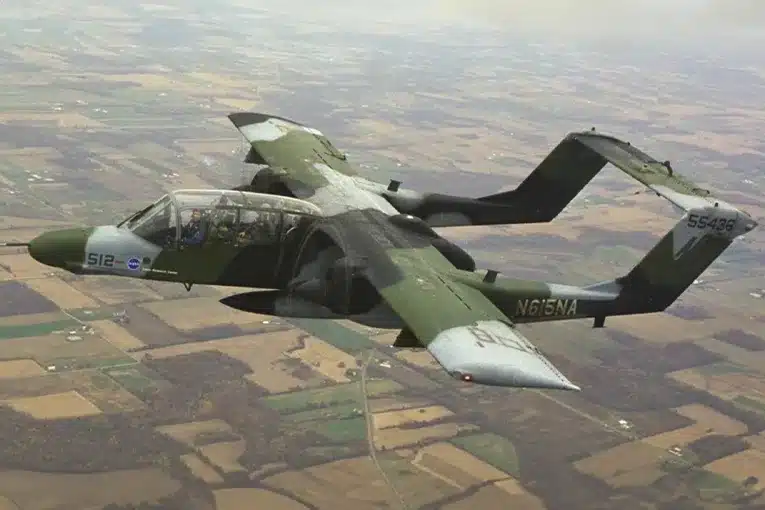
image of a OV-10 Bronco Air Tactical Aircraft
OV-10 Bronco / Source: Wikipedia

Air tactical aircraft (air attack planes) are small, fast planes used to direct aerial firefighting. 

They fly over a wildfire with a pilot and an Air Tactical Group Supervisor (ATGS) onboard. 

From above, they scout fire perimeters, identify hot spots, and radio drop instructions to airtankers and helicopters. 

Examples include the North American OV-10 Bronco (formerly used by CAL FIRE) and light turboprops like the Beechcraft King Air or Cessna 337. 

These planes can loiter over the fire and mark targets for larger aircraft. 

The advantage of air attack planes is coordination.

By ‘calling the drops’, they ensure retardant hits the most critical areas and that multiple aircraft don’t conflict.

They improve safety and efficiency of the aerial assault, acting as flying command centers for the firefighting effort.

Fixed Wing Aerial Tankers

Fixed-wing aerial tankers (airtankers) are airplanes modified to carry fire retardant or water in tanks. 

They fly low over fires and release a stream or line of retardant to slow flames. 

Tankers range from small single-engine aircraft to large multi-engine jets. 

Their role is to blanket the fireline with retardant, creating firebreaks. 

The airtankers are categorized by capacity: Type I (>3,000 gal), Type II (1,800 – 3,000), and Type III (800 – 1,799). 

Very large air tankers (VLATs) exceed 8,000 gallons. 

Each class has its purpose, as detailed below.

Type I

image of a Lockheed L-188 Electra plane
Lockheed L-188 Electra / Source: Wikipedia

Type I airtankers are the largest conventional tankers (3,000 – 5,000 gallons). 

It can drop that in a single pass. 

Type I planes include the Lockheed L-188 Electra (3,000 gal), BAe 146 regional jet (3,000 gal), and McDonnell Douglas MD-87 (4,000 gal). 

These planes carry far more retardant than smaller tankers, so one drop covers a very long stretch of fireline. 

Their advantage is sheer volume. 

Type I tankers are used for extended attacks on large fires where massive coverage is needed.

Type II

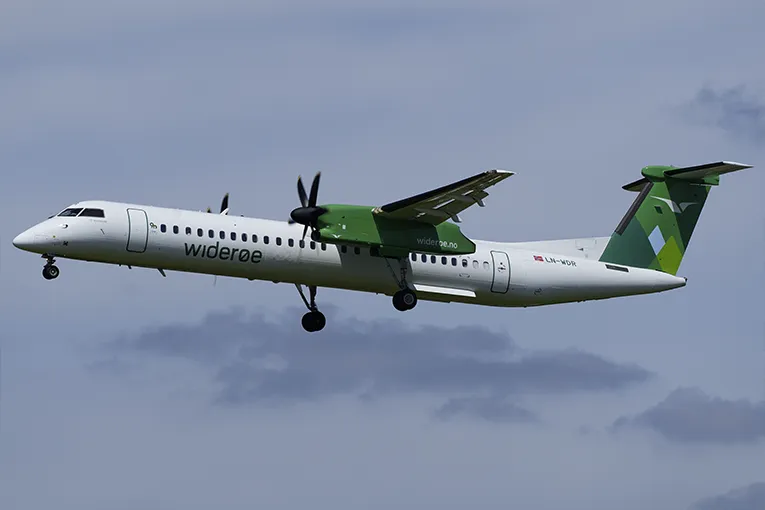
image of a Bombardier Dash-8 Q400 plane
Bombardier Dash 8 Q400 / Source: Wikipedia

Type II airtankers are medium-sized tankers carrying about 1,800 – 3,000 gallons. 

They include turboprop airliners and converted executive jets. 

For example, the Bombardier Dash 8 Q400 (a Canadair airliner) drops  around 2,600 gal, and older warbirds like the Douglas DC-6 or C-130 derivatives are in this class. 

Type II tankers balance capacity with flexibility.

They are faster and more fuel-efficient than single-engine tankers yet can still operate from many airports. 

Multiple Type II drops can cover a large area while using smaller airfields. 

Aviation contractors combine Type II tankers for broad coverage.

For instance, three Q400s might deliver a combined load equivalent to one Type I tanker, but with quicker turnaround from multiple bases.

Type III

image of a Canadair CL-215 plane
Canadair CL-215 / Source: Wikipedia

Type III airtankers are smaller fixed-wing aircraft carrying 800 – 1,799 gallons. 

These include single-engine airtankers (SEATs) and small twin-engine planes. 

Examples are the Air Tractor AT-802 (about 800 gal) and light amphibious planes like the Canadair CL-215 (~1,300 gal). 

Type III tankers are nimble and can use very short or unimproved runways close to fires. 

They are ideal for initial attack on new wildfires.

They arrive quickly, make short drops, and return for more. 

Their advantage is agility and responsiveness. 

Because they operate from small airports, they can reach remote incidents faster, and their shorter water lines can get into steep or confined terrain. 

Airtankers like the S-2 Tracker have stout landing gear and torpedo bays made for retardant tanks, allowing them to basing at small fields with short runways.

Type III tankers sacrifice drop volume for speed and access to work effectively in the early stages of a fire.

VLAT

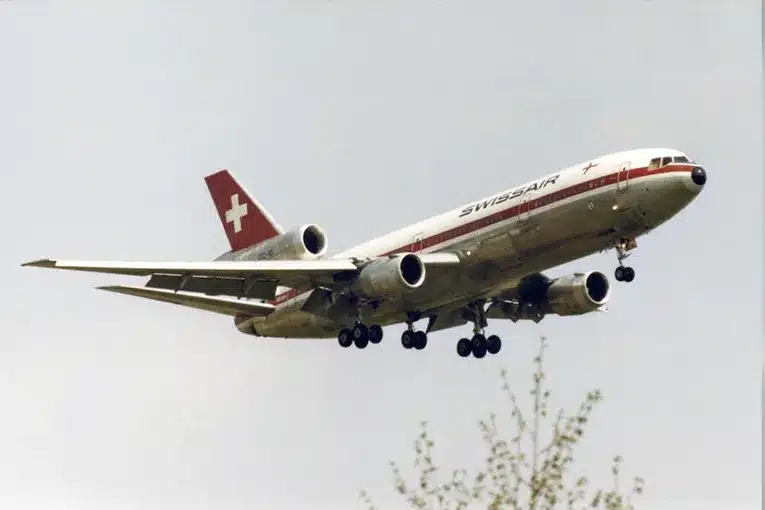
Image of a McDonnell Douglas DC-10 plane
McDonnell Douglas DC-10 / Source: Wikipedia

Very Large Air Tankers (VLATs) represent the largest class of fixed-wing firefighting aircraft and are deployed when massive fire coverage is needed quickly. 

These aircraft are often converted wide-body jets, such as the McDonnell Douglas DC-10.

This can carry upwards of 9,400 gallons of fire retardant in one load, released in just a few seconds to lay down long, continuous lines ahead of advancing flames. 

A single VLAT drop can cover a fireline hundreds of feet wide and miles long, making it much more efficient at slowing fire spread than smaller tankers. 

Other legacy VLAT projects, such as the Boeing 747 Supertanker, were designed to carry nearly 20,000 gallons, demonstrating just how much retardant can be delivered from the air. 

Newer programmes are now developing Boeing 767-based VLATs with even greater capacity and modern systems. 

The main advantages of VLATs are their high payloads and long-reach retardant delivery, which are particularly valuable on very large or fast-moving wildfires where quick, broad coverage is crucial.

Military Aerial Tankers

image of a C-130 Hercules equipped with MAFFS
C-130 Hercules equipped with MAFFS / Source: Wikipedia

Military transport aircraft are also used in firefighting when available. 

The U.S. Forest Service’s Modular Airborne Firefighting System (MAFFS) equips C-130 Hercules transports as temporary tankers (3,000 gal each). 

For example, two MAFFS C-130s were sent to help Colorado fires in 2025. 

A MAFFS unit can discharge 3,000 gal of retardant in under five second. 

In addition, very large military or former military jets have been converted to airtankers. 

These military-type planes cover enormous areas.

The key advantage is volume and reach. 

Such planes can fight high-intensity fires or provide surge capacity when multiple air drops are needed. 

They do require specially equipped bases to refill, but in return they extend the firefighting fleet’s capability by an order of magnitude compared to smaller tankers.

Helicopters

Helicopters are highly versatile firefighting aircraft. 

They can rapidly drop water or retardant on fires, ferry firefighters and equipment, perform aerial ignition, or conduct search and fire rescue

They operate closer to the fireline than fixed-wing tankers. 

Helicopters are also classified by type based on size and capacity. 

Heavy helitankers are Type I, medium helis Type II, and light ones Type III. 

These categories guide their deployment, as we describe below.

Type I

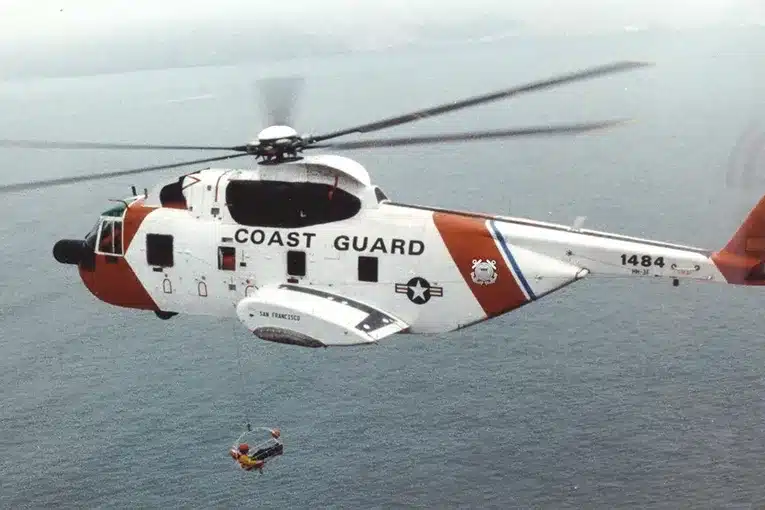
image of a Sikorsky S-61 helicopter
Sikorsky S-61 / Source: Wikipedia

Type I helicopters are the largest firefighting helos (roughly 15+ passenger seats and ~700 gal capacity). 

Examples include Sikorsky S-61/CH-3E and heavyweight airframes like the S-64 Skycrane. 

These can lift several tons of water. 

Civilian Type I helitankers include the AS332 Super Puma and the Erickson S-64 Skycrane (2200 gal). 

Advantages of Type I helis include high drop capacity and speed. 

They can deliver thousands of gallons per mission with good accuracy. 

They often also transport large crews (up to 18 firefighters) in addition to their fire load. 

Their size allows long range and heavy pickups, making them key assets for large or long-duration fires

Type II

image of a Bell 205 helicopter
Bell 205 / Source: Wikipedia

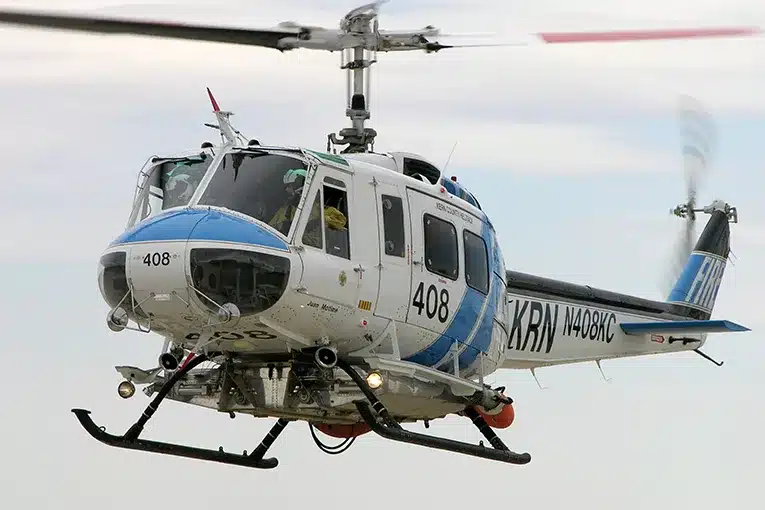
Type II helicopters are medium-sized firefighting helicopters (around 9–14 seats) with moderate bucket loads (up to ~300 gal). 

Examples include the Bell 205/212 (Huey family) and the Sikorsky S-70i (Firehawk) in firefighting configuration. 

These choppers are workhorses for initial attack. 

They can rapidly deliver 200 – 300 gallons to a fire and shuttle firefighters or gear. 

Type II helos balance power and efficiency.

They are faster and carry more than Type III, yet require less support than Type I. 

In many states, Cal Fire’s UH-1H Super Huey (Type II) and similar aircraft are used to bolster early fire response. 

Advantages include quick turnaround and versatility.

TType II helos can be reloaded with water via snorkel taps in seconds and return to precise drop points to support ground crews.

Type III

image of a Bell 206 helicopter
Bell 206 / Source: Wikipedia

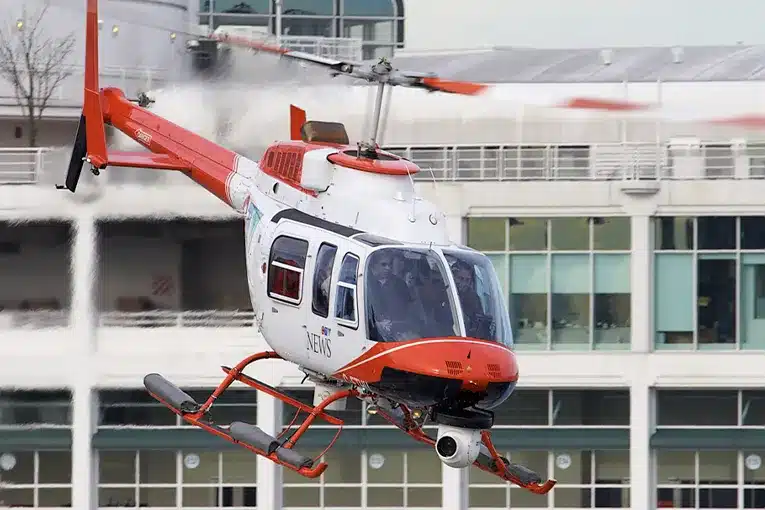
Type III helicopters are the smallest firefighting helos (roughly 4–8 seats) carrying about 100–180 gallons. 

Examples include the Bell 206/407 and MD Helicopters 500 series with buckets. 

Although their loads are small, they have high cruise speeds and rapid maneuverability. 

They can often arrive on scene faster than larger helos, making them useful for quick initial hits on new fires. 

Type III helos typically set up a water bucket (180-gal) and can dip in any nearby water source. 

Their main advantage is agility.

They can operate in confined areas and rough terrain where bigger aircraft cannot, and they can efficiently scout fire edges. 

They cost less to operate, so they are often used to support engines and crews on small fires or in difficult spots.

Military Helicopters

image of a Boeing CH-47 Chinook helicopter
Boeing CH-47 Chinook / Source: Wikipedia

Military helicopters, especially heavy transports, have been adapted as ‘helitankers’ with enormous capacity. 

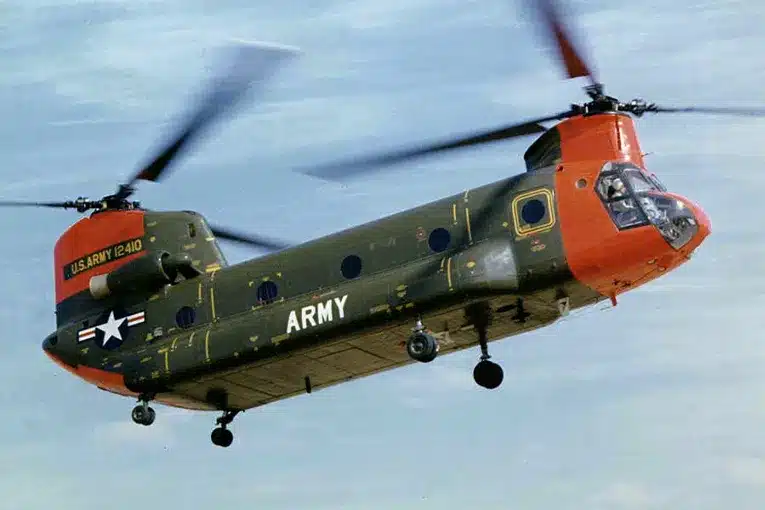
The Boeing CH-47 Chinook (used by Southern California’s Quick Reaction Force) is the largest firefighting helicopter in the world. 

Chinooks carry an internal 3,000-gallon tank and can hover-fill from a source in 90 seconds. 

Another is the Sikorsky CH-53 Sea Stallion/CH-53K, with roughly 2,200 gal capacity, and the CH-54 ‘Helitanker’ Pelican (also ~2,200 gal). 

These military helos are also fast; for example, the Chinook cruises at 160 kt. 

Their advantage is clear.

They deliver far more water than civilian helicopters. 

A single Chinook drop equals multiple drops by Type I helos. 

Additionally, many are night-capable and can transport many troops or load heavier gear. 

Military helitankers combine high volume, speed, and durability, making them formidable tools for large-scale firefighting operations

Final Thoughts

Aerial fire fighting brings together a diverse fleet of aircraft, each with a specialized role. 

Air attack planes guide the operation, fixed-wing tankers blanket fires with retardant, and helicopters provide agile support. 

Each type has advantages – from the enormous drops of DC-10s to the nimble bucket work of small helicopters. 

Used together, these aircraft help contain wildfires that would otherwise spread. 

Modern firefighting continuously evolves (new tankers, night-ops, and even drones), but the core remains.

Different flying machines are tools in the sky fighting fires. 

By rapidly reaching remote fires, delivering huge volumes of water, and coordinating efforts, these aircraft types save land and lives, proving that the sky is an invaluable front line in wildfire suppression.

Magirus eyes further acquisitions, aims to double revenue

Germany-headquartered fire engine manufacturer Magirus has said that it is evaluating further acquisitions, with the aim of enhancing quality and delivery speed.

The company, which said it entered 2026 “stronger than ever” thanks to a strong order backlog, revealed that it could target specialised vehicle manufacturers, workshops or distribution partners.

That would follow its purchase of Achleitner Fahrzeugbau, an Austrian firm specialising in special-purpose vehicles, in October 2025.

Fatmir Veselaj, Chief Executive Officer (CEO) of Magirus, said: “The expansion of our product portfolio through the acquisition of Achleitner, the stabilisation of our processes and the introduction of a platform‑based organisation focused on project execution ensure Magirus’ operational excellence in the long term.

“In this way, Magirus will continue to make a significant contribution to the advancement and future of firefighting and emergency‑response technology.”

Magirus revenue targets for 2030

In 2025, Magirus said it managed to cut delivery times, increase operational efficiency, and realign its sales team.

Meanwhile, the company also unveiled a plan to double revenue by 2030. According to Chief Financial Officer (CFO) Mathias Scholz, the success of 2025 has positioned the company “financially and structurally to achieve sustainable growth in a challenging market environment.”

He said: “The past months have demonstrated how crucial clear governance, well‑defined interfaces and consistent project management are for successful transformation and carve‑out processes.

“With the measures implemented, the company aims to further strengthen its competitiveness and secure its long‑term position in the global market.”

ZIEGLER delivers ARFF to Tibet Airport

Firefighting vehicle manufacturer ZIEGLER delivered a type Z8 Aircraft Rescue and Fire Fighting Vehicle (ARFF) to Lhasa Gonggar Airport in Tibet, China. With a extinguishing agent volume of 17,000 litres of water and 2,040 litres of foam compound, the Z8 is ready for extinguishing attacks in an emergency and for the increased requirements at one of the world’s highest airports.

Features of the Z8

The Z8 is equipped with two traction motors that enable acceleration and a top speed of 140 km/h- even under demanding climactic and geographical conditions. As a result of ZIEGLER’S extinguishing technology, the Z8 is designed to ensure efficiency in operations where every second counts.

Lhasa-Gonggar Airport, which is located at an altitude of 3,570 metres above seal level is a transportation hub in Western China. The delivery of the ZIEGLER is helping to further increase safety at this location and raise the international standard in the field of airport fire protection technology.

ZIEGLER’s Product Manager ARFF, Fabian Schmidt’s statement

Fabian Schmidt, Product Manager ARFF at ZIEGLER said: “With the Z8 at Lhasa Airport, ZIEGLER is once again demonstrating its leading role in the development and provision of Aircraft Rescue and Fire Fighting Vehicles for the most demanding operational scenarios worldwide.”

Tibetian Airport receive ARFF from ZIEGLER: Summary

ZIEGLER have delivered a Z8 ARFF to Lhasa Gonggar Airport in Tibet. The Z8 has been designed to combat emergency attacks and to maintain efficiency.

Magirus debuts Dragon X6 Neo with advanced safety features at Dresden trade fair

Magirus presents new airport firefighting vehicle at FLORIAN trade fair

Magirus has introduced the Dragon X6 Neo, an advanced airport firefighting vehicle, at the FLORIAN trade fair in Dresden.

The vehicle is designed to enhance safety in airports as travel volumes increase worldwide following the pandemic.

According to Magirus, the Dragon X6 Neo offers faster response times with its powerful dual-engine system.

It can accelerate to 80 km/h in less than 20 seconds, making it the fastest vehicle in its class.

Magirus has equipped the Dragon X6 Neo with Euro 6 Step E engines, delivering a total of 1140 HP and a torque of 5000 Nm.

This provides firefighters with both speed and power, ensuring rapid access to emergencies across airport grounds.

The vehicle also includes full pumping power while moving, thanks to its innovative architecture.

Modern design and user-friendly interface improve operational efficiency

The Dragon X6 Neo features a new design, enhancing both its appearance and functionality.

Magirus CEO Thomas Hilse said: “Driver-friendliness has been significantly improved by the new EasyOperator human-machine interface (HMI) with a larger display.”

This interface simplifies vehicle operation, allowing emergency crews to access key controls with ease.

The updated design also focuses on fleet management integration.

The addition of FleetConnect allows better coordination and maintenance of emergency vehicles, helping to streamline operations and reduce downtime.

The Dragon X6 Neo also meets strict EURO VI emission standards, aligning with Magirus’ goal of creating future-proof and environmentally friendly vehicles.

Enhanced safety features and availability timeline

In addition to its acceleration capabilities, the Dragon X6 Neo includes advanced safety features.

The vehicle is equipped with an electronic braking system and an electronic stability program (ESP), ensuring maximum control in various conditions.

Magirus plans to incorporate these innovations into their entire range of airfield firefighting vehicles by the second quarter of 2025, as confirmed by Marc Kuntz, Director of Sales and Customer Service.

The vehicle is available for order now, with deliveries expected to begin in Q2 of 2025.

The Dragon X6 Neo’s combination of high performance, safety, and environmental compliance makes it a strong option for airports looking to upgrade their firefighting fleet.

Key features of the Dragon X6 Neo

The Dragon X6 Neo’s technical specifications make it stand out in its class.

It is powered by two Cursor 13 engines, each providing 570 HP.

The vehicle has a combined torque of 5000 Nm, allowing it to meet the stringent standards required for airport firefighting vehicles.

The “pump and roll” capability enables the vehicle to provide full pumping power while moving, a feature crucial for effective firefighting.

The design upgrades are not only aesthetic but functional, with the Dragon X6 Neo boasting a completely revised front and rear section.

This new design, combined with its state-of-the-art technologies, ensures that the vehicle meets modern requirements for safety, performance, and sustainability.

Magirus debuts Dragon X6 Neo with advanced safety features at Dresden trade fair: Summary

Magirus has unveiled the Dragon X6 Neo, a cutting-edge airport firefighting vehicle, at the FLORIAN trade fair in Dresden.

The vehicle features a dual-engine system, allowing it to accelerate to 80 km/h in under 20 seconds, which is the fastest in its class.

The Dragon X6 Neo meets Euro 6 Step E emission standards and is equipped with an advanced human-machine interface (HMI) for easier operation.

Additional safety features include an electronic braking system and stability program.

The vehicle is expected to be available in Q2 2025, with orders now open.

ZIEGLER showcases vehicles and equipment at Florian 2024

ZIEGLER displays advanced firefighting vehicles and equipment

ZIEGLER will showcase a range of firefighting vehicles and equipment at the Florian trade fair, which takes place this year.

As reported by ZIEGLER, visitors will find the company at stand F30 in the outdoor area 3, where several key vehicles will be displayed.

These include the HLF 20, the MLF, and the GW-L 2, all built on MAN and Iveco chassis.

In addition to these vehicles, ZIEGLER will highlight its newly developed rolling containers, designed for various deployment scenarios such as firefighting, technical assistance, and disaster control.

The company emphasises the containers’ functionality and flexibility, ensuring that they are optimal for transporting and storing equipment safely during operations.

Z-Connect and Z-Remote digital systems on display

ZIEGLER will also present its digital products, Z-Connect and Z-Remote, which are integrated into all vehicle exhibits at Florian.

These systems offer real-time vehicle data and provide interfaces compatible with all standard industry platforms.

ZIEGLER’s latest series-ready system supports operation management with enhanced functions that can be continuously expanded in collaboration with their industry partners.

As a founding member of IMBOS e.V., ZIEGLER will be available at the trade fair for further discussions on digital innovations and integration within the industry.

This aims to foster industry-wide cooperation in adopting digital technologies in emergency services.

The return of ZIEGLER Ultra Power

ZIEGLER is also reintroducing its proven Ultra Power, a powerful solution used extensively in firefighting operations.

According to Heiko Riek, Head of Sales Equipment and Components at ZIEGLER, the Ultra Power is a reliable product that has “demonstrated its strength in practice” and is expected to be delivered in larger quantities soon.

Riek emphasised that customer trust and product reliability remain the company’s primary focus.

Visitors attending the Florian trade fair can get a closer look at the Ultra Power and learn more about its capabilities.

A wide selection of emergency vehicles available

ZIEGLER will also present a selection of emergency vehicles at the trade fair, including both customer vehicles and demonstration models.

The featured HLF 20 is particularly suited for firefighting and technical assistance, with its extensive equipment making it a vital part of emergency operations.

The MLF, with its compact design, is ideal for manoeuvring through narrow lanes, while the GW-L 2 offers generous storage space, perfect for varied deployment scenarios.

Additionally, a TLF 4000 will be displayed at the Unimog partner booth, giving visitors insights into the range of applications for ZIEGLER vehicles in forest fires.

The comprehensive ZIEGLER portfolio will be available for visitors to explore, with staff on hand to provide technical advice and answer questions.

ZIEGLER presents emergency vehicles and equipment at Florian 2024: Summary

ZIEGLER will showcase a variety of firefighting vehicles and equipment at the 2024 Florian trade fair.

Key exhibits include the HLF 20, MLF, and GW-L 2 vehicles, alongside newly developed Z-roll containers.

ZIEGLER’s digital products, Z-Connect and Z-Remote, will also be on display, offering real-time vehicle data and integration with industry platforms.

The Ultra Power firefighting solution, known for its reliability, is being reintroduced.

In addition to these displays, a TLF 4000 will be featured at the Unimog partner booth.

Visitors will have the opportunity to explore nearly the entire ZIEGLER portfolio and speak with experts at the event.

Zelim Unveils World’s First Unmanned Man Overboard Rescue Vessel at SMM Trade Fair

Zelim, the Edinburgh based sea survival innovator, has officially launched the world’s first unmanned/manned remotely controlled person-in-water rescue vessel.

GUARDIAN, an 8.4m long, 2.5 wide aluminium hulled Next Generation Fast Rescue Craft (FRC), was unveiled to the international maritime industry for the first time at the SMM Trade Fair, in Hamburg, Germany.

Specifically designed for rapid deployment from a ship to recover both conscious and unconscious man-overboard casualties, the GUARDIAN FRC can operate in maritime conditions that conventional manned recovery solutions would find challenging or too dangerous to deploy.

Taking four years’ research and development, with input from the UK’s Maritime & Coastguard Agency and the US Coastguard GUARDIAN incorporates Zelim’s type approved SWIFT rapid rescue conveyor and ZOE, Zelim’s intelligent detection software for optimising search.

During a MOB event, GUARDIAN is instantaneously lowered into the water by way of a ship’s existing LARS davit installed at deck level.  Once in the water, an Alamarin AJ285 waterjet powered by a single Bukh VGT 400HP motor speeds the rescue vessel along at a rate of 30-plus knots towards the casualty. GUARDIAN’S range is 15nmiles with a six-hour endurance.

As it nears the person(s) in the water, the FRC lowers the integrated SWIFT and slowly heads towards the casualty who is then recovered from the water by the rescue conveyor, which is specifically designed to grip and recover immersed casualties, whilst minimising the risk to casualties from the loss of hydrostatic pressure. SWIFT can pull two survivors to safety simultaneously, minimising the risk for rescuers.

Given that about 40% of all man-overboard incidents results in fatality, with more than 1000 people falling overboard annually, the efficiency and simplicity of Zelim’s GUARDIAN in rescue missions cannot be understated. 

“Sea survival is hugely dependent on the time it takes to retrieve individuals from the water, but inclement weather can prohibit the launch of manned rescue craft and lives are needlessly lost,” said Zelim founder and innovator Sam Mayall.

“Ship crews have little time to carry out an effective rescue before maritime conditions prevent the casualty from assisting in their own rescue. When rescue vessels approach, many survivors simply don’t have the strength to pull themselves to safety. This is even more difficult when they are unconscious or unresponsive. GUARDIAN has been designed to ensure more people can be rescued in the harshest of weather conditions.”

With capacity for 11 survivors (nine if GUARDIAN deployed with a two-person crew), the lightweight FRC also benefits from AI-based person-in-water detection and alerting system.

Peter Lloyd, Zelim’s Director of Search and Rescue, said: “Speed is the key to rescuing individuals from the water before they perish. But first you must find your casualty. Sea search is notoriously difficult with human performance subject to distraction and loss of attention, especially during a prolonged search. In Zelim’s aim to develop an unmanned rescue vessel, sea search had to be automated.”

The result of Zelim’s product development was ZOE, a new software tool capable of providing instant detection and alerting of persons and objects that enter a field of view. ZOE is also capable of differentiating between a human in the water and other objects that might be present such as buoys, flotsam and jetsam.

Providing real time location information and integrated with the GUARDIAN’S navigational system, the technology allows rescuers to see what the human eye cannot with visual cues overlayed on a simple display.

While Zelim is marketing SWIFT and ZOE as standalone maritime safety and security tools, their integration with GUARDIAN demonstrates how easily the technology can mitigate the risks for both rescuer and casualty to improve the chances of MOB recovery.

The decision to launch any rescue asset is always a balance between the risk to the rescuers and the probability of success. An unmanned, or lean manned GUARDIAN, may permit a launch in conditions beyond those normally accepted,” said Lloyd.

The FRC can operate with or without a crew, remotely, and has enhanced rescue situational awareness capability. It has the same footprint as conventional craft, and can be easily stowed and deployed using existing davits.

In addition to MOB missions, GUARDIAN can perform a variety unmanned maritime safety and security roles, including search and rescue, security patrols, standby and recovery. Zelim believes GUARDIAN should be installed on ocean-going vessels, including cruise ships, and offshore vessels and platforms, as a matter of course.

Why are Firetrucks Red?

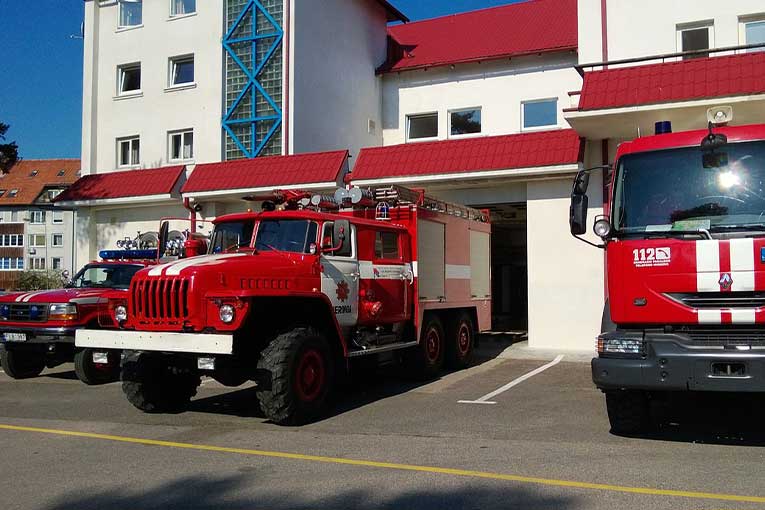
Firetrucks, with their distinctive red hue, stand out as symbols of rapid response to emergencies, commanding attention on roads and streets worldwide. 
But why are firetrucks red?

The vibrant red colour has become synonymous with the urgency and gravity of firefighting efforts. 

While the sight of red firetrucks is deeply ingrained in our collective consciousness, the origins of this colour choice remain shrouded in curiosity and speculation.

In this article, we will delve into the mystery behind the enduring tradition of painting firetrucks red.

Why are Firetrucks Red?

why are firetrucks red image

Firetrucks, with their bold and unmistakable red hue, have become iconic symbols of emergency response. 
The choice of this vibrant colour is deeply rooted in tradition. 

As to why firetrucks are red, the short answer is nobody knows for sure.

However there are numerous theories as to why, with some of the most common being:

Cheapest Colour of Paint

firetrucks red cheapest paint

One widely circulated theory suggests that red became the colour of choice for firetrucks due to its historical status as the least expensive colour of paint. 

In the early days of fire departments, when budgets were tight and they were mostly volunteers, the cost-effectiveness of red paint made it an economical choice. 

This theory reflects a pragmatic approach, where fire departments aimed for a uniform and easily recognizable colour without straining their limited resources.

Most Expensive Colour of Paint

firetrucks red most expensive paint

Contrary to the cost-effectiveness theory, another perspective argues that red was intentionally chosen as the most expensive colour of paint. 

In this view, fire departments sought high-quality, durable paint to protect their vehicles from the elements and enhance their visibility. 

While this theory challenges the notion of frugality, it underscores the importance of investing in materials that ensure the longevity and effectiveness of firefighting equipment.

Farmers

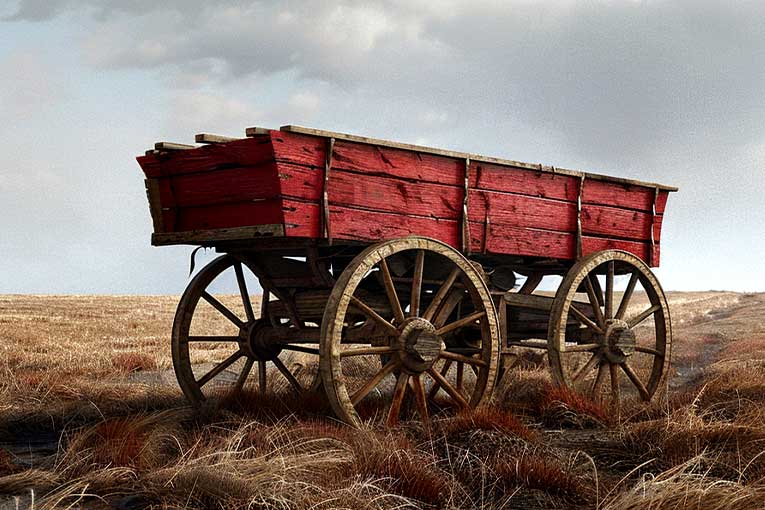
firetrucks red farmers carts

An interesting historical twist connects the colour choice of firetrucks to the practices of farmers. 

During the early days of fire departments, when acquiring vehicles for their fleets, departments often obtained used trucks from farmers. 

Farmers, who commonly painted their carts red to hide dirt and grime, unintentionally contributed to a surplus of red-painted carts that fire departments adopted. 

This theory highlights the influence of practicality and resourcefulness in shaping the colour palette of firefighting fleets.

Displaying Urgency

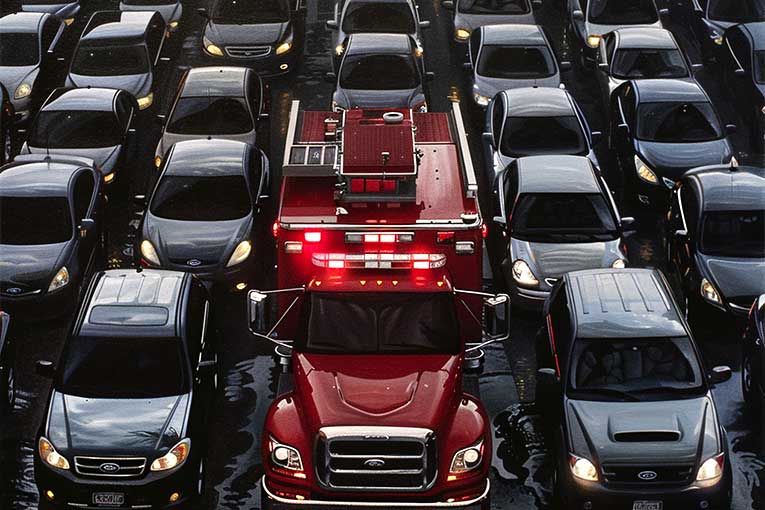
firetrucks red urgency

The early 20th century, marked by the dominance of black-coloured Ford cars, introduced another theory regarding the choice of red for firetrucks. 

In an era where many vehicles were black, fire departments opted for red to stand out and convey a sense of urgency. 

The stark contrast between the red firetrucks and the sea of black vehicles on the road facilitated quick identification and emphasised the critical nature of their mission.

An Old Joke

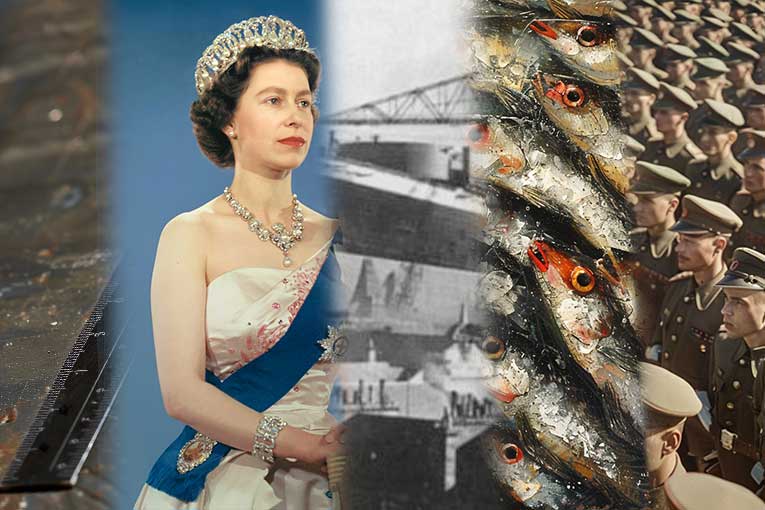
firetrucks red old joke

“Because they have 8 wheels and 4 people on them, and 4 plus 8 makes 12, and there are 12 inches in a foot, and 1 foot is a ruler, and Queen Elizabeth was a ruler, and Queen Elizabeth was also a ship, and the ship sailed the seas, and there were fish in the seas, and fish have fins, and the Finns fought the Russians, and the Russians are red, and fire trucks are always ‘Russian’ around, so that’s why fire trucks are red!”

Adding a humorous twist to the discussion is a centuries-old joke that offers a playful explanation for why firetrucks are red. 

According to this whimsical theory, the colour choice is a result of a convoluted chain of associations involving wheels, rulers, ships, fish, and even geopolitical references. 

While clearly a jest, this theory highlights the lighthearted and imaginative interpretations that have woven their way into the lore surrounding firetruck colours.

Can Firetrucks be Other Colours?

While red remains the traditional and widely recognized colour for firetrucks, fire departments around the world have occasionally deviated from this norm, experimenting with different colours for various practical and strategic reasons. 

These alternative colour choices not only break with tradition but also serve specific purposes in enhancing safety, visibility, and aesthetic appeal during emergency responses.

Yellow

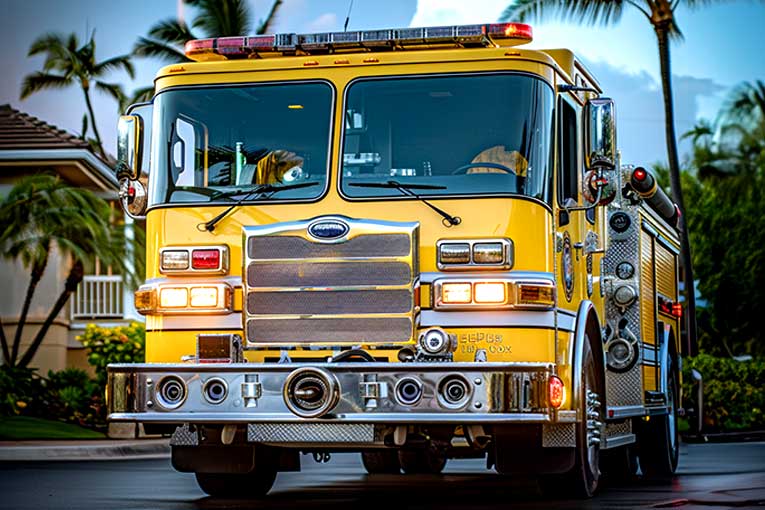
yellow firetruck

Yellow firetrucks are occasionally employed to address specific challenges posed by rural environments. 

The vibrant and contrasting colour of yellow enhances visibility, making the trucks more noticeable, especially in expansive rural landscapes. 

This increased visibility is crucial for navigating challenging terrains and locating emergency sites efficiently. 

A notable example is the use of yellow firetrucks in Australia, in regions where the topography and vegetation necessitate heightened visibility for effective emergency response.

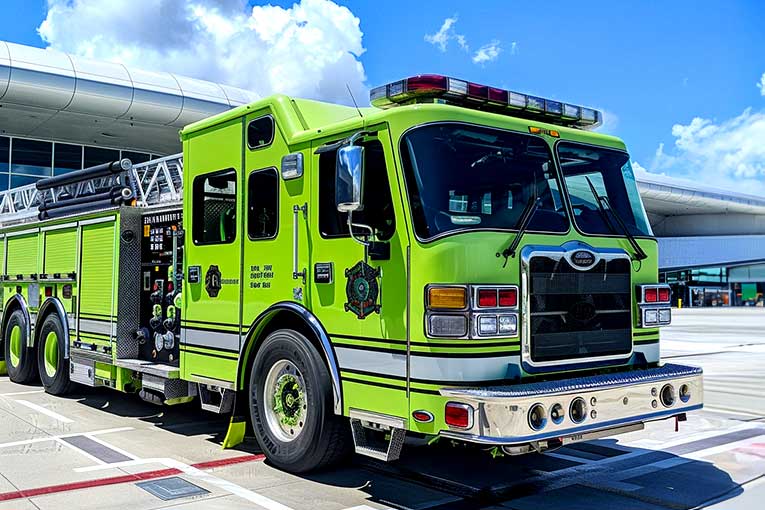
Lime Green

lime green firetruck

Lime green has emerged as a colour choice motivated by a desire to maximise visibility both during the day and at night. 

This highly visible hue stands out in various lighting conditions, ensuring that firetrucks are easily spotted by motorists and pedestrians alike. 

Fire departments adopting lime green firetrucks prioritise safety and awareness during emergency responses. 

This choice is particularly evident in urban areas where diverse lighting scenarios demand enhanced visibility. 

Several examples showcase fire departments incorporating lime green firetrucks into their fleets to bolster their visibility during critical operations.

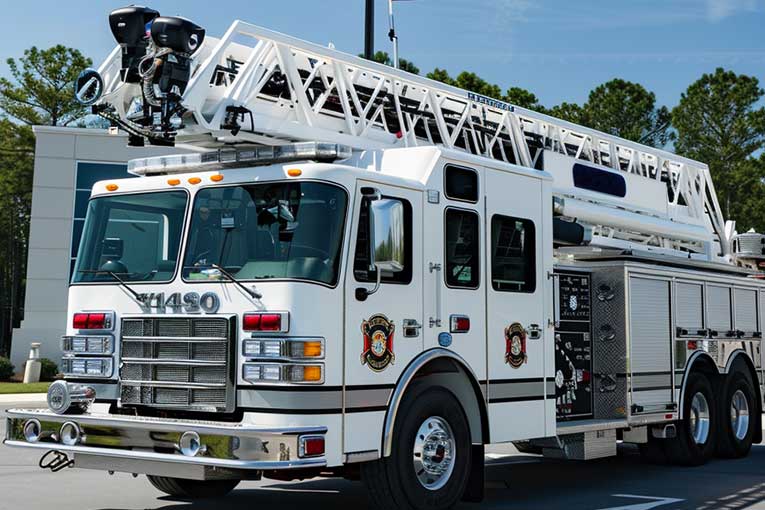
White

white firetruck

White firetrucks represent a departure from the traditional red, chosen by certain fire departments for their clean and modern aesthetic. 

The use of white not only imparts a contemporary look but also serves practical purposes. 

White is a reflective colour, aiding visibility, especially in low-light conditions. 

This choice aligns with the evolving design preferences of fire departments seeking a fresh and modern image while maintaining functionality. 

Examples of fire departments incorporating white firetrucks into their fleets can be found in urban settings where aesthetics and visibility converge as crucial considerations.

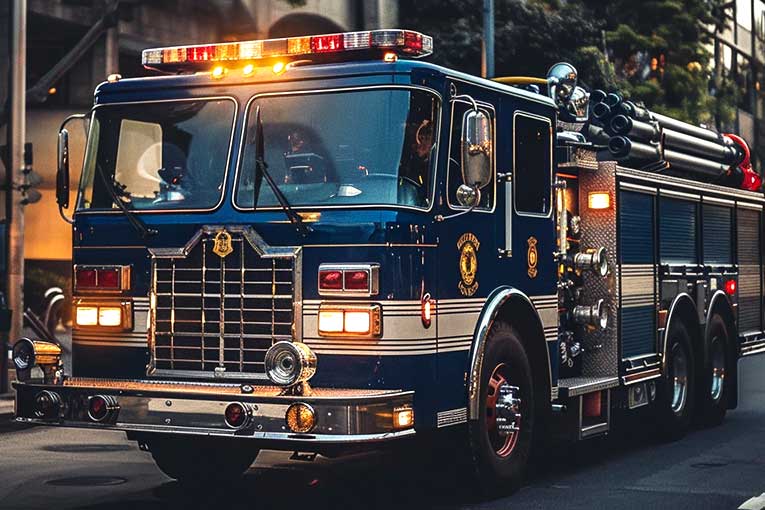
Blue

blue firetruck

While less common, blue firetrucks are occasionally employed for special purposes or to distinguish specific types of emergency vehicles. 

Blue may be reserved for specialised units within a fire department, signifying distinct functions or equipment. 

This colour choice can aid in rapidly identifying the purpose of a particular vehicle during multi-agency responses. 

Real-world instances include fire departments utilising blue firetrucks for hazardous materials response teams or specialised rescue units, where differentiation in colour supports quick and efficient coordination during emergencies.

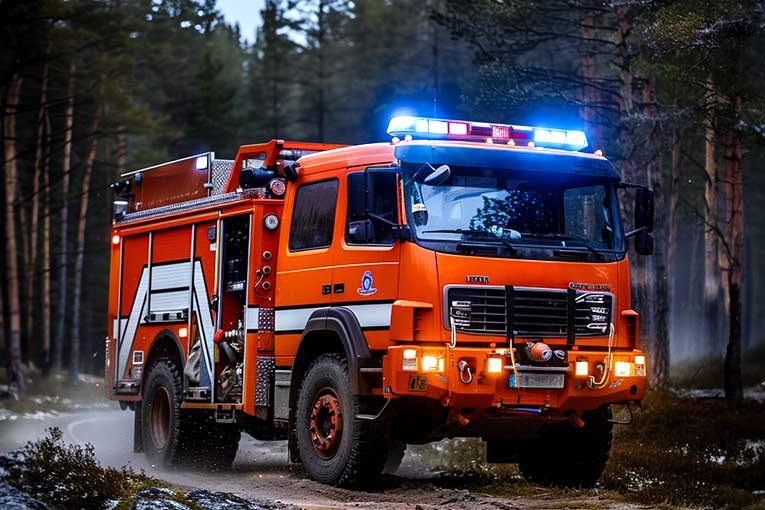
Orange

orange firetruck

In Finland, the use of orange firetrucks adds a distinctive touch to the country’s emergency response vehicles. 

The choice of orange as a colour for firetrucks is not only a departure from the traditional red but also serves specific purposes tailored to the unique challenges of Finland’s environment.

The vibrant orange hue enhances visibility, especially in the country’s varied landscapes, including forests and lakes. 

Finland’s terrain, characterised by vast expanses of nature, demands vehicles that can stand out against diverse backgrounds. 

Orange firetrucks address this need by providing increased visibility during emergency responses, ensuring that they can be easily spotted in both urban and rural setting

Conclusion

Hopefully this should answer your question of why are firetrucks red?

While red remains the predominant colour for firetrucks, the choice is not solely based on tradition or aesthetics. 

Practical considerations, historical influences, and attempts to increase visibility and safety have all played a role in shaping the colour choices for these vital emergency response vehicles. 

As fire departments continue to evolve and adapt to new technologies and safety standards, we may see further experimentation with colours in the future. 

Regardless of the colour, the primary goal remains the same – to ensure that firetrucks are easily recognizable and effective in responding to emergencies.

List of Firefighting Equipment

Firefighting equipment is what helps firefighters to extinguish flames, ensuring the safety of lives and property, and the varied list of firefighting equipment shows how diverse firefighting really is. 

From traditional tools like fire extinguishers to cutting-edge technology such as thermal imaging cameras, each item plays a crucial role in a firefighter’s arsenal. 

In this article, we’ll explore the diverse list of firefighting equipment, shedding light on their functions and importance in the face of fire emergencies.

What is Firefighting Equipment?

Firefighting equipment encompasses a diverse range of tools, devices, and protective gear specifically designed to combat and manage fires effectively. 

These crucial elements are essential for firefighters in their mission to extinguish flames, rescue individuals, and mitigate the impact of fire emergencies. 

Each piece of equipment serves a unique purpose in the complex and challenging task of firefighting.

Firefighting equipment is not only about extinguishing flames but also about ensuring the safety of those on the front lines. 

Protective gear, such as fire suits and gloves, shields firefighters from extreme heat, allowing them to navigate hazardous environments. 

The continuous advancements in firefighting equipment underscore a commitment to improving the efficiency, safety, and overall effectiveness of firefighting operations.

Firefighting equipment is the lifeline for those who risk their lives to protect communities and properties from the devastating impact of fires.

List of Firefighting Equipment

Firefighting equipment constitutes a comprehensive arsenal designed to combat fires of varying intensities and types. 

Each tool plays a crucial role in ensuring the safety of firefighters and the effectiveness of fire suppression efforts.

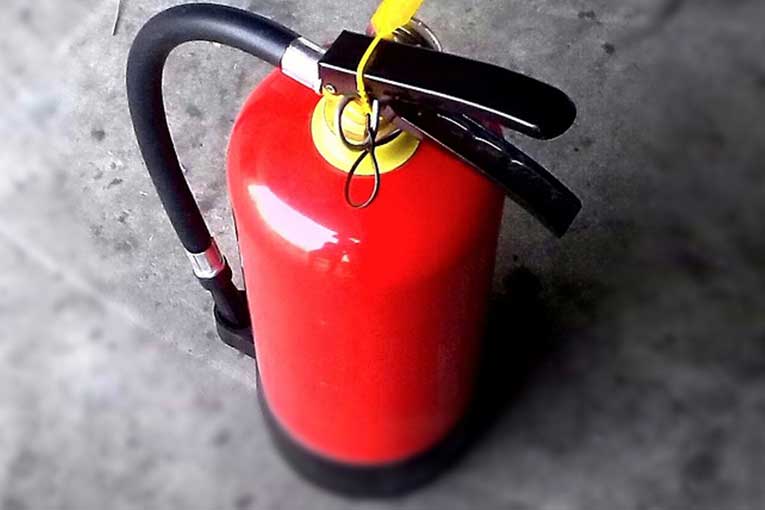
Fire Extinguishers

fire extinguisher firefighting equipment

Portable and versatile, fire extinguishers are essential for promptly suppressing and extinguishing small fires. 

There are many different types of fire extinguisher, each containing specific firefighting agents such as water, foam, dry powder, or CO2. 

The diversity in extinguisher types ensures flexibility in addressing different classes of fires—whether involving ordinary combustibles, flammable liquids, electrical equipment, or gases. 

This adaptability allows firefighters and individuals to employ the most suitable extinguishing agent, enhancing the effectiveness of fire suppression efforts across a wide range of fire scenarios.

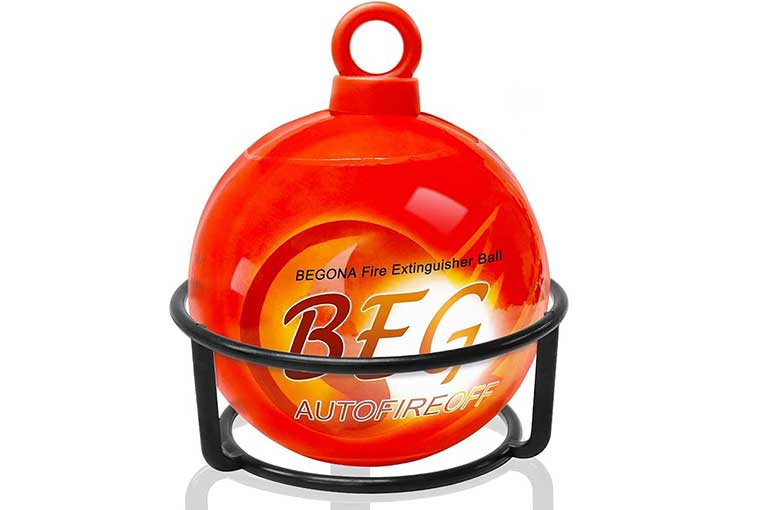
Fire Extinguisher Ball

fire extinguisher ball firefighting equipment
Source: Amazon

An innovative self-activating fire suppression system, the Fire Extinguisher Ball offers a unique approach to firefighting. 

When exposed to flames, the ball bursts autonomously, releasing a fine powder that swiftly and effectively extinguishes the fire. 

This ingenious device is particularly advantageous in confined spaces or areas with limited accessibility, where traditional firefighting methods might face challenges. 

The Fire Extinguisher Ball’s ability to initiate fire suppression independently makes it a valuable addition to fire safety measures, ensuring a rapid response even in scenarios where immediate human intervention may be difficult.

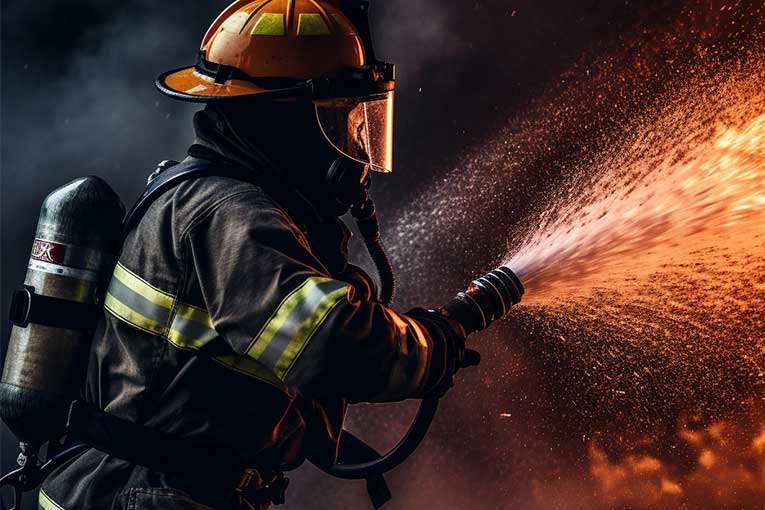
Fire Hoses

fire hose firefighting equipment

As one of the most prevalent tools in large-scale firefighting, fire hoses are indispensable for firefighters combating significant flames. 

These flexible and robust hoses serve as critical conduits, allowing the directed flow of water onto the fire. 

Their length and adaptability empower firefighters to reach remote or challenging locations, providing a versatile means of effectively delivering water to suppress fires. 

The strategic use of fire hoses enhances the agility and reach of firefighting efforts, enabling responders to address fires in diverse environments and mitigate potential challenges posed by the fire’s scale and intensity.

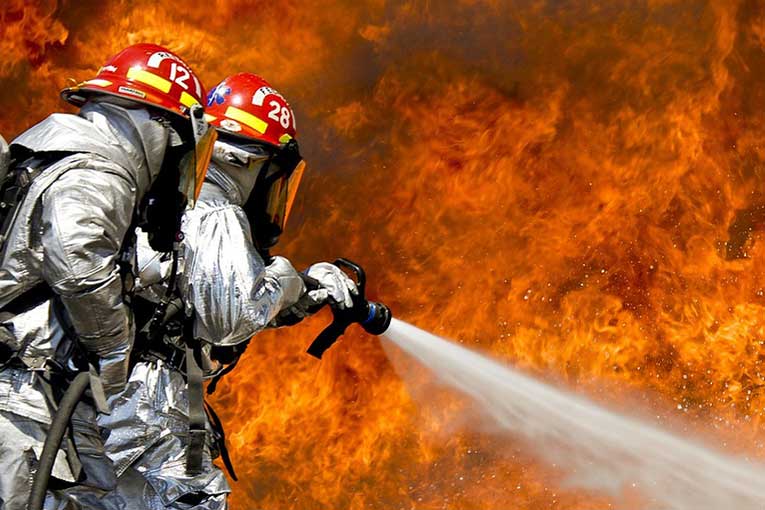
Hose Jets

fire hose firefighting equipment

Hose Jets represent heightened firefighting capabilities, requiring the collaboration of two firefighters to handle their extra power. 

These specialised tools offer an elevated force and flow, allowing firefighters to exert increased control over the extinguishing process. 

With the ability to adjust the jet stream, firefighters enhance precision in directing water onto the flames, addressing specific firefighting requirements. 

The collaborative use of Hose Jets reflects a strategic approach, amplifying the effectiveness of firefighting efforts in scenarios where a more robust and targeted water delivery is essential to combat fires of greater scale or intensity.

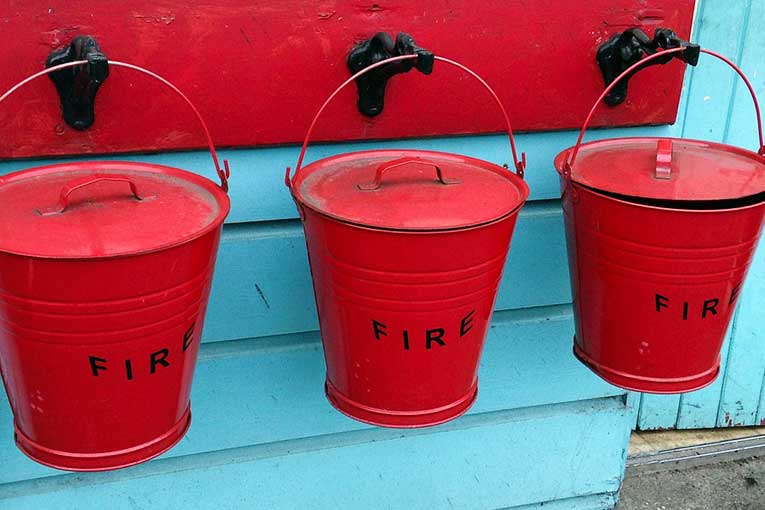
Fire Buckets

fire buckets firefighting equipment

Simple in design yet highly effective, fire buckets are containers filled with either water or sand. 

Positioned strategically, these buckets serve as immediate response tools, offering a swift and accessible means to douse small fires or control sparks. 

Their simplicity makes them an essential first line of defence, providing an uncomplicated yet crucial tool in the initial stages of firefighting. 

Whether used by trained personnel or as part of fire safety measures in public spaces, fire buckets play a fundamental role in empowering individuals to take immediate action and contribute to fire containment efforts.

Flamezorb

flamezorb firefighting equipment
Source: Amazon

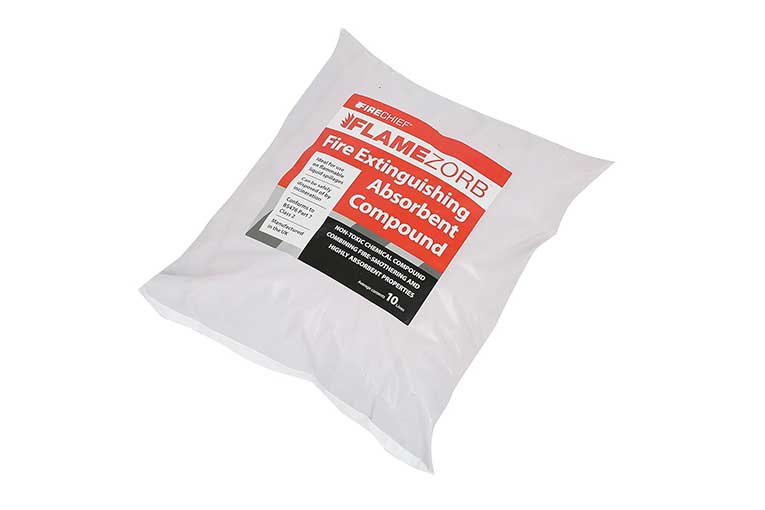
Flamezorb, a granular substance, serves as a rapid-response tool in firefighting by efficiently absorbing flammable liquids. 

When applied to spills, it swiftly neutralises and absorbs the substances, preventing the spread of fire. 

This versatile and effective tool finds particular utility in scenarios involving hazardous materials or potential chemical fires, where the quick containment of flammable liquids is essential to mitigate the risk of fire escalation. 

Flamezorb’s ability to address such specific challenges makes it a valuable asset in the firefighting arsenal, contributing to the overall effectiveness of fire suppression efforts in diverse and complex situations.

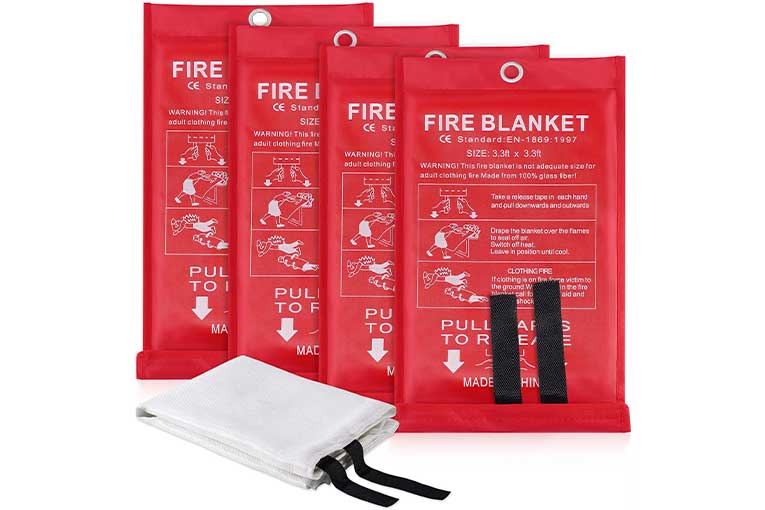
Fire Blankets

fire blanket firefighting equipment
Source: Amazon

Constructed from fire-resistant materials, fire blankets emerge as versatile tools in firefighting and emergency response. 

Beyond their primary function of smothering small fires, these blankets provide a multifaceted solution. 

In emergency situations, they offer protection by wrapping around individuals, creating a temporary shield against flames and heat. 

The adaptability of fire blankets extends their utility beyond traditional firefighting scenarios, making them valuable assets in various emergency situations where rapid response and versatile tools are paramount to ensuring the safety of individuals and effectively addressing evolving challenges.

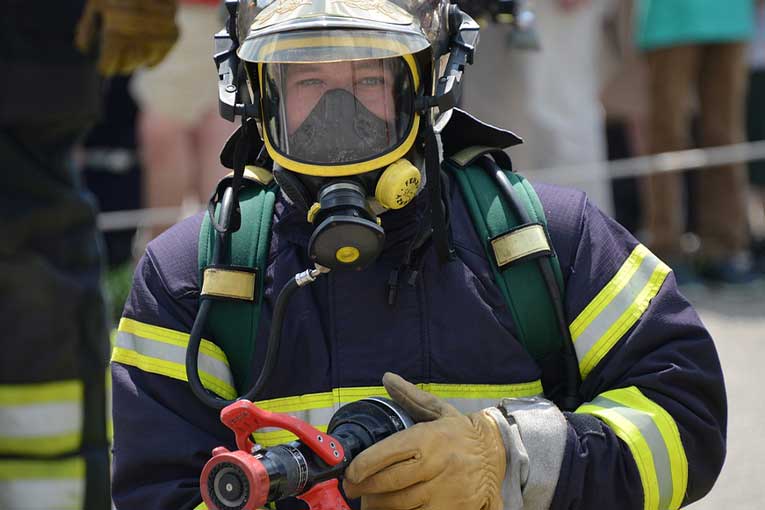
Fire Suit

fire suit firefighting equipment

Specially designed for the demanding challenges of firefighting, a fire suit is more than  a mere uniform – it’s a shield against extreme heat and flames. 

Crafted from fire-resistant materials, these suits envelop firefighters in a protective barrier during the most intense operations. 

With layers designed to withstand the harsh conditions of a fire, these suits are crucial in ensuring the safety and well-being of firefighters. 

The specialised construction of fire suits exemplifies the commitment to providing a robust defence against the hazards encountered in the line of duty, reinforcing the resilience of those who bravely confront the flames.

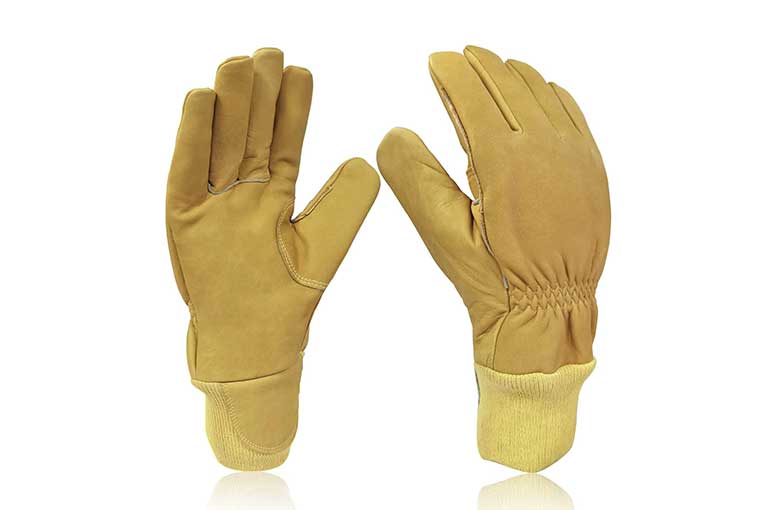
Firefighter Gloves

firefighting gloves firefighting equipment
Source: Amazon

These gloves are essential for firefighters, offering crucial hand protection in the dynamic and intense environments encountered during firefighting operations. 

Crafted from materials resistant to high temperatures, they enable firefighters to handle hot surfaces and materials with confidence. 

The specialised design of firefighter gloves prioritises both dexterity and protection, allowing firefighters to navigate challenging situations while safeguarding their hands from the formidable heat generated in the course of combating fires. 

Gas Tight Suit

gas tight suit firefighting equipment
Source: Wikipedia

Comprising a multi-layered construction, these suits act as an impermeable barrier, creating a formidable shield between the firefighter and potentially harmful substances. 

Their purpose extends beyond conventional firefighting gear, addressing the specific challenges posed by chemical fires and the release of dangerous gases. 

By providing an encapsulating defence, gas-tight suits empower firefighters to navigate complex and perilous environments, ensuring their safety while enabling effective response and mitigation in the face of chemical hazards.

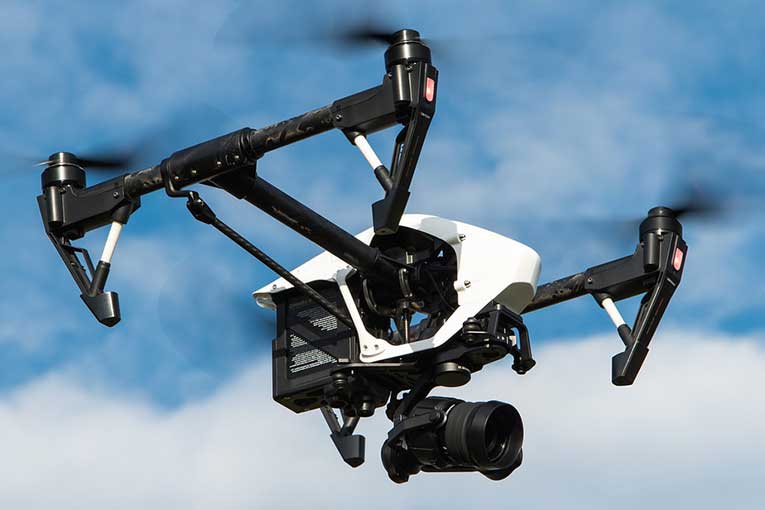
Drones

drones firefighting equipment

These unmanned aerial vehicles, equipped with advanced cameras, offer invaluable aerial views that significantly enhance fire assessment capabilities. 

Providing real-time situational awareness, drones become the eyes in the sky for firefighting teams. 

Their ability to swiftly survey large areas and capture critical information aids in strategizing and responding effectively to incidents. 

Drones not only contribute to the safety and efficiency of firefighting operations but also offer a technological edge, elevating the precision and speed with which responders can assess, plan, and execute strategies in the dynamic context of firefighting scenarios.

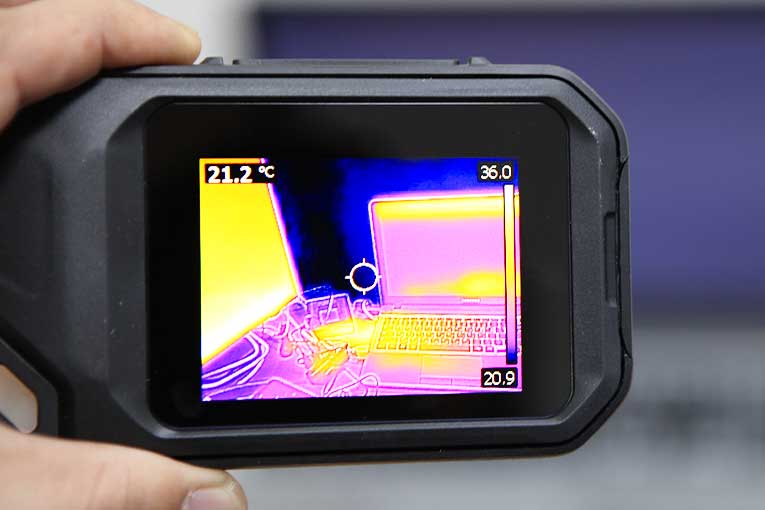
Thermal Imaging Camera

thermal camera firefighting equipment

Thermal imaging cameras aid in locating individuals trapped in smoke-filled environments and identifying hotspots that may not be visible to the naked eye. 

The invaluable data provided by thermal imaging cameras enhances the efficiency and safety of firefighting operations. 

By offering real-time insights into the intensity and distribution of heat, these devices empower firefighters with the ability to make informed decisions, optimise resource allocation, and execute targeted strategies for suppressing fires and conducting search and rescue operations.

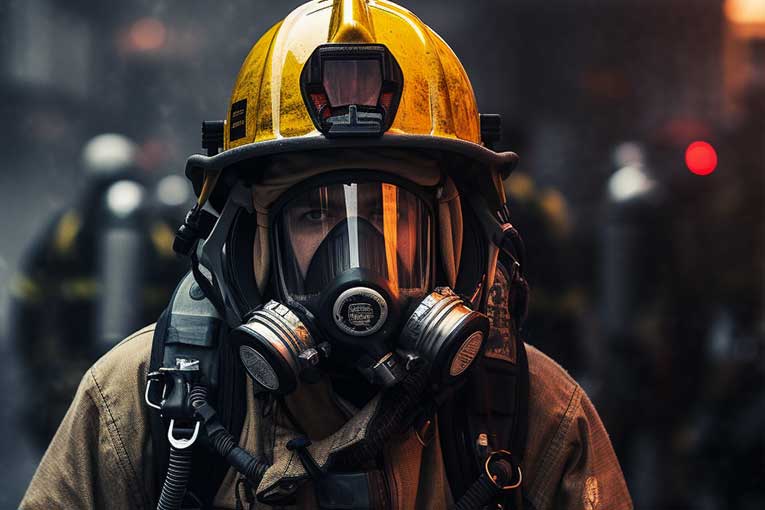
Breathing Apparatus

breathing apparatus firefighting equipment

In smoke filled environments, these devices play a crucial role in ensuring the safety of firefighters by providing a continuous supply of clean air. 

The reliability and functionality of these apparatuses exemplify their vital role in preserving the well-being of firefighters and ensuring their ability to execute effective firefighting and rescue operations in environments where clean air is a precious commodity.

Positive Pressure Ventilation Fan

positive pressure ventilation fans firefighting equipment
Source: Wikipedia

Positive pressure ventilation fans are devices designed to create airflow that effectively removes smoke and toxins from enclosed spaces. 

By generating a controlled and directed flow of air, these fans contribute significantly to improving visibility for firefighters within confined areas. 

Beyond enhancing visibility, the removal of smoke and toxins creates a safer working environment, allowing firefighters to operate more efficiently and with reduced exposure to hazardous substances. 

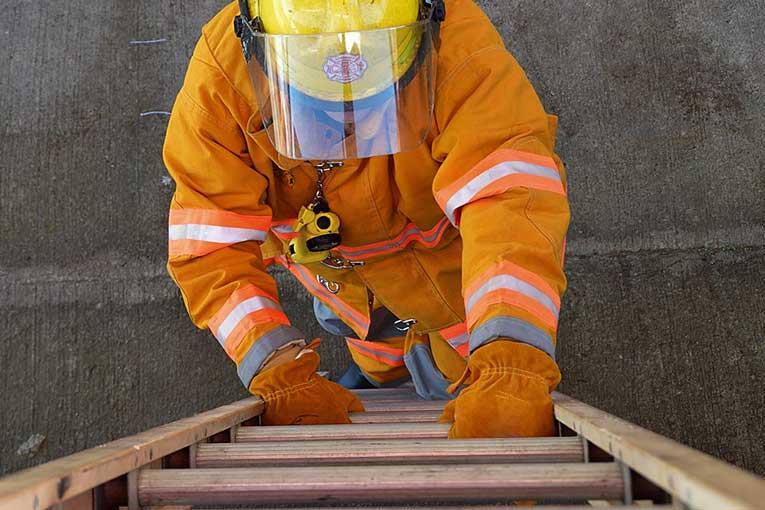
Ladders

ladders firefighting equipment

These versatile devices play a pivotal role in firefighting operations by enabling firefighters to access elevated areas, conduct rescues, and navigate challenging environments. 

Whether extending to reach upper floors of buildings or providing a stable platform for rescue operations, ladders enhance the agility and effectiveness of firefighting teams. 

Their portability and adaptability make them fundamental in addressing the diverse challenges posed by fires in varying structures and scenarios, contributing to the overall success and safety of firefighting operations.

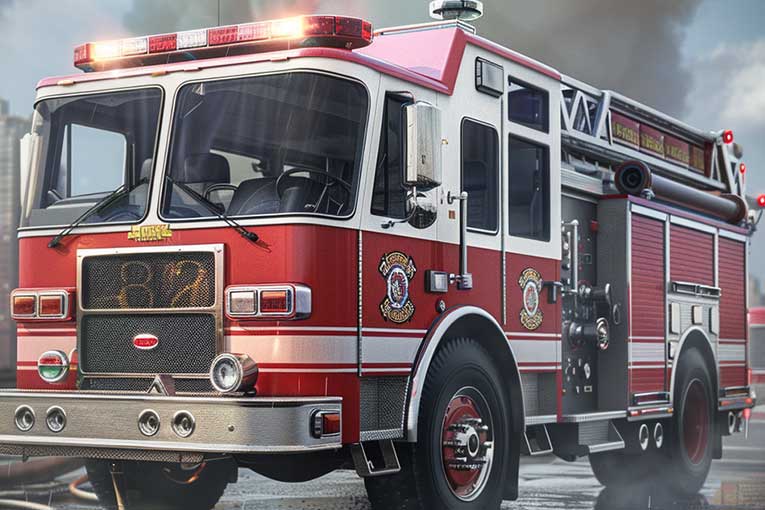
Fire Fighting Vehicle

vehicles firefighting equipment

These vehicles carry essential firefighting tools, water tanks, and hoses, ensuring a swift and effective response to fire emergencies. 

Beyond their mobility, the specialised equipment on these vehicles equips firefighters with the resources needed to combat fires of varying scales. 

Whether navigating through urban environments or remote locations, these vehicles enhance the reach and capabilities of firefighting teams, playing a vital role in the timely containment and suppression of fires to protect lives and property.

How is Firefighting Equipment Used?

The strategic use of equipment is paramount, requiring a careful assessment of each fire’s unique characteristics. 

Firefighters, equipped with a diverse array of tools, employ a systematic approach to address different scales and types of fires.

Fire extinguishers, compact and versatile, find their application in swiftly suppressing small fires. 

Firefighters select the appropriate extinguisher based on the fire’s nature and discharge the firefighting agent with precision, aiming at the fire’s base. 

For larger incidents, fire hoses connected to water sources become instrumental. 

The hoses allow firefighters to direct water effectively, reaching inaccessible areas, while sprinklers automatically release water upon detecting excessive heat, contributing to fire containment.

Protective gear, including fire suits and gloves, plays a pivotal role in ensuring firefighters’ safety as they confront flames. 

These specialised garments shield against extreme heat, providing a critical barrier between the firefighter and the hazardous environment.

Cutting-edge technology, such as drones equipped with cameras and thermal imaging devices, offers invaluable insights. 

Drones provide aerial views, enhancing situational awareness for better decision-making, while thermal imaging cameras aid in locating individuals and identifying hotspots within a fire.

The use of firefighting equipment is not only reliant on the tools themselves but also on the skill, training, and coordination of firefighting teams. 

Firefighters undergo rigorous training to understand the capabilities and limitations of each tool, ensuring a synchronised and effective response to diverse fire scenarios. 

The strategic and well-coordinated utilisation of firefighting equipment remains a cornerstone in the battle against the unpredictable and destructive force of fires.

What Other Equipment Helps with Firefighting?

Some firefighting equipment is not directly used to directly put out fires, but it used to improve the safety and efficiency of firefighters.

Fire Sprinklers

fire sprinklers firefighting equipment
Source: Wikipedia

Installed in buildings, fire sprinklers are automatic devices that release water when detecting excessive heat. 

They play a crucial role in suppressing fire outbreaks and limiting damage in enclosed spaces. 

Strategically positioned, their rapid response significantly contributes to controlling fires, preventing their escalation, and protecting lives and property within structures.

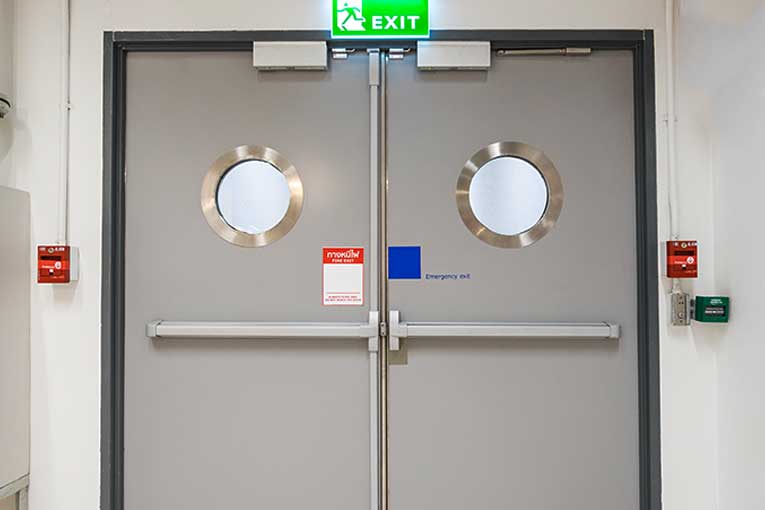
Fire Doors

Specialised fire doors are meticulously designed to resist fire and smoke, acting as effective barriers to limit their spread within a building. 

These doors are critical components of passive fire protection systems, providing crucial time for evacuation and minimising the potential for fire extension.

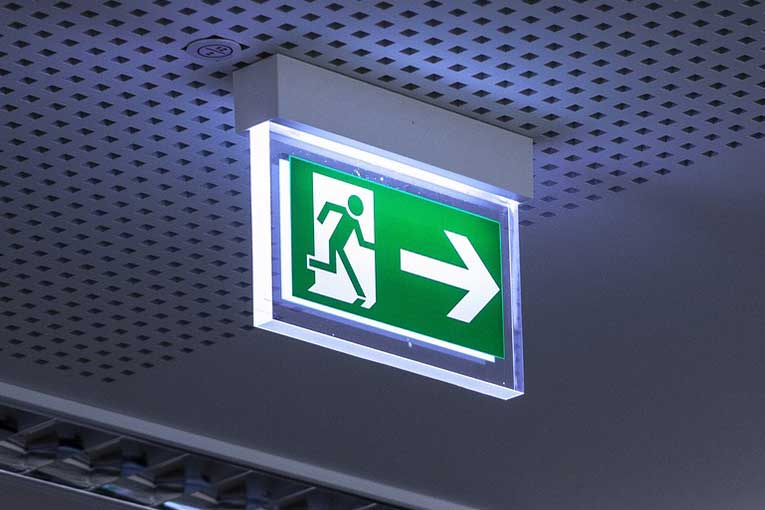
Emergency Signs

emergency signs firefighting supporting equipment

Clearly marked emergency lighting and signs are indispensable in ensuring swift and safe evacuation. 

These signs delineate evacuation routes and indicate the locations of firefighting equipment, guiding occupants to safety during fire emergencies.

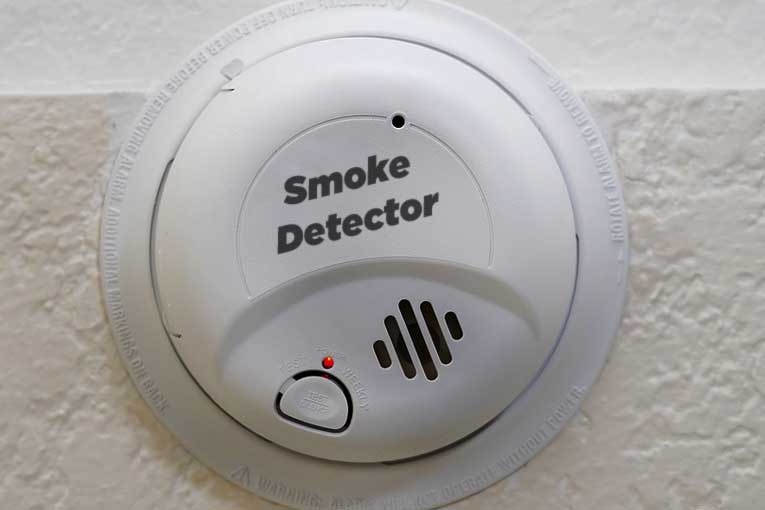
Smoke Alarms

There is 4 different smoke detector types

Essential components of early warning systems, smoke detectors are devices that promptly detect smoke, alerting occupants to potential fire hazards. 

Their rapid detection capability is pivotal in providing early warnings, allowing for timely response and evacuation.

The different types of smoke alarms ensure people can react quickly  to different types of fires.

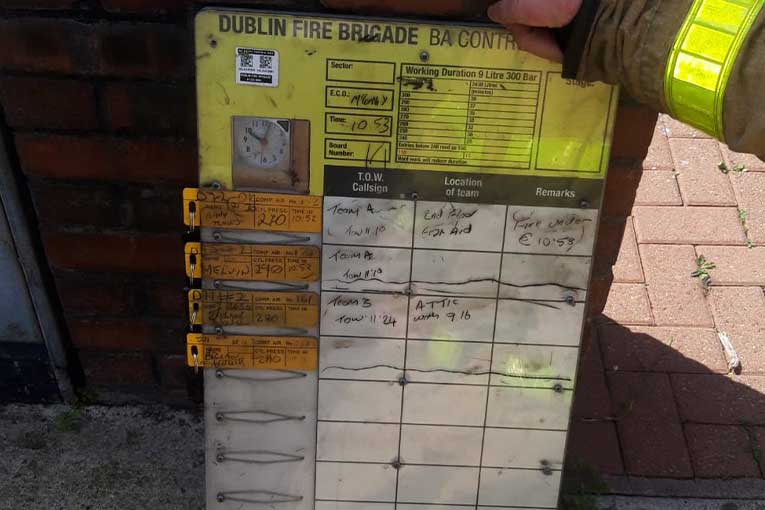
BA Entry Board

The Breathing Apparatus (BA) Entry Board serves as a control hub during breathing apparatus operations. 

It manages the entry and exit procedures of firefighters equipped with breathing apparatus, ensuring systematic and safe operations in environments with compromised air quality.

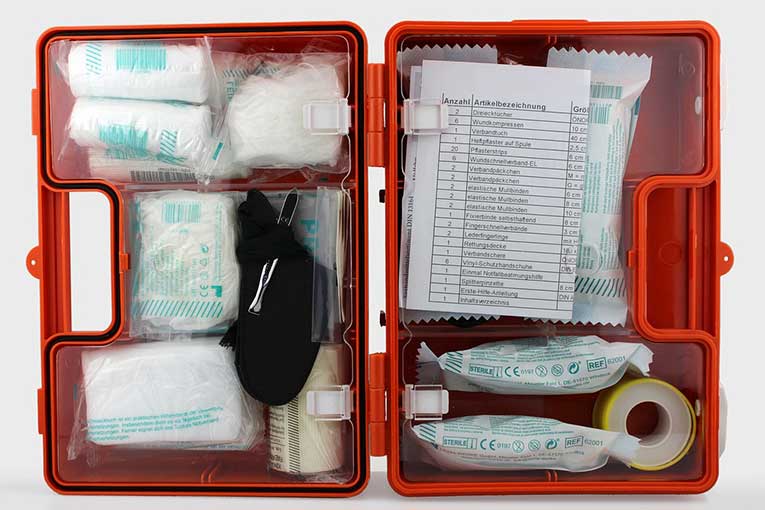
First Aid Kit

first aid kit firefighting supporting equipment

Containing medical supplies, first aid kits address injuries sustained during firefighting or rescue operations. 

They provide essential support until more extensive medical assistance is available.

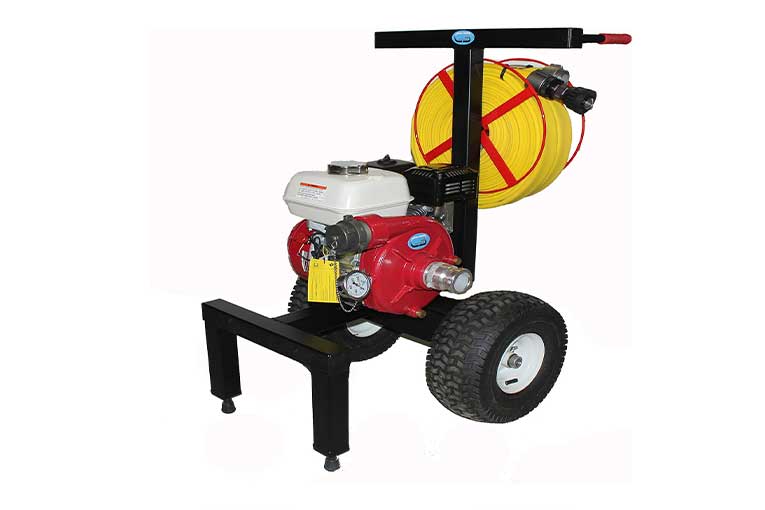
Light Portable Pump

light portable pump firefighting equipment
Source: Amazon

Compact and portable, light pumps are indispensable for transporting water to areas inaccessible to larger firefighting vehicles. 

These pumps enhance operational flexibility, providing firefighting teams with the ability to establish water supply points in diverse environments.

Cutters

cutters firefighting equipment
Source: Wikipedia

Cutting through materials obstructing access or rescuing individuals, cutters are versatile tools used by firefighters. 

They play a crucial role in extrication operations, enabling swift and precise interventions in situations where immediate access is essential.

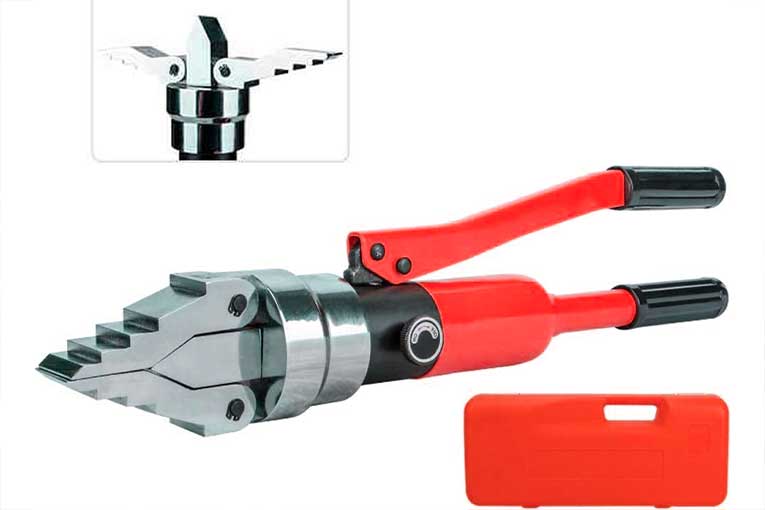
Spreaders

spreaders firefighting equipment
Source: Amazon

Hydraulic spreaders are powerful devices used to pry open objects or create openings in rescue situations. 

These tools are instrumental in providing access to trapped individuals, facilitating efficient rescue operations.

Rams

rams firefighting equipment
Source: Wikipedia

Hydraulic rams are tools designed to force open doors or create pathways during rescue operations. 

Their robust construction and power make them essential for situations where conventional access methods are insufficient.

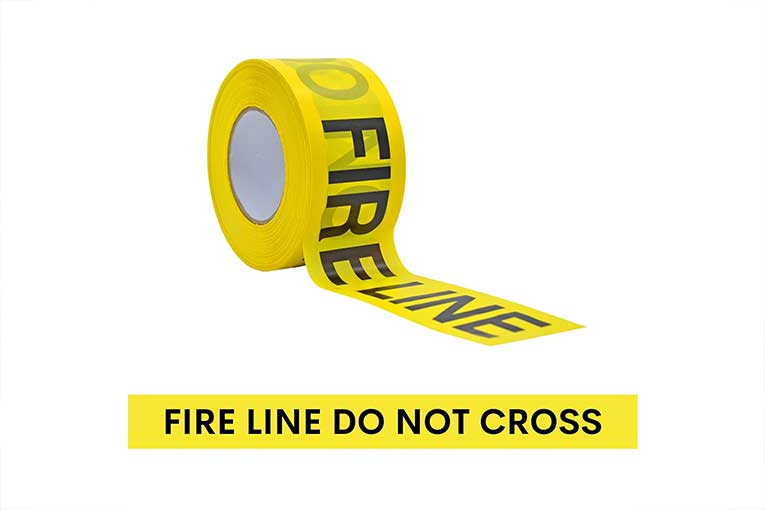
Do Not Cross Tape

do not cross tape firefighting equipment
Source: Amazon

Visible tape with the clear directive “Do Not Cross” is utilised to cordon off unsafe areas and control access to the fire scene. 

This tape ensures the safety of both emergency responders and the public by preventing unauthorised entry into potentially hazardous zones.

Traffic Cones

traffic cones firefighting equipment
Source: Amazon

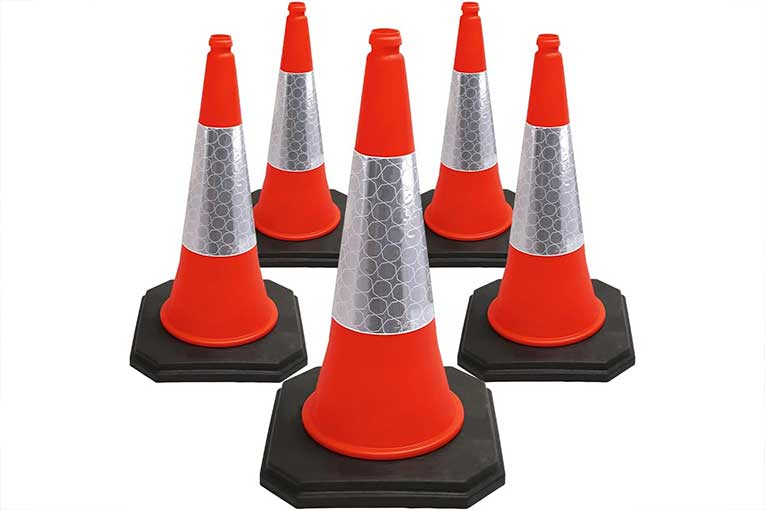
Deployed to manage traffic and create clear pathways for emergency vehicles, traffic cones are essential in ensuring unimpeded access for firefighting teams. 

These cones play a crucial role in maintaining order and facilitating the rapid movement of emergency vehicles to and from the incident scene.

What Does the Future Hold for Firefighting Equipment?

The future of firefighting equipment holds exciting possibilities, driven by advancements in technology, materials, and design. 

One prominent trend is the integration of smart technologies, such as artificial intelligence and the Internet of Things, into firefighting gear. 

This includes wearable sensors and augmented reality visors that provide real-time data to firefighters, enhancing situational awareness and decision-making. 

Innovations in materials science are shaping the development of more lightweight yet durable protective gear, addressing comfort and mobility concerns for firefighters. 

Nanotechnology may lead to advanced flame-resistant fabrics, ensuring greater protection against extreme temperatures. 

Additionally, the use of robotics in firefighting, ranging from autonomous vehicles to robotic firefighting assistants, is on the horizon.

As climate change intensifies, firefighting equipment is likely to evolve to cope with more frequent and severe wildfires. 

This may involve the development of specialised tools for wildfires and improved strategies for early detection and prevention. 

The collaborative efforts of researchers, engineers, and firefighters promise a future where technology plays a pivotal role in enhancing the safety, efficiency, and effectiveness of firefighting operations, ultimately better equipping first responders to address evolving challenges.

Conclusion

The array of equipment at a firefighter’s disposal is vast and diverse. 

From traditional tools that have stood the test of time to cutting-edge technology ensuring efficiency and safety, each item plays a crucial role in combating fires and protecting lives. 

The continuous evolution of firefighting equipment reflects a commitment to enhancing the capabilities of those who bravely confront the unpredictable nature of fires. 

As technology advances, so does our ability to respond effectively to fire emergencies, ensuring a safer and more resilient future for communities worldwide.