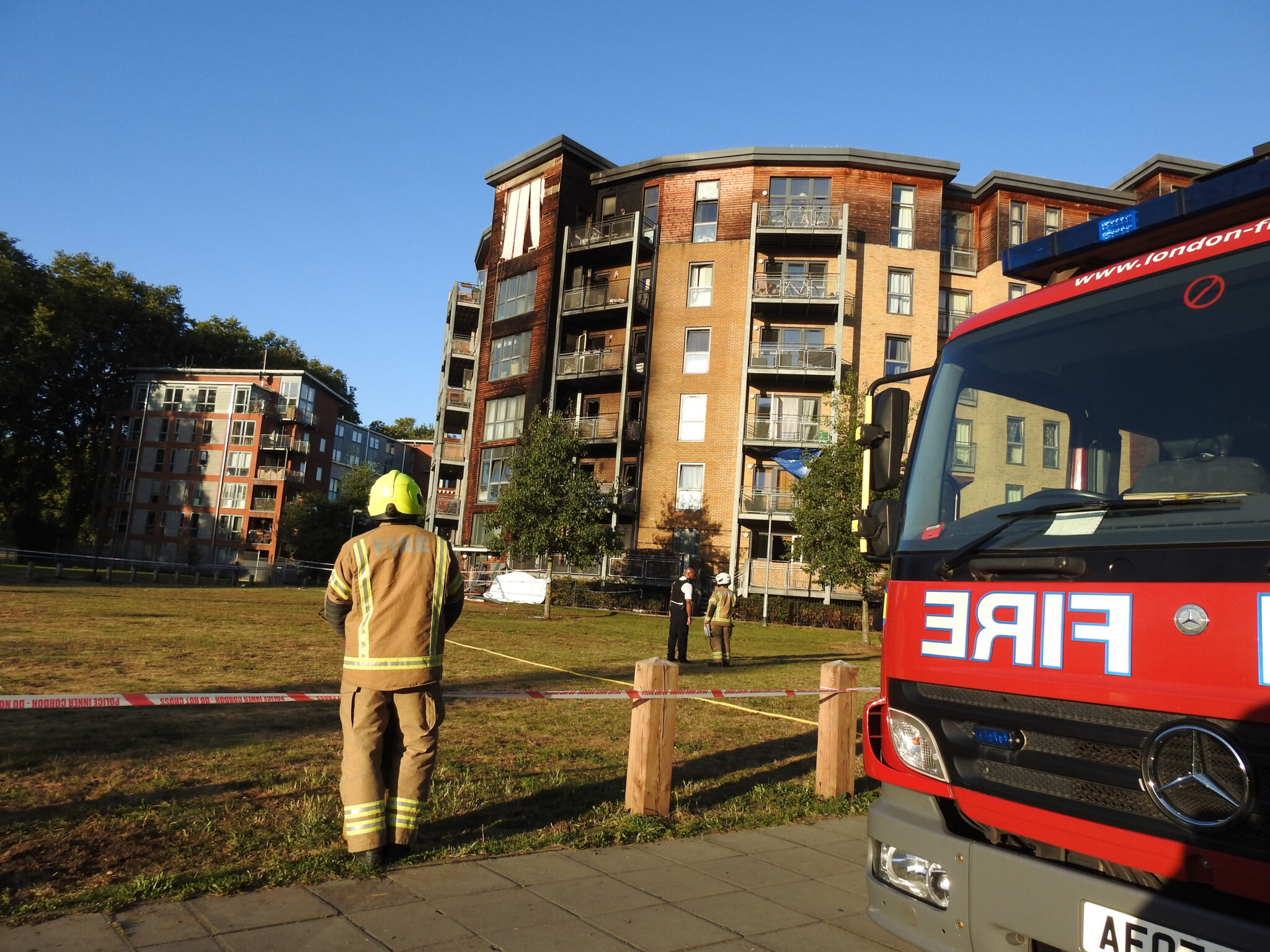
County Durham Fire Service a ‘forerunner’ for National Operations Guidance

The National Fire Chiefs Council (NFCC) has dubbed County Durham & Darlington Fire & Rescue Service (CDDFRS) a national forerunner for implementing National Operational Guidance into its organisation.

CDDFRS seconded Station Manager Ian Moore to the NFCC during the development of National Operational Guidance. During this time, Moore worked closely with fire services from across the UK and gained a thorough understanding of how to implement and embed National Operational Guidance into his Service when he returned.

The department has been actively rooted into their Northeast regional working group which includes three other services and has worked to improve collaboration and ease the burdens of implementing National Operational Guidance on each of the respective organisations.

On a wider scale, it has directly engaged with around 28 other fire and rescue services from across the UK to share their experiences, documentation and strategic framework, ensuring that they are helping to drive the Fire Reform agenda across the sector and not just on a local level. 

Once CDDFRS completed its implementation, it put in place mechanisms to ensure the ongoing maintenance of risk assessments, procedures, and training packages as part of its business as usual. Since the project finished front line staff have commented that they find it easy to access the information needed to ensure an effective operational response to incidents.

The NFCC Implementation Team identified that the practice of sharing experience would help to move the fire and rescue sector forward and has now signposted other services to contact CDDFRS and share good practice nationally, hoping to establish a more efficient integration into many other services through shared experiential learning and National Operational Guidance good practice.

The NFCC Implementation Team said that the efforts of CDDFRS, in actively sharing their National Operational Guidance outcomes and their journey, has been instrumental in some fire and rescue services keeping pace with reforms across both operations and fire control, and that its willingness to help others is to be applauded.

National Volunteer Fire Council appoints Deputy CEO

The National Volunteer Fire Council (NVFC) has announced that Dr. Candice McDonald will join staff as deputy chief executive officer.

In this role, she will assist CEO Sarah Lee in managing the internal operations of the NVFC, including grants oversight, budget development, organisational planning, and more.  

“We are very excited for Dr. Candice McDonald to join the NVFC as a key part of our staff leadership team,” said Lee. “Candice brings a myriad of experience and expertise that will help the NVFC grow and move our initiatives forward. I am confident she will be an asset to our team and to the emergency responder community that we serve.”  

McDonald’s involvement in the NVFC dates to 2010, when she became one of the organisation’s first Fire Corps State Advocates. In addition to her work with Fire Corps, she has served as an instructor for the NVFC, facilitated webinars and online events, written numerous articles, and provided subject matter expertise in various areas. 

McDonald holds a doctorate in business administration with a specialty in homeland security, a master’s degree in organisational leadership, and a bachelor’s degree in organizational management. She also has an extensive professional background in marketing.

She currently works as a federal special agent for NASA in the Office of Protective Services, where she utilizes skills including grant and project management, budgeting, and staff management. In addition, she is an adjunct professor at Eastern Gateway Community College, serves as a recruitment and retention expert for the U.S. Fire Administration, and has taught recruitment and retention courses across the U.S.  

McDonald has been active in the volunteer fire and emergency services for almost two decades, serving as a volunteer firefighter, EMS chief officer, instructor, and fire inspector. She is the incoming president of the Cumberland Valley Volunteer Firemen’s Association, a trustee for Women in Fire, and a member of the FDIC/Fire Engineering Advisory Board. 

Rebecca Croton joins Quelfire marketing team

Quelfire has further expanded its team with the addition of Rebecca Croton as Content Marketing Executive.

Commenting on her new position, Cronton said: “I have always had a passion for writing and creating content, I studied English and Journalism at university, so I knew it was going to be something I would enjoy. It is great to see how passionate everyone is at Quelfire, it is a fun yet professional atmosphere.

“I have never worked in the passive fire protection industry before, but I feel like I have learnt so much already. Even when you think you are not learning, you are! There has been a lot to take on board, but it has been very interesting as it is relevant to every single one of us. Particularly, I have enjoyed spending time with each member of ‘Team Orange’ to learn about their roles, how they play a part in fire safety and how I can assist them with future content.

“During my first two days, I jumped into fire safety headfirst, at The Fire Safety Event. It was a great opportunity to learn from my colleagues and meet specialists in the industry, to hear about their typical challenges.”

Welcoming Rebecca, Quelfire’s Marketing Manager Timea Popovics said: “As a result of increased scrutiny over the accuracy of construction product information and requests from customers for more regular updates on new tested details, we were keen to focus more on content. We believe that it will be critical in building and maintaining connections and engagement with customers and other partners.

“Rebecca will play a key role in keeping information about our solutions up-to-date and ensure it reaches our customers and all parties involved in firestopping. We are delighted to welcome Rebecca to Quelfire’s ‘Team Orange’ and look forward to encouraging her in the development of this important new role.”

Fire Brigade Union asks McCall to withdraw PFCC proposal

The Fire Brigade Union (FBU) has written to Cumbria Police and Crime Commissioner Peter McCall to ask him to drop plans to become Police, Fire and Crime Commissioner (PFCC) after the public rejected the proposal in a consultation as ‘bundling fire and police helps no one”.

Ed Burrows, Fire Brigades Union North West regional secretary, said: “The consultation response was clear: Cumbria fire and rescue service should not be run by a PFCC. We fully expect McCall that will follow through on this consultation by taking the next step and withdrawing the plan.

“Bundling fire in with the police helps no one. It could lead to cuts that affect the fire and rescue service disproportionality, and lead to three fire station closures.”

Of the 363 public and stakeholder responses to the consultation less than half (46%) of respondents said they would like to to see a PFCC in Cumbria, whilst 54% preferred the option of a Combined Fire and Rescue Authority.

The Fire Brigades Union has criticised McCall’s plan to become PFCC on various grounds, including the fact it could lead to three fire station closures, putting 18 jobs at risk.

The station closures have been predcited as stations in Frizington, Arnside and Stavely have previously been threatened with closure, and the FBU said there are financial concerns over a future PFCC having the latitude to implement cuts that impact fire disproportionately relative to the police, and requiring funds to bulk up his office to administer the fire and rescue service, which could come out of the fire and rescue budget.

The letter also said “We also note that the financial issues surrounding any takeover of governance have still not been provided, we request that this information is shared with us when produced”.

To date, no financial assessment for viability of a change to a PFCC has been produced.

The letter can be read in full on the Fire Brigades Union website.

Perimeter Solutions appoints President of Global Fire Safety

Global manufacturer of high-quality firefighting products and lubricant additives, Perimeter Solutions, has announced Jeff Emery as its President of Global Fire Safety. This newly created role will see Emery responsible for the Fire Suppressant and Wildfire businesses at Perimeter Solutions.

Emery joins Perimeter Solutions after serving as the Vice President and General Manager of Industrial Automation for the Americas at Norgren. Prior to that, he spent 10 years with Scott Safety, leader in high performance safety equipment for firefighters, military personnel and industrial workers.

Following 3M’s acquisition of Scott Safety, Emery led the global business unit within 3M through a period of significant growth and business integration.

In addition to his professional roles in fire safety, Emery has also served on the advisory board of the National Fallen Firefighters Foundation (NFFF), as well as the Board of Directors for Nevada Nano and Fire 20/20, a non-profit organization promoting diversity in fire services.

Commenting on his new role, Emery said: “Fire safety has been an important part of my professional and personal life for years, and I am very happy to be working for an organization where I can support Perimeter’s mission of saving lives and protecting communities. Perimeter Solutions is highly respected throughout the industry as a trusted and innovative company. Their experience in fire safety is unmatched, and I am anxious to start contributing to the company’s future growth.”

Edward Goldberg, CEO of Perimeter Solutions, added: “As we face an increasingly challenging fire landscape, it is critically important that we continue to provide the exceptional, reliable products and services our customers count on from Perimeter Solutions.

“We must also continue to innovate to deliver new solutions that help save lives and protect property. Jeff brings years of experience and industry knowledge along with a passion for serving the firefighting community. He’ll be a great addition for Perimeter as we move forward, and I am excited to welcome him to our Management Team.”

IRDAI allows insurers to design alternative products to cover fire, other perils

India’s Insurance Regulatory and Development Authority of India (IRDAI) has permitted general insurers to design alternative products to cover risk from fire and allied perils for dwellings and small businesses.

The IRDAI issued guidelines for standard products for fire and allied perils for dwellings, micro and small businesses (Bharat Griha Raksha, Bharat Sookshma Udyam Suraksha and Bharat Laghu Udyam Suraksha) in January 2021.

These standard products replaced the Standard Fire and Special Perils (SFSP) policy for the named risks and no product other than the standard products was permitted for fire and allied risks.

“After considering the increasing demand for new covers in the fire line of business, the Authority. hereby permits general insurers to design and file alternative products covering fire and allied perils for the risks (de-notified earlier,” IRDAI said in a circular.

Such alternative products, it added, may be variations of the standard product and may include already approved add-ons as part of the base product or may delete an existing provision.

“However, the definitions and wordings of terms used in the standard product shall be the reference point for those terms when used in the alternative products as well. Needless to add, the pricing of the products shall be commensurate to the risks involved,” it said. One of the objectives of permitting alternative products is to insure evolving fire insurance risks of Dwellings, Micro and Small Businesses to increase insurance penetration.

It also aims to identify protection gaps in the existing fire insurance products and address the changing needs of market with due consideration to the policyholders’ interests in terms of suitability and affordability.

Another objective is to promote healthy and sustainable development of fire insurance market with new and alternative products that provides wide options to policyholders in addition to standard products, IRDAI said.

The latest directives will come in force on June 1, 2022. In another circular, the regulator said it has been receiving several complaints from policyholders, both directly and through various platforms such as industry associations, that insurers are referring to the Burning Cost as a ‘mandated minimum rate’.

It said that the Insurance Information Bureau of India has been periodically publishing the industry Burning Cost for Fire perils (FLEXA). All insurers, it said, have been informed that the purpose of this is to give an indication to insurers of the industry Burning Cost for various occupancies, for appropriate use in the matter of pricing the various risks.

IRDAI said the objective of IIBI publishing details of Burning Costs occupancy-wise is only to give information to insurers with regard to industry-level experience for appropriate use while rating risks.

“By no means does this even remotely imply that this is a ‘mandated minimum rate’,” it said. The regulator further said that it is expected of insurers to consider all applicable risk factors for rating a risk and give appropriate discounts or charge loading as warranted.

It is reiterated that insurers shall ensure that policyholders are not misinformed that the Burning Cost is a ‘mandated minimum rate’ for insurers to charge, IRDAI said.

Regional focus: Watershed moment in the UK fire market

In the past month major new changes and fire protection laws have come into effect across Great Britain, IFSJ shines the light on the UK in our market focus for May 2022

The UK has one of the most advanced fire protection markets in the world, despite legislation only catching up now in critical areas. According to FPA managing director Jonathan O’Neill the ingenuity and innovation of various stakeholders, manufacturers, fire training professionals, consultants, and the fire services themselves has contributed to a thriving fire protection and detection market across the UK.  

The United Kingdom government spent approximately 3.13 billion British pounds on fire-protection services in 2020-2021, the highest amount spent since 2010/11 when the government spent 3.02 billion pounds. 

More statistics 

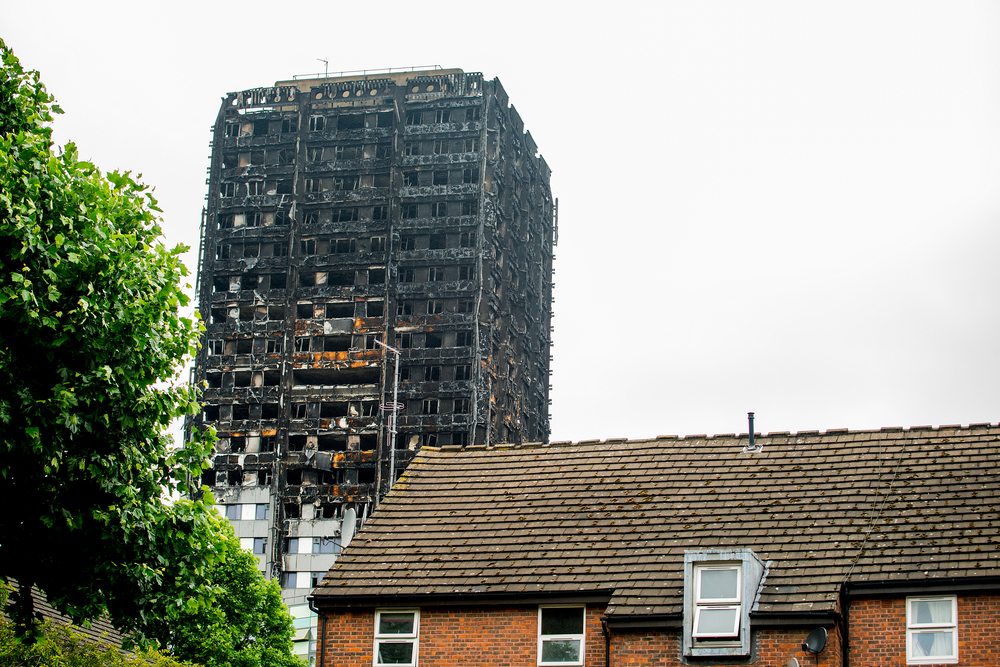
Since the late 90s various government efforts, resulting in orders, bills, and acts have come into effect to protect assets. But more importantly, painstaking efforts have been taken to minimise fatalities. Plenty of movement has taken place in the last five years, in the aftermath of the horrific Grenfell Tower disaster. The incident is considered as one of the UK’s worst modern disasters. As many as 72 people died in the disaster that took plan on June 14, 2017, which made up a staggering 18% of all deaths caused by fires in the UK that year. In 2019-2020 fatalities caused by fire accidents dipped below the 300 figures for the first time in several decades.  

There were 311 fire-related fatalities in Great Britain during 20120/21, 22 more than occurred in the previous reporting year when there were 289. In the early 2000s, the annual number of fire fatalities was consistently over 500, with numbers gradually falling throughout that decade. In 2011/12 the number of fatalities related to fire fell below 400 for the first time, and has remained below 400 since that point. 

Although there has been a net decrease in the number of incidents attended by fire and rescue services in the United Kingdom since 2010/11 the current trend from 2014/15 onwards has been one of increase. In 2018/19 there were over half a million incidents attended in England, over 92,000 in Scotland and almost 37,000 in Wales. Northern Ireland had the least number of incidents attended at around 24,600. 

Since peaking at over 55,600 workers in 2010 there has been a marked decline in the number of fire and rescue workers in England, with the service losing more than 10,000 workers by 2019. In a similar time period, the expenditure on fire-protection services in the United Kingdom fell from 3.1 billion in 2009/10, to around 3 billion in 2019/20. 

Building Safety Bill 

At the end of April 2022, the UK Government’s Building Safety Bill completed all the parliamentary stages in both houses, ready to receive Royal Assent. The 252-page bill, which began the process of going through the houses of parliament in July 2021, is aimed at improving building standards, ensuring the safety of residents, and protecting leaseholders from the costs of fixing their blocks.   

The Building Safety Bill’s main aims is to reform the safety system for properties higher than 11 metres by appointing a Building Safety Regulator, giving a greater voice to residents, driving industry change, and creating a national framework for increased oversight.  

London,,Uk.,28th,June,2017.,Editorial,-,The,Grenfell,Tower

UK Minister for Building Safety Stephen Greenhalgh has branded the Building Safety Bill as the “biggest changes in building safety legislation in our history”. The act will now also include measures to ensure leaseholders avoid footing the bill for remediation costs, known as ‘waterfall’ protections. 

Ministers have faced growing pressure over the building safety crisis. Thousands of leaseholders have been hit with crippling costs for fixing their buildings and have been unable to sell their flats. 

The Royal Institute of Chartered Surveyors (RICS) welcomed the passing of the bill as a ‘positive step’ and acknowledged that it “may not have been what everyone hoped for”. The bill will at the least provide greater protections for leaseholders and delivering a new building safety regime. 

“It is critical for RICS and other organisations representing the professions impacted by the Act, to have the opportunity to offer their continued support in finding and shaping the solutions alongside government,” it explained. 

According to law firm Clyde and Co, major changes to the Bill include scrapping building safety managers or the need to appoint one. There is now an “accountable person” who takes over day-to-day responsibility for higher risk buildings over 18 metres. 

Another amendment that has been enshrined into law is extending the limitation period to 15 years for defective premises claims and 30 years for retrospective claims. The law firm said that this could come into force two months after royal assent. 

Sadly, new builds or restored properties opting to use environmentally sustainable materials remain at greater fire risk. Expressing his concern on the matter O’Neill says: “there’s no way to escape the influx of sustainable, albeit combustible, building materials making a mark in our cities and towns. We need a unified code on buildings in the UK that incorporates evolving building techniques and materials.” 

The ripples of the Grenfell disaster, and the impact of its subsequent inquiry, have left its mark across Britain’s devolved governments. Since October 2006 the fire safety law in Scotland has differed from that of England and Wales and Northern Ireland. Last month, a legislation by ministers in Scotland proposed ban on use of combustible materials on high-rise buildings. 

Since 2005, cladding used on high-rise blocks in Scotland had to feature non-combustible materials or pass a large-scale fire test. The new building standards legislation removes the option of a fire test, completely prohibiting such materials in buildings with floors above 11 metres. 

The law on fire alarms has changed in Scotland, requiring all homes to have interlinked alarms. Interlinked means if one goes off, they all go off, so you will always hear an alarm wherever you are in your home. The new law has come about because of the Grenfell fire in London in 2017, and it applies to all Scottish homes. It is the property owner’s responsibility for meeting the new standard. Could we see a similar move coming into effect across the rest of the UK? Watch this space.  

Accountability in the amendment 

But the amendment to the Building Safety Bill, which removes the requirement for landlords to appoint Building Safety Managers in leasehold buildings seven storeys and over, is being challenged by a leading tall buildings fire safety expert. 

Russ Timpson – a former firefighter and Managing Director of the Tall Buildings Fire Safety Network -is urging the government to reconsider its decision to scrap the recommendation first proposed by Dame Judith Hackitt in the wake of the Grenfell Tower fire. 

“This latest iteration of the all-important Building Safety Bill states that responsibility for fire safety will now fall squarely on the squarely on the shoulders of an ‘Accountable Person’, such as the freeholder or head lessee or a management company. It is fundamentally important that anyone who is put in charge of tall building fire safety has undergone specialist training, which is backed up by a recognised qualification.” 

A similar concern has been raised by several experts and veterans of UK fire safety protection. A logical solution to this conundrum, according to the FPA, is the appointment of independent assessors. It’s a case of assessing the assessor, where there is a constant loop of checks and balances put in place to ensure there are strong grounds of accountability at all times from all parties. 

The 5-billion-pound change 

In a significant intervention in January 2022, UK housing secretary Michael Gove announced plans to get developers and construction product manufacturers to pay for defective buildings through a multi billion-pound billion levy. In April 2022, following months of negotiations, 35 builders pledged to fix all buildings they had built in the past 30 years that have “life-critical fire safety defects”.  

The agreement includes buildings they have developed on behalf of social landlords as part of Section 106 agreements. Leaseholders will also be able to launch retrospective legal action going back 30 years against developers or contractors that have built unsafe properties. 

The 35 developers collectively agreed to contribute £2bn towards fixing buildings they had a role in constructing. Under the Gove plan, in addition to the £2bn from developers to fix their own buildings, the industry will commit a further £3bn for the removal of unsafe cladding through an expansion of the building safety levy, a charge on new residential buildings. Firms refusing to contribute to the fund set up to fix dangerous cladding will be warned they could be blocked from selling new homes. 
Fire headlines upcoming changes to Welsh FFHH act

The Fitness for Human Habitation (Wales) Act comes into effect on 15 July this year (effective to all landlords, social and private).

The act identifies 29 hazards within the property where landlords need to meet minimum requirements.
The FFHH act requires a smoke alarm, in proper working order, to be present on every storey of a dwelling.

Landlords must ensure that each of these alarms are in proper working order and interlinked with all other smoke alarms connected to the electricity supply.

Landlords may consider it appropriate to install more that one smoke alarm on each store along with a heat alarm in the Kitchen, these additional alarms could be mains or battery powered. Any additional battery-powered alarms do not need to be interconnected (Although, BS 5839-6 recommends interconnecting all alarms within the dwelling).

The act signposts landlords to BS 5839-6 for recommended guidance on the installation of alarms
A Carbon Monoxide alarm should be installed in all rooms containing a fuel-burning appliance (including cookers).

CO alarm can be mains or battery-powered and must comply with BS EN 50291. Siting should be carefully considered noting the expiry date of the alarm.

Experts talk fire protection DNA of a building

Erik Boyter, CEO, WindowMaster and Ian King COO Zeroignition explore importance of a robust fire protection built into the DNA of every building

Smoke control systems should be built, certified and delivered in a way that building owners and occupiers can depend on. 

It’s vitally important to recognise that only certified components of the system should be used. For example, smoke panels proven, factory built and certified to the relevant parts of EN12101 and other relevant standards like ISO21927-9. 

A factory-based quality system or factory production control, audited by a notified body, should be used to certify components of factory-built products.  

Consistency is key. Systematic checks of components, arrangement, fabrication and build in a controlled environment is the only appropriate route to prevent any variations in build from what has been tested and allowed to be certified. This helps ensure dependability as designed, and will enable the supplier to produce a product specific declaration of performance at point of manufacture. 

System install and commissioning should be conducted and completed by an appropriate party qualified and competent to do so. This might be demonstrated through voluntary certification such as the SDI 19 scheme. 

Finally, the building owner or manager is responsible for ensuring that the system remains compliant through a systematic approach to testing and maintenance. 

It cannot be emphasised enough for life safety systems: compliant systems must exist and be documented throughout the design, manufacture and delivery process, as well as through the life of the building. 

We’ve looked at smoke control systems, but of course fire safety also encompasses general building materials. While it is important to understand and use FR products in all building specification, it is also crucial we consider the wider system. Ian King, COO, Zeroignition, takes us through the importance of a systematic approach to fire safety. 

The Grenfell tragedy was a catalyst for change in the construction industry. It marked the realisation that much more needs to be done to ensure the buildings we live in are properly equipped to protect occupants from the risk of fire and that safety must be put first, above all else. 

As the Building Safety Bill continues to make its way through Parliament, albeit slowly, discussions around cladding continue to dominate headlines pushing fire safety even higher on the priorities list. Yet as we’ve seen, the pace of the bill has re-affirmed how notoriously complex fire safety compliance is in the UK. 

In reality, we must remember the Bill will be unlikely to eradicate some of the wider issues that the industry struggles with, namely, cost and more recently the availability of materials. Add to this the lack of construction product testing facilities, which are key to the ‘levelling up’ of standards and quality. The Local Government Association (LGA) is one example, encouraging more reliable testing systems that are also more user friendly. It also wants to see businesses caught selling products that aren’t fit for market, held accountable. “The new regulator must have real powers and sanctions and the regulatory system must be properly funded,” says the organisation. “Trading Standards authorities have found themselves caught between costly and complex arguments between test labs about the correct approach to testing, with no way to resolve them.” 

At Zeroignition, we agree with this sentiment. Since our founding, Zeroignition has been keen to see a vast improvement in accurate labelling by product manufacturers, ensuring that any information provided is easy to understand and identify, so that materials specified to construct buildings are what they say they are. Without this clear guidance, change will never materialise and people and properties will remain inadequately protected from fire. 

Disrupting traditions  

There’s no denying, construction projects are incredibly complex and involve a myriad of decisions. Every specification choice has a knock-on effect to the wider build, and unforeseen results can easily arise when a systematic approach to fire protection isn’t maintained.  

Although it’s widely agreed by industry professionals that a methodical approach is the key to quality, there’s clearly some scepticism as to how to achieve this. Manufacturers, specifiers and architectural bodies must do more to ensure best practice is fully established and abided by, on every single project, without fail. 

Beyond this, the construction industry should look to other industries for guidance, such as automotive and aviation, where a checklist approach reduces the risk of harm to passengers. It’s no longer good enough to work from memory or from a notepad and pen. Digital record keeping is now necessary to ensure certain fire planning elements aren’t being missed. 

Beyond this, we need to look to the latest in communications theory and decision making to ensure that fire communications are presented in a way that sticks, and use ‘nudge theory’ to ensure that it’s easier to do the right thing.  

Investing in robust knowledge  

We know that in-depth knowledge surrounding product safety standards is essential for architecture, specification and construction professionals. Those working in the industry must be sure they have the knowledge and understanding of fire safety when specifying building projects.  

It’s an area we investigated for ourselves, post-Grenfell, and the results reveal just how serious knowledge gaps around fire safety remain in the industry. The survey was conducted across the UK, Germany and France and of those questioned, just 3% of architects were able to correctly define the four basic fire protection terms: active fire protection, passive fire protection, fire resistance and reaction to fire.  

A mere 2% of the architects interviewed said they’d received comprehensive fire protection training. While most agreed they had had some sort of training, less than one in ten (8%) said they’ve never had fire protection training. These findings reveal an urgent need for serious upskilling to ensure those building liveable structures are well informed and up to speed on the essential fire safety requirements and protocols.  

A third of architects who participated in the study also revealed that their current employer doesn’t spend enough on fire protection training, and it seems since the outbreak of COVID-19 particularly, many have taken matters into their own hands. NBS (formerly National Building Specification) says it saw a marked increase in webinar attendance, as more people were working remotely and had the time to attend digital webinars and seminars without having to build time into their day to travel to and from the training venue. Online webinars covered a variety of different topics including fire safety, and were attended by product manufacturers, as well as architects and specifiers. 

Positive change  

The digital ‘revolution’ of the construction industry is also enforcing positive change. ‘Digital footprints’ which explicitly show that work has been carried out to the appropriate standard are now essential. A further take up of this approach will no doubt help to implement watertight fire safety checks before a building is handed over to the occupant or end user. 

Discussions had with manufacturers we work with, have also shown first-hand how an increased focus on R&D projects is now taking place. Advancements in innovative materials that help boost fire safety are now coming to market for added protection on new and existing building projects.  

Given what we’ve seen, fire protection now needs to be given the attention it deserves and a uniformed, robust framework needs to be set in place to make sure consistency is achieved across the sector. Increased levels of third-party testing is another area that needs to improve and a greater understand of how components work in tandem will be a key element in improving fire safety within construction. 

Manufacturers also have a role to play. Specifiers need to have complete confidence in the products they are recommending which means product information must be up to date and accurate. Until we address the focus on quality vs cost, we’ll never achieve construction’s primary role: ensuring its occupants remain safe.   

Fire protection supplier Ardent enters partnership with Leeds Beckett University

Fire protection manufacturer Ardent has entered a partnership with North Yorkshire-based Ardent to help boost its management capabilities and develop strategies to break into new international markets.

The team of academics, all based within Leeds Business School, will work with Ardent on the Management Knowledge Transfer Partnership (mKTP) project, that’s funded in part by the UK government through Innovate UK.

Ardent is a supplier of fire protection and electronic safety systems for people and businesses using plant, public transport, and specialised vehicles – in the UK and overseas.

The project will run for 30 months and focus on building long-term marketing and internationalisation strategies for Ardent as it continues to grow.

The mKTP’s goal is to embed permanent transformations in leadership, management, and culture across the business.

Dr Catherine Ashworth, senior lecturer in strategic marketing at Leeds Beckett, is leading the partnership.

She said: “Through our new partnership we aim to create strategic growth within Ardent. We will do this by embedding new management capabilities across the value chain – and a new leadership model across the organisation.

“We will also focus on improving Ardent’s capabilities in gathering expert market intelligence, strategically assessing overseas market opportunities, developing internal and stakeholder communications, and by delivering strategic decision-making.”

Neil Crowther, managing director of Ardent, said: “Since our founding in 1993, we have always aimed to continually improve our offering and service. We always prioritise challenging ourselves and encourage collaboration across the company. This partnership is a natural fit for us and we look forward to it being a productive relationship that will help us provide even better service to all our customers around the world.”