4 Smoke Detector Types Explained

In home safety, smoke detectors are always ready to alert us to potential dangers. 

However, not all smoke detectors are created equal. 

There are different types, each designed for specific purposes. 

In this article, we’ll unravel the mystery of smoke detector types, explaining their functionalities, strengths, and ideal applications. 

Understanding these variations is crucial for ensuring the safety of your home and loved ones.

Why are there Different Smoke Detector Types?
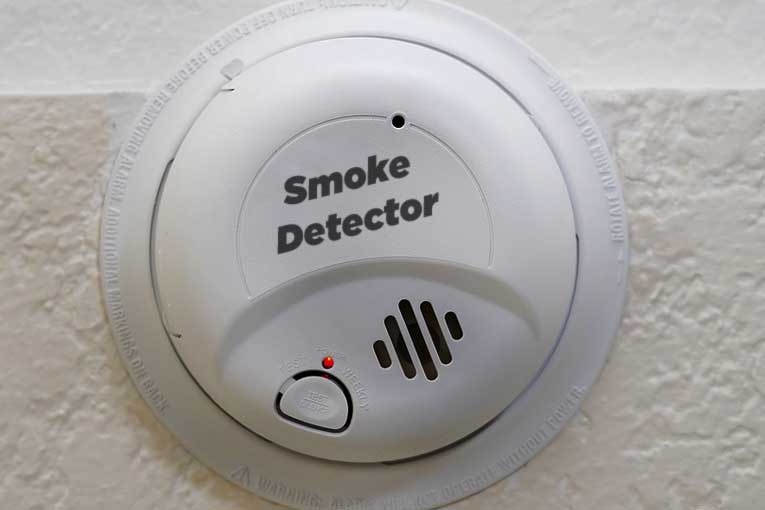
There is 4 different smoke detector types
There are 4 different smoke detector types

You might wonder why there’s a need for different smoke detector types. 

The answer lies in the varying natures of fires. 

Some fires produce different types of smoke and heat, making it essential to have varied smoke detector types that sense these differences. 

By having multiple types, you’re ensuring a higher chance of early detection regardless of the fire’s origin.

Ionisation Smoke Detector

Ionisation smoke detectors operate on the principle of ionising radiation, utilising a small, controlled amount of radioactive material, often americium-241. 

This material emits alpha particles, which ionise the surrounding air molecules in a small chamber inside the detector. 

This ionisation process creates a stable electric current within the chamber.

When smoke particles enter the detector due to a nearby fire, they interfere with the electric current. 

The presence of smoke disrupts the ions’ flow, causing fluctuations in the electric current. 

This disruption triggers the alarm, indicating the potential presence of a fire.

Advantages of Ionisation Smoke Detectors

Swift Detection of Fast Fires

Ionisation detectors excel in swiftly detecting fast, flaming fires. 

Fires that rapidly consume combustible materials produce fewer large smoke particles and more small, invisible particles. 

Ionisation detectors are highly sensitive to these smaller particles, ensuring prompt detection and alerting occupants promptly.

Cost-Effectiveness

Ionisation detectors are generally cost-effective, making them accessible for residential and commercial use. 

Their affordability allows for widespread adoption, enhancing overall fire safety in various settings.

Commonly Used in Living Spaces

different smoke detector types in the bedroom
Ionisation smoke detectors are better in living spaces such as the bedroom

These detectors one of the most common smoke detector types in living rooms, bedrooms, and hallways, where typical combustible materials like fabrics and paper are present. 

Their ability to quickly detect fast-burning fires makes them valuable in spaces with these materials.

Disadvantages of Ionisation Smoke Detectors

Limited Sensitivity to Slow Fires

Ionisation detectors might not be as sensitive to slow-burning fires, such as smouldering electrical fires

In scenarios where the fire generates more significant smoke before escalating, ionisation detectors might not provide as early a warning as desired.

Potential False Alarms

In areas like kitchens, where cooking activities can produce steam or minor smoke, ionisation detectors are prone to false alarms

This limitation requires careful placement to avoid unnecessary disruptions.

Radioactive Material Concerns

While the radioactive material used is minimal and safely enclosed, some individuals might have concerns about the presence of any radioactive substance within their homes, even in minute quantities.

Heat Smoke Detector

Unlike traditional smoke detectors, heat smoke detectors operate on a different principle. 

Instead of sensing smoke particles, they respond to temperature changes. 

Inside a heat detector, there’s a thermal sensor or a thermistor that continuously monitors the surrounding temperature. 

When a significant and sudden rise in temperature occurs, indicating the presence of a fire, the heat detector triggers the alarm.

Advantages of Heat Smoke Detectors

Specific Response

Heat detectors respond only to significant temperature increases, making them immune to smoke, steam, or minor heat fluctuations. 

This specificity makes them ideal for places like kitchens, garages, or workshops, where false alarms from cooking activities or exhaust fumes can be common with traditional smoke detectors.

Reliability in Harsh Environments

Heat detectors are highly reliable in harsh environments where smoke detectors might malfunction. 

Areas with high dust, moisture, or drastic temperature changes, which could interfere with the operation of traditional smoke detectors, make heat smoke detectors the prime choice for smoke detector types in these conditions.

Complementary Protection

They provide an additional layer of safety when used alongside traditional smoke detectors. 

By detecting temperature changes, they offer a backup alarm system, ensuring that fires are detected even if smoke detectors fail to respond due to specific conditions.

Disadvantages of Heat Smoke Detectors

Lack of Early Warning

Heat detectors do not offer early warning signs of a fire

They respond only when a fire has already generated a substantial amount of heat. 

This delay in detection can be a disadvantage, especially in situations where early detection is critical for evacuation and fire control.

Not Suitable for All Areas

While excellent for specific environments, heat detectors are not suitable for areas where early detection of smouldering fires or small flames is essential, such as bedrooms or living rooms. 

In these spaces, smoke detectors are more appropriate.

Limited Applicability

Heat detectors are specialised devices suited for specific situations. 

They cannot replace the versatility and broad application of smoke detectors, making them a supplementary rather than a primary fire detection method.

Optical Smoke Detector

Optical smoke detectors, often referred to as photoelectric smoke detectors, rely on a straightforward yet ingenious mechanism. 

Inside the detector, there’s a light source, typically an LED, and a light sensor. 

The chamber between these components is designed to be free of smoke under normal conditions. 

When smoke particles enter this chamber, they scatter the light, causing it to hit the sensor. This interruption triggers the alarm, indicating the presence of smoke.

Advantages of Optical Smoke Detectors

Early Detection of Smouldering Fires

Optical smoke detectors excel in detecting slow-burning, smouldering fires, which often produce more smoke than flames. 

This early detection capability is crucial for timely evacuation and fire control, making them ideal for bedrooms, living rooms, and other areas where people might be asleep or unaware of a fire’s initial stages.

Reduced False Alarms

Optical detectors are less sensitive to minute particles and minor heat fluctuations, reducing the likelihood of false alarms caused by cooking activities or steam. 

This specificity ensures reliable detection without unnecessary interruptions, making them suitable for residential spaces where false alarms can be disruptive and concerning.

Suitable for Residential Spaces

Due to their ability to detect slow-burning fires and their reduced sensitivity to common household disturbances, optical smoke detectors are widely used in homes. 

They provide reliable fire detection while minimising the inconvenience of false alarms, ensuring the safety of occupants without causing unnecessary panic.

Disadvantages of Optical Smoke Detectors

Slower Response to Fast Flames

Optical smoke detectors may respond slightly slower to fast, flaming fires compared to ionisation detectors. 

While they are excellent for smouldering fires, their response time might be marginally delayed in situations where rapid flame detection is crucial.

Limited Sensitivity to Certain Particles

While reduced sensitivity is an advantage for preventing false alarms, it can also mean that in certain conditions, such as detecting very fine smoke particles, optical detectors might take longer to activate, potentially delaying the alarm in specific fire scenarios.

Not Universal for All Fire Types

Optical detectors are highly effective for specific fire types, but no single type of detector is universally perfect for all situations. 

For comprehensive fire protection, a combination of different types of smoke detectors might be necessary to cover various fire behaviours.

Combination Smoke Detector

Combination smoke detectors revolutionise fire safety by integrating multiple sensor technologies within a single unit. 

One common combination involves merging ionisation and optical sensors. 

The ionisation sensor excels in detecting fast, flaming fires, while the optical sensor specialises in recognizing slow, smouldering fires. 

By combining these sensors, the detector can swiftly identify a broad range of fire types. 

When smoke particles disrupt either sensor, the alarm is triggered, ensuring rapid response regardless of the fire’s nature.

Advantages of Combination Smoke Detectors

Comprehensive Fire Detection

The primary advantage of combination smoke detectors is their ability to detect various fire types

By integrating different sensor technologies, they provide comprehensive coverage, ensuring early detection of both fast and slow-burning fires. 

This versatility makes them highly effective in diverse environments.

Reduced False Alarms

Combination detectors leverage the strengths of different sensors, making them less prone to false alarms triggered by common household activities like cooking. 

Their enhanced specificity ensures that alarms are only activated when genuine fire threats are detected, minimising unnecessary interruptions.

Versatility for Different Environments

Combination detectors are versatile and adaptable, making them suitable for various settings. 

They are commonly used in homes, where different fire scenarios can arise, ensuring that residents are safeguarded from a wide range of potential threats.

Disadvantages of Combination Smoke Detectors

Complexity in Maintenance

Due to their multifaceted design, combination smoke detectors can be more complex to maintain and troubleshoot. 

If one sensor malfunctions, diagnosing the issue might require specialised knowledge, potentially leading to challenges in repairs or replacements.

Higher Initial Cost

Combination detectors, equipped with advanced sensor technologies, often come at a higher initial cost compared to single-sensor counterparts. 

While the investment provides comprehensive fire protection, it’s crucial for consumers to weigh this against their specific safety needs and budget constraints.

Power Consumption

Combination detectors, due to their dual-sensor configuration, might consume slightly more power than single-sensor models. 

While the difference is usually minimal, it’s essential to consider power efficiency, especially in areas where battery life is a critical concern.

Which Smoke Detector Type Should You Use?

A kitchen to show different smoke detector types
Different smoke detector types are required in certain rooms, such as the kitchen

Selecting the appropriate smoke detector for your home involves thoughtful consideration of its layout, the activities conducted in different areas, and the potential fire risks unique to each space. 

Here’s a detailed guide to help you make an informed choice:

Kitchen and Cooking Areas

Best Choice: Heat Detector

Kitchens are prone to false alarms due to cooking activities. 

Heat detectors, which respond to a rise in temperature rather than smoke, are ideal here. 

They won’t trigger unnecessarily due to cooking fumes or burnt toast, ensuring reliable performance in this high-risk zone.

Bedrooms and Living Spaces

Best Choice: Optical Smoke Detector

Bedrooms and living rooms often experience slow-burning fires, such as those caused by faulty wiring or smouldering fabrics. 

Optical smoke detectors, sensitive to the visible smoke particles in slow-burning fires, are well-suited for these areas. 

They offer reliable performance and are less prone to false alarms caused by common household activities.

Hallways and General Areas

Recommended Choice: Combination Smoke Detector (Ionization + Optical)

Hallways and general areas can experience a variety of fire scenarios. 

A combination smoke detector, integrating both ionisation and optical sensors, ensures comprehensive coverage. 

These detectors can quickly detect both fast, flaming fires and slow, smouldering fires, making them ideal for spaces where diverse fire risks exist.

Entertainment or Workshop Spaces

Best Choice: Combination Smoke Detector (Ionization + Heat)

Spaces like entertainment rooms or workshops might have a mix of fast-burning materials and potential heat sources. 

A combination smoke detector that combines ionisation for fast fires and heat detection for abrupt temperature changes provides effective protection in these environments.

Strategic Placement for Enhanced Protection

Beyond selecting the right type of smoke detector for specific areas, strategic placement is vital for maximum effectiveness:

Install smoke detectors in every bedroom, outside each sleeping area, and on every level of the home.

Place detectors high on walls or ceilings as smoke rises.

Avoid placing detectors near windows, doors, or ducts where drafts might interfere with their operation.

Regularly test smoke detectors to ensure functionality.

By tailoring your choice of smoke detectors based on the unique needs of each space and strategically placing them throughout your home, you create a comprehensive safety net against potential fire threats. 

Remember, a well-planned smoke detector setup can significantly enhance your home’s overall safety and provide invaluable peace of mind.

Conclusion

Understanding the nuances of all smoke detector types is paramount. 

By tailoring your choice to the specific requirements of different areas in your home, you’re ensuring a robust safety net against potential fires. 

Remember, the best protection comes from a combination of these detectors, strategically placed to detect various types of fires promptly. 

Investing in the right smoke detector types is not just about adhering to safety regulations; it’s a proactive step towards safeguarding what matters most – your family and home.

Siemens selects Videcon as distribution partner for Cerberus FIT

Siemens has announced Videcon as its new strategic partner for the Cerberus FIT range of fire detection and alarm products, marking Siemens first ever distribution partner for fire in the UK and Ireland.

Videcon was formed in 1995 and is currently one of the fastest growing security and fire distributors in the UK. Videcon will add Cerberus FIT to its existing portfolio of fire and security products and services, through its dedicated Fire Safety Division which is headed up by Sales Director Alan Fowlie.

Commenting on the new partnership, Fowlie said: “Our customers were increasingly looking for the advantages offered by an addressable system but at an affordable price.

“I knew Siemens from the work I did before my business became part of Videcon in 2020 and Cerberus FIT offers the ideal solution. It gives us a completely open protocol, engineer-friendly system with the brand values, quality and product quality that you expect from Siemens but at a price-point which is extremely competitive.”

Cerberus FIT has been designed specifically to provide a cost-effective option for moving from conventional to addressable systems for small to medium sized applications.

Rob Yates, Head of Fire Products at Siemens UK&I, commented: “We are delighted to be working with Videcon, having chosen them as a partner because of their clear commitment to training and support. The company’s client base is particulartly suited to Cerberus FIT which is an EN54-13 approved system designed with ease of installation and ease of use as its core guiding principles.

“That ensures it is an ideal option for a range of applications, including retail, leisure centres, warehouses and restaurants – in essence those facilities who would be considerng a conventional or stand-alone addressable system.

“This is the start of what we see as an exciting co-operation between the two businesses and look forward to taking the offering to the fire safety market in the UK and Ireland.”

The Last Word with Salvatore Vittozzi, Regional Sales Manager at Apollo Fire Detectors

Salvatore Vittozzi, Regional Sales Manager at Apollo Fire Detectors sheds light on the benefits of hybrid-wireless fire alarm systems

Tell me about your role and background in the fire industry

I joined Apollo in 2019 but have been in the fire industry for well over 20 years, starting out as a Fire Systems Designer. Whilst I focus on supporting our partners in London and the Southeast as Regional Sales Manager, I also, along with the Apollo Sales and Technical Support team provide free online training every month with CPD accredited and product-based webinars, most recently we have been on a UK wide roadshow, presenting training on our new range, REACH Wireless.

Can you give me an overview of the services Apollo Fire provides?

Our purpose is simple; we make devices to keep people safe from fire every second of every day. We specialise in the design and manufacture of high-quality fire detection solutions that protect people from fire in over 100 countries around the world. We have recently launched our new hybrid-wireless range, REACH Wireless.

What is REACH Wireless and why was it developed?

Our new solution REACH Wireless is intended to provide a natural extension to our existing wired products and protocol, to provide the benefits of wireless where needed. REACH brings more modern product features such as dual-optical smoke detection and Visual Alarm Devices (VADs) and provides a platform to build upon going forward.

REACH was designed to target over-the-counter sales, meaning it had to be quick and easy to install without large amounts of training or special manufacturer’s accreditation. REACH’s installation is assisted by the built-in LCD screen of the Loop-Interface, which leads you through the process. We’re continuously listening to feedback from installations to refine the experience in pursuit of this goal and we’re confident that customers will be pleased with it at launch.

What are the benefits of hybrid-wireless fire alarm systems?

A hybrid-wireless fire alarm system can provide greater flexibility in situations where wiring may be difficult or impractical, for example, in listed buildings a wireless device would cause much less damage to the fabric of the building than a wired loop. It can reduce costs in some areas by connecting a new extension or outbuilding to an original installation with no cables. There are also applications where hybrid-wireless is valuable when short downtime is required such as educational facilities or retail stores.

What plans does Apollo Fire have for the future?

We recently launched a software update to the Apollo Test Set to support Apollo’s latest protocol, Core Protocol. Later this year we plan to publish the latest version of our Loop Calculator, which is free to download from our website. We are always working on new products and technologies in fire detection to keep up with this ever-evolving industry and its standards. You can keep up to date with the latest news from Apollo on LinkedIn, Twitter, Facebook and Instagram!

This article was originally published in the September edition of IFSJ. To read your FREE digital copy, click here.

Europe CPR proposal: ‘fire safety industry has to re-write all product standards’ says Euralarm

Members of the Euralarm Fire Section have expressed concern over the European Commission’s CPR (Construction Products Regulation) proposal which it says ‘fails to address the market needs’ and ‘does not address the main challenge facing standardisation’.

Although Euralarm said it welcomed the publication of the proposal for a new CPR and the recent Q&A session which provided an opportunity to clarify the understanding, members were disappointed that the proposal fails to address the urgent need to resolve the ongoing stagnation of the standardisation process.

Euralarm explained that standards for individual fire safety products such as smoke detectors fall under the CPR and so the performance characteristics of these products are, to a large extent, identical across all of Europe.

A system compatibility standard outlines which products belong to which system, while the design, installation, commissioning, and maintenance of a fire safety system are achieved through national standards.

These standards focus on the overall function in alignment with national and/or regional regulations. This arrangement has been developed over many years and has met the needs of stakeholders across the continent. The application standards would be meaningless without robust product standards.

Euralarm said in its statement: “The drafted CPR shows that it is not possible to solve the current issues easily as the legal boundaries haven’t changed. Harmonised standards remain legally controlled documents according to the Commission’s interpretation of the European Court of Justice ruling and the new CPR does not provide any means to solve this.

“It would mean that the fire safety industry has to re-write all product standards to align with what the European Commission is requesting. Consequently, the system standard and all the national application standards would have to be re-written.

“We estimate the time span for such an undertaking to be at best 10 years. This would not be an effective use of resources and would certainly be met with significant resistance because of the unnecessary confusion and inconsistencies of such a transition.

“Assertions that the changes proposed amount to a simplification and should reduce costs and timescales for publishing standards are therefore unsubstantiated.  Euralarm members anticipate increased costs, complexity and timescales.”

Call for property owners to ensure smoke alarms are working in New South Wales homes

New South Wales Minister for Emergency Services and Resilience and Minister for Flood Recovery Steph Cooke has called on residents, landlords and tenants across the state of New South Wales to ensure they have working smoke alarms in their home as the death toll from house fires this winter is now more than double last year.

Cooke said that the risk of death in a house fire is significantly reduced if working smoke alarms are installed. “Since the start of June we’ve lost nine people in house fires across the State, which is more than double the entire 2021 winter death toll of four,” she said.

“Fire can engulf a home in a matter of minutes and while smoke won’t wake you up, a smoke alarm will, which could be the difference between life and death.”

Fire and Rescue NSW (FRNSW) Acting Deputy Commissioner Trent Curtin said it is the responsibility of landlords to ensure there are working smoke alarms in rental properties: “It’s the law for all properties to have at least one working smoke alarm installed on every level of the home.

“Landlords are responsible for the installation of smoke alarms in rented premises. After the tenancy begins, the tenant is responsible for replacing the battery, if needed, in battery-operated smoke alarms. Landlords must replace the batteries in a hard-wired smoke alarm.

“And if you live in a rental property, I urge you to test your smoke alarm and make sure it’s in good working order. If there’s no smoke alarm or it’s faulty, contact your landlord immediately. It may just save your life and that of your loved ones.”

Since 1 June, FRNSW has attended 373 house fires across NSW. Of these, 44 per cent did not have working smoke alarms, while a further 20 per cent did not a have smoke alarm installed.

Bill to put smoke detectors in all federal assisted housing introduced

A delegation of federal legislators from the Philadelphia area have introduced a bill that would require the installation of hardwired or tamper-resistant smoke detectors in all federal assisted housing units. The measure was pulled into focus following a rowhouse fire that claimed the lives of 12 people in January which claimed the lives of three adults and nine children.

US Rep. Madeleine Dean, who represents Pennsylvania’s Fourth Congressional District, announced that she had introduced the Public and Federally Assisted Housing Fire Safety Act. Senator Bob Casey, a fellow Pennsylvania Democrat, is behind similar companion legislation in the US Senate.

“The fire in Fairmount was heart-breaking, and the community continues to mourn the sudden loss of 12 family members, including so many precious children,” Dean said in a statement. “Let me be clear — we can never repeat the fire tragedies that we saw in Philadelphia or New York. We must implement critical safeguards that will protect the millions of families that live in public and federally assisted housing.”

According to Dean, more than 10 million Americans live in public or federally assisted housing, and she claims that this bipartisan legislation would protect those residents from the serious risks of fire.

“This extremely important legislation will require the installation of either tamper resistant or hardwired smoke alarms in federally assisted housing,” Jim Narva, NASFM executive director, said in a statement. “We look forward to working with Representative Madeleine Dean and her colleagues to enact this bill into law which will prevent future tragedies along with saving countless lives.”

National Low Income Housing Coalition President and CEO Diane Yentel said: “While robust federal resources such as those included in the House-passed Build Back Better Act are needed to repair and preserve public housing for future generations, improving the quality of smoke detectors in all federally assisted housing is a simple, common-sense step in the right direction that will save lives.”

Investigators in the fire at the Fairmount section of Philadelphia uncovered that the fire had occurred in a public housing unit that contained only one working smoke alarm. Of the seven total smoke alarms that had been located inside the premises, four were located inside drawers, one was on the floor with no batteries, one was on the ceiling without batteries and the final alarm was working but located in the basement, according to Dean’s office.

Patol: origins of the business and plans going forward

The company was founded in 1968 with an original focus on alarm annunciation. Back then Patol was heavily involved in supplying alarm solutions for the shipping industry but building on this experience in alarms and employing engineers with specific knowledge of the fire sector enabled the business to move swiftly into wider applications.

Less than a decade later, in association with Sterling Cables, Patol developed and started the manufacture of linear heat detection cables (LHDC) to offer the opportunity for early detection of fire and overheating in applications where other forms of detection were not viable due to the environmental challenges of a given site or the costs being prohibitive.

In fact, the technology is still used today. And its success is illustrated by the fact that LHDC is still manufactured and sold globally by Patol. In the early days it was quickly adopted as a preferred detection method in the new nuclear power stations that were being built. A notable project was its use in protecting the Thames Barrier when it was constructed in 1985 and it has also been used extensively on the London Underground network, particularly on escalators following the Kings Cross fire in 1987.

The technology involved in developing the original cable was sound and while there have inevitably been innovations over the years, we have always looked to build on this solid foundation. We now offer a range of options: analogue, digital and fibre optic. Recognising the different requirements of applications and the temperatures at which detection is required, we have extended the range to offer temperature ratings from 70°C to 240°C.”

Innovations

We recently introduced FibreSense, a Fibre Optic distributed temperature sensing solution.  The Fibre Optic sensing cable is available in two primary forms, Thermoplastic Tube (TT) and Armoured Tube (AT), with both versions providing cost effective fire detection for a wide range of different applications.  The Thermoplastic Tube cable is suited to many environments including those characterised by high levels of electro-magnetic (EMC) activity. The cable is Flame-Retardant Non-Corrosive (FRNC) and Low Smoke Zero Halogen (LSOH), with a Kevlar strength layer protecting a central structure comprising a gel-filled thermoplastic loose tube.  It measures temperature profiles at thousands of points simultaneously along the length of the cable and, given that it is immune to electro-magnetic interference (EMI), signal quality is unaffected in hostile environments.

Other fire safety solutions

Over the years Patol has also moved into different areas of specialised detection, adding IR Infrared Transit Heat and Flame Sensors, Securiton Aspirating Smoke Detection (ASD), and Vision TIR Thermal Imaging Fire Detection to its portfolio. The company has also expanded its role in international markets, including setting up a dedicated sales operation in India which is actively involved in many markets, including the country’s expanding power generation and industrial applications.

In addition to the power generation sector, Patol solutions are being widely adopted in many diverse projects, from waste recycling and petrochemical sites to car parks, tunnels and the food industry.

This article was originally published in the May edition of IFSJ. To read your FREE digital copy, click here

Exclusive: The Value and Growth of Monitored Fire Alarm Signalling Systems

John Coleman, Head of Sales UK & Ireland at CSL, discusses the latest developments around professionally monitored fire alarm signalling systems.

Historically, Fire Systems have been designed to protect lives when the building is occupied. But increasingly, we have seen examples where fires have occurred in empty premises. 60 fires a day occur in or beside vacant or derelict properties in the UK (Home Office Statistics). When a fire occurs and the premises are empty, it will not be reported unless someone nearby sees it or hears the alarm.

The Benefits of Monitoring

Statistics suggest that only around 6% of fire systems have a monitored alarm, yet 67% of fires occur when premises are empty. A Fire System with Professional Signalling reports any faults or alarms to a Monitoring Centre, providing 24/7 365 peace of mind for premises owners. In addition, arson – just like criminal damage and theft – is much more common in empty buildings as opposed to those which are occupied. Monitored Fire Systems allow for faster reporting of incidents as well as acting as a deterrent.

Recent Examples

In February this year, 130 firefighters were called to tackle a blaze at the Armadillo Self Storage Unit in Cheadle, Greater Manchester. The fire, which started at 1 am, destroyed 40% of the building and many companies using the facility lost everything they had on-site. In these instances, every second counts. A professionally monitored fire alarm would immediately alert the Alarm Receiving Centre and the Fire Brigade, to ensure the fastest possible response to such incidents. In doing so, this would minimise the impact of the fire as best as possible.  

European Standards

EN54 certification is the most important aspect in terms of signalling for fire detection and alarm systems. However, the cost of products has always been an issue, with most fire systems having no monitoring at all despite many fires occurring when the premises are empty.

Over the past few years, we have seen an increased industry demand for EN54 (Fire) certified signalling products that offer the flexibility of installation, increased reliability, and cost-effectiveness. We are confident that all criteria have now been satisfied with the new DualCom Pro Fire products.

The DualCom Pro 2 Fire Range

We recently announced the arrival of the new DualCom Pro 2 Fire variants. These latest innovations, which include DigiAir Pro 2 and GradeShift Pro 2, are now available to order from your chosen ARC. DigiAir Pro 2 Fire offers a wireless single-path solution, whilst GradeShift Pro 2 Fire offers dual-path, dual-radio signalling via 2 separate radio modules. Both solutions come with multiple 4G WorldSIMs, providing the most reliable fire signalling systems ever, whilst the wireless signalling options mean the installation is not limited to the infrastructure of the premises.

Our Fire variants enable devices to signal alerts directly to a professional monitoring station 24/7 when the premises are left unattended. This is one of the reasons CSL’s Fire variants are now trusted in over 7,000 professional fire installations across Europe.

Wireless 4G Connectivity

All variants of the DualCom Pro 2 Fire Range are wireless 4G solutions. This means that the device can be placed in whatever position is best for the installer and radio coverage. The Range is supplied with High Gain Aerials and extension cables are available to ensure that the best signal can be accessed every time.

Value

In the past, fire monitoring has been cost-prohibitive as was not often pushed by insurers, and therefore installers didn’t see the benefits of doing this. Today, the options available via CSL are cost-effective and accessible for all. Many Installers are not include monitoring for fire systems as standard. It offers increased value for Installers in terms of insights on faults and performance. Take control of your professional fire installations and access this instant information using the My Base App.

All IP

The UK and Ireland’s Communications Providers are in the process of upgrading their customers from the existing analogue phone service to an enhanced IP service, with the plan to migrate to a fully digital phone service by the end of 2025. The change will affect anything that currently plugs into the existing analogue telephone wall sockets, including Fire signalling systems. The project is well underway, and the impact is already being seen at premises nationwide. For more information, please visit the CSL website!

Fire & Security Matters Awards 2022

We are delighted to announce that DualCom Pro Fire 2 has been announced as a finalist for the upcoming Fire & Security Matters Awards in the Fire Innovation of the Year category! Another reflection of how well this innovation has been received by the industry.

Case Study – Black Box

Black Box is a fully accredited BAFE (SP203) Fire Alarm System Service Provider with an extensive portfolio of installations. On every one of these systems, Black Box install the highest grade of professional fire monitoring with connections into an ARC. As part of this, they are installing GradeShift Pro 2 Fire as standard for all new and existing customers. GradeShift Pro Fire is a DP2 graded, radio/radio dual-path signalling solution, with a catastrophic failure reporting time of 31 minutes. With analogue telephone (PSTN) lines soon to be redundant, Black Box is using GradeShift Pro Fire to upgrade any legacy systems that rely on this older technology.

EN54 certified monitored signalling forms an essential part of a fully compliant system, that can report any faults or issues in a much shorter period, providing peace of mind for customers. The addition of the My Base App for remote configuration changes, allows Black Box to manage its entire DualCom Pro signalling base.

“GradeShift Pro Fire provides us with an ideal dual-radio, EN54 alarm signalling solution. It enables us to install to the latest and highest standards, whilst overcoming any on-site issues we may face such as no availability of IP or PSTN connections.”

David Barnes, Managing Director of Black Box

Case Study – Moray Fire

Moray Fire Protection provides personal and comprehensive fire detection and protection services to companies, government organisations and individuals throughout Scotland. The company is BAFE registered and operates under industry recognised standards. Located in Elgin, they are ideally situated to service clients throughout the whole of Scotland including Moray, the Highlands, Aberdeen, and Aberdeenshire.

Moray Fire Protection has recently taken over a contract to maintain eight care homes across Moray and the Highlands. Having inherited these sites from a previous contractor, Moray Fire Protection decided to upgrade and replace the installations with new equipment including the latest alarm signalling. With analogue telephone (PSTN) lines soon to be redundant, Moray Fire Protection reached out to CSL as they felt that the DigiAir Pro 2 Fire was the best-suited signalling product for these installations.

DigiAir Pro 2 Fire is an SP3 graded, radio only single-path signalling solution, utilising all mobile networks via our WorldSIM to signal an alarm. As a tailor-made fire signalling solution, DigiAir Pro 2 Fire also offers a faster catastrophic failure reporting time of 31 minutes.

With EN54 certified monitored signalling, Moray Fire Protection now have a fully compliant system, that can report any faults or issues in a much shorter period, providing peace of mind for their customers. The addition of the My Base App for remote configuration changes, allows Moray Fire Protection to manage their devices for their customers and ensure the service is always working correctly.

“DigiAir Pro Fire provides us with the perfect radio solution for upgrading all our legacy, monitored single-path sites. It is enabling us to future-proof our estate as part of the ongoing All IP transition and ahead of the ‘Big Switch Off’ in 2025.”

Neil Hughes, Alarm Engineer, Moray Fire Protection

In summary

Why wouldn’t you add professional alarm signalling to your fire systems? For more information, please visit our website:

www.csl-group.com/uk/sectors/fire

This article was originally published in the May edition of IFSJ. To read your FREE digital copy, click here