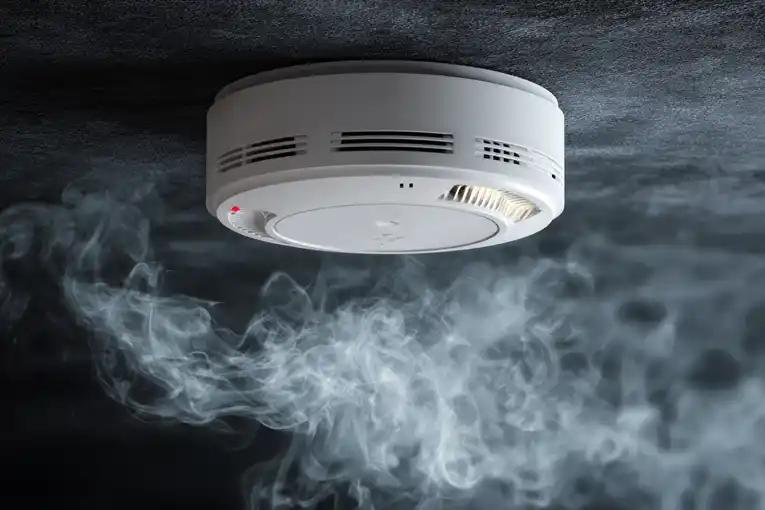
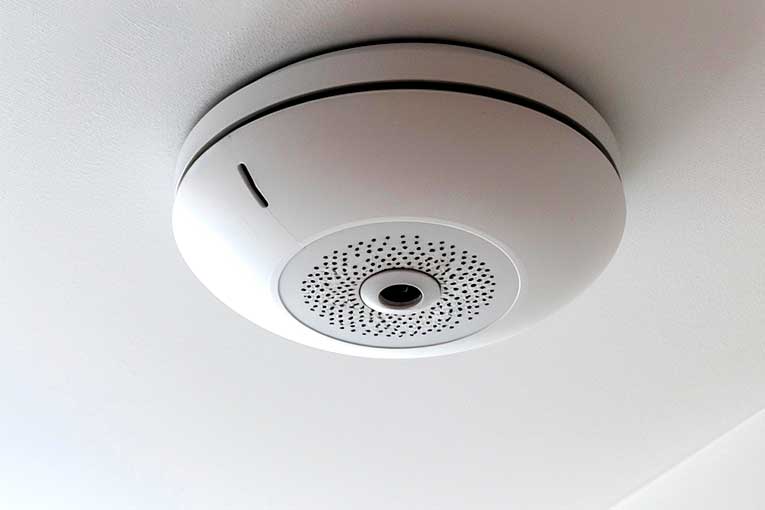
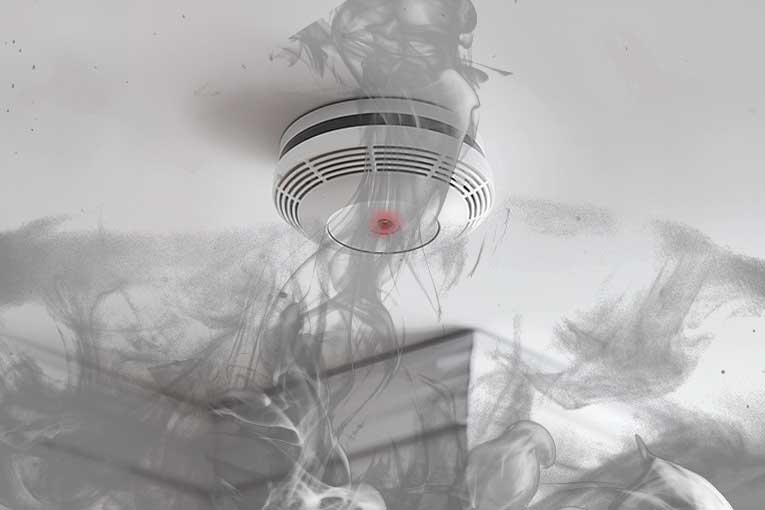
Four million adults never test their smoke alarm, Electrical Safety First says

Smoke alarm testing rates reported in UK survey

A UK survey commissioned by Electrical Safety First found 7% of adults said they never test their smoke alarm, which it described as the equivalent of four million adults.

The charity said the nationally representative survey of 2,000 UK adults found 22% test once a month and 39% test less often than monthly.

It said almost one in 10 test their smoke alarm once a year or less.

Giuseppe Capanna, product safety engineer at Electrical Safety First, said: “Every second counts when it comes to escaping a fire in your home and smoke alarms can be the life-saving gadget that proves to be the difference between life and death.

“But they need to be maintained to ensure they operate properly.”

Capanna said: “Fires don’t discriminate.

“Many people affected by fire often tell us they simply didn’t think something like this could happen to them, which is why it’s so important households take just a few seconds to test their smoke alarm.

“It’s also vital you consider if you have enough of them in your home.

“Make sure alarms are positioned in areas across your home where a fire could start and that you have at least one on every floor of your property.

“The more alarms you have, the earlier your warning will be depending on where in your home a fire starts.”

Smoke alarm absence in accidental electrical dwelling fires

Electrical Safety First said its analysis of government dwelling fire data found 4,498 of 24,140 accidental electrical dwelling fires recorded between 2023 and 2025 had an absent smoke alarm, which it reported as 19%.

It said government analysis shows people living without a working smoke alarm are 11 times more likely to die in a dwelling fire.

The charity said a per-capita analysis placed Norfolk top, with smoke alarms absent in 188 homes where accidental electrical fires were recorded in the past two years.

It reported Avon ranked second with 199 incidents, followed by Cornwall and the Isles of Scilly with 87, Hertfordshire with 161 and Nottinghamshire with 98.

It also reported survey results on the cities where people were most likely to say they never test smoke alarms, with Sheffield at over 14%, Liverpool at 11%, London at 9% and Bristol and Cardiff tied at 8%.

Electrical Fire Safety Week guidance highlighted by the charity

Electrical Safety First said the findings were released as part of Electrical Fire Safety Week.

It said households should test alarms at least once a month, replace batteries when needed and avoid disabling alarms.

It said homes should have at least one working smoke alarm on every floor and people should respond to beeping alarms, which it said may indicate a low battery or a sensor fault.

Domino’s teams with NFPA to promote fire prevention nationally

Domino’s, NFPA relaunch fire prevention outreach during Fire Prevention Week

Domino’s Pizza and the National Fire Protection Association (NFPA) have relaunched a fire prevention campaign during Fire Prevention Week (5–11 October).

The initiative aims to raise awareness of smoke alarms and battery safety in U.S. homes.

For the eighteenth consecutive year, participating Domino’s stores will collaborate with local fire departments to deliver fire safety messages directly to households.

Free pizza tied to working smoke alarms

During the campaign, customers ordering from participating Domino’s stores may see a fire engine accompany their delivery.

If the home’s smoke alarms are working, the pizza is provided free.

If the alarms are not functioning, firefighters will replace batteries or install fully working alarms.

Domino’s senior director of external communications, Jenny Fouracre, said: “Every year, Domino’s stores look forward to teaming up with their local fire departments and NFPA to spread fire safety messages in an exciting and unexpected way.

“Domino’s has brought this program to neighborhoods across the U.S. for 18 years now, helping reinforce the importance of working smoke alarms in a fun, impactful way.”

Theme focus: lithium-ion battery safety

This year’s campaign theme is Charge into Fire Safety: Lithium-Ion Batteries in Your Home.

Participating stores will include flyers atop pizza boxes highlighting safe practices for purchasing, charging and recycling lithium-ion batteries.

These flyers aim to raise awareness of fire risks associated with misuse of lithium-ion batteries.

Lorraine Carli, NFPA vice president of outreach and advocacy, said: “Fire continues to present real risks to the public, particularly at home, where the majority of U.S. home fire deaths happen.

“Having working smoke alarms in the home is critical to safety, giving people the time needed to escape safely – whatever the cause of that fire may be.”

NFPA’s guidance for battery and smoke alarm safety includes: install smoke alarms on every level and in every bedroom; test alarms monthly; and replace alarms after ten years or when they fail.

Relevance for fire and safety professionals

Fire safety officers and community outreach coordinators may study the Domino’s–NFPA programme as a model of public engagement that uses a private-sector channel (food delivery) to promote safety awareness.

Fire chiefs and local department planners may consider the logistics of deploying fire department resources into educational delivery efforts tied to commercial partners.

Standards bodies and procurement officers in fire protection can observe how the campaign highlights smoke alarm performance and battery practices, reinforcing maintenance and replacement cycles.

Electrical engineers and building services professionals may note the increased focus on lithium-ion battery safety inside homes and how it aligns with fire risk management strategies.

This article was informed by information from the following source(s): Domino’s Pizza

Changing a Battery in a Smoke Alarm

Smoke alarms are essential life-saving devices that warn us of fire, but they can only do their job if they have power. 

You are around 8 times more likely to die in a fire if you do not have a working smoke alarm. 

Many fatal home fires occur in houses that had smoke alarms installed but the alarms failed to go off, often due to missing or dead batteries. 

But how does changing a battery in a smoke alarm work?

Whether your smoke alarm is a standalone battery-powered unit or a mains-wired alarm with a backup battery, checking and changing the battery regularly is critical. 

This ensures the alarm will function when it’s needed most..

How to Change a Battery in a Smoke Alarm?

how to change a battery in a smoke alarm

Changing the battery in a smoke alarm is a straightforward task, but it’s important to do it correctly for the alarm to work. 

If you have a battery-powered smoke detector, the process involves opening the device, swapping the old battery for a new one. 

Here is a simple step-by-step guide for typical battery replacement:

Open the Alarm Cover

Most alarms either have a cover that twists or lifts off. 

Gently remove or twist the cover or the body of the alarm to expose the battery compartment. 

Remove the Old Battery

Unclip or slide out the old battery from its holder. 

It may be connected by a snap-on connector or simply held in a slot. 

Take note of how it was oriented.

Insert the New Battery

Put the new battery in the same way the old one was. 

Match the + and – terminals correctly so the markings on the battery align with those on the alarm’s battery contacts. 

Push the new battery firmly into place or reconnect the snap-on connector if there is one. 

Use the type of battery recommended by the alarm manufacturer.

Close the Alarm

Fit the cover or alarm unit back into place and make sure it clicks or twists closed securely. 

Finally, press and hold the test button on the smoke alarm until the alarm sounds a loud beep. 

This confirms that the new battery is working and the alarm is functioning.

What Types of Batteries are in Smoke Alarms?

what types of batteries in smoke alarm

Smoke alarms can use a few different types of batteries, and it’s important to use the right kind. 

9-Volt / AA

Most standard smoke alarms use either a 9-volt battery or AA batteries as their power source. 

Traditionally, many alarms took a single rectangular 9V battery (often called a PP3 battery). 

In newer models, it’s common to find replaceable AA batteries (usually 2 or 3 AA cells) instead of a 9V. 

These AA batteries together provide the required power and often have a higher combined capacity, meaning they can keep the alarm running longer.

Always check your alarm’s manual or look at the existing battery to know what type to use as a replacement. 

Long Life Lithium

There are also long-life lithium batteries available for smoke alarms. 

Some modern alarms come with 10-year sealed lithium batteries built in. 

These batteries are not removable; instead, the entire alarm is designed to operate for ten years on that sealed battery, after which you replace the whole alarm unit. 

Ten-year sealed battery alarms are popular because you don’t have to change the battery every year.

They give continuous power for the life of the alarm, and then you dispose of the unit once the battery is exhausted.

Mains

For mains-powered smoke alarms, the primary power comes from your house’s electrical supply, but they almost always have a backup battery. 

This backup is usually a 9V battery or sometimes a couple of AA batteries, depending on the model. 

The backup battery is there to ensure the alarm will still work if there’s a power cut. 

Mains-powered alarms still need their batteries replaced periodically, just like battery-only alarms. 

The difference is that a mains-wired unit will draw its daily power from the mains electricity.

However, if that backup battery is dead or missing, the alarm won’t sound. 

So keep the backup battery fresh.

Coin Cell

Occasionally, some compact smoke detectors use other battery types like built-in coin cell batteries or special long-life batteries. 

For example, a few small-form smoke alarms might use a lithium coin cell or a specialised lithium pack. 

These are less common, but the key point is to always use the exact type of battery recommended by the alarm’s manufacturer. 

Using an incorrect battery type (for instance, the wrong voltage or chemistry) could either prevent the alarm from working or cause it to underperform.

What to Avoid When Changing a Battery in a Smoke Alarm?

While changing a smoke alarm battery is simple, there are some important things to avoid to ensure your alarm remains effective and safe:

Not Replacing Battery

Do NOT leave the alarm without a battery. 

One of the biggest mistakes is removing the old battery and then forgetting to insert a new one immediately. 

Even leaving a smoke alarm without a battery for a short time is risky.

You might get distracted and not return to it. 

Always have a new battery on hand before you take the old one out. 

If an alarm is beeping in the middle of the night due to low battery, resist the temptation to just take the battery out to silence it and then go back to sleep. 

Unfortunately, some people do this and then neglect to put a new battery in later, leaving them unprotected. 

Never disable or remove the battery to quiet a ‘nuisance alarm’, instead fan out the smoke or use a hush button if your alarm has one. 

An alarm with no power won’t save your life in an emergency.

Wrong Battery Type

Avoid using the wrong type or a poor-quality battery. 

Smoke alarms are designed to use a specific battery type. 

Don’t try to fit a physically incompatible battery or one with incorrect voltage. 

For instance, do not try to power a 9V-only alarm with some makeshift combination of other batteries. 

Also, it’s best to use good quality batteries from reputable brands for smoke detectors. 

Cheap or old batteries may not last as long or could leak. 

Follow any guidance in your alarm’s manual about which batteries are recommended. 

Using the exact type (alkaline vs lithium, etc.) that’s advised will ensure the alarm functions correctly. 

If your alarm uses multiple cells (like 2×AA), always replace all of them at the same time with new batteries from the same pack.

Never mix old and new batteries together in the alarm, as this can cause leakage or reduced performance.

Recharge Batteries

Do not use rechargeable batteries in smoke alarms (unless the manufacturer specifically allows it). 

Rechargeable batteries are generally not recommended for smoke alarms. 

This is because rechargeables (like NiMH 9V or NiMH AA cells) have a slightly lower voltage and they self-discharge over time. 

They can run down much faster than normal alkaline batteries, even if you don’t use the alarm often. 

For example, some rechargeable 9V batteries might lose their charge in a matter of weeks or a couple of months, which is not reliable for a device that needs to work 24/7. 

Most smoke alarm manufacturers and fire safety experts advise against using rechargeable cells, as they may not meet the required backup time and reliability standards for an alarm. 

Stick to standard alkaline or lithium batteries as recommended.

Damage

Avoid damaging the alarm or its parts during battery replacement. 

When opening the alarm and handling the battery, be careful. 

Do not force the battery in or bend the contacts excessively.. 

If you accidentally pull a wire or break the battery clip, the alarm could malfunction. 

In such cases it would be better to replace the entire alarm. 

So take your time and handle everything gently. 

If the battery has a little plastic ribbon or tab designed to help pop it out, use that to remove it rather than prying roughly with tools.

When to Change a Battery in a Smoke Alarm?

when to change a battery in a smoke alarm

Knowing when to replace your smoke alarm’s battery is just as important as knowing how. 

Batteries don’t last forever, and a smoke alarm will give you warnings when its battery is weak, but you shouldn’t rely solely on the alarm’s chirp. 

Here are the key guidelines on when to change the battery:

At Least Once Every Year

For typical smoke alarms with replaceable batteries, the standard recommendation is to replace the battery annually. 

Many fire services advise changing the battery every 12 months, even if the alarm hasn’t started chirping yet. 

This pre-emptive change ensures the alarm will not run low at an inconvenient or dangerous time. 

Choosing a date you’ll remember, like your birthday or New Year’s Day, is a good way to make it part of your yearly routine. 

If your alarm uses standard alkaline batteries, they are inexpensive, and it’s worth the small cost for peace of mind.

Low Battery Warning

Your alarm will alert you when its battery is getting weak by emitting a regular ‘beep’ or ‘chirp’ sound. 

When you hear this, replace the battery immediately. 

The alarm is telling you it doesn’t have much power left. 

Don’t ignore it. 

Once chirping starts, install a fresh battery right away. 

This should stop the beeping and restore full function. 

If the alarm continues to chirp after a battery change, it could indicate a different issue, such as a fault in the alarm or that the unit is at the end of its life.

If it Fails a Test

You should be testing your smoke alarms regularly. 

If you press the test button and it doesn’t sound, it could mean the battery is dead. 

First, check if the battery is properly fitted. 

If the alarm still doesn’t sound, try a fresh battery. 

If that doesn’t solve the issue, the alarm itself may be faulty or too old and should be replaced.

Key Takeaways

You should now have an understanding of changing a battery in a smoke alarm.

Maintaining your smoke alarm’s battery is a small chore that carries a huge reward.

it could save your life and the lives of your loved ones. 

Many fire fatalities happen in homes where smoke alarms were present but had failed, often due to flat or missing batteries. 

This is a tragic statistic because it’s preventable with simple maintenance.

The bottom line is that a few minutes of simple maintenance can provide around-the-clock protection. 

Keep your smoke alarms powered, tested, and in good shape.

This way, if a fire ever breaks out, the alarm will reliably give you that urgent warning to get out safely. 

Stay safe!

How to Test Smoke Alarms Properly

A smoke alarm is one of the most important safety devices in the home, yet they’re often overlooked until it’s too late.

If you have one installed, testing your smoke alarm regularly is a simple task that can save lives.

To test a smoke alarm, press and hold the test button on the front panel until you hear a loud, continuous sound.

If the alarm does not sound, replace the battery. If it’s a sealed unit, speak to a specialist to replace the alarm. 

You can also use a smoke detector test spray or safe smoke source to check the sensor, following the manufacturer’s guidance.

Our article explains exactly how to test your smoke alarm properly, how often you should test it, what to look out for, and what to do if something’s not right.

Whether you’re a homeowner, renter, or responsible for a business premises, this guide will leave you better informed and safer.

What is a smoke alarm and do I need one?

What is a Smoke Alarm

Smoke alarms are devices specifically designed to detect smoke (a primary indicator of fire), and sound an audible warning to alert people in the building.

Most smoke alarms operate using either ionization sensors, which respond to fast, spreading fires, or photoelectric sensors, which are better at detecting slow, smoldering fires. 

Some units combine both technologies for a more comprehensive coverage.

Every single building, residential or commercial, needs a smoke alarm – bar none!

In most countries, having at least one working smoke alarm on every level of a home is a legal requirement.

In the United States for example, the National Fire Protection Association (NFPA) recommends smoke alarms are fitted inside each bedroom, outside each sleeping area, and on every level of the home, including the basement.

In the UK, Australia, and many other countries, similar laws and recommendations also exist.

Why Test Your Smoke Alarms?

Testing your smoke alarm is the only way to know its working properly.

Even if the unit appears in good working order, components inside can degrade over time.

Batteries can die. Dust or insects can clog the sensors. Wiring can loosen.

A malfunctioning smoke alarm is essentially useless in an emergency.

Fire statistics consistently show that the risk of dying in a home fire is cut in half when working smoke alarms are present.

Regular testing ensures you and your family are alerted in time to escape.

How Often Should I Test My Smoke Alarms?

Woman Testing Smoke Alarm

Experts recommend testing your smoke alarms once a month.

This frequency ensures that any battery issues, sensor faults, or connectivity problems are identified before a real emergency happens.

Here’s some additional maintenance recommendations to remember:

  • Battery-powered alarms: Replace batteries at least once a year, unless the alarm uses a 10-year sealed battery.
  • Hardwired alarms: These are connected to your home’s electricity supply but typically still have a backup battery that needs yearly replacement.
  • All smoke alarms: Replace the entire unit every 10 years, or sooner if the manufacturer recommends it or if the unit fails testing.

Marking these tests on your calendar or making them a part of your monthly routine is an easy way to stay safe.

How to Test a Smoke Alarm

Smoke  Detector
Image credit: Pixabay

Testing a smoke alarm is a very straightforward process, but it varies slightly depending on the type of smoke detection unit you have installed.

Battery Units

  1. Locate the test button: This is usually visible on the front face of the alarm.
  2. Press and hold the button: After a few seconds, the alarm should emit a loud, high-pitched sound.
  3. Listen for consistency: The sound should be continuous and strong. If it’s weak or erratic, replace the battery immediately.
  4. No sound? Replace the battery first, then test again. If there’s still no response, replace the entire unit.

Hardwired Units

  1. Locate the test button: Press and hold the test button exactly as you would on a battery-operated alarm.
  2. Interconnected alarms: If your home has interconnected alarms, pressing the test button on one unit should cause all the alarms to sound. This is normal and confirms they’re correctly linked.
  3. Backup battery: Even though these alarms are connected to mains power, always check the battery backup. If the alarm fails the test and replacing the battery doesn’t fix it, call an electrician to inspect the wiring or replace the unit.

Optional Sensor testing

If you want to test the smoke sensor itself (not just the loudspeaker or battery), you can use a smoke detector test spray.

This creates a safe, simulated smoke environment.

Unless advised by the manufacturer, avoid using real smoke such as candles or matches, as this can contaminate and damage the sensor.

Troubleshooting

If your alarm fails the test or behaves strangely, here’s what to do:

  • Weak or chirping sound: This usually indicates a low battery. Replace it and retest.
  • No sound at all: Try a brand new battery. If still silent, the unit may be faulty.
  • Frequent false alarms: Dust, steam, cooking fumes, or insects can all cause false triggers. Clean the alarm with a vacuum cleaner or soft brush. Avoid using sprays or solvents.
  • Random beeps: Some units beep to signal end-of-life, often every 30 to 60 seconds. Check the label on the back for the recommended replacement date.

Safety Tips

  • Always test your alarms after a vacation or extended period away.
  • If you’re hearing impaired, install smoke alarms with strobe lights or vibration alerts.
  • Avoid painting over smoke alarms since this can block sensors.
  • For rental properties, landlords are usually responsible for installing alarms, but tenants should still test them regularly.
  • Don’t ignore chirps or unusual sounds, since they’re indicators telling you something’s wrong.

Key Takeaways

Testing your smoke alarms is one of the simplest ways to protect everyone in your home.

It takes less than a minute, but it could be the difference between life and death in the event of a fire.

Make it a habit, stay informed, and stay safe.

When testing, press and hold the test button monthly to check your smoke alarm’s function.

Replace all batteries at least annually, or sooner as needed.

Alarms should be fully replaced every 10 years, even if they seem to function properly.

Use some test spray for a more thorough check of the smoke sensor if desired.

And address any beeping, silence, or false alarms promptly. Don’t ignore them.

Winter fire safety in NSW: Government campaign urges smoke alarm checks

NSW sees winter rise in fire-related deaths and injuries

The New South Wales Government has launched Fire and Rescue NSW’s annual Winter Fire Safety campaign, highlighting a seasonal increase in home fire incidents and associated risks.

According to the New South Wales Government, the campaign began as winter temperatures led to a 13 percent increase in house fires during colder months.

Between 1 June and 30 August 2024, over 1,000 fires occurred in homes across the state, resulting in 12 fatalities and injuries to more than 100 people.

Smoke alarm failures linked to nearly half of winter fires

Fire and Rescue NSW reported that 44 percent of winter home fires in 2024 occurred in dwellings where either no smoke alarm was installed or the device failed to activate.

It added that 42 percent of fires during this period began in household kitchens.

Across all of 2024, there were 3,674 residential fires in NSW, resulting in 25 deaths.

In 45 percent of these cases, no working smoke alarm was present.

Lithium-ion battery safety a continuing concern

The campaign also draws attention to hazards related to lithium-ion batteries.

Fire and Rescue NSW stated that 115 battery-related incidents were recorded in the state during 2024 so far.

Of these, 42 incidents were linked to e-bikes and e-scooters.

The service warned that charging, storing or disposing of these devices incorrectly may cause fires or explosions.

Community support efforts launched alongside campaign

Fire and Rescue NSW said that its crews would be visiting households to carry out free safety checks and offer guidance on preventing winter fire risks, including battery charging behaviour.

Firefighters will also install smoke alarms at no cost where needed.

The public can request a free home fire safety visit and alarm installation at any time through the Fire and Rescue NSW website.

Minister for Emergency Services Jihad Dib said:
“This winter the NSW Government wants to ensure households have a working smoke alarm installed.

“They can give residents the crucial seconds needed to get everyone out safely.

“In my own community of Bankstown, dozens of fires broke out in homes last winter, and more than half of those homes didn’t have a working smoke alarm installed.

“If you need help, our firefighters are here for you.

To test a smoke alarm please book a safety visit through the Fire and Rescue NSW website or by calling your local fire station.”

Fire and Rescue NSW Commissioner Jeremy Fewtrell said:
“The risk of fires in our homes increases during the colder months as we try to stay warm and cook more hot meals.

“Keep looking when cooking – never leave cooking unattended and don’t throw water onto a fat fire as it will intensify the flames – use a fire blanket or extinguisher instead.”

Targeted data shows high-risk areas across NSW

Fire and Rescue NSW published a breakdown of the number of winter house fires in 2024 by local government area (LGA), along with the proportion of incidents in homes without functioning smoke alarms.

Canterbury-Bankstown experienced the most fires (63), with 51 percent of homes lacking a working alarm.

Wollongong had 30 house fires, and 60 percent were reported to have no operational smoke alarm.

Other LGAs with high fire counts included Blacktown (53), Central Coast (45), and Cumberland (43), each reporting a large share of fires occurring in homes without functioning alarms.

Winter fire safety in NSW: Summary

The New South Wales Government has launched Fire and Rescue NSW’s Winter Fire Safety campaign.

It reported a 13 percent increase in house fires during winter 2024 compared to the rest of the year.

Between June and August 2024, there were over 1,000 home fires across NSW.

These incidents resulted in 12 deaths and more than 100 injuries.

In 44 percent of winter home fires, there was no working smoke alarm or the device failed.

Kitchen fires made up 42 percent of the total during this period.

Throughout 2024, 3,674 residential fires occurred in the state.

These led to 25 deaths, and 45 percent of homes affected had no operational smoke alarm.

Fire and Rescue NSW recorded 115 lithium-ion battery incidents in 2024 so far.

Of those, 42 were related to e-bikes and e-scooters.

The agency warned against unsafe charging, storage and disposal practices.

Free safety checks and smoke alarm installations are being offered by firefighters across NSW.

The campaign encourages residents to book a fire safety visit through the service’s website.

What is a Dual Sensing Smoke Alarm?

A smoke alarm is an essential safety device that can save lives. 

It detects smoke, alerting occupants to a fire, giving them time to escape. 

While there are different types of smoke alarms, a dual sensing smoke alarm is known for its enhanced detection abilities. 

This article will explore what a dual sensing smoke alarm is, its types, advantages, disadvantages, and other smoke alarm options.

What is a Dual Sensing Smoke Alarm?

dual sensing smoke alarm image

A dual sensing smoke alarm is a type of fire detection device designed to improve fire detection by using two different sensors: ionisation and photoelectric.

Ionisation Sensors

These are more responsive to fast-flaming fires, such as those caused by paper. 

They detect small particles of smoke that are typically produced in these types of fires.

Photoelectric Sensors

These are better at detecting slow, smouldering fires, like those caused by cigarettes. 

They work by sensing larger smoke particles that scatter light.

Why Dual Sensing is Safer

By combining these two sensors, dual sensing smoke alarms offer more comprehensive coverage, ensuring faster and more accurate detection of different types of fires. 

This dual approach minimises the chances of false alarms while maximising the likelihood of detecting a real fire.

These alarms are recommended by safety experts and are ideal for providing enhanced protection in homes, giving occupants crucial time to respond in case of a fire. 

Despite being slightly more expensive than single-sensor alarms, the added safety they provide makes them a valuable investment for any household.

What are the Different Types of Dual Sensing Smoke Alarm?

dual sensing smoke alarm types

Dual sensing smoke alarms come in several types, categorised by their power source, connectivity, and additional features. 

Understanding these types can help you choose the best option for your home.

Battery-Powered Dual Sensing Smoke Alarms

Battery-powered dual sensing smoke alarms are standalone units that rely on batteries for operation. 

These alarms are easy to install and can be placed anywhere in the home. 

They are especially useful in homes without hardwired smoke alarm systems. 

However, they require regular battery checks and replacements to ensure they function properly. 

Some models come with long-life lithium batteries, reducing the frequency of battery changes.

Hardwired Dual Sensing Smoke Alarms

Hardwired dual sensing smoke alarms are connected directly to your home’s electrical system, ensuring continuous power. 

These alarms usually include a battery backup to maintain functionality during power outages. 

Hardwired alarms are often interconnected, meaning that if one alarm is triggered, all alarms in the system will sound. 

This feature enhances safety by ensuring that the alarm is heard throughout the home.

Smart Dual Sensing Smoke Alarms

Smart dual sensing smoke alarms are equipped with wireless connectivity, allowing them to be monitored and controlled via a smartphone app. 

These alarms can send alerts to your phone if smoke is detected, even when you’re not home. 

Some models integrate with other smart home devices, such as lights or thermostats, to enhance safety. 

For example, if smoke is detected, a smart alarm could automatically shut off the HVAC system to prevent the spread of smoke.

Combination Alarms

Combination alarms are dual sensing smoke alarms that also detect other hazards, such as carbon monoxide (CO). 

These alarms provide comprehensive protection by combining smoke and CO detection in a single device. 

They are ideal for areas like bedrooms, where both fire and CO risks may be present.

What are the Advantages of a Dual Sensing Smoke Alarm?

dual sensing smoke alarm advantages

Dual sensing has a wide array of advantages over single-sensing alternatives.

The main benefits are: 

Comprehensive Fire Detection

Dual sensing smoke alarms combine two types of sensors: ionisation and photoelectric. 

This dual approach allows them to detect both fast-flaming fires and slow, smouldering fires. 

Ionisation sensors are more responsive to fires that spread quickly, like those involving paper or grease. 

Photoelectric sensors, on the other hand, are better at detecting smouldering fires, which may start from something like a cigarette or an electrical fault. 

By covering both types of fires, dual sensing alarms offer more reliable and comprehensive protection.

Reduced False Alarms

One of the significant advantages of dual sensing smoke alarms is their ability to reduce false alarms. 

Single-sensor alarms, like those with only ionisation or only photoelectric sensors, may trigger false alarms due to non-fire-related activities like cooking or steam from a shower. 

The dual sensors in a dual sensing smoke alarm work together to provide a more accurate response to actual fire threats, reducing the chances of unnecessary alarms.

Enhanced Safety and Peace of Mind

Dual sensing smoke alarms increase safety by providing earlier and more accurate fire detection. 

Early detection is critical in preventing injury or loss of life, giving occupants valuable time to escape in the event of a fire. 

Knowing that your smoke alarm can detect different types of fires effectively gives you peace of mind, especially when it comes to protecting your family and property.

Compliance with Safety Recommendations

Many fire safety organisations recommend the use of dual sensing smoke alarms due to their enhanced detection capabilities. 

Installing these alarms can help ensure that your home meets current safety standards and regulations, providing an extra layer of security and compliance.

Cost-Effective Protection

While dual sensing smoke alarms may be slightly more expensive upfront, they offer cost-effective protection in the long run. 

By combining the functions of two alarms into one, they eliminate the need to install multiple devices, reducing overall costs and maintenance efforts.

What are the Disadvantages of a Dual Sensing Smoke Alarm?

dual sensing smoke alarm disadvantages

While dual sensing smoke alarms have many benefits, they are not without their drawbacks. 

The main ones are: 

Higher Initial Cost

One of the main disadvantages of dual sensing smoke alarms is their higher initial cost compared to single-sensor alarms. 

Because they incorporate both ionisation and photoelectric sensors, dual sensing alarms are generally more expensive to purchase. 

For homeowners on a tight budget, the upfront cost may be a deterrent, especially when multiple units are required for comprehensive home coverage.

Maintenance and Battery Replacement

Dual sensing smoke alarms require regular maintenance, including battery checks and replacements. 

Although this is true for most smoke alarms, the complexity of dual sensing alarms can sometimes make maintenance slightly more cumbersome. 

Homeowners may also need to familiarise themselves with the specific maintenance needs of both types of sensors. 

In addition, if the alarm includes a battery backup for a hardwired system, maintaining both the electrical and battery components can be a hassle.

Potential for Over-Detection

While dual sensing smoke alarms are designed to reduce false alarms, their heightened sensitivity to different types of fires can sometimes lead to over-detection. 

For example, activities like cooking or using a fireplace may trigger the alarm more frequently, which could become annoying and lead to complacency. 

If the alarm goes off too often for non-emergencies, occupants may start ignoring it, which defeats the purpose of having an advanced detection system.

Installation Complexity

Dual sensing smoke alarms, particularly hardwired or interconnected models, can be more complicated to install than basic single-sensor alarms. 

Homeowners who are not comfortable with electrical work might need to hire a professional, adding to the overall cost. 

The complexity of installation might also make it more difficult to troubleshoot issues if the alarm malfunctions or needs to be replaced.

Limited Availability in Some Markets

In some areas, dual sensing smoke alarms might not be as readily available as single-sensor models. 

This limited availability can make it harder for homeowners to find and purchase the right alarm, especially if they live in remote or less densely populated regions.

What Other Types of Smoke Alarms are There?

other types of smoke alarms

Aside from dual sensing smoke alarms, there are other types of smoke alarms available, each with its own advantages and disadvantages.

Ionisation Smoke Alarms

Ionisation smoke detectors are designed to detect fast-flaming fires. 

They contain a small amount of radioactive material between two electrically charged plates, which ionises the air and creates a flow of current between the plates. 

When smoke enters the chamber, it disrupts this current, triggering the alarm. 

These alarms are particularly effective at detecting fires that produce little visible smoke but spread quickly, such as those involving paper or flammable liquids. 

However, they are more prone to false alarms from cooking or steam.

Photoelectric Smoke Alarms

Photoelectric smoke detectors are more sensitive to slow, smouldering fires that produce a lot of smoke before they burst into flames. 

These alarms use a light beam and a sensor inside the chamber. 

When smoke enters the chamber, it scatters the light beam, directing it towards the sensor and triggering the alarm. 

Photoelectric alarms are less likely to be triggered by cooking fumes, making them ideal for installation near kitchens. 

They provide earlier warning for smouldering fires, such as those caused by unattended candles or cigarettes.

Heat Alarms

Heat alarms are designed to detect a rapid rise in temperature rather than smoke. 

They are particularly useful in environments where smoke alarms might give false alarms, like kitchens or garages. 

Heat alarms are ideal for detecting fires in areas prone to dust, smoke, or fumes. 

However, because they don’t detect smoke, they are often used in conjunction with smoke alarms to provide comprehensive fire detection.

Conclusion

You should now have more of an understanding of dual sensing smoke alarms. 

A dual sensing smoke alarm is a critical safety device that enhances fire detection in your home. 

By combining ionisation and photoelectric sensors, these alarms provide comprehensive coverage for various types of fires. 

While they come with higher costs and some maintenance needs, the added protection they offer can be invaluable. 

Understanding the different types of dual sensing smoke alarms, their advantages, and disadvantages helps you make an informed decision when safeguarding your home. 

Remember, no matter which type of smoke alarm you choose, regular maintenance and testing are key to ensuring it functions correctly and provides the protection you need.

UK renters lack smoke alarms, Firechief Global survey reveals

Firechief Global survey highlights smoke alarm gap in UK rental homes

A recent survey conducted by Firechief Global, the UK’s fastest-growing fire safety company, has revealed that over 2 million people living in rented accommodations in the UK do not have a smoke alarm fitted.

Firechief Global’s findings indicate that 17% of UK renters lack smoke alarms.

Given that 18.8% of the UK’s population of 67.8 million are renters, this percentage equates to just over 2 million individuals.

As reported by Firechief Global, Greater London is the most affected, with nearly a quarter (24%) of all households, both renters and owners, without smoke alarms.

In Northern Ireland, the figure stands at 22%.

In response to these findings, Laurie Pollard, Managing Director at Firechief Global, said: “In light of these alarming findings, all landlords must check their properties and ensure that the correct fire safety measures are in place to protect tenants first and foremost.”

The importance of proper smoke alarm installation

In the year 2022/23, there were 321 fire-related fatalities in the UK.

The Government’s Fire Kills campaign highlighted that individuals are ten times more likely to die in a fire if their home does not have a working smoke alarm.

Besides the absence of smoke alarms in 2 million rental properties, the survey pointed out that many smoke alarms are not tested regularly.

While tenants should check alarms frequently, landlords should demonstrate the testing process upon tenant move-in.

During 2020/2021 in England, there was a 28% failure rate of smoke alarms.

This rate was higher in Scotland at 39%, and in Wales, it reached 50%.

Laurie Pollard emphasised the issue: “The importance of installing and maintaining working smoke alarms in every home cannot be overstated.

The absence of smoke alarms in millions of homes denies individuals the essential extra time needed to escape a fire safely.

This critical time can mean the difference between life and death.”

Landlord responsibilities under the law

The Smoke and Carbon Monoxide Alarm (Amendment) Regulations 2022 stipulate that all landlords must ensure at least one smoke alarm is installed on each storey of homes where there is a room being used as living accommodation.

This requirement has been in place in the private rented sector since 2015.

While no specific type of smoke alarm is mandated, it is recommended that landlords choose alarms based on the needs of their buildings and tenants.

Compliance with British Standards BS 5839-6 is advised.

For battery-powered alarms, those with ‘sealed for life’ batteries are more reliable than those with replaceable batteries.

Enforcement and penalties for non-compliance

Local authorities are responsible for upholding these regulations and issuing penalties for non-compliance.

If a landlord fails to install the required alarms, the local authority must issue a remedial notice, ordering action within 28 days.

Failure to comply can result in a civil penalty of up to £5,000 per breach, meaning landlords could face unlimited fines for multiple non-compliant properties.

NFCC and BBC Morning Live emphasise smoke alarm safety

Smoke alarm safety advice from NFCC and BBC Morning Live

“We believe all homes should be protected by working smoke alarms.”

Jon Quinn, Chair of the NFCC’s Home Safety Committee

Last week, the National Fire Chiefs Council (NFCC) partnered with the BBC’s Morning Live to highlight the importance of having functional smoke alarms in homes.

As reported by the National Fire Chiefs Council, DIY expert Wayne Perrey demonstrated to presenters Gethin Jones and Helen Skelton how to check if a smoke alarm is outdated.

The segment is available on the Morning Live website.

Perrey advised that all smoke alarms, whether hard-wired or battery-operated, should be replaced after 10 years or by the date indicated on the alarm’s base.

He explained that the sensor in smoke alarms degrades over time, which may impair its ability to detect smoke effectively, even if the test button works.

Smoke alarm regulations and maintenance requirements

In the UK, building regulations mandate the installation of smoke alarms in new homes, but these regulations vary by country.

Homeowners must check and replace alarms that have surpassed their 10-year lifecycle.

The Smoke and Carbon Monoxide Alarm (England) Regulations 2015, which apply to private rented homes, require landlords to replace smoke alarms as part of routine maintenance within the next 12 months, as these regulations approach their 10-year mark.

Further regulations introduced in England in 2022 extended the smoke alarm requirement to social rented accommodation.

Scotland and Wales have differing legislation, requiring interlinked alarms, while changes to regulations in Northern Ireland will come into effect later in 2024.

The NFCC welcomes these updates, aiming to ensure all homes in the UK are protected by smoke alarms.

Tenant and homeowner responsibilities

The NFCC advises tenants to ensure their landlords comply with the relevant laws in their country and to seek assistance from local fire and rescue services if necessary.

Regardless of the type of alarm or who installed it, all residents should test their smoke alarms monthly.

Tenants in rented homes are responsible for this task.

The NFCC recommends that batteries in battery-operated alarms be changed annually.

Additionally, smoke alarms should be purchased from reputable retailers, bearing the British Standards kite mark or the European Safety Mark.

Following the manufacturer’s instructions is crucial for optimal alarm performance.

Online home fire safety check tool

Jon Quinn, Chair of the NFCC’s Home Safety Committee, emphasised the importance of working smoke alarms: “We believe all homes should be protected by working smoke alarms.

“We urge people to check their alarms have not passed their 10-year expiry date and whether you are a homeowner or tenant you test them regularly, at least once a month.”

Quinn also encouraged completing an Online Home Fire Safety Check: “To reduce the risk of fire in the home we encourage people to complete an Online Home Fire Safety Check for yourself or your loved ones.

“It will provide simple steps and advice or even a visit from your local fire and rescue service to help keep you safe.”

The NFCC has collaborated with Fire Kills and Safelincs to develop this online tool, offering personalised fire safety advice and, if needed, arranging a home fire safety visit, which may include smoke alarm installation for homeowners.

What is a Photoelectric Smoke Detector?

Within fire safety, smoke detectors play a pivotal role in the preservation of lives and protection of property. 

Amidst the diverse array of smoke detection technologies, the photoelectric smoke detectors have been gaining popularity since their invention in 1972. 

This article will look into the depths of photoelectric smoke detectors, and why they are indispensable. 

We will delve into the inner workings of these devices, understanding their unique advantages, acknowledging their limitations, and discerning how they stack up against their counterparts in the vast market of fire safety solutions. 

So, let’s venture into the world of photoelectric smoke detectors, where innovation meets necessity, and safety takes centre stage.

What is a Photoelectric Smoke Detector? 

photoelectric smoke detector image

A photoelectric smoke detector is a device designed to detect smoke particles in the air and set off an alarm if smoke is detected. 

It operates based on the photoelectric effect – the emission of electrons when light falls on a material. 

In the context of smoke detection, the device uses a light source and a sensor to identify the presence of smoke.

The history of the photoelectric smoke detector dates back to the mid-20th century, marked by a continuous quest to enhance fire detection technology. 

Albert Einstein’s groundbreaking work on the photoelectric effect in the early 20th century laid the theoretical foundation for the development of photoelectric sensors.

In 1972, Donald Steele and Robert Emmark, researchers at Electro Signal Lab, invented and patented the photoelectric (optical) smoke detector.

Throughout the ensuing decades, advancements in electronics and materials science contributed to refining the efficiency and reliability of photoelectric smoke detectors. 

These devices became integral components of residential and commercial fire safety systems, playing a vital role in providing early detection of potential fire hazards.

Continued research and development in the field have led to the integration of photoelectric technology with other detection methods, contributing to more comprehensive fire safety solutions. 

The evolution of the photoelectric smoke detector stands as a testament to the ongoing commitment to innovation in enhancing our ability to detect and respond to fire threats effectively.

How does a Photoelectric Smoke Detector Work?

how photoelectric smoke detector works

A photoelectric smoke detector operates on the principle of light obscuration to identify the presence of smoke particles in its surroundings. 

This innovative technology relies on the photoelectric effect, a fundamental phenomenon in physics where light striking a material induces the emission of electrons. 

The device comprises a light source and a sensor strategically placed at an angle within a detection chamber.

In the absence of smoke, the light beam from the source does not reach the sensor directly. 

However, when smoke particles enter the detection chamber, they scatter the light, causing some of it to deviate towards the sensor. 

This triggers the sensor to send a signal, setting off the alarm and alerting occupants to the potential presence of a fire.

This design makes photoelectric smoke detectors particularly effective in detecting smouldering fires, characterised by slow combustion and the production of larger smoke particles. 

The early detection of such fires is crucial for timely response and evacuation.

The strategic placement of the light source and sensor, coupled with the sensitivity to the scattering of light by smoke particles, ensures a prompt and accurate reaction to the initial signs of a fire. 

This swift response provides valuable time for intervention and evacuation, enhancing the overall efficiency of fire safety systems

What are the Advantages to a Photoelectric Smoke Detector?

photoelectric smoke detector advantages

Photoelectric smoke detectors have a wide range of positives for their use: 

Early Detection of Smouldering Fires

One notable advantage of photoelectric smoke detectors is their efficacy in detecting smouldering fires. 

This type of fire is characterised by slow combustion and the production of larger smoke particles. 

Photoelectric detectors excel in identifying these larger particles, providing an early warning that is crucial for timely intervention and evacuation.

Reduced False Alarms

Photoelectric smoke detectors are less prone to false alarms triggered by non-fire-related particles like cooking smoke or steam. 

The technology’s focus on the scattering of light by smoke particles contributes to a more accurate and reliable response, minimising unnecessary disruptions and ensuring the alarm is activated only when a genuine fire hazard is present.

Enhanced Sensitivity

The strategic design of photoelectric smoke detectors, with a light source and sensor at an angle within a detection chamber, enhances their sensitivity to the early signs of a fire. 

This heightened sensitivity allows for a swift response, giving occupants more time to react and facilitating effective fire safety measures.

Broader Applicability

Photoelectric detectors are suitable for a wide range of environments, making them versatile for residential, commercial, and industrial use. 

Their effectiveness in various settings, coupled with reduced false alarms, contributes to their widespread adoption as a reliable component in comprehensive fire safety systems.

What are the Disadvantages to a Photoelectric Smoke Detector?

photoelectric smoke detector disadvantages

While incredibly useful, photoelectric smoke detectors do have some drawbacks:

Limited Effectiveness for Fast-Flaming Fires

One notable disadvantage of photoelectric smoke detectors is their potential limitation in effectively detecting fast-flaming fires. 

As these detectors primarily focus on larger smoke particles produced by smouldering fires, they may have a slight delay in responding to rapidly developing fires that produce smaller particles. 

While they excel in certain scenarios, their effectiveness may vary depending on the type of fire.

Dependency on Smoke Particles

Photoelectric smoke detectors rely on the presence of smoke particles to trigger an alarm. 

In environments where smoke is not readily produced, such as clean or well-ventilated spaces, these detectors might not provide timely alerts. 

This dependency on smoke particles may limit their effectiveness in certain conditions.

Potential for False Positives in Dusty Environments

While photoelectric detectors are generally less prone to false alarms, they can still be triggered in dusty environments. 

Particulate matter in the air, such as dust or insect debris, may scatter light and lead to false positives. 

Although less frequent than with other types of smoke detectors, false alarms can still occur in specific situations.

Slightly Higher Cost

Compared to some other types of smoke detectors, photoelectric models may have a slightly higher initial cost. 

While the difference in price is often marginal, it remains a factor to consider for budget-conscious consumers or businesses. 

Despite their advantages, the cost factor might influence the choice of smoke detectors in certain applications.

What Other Types of Smoke Detectors are Available?

other types smoke detectors

Several types of smoke detectors are available, each utilising distinct technologies to detect the presence of smoke and potential fire hazards. 

Apart from photoelectric smoke detectors, other common types include:

Ionisation Smoke Detectors

Ionisation smoke detectors use a small amount of radioactive material to ionise air particles within a detection chamber. 

When smoke enters the chamber, it disrupts the ionisation process, triggering the alarm.

Optical Smoke Detectors

Similar to photoelectric detectors, optical smoke detectors use light to detect smoke. However, they operate on the principle of infrared beams. 

When smoke particles scatter light within the detection chamber, the alarm is activated.

Heat Smoke Detectors

Unlike smoke detectors, heat detectors respond to changes in temperature. 

When the ambient temperature reaches a certain threshold, indicating a potential fire, the heat detector triggers the alarm.

Dual-Sensor Smoke Detectors

These detectors combine the features of both ionisation and photoelectric technologies. 

By integrating these two methods, dual-sensor detectors aim to provide comprehensive coverage, effectively detecting a wide range of fire types.

Air Sampling Smoke Detectors

These advanced detectors use a network of pipes to actively draw in air from the monitored space. 

The air is then analysed for the presence of smoke particles, providing early detection in environments where rapid response is critical.

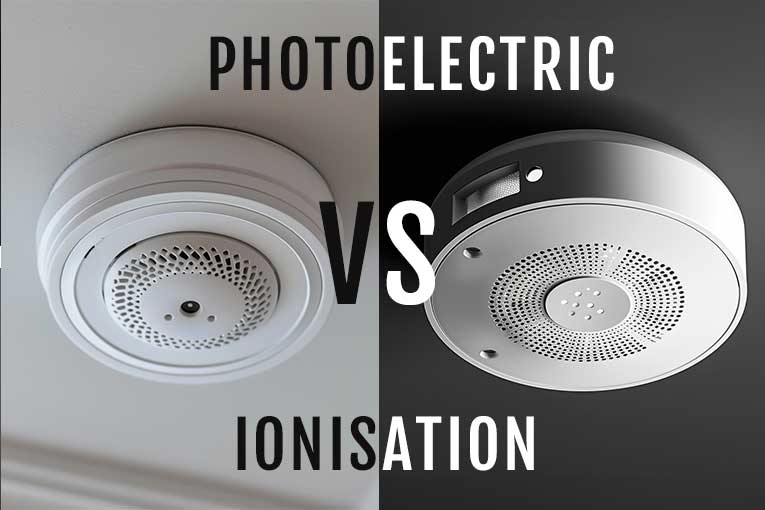
Photoelectric vs Ionisation Smoke Detectors 

photoelectric vs ionisation

Photoelectric and ionisation smoke detectors are two common types that operate on distinct principles, influencing their performance in detecting different types of fires. 

Photoelectric detectors utilise the principle of light obscuration, employing a light source and sensor within a detection chamber. 

These detectors excel in detecting smouldering fires characterised by larger smoke particles, offering a timely response and reduced risk of false alarms from non-fire-related particles like cooking smoke.

On the other hand, ionisation detectors rely on a small amount of radioactive material to ionise air particles in a detection chamber. 

When smoke disrupts this ionisation process, the alarm is activated. 

Ionisation detectors respond quickly to fast-flaming fires that produce smaller smoke particles, making them cost-effective. 

However, they are more susceptible to false alarms, especially in dusty environments, and may have limitations in detecting smouldering fires.

Choosing between these detectors depends on factors such as the specific fire hazards expected and preferences regarding sensitivity and potential false alarms in a given environment. 

Dual-sensor detectors that combine both technologies are also available for comprehensive fire detection.

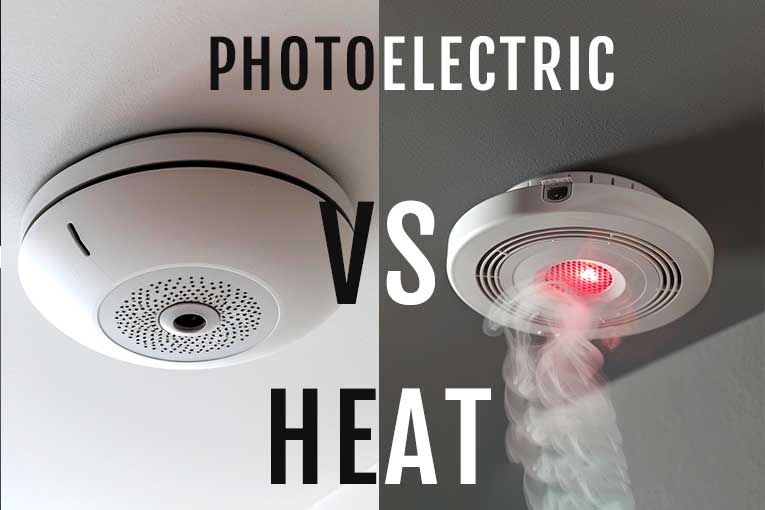
Photoelectric vs Heat Smoke Detectors

photoelectric vs heat

Photoelectric and heat smoke detectors represent two distinct approaches to fire detection, each tailored to address specific aspects of fire hazards. 

When smoke enters a photoelectric smoke detector, it scatters the light, triggering the sensor and activating the alarm. 

These detectors excel in identifying smouldering fires with larger smoke particles, offering early detection and reducing the risk of false alarms from non-fire-related particles.

Conversely, heat smoke detectors respond to changes in temperature rather than smoke particles. 

When the ambient temperature reaches a predetermined threshold indicative of a potential fire, the heat detector triggers the alarm. 

These detectors are particularly effective in areas where the presence of smoke is expected, and a faster response to elevated temperatures is crucial.

The choice between photoelectric and heat smoke detectors depends on factors such as the nature of the environment, the likelihood of different types of fires, and the desired sensitivity. 

Combining these detectors in a comprehensive fire safety system ensures a multifaceted approach to early detection, enhancing overall safety measures.

Conclusion

With regards to smoke detectors, the photoelectric variety stands out for its efficacy in detecting smouldering fires. 

While no detector is perfect for all scenarios, understanding the strengths and limitations of photoelectric smoke detectors allows individuals and businesses to make informed choices for enhanced fire safety.