Fahri Yiyin, Risk Engineering Manager, Burns and Wilcox UAE, explains detector definitions and outlines key spacing and installation requirements across UAE and NFPA standards
Fire detection systems occupy a crucial position among fire safety measures, serving as an essential component in protecting life and property.
Owing to the wide range of available detector types, such systems can be effectively implemented in residential buildings, industrial facilities, offices, and numerous indoor or outdoor environments.
This brief research document highlights the general application principles of smoke and heat detectors.
In practice, these systems are expected to respond consistently under varied environmental and architectural conditions.
Understanding how definitions and spacing rules translate into actual layouts is therefore central to reliable design and to demonstrating compliance within the UAE.
Key definitions in the UAE code
According to the UAE Fire and Life Safety Practice Code, clause 1.2.13 defines a smoke detector as “a device used for detecting visible and invisible particles of smoke resulting from combustion.” The clause further clarifies that several operating principles are utilized for smoke detection, such as photoelectrical and ionization spot-type detectors, air-sampling detectors, and optical beam-type smoke detectors.
The definition “a device in which the sensitive element is fixed in a certain location,” provided in clause 1.2.14, specifically refers to spot-type detectors.
The definition of a heat detector is “a fire detector that detects either abnormally high temperature or rate of rise, or both” (1.2.7).
Together, these definitions frame how designers select detector types for different risks.
Spot-type detectors, beam detectors and air-sampling systems each have distinct strengths, but all must be applied in line with the code language and the conditions found on site.
Using NFPA standards alongside UAE requirements
Moreover, clause 2.2.4 emphasizes that the requirements outlined in the code represent only the minimum guidelines, and it remains the consultant’s responsibility to refer to NFPA 70, NFPA 72, NFPA 75, NFPA 76, NFPA 110, NFPA 111, and manufacturer design specifications for detailed criteria.
Consequently, the placement and design of detectors are further evaluated in accordance with NFPA 72.
This approach allows the UAE Fire and Life Safety Code of Practice to establish regulatory expectations while NFPA 72 supplies detailed technical provisions.
For project teams, that means drawing on both documents during design, specification and review, rather than treating either source in isolation.
Spacing rules for flat and sloped ceilings
For spot-type smoke detectors, the maximum installation height is specified as 10 meters, as indicated in Figure 8.8 of the UAE Fire and Life Safety Code of Practice.
In NFPA 72 (2019 Edition), Section 17.7.3.2 Spot-Type Smoke Detectors provides detailed guidance on the placement, coverage, and application of smoke detectors.
According to the standard, spot-type smoke detectors must be installed directly on the ceiling, while detectors mounted on walls should be positioned no more than 12 inches (305 mm) below the ceiling (Clause 17.7.3.2.1).
In industrial facilities, ceilings are generally smooth or sloped.
Under the definition of flat ceilings, Clause 17.7.3.2.4.2 specifies that a ceiling with beam depths not exceeding 10 percent of the ceiling height is considered flat for the purpose of detector installation.
For such flat ceilings, the maximum spacing between two detectors should not exceed 9.1 meters, while the maximum distance between a detector and an adjacent wall (corner) is defined as 0.7 × 9.1 = 6.4 meters (Clause 17.7.3.2.3.1).
These values represent nominal coverage assumptions that must be checked against building conditions.
Ceiling height, local airflow and potential obstructions can all influence how smoke reaches a detector, so the tabulated distances are often treated as a starting point, not a fixed layout.
In the case of sloped ceilings, detectors should be installed parallel to the slope and positioned along the ceiling surface, ensuring effective smoke collection in accordance with airflow and thermal patterns.
Additional considerations for detector placement near peak points of sloped ceilings are further detailed in Clause 17.7.3.3, which provides specific requirements for optimizing detection performance in varying roof geometries.
The distance between detectors and walls should not exceed 50% of the spacing between two adjacent detectors.
The 0.7 S rule applies specifically to corner points.
On sloped roofs and in high-bay areas, these requirements are particularly important where smoke may stratify or track along the highest parts of the structure.
Aligning rows of detectors with the slope and reviewing peak locations helps maintain coverage where smoke might otherwise bypass devices.
Annex guidance and irregular layouts
Clause 17.7.3.2.3.4 of NFPA 72 (2019 Edition) specifies that Annex A and Annex B may be referenced as supplementary guidelines for smoke detector installation.
Within Annex A, the maximum spacing for spot-type heat detectors is indicated as 15.2 meters, subject to the detector manufacturer’s certification and listing.
The minimum spacing is stated as 3.1 meters (10 ft), while the midpoint value of 9.1 meters is considered standard.
In NFPA 72 (2019 Edition), the placement of smoke or heat detectors in irregularly shaped areas is illustrated in Figure A.17.6.3.1.1(h).
Spacing between detectors may be extended up to 12.5 meters, provided the distance from any wall point to a detector does not exceed 6.4 meters.
Annex material is explanatory rather than mandatory, but it provides practical illustrations that are often essential in non-standard geometries.
Designers can use these diagrams to test whether proposed layouts meet both the spacing rules and the intent of the standard in corners, alcoves and other irregular zones.
In many UAE projects, this combined use of prescriptive clauses and annex examples is supported by simple calculation checks or smoke modelling, together with early consultation with device manufacturers.
This helps demonstrate that detector arrangements are aligned with both code expectations and the documented performance limits of the chosen devices.
For consultants and system designers, the outcome is a more transparent design process.
Clear reference back to UAE clauses, NFPA provisions and relevant annex figures allows spacing decisions to be justified in technical reports, shared with contractors and revisited during future building modifications without losing sight of the original design rationale.
Stacey Adams, Market Development Manager at Apollo Fire Detectors examines the difference between domestic and commercial fire systems and regulations in the UK
Understanding domestic and commercial fire systems
A common misconception is that domestic fire systems are limited to standalone smoke detectors while commercial systems are large panel-based setups. However, fire safety exists on a spectrum, especially in hybrid environments like HMOs, student flats or high-rise buildings. Large residential blocks may need comprehensive fire systems, while small commercial premises might only require basic smoke alarms.
Both environments require tailored fire safety solutions, ensuring that fire detection and alarm systems are suitable for the specific risks associated with each setting.
Stacey Adams
The assumption that commercial systems are inherently more advanced than domestic systems is not always correct, as some large residential buildings may have more extensive requirements than small commercial properties.
For clarity, this discussion focuses on fire safety laws in England, which may differ in Wales and Scotland.
Residential fire safety standards
Domestic fire alarm systems fall under BS 5839-6:2019+A1:2020, covering installation and design requirements for new and existing homes. Grades range from F2 (basic battery-powered detectors) to A (full-scale fire systems with detectors, sounders and central control units) conforming to BS EN54.
Most UK homes use battery-powered photo-electric smoke alarms. While no specific legal mandate requires them in private residences, landlords must install at least one per floor in rental properties. Testing is required only when a new tenant moves in. Mains-powered detectors are often recommended for reliability. Best practice suggests weekly testing, though compliance is rare.
In some properties, such as high-rise residential buildings, fire detection systems may need to be integrated with evacuation and alerting systems to ensure that residents receive timely warnings in case of fire. High-rise settings complicate the role of domestic smoke alarms since they only detect localised fires within individual apartments, offering no building-wide coverage.
Commercial fire safety standards
UK commercial fire safety regulations are primarily governed by the Regulatory Reform (Fire Safety) Order 2005 (FSO), supplemented by the Fire Safety Act 2021. Even basic commercial systems surpass domestic alarms in reliability, false alarm reduction, fire spread identification and emergency response guidance. These features are crucial in high-rise buildings where timely detection and evacuation planning can save lives.
Current laws require businesses to have an appropriate fire detection system, though specifics depend on building size and usage. Smaller businesses not engaged in high-risk activities (e.g., flammable material storage) may not require full-scale systems.
The law is not 100% clear, especially to someone with no experience of the fire industry, and there are many grey areas, which is why a fire risk assessment (FRA) is mandatory and why you should always get an expert to undertake it, especially if you have any doubts about what is required.
Stacey Adams
If you don’t believe that a fire system is needed, you need to state this in your FRA, including the reasons why you have reached this conclusion. If a fire incident later occurs and you’ve got this wrong, it could come back to haunt you.
Commercial premises must also consider additional fire safety measures such as emergency lighting, fire extinguishers, door retainers (such as the Apollo ADR), and sprinkler systems where necessary. These supplementary safety measures help protect occupants and property by reducing fire spread and aiding evacuation efforts.
Smoke detectors: domestic vs. commercial
Domestic smoke alarms, found in 92% of UK homes, must meet BS EN14604:2005, outlining basic specifications but lacking the rigour of commercial standards.
Commercial fire systems vary in classification, from Category M (manual systems) to Category L1 (full automatic protection). While system configurations differ, detector types—heat, optical, photoelectric, or hybrid—remain largely consistent across installations.
In commercial settings, fire alarms are typically interconnected and monitored, allowing for a rapid response from fire services when necessary. Many systems also incorporate advanced features such as fault monitoring, ensuring that any malfunctions in the system are detected and addressed promptly.
The detector debate
Fire industry discussions continue over appropriate detector use. Smoke detectors are generally preferred, as heat detectors can be slow to respond to smouldering fires. However, heat detectors are useful in kitchens and laboratories, where smoke detectors may be prone to false alarms.
Commercial environments often use dual-detection (“double-knock”) systems, where both smoke and heat detectors must confirm a fire before triggering a full alarm. This approach is useful in complex environments like hospitals, care homes and high-rise residential buildings, where unnecessary evacuations should be minimised.
Technological advancements have led to hybrid, multi-criteria and aspirating smoke detectors, offering faster, more reliable detection while minimising false alarms.
Stacey Adams
Though costlier than heat detectors, these solutions provide significant safety advantages.
Multi-sensor detectors, which combine optical and heat detection, are increasingly being deployed in both commercial and domestic settings due to their ability to reduce false alarms while maintaining sensitivity to real fire events.
Tri-sensor detectors, such as the Apollo Soteria Tri-Sensor, combine optical, heat and CO detection to provide comprehensive cover to any setting, while preventing false alarms.
Blurred lines
Until 2017, domestic and commercial fire systems were distinctly separate. Residential buildings had commercial-grade systems in communal areas but no mandatory coverage in private apartments. Post-Grenfell, regulations have evolved, especially for high-rise buildings (although in the wake of the Grenfell Tower Phase 2 Report, it is unclear what legislative changes will be made in the future).
Many high-rises with defective cladding now feature BS 5839-1 Part 1 systems, ensuring comprehensive coverage. Ideally, these should transition to BS 8629-compliant evacuation systems once safety issues are resolved. In some cases, installed apartment detectors can be repurposed to alert management and emergency services without triggering a full evacuation.
Some residential properties, despite being registered as businesses, do not require commercial fire systems. Furnished holiday lets, for example, follow standard buy-to-let rules, requiring only one smoke detector per floor. However, given that these properties may be occupied by different guests at different times, ensuring a robust fire safety system is particularly important.
Evolving standards
UK fire safety regulations are constantly evolving. Since February 2022, Scottish law mandates interconnected smoke alarms in all homes, including privately owned and rental properties, with furnished holiday lets requiring networked fire alarms unless a commercial system is in place. Similar laws may soon extend across the UK.
Commercial fire safety regulations have also tightened post-Grenfell.
Stacey Adams
The Fire Safety Act 2021 focused on high-rise buildings, while the Building Safety Bill (2022) introduced broader commercial fire safety requirements. While these laws do not directly alter fire detector technology, they impact system management, installation, and future industry developments.
In response to these evolving regulations, building owners and managers must remain proactive in reviewing and updating fire safety measures. Regular maintenance and professional inspections ensure compliance and help to address potential risks before they become major hazards.
Conclusion
Navigating UK fire safety regulations can be daunting. The distinction between domestic and commercial fire systems is complex, but by seeking expert advice and conducting proper risk assessments, property owners can ensure compliance and safety. Ensuring regular updates and compliance is not just advisable—it could prevent serious legal and safety repercussions.
For professional guidance, companies like Apollo Fire Detectors offer tailored solutions to help property owners meet current fire safety requirements.
Understanding the nuances of domestic and commercial fire systems is not just a regulatory necessity but a fundamental aspect of protecting lives and property. As fire safety laws continue to evolve, staying informed and proactive is the best way to ensure that buildings remain safe for occupants now and in the future.
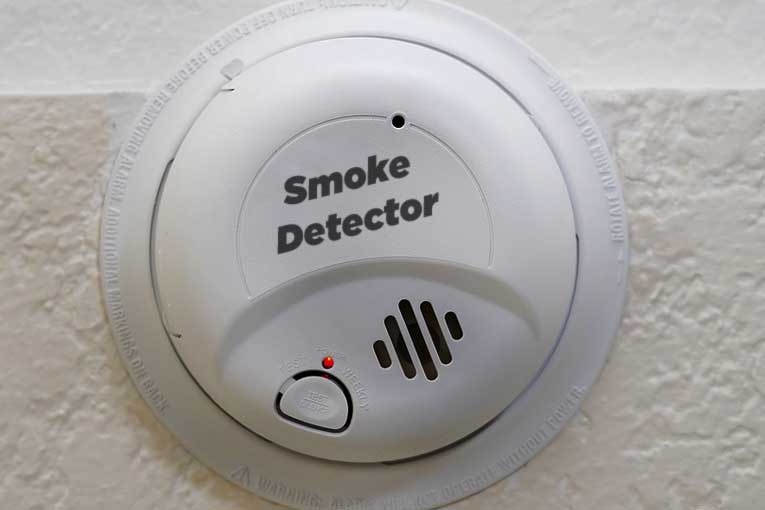
In home safety, smoke detectors are always ready to alert us to potential dangers.
However, not all smoke detectors are created equal.
There are different types, each designed for specific purposes.
In this article, we’ll unravel the mystery of smoke detector types, explaining their functionalities, strengths, and ideal applications.
Understanding these variations is crucial for ensuring the safety of your home and loved ones.
Why are there Different Smoke Detector Types?
There are 4 different smoke detector types
You might wonder why there’s a need for different smoke detector types.
The answer lies in the varying natures of fires.
Some fires produce different types of smoke and heat, making it essential to have varied smoke detector types that sense these differences.
By having multiple types, you’re ensuring a higher chance of early detection regardless of the fire’s origin.
Ionisation Smoke Detector
Ionisation smoke detectors operate on the principle of ionising radiation, utilising a small, controlled amount of radioactive material, often americium-241.
This material emits alpha particles, which ionise the surrounding air molecules in a small chamber inside the detector.
This ionisation process creates a stable electric current within the chamber.
When smoke particles enter the detector due to a nearby fire, they interfere with the electric current.
The presence of smoke disrupts the ions’ flow, causing fluctuations in the electric current.
This disruption triggers the alarm, indicating the potential presence of a fire.
Advantages of Ionisation Smoke Detectors
Swift Detection of Fast Fires
Ionisation detectors excel in swiftly detecting fast, flaming fires.
Fires that rapidly consume combustible materials produce fewer large smoke particles and more small, invisible particles.
Ionisation detectors are highly sensitive to these smaller particles, ensuring prompt detection and alerting occupants promptly.
Cost-Effectiveness
Ionisation detectors are generally cost-effective, making them accessible for residential and commercial use.
Their affordability allows for widespread adoption, enhancing overall fire safety in various settings.
Commonly Used in Living Spaces
Ionisation smoke detectors are better in living spaces such as the bedroom
These detectors one of the most common smoke detector types in living rooms, bedrooms, and hallways, where typical combustible materials like fabrics and paper are present.
Their ability to quickly detect fast-burning fires makes them valuable in spaces with these materials.
Disadvantages of Ionisation Smoke Detectors
Limited Sensitivity to Slow Fires
Ionisation detectors might not be as sensitive to slow-burning fires, such as smouldering electrical fires.
In scenarios where the fire generates more significant smoke before escalating, ionisation detectors might not provide as early a warning as desired.
Potential False Alarms
In areas like kitchens, where cooking activities can produce steam or minor smoke, ionisation detectors are prone to false alarms.
This limitation requires careful placement to avoid unnecessary disruptions.
Radioactive Material Concerns
While the radioactive material used is minimal and safely enclosed, some individuals might have concerns about the presence of any radioactive substance within their homes, even in minute quantities.
Heat Smoke Detector
Unlike traditional smoke detectors, heat smoke detectors operate on a different principle.
Instead of sensing smoke particles, they respond to temperature changes.
Inside a heat detector, there’s a thermal sensor or a thermistor that continuously monitors the surrounding temperature.
When a significant and sudden rise in temperature occurs, indicating the presence of a fire, the heat detector triggers the alarm.
Advantages of Heat Smoke Detectors
Specific Response
Heat detectors respond only to significant temperature increases, making them immune to smoke, steam, or minor heat fluctuations.
This specificity makes them ideal for places like kitchens, garages, or workshops, where false alarms from cooking activities or exhaust fumes can be common with traditional smoke detectors.
Reliability in Harsh Environments
Heat detectors are highly reliable in harsh environments where smoke detectors might malfunction.
Areas with high dust, moisture, or drastic temperature changes, which could interfere with the operation of traditional smoke detectors, make heat smoke detectors the prime choice for smoke detector types in these conditions.
Complementary Protection
They provide an additional layer of safety when used alongside traditional smoke detectors.
By detecting temperature changes, they offer a backup alarm system, ensuring that fires are detected even if smoke detectors fail to respond due to specific conditions.
They respond only when a fire has already generated a substantial amount of heat.
This delay in detection can be a disadvantage, especially in situations where early detection is critical for evacuation and fire control.
Not Suitable for All Areas
While excellent for specific environments, heat detectors are not suitable for areas where early detection of smouldering fires or small flames is essential, such as bedrooms or living rooms.
In these spaces, smoke detectors are more appropriate.
Limited Applicability
Heat detectors are specialised devices suited for specific situations.
They cannot replace the versatility and broad application of smoke detectors, making them a supplementary rather than a primary fire detection method.
Optical Smoke Detector
Optical smoke detectors, often referred to as photoelectric smoke detectors, rely on a straightforward yet ingenious mechanism.
Inside the detector, there’s a light source, typically an LED, and a light sensor.
The chamber between these components is designed to be free of smoke under normal conditions.
When smoke particles enter this chamber, they scatter the light, causing it to hit the sensor. This interruption triggers the alarm, indicating the presence of smoke.
Advantages of Optical Smoke Detectors
Early Detection of Smouldering Fires
Optical smoke detectors excel in detecting slow-burning, smouldering fires, which often produce more smoke than flames.
This early detection capability is crucial for timely evacuation and fire control, making them ideal for bedrooms, living rooms, and other areas where people might be asleep or unaware of a fire’s initial stages.
Reduced False Alarms
Optical detectors are less sensitive to minute particles and minor heat fluctuations, reducing the likelihood of false alarms caused by cooking activities or steam.
This specificity ensures reliable detection without unnecessary interruptions, making them suitable for residential spaces where false alarms can be disruptive and concerning.
Suitable for Residential Spaces
Due to their ability to detect slow-burning fires and their reduced sensitivity to common household disturbances, optical smoke detectors are widely used in homes.
They provide reliable fire detection while minimising the inconvenience of false alarms, ensuring the safety of occupants without causing unnecessary panic.
Disadvantages of Optical Smoke Detectors
Slower Response to Fast Flames
Optical smoke detectors may respond slightly slower to fast, flaming fires compared to ionisation detectors.
While they are excellent for smouldering fires, their response time might be marginally delayed in situations where rapid flame detection is crucial.
Limited Sensitivity to Certain Particles
While reduced sensitivity is an advantage for preventing false alarms, it can also mean that in certain conditions, such as detecting very fine smoke particles, optical detectors might take longer to activate, potentially delaying the alarm in specific fire scenarios.
Not Universal for All Fire Types
Optical detectors are highly effective for specific fire types, but no single type of detector is universally perfect for all situations.
For comprehensive fire protection, a combination of different types of smoke detectors might be necessary to cover various fire behaviours.
Combination Smoke Detector
Combination smoke detectors revolutionise fire safety by integrating multiple sensor technologies within a single unit.
One common combination involves merging ionisation and optical sensors.
The ionisation sensor excels in detecting fast, flaming fires, while the optical sensor specialises in recognizing slow, smouldering fires.
By combining these sensors, the detector can swiftly identify a broad range of fire types.
When smoke particles disrupt either sensor, the alarm is triggered, ensuring rapid response regardless of the fire’s nature.
Advantages of Combination Smoke Detectors
Comprehensive Fire Detection
The primary advantage of combination smoke detectors is their ability to detect various fire types.
By integrating different sensor technologies, they provide comprehensive coverage, ensuring early detection of both fast and slow-burning fires.
This versatility makes them highly effective in diverse environments.
Reduced False Alarms
Combination detectors leverage the strengths of different sensors, making them less prone to false alarms triggered by common household activities like cooking.
Their enhanced specificity ensures that alarms are only activated when genuine fire threats are detected, minimising unnecessary interruptions.
Versatility for Different Environments
Combination detectors are versatile and adaptable, making them suitable for various settings.
They are commonly used in homes, where different fire scenarios can arise, ensuring that residents are safeguarded from a wide range of potential threats.
Disadvantages of Combination Smoke Detectors
Complexity in Maintenance
Due to their multifaceted design, combination smoke detectors can be more complex to maintain and troubleshoot.
If one sensor malfunctions, diagnosing the issue might require specialised knowledge, potentially leading to challenges in repairs or replacements.
Higher Initial Cost
Combination detectors, equipped with advanced sensor technologies, often come at a higher initial cost compared to single-sensor counterparts.
While the investment provides comprehensive fire protection, it’s crucial for consumers to weigh this against their specific safety needs and budget constraints.
Power Consumption
Combination detectors, due to their dual-sensor configuration, might consume slightly more power than single-sensor models.
While the difference is usually minimal, it’s essential to consider power efficiency, especially in areas where battery life is a critical concern.
Which Smoke Detector Type Should You Use?
Different smoke detector types are required in certain rooms, such as the kitchen
Selecting the appropriate smoke detector for your home involves thoughtful consideration of its layout, the activities conducted in different areas, and the potential fire risks unique to each space.
Here’s a detailed guide to help you make an informed choice:
Kitchen and Cooking Areas
Best Choice: Heat Detector
Kitchens are prone to false alarms due to cooking activities.
Heat detectors, which respond to a rise in temperature rather than smoke, are ideal here.
They won’t trigger unnecessarily due to cooking fumes or burnt toast, ensuring reliable performance in this high-risk zone.
Bedrooms and Living Spaces
Best Choice: Optical Smoke Detector
Bedrooms and living rooms often experience slow-burning fires, such as those caused by faulty wiring or smouldering fabrics.
Optical smoke detectors, sensitive to the visible smoke particles in slow-burning fires, are well-suited for these areas.
They offer reliable performance and are less prone to false alarms caused by common household activities.
Hallways and general areas can experience a variety of fire scenarios.
A combination smoke detector, integrating both ionisation and optical sensors, ensures comprehensive coverage.
These detectors can quickly detect both fast, flaming fires and slow, smouldering fires, making them ideal for spaces where diverse fire risks exist.
Entertainment or Workshop Spaces
Best Choice: Combination Smoke Detector (Ionization + Heat)
Spaces like entertainment rooms or workshops might have a mix of fast-burning materials and potential heat sources.
A combination smoke detector that combines ionisation for fast fires and heat detection for abrupt temperature changes provides effective protection in these environments.
Strategic Placement for Enhanced Protection
Beyond selecting the right type of smoke detector for specific areas, strategic placement is vital for maximum effectiveness:
Install smoke detectors in every bedroom, outside each sleeping area, and on every level of the home.
Place detectors high on walls or ceilings as smoke rises.
Avoid placing detectors near windows, doors, or ducts where drafts might interfere with their operation.
Regularly test smoke detectors to ensure functionality.
By tailoring your choice of smoke detectors based on the unique needs of each space and strategically placing them throughout your home, you create a comprehensive safety net against potential fire threats.
Remember, a well-planned smoke detector setup can significantly enhance your home’s overall safety and provide invaluable peace of mind.
Conclusion
Understanding the nuances of all smoke detector types is paramount.
By tailoring your choice to the specific requirements of different areas in your home, you’re ensuring a robust safety net against potential fires.
Remember, the best protection comes from a combination of these detectors, strategically placed to detect various types of fires promptly.
Investing in the right smoke detector types is not just about adhering to safety regulations; it’s a proactive step towards safeguarding what matters most – your family and home.
In research presented by BAFE and NAPIT, data collated over the last decade (2010-11 to 2020-21) in England, Wales, and Scotland record an unsettling 424,464 dwelling fires.
These fires resulted in almost 82,000 non-fatal casualties and close to 3,000 deaths. In more recent statistics made available by Fire and Rescue Services nationwide, there is an ongoing issue with high failure rates or a complete absence of domestic smoke alarms.
In England alone, during 2020 / 2021, there was a 28% failure rate of smoke alarms (i.e. that failed to operate or were not present). This failure rate rises to 39% in Scotland and increasing even further to half of all fires (50%) in Wales.
The ‘Fire Kills’ campaign from the UK government states: “You are around 8 times more likely to die from a fire if you don’t have a working smoke alarm in your home”. Both BAFE and NAPIT have stressed the paramount importance of having suitable life safety systems in place.
Provisional data from the Department for Levelling Up, Housing & Communities reports close to 176,000 new build dwellings were started in England alone during the previous 12 months from year ending 2021 (July-September). It is of key importance that the housing development sector complies with Building Regulations and relevant Approved Documents when providing appropriate domestic fire detection and alarm systems. These must be installed by competent contractors.
In August last year, BAFE launched its latest competency scheme with NAPIT, called DS301. This provides a route for contractors to demonstrate their competence to design, install, commission, and maintain Grade D fire detection and fire alarm systems in domestic premises. This supports appropriate British Standards and working best practice, most notably the latest iteration of BS 5839-6 (Code of practice for the design, installation, commissioning and maintenance of fire detection and fire alarm systems in domestic premises).
Justin Maltby-Smith, managing director BAFE, said: “This information clearly outlines that it is extremely important that any work on Grade D fire detection and fire alarm systems is performed in compliance with the appropriate current regulatory and competency documents available. Having suitable systems in place will aid in alerting residents as quickly as possible, allowing for a safer evacuation and providing emergency services more time to mitigate any damage. The housing sector has a great responsibility to use competent contractors, which is why the BAFE DS301 Scheme was developed, and it will clearly help in evidencing this competency. We must not lose focus that these are people’s homes, and they should feel safe and be confident in the systems installed.”
Frank Bertie, chief technical officer, NAPIT added: “These statistics show the risk to life posed by fire is a real threat. NAPIT are proud to be leading the way with the introduction of the new DS301 Scheme with BAFE to provide homeowners, house builders, management companies and specifiers with confidence that the contractor they use is appropriately qualified, competent, and assessed. Registered members on the NAPIT DS301 Scheme have demonstrated their competency to deliver design, installation, commissioning and/or maintenance works for Grade D fire detection and fire alarm systems in domestic premises. Correctly installed fire detection systems help save lives and must be considered a priority in all homes.”
The Oslo-based company, Noby AS, is a specialist distributor for Intrusion Alarm, Camera Surveillance, Smoke Detectors, Fire Alarm, Transmission Systems, Access Control, and are now able to offer their customers the latest CSL products and solutions, including the CSL Router and CSL Managed 4G SIMs.
Ken Inge Hanski, Product Manager at Noby, commented: “CSL’s partnership will enable Noby to offer solutions including 4G SIMs for installers requesting complete solutions with network connection for their projects. It is important for us to help our customers in a market where technology is continuously updating. We do that with quality products from well-established suppliers such as CSL, to supply our customers with products they can trust. CSL are market leaders in providing secure connectivity solutions and we are happy to be able to present their products on the Norwegian market.”
Ingemar Spångberg, Business Development Director – Nordics, added: “We are delighted to announce this partnership with Noby to enable us to provide our connectivity solutions to the Norwegian market. Noby are a long-established and trusted brand and we look forward to working closely with them to support Installers.”
The intelligence of radio smoke detectors is entering a new dimension of protection and safety with the Basic and Pro radio modules (collective alarm) of Genius Plus X from Securiton AG.
A convincing solution
Radio transmission on the 868 MHz frequency immune to interference.
No pollution by radio waves: radio signals are transmitted only in the event of a real event. No other type of radio radiation.
Alarm forwarding in just 3 seconds.
Repeater To cover long distances and reliably transmit the radio signal, each Genius Plus X radio smoke detector is equipped with a repeater, which acts as a signal amplifier by capturing the radio signal and forwarding it to the nearest detector. And even if the radio signal fails, the repeater automatically searches for the fastest possible route to the next detector.
Genius Port: receiving fire alarms anywhere, anytime
Genius Port allows you to receive, analyse, forward and silence fire alarms anywhere and anytime. This system locates all the alarm signals of the smoke detectors connected to the network via radio and forwards them to the user’s mobile device and to the Smart Home systems.
Genius Port for radio detectors Genius Genius Port ensures a secure connection between the smoke detectors connected to the network via radio Genius Plus X or Genius Hx and the user’s mobile device, and always keeps informed about the status of the system. In this way, the customer always has his own radio detectors under control. The Genius Control app allows you to call up additional features and services and stay constantly informed about the point from which the alarm started.