Advancing Fire Safety: Interview with Russ Leavitt, Executive Chairman of Telgian

Russ Leavitt, Executive Chairman of Telgian, shares pivotal moments from his career and the evolution of Telgian in enhancing fire safety

With over four decades of dedication to advancing fire safety through innovative solutions and comprehensive training, Russ Leavitt, Executive Chairman of Telgian has profoundly influenced the fire protection industry.

This conversation delves into his substantial contributions, the evolution of Telgian under his leadership, and his insights on current challenges and future directions in fire safety management.

What initially drew you into the fire protection industry?

I came into the fire protection industry almost by accident.

I discovered early on that it was rare to have the opportunity to earn a living while doing something that mattered—saving lives and protecting property.

As a result, I quickly took every opportunity given to develop my knowledge and skills.

I became active in the local Society of Fire Protection Engineers chapter, earned my certifications as a fire protection system designer, and volunteered for projects that my fellow designers avoided.

In less than two years I was promoted to lead designer where I supervised a team of individuals who were much older and had more experience than me.

It was simply my nature to say ‘Yes’ to every new challenge offered.

That willingness to do whatever needed to be done led to a series of incredible opportunities.

What pivotal moments have defined your journey to Executive Chairman at Telgian?

I had always wanted to have my own company.

With a partner, and the support of my employer, I founded a design firm that offered fire protection design services to contractors, architects, building owners, and just about anyone else we could find.

My wife and I took all of our savings, retirement funds, and with the use of personal credit cards, financed the start of Fire Design Group.

It was a difficult time, as within a couple of months of founding the business a severe economic recession struck southern California.

We stuck it out.

The biggest moment of my career path took place when I received a call from my current partner, Jim Tomes, seeking design assistance for his father’s small fire and life safety consultancy.

Two weeks later we merged our two companies and, as we say: The rest is history.

Can you talk about the evolution Telgian has undergone since its inception?

One of the first characteristics that we recognised was the diversity in backgrounds and perspectives of the founding members pertaining to fire and life safety.

We were formed with individuals from the public fire service, engineering, contracting, and system design.

It was eye opening when discussing a project or customer issue to witness the different perspectives each of us brought to the table.

We realised that when we gave equal attention to each other’s biases, it allowed us to formulate solutions from a 360-degree view, which our customers recognised as unique compared to their dealings with other firms.

Because of the lack of clear direction in the fire and building codes for these unique properties, we were deeply involved in the development of protection criteria though fire testing, codes and standards development, and risk management.

We intentionally challenged the status-quo regarding traditional fire protection approaches.

We were the leaders in removing the use of smoke curtains in sprinklered warehouses, changing how smoke and heat vents were utilised, and in the development of Control Mode Specific Application sprinkler technology.

A major strategic decision was to answer our customers’ repeated requests to provide fire protection inspection and testing services.

This was outside our core consulting and engineering expertise, but we decided to take on this new service line.

Our model conducted the needed system inspections and tests, but we did not provide repair or corrective services.

This was to eliminate the potential conflict of interest that exists where service providers do inspections and then perform and corrective actions or needed repairs.

It allowed us to objectively provide our recommendations to the customer.

This part of our business quickly became our biggest revenue producer and for a time, we lost some of our identity as an engineering and consulting firm.

This led us to split the company into two separate legal entities under a holding company named Telgian Holdings, Inc.

We were the first, and still one of only a few companies that provide the complete portfolio of services for fire and life safety, from conceptual design to system maintenance.

How has your involvement with NFPA influenced fire safety standards?

I have served on various NFPA Technical Committees for nearly three decades.

For many of the committees I represented owner or user stakeholders.

I have always tried to focus on the term ‘reasonable’ when it comes to code and standard requirements.

Codes and standards cannot guarantee one hundred percent success even if they are implemented in complete compliance.

The cost of a requirement must be evaluated with the protection provided for life safety or property.

Incorporating good risk management must be a part of the development process along with the practicality of a requirement.

When serving as the chair of various committees I always challenged members to consider what problem was being solved by a proposed change to the standard or code.

We sometimes create a solution and then go ‘looking for the problem.’  I believe that I have had a positive impact in ensuring that we apply the ‘reasonableness’ factor on the committees I have served or chaired.

Finally, I have worked to ensure that NFPA codes and standards can be applied internationally.

Over the past 125 years, NFPA committees have been United States-centric.

I have actively recruited international experts to participate in the NFPA standards making process and because of my, and other’s efforts, we are developing a more global view of fire protection and life safety.

If we are to have a significant impact in increasing the level of fire and life safety globally, we must share knowledge and skills.

The NFPA Fire and Life Safety Ecosystem demonstrates that having up-to-date standards and codes without a skilled workforce and knowledgeable enforcers will result in little progress.

What are some of the approaches Telgian is exploring to enhance fire mitigation?

One of our six core values states, ‘Innovation is the key to our future success.’  We are deeply involved in the supply chain vertical.

The evolution of Automatic Storage Retrieval Systems (ASRS) is reshaping the warehousing, storage, and distribution industry.

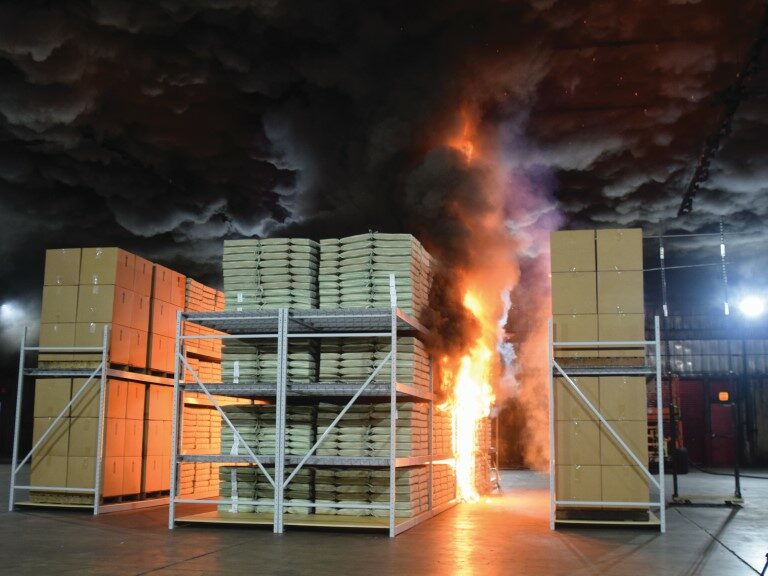
We have conducted 250 large- and small-scale fire tests over the last three years to develop new ways to protect this fast-evolving landscape.

We are always looking for more efficient methods for our customers to manage their fire risks.

For example, after conducting a rigorous examination for a global customer of the change in fire risk created by the changes in products and their handling, a decision was made to increase the protection provided by their existing fire protection systems.

The project involved over two thousand locations and was budgeted at $1 billion.

We developed a plan to conduct fire tests for the most common protection schemes to determine the most efficient methods to make the conversion.

This customer spent $10 million on the testing, but the information learned allowed the retrofit budget to be halved—a savings of $500 million.

Finally, fire tests have traditionally been used to determine the best protection schemes with specific types of sprinklers installed in specific arrangements.

We initiated a series of full-scale fire tests to examine the ability of existing fire sprinkler systems to protect real world storage scenarios such as blocked flue spaces or irregular storage arrangements.

The tests have created a wealth of information for our insurance partners and customers to use in evaluating the risks presented by these various real-world conditions.

According to our partners at UL Solutions, they have never seen a test program of this scale looking at the risks where protection schemes are not strictly followed.

What legacy do you hope to leave in the fire safety industry?

I, along with the other shareholders and officers of Telgian have always wanted to build an organisation that would live beyond our lifetimes.

I hope to be remembered as someone who was passionate about fire and life safety, while sensitive to the needs along with the restraints of all stakeholders.

I have tried to exercise reasonableness in my approach while not being afraid to question the status quo.

I have also learned to view fire and life safety through a global lens, recognising that there are cultural and societal concerns that cannot be ignored while working towards a fire safe world.

My advice to the next generation is two-fold. First, say ‘Yes!’ when asked to go outside your comfort zone.

Do not let your fear of failure stop you from developing and growing, both as a fire and life safety professional and as a businessperson.

Second: Be ever-learning.

The worst possible answer we can give to a question of ‘why we do something a particular way’ is to say, ‘Well, it is the way we have always done it.’ 

An excellent mantra is to ‘Question and then Innovate.’  I can think of few other professions where someone can contribute to the greater good while providing for their family and loved ones.
This article was originally published in the June 2024 issue of International Fire & Safety Journal. To read your FREE digital copy, click here.

Telgian to host a webinar on fire alarm system communication transitions

Telgian expert to discuss the impact of evolving communication methods on fire alarm systems

Telgian Fire Safety’s Tom Parrish will lead a Fire Alarm System Communication Webinar on November 9, 2023, from 2:00 pm – 3:30 pm ET.

“Rapid technological shifts affecting fire alarm communications”, says Parrish

“Telephone companies continue to rapidly replace copper telephone lines with fiber optic lines as part of the phase out of POTS (Plain Old Telephone Service),” says Parrish.

“Also, 3G cellular service is being phased out to focus on the adoption of more modern methods of communication.

“This is driving a major transformation in how fire alarm systems communicate with the monitoring centers.

“There are advancements in older technology such as Mesh radio networks and there are newer avenues of communication methods like the Internet and cellular that will continue to grow rapidly.”

Telgian’s webinar to highlight best practices in modern fire alarm communication

This course aims to shed light on the transitional challenges faced by fire alarm systems amidst these technological advancements.

It will focus on the communications system requisites as stated in Chapter 26 of NFPA 72, National Fire Alarm Code.

Participants will gain insights into optimal practices for transitioning a fire alarm system from using POTS lines to contemporary modes of communication.

They’ll also be apprised of the advantages and disadvantages associated with Internet and cellular communications.

About Tom Parrish, SET, CFPS, PSP

Tom Parrish boasts an impressive tenure of over 30 years in the domain of fire protection and emergency response.

Having retired as the Fire Marshal for Putnam Township Michigan, he currently holds the position of Vice President at Telgian.

Parrish actively contributes to several NFPA technical committees, including those focusing on signaling systems for the protection of life and property and emergency communication systems.

Presently heading AFAA, he also enjoys the privilege of being a senior instructor for NFPA.

His professional accomplishments encompass certifications such as Level IV NICET Certified Fire Alarm Technician, Level III NICET Inspections and Testing, and Certified Fire Protection Specialist.

Parrish is also a recognised Master Electrician and is board certified as a Physical Security Professional by ASIS. He completed his bachelor’s in Industrial Technology from Kean University.

IFSJ Comment

The evolving landscape of communication technology poses both opportunities and challenges for fire alarm systems globally.

With leading companies like Telgian paving the way in understanding and adapting to these changes, it’s crucial for industry professionals to stay informed.

Tom Parrish’s expertise provides invaluable insights into this transition, equipping stakeholders with the knowledge they need to navigate these shifts.

As we move towards more advanced communication methods, understanding their impact on safety systems will be paramount for preserving and enhancing community safety.

Energy storage systems: The implications for fire hazards discussed in an upcoming webinar

Understanding energy storage system fire risks

A forthcoming webinar will delve into the fire hazard considerations of Energy Storage Systems (ESS).

The webinar, scheduled for September 14, 2023, between 2:00 pm – 3:30 pm Eastern, will be presented by fire protection industry expert Russell Leavitt from Telgian.

The evolving world of energy storage

With the evolution of power systems, there’s a growing capacity for continuous operation of equipment and its transferability from one location to another.

The drive for sustainability has intensified the demand to store energy for future use. Energy Storage Systems (ESS) fulfil the requirement of having a dependable power source for later use.

However, they introduce significant challenges and dangers to facility owners, fire protection professionals, and firefighters.

Ensuring safety in a powered-up world

This webinar aims to give participants a refreshed understanding of the different types of Energy Storage Systems, their construction techniques, and their associated fire hazards.

“Current code requirements for ESS fire protection will be reviewed,” and there will be insights into best practices to ensure safety for both facilities and their occupants.

By the webinar’s end, attendees should be able to:

  • Recognise and detail the diverse Energy Storage Systems (ESS) currently in use.
  • Understand the fire risks linked with battery storage systems.
  • Highlight the specific fire dangers posed by Lithium-Ion batteries.
  • Recognise and implement the latest code guidelines for Energy Storage System (ESS) fire protection.

For further information or to sign up for the “Energy Storage Systems – Fire Hazard Considerations Webinar”, potential participants are directed to visit Fire Smarts.

IFSJ Comment

The realm of Energy Storage Systems (ESS) has seen substantial advancements, making it a crucial area for understanding associated fire hazards.

These systems are undeniably revolutionising the way we utilise and store energy.

However, the safety risks that accompany them are significant, especially considering the growth of Lithium-Ion batteries in various applications.

This webinar by Telgian promises to be an insightful resource for those involved in fire protection, offering guidance on how to navigate these new challenges effectively and ensure that innovation doesn’t come at the expense of safety.

From start-up to stalwart: The story of Telgian CEO James Tomes

IFSJ sits down with Telgian’s CEO James Tomes to find out how the once small fire safety firm became an industry powerhouse

In the dynamic world of fire safety and protection, few leaders are as well-versed and accomplished as James Tomes, President and CEO of Telgian Holdings, Inc. Having ascended the ranks within the company since 1990, Tomes has played an instrumental role in shaping Telgian’s strategic vision, cementing its reputation as a trusted industry leader.

He manages a company that is a leading fire safety firm, and is also actively involved in influencing industry standards and advocating for clients through participation in the National Fire Protection Association (NFPA) code development committees.

Beginnings

Tomes joined the small fire safety consulting firm started by his father, Bill Tomes, in 1990 right after finishing college. He intended to transform the four-person company into a significant player in the industry. His vision capitalised on the growing trend of big-box retail, an ‘exploding market’ that presented unique fire safety risks and the firm rode the wave of big-box retail growth across the United States. However, the journey was not without obstacles.

Telgian’s singular focus on code consulting risked the loss of a significant client due to the absence of in-house design services. This challenge led to a rapid merger with a company led by Russ Leavitt, the now Chair of the National Fire Protection Association (NFPA). “After meeting him three times, I approached him and said ‘Russ, how about a merger?’”, recalls Tomes. Born quite literally on the side of a freeway, this partnership set the stage for Telgian’s future growth.

Over the years, Telgian adapted to customer needs, adding design, engineering, and facility services to their offerings. Today, Telgian, born from this adaptive approach, employs over 400 people.

Tomes cites the firm’s readiness to take risks as a key success driver: “We did what we believed was right for our customers and our people. We weren’t really concerned about what anybody else thought.” The company’s growth from four to 400 employees, achieved without external capital, is a testament to Telgian’s tenacity and discipline. “We don’t have tonnes of cash sitting around… so we’ve had to sometimes do things a bit on a shoestring,” says Tomes. Despite the challenges of self-financing and surviving multiple economic downturns, Telgian has emerged as a leading global brand in fire safety.

Tomes also attributes Telgian’s success to its people-centric approach. “If I’m proud of anything, personally, it’s that I have the wisdom and the foresight to let go and let somebody else take centre stage,” he reflects. This leadership philosophy, he believes, has enabled the company to attract and nurture exceptional talent.

A winning strategy

In his vision for Telgian’s future, Tomes shares his strategic plan: “We don’t need to be the biggest…but our strategic plan is to flat out be the best.” He believes in offering high-quality, high-valued services and taking care of customers across a wide spectrum of needs, from strategic risk discussions to tasks as basic as hanging a tag on an extinguisher.

He underlines Telgian’s unique positioning as a one-stop-shop in the industry, and its intention to leverage this advantage. This unique position, he says, has helped Telgian secure relationships with some of the biggest names in the retail world.

Telgian is also setting its sights on other key markets. The company is making inroads into automated storage and retrieval systems and leading the world in research at UL. “Nobody’s doing what we’re doing right now,” Tomes tells, highlighting the growth potential in e-commerce, a sector where Telgian is utilising its already considerable warehouse and distribution knowledge.

The company is also developing core competencies in many emerging technologies and associated risks including lithium batteries and energy storage, addressing their unique fire risks: “We’re doing a lot of research in many areas. We want to go where we can add value.”

On Telgian’s approach to market selection, he says that the company does not shy away from standard fire safety tasks but finds its true value in solving unique problems. The goal, he says, is to provide high value to customers: “We really strive to be high value to our customers.” This strategy, he believes, avoids creating a ‘mill’ culture and instead fosters a partnership approach.

Telgian and the NFPA

The NFPA is an integral part of Telgian’s identity. “I’m a firm believer that when you can align yourselves with doing the right thing that’s also good for you and your customers, it’s just a win-win,” says Tomes. The company’s relationship with the NFPA began with Tomes’ father, who was known as a code ‘guru’, establishing Telgian’s national reputation.

Telgian Full scale fire testing
Telgian’s full scale fire testing

Over the years, Telgian has not just been involved in code work and committees but has been at the forefront of cutting-edge research and full-scale fire testing. “With the knowledge we bring, we help develop the national standards. We help form what actually goes into them because of our expertise,” Tomes explains.

Giving back to the NFPA is crucial to Telgian, he says. The company actively serves on committees and offers its time as instructors for NFPA classes worldwide. Tomes believes this commitment to industry involvement strengthens both Telgian and the wider industry.

When dealing with clients, Tomes says this deep understanding of the NFPA standards allows Telgian to speak with authority about compliance. He underlines that his focus is more on risk management than rote compliance, suggesting that effective risk management will result in alternative means and methods rather than cookie-cutter solutions.

“If you really manage your risk, you get effective compliance, if you only manage compliance by cookie-cutter solutions you’re not managing risk” he says. “Life safety is paramount. You can make different decisions about how you want to protect your property. But life safety, getting people out of the building so people don’t get hurt, or even worse, is the ethos we have.”

Ensuring life safety

On the topic of communicating the importance of life safety, Tomes says plainly, “I never scare a customer – I don’t believe in it.” He believes that when it comes to fire protection, spending exorbitantly does not necessarily add value to the business, unlike spending on aesthetics like hotel lobbies or swimming pools. “If I spent an extra 20 bucks on fire protection, that doesn’t add any value to the business. I need to spend the right amount of money,” he explains.

Tomes emphasises that Telgian approaches fire safety as a matter of risk management, acknowledging that businesses must balance investment in fire protection with their revenue and productivity needs. However, he warns that without appropriate investment in fire protection there can be disastrous consequences.

A major concern for Tomes is the ethical issues he sees within the industry, particularly the fear-based selling of unnecessary fire protection equipment. “Our industry takes the fear of fire to sell things to our customers that they don’t need,” he says, expressing his frustration at the practices he has witnessed time and again. He criticises vendors who he perceives as profiting from this fear, advocating for investments in areas that truly need them rather than selling more smoke detectors for the sake of it.

At Telgian, he says, the team continuously asks if their actions are in the best interest of their customers. This gives them the credibility to truly advocate for life safety, “Our customers sense that about us – that we’re here, truly, to advocate for them to ensure safety, life safety, and then help them manage their risk on the property side as to what’s actually important to their business,” Tomes explains. 

Future plans

The CEO hints at the prospect of expanding Telgian through acquisitions, in addition to the ongoing focus on organic growth. He emphasises, however, that any potential acquisitions must be strategic and thoughtful rather than simply an aim to buy revenue. Tomes envisions targeted acquisitions that would extend Telgian’s reach to new geographical markets, including international ones, or industry segments where they currently have a limited presence.

In addition to the company’s expansion, Tomes shares his excitement about developing the company’s operating culture and systems to ensure the success of future growth. The goal is to ensure Telgian’s operating excellence matches its service excellence, making it easier to integrate potential new entities.

Reflecting on the company’s growth from four to 400, Tomes expresses joy in watching the development of both long-standing and new members of the team, reflecting on and appreciating the unique characters who have joined Telgian during its expansion, contributing to its entrepreneurial spirit.

Putting the customer first

In the rapidly evolving fire and safety industry, Tomes has a clear message for his peers: the customer comes first. He emphasises the importance of prioritising customers and addressing their specific needs and risks.

“At the end of the day, it’s their risk. We’re here to advise and educate, and I think sometimes we like to dictate,” he explains, underscoring the idea that professionals in the industry should see themselves as advisors and educators, helping customers understand and manage their risk rather than dictating solutions.

The CEO draws attention to the industry’s tendency to lose sight of the scale of individual businesses and the wealth they represent. Using Elon Musk as an example, he points out that the net worth of one entrepreneur can exceed the total value of the entire fire and safety industry.

However, Tomes doesn’t diminish the importance of the fire and safety industry. Instead, he stresses the vital role it plays. “What we do is so important,” he states, reminding the industry of its significant responsibility in protecting lives and properties.

The mission statement at Telgian reflects this crucial role, with a unique twist: “We save lives and property in partnership with our customers.” By incorporating the word ‘partnership’, Telgian emphasises the centrality of the customer in its operations, a distinguishing factor according to Tomes.

He concludes by critiquing the industry’s customer centricity, suggesting that there is room for improvement. To truly serve their customers and fulfil their roles as lifesavers and protectors, he believes that companies in the fire and safety industry must prioritise the needs and perspectives of their customers above all else.

This exclusive article was originally published in the June 2023 issue of International Fire & Safety Journal. To read your FREE digital copy, click here.

IFSJ Influencer: Russell B. Leavitt, CFPS, SET, Executive Chairman, Telgian Holdings, Inc.

Executive Chairman of Telgian Holdings Inc., Russell B. Leavitt, CFPS, SET, shares his views and predictions for the fire and safety industry for the year ahead

There are definite “headwinds” as we look at the global fire and life safety industry over the next 12 months. It is almost certain that we face a global economic recession. The questions to which we can only speculate include how deep it will go and how long it will last. When added to the global geo-political issues, that are especially severe at the present time, it is easy to draw a pessimistic view of the prospects for our industry for the coming year.

However, even with the economic challenges we are facing, the fire and life safety industry will continue to grow, albeit more slowly than it has over the past decade. One area where we are seeing increased investment is in the transition from traditional storage methods to Automatic Storage and Retrieval Systems (ASRS). This is a move that is rapidly evolving and is taking place worldwide. There is little in the way of prescriptive protection methods. As a result, performance-based protection scenarios are the norm due to the uniqueness of these systems. My firm is involved with a number of full-scale fire tests for the diverse types of ASRS systems to determine appropriate protection methods. The conversion to these automatic storage systems will continue for the next 12 months and beyond.

Another significant challenge and opportunity for the industry is associated with the effects of climate change on the urban wildland interface. It has become painfully obvious over the past 20 years that wildfires are growing in frequency and intensity. We are experiencing wildfires in parts of the globe where their occurrence was historically extremely low and even non-existent. The impact on the urban interface has created a demand for more education on how to protect residential and business occupancies. In my role as the chair of NFPA, I have witnessed firsthand the increased demand for resources to fight wildland fires and for information on how communities and individuals can keep the risk of fire loss to a minimum.

A major challenge for our industry is the lack of skilled engineers and technicians needed to design, install, and maintain fire and life safety systems. We are losing a considerable number trained and experienced individuals each year as they “age out” of the workforce. We are not replacing these individuals, much less adding trained professionals to an expanding market. As a result, we are faced with a potential degradation of the skills needed to ensure that our built systems will provide the needed protection when called upon. This is especially concerning in an industry where we save lives and protect property.

The good news is that fire and life safety is an essential piece of our world, and the demand continues to expand. The not-so-good news is that we are challenged to keep up with the demand and to prepare for future needs. In the end, we are fortunate to earn a living doing something that really matters, and I am confident we will rise up to meet the challenges ahead.

About the influencer

Russell Leavitt is the Executive Chairman of Telgian Corporation, an international fire protection and life safety services organization. He is a graduate of the University of Nevada, Las Vegas, holds a Level IV certification from NICET in Fire Sprinkler Layout, and is a Certified Fire Protection Specialist. He is a licensed contractor with 33 years of experience in the design, installation, and testing of fire protection systems and is a Chair of the board of directors for the National Fire Protection Association (NFPA).

This article was originally published in the November edition of IFSJ. To read your FREE digital copy, click here.

Telgian announces recipient of the Pat Ryan Team Spirit Award

Telgian have recently announced Branko Mitkovski is the recipient of the 2020 Pat Ryan Team Spirit Award. The award is the most prestigious honour bestowed at Telgian each year and was created in memory of former Telgian associate Pat Ryan.

This award recognizes the spirit of teamwork and it is presented annually to the Telgian Team Associate who best embodies Pat Ryan’s legendary example.

“It is a great honor to present the Pat Ryan Team Spirit Award,” says Telgian Executive Chairman Russell Leavitt. “We are blessed with hundreds of deserving associates which makes the decision most difficult, but incredibly rewarding.”

Essential member

This year’s recipient, Branko Mitkovski, is the company’s Director of Information Technology and is a 22-year veteran of the firm. As an essential member of the Telgian team, Mitkovski is responsible for managing the entire IT infrastructure across all offices throughout the country and abroad.

In addition, he handles server issues, equipment purchases, software updates and implements switches, firewalls and servers. Although he says, “My goal is always to do my job well enough that people aren’t even conscious of what I’m doing behind the scenes,” his teammates are highly aware of the incredible value he brings.

“I love my job and enjoy being able to help people in any way I can. It truly makes me smile when I know I’ve made a difference to someone, be it large or small,” says Mitkovski. In addition to Mitkovski, two other finalists were recognized for their outstanding contributions to the company. These include Account Manager Cecilia Lopez and Security Designer John Carosello

Larry Lacefield named Telgian Fire Safety President

Telgian Fire Safety (TFS) recently announced the appointment of Larry L. Lacefield as President. In this position, Lacefield will maintain strategic and operational responsibility for all TFS business operations.

Lacefield is a dynamic and proven business leader with more than 20 years of successful experience leading high-impact, operational initiatives. As an innovative and growth-focused executive, he has an extensive background in guiding cross-functional teams and in the effective delivery of program objectives and quality service.

“Highly skilled in the development and implementation of strategy, operational capacity, risk management, and performance metrics, Larry’s leadership will ensure Telgian Fire Safety’s ongoing commitment to quality service,” says Telgian CEO James Tomes.

A retired U.S. Navy Master Chief, his military career in the Special Warfare Command included various global operational roles. In addition, he completed combat tours in the Middle East, Asia and many other areas around the world. Lacefield is the recipient of numerous military awards, including Meritorious Service Medals, Military Outstanding Volunteer Service Medals and multiple combat operational award medals. As a keynote speaker for civilian and military organisations, he continues to demonstrate a strong commitment to our country and community.

In addition, he is a member of the Medical Science Liaison Society, as well as the American College of Healthcare Executives. Lacefield also holds the designation of Project Management Professional (PMP), is a Lean 6 Sigma Green Belt and holds Top Secret Clearance SCI.

Lacefield earned a Bachelor of Science from Touro TUI University and graduated from the US Naval War College with a degree in Executive Leadership and Organizational Leadership. Additionally, he holds a Master’s Degree in Global Business Leadership from the University of San Diego and completed the Management Development Program at the Harvard Business School San Diego Alumni Association.

www.telgian.com/