Ferrara Fire Apparatus introduces Invader pumpers

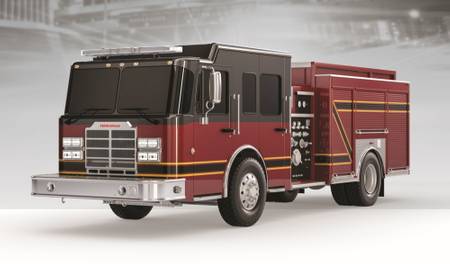
With an industry best lead time of six months, Ferrara Fire Apparatus have launched the new Invader, a complete line of ready-to-build custom pumpers that provides the mission critical performance fire departments expect.

The Invader provides customers the flexibility to choose from multiple configurations with a range of options to meet their unique operational needs.  


Primary features offered include:

  • 94” wide, extended medium aluminum cab with a 10” raised roof  
  • Cummins 380-500 hp engine
  • Allison 3000 EVS™ transmission
  • Meritor® axles
  • 3/16” extruded aluminum body
  • Roller shutter compartment doors 
  • 500 to 1,000 gallon polypropylene water tank
  • Available in top and side-mount pump control configurations
  • Hale, Waterous, or Darley 1,500 – 2,000 gpm pumps
  • Optional FoamPro® 1600 or FoamPro® 2001 foam system
  • Optional 10, 20 or 30 gallon foam cell

“We are excited to introduce the Invader which offers accessibility and convenience for customers in need of a custom pumper,” said Jason Louque, Director of Sales for Ferrara Fire Apparatus. “With the uncertain nature of budgets as well as the challenges presented because of the COVID-19 pandemic, the Invader is a vital addition to our product lineup.”

For more information on the Invader, please visit https://www.ferrarafire.com/category/invader/

Fire at Houses of Parliament a ‘false alarm’

Smoke coming from the Houses of Parliament was a ‘false alarm’, according to a spokesman for the Commons.

A video circulating on Twitter yesterday seemed to show smoke coming from the historic building, but a source told the Express that due to the cold weather, excessive amounts of steam were coming from generators.

London Fire Brigade confirmed that although they were called, there were no immidiate dangers. “Firefighters were called to reports of smoke coming from some flats on Parliament Square in Westminster this morning. The smoke was caused by a generator starting up. There is no fire at the Palace.”

The incident comes just days after the Public Accounts Committee warned that if safety within the building isn’t improved, it could suffer the same fate as Notre Dame.

Lithium-ion battery fires costing UK economy £158 million a year

Research carried out by Eunomia Research and Consulting has revealed the huge financial implications of Lithium-ion battery fires to the UK economy.

Their research found that fires caused by Lithium-ion battery fires cost around £158 million annually to waste operators, fire services and the environment.

The batteries, which are often not disposed of properly, can be found in most household items, however, many householders are unaware of the risks.

The study also revealed that 201 waste fires occur every year in the UK. The fires are known to cause extensive damage, and they are a particular risk when exposed to high tempreature or punctured during the waste disposal process.

Lithium-ion battery fires
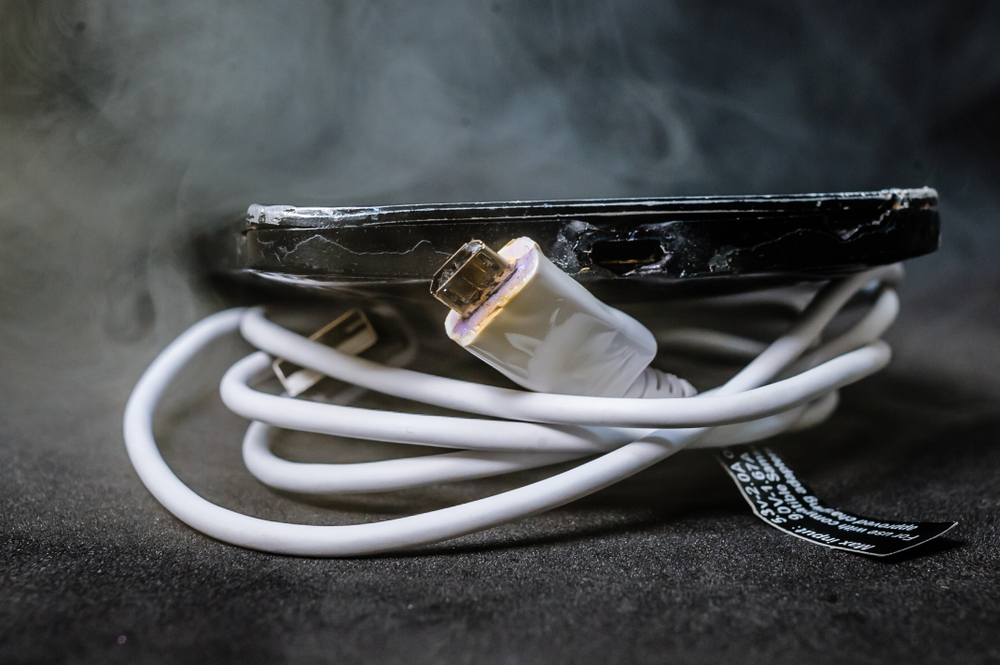
Mobile phones contain Lithium-ion batteries

Commenting on the research, lead author of the report Sophie Crossette said: “The findings of this research highlight the significant financial burden Li-ion battery waste fires place on the waste sector and public sector services. To date, much of the focus on preventing waste fires has been on improved controls and infrastructure at waste sites.

“As this report suggests, we now need to focus on upstream interventions to divert batteries and WEEE products from the mixed waste stream to tackle this growing issue. If we don’t start to take action now, the increased use of Li-ion batteries, will only increase the cost and impact of Li-ion battery waste fires in the years to come.”

Lithium-ion battery fires could increase

The study also claims that with more batteries coming on to the market each year, the problem is only going to get worse.

To tackle the risk of Lithium-ion battery fires, the report suggests that banning Li-ion batteries from the residual and mixed recycling waste streams, or introducing a deposit return scheme (DRS) for batteries could reduce the risk in the future.

NFPA to support Community Risk Reduction Week

THE NFPA have announced they are supporting Community Risk Reduction (CRR) Week, a grassroots event designed to heighten awareness of community risk reduction as an important prevention process. sment and Community Risk Reduction Plan Development, plays an invaluable role in that process, providing the requirements needed to conduct a community risk assessment (CRA), and to develop, implement, and evaluate a community risk reduction (CRR) plan.

“CRR is a process to help communities identify local risks, and to develop a plan that helps reduce the risks viewed as high priority. CRR Week serves a powerful opportunity to increase awareness about the important role of CRR initiatives in driving community safety,” said Karen Berard-Reed, community risk reduction strategist at NFPA. 

NFPA actively works to advance CRR on a year-round basis. In addition to the wealth of resources and support it offers public safety officials and advocates who are working to implement CRR in their communities, NFPA is now building a digital community risk assessment (CRA) tool, which will help community leaders gain valuable insights and make data-informed decisions around fire prevention and other risk-reduction activities that are specific to their region, featuring data visualisation tools that make it easy to plan, manage and communicate the results of their efforts.

“Access to relevant data such as community demographics and local risk factors will allow CRR leaders to gain insights and make informed decisions about where to focus efforts and resources,” said Berard-Reed. “While many fire departments have struggled to work with data sets, NFPA’s CRA dashboard does the complex work behind the scenes to align local data sets with NFPA 1300 requirements, making it easier for stakeholders  to create effective community risk reduction plans that incorporate five priorities – education, engineering, enforcement, economic incentives, and emergency response – in the most impactful ways possible.”

Central to the development of this new CRA tool is a pilot program involving participation from 250 fire departments across the U.S. (49 states) that are using the tool to assess and provide feedback on key features that will help maximise its effectiveness.

“Interactive participation in this project allows each fire department to provide important feedback that will be used to improve future versions of the dashboard, positions the community among CRR leaders in the United States, and signals an interest in leveraging technology to drive high-quality community safety initiatives,” said Berard-Reed.

Flow Battery Project helps clean energy microgrids

Two years after becoming the first battery of its kind to be connected to the California grid to help support reliability and maximise the use of clean energy, the vanadium redox flow (VRF) battery based at a San Diego Gas & Electric substation is again breaking new ground.

The emerging battery technology is being tested as a means to help achieve zero-emission microgrids – a tool to keep communities and critical facilities powered with clean energy during adverse weather conditions and Public Safety Power Shutoffs. 

With the support of Japan’s New Energy and Industrial Technology Development Organisation (NEDO) and the California Governor’s Office of Business and Economic Development (GO-Biz), SDG&E and Sumitomo Electric (SEI) launched the demonstration project in 2017.  The collaboration was recently extended for another year through the end of 2021, to further test the battery’s microgrid capabilities and maximise its ability to support the grid with ancillary services such as voltage and frequency regulation. Unlike the most prevalent energy storage technology (stacked cells of lithium-ion batteries), the flow battery being tested consists of tanks of liquid electrolytes and pumps. It began participating in the California Independent System Operator’s (CAISO) wholesale electricity markets in December 2018 and was used last summer to help minimise the impact of rotating outages during a record heatwave.

“Long-duration energy storage and microgrids are both key to helping California meet its clean energy, reliability and resiliency goals. We need breakthrough technologies to achieve 100% renewable energy on our grid and to power microgrids during emergencies,” said SDG&E CEO Caroline Winn. “SDG&E is proud to play a role in developing innovative solutions, like the flow battery technology, to help solve California’s climate-related challenges.”

Flow battery systems have an expected lifespan of more than 20 years and could have less degradation over time from repeated charging cycles than other chemical battery technologies.

“This project is cutting-edge and serves as the proving ground for integrating flow batteries into microgrids,” NEDO Executive Director Sato Yoshiteru said. “We are determined to contribute towards developing innovative solutions to environmental and energy challenges, such as improving grid reliability, which are among the most important issues for the State of California.”

“I’d like to express my deepest gratitude to GO-Biz, San Diego Gas & Electric and NEDO for implementation of the Sumitomo flow battery in California. This is a reliable, long-duration technology that offers a high degree of operational freedom and fire safety, using non-flammable and re-usable electrolyte. Based upon these advantages, I’m confident the flow battery contributes to grid reliability in California. I am determined to help California reach its clean energy goals. I look forward to continuing our partnership with San Diego Gas & Electric,” said Hideo Hato, Senior Managing Director of Sumitomo Electric.

In 2015, NEDO signed an agreement with GO-Biz to test flow battery performance in a demonstration setting. NEDO then contracted with Sumitomo to implement the project.  The flow battery provides 2 MW/8 MWh of energy, enough to power the equivalent of about 1,000 homes for up to four hours.

“California has proven time and again that addressing climate change is good for our environment, it’s good for future generations, and it’s good for our economy – spurring new technologies and creating new markets on a regular basis,” said Tyson Eckerle, GO-Biz’s Deputy Director of Zero Emission Vehicle Market Development. “We continue to be proud international partners with NEDO as this game-changing technology brings new opportunities and renewed economic growth through renewable energy.”

Since unveiling the project in 2017, SDG&E has been researching if flow battery technology can economically enhance the delivery of reliable energy to customers, integrate growing amounts of renewable energy and increase the flexibility of grid operations. Like other energy storage systems, the flow battery absorbs or releases electrons as needed to help maintain grid stability. For example, soaking up surplus solar energy generated in the middle of the day and discharging it to the grid during peak evening hours.

SDG&E has been a leader in integrating energy storage, as well as developing microgrids. In 2013, SDG&E began operating the first utility-scale microgrid in America – the Borrego Springs Microgrid. Last year, it received a federal grant to upgrade the Borrego system to run on 100% renewable energy.  In 2017, SDG&E unveiled what was then the world’s largest lithium-ion battery storage facility. To date, SDG&E has about 100 MW of energy storage projects completed or contracted and is working to add more.
FBU responds to “biased” HMICFRS report

The fire Brigades Union (FBU) have branded the annual State of Fire report from Her Majesty’s Inspectorate of Constabulary and Fire and Rescue Services as political and biased.

The report details the fire services response to the pandemic. The report also aimed to find what is working well and what is being learnt, how fire and rescue services are dealing with the problems they face; and what changes are likely as a result of the COVID-19 pandemic.

Matt Wrack, FBU general secretary, said in a statement on their website: “While firefighters are out tackling fires, floods and the pandemic, the HMICFRS didn’t even have the courtesy to speak to or provide us in advance with a copy of their report, which was passed to us by a journalist.

“The FBU has from the start wholeheartedly supported the response to the pandemic, and as a result of agreements delivered by the union, firefighters have been able to take on significant areas of additional work including driving ambulances, moving the bodies of the deceased and delivering vital supplies to the NHS and care sector and vulnerable people in our communities. 

“But the message from this report is clear: fire chiefs and the government don’t want workers to have a voice over their own safety or their terms and conditions. That’s why employers, advised by fire chiefs, tore up a national agreement containing vital safety measures. This report is being used to undermine a trade union they consider a nuisance because it wants to keep its members safe.

“It is remarkable that in the same breath the inspectorate claims the FBU produced ‘unnecessarily detailed’ safety requirements and also that large staff absences driven by outbreaks ‘didn’t materialise’ in the fire and rescue service. How does the inspectorate think these outbreaks were prevented? It was a direct result of paying serious attention to workplace safety by the FBU and its members.

“It is also wrong to say that the FBU asked firefighters not to volunteer to support the vaccination programme. On 9 December, the FBU and employers signed an agreement that said should a request be received for support with vaccinations, that both parties ‘will move quickly to support such a request’.

“Our priorities throughout this pandemic have been to ensure firefighters can safely support their communities, the NHS, and the care sector. That means protecting their health but also the services they work in which continue to respond to emergencies A service with 11,000 fewer firefighters than a decade ago cannot afford for this virus to run rampant through fire stations.

“The FBU wants firefighters to continue supporting the pandemic response but sadly it seems the inspectorate, doing the bidding of the government and fire chiefs, is more intent on attacking our trade union and helping to undermine the terms and conditions of firefighters.”

SAP SE and DNV GL delivers CUI Manager

SAP SE and DNV GL, one of the largest independent management and quality assurance experts, have teamed up to deliver a new industry cloud solution. The Corrosion Under Insulation (CUI) Manager is designed to tackle a major problem facing the integrity of oil and gas plants.

The CUI Manager is one of the latest industry cloud solutions built and run on the open SAP Cloud Platform. These industry solutions use intelligent technologies, such as artificial intelligence and advanced analytics, to create compelling user experiences and to digitalize and automate operations. SAP and partners focus on solutions for the core business of our customers in their industries to help optimize end-to-end processes and to enable the development of new and differentiating business models. 

“In collaboration with DNV GL, we will deliver the first industry cloud solution for the oil and gas industry,” said Benjamin Beberness, SAP Oil and Gas Business Unit global vice president. 

CUI Manager is the largest maintenance cost for offshore and onshore installations with insulated pipes. In close collaboration with the industry, DNV GL has developed a new risk-based methodology, published a new recommended practice and turned the insights into an easy-to-use interface with the CUI Manager. Through the strength of DNV GL’s models and the integration with SAP Asset Intelligence Network and the SAP Asset Strategy and Performance Management application, this solution will provide an efficient and standardized way to address the risk of CUI. 

CUI Manager continuously assesses and calculates the CUI risk, helping integrity engineers and managers prevent failure, increase safety and manage hidden threats. It optimizes asset strategy and planning by providing detailed, instant insights on current and planned risk as well as the resulting cost development. The solution’s full integration with SAP Asset Strategy and Performance Management enables calculation and visualization of the complete risk picture using SAP Cloud Platform. 

“The combination of DNV GL’s deep technical insight and state-of-the-art software solutions with SAP’s cloud-based solutions for intelligent asset management will generate significant value for our customers,” said DNV GL- Oil & Gas, CEO, Liv A. Hovem. “We look forward to bringing additional solutions to the market jointly with SAP in the near future.” 

NFPA LiNK updated to include NFPA 99

The new information delivery platform from the National Fire Protection Association (NFPA), NFPA LiNK™, has been updated to include the 2021 edition of NFPA 99, Health Care Facilities Code.

The platform, which launched in the fall of 2020, will include all NFPA codes and standards, supplementary content, and visual aids for building, electrical, and life safety professionals and practitioners. Currently, NFPA LiNK includes the 2021 edition of NFPA 101®, Life Safety Code®, which covers life safety in both new and existing structures; the four most recent editions of NFPA 70®, National Electrical Code® (NEC®), the most widely used code in the United States and referenced around the globe; and the 2021 edition of NFPA 70E®, Standard for Electrical Safety in the Workplace®

NFPA 99 establishes criteria for levels of health care services or systems based on risk to the patients, staff, or visitors in health care facilities to minimise the hazards of fire, explosion, and electricity. Often used together with NFPA 101, NFPA 99 not only provides critical requirements for the ongoing design and day-to-day operations of health care facilities, but it also works to ensure optimal safety for patients and staff in the event of a natural disaster or health care crisis such as the current coronavirus pandemic.

NFPA codes and standards are designed to minimise the risk and effects of fire by establishing criteria for building, processing, design, service, and installation around the world. Fire and life safety practitioners have turned to the Association’s codes and standards to perform their work more efficiently and effectively for more than a century. Today, work demands employees have the most current, relevant information and resources available at their fingertips to help solve problems quickly and at any given location. NFPA LiNK has been designed to provide users instant access to resources pertinent to their work and requirements for safe work practices that reduce a worker’s exposure to fire, electrical, and other hazards.

“Professionals tell us they want important code information and at the same time they need context and insights to help them better understand problems and make decisions in real time,” said Jim Pauley, NFPA president and CEO. “NFPA LiNK allows people to find pertinent information quickly and helps them collaborate and stay connected easily while in the field. This means more lives are saved and more property protected from fire, electrical, and other hazards.”

To help address the needs of users, NFPA LiNK can be accessed via mobile devices, tablets, laptops, or other preferred device, and will become a “living library” that offers:

  • The ability to work alongside the codes by adding personal notes, assigning colors, and saving to custom collections for quick and easy reference.
  • A broader understanding of code requirements through access to expert commentary, visual aids, and helpful resources.
  • Collaboration features to share code sections, work across teams, and ensure everyone knows what is required.
  • Navigation tools that enable users to quickly locate the information they need based on the situations they encounter.

NFPA LiNK subscribers will get access to continuous updates, features and functions, and new editions of NFPA codes and standards as they are released. NFPA will expand the collection of codes and standards within the application to include the more than 300 that NFPA offers.

More information about the NFPA LiNK platform, a timeline of additional codes and standards that will be coming to NFPA LiNK, and a product introduction video can be found at nfpa.org/LiNK. A video that highlights key functions and features in more detail is also available. Try NFPA LiNK by visiting the website

Oshkosh upgrades the Striker ARFF vehicle

Oshkosh Airport Products, LLC have introduced an upgraded Oshkosh®  Striker® ARFF vehicle featuring an optimised cockpit, updated body styling, and advanced mobility, speed, and precision. Vehicle enhancements include a new ergonomic cockpit layout for an enhanced driver experience, and innovative technology systems for 4×4, 6×6, and 8×8 packages. While retaining all of its remarkable legacy features, the new Oshkosh Striker ARFF vehicle maximises innovation in the runway response industry. 

“The unveiling of our new Striker vehicle is a culmination of years of gathering voice of customer feedback to learn what product features best meet our customers’ needs,” said Jack Bermingham, business unit director of Oshkosh Airport Products. “The newly optimised features represent innovative technology enhancing comfort, efficiency, and firefighter safety with thoughtful placement of buttons, color-coded controls, and functionality that allows the operator to focus on the task at hand.”

Features of the new Oshkosh Striker ARFF vehicle include:

Optimised Cockpit

  • Modular cab design with ergonomic control placement 
  • Spacious cab seating for up to 5 firefighters 
  • Increased forward visibility
  • Updated Oshkosh Command Zone™ software with diagnostic support
  • Oshkosh C.A.R.E™ Clean Options  
  • Bus-style doors

Unparalleled Performance and Safety

  • Oshkosh TAK-4®all-wheel independent suspension
  • Electronic Stability Control (ESC)
  • Side Curtain Airbags
  • 360° Camera
  • Enhanced visibility

Innovative Fire Suppression

  • Oshkosh power divider allows for pump and roll in any condition 
  • Snozzle® HRET available in 50’ or 65’
  • Oshkosh K-Factor system which rapidly displays the position of the Snozzle’s piercing tip to the fuselage, eliminating depth perception issues to maximise precision
  • ECO EFP™ system for easy measurement of foam percentages from every discharge on the vehicle, without discharging foam. Available with standard pressure, ultra-high pressure, CAFS, and NOVEC 1230

“During the design process for the new Striker vehicle, we evaluated feedback from customers around the globe and identified areas that could be improved with regard to cockpit layout and the incorporation of new technology,” said Jason Shively, director of engineering for Oshkosh Airport Products. “With this ARFF vehicle, customers get the mobility, speed, and reliability they’ve come to expect, with the essential visibility, comfort, ergonomic, and safety features our team identified as crucial areas for vehicle enhancements.”  

Aircraft rescue firefighters are welcome to experience the new Striker ARFF vehicle on Oshkosh Airport Products’ website and social media pages. To learn more, visit www.oshkoshairport.com

About Oshkosh Airport Products, LLC

Apollo releases more virtual training courses

Following significant requests from customers, Apollo Fire Detectors have expanded their portfolio of FREE webinars and virtual CPD’s.

In order to continue providing its training service throughout the national lockdown, Apollo released a selection of over 15 virtual courses in May 2020. The courses have been a huge success with thousands of attendees from over 30 countries taken advantage of the weekly sessions. Due to this success, and COVID-19 restrictions being in place once again in the UK, Apollo have released six new courses in their latest series of online events which are scheduled until the end of March.  

The new courses include product webinars on ‘How the Apollo Test Set can save you time on-site’ and the flush-mounted Soteria Dimension. Plus, CPD’s on: ‘Fire Safety in Healthcare buildings UK’ which has been CPD certified by the FIA (Fire Industry Association) ‘False Alarm Reduction’ and a very current topic ‘Protecting High-rise residential buildings from fire’.

All webinars are being hosted via Microsoft Teams Events, which allows participants to watch live and interact with presenters via a moderated Q&A. All registrants receive a recording of the webinar after the event, so those who don’t make the live event can watch it on demand.

Technical support Engineer, Warren Moyle who hosts the events said “We’ve been thrilled with the uptake of our online sessions and are grateful that people around the world have been willing to invest in their professional development and learn more about our products. Each new course has been designed based on popular requests from the training feedback forms which has been insightful. The sessions have enabled us to reach people around the world we haven’t reached before, so this could be the future of our training courses”

You can register by visiting the Apollo website: www.apollo-fire.co.uk/training-support