FIA offer training and recruitment of next generation fire protection engineers


The FIA has unveiled its participation as a founding member in a new, industry-wide initiative designed to attract and develop a new generation of fire protection engineers.

What is Zitko Talent?

Zitko Talent is an alliance of leading manufacturers, installation companies and educators who will be providing an intensive 12-month programme of salaried work experience, training and development.

The programme is suitable for a wide audience, from college leavers and career changers to engineers wishing to cross-train from other sectors. Trainees combine frontline installation experience with intensive training and education customised to their specific workplace.

The FIA will be the principal training provider for all Fire aspects. This will include adapting courses for individual employers and their trainees – drawing on an extensive catalogue that includes BS5839 Fundamentals and the Advanced FD&A qualifications.

For employers, it’s the opportunity to attract and develop new talent far more efficiently and cost-effectively than they could do so alone, with all recruitment, selection and training sourced and administered centrally as part of the fee.

Why are FIA doing it?

In 2018/2019 FIA conducted surveys in which employers revealed they need fire detection and alarm technicians – making it clear that there is a real and urgent need for skills in this area.  This applies to new entrants to the industry as well as experienced engineers.

Finding suitably qualified people is somewhat difficult as the surveys suggest, therefore FIA are delighted to be able to provide the training programme to support the industry with skills development to become competent fire systems technicians.

Partnering with ZITKO Talent affords us the opportunity to promote the Fire industry to a wide audience, including talented young people who are the future of our industry.

We’ll also be working with our partners on another key aspect of our mission: championing and continually raising standards. And we’ll be helping to deliver a lasting solution to the looming skills shortage.
Who does it benefit?

It benefits you as a member. The programme fee is normally £10,000 per trainee, but as an FIA member you qualify for a 20% discount and additional guarantees should your trainee not complete their course.

The programme provides:-

 A solid launchpad for developing and employing high calibre engineers long-term – starting in installation and commissioning.

  • A thoroughly vetted pool of trainees from which to choose – ranging from college leavers and career changers to experienced engineers from other industries;
  • Over 160 hours of world-class education, including the FIA’s BS5839 Fundamentals, Advanced FD&A and Portable Extinguisher Maintenance courses;
  • Up to 150 hours of manufacturer certified product training, in up to six of the systems you use in your business;
  • All training administration is taken care of by the Zitko Talent team.
NEBOSH welcomes new Board members and independent advisors

NEBOSH, a global provider of health, safety and environmental qualifications, has welcomed two new Non Executive Directors (NEDs)/Trustees and three independent advisors as it continues a significant transformation programme.

Maggie Galliers CBE and Julie Nerney have joined the Board, whilst Steve McLaughlin, Mark Bradley and Jim Andrews have volunteered as independent advisors.

Maggie, current Chair of the National Learning and Work Institute, is widely recognised for her services education and has extensive experience from educational, charitable and regulatory sectors.

Complementing Maggie’s educational background, Julie has previous experience within the health and safety sector and together they will bring valuable skills that supports NEBOSH in its mission to be recognised as the global leading provider of high-quality qualifications and training in occupational health, safety, environmental, well-being, risk and related subjects.

Steve, Mark and Jim have extensive senior management experience for international organisations in sectors ranging from education, safety and technology to aviation, logistics and oil and gas.

Their combined expertise will be hugely beneficial as they have been invited to join NEBOSH’s newly formed Transformation Committee. The Committee – which brings together Board members, employees and voluntary advisors – will oversee the planning of the transformation programme.

Product spotlight: RDS Connected Fleet

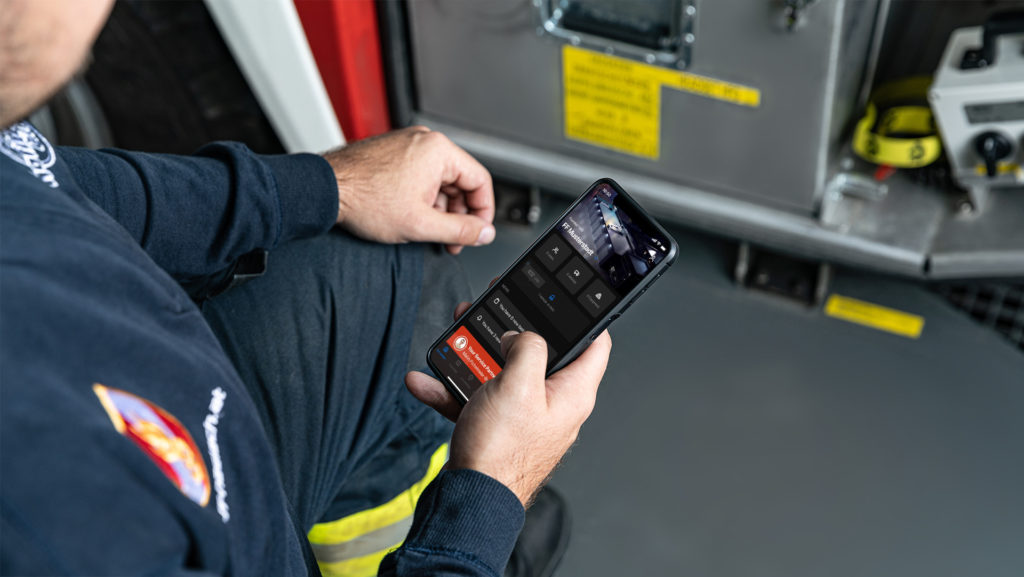
What is the status of my operational fleet? Which vehicles are ready for operation? What condition are they in? Where are the vehicles now? What and how much operating and extinguishing agents (water, foam, etc.) do they have on board? RDS Connected Fleet provides this and all other information required to prepare for operations.

RDS Connected Fleet is the further development of the proven service4fire vehicle management system with new hardware, new user interface and new functions. It not only provides real-time information on the “state of health” of an operational fleet, but also logs all vehicle-related data including error messages for post-operational briefings. Fire departments, therefore, have a complete overview of their vehicle fleet at all times and can manage it digitally with Connected Fleet. Easy, quick and efficient.

Complete operational documentation
RDS Connected Fleet produces complete operational documentation for each vehicle. As soon as it leaves the station and until it returns after an operation, the data is recorded and evaluated. In addition to driving parameters such as speeds, brake actuations, engine speeds, distances traveled, and live positions, et cetera, this also includes information such as when the warning devices were switched on, when the vehicle arrived at the operational site, when it left the installation position or the defined area of operation (geofencing), when firefighting work began and how much water or foam and what pump pressure was used to extinguish the fire, to name but a few.

Securing the operational readiness
RDS Connected Fleet monitors the technical condition and operational readiness of the vehicle at the same time. Any malfunctions, faults or defects that occur are recorded in real time, described in detail and pro-actively reported to the vehicle operator. Service planning and management is also largely automated with RDS Connected Fleet providing information on upcoming service dates, for example, the next maintenance date for the built-in pump or portable pump, creating lists of defects and documenting maintenance work in the process. The various operating manuals will be stored in Connected Fleet.

RDS Connected Fleet

New hardware and software
New, high-performance telematics modules form the interface in the vehicle that docks onto the CAN-Bus. They serve as Connected Hubs for GPS and internet and open up the possibility of setting up a secure WLAN and improving remote services (e.g., remote diagnosis). The Connected Hubs are already integrated in new Rosenbauer vehicles, and there will be a retrofit package for older models. A separate module is available for third-party vehicles and vehicles without CAN-Bus, as well as for vehicles that are to be retrofitted with a GPS connection (e.g., to display the live position).

The software and the user interface (UI) were also revised. RDS Connected Fleet can now be used with all common web browsers (Chrome, Safari, Firefox) and mobile operating systems (iOS, Android). It is consistently intuitive to use. The operating routines have been simplified, the interactive design (User Experience/UX) optimised for smartphones and the symbol language of the new Rosenbauer control system RFC LCS adopted. This ensures a uniform operating environment from vehicle control to fleet management. The software can also be used without hardware, for example, to keep a logbook.

More safety and speed
The latest encryption techniques ensure the greatest possible security in data traffic. In addition, the data is hosted on the cloud computing platform Microsoft Azure and, therefore, in Europe. This also ensures a higher speed. In addition, GPS and error messages are now sent with priority and are always available in real time.

Numerous fire departments have participated in the development of RDS Connected Fleet, tested the range of functions and, above all, contributed their feedback to the optimisation of the user interface. First and foremost the Vienna professional fire service, which has been using the Rosenbauer vehicle management system for many years now to manage a fleet of some 80 vehicles. Live operation of RDS Connected Fleet will start on December 15. All development partners will switch to the new system this year and all other existing customers from January 2021 onwards free of charge. Further digital solutions are in the works and will be available in the course of the coming year to continually simplify the daily work of fire departments.

NFPA: Prioritising safety during Christmas to reduce fire risks

Traveling for the holidays might not be on the menu due to COVID-19, but comfort food, festive decorations, and cozy nights in are sure to lift everyone’s spirits.

Unfortunately, these activities can often lead to fire, with Christmas Day and Christmas Eve as two of the top days each year for home fires caused by cooking and candles.

The National Fire Protection Association (NFPA) encourages everyone to keep safety in mind in order to lessen the chance that a fire will disrupt their holiday celebrations.

“For a lot of people, December tops the list for the most heartwarming time of year, but it’s also a leading month for home fires in the U.S.,” said Lorraine Carli, vice president of Outreach and Advocacy for NFPA. “Carefully decorating your home and mindfully cooking your meals can help make your holidays safer.”

Following are NFPA statistics highlighting the increased risk of fire during the holidays:

Decorations
  • More than half (51 percent) of the home decoration fires in December are started by candles, compared to one-third (32 percent) in January to November.
  • From 2014-2018, an estimated average of 770 home structure fires per year began with decorations, excluding Christmas trees. These fires caused an average of two civilian deaths, 30 civilian injuries, and $11.1 million in direct property damage per year.
  • More than two of every five (44 percent) decoration fires occurred because the decoration was too close to a heat source, such as a candle or hot equipment.
  • One-fifth (21 percent) of the home decoration fires occurred in December, while 10 percent happened in January.
Christmas trees
  • Fires caused by Christmas trees are uncommon, but they are more likely to be serious when they do occur.
  • Between 2014-2018, U.S. fire departments responded to an average 160 home fires that started with Christmas trees per year. These fires caused an annual average of two civilian deaths, 14 civilian injuries, and $10.3 million in direct property damage. 
  • Electrical distribution or lighting equipment was involved in 45 percent of home Christmas tree fires.
  • In more than one-fifth (22 percent) of the Christmas tree fires, some type of heat source, such as a candle or equipment, was too close to the tree.
Cooking
  • Cooking is the leading cause of reported home fires and home fire injuries and the second leading cause of home fire deaths.
  • An average of 470 home cooking fires were reported per day in 2018.
  • Thanksgiving is the peak day for home cooking fires, followed by Christmas Day and Christmas Eve.
  • Unattended cooking is the leading cause of home cooking fires.
Candles
  • Between 2014-2018 U.S. fire departments responded to an annual average of 7,610 home structure fires caused by candles. These fires caused an average 81 civilian fire deaths, 677 civilian fire injuries, and $278 million in direct property damage annually.
  • On average, 21 home candle fires were reported each day.
  • Three of every five (60 percent) candle fires started when something that could burn, such as furniture, mattresses or bedding, curtains, or decorations, was too close to the candle.
  • Candle fires peak in December. January ranked second.
  • Nearly three times as many fires started by candles were reported on Christmas (an average of 58 Christmas fires) as the daily average.

3M to Advance Operating Model

As the global economy shifts in the wake of the COVID-19 pandemic, 3M is advancing its operating model, streamlining its business, and focusing on global trends where the company will apply science to life in new ways to drive sustainable growth.

“The COVID-19 pandemic has advanced the pace of change and disrupted end markets around the world, increasing the need for companies to adapt faster,” said Mike Roman, 3M chairman and chief executive officer.

“At the same time, we are seeing significant opportunities from our new operating model which we launched at the start of the year. As a result, we are taking further actions to streamline our operations, positioning us to deliver greater growth and productivity as global markets emerge from the pandemic.”

In January 2020, 3M launched a new global operating model – a significant step in the company’s transformation – which has evolved the way 3M works, enabling the company to be more customer focused and responsive, helping 3M to lead during the pandemic.

With the actions 3M is announcing, the company will further enhance its operations and marketing capabilities. In operations, they will eliminate redundancies and better use analytics to drive additional efficiencies. In marketing, they will also build on its success in utilising data insights, accelerating global marketing programs, and activating digital engagements with customers.

The company are expecting that they will be better positioned to take advantage of global market trends in e-commerce, personal safety, health care, automotive electrification, and home improvement. At the same time, the company plans to de-prioritise investments in end markets where growth is slower.

Andy Lake of Pyroguard states the case for using timber for its fire safety properties

Andy Lake, UK Sales Director, Pyroguard, explains exactly why timber is such a reliable building material and how its strong fire safety properties make it a suitable option across all construction projects.

The world of construction has changed so much in the past few decades. From new tools, to new methods of construction, the sector is constantly evolving and modernising its processes.

Despite all this upheaval some things stay the same; timber being one of the best examples. Thanks to its durability, sustainability, timeless aesthetic and cost-effectiveness, timber remains an important building material, which is routinely specified across some of the world’s most exciting developments and projects.

Unfortunately, in recent times, some building professionals have developed a diminished view of timber over its perceived poor fire performance. This perception is misguided, as it can provide excellent performance in a fire – when used as part of a certified system – and is able to achieve the highest levels of protection.

In fact, with the right testing and assessments, those using it are able to accurately predict how the material will perform in a blaze. In turn, this allows project teams to put together more robust fire escape plans for building occupants.

All types and associated densities of timber have their own specific charring rate, which can be used to indicate fire resistance in the event of an incident. As a result, architects and specifiers are able to work with fire safety glass experts to design glazing frames to the right thickness, to ensure that they offer the level of protection required for the build.

With the right guidance, timber is able to achieve an EI60 fire rating, which guarantees a minimum of 60 minutes Insulation and Integrity against an ongoing blaze.

As well as ensuring long-term, robust fire performance, timber fire-rated systems are also more effective at retaining their shape and structure when exposed to high levels of heat. To this end, fire test results indicate how stable timber can be when subjected to fire situations.

Unlike some other materials, such as steel, timber does not warp, twist or distort in a blaze. Instead, this sturdiness helps to ensure that the fire safety glass solution remains secure within its frame.

Additionally, thanks to their more flexible nature, timber frames are easier to adapt on-site. As a result, project teams using the material can deal better with any structural opening variations that might have occurred.

When compared to other building materials, timber is also able to offer exceptional aesthetic value and can be used to create designs unimaginable with other options. As well as exuding a natural beauty, timber can be stained and designed more ornately than alternative materials.

Similarly, in an industry, which is increasingly concerned about protecting natural resources and attaining lofty environmental targets, timber represents a truly sustainable building choice. In adopting timber, architects and specifiers are choosing an easily recyclable, long-lasting solution with a significantly lower embodied carbon footprint than other popular choices.

More than ever before, people are becoming concerned with the fire safety performance of the buildings that they live and work in. This change has been driven by a number of tragic events, which have shaken the sector to its core.

Whilst scrutiny is important, it’s essential that those in the industry don’t jump to unfounded conclusions about the fire safety performance of certain materials, like timber. With a wealth of research to support its use, the material has emerged as an obvious choice when looking to achieve strong performance.

However, to get the most from the material it must be properly specified, which will require the assistance of a fire safety glass expert, such as Pyroguard. By following this advice, architects and specifiers can continue creating beautiful, high-performing and sustainable buildings, which provide exceptional performance in a fire

BSI publish PAS 79, Fire Risk Assessment

BSI, in its role as the UK National Standards Body, has published PAS 79, Fire Risk Assessment. Guidance and a recommended methodologyThe newly revised standard aims to help reduce fire risk and improve the safety of non-domestic buildings and housing premises. It publishes in two parts:

PAS 79-1, Fire risk assessment – Part 1: Premises other than housing – Code of practice

PAS 79-1 gives recommendations and corresponding examples of documentation for undertaking, and recording the significant findings of, fire risk assessments in non‑domestic premises and parts of non-domestic premises for which fire risk assessments are required by legislation.

It is applicable to peer-to-peer rented accommodation to the extent that such accommodation falls within the scope of the relevant fire safety legislation and to premises used solely for short-term letting of flats (with letting periods ranging from one day to six months).

PAS 79-2, Fire risk assessment – Part 2: Housing – Code of practice

PAS 79-2 gives recommendations and corresponding examples of documentation for undertaking, and recording the significant findings of, fire risk assessments in housing premises and parts of housing premises for which fire risk assessments are required by legislation. Recommendations are also provided for fire risk assessments that are outside the scope of fire safety legislation but are designed to protect residents of blocks of flats, sheltered housing and extra care housing in the event of a fire in their own flat.

BSI brought together a wide range of experts in fire safety, fire risk assessment and the housing sector to reach consensus on the guidance and recommendations.

It is intended to be used by those who carry out fire risk assessments as a voluntary code of practice. It should not be quoted as if it were a specification.

The standard is available for download here: PAS 79-1 and PAS 79-2  

CHEMTREC® award fire departments $10,000 to improve hazmat incident preparedness

CHEMTREC®, in partnership with the National Volunteer Fire Council (NVFC), has awarded two volunteer fire departments with $10,000 each to enhance their hazmat incident preparedness and response capabilities.

The recipients of the 2020 CHEMTREC® Hazmat Emergencies Local Preparedness (HELP) Award are the New Johnsonville (TN) Fire Department and the Water Witch Hose Company #2 (New Milford, CT).

The New Johnsonville Fire Department will be utilizing the CHEMTREC® HELP Award to set up an operations level response trailer, which will include resources such as personal protective equipment that will keep their firefighters safe while mitigating hazmat incidents and protecting their community.

Water Witch Hose Company #2 will use the CHEMTREC® HELP Award to update their personal protective equipment and the hazmat supplies on their response trailer. This award will not only benefit the department but fulfill their mission of protecting lives and property throughout the region and state.

CHEMTREC® is the world’s leading source of 24/7 call center support and information during hazardous materials incidents. To further assist fire and emergency service departments responding to hazmat emergencies,

The partnership with the NVFC started in 2019 and launched the HELP Awards. Each year, two eligible volunteer fire departments that are also NVFC members receive the award to enhance their response capabilities and increase local preparedness to respond to and prepare for hazardous materials incidents.

“We are grateful for CHEMTREC’s support of our volunteer fire departments through the HELP Award,” said NVFC chair Steve Hirsch. “This award provides much-needed assistance to help fire departments prepare and train for hazmat emergencies to keep our front-line responders and their communities safe.”

“At CHEMTREC® we recognize that the first responder community is critical to hazmat response and we remain dedicated to working closely and effectively with responders when an incident occurs, as we have proudly supported the industry over the past 50 years.

“We are delighted to offer the HELP awards for a second year and pleased to continue our partnership with the NVFC. These awards represent our appreciation of the volunteer fire service and will continue to be an ongoing reminder of our commitment to emergency responders for many years to come,” said CHEMTREC’s chief executive John Modine.

Learn more about the CHEMTREC HELP Award.

Honeywell survey reveals increased focus on safety due to Covid-19

A new Honeywell survey conducted by YouGov PLC has found travellers are placing an increased focus on cleanliness and hygiene when selecting which airlines to fly and which hotels to book. Although cost also remains a top motivator in travel decisions, the COVID-19 pandemic has shifted travelers’ focus toward safety as they make travel decisions.

The Honeywell survey, which was conducted online among adults in the United States and United Kingdom, sought to better understand these shifting motivations.

Enhanced Cleanliness and Safety Boosts Traveler Confidence

When U.S. survey participants were asked about their criteria for selecting a travel brand or company, cleanliness/hygiene was the top factor (57%) in determining their choice — outranking cost and every other factor.

Providing an experience focused on cleanliness and safety has the potential to increase travelers’ confidence, and among all survey participants who have traveled since March, roughly 6 in 10 of those who traveled by plane gave positive ratings to the cleanliness and safety procedures at the airport (61%) and in flight (58%).

Honeywell survey
Extra measures have been brought in to protect travellers

The majority of survey participants who traveled by any means also indicated a positive cleanliness and safety experience with lodging (68%). “Travel and hospitality companies that lead the way on safety and cleanliness protocols during the pandemic are likely to be better positioned when global travel rebounds,” said Bill Kircos, vice president, Global Marketing, Honeywell Aerospace.

“It’s evident that airlines, airports and lodging providers must address safety and cleanliness as part of their core brand offering now and in the future. Honeywell worked quickly to create new solutions and accelerate efforts that help increase passenger and guest safety while also improving cleanliness at the airport, in flight and at hotels.”

The COVID-19 pandemic has undoubtedly changed many perceptions, concerns and motivators around travel, impacting airports, airplanes and hotels. The Honeywell survey uncovered insights into the changing perceptions of all three.

  • Ninety-two percent of those surveyed who have traveled by air since March had either a positive (61%) or neutral (31%) experience at the airport regarding health and safety. Their airport experiences are making 40% of recent air travelers more likely to travel again before June 2021, as opposed to 15% saying their experience would make them less likely to travel.
  • When compared with other parts of the travel journey, lodging posed the least concern for travelers surveyed with only 9% highlighting it as the leg of the journey that most concerns them.
  • For those surveyed who have stayed in a hotel since March, 93% reported a positive experience regarding safety and cleanliness.
  • More than half (52%) of those surveyed with upcoming air travel plans plan to stay in hotels versus less than a quarter (22%) planning to use vacation rentals.
  • Forty-eight percent of adults surveyed said enhanced cleanliness or health and safety procedures would most motivate them to stay in a hotel.

“Although lodging is not currently the top concern for many when it comes to their travel journey, consumers are giving additional thought to where they stay,” Kircos said. “And although vacation rentals have gained in popularity in recent years, we’re seeing consumers put their trust in hotels because they feel more confident in their cleanliness and hygiene standards.”

U.S. Versus U.K. Travelers’ Preferences

The Honeywell survey considered insights garnered collectively from respondents in the U.S. and U.K., and although responses from each country mirrored each other in many ways, there were country distinctions in terms of motivators, barriers and attitudes toward travel.

  • Among those who haven’t flown since March, a COVID-19 vaccine was the top motivator to return to air travel (48%). However, more U.K. respondents (52%) were motivated by a vaccine than U.S. respondents (42%).
  • U.K. respondents with air travel plans in the next eight months are most likely to be planning on staying in hotels (57%, versus 43% of Americans) while those in the U.S are more likely to say they’ll be staying at a relative’s or friend’s home (50%, versus 31% of Britons).

 Technology Plays Key Role in Increased Safety Protocols

With solutions like the Honeywell UV Treatment System, passenger and crew personal protective equipment, on-site thermal screening technology, and comprehensive building management solutions, Honeywell can help airlines, airports and lodging providers increase overall cleanliness and safety, giving passengers, crews and guests greater peace of mind in their travel journeys.

Honeywell’s Healthy Buildings solutions help building owners improve the health of building environments, operate more cleanly and safely, comply with social distancing policies, and help reassure occupants that a space is safer.

By integrating air quality, safety and security technologies along with advanced analytics, Honeywell’s Healthy Buildings solutions are designed to help reduce potential risks of contamination and improve business continuity by monitoring both the building environment and building occupants’ behaviors and include specific solutions for the airport and hospitality sectors.

Methodology

The Honeywell survey was carried out by YouGov PLC using an online interview administered to members of the YouGov panel of individuals who have agreed to take part in surveys. Emails are sent to panelists selected at random from the base sample. The survey was composed of 3,336 adults and was undertaken Nov. 6-10, 2020. The figures have been weighted and are representative of all U.S. and U.K. adults (aged 18+).

UL join WEF as Platform Partner

UL, the global safety science leader, has joined the World Economic Forum (WEF) as a Platform Partner and will work to develop systemic solutions to key global challenges and serve as a driving force behind WEF’s programs.

UL’s participation within WEF includes membership of the organisation’s Advanced Manufacturing and Production Platform, a group dedicated to accelerating inclusive technology while stimulating innovation, sustainability and innovation in advanced manufacturing and production. UL will harness its safety, scientific and sustainability expertise to address carbon reduction in manufacturing, digital traceability, and enhancing resilience in supply systems and manufacturing.

“Anticipating how advanced manufacturing technologies, innovative business models and new ecosystems are transforming business’s ability to drive economic and societal impact is a challenge globally,” said Jennifer Scanlon, president and CEO of UL, Inc. “UL is honored to have an active role in helping businesses boldly reimagine manufacturing in the digital era and drive the change needed to fully realise the potential of advanced manufacturing technologies.”

As the only testing, inspection and certification organisation member of WEF, UL joins other global companies to provide strategic insights, scientific evidence and multidisciplinary understanding of major issues that will shape the post-COVID world.

“The World Economic Forum welcomes UL and is delighted that it will join top global companies, NGOs and governments to address significant advanced manufacturing and production challenges and opportunities brought on by the pandemic,” said Francisco Betti, head of advanced manufacturing and production, World Economic Forum. “Including innovative voices, steeped in science, is essential to the work we do at the Forum. We look forward to what UL’s advanced manufacturing expertise will add to our projects, dialogues and platforms.”