Fire Fighters Charity announce new appointments at AGM

Like many calendar of events this year, the 2020 The Fire Fighters Charity AGM went online, with company members, trustees and directors meeting via Zoom on Wednesday 18 November. Business on the agenda included appointing three new members to the Board of Trustees.

Graham_Floyd-150x150
Graham Floyd

Graham Floyd joins as the new Lead Trustee (Digital). A Chartered Project professional who specialises in digital transformation and delivery, Graham’s career began in the Royal Air Force, before he joined the NHS and went on to support public and global organisations as a management consultant.

Ruth_Powell-150x150
Ruth Powell

Ruth Powell joins as Lead Trustee (Digital Development and Marketing). Ruth’s career in sales and marketing began at Apple and she continues to work at business development director level in technology and healthcare industries. Her brother is a firefighter in Sydney’s National Forest, so she is passionate about supporting the fire services community.

Steve_Tolan-150x150
Steve Tolan

Steve Tolan joins as Lead Trustee (Clinical). Steve is the London Regional Chief Allied Health Professional for NHS England and NHS Improvement, with a clinical background in physiotherapy. His general professional interests are rehabilitation and recovery, digital healthcare, system transformation, leadership and diversity, and health inequalities.

The AGM also marked the end of Andrew Lynch’s time as Chair of the Board of Trustees, after four years at the helm. Fire Fighters Charity sat down with him last week to reflect on his time on the Board and hear his aspirations for the future of the charity. You can read our interview with him here.

Paul Fuller, Chief Fire Officer for Bedfordshire Fire and Rescue Service was also confirmed as the new Chair of the Board of Trustees, effective from Thursday 19 November.

Jane Nicklin has also stepped down from her role as a member of the Board. Qualified physiotherapist Jane brought extensive experience from her work in healthcare and specialism in neurological conditions.

Finally there was cause for celebration, as Alan Holmes was presented with his Life Patron Award. Alan joined Tyne and Wear Fire Service in 1965, where he served at every operational rank up to and including Deputy Chief Fire Officer until his retirement in 2009.

At this point he wholeheartedly agreed to take up the role of Regional Co-Ordinator within the then-newly-formed Charity structure, where he has remained to date, the longest serving of these voluntary roles. Congratulations, Alan, on your Life Patron Award.
Cold Cut Systems appoint Managing Director

Cold Cut Systems AB have appointed Martin Orman as Managing Director of Cold Cut Systems Ltd.

Martin set up the first overseas division of Cold Cut Systems in January 2019 bringing the company closer to their UK customer base and ensuring Brexit would be managed in a smooth way.

Since then there has been the obvious challenges, however, they are now in a stronger position to tackle them now that the UK company is in place.

Martin Orman said “I am very proud to be part of such a progressive and customer focused company. We have a great team here and can react quickly to our customer needs with local stock, service and best in class training. Our customers have been very supportive and we continue to improve our processes based on their feedback. We hope that everyone stays safe and well in this difficult time.”

“I am very pleased that Martin has accepted the role as Managing Director. Martin has proven great skills and dedication and taken the UK division of the Cold Cut Systems Group to where we are today. I am excited about the plans Martin has for the future which will strengthen the company further”, says Johan Ivarsson, CEO of the Cold Cut Systems Group.

If you have any questions or would like further information, please contact us at sales@coldcutsystems.com

NFCC call for firefighters to use body worn cameras

The National Fire Chiefs Council (NFCC) is calling for all UK fire services to use body worn cameras, following a spate of mindless attacks on crews.

In a video shared on NFCC’s social media channels, crews reveal shocking first-hand stories and footage of firefighters being pelted with fireworks and verbally abused by members of the public.

Between 2015 and 2020 there were more than 3,800 attacks on firefighters. In 2019/20 alone, around 950 attacks were recorded in England and Scotland, not taking into account this year’s Bonfire period that saw a sharp rise in the volume and severity of attacks, with fireworks, stones and bricks being thrown at crews. Such attacks risk impacting the mental and physical health of firefighters.

In some areas of the country, firefighters can no longer attend some types of fires – unless they have a police escort. NFCC warns these can escalate quickly into large scale fires, putting properties and lives at risk.

Chris Lowther, Chair of NFCC’s Operations Committee and Chief Fire Officer for Tyne and Wear, who opens the video, said: “I am disgusted that firefighters are being attacked when trying to protect the communities they serve; ultimately saving lives.

“We need to see custodial sentences handed out – it is clear we need a deterrent which makes people think twice. These mindless attacks are abhorrent; if one or two members of staff are injured on a shift, this can result in fire appliances having to be taken off the road while other staff are called in. This leaves communities at risk if there is a major incident.”

NFCC Chair Roy Wilsher who also features on the video insisting the attacks must stop, said: “I know that Chief Fire Officers in every UK Fire and Rescue Service care about the health and wellbeing of all firefighters, I know it is something each of them takes very seriously.

“I would urge them to think about body worn camera technology to help to protect their crews. The cameras can be a superb operational aid when it comes to debriefing incidents, but they can also record assaults and bring those attacking firefighters to justice.

“While jail sentences have been increased from 12 to 24 months, we now need to see these imposed to send a clear message. Emergency services staff must be treated with the respect they deserve; blue light services are here to keep people safe.”

FIA portal for EWS-1 forms goes live

Valuation and home survey processes were previously insufficient to establish whether or not external cladding on high rise buildings [over 18 m height] contained combustible material and therefore would facilitate the spread of fire.

Following the Grenfell tragedy and subsequent MHCLG [Ministry of Housing, Communities and Local Government] guidance, RICS [Royal Institution of Chartered Surveyors] along with UKF [UK Finance] and BSA [Building Societies Association] developed so-called EWS-1 forms as a means of enabling competent fire experts to assess whether these buildings are fire safe and if not, to identify that remedial work needs to be carried out.

ews-1 forms

The provision of EWS-1 forms has proved successful in creating a clear and consistent means by which the market understands the documentation required to support the buying, selling or re-mortgaging of properties in high rise buildings.

While the EWS-1 form has been downloaded from the RICS web site over 8,000 times, there remain some key issues to be resolved in order to create a fully reliable and accessible process for the upload and retrieval of these forms.

The FIA has stepped in to meet this requirement. In consultation with MHCLG and in collaboration with RICS and other stakeholders including lenders and insurers, it has developed a unique portal which now provides a central readily-accessible location for EWS-1 forms and, for the first time, the ability for signatories to complete the forms online.   

Fraudulent EWS-1 forms

This meets an increasingly urgent need for property sellers and buyers, insurers and mortgage lenders to easily access for free and in one specific location the information they need in order for transactions involving properties in high rise buildings to proceed as normal post-Grenfell as well as identifying any remedial actions that must be taken on these buildings in respect of external cladding.

Of especial importance is the need to prevent fraudulent activity relating to EWS-1 forms which regrettably has been identified in the market and which can place lives at risk.

A rigorous approach has been applied to the portal to include manual checks at various stages of the process. Each signatory wishing to submit forms must present evidence that they are fully qualified and competent to do so and this is interrogated prior to enabling their forms to be submitted to the portal.

In addition, all existing forms and on-line submissions are subject to further checks to determine their validity before they appear as publicly-available documents. In this way, we would expect to minimise the problem of fraudulent EWS-1 forms appearing in the market.

The FIA has fully-funded this portal and has employed software specialists to create an effective, efficient and user-friendly site that has been approved by the RICS Forum.

The portal is now active and enables signatories to EWS-1 forms to register to submit these forms. Within a few days as initial registrations are checked and approved, signatories will be able to submit EWS-1 forms and these will shortly appear on the portal again once these are checked and approved. Forms that are uploaded will then be available for viewing and download free of charge.

The FIA is the largest fire protection trade association in Europe with over 900 members, a not-for-profit organisation that is a major provider of fire safety training.

Its objective is to promote, improve and perfect fire protection methods, devices, services and apparatus and achieves this through the representation of its members and providing technical support, guidance and opportunities for professional advancement through education and appropriate regulation.

It promotes and shapes legislation and the professional standards of the fire industry through close liaison with government and official bodies as well as other key stakeholders and also provides funding for research projects in line with its principal objectives.

For further details about the FIA, visit the web site at www.fia.uk.com

NFCC support Fire Services helping in vaccine programme

The National Fire Chiefs Council has announced it is is fully supportive of firefighters assisting with the rollout of a COVID-19 vaccination programme.

Their COVID Lead Phil Garrigan spoke to Sky News about how fire services could support the roll out.

According to reports, the Department of Health and Social Care will be asking retired healthcare professionals, workers with first aid skills – such as firefighters – to help deliver and administer the vaccines.

This is on the back of a consultation carried out by the government to support the rollout of COVID-19 and flu vaccinations. This will allow a wider range of people to be able to administer these – following training.

With almost 23,000 wholetime firefighters across England alone, there is a real opportunity for Fire and Rescue Services to play a key role in helping to deliver and administer vaccinations across the entire UK. There are an additional 12,498 on-call firefighters.

According to the consultation, there would be a new national protocol, which will allow people who are not registered health care professionals, to safely administer a COVID-19 or influenza vaccine.

NFCC Chair Roy Wilsher said: “NFCC is hugely supportive of fire and rescue services helping to roll out a vaccination programme across the UK.

“We have thousands of firefighters who are ready, willing and able to take on more in the fight against COVID-19. Firefighters cover the entire country and are well placed to assist with this vital activity and reduce the devastating ongoing impacts of the pandemic.”

NFCC has made it clear the health and safety of all staff is paramount to every Chief Fire Officer, all of whom take this duty of care very seriously. Firefighters would be not asked to do this until the correct training and risk assessments were put in place.

To date Fire and Rescue Services have delivered: 111,000 essential items delivered to the most vulnerable people;  assembly of 68,135 single use facemasks; 25,000 deliveries of PPE; 4,135 face masks fitted for frontline NHS and clinical care staff; training for staff to drive ambulances; 22,500 food parcels were packed; assisting with taking more than 1,000 antigen samples; transported 1,446 COVID patients and 3,337 non-COVID patients to hospital, and assisted with the movement of more than 2000 bodies.

More action needed to protect firefighters from cancer

Ground-breaking research has revealed the serious health risks to UK firefighters following exposure to toxic fire effluents, the chemicals emitted during a fire, in an independent University of Central Lancashire (UCLan) report commissioned by the Fire Brigades Union (FBU).

The work is a UK first and the latest in a growing body of international evidence suggesting an increased risk of firefighters developing cancer and other diseases. Fires produce a cocktail of toxic, irritant and carcinogenic chemicals in the form of aerosols, dusts, fibres, smoke and fumes or gases and vapours.

The report includes a summary of UCLan’s testing on-site at 18 fire stations as well as over 10,000 responses to a national firefighter survey run jointly between the FBU and UCLan.

Firefighters exposed to dangerous chemicals

Indoor air testing at a number of fire stations and training centres highlighted that UK firefighters are still being exposed to the high levels of toxic contaminants during and after a fire, as cancer-causing chemicals remain on PPE clothing, equipment, and elsewhere at the fire ground.

Test samples revealed carcinogens inside firefighters’ helmets, on PPE, and even on breathing apparatus mask filters.

More than 10,000 currently-serving firefighters were surveyed in order to better understand UK decontamination practices and the prevalence of illness, revealing:

  • 4.1% of survey respondents had already been diagnosed with cancer, compared with less than 1% of the general population. Three quarters have served for at least 10 years before receiving their diagnosis. More than half were under the age of 50 and a fifth were under 40.
  • Of those diagnosed, 26% have skin cancer, the most common, followed by testicular cancer (10%), head and neck cancer (4%) and Non-Hodgkin’s lymphoma (3%).
  • Half of the survey respondents don’t think their fire service takes decontamination practices, including cleaning PPE and equipment, seriously.
  • 1 in 5 of the survey respondents store their fire gloves in their boots, 1 in 5 store in their pockets, and 1 in 10 store in their helmet, risking the transfer of toxic contaminants directly to skin.
  • Nearly half of the survey respondents felt there was a “badge of honour” attitude in the service, particularly when emerging from fires with contaminants on their PPE or face as a sign of hard work.

Scientists have created a best practice guide for fire and rescue services, putting forward a number of urgent recommendations to minimise firefighters’ exposure to toxic fire effluents. This includes:

  • Every fire and rescue service must implement fully risk-assessed decontamination procedures en-route to, during and after fire incidents, and ensure all relevant staff are trained in implementing these procedures.
  • Fire and rescue personnel should receive regular and up-to-date training on the harmful health effects of exposure to toxic fire effluents, and how these exposures can be reduced, minimised or eliminated.
  • Firefighters should wear respiratory protective equipment at all times while firefighting, including after a fire has been extinguished, but is still ‘gassing off’.
  • PPE should be clean and should be thoroughly decontaminated after every incident to avoid a build-up of toxic contaminants.
  • Firefighters should shower within an hour of returning from incidents.
  • Regular health screening and recording attendance at fire incidents over the course of a firefighter’s career is strongly advised and will be key to the longer-term monitoring and management of their health.
firefighters

In most states in Canada and the United States, presumptive legislation recognises certain cancers as occupational diseases amongst firefighters.

In the UK, it has so far been concluded that there is not considered to be enough evidence to link occupational exposure to carcinogenic fire effluents and the higher risk of cancers. This means that, if a firefighter believes their illness is work-related, they are required to prove it – an almost impossible retroactive task.

Ahead of the report’s publication, the Environmental Audit Committee recommended that the Health and Safety Executive implement its report’s recommendations on improving firefighters’ work environments.

In response the government confirmed that it would instruct HSE to monitor the research and to ensure fire and rescue services identify risks to firefighters .

UK law requires firefighters’ personal protective equipment (PPE) to meet heat-resistance, heat transfer, and water resistance requirements, but it is not required to protect wearers from toxic gases and particulates.

This best-practice report is the first stage of ongoing research examining the link between firefighters’ exposure to toxic fire effluents and the risk of cancer and other diseases.

Matt Wrack, FBU general secretary, said:

“Firefighters risk their lives every day to keep their communities safe. But it’s clear that the risk to their health doesn’t stop when the fire has been extinguished.

“Sadly we often see serving and former firefighters suffer from cancer and other illnesses. Every firefighter knows the fear that, someday, they and their family could receive the devastating news – but we’re determined to do all we can to reduce the risk of firefighters developing these terrible diseases as a result of their job.

“There are some hard truths for fire and rescue services in this report – and far more needs to be done to protect firefighters from cancer and other illnesses. And among firefighters, there are still some myths to dispel, which is why regular and up to date training on the risk to their health is so essential.

“This research is a crucial first step to definitively proving the link between firefighting, toxic contaminants, and cancer in the UK. The Health and Safety Executive must urgently implement the recommendations to bring life-saving measures into place as soon as possible.”

New fire safety programme to be launched by RICS in 2021

Chartered building and building control surveyors can now further progress their knowledge in fire safety to help thousands of homeowners, by completing a new training course created to help speed up the EWS1 process.

As part of the announcement, made in line with Government, RICS is set to launch the new training programme, in January 2021, with the course projected to take up to eight weeks.

The programme is being launched following the Government (20/11/20) announcement and ahead of the Fire Safety Bill, which is set to receive Royal Assent in 2021, to increase the number of professionals who will be required to complete future mandatory fire safety checks.

The training programme is designed for chartered building and building control surveyors who already have a base knowledge to undertake external wall system assessments for low to medium risk residential buildings; increasing the number of professionals to support the current market demand. Buildings over 18m or those which require specialist testing will still require a qualified fire safety engineer to carry out the EWS1 assessments.

rics
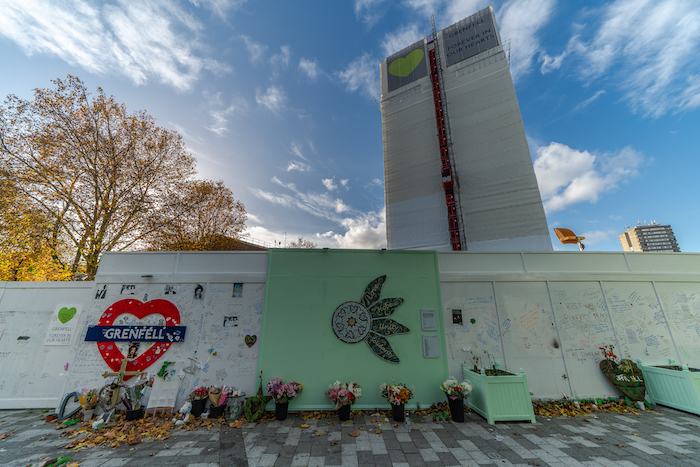
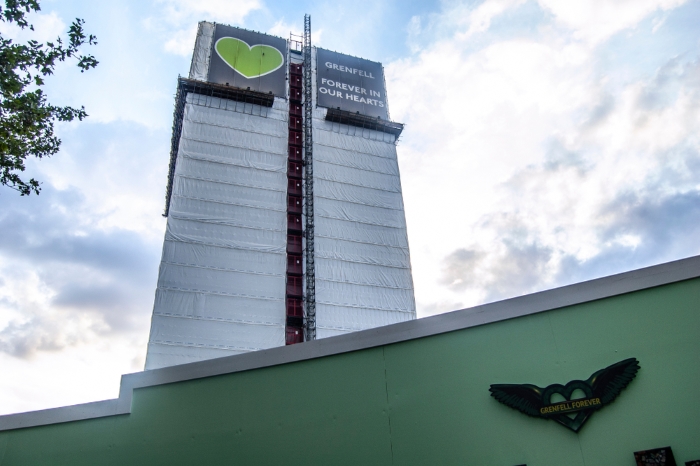
Grenfell Tower commemorations

The course will ensure professionals can:

  • Identify and interpret effective information required for inspections from stakeholders
  • Undertake the inspection process and intrusive inspection processes
  • Assess an external wall system including the materials, construction and their fire safety performance
  • Understand the fire risk presented by external wall materials and systems
  • Define the scope of work effectively through contracts and terms of engagement when taking instructions
  • Identify the legal framework and key standards affecting fire safety, and legal liability
  • Prepare a comprehensive report with recommendations

RICS CEO Sean Tompkins said:

“We recognise the acute market shortage of fire engineers to carry out EWS1 assessments and welcome the Government’s support to upskilling other regulated professions, such as Chartered Surveyors, to create additional capacity in the market.”

RICS will also work with Government and industry to address the ongoing concerns about the availability of professional indemnity insurance (PII) which will be an essential element to deliver the number of trained professionals across the UK

CSL innovations nominated for Security & Fire Excellence Awards

CSL have announced that two of their latest innovations have been chosen as finalists for this year’s prestigious Security & Fire Excellence Awards! CSL Live (including the My Base App) and DualCom Pro were both chosen for the coveted prize.

DualCom Pro offers Installers easier, faster installation of professional signalling systems with even greater resilience. Available as a single path Radio option (DigiAir Pro) or dual path Radio/Radio or LAN/Radio (GradeShift Pro). Each DualCom Pro variant utilises 4G Roaming WorldSIMs and is compatible with CSL Live our new device management portal and App.

In combination with the DualCom Pro Range, they launched CSL Live and the My Base App – the brand-new device management portal and App. Both the portal and App allow Installers to view, commission and configure DualCom Pro devices securely allowing them to identify issues quickly and pro-actively to support end-users.

The Security & Fire Excellence Awards will not be run in a face to face event format, instead, the virtual awards will take place on Wednesday 25 November 2020.

Click here for the full list of finalists. 

Recipients of Top Gun Awards announced

Fire protection, life safety and security industry leader Telgian have announced the recipients of the company’s annual Top Gun Awards. The winner for the Telgian Fire Safety business unit was Steve Goyette, Vice President of Business Development.

“While I’m thankful to have won Telgian’s Top Gun award, it is not possible to accomplish without the fantastic efforts put forth by the colleagues I work with in our Sales group and the thorough and dedicated personnel on the Operations side,” says Goyette. “They are the ones delivering for our customers every day, and it takes a team effort for Telgian to be successful overall.” 

Although the Top Gun Awards recognize top performing company sales for the year, “Steve Goyette does not just “make sales,” explains Telgian Executive Chairman Russell Leavitt. “He does it the right way — with integrity and honor.”

Goyette, currently the Vice President of Business Development for Telgian Fire Safety, has over 30 years of experience in fire protection design and consulting for numerous industries.  He is a Certified Fire Protection Specialist (CFPS), as well as Level III NICET certified in Automatic Sprinkler System Layout.

Emergency Services Show 2021 to run in September

The Emergency Services Show 2021 will return to its traditional September slot next year at the NEC, Birmingham. It was orginally due to take place in April.

The event will run alongside the Fire Safety Event, Security Event as well as the Health and Safety installment.

Free-to-attend, The Emergency Services Show features more than 450 exhibiting companies including leading names in search and rescue, extrication, training, protective clothing and uniforms, medical equipment, vehicles and fleet, vehicle equipment, outsourcing and safety.

New technology on display will include connected vehicles that serve as mobile communications hubs, satellite communications, ruggedised mobile computers, tablets and phones, data, cloud storage, wearable tech, connectivity, UAVs/drones, hybrid and electric vehicles, body-worn cameras and other video capture systems.

Among more than 50 organisations exhibiting for the first time in 2021 are Linkwave Technologies, Bullitt Group, Halo Technologies and BiTEA.

With COVID limiting opportunities for face-to-face training, Virtual Reality technology is also set to feature strongly, as is the use of other online technologies like Zoom and Microsoft Teams for training.

Enabling ICT applications being showcased include control room systems, data management, mobile apps for emergency service and public use and the multiple technologies now being used to speed and aid collaboration.

The Emergency Services Show 2021 will for the first time be co-located with The Fire Safety Event, The Health & Safety Event, The Security Event & The Facilities Event, creating the UK’s largest event dedicated to the protection of people, places and assets.

The Emergency Services Show is working closely with the NEC to ensure visitors enjoy a safe and secure visit, in line with the event industry’s All Secure Standard risk-assessment-based framework of COVID-19 secure industry best practice and guidance.

The NEC Venue Protect programme has put in place comprehensive social distancing measures and enhanced cleaning and sanitisation and supports testing and tracing.

To minimise contact and ensure smooth and efficient entry flows, all visitors are required to register in advance for free entry and free parking at: www.emergencyuk.com