Telgian to host “Maintaining Fire Protection Systems Post-COVID” webinar

Telgian’s Tom Parrish, SET, CFPS, PSP will present the “Maintaining Fire Protection Systems in Buildings Post-COVID” webinar on December 8, 2020 12:30 pm CST. This webinar is one of a six-part series on fire safety hosted by the Academic Facility Council, which is part of the International Facility Management Association (IFMA). The Academic Facilities Council offers facility managers and space planners essential resources to help them conquer the many unique challenges encountered each day while managing facilities, such as maintaining fire protection systems in buildings post-COVID.

The National Fire Protection Association (NFPA) standards and state-adopted fire codes require periodic inspections and testing to ensure systems will operate if required. During this webinar, Parrish will present an overview of the importance of maintaining code compliance regarding life safety systems, even during a pandemic. In this session, he will introduce alternative scheduling that may help facilities maintain compliance.

In addition, Parrish will address utilization of facility personnel while conducting tests and inspection activities. The presentation will also cover some of the key points of communications that are required to ensure smooth transitions as facilities endure a variety of different changes.

As a 25+ year veteran fire protection presenter, Parrish is uniquely qualified to conduct the “Maintaining Fire Protection Systems in Buildings Post-COVID” webinar. In addition to his role at Vice President of fire protection, life safety and security industry firm Telgian, Parrish is also the current Fire Marshal for Putnam Township Michigan.

Parrish also serves on several National Fire Protection Association (NFPA) technical committees including NFPA 72 Signaling Systems for the Protection of Life and Property and Emergency Communications Systems. And, he is the Vice President of the Automatic Fire Alarm Association (AFAA), the foremost industry advocate organization dedicated to improving the quality, reliability and value of fire and life safety systems.

His professional credentials include Level IV NICET Certified Fire Alarm Technician, Level III NICET Inspections and Testing, Certified Fire Protection Specialist and Master Electrician.

To review other webinars in the series such as “Ever-Changing Sprinkler and Suppression Technologies and Codes,” “Investment Protection – Costs, Corrosion, and Life Expectancy,” and “Remote Access and Automation in Fire Protection Systems” or to register for the “Maintaining Fire Protection Systems in Buildings Post-COVID” webinar, please visit IFMA.
NFPA Faces of Fire campaign highlights firefighter safety

The National Fire Protection Association (NFPA) and the Phoenix Society for Burn Survivors have introduced the latest video interview in their six-part campaign series, Faces of Fire/Electrical, which features personal stories of people impacted by electrical incidents, demonstrating the need for continued education and awareness about electrical hazards in the workplace and at home.

Luis Nevarez, a division chief in the City of Tulare Fire Department in California, is the fourth video interview in the campaign. While responding to a call as a firefighter in 2002, Nevarez accidentally touched a hidden 12,000-volt line while breaking a limb off a smoldering tree. The incident caused severe burn injuries, which resulted in the amputation of his left forearm. Nevarez spent 35 days in the hospital following his accident, and months recovering from his injuries.

According to the latest U.S. Firefighter Injury Report from NFPA, an estimated 58,250 firefighter injuries occurred in the line of duty in 2018; more than 4,000 injuries happened while responding to or returning from an incident. Firefighters were also more likely to be injured at fireground operations (nearly 23,000 injuries) than at other types of duties. Although the majority of firefighter injuries are minor, a significant number are often debilitating and career ending. The cost of firefighter injuries is estimated to range between $1.6 and $5.9 billion annually.

“Exposure to electricity can pose a real injury risk to non-electrical workers, including firefighters operating at emergency scenes,” said Lorraine Carli, NFPA’s vice president of Outreach and Advocacy. “The Faces of Fire/Electrical campaign reminds us that gaps still exist in the understanding and treatment of electrical hazards in the workplace, including the fireground.”

Contrary to the belief that electrical dangers are present only at vehicle accidents or structure fires, electrical lines can present safety risks in nearly every fire and emergency situation. The warning signs, however, are not always visible that allow firefighters to recognize the dangers. Through more systemic change including training and education about the electrical hazards firefighters face while on call, they can be better equipped to identify the warnings early and reduce their risk of injuries from electricity, including treating all electrical lines and components as live until such time they are deemed safe.

Faces of Fire/Electrical features six personal stories of electrical burn survivors whose lives have been forever altered and how more understanding, training, and a change in work culture could have significantly impacted these outcomes. Woven into these stories of resilience is an additional interview with a physician dedicated to the complete physical and emotional healing of patients suffering from a burn injury. Through these video interviews, written profiles, and related information, Faces of Fire/Electrical is a resource for electrical and non-electrical workers, and the general public to learn more about the importance of electrical safety.

While many electrical injuries prove fatal, those that are not can be particularly debilitating, oftentimes involving complicated recoveries and lasting emotional and physical impact. The Faces of Fire/Electrical campaign ultimately works to help build a safer world by teaching others and supporting the burn survivor community in advancing lifelong healing, optimal recovery, and burn and injury prevention.

Since his injury, Nevarez trained his way back to full-duty firefighter status and later division chief; he continues to advocate for workplace safety for members of the fire service.

Visit www.nfpa.org/facesoffire each month to watch the videos. Free resources are now available to download and share, and additional information about the Faces of Fire/Electrical campaign can be found on NFPA’s website.

Is Covid-19 affecting safety procedures?

While the pandemic has altered many aspects of ‘routine operations’, businesses must be careful that any changes have not had a detrimental impact on fire safety.

From office-based premises, through to independent retailers and service providers, it continues to be crucially important to keep staff, visitors and assets safe.

Dakota Murphey explores some of the ways that COVID-19 has affected fire safety procedures at smaller businesses, many of who may not have dedicated safety officials, and what they need to consider upon reassessment.

The first thing to note regarding fire safety at small businesses is that you must not assume that due to the change in circumstances as a result of the COVID-19 pandemic that this excuses you from your obligations.

Support continues to be available, with fire safety professionals being considered ‘key’ or ‘critical’ workers early on in the first UK lockdown.

“Due to these unprecedented circumstances,” says Tony Clark, Managing Director of EFL Fire and Security, “we have adopted measures to ensure we can still provide essential services in line with government guidelines to new and existing customers.”

It is essential that you continue with your fire safety requirements as normal, with all testing and maintenance regarding fire safety equipment must continue.

If your business has changed anything regarding fire safety services, such as putting off inspections of fire extinguishers or cancelling maintenance of fire alarm systems, citing COVID-19 as your reason for doing so, this needs to be changed.

The closing of premises

It might seem like if you have closed up your premises due to the coronavirus pandemic, that it minimises the fire risk at your property. However, this is not the case, and even empty premises have issues that small businesses need to consider.

The first thing to note is that businesses need to ensure that their empty premises have clear entrances and exits and that excessive amounts of stock or supplies are not being stored in an unsafe manner.

Additionally, it is up to companies to make sure that they are not leaving electrical devices turned on or even plugged in.

It could be a great idea to install a connected fire alarm system that automatically alerts the fire services, or even one that provides real-time monitoring updates on an app or web portal that can be accessed remotely.

And, it is also worth noting that empty buildings are at a potentially greater risk of arson attacks, so measures should be put in place to minimise this possibility.

This could include the installation of CCTV systems that can be remotely monitored, as well as acting as a deterrent – especially useful if you don’t have access to guarding services to provide protection.

Alterations to buildings

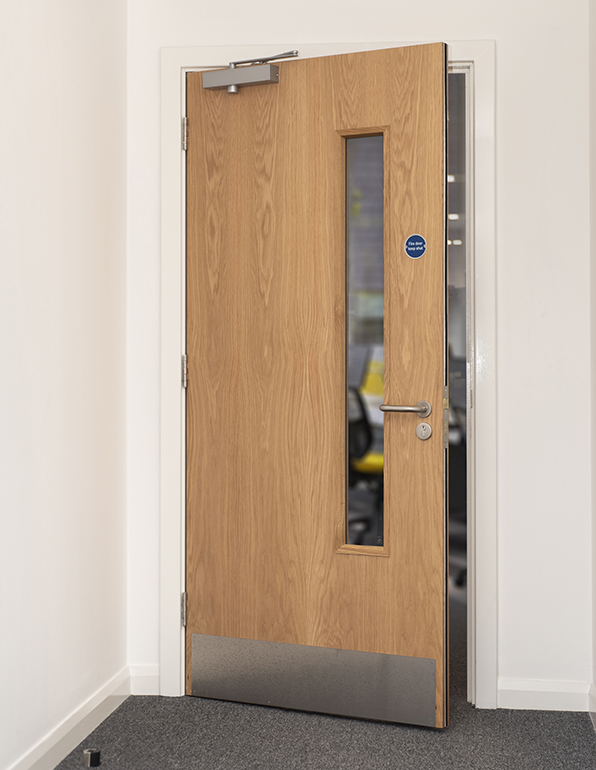
FireDoor-FDSW-20-232x300

For those small businesses that have been able to remain operational and not had to close, buildings may have been altered to adapt to the changing health and safety government guidelines, such as social distancing measures.

Examples may include the wedging open of fire doors in order to remove the need to open doors by touch, or the sealing off of doors that were previously part of the fastest route out of the building.

In such cases, businesses need to ensure that they reassess their fire and emergency evacuation procedures, to ensure potential issues are spotted before it is too late.

For example, if certain doors that were previously a part of the fastest fire exit are now closed, this needs to be made clear, and a new fast fire exit route should be created to ensure that no-one is put at risk.

In any case, businesses need to be aware that practical changes that have been made as a result of the pandemic can have an effect on fire safety. Perhaps the building’s occupants have changed, with the previous fire safety officer working from home indefinitely, and so a new employee needs training, for instance.

Reassessing fire safety requirements

Undoubtedly one of the most important things to say here is that small businesses clearly need to take this time to reassess fire safety requirements.

It is up to all SMEs – whether they believe they have been changed or not – to carry out fire risk assessments that take into account the range of new circumstances.

When anything changes at a business, fire safety precautions and procedures have the potential to be affected. SMEs still have a duty of care to take everyone involved protected against the risk of fire – so all small businesses should carry out new fire risk assessments as a priority.

For example, have you considered that if your business remains open while others close you may see a spike in demand? Greater footfall at the business premises can necessitate re-thinking scenarios and establishing new emergency plans.

Whether a small business has closed its doors temporarily or it has had to modify its behaviour to stay in line with government regulations, it will need to reassess whether its previous fire safety procedures remain relevant to the circumstances.

Investing in emergency response

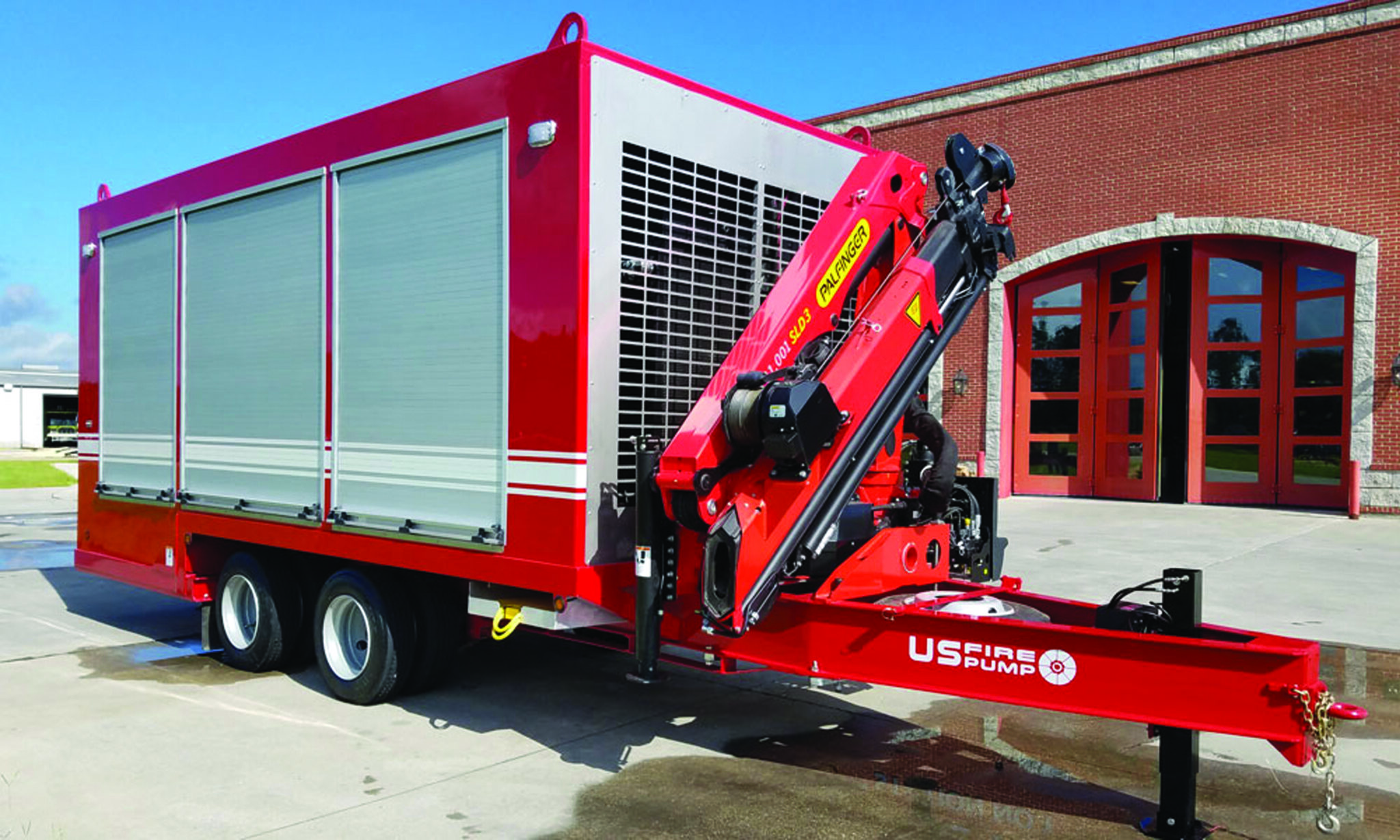
With the ability to respond globally to catastrophic fire events, US Fire Pump has quickly become one of the world leaders in Emergency Response. 

The company can mobilise Emergency Response teams and flow more than 100,000 gallons per minute with its standby equipment, something they have worked extremely hard to achieve. 

This equipment on standby consists of Submersible pumps, Boost pumps, Dry Chemical trailers, Direct Foam Injection units, Firetrucks, and the ability to deploy over 6 miles of industrial large diameter hose for challenging water scenarios. 

Emergency Response

US Fire Pump has also strategically stored foam in 6 locations across the Globe. From the locations, the United States, Europe, the Middle East, and Asia can be served.  

Emergency Response experts

Boosting an already robust array of equipment, the company also employs over 60 Industrial Firefighters ready to respond when duty calls. US Fire Pump’s Industrial Fire Fighting Specialists consist of experts who have a wide field of experience from flammable liquid bulk storage, flammable/combustible gas bulk storage to onboard ship firefighting. 

Additionally, US Fire Pump’s Haz Mat Specialists allow their teams to be prepared for the hazardous materials so often encountered in the field and during post extinguishment operations. 

Chris Ferrara-President/CEO US Fire Pump states, “US Fire Pump has made a conscience investment in our Emergency Response assets. No two emergency incidents are alike, and equipment needs vary widely.

“For instance, on a response we recently were called to, the water source was more than 1.5 miles away. With our 10,000 gallon per minute submersible pump and boost pumps we were able to lay 12” hose at 1.5 miles to achieve suppression. 

“Coincidentally, during that event we were called to a second emergency response in a different State. Because of our inventory of equipment, we were able to deploy the needed resources and assist the customer in their efforts…again while simultaneously fully involved in another major event. 

“This is why it’s important to invest in your equipment and take the approach that We can never have enough equipment for emergency response.” 

In the last two years alone, the company has responded and successfully extinguished the largest fire events the United States has seen in decades. 

Outside of the United States, US Fire Pump has also been called upon to advise and respond to emergency operations and has done so with success. In the event of an emergency, US Fire Pump can be the resource needed to assist. For 24/7 assistance call their emergency hotline at +1-225-209-6551.  

Breakthrough testing for Wrightstyle

Chris Peters, chief design manager,Wrightstyle, on a breakthrough fire test for the company.

Over the years, we have prided ourselves on our ability to understand changing market demands and innovate to meet those new requirements.

For example, we were the first company internationally to successfully develop a round opening fire-rated window.

More recently, we were the first company to develop unlatched fire doors, openable in either direction.

Worldwide, our systems regularly have project-specific fire tests, ensuring that everything we do meets the highest specifications.

Our design and testing programmes have consistently pushed boundaries to meet increasingly-stringent performance targets.  In the process, our aim is to make the built environment just a little bit safer.

This month we are delighted to have achieved another milestone fire test with international significance.

SCHOTT

The test was on our WSL SR60 curtain wall framing system, in partnership with SCHOTT PYRANOVA® 120 glass to 148 minutes integrity and insulation.

However, the test was carried out with the exterior building surface facing into the furnace.  This made the test significantly more demanding on the system components.

It makes the Wrightstyle system an ideal solution in places where a high level of integrity and insulation is required.  This might be, for example, in atriums, fire escapes and between buildings, or as a fire break between different areas of a building.

The system also provides a tested advantage to provide fire protection between higher risk areas such as car parks and workshops and lower risk areas such as offices and a building’s reception.

A good example of multi-directional compartmentation would be to provide a fire break between a supermarket and its underground car park.  We have been involved in such projects.

We are also seeing more demand from the export market for this higher specification curtain walling.  More and more, specifiers are designing in compartments with a fire risk from either side of the glass.

The test is an excellent result for our SR60 curtain walling system.  It further underlines the quality and high performance offered by our systems.

It’s why our high-performance systems can be found across the UK, and from the USA to New Zealand.  Contract completions in the past few weeks have been in the Kingdom of Jordan, for a new tourist village, and Hong Kong, for a flagship museum of art.

Performance

In addition to adding further test evidence to an already comprehensive list, the test incorporated steel spandrel panels.  This makes it one of the first alternative infill options to achieve two hours of integrity and insulation performance.

The SR60 system is also fully weather certified being a gasket glazed system.  This is an enormous advance on more commonly-used tape glazed system.  It can also be installed internally or externally.

Spandrel panels can have both a functional and aesthetic purpose.  Generally, they have to meet thermal, acoustic, fire performance and moisture requirements.

The target performance for the Wrightstyle test was EI120 (120 minutes integrity and insulation).  The test ran for a period of 148 minutes, exceeding the criteria for a pass by 23%.  This significant overrun is rare in high performance tests.

Full furnace temperature was achieved after some 60 minutes into the test, with a peak temperature of 1050 degrees C.

The test module size was three metres by three metres and the test was jointly carried out with SCHOTT Technical Glass Solutions GmbH.  SCHOTT is one of the world’s leading speciality glass manufacturers.

It was kind of Helmut Kugelmann, Sales Director for Fire Resistant and Security Glazing at SCHOTT, to say that, “SCHOTT were very happy to work with Wrightstyle on this fire test and look forward to further cooperation, in developing the worldwide demand for fully tested safe solutions that exceed local building code requirements.”

This latest test also gives Wrightstyle renewal of a full global assessment and fresh test evidence to underline the capabilities of the system.

It will therefore give architects and specifiers renewed confidence in the WSL SR60 system, allowing them to push the boundaries of what can be achieved with absolute fire safety.

Originally posted on Wrightstyle website

Olympia Electronics acquire BSI certification

Olympia Electronics S.A. have acquired a certificate from the European reputable BSI quality certification laboratory for the SPOT LIGHT series. These self-tested luminaires are ideal for various architectural projects such us hotels, shopping malls, skyscrapers, etc.

The decision of strengthening the certification process for our products, constitutes our top strategic upgrade choice. All the certifications, are the “key” to the competitive advantage Olympia Electronics S.A. has, and resembles the one-way to the increase of  its extroversion.

With exports to more than 72 countries and its primary target quality, the company has adopted production and control procedures in recent years, which have resulted in the market for products that are fully compliant with European standards (EN). Most of its products have certificates from various laboratories such as LPCB, LLOYD’S, BSI, HEEQAC, EVPU, etc.

UL celebrate 100 year milestone

UL, a leading global safety science company, officially marks its 100th anniversary in Canada this year. Initially established in Toronto by UL founder, William H. Merrill, to test the safety of appliances and other household devices, UL in Canada has grown over the past century to now employ more than 275 engineers, technicians and administrative staff at its nine facilities throughout Canada in Toronto, Edmonton, Mississauga, Montreal, Ottawa and Vancouver.

Today, as a leading, trusted science-based safety, security and sustainability partner, UL continues to help companies bring safer products to Canadian and global marketplaces. As Canada’s industries have grown, changed and innovated, UL has evolved from focusing on fire safety testing to include construction and engineering, energy and utilities, life safety and security as well as legal cannabis.

“For the past 100 years, UL has helped advance the possibilities of today while safeguarding the unknowns of tomorrow,” said Joseph Hosey, country manager for UL in Canada. “As our customers have innovated to succeed in their own industries, we too have innovated our proven scientific processes and solutions to drive positive changes.”

Developing solutions for local or regional needs within Canada is key to UL’s success.  Recent advances include:

In 2017, UL acquired CLEB, a Montreal-based building envelope and building sciences service provider to increase building science services that included building envelope testing, building forensics, field testing and building system commissioning for architects, building owners and manufacturers.

In 2018, Canada was the first country to federally legalize recreational cannabis. UL saw the need for safety services with this new and unregulated industry and looks to lead the development of industry guidelines and recommendation to address the safety, security and sustainability of facilities and operations in the legal cannabis industry. UL recently partnered with the Standards Council of Canada (SCC) to host an international workshop agreement through the International Organization for Standardization (ISO) to further define industry guidelines.

Canada is a leader in providing energy safety solutions, not just to Canadian consumers but around the globe. In 2019, UL opened a new office in Edmonton, Alberta, to provide local support to the country’s energy hub.  The location offers collaborative safety solutions for market demand today with a vision toward supporting the new, sustainable energy solutions of the future.

Over the past year, facing challenges brought on by COVID-19, UL continued to help customers in Canada test the safety, security, performance and sustainability of their products.  The company shifted key parts of its business to a virtual model, including remote inspections, audits and witness testing, to compensate for modified working arrangements in order to keep its employees as well as its customers safe.

“We swiftly mobilized our resources to support customers during this challenging time. It’s less invasive to our customers’ operations, and we can still deliver best-in-class services to our customers regardless where they are,” Hosey said.

As UL focuses on the next 100 years, it looks to continue to help support customer growth by partnering with innovators in Canada to discover new possibilities and deliver what matters – safety, security and sustainability.

“Canada has a lot to be proud of, now and in the future,” said Sajeev Jesudas, international president, UL. “UL is committed to its customers, and we’re here to help with challenges big or small. Whether it’s research and development, manufacturing automation or supply chain complexity, our customers can draw from the knowledge of our highly competent local teams.”

For more information about the UL in Canada, please visit Canada.UL.com.

Oil field fire extinguished after 6 months

Officials have claimed an oil well in India has finally been extinguished, nearly six months after it started.

The fire in Assam, Northern India, was the result of an explosion in an oil field which killed two company employees in June.

There were complications in extinguishing the fire as huge amounts of gas began to come out of the well.

The blaze forced thousands of locals to flee the area, and many are yet to return due to the damage caused to their property.

Protests against oil field owner

A criminal investigation is now underway to determine the cause of the blowout. as well as the handling of the incident in the weeks after the explosion.

Protests against OIL are still held in the region but rarely evoke political outrage. Social media, though, has been abuzz with photographs and videos of the raging fire at the Baghjan oil well. The fire has caused massive loss to environment and wildlife besides causing huge losses to property in the nearby habitation, causing many more people to be displaced from their homes.

A committee set up by the National Green Tribunal (NGT) has reported that the Baghjan oil well and 26 others were being operated illegally in Assam. The NGT is headed by former Supreme Court judge Justice AK Goel.

The body had set up a committee under former judge BP Katakey to look into Baghjan fire incident. The Katakey committee has found that these oil wells did not have mandatory environmental clearance.

The final report of the NGT committee is likely next month

Paul Pope re-elected to main board of Fire Industry Association (FIA)

Global Fire Equipment have announced that its Global Business Development Director, Paul Pope Eng.Tech AIFireE, has been re-elected to the main board of the Fire Industry Association (FIA). This is Paul’s third consecutive term on the board.

Paul was also elected as Vice Chair of the FIA’s Fire Detection and Alarm Council which represents manufacturers and suppliers of fire detection and alarm equipment. In addition, Paul remains the Vice Chair of the Service Council and has also been appointed to a new position on the FIA’s Export Council.

Paul Pope comments: “As someone who is firmly committed to improving standards within the fire safety sector, I am thrilled to have been re-elected to the FIA’s main board and appointed as Vice Chair of the Fire Detection and Alarm Council. I am also very pleased to have been elected to the Export Council for the first time, particularly at such an important time for the sector with Brexit fast approaching.”

Paul has previously sat on the FIA’s main board for four years and has been involved in the Fire Detection and Alarm Council for more than 12 years.

Bureau Veritas to host fire safety awareness week

Bureau Veritas is hosting a Fire Safety Awareness Week on 23 – 27 November, packed with initiatives and information relating to our fire safety services for organisations across all sectors.

Although there has been a downwards trend in the number of fires and fire casualties in recent years thanks to improved standards and safety awareness, there remains a risk from fire in UK buildings. Government figures show that there were 318 fire-related fatalities in Great Britain during 2018/19, including 215 deaths in domestic properties.

Our services span Building Control, Fire Engineering, Fire Risk Assessments and Fire Science, working with organisations to reduce risks and provide expert evaluation and management services in the event of fire.

The Fire Safety Awareness Week will include live webinars, new videos, a Q&A session with experts from the Bureau Veritas and a host of information across our website and social to support fire safety. We’ll also be showcasing some of our key projects, working with clients to deliver invaluable fire safety services.

Andy Lowe training and technical director for Bureau Veritas, said: “Fire safety is critical through all stages of building design, construction and operation, and safety awareness is the first step towards reduced risk.”

“We have planned a busy week of activities across webinars, social media and our website, linking back to our extensive range of fire safety services. There will be opportunities to learn from the Bureau Veritas team, ask questions and take in a wealth of advice and information, covering Building Control, Fire Risk Assessments, Fire Science, Fire Engineering and more.”

The Bureau Veritas Fire Safety Awareness Week includes:

  • Monday 23 November: Building Regulations day, including Approved Document B fire safety live webinar (register here)
  • Tuesday 24 November: Fire Engineering day, including new Behind the Project video
  • Wednesday 25 November: Fire Risk Assessment day, details on fire risk assessment safety and compliance and expert insight (register here)
  • Thursday 26 November: Fire Science day, including Safety at Christmas video and Fire Science Behind the Project profile
  • Friday 27 November: Building Safety Bill day, including Safety Regulator Golden Thread live webinar (register here)
  • Friday 27 November: Q&A session with Bureau Veritas experts (register here).

Keep an eye on our social media too for live updates and information across Twitter and LinkedIn.