Understanding fire alarm diagnostic systems

Advanced’s Technical Support Manager, Paul Duffy, gives his insight into the diagnostic features of fire panels that can save you time, money and hassle…

Fire detection and alarm systems are increasingly complex and sophisticated, benefiting from cutting-edge digital technology. As a fire alarm engineer installing, servicing and/or commissioning such technology, it can be hard to keep on top of your electrical skills and the latest regulations / local installation standards, let alone the many different panels’ features.  

Any given day could see the typical fire engineer conducting a wide range of differing tasks – from diagnosing and remedying open/short circuits, earth or intermittent faults, to commissioning a new networked system in line with standards and project specification.

Despite many fire engineers being highly trained, skilled and experienced, without the right tools at their disposal the process of undertaking these routine tasks can be challenging and time-consuming.
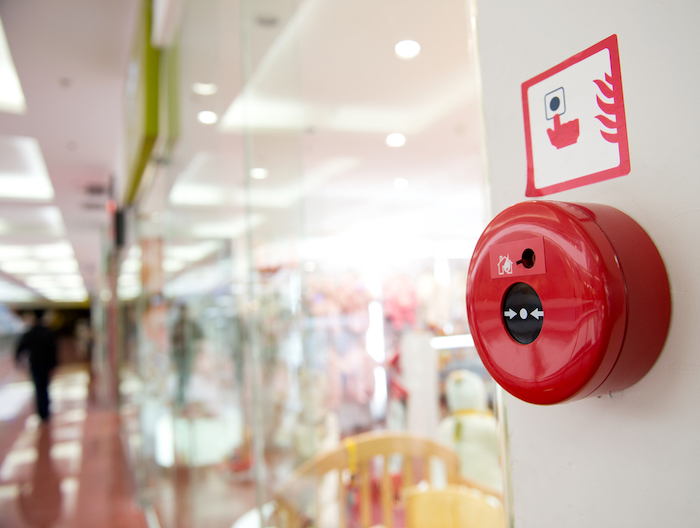
fire alarms

Thankfully, the features of today’s fire panels offer tangible benefits to engineers and end users alike, by delivering versatility, ease of use and time-saving capabilities that were previously unavailable.

Standard logging versus trace-logging

Upon arriving at a site with a suspected system fault, one of the first things to do to troubleshoot the problem is refer to the fire panel’s log. In this state, a high-quality system can quickly flag any system faults – within seconds in some cases.

Although useful, standard logging gives only one part of the picture and provides minimal help in cases where the cause of the problem is not straightforward.

Trace-logging mode is a feature of some modern fire panels that lets users see a more complete log of a fire system’s events covering the standard fire, faults, alarms and pre alarms as well as more advanced diagnostic reports on corrupt data and device interrupts. This more detailed view of all the faults on a system can radically reduce the time it takes to establish the true cause of the problem, allowing you to implement a quick, effective remedy.

Another important factor to consider is how easy the panel’s menus are to navigate – and some interfaces prove easier to use than others. Advanced’s trace-logging mode has been developed with the engineer in mind. The need to navigate and decipher options from complicated menu structures has been removed. In addition, the data is delivered in easy-to-understand format to help minimise the risk of misinterpreting information and enabling you to diagnose problems with greater accuracy.

The process of fault-finding can be significantly more difficult when working with a fire alarm control panel that doesn’t feature a diagnostic logging mode. These panels may register a number of intermittent faults coming and going, but not necessarily offer any further traceability to these events. Commonly where a fire panel has a limited ability to trace a fault, issues within a system can go un-remedied for long periods of time, placing the safety of occupants within a building or a site at risk.

Some fire systems give you the ability to transfer the panel’s event log to a PC where you can then use software, such as the Service Tool on Advanced’s MxPro panels, to drill down into specific events and information. Integrated software allows you to easily identify particular devices that are returning corrupt messages, and even lets you predict when faults are likely to occur. Once a problematic device or area has been identified, you are then able to investigate.

The oscilloscope

An oscilloscope is a vital tool when commonly dealing with the installation, commissioning and maintenance of fire systems. A scope reading can help diagnose faults by identifying the areas of a site where problems are coming from.

In cases where you are working across large sites – such as university campuses, tall buildings or hospital settings – identifying disturbances on a loop can prove labour-intensive and time-consuming. Carrying additional equipment through multiple departments, floors or wings of a development in order to set up at a different panel each time, makes the job of pinpointing faults more taxing.

An oscilloscope, built in to the fire alarm control panel, will not only relieve you of having to carry around additional equipment, but also provides a graphical representation of the signalling voltages/currents and waveforms on the display. In this way, you get a detailed view of the loop operational conditions which can’t be seen using multimeters or volt meters.  

As the only intelligent addressable fire alarm control panel in the world to offer an onboard oscilloscope, Advanced’s MxPro 5 provides readings from any loop at the panel, making it easy to identify forms of noise that may be causing faults. The oscilloscope feature also lets you easily use trigger-addresses from the loop to identify issues and investigate – a particularly useful feature on large sites with multiple panel networks.

The multimeter

A high-performance fire panel will provide you with powerful tools that enable you to quickly and efficiently access information in order to make key decisions. A multimeter is an instrument designed to take precise measurements of electric current, voltage and usually resistance across the system.

On a well-designed system, all devices have the optimum voltage in order to be able to communicate back to the panel. However, if that voltage drops below a certain level, devices can drop off the system or report intermittent faults.

Uniquely, Advanced’s MxPro 5 fire alarm control panels come with an in-built multimeter designed to measure all voltages and currents across the fire alarm system. For engineers, a multimeter within the fire panel makes it easy to identify voltage/current levels in real time without needing to set up a portable multimeter or probing circuits, which speeds up the commissioning process.

Network diagnostics

In large-scale sites, a network of fire panels is the most effective means of protecting life and property. Where a networked system is installed, the most common installation problems are open/short circuit conditions, reversals in wiring or poor termination.

An effective network diagnostics tool, such as that within Advanced’s MxPro control panels allows you to view all CIE node status and access levels in real time. In levels 1 and 2 the CIE will be operating in normal condition, whereas in level 3 the CIE will be in commissioning. In this level the control panel will be isolated while work takes place, preventing fires and faults from being transmitted across the network.

In addition, the network diagnostic tool has been developed to identify reverse ring faults in systems that consist of one or more fibre optic links, something that is increasingly common across installations.

Conclusion – what next for diagnostics?

Understanding the tools and built-in features of the fire panel that effectively help fire engineers to install, commission, diagnose faults and repair a system can save significant time and money. This knowledge in turn helps to ensure the long-term safety of occupants within a building.

As technology evolves, and the fire panel continues to develop, Advanced predicts that we will continue to see a trend towards more digitally-driven products and remote services. These will provide commissioning engineers and system integrators with a more global view of the systems they’re responsible for servicing and maintaining.

As the fire industry moves increasingly towards cloud communications and data analytics, the automatic generation of service reports, the remote control of panels and the ability to put zones in and out of test from a web / mobile app will likely become commonplace. These developments will see systems becoming smarter than we’ve ever seen before.

Emergency Services Show to focus on adapting to Covid-19

Transformational change in the emergency services, driven by the challenges presented by COVID-19 and the fast pace of technical innovation being introduced to the sector, is set to be a major theme of The Emergency Services Show, which returns to Hall 5 and the outdoor area at the NEC, Birmingham from 27 to 28 April 2021.

“While it’s too early to fully assess the impacts of COVID on the emergency services, the pandemic has unquestionably been an unprecedented driver for change,” says ESS Event Director David Brown.

“The Emergency Services Show uniquely brings together the many and diverse ways in which emergency services, their partners and supply chain are adapting during the pandemic.

It’s the one place where you can see the latest equipment, explore innovative technologies, share experiences, exchange best practice and learn from each other.”

The show has launched a new feature: Future Policing, supported by an Advisory Council chaired by Lord Hogan-Howe, the former Commissioner of the Metropolitan Police Service.

Showcasing the latest innovations available for the police sector and sponsored by Audax, Future Policing has the full backing of the Police Federation of England and Wales and will feature a two-day, CPD-accredited high-level conference with a line-up of senior speakers.

Emergency Services Show

Health & Wellbeing is the exclusive focus of one of the show’s four dedicated CPD-accredited seminar theatres, alongside Lessons Learnt and Emerging Technologies.

The fourth seminar theatre due to be announced later this year will focus on one of the fastest growing areas of innovation in the emergency services sector.

Health & Wellbeing topics explored will include tackling historically neglected health and safety issues and the unique mental health challenges facing the emergency services working under COVID.

The Emerging Technologies seminar theatre will showcase how the emergency services can use data and technology more efficiently, including overcoming the organisational challenges presented by the pandemic.

The ever-popular College of Paramedics CPD seminars are also set to return with highly topical programme of 30-minute workshops.

Emergency Services Show will be free to attend

Free-to-attend, The Emergency Services Show features more than 450 exhibiting companies including leading names in search and rescue, extrication, training, protective clothing and uniforms, medical equipment, vehicles and fleet, vehicle equipment, outsourcing and safety.

New technology on display will include connected vehicles that serve as mobile communications hubs, satellite communications, ruggedised mobile computers, tablets and phones, data, cloud storage, wearable tech, connectivity, UAVs/drones, hybrid and electric vehicles, body-worn cameras and other video capture systems.

Among more than 50 organisations exhibiting for the first time in 2021 are Linkwave Technologies, Bullitt Group, Halo Technologies and BiTEA.

With COVID limiting opportunities for face-to-face training, Virtual Reality technology is also set to feature strongly, as is the use of other online technologies like Zoom and Microsoft Teams for training.

Enabling ICT applications being showcased include control room systems, data management, mobile apps for emergency service and public use and the multiple technologies now being used to speed and aid collaboration.

The Emergency Services Show 2021 will for the first time be co-located with The Fire Safety Event, The Health & Safety Event, The Security Event & The Facilities Event, creating the UK’s largest event dedicated to the protection of people, places and assets.

The Emergency Services Show is working closely with the NEC to ensure visitors enjoy a safe and secure visit, in line with the event industry’s All Secure Standard risk-assessment-based framework of COVID-19 secure industry best practice and guidance.

The NEC Venue Protect programme has put in place comprehensive social distancing measures and enhanced cleaning and sanitisation and supports testing and tracing.

To minimise contact and ensure smooth and efficient entry flows, all visitors are required to register in advance for free entry and free parking at: www.emergencyuk.com

Prioritising fire safety this Thanksgiving

The National Fire Protection Association (NFPA) is urging the public to make fire safety a priority when preparing this year’s Thanksgiving feast. The association’s latest Home Cooking Fires report shows that Thanksgiving is the peak day for U.S. home cooking fires followed by the day before Thanksgiving and Christmas Day.

According to the report, U.S. fire departments responded to an estimated 1,630 home cooking fires on Thanksgiving Day, three and half times an average day. Unattended cooking was by far the leading cause of associated fires and fire deaths. Cooking is the leading cause of U.S. home and home fire injuries year-round, and the second-leading cause of home fire deaths. 

“Thanksgiving often involves cooking multiple dishes at once, which can be particularly tricky with lots of distractions in and around the kitchen,” said Lorraine Carli, vice president of Outreach and Advocacy at NFPA. “From getting ready for guests and managing family needs to entertaining when everyone arrives – these types of activities make it all too easy to lose track of what’s cooking, and that’s where a lot of fires tend to happen.”

Make fire safety a when cooking

Carli notes that the pandemic may reduce the number of larger group gatherings in favor of smaller celebrations, which may mean more kitchens being used to cook Thanksgiving meals this year.

NFPA offers these tips and recommendations for safely cooking this Thanksgiving:

  • Never leave the kitchen while cooking on the stovetop. Some types of cooking, especially those that involve frying or sautéing with oil, need continuous attention.
  • When cooking a turkey, or other items in the oven, stay in your home and check on it regularly.
  • Set a timer on your stove or phone to keep track of cooking times, particularly for foods that require longer cook times.
  • Keep things that can catch fire like oven mitts, wooden utensils, food wrappers, and towels away from direct contact with the cooking area.
  • Avoid long sleeves and hanging fabrics that could come in contact with a heat source.
  • Always cook with a lid beside your pan. If you have a fire, slide the lid over the pan and turn off the burner. Do not remove the cover because the fire could start again. Let the pan cool for a long time. Never throw water or use a fire extinguisher on a grease fire.
  • For an oven fire, turn off the heat and keep the door closed. Only open the door once you’re confident the fire is completely out, standing to the side as you do. If you have any doubts or concerns, contact the fire department for assistance.
  • Keep children at least three feet away from the stove and areas where hot food or drink is being prepared or served. Steam or spills from these items can cause severe burns.

“The pandemic may limit the number of people in homes this year, but there will still be lots of the usual cooking and distractions that contribute to a sharp increase in cooking fires on and around Thanksgiving,” said Carli. “Being vigilant in the kitchen remains critical to ensuring a fire-safe holiday.”

In addition, NFPA strongly discourages the use of turkey fryers, as these can lead to severe burns, injuries, and property damage. For a safe alternative, NFPA recommends grocery stores, food retailers, and restaurants that sell deep-fried turkey.

For this release and other announcements about NFPA initiatives, research and resources, please visit the NFPA press room.

As all of us continue to navigate the evolving situation with COVID-19, NFPA remains committed to supporting you with the resources you need to minimise risk and help prevent loss, injuries, and death from fire, electrical, and other hazards. For information on NFPA’s response to the coronavirus, please visit our webpage.

UL to host virtual visiting day

The UL Firefighter Safety Research Institute (FSRI) is currently conducting a series of 20 full-scale, live fire experiments as part the “Study of Fire Service Residential Home Size-Up and Search & Rescue Operations” Assistance to Firefighters Grant supported research project.

The experiments are being conducted in two, identical, purpose-built residential structures constructed at the Delaware County (PA) Emergency Services Training Center. Each structure was designed to represent an approximately 1400 sq. ft. home with four bedroom, two baths, and an open-concept kitchen and living room. 

A highlight of UL FSRI’s full-scale experiments is their Visitor’s Day, where fire service professionals usually gather from across the U.S. to witness the research in person and interact with the team. Unfortunately, the global pandemic has led to a change in plans. To comply with the UL COVID-19 Safety Playbook, the UL FSRI Visitor Day will now be virtual on Saturday, November 21 via YouTube.

The live-stream on YouTube will begin at approximately 10:00am EST and will run for roughly 90 minutes. The stream will be hosted by UL FSRI Research Engineers who will take viewers on a virtual tour of the test site, experimental structure, and instrumentation. Prior to ignition there will be an on-site safety briefing. The stream will then transition to a multi-view screen showing the interior and exterior cameras during a full-scale living room experiment. The host will provide a narrative of the actions taking place and viewers will have the opportunity to ask questions via the YouTube chat box.

The schedule for the day is subject to change depending on weather conditions. If there are any connection issues with the live-stream, the recording will be available after the experiment. The link to view the experiment will be posted the day of. Follow UL FSRI on YouTubeFacebook, and Twitter for updates. 

To learn more about the event, click here

Scottish Council propose high rise building safety changes

West Dunbartonshire Council is seeking comments from the Scottish Government on a plan to introduce enhanced fire safety measures across the area’s high rise buildings.

The proposed programme of further enhancements, including upgrades to window panels in 11 blocks, as well as installation of sprinkler systems within waste rooms, fire detection measures added in all service areas, fire detectors and alarms in common areas and manual call points installed across all 19 of our properties, seek to exceed all current safety standards.

The new plan was developed following an enhanced Fire Safety Risk Assessment, which the council instructed to be undertaken by an external fire safety specialist. 

The proposed programme of works was discussed and agreed by members of the council’s Housing and Communities Committee last week.

The proposal will now be passed to the Scottish Government ministerial working group for comment on the different options outlined. Following this, the finalised plan will be considered at a future meeting of West Dunbartonshire Council.

It is anticipated that the proposed measures will mean the area’s existing high rise buildings match or exceed standards currently being developed by the Scottish Government for new build properties.

Members were told that in addition to physical safety enhancements, blocks have also seen changes in the management of buildings, with a designated officer responsible for each block and the Neighbourhood Team patrolling buildings in evenings and at weekends.

Councillor Diane Docherty, convener of housing and communities, said: “We want our residents to feel safe in their homes, and these proposed enhancements are designed to ensure our high rise flats are the safest they can possibly be.

“This will now be passed to the Scottish Government ministerial working group for their feedback before we progress this further.”

Councillor Caroline McAllister, vice convener of housing and communities, added: “It’s vital to reassure all tenants and residents that fire safety in our high rise blocks is of paramount importance.

Whilst we already comfortably meet the safety standards, as a landlord we believe it is important to enhance those standards where possible and the proposed measures will ensure the properties remain in high demand for decades to come.”

C-TEC’s Hush Pro BS 5839-6 to be installed at Oxygen Towers

C-TEC’s revolutionary Hush Pro BS 5839-6 Grade C domestic fire detection and alarm system has been chosen for three iconic tower block developments in Manchester.

Located in the centre of Piccadilly, Oxygen Towers is a striking set of three new 31-storey, 16-storey and 10-storey buildings consisting of 345 stylish 1, 2 and 3-bedroomed apartments and 12 spacious family townhouses.

Designed to provide the ultimate living experience, the futuristic ‘vertical village’ combines luxury accommodation with fabulous five-star leisure facilities including a swimming pool, cinema, gym and spa. The stunning development also features lush garden terraces and rooftop gardens.

Selected for its cutting-edge technology and capacity to align with the building’s fire strategy, Hush Pro will integrate with the site’s BS 5839 part 1 landlord system to offer higher levels of fire protection than the Grade D unmonitored battery alarm systems typically used in domestic installations. As a fully-monitored BS 5839 part 6 Grade C system, Hush Pro reports open and short circuit faults and operation faults back to the fire panel and even allows management and maintenance companies to remotely monitor the system.

Once the project is complete, each of the flats will feature an easily accessible low-level Hush Pro Controller connected to a series of Hush Pro smoke detectors, base sounders, multi-sensors and heat detectors all seamlessly interfaced to a powerful network of C-TEC 4-loop ZFP addressable fire control panels to provide all-encompassing fire and fault monitoring of the system.

If, for any reason, part of the domestic fire alarm is compromised, this will immediately be reported to the building management team to allow them to action the fault and re-instate full fire detection coverage to the flat.

Said John Blundell, Head of Solid State Living, the specialist fire company involved with the design and delivery of the project: “As well as enhancing the fire safety management, property and life protection of the buildings, a key factor in our client’s decision to invest in Hush Pro was the system’s ability to notify building management in the event of a real fire and, at the same time, its potential to virtually eliminate false alarms.”

“Hush Pro’s unique capacity to differentiate between Fire Level 1, usually a false alarm reported locally in the dwelling, and Fire Level 2, almost always a real alarm activated outside of the dwelling, reduces false fire alarms, unnecessary call-outs and the risk of a real fire alarm being ignored.

As our client requires immediate notification in the event of a fire but also first-class false alarm management, Hush Pro will prove ideal.”

“Also of vital importance to our client is that, as the project consists of private balconies with an open plan flat arrangement, Hush Pro is the only fire alarm solution that can actually meet the requirements of BS 9991 Annex D3.”

Said Jason Lawler, 24-7’s Group Director and the person responsible for delivering the electrical and mechanical systems for the project: “Hush Pro is an outstanding solution.

The system will provide residents with easy-to-use detection, alarm, silencing and test facilities so they can test their own devices, be alerted to system faults and hush any false alarms at the Hush Button which is positioned at light-switch level for safe and easy access. Hush Pro’s powerful false alarm management capability will also prove invaluable at the site.”

Said John: “Client satisfaction is incredibly important to us so we were delighted to be able to specify a robust and fully-compliant integrated BS 5839 part 1 and part 6 fire alarm solution for Oxygen Towers.

With its capacity to provide high levels of fire protection yet also minimise costly and disruptive false alarms, Hush Pro is fast becoming the system of choice for fire strategy engineers and consultants dedicated to enhancing fire safety in high-rise residential and specialist housing projects throughout the UK.”

For more information, visit www.c-tec.com.

Winners of award receive equipment to improve member safety

The latest two winners have been announced in MSA Safety Incorporated’s and DuPont’s 2020 Globe Gear Giveaway. Douglas City (CA) Volunteer Fire Department and Cooper Landing (AK) Emergency Services will each receive four sets of state-of-the-art turnout gear and four helmets to increase the safety of their members.

Providing Turnout Gear

MSA, DuPont, and the National Volunteer Fire Council (NVFC) team up each year to help volunteer fire departments obtain much-needed gear. With the latest round of awards, 118 departments in need have received 547 sets of gear since 2012 to better equip their members for response.

An additional three departments will be awarded turnout gear in December, 2020

An additional three departments will be awarded turnout gear in December, 2020. The first 500 applicants in this year’s giveaway also received a one-year NVFC membership, courtesy of MSA.

Douglas City Volunteer Fire Department

The Douglas City Volunteer Fire Department (DCVFD) protects 25 square miles of rural northern California, serving around 1,000 residents and responding to an average of 165 calls annually. Despite their small size, DCVFD plays a vital role in their community, especially during wildfire season.

Additionally, DCVFD responds to a high number of medical calls, vehicle crashes, and high- and low-angle rescues, and are often the first and sometimes only resource available. They also provide mutual aid to neighboring departments who likewise have limited resources.

Douglas City Volunteer Fire Department’s seven active firefighters share five sets of turnout gear, three of which are more than 10 years old. Because they are funded entirely by donations from their community, they are unable to replace their aging gear or purchase additional needed PPE such as helmets.

Providing PPE (Personal Protective Equipment)

Additionally, the lack of PPE (Personal Protective Equipment) makes recruiting new volunteers a challenge, and probationary members are issued well-used turnout gear that is often ill-fitting and compromised by age and use.

 “New and well-fitting turnout gear and helmets will enable us to present as a professional and modern fire department with high standards, as well as allow us to complete our tasks in a safer and more effective way,” said Firefighter, James Dunsdon.

Cooper Landing Emergency Services

Cooper Landing Emergency Services protects a 70 square-mile expanse of Alaska’s rural Kenai Peninsula

Cooper Landing Emergency Services (CLES) protects a 70 square-mile expanse of Alaska’s rural Kenai Peninsula. The community’s population swells from 350 to nearly 1,000 during the summer months due to tourism and seasonal residents. CLES responds to an average of 120 calls annually, including on two of the busiest roads in the state, as well as provides mutual aid to neighboring departments.

In 2019, Cooper Landing was the center of the Swan Lake Wildfire, which burned over 175,000 acres and threatened homes and businesses through CLES’ response area. “It became clear during the fire and on dozens of highway motor vehicle accidents that the department’s gear, made up of previous donations, was woefully inadequate to protect our members against the elements or the hazards of an involved structure fire,” said Firefighter/EMT, Riley Shurtleff.

Firefighting Apparatus And Equipment

All of Cooper Landing Emergency Services’ turnout gear are over 10 years old and were donated by other fire departments. Because they rely solely on fundraisers, donations, grants, and ambulance patient billings, their budget is limited. CLES recently had to purchase new firefighting apparatus, meaning that their ability to afford new turnout and protective gear was significantly diminished.

“This turnout gear will greatly increase the safety for our members and be a continued source of pride for years to come,” adds Riley Shurtleff.

Amthal levels the playing field with Boots2Africa

Fire and security specialist, Amthal is heading up a campaign with its sponsored football team to support Boots2Africa and donate much needed sporting equipment and football boots to children across Africa.

10,000 people die each year of snake bites in Africa and thousands more get seriously ill through foot infections, with no access to boots to go about daily activities.  The aim of Boots2Africa is to receive and deliver 1 million donated boots by 2030.

Heading up the current campaign is Jamie Allam, CEO of Amthal Fire & Security and Committee Member of Welwyn Pegasus FC, Amthal’s sponsored football team.  Jamie also volunteers as an Ambassador for Club Support for Boots2Africa.

Boots2Africa

Says Jamie: “Whilst our children are often lucky enough to play football with all the necessary kit, even discarding equipment at the end of every season, millions of children across Africa, have no access to shoes for school, life and playing games.  We can help and Boots2Africa is a campaign that we are pleased to support.

“It delivers on Amthal’s vision, incorporating our sustainability values, whereby we are striving for a better and safer world for everyone. 

It also introduces our children who play at Welwyn Pegasus FC to the ideals of ‘levelling the playing field’ and donating trainers and unwanted kits to those who can benefit and really save lives.” 

Boots2Africa, established by Iain Finch, was set up to collect, transport and distribute donated boots to Africa’s children and young adults through relief organisations.  It is funded solely by voluntary donations.

Iain adds: “I have seen first-hand how disease, infections and snakebites kill thousands and injure and incapacitate many others every year.  Many others struggle because of illness caused from infections of the foot.

“I am so grateful for Amthal and Welwyn Pegasus FC’s support in donating so many boots and kits that will undoubtedly make such a difference. 

Together, we can ensure we are doing our best to change the game and ultimately ‘protect what’s precious’ for so many children across Africa.”

To get involved or find out how to donate any unwanted kit, boots or equipment, please visit www.boots2africa.co.uk

Project shows benefits of aspirating smoke detection

An aspirating smoke detection system (ASD) from Patol has helped an award-winning architect to achieve the clean lines he wanted for a dramatic new house project in South Devon.

Stan Bolt is an architect with a reputation for creating imaginative buildings, primarily in Cornwall and Devon, from the practice’s studio in Brixham. Attention to detail is crucial to the architect’s philosophy – “we are equally interested in the arrangement of electrical boxes and ironmongery as we are in how our buildings sit in the landscape and relate to the wider environment.”

In the case of Hare Wood House, a new home built on a plot of land on which the previous house had been demolished, this focus was carried through to the fire detection system.

Bolt was adamant that he did not want conventional smoke detectors impacting on the building interior so, working with builders Alec Hoare and Sons and electrical contractors Daniel Knight Electrical Ltd, he sought a solution. They, in turn, approached EastHill Fire and Security who recommended a Securiton system from Patol.

The resulting design accommodated all the specific challenges of the bespoke house. Kris Hill, Managing Director of EastHill, comments – “ASD is more commonly associated with commercial rather than domestic applications so we did need to think a little differently.

An example was the need to review the original design to accommodate a log burner but by working closely with Stan and the contractors on the project we were able to deliver a system which not only provided excellent levels of fire detection but also met the aesthetic requirements of the brief.”

The house has a central plant room in which the Securiton ASD 535-2 detector is located. Air sampling pipework feeds from the detector, through the ceiling void and into capillary tubes which draw air from sampling points in the lounge, master bedroom and corridors.

If even tiny smoke particles are detected (at the earliest incipient stages of a fire), this is identified by the detector which goes into alarm. This provides highly efficient early warning smoke detection in a system which is effectively invisible.

ASPIRATING SMOKE DETECTION

The plant room also houses other equipment central to the functioning of the house. This includes a Tesla battery which operates as a back-up unit should there be an interruption to the house’s main electricity supply.

The ASD detector’s powerful fan, with radial speeds of 1-5, ensures continuous sampling of the air while still operating quietly (just 32 Dba) – an important factor in a domestic setting.

The Securiton ASD 532 is one of three models in the range, all of which are approved to EN54-2 class A, B & C. Through the options available, scalable high sensitivity can be achieved for a wide range of environments, from small single premises right through to large facilities.

Spartan Emergency Response announce Florida sales

Spartan Emergency Response, a subsidiary of REV Group, Inc. and manufacturer of fire apparatus today announced that REV Technical Center (RTC) will sell and service the full portfolio of Spartan ER fire apparatus including Aerials, Pumpers, Rescues, Tankers, and Wildland units throughout Florida.

Headquartered in Ocala, FL, RTC also represents fellow REV Group brands for fire apparatus and ambulances. The experienced sales team works closely with customers to determine the optimal product designs for their specific needs. RTC also serves as a one-stop shop for after-market parts support, including major component and accessory manufacturers to support customers’ fleet maintenance operations. In addition, RTC stocks spare parts unique to the fire service vocation including emergency lighting, plumbing, electrical systems, and hydraulic components to ensure customers’ apparatus stays on the road.

With satellite facilities in Fort Lauderdale and Tallahassee, RTC provides full service technical repair and maintenance services including complete apparatus refurbishment, collision repairs, and remounts.  Additionally, the RTC has mobile service technicians who are available 24/7 to keep apparatus in mission-ready condition. RTC technicians are factory-trained, EVT certified as well as ASE certified.

“We are excited to partner with REV Technical Center to expand our apparatus sales in Florida, including our new product such as NXT Custom Pumper™ and NXT 110’ Aerial™,” said Chris Wade, Director of Sales of Spartan Emergency Response. “In addition to sales capabilities, RTC is the right fit for Spartan ER with its complete service and after-market parts infrastructure to support existing Spartan units as well as future new deliveries.”